DRAWING THE LINE

A reader/listener will come to their own conclusions about Ms. Fox’s epilogue. Where does one draw the line?

Books of Interest
 Website: chetyarbrough.blog

The Talented Mrs. Mandelbaum” The Rise and Fall of an American Organized-Crime Boss

By: Margalit Fox

Narrated By: Saskia Maarleveld

Margalit Fox (Author, copy editor for the New York Times.)

Fox writes a memoir of America’s equivalent of Fagin in Dicken’s “Oliver Twist”. Mrs. Mandelbaum, like Fagin, created a school of crime for New York City street-dwellers in the mid-nineteenth century. An interesting insight by Fox is how people slip into crime. Mrs. Mandelbaum makes a living for her family in New York by becoming a fence for merchandise collected on New York’ streets. Like any sales business the key was buying low and selling high. Street merchandise is cheaper than store merchandise because of lower overhead and, of course, theft.

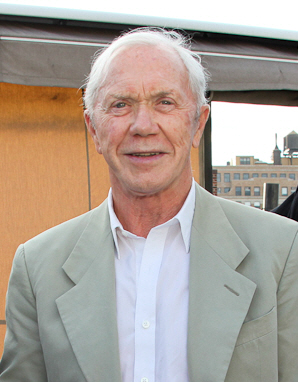
The Chief of Police of New York City at the time (pictured to the far right) considered the criminal Fredericka “Marm” Martha Mandelbaum an admirable businesswoman.

Fox notes the Mandelbaum family emigrated from Germany in 1850. Mrs. Mandelbaum’s husband, Wolf Israel Mandelbaum, made a living as a peddler in Germany. Martha Mandelbaum sees similar opportunity in New York City. She becomes a fence, a kind of peddler, for New York city street’ merchandise. However, Mrs. Mandelbaum recognized that the quality and quantity of merchandise she fenced could be improved by theft. She created a school like Dicken’s Fagin to teach the craft of theft. Her “school” began teaching young acolytes the art of pickpocketing and petty theft. She began building a criminal empire that evolved into financing bigger crimes like fabric store theft, jewelry store theft, and most lucrative of all, bank robbery.

Mandelbaum provided financing for specialized research of banking personnel and bank activity for intended bank robberies. She paid for sophisticated tools needed for the robberies, and then brokered robber’s thefts to buyers.

Mandelbaum grew her business into a million-dollar enterprise. She carefully remained in the background of her lucrative business. She became the “Queen of Fences”. In July of 1984, “Marm” Mandelbaum and her son Julius were arrested by Pinkerton agents and taken into custody. She allegedly punched the arresting officer and protested her innocence but went to trial where she was required to post a $10,000 bond after spending a night in jail. She and her son jump bail and cross the border into Canada. They were detained in Canada but without a law allowing extradition, she and her son could not be returned to the United States.

Mrs. Mandelbaum and her son open a store in Canada after contacting many of her associates in New York to explain her plan to sell merchandise out of this new store location. One presumes her associates continued their criminal ways of acquiring New York merchandise and shipping it to Canada for resale.

Julius J. Mandelbaum (1905-1988, son of “Marm” Mandelbaum died at age 83 in Long Beach New York.)

Fox’s story takes an interesting turn in an epilogue of her memoir about Mrs. Mandelbaum. “Marm’s” daughter, who was 18, died of pneumonia in New York. Mrs. Mandelbaum risked incarceration by surreptitiously returning to New York for a Jewish funeral for her daughter. She is not arrested and successfully returns to Canada.

Fox infers Mrs. Mandelbaum is as much a victim of her time as she was a criminal.

Fox explains in a Jewish family, women have essential roles in managing households, raising children, and contributing to their communities. In some circumstances, Fox notes Jewish wives engage in business while managing the household. Fox suggests Mrs. Mandelbaum simply carries out those duties in her life in New York.

A reader/listener will come to their own conclusions about Ms. Fox’s epilogue. The question that comes to mind is whether some people died as a result of Mrs. Mandelbaum’s financing of illegal activity, including bank and jewelry robberies. Where does one draw the line?

Mother Mandelbaum died without an exact cause of death at age 68. She was given a grand funeral in New York City that drew community elites, politicians, and undoubtedly, criminal associates.

FRANTZ FANON

Frantz Fanon decried colonization and racism to promote individual dignity and family reconnection in his psychiatric practice

Books of Interest
 Website: chetyarbrough.blog

The Rebel’s Clinic” The Revolutionary Lives of Frantz Fanon

By: Adam Shatz

Narrated By: Terrence Kidd

Adam Shatz (Author, editor, professor at Bard College)

Adam Shatz introduces Frantz Fanon to listeners. Fanon was a Black Frenchman, born in the colony of Martinique, an island in the Lesser Antilles of the West Indies. Fanon may be classified in many ways but first and foremost one understands he would want to be known as a Frenchman, i.e., a Black individual of French heritage.

Frantz Fanon (1925-1961, graduated from the University of Lyon in France.)

Shatz tells the story of Fanon’s life. Fanon is educated as a psychiatrist who was influenced by Aimé Césaire, a leader of a movement titled Négritude. Négritude was a protest against French colonial rule and assimilation in the early to mid-twentieth century. Fanon lives life by asserting himself as a Black Frenchman with a sense of Black cultural pride.

After an affair with Michele Weyer in college, a daughter is born. The daughter becomes Mirelle Fanon Mendes-France.

Mirelle Fanon Mendes-France (Born in 1948 to Michele Weyer and Frantz Fanon.)

Fanon later marries Marie-Josephe Duble in 1952. Duble was an intellectual, a journalist, and liberation fighter who died in 1989. Fanon and Duble have a son named Olivier who is thought to be engaged with his father’s legacy. Weyer’s and Fanon’s daughter is a scholar and member of the Frantz Fanon Foundation who also works with a United Nations Working Group on African Descent.

Fanon marries a Marie-Josephe Duble. Duble, aka Josie, married Fanon in 1952.

Shatz explains how much more Fanon was than a psychiatrist. Some suggest Fanon was a Marxist because of his anti-colonial beliefs but Fanon’s philosophy extended far beyond Marxist belief in society as an economic class struggle. Fanon was equally concerned about sexism, racism, and colonialism. He embraced a form of humanism. Fannon believed in self-identification as an acculturation process. He considered himself a Black Frenchman, born on a French colonialist island in the West Indies. His life experience as a minority in a colonial country led him to become a practicing psychiatrist in Algeria.

In the 1950s, Algeria was largely populated by Muslim Arabs with a minority of European nationalities.

Arabs in Algeria were poorly treated at a hospital Fanon joined in 1953. He gradually improved their treatment by opening doors to their ethnic identify. Algeria began a fight for independence in 1954. The movement was for social democracy within an Islamic framework that would offer equal citizenship for all citizens of the country. Fanon did not align himself with any religion in what became a violent conflict between French colonization and those who identified themselves as Algerian.

Fanon conflated imperialism and colonialism with racism by institutionalizing control over another based on cultural and/or racial bias.

Shatz shows who Fanon became in the way he treated his patients in Algeria. Fanon argued mentally troubled patients needed to be reconnected to their families and community rather than institutionalized.

Fanon’s focus was on the psychological impact of human torture and the tit for tat revenge of French occupiers and the Algerian resistance.

Fanon was sympathetic to the Arab desire for freedom and independence for citizens of a country searching for its own identity. Shatz shows Fanon abhorred colonization and its social restrictions. Shatz infers he equally abhorred the revolution’s leaders and followers who tortured and murdered non-combatants, including children. What happened in Algeria reminds one of today’s daily slaughter of children and non-combatants in Ukraine and Gaza.

Algeria became an independent nation in 1962 with its own government, culture, and identity. Its ethnic and cultural identity remains the same today as then. It is considered a Muslim country with a majority being Sunni Muslims whose practices play a prominent role in their daily life.

Frantz Fanon dies at the age of 36 from leukemia in 1961, 7 years after the Algerian uprising.

An interesting point in the biography of Fanon is that he recognizes himself as Black in a country that does not commonly describe themselves as people of color but as Algerian Arabs, Berbers, or Europeans. Fanon grows to believe he is Algerian but identifies himself as Black. Black is a broader category of race that makes his story applicable to a wider world but magnifies real-world discrimination based on the color of one’s skin rather than the truth of equal humanness. Of course, as the author notes, the color of skin in Africa is predominantly black and became a frontier for colonization between 1884 and the 1960s.
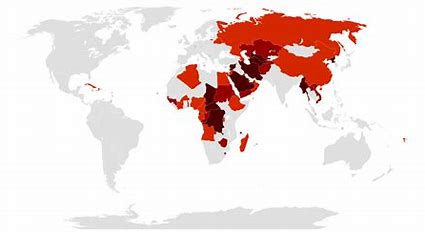
AFRICA BECAME THE FRONTIER FOR COLONIZATION BETWEEN 1884 AND THE 1960s.

Shatz infers Fanon fought the good fight. He decried colonization and racism to promote individual dignity and family reconnection in his psychiatric practice. He wrote about and aided people who were different, underserved, and underrepresented. He wrote two books about his life experience to explain why colonialization and racism were culturally wrong and socially destructive. “Black Skin, White Masks” was published in 1952, and “The Wretched of the Earth” in 1961.

EUGENICS

On the one hand, genetic science may cure the incurable. On the other, genetic science may destroy civilization.

Books of Interest
 Website: chetyarbrough.blog

Why Fish Don’t Exist” A Story of Loss, Love, and the Hidden Order of Life

By: Lulu Miller

Narrated By: Lulu Miller

Louisa Elizabeth Miller (Author, Peabody Award-winning science reporter for NPR.)

Lulu Miller’s “Why Fish Don’t Exist” reveals the flaw in believing intelligence or position are measures of admirability. David Star Jordan is a founding president of Stanford University. He served from 1891 to 1913 after being the Indiana University president from 1884 to 1891. Jordan gained his academic qualification as a recognized ichthyologist (a zoologist who specializes in studying fish species).

David Starr Jordan (1851-1931, Scientist, founding president of Stanford University.)

Miller begins her memoir in admiration of Jordan but ends in vilification. Jane Stanford appointed Jordan as the first President of Stanford. Their collaboration laid the foundation for what became a research powerhouse for engineering, business, humanities, and sciences. Ms. Stanford’s relationship with Jordan is reported as less than harmonious because in the University’s beginnings there were financial difficulties and differences of opinion about faculty.

Jane Elizabeth Lathrop Stanford (1828-1905, American philanthropist and co-founder of Stanford University.)

Jane Stanford rejects an economics professor’s contract renewal because of his politics and his criticism of immigration. (Ms. Stanford’s and her husband’s wealth came from the railroad industry which was hugely benefited by immigration.) It is alleged that she pressured Jordan to refuse the professor’s contract renewal. Five faculty members resigned after the professor’s termination. Ms. Stanford had a reputation for requiring total devotion to her beliefs which, at times, conflicted with Jordan’s management of the University. More significantly, Ms. Stanford’s drive alienates and makes enemies of many people associated with the University.

Ms. Stanford dies in Hawaii in her 70s. The cause of death is attributed by authorities to be poisoning from strychnine.

What makes her death an ongoing mystery is that Jordan hires a medical investigator who argues Ms. Stanford died from natural causes, a heart attack, brought on by overeating. In much of America, Jordan’s hired investigators’ cause of death is accepted. That is, until a book is written by Richard White in the 21st century, that reaffirms the authority’s earlier opinion. Miller does not suggest Jordan had anything to do with Stanford’s murder, but Miller’s inference is that he initiated a cover-up.

In one sense, Miller is Jordan’s character assassin. In another, Miller reveals the dark side of science.

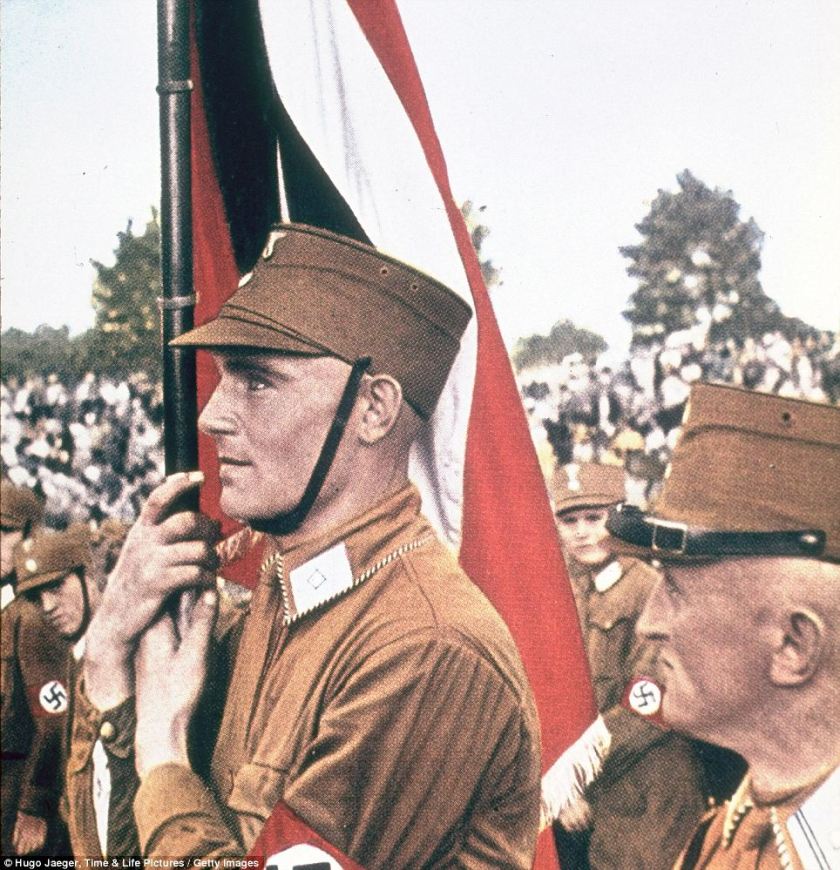
Jordan is shown to believe in eugenics that advocates selective breeding of the human race. Eugenics is a science meant to selectively breed human beings. Miller explains Jordan believes in forced sterilization (which surprisingly exists in the United States until 1981). Eugenics is the same belief held by Adolf Hitler when he tried to exterminate Jews and create an exclusive Nordic or Aryan race. Hitler established laws for forced sterilization, euthanasia, and selective human breeding.

STANFORD UNIVERSITY

Miller’s memoir of David Starr Jordan shows how science is a mixed blessing. Jordan’s remarkable work in zoology and his role as the first President of Stanford is tainted by his expressed belief in eugenics. The threat of eugenics is greater today than in the past. On the one hand, genetic science may cure the incurable. On the other, genetic science may destroy civilization.

SHAMING

Sexuality is the boon and bane of human society. The boon is human procreation. The bane is the shame visited upon human beings.

Books of Interest
 Website: chetyarbrough.blog

The Mothers

By: Brit Bennett

Narrated By: Adenrele Ojo

Brit Bennett (Author, New York Times Bestseller, graduate of Stanford University and University of Michigan.)

In one sense, “The Mothers” is about the serendipity of life. In another it is about human shaming. Brit Bennett’s book infers life’s happiness comes as much from chance as by effort. Of course, human life begins with “…Mothers” but as science explains, a part of who we are and who we become is from fathers. Bennett’s story is a view of life through the eyes of a daughter who loses her mother through suicide. The daughter’s genetic inheritance is intelligence and ambition. The daughter is born in a lower middleclass family. She lives through her high school years when her mother dies. She lives with her father and remembers her mother’s disappointment with life. Her mother’s wish for herself and daughter is to become more than what the circumstances of life seem to offer.

The main female characters of “The Mothers” are the daughter, Nadia Turner and her friend, Aubrey Evans.

The main male character is Luke Sheppard, a high school football athlete who is seriously injured in a sports accident. He is 21, living at home with his father who is a minister and his mother who manages the household and helps her husband with the ministry. Nadia is 17 and in high school. She is academically near the top of her class. Luke becomes Nadia’s boyfriend. Nadia becomes pregnant. Aubrey Evans becomes a close friend sometime after Nadia’s abortion. It is Nadia’s decision to have the abortion. Luke is ambivalent about Nadia’s decision but, with the help of Luke’s mother, $600 is given to Nadia for the abortion.
Luke leaves the decision to Nadia on the abortion but limits his involvement to giving her the required $600 fee.

Luke regrets his behavior as the father of an unborn child and his absence during and after the abortion. Nadia goes on to college at the University of Michigan after having become friends with Aubrey in high school. Nadia and Aubrey become close friends. While Nadia is going to college and seeing the world, Luke and Aubrey meet and become a couple. They eventually marry. Nadia never tells Aubrey of her relationship with Luke or the abortion.

Once listeners become acquainted with the three main characters, human shaming takes over the story.

Every major and minor character shames themselves and others by their acts or ignorance. Both mothers and fathers are guilty, but the author infers mothers are the most shaming. Mothers shame children rather than try to understand and guide their human nature.

Human sexuality dominates lives whether male or female, young, middle aged, or old.

The story is well written, but its theme misses the mark. Mothers and fathers (all humans) are equally blame-worthy when it comes to shaming. Sexuality is the boon and bane of human society. The boon is human procreation. The bane is the shame visited upon human beings. Bennett’s characters show there is plenty of shame to go around. Shaming is popular which explains why Bennett’s book became a bestseller.

DEATH WITH DIGNITY

Tisdale’s book is hard to listen to but worth one’s time and effort for understanding.

Books of Interest
 Website: chetyarbrough.blog

Advice for Future Corpses” And Those Who Love Them, A Practical Perspective on Death and Dying

By: Sallie Tisdale

Narrated By: Gabra Zackman

Sallie Tisdale (Author, essayist, who earned a nursing degree in 1983, born in 1957.)

The title of Sallie Tisdale’s book is off-putting but an apt description of her advice about “…Death and Dying”. Tisdale is a registered nurse who has written several books. Her experience makes her advice about death relevant and important. Those of a certain age or physical condition are shown how to prepare themselves for the inevitability of death.

The Japanese writer Haruki Murakami wrote “Death is not the opposite of life, but a part of it.”

Tisdale explains how a person can manage the inevitability of their death. To some, this seems a macabre thought, but nothing can be depended upon in life except its end. Why not manage that end with at least as much skill as one chooses to live? The reason people choose not to think about planning for death is because they are dealing with the everyday issues of living.

The irony is that Tisdale argues “planning for death” is an everyday issue.

Even if one knows they will eventually die, why care about it? Most lives are unplanned and seem out of our control anyway. How many plans for living are turned upside down by unforeseen events? Unforeseen events like Covid19, the rise of Hitler, WWII, the atomic bomb, and so on and so on. Yes, the occurrences of history change human plans. However, the difference is that death of the individual is a known inevitability. When one knows, their death is going to happen, why not have a plan?

Tisdale gives listeners the details of a plan for death.

Prepare Healthcare Directives

  • Decide to provide or not provide organ donation.
  • Explain burial or cremation wishes.
  • Maintain a financial inventory of accounts and assets.

Create a Will covering heirs and their inheritance. Review the plan based on life changes.

Having a will takes asset distribution out of the hands of a state court system. Health directives show your medical wishes and notes who has the right to make decisions for you in the event of incapacitation. A Health Care Directive stipulates whether extraordinary measures or comfort until death is to be administered. Written directives can explain how the body, after death, is to be cared for, i.e., is the body to be used for medical research, organ transplant, cremation, or burial. Time is of the essence when a person dies because living tissues and organs die soon after death of the person.

Beyond paperwork, Tisdale explains what is important to the dying when diagnosed as terminal.

To a family or caregiver, the hardest part is helping the dying cope with growing incapacity. When one is terminal, providing as much comfort as possible until death is of primary importance. The hardest part to the dying person is loss of control over one’s body. Listening to Tisdale’s real-life experience illustrate how American hospice and hospital care fails the terminally ill.

On the one hand, it is the fault of the dying for not having a clear plan for what is to be done in the event of a terminal diagnosis or illness, but Tisdale’s point is that neither hospice nor hospital’s services offer consistency in their care for the dying. Tisdale believes that once a person is diagnosed as terminal, the obligation of hospice’ and hospital’ care is to give comfort until death. However, institutions and doctors do not have the time nor inclination and American families do not have the money. Tisdale mentions Japanese elder care by noting the majority of those who are dying, die at home. The inference is that institutions are unlikely to provide the same care as the family of one who is dying.

Tisdale believes “Death with Dignity” laws passed in Oregon, Washinton, California, Colorado, Hawaii, Maine, New Jersey, Vermont, and Washinton, D.C. are on the right side of history.

They emphasize the importance of comfort for the terminally ill. A “Death with Dignity” law allows doctors to prescribe lethal drugs to end a terminally ill person’s life as long as the injected drug is not administered by the doctor or institution for which he/she works.

Tisdale’s book is hard to listen to but worth one’s time and effort for understanding.

DEMOCRACY OR ELSE

“…saving America” will not come from “…ten easy steps” but from one vote at a time.

Books of Interest
 Website: chetyarbrough.blog

Democracy or Else” How to Save America in 10 Easy Steps

By: Jon Favreau, Jon Lovett, Tommy Vietor

Narrated By: Jon Favreau, Jon Lovett, Tommy Vietor

(Left to Right) Jon Favreau, Jon Lovett, Tommy Vietor

The suggestion that “Democracy or Else” comes from “…10 Easy Steps” on “How to Save America…” is an oversimplification of life and politics. Saving America takes hardened objective opinion, personal commitment, appreciation of the difficulty of being a political leader, and most importantly, the wisdom of Jesus Christ. Few, if any humans fit the bill. Voting is the only thing that everyone who believes in American Democratic leadership will agree upon in the author’s “…10 Easy Steps”. The steps are not easy. The authors appear to have committed some time and effort to fulfill some part of the 10 steps.

Many (not most) Americans may be willing to vote but working on a campaign for a candidate who wishes to be elected to public office will always be low on their list of commitments.

Human beings, let alone Americans, are an unruly lot. Making a living, waiting for a hand-out, hating or loving others, and experience of life come first in the minds of most, if not all, human beings. The nuts and bolts of what it takes to become an elected representative in Democracy are way down on the list of humans’ self-interest. American Democracy, like all known forms of government, have winners and losers. Democracy has the best odds for serving the self-interest of its citizens but remains far from the idealistic goals of the U.S. Constitution.

American Presidents have been good and bad throughout history. Only a few have earned the history of “good or great” for America. The checks and balances of American government, the ideals of the Constitution, capitalism, and expanded voting rights have saved American Democracy from tyranny. Anyone who has read this blog, knows there is an opinion about the next President’s election but “…saving America” will not come from “…ten easy steps” but from one vote at a time.

RUSSIAN SOCIETY

Alcohol consumption in Russia and a penchant for autocratic government are long-standing societal truths.

Books of Interest
 Website: chetyarbrough.blog

Dead Souls

By: Nikolai Gogol

Translated By: Richad Pevear and Larissa Volokhonsky

Nikolai Gogol (1809-1852, Ukranian novelist born in the Russian Empire, short story writer, and playwright.)

“Dead Souls” is not an enjoyable listening experience. Partly, because it is not a completed book. However, it is an insightful examination of a Russian culture in decline. It is an incomplete novel with its main character, Pavel Ivanovich Chichikov, who uses his looks, intelligence, and guile to appear prosperous in a society of rich and poor.

Agriculture is the economic foundation of society in mid-19th century Russia. The industrial revolution is at its beginning.

As a clerk in the government, Chichikov is familiar with government policy of charging a tax for deceased peasants that are owned but have died on Russian’ landowners’ farms. Social position is associated with land and peasant worker’ ownership, i.e., the more land and peasants one owned, the higher a Russian aristocrat is esteemed. Chichikov has no land but has earned and saved enough money through his work with the government to come up with a scheme to improve his status in society. His idea is to travel the country, buy dead souls, and purchase a farm to show society he is an aristocrat of substance. By buying peasant souls and land he creates an image of wealth and aristocracy. His plan is to buy land with the money he has saved over years of work as a clerk. He assumes his position in society will be secured by land ownership and owned peasant’ souls.

Chichikov’s false image is assumed to be true in a high society soiree.

Chichikov clownishly approaches the daughter of a regional governor because of her beauty. His attention is noticed by some of the wags at the social event. Similar to today’s social media, word spread about Chichikov’s bizarre purchase of dead souls. Rumors about Chichikov proliferate like Alex Jones spread of lies in the 2022 Uvalde school children murders.

Various stories about Chichikov’s history spread from people who were at the governor’s soiree.

Many reasons were given for Chichikov’s purchase of “Dead Souls”. One who was at the dance alleges the purchases were to show Chichikov’s intent to kidnap the daughter of the governor. Chichikov hears of these ludicrous accusations and flees the small town in which the ball had been held. In fleeing, Gogol’s story provides more examples of Chichikov’s nature and reasoning with the objective of showing the dysfunction of Russian society and its aristocratic governance.

Chichikov meets with a successful Russian farmer who capitalizes on what is known of agricultural science of that time and uses that knowledge as an aristocratic owner of many peasants who worked his land.

Chichikov persuades this prosperous farmer to lend him 10,000 rubles to finance the purchase of a failing nearby farm. However, Chichikov’s deceptions catch up with him. He is arrested and judged by a Prince of Russia who plans to make an example of him. The story obscurely ends with the prince inferring a way out of the mess Chichikov’s lies engendered. The story is never finished. Reader/listeners never learn the fate of Chichikov. The high praise of the book rests with its exposure of the societal faults of mid-ninetieth century Russia.

Every national society has strengths and weaknesses. America is as vulnerable to lies and misrepresentation as Gogol shows of Russia. The best one gets from “Dead Souls” is a vague understanding of Russian society. Alcohol consumption in Russia and a penchant for autocratic government are long-standing societal truths.

AMERICA’S DECISION

It is up to Americans to vote or not vote. The choice today is between two old men. American Democracy will not fail because of either man’s election.

America’s Presidential debate on June 27th, 2024, was a painful reminder of advancing age. Whether to choose Donald Trump or Joseph Biden to be the next President of the United States is a “Hobson’s Choice”. Americans are compelled to vote for one of these two men or stay home and do nothing. Doing nothing means other Americans will decide who will represent Democracy to the world for the next four years.

Getting old is a mixed blessing. On the one hand, living long may offer wisdom, experience, and relationship connections. On the other, living long engenders health issues, physical frailty, and diminished mental acuity. Underlying these mixed blessings are the way a person has lived their life, the decisions they have made, the way they have treated others, and the inner moral compass they have followed.

It is up to Americans to vote or not vote for a President of the United States. The choice today is between two old men. Either will have the help of the three branches of the American government to do their job. American Democracy will not fail because of either man’s election to the office of President of the United States.

DARWIN’S THEORY

To Carl Woese, Darwin’s theory of evolution was, at the least, horribly misleading.

Books of Interest
 Website: chetyarbrough.blog

The Tangled Tree” A Radical New History of Life

By: David Quammen

Narrated By: Jacques Roy

David Quammen (Author, Yale University graduate, Rhodes scholar, fiction and non-fiction nature and science writer and historian.)

Quammen’s history of the discovery of a new form of life is interesting and enlightening. Archaea cells are not discovered until 1977 at the University of Illinois. Archaea are neither animal nor vegetable but resemble bacteria, a single-celled prokaryote. Archaea are prokaryotic (without a nucleus), like bacteria. There seem to be two differences between Archaea and bacteria. Archaea often thrive in extreme environments by using ether-linked lipids while bacteria only use ester-linked lipids. The difference has to do with how these prokaryotes bond to lipid molecules.

Archaea are believed to have set a boundary for evolutionary diversity in earth’s early extreme environment.

Archaea are believed to have played a role in the transition and adaptations that allowed life to change and flourish. The suggestion is that archaea were instrumental in creating a “The Tangled Tree” of life. Archaea, like bacteria, are everywhere in the soils and water of earth. Through chemical processes, they moderate global carbon and nutrients that exist in the world’s ecosystem. Some suggest life would have evolved without archaea but their role in earth’s early existence seems especially relevant because of early earth’s extreme environments.

Carl Woese (1928-2012, American microbiologist and biophysicist.)

Quammen introduces Carl Woese, the evolutionary biologist who revealed archaea as a third form of life. Woese challenges Charles Darwin’s theory of evolution because this third domain of life, alongside bacteria and eukaryotes, fundamentally changed representation of life as a branching tree. Archaea are similar to bacteria in that they are procaryotic (singular cells with no nucleus). However, archaea have cell wall differences. Archaea cannot perform photosynthesis, they reproduce by fission, and interact with DNA and RNA differently. What is discovered about archaea is that like bacteria, they can transfer genetic information horizontally, i.e. directly affecting the evolutionary characteristics of species.

The idea of descendent inheritance is not overturned but hugely expanded with archaea becoming a part of the process of evolution.

Archaea, like a bacterium can infect living things but as a genetic cell, archaea can initiate inheritance. To stretch one’s imagination, archaea might be transmitted between a human and a pet like a bacterium but with the potential of inheritable characteristics. Like learned behavior, the inference is there is a possible exchange of archaea cells between humans and pets that may change behavior of one or the other. The inference is that a pet dog may exhibit the behavior of its owner, not only because of learned behavior, but because of archaea transfer.

The idea of horizontal gene transfer (HGT) by archaea tangles the tree of life in ways that make natural selection a lottery as well as a parental inheritance.

Quammen touches on discovery of CRISPR (clustered regularly interspaced short palindromic repeats) which is a powerful technology that allows precise gene editing of an organism. As science discovers the genetic origin of disease and animal kingdom vulnerability, gene editing has the potential of saving or destroying life.

Quammen turns back to the age-old question about the beginning of life on earth. What came first and how did eukaryotes evolve into sentient beings? A suggestion made by some and recalled by the author is Loki’s Castle, a hydrothermal vent in the mid-Atlantic Ocean. Here, a thermophile, which is an archaeon, may have been life’s trigger that began evolution.

To Carl Woese, Darwin’s theory of evolution was, at the least, horribly misleading. Today, Darwin’s “Origin of Species” remains a seminal work of evolutionary science. Darwin’s work was based on observations during the voyage of the Beagle in the 1830s. Admittedly, natural selection from a common ancestor was not the whole story but it opened the door for further investigation and scientific proof.

CHARLES DARWIN (1809-1882) FOUNDER OF THE THEORY OF THE ORIGIN OF SPECIES.

Woese and other biologists owe much to Darwin’s early observation and theory of evolution. Science begins with theory and evolves with proof, demonstrated by repeatable experimental results. Darwin gave the world the theory. Biologists have been working on the proof ever since.

TRAGEDY’S LESSON

The sharpened point of Slade’s story is that, like the sinking of the Edmund Fitzgerald and El Faro, it takes great tragedy before change takes place.

Books of Interest
 Website: chetyarbrough.blog

“Into the Raging Sea” Thirty-Three Mariners, One Megastorm, and the Sinking of the El Faro

By: Rachel Slade

Narrated By: Erin Bennett

Rachel Slade (Author, winner of the Maine Literary Award for non-fiction.)

Rachel Slade begins her book with the last words of a mariner calling for help from a sinking ship in the grip of a Hurricane. The ship is the El Faro. The author writes her story based on the El Faro’s written log during a severe storm somewhere between Florida and Puerto Rico. The storm was Hurricane Joaquin, a category 4 Hurricane that had recorded wave heights of 10 meters (over 32 feet). Winds ranged from 130 to 156 mph with rough seas, roiled by rogue waves. Rogue waves are twice the size of surrounding waves and appear unexpectedly.

Slade methodically sets a table for the El Faro on a “…Raging Sea”.

Slade writes about a mariner’s desperate call for help. In its beginning, the story lags but the author offers cultural insight to the life of merchant marines, the equipment they operate, and the business of international trade. Her story explains how important and dangerous the life of a merchant marine can be, why it is important, and how mariners are dependent on equipment they use, their shipmates’ qualifications, and business owners’ drive for success.

Every person makes decisions about what they are going to do to make their way in life.

Becoming a merchant marine, like every decision in life, is based on personal circumstances, ambitions, and choices. Slade describes the El Faro mariners as adventurous and interested in seeing the world and being paid for what they do. Some are educated, others not, but all learn what they need to do to be part of a mariners’ crew.

There are schools for mariners at all levels of education but like any job, one can start at the bottom as a laborer that learns by doing. What the story of the El Faro shows is that like in any chosen job in life, some become expert at what they do, others try and fail, try again or move on. What Slade infers is that the El Faro sinks because of its crew but also because of others, both on and off the sea. As John Donne wrote in 1624, “no man (or woman) is an island”–emphasizing the interconnectedness of society.

The crew of the El Faro wanted to be paid but to some it was adventure and/or escape from a humdrum of life. Undoubtedly, mariners were motivated for different reasons. Some wished to see the world, be recognized for good work, wished to crew on bigger and better vessels, or be promoted to higher position. Motivation and ambition are different for everyone. What is lost to history are details. Slade tries to reveal some of the details about the El Faro’ crew, its owners, the ship, and the business of international trade. Why did the El Faro sink? Who and what was lost? What is it like to be in a hurricane at sea? Is somewhat at fault?

Slade’s story gains momentum as sinking of the El Faro seems imminent.

The aftermath is a careful and detailed explanation of rescues at sea, why the El Faro sank, what rescue efforts were made, how families of the lost were affected, and what changes were demanded in the industry. The loss of 33 mariners, the entire crew of the El Faro, is a horrible tragedy for the families who lost their loved ones. The causes of the tragedy range from crew mistakes to ship design to corporate malfeasance. The common thread is human nature.

What this review suggests is that the fundamental issue in every form of government and society is balance between public and private good.

One will draw their own conclusions from Slade’s history of the loss of the El Faro. In a capitalist society, balance is dependent on prudent regulation. Prudence is meant to mean the use of human reason to balance the needs of the public with private interests. That balance is complicated by human nature that drives private interests to focus on money, power, and prestige rather than public need.

Slade shows regulation of international trade often conflicts with private interests that object to regulation and improvements in ship design.

Conflict between public good and private interest is not a new discovery. Neither is the sinking of the El Faro. The sinking of the Edmund Fitzgerald in 1975 led to changes in international shipping. Business owners were required to provide survival suits for mariners in their employ, depth finders, positioning systems, improved ship design, and inspections by the Coast Guard became mandatory. These were regulations that increased costs of shipping that rippled through the economy and initially penalized private interests. The public benefits because mariners are safer, and families are less threatened by loss. The public also suffers because transported goods become more expensive. Balance eventually occurs as private interests are compelled to pay more for labor which is part of the public.

Capitalism works because it is a process that balances public need with private interests. Capitalism’s weakness is that the process takes time to balance public needs with private interests.

The sharpened point of Slade’s story is that, like the sinking of the Edmund Fitzgerald and El Faro, it takes great tragedy before change takes place.