GENETICS ACHILLES HEEL

Audio-book Review
By Chet Yarbrough

(Blog:awalkingdelight)
Website: chetyarbrough.blog

Who We Are and How We Got Here

By: David Reich

Narrated by John Lescault

David Reich (Author, geneticist)

Reich explains how the concept of the origin of homo sapiens has evolved since the discovery of “Lucy” in East Africa in 1974.

Few scientists disagree about humankind’s place of origin.  It may have been somewhere other than East Africa, but human origin is genetically linked to the African continent. 

However, Reich notes that geneticists no longer believe African origin is an adequate interpretation of the wide differentiation of human beings.  The evolution of homo sapiens is not like the branches of a tree but more a tapestry of interwoven threads.

Listening to “Who We Are and How We Got Here” reminds one of the Dragnet’s 1950s-character Joe Friday saying, “just the facts ma’m”.  Aside from Officer Friday’s hint of sexism, it is never just the facts. 

Genetic evolution is always interpretation of facts.  Interpretation is David Reich’s “Achilles heel” for exploring and expanding DNA research to determine “Who We Are and How We Got Here”.

Humans interbred to create a fabric of intermingled genetic characteristics that came together, separated, re-combined and changed over thousands of years.

Genetic discoveries of Neanderthal and Denisovan genetic markers show there is no direct line of descent from the “Lucy” origin of homo sapiens.  Genetic studies show that DNA changed as the human species grew. Some genes survived and evolved while others disappeared. Current theory discounts the principle of an “immortal gene” in the sense that the origin genes changed into something entirely different.

The great controversy that Reich explores is factional resistance to genetic research because of fear of misuse of the data.  There is ample evidence to substantiate that fear.

James Watson (American molecular biologist, Nobel prize winner and co-author of the double helix structure of DNA)

In 2007, Dr. Watson told a British journalist that he was “inherently gloomy about the prospect of Africa” because “all our social policies are based on the fact that their intelligence is the same as ours, whereas all the testing says, not really.”

Reich adds to the “Watson story” by saying he met Watson and was appalled by his comments about Jews being intrinsically smarter than the general population.  

Somewhat disingenuously, Reich notes that a disproportionate number of Ashkenazi Jews have received Nobel prizes. Is that fact relevant to genetic research? Does it apply to all Jews or just Ashkenazi Jews. Reich is an Ashkenazi Jew. Is this a reflection of the same concern over misuse of genetic information?

Genetic facts have been used by prominent scientists, like Watson, and ignorant political leaders, like Adolph Hitler, to falsely interpret genetic evidence. Genetic information opens a door to racist arguments for racial superiority.

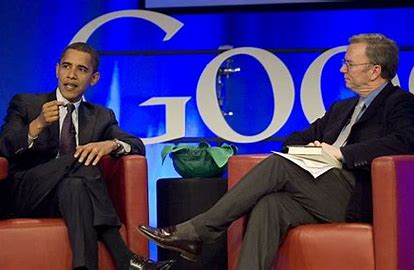
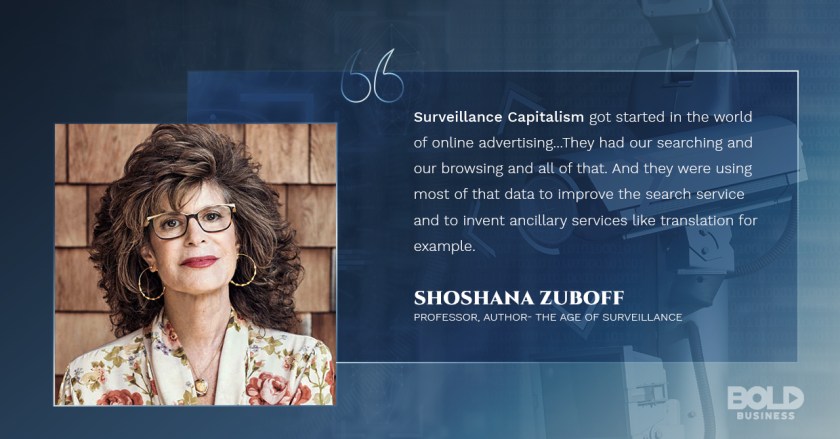
Information banks created by Google, Facebook, Microsoft, and Amazon are weapons of privacy destruction. In modern times, the only possible defense is “a right to be forgotten”.

One comes away from Reich’s book only semi-convinced of his search for truth through genetics.  Reich insists that the benefits of genetic research far outweigh the potential harm the research may cause. 

His point is that there are genetic studies that prove some genetic markers make people more susceptible to disease like anemia for blacks and Tay-Sachs disease for Ashkenazi Jews.  With exposure through genetic research, these medical maladies may be cured.  Without knowledge of genetic predisposition, there is less focus on what might cure certain diseases.

The problem always comes back to interpretation of facts; not the facts themselves.  Reich certainly has a point in insisting on continuing genetic research but how does one protect themselves from misinterpretation of facts. 

Dr. Watson is a Nobel prize recipient.  Look at what his interpretation of genetic facts became.   

Six million Jews were murdered by Nazi Germany’s belief in a master race of genetically “pure” Germans.  Reich’s work suggests there are no “pure” races. There are only similar genetic traits among a few isolated populations.

Do potential medical benefits from genetic research outweigh a racist use of genetic facts?  “Who We Are and How We Got Here” seems much less important than “Here We Are and What Can We Do About It”. Particularly considering our experience with the Covid19 pandemic.

UNNATURAL CAUSES

Audio-book Review
By Chet Yarbrough

(Blog:awalkingdelight)
Website: chetyarbrough.blog

Unnatural Causes

By Dr. Richard Shepard

Narrated by Dr. Richard Shepard

Dr. Richard Shepard (Author, UK Pathologist who investigated many celebrity deaths including Princess Diana.)

Dr. Richard Shepard is an English forensic pathologist.  In a cathartic examination of his profession, Shepard reveals how obsessiveness is a boon and bane in life.  From youth to late middle age, Shepard reflects on his life.

In “Unnatural Causes”, Shepard examines the causes of others’ death. With ever-present foreshadowing, a listener recognizes a man who is going to experience a mid-life crisis. 

In Shepard’s dissection of life, many male listeners will see their own narcissistic lives.  The expense of self-absorption is delusion, and often divorce.  For a male obsessed with a career, the cost of delusion is a crisis of personal identity. 

The cost of divorce is different for men than for women.  The biggest cost of divorce is paid by a wife.  She not only loses a part of her identity; she loses the security of family, friends, and most often family income.

Shepard does not overtly acknowledge the inequity of divorce, but one senses his feeling of guilt.

The personal part of Shepard’s story is a sad commentary on relationship between men and women in the modern world.  It is a picture of many men who grow old with their first wife and abandon them when youth has been spent. 

The primary purpose of Shepard’s book is not to explain men’s narcissism but to explore the profession of forensic science

There is no question that Shepard’s experience qualifies him as an expert in the field.  From terrorist events in England and 9/11 in the U.S. to the death of Princess Diana, Shepard practices his profession as a revered and respected pathologist.  He explains his obsession for “cause for death” from childhood. 

Having lost his mother at an early age, her absence motivates Shepard to understand what causes death. Though unsure of himself when he first encounters dissection of a human being, Shepard notes how curiosity shuts out any discomforting feelings in cutting and examining internal organs of a human corpse.  His focus is on finding the true cause of death.

In the course of Shepard’s career, his search for “cause of death” is found to be difficult, but not because of death’s pathology. 


Shepard explains how political pressure from the public, the police, and the judicial system influences diagnosis of death. The public may want to know the “cause of death” because of preconceived notions.  The police may want to know the “cause of death: because of their perception of someone’s guilt or innocence.  The judicial system may want “cause of death” based on witnesses for the defense or prosecution.  To Shepard, what someone wants is not relevant.  Only the truth is relevant.

Shepard’s conviction that truth is all that matters leads to a professional crisis. 

A less than reputable couple lose their child to what Shepard concludes is SIDS (sudden infant death syndrome).  Based on Shepard’s diagnosis, the couple is set free.  Years later, the couple has another child.  Both parents are alcoholics according to reports given in Shepard’s account of the case.  Years after Shepard’s SIDS determination, a second pathologists reviews the record and finds what he believes to have been child abuse.  The court agrees with the new pathologist and the child is taken from the parents.  Shepard is brought before a board of inquiry to determine whether he should keep his license.

Shepard’s book is worthy of a listener’s time to find out what the board of inquiry decides.  Both the personal and public crises Shepard faces will resonate with anyone who has obsessively pursued a career and had his/her personal integrity challenged.

There is a poignant relationship between Shepard’s story and the grilling of Amy Coney Barrett’s pursuit of a seat on the Supreme Court.

Her truth is not everyone’s truth. To challenge her belief in the role of a justice of the Supreme Court places her squarely in Shepard’s story of judgement by a board of inquiry.

There is the added benefit of hearing how “inequality of the sexes” is a deeply rooted social phenomena.

POWER OF THE PEN

Audio-book Review
By Chet Yarbrough

(Blog:awalkingdelight)
Website: chetyarbrough.blog

Jonathan Swift: His Life and His World

By: Leo Damrosch

Narrated by David Stifel

Leo Damrosch (American author and professor of Literature at Harvard)

Leo Damrosch’s biography of “Jonathan Swift” illustrates the power of the pen.

Jonathan Swift (1667-1745, Anglo-Irish satirist, essayist, political pamphleteer, poet and cleric.)

Jonathan Swift is principally remembered for “Travels into Several Remote Nations of the World”, better known as “Gulliver’s Travels”.  What is less known of Swift is that he was and is a revered Irish hero.

Damrosch has written a comprehensive biography of Jonathan Swift’s life.  Damrosch searches for what is known, while expressing reservation about what others speculate about Swift’s life.  Jonathan Swift is recognized as an ordained Anglican priest that reluctantly accepts a position as Deanery of St Patrick’s church in Ireland. 

Swift lives an ironic life.  He was born in Ireland but preferred living in England.  His life reflects humanity’s ambivalence about money, power, and prestige. 

Irony lies in Swift’s desire to become rich, powerful, and respected while skewering the rich, powerful, and respected.

Swift reveres the Anglican Church while he hates the memory of King Henry VIII’s duplicitous murder of Saint Thomas of Canterbury in the 12th century.  Irish Catholics are tolerated rather than accepted as religious equals by Swift.  Swift’s appellation for Irish Catholics is “those Irish”.

England’s leaders grew to fear Swift’s power of the pen. He became a respected, if not rich, Irish cleric. Religious satire was Swift’s sword but it had two edges.

Just as Swift is endearing himself to English leadership, he writes a satiric book about western Christianity.  The book is called “A Tale of a Tub”.  It is widely read by literate England.  Queen Anne considers the book blasphemous because of its parodies about religion and religion’s use and abuse in politics. 

Damrosch believes “A Tale of a Tub” burns Swift’s chance for ever becoming an English Bishop, a well-paying and respected position in the Anglican Church.  Without Royal endorsement, Swift has little chance of promotion in England.

An irony of Swift’s life is that he gained a reputation as a maker and breaker of English’ politicians and noblemen by writing “A Tale of a Tub”; i.e. Damrosch notes several examples of English’ leaders that either solicit mention in Swift’s writing or fear pillory by Swift’s pen.  The good consequence is respect for Swift’s writing skill; the bad consequence is English Royalty’s disdain for Swift’s writing substance and his ultimate lesser-posting in an Anglican Church in Ireland.

In today’s news, Pope Benedict implies deterioration of the church is caused by 1960’s sexual liberation.

Swift embraces religion but denigrates its leadership.  

Irony follows irony in Swift’s life.  Swift is a Tories’ sympathizer that evolves into an Irish hero that decries Tory treatment of Ireland in the early 18th century.  He hated Ireland but became Ireland’s hero.  Swift promotes Ireland’s boycott of British goods when England forbids export of Irish wool to anywhere but England.  Swift decries Irish poverty but suggests poverty is an Irish moral failing. 

The climax of Damrosch’s biography is Swift’s publication of “Gulliver’s Travels”.  Swift’s dissection of societies’ follies is as relevant today as it was in the 18th century.  One might argue that “A Tale of a Tub” is equally important but “Gulliver’s Travels” resonates with all who read for pleasure, politics, or enlightenment; whether young or old.  “A Tale of a Tub” is more relevant to the time of its writing.

There are other biographical details about women in Swift’s life, his stories, and Swift’s idiosyncratic habits but power of the pen is the thematic giant in Damrosch’s book.  Damrosch shows how Swift became a feared satirist by England’s leaders.

BEING AND NOTHINGNESS

Audio-book Review
By Chet Yarbrough

(Blog:awalkingdelight)
Website: chetyarbrough.blog

Major Pettigrew’s Last Stand

By Helen Simonson

Narrated by Peter Altschuler

Helen Simonson (English author)

“Major Pettigrew’s Last Stand” is Helen Simonson’s literary debut.  The book begins like a locomotive chugging up hill but ends as a journey well taken.

This is a love story. It is also a story about an age demographic inelegantly described as a “pig in the python”; i.e. baby boomers that are born after the end of WWII (between 1946 and 1964).  Major Pettigrew is a fictional father of a baby boomer. 

Pettigrew believes in an internalized moral code and endeavors to live by it.  Emulation comes from one who sees a person act with reasoned opinions based on lived life.  Denigration comes from “boomers” that see a person trapped in the past and unwilling to change with the times.

Though Major Pettigrew is a retired English military officer, widowed and living in a small town in England, he represents what human’s emulate and denigrate. 

Pettigrew’s adult son is what David Reisman, in “The Lonely Crowd”, calls an “other directed” person that lives by a code based on perceived values of the day.  The code is highly malleable.  It is created by friends, family, business and societal influence.  The son’s conduct changes with his perception of other’s beliefs.  In contrast, the Major lives by an internalized code based on personal life experience. This difference creates conflict. 

One of Simonson’s examples of father/son conflict is in the sale of a matched set of antique guns.

The son wants to sell; the father does not.  The son acts from consciousness of societal norms that value things in dollars and cents.  The father acts from consciousness of what the guns mean to him in life experience.

Simonson creates a love story that makes the same point.  Jasmina Ali comes into Major Pettigrew’s life.  She is a Pakistani widow at age 50, several years younger than the Major.  The son is shocked by his father’s dalliance with a non-English widow.  His son is more concerned about how the village views the relationship than how his father feels. 

Simonson elaborates on this view of love by showing the son engaged to a young American woman that idealizes the English countryside.  She envisions having an idyllic country refuge, away from the city, to emulate English aristocracy.  The American asks the son to co-purchase a cottage near his father.  Major Pettigrew sees that the purchase is based on an image of English nobles oblige; not the substance of a home.

The son compounds “boomer” generation “other directness”. He changes his mind based on what society may think of him. He distances himself from his American fiancé to court an English aristocrat. The aristocrat offers higher social and financial reputation.  Major Pettigrew is mystified by his son’s fickle change of heart.


The climax of this story is skewed toward an appreciation of the “inner directed” nature of Major Pettigrew.  Major Pettigrew acts with courage and conviction to save a life, though it costs one of his beloved personal possessions.  He also rescues his paramour from the refuse of English and Pakistani prejudice.  Pettigrew makes his “…Last Stand”.

In 1950, David Reisman writes in “The Lonely Crowd” that “other directness” is a symptom of a civilization’s incipient decline.

UNBRIDLED CAPITALISM

(Blog:awalkingdelight)
Website: chetyarbrough.blog

Audio-book Review
By Chet Yarbrough

White Tiger

By Aravind Adiga

Narrated by John Lee

ARAVIND ADIGA, INDO-AUSTRAILIAN AUTHOR, Winner of the Booker Prize in 2008 for “White Tiger”.

“White Tiger” pictures the chasm between haves and have-nots. It reminds one of “Native Son”.  Like “Native Son”, “White Tiger” speaks about the ugly consequence of discrimination and poverty. 

A big difference between “White Tiger” and “Native Son” is in the tragi-comic rendition of “White Tiger” on Netflix. One wonders if “White Tiger” is meant to be satire or a reflection on a flaw of capitalist self-interest. Maybe both.

A visiting dignitary from China is given a note by a former Indian servant who describes his entrepreneurial success in India.  The servant tells the story of his rise from the second lowest caste in India to successful entrepreneur. He is from a lower caste of the poor, but now he is rich.

The caste system remains strong in India. Having traveled there in 2018, our tourist guide notes his family is from the warrior class.

undefined

In speaking of his daughter, he explains that though he has limited control over whom she marries, his biggest concern is that she marry within her class. Caste ancestry still binds and defines much of India’s culture.

In “White Tiger”, Balram is the main character. Balram is an uneducated but clever observer of society. He is acutely aware of his position in life. 

Balram is destined to be a breaker of social convention. 

In India (and around the world) changing sociopolitical ideals, collapsing religious belief, deteriorating family ties, and human nature’s “good and evil” amplify the chasm between rich and poor.  

An irony of Balram’s story is that it is between two countries that have different political philosophies; i.e. one, democratic; the other communist. Their socioeconomic maladies are similar.  Both countries have dense populations, high industrial growth, and consequential environmental degradation. The common thread is China‘s and India’s drive toward capitalism.  

Balram considers himself a social entrepreneur who becomes a successful capitalist by breaking social convention. His broken convention is murder.

As the Indian servant’s story progresses, Richard Wright’s “Native Son”  and Adiga’s “White Tiger” metaphorically meet. Both carry out wanton murders of sociologically ignorant human beings. 

Bigger Thomas (the main character in “Native Son”) and Balram are one side of a capitalist’s coin, minted by poor education, poverty, and discrimination.  Their capitalist reality corrupts thought and action.

“White Tiger”, like “Native Son”, is a world warning about the consequence of the growing chasm between rich and poor; i.e. as long as societies believe that “a rising tide lifts all boats”, discontent and hostile action of the poor is the main thing that will rise.

Lack of prudent regulation of capitalism leads to the worst in human nature. Even though “prudent” is in the eyes of the beholder, ignoring the poor is a monumental failure of any society, whether capitalist or communist. Equality of education and opportunity are capitalism’s saving grace but grace is not natural to man; i.e. prudent regulation of human nature is required.

“White Tiger” is a credible warning of the danger of unbridled capitalism.

AN INNER COMPASS

Audio-book Review
By Chet Yarbrough

(Blog:awalkingdelight)
Website: chetyarbrough.blog

Jane Eyre
By Charlotte Bronte
Narrated by Lucy Scott

CHARLOTTE BRONTE (ENGLISH NOVELIST AND POET, 1816-1855)

The story of “Jane Eyre” is an example of someone who relies on reason and moral certainty to believe and act on what is right, and to live decently. “Jane Eyre” replays the tautology of “life is not fair; i.e., it just is”.

In this era of “click bait” media, we can easily lose our way. The difference between a lie and truth is harder to recognize when bombarded by viral postings on the internet. We need to remind ourselves-there is no correlation between popularity and truth.

The author, Charlotte Bronte, captures life’s joy and hardship. The story emphasizes the importance of having a moral “inner compass” to guide one to choose between right and wrong. By making right choices, fulfillment comes from working through good and bad things in life.

Jane is an orphaned girl raised by an uncaring Aunt that feels burdened by her filial obligation. The orphaned girl directly confronts her Aunt’s resentment. To escape further confrontation and embarrassment, the Aunt boards Jane Eyre in an indigent’s school.

Jane Eyre is formally educated.  She becomes a teacher at the school. Later, she is hired by a wealthy landowner to tutor a young girl that is alleged to be the landowner’s illegitimate daughter. The wealthy landowner is revealed as a man with too many secrets who covets Jane Eyre’s mind and body. Jane Eyre, driven by her inner compass, flees to endure new hardship and temptation.

At the end, Jane Eyre returns to merry the wealthy landowner. She finds him blind, chastened, and older, but still in love with the Jane Eyre he had hired as his daughter’s tutor.

An ever present refrain in “Jane Eyre” is that all life decisions and actions have consequences. The many themes that run through Charlotte Bronte’s book are what make it a classic.

Every listener will identify with some part of Charlotte Bronte’s story. The audio version of “Jane Eyre” is a tribute to Charlotte Bronte’s story telling skill.

In the 21st century, an inner moral compass is needed to offset the blizzard of falsehood disseminated by a largely unregulated internet. Social media hides behind a distorted understanding of the meaning of free speech. Free speech in America has always been conditionally defined.

Peter Thiel (Trump supporter who believes fact checking of Facebook postings is an attack on the Constitutional Right of free speech.)

Unregulated free speech spreads hatred. People are seduced into believing truth is defined by social media’ clicks. Notoriety is as important as popularity or truth.

The next mass murder or school shooting lays at the doorstep of unregulated free speech.

TRUTH TO POWER

Audio-book Review
By Chet Yarbrough

(Blog:awalkingdelight)
Website: chetyarbrough.blog

The Feminine Mystique 

The Feminine Mystique

4 Star Symbol

By: Betty Friedan

Narration by: Parker Posey

BETTY FRIEDAN (1921-2006)

By writing–women are human beings first–, Betty Friedan speaks truth to power.  Friedan’s theme in The Feminine Mystique attempts to enlighten thick-headed males and doubting women about the equality of human beings. It is sad to realize that such a banal and obvious statement as “women are human beings first” so perfectly exposes the ignorance of prejudice.

Every rational human being has a brain that neurologically functions in the same way; i.e. through chemical and neural interconnection.  This is not to suggest that brains are exactly alike; that interconnection is exactly the same, or that genetics do not matter.  It is not to suggest that environment does not matter. What Friedan shows is that sexuality, color of one’s skin, and culture are influences that create prejudice while the brain is an infinitely malleable organ that carries the potential for genius as well as stupidity.

Conference
What Friedan shows is that sexuality, color of one’s skin, and culture are influences that create prejudice while the brain is an infinitely malleable organ that carries the potential for genius as well as stupidity.

SIGMUND FREUD (1856-1939)
SIGMUND FREUD (1856-1939) Friedan suggests the Oedipus complex and penis envy are male delusions about female sexuality, perpetrated by Sigmund Freud and endorsed by most intellectuals and academicians in the early 20th century.

Friedan suggests the Oedipus complex and penis envy are male delusions about female sexuality, perpetrated by Sigmund Freud and endorsed by most intellectuals and academicians in the early 20th century.  The Feminine Mystique, published in 1963, acknowledges Freud’s great insight to the psychology of human beings but derides diagnosis of female hysteria as a valid mental disorder.

Female hysteria disappears from professional psychology schools in the mid-20th century.  Friedan suggests female hysteria has little to do with sexuality, women’s menstruation, or change-of-life diagnosis.  Her argument is that conversion disorder; hypochondria-sis, depression and anxiety in women are more likely caused by The Feminine Mystique, a false notion of a woman’s “role” in society; i.e. the idea that a woman can only be a spinster, wife, or mother.

Those roles limit the productive capability of half the human race.  If a spinster chooses not to have a husband, there is more time to make productive contribution to the world.   If a single woman chooses to be a wife, sharing the costs and burdens of domesticity, it leaves ample opportunity for other life interests; the same applies to motherhood.  Being denied constructive opportunity drives women to the neuroses of the modern age.

WOMEN AND THE LADDER TO SUCCESS
If a single woman chooses to be a wife, sharing the costs and burdens of domesticity, it leaves ample opportunity for other life interests; the same applies to motherhood.

A woman can be a spinster, wife, or mother but she can also be a scientist, a President, a business mogul, or a bum.  The Feminine Mystique exposes the false premise that women are primarily breeders and caregivers rather than equals in humanities’ race for money, power, and prestige.  What Friedan reveals in The Feminine Mystique is that women can bear children and be equally interested in and capable of excelling in the world of money, power, and prestige. However, women are frustrated by inequality of opportunity caused by The Feminine Mystique which identifies women in a role that should be shared by all members of the human race.

FAMOUS WOMEN IN HISTORY
FAMOUS WOMEN IN HISTORY   A woman can be a spinster, wife, or mother but she can also be a scientist, a President, a business mogul, or a bum.

SEXUAL PREDATION (WOMEN AS OBJECTS TO FULFILL MALE FANTASIES)

Birthing children is unique to women just as sperm production is unique to men.  Beyond these unique capabilities, a world of opportunity is open to both men and women, but men have a culturally and historically defined advantage.  Friedan defines men’s advantages by noting false barriers produced by psychologists like Freud that fail to understand they are discounting productive potential of half the human race.

Worse than the existence of barriers to equal opportunity for women, Friedan explains the unconscious conspiracy that pervades American culture.  Freidan acknowledges it is not a cabal of men but that it is a pervasive misunderstanding of what a human being is.

women in man's world
Worse than the existence of barriers to equal opportunity for women, Friedan explains the unconscious conspiracy that pervades American culture.

The tragedy is that this misunderstanding becomes self-perpetuating. Advertising trades on sexual innuendo that perpetuates objectification of women; studies like the Kinsey report falsely infer natural sexuality is inhibited in women that have higher education; blame is placed on women for children that become delinquents because they are not always present as homemakers and caregivers.

ELENA FERRANTE (AN ANOYMOUS AUTHOR--PRESUMED TO BE A WOMAN)
Advertising trades on sexual innuendo that perpetuates objectification of women.

Rationally, most people realize women are not sex objects. Advertising based on sexual innuendo is unlikely to change.  The more ominous concerns raised by Friedan are false correlations suggesting higher education diminishes natural sexuality and that women (mothers) are primarily responsible for what children become as adults.  Higher education is the primary hope for breaking the cycle of unequal treatment of women.  Children become adults as a result of many things—not only from parenting but from genetics, health, and environment.  Mothers are no more to blame than fathers who fail to share the responsibilities of home making and parenting.

parents and children
Mothers are no more to blame than fathers who fail to share the responsibilities of home making and parenting.

INSTITUTIONAL DISCRIMINATION
INSTITUTIONAL DISCRIMINATION–Women doing the same job as men in 2010 receive $.81 for every $1 paid to men, a 19% difference.

Freidan’s concern is that women are not treated as equals even though women are approximately equal-in-number to men.  Things have changed since 1963 but equality remains a work-in-process.  Of the fortune 500 companies in the United States, only 25 have female CEOs.  Women doing the same job as men in 2010 receive $.81 for every $1 paid to men, a 19% difference.  Though house work is shared more now than in the 1960s, women work 18 hours a week homemaking while men work 10 hours a week (according to a PEW Research Study in 2011); i.e. the greatest burden remains with women.  Without meaning to argue that the glass is half empty rather than half full, the revolution exemplified by Friedan’s book is incomplete.   Many people continue to fight for equality of all human beings but many men and women continue to resist; to the detriment of society.

The Feminine Mystique should be required reading in high schools.  It is as relevant today as it was in 1963.