AMERICAN CAPITALISM

Audio-book Review
           By Chet Yarbrough

(Blog:awalkingdelight)
 Website: chetyarbrough.blog

Can Democracy Survive Global Capitalism?

By Robert Kuttner

     Narrated by: Mike Chamberlain

Robert Kuttner (Author, journalist, professor of social policy at Brandeis University)

Robert Kuttner personalizes the history of capitalism as an historian and journalist, not an economist. This book is a tedious fact-filled tour of capitalist experimentation. Kuttner illustrates how government economic policy is like a roulette game. Government leaders spin the wheel. The ball drops on a numbered slot that is either black or red. A player chooses Kuttner’s fundamental point and the answer to the question “Can Democracy Survive Global Capitalism?” seems a matter of luck.

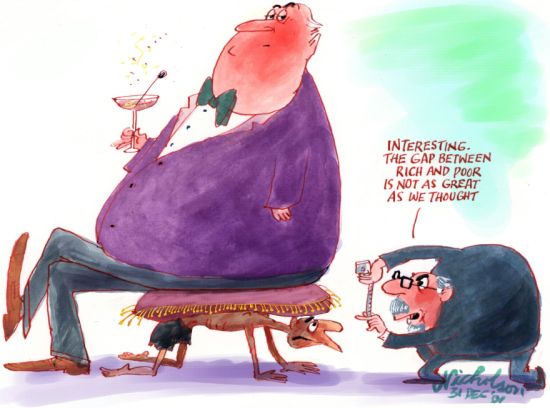
Choice for survival of global capitalism seems dependent on reducing the gap between billionaire/millionaire capitalists and the wage-earning public. However, what Kuttner’s rambling history shows is that there is no definitive answer. There are some clues but the balance between democratic freedom and equality of opportunity teeter on the metallic edge of a black and red slot of a roulette wheel. He asks the question whether America is going to become more like China or China more like America?

Kuttner offers some examples of economic policy in Scandinavian countries, Africa, the Baltics, Great Britain, France, Germany, Greece, China, and the European Union. Kuttner implies, if there is a common denominator for survival of global capitalism, it is government policy that benefits wage earners.

A rising tide (economic prosperity) must benefit more than a simple minority or small majority of citizens within a country.

Kuttner’s history shows achievements in democratic capitalism have been hit and miss with luck as much a factor of success as policy. Adam Smith, Karl Marx, and John Maynard Keynes theories offer hints about what can be done to grow and sustain capitalist economic stability. What gets in the way of their theories is interpretation, policy, action, and results.

Kuttner offers many good and bad examples democratic capitalism’ interpretation. Denmark denies Ryan Air’s employment model in their country because it is unfair to employees of the Airline. Public benefit services like mail in the United States assure delivery of the mail in a timely manner, regardless of profitability.

Unions are formed in various countries to give wage earners a seat at the table in determining fair compensation and benefits in privately held companies.

On the other hand, privatizing prison management only reduces cost to the public by reducing pay and training of prison guards. The prisons are not better managed, but costs are less because quality of service and overhead is reduced while prisoners are poorly managed. Immigrant labor is farmed out by private companies to reduce corporate costs but at the expense of laborers that work for less than a livable wage. Private companies higher “independent contractors” like Uber drivers for which the company does not pay medical premiums or employment taxes. Corporate raiders buy faltering high cash-flow companies with borrowed money. These corporate raiders reduce wages of employees, drives formally marginally profitable companies into bankruptcy, and walk away with millions paid by loans used to buy the company in the first place.

Kuttner caps these negative global capital maneuvers by revealing how American corporate owners and leaders move manufacturing to foreign competitors because of cheaper labor. That movement benefits corporations at the expense of American manufacturing.

Kuttner explains corporate outsourcing unfairly diminishes American workers and decimates American manufacturing. He notes Germany chose to improve the quality of their manufactured products to remain viable manufacturing global competitors even though their workers are paid more than comparable American workers.

This is a frustrating book to use as evidence for the survival of global capitalism because there are many examples of government policies meant to do good that fail.

This history reinforces the analogy of the roulette wheel. Either red or black may be the best result one can expect but the consequence seems as much luck as foresight.

Hope lies in reducing the gap between haves and have-nots by insuring equality of opportunity through public education and job opportunities. This is not to suggest homelessness and poverty will disappear in democratic capitalist societies, but it becomes a manageable societal responsibility.

Having lived in different areas of the United States shows homelessness and poverty are presently out of control.

Today, in the United States, homelessness and poverty are not being well managed because public education and job opportunities are not being adequately addressed. As one of the richest countries in the world, American democratic capitalism can do better than just survive.

Education and employment are key to turning these crises into something that can be managed.

One cannot dismiss Kuttner’s observations as liberal ranting. Wage earner respect and treatment, whether in manufacturing, technology, or service industries, are the key to survival of world capitalist democracies. America can choose to become more like China and support authoritarian miscreants like Donald Trump or elect leaders that experiment with political ideas that have made America great.

TERROISM

Audio-book Review
           By Chet Yarbrough

(Blog:awalkingdelight)
 Website: chetyarbrough.blog

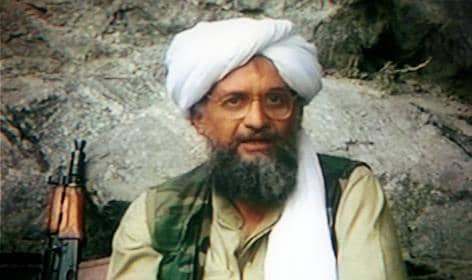
Anatomy of Terror (From the death of bin Laden to the Rise of the Islamic State.)

By Ali Soufan

           Narrated by: Aaron Abano

Ali Soufan (Author, former American FBI agent, Lebanese heritage from a Sunni Muslim family.)

This is Soufan’s characterization of the western world’s effort to quell the beast of middle eastern terrorism.

Ali Soufan paints a dark picture of America’s middle east relationship in “Anatomy of Terror. He envisions a hydra, the mythical monster that grows two heads when one is cut off.

The terrorist event that sets the tone for Abano’s history is, of course, America’s 9/11/01 disaster.

Osama bin Laden’s plan for the destruction of the Twin Towers in New York is hatched by Khalid Sheikh Mohammed (aka KSM).

Abano offers a brief history of KSM’s addition to al Qaida. In KSM’s early introduction to bin Laden, the dramatic idea of using an airplane hijacking to create a terrorist event is skeptically dismissed. As KSM’s reputation in al Qaida grows, the idea gains support of bin Laden. The impact of a singular terrorist event changes the world.

Abano tirelessly assembles so many facts about this Hydra’s growth that one becomes numbed by terrorist events and names. Only a CIA or FBI agent is likely to be interested in Abano’s research. However, a listener who perseveres realizes Abano is not just a problem bringer but one who has an idea of how terrorism can be defeated.

The complexity of the middle east’s terrorist origins, persistence, and ubiquity seem as incurable as world poverty and hunger.

Abano’s solution, as is true for any complex problem, begins with understanding. As difficult as it is, one must try to understand another’s reasons for carrying out a terrorist act. With understanding, one can constructively rather than destructively respond to a terrorist act. Murder for murder simply leads to further senseless murder.

Only with understanding can the causes for terrorism be either exposed as hypocrisy or dealt with as a reason, though not justification, for a murderous act.

The causes of terrorism must be exposed. Stories need to be told and re-told in ways that explain causes. These stories must come from nation-state leaders who have influence in their countries and reputations in other countries. Abano suggests these nation-state messengers can cultivate community leaders to spread the word, whether of God or mammon, to address the true and false reasons for terrorist acts.

Exposure of true and false causes offer hope for a solution that eliminates or, at least, ameliorates conflicting terrorist ideas, beliefs, and acts.

Abano argues money should be invested in schools and teachers who educate children in their own countries.

Through education in reading, writing, and arithmetic, children will grow to understand reason, truth, and falsity.

The expense of incarceration should be supplemented by rehabilitation with the objective of re-introducing the captured to society.  

To Abano, captured terrorists should not be demeaned, tortured, or executed.

A listener may feel Abano is being altruistic. In truth, he is altruistic but the path presently being followed is not working.

As the saying goes—an eye for an eye will make the whole world blind.

By putting oneself in the terrorist’s shoes, Abano implies one is taking a first step in attacking the fundamental causes of terrorism. Without understanding there is no solution.

ECONOMIC EVOLUTION

Audio-book Review
           By Chet Yarbrough

(Blog:awalkingdelight)
 Website: chetyarbrough.blog

Karl Marx (Philosophy and Revolution)

By Shlomo Avineri

           Narrated by: Roger Clark

Shlomo Avineri (Author, Professor of political science at Hebrew University of Jerusalem.)

Is economic evolution about mind or matter?

Shlomo Avineri offers a more studied view of one of the three most influential economist in history, Karl Marx. Marx’s influence extends to philosophy, history, sociology, and politics.  

Avieneri illustrates how categorization of Marx as an influential economist minimizes his historical significance. Marx is born in Trier, Germany.

His father, Hirschel HaLevi (aka Heinrich Marx), is a practicing lawyer, the son of Marx HaLevi Mordechai and Eva Lwow.

In Trier, after Napoleon is defeated at Waterloo, Germany returns to a highly discriminatory Prussian attitude toward Judaism. Karl Marx’s father, and eventually his mother, are compelled to convert to a Christian religion to advance Marx’s father’s career as a lawyer. Karl Marx’s grandfather is the rabbi of Trier who passes on that title to Karl Marx’s brother.

Avineri gives this brief family history to explain Marx’s Jewish heritage. It offers some insight to why Marx outwardly discounts his religious heritage while putting him on an intellectual journey toward political and economic reform.

Marx’s father might be considered a classical liberal because he promoted constitutional reform of the Prussian government’s denial of equal rights. Avineri implies the experience of his father leads Karl to pursue the study of history and philosophy because of discriminatory treatment of his family. The act of discrimination naturally makes one class conscious. Karl Marx’s political and economic ideas grow from that familial background.

Avineri suggests Hermann Hesse and Hegel are significant influences in Karl Marx’s life. Hesse is a contemporary of Marx. Hesse is influenced by Rousseau who believed in natural equality. Hesse’s literature addresses the inequality of workers and the capitalist class. He sensed the growing political danger of that inequality and, in writing about it, became an influence on Karl Marx’s view of capitalism.

Avineri’s explanation of Hegel’s influence on Karl Marx is a little more complicated. Fundamentally Hegel believes social development is an evolution of one’s mind to recognize that all humans are created equal. In contrast Marx believes social development is an evolutionary process of society’s actions in regard to material things. Marx believes the haves of the society recognize the inequity of the have-nots and will evolve to establish common good in the distribution of material things. Both Hegel and Marx agree that there is a dialectic process, but Hegel thinks it is a state of mind that changes while Marx suggests it’s a state of equal distribution of concrete goods.

It is impossible to deny Marx’s notes about inequality. One can argue that this was truer in Marx’s lifetime than it is today. The advent of social security and national health care, and welfare programs have reduced human inequality.  However, human inequality remains a serious social problem in every society and all government systems of the present day.

Whether Marx or Hegel’s evolutionary dialectic is true remains unknown. Neither capitalism, socialism, or communism have evolved to solve the problem of inequality, whether it is the dialectic of mind or matter.

Avineri’s biography of Marx is better than the previous biography reviewed in this blog. He offers a more intimate understanding of Karl Marx’s life and how he came to believe what he believed. The answer to the question of whether economic evolution is one of mind or matter is, of course—both. Human brains must evolve, and matter must be equally available.

AGEISM

Audio-book Review
           By Chet Yarbrough

(Blog:awalkingdelight)
 Website: chetyarbrough.blog

The Hearing Trumpet

By: Leonora Carrington

Narrated by: Siân Phillips

Leonora Carrington (Author, artist born in England, lived in Mexico, 1917-2011, died at the age of 94.)

“The Hearing Trumpet” is said to have been written in the 1950s or early 60s. The author, Leonora Carrington, is believed to be in her late 50s when the book is written. Her age is relevant because the book is about old age and how those who make it to old age are treated in the modern world.

Though this is a highly regarded novel, to this reviewer the beginning is remarkable, the end is meh (uninspiring). The heroine of the story is Marian Leatherby. She is 94, a ripe old age, when one’s family members waiver between love and burden when thinking about their aged parents.

The character of Marian Leatherby is developed as a remarkable woman that is smart, and humorous but is troubled by loss of hearing. A neighbor who one presumes is similarly elderly buys a gift for Marian. The gift is “The Hearing Trumpet”.

Antique Ear Trumpet

Now that Marian has “The Hearing Trumpet” she can hear much better and understands her perilous living arrangement. She prepares for her children’s plan to move her into an assisted living facility for the aged.

Her son seems reluctant, but the daughter-in-law is insistent because of Marian’s bizarre behavior when they have guests. Marian rarely communicates with her children and often interrupts her family’s social lives because of her hearing loss.

Because of Marian’s hearing, she communicates and understands little about the son and daughter-in-law with whom she lives

The move happens within days of Marian’s realization of her son and daughter-in-law’s plan. Many who have reached a certain age, know of similar family decisions.

An aged parent responds in different ways. Some choose to die by making the move and refusing to adapt to a new way of living. Others choose to adapt. Marian is carted off to a monastery like facility.

The story is fascinating up to this point. It loses its appeal for this listener in a surrealistic story of Marian’s new living arrangement.

The head of the facility is an overweight manager with a semi-religious, zealot-like view of his role. Marian becomes an observer in her first weeks at the facility.

After some time, Marian accepts the behavior of her fellow wards and begins a surrealistic journey into a myth about the Knights of Malta (a religious military order under its own Papal, Roman Catholic charter).

This is semi-interesting to some because the Knights of Malta are an order of religious soldiers who are alleged by some to have murdered the famous artist, Caravaggio. That is not the surreal story of the author, but interestingly Lenora Carrington is an artist in real life.

Some suggest “The Hearing Trumpet” has a happy ending because Marian has escaped the reality of old age into a personal fantasy of the world while dealing with the reality of her failing physical condition.

One presumes Carrington’s story is full of symbolism, but it hides the fundamental importance of aging and how fearful one is to become old, ignored, and essentially discarded by society. Maybe fantasy is all that is left to the aged. Carrington lives into her 90s. One wonders how she adjusted to her infirmities. 

PROGRAMMED OR NOT

Audio-book Review
           By Chet Yarbrough

(Blog:awalkingdelight)
 Website: chetyarbrough.blog

Livewired (The Inside Story of the Ever-Changing Brain

By: David Eagleman

Narrated by: David Eagleman

David Eagleman (Author, neuroscientist at the Baylor College of Medicine.)

A bright future is outlined for humanity by David Eagleman in “Livewired”. His vision has to do with what is presently known of the brain and its interactions with the world. Eagleman believes what we know of the world from the physics of Newton, Einstein, and Bohr today will enhance human brain capabilities tomorrow.

Eagleman details what is known about the brain. He explains the remarkable capabilities of the brain to adapt to its environment. The neuronal activity of the brain interprets the environment in which the body exists.

The body responds to change by sending signals from the environment to the brain. The brain interprets those signals with synaptic transfer of information for thought and action.

Eagleman explains the creation of language in children begins with babbling which is testing their relationship with others and the world. The sensations they receive from verbal and physical contact are connecting their brain function to the world. The brain changes with contact from people and things in the environment.

World experience changes the brain. Change is widely dispersed by neuronal activity in the brain. Thought and action are not located in one place but in many parts of the brain. Those many parts allow memory of experience to be stored, sometimes forgotten, but capable of resurfacing in one’s thoughts or actions.

On the one hand Eagleman is saying the world is what we see. On the other, he notes the world is an interpretation of reality by the brain. Eagleman explains a brain interprets the world of events. The brain is not a recorder. It is a recreator of events.

The significance of that recreation is in unperceived facts of an event. Additionally, Eagleman notes-if an event continually repeats itself, the brain can hide the event because of the constancy of its existence. An example would be a constant machine noise at a factory or the smell of offal at a pig farm. The mind initially notes the noise or smell but if a person is exposed for long periods of time to the same event, the noise or smell disappears.

The fascinating consequence of Eagleman’s observation of brain function is the truth of events may be quite different from reality. This reminds one of the discoveries of Quantum reality which is probabilistic rather than definitive. What we see may not be what is real. The real-world impact of event recreation by the mind is the threat of misidentification of a person accused of a crime.

The brain can distort reality to create a story and a memory that are not true.

The malleability of the brain has been addressed by many in stories of stroke victims, epileptic sufferers, and handicapped people who overcome sightlessness, seizures, and hearing loss. Eagleman notes young people are quicker and more capable of adapting to these difficulties because they are not as limited by past learned experience.

Eagleman explains older sufferers have learned how to deal with life based on previous experience. That experience is a mixed blessing because it impedes new learning. The ramification is that new discoveries about the world are and will be from the young, much more often than the old. 

Eagleman goes on to explain brain input and malleability extend to all parts of the body.

The skin, the eye, the tongue can be used as a source of stimulation to aid the brain in sending signals to malfunctioning appendages. This realization has led to ways of helping patients with palsy to stabilize their condition, for patients to recover from strokes, for the handicapped to walk with a prosthesis, and for epileptics to manage their seizures.

The optimism engendered by Eagleman is explained in one of the last chapters, titled “The Wolf and the Mars Rover”. He recounts the failure of the Mars Rover because of a malfunctioning wheel that ends its productive life. The Rover is unable to decide what to do to overcome a wheel that would not work. In contrast, a wolf will chew its leg off when in a trap because its brain tells she/he will die if not released. The Rover has pre-determined limits to action. The wolf changes behavior based on brain malleability, and unforeseen environmental circumstance.

Eagleman reinforces Rovelli’s argument that information will reveal all there is to know about the quantum world, and the nature of reality. To Eagleman, that information will come from the malleability of the human brain. Despite Eagleman’s optimism, there are skeptics.

PARENTING

Audio-book Review
           By Chet Yarbrough

(Blog:awalkingdelight)
 Website: chetyarbrough.blog

Little Fires Everywhere

By: Celeste Ng

Narrated by: Jennifer Lim

Celeste Ng (American Author, Received Guggenheim Fellowhip in 2020.)

“Little Fires Everywhere” is a work of fiction addressing American wealth and poverty, freedom, abortion, discrimination, family relationship, academic education, and parenting.  The author, Celeste Ng, artfully creates two families.  The first family has wealth.  The second lives on the edge of poverty.  Both have well educated children who make big and little mistakes borne from their genetic inheritance and environment.  

The two mothers are the primary decision makers.  The mother of the wealthy family (Elena Richardson) is a reporter and college graduate. The mother of the poor family (Mia Warren) is a waitress, house cleaner, and formally educated artist who quit college. The wealthy mother has four children, two boys and two girls.  The artist mother has one daughter.  These families come together in the same exclusive neighborhood. The wealthy mother decides to offer half a duplex for rental to a mother and her daughter.  The duplex is on the same property as the single-family home in which the Richardson’s live.

Parenting

Elena Richardson contrasts with Mia Warren in most ways.  Both went to college but one graduated while the other dropped out.  Both are dominate influencers in their social interactions, but Elena is bullying while Mia is reasoning.

The Richardson boys are near the age of Mia Warren’s young daughter.  All the children are in their teenage years. 

The children in this story reflect the strengths and weaknesses of their parents.  Both family’s children are headstrong, but the Richardson family’s children rely on their economic stability in making choices about life.  The Warren family relies on their independent lifestyle and pragmatic view of the world to make choices about life.

Freedom is never absolute.

The Richardson’s freedom is constrained by rule-of-law, wealth, and social position. The Warren’s freedom is constrained by rule-of-law, poverty, and moral conscience. Abortion is a moral and social crime to Elena Richardson. Abortion is a woman’s right and moral choice to Mia Warren.  Discrimination is academic to Elena and her social circle. It is personal to Mia. The Richardson family relationships are autocratic and secretive. The Warren family relationship is democratic and selectively open, limited by the maturity of Mia’s daughter. Education to the Richardson family is important to improve one’s social position. Education to the Warren family is to broaden one’s understanding of life.

Parenting is shown to be the most difficult task of every family. whether wealthy or poor. The lifestyle of the Richardson family creates “Little Fires Everywhere”. The Warren family lifestyle implies a fire retardant. The author tells a story that reveals how difficult it is to be parent of societies’ future.

MEDIA TRANSPARENCY

Audio-book Review
           By Chet Yarbrough

(Blog:awalkingdelight)
 Website: chetyarbrough.blog

Lie Machines (How to Save Democracy from Troll Armies, Deceitful Robots, Junk News Operations, and Political Operatives.)

By: Philip N. Howard

Narrated by: Mike Chamberlain

Phillip N. Howard (Author, professor at University of Oxford.)

The subtitle of Phillip Howard’s book is hyperbolic. Howard offers a glimmer of hope to the public on “How to Save Democracy from Troll Armies…”  He does define the problem, but the solution is elusive.

Howard identifies interest-group’ tools used by lie machines to mislead the public. Howard shows how “Junk News”, some of which are outright lies, have consequences.

Freedom is an essential tenant of Democracy. One does not doubt Howard’s exposé on Democracy’s threat from “…Troll Armies, Deceitful Robots, Junk News Operations, and Political Operatives.”  
There is the Brexit campaign that lied about thousands of pounds saved per month which Great Britain could use for healthcare. That lie is debunked by most English economists.  There is the Pizza company child pornography hoax during Hillary Clinton’s campaign for President. It is clearly identified as a hoax that had no basis in fact.  Howard’s point is that lies have consequences. However, the exact consequence is often not precisely quantifiable. Did voters change the course of history by believing these lies?  Was the Brexit decision and Hillary Clinton’s loss of the presidency caused by lie machines?  Those are fair questions, but they have no definitive answer.

Is it criminal to advertise Prevagen as a memory improvement product when there is little science to prove the claim?  Is that different than an interest groups’ lie about how many pounds Great Britain will save with Brexit? Consumers decide for themselves whether a lie is a lie or just an interest groups’ bias. 

Balancing democratic freedom of speech against what Howard fairly identifies as “junk news” is impractical in the internet age.

As Howard notes, more private information is available to interest groups in the 21st century than ever before.  Government, commercial, and private interest groups are willing to pay privately held companies to gather and collate that personal information. Their ability to distort truth is enhanced by algorithms that accumulate that private information to tell others more about what we believe than what most know or understand about ourselves.   

Media moguls, like product advertisers, are selling belief with detailed information about who we are, what we buy, who we buy from, and intimate details of our lives freely given on public platforms like Facebook, Twitter, and Google. 

On 4/25/22 we are advised that twitter is being purchased by Elon Musk. Musk idealistically presumes all should have a right to express their opinion. There is truth and lie in that idealism. Truth is the selective statement of facts by major news feeds like the NYT and WSJ. Lie is the statements of muckrakers like Alex Jones.

As Supreme Court Justice Stewart’s once said about pornography, “I know it When I see it”. Freedom of speech can only be regulated by the same yard stick.  A lie is a lie and those who believe in democracy can only rely on themselves for knowing a lie when they see it.

Alex Jones and conspiracy on the Sandy Hook School killings.

Howard’s examination of “Lie Machines” reveals a great deal about how lies become the basis for conspiracy theories that mislead the public.

The best one can say about Howard’s great reveal is that every citizen in any society needs to be skeptical. Ironically, Howard implies skepticism compounds the problem of “Lie Machines” by making one believe nothing.  One must ask oneself—are there special interests promoting this “fact”, is this fact a lie, should I act based on a lie. 

Howard’s solution is to require transparency from the “internet of things”.

He argues any public internet platform should be legally required to reveal the source of their information and that no information should be collected unless authorized by the provider. There is some merit in Howard’s solution. The concern is that there must be supervision of that requirement.  Who is the supervisor?  If it is government, what are the rules of enforcement?  Democracy requires checks and balances. 

Whether one is part of the government, a business, or a private citizen, all are subject to the faults of human nature.  Can a bureaucracy be created with the required checks and balances that mitigate human nature’s desire for money, power, and prestige?

America is a government of laws and has prospered in part because of checks and balances that ameliorate the worst consequences of human nature. Is regulation of the internet by government better than self-regulation?  Who regulates government?

Some argue, the voter regulates government by elections.  This is the same voter that elected Abraham Lincoln and Donald Trump, one of which deserves high praise; the other something much less.

Revealing “Lie Machines” is the best of what Howard has to offer.  The solution revolves around transparency but the mechanism for enforcement beyond individual skepticism and “buyer beware” attitude seem invasively dangerous.

SEXUAL INEQUALITY

Audio-book Review
           By Chet Yarbrough

(Blog:awalkingdelight)
 Website: chetyarbrough.blog

American Philosophy (A Love Story)

By: John Kaag

Narrated by: Josh Bloomberg

John Kaag, (Author, Professor of Philosophy at UMass Lowell)

John Kaag’s view of romantic love seems slightly askew when taken in the context of his two books, published two years apart.  “American Philosophy” is published in 2016 while “Hiking with Nietzsche” is published in 2018.  Having listened to both, one finds “Hiking with Nietzsche” belies the conclusion of romantic love characterized in “American Philosophy”.

In “American Philosophy, Kaag professes understanding the harm done to romantic love by male self-absorption and then ignores that realization in “Hiking with Nietzsche”.

Kaag’s male self-absorption is flaunted in “Hiking with Nietzsche”.  Kaag seems quite dismissive of his second wife in his “Hiking…” adventure.

Kaag seems mostly in love with himself and his pursuit of philosophy. 

Kaag becomes an organizer of a library of first editions for the Hocking family.  The descendants wish to donate the volumes to a library of their choosing but the contents must be organized for appraisal purposes.

Kaag ensconces himself in Hocking’s library of 10,000 books with many philosophical “first edition” writings. 

The story of “American Philosophy” is about the life and times of William Ernest Hocking and his 400-acre estate in New Hampshire. 

William Ernest Hocking (1873-1966, American idealist philosopher.).

400 Acre Hocking Estate in New Hampshire

Kaag accepts the task. The library becomes a refuge from his first marriage which ends in divorce. As Kaag reviews the philosophies of greater and lesser philosophers like Emerson, Royce, Kant, and Hocking, he reflects on his failed marriage.  He concludes his failure is self-inflicted. 

As Kaag begins cataloging the 10,000 volumes, he is joined by a fellow philosopher (who becomes his 2nd wife) from a university for which they teach. 

Hocking library on the 400 Acre Estate.

What Kaag realizes is philosophy looks to the supernatural and, in its pursuit, romantic love suffers.  Kaag exhibits eating, sleeping, and drinking disorders that reflect a self-absorption that damages romantic love.  This is an ironic realization because it seems Kaag celebrates romantic love but cannot partake of it. 

Society treats women as less equal than men.  Oddly, Kaag shows understanding without behavioral modification.  This seems societies’ tragic flaw. 

Women are the equal of men, but society does not treat them equally.  The consequence is the loss of romantic love and women’s rightful place in society. The resurrection of the Taliban in Afghanistan, Putin’s militancy, Middle Eastern, Eastern, and Western society show the likelihood of change seems remote, if not unlikely.

Some argue Kaag’s book is a celebration of romantic love, but it is not.  Kaag’s story is about male societies’ inability to overcome the history of misogyny.  The implication is when women are treated as equal, society will change.  Reviewing Kaag’s two books suggests the world is not ready. 

AMERICAN MALAISE

Audio-book Review
           By Chet Yarbrough

(Blog:awalkingdelight)
 Website: chetyarbrough.blog

The Retreat of Western Liberalism

By: Edward Luce

Narrated by: Julian Eifer

Edward Luce (Author, English journalist, Financial Times columnist and US commentator.)

Edward Luce offers a troubling picture of 21s century America.    His argument depends on one’s definition of “…Western Liberalism”.  If the definition is belief in human individuality and a relaxation of public custom, law, and authority, there is evidence to support Luce’s argument. 

Luce notes the election of Donald Trump is not an American aberration but a symptom of “The Retreat of Western Liberalism”.

The advent of the internet has reinforced a group think driven by belief in alternative facts that create conspiracy theories.  It is a discontent coming from many Americans ignored by rising wealth of a nation controlled by special interests.  Trump taps into that discontent.   

The irony of Trump’s rise is his personal wealth when the American gap between rich and poor is skyrocketing.  Putting that irony aside, Trump suggests America can be “Great Again” by returning to a past.

Trump creates a false hope of re-industrializing America with new jobs. The falseness of Trump’s pitch is that new jobs in America are not being created by industrialization but by technology and human services.  Trump’s appeal is loaded with false representations, amplified by media trolls.  Public custom, law, and authority are undermined by conspiracy theories that convince Americans they have been cheated out of their fair share of America’s wealth.  In truth, they have, and that is why Trump’s false pitch about “Making America Great Again” got him elected.

Trump’s anti-immigrant falsehoods feed conspiracy theories about jobs being taken from poor Americans.  Equal opportunity is a function of rising wealth in the hands of the few.  Public education and health care are unequally distributed in America.  The wealthy can afford higher education and the best health care, the poor cannot. 

Americans are poor because they are being denied equal opportunity, not because of immigration. 

Education and health care are critical for American labor’s adjustment to a changing world.  Private industry and the government have equal responsibility for assisting all Americans, not just those who have benefited from the technological revolution.

Job transition requires re-education and on-job training by employers that offer decent wages and health care. 

Luce’s point is a “rising tide has not lifted all boats”.  The technological revolution offers the same potential for western liberalism as the industrial revolution.  The election of Donald Trump was America’s “wake up” call. 

A large part of America’s population has been left out of the American Dream of western liberalism that came from opportunities provided by the industrial revolution. 

Western liberalism needs to be reinvented by investment in a technological revolution for all Americans, not just those who have benefited from the industrial revolution.  The question is whether private industry and the government are up to the task.  Will western liberalism be reinvented and promoted by ossified industrial leaders and elected representatives?  Most industry leaders and elected representatives are satisfied with the status quo while too many Americans struggle to make mortgage or rent payments.  Luce defines the problem but offers no solution.

CRISPR REVOLUTION

Audio-book Review
           By Chet Yarbrough

(Blog:awalkingdelight)
 Website: chetyarbrough.blog

Editing Humanity (The CRISPR Revolution and the New Era of Genome Editing)

By: Kevin Davies

Narrated by: Kevin Davies

Kevin Davies (Author, Ph.D in molecular genetics, Editor of Nature Genetics.)

The famous philosopher Søren Kierkegaard advised “Life can only be understood backwards; but it must be lived forwards.” 

He Jiankui (Chinese scientist who used CRSPR to modify genes of unborn twin girls.)

Kevin Davies reports the genie is out of the bottle with He Jiankui’s sloppy edit of genes in unborn twins.  Davies suggests science will move forward on gene modification to provide understanding Jiankui’s inept genetic experiment. With that forward movement, Davies implies human extinction will be delayed, extended, or ended by genome experimentation. Proof of Davies conclusion is in Britain’s plan to create a government owned company to investigate genetic diseases and cancer in adults. The pilot project is to sequence the genomes of 200,000 babies according to a May 14th article in “The Economist”.

What remains a danger is that evidence of genomic abnormality is a first step to experiments in changing genetic inheritance at birth. There is a great deal unknown about what some call “dark genetic matter”.

What becomes clear is the potential for great good and great harm in the CRISPR revolution.    

CRISPR-This is an acronym for clustered regularly interspaced short palindromic repeats. It is a tech tool that reads DNA sequences that are fragmentary and not normal. In identifying what appears abnormal, the fragments can be manipulated to repeat what is believed to be the correct DNA sequence.                                                                                        

With the discovery of base pairing and the DNA double helix by Watson, Crick, and the (often-unrecognized) assistance of Rosaland Franklin, the basis for genome editing became possible. 

Beyond the syllabus: The discovery of the double helix. Erwin Chargaff (1951): Rule of Base pairing. Rosalind Franklin & Maurice Wilkins (1953): X-ray diffraction pattern of DNA. James Watson & Francis Crick (1953): Molecular structure of DNA.
Davies notes the key to editing genes are the replication errors between DNA strands.  Those spaces are indicative of disease risk that can be modified with CRISPR, a genome editing technique.

Davies offers a picture of Jiankui’s life.  He was educated at the University of Science and Technology of China and received a Ph.D. from the Department of Physics and Astronomy at Rice University in Texas.  From a humble life in China, Jiankui climbs a genetic mountain to arrive at a cliff of science.  One might characterize it as a cliff because a misstep in gene editing may injure or kill a patient and ruin a practitioner’s professional reputation.  Jiankui became a living example of a practitioner’s misstep. Jiankui is serving 3 years in prison and has been fined the equivalent of over $430,000 American dollars.  Davies notes the fate of the prenatal female twins is unknown.

Some would argue there are too many unknowns when genes are modified. As noted by Robert Plomin in “Blueprint”, the interconnection of DNA strands is complex.

Plomin notes the results of DNA modification are a matter of probability, not certainty.  Clearly identifying defective genes and modifying their code to eradicate disease or mental dysfunction is presently beyond current science understanding.

Adding to the uncertainty of results is the potential for creating a radical human cohort that defies societal norms, e.g., the creation of a destructive or superior race of humans.  An infrastructure would have to be formed to make decisions about the course of human civilization.  That infrastructure creates potential for radical authoritarian control of humanity by a select group of minders.

On the other hand, DNA modification holds the potential for eradicating disease.  The idea of eliminating HIV, and other viral diseases holds great promise for the future of humanity.  The cost and benefit will only be realized through experiment.  In one sense, it is like the experiments that doctors have taken since the beginning of medical treatment.  Heart disease and cancer treatments have become better over years of trial and error.

DNA modification is extensively used in agriculture to increase field productivity by reducing disease in plants and hardening resistance to blight.

DNA modification opens doors to regeneration when threatened by species extinction.

The light at the end of this tunnel may be a train or a new day. 

Davies’s underlying point is that CRSPR is here and will not go away.  Experiment will continue whether condoned by government or not.  All species on earth have a finite life. 

DNA modification is a fact, not just an idea.  It is here and will be used.  Science is grappling with rules to mitigate its potential downside while trying to insure its upside.  In the end, human survival will be decided by nature and the politics of control.