GREEK TRAGEDY

Detroit manages to restructure their debt with the help of its citizens. Greece is caught in the grips of E.U.’ and IMF’ bureaucracy that only increases its debt.

Audio-book Review
 By Chet Yarbrough

Blog: awalkingdelight
 Website: chetyarbrough.blog

Adults in the Room (My Battle with the European and American Deep Establishment)

By: Yanis Varoufakis

Narrated by: Leighton Pugh

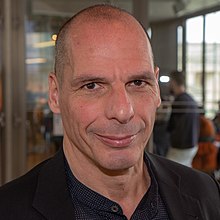
Yanis Varoufakis (Author, Greek economist and politician, Minister of Finance of Greece for 7 months in 2015, launched Diem25, the “Democracy in Europe Movement 2025” in February 2016.)

Yanis Varoufakis gives listeners a glimpse of decisions made when a national government is compelled to declare a national debt crisis. To fairly understand “Adults in the Room”, one will struggle with Varoufakis long story. His story is about restructuring rather than refinancing the debt owed the E.U. and IMF for a national debt crisis. Restructuring debt changes terms of repayment based on an original debt, while refinancing increases the debtor’s burden.

It is helpful to have listened to a book about Detroit’s bankruptcy. Detroit’s harrowing experience gives some idea of how difficult it is for a government entity to repay creditors for profligate government economic management. Detroit manages to restructure their debt with the help of its citizens. Greece is caught in the grips of E.U.’ and IMF’ bureaucracy that only increases its debt.

Varoufakis’ argument for understanding the plight of society’s poor is highly relevant in this era of democracies’ homelessness and economic inequality.

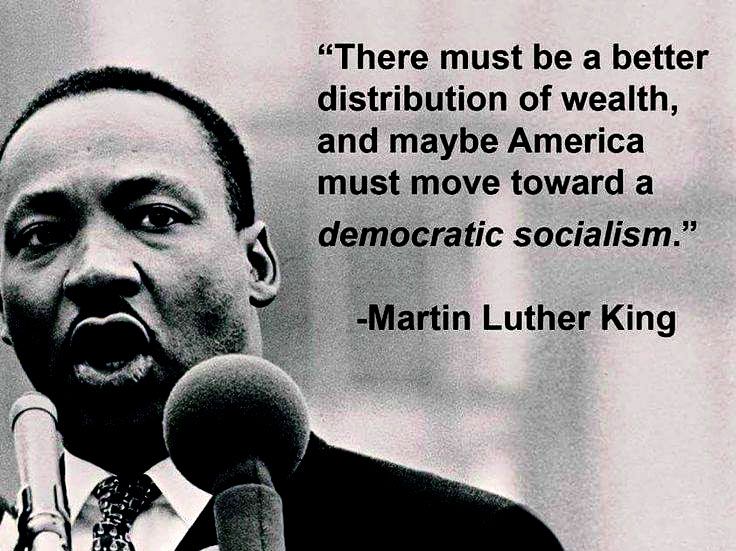
Varoufakis acknowledges socialist beliefs while inferring a negative opinion about capitalism. Varoufakis professes strong belief in democracy with a pronounced lean toward socialism, i.e., a belief similar to America’s Bernie Sanders who is mentioned in “Adults in the Room”.

Varoufakis notes that Greek, like American society, is unequal with rich and poor being disproportionately benefited by intended and unintended government and economic policy.

Greek government’s effort to compensate for inequality seems couched in an economic system meant to equalize citizen inequity with a pension system designed to compensate the poor for economic inequality. A poorly managed national economy and a weakly enforced tax collection system compounds Greek government failure to live within its means.

When Greece declares a sovereign debt crisis, the European Union and the IMF (International Monetary Fund) provide a credit lifeline of $9.5 billion to avoid a default on a previous bailout.

This so-called lifeline is contrary to what is requested by Varoufakis who becomes the Minister of Finance for Greece. The benefit of restructuring the debt provides liquidity to the Greek banking system without theoretically damaging credit worthiness of either the E.U. or IMF. On its face, it seems a win-win solution for Greece’s debtors and Greece’s citizens. However, the E.U. sees it as a dangerous alternative that fails to address the root causes of Greece’s profligate behavior. The E.U. demands control of all economic expenditures of the Greek government in return for a bail-out of past debt with a larger tranche of new debt. Financial control of Greece’s use of the new funds is to be exercised by a triumvirate representing the debt holders.

Varoufakis asks that Greece’s original bailout debt be restructured as a long-term bond with reduced payments over a long period of time, with payment size largely determined by Greece’s liquidity in a recovering economy.

In contrast, the demands of the E.U. and IMF are that salaries and pensions be cut, government employees’ pensions frozen, and retirement age raised. Those measures disproportionately hit the poor, destroy jobs, do nothing to improve tax receipts, and make it more difficult for Greece to pay its debt; not to mention the strict control of all expenditures by an external triumvirate of debt holders.

With these draconian rules, Varoufakis notes unemployment improves. However, the economy is estimated to be 25% smaller; not to mention the impact of the external triumvirates’ control reduces living standards, pensions, and salaries of the working poor.

The point of Varoufakis’ story is that the E.U. and I.M.F.’s mandated terms victimizes the most vulnerable Greek citizens trying to make a living.

Varoufakis resigns after 7 months in office after unsuccessfully fighting the onerous and inequitable demands of the E.U. and IMF. In some listener’s opinion, some may suggest Varoufakis abandons the poor, but his story suggests the decision of the controlling triumvirate of the E.U. and IMF rendered his continued role as Minister of Finance a virtual joke. Varoufakis is unable to change the E.U. and IMF board’s inflexible rules. Greece’s Minister of Finance cannot achieve a delay in their demand for restructuring the Greek’s debt to correct a poorly managed tax system and weak economy that victimizes the most vulnerable citizens of Greece.

For listeners of “Adults in the Room”, one wonders where wealthy Greek citizens were when Varoufakis tries to pull Greece out of its financial ditch.

Unlike the book about Detroit’s bankruptcy, there seems no appeal to rich citizens of Greece and a method for using Greece’s historical art and artifacts to collateralize a more equitable bail out for its people. Where were the Greeks who could afford to pay their taxes? Where were the art and antiquity foundations that could have aided in the negotiations with the E.U. and the I.M.F.? The historic art and monuments of Greece are an international treasure, particularly for western culture.

In retrospect, Varoufakis’s idea of restructuring the debt seems brilliant but there seems no time is allowed for Varoufakis to organize a response that could change the mindset of the members of the E.U. and IMF decision makers. As a “Monday morning quarterback”, Varoufakis’s idea would have carried more weight if he had gathered support from wealthy Greek merchants and art foundation entities that could have created a repayment sweetener to seal his loan restructuring idea. However, it appears there was not enough time for Varoufakis to gather enough support to make a case for debt restructuring. The triumvirate controlling the purse strings of the bailout would not wait.

Listeners owe a debt to writers like Varoufakis who are willing to tell their stories, whether right or wrong. In fairness to Varoufakis, it is easy to retrospectively review his actions to save the Greek economy.

At best, one concludes, restructuring Greece’s debt was a great idea that could have achieved a decent compromise for its lenders. On the other hand, one wonders what the leaders of Greece were doing when the repayment crises first began to show itself.

There were undoubtedly some powerful and rich Greek leaders who could have come to the aid of their country in this 21st century “time of need”. One is reminded of the heroic defense of Greek citizens in Crete when Nazis invaded their strategically located island. Where were the descendants of the many great Greek heroes of antiquity?

U.S. AND ISRAEL

What seems glaringly obvious in Mead’s “too long” story is the immense contribution Jews have made to the United States.

Audio-book Review
 By Chet Yarbrough

Blog: awalkingdelight)
 Website: chetyarbrough.blog

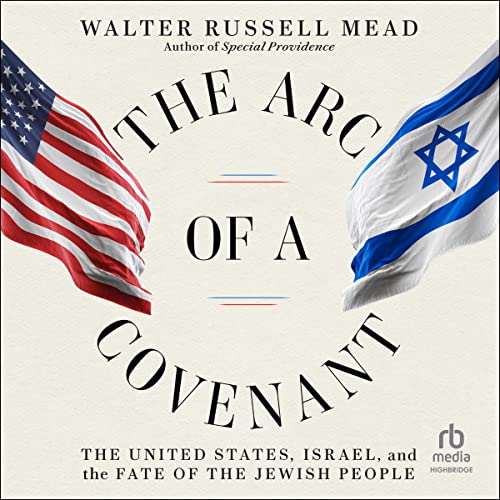
The Arc of a Covenant

By: Walter Russell Mead

Narrated by: Josh Bloomberg

Walter Russell Mead (American Author, Professor of Foreign Affairs and Humanities at Bard College, taught American foreign policy at Yale.)

Walter Russell Mead hardens the consequence of race and creed in the history of the modern world. Mead offers a biblically influenced history of human progress in “The Arc of a Covenant”. One cannot diminish the value of human diversity, but Mead implies millions who were murdered, maimed, or imprisoned in history have paid a price for human progress. Mead suggests the greatest price paid is by Jews who were largely abandoned by Franklin Roosevelt’s America and imprisoned, gassed, and murdered in WWII.

Despite America’s decisive role in WWII, largely orchestrated by Franklin Roosevelt, Mead suggests President Truman’s actions to end the war and gain the peace shine as brightly as the social programs created by his predecessor.

As is widely known, the Ark of the Covenant carried two stone tablets that were given to Moses by God that contain the Ten Commandments.

Mead implies these commandments were adhered to by Truman more than any President before or after his presidency. He notes that despite Truman’s lack of a college degree and inexperience as a politician, he utilized the universal values of the ten commandments to guide America out of war into a peace meant to reinforce the “…Covenant” given to Moses by God. It is clear from Mead’s history, that Truman did not do it alone, but he led the effort with the support of his predecessors, direct reports, and successors.

As the 33rd President, Truman re-engaged the U.S. in internationalist foreign policy, adopted Kennan’s recommendation of containment of U.S.S.R. during the Cold War, passed the Truman Doctrine that helped eliminate the communist threat in Greece and Turkey, responded to the Berlin Wall crises with the Berlin Airlift, and passed the $13 billion dollar Marshall Plan to aid Western European recovery after WWII. Truman also ended racial segregation in the Armed Services, and established the NSC, the CIA, and the NSA.

In America, Henry Cabot Lodge and evangelist, William Blackstone, were two predecessors to Truman that martialed American opinion to support the Balfour proposition of Englishman Arthur Balfour who recommended support for a Jewish homeland in Palestine. To an evangelist, one presumes the motivation is biblical belief in the prophecy of Armageddon that is to occur in the Middle east with the return of Jesus Christ to save believers in the faith. Lodge supports Zionism (a 19th century plan for a Jewish homeland in Palestine) as the Chairman of the Senate Republican Conference from 1918 to 1924.

In 1946, Palestinians refuse to agree to a separate Jewish homeland in their country. They would only agree based on a one state solution where Jews would be a minority in a Palestinian controlled state. The consequence of that refusal is to diminish the territorial control of the Palestinian people.

Mead notes the British walked a fine line between their need for oil from the Middle East and their effort to fulfill the promise of the Balfour agreement.

The conflict between Jews and Palestinians is initially controlled by the British military when the Jewish settlements first came to Israel. In the end, the British need for oil is greater than their continuing act as arbitrator for the Palestinian/Jewish conflicts.

The British decide to turn the conflict over to the United Nations which was formed in 1945 as a replacement for the League of Nations.

Though this body is meant to resolve international conflicts, it has five permanent members that have veto powers over its policies. They are China, France, Russia, the UK, and the US. Russia for a short time supports an independent Jewish State but becomes a notorious abuser and murderer of Russian Jews during the Stalinist years.

By a slim margin, with Stalin’s real-politic support, a UN resolution is passed to create a Jewish state in Palestine.

Stalin’s goal is to drive a wedge between Western powers like the UK and the US by supporting the resolution. The UK needs Arab oil even at the expense of the Balfour plan and the UN resolution. In enforcing the partition, Mead notes Truman is caught between the jaws of Cerberus guarding what is the hell between Arab states and a boundary line for Israel.

Mead explains Eleanor Roosevelt is a major force in politics of the U.S., particularly after the death of President Roosevelt.

She supports the UN resolution and expects the American government to enforce its implementation. In 1948, Mead notes Truman plans to enforce the UN resolution with the American military, if necessary, which is not popular with some American leaders and U.S. voters.

Mead illustrates how America aided Israel in its early formation, but notes Israel grew strong on its own. After the end of the Cold War, the world enters a Cold Peace. Mead drops a cultural bomb on his readers by noting America’s role as western world savior morphs into western world goat. Mead infers that transmogrification is the base upon which Donald Trump is elected. He suggests the fall of the U.S.S.R. seemingly created a bed of roses but turned into a crown of thorns.

Mead suggests America in in a post-cold-war era. America’s left-wing support of Israel is now Right-wing support.

Deregulated growth of the economy is a causal factor in the widening gap between rich and poor. 9/11 destroyed America’s self-confidence by suggesting America cannot protect itself, let alone spread democratic values in the world. American power emulates authoritarian government with slogans like “Make America Great” with an underlying disregard for foreign relations and world peace. Mead suggests there is a growing loss of faith in American government.

It is sad to think how vilified and unfair history has been to such a small ethnic minority.

What seems glaringly obvious in Mead’s “too long” story is the immense contribution Jews have made to the United States. As a small minority, their contribution to the world outstrips any ethnic group in this dilatant’s flawed memory. Mead gives some perspective to that realization.

DEFINING FREEDOM

Audio-book Review
 By Chet Yarbrough

Blog: awalkingdelight)
 Website: chetyarbrough.blog

The Rise and Fall of the Neoliberal Order (America and the World in the Free Market Era)

By: Gary Gerstle

Narrated by: Keith Sellon-Wright

Gary Gerstle (Author, Professor of American History and Fellow in History at Sidney Sussex College, University of Cambridge.)

Gary Gerstle’s history of the “…Neoliberal Order” is tiresome to listen to but gives weight to American belief and practice of freedom regardless of political affiliation or interest group association. Gerstle’s history is tiresome because of its labeling, not because of its historical accuracy. Whether one is a conservative, liberal, or neoliberal is superfluous.

Americans pride themselves on being beacons of freedom when in truth they are opinionated advocates of self-interest hiding behind political labels.

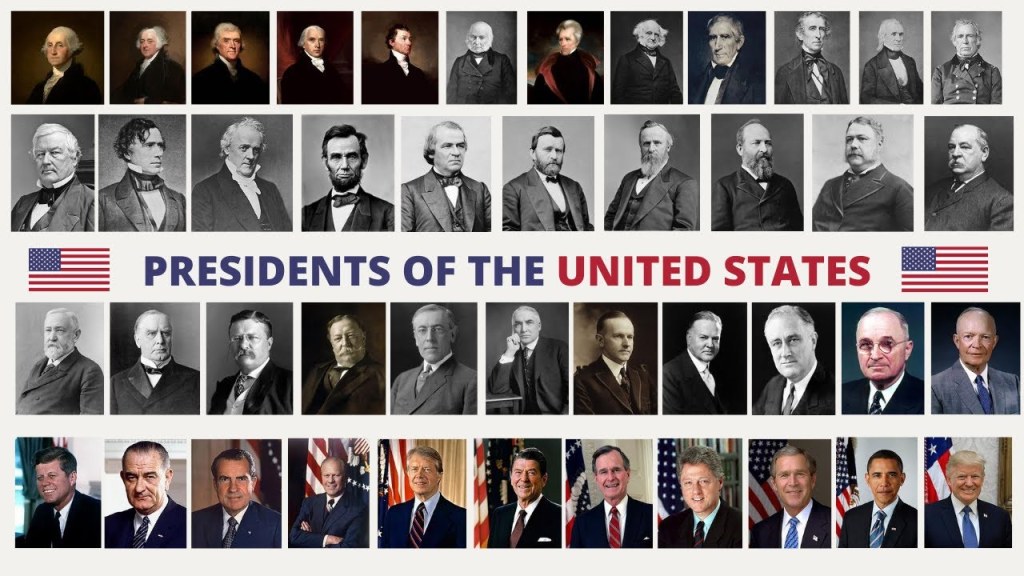
Gerstle’s history shows every President of the United States has been elected by the prevailing sentiment of the time. (To date, Presidents of the United States have always been men because of humanity’s history of misogyny.) The common thread of America’s leaders is their belief in freedom. In America, that freedom is limited by “rule of law” created by two branches of a popularly elected legislature. Sadly, as shown by Gerstle’s history, America’s “rule of law” has historically victimized the powerless and poor.

Belief in freedom has justified slavery, led to a civil war, given America the emancipation proclamation, voting rights for women, and created vituperative media manipulators like Rush Limbaugh, trolls like Alex Jones, and media conglomerates like Fox News.

The difficulty of American democracy is in knowing where to draw the line between freedom and rule of law that regulates excesses and treats all citizens equally. Guilt finally rose to the level for the emancipation proclamation to free slaves, and voting rights for women in 1920, but Black Americans and women are still seeking equal rights.

Gerstle accurately reveals America’s adaptation to the will of an ethnic majority to circumstances of different eras, whether it is enrichment of the rich, preparation for war, recovery from economic depression, or adjustment to the threat of global warming.

The strength of America democracy is its flexibility in dealing with societal change, with the caveat that government tends to protect the status quo.

Communal self-interest changes with the circumstances of its time. Self-interest is immutable in one sense and highly fungible in another. The power of money influences elections and government policy that aids the moneyed, often at the expense of the powerless and poor. Communal self-interest is reenforced by the right to vote but the economic advantage of government policy goes to the rich and middle class because that is where the money is that supports election campaigns.

Gerstle notes that in the 21st century, particularly with the ubiquity of media, the challenge for the public is to know the difference between propaganda, lies, and truth.

Gerstle infers history shows America takes the course of moneyed interests in elections whether it is one or the other of the three challenges to the public. Sadly, propaganda and lies are often believed by the public to be truth.

Gerstle recalls how the flood gate of media technology opens and its flood takes hold of America during the second term of the Clinton administration. Clinton chose to eliminate the Glass-Steagall Act that was designed in 1933 to prevent another Depression.

Clinton recognizes the world is at the precipice of the tech revolution. During the industrial revolution, banks were steered away from volatile equity markets by the Glass-Steagall Act. Clinton, with the help of Republicans like Newt Gingrich, wanted to loosen the chains of investment banks so the technology revolution could blossom. Neither Democratic nor Republic Presidents reversed that decision after the Clinton presidency.

In part, one might argue the near banking collapse in 2008 could have been avoided if the Glass-Stegall Act had been left in force.

Worse, in the 2008 financial debacle, stockholders in at risk banks were bailed out by the Obama government while overstretched homeowners were left with mortgages they could not pay. The rich were bailed out while the poor were bankrupted.

The three banks that failed in May and March of 2023 are arguably a consequence of the volatile investments made in technology companies, a second threat to the banking industry in the 21st century.

The choice of the government in 2023 is to replace depositors’ funds in excess of FDIC limits to avoid the loss of their businesses from the profligate investments by these three banks. The difference between the 2008 bailout and the 2023 government response is bank’ stockholders were not bailed out by the government while other banks took over their portfolios.

Gerstle’s history clearly shows American Democracy’s failures are non-partisan. Both Republican and Democratic leaders fail the poor and powerless populations of America.

That failure is not because of a failure of democracy but because of poorly regulated capitalism. Karl Marx explained democracy is a first step toward communism. One can disagree with that conclusion by noting self-interest is a part of life that makes the ideal of communism unattainable. What is attainable is a democracy that improves public education and mandates business legislation that ensures and enforces social equality and equal opportunity.

American Democracy needs to erase lobbyist, industry, and individual financial donors’ influence on government political campaigns.

Democracy is a work in progress, but it is the best form of government known today. Capitalism is the engine of economic growth that works in all forms of government. In today’s world, capitalism offers the greatest opportunity for humanity in any form of government, but particularly in Democracy.

In the 21st century, it seems democracy is evolving to meld the best of socialism with the self-interest of capitalism.

Democracy struggles with the principles of regulated freedom. Gerstle’s history shows democratic freedom, limited by rule of law, remains at the heart of what can truly make America Great. What gets in the way is the greed of moneyed interests that elect leaders who become dependent on a minority of American society.

Gerstle’s recounts the history of the second Bush’s administration’s misguided and disastrous invasion of Iraq.

The bloody toll of America’s invasion and failed reconstruction of Iraq illustrates the hubris of American belief that democratic freedom works for all nations of the world.

The invasion and reconstruction of Iraq is shown to be an American failure by any measure of societal improvement.

Gerstle shows the election of Donald Trump is a triumph of the disaster of believing American Democratic elections are in the best interest of its citizens. Trump’s administration mocks the ideals of American Democratic government and freedom. Rule of law is a joke to Trump as evidenced by the many indictments and denials of America’s former President. Gerstle notes how unprepared Trump was to become President of the United States.

By any measure, Trump is shown by Gerstle to have damaged America’s image in the world.

Gerstle’s history shows Democracy needs to be regulated by rule of law. Self-interest is unlikely to disappear from human nature which puts all societies at risk. Any form of government can become autocratic but taking the influence of money out of elections leaves hope that citizens of Democratic nations will have a chance to live well, and in peace.

COVID19’S LESSONS

Business competition and innovation create winners and losers but if the field of play is level, society benefits.

Audio-book Review
 By Chet Yarbrough

Blog: awalkingdelight)
 Website: chetyarbrough.blog

Post Corona (From Crises to Opportunity)

By: Scott Galloway

Narrated by: Scott Galloway

Scott Galloway (Author, Professor of Marketing at NYU Stem School of Business, founder of several businesses.)

Scott Galloway is a professor of Marketing at NYU’s business school. He uses his experience and education to explain what happened in America during the Covid19 crises and what it revealed about 21st century capitalism. Galloway briefly writes of his boyhood raised by a divorced mother who profoundly influences his life.

Galloway is a self-professed introvert who is both an entrepreneur and business consultant who believes there is a need for government to revise its relationship with business.

Galloway notes the great power of capitalism is based on freedom to innovate and compete in the world of business. Business produces product and service for the public in return for the cost of doing business and the hope for profit. Galloway’s primary focus is on technology companies that grew from an entrepreneur’s idea to marketplace behemoths. Galloway’s education and experience suggest American government needs to redirect publicly held businesses to change their corporate focus from protecting stockholders to protecting workers.

Galloway argues covid19 accelerated restructuring of the business world.

Business has evolved from face-to-face transaction to internet ordering and delivery. Retail and services industries were gob-smacked by loss of customers who changed their social and purchasing habits because of the contact threat from exposure to the Corona virus that killed over 1,000,000 Americans.

Storied companies like J.C. Penney filed for bankruptcy because they could not adjust to changed social and business environment caused by Covid19. The world is still adjusting to the consequences of the pandemic.

The commercial real estate industry is undoubtedly the next crises for the economy. Having an office or a business away from home became less important with the advent of technology. The internet reduces the requirement of human presence in a central location.

Businesses traditionally driven by touch and feel relationships were made less safe by covid19. With the internet of things and people, it became more convenient for customers to buy product on the internet and work from home. As the threat of covid19 diminished, service industries revived, particularly restaurant and entertainment industries, but on-site retail sales continued to struggle. Exceptions are box stores that offer lower prices or retailers that have mastered the art of internet sales and delivery.

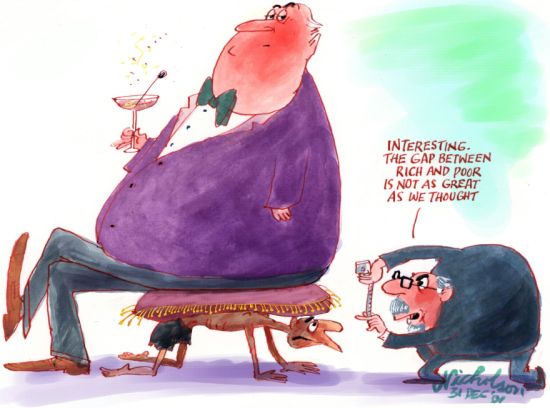
Galloway goes on to note the gap between rich and poor that diminishes human value while increasing wealth of stockholders at the expense of workers.

The median annual income of white families in America in 2019 was $188,200, Black families $24,100 and Hispanic families $36,100. Galloway suggests this unconscionable gap is caused by the failure of government to protect workers rather than stockholders as the business environment changed. Galloway suggests inept regulation by government politicians of the free enterprise economy accelerated the gap between rich and poor.

The election process is unfairly weighted away from public interest toward special interests that contribute huge amounts of money to get people elected that are beholden to their financial supporters.

Government lobbyists paid by energy producers, internet scions, automobile manufacturers, and banks were bailed out with government protection of stockholders with little help for workers who became unemployed.

Covid19 benefited tech companies that have changed the face of business commerce in America. Galloway addresses the technological revolution that was accelerated by covid19. Their stock value accelerated at a faster rate than businesses of the industrial revolution. The tech revolution’s change in commerce was equivalent, if not greater than the agricultural and industrial revolutions of the past. The rate of change for business has been greater and more accelerated by covid19.

Amazon, Google, Facebook, Microsoft, and to a lesser extent, Tesla, Netflix, and Twitter (at least prior to Elon Musk’s acquisition) hugely benefited from social isolation caused by covid19.

Galloway optimistically suggests the high cost of education can be reduced by technology. (Maybe, but one wonders about the effectiveness of home schooling during the pandemic. Students fell behind during the pandemic.)

Galloway’s two highlighted potentials of the technology revolution that are not fully realized are education and business. Galloway argues remote learning will improve, and the cost of education will become more competitive and available to the general public. Businesses will become better managed and responsive to the needs of society as better government regulation of the tech age is realized.

The fundamental point made by Galloway is that government needs to change its focus to protection of workers rather than stockholders to realign the gap between rich and poor in the world.

Re-education classes for the unemployed.

Stockholders deserve their fate whether they win or lose the value of their investments, but workers are the driver of business success. Without protection of workers, the American economy will decline, and the influence of democratic capitalism will be diminished. Galloway infers free enterprise in a capitalist society will not regulate itself, but it will improve with prudent government regulation that serves workers first.

Galloway suggests the benefits of socialism will be best served by prudent government regulation of capitalism. Competition and innovation remain the blood and bone of improved economic equality, but workers are undervalued cells of that business foundation.

Galloway acknowledges the benefits of socialism but insists capitalism is the avenue for realization of the best socialism can offer a nation’s citizens. The conjunction of the pandemic and growth of technology have reduced social contact and created harmful media networks that distort truth, attack cultural difference, and exacerbate division and social conflict.

Business competition and innovation create winners and losers but if the field of play is level, society benefits. Moving fast and breaking things is the mantra of the tech world. It is up to government to regulate business to level the playing field. Galloway argues protection of workers, eliminating money’s influence on elections, and allowing stockholders to lose their investment when businesses fail are keys to improving American capitalism.

MILITARY R&D

Audio-book Review
By Chet Yarbrough

(Blog: awalkingdelight)
 Website: chetyarbrough.blog

Rise of the Machines (A Cybernetic History)

Release Date 6/28/16

By: Thomas Rid

Narrated by: Robertson Dean

Thomas Rid (Author, political science Professor received Ph.D from Humboldt Univ. of Berlin in 2006.)

Thomas Rid’s history of the “Rise of the Machines” is a political perspective on society’s adoption of cybernetics (the science of communications and automatic control systems in both machines and living things).

Rid begins his history with the industrial age that created machines and increased worker productivity while displacing and retraining workers to meet the needs of a growing economy.

Rid’s history defines the origin and significance of cybernetics. It may be interpreted positively or negatively. Viewing the state of the world today, there is room for praise and criticism. On the one hand “Rise of the Machines” offered opportunities and prosperity, on the other, it promoted murder and mayhem. The irony of both is they come from the same source, military R & D. Like Willie Sutton said about robbing banks, military defense budgets are “…where the money is”.

Rid recognizes Norbert Wiener’s formative role in the cybernetic age. Rid notes Wiener develops communications engineering and cybernetic theory during WWII. Rid reminds listeners of the military’s radar refinement and jet pilot cybernetic helmets, long before virtual reality became available to the public. The key to Wiener’s success is experimenters’ recognition of the importance of environmental feedback when designing machines to precisely locate an enemy target or for pilots to engage an enemy plane.

Norbert Wiener (American mathematician and philosopher, 1894-1964.)

Feedback is key to efficient machine performance because it provides information for changed response in the same way humans respond differently when circumstances or environments change.

Rid gives the example of pilot helmet refinement, partly related to ideas of the Star War’s movie.

Darth Vader’s helmet became a model for pilots of newer jet fighters.

The original helmets were unwieldy and uncomfortable. In Vietnam, the rough terrain led to GE research on motorized robots. However, what they found was the rough terrain and swampy land made them too vulnerable for practical use. GE’s research shows limitations but leads to robotic mechanization for repetitive work in fixed environments of industrial production.

Rid digresses with science fictions’ contribution to the advance of cybernetics. Timothy Leery, and Scientology were early endorsers of Wiener’s theory of cybernetics. Timothy Leery extolls the virtues of LSD as an entry to a different reality. One of Leary’s friends is Jaron Lanier who created an early version of virtual reality headwear.

L. Ron Hubbard claims Scientology’s connection to cybernetics. Wiener pointedly objects to Hubbard’s claim and forbids further association of Scientology with cybernetics.

The first computer is invented in the 19th century by an English mechanical engineer named Charles Babbage. It was an early form of number computation and analysis. It was a century ahead of its time. During WWII, British codebreakers needed to decipher German miliary communications. In 1936, Alan Turing writes a paper “On Computable Numbers…” that leads to employment by the British during WWII to decode German military communications. Turing’s computer decoded Germany’s secret enigma machine’ messages. As a result, Turing becomes known as the father of modern computer science.

The early internet years came in the 1960s from the need for a communications network for government researchers to share information.

That network is called ARPANET, which is financed by the U.S. Department of Defense. It is transformed into the world wide web, now known as the internet. Rid’s book is published in 2016. The potential of cybernetics in war is clearly demonstrated by Ukraine’s ability to resist a much larger and better equipped foreign power.

The role of the military in cybernetics research and development is shown as both critical and essential in Rid’s history.

Ukraine’s use of cybernetic surveillance for military equipment targeting and drone weaponization equalizes power and effectiveness of two mismatched powers.

Though not a subject of Rid’s history, the principal value of free speech is diminished by a cybernetic world that is not properly legislated, adjudicated and enforced by rule-of-law. Internet users have been influenced by media trolls who spew lies and disinformation. Young people kill themselves because of being dissed on the internet. The internet gives voice to hate groups around the world. Gaming is a principal revenue producer in the cybernetic world that patently discounts reality. Human value is discounted by the mayhem of computer gaming.

School children shoot teachers and students with impunity, as though they are creatures in a cyber world.

As late as yesterday, 3/27/23, another school shooting occurs in Nashville, Tennessee. Three adults and three nine-year-old children are killed.

Rid notes cybernetics’ military application both protects and exposes security of nations around the world. Rid writes about an American military intelligence penetration by foreign and domestic hackers during the Clinton administration. Hackers have the tools to disrupt both economic and military operations around the world. Of course, those tools are multiplying. With quantum computing, existing passwords will become obsolete. Intelligence services of all countries are becoming more and more capable of disrupting military or domestic affairs of any foreign power.

LEADERSHIP

Audio-book Review
By Chet Yarbrough

(Blog: awalkingdelight)
 Website: chetyarbrough.blog

Be Like the Fox (Machiavelli in His World)

By: Erica Benner

Narrated by: Karen Saltus

Erica Benner (Author, British political philosopher and historian)

Erica Benner gives context to Machiavelli and his role as a diplomat and advisor to leaders of the 15th and early 16th century. Machiavelli is not depicted as a supporter but as a clever advisor to tyrannic leaders of Florence and city-state regions of Italian power. What Benner reminds one of is that there is no country called Italy at this point in history.

There are three centers of power in the country now known as Italy. One is Florence where Machiavelli is born and raised, the second is in city-state regions, and the third is the Catholic Church in Rome. All are centers of power.

Benner’s history infers most of Machiavelli’s life is a duel with the Medici family’s power. The Medici family initially controls Florence when Machiavelli is a young man. The Medici family is dethroned in 1494. Machiavelli comes under suspicion as a possible co-conspirator. In August 1512, the Medici’s return to control of Florence.

Nicolo Machiavelli lives (1469-1527) in interesting times. The Renaissance occurs between the 1300s and 1700s. Benner infers Machiavelli is like a fox with nine lives.

When the Medici family is overthrown, Florence comes under the rule of a Dominican friar in 1494. The new leader is Girolamo Savonarola. Savonarola is an ascetic who unwisely ridicules the Pope’s Catholic Church leadership and influence. He accuses the bishops of simony, mismanagement, and greed. Pope Alexander VI, a Borgia family descendent, becomes Pope and has Savonarola beheaded. Savonarola’s experience undoubtedly influences Machiavelli to keep his own counsel when dealing with power.

Girolamo Savonarola (1452-1498, Ruled Florence from 1494-1498

Benner explains Machiavelli counsels the Borgia’s but only serves in a way that seems supportive. Benner suggests Machiavelli’s advice to the Borgias hides his real beliefs about city-state’ leadership. Machiavelli is in his twenties when serving the Borgias. These seem the formative years of Machiavelli’s future book, “The Prince”.

Cesare Borgia (1475-1507, died at the age of 31)

There are three Borgias that become Popes. It is the second, Pope Alexander VI, which has a son named Cesare Borgia which appears to be a model for Machiavelli’s “…Prince”. Benner suggests interpretation of Machiavelli is often wrong. After the Borgias, Machiavelli’s leadership beliefs are shown by Benner to be more nuanced. One might consider Machiavelli a political genius, ahead of his time. Benner explains “The Prince” is filled with irony while appearing to laud tyrannic power while his true belief is in just treatment of the ruled. Machiavelli warns of tyranny’s negative consequence.

Caterina Sforza (Noblewoman of Forli.)

An interesting acquaintance of Machiavelli in 1499, before the Medici restoration, is Caterina Sforza, an Italian noblewoman who succeeds her husband as a leader of an area identified as Forli. Women are shown as a force, even in the 15th century. She shows herself to be a tigress by facing down Borgia’s martial control of the town. The reason this is an interesting note is because Benner refers to a dream Machiavelli has of a forceful woman who counsels him to confront the new Medici rulers of Florence and offer his services as an experienced diplomat.

A not widely known contribution in Benner’s history is that Machiavelli promotes the idea of drafting citizens of a city-state into an army for defense of their homeland.

Most Italian city-states hired mercenaries to fight their battles and expand their fiefdoms. Machiavelli recognizes the concomitant risk with mercenaries who can turn on their benefactors for their own interests. Machiavelli convinces Florence’s leaders of the folly of using mercenaries because of their loyalty to whomever pays them best. Machiavelli is charged with raising what we today call a national guard. Soldiers would spend several days for training, and later be called-up when there is a threat to their country. By being citizens of their homeland, Machiavelli argues a home-grown army is more effective and reliable than a mercenary military force when defending their homeland.

Machiavelli is imprisoned and tortured when the Medici’s return to power. He is implicated in an effort to keep the Medici’s out of power in Florence.

With the support of Spain, and a Medici Pope, the Medici family returns to power in Florence. In 1513, a Medici Pope is elected by the Catholic Church. The Medici family returns to rule in the 16th century. Machiavelli’s career is partly resurrected when he writes to the Medici’s about how foreign powers should be handled. He is known to be speaking from personal experience. Though the Medici’s mistrust Machiavelli, they note the value of his understanding of negotiation and diplomacy.  Machiavelli is now in his 40s. “The Prince” is generally thought to have been published in 1513.

Another interesting note in Benner’s history is that Machiavelli becomes an accomplished playwright when the Medici family returns to Florence. His plays are comedies, dramas, and satires about Florentine customs and habits,

Two other momentous occurrences happen during Machiavelli’s life. One is Martin Luther’s attack on the Catholic Church and its purposeful belief that one can buy their way to heaven with indulgences offered for sale (aka simony) by the Church. The second momentous occurrence is the rise of the Muslim religion with the advance of Sulieman the Magnificent. Both were viewed as direct threats to the Church and Catholic faith. Machiavelli is near the end of his eventful life.

Martin Luther’s attack on the Catholic Church with the 95 Thesis in 1517.

Sulieman the Magnificent captures much of the middle east and spreads belief in the Muslim religion. (6 November 1494 – 6 September 1566)

Benner implies “The Prince” is a compilation of Machiavelli’s life as a diplomat. She suggests “The Prince” reflects on the dual nature of leadership with one side beneficent, the other maleficent. Bennet’s history suggests Machiavelli dies penniless and in obscurity because of his sly political fencing with great powers like the Borgia’s and Medici’s.

Machiavelli’s life story shows two leadership styles that effectively lead Italy’s city-states. In Benner’s opinion, Machiavelli’s life experience reinforces belief that beneficent (more democratic and enabling) rather than maleficent (autocratic, and top down) leadership is best. She argues “The Prince” satirically criticizes the second and extolls the first.

OPPORTUNITY & FAILURE

Audio-book Review
By Chet Yarbrough

(Blog: awalkingdelight)
 Website: chetyarbrough.blog

Out of the Gobi (My Story of China and America)

By: Weijian Shan

Narrated by: David Shih

Weijian Shan (Author, CEO of a private equity firm PAG, former partner in TPG Asia, holds a Ph.D. from Univ. of CA.)

Weijian Shan is a capitalist, a Chinese economist, CEO of an Asian investment company, and former professor at the University of Pennsylvania, Wharton School. Weijian Shan was born and raised in China during the Mao era.

Shan has written a memoir of his experience in the Chinese Cultural Revolution which began in 1966 and ended with the death of Mao Zedong in 1976. Shan writes about China’s and America’s economic and political differences.

In 1966, Shan is barely a teenager, having only completed his grade school years. Shan, and many other teenagers, are sent to the Gobi Desert during the Cultural Revolution in China. Shan’s compelling story tells of his experience during the Revolution with an explanation of how he is chosen, at the age of 21, to go to college in Beijing. “Out of the Gobi” is published in 2019. Shan offers insight to Mao’s communist political ideas and gives listeners some thoughts about what Mao’s politics mean in the age of Xi Jinping’s rule of China.

Shan’s experience in the Gobi Desert is among many Chinese citizens who are ordered to leave their city homes to experience rural China’s farm life. The irony is that neither China’s Gobi Desert farmers, the bourgeoise, nor displaced youth were culturally, intellectually, or financially benefited. Rural farmers were victimized because citizen relocations impacted food availability for what were subsistence farms. Many farmers were barely able to feed themselves, let alone thousands of relocated city dwellers. Relocated youth were denied higher education and forced into labor camps that had a negative effect on rural prosperity.

From a political perspective, Mao’s Cultural Revolution is a brilliant idea.

This is not to praise Mao as an intellectual but as a pragmatic politician who understood the value of the Cultural Revolution’s youth-relocations to advance his vision of Chinese communism. Mao cleverly instills a sense of discipline and teamwork by indoctrinating China’s next generation with Maoist communism. Today’s Xi benefits from Mao’s Cultural relocation with a generation raised in the time of the 1966 Revolution.

Shan’s story is the triumph of Weijian Shan’s intellectual development without a structured pre-college education.

(Uighur re-education camp in the 21st century.)

Shan’s memoir is a tribute to his personal strength and determination. Reaching the age of 21 in the Gobi Desert did not impede his intellectual development. Through work experience, social engineering among peers, and a commitment to read everything he could find, Shan overcame his Gobi Desert relocation and lack of a high school education.

With little English language skill, Shan begins his education at a Beijing college to become a student of foreign trade relations.

This educational opportunity is presented to Shan at the time of Nixon’s opening of Mao’s China to the world. Shan had firsthand experience of Mao’s communist mistakes. Shan tells the story of lost prosperity and peace for Gobi Desert dwellers and intruders.

In the Gobi Desert, Shan experiences the deficiency of a government system based on bureaucratic control that distorts productivity reports to make superiors look good. The disconnect between real progress and reports of progress hides the truth of economic waste and deterioration. Shan shows how orders from above depress productivity in two ways. One, by government superiors being ignorant of true productivity, and two, by discouraging the value of competition.

Shan reveals the strength and weakness of Deng Xiaoping’s opening of China after the death of Mao.

Without question, Deng contributed to China becoming the world’s second largest economy by GDP in 2010. On the other hand, Shan suggests Deng’s decision to crush the Tiananmen Square demonstration is the Communist Party’s misreading of demonstrators’ intent and support of economic revisionism. Deng (though reported to have given the order to jail or kill demonstrators) is revealed as a foil to Mao’s dictatorial beliefs in communism. Shan points to the odd fact that Mao removes Deng from leadership but refuses to remove Deng from the Party. The inference is that Mao may have understood the value of capitalism as a communist precursor (as noted by Marx).

XI JINPING (GENERAL SECRETARY OF THE COMMUNIST PARTY OF CHINA AND PRESIDENT OF THE PEOPLE’S REPUBLIC OF CHINA)

President Xi is reestablishing communist party authoritarianism and may make the same mistakes Mao made, without a foil like Deng. Singular authoritarian leaders in the 21st century often deny the merits of democratic free enterprise that reduces the threat of kleptocratic bureaucracy.

ECHO, ECHO, ECHO

Indochina is changing based on its own history. America’s war is only a small part of that history. Sadly, that small part killed more than 50,000 Americans and indirectly resulted in deaths of many more Indochina citizens.


Website: chetyarbrough.blog

Written by Chet Yarbrough

There are no excuses for one to be uninformed about the world in this era of “phone-net” access. However, what is at issue is an echo chamber that traps unwary reader/listeners and fellow travelers in false beliefs.

An echo chamber is a media repeater that only reaffirms one’s beliefs, whether true or false.

An echo chamber is populated with tailored information that only reinforces what one already believes.

Facts of an echo chamber are tailored to its audience, rather than to truth.

To avoid the echo chamber trap, one must diversify what they read and hear. One must become a skeptic. Personal experience, reading of other’s experience, and listening to different news sources are essential requirements of the skeptic. Diversification begins by reading books of history, and periodicals with different political views. Like all books of history, truth is distorted by a writer’s chosen facts. It is impossible to precisely contextualize the complexity of the past.

History is infected by experiences of the present and fact-choices of the past.

Television news reports, local and national newspapers, and news magazines offer subtlety different views of world events. They may report on the same issue but often show different facts and perspectives. Those differences refine and expand one’s understanding of events. Few writers or news reports are perfectly right but each have a perspective that can be measured by the education and experience of reader/listeners.

Diversification of information does not guarantee truth, but it gives reader/listeners choice. In that choosing, we become ourselves.

A case in point is Jim Webb’s interview in the Wall Street Journal, 1/21/23. The title of the article is “Echoes of Vietnam”. Webb is a veteran of America’s Vietnam war. The interviewer asks Webb if the war was worth fighting. The reported response is “…America won–only a different way. We stopped communism, which didn’t advance in Indochina any further than it reached in 1975. We enabled other countries to develop market economic and governmental systems that were basically functional and responsive to their people. The model stayed and I like to think it will advance in Vietnam.”

Jim Webb (Former U.S. Senator from Va., 66th U.S. Secy. of the Navy, Age 76.)

This is a powerful statement by Webb with a view based on Vietnam war experience and the interviewee’s reported Vietnamese language skill. However, it seems Webb’s and the interviewer’s truth is only a snapshot of Indochina from the perspective of one who risked his life in America’s war.

Having traveled recently to Indochina (specifically Vietnam, Cambodia, Laos, and Thailand) what Webb quoted seems partly true. What the interview does not reveal is an uneasiness felt by Laos and Cambodia about a Vietnamese communist threat to borders of adjacent countries.

Communism and Democracy are changing.

As Webb notes communism has elements of capitalism throughout Indochina. Democracy’s form of capitalism is becoming more socialist, which is particularly true in Scandinavian countries and to a lesser extent America.

The striking concern expressed by Vietnam’ and Cambodian’ guides is the fear of China and its authoritarian form of communism, even though it incorporates elements of capitalism.

It seems the American war in Vietnam had little to do with today’s Indochina’ governments. America’s war seems to have had some effect on Indochina’s governmental evolution but not as much as their own history.

Indochina has its own history of authoritarianism, ranging from monarchy to colonialization to its present form of authoritarian capitalism.

Indochina is changing based on its own history. America’s war is only a small part of that history. Sadly, that small part killed more than 50,000 Americans and indirectly resulted in deaths of many more Indochina citizens.

DEMOCRACY’S STORM

Audio-book Review
           By Chet Yarbrough

(Blog: awalkingdelight)
 Website: chetyarbrough.blog

The Lies That Bind (Rethinking Identity)

By: Kwame Anthony Appiah

Narrated by: Kwame Anthony Appiah

Kwame Anthony Appiah (Author, philosopher of history, politics and social sciences.)

Kwame Appiah implies western democracy is the best form of government.

The democracy of which Appiah writes is one in which rule-of-law, freedom within the limits of rule-of-law, and equal opportunity are evident.

However, contrary to Langston Hughes’ poem, the sea is not calm. Democracies’ sea is stormy because its principles are inconsistently practiced.

Kwame Anthony Appiah casts a lifebuoy to those swimming in the stormy sea of democracy.

Appiah’s chapters on religion may be a slog for some but they offer understanding of the inconsistency of religious belief. Religious contradictions are legion. Sermonizers pick and choose paths they like rather than any truth biblical writings may impart.

“The Lies That Bind” examines the role of religion, culture, and government in society.

Agnosticism, and atheism grows with revelations of science, stultified freedom of thought, and (though not mentioned by Appiah) ecumenical abuse.

Appiah’s life story reinforces the importance of culture. Both his parents were highly accomplished people. His mother was a British artist, historian, and writer. His father, from Ghana, was a lawyer, diplomat, and politician. Both parents come from accomplished families. Their son chooses to marry a man when same sex marriage only slowly becomes culturally accepted.

Appiah’s history addresses the ascendence of the Mongol empire to illustrate the breadth of Mongol conquest while noting its style of government control. His point is that control is exercised with a level of tolerance for independence, cultural understanding, and religious belief among Khan’s descendants.

Genghis Khan (1162-1227 Leader of the Mongol Empire)

In summary, Appiah argues democratic societies need to rethink identity in terms of human equality. Whether a man or woman is a successful entrepreneur, CEO, server in a restaurant, or laborer in construction, all are equally human. Appiah notes Trump’s political success in America relates to his intuitive understanding of what many political aspirants ignored—the importance of American labor, whether highly educated, unschooled, rich, or poor.

A leader of an enterprise can be right, even damn right, but fail without the help of labor. Disrespecting labor ensures failure. This is a lesson Henry Ford understood when he raised the wages of his work force. This is a lesson Elon Musk will undoubtedly find in his acquisition of Twitter.

Appiah’s lifebuoy is meritocracy, a government holding of power by people selected on the basis of their ability. The idea of meritocracy came about in the 1960s. However, there are academicians, like Daniel Markovits who believe the concept of meritocracy increases inequality and causes decline in the middle class. Markovits argues middle-class families lose equal educational opportunity because of high cost. Without equal opportunity for education, too many Americans are left without Appiah’s lifebuoy.

Appiah does not directly address issues of equality of opportunity in a democratic-meritocratic society. Though Appiah may be a minority in white western culture, one doubts his educational opportunity was ever a question of cost.

On balance, Appiah offers insight to how democracy can be improved. The key is equality of opportunity which implies democracy needs to focus on safety-net’ issues which entail more help for lower- and middle-class income earners. The safety-net is one which provides equal access to education, health care, and employment, i.e., without regard to sex, race, religion, or ethnic qualification. In democracy, that means election of leaders who are willing to ensure equality of opportunity for all.

SCANDINAVIA

Audio-book Review
By Chet Yarbrough

(Blog:awalkingdelight)
 Website: chetyarbrough.blog

The Almost Nearly Perfect People

By: Michael Booth

 Narrated by: Ralph Lister

Michael Booth (British Author, food and travel writer.)

Later this month, we will travel to Scandinavia and Finland. As a suggestion by our guide, “The Almost Nearly Perfect People” is a fascinating introduction to Denmark, Norway, Finland, Sweden, and Iceland. To be fair to indigenous people of the Nordic countries, one might keep in mind the author is British while living for ten or more years in Denmark with his Danish wife and family. The author notes they moved from Denmark for a short time, but his wife convinces him to return.

Booth is a travel and food writer. He explains that an extra motive for writing this book is because a wide part of the world knows little about Scandinavia and much of what they think they know is wrong. I am more in the first than second category but have an interest in the subject because of my Finnish grandparents.

On a per capita basis, Norway is among the ten richest nations in the world. America is around 11th. Sweden and Denmark are not far behind.

In contrast Finland is a laggard at 21st position but Booth claims Finland is his favorite among the five countries.

For public education systems, Finland is historically ranked among the best in the world while Norway, Sweden, and Denmark are among the top ten. To give perspective, America is around 27th place.

The Danish-Swedish company Arla Foods is the 7th largest dairy company in the world. The industrial transportation and shipping company Maersk is a Danish company. IKEA, Volvo, Assa Abloy (key card locking systems for hotels), Electrolux, Ericsson, and H&M are Swedish conglomerates. Denmark and Sweden are industry power houses in the world.

Booth notes Norway became rich with the discovery of oil. Denmark’s and Sweden’s wealth lies in different strengths and weaknesses revolving around their respective international businesses.  

What makes Booth’s book interesting, and entertaining is his view and contrast of Nordic societies. Booth suggests both Danes and Swedes are somewhat cliquish and standoffish but act differently among themselves. Both prefer working with their own countrymen and women. Danes revel in individualism whereas Swedes are more clannish. Neither particularly welcome outsiders but Swedes like working together with fellow Swedes as teams with common purpose. In contrast, Danes work within a hierarchical structure that relies on positional direction. Finns are characterized as less ambitious with a live and “let be” view of life. A Finn works to live rather than lives to work. Booth suggests Norwegians appear standoffish to many but its more from a wish to be self-reliant and reserved. The idea is to preserve personal space among themselves and to have respect for others who may or may not be Norwegian.

Iceland is not a part of the trip we are taking, and Booth only skims Icelandic culture but suggests Danish influence is the predominant characteristic of their population. (Iceland was founded by Danes.) Booth’s primary story of Iceland is in their errant decision to rely on banking system managers that nearly collapse the economy in the 2008 economic crises. Belief in hierarchal structure and positional direction nearly bankrupted Iceland because of unwise risks taken by bank managers.

A listener’s general impression from Booth’s book is that the Nordic countries are uniquely different but generally socialist with the highest tax rates in the world.

Those tax rates provide the best education and health systems in the world. However, their socialism does not impede their innovative entrepreneurial and capitalist interests. In Booth’s opinion, the Nordic countries represent the future of the world by melding capitalism with socialism.

Booth infers the success of Nordic countries begins with their education system. Teaching is an honored profession that is difficult for potential employees to join.

Teaching positions and teachers are highly educated and respected by the general population. Contrary to what one would presume, classes for students are medium size (20 to 23 students), teacher salaries are middle class, class days are limited to 4 hours, and every family has access to any school in their area. Tutoring is widely practiced for students needing help. There are no private schools.

As is true in all countries of the world, immigration is being horribly mishandled. Fair immigration policy in Norway and the world remains a work in progress.

Booth notes Nordic countries have not achieved perfection. With the threat of authoritarianism that diminishes the value of human life, histories of these countries show mistakes were made in WWII and are still being made in the 21st century. On the other hand, Booth shows native Nordic residents endorse and practice equal rights for men and women, a laudable example for the rest of the world.