MOST INTERESTING ESSAYS 12/4/25: THEORY & TRUTH, MEMORY & INTELLIGENCE, PSYCHIATRY, WRITING, EGYPT IN 2019, LIVE OR DIE, GARDEN OF EDEN, SOCIAL DYSFUNCTION, DEATH ROW, RIGHT & WRONG, FRANTZ FANON, TRUTHINESS, CONSPIRACY, LIBERALITY, LIFE IS LIQUID, BECOMING god-LIKE, TIPPING POINT, VANISHING WORLD
America made many mistakes after the 9/11 terrorist attack. One hope’s Israel does not make the same mistakes after the 10/7/23 atrocity. Most Americans’ hearts go out to Israel despite fear and trembling for the world’s future.
Books of Interest Website: chetyarbrough.blog
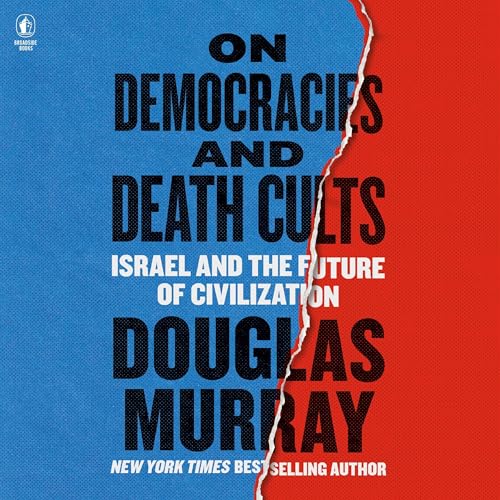
On Democracies and Death Cults (Israel and the Future of Civilization)
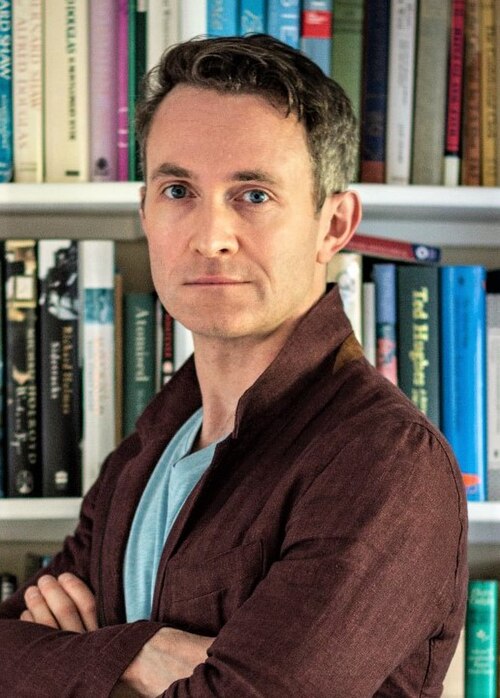
Author: Douglas Murray
NarratedBy: Douglas Murray
Douglas Murray (Author, Bristish political commentator, cultural critic, and journalist.)
“On Democracies…” is an important book because it offers perspective on what happened in Gaza on October 7, 2023, and the aftermath that leads to the bombing of Iran by Israel. In that October day, over 1,200 Israelis were killed including civilians, children, and elderly people. At least 251 hostages were taken. Photos of the aftermath show multiple signs of sexual assault. A woman survivor reports seeing Hamas fighters gang rape a woman before the last of her attackers shoots her in the head. The terror and destruction of the attack is as horrible as one can imagine. It reminds one of men and women jumping out of windows at the New York World Trade Center on 9/11.
As one listens to Murray’s book, one begins to understand why Israel is responding to the October 7th atrocity by attacking Gaza and bombing Iran.
Murray explains the idea of a proportional “tit for tat” response is absurd. Does a rational person expect Israel would respond to the Gaza atrocity by killing and/or raping 1,200 men, women, and children. What is not understood by many is that Israel recognizes October 7th as an attack on its existence as a nation. It is the same concern Ukrainians have in their war with Russia. The fundamental issue is sovereignty, not revenge.
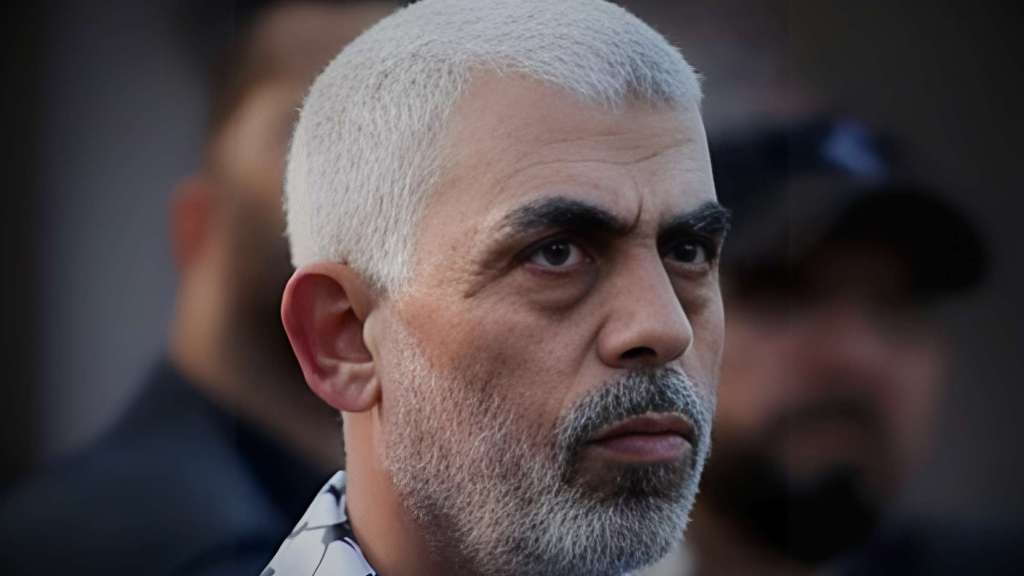
Like Osama bin Laden on his 9/11/01 attack on America, Yahya Ibrahim Hassan Sinwar, organized the massacre of 10/7/23. Both men were stateless terrorists who believed the U. S. and Isreal had no right to exist. Neither terrorist had an interest in the hard work of creating their own nation but only in destroying another. In the early days of the establishment of Israel, there was a drive to create an independent Palestinian state. Both Palestinian leaders and Arab states rejected proposals for a Palestinian state. In contrast, Israel chose to accept an opportunity to become an independent state in 1948. With the leadership of David Ben-Gurion, Israel declared independence and began the hard work of creating a nation. With a beginning population of 806,000, Israel grew to a prosperous nation of 9.7 million with over 73% being Jewish and the remainder being Arab or other nationalities. One must ask oneself, why have the Palestinians not taken the same path as Israel?
Murray makes one understand Israel is fighting for their lives to remain an independent nation.
It is the same fight Ukraine is waging. The bombing of Iran is based on Israel’s belief that Iran has supported Hamas throughout their terrorist war against Israel. Without honest recognition of Israel’s right to be an independent nation, there can be no peace. The continuing massacre in Gaza is a terrible consequence of the destructive intent of Hamas leadership that wishes to destroy Israel.
The sad realization coming from Murray’s book is that Palestinians and their supporters are not willing to do the hard work of creating an independent nation. The time may be past for that to ever occur because Israel is unlikely to agree to another neighboring nation being hostile to Israel’s existence.
America made many mistakes after the 9/11 terrorist attack. One hope’s Israel does not make the same mistakes after the 10/7/23 atrocity. Most Americans’ hearts go out to Israel despite fear and trembling for the world’s future.
There is no religious, nationalist, or political justification for killing of innocents but the history of the world shows we are all killers.
Books of Interest Website: chetyarbrough.blog
Conquering Crises (Ten Lessons to Learn Before You Need Them)
By: Admiral William H. McRaven
Narrated By: Willaim H. McRaven
William H. McRaven (Author, retired four-star admiral in the U.S. Navy, ninth commander of the U.S. Special Operations Command from 2011 to 2014, commanded special operations in Iraq and Afghanistan.)
Wisdom does not always come with experience or age. Though born in 1955, William McRaven spent 40 years as a special operations officer in the U.S. Navy. He retired from military service and became chancellor of the University of Texas System from 2015-2018. Now, as a writer, McRaven offers some insightful advice to those who manage others in response to crises. He offers his personal, corporate, and institutional experience as a crises’ manager.
Though McRaven’s experience comes from a military system of command, he offers a listen, learn, and plan approach to getting things done through others.
When faced with a reported crisis, he notes the first information one receives is usually inaccurate and misleading. He offers numerous examples like Pearl Harbor in 1941, Hurricane Katrina in 2005, and Covid-19 in the 21st century. The first reports of those crises were misleading and were found to be much more consequential and damaging than originally reported. The first step when faced with a crisis is to be sure of the facts. McRaven generally discounts first reports. He suggests one should confirm details from personal observation (if possible or practicable). If one cannot investigate facts of a crises personally, one must confirm details from other sources that are at, subject to, or near the crisis. The point is not to act on first reports but to seek more information.
McRaven receives a phone call in the middle of the night about a mistaken Taliban sympathizer carrying a weapon who is shot and killed by an American soldier during America’s intervention in Afghanistan.
It was found he was not a sympathizer but a cousin of the President of Afghanistan. McRaven calls General Petraeus in the middle of the night to report the incident. Petraeus thanks McRaven for contacting him immediately rather than waiting until the morning. Both recognize the urgency of the crises. They discuss details of what happened and plan a response. McRaven is ordered to contact the President of Afghanistan immediately to explain what happened and offer American support for the family of the murdered cousin. McRaven’s point is know the facts of a crises, create a plan to address what is known, react as quickly as the correct facts are known, plan a response agreed upon by those in authority, and act (as soon as possible) according to plan.
Taliban resurgence in Afghanistan.
A more complicated crisis noted by McRaven is also in Afghanistan. America’s ambassador to Afghanistan meets with McRaven to tell him the special forces reporting to him in Afghanistan are alienating local Afghan citizens with their military actions against the Taliban. The ambassador tells McRaven his operations are alienating Afghani citizens to the point of losing America’s war against the Taliban. The meeting becomes heated because McRaven believes his command is doing a great job of pacifying Taliban attacks on local citizens. Rather than acting like an ostrich with its head in the sand, McRaven calls for a meeting of colonels in the Afghanistan theater to investigate the Ambassador’s accusation. The team McRaven assembles finds the Ambassador’s concerns are justified. Though peaceful coexistence appeared to be improved with McRaven’s special forces’ actions, the alienation of Afghani’s was growing. As has been written by other authors, America’s special forces often acted based on one Afghani family’s personal anger at another family rather than for any concern about Taliban activity.
The group of colonels assembled by McRaven developed a plan to more judiciously act on alleged Taliban activity from Afghan informants.
Of course, America’s ignominious departure from Afghanistan, implies McRaven’s response was too little and too late. This is not to argue that McRaven’s response was wrong but only that the plan did not stop Taliban resurgence. The valid point McRaven is making is that one should systematically address a crisis, create a plan once the facts are known, and execute the plan. Obviously, not all crises are successfully resolved. In the case of America’s intervention in Afghanistan, McRaven’s plan may not have been right for the facts that were gathered, or the crises was just too culturally complex for a successfully executed response.
McRaven comes across as a highly competent leader and manager in a crises.
Where one may have reservations about any leader’s role in a crisis is whether they agree on the facts. McRaven believes it is right to assassinate a proven terrorist who has killed innocent people. That kind of decision goes beyond the principles of McRaven’s book about response to crises. “Judge not, lest ye be judged” is alleged to have been said by Jesus in his Sermon on the Mount.
McRaven believes assassination is justified.
In Ukraine and Gaza, innocents are being killed every day. There is no religious, nationalist, or political justification for killing of innocents but the history of the world shows we are all killers. In a crisis, you would want someone like McRaven to be the “beauty on duty”, but one must ask oneself if assassination is ever justified.
Trump’s effort to make peace is important. Putin will gain a pyrrhic victory, and many Ukrainians will suffer the same consequence as the Baltic citizens who were victimized by Stalin. It is likely that the price of peace is going to be the lives of Ukrainians who come under Putin’s rule. The only solace is that Putin, like Stalin, is near the end of his rule.
Books of Interest Website: chetyarbrough.blog
The Rise and Fall of the Third Reich (A History of Nazi Germany)
By: William L. Shirer
Narrated By: Grover Gardener
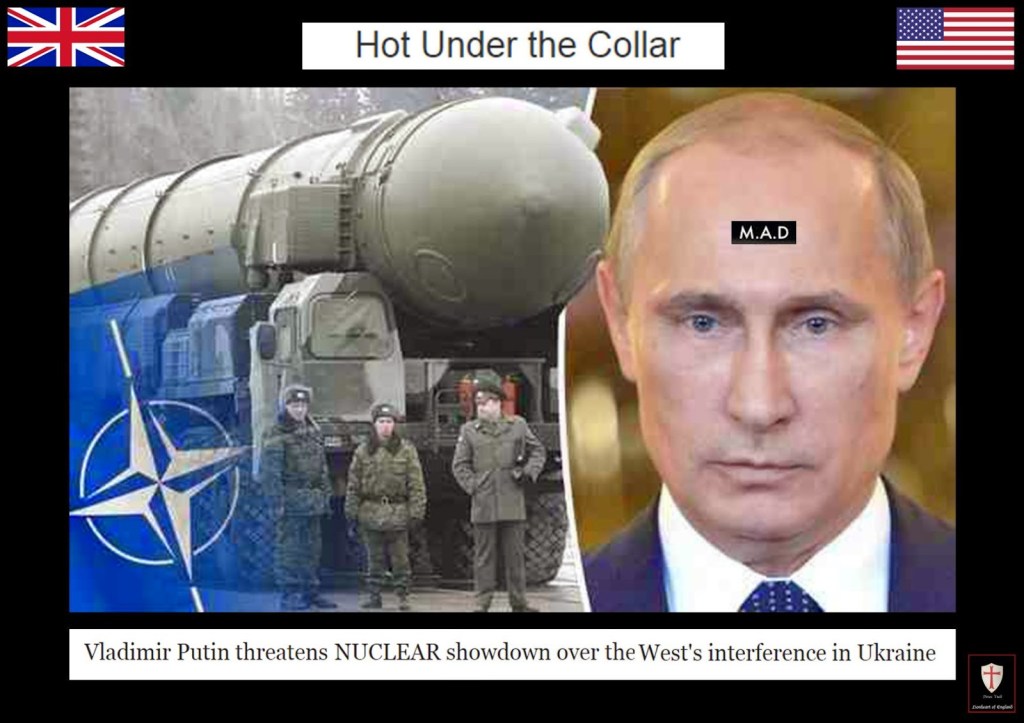
In thinking about Putin’s invasion of Ukraine, it seems prudent to revisit William Shirer’s studied history of Nazi Germany and the beginnings of WWII.
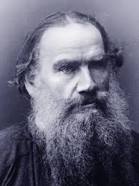
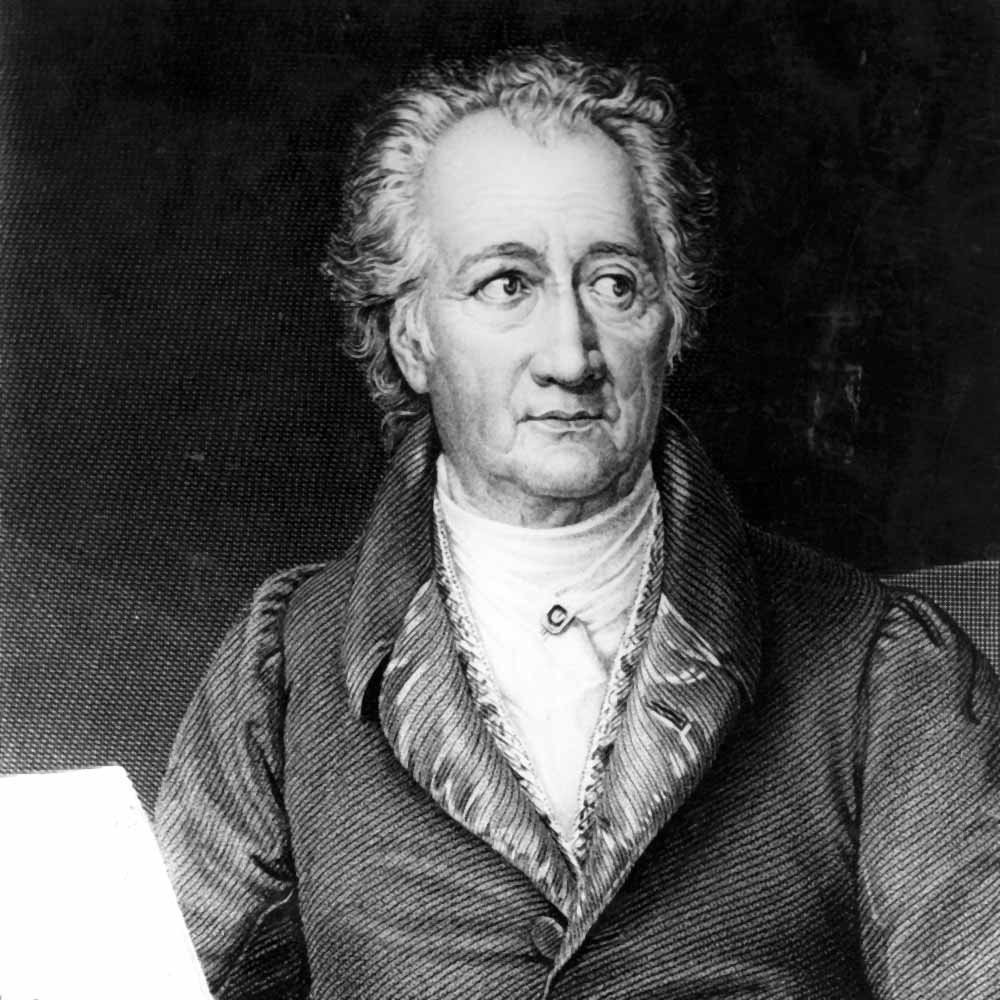
DostoevskyTolstoyGoetheFRIEDRICH WILHELM NIETZSCHE (1844-1900 DIED AT AGE 55)
Reviewing the literature and history of Russia and Germany, one wonders if there are parallels between Hitler’s invasion of Poland and Putin’s invasion of Ukraine. Literature suggests few cultural parallels. Having read Dostoevsky and Tolstoy, one can hardly compare their themes of societal suffering and redemption to Kant and Nietzsche’s themes of individualism or Mein Kamph’s iteration of survival of the fittest. In the history of the Czars of Russia, society and class were of the greatest importance while in Germany, Goethe’s Faust and Hesse’s Siddhartha–the focus was on individualism–not the general condition of society.
It seems Putin is not like Hitler in his aim to acquire other countries. Putin is interested in expanding Russia’s territory to return to a Stalinist style of communism. Both Hitler and Putin are deluded but in different ways. William Shirer characterizes Hitler as ambitious, and fanatic but focused on gaining personal power through German conquest of other countries. Putin’s invasion of Ukraine is to return Russia to a Stalinist U.S.S.R., a nationalist power. Both are set on invading other countries, but Shirer shows Hitler’s desire is for personal power while Putin is more interested in nation-state power.
One must ask oneself, if there is a motivational difference, so what? The consequences to countries being invaded is the same.
Yes, the consequence to an invaded country is the same regardless of the motivation of the invader. Hearing the atrocity of Russian oppression is as though it happened yesterday when one visits the Baltic countries and talks to people who survived Stalin’s control of their countries. There is a palpable fear one hears from Baltic citizens when the invasion of Ukraine by Russia is discussed. The fear is in the possibility of the Baltics being next.
President Trump is attempting to quell the war between Russia and Ukraine, but the cost of peace looks like it will require appeasement at the expense of Ukrainian citizens.
The question is–will appeasement stop further encroachment by Russia on other former U.S.S.R. countries? Putin is 72 years old. Hitler was 45 years old when he became the Führer of Germany. It seems unlikely that the next leader of Russia will follow Putin’s lead in view of Russia’s atrocities in Ukraine and the history of former citizens, like those of the Baltics in Stalin’s U.S.S.R.
The invasion of Ukraine is not like Hitler’s invasion of Poland except in the tragedy of death of innocents.
There is little reason to believe Ukraine is a domino, as was the mistaken American belief in Vietnam by the Kennedy Administration. As all who have read this blog, I am not a fan of Donald Trump. However, in this realpolitik world, Trump’s effort to make peace is important. Putin will gain a pyrrhic victory, and many Ukrainians will suffer the same consequence as the Baltic citizens who were victimized by Stalin. It is likely that the price of peace is going to be the lives of Ukrainians who come under Putin’s rule. The only solace is that Putin, like Stalin, is near the end of his rule.
Machiavelli describes effective governance as brutal, manipulative, and amoral. St. Augustine infers good governance comes from belief in God and adhering to scripture.
Books of Interest Website: chetyarbrough.blog
“On Grand Strategy”
By: John Lewis Gaddis
Narrated By: Mike Chamberlain
John Lewis Gaddis (Author, historian, political scientist, professor of Military and Naval History at Yale University.)
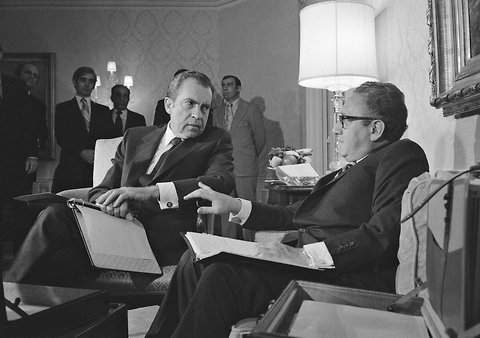
In a September 21, 2021 article in “The New York Times” Beverly Gage resigned as the course leader for “…Grand Strategy” (where Gaddis is a professor), “…saying the university failed to stand up for academic freedom…” She is noted to have said ‘I am not teaching “…Grand Strategy” the way Henry Kissinger would.’
Beverly Gage, in her resignation from Yale is noted to have said ‘I am not teaching “…Grand Strategy” the way Henry Kissinger would.’
The book author, John Lewis Gaddis, implies every accomplished political leader has a Grand Strategy. Historians can always criticize another’s study of political leaders or their place in history but having a strategy is a paramount requirement whether one is an American President or course leader at Yale. So here is a puzzle about the Gage’s resignation and her critical comment about Yale’s Grand Strategy for a teacher’s academic freedom.
One wonders what Ms. Gage meant in referring to Kissinger.
In any case, this is a review of John Lewis Gaddis’s book, “The Grand Strategy”. He begins with an animal analogy by suggesting good governance relies on being like a fox or a hedgehog when acting as a political leader. A fox characteristic is surreptitious and sly while the hedgehog is straightforward and aggressive. He argues governance that uses only one of these characteristics achieve singular objectives but balance between the two achieves the best results. The entire book is about the history of governments that have prospered or declined based on the presence or absence of balance.
In the beginning of “On Grand Strategy”, one becomes somewhat bored with Gaddis’s history of Athens’ and Sparta’s conflicts with Greece and its defeat of the Persian army (492 BCE and 449 BCE). However, mid-way through the book, one becomes engrossed in Gaddis’s evolutionary theory of nation-state’ governance.
In the Persian Army and its defeat by the Greeks and Spartans, Gaddis explains Xerxes neglected the common sense of moving his vast army across the Mediterranean, let alone feeding and supplying its needs. Xerxes was thinking like a hedgehog. Later, Gaddis explains Napoleon makes the same mistake as Xerxes by attacking Russia without considering the vast size of the country and logistic difficulties in feeding and supplying his army. Gaddis notes Tolstoy’s “War and Peace” chapters that explain how the battle of Borodino is a turning point in Napoleon’s hedgehog action.
Gaddis notes the need for political leaders to keep their eye on the prize. He gives the example of Civil War policies by Lincoln who sought end games for union of the States and emancipation.
When endorsing government policy or ordering military action, Gaddis suggests Lincoln was a leader who understood the need for common sense, i.e., always balancing what can be done with what could be done. Gaddis notes there are times when it appears Lincoln is contradicting himself when, in fact, he is being the fox rather than the hedgehog. For example, some argue Lincoln went back and forth on emancipation, but Gaddis infers he was being a fox because of the political heat surrounding the question and the government’s action.
SAINT AUGUSTINE (354-430, DIED AT AGE 75)NICCOLO MACHIAVELLI (1469-1527 DIED AT AGE 58)
At this mid-point, Gaddis’s history becomes more interesting. He recalls the history of two important characters in modern theory of society, i.e. St. Augustine and Machiavelli. Of course, they lived centuries apart, but each represent critical beliefs that impact nation-state governance. In the 4th century, St. Augustine wrote two influential works, “Confessions” and “City of God” that outline why God was important to him and why everyone should become followers of Christianity to save themselves for the reward of eternity in heaven. Christianity begins to replace leadership beliefs based on the Great Caesars of civilization. Rome does lead the world for another 70 years, but Christianity and other religions redefine the relationship between citizens and their rulers. The centralization of Catholicism by Emperor Constantine in the 4th century diminished the power of secular governments. Life on earth became secondary to the possibility of eternal life in St. Augustine’s “City of God”.
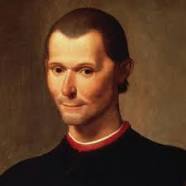
Jumping to the 15th century, Machiavelli’s concept of “The Prince” exemplifies power of governance by secular leaders.
Machiavelli returns political leadership to life on earth in “The Prince”. It is not an abandonment of the “City of God” but a recognition of leadership as it is in this world. Machiavelli experiences the power of political leaders in this world by being imprisoned and tortured for alleged conspiracy to overthrow the Medici family in Italy. Machiavelli’s “The Prince” explains a political theory and leadership of rulers in the “city of man”. “The Prince” returns the idea of governance to the beneficence and cruelty of life here, i.e. not in heaven.
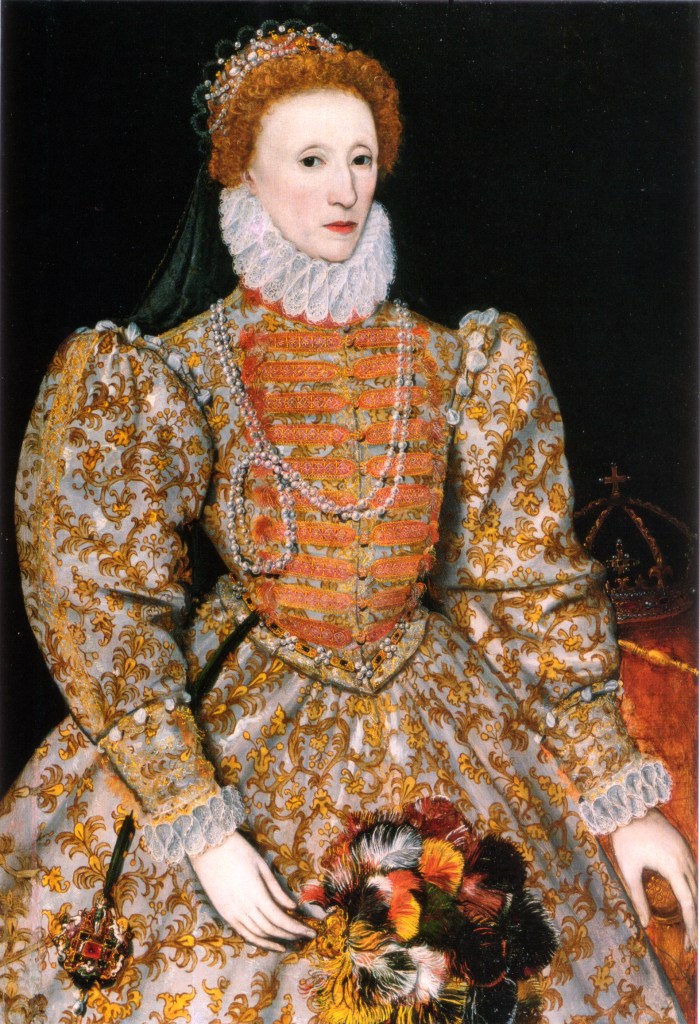
Queen Elizabeth I is Gaddis’ s next example of the changing nature of governance.
Contrary to her half-sister, Mary Queen of Scots who supported Catholicism, Elizabeth reestablished the Protestant Church of England. Elizabeth recognizes the fundamental importance of England’s citizens to her reign as Queen of England. Elizabeth practices the less punitive aspects of “The Prince” to build a foundation for love and respect from England’s protestant, if not Catholic, citizens. The city of God is replaced by the city of man in Elizabeth’s rule.
One can think of many examples that reinforce Gaddis’s theme in “The Grand Strategy” as practiced in America. The senior Bush carefully planned the ejection of Sadam Hussein from Kuwait by building international support for America’s action in the first Iraq war. America’s generals carefully planned the movement of a massive military force, including supply lines, to remove Iraqi forces from Kuwait. The senior Bush did not make Xerxes mistakes. In contrast John F. Kennedy, Lyndon Johnson, and H. W. Bush’s son, failed to use common sense in America’s mistakes in Vietnam and Iraq. It took a sly fox in the Nixon administration to get America out of Vietnam. This is not to suggest any of these actions were wholly good or bad, but a reflection on the balance between using fox or hedgehog thought and actions to achieve common sense results.
Isaiah Berlin (1909-1997, Russian-British social and political theorist, philosopher, and historian of ideas.)
Gaddis takes reader/listeners through WWI and WWII from America’s perspective. On several occasions, Gaddis refers to Isaiah Berlin and his intellectual contributions to political theory and history. Berlin was born in Russia and educated in Great Britain. He spoke several languages and was particularly fluent in Russian, French, German, and Italian. He believed in individual freedom but explained conflicting values coexist and that there is no single universal truth in life. This reminds one of Machiavelli and makes one wonder if Berlin, who is alleged to have a strong sense of Jewish identify, was an atheist.
Woodrow WilsonAbraham LincolnFranklin Roosevelt
Gaddis suggests America has had a series of foxes and hedgehogs that have become American Presidents. Some have been intellectuals, others not. Considering President Wilson was a racist hedgehog while Lincoln and Franklin Roosevelt were at times foxes and hedgehogs, America survived and prospered through three disastrous wars. Gaddis’s point is that America’s best Presidents have been both foxes and hedgehogs, while most have been one or the other. It may be that America survives because, with the brief exception of Franklin Roosevelt, none have served more than two terms. One President may be a hedgehog while the next President is a fox.
Machiavelli describes effective governance as brutal, manipulative, and amoral. St. Augustine infers good governance comes from belief in God. Gaddis’s history of governance explains why and how both qualities are evident and have served America well.
“Apeirogon” is a little too repetitive for this reviewer, but it is cleverly written and shows why political and military occupation is a fool’s leadership style.
Books of Interest Website: chetyarbrough.blog
“Apeirogon” (A Novel)
By: Colum McCann
Narrated by: Colum McCann
Colum McCann (Author, Irish writer living in New York.)
At first the idea of an Irish author writing a book about Israel seems incongruous. After the first few paragraphs, one realizes Colum McCann grasps a truth about religious conflict that is far better than most because of Ireland’s “Troubles” between the 1960s and 1990s.
“Apeirogon” is timely novel in regard to Israel’s response to the October 7 Hamas attack in Gaza. A little history helps one understand the complexity and terrible consequence of the slaughter of innocents.
An estimated 30,228 people have been killed in Gaza, 12,000 of which are thought to be Hamas combatants.
Gaza dates back to Egyptian times, populated by Canaanites who share an ancestral connection to Israelites. Gaza later became part of the Assyrian Empire in 730 BC. Assyrians intermixed with Canaanites, Israelites, Philistines and undoubtedly Palestinians. History shows historical connection between ancient Assyrians and Palestinians just as there were with Israelites. However, Israelites were forcibly relocated to Assyria from the Kingdom of Israel. Because the Israelites were descendants of the Canaanites, they predated Palestinian settlement in Gaza. Ethnic precedent and the want of land area is a part of what complicates the idea of a separate Palestinian state. Where is a homeland for a Palestinian state going to come from?
McCann chose a perfect title for his novel. An apeirogon is a geometric shape that has an infinite number of sides; just like the many sides of Israeli/Palestinian arguments for a homeland. Column McCann cleverly explores these arguments in his novel. He creates a series of Israeli/Palestinian incidents that show how each ethnic culture believes and acts in their perceived self-interests. Every chapter is titled as a series of numbers that begin with the number 1, jumps from 500 to the number 1001; then jumps back to 500 and descends to number 1 to end his story. Revelation comes in 1001. Occupation is an evil that cannot stand.
America’s civil war carries some parallels to what is happening in Israel and Gaza.
What is revelatory about McCann’s novel is its similarities to America’s civil war that ended the lives of too many Americans. Today’s conflict in Gaza is instigated by Hamas just as the Civil War was instigated by southern slave holders. America eventually forgave southern slave holders, but Black Americans continue to suffer from institutional racism. Can a one state solution as demanded by Israel’s conservatives serve Palestinians any better than white America has served Black Americans? America’s civil war ended in 1865-1866, some 158 years later, Black Americans are still discriminated against. Can Palestinians wait more than 158 years to have equal rights in an Israeli nation?
McCann’s novel repeats, too many times, the unfairness of Israel’s occupation of Gaza. Hamas has its rebellious leaders like America had John Brown who killed one Marine, wounded another, and killed six civilians. Neither Brown nor the Hamas leaders can justify their murders though both argue with righteous conviction. The United States could have split between abolitionist and non-abolitionist states, or they could move toward reconciliation. Obviously, the U.S. government prevailed with reconciliation. It seems imperative for Israeli and Palestinian leaders to take the same road as Abraham Lincoln. Hamas is a splinter group like that led by America’s John Brown. Their objective is as horribly misguided as Brown’s. Hamas’s hostage taking and murder of Jewish settlers is as reprehensible as Brown’s murders of a Marine and six civilians.
ISRAEL’S OCCUPATION OF PALESTINE
As difficult as it may be, a two-state solution seems unlikely. What American history suggests is as difficult as America has found reconciliation to be for white America’s murder and unjust treatment of Black Americans. That reconciliation remains a work in progress. However, only union offers a way toward peace. America is not there yet but it is making progress.
Two political factions, bound by both religion and ethnicity, must learn to live with each other for peace to be achieved.
There is no other land for Palestinians. Israel may have the older of the two cultures, and both Israelites and Palestinians have a much longer history of religious and ethnic difference than America. America is founded on religious freedom and equality, though not perfect in either principle. In contrast, religion is a primary determinant in Palestinian and Israeli cultures while equality seems a less prominent concern. Peace will not come without hardship, but a beginning is dependent on Israel’s abandonment of occupation. It will be one country’s leaders’ imperative to provide equal opportunity for all its citizens. The struggle will be long as is shown by America’s history but what realistic alternative is there for the Israeli and Palestinian people? What neighboring country is likely to give up their land to create a two state solution?
“Apeirogon” is a little too repetitive for this reviewer, but it is cleverly written and shows why political and military occupation is a fool’s leadership style. Israel, like white America, needs to do better in reconciling ethnic differences.
One can choose the life of Buddha, Muhammed, Jesus Christ, Zoroaster, Rishabhanatha, Maimonides, Saint Francis of Assisi, Confucious or some other spiritual figure but it is one’s individual memories and our ability in “letting go” that will give one peace of mind and happiness in life.
Audio-book Review By Chet Yarbrough
Blog: awalkingdelight Website: chetyarbrough.blog
The Untethered Soul (The Journey Beyond Yourself)
By:Michael A. Singer
Narrated by:Peter Berkrot
Michael Alan Singer (American Author, journalist, motivational speaker, software developer.)
Michael Alan Singer’s audiobook is a reification of “Letting Go” written by David Hawkins. Hawkins, a medical practitioner, and Singer, a successful tech entrepreneur, come to similar conclusions about how to live life. Singer offers a more spiritual and ritualistic approach in working through remembered, and often suppressed, experiences of life by confronting them and letting them go.
Dr. David Hawkins posits the idea of a cosmic mind that can be tapped into by one’s thoughts to mitigate negative feelings. Singer’s approach is more direct and based on actual experience revealed by conscious thought and conscious rejection.
Singer believes every experience in one’s life is recorded by the mind, either correctly or falsely.
Singer suggests, through meditation, harmful or distorted memories can be revealed and discarded as inconsequential by the process of “letting go”. This is the same “letting go” referred to by Hawkins but located in a cosmic mind (the totality of human thought) rather than the individual mind argued by Singer.
Singer’s idea for treatment seems more therapeutically practical than Hawkins.
Both writers offer a solution to many human problems, but Singer suggests a therapeutic process exercisable by the individual, without the mysticism of a cosmic mind.
Singer introduces the idea that every experience in an individual’s life is consciously or subconsciously recorded in one’s mind.
Singer’s suggestion is that all negative feelings from life experience can be eradicated by letting them go. By “letting go” of accurate or inaccurate memory, Singer suggests one’s peace of mind, energy, and happiness improves.
One can choose the life of Buddha, Muhammed, Jesus Christ, Zoroaster, Rishabhanatha, Maimonides, Saint Francis of Assisi, Confucious or some other spiritual figure but it is one’s individual memories and our ability in “letting go” that will give one peace of mind and happiness in life.
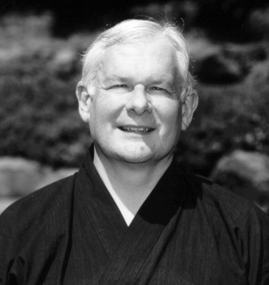
Salar Abdoh (Author, Iranian American, family forced to leave Iran when he was 14, Graduated from U.C. Berkley and City College of New York.)
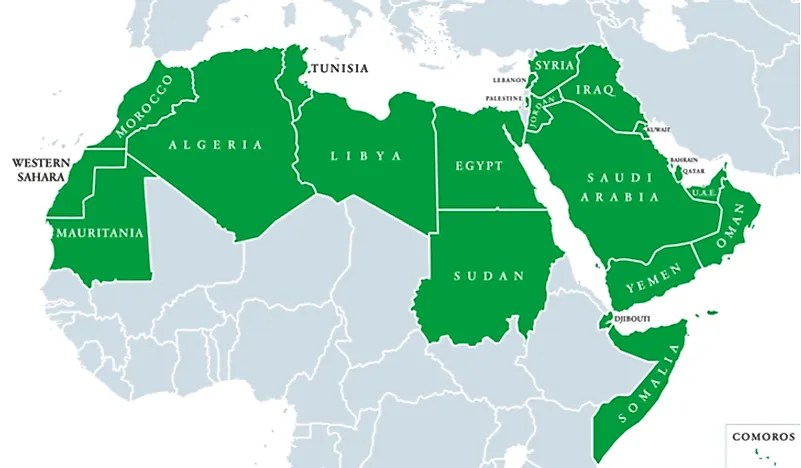
Salar Abdoh’s book title, “Out of Mesopotamia”, implies an opinion about the Middle East. Abdoh entertains a listener/reader with his wry sense of humor, colored by the tragedy of political turmoil, murder, and martyrdom in the Middle East. His personal life and academic education infer a better understanding of western and middle eastern cultures than most Americans.
Abdoh’s novel idealizes a belief in pan Arabism with return of a borderless Middle Eastern area like Mesopotamia. His novel expresses love for Arab culture.
Whether Mesopotamia may have been a land of erudition, agriculture, domesticated animals, and social classes its culture changed with the creation of nation-states rather than singular settled communities. But, that change is unlikely to have been as quiescent as Abdoh implies.
Mesopotamia means between rivers which are known today as the Tigris and Euphrates. It was originally made of city states peopled by Sumerians between the sixth and fifth millennium BC. These city states each had their own king which implies there were borders and undoubtedly periodic conflicts.
As noted by Abdoh, the level of conflict remains today. The difference is, rather than combat with words, fists, and clubs, today’s nation-states use guns, bombs, and weapons of mass destruction to resolve disputes.
Abdoh’s main character is a reporter, sometimes combatant, who decries Iranian religious rule and Syrian slaughter of innocents. One senses the author’s visceral love for Arab culture and a yearning for return to his native country.
A large part of Abdoh’s story is to explain martyrdom to its listeners.
Most understand religious beliefs are the proximate and most obvious reason for martyrdom. Participants of a holy war are memorialized by dedicated monuments to their deaths. Their belief is that they arrive in paradise while being memorialized by those remaining in life. Abdoh explains paradise and earthly memorialization are only two of many reasons people seek martyrdom.
For some, martyrdom is penitence for a sinful life. For others, it is to escape from what they view as a meaningless existence. For a few, it is a choice to end one’s life for what they believe is a meaningful purpose.
From soldiers, to sinners, to artists, and the remaining living, Abdoh infers martyrdom is a wasted life.
Abdoh’s writing is engaging, in part because of its substance but also because of his sense of humor and point of view. He weaves a story of emotion, and disgust by using irony, humor, affection, love, disgust, and intellect of characters who keep one entertained and engaged. The engagement comes from agreement and disagreement with his character’s point of view.
The relationship between America and the Middle East is complicated.
America and the Middle East’s relationship is challenged by cultural differences that seem irreconcilable because of national and individual self-interests, made even more difficult by language. The failure of most Americans to understand more than their own language breeds ignorance and arrogance. As noted by other authors, the story of the Arab world is tightly woven into the fabric of their language.
Abdoh’s story reflects the ignorance of American policy and how it deals with the Middle East.
He does not suggest it is because of malevolence but infers it is from not caring enough and being consumed by American national self-interest. America is described by Abdoh as an apparition and nuisance to the Middle East. Without mutual cultural understanding, there is, nor will there be, peace in the Middle East or world.
The Art of Peace (Teachings of the Founder of Aikido)
By: John Stevens-translator for Morihei Ueshiba
Narrated by: Brian Nishii
John Stevens (Translator, Buddhist priest and teacher of Buddhist studies and Aikido. Stevens was born in 1947.)
“The Art of Peace” is a brief audio book that recounts the life, and for the skeptical, the myth of Morihei Ueshiba. Ueshiba is the founder of the martial arts technique of Aikido. Though Ueshiba’s life ranges from one of violence to peace, his life leads him to a spiritual and practical acceptance of what is Aikido, “a Japanese form of self-defense and martial art that uses locks, holds, throws and an opponents’ own movements to defeat aggression”.
Moritaka Ueshiba, aka Ueshiba Morihei, aka Tanabe Wakayama (Japanese martial artist and founder of the martial art of Akido.)
Ueshiba was born into a relatively wealthy Japanese family. His father was a farmer and minor politician in a city now known as Tanabe, a city located in Wakayama Prefecture. He was an only son with three siblings. Ueshiba describes himself as a weak, somewhat sickly, child who is encouraged by his father to strengthen his body by learning sumo wrestling, swimming and the discipline of repetition.
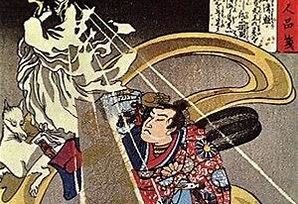
Shinto (A religion that originated in 300 BCE Japan, considered a nature religion.)
Ueshiba is largely taught by a Shinto priest, his elementary schoolteacher.
The Shinto priest introduces Ueshiba to religion. Ueshiba quits his formal education after Middle School. After life in Tanabe, “The Art of Peace” tells of Ueshiba’s life as a warrior in the war with Russia in the early 1900s. He is initially drafted but fails his induction because of his small stature. To increase his height to meet the minimum requirements, Ueshiba allegedly suspends himself from the branches of trees with weights on his legs. He is said to have added the half inch needed to qualify for the military. His success as a warrior is implied by his promotion to sergeant by the end of the war.
Ueshiba continues to train in the martial arts with teachers of judo and other martial arts that give him superior skill as a fighter.
Ueshiba develops great skill with mind and sword. “The Art of Peace” recounts an extraordinary feat to dodge bullets. He is simultaneously fired upon by several shooters to illustrate his ability to evade aggression. He manages to anticipate the first shot and move behind the fusillade before any bullets can find their mark. He does this twice, according to Steven’s translation of the book.
The essential message of “The Art of Peace” is that meeting aggression with aggression is a fool’s errand. Ueshiba argues understanding the futility of aggression teaches one to listen, learn, and act in ways that use other’s aggression against themselves.
There is wisdom in Ueshiba’s argument, but it seems to have taken a long life, diligent study, practice, and experience of war, to adopt the principles of Aikido.
“The Art of Peace” seems more a life of an idea than one’s ability to achieve, let alone implement.
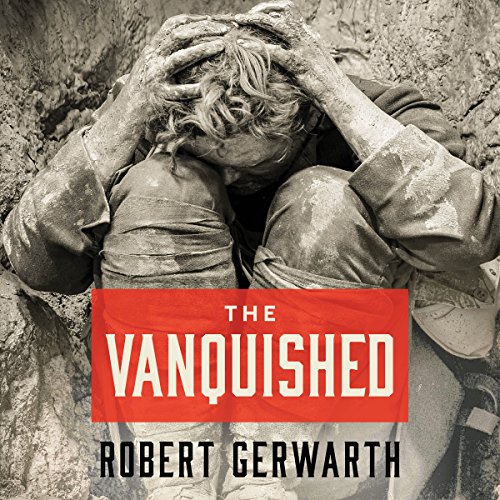
Robert Gerwarth (German Author, historian, specializing in European history, graduate of University of Oxford.)
At times, a reader/listener becomes jaded by books written about war. However, Robert Gerwarth’s “…Vanquished” is a timely review of the origin of war, particularly with Vladmir Putin’s invasion of Ukraine.
Vladmir Putin’s invasion of Ukraine.
Gerwarth implies all wars come from unravelling empires. He argues post 20th century wars are a result of the Austro-Hungarian, Ottoman, Japanese, French, Romanov (Russian), and British empires demise. Gerwath explains future generations of fighters from these former empires live on. Many continue to bare grudges for their lost existence as part of an empire. This reminds one of Vladimir Putin’s life as a KGB agent in the former U.S.S.R.
Gerwarth implies all wars come from unravelling of empires.
Gerwarth explains in detail the wandering fighters of dismantled empires who do not accept their defeat. They raid, rape, and pillage countries (often as mercenaries) that were part of their former empire. Of course, there are other circumstances that motivate these fighters, but loss of empire demeans and unmoors identity which energizes anger, motivates reprisal, and initiates atrocity.
Few historians disagree about the unfair reparations demanded from Germany after WWI. That unreasonableness weakens the post war German government which is soon overrun by Nazis; ironically, not led by a German citizen, but by an Austro-Hungarian citizen named Adolph Hitler. Hitler is a former fighter for the Austro-Hungarian empire.
Hitler’s extraordinary ability to martial rage with his rabid antisemitism rallies German extremists to believe Germany can establish a new European empire.
Hitler’s success is largely made possible by a weak German government and Germany’s war-ravaged poverty, exacerbated by worldwide depression.
Vladimier Putin is not Hitler. However, Putin’s view of the world is that of a former KGB agent of the U.S.S.R.
Putin is a fighter for an empire that lives in his heart and mind but not in reality. One might conclude from Gerwarth’s view of history that Putin will fail in his effort to make Ukraine a part of Russia.
British Empire–Empires are passe in the 21st century. Colonization is the history of the past.
None of the 20th century empires have been resurrected, and like Thomas Wolfe’s novel, “You Can’t Go Home Again”, only force of arms can hold empires together. Empires are too big and culturally diverse to remain one entity.
Though Gerwarth does not address China, it seems China’s effort to gain control of outlying China interests is limited to government will and martial suppression.
Uighur Re-education camp in China.
The suppression of Uighurs is a first step to concentration camps.
It seems cultural difference and interests between Xi’s followers, and Uighurs, Tibetans, Hong Kong residents, and Taiwanese will require suppression to make them part of the supersized Chinese nation-state. It is likely that future generations of fighters will resist China’s enforcement if it pursues its present course.
Map of the United States of America with state names.
Gerwarth offers an interesting historical perspective; supported by a lot of detail. It would seem the only hope for peaceful empires is through federalism. There needs to be an acknowledgement of cultural difference, with access to equality of treatment and opportunity for all citizens, regardless of race, religion, or ethnicity. Of course, that is what America has tried, and only partly achieved, among States. It would seem a greater task for empire, or within large multi-ethnic nation-states like China.
Destined for War (Can America and China Escape Thucydides’s Trap?
By: Graham Allison
Narrated by Richard Ferrone
Graham Allison (Author, American political scientist, Professor of Government at Harvard.)
Allison briefly reviews the history of war to reinforce an argument about its causes. He suggests wars come from the rise of competing hegemonic powers. A quibble one may have with Allison’s argument is that it diminishes reasons beyond power that led to WWII. The rise of Hitler may not have occurred if reparations for WWI had not been excessive. However, his main point is that cultural differences are seeds from which power and conflict grows. Allison suggests, when nation-state’ cultures are different, countries competing for political and economic power incline toward war. He gives many relevant and convincing examples.
Graham Allison suggests the cause of war is defined by Thucydides (Greek Historian of the Pelopnnnesian War, Born 460-455 B.C., Died 400 B.C.) in the fifth century BC.
The “Thucydides’s trap” is when one country achieves a competitive level of political power it challenges existing hegemonic powers, leading to conflict and probable war.
Allison argues that war is not inevitable but that to avoid it requires acceptance of spheres of influence. This is not a new concept. The terms “sphere of influence” became legally significant in the 1880s when Africa was being colonized by European countries. It was meant to explain a colonizer’s political claim for exclusive control of a particular area of the world.
Vladimir Putin argues Ukraine is Russian territory because it was a part of the U.S.S.R. under the repressive hand of Joseph Stalin. Putin like all colonizers believes his regime has a political claim for exclusive control of another country. He makes the same mistake of ignoring Ukrainian cultural identity, i.e., the same mistake of all interventionist countries of the world.
Allison notes that China’s Chairman Xi is the same as America’s Ex-President, Donald Trump. That “sameness” is Xi’s goal of making China “Great Again”.
Putin joins the ludicrous “Great Again” club with the invasion of Ukraine.
Allison explains China is culturally unique based on its history, reaching back to 1600 B.C. Like Ancient Egypt (3400-3200 B.C.), China is as culturally different as any nation-state in the world. Allison offers a highly intelligent and informative analysis of how different Chinese culture is from American culture.
To avoid war, Allison argues America, the alleged current hegemon of the world, must couch its political behavior and power in ways that acknowledge cultural difference between itself and rising presumed hegemons of the world.
Allison recalls the history of England’s dealings with America after the 1776 revolution. England reluctantly accepted America’s eventual rise to hegemon of the world. (Some would argue, England’s decision to remove itself from the European Union accelerates that decline.)
The United Kingdom’s economic, military, and political power (its sphere of influence) diminishes as America’s flourishes. England remains a power in the world, but its sphere of influence steadily declines.
Russia struggles with their sphere of influence because of the collapse of the U.S.S.R. In 2022 Russia invades Ukraine, just as they did Crimea in 2014, to re-expand its sphere of influence. Russia maneuvers to politically enlist China as an ally to accomplish that end. Putin undoubtedly cultivates China’s objection to America’s attempt to expand its sphere of influence in the far east.
The issues of Ukraine and Georgia are more precarious for Russia than the rest of the world. Putin’s demand to expand Russia’s sphere of influence renews a cold war that will inevitably become hot. The only question is where the heat will lie.
Robert Kagan reveals the fundamental mistake made by Putin in a May-June 2022 “Foreign Affairs” article. History reveals mistakes of great nations like France, Great Britain, Germany and Japan in thinking they could remain or become world hegemons by force. All ignore the cultural identities of their respective victims.
Kagan’s point is Great Britain adjusted to its changed role from hegemon to a nation among nations. England prospered and maintained its integrity as an independent nation, capable of improving the lives of its people without falling on the sword of its hegemonic past.
Ukraine will become Putin’s American’ Vietnam. It is a war that can only be resolved at the expense of many Russian’, and Ukrainian’ soldiers’ lives. The most other countries can do is support Ukrainian resistance while pursuing a diplomatic solution that respects sovereign independence.
The inference one draws from Allison’s book is that America must recognize the cultural difference between itself China, and Russia to avoid another world war. Like Rome, the United Kingdom, France, Spain, the former U.S.S.R., and other hegemons of world history, America must adjust its behavior to be a nation among nations, not a hegemon, but a singular influence on other nations. America effectively operates within a sphere of influence. America’s sphere of influence is indirectly challenged in the Far East by China and directly by Russia’s errant invasion of Ukraine.
Allison’s view of the world gives weight to Putin’s great concern about Ukraine’s independence and implied wish to join NATO. The fear Putin has is a reminder of even Gorbachev’s opposition to western encroachment on eastern bloc independence.
The sense one draws from Allison’s insight about culture is that no country in history has ever treated its citizens equitably. In America, the stain of slavery and native Indian displacement remain festering wounds. When and if those wounds heal, America’s sphere of influence will either grow or diminish. In China, it may be the wounds of Uighur discrimination and Han superiority that wounds its future as a hegemon. In Afghanistan, the unfair treatment of women may doom its sphere of influence. In Russia, it will be the mistakes Putin makes in violating the sovereignty of Ukraine.
Every nation’s sphere of influence is affected by internal cultural errors and external cultural influences. Only a state that adjusts to the demands of its culture will survive. Culture is not exportable, but it has weight. Foreign cultures can only be an influencer to other countries. A culture imposed by force will fail as both America and France proved in Vietnam. Cultural change must come from its own citizens as it did with the U.S.S.R. in 1991.
Spheres of influence evolve. They are not static.
America’s goal should be to understand other cultures. In that understanding, there must be acceptance of a competitor’s sphere of influence. Allison is not suggesting America withdraw from the world stage, but that engagement be along the lines of a containment strategy like that proposed by the former ambassador to Russia, George Kennan, in the 1950s. Kennan’s long memorandum is born of an intimate understanding of Russian culture.
Allison argues America should pursue a policy of minimizing conflict while promoting democracy to citizens who seek freedom and equality.
Allison recommends engagement with rising hegemonic powers with an eye on their respective cultures. Allison argues, only with understanding of cultural difference is there a way to avoid Thucydides’ trap.
One cannot deny the economic success of China. At the same time, anyone who has visited China in recent years knows of dissidents who object to communist monitoring and control of citizen freedom. Tiananmen Square remains a rallying point for mainland China resistors. Hong Kong continues to demonstrate against Xi’s influence on the lives of local business owners. Taiwan objects to Xi’s intent to repatriate their island country. Tibetans are denied their rights as followers of Buddhist belief.
Allison’s enlightening history of spheres of influence discounts many conflicts occurring within nations that have little to do with national interests or international conflicts. Of particular concern are tribal and religious conflicts occurring in Africa, Latin America, and parts of the Middle East. Warlord and gang-like leaders have little nationalist interest beyond self-preservation. The consequence is displacement and impoverishment of millions who have no future.