MOST INTERESTING ESSAYS 12/4/25: THEORY & TRUTH, MEMORY & INTELLIGENCE, PSYCHIATRY, WRITING, EGYPT IN 2019, LIVE OR DIE, GARDEN OF EDEN, SOCIAL DYSFUNCTION, DEATH ROW, RIGHT & WRONG, FRANTZ FANON, TRUTHINESS, CONSPIRACY, LIBERALITY, LIFE IS LIQUID, BECOMING god-LIKE, TIPPING POINT, VANISHING WORLD
James Baldwin’s “The Fire Next Time” gives advice that resonates with the troubles of the world today.
Books of Interest Website: chetyarbrough.blog
The Fire Next Time
By: James Baldwin
Narrated By: Jessie Martin
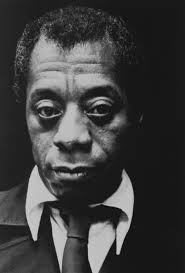
James Baldwin (Author, 1924-1987, African American writer and civil rights activist.)
“The Fire Next Time” consists of two brief essays by James Baldwin that are seminal works on the equality of all human beings. Published in 1963, the first essay is “My Dungeon Shook” which is advice to a young black American. The second, “Down at the Cross…” is a criticism of Catholic and the Nation of Islam religions.
The first is a message to Baldwin’s nephew about white America’s prejudice toward black Americans.
He is telling his nephew to reject white America’s stereotypical view of black Americans. Baldwin tells his nephew to embrace who he is as a human being, neither better nor worse, and to pursue life and living with the truth of his being.
RELIONS OF THER WORLD
“Down at the Cross” is a criticism of religion, particularly the Christian and Nation of Islam faiths. Baldwin argues that both diminish the truth of God by feeding the flames of anti-spiritualism and social inequality.
Baldwin argues through love and understanding of differences among religions and races, the divisiveness of inequality can be erased.
The fundamental point of Baldwin’s writing is that NOI offers a part of what black America needs by instilling self-respect and identity. However, he criticizes NOI’s separatism as counterproductive and extreme. Baldwin advocates love and understanding among all human beings.
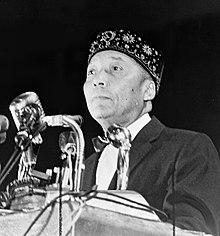
Elijah Muhammad (1897-1975, Religious Leader of NOI)
Elijah Muhammed’s advance of the Nation of Islam (NOI) is credited for advocating black empowerment, but Baldwin implies that empowerment mitigates against belief in the equality of all human beings.
Baldwin evolves to a more humanist view of life and declines to take a prominent role either in the Nation of Islam, or the Pentacostal religion he left twenty years earlier. James Baldwin’s “The Fire Next Time” gives advice that resonates with the troubles of the world today.
Is there a line that can be drawn that separates those who should be executed, incarcerated, or rehabilitated by the State?
Books of Interest Website: chetyarbrough.blog
Dark Tide (Growing Up with Ted Bundy)
By: Edna Cowell Martin, Megan Atkinson
Narrated By: Morgan Hallett
“Dark Tide” is a journey into the “Heart of Darkness”. Like Joseph Conrad’s story, Edna Cowell Martin, with the help of Megan Atkinson, tries to make sense of human madness, societal hollowness, alienation, and lies. Edna Cowell Martin is the cousin of the notorious Ted Bundy who admits to and is convicted of the murder, rape, and mutilation of 30 or more women in the 1970s. Ms. Martin is in her 70s when she finally chooses to tell the story of her cousin, Ted Bundy, who was like a brother in her family.
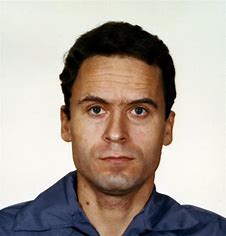
Ted Bundy (1946-1989, American serial killer.)
Bundy was an illegitimate child raised by a mother and stepfather. His mother refuses to reveal who his father was which is of little consequence except to Ted Bundy and the impact it might have had on who he became. Bundy is shown to be a bright student who graduated from the University of Washington, went to Yale to study Chinese, and became close to the Cowell family. The Cowells were an artistic family with a father who was a classical pianist who traveled the world and became a music teacher at “The College of Puget Sound” and professor emeritus and Chairman of Music at the University of Arkansas.
The author, Edna Cowell Martin, interviewed by Piers Morgan.
Despite Ms. Martin’s wide travel experience because of her father’s profession, she appears to have lived a middle-class life in the state of Washington. Many years after Ted Bundy’s execution, Martin finally writes and publishes “Dark Tide” about this American serial killer, kidnapper, and rapist. She explains the close relationship that the Cowell family had with Ted Bundy. Whether it offers any insight to the mind of such a terrible person remains a mystery.
Ted Bundy at trial for murder.
Bundy appears as a relatively handsome, intelligent young man with a girlfriend and potential for becoming a successful American lawyer, businessperson, or professional. He becomes close friends with the Cowell family. When he is arrested as a murder suspect, none of the Cowells believe he is guilty. They support his release and send letters to explain why he could not be guilty of the crimes for which he is accused. Bundy is released on bail and returns as a friend to the Cowell family.
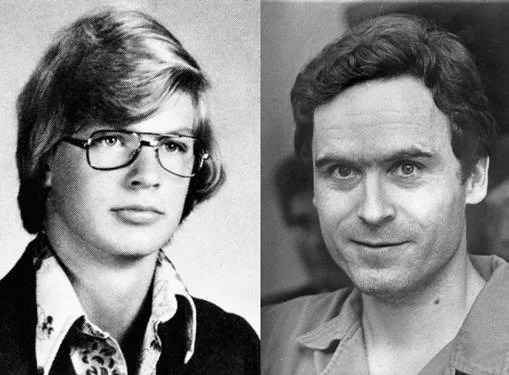
Bundy as a youth and adult.
Edna Cowell and her friends meet with Bundy after his release and gather at a local restaurant.
Bundy appears to be happy and is glad to see everyone. However, his face is recognized by strangers in the restaurant, and they ask him if he is the “Ted Bundy” in the news. Bundy’s response is unexpected. He appears delighted by the recognition and creates a scene in which he extols his notoriety. This is the first time Edna becomes suspicious of Bundy’s innocence. She does not believe he is guilty but that his glorification of association with a murderer makes her uncomfortable. Why would anyone want to be associated with such a horrible crime? Is any kind of fame okay to Bundy? This is not the person she thought she knew.
Edna keeps turning this incident over in her mind. She begins to wonder if Bundy might actually be guilty, rather than just wanting to be the center of attention.
The terrifying aspect of Edna Cowell Martin’s memoir is what does one person really know about another person? Think of all the people you know and what has happened since you first met them that changed your mind about who they are, what they believe, or what they have become, i.e. at least in your mind.
What is somewhat off-putting is that Edna Cowell Martin argues the State should not have the right to take one’s life even if they are guilty of murdering an innocent person.
Bundy killed and raped an unknown number of women. Is there justification for the State to execute someone for a heinous act that is confessed to by a perpetrator? Is it less humane to incarcerate someone for life who has confessed to a heinous crime? Are human beings, regardless of their crime, capable of being rehabilitated? Every human being is guilty of some transgression in life. Is there a line that can be drawn that separates those who should be executed, incarcerated, or rehabilitated by the State? “Dark Tide” raises all these questions in one’s mind.
Over 230 human beings remain political hostages in this unpredictable world.
Books of Interest Website: chetyarbrough.blog
In the Shadows (True Stories of High-Stakes Negotiations to Free Americans Captured Abroad)
By: Mickey Bergman, Ellis Henican
Narrated By: Assaf Cohen, Mickey Bergman
Mickey Bergman (American Israeli.)Ellis Henican (American co-author, political analyst for Fox News Channel.)
Mickey Bergman tells a fascinating personal story about his life as a political hostage negotiator. He and a mysterious Lebanese friend he names “George” met at Georgetown University and became interested in political hostage negotiations. A precipitating event that led to their early friendship is the kidnapping of an Israeli soldier by a Palestinian Hamas faction in Lebanon. As a former Jewish military soldier, Bergman became friends with “George”, a Lebanese Muslim student at George Washington University. With similar beliefs about the unfairness and human tragedy of hostage taking for political purpose, they become partners in the release of the Israeli soldier from Hamas.
As a reminder of the of the October 7, 2023, kidnaping of over 100 Jewish hostages by Hamas, Israel has occupied Gaza and murdered an estimated 4o,000 Palestinians.
In the kidnaping of one Israeli soldier, Bergman explains that murder or kidnapping of 1 Israeli is viewed by some in the government and Israeli citizens as not 1–but six million and 1 atrocities.
A singular kidnaping, let alone the October 7th Hamas attack, gave warrant to some in Israel’s government to wage occupation and war on Gaza.
(This reasoning gives a sense of the current state of the Gaza war but also explains why hostage negotiation is such a complicated and lengthy process that can as easily end in failure as success.)
From Bergman’s friendship with “George”, he gathers interest in the pursuit of peace, regardless of social, religious, economic, or political difference. As a twenty something graduate, Bergman receives a call from the Clinton Global Initiative to join their organization after graduation. CGI was formed by former President Clinton and his family in 2005. Its stated purpose was to devise and implement solutions to world challenges like climate change, health equity, world economic growth, and peace among nations. It gave Bergman his first thoughts about what would become his mission in life, i.e., the liberation of hostages unjustly held by factions of countries or governments for political rather than criminal infraction. “In the Shadows” explains how suited Bergman is for the life he chooses. Raised in Israel, highly educated, experienced as a soldier, from a stable and loving family, Bergman understands the grief and joy of families dealing with and hoping for their mothers, fathers, sons or daughters release from a foreign prison.
Formed in 2005 to address world problems.
Bergman’s early experience as a go-between for the release of the Israeli soldier, with the help of his Lebanese friend from college, show how important non-governmental citizens can be in freeing political prisoners. Bergman and his friend’s families have important indirect contacts at high levels in the Israeli and Lebanese governments. The two young graduates create back-channel contacts to Jewish and Lebanese governments that eventually get Hamas to release the Israeli soldier. They found it a slow, tedious process of give and take allowing political points to be made by factions and governments while providing an opportunity to free a hostage who was only doing his government ordered job.
Bergman is everyman who wishes to be the best he can be within their natural gifts of birth, education, and experience.
Bergman is drawn into the circle of Governor Bill Richardson of New Mexico who formed the Richard Center in 2011. Bergman learns how to become a more effective hostage negotiator. Richardson’s methodology in negotiation is a post-graduate course in effective international negotiation.
The Richard Center was formed in 2011 to focus on promoting international peace and dialogue; particularly to negotiate hostage and prisoner releases. The Richard Center continues its work today.

Bill Richardson (1947-2023, died at age 75, a former Governor of New Mexico, 9th US Secretary of Energy, US Ambassador to the UN, who was elected to the U.S. House of Representatives for New Mexico.)

Richardson’s rules of negotiation:
Never close the door to your contacts.
Deflect attention from yourself with the people you take with you when you negotiate.
As leader of a mission, observe reactions of your opposing audience to associates’ arguments, i.e. the same arguments you discussed with your associates before the meeting.
Present a final pitch for hostage release based on what you have learned from the audiences’ reactions to your support staff’s arguments.
Richardson is shown by Bergman to be a master of negotiation and a great teacher of the art. You will not always win the argument, but you will have used the most persuasive details based on seeing and hearing the oppositions’ reactions to associates’ arguments.
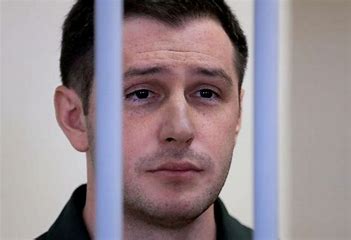
Brittany Griner (released in Russia 2022)Danny Fenster (released in Myanmar 2021)Otto Warmbier (released 2o17 in N. Korea, died 2017)Trevor Reed (Released in Russia 2022)Paul Whelan (Released in Russia 2024)Kenneth Bae (Released in N. Korea 2014)
“In the Shadows” tells the hostage stories of Brittney Griner, Danny Fenster, Otto Warmbier, Trevor Reed, Paul Whelan, and Kenneth Bae.
Bergman does a great job of explaining how difficult, dangerous, and often unsuccessful hostage negotiations can be. The release of Griner is heartwarming. The death of Warmbier is heart breaking. The delay of Paul Whelan’s release is frustrating and indicative of the complexity of hostage negotiation.
The many stories Bergman tells are interspersed with hardship in his own life that show how human and vulnerable we are despite our intelligence, experience, and education. Over 230 human beings remain political hostages in this unpredictable world. Though Governor Richardson recently died, Bergman carries on with the Richardson Center for Global Engagement.
“All the Worst Humans” is a macabre but revealing look into the darkest corners of public relations.
Books of Interest Website: chetyarbrough.blog
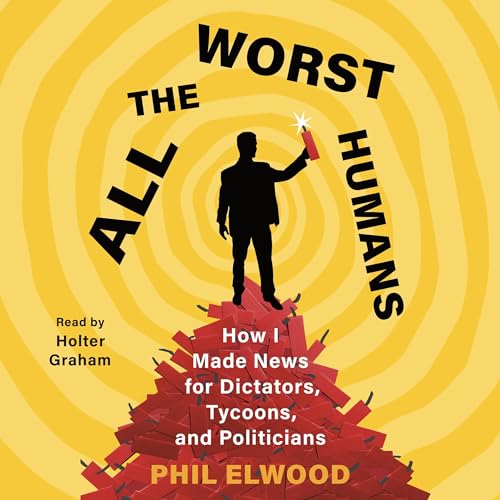
All the Worst Humans (How I Made News for Dictators, Tycoons, and Politicians)
By: Phil Elwood
Narrated By: Holter Graham
Phil Elwood (Author, public relations operative, graduate of Georgetown University with graduate studies at the London School of Economics.)
“All the Worst Humans” is a macabre but revealing look into the darkest corners of public relations. It is an anecdotal story, with a ring of self-effacing truth by Phil Elwood who specializes in spinning news about morally corrupt people and bad events. A listener is skeptical of Elwood’s integrity because of the nature of what he does for a living. Elwood manipulates societies understanding by spinning the facts of current events to hide what truth there is in history.
Reputable historians certainly try to accurately report the facts of history, but truth is malleable based on the facts that are chosen. Though Elwood profiles himself harshly as a troubled human being, he is like a disreputable historian who spins facts that have little to do with truth. Elwood’s job is to make facts tell a kind of “truth” that makes bad people and/or events look good or at least better than bad.
Elwood’s self-effacing story admits his weakness for alcohol and addictive drugs.
Elwood manages to become an intern for Congressional representatives like Senator Daniel Moynihan after failing to graduate from college. He corrects his college failure with the help of his congressional contacts to enter Georgetown University where he earns a college degree.
Elwood leaves his Congressional internships and the contacts they entailed to become a success as a public relations operative.
He becomes an operative who spins facts to change the public’s perception of people and events. Elwood is an “operative” because he contacts legitimate media writers/broadcasters and political influencers to change their minds about people and events that are or will become news of the day.
Elwood’s story begins with an FBI phone call that asks for the correct number of his and his wife’s apartment address.
He arranges for a meeting with the FBI in an hour after the call, purportedly to allow his wife time to leave with some of the files in their apartment. This is a puzzling beginning to a wild explanation of Elwood’s life. One is unsure of how much of what is written is spinning the truth of who Elwood is and what he believes. One wonders if Elwood’s story is just an entertaining vignette of a complex and intelligent writer, a public relations expert, or writer of fiction. (A brief review of the internet shows Elwood is not only a graduate of Georgetown University, but did graduate work at the London School of Economics.)
Peter Brown (American-based English businessman who became part of the Beatles’ management team.)
After Elwood’s stint as a congressional intern, he is hired by a public relations firm headed by a former Liverpool Beatles’ assistant, a man named Peter Brown. Brown became an officer of Apple Corps, the Beatles management company. Brown was instrumental in arranging the wedding of John Lennon to Yoko Ono in Gibraltar which is made famous in Lennon’s song “The Ballad of John and Yoko”.
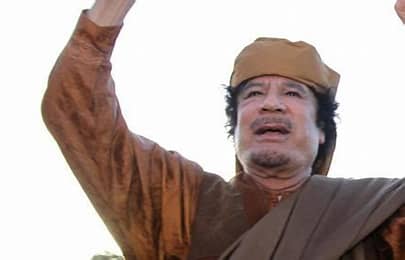
Elwood offers examples of work that he does as an operative for Brown’s company. Brown, or someone from his office, calls Elwood to “baby sit” Libyan executives who work for Muammar Gaddafi in a trip to Las Vegas.
Elwood explains they carried millions of dollars in suitcases they kept in their hotel room. They lost thousands of dollars at the gaming tables and used Elwood to arrange private plane trips and ferry suitcases of money to pay their gambling bills and travel expenses. Elwood feared for his life and was relieved to see them off in their private jets after steering them away from what could have been a public scandal in Las Vegas.
Elwood explains how he is ordered by Brown to use his contacts in Congress and news publications to make Gaddafi look more like a statesman than thug in his 2009 United Nations Speech.
Elwood was tasked to make Gaddafi look humanitarian rather than venal by arranging interviews and media engagements that would emphasize his role as a revolutionary, not authoritarian leader. There seem to have been some successes but the speech at the UN and the debacle over a tent on Trump’s property made Elwood’s public relations effort a failure. Elwood is eventually fired by Brown and leaves with a sense of enmity toward Brown.
Elwood eventually slips into another morass when asked by his new public relations employer to make Nigeria look better than the Boko Haram kidnappers who took 276 schoolgirls from a Government Girls Secondary School.
Elwood is unsure of what he can do despite travelling to Nigeria to convince the government they needed to act in a way that looked like they were concerned. Elwood admits he fails and that the appearance of Malala Yousafzai, the Pakistani activist who was nearly assassinated by Pakistani thugs, entered to insist Nigeria must do something. Elwood is fired again.
In another incident where Elwood is working as a public relations operative, he consults with Antigua after the United States threatened to prosecute Antigua for online gambling services.
The Antiqua leader worries that it would destroy tourism in his country if they fought America’s threat. Elwood explained the loss of revenue from online gambling far exceeded tourism income and that he would plant a story in the media about restraint of trade as being un-American. Elwood suggests to the Antiqua government that they take America on with a complaint to the World Trade Organization. Antiqua follows the advice, and successfully remains an online gambling mecca. But Elwood, despite his successful spin of the facts loses the account and is fired again.
Elwood then slips into a very gray world where money is being laundered by the Israeli government.
Elwood becomes a conduit for the laundered money and is contacted by the FBI. The story comes full circle, and its ending adds to the value of Elwood’s story. Public relations are a sophisticated way of muddling the truth. Being smart is two edged when it comes to the truth. Ignorance is not bliss but spinning the truth can kill you or put you in jail.
Elwood considers suicide because of his dodgy reputation and fear of losing his marriage. Through treatment with ketamine, Elwood recovers some level of mental health. Treatment with ketamine is an ironic fact in view of the recent death of the comedic actor Matthew Perry. In a twist of fate, Elwood is spinning the benefit of ketamine while its use is being abused by the public today.
Caro’s facts do not prove truth, but they do reveal the means and consequence of political power and influence in American Democracy.
Books of Interest Website: chetyarbrough.blog
“Working”
By: Robert A. Caro
Narrated By: Robert A. Caro
Robert Allan Caro (Author, journalist, winner of 2 Pulitzer Prizes in Biography and many other coveted literature awards.)
Every non-fiction writer can appreciate this erudite and entertaining audiobook, personally written and read by Robert Caro. Caro explains what “Working” means to a non-fiction writer. Caro artfully explains why and how researching, interviewing, and writing a biography is a revelatory experience.
In “Working”, Caro focuses on his two Pulitzer Prize winning books, “The Power Broker: Robert Moses and the Fall of New York” and “Master of the Senate”, one of his four books about Lyndon Johnson. Both biographies are about political power in America.
Robert Moses (1888-1981) was an American urban planner and public official in the New York metropolitan area during the early to mid-20th century.
Moses (among many titles) was the New York City Parks Commissioner and Chairman of the Triborough Bridge Tunnel Authority. His political power and influence are detailed in Caro’s book, “The Power Broker”. Though Moses was never elected to political office, he arguably shaped the infrastructure of New York City as much, if not more, than any elected person in New York. “Working” explains how a reporter from a small Long Island’ newspaper manages to write “The Power Broker” and become one of America’s most famous biographers.
After graduating from Princeton with a B.S. degree, Caro is hired by the Long Island, New York’ newspaper, “Newsday”.
Caro explains he had been a writer for many years as a young boy and college student before getting a scut-work job at “Newsday”. He tells of a breakthrough report he writes that gets attention from the editor of the paper. He is given advice by the editor who recognizes the quality of his writing. The advice is that when writing a piece for the public, be sure of your facts by “turning every page”. Caro takes that advice and explains how it became a mantra, a repeated aid, in his writing.
Caro explains how he and his wife work to “turn every page” in researching the Moses and Johnson biographies.
Even though one may have read Caro’s two Pulitzer Prize winning’ books, “Working” offers a nearly perfect introduction to his biographies of Moses and Johnson that are, to the extent humanly possible, researched by “turning every page”. Caro is hard on himself for taking years to research and write his biographic books. It is a financial hardship for his family, particularly before his first success with “The Power Broker”. They sell their house in Long Island to support his book research. After that first success, the financial insecurity is offset by grants and the support of literary agents. “Turning every page” is a laborious process but it assures and reinforces the facts revealed in his biographies.
Caro explains how he and his wife meticulously researched public documents to confirm facts that corroborate the victimization of some New Yorkers by monied interests that gave Moses the political power to destroy low-income neighborhoods for new thoroughfares through the New York City area.
With the construction of over 600 miles of road many residents, renters and homeowners, were evicted from their homes. Most were left to fend for themselves.
Caro and his wife were willing to disrupt their lives and neighborhood relationships to pursue his obsession with verification of facts. Caro explains that he needed to move to Texas to understand what it was like for Lyndon Johnson to be raised in the Texas Hill Country. He could not just visit because local Texans would not talk to him with the candor he sought to understand where Lyndon Johnson came from. Many revelations are in his book about Johnson that could not have been corroborated without interviews with people who knew the Johnson family.
Caro and his wife move to Austin, Texas to be near the Texas Hill Country to research and understand the society in which Lyndon Johnson is raised.
Many insights are a result of the move. Experiencing the loneliness of the Texas Hill country because of its sparse population helped Caro understand Johnson’s need to be bigger than life. Interviewing Johnson’s brother reveals the tensions that existed between Lyndon and his father. Johnson’s father was heir to the original Johnson ranch that was lost because of the soils’ unproductivity. It had too much caliche, a clay content that would not support a cash crop. When Johnson’s father repurchased the ranch after its loss by the family, he failed to understand the land could not provide enough income to pay its mortgage. The ranch is lost to the bank again. The relationship between Lyndon and his father deteriorated as Lyndon grew older because of Lyndon’s disappointment with his father’s ineptitude and domineering personality. Ironically, Caro notes it is a personality that Lyndon is heir to and for which he is criticized. On the other hand, Caro explains it is also a personality characteristic that makes Lyndon one of the greatest masters of the Senate. No Senate leader since Johnson has as successfully led the Senate in passing government legislation.
Samuel Ealy Johnson Jr. (Lyndon Johnsons’ father. 1877-1937.)
Lyndon’s brother implies Lyndon’s conflicts with his father became part of his drive to be more successful than his father.
Caro infers Johnson and Moses were forces of nature. Both were political power users that understood how to use it to get their way. Obviously political power can be used for ill or good. One can argue New York City open spaces and parks were a great benefit to the city. On the other hand, many people were displaced to provide those open spaces. The Civil Rights Act passed during the Johnson administration benefited millions of minorities in America. On the other hand, an estimated 2,000,000 Vietnamese were killed, 58,000 American soldiers died, and another 288,000 Americans were wounded and/or disabled. How many Vietnamese, and Cambodians were wounded or disabled and how many are still being hurt by leftover landmines?
Caro offers a great service to the public in his writing about political power in American Democracy. Democracy is not a perfect political system, and Caro reveals where that imperfection lies by “turning every page”. Caro’s facts do not prove truth, but they do reveal the means and consequence of political power and influence in American Democracy.
One chooses how they live life, but death is nature’s or God’s choice, a thing beyond human’ control.
Books of Interest Website: chetyarbrough.blog
“The Theater of War” What Ancient Greek Tragedies Can Teach Us Today
By: Bryan Doerries
Narrated By: Adam Driver
Bryan Doerries (Author, Artistic Director of Theater of War Productions, an evangelist for classical literature and its relevance to today’s lives.)
The title and book cover of “The Theater of War” is as puzzling as Bryan Doerries’ beginning vignette of his personal life. Doerries graduates from Kenyon College where he majors in the classics. He goes on to earn a Master of Fine Arts in Directing from the University of California. “The Theater of War” recounts Doerries’ journey to become cofounder, artistic director, and historian for creation of a theatrical teaching tool about life and death. The trigger for his understanding comes from the last days of his personal relationship with Laura Rothenberg who dies at 22 from cystic fibrosis. Her death is the introduction to why “The Theater of War” is created.
Doerries and Phyllis Kaufman are co-founders of “The Theater of War” Productions. Ms. Kaufman was the producing director from 2009 to 2016. She died at the age of 92 in 2023 but was instrumental in organizing production events, coordinating actors, and ensuring practical aspects of theatrical presentations.
“The Theater of War” is about the living and how to deal with permanent disability or death. Death comes in many forms from different causes but as the Latin expression says “Memento mori”, “Remember you must die” because death is a part of every life. Doerries explains how famous Greek tragedies were, and still are, teaching tools for those who have life and death influence over others. What “The Theater of War” creates are acted reproductions of classic Greek tragedies for living life when you or someone you know is permanently disabled or killed.
With the help of actors like Adam Driver (who narrates the book), the great tragedies of Sophocles and Aeschylus are presented to military, penal, and nursing audiences across America.
Combat veterans, prisoners, and terminally ill patients face extreme conditions of life. Combat may end in death or future disability. Prison life is about loss of control of oneself and being under the control of others. Terminal illness is also about loss of control of oneself when one is diagnosed as destined for death.
The suicide of Ajax as depicted on an ancient vase in the British museum in London.
Sophocle’s tragedy, “AJax”, offers the truth of psychological trauma and moral injury from battle. In despair, Ajax kills himself because he feels deeply humiliated by the gods for not being given the armor of Achilles who is killed in the Trojan war. Achilles’ armor was given to Odysseus rather than him.
Sophocle’s “Philoctetes” explains the pain and personal isolation that comes from the physical and emotional damage from war. Today, it is diagnosed as PTSD.
Sophocles “Antigone” deals with civil disobedience, justice, and conflict between personal and state ethics. These conflicts are reflected in mobs of unruly citizens demonstrating against what they perceive is wrong.
Aeschylus’s “Prometheus Bound” reflects on the unfairness of a penal system that infringes on human rights.
The recited dramas offer cathartic release and potential change to those who are personally affected by their situational experience. That is the purpose of the presentations. Doerries creates theatrical readings of these classics before military, penal, and nursing personnel.
The presentations lead to questions and answers about the truth of societal disagreement, death’s inevitability, and how to live with their consequences.
Some military generals and prison guards are offended by the implications of their mistakes, but the plays recitals provide a forum for discussion that offer potential for improved human understanding and societal decisions and action.
The Greeks understood dying is part of life. One chooses how they live life, but death is nature’s or God’s choice, a thing beyond human’ control.
Understanding our place in the world as a democratic nation is the real value of travel.
Books of Interest Website: chetyarbrough.blog
“The New Tourist” Waking Up to the Power and Perils of Travel
By: Paige McClanahan
Narrated By: Paige McClanahan
Paige McClanahan (Author, journalist, world traveler.)
“The New Tourist” offers a mixed message about travel outside of one’s own country. As a journalist, paid for her travel, Paige McClanahan explains the power and peril of travel in a way that misses the point. She explains the power of travel as an economic benefit to travel writers and countries which travelers visit. One peril she notes is the destruction from tourists who damage pristine natural environments because citizens of a host country are often not accustomed to crowds of travelers. One who travels and writes of their adventures encourages travel to exotic places that may or may not be prepared for high tourist traffic. Unpreparedness is partly due to host countries interest in the economic benefit of tourist visits but are disinclined to spend potential profits on preparation for high tourist traffic that may not arrive.
Like the Maui wildfires in 2o23, better Hawaiian’ preparation may have saved 102 lives and the beautiful town of Lahaina.
Ironically, travel writers like McClanahan are partly to blame for writing of great travel experiences they have had as tourists. They make a living by writing about their travels around the world.
There is a balance between tourist satisfaction and host countries’ benefit but finding the balance is a work in progress that may not begin before damage is done.
What McClanahan misses in her book, is the great benefit of traveling to learn about other cultures.
From personal experience, I have been surprised by natives of other countries who know so much about life and what their personal experiences have meant to them. In Africa, a native guide explains the night sky in a way that reminds one of a college astronomy course. In the former Yugoslavia, an older person explains how much she misses Tito as the ruler of her country. Visiting Turkey’s Cappadocia, one visits an underground “city” meant to protect Christians from people of another faith. In China, the incident of Tiananmen Square is told by a young man in a way that makes one understand authoritarianism carries a threat. In India, one is overwhelmed by the gap between the rich and poor, the monuments of a great nation’s antiquity, and the remnants of British colonization. In Thailand, you find there are citizens who admire their king, others that revile the army that is running the country, and youth that want change. A traveler learns of the killing fields of Cambodia and the mine fields left behind by America and Vietnam as a reminder of America’s folly in believing the lie of falling dominoes. These are a few examples of what can be learned by travel to other countries.
McClanahan briefly alludes to some of cultural benefits of travel, but her book focuses more on travels’ economic benefits for writers and host countries.
Understanding our place in the world as a democratic nation is the real value of travel.
One recognizes the many mistakes a father or parent can make in their lives in failing to be the best they can be for their children.
Books of Interest Website: chetyarbrough.blog
“An Odyssey” A Father, a Son, and an Epic
By: Daniel Mendelsohn
Narrated By: Bronson Pinchot
Daniel Adam Mendelsohn (Author, essayist, critic, columnist, and translator, Professor of Humanities at Bard College.)
“An Odyssey” is a memoir that combines Mendelsohn’s life and educational experiences with Homer’s “… Odyssey”. As most know, “The Odyssey” is one of two ancient Greek epic poems, the other being “The Iliad”. Both are attributed to Homer who is questioned by some scholars as neither the soul creator nor (necessarily) its singular author. Both poems are said to have come from an oral tradition in ancient times, told and re-told, with no written editions until the late 8th or early 7th century BCE. Homer is believed to have lived in the 9th or 8th century BCE which makes it possible for him to be the originator, but no one really knows. Homer seems a singular source, or one of many who told and retold the epic poems.
In a broad sense, Daniel Mendelsohn’s memoir is about parenting but in a more succinct view, it is about fatherhood and the inevitability of death.
“An Odyssey” is a tribute to Mendelsohn’s father, his intellect and his impact on his son’s understanding of life. Mendelsohn cleverly intersperses “The Odyssey” of the heroic life of Odysseus with the accomplished life of his father.
The two poems tell the history of the Trojan War with the main character of “The Iliad” being Achilles, while Odysseus is the main character of “The Odyssey”.
Both heroes are characterized in “The Odyssey”. Achilles is recalled as the greatest warrior of the Trojan War who dies as a hero. Odysseus is also a warrior but is noted as a strategist who skillfully manipulates others with his cunning wit and intelligence. In Odysseus’ return, he meets Achilles in a nether world to find Achilles regrets his fate. Achilles explains he would have rather continued in life than being remembered by the living as heroic in the nether world of death.
Daniel Mendelsohn, like Odysseus, is a witty teacher who uses his intelligence to dissect “The Odyssey” by giving listeners a memoir of his relationship with his father.
In that dissection, one gains some understanding of “The Odyssey” while glimpsing what it was like to be raised by a loving but strict father.
What Mendelsohn introduces is every father’s role in raising children.
A theme that runs through “The Odyssey” is Odysseus’s troubled ten-year journey to Ithaca after the Trojan war but what Mendelsohn introduces is every father’s role in raising children. Mendelsohn’s father is nearing the end of his life. He is a retired engineer who worked for the American government on high security projects before becoming a professor. In retirement, his father chooses to attend his son’s class on “The Odyssey”. Mendelsohn combines his father’s attendance in his class with a real and reimagined trip they take to retrace Odysseus’s travels in “The Odyssey”.
Mendelsohn’s father has strong opinions about the character of Odysseus, and he expresses them in class.
Mendelsohn’s father characterizes Odysseus as a poor leader who lost all his men in his return to his homeland. Mendelson’s father gives the example of the cyclops who imprisons and eats some of Odysseus’s men but, after a clever escape, Odysseus foolishly chooses to taunt the cyclops. The cyclops nearly sinks the ship and appeals to Poseidon to kill the escaped sailors (none of which survive) because of Odysseus’s taunt. Mendelsohn’s father characterizes Odysseus as a poor leader of men, a braggart, liar, and cheater on his wife, Penelope.
There is a sense of the Professor learning many things about his father from discussions in the class. At the same time, listeners gain personal knowledge of the epic poem, its universal meaning, and why it is considered a classic. From the class discussion about Telemachus, the son of Odysseus, one realizes the tale is about the role of fathers and, to a lesser extent, mothers in educating their children. Mendelson admires his father for his intelligence, fidelity and what he believes is unbending truthfulness. On the other hand, Mendelson is embarrassed by his father’s slovenly dress, eating habits, and what he perceives as his father’s parental neglect during his childhood.
Mendelsohn’s father does not fear death but is afraid of the mental and physical deterioration that comes before death.
Mendelsohn seems hurt by his father’s emotional distancing but becomes less hurt as he gains a clearer understanding of where that distancing comes from. Mendelsohn’s father lives in a black and white world. Everything is one way or another. The end of one’s life is often gradual and only becomes one way or another at the very end. There is an inkling of tragedy to come as his father finally dies.
Truth and a lie are two sides of a coin. The fear of losing one’s physical or mental abilities is not a choice but something beyond one’s control.
Understanding what is black, white, true, or false loses meaning as one nears the end of life. Mendelsohn’s father has lived a life where he depended on himself. He made his own choices. As one’s body or mind deteriorates, depending on oneself become problematic. That loss of control is the fear of Mendelsohn’s father. Here is the tragedy of Mendelsohn’s story.
Mendelsohn’s father’s life is extended by the desires of his family and his doctor’s ministrations, despite the diminishing quality of his father’s life. Mendelsohn’s brilliant father lives months after his debilitating stroke. The only point one can see in the extension of life when death is imminent seems to be a family’s grief, and a kind of selfishness over loss of a loved one. There seems a high degree of selfishness in extending the life of one who is at the end of their life.
As a father, there is much more to be learned in Mendelsohn’s story about what it means to be a good father.
One recognizes the many mistakes a father or parent can make in their lives in failing to be the best they can be for their children.
A reader/listener will come to their own conclusions about Ms. Fox’s epilogue. Where does one draw the line?
Books of Interest Website: chetyarbrough.blog
“The Talented Mrs. Mandelbaum” The Rise and Fall of an American Organized-Crime Boss
By: Margalit Fox
Narrated By: Saskia Maarleveld
Margalit Fox (Author, copy editor for the New York Times.)
Fox writes a memoir of America’s equivalent of Fagin in Dicken’s “Oliver Twist”. Mrs. Mandelbaum, like Fagin, created a school of crime for New York City street-dwellers in the mid-nineteenth century. An interesting insight by Fox is how people slip into crime. Mrs. Mandelbaum makes a living for her family in New York by becoming a fence for merchandise collected on New York’ streets. Like any sales business the key was buying low and selling high. Street merchandise is cheaper than store merchandise because of lower overhead and, of course, theft.
The Chief of Police of New York City at the time (pictured to the far right) considered the criminal Fredericka “Marm” Martha Mandelbaum an admirable businesswoman.
Fox notes the Mandelbaum family emigrated from Germany in 1850. Mrs. Mandelbaum’s husband, Wolf Israel Mandelbaum, made a living as a peddler in Germany. Martha Mandelbaum sees similar opportunity in New York City. She becomes a fence, a kind of peddler, for New York city street’ merchandise. However, Mrs. Mandelbaum recognized that the quality and quantity of merchandise she fenced could be improved by theft. She created a school like Dicken’s Fagin to teach the craft of theft. Her “school” began teaching young acolytes the art of pickpocketing and petty theft. She began building a criminal empire that evolved into financing bigger crimes like fabric store theft, jewelry store theft, and most lucrative of all, bank robbery.
Mandelbaum provided financing for specialized research of banking personnel and bank activity for intended bank robberies. She paid for sophisticated tools needed for the robberies, and then brokered robber’s thefts to buyers.
Mandelbaum grew her business into a million-dollar enterprise. She carefully remained in the background of her lucrative business. She became the “Queen of Fences”. In July of 1984, “Marm” Mandelbaum and her son Julius were arrested by Pinkerton agents and taken into custody. She allegedly punched the arresting officer and protested her innocence but went to trial where she was required to post a $10,000 bond after spending a night in jail. She and her son jump bail and cross the border into Canada. They were detained in Canada but without a law allowing extradition, she and her son could not be returned to the United States.
Mrs. Mandelbaum and her son open a store in Canada after contacting many of her associates in New York to explain her plan to sell merchandise out of this new store location. One presumes her associates continued their criminal ways of acquiring New York merchandise and shipping it to Canada for resale.
Julius J. Mandelbaum (1905-1988, son of “Marm” Mandelbaum died at age 83 in Long Beach New York.)
Fox’s story takes an interesting turn in an epilogue of her memoir about Mrs. Mandelbaum. “Marm’s” daughter, who was 18, died of pneumonia in New York. Mrs. Mandelbaum risked incarceration by surreptitiously returning to New York for a Jewish funeral for her daughter. She is not arrested and successfully returns to Canada.
Fox infers Mrs. Mandelbaum is as much a victim of her time as she was a criminal.
Fox explains in a Jewish family, women have essential roles in managing households, raising children, and contributing to their communities. In some circumstances, Fox notes Jewish wives engage in business while managing the household. Fox suggests Mrs. Mandelbaum simply carries out those duties in her life in New York.
A reader/listener will come to their own conclusions about Ms. Fox’s epilogue. The question that comes to mind is whether some people died as a result of Mrs. Mandelbaum’s financing of illegal activity, including bank and jewelry robberies. Where does one draw the line?
Mother Mandelbaum died without an exact cause of death at age 68. She was given a grand funeral in New York City that drew community elites, politicians, and undoubtedly, criminal associates.
On the one hand, genetic science may cure the incurable. On the other, genetic science may destroy civilization.
Books of Interest Website: chetyarbrough.blog
“Why Fish Don’t Exist” A Story of Loss, Love, and the Hidden Order of Life
By: Lulu Miller
Narrated By: Lulu Miller
Louisa Elizabeth Miller (Author, Peabody Award-winning science reporter for NPR.)
Lulu Miller’s “Why Fish Don’t Exist” reveals the flaw in believing intelligence or position are measures of admirability. David Star Jordan is a founding president of Stanford University. He served from 1891 to 1913 after being the Indiana University president from 1884 to 1891. Jordan gained his academic qualification as a recognized ichthyologist (a zoologist who specializes in studying fish species).
David Starr Jordan (1851-1931, Scientist, founding president of Stanford University.)
Miller begins her memoir in admiration of Jordan but ends in vilification. Jane Stanford appointed Jordan as the first President of Stanford. Their collaboration laid the foundation for what became a research powerhouse for engineering, business, humanities, and sciences. Ms. Stanford’s relationship with Jordan is reported as less than harmonious because in the University’s beginnings there were financial difficulties and differences of opinion about faculty.
Jane Elizabeth Lathrop Stanford (1828-1905, American philanthropist and co-founder of Stanford University.)
Jane Stanford rejects an economics professor’s contract renewal because of his politics and his criticism of immigration. (Ms. Stanford’s and her husband’s wealth came from the railroad industry which was hugely benefited by immigration.) It is alleged that she pressured Jordan to refuse the professor’s contract renewal. Five faculty members resigned after the professor’s termination. Ms. Stanford had a reputation for requiring total devotion to her beliefs which, at times, conflicted with Jordan’s management of the University. More significantly, Ms. Stanford’s drive alienates and makes enemies of many people associated with the University.
Ms. Stanford dies in Hawaii in her 70s. The cause of death is attributed by authorities to be poisoning from strychnine.
What makes her death an ongoing mystery is that Jordan hires a medical investigator who argues Ms. Stanford died from natural causes, a heart attack, brought on by overeating. In much of America, Jordan’s hired investigators’ cause of death is accepted. That is, until a book is written by Richard White in the 21st century, that reaffirms the authority’s earlier opinion. Miller does not suggest Jordan had anything to do with Stanford’s murder, but Miller’s inference is that he initiated a cover-up.
In one sense, Miller is Jordan’s character assassin. In another, Miller reveals the dark side of science.
Jordan is shown to believe in eugenics that advocates selective breeding of the human race. Eugenics is a science meant to selectively breed human beings. Miller explains Jordan believes in forced sterilization (which surprisingly exists in the United States until 1981). Eugenics is the same belief held by Adolf Hitler when he tried to exterminate Jews and create an exclusive Nordic or Aryan race. Hitler established laws for forced sterilization, euthanasia, and selective human breeding.
STANFORD UNIVERSITY
Miller’s memoir of David Starr Jordan shows how science is a mixed blessing. Jordan’s remarkable work in zoology and his role as the first President of Stanford is tainted by his expressed belief in eugenics. The threat of eugenics is greater today than in the past. On the one hand, genetic science may cure the incurable. On the other, genetic science may destroy civilization.