UNDERRATED MASTERPIECE

Audio-book Review
By Chet Yarbrough

(Blog:awalkingdelight)
Website: chetyarbrough.blog

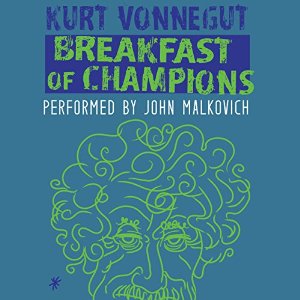
Breakfast of Champions

Written by: Kurt Vonnegut

Narration by:  John Malkovich

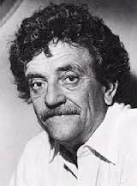
KURT VONNEGUT (1922-2007)

KURT VONNEGUT (1922-2007)

The author, Kurt Vonnegut, offers a fascinating glimpse of a mind teetering on, and then falling over the edge of reality into insanity.  One might classify “Breakfast of Champions” as a surreal satire but that diminishes its insight to insanity.

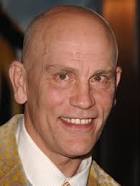
JOHN MALKOVICH (ACTOR, DIRECTOR WHO HAS APPEARED IN OVER 70 MOTION PICTURES)

“Breakfast of Champions” is an imaginative and underrated masterpiece.  The underestimation is realized by the listener in John Malkovich’s excellent narration. 

There are no heroes in “Breakfast of Champions”.  There are three main characters.  There is the teller of the tale, Kilgore Trout, and Dwayne Hoover.

Vonnegut clearly satirizes the maladies of the American twentieth century but he concretely reveals how wealth, poverty, and escapism grind people down and compel abhorrent, often violent, and insane acts.  He exposes the American dream’s illusion of happiness. 

In Vonnegut’s story, our Creator is a tinkerer who creates machines that are known as human beings.  These human beings are set in motion, endowed with consciousness, and no longer controlled by the Creator.  They are machines that follow the laws of physics and are self-sustaining, reincarnating machines that live forever without recollection of past lives.

CREATOR.png

The teller of the tale is not revealed until the last chapters of the book.  It is the Creator of humankind. 

Kilgore Trout is a science fiction writer who is invited by an admirer of his books to receive an award, in a coal mining town, for his pornographic science fiction stories.  The award is for the greatest writer of all time.  Trout is at first reluctant to take the trip to the coal mining town but succumbs to their acclaim for his fame and begins hitchhiking across the country to receive the award.

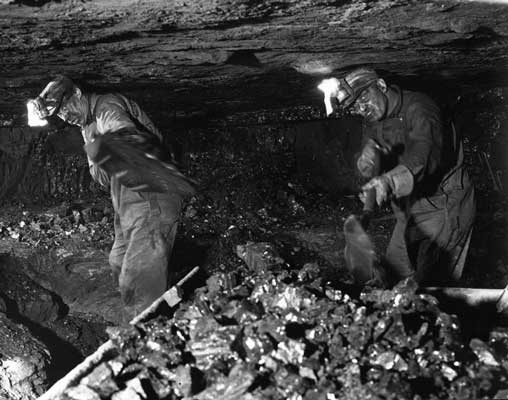
COAL MINERS

Dwayne Hoover is one of the richest men in the coal mining town from which Trout is receiving the award.  Hoover is an auto dealer.  He is the best employer in town, with the best employment package; including employee health plans.

However, the largest employer in town is a coal producer.  The coal company is an environmental polluter, low wage provider, and the biggest cause of citizen illness in town.

Trout and Hoover may or may not know each other but the Creator knows what is going to happen when Trout finally arrives.  In Trout’s hitchhiking progress he meets fellow machines (people who are coping with life).  Their stories are of middle class lives that remind reader/listeners of the passions, weaknesses, and desires of all human beings.  At the same time, the Creator explains what it is like for people that live in coal mining towns.  There is Hoover’s “girl Friday”, the homosexual piano player, and an artist who is recently awarded $5,000 for a painting.  Each machine (person) plays a role in a developing crisis that approaches at the speed of Trout’s hitchhiking progress.

BAD THINGS WILL HAPPEN

A reader/listener feels bad things are going to happen as the story progresses.  Hoover is taking what the Creator calls “bad chemicals”. 

At one point Hoover cannot speak except to repeat one word of a sentence said to him by another.  Hoover crosses the street and feels, with each step, he is sinking into the earth.  Hoover returns to his office, calls his girl Friday, and says he needs her to come with him to a local motel room to relieve a persistent erection.  Both Hoover and his girl Friday have lost their spouses; i.e. Hoover’s wife by suicide; girl Friday’s by war.  They have been lovers for some time.

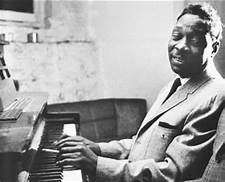
BAR PIANO PLAYER

Hoover continues taking bad chemicals.  The Creator arrives at a bar in town.  Trout arrives at the same bar.  The piano player is playing.  It is somewhat unclear but Hoover shoots the piano player in the back of the head, and bludgeons his girl Friday. 

Trout tries to stop the beating of the girl, and the tip of Trout’s finger is bitten off by Hoover.  Hoover is arrested.  The piano player is dead.  Girl Friday is concussed, and Trout has his hand wrapped in a bloody handkerchief.  Hoover is taken to jail; girl Friday, the dead piano player, and Trout are on their way to the hospital.

FREEWILL

Vonnegut seems to be explaining that money is not happiness.  Human beings have free will to be good, bad, morally upright, or insanely brutal. 

Having a job that barely offers the basic necessities of life only reinforces machine-like living.  Destruction of the environment diminishes those who work for dirty industries and those ancillary businesses that suck off polluter’s productivity.  Drugs are a way of escaping reality but they have consequences. Some machines (people) fall off the edge of sanity, become violent, and sometimes murder innocent bystanders.

STEPHEN CRAIG PADDOCK (PERPETRATOR OF THE LAS VEGAS, NEVADA MASSACRE.)

STEPHEN CRAIG PADDOCK (PERPETRATOR OF THE LAS VEGAS, NEVADA MASSACRE.)

“Breakfast of Champions” is not only a story of the 1970s.  It is the story of yesterday’s school shootings, postal syndrome killings, the Paddock atrocity in Las Vegas, and Donald Trump’s delusional attempt to void America’s 2020 Presidential election.  Vonnegut suggests a human being, whether there is a Creator or not, has free will.  Vonnegut implies humans are choosing to be machines.

THE CAPITALIST VEIL

Audio-book Review
By Chet Yarbrough

(Blog:awalkingdelight)
Website: chetyarbrough.blog

THE SOULS OF BLACK FOLK

The Souls of Black Folk

Written by: W. E. B. Du Bois

Narration by:  Mirron Willis

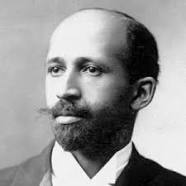
W. E. B. DU BOIS (1868-1963, AUTHOR, SOCIOLOGIST, HISTORIAN, CIVIL RIGHTS ACTIVIST, CO-FOUNDER OF NAACP)

W. E. B. DU BOIS (1868-1963, AUTHOR, SOCIOLOGIST, HISTORIAN, CIVIL RIGHTS ACTIVIST, CO-FOUNDER OF NAACP)

Eventually, doctors will find a coronavirus vaccine, but black people will continue to wait, despite the futility of hope, for a cure for racism.

Editorial comment in the NYT Sunday edition 5/21/2020 by Roxane Gay.

“The Souls of Black Folk” describes a veil of discrimination that covers the face of white America.  Published in 1903, it reflects on the 1863 Emancipation Proclamation, America’s reconstruction failures after the civil war, and a veil that fell like an iron curtain between black and white America.  It is a veil that distorts the truth of human equality.

Slave Family In Cotton Field near Savannah

W. E. B. Du Bois is a great American who finally abandoned his country late in life because he could no longer tolerate the capitalist consequence of social, political, and economic discrimination. He describes discrimination in “The Souls of Black Folk” as a veil, a fine gauzy material that hides the details of black Americans who have the same potential as white overlords. The details are political, social, and economic discrimination imposed by a majority on a minority.  Du Bois identifies that minority as people of color; i.e. specifically black Americans.

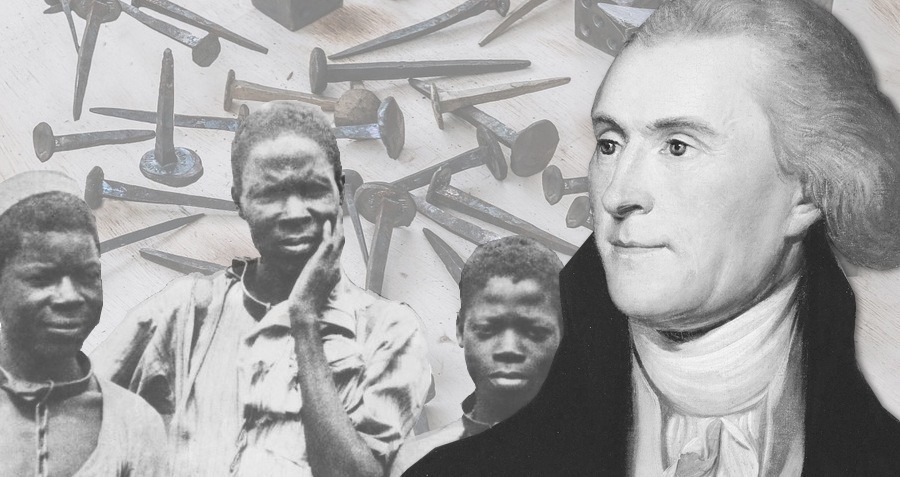
THOMAS JEFFERSON AND SLAVERY

THOMAS JEFFERSON AND SLAVERY (Slave owner that believed blacks are inherently less equal than whites.)

Du Bois is the first black American to receive a PhD from Harvard University.  First he received a bachelor’s degree from Fisk University, a storied black college; went to Harvard to receive a second bachelor’s degree, and on to a PhD.  Du Bois studied black history and wrote “The Souls of Black Folk” to explain what it is like to be black in America.  He began with the end of the civil war and carries it through 1903 when the book is published.

PRISON

Du Bois studied black history and wrote “The Souls of Black Folk” to explain what it is like to be black in America.

Du Bois explains how black Americans are treated, how they feel about it, and how they react to it.  In the clarity of his writing, Du Bois presumes readers will understand humans, of any color, are the same.  Du Bois notes that black Americans are offered freedom without a way of making a living, without education, without any respect by fellow Americans.  Though they were no longer slaves by law they remain slaves to potential employers who see them as less equal, and less capable.  Du Bois notes blacks are denied the tools of education, opportunity for work at a living wage, and the right to participate in the politics of leadership.

SHUCK & JIVE

Without money, power, or prestige blacks are left with deception as their only defense against oppression.  “Shucking and jiving” became a pejorative description of black behavior without white’s understanding its necessity.

Without money, power, or prestige blacks are left with deception as their only defense against oppression. 

COMMUNISM IN THE USA

Du Bois misunderstood the difference between Russian and Chinese revolutions and American capitalism.  The future proved promises of communism were false.  This does not change the truth of Du Bois’s realization that a white majority denies minorities with false promises of capitalist equality of opportunity.

It is little wonder that Du Bois wandered to the idealism of communism with its false promise of equality for all.  White America gave Negroes little alternative.  However, Du Bois misreads history.  The revolution of 1917 may have started with a minority of people called Bolsheviks but they were a part of a white majority.  They promised a future of plenty to an uneducated population who were members of a majority. 

Du Bois clearly shows how black American education, employment, and political participation are subverted at every turn in American history.  Du Bois chastises Booker T. Washington for being an apologist for white suppression. Du Bois sees that, though education is improving for black Americans, they are still denied equal opportunity for employment, and are failing to capitalize on the potential of political power.  Nearing 90 years of age, Du Bois gives up on America.  Ironically, this is in the 1960’s when the Black Panther’s movement is forming.

GREED

The inherent nature of man “to be greedy” makes fools of us all.

Du Bois is a great American because he understood how American capitalism undermines core political beliefs like equality of opportunity and the equality of all human beings.  Du Bois understood the importance of education, equal economic opportunity, and political power.

Du Bois misunderstood that the drive for money, power, and prestige distorts pursuit of the “good” in all forms of government.  Communism, socialism, and capitalism require a Hobson’s choice; i.e. “a choice of taking what is available or nothing at all”.  Even for minorities, it seems capitalism offers the best hope because it attempts to regulate the worst parts of human nature.

ARE YOU BLACK ENOUGH

Audio-book Review
By Chet Yarbrough

(Blog:awalkingdelight)
Website: chetyarbrough.blog

Negroland: A Memoir

Written by: Margo Jefferson

Narration by:  Robin Miles

MARGO JEFFERSON (AUTHOR, FORMER THEATRE CRITIC FOR NYT, PULIZER PRIZE WINNER FOR CRITICISM, PROFESSOR @ EUGENE LANG COLLEGE)

Margo Jefferson’s memoir is a perspective on growing up in America.  Jefferson is born in 1947.  She is raised in Chicago by two professional middle class parents; i.e. one is a doctor; the other a teacher.  What makes Jefferson’s memoir interesting is her middle class upbringing.  It sharply defines answers to many questions never asked by Americans.

Are you black enough?  Are you white enough?  Are you female enough?  Are you male enough?  Are you American enough? 

MARGO JEFFERSON (CLASS OF '71 COLUMBIA UNIVERSITY GRADUATE)
MARGO JEFFERSON (CLASS OF ’71 COLUMBIA UNIVERSITY GRADUATE)

Jefferson wrestles with many of the same baby to teenage insecurities all Americans face in their generation.  However, there is an extra layer of complexity for Jefferson because of her color.  Jefferson lightly touches on the history of slavery and its societal consequence but she personalizes that history in explaining how she became Margo Jefferson, an accomplished theatre critic and professor.

Chicago is a microcosm of America.  Discrimination, crime, poverty, and failure in equality of opportunity are the same in Chicago neighborhoods as anywhere in America. 

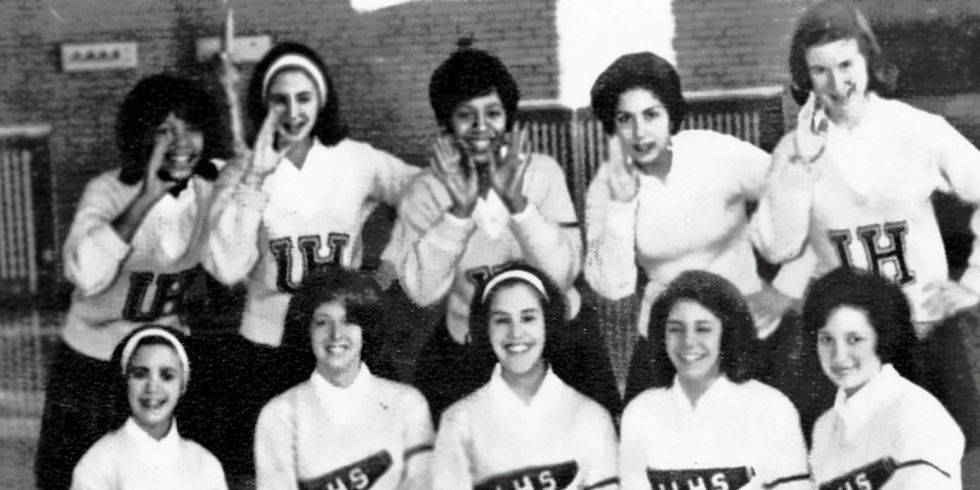
MARGO JEFFERSON AS CHEERLEADER IN THE 60'S (CENTER, TOP ROW)

What Jefferson does in “Negroland” is explain how American society makes her life different because of her color.

Like most girls and boys in high school, Jefferson wants to be popular.  She tries to become a cheerleader.  With success in her senior year, she wonders about the reasons for it taking so long.  Is it because she is not pretty enough?  Is it because she is nearsighted and has astigmatism?  Or, is it because she is not white enough?

RACISM

Jefferson recalls her family’s trip to Atlantic City for a doctor’s conference.  Reservations were made but when they arrive, the hotel gives the family a poorly appointed room and suggests the restaurant would be off-limits for dining.  They checked out of the hotel the next morning.

Jefferson notes concerns of her mother about how other people of color talk and act while warning her daughter not to emulate their speech or style.  Jefferson becomes aware of the potential stigma of not being black enough among people who are proud to be black.

Jefferson explains how she becomes best friends with a handsome gay white man and revels in the looks black men give that seem to question her interest in being with a white man when she is black.  At the same time, she notes how beautiful women hit on her friend without understanding that he has no interest in them.

LARRY WILMORE (COMEDIAN AND SOCIAL CRITIC)

In listening to Jefferson’s memoir the day after Larry Wilmore’s routine about Obama at the White House Correspondents’ Dinner, one gains better insight to Wilmore’s send-up of President Obama.  Wilmore is unfairly criticized for his tart-tongued stand-up when thought of in light of Jefferson’s memoir.

The last part of Wilmore’s presentation seriously praises Obama’s accomplishment and then uses a pejorative word for black Americans to categorize Obama.  Wilmore’s comment is badly interpreted by some.  Wilmore is saying Obama is great enough to be both the President of the United States (in the sense of acceptance by all Americans) and black enough (in the sense of being accepted by blacks).

Jefferson’s memoir, and Wilmore’s routine shows that being American enough, black enough, white enough, male or female enough, is just being a part of the human race.

SELF-PRESERVATION

Audio-book Review
By Chet Yarbrough

(Blog:awalkingdelight)
Website: chetyarbrough.blog

God’s Bankers: A History of Money and Power at the Vatican

Written by: Gerald Posner

Narration by:  Tom Parks

GERALD POSNER (AMERICAN INVESTIGATIVE JOURNALIST)

GERALD POSNER (AUTHOR, AMERICAN INVESTIGATIVE JOURNALIST)

“God’s Bankers” delves into the history of Vatican City to show there is little difference between religious institutions and any organization that puts self-preservation above ethics and morality.

Leaders of religious institutions are as capable of being corrupt and venal as any who manage organizations.  Just as some CEOs of private industry and elected officials of public institutions morally and ethically fail; some Popes lapse as moral and ethical leaders of the Roman Catholic Church.

The Roman Catholic Church has had both good and bad leaders.  From a willingness to look the other way, 6,000,000 Jews are murdered, mob money is laundered, and children are exploited.  No single organization, neither church, financial institution, or elected official is responsible for these immoral and unethical acts but many are complicit.

The Catholic diocese and its brethren have committed every sin known to man (gender identity intended).  The source of their perfidy is not unique to their religion or any system of belief or non-belief; i.e. the source is human nature’s drive for money, power, and prestige.  Popes, CEOs, and public servants are equally seduced by human nature’s drives that influence action.  Human nature is bound, like breath to life, to act immorally and unethically.

ROBERTO CALVI (1920-1982, ITALIAN BANKER CALLED -GOD'S BANKER- BY THE PRESS BECAUSE OF HIS ASSOCIATION WITH THE HOLY SEE)

ROBERTO CALVI (1920-1982, ITALIAN BANKER CALLED -GOD’S BANKER- BY THE PRESS BECAUSE OF HIS ASSOCIATION WITH THE HOLY SEE)

Gerald Posner begins his history of Vatican City with death, by suicide or murder, of Roberto Calvi in 1982.  Calvi’s death is related to the financial practices of the Vatican Bank (aka Institute for the Works of Religion or, sometimes abbreviated, IOR).  From Calvi’s Death, Posner takes church history back to the 1900s when the Vatican Bank is created. 

IOR HOME (THE BASTION OF NICHOLAS V.)


(Calvi’s death is related to the financial practices of the Vatican Bank (aka Institute for the Works of Religion or, sometimes abbreviated, IOR).

The IOR is meant to consolidate the land and money of Vatican City to preserve and expand the wealth of the Church.  

The Bank is a collection and distribution center for money donated, invested, and exchanged (legally or illegally) for preservation and expansion of the Holy Sea.

The primary purpose of the Vatican Bank is to preserve and expand the power and influence of Catholicism.  The fuel for that purpose is money.  Posner’s facts do not deny good works of the Catholic Church.  However, his story exposes the sinful nature of some wearing the robes of Papal authority, and many (employees and consultants) hiding behind cloaks of Papal secrecy.  Posner’s facts imply “being human” is the root of all evil with money as its fuel.

The purpose of the IOR is “to provide for the safekeeping and administration of movable and immovable property transferred or entrusted to it by physical or juridical persons…”  The IOR’s creation is meant to provide money for maintenance and growth of the Roman Catholic Church.  Income is intended to come from charitable activities of the church; paid for by parishioner and lay public contributions, and from legitimate business transactions.  However, Posner shows that charitable contributions and legal business transactions are not enough to sustain Vatican City and its global evangelist goals.

The drive for money is distorted by an implied license to commit any sin necessary to increase income and pay-off any who threaten exposure of illegal activity.  No crime seems out-of-bounds for the Church e.g. its complicity in Nazi occupation of the Balkans; a failure to confront German and Croatian isolation, transport, and murder of Jews; the use of the Vatican Bank to launder money for crime syndicates, the clandestine support of Nazi criminals in return for gold bullion (surmised to have been stolen during the war), espionage participation with American Presidents to subvert communist growth in Eastern Europe, Africa, and South America.  Many of these actions and non-actions increase the wealth of the Church at the expense of Catholicism’s morality and ethics.

POPE PIUS XI (1857-1939)

POPE PIUS XI (1857-1939. Pope Pius XI sells tacit support for the Nazis when the German people are taxed by Hitler to benefit Vatican City at the rate of an estimated 100 million dollars per year.)

Pope Pius XI is consumed by the desire to return Vatican City to a state and is willing to condone and support Mussolini to attain that goal.  Pope Pius XI sells tacit support for the Nazis when the German people are taxed by Hitler to benefit Vatican City at the rate of an estimated 100 million dollars per year.  Though late in Pius XI’s papacy, Hitler and Mussolini’s mistreatment of the Jews is denounced in a Decree that never sees the light of day because of Pius XI’s death.  His successor Pope, Pope Pius XII, fails to register Pius XI’s decree and refuses to condemn Hitler for the final solution during WWII.

POPE PIUS XII (1876-1958, FORMERLY CARDINAL PACELLI)

POPE PIUS XII (1876-1958, FORMERLY CARDINAL PACELLI, Pope Pius XII, fails to register Pius XI’s decree and refuses to condemn Hitler for the final solution during WWII.)

Posner brings us back to 1982 and the death of Roberto Calvi.  Calvi, as a consultant for IOR, launders money for the mafia during his tenure.  Calvi creates bogus charities to hide the transactions.  He recommends Vatican Bank investment in risky ventures that frequently fail.  On balance, until some of Calvi’s activities became public, the Vatican condoned his illegal activity; presumably because ill-gotten gains were greater than losses.  Or, the threat of money laundering exposure is a threat that would tarnish the image of the Church.
NAZISM AND CHRISTIANITY (FAITHS COOPTATION BY HITLER)

Though late in Pius XI’s papacy, Hitler and Mussolini’s mistreatment of the Jews is denounced in a Decree that never sees the light of day because of Pius XI’s death.  His successor Pope, Pope Pius XII, fails to register Pius XI’s decree and refuses to condemn Hitler for the final solution during WWII.

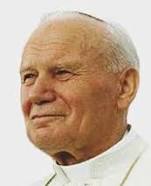
POPE JOHN PAUL II (1920-2005, FORMER POLISH ARCHBISHOP BECAME POPE IN 1978)

Pope Paul II does not come away from Posner’s characterization without some stains.  Though Pope Paul II is highly revered for his charismatic character and willingness to confront communism in Poland, he fails to unwind IOR and its nefarious operations or aggressively attack pedophilia of errant bishops.

ARCHBISHOP PAUL MARCINKUS (1922-2006, BORN CICERO, IL., DIED IN SUN CITY, AZ, PRESIDENT OF THE VATICAN BANK 1971-1989)

ARCHBISHOP PAUL MARCINKUS (1922-2006, BORN CICERO, IL., DIED IN SUN CITY, AZ, PRESIDENT OF THE VATICAN BANK 1971-1989)

Further, Posner notes Paul II’s support of the American Bishop, Paul Marcinkus, when his judgment is questioned in regard to the Vatican Bank.

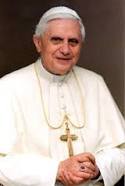
POPE BENEDICT XVI (ELECTED 4.19.2005, RESIGNS 2.28.2013, THE PRESSURES OF OFFICE SEEM TO OVERWHELM THE PONTIFF)

Pope Benedict, Pope Paul’s successor, is equally tarnished for failing to confront IOR corruption and lack of regulation.  An additional note by Posner is that Benedict fails to expose a homosexual faction of the Roman Catholic Church that coerces the Papacy into promoting Bishops based on fear of exposure; i.e. rather than promotion for ability as members of the hierarchy.

ETTORE GOTTI TEDESCHI (2009-2012 PRESIDENT OF IOR, DISCHARGED AFTER POLITICAL INFIGHTING AT THE VATICAN OVER HIS THEATENED EXPOSURE OF MONEY LAUNDERING)

ETTORE GOTTI TEDESCHI (2009-2012 PRESIDENT OF IOR, DISCHARGED AFTER POLITICAL INFIGHTING AT THE VATICAN OVER HIS THREATENED EXPOSURE OF MONEY LAUNDERING)

In the end, Posner suggests IOR is becoming a more conventional bank with the support of the current Pope, Pope Francis.  The beginning of the end appears with Ettore Gotti Tedschi who became President of IOR in 2009.  Tedschi, an Italian economist and banker, begins the clean-up of IOR.  He is discharged in 2012 but not before a whistle is blown.

POPE FRANCIS (AN ARGENTINIAN, 266TH POPE OF THE ROMAN CATHOLIC CHURCH, NAMED IN HONOR OF FRANCIS OF ASSISSI)

Today’s Pope Francis may be better than yesterdays but tomorrow is another day.  One doubts human nature will change.  Humans are unlikely to escape moral and ethical weaknesses.  An ethical bank, like an ethical church, is an oxymoron.  They both require money to operate and they are managed by human beings.

Steps have been taken to regulate the Vatican Bank and stop its use as a money-laundering center for criminal enterprise.  Francis has ordered the firing and replacement of IOR board members and improved the transparency of Vatican Bank transactions.

After Cardinal Pell is exonerated for alleged pedophilia, Pope Francis returns to Cardinal Pell’s recommendations for restructuring Vatican finances. One wonders how much of the accusations against Pell were initiated by the Catholic church’s resistance to oversite of Vatican finances.

As the ancient saying goes, “Fish Rots from the Head”. With Pope Francis, light is being shed on the perfidy of the Roman Catholic Church. The question is-will it be enough and will it change 100 years of IOR malfeasance; not to mention, the generations of sexual abuse by Bishops and Priests of the order.

A DELPHIC MAP

Audio-book Review
By Chet Yarbrough

(Blog:awalkingdelight)
Website: chetyarbrough.blog

The Gene: An Intimate History

Written by: Siddhartha Mukherjee

Narration by:  Dennis Boutsikaris

SIDDHARTHA MUKHERJEE (AUTHOR, INDIAN-BORN AMERICAN PHYSICIAN, SCIENTIST)

Siddhartha Mukherjee draws a Delphic map outlining the boundaries of genetic science and Homo sapiens’ future.  (Interviewed on PBS March 31, 2020 regarding Covid19.)

Predictions for Homo sapiens’ future are “Delphic” in the sense of being obscure.  Ancient predictions of the Oracle of Delphi are noted to have been subject to interpretation.  The predictive quality of a Delphic map of genes involves the morality and ethics of manipulating heritable characteristics of humankind.

HEALTHY OLD AGE

Picture this:  an average life span of 150 or more years, cure for all known diseases of mind and body, elimination of known genetic causes for debilitating mental and physical deformities.

ISLAND OF DR. MOREAU CREATURE

Now, picture this:  loss of the ability to procreate, accidental creation of a new disease because of an unintended consequence of a manipulated gene, extinction of the human race caused by artificial enhancement of the genetic code.

Mukherjee notes that the science of genetics is rapidly reaching the point of modifying, and potentially creating, human life that has no known physical or mental handicaps.  Mukherjee’s Delphic map is intimately drawn in vignettes about his family’s life, and particularly a brother’s loss of life from mental dysfunction; i.e. a brother that takes his own life as a result of schizophrenia.  Through Mukherjee’s family vignettes, and stories of children with inherited medical maladies, he poignantly clarifies the seriousness of the subject.

DESCENT OF MAN

Though genes are not the source of everything human life becomes, the science of the subject shows that human beings originated in Africa and grew to populate the world with humans from one original mother.

The science of genetics is changing medicine and society.    Apocryphally, the Oracle of Delphi is a priestess rather than a priest who foretells the future.  Once again, the future is scientifically acknowledged as dependent upon women.

women are the sun

Though human existence is dependent upon both nature and nurture, mitochondrial DNA comes from mothers while sex determination comes from fathers.

The significance of that discovery is that converting food to energy comes from mitochondrial DNA (mtDNA), which is only inherited from mothers.  Without a mitochondrial Eve, there would be no human race (an ironic thought in view of the unequal treatment of women in the world.)

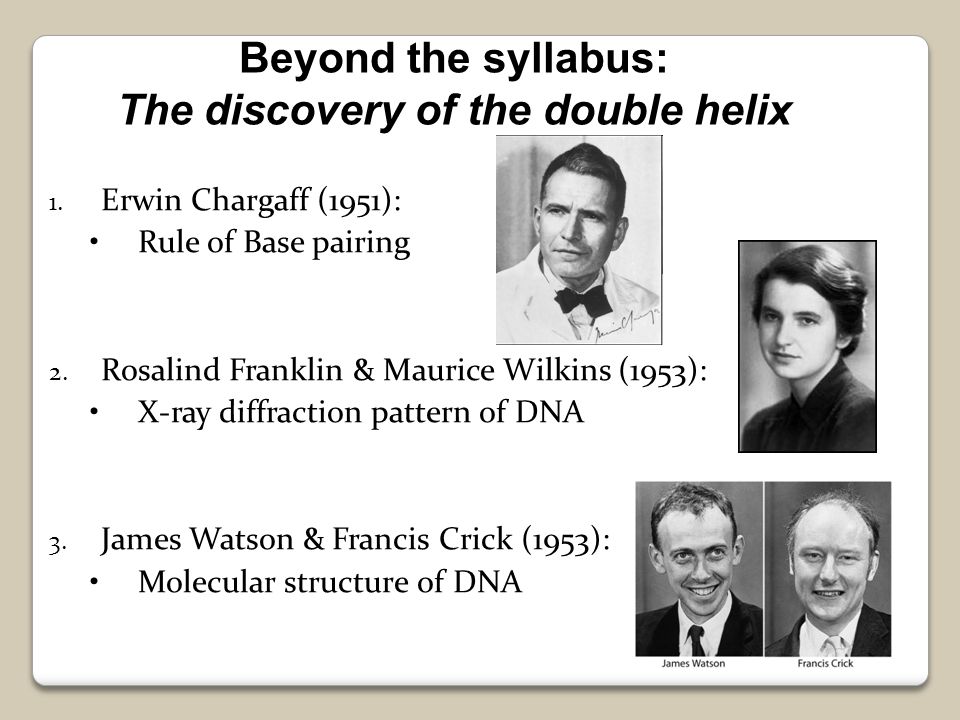
DISCOVERY OF THE DOUBLE HELIX

Mukherjee recounts discovery of DNA structure and how identifying the double helix in 1953 (by James Watson and Francis Crick) leads to mapping the human genome.

 With a map of the gene, it becomes possible to manufacture drugs that attack medical and psychological maladies at a genetic level.  Mukherjee shows how the history of Watson’s and Crick’s discovery defines western culture’s search for knowledge.

GOVERNMENT VS. PRIVATE RESEARCH

Mukherjee is not overtly critical of the two approaches but implies that corners are cut by the private sector in order to patent discoveries for new medicines that heal but also sometimes kill. (Something to be wary of in regard to Covid19.)

During President Clinton’s term of office, competition for gene sequencing leads to a private/ public race that exemplifies the difference between entrepreneurial and governmental pursuit of scientific discovery.  The objective of the private sector is to win the race by any means necessary.  The private sector’s primary objective is to create financial return on investment.  In contrast, government focuses on methodology of discovery and accuracy of results, with societal reward as a primary objective. 

This is somewhat analogous to what happened during WWII with the discovery and use of computers; i.e. one element of discovery is public and another is private.  The difference is that computer discoveries indirectly relate to death and destruction while genetic discoveries directly relate to death and destruction.  Each approach to scientific discovery, private enterprise and government research, have benefits and costs.  What is at stake in the case of human manipulation of genes is the destiny of the human race.

ORLANDO NIGHTCLUB SHOOTING

Mukherjee reflects on the terrible consequence of family members, friends, or professional counselors who insist people who are lesbian, gay, bi-sexual, transgender, or questioning, can be socially engineered to be heterosexual.  The insistence leads to psychological dysfunction and worse, the arbitrary murder of innocents; like the Orlando, Florida massacre in 2016.

Mukherjee acknowledges genes are only part of what makes humans human.  A most striking reveal is about LGBTQ and the genetic component of what makes humans one sexual preference or another; i.e. winners of the battle between inheritable XX (female) and XY (male) chromosomes show significant correlation with sexual preference. 

TWINS

TWINS: Though genetics are a major determinant in what humans are-environment plays a role.  The role is complicated because one person’s response to outside stimulation can be entirely different from another’s even though they may be near genetic duplicates.

Mukherjee sites studies of twins raised in different parts of the country, with different families, having uncannily similar life preferences; presumable because they have the same genetic inheritance.

“The Gene” is an important book.  Its importance lies in the dangers inherent in sciences’ ability to tamper with a natural selection process discovered by Charles Darwin in the 19th century. 

Modern humans have evolved over 200,000 years through a process of adaptive genetic changes defined by Richard Dawkins as immortal genes.  The caution one must recognize is that when humans make decisions for other humans, the consequence is inevitably different from what is expected. 

Humans may become extinct because of our environmental mistakes wrought by natural selection and nurture.  However, one is equally wary of becoming extinct because of what society decides about gene modification by humans; for humans.
THE HARD WAY

Audio-book Review
By Chet Yarbrough

(Blog:awalkingdelight)
Website: chetyarbrough.blog

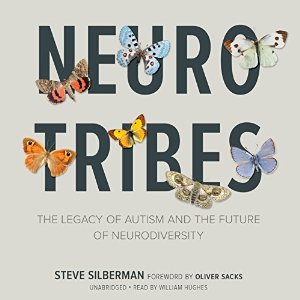
Neuro Tribes: The Legacy of Autism and the Future of NeurodiversityNeuro Tribes

Written by: Steve Silberman

Narration by:  William Hughes

STEVE SILBERMAN (AMERICAN AUTHOR, CONTRIBUTOR TO WIRED MAGAZINE)

“Neuro Tribes” reminds one of the gambling phrase “the easy way and the hard way”.    On a Las Vegas craps table, rolling two die with the same number and repeating it is the hard way.  From Steve Silberman’s story, parents successfully raising a child with autism is the hard way because the odds are stacked against them.  This may not be a great analogy but Silberman shows that parents have to work harder to understand and nurture a child who suffers from any one of the many variants of autism.

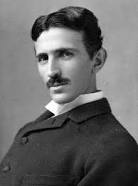
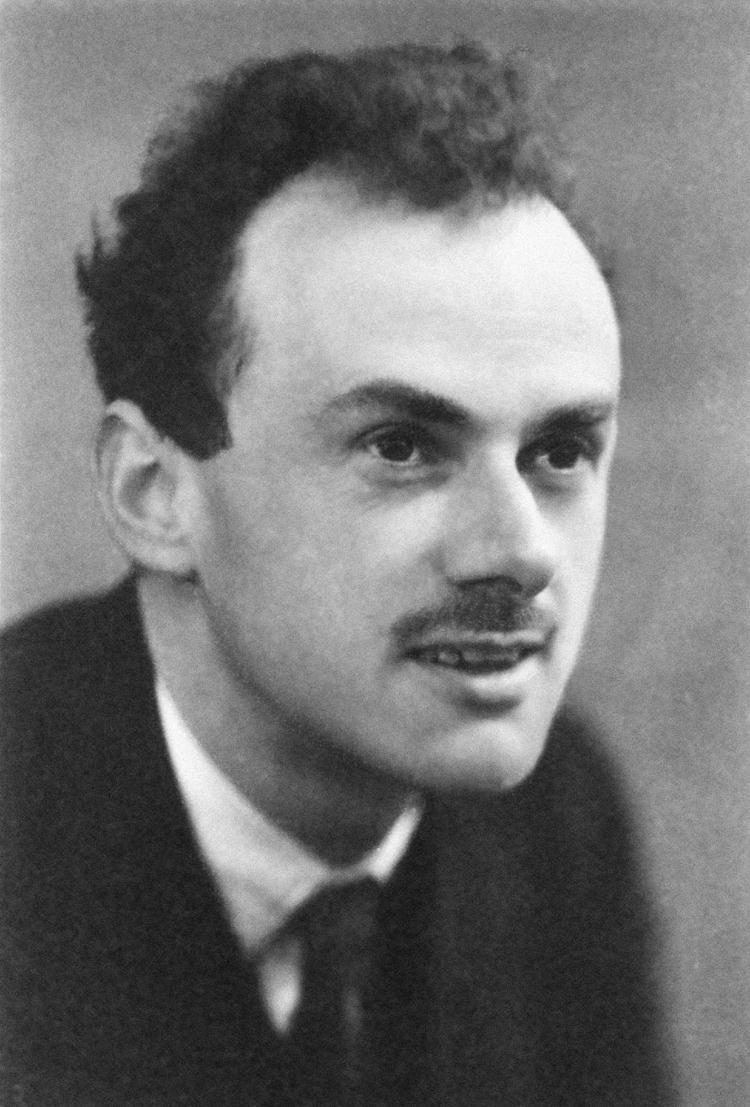
Silberman tends to name drop famous people who have never been diagnosed as autistic, but exhibit some of the characteristics of autism.  Silberman offers brief biographies of Henry Cavendish, Nikolo Tesla, Paul Dirac, and others.  Not every autistic person is a genius but Silberman’s point is that a person who may have social communication difficulties, obsessive/compulsive behaviors, or attention issues have in many cases become incredibly valuable to society.  To suggest autism implies anything less is a slippery slope toward abandonment, psychiatric incarceration, concentration camps, medical castration, and threatened individual or collective extermination.

NIKOLA TESLA (1856-1943, SERBIAN AMERICAN INVENTOR, ELECTRICAL & MECHANICAL ENGINEER, PHYSICIST, FUTURIST)

PAUL DIRAC AT THE TIME OF PULITZER PRIZE AWARD
PAUL DIRAC (1902-1984, NUCLEAR PHYSICIST, WINNER OF THE PULITZER PRIZE)

HENRY CAVENDISH (1731-1820, BRITISH NATURAL PHILOSOPHER, SCIENTIST, CHEMIST, AND PHYSICIST)

Silberman recounts the history of people who do not fit within social conventions. In some well-known instances these non-conformists are isolated, sterilized, and/or murdered.

They are classified as developmentally or intellectually inferior human beings to be eliminated by society for their aberrant physical abilities or mental faculties.  One may think this is a description of Hitler’s Germany but Silberman recounts the story of the U. S. Supreme Court’s ruling in Buck v. Bell.


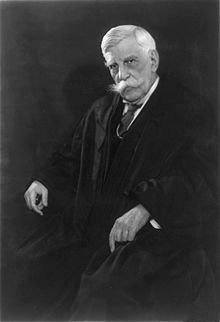
OLIVER WENDELL HOLMES (1841-1935, JUSTICE OF THE SUPREME COURT 1902-1932)

In 1927, no less than a giant of the U. S. Supreme Court, Justice Oliver Wendell Homes, Jr. writes the majority opinion that says compulsory sterilization of the intellectually disabled is not a violation of the Due Process clause of the 14th amendment.  Common sense, if not history, shows that intellectual ability, by any measure, is a small part of what a human being is or can be.  The very idea that there is a criterion that objectively measures intellectual capability is repugnant.  Mrs. Buck is involuntarily incarcerated and Mrs. Buck’s daughter is sterilized based on a 1924 Virginia law.  The United States reportedly sterilized 60,000 American men and women through the 1970s (See January 2016 Newsweek report).

BUCK FAMILY (MOTHER AND DAUGHTER STERILIZED BY THE STATE)
BUCK FAMILY (MOTHER AND DAUGHTER STERILIZED BY THE STATE-Mrs. Buck is involuntarily incarcerated and Mrs. Buck’s daughter is sterilized based on a 1924 Virginia law.  The United States reportedly sterilized 60,000 American men and women through the 1970s (See January 2016 Newsweek report).)

ADOLPH HITLER (1889-1945)
Silberman reminds reader/listeners of the child euthanasia program in Germany and how a German family’s support of Hitler leads to a request that their child be euthanized because of physical deformity.

Silberman offers a short history of the growth of Eugenics.  The idea is, like a patch of peas, human beings can be bred to eliminate any undesirable characteristics.  No civilizations’ hands seem clean.  Silberman reminds reader/listeners of the child euthanasia program in Germany and how a German family’s support of Hitler leads to a request that their child be euthanized because of physical deformity.  It is estimated that “…5,000 children were victims of this program” (see Wikipedia “Child euthanasia in Nazi Germany).

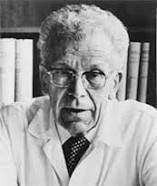
HANS ASPERGER (1906-1980, AUSTRIAN PEDIATRICIAN, MEDICAL THEORIST, AND MEDICAL PROFESSOR)

Silberman reports on the diagnostic discovery of autism by Hans Asperger in the 1940 s.  Asperger’s storied career includes association with the Nazi Party that is both reprehensible and insightful.  In defining autism, Asperger suggests children with the malady are of little social value.  This categorization of human beings feeds Hitler’s extermination of handicapped and mentally challenged children and adults.  Despite this horrendous consequence, Asperger’s careful examination of autistic behavior provides insight to its symptoms and potential treatments.

Silberman notes Asperger’s prescient understanding of autistic children’s needs.  Autistic children need to be listened to and their behaviors analyzed to provide treatment that ameliorates social dysfunction.  Though Silberman does not mention the Montessori school of education, Asperger suggests that autistic children should be educated in ways that reinforce their natural interests.  Asperger, according to Silberman, had an uncanny knack of understanding what his patients were interested in and followed that lead to integrate them into society.

AUTISM TREATMENT
Though Silberman does not mention the Montessori school of education, Asperger suggests that autistic children should be educated in ways that reinforce their natural interests.  Asperger, according to Silberman, had an uncanny knack of understanding what his patients were interested in and followed that lead to integrate them into society.

A part of Silberman’s story is about unscrupulous medical professionals that offer cures for autism that have nothing to do with science and everything to do with financial exploitation of parents that are overwhelmed by their child’s autism.  These “doctors” provide bogus treatments like blood chelation to remove impurities that are alleged to cause autism.  Silberman suggests there is no cure for autism.  There is only the promise of amelioration with the hard work and understanding of parents and caregivers who appreciate the value of human life.

For parents, the hard way involves toleration of symptoms of autism while reinforcing those behaviors that comport with the innate abilities of their children.  In the process of careful listening and observation, parents can reinforce socially acceptable behavior and diminish anti-social activity.

AUTISM--EARLY TREATMENT PROVIDES ENCOURAGING BRAIN CHANGES
AUTISM–EARLY TREATMENT PROVIDES ENCOURAGING BRAIN CHANGES  Silberman notes that in the process of careful listening and observation, parents can reinforce socially acceptable behavior and diminish anti-social activity.

Silberman implies autistic human beings exist in every society.  Symptoms of hyperactivity, singular focus on particular subjects, poor communication skills, antisocial behavior, lack of interest in mutual achievements or interests, and a lack of empathy are symptoms that exist in many human beings.  One concludes from Silberman’s book that parents with an autistic child have a harder roll of the dice.  Their rewards can be monumentally greater but the odds are against parental success.  Not every autistic child will be a Cavendish, Tesla, or Dirac but one can choose to believer every child is a gift to be treasured for whatever they become.

STORIES OF AN ERA

Audio-book Review
By Chet Yarbrough

(Blog:awalkingdelight)
Website: chetyarbrough.blog

The Decameronthe decameron

Written by: Giovanni Boccaccio

Narration by:  Frederick Davidson

GIOVANNI BOCCACCIO (1313-1375, ITALIAN WRITER, POET, AND HUMANIST)

“The Decameron” is a series of stories about the western world’s comic/tragic society.  Compiled or written by Giovanni Boccaccio in the 14th century, it recalls 100 stories told by seven women and three men over a period of ten days. “The Decameron” pictures humanity as directed by luck, avarice, and lust.  Each story implies human relationship is determined by circumstance, and informed by nature.  The circumstance is societal position.  Nature is the exigency of the emotive moment.

THE BLACK DEATHWritten during or after the spread of the Black Death (1346-53), “The Decameron” skewers belief that God determines one’s fate.  The stories range from raucous to sedate, and sinful to salacious.  Each story implies humans are like wood chips on an ocean.  Humans float into and away from society’s harbor; toward and away from each other, driven by happenstance and nature.  Men are often depicted as lustful beasts; women as lustful manipulators of chance and circumstance.  Corruption of morals is as evident in the priesthood as in the lay public.  In Boccaccio’s world, God may have created the universe but everything after the seventh day is driven by chance and nature.

INEQUALITY IN BOCACCIO
Women are generally shown to be weaker than men but clever and clandestine operatives.

All stories are of tradesmen, merchants, upper class men and women who have the luxury of exercising desires in life beyond the necessity of food to eat and shelter to protect.  Women are generally shown to be weaker than men but clever and clandestine operatives.  Women and men living above the level of abject poverty seem equally consumed by interest in love and lust.  Considering the history of human misogyny, love and lust may have been women’s principle source of security.  For men, love is riven with lust.  Love, most often, seems a fleeting distraction to men.

PRIESTHOOD IN BOCCACIO
The priesthood and upper-class laymen in Boccaccio’s time use the tools of wealth, power, and prestige to seduce women.  In contrast women use guile and sexual favor to clandestinely acquire wealth, power, and prestige

Neither the church or the lay public are shown to be morally superior.  The priesthood and upper-class laymen use the tools of wealth, power, and prestige to seduce women.  In contrast women use guile and sexual favor to clandestinely acquire wealth, power, and prestige.  The exception is the wealthy widow that has some control over the unforeseen consequence of chance.

The comic/tragic events of the stories offer a view of what it is like to live during the dark ages.  Power, not surprisingly, lies in the hands of men but the fairer sex is shown capable of co-opting power with charm and cunning.  Revenge seems equally distributed between the sexes but consequentially more severe for women than men.

There are some insights to history and society offered by “The Decameron”.  A clever decision by a military strategist is to refashion bows and arrows with smaller slits than common.  The result is that bow carriers on one side of a battle are unable to use arrows invented with smaller slit arrows.  But, wide slit arrows could still be used by soldiers with small slit bows.  This small bow and arrow innovation gave one side of the battle twice the ammunition of the opposition.

ARROW RELICS FROM THE PAST
There are some insights to history and society offered by “The Decameron”.  A clever decision by a military strategist is to refashion bows and arrows with smaller slits than common.

SEXUAL PREDATION (WOMEN AS OBJECTS TO FULFILL MALE FANTASIES)
Then and now, cuckolds and adulteresses share equal billing for shame and condemnation.  However, the double standard for men that wander, and women that survive adultery is shown as appalling unequal then as it is now.

More interesting insights are the rise of a middle class in the dark ages, and the early recognition of organized religion’s corruption.  God is still considered as all-powerful but organized religion is rife with the same sins of all human beings.  Women may have been treated as second class citizens but they still found ways to compete in the drive for money, power, and prestige.  Then and now, cuckolds and adulteresses share equal billing for shame and condemnation.  However, the double standard for men that wander and women that survive, adultery is shown as appalling unequal then as it is now.  Men are forgiven while women are brutalized (sometimes murdered) and left to deal with the consequences of childbirth and poverty.

Finally, there is the underlying theme of nature and happenstance that determine the course of life.  There is belief in God but only as Creator.  Humankind is on its own in stories of “The Decameron”.  Buffering by nature pushes and pulls humankind with chance circumstances of the day.  One household is decimated by the plague while next door neighbors are untouched. God seems to have washed His hands of what happens on earth.  Plans of man are perceived as changed by nature’s unpredictability; not by God.

THE PLAGUE
Buffering by nature pushes and pulls humankind with chance circumstances of the day.  One household is decimated by the plague while next door neighbors are untouched. God seems to have washed His hands of what happens on earth.  Plans of man are perceived as changed by nature’s unpredictability; not by God.

Though some may be entertained by this presentation of “The Decameron”, it is not to this critic’s taste.  It is too long.  It is delivered monotonously.  It elicits little laughter.  It ponderously consumes thirty hours of a listener’s time.  However, as noted above, it offers a remarkable picture of life in an era of western world’ upheaval (the current of the black plague) and change (from God’s plan to the unpredictability of nature).

MORE OR LESS FREE

Audio-book Review
By Chet Yarbrough

(Blog:awalkingdelight)
Website: chetyarbrough.com

Privacy, Property, and Free Speech: Law and the Constitution in the 21st Century

The Great Courses Series

Lectures by: Professor Jeffrey Rosen

JEFFREY ROSEN (AUTHOR, AMERICAN ACADEMIC, LEGAL HISTORIAN, PROFESSOR AT GEORGE WASHINGTON UNIVERSITY LAW SCHOOL)

JEFFREY ROSEN (AUTHOR, AMERICAN ACADEMIC, LEGAL HISTORIAN, PROFESSOR AT GEORGE WASHINGTON UNIVERSITY LAW SCHOOL)

The public sector continually revises laws regarding the internet.  Laws passed by government attempt to regulate internet use, ownership, and censorship by redefining freedom of speech and expression, the freedom of religion, and the freedom from want and fear. Technology encroaches on privacy with internet access by the public and private sectors. 

Are Americans more or less free in the 21st Century? 

Professor Jeffrey Rosen in “Privacy, Property and Free Speech” leaves the question unanswered.  However, he clearly frames the question for listeners to draw their own conclusion.  It is difficult to give a definitive answer for three reasons.  One, new technology redefines freedom.  Two, September 11, 2001 redefines security.  Three, globalization redefines nationalism.

Government classifies organizations and decides which can legally access the internet.  Government is in the process of defining who can own the internet and how access can be regulated.  Government has the power to censor information that it views detrimental to the freedoms historically held by Americans.  Control of internet use, ownership, and censorship by the government encroaches on freedom.

WOMEN'S RIGHTS MOVEMENT

Women, in some men’s lives, are expected to bear children, be silent, cook and clean house, be dependent on their husbands, and respect males in all circumstances of life.

Professor Rosen addresses the issue of property by lecturing on women’s rights and the right of government to claim eminent domain on property owned privately that can be taken for the public good.  In addressing women’s rights, Rosen reviews the history of Roe v. Wade and implies that the judicial system may have acted too quickly by not allowing the States and the general public to fully address the issue.

Rosen is equally conflicted by the government’s right to claim eminent domain.  He notes how confiscation of private property at fair market value has a spotted history of success when claimed by the government for the public good.  In some cases, the taking has resulted in failed projects; in others, like Baltimore’s revitalized harbor, the taking revitalized a neglected and deteriorated landmark.

EMINENT DOMAIN

Rosen notes how confiscation of private property has a spotted history of success when claimed by the government for the public good.

The American judicial system encroaches on the freedom of women to choose and the fifth amendment clause says private property shall not be taken for public use, without just compensation.

The private sector uses the internet to define consumers.  What an internet user purchases becomes a profile factoid used to pander to consumer desires.  The detailed profile can affect the price advertised and the personalized pitch made by a retailer.  Private sector search engines use consumer profiles to pitch private sector businesses for advertising.  Consumer manipulation by the private sector encroaches on freedom.  Web-based profiling steers the public by profiling individuals and algorithmically congregating personal information.

ONLINE PRIVACY

What an internet user purchases becomes a profile factoid used to pander to consumer desires.


Terrorism is like lighting in a storm; i.e. it is a force of nature that can strike anyone at any time.  Governments have changed the world of travel by invading the privacy of minds and bodies to reduce the chance of a terrorist act.

9.11.01TRADE CENTER ATTACK

The Trade Center tragedy redefines security for America and the world.  September 11th convinces the world that there are no unbreachable terrorist constraints. 

GUANTANAMO

Rosen suggests governments cross the line when citizens are detained or incarcerated for what they think rather than what they do.  The fear one has is that thought becomes grounds for prosecution. 

To the extent that terrorism is like lightning in a storm, one can only wait for the storm to pass.  Invading one’s privacy and arresting citizens for what they think is a slippery slope to totalitarianism.

PREHISTORIC HUMAN KIND

When the first man and woman joined together as a couple; when the first tribe became a hunting and gathering troop, and when the first hunter-gatherers became part of a farming community, freedom diminished

There is less and less room for nation-state nationalism.  Encroachment on privacy, property, and free speech are inevitable in the 21st century (and beyond).  Freedom’s encroachment is an inherent part of civilization. 

Despite Brexit and nationalist sentiment of Trump supporters, all human beings are citizens of one world.

The last lecture in Rosen’s series is about the right to be forgotten.  Now, we are citizens of nation-states; tomorrow we will be citizens of the world.  With each regrouping, there is diminished freedom. 

The last bastion of freedom will be “the right to be forgotten”. 

It will be a programming code designed to volition-ally erase one’s identity.  This volitional reboot will be with less rather than more freedom because of the nature of becoming part of a larger human congregation.

Professor Rosen offers an excellent and informative outline of America’s history of privacy, property, and free speech.  A listener will draw their own conclusions about present and future freedoms from Rosen’s lectures.  My view is that freedom has always been thankfully limited.

SEXUAL ORIENTATION

Audio-book Review
By Chet Yarbrough

(Blog:awalkingdelight)
Website: chetyarbrough.blog

Mislaid: A NovelMislaid

Written by: Nell Zink 

Narrated by: Cassandra Campbell

NELL ZINK (AMERICAN NOVELIST)

Sexual orientation, and what became known as LGBT rights, is hotly debated in America.  Four rulings between 1996 and 2015 changed the rights of the LGBT (lesbian, gay, bisexual, and transgender) community.  The Supreme Court invalidated a state law banning protected class recognition based on homosexuality; invalidated sodomy laws nationwide, denied the validity of the “Defense of Marriage Act”, and made same-sex marriage legal in America.

Nell Zink validates the direction of society’s recognition of LGBT rights in her book “Mislaid”.  Zink creates four characters who illustrate how American equal rights for the LGBT community are changing.  Lee, a husband, is gay.  Peggy, his wife, is lesbian.  Being gay or lesbian is a label implying gays only have sex with men and lesbians only have sex with women.  “Mislaid” suggests that is a myth.  Lee and Peggy clearly express their preference for same-sex liaisons; however, being gay or lesbian is a preference; not an inviolable mandate or predilection.

sexual orientationHumans may be seduced by the pleasure of sex regardless of sexual orientation.  Though both Lee and Peggy are noted to have same-sex preference, they become man and wife and bare two children during their marriage.  Just as the words gay and lesbian are labels, the same can be said of bisexual.  Sexual acts are fundamentally gender neutral.

The disingenuous politicization of the “Don’t Say Gay” bill by the governor of Florida is disgusting.  The Disney corporation creates amusement parks for all people, regardless of sexual orientation.

CHILDREN
Zink implies that sexual preference is a happenstance of genetics, not parental influence.  Current science and sociological studies reinforce that belief.

A second myth that is exploded is that the children of gay and/or lesbian parents produce sexually confused offspring.  Both the son and daughter of Lee and Peggy are heterosexual.  Zink implies that sexual preference is a happenstance of genetics, not parental influence.  Current science and sociological studies reinforce that belief.

Love between Lee and Peggy is not part of their sexual relationship.  At best, it is a partnership of circumstance and convenience.  Lack of love leads to divorce when their son is nine and their daughter is three.

PSYCHOLOGICAL ABUSE 2Lee is the dominant presence in the relationship.  Lee psychologically abuses his wife with extramarital affairs and ridicule that is focused on Peggy’s unrealistic literary ambition. Peggy’s reaction is to act out by driving her husband’s favorite car into a lake and eventually leaving her husband.  Peggy expects to take both of her children with her but their nine-year-old son refuses to leave; in part because of Lee’s labeling of Peggy as psychologically unbalanced (another frequently misused label).

GENDER INEQUALITYEach child grows up in starkly different environments.  The boy becomes an academic athlete at William and Mary while the girl becomes a struggling scholarship-aid student at the same school.  Their independent upbringing represents two ends of the spectrum of growing up in America.  One, is a life of upper middle class wealth; the other a life of poverty.  One shows the privilege of being a man and the difficulty of being a woman in a world largely controlled by men.

“Mislaid” could have been a much better novel.  It deals with life’s complexity very well, but fails to engross its listener in its characters.  A reader/listener’s empathy is rarely tapped by a story full of potential.  However, Nell Zink deftly and intelligently covers a host of subjects that warrant the time it takes for the public to read or listen to “Mislaid”.  It provides a better understanding of the LGBT community.  It illustrates how much more difficult it is for an American woman than an American man to raise a child on her own.

NECESSARY TRUTH

Audio-book Review
By Chet Yarbrough

(Blog:awalkingdelight)

Website: chetyarbrough.blog

Invisible Man, Got the Whole World Watching

Invisible Man, Got the Whole World Watching: A young Black Man’s Education

Written by: Mychal Denzel Smith

Narrated by: Kevin R. Free

MYCHAL DENZEL SMITH (AUTHOR)

Mychal Smith’s book is difficult to listen to for a white liberal; i.e. the difficulty is more because of what Smith sees than what he does not see.  The necessary truth of what Smith sees is that being black, female, homosexual, or any color but white disadvantages citizens who live, work, and love in America.  Smith correctly notes that Barrack Obama did not change that truth.  But, for a liberal, Smith’s criticism of Obama is heart-rending.

PRESIDENT BARACK OBAMA
No singular person will ever unwind history’s discrimination. That Obama is black and became the first black president of the United States proves being human is the best one can be.

Smith’s expectation is superhuman.  No singular person will ever unwind history’s discrimination.  Obama is an extraordinary human being by any standard of measurement.  That Obama is black and became the first black president of the United States proves being human is the best one can be.  Martin Luther King’s “arc of justice” still bends toward freedom and equal opportunity for all; despite the world’s, let alone Obama’s, failings.

The nature of humankind is an evolutionary work in progress.  Sadly, evolution is a chancy proposition that moves human nature both backward and forward.  Maybe, humanity will never get to a state of freedom and equal opportunity, but Obama’s “audacity of hope” is better than anger, and fear.

MALCOLM X (1925-1965)
MALCOLM X (1925-1965, Malcolm X’s life experience and intelligence led him to believe all people are human beings.)

Smith cites Malcolm X as his ideal of black resistance but fails to note that Mr. Little evolved to believe separate but equal is a fiction.  Malcolm X broke from the Nation of Islam because of its belief in Black separatism and superiority.  Malcolm X’s life experience and intelligence led him to believe all people are human beings.

TRAVON MARTIN (
TRAYVON MARTIN

In being human, there is good and bad in every race, color, and creed. None of this denies Smith’s recognition of the questionable murder of Trayvon Martin, or the Jena Six debacle in Jena, Louisiana where a white high school student is beaten by five black teenagers.  Both incidents are riven with racial hatred, lack of justice, and human failing.

Smith gravitates to violent lyrics to say the anger of rap artists appeals to his inner frustration.  Smith recounts the considered statements of Kanye West when President Bush fails to conscientiously respond to the Katrina disaster in New Orleans.  (West suggested Bush did not care about black people.)  Ironically, Kanya West appears to support President-Elect Donald Trump who was sued for discrimination under the fair housing laws of the United States.

KANYE WEST AND DONALD TRUMP
Ironically, Kanye West appears to support President-Elect Donald Trump who was sued for discrimination under the fair housing laws of the United States.

There are many incidents that Smith recognizes as the failure of white America to treat minorities fairly.  At the same time, Smith is introspective in acknowledging some of his own human failings.  He writes of his fears, his desire to be a great writer, and his earlier life failure to understand how important women’s rights are in the black community.  He writes of his father’s concern over his sexuality and how gender discrimination has some of the same hatred, lack of justice, and human failing as black discrimination.

Listening to Mychal Denzel Smith is difficult because his observations explain why he, if not most, black Americans are disgusted with white America.  It makes a white person feel guilty because white Americans are the majority; and, as a majority, white (particularly male) America has the bulk of the country’s money, power, and prestige.  Until all people are humans first, there seems little reason to believe there is much hope for the “arc of justice” to bend toward freedom and equal opportunity for all.

PRISONHope is not enough for black American’s suffering today.  That is Mychal Smith’s message–too many blacks are being murdered; too many blacks are denied equal opportunity; too many blacks are jailed, and too many black families are broken.

What Smith fails to fairly acknowledge is who is at fault.  All of us share the blame.  Human beings must recognize the humanity of all human beings.  If evolution is not the answer, then human will (in a Nietzschean sense) must come to America’s aid.