MOST INTERESTING ESSAYS 2/5/26: THEORY & TRUTH, MEMORY & INTELLIGENCE, PSYCHIATRY, WRITING, EGYPT IN 2019, LIVE OR DIE, GARDEN OF EDEN, SOCIAL DYSFUNCTION, DEATH ROW, RIGHT & WRONG, FRANTZ FANON, TRUTHINESS, CONSPIRACY, LIBERALITY, LIFE IS LIQUID, BECOMING god-LIKE, TIPPING POINT, VANISHING WORLD, JESUS SAYS
“My Absolute Darling” is a debut novel for Gabriel Tallent. Tallent’s first book is a subject that shocks the senses. It reminds one of Nabokov’s “Lolita” in its insight to child abuse. However, it adds the reprehensible dimension of incest. Though Tallent is less lyrical than Nabokov, the disgust a listener feels as he processes the story is equivalent.
Both Tallent and Nabokov identify men of subsumed intelligence that rationalize sexual perversion.
Both Tallent and Nabokov identify men of subsumed intelligence that rationalize sexual perversion. Martin is father to a young girl who lost his wife. The girl is named Julia but is generally called Turtle. Turtle hides in a protective shell manufactured by her father. The shell protects but also isolates her from the world. Her view is her father’s view. Her seduction is based on familial trust that is brutally and disgustingly enlisted by her father.
Martin believes the world is a wicked and unforgiving place. He raises his child with a survivalist’s view of life. To Martin, the earth is doomed to extinction and its demise is inevitable. The cause is ignorant mankind. No one can be trusted. You can only rely on yourself and your immediate family. Knowledge of self-protection, the use of guns, knives, and nature to survive are daily lessons for Turtle who is trained by her father and grandfather.
Knowledge of self-protection, the use of guns, knives, and nature to survive are daily lessons for Turtle who is trained by her father and grandfather.
Martin’s view of the world is both misogynistic and misanthropic. He indoctrinates his daughter into his bizarre world by demeaning her sex, satisfying his lust, and distorting familial love. To Turtle, Martin is her world until it is not. Turtle’s view begins to change as she experiences life outside of her shell.
Many listeners will be appalled by Tallent’s story just as they were with Nabokov. One is compelled to put it down but drawn by Tallent’s skill in explaining how incest is a part of the human condition.
Can anyone explain how incest and other forms of child abuse can be stopped? Tallent explains how incest occurs, just as Nabokov and Yanagihara show how pedophilia infects humanity. None of these fine authors offer resolution.
Narration by: Jenna Lamia, Dylan Baker, Robert Petkoff
JONATHAN FRANZEN (NOVELIST, WROTE THE CORRECTIONS AND FREEDOM-WINNER OF THE NATIONAL BOOK AWARD 2001)
Jonathan Franzen’s new book, “Purity”, mixes feminine mystique and male egoism with a wooden spoon. Franzen interestingly uses the image of a wooden spoon stirring people’s minds and motives.
Like the 19th century custom of awarding losers of a competition a wooden spoon, either feminine mystique or male egoism will receive the award at the end of Franzen’s book.
Purity works for a telemarketing company for an unlivable wage. She struggles to make ends meet. She flirts with her employer who is married and uses her sexuality as a tool to get ahead; not to the point of infidelity, but near the edge.
Purity, Franzen’s main character, is a personification of the feminine mystique. She is in her early twenties, graduates from college with a $130,000 debt, and struggles to find a job that allows her to live a decent independent life. Purity loves her mother deeply but is smothered by her attention. Purity rents a room in a house with a struggling married couple, two tenants, and an adopted boy. Purity works for a telemarketing company for an unlivable wage. She struggles to make ends meet. She flirts with her employer who is married and uses her sexuality as a tool to get ahead; not to the point of infidelity, but near the edge. The size of debt compels Purity to ask her mother about her father for financial help. She does not know who her father is and her mother refuses to tell her.
A man, who looks like a Greek god, and has a satyr’s libido, develops a company with Mephistophelean power. This man is a personification of male egoism.
A man, who looks like a Greek god, and has a satyr’s libido, develops a company with Mephistophelan power. This man is a personification of male egoism. He rises to fame and fortune in East Germany, after the fall of the iron curtain. Franzen’s god is named Andreas Wolf. Franzen chooses a name that reminds one of “Little Red Riding Hood” with a wolf in sheep’s clothing. There are many ewes in Franzen’s story.
Women are sheep to Wolf. His flock is full. He has a doting and selfish mother who has a penchant for promiscuity. Many sixteen-year-olds are seduced in Wolf’s early twenties, and a harem of beautiful twenty-year-olds when he is in his forties. Wolf owns and manages a cultish investigative service that 3exposes government and private industry corruption. He attracts one more lamb to his lair, a twenty-three-year-old female–a lost lamb named “Purity”.
Franzen’s hero rises to fame and fortune in East Germany, after the fall of the iron curtain. Franzen’s god is named Andreas Wolf. Franzen chooses a name that reminds one of “Little Red Riding Hood” with a wolf in sheep’s clothing.
Wolf creates his business soon after the fall of the Berlin wall. However before fall of the wall, Wolf murders an East German secret service agent. The agent is abusing his step daughter, a fifteen year old girl who becomes a future acolyte of Wolf’s company.
Wolf creates his business soon after the fall of the Berlin wall. However before fall of the wall, Wolf murders an East German secret service agent. The agent is abusing his step daughter, a fifteen year old girl who becomes a future acolyte of Wolf’s company. This young girl tells Wolf of the stepfather’s immoral and unconscionable way of continuing her sexual abuse. Wolf suggests murder of the stepfather as the only sure way of ending the agent’s vile misconduct. The agent is lured by the stepdaughter to a country house and bludgeoned to death by Wolf with a shovel. The body is buried at the summer home of Wolf’s parents. Wolf is quietly investigated by the secret service. Soon after the murder, the Berlin Wall falls and records of the investigation of the agent’s disappearance are buried in East Germany’s government archives. Wolf appears to have escaped prosecution for the agent’s mysterious disappearance.
Soon after the fall of the Berlin Wall, Wolf explains circumstances of the murder to a visiting American acquaintance. This acquaintance starts an American non-profit newswire service later in life. As Wolf’s organization grows and gains fame, the acquaintance implies a threat to Wolf’s company with revelations about the murder. Wolf has earned a reputation for good works with his cult-like organization. He fears exposure of the murder.
Franzen’s story is tied together when one of the two tenants, in the house that Purity lives in, is the German girl who was abused by her stepfather and now works for Wolf’s organization. The German girl is Purity’s age and is aware of Purity’s debt problem. She suggests Purity contact Wolf’s company about an internship that could make her debt payments, help her find who her father is, and give her a break from her deeply loving but smothering mother. Purity takes the internship. Wolf is surreptitiously behind the recruitment of Purity.
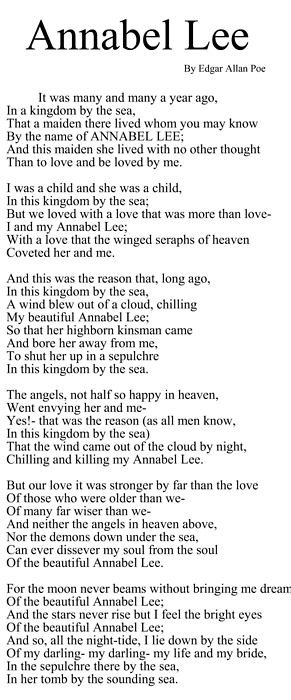
Another level of male and female relationship is opened. Wolf has an ulterior motive in hiring Purity. Many levels of conflict between feminine mystique and male egoism are exposed in Franzen’s story. Purity’s father is abandoned by Purity’s mother. Her name is Annabel. Annabel reminds one of Edgar Allen Poe’s poem, Annabel Lee. Purity’s mother’s and father’s relationship exposes another view of the feminine/masculine’ dynamic and its penchant for winners and losers.
Poe’s last completed poem. (Purity’s mother’s and father’s relationship exposes another view of the feminine/masculine’ dynamic and its penchant for winners and losers.)
The wooden spoon is awarded to the loser of a competition. Franzen infers there is an inherent competition between and among men and women. Every young person, every father, every mother, every adult will have an opinion about who should be awarded the wooden spoon after completing “Purity”.
SINCLAIR LEWIS (1885-1951 AMERICAN NOVELIST-FIRST TO RECEIVE THE NOBEL PRIZE IN LITERATURE)
Sinclair Lewis’s “Babbitt” is categorized as a satire, a parody of life in the early roaring twenties, but its story seems no exaggeration of a life in the 20th or 21st century. Published in 1922, it is considered a classic. It is said to have influenced Lewis’s award of the Nobel Prize for literature in 1930. (Lewis is the first American to receive the Nobel Prize in Literature.) Lewis is highly praised for describing American culture. “Babbitt” is the eighth of thirteen novels Lewis published by 1930. Lewis creates a body of work that intimately exposes strengths and weaknesses of American democracy and capitalism.
Reader/listeners are introduced to George F. Babbitt, a man in his forties. Babbitt is a realtor. He is successful financially; bored, and relatively happy in his married-with-children’ life. His best friend, Paul, is equally bored, less financially successful, but deeply unhappy in his marriage. Paul is harried by a wife that men categorize as shrewish. Babbitt’s best friend chooses to cheat on his wife. When Babbitt finds Paul in a clandestine meeting at a Chicago restaurant, he waits for him at a hotel to try to understand what is happening.
DOMESTIC ABUSE VICTIM (Lewis writes a satiric vignette where women are rarely viewed as equal to men, and expected to forgive men for violent treatment.)
In a male-bonding moment Babbitt forgives Paul and agrees that his friend’s wife is a shrew. Babbitt offers to mislead the betrayed wife by lying about her husband’s out-of-town business trip. Later, the spurned wife argues with Paul. Paul responds by shooting her in the shoulder. Babbitt sticks by his friend; even when he is convicted and sentenced to prison for three years.
After a year of his friend’s incarceration, Babbitt tries to get the spurned wife to forgive her husband and petition the parole board to release Paul early. She neither forgives nor forgets. She chastises Babbitt for his deluded belief that her husband deserves any leniency. This seems a satirical vignette where women are rarely viewed as equal to men, and expected to forgive men for violent treatment.
Babbitt, Lewis’ anti-hero, deludes himself with the idea that another sexual relationship in his life is his right, and that it will not hurt anyone.
In his mid-forties Babbitt is becoming more restless. He rationalizes infidelity and discounts the value of his wife and family. He chooses to cheat on his wife because he feels his wife does not understand him. Babbitt deludes himself with the idea that another sexual relationship in his life is his right, and that it will not hurt anyone. One may presume this is another satirical vignette. On the other hand, how many men and women rationalize their way to extra marital affairs today?
Lewis, through his characters, infers there is a struggle for fair, if not equal treatment, in women. In “Babbitt”, Lewis never gives women a role as superiors or equals that have intellectual interests in government, society, or culture. Rather, Babbitt suggests women often feign interest in a man’s thoughts for the desire of companionship, attention, and affection.
Babbitt implies women rarely seek intellectual stimulation or sexual gratification. Men are shown to classify women as shrewish because they are pushing husbands to be more expressive and attentive. There are many ways of interpreting Lewis’s intent but this is not an exaggerated satire, it is a truth of many men’s view of women.
An underlying theme in “Babbitt” is the inequality of American capitalism. Women and most minorities are less equal because they are either not in the work force, or in the work force at a lower wage.
An underlying theme in “Babbitt” is the inequality of American capitalism. Women and most minorities are less equal because they are either not in the work force, or in the work force at a lower wage. The union movement is struggling for recognition in the 1920s because of low wages being paid by business owners. Lewis suggests Babbitt begins to modify his opinion about the labor movement as he becomes entangled in the lives of less successful Americans like Paul and his spurned lover.
Wealthy capitalist see the answer to the union movement is electing a business President that cracks down on unions. Capitalists who have money and power classify the union movement as anarchic, communist, or socialist. (This sounds familiar today.) Babbitt suspects there is something wrong when he sees some union supporters are from the educated class. What makes Lewis’s observations fascinating is that they are written when America is in the midst of the roaring twenties; before the 1929 Wall Street’ crash. In the early 1920s, capitalism seems to be a tide raising all boats when in fact it is a torpedo being readied for launch.
Wealthy capitalist see the answer to the union movement is electing a business President that cracks down on unions.
Babbitt experiences peer pressure that causes him to recant any perceived support of union sympathizers and eventually returns to the fold of do-nothing conservatism. He recants his libertine ways and returns to hearth and home. But Lewis offers a twist by having Babbitt’s son shock the family by rebelling against standards of upper middle class life. He decides to marry without the blessings of his family or his church. George F. Babbitt is the only family member who whole heartedly supports his son’s unconventional act.
Babbitt writes in the midst of a burgeoning American industrial revolution. It seems what happened in the 1920s is similar to what is happening today. The industrial revolution is now the technology revolution; women are still undervalued, many Americans want a business President elected, and unions are being busted. Today’s young men and women are still breaking social conventions. The stage seems set. One hopes 2018 is not America’s roaring twenties; pending another economic crash.
Malcolm X has been in the news lately. Some Malcom X’ papers have been found that seem to reveal a new vision of the man. However Manning Marable’s biography of Malcom X suggests the papers were never lost. Malcolm X’s life became an open book.
Driving to the office the other day, while waiting for a traffic light to change, a well-dressed youngish black man offers a newspaper titled “The Final Call” to anyone willing to make a donation to its publication. “The Final Call” is the official paper of the “Nation of Islam” (NOI) that covers news worthy events of black America and expounds the philosophy of Elijah Muhammad, the second leader of NOI, in the United States. Some suggest the founder of NOI, Wallace Fard Muhammad, was a con man who mysteriously disappeared in 1934.
Driving to the office the other day, while waiting for a traffic light to change, a well-dressed youngish black man offers a newspaper titled “The Final Call” to anyone willing to make a donation to its publication.
After reading a couple of “The Final Call” papers, one can understand its appeal because it offers news about black experience in America. However, every edition has one page dedicated to the philosophy of the “Nation of Islam” as a religious movement. It states blacks and whites must have separate nations with their own governments, including dedicated land for Nation of Islam’ believers, qualified by the color of their skin.
After reading a couple of “The Final Call” papers, one can understand its appeal because it offers news about black experience in America.
Acknowledging my personal skepticism about “organized religion”, the Nation of Islam has the same negative qualities of all organized religions; it makes claims of divine authority for humans that have the same failings of all humans; i.e. lust, and greed for money, power, and prestige.
“Malcolm X: A Life of Reinvention” is an educational tour de force of the good and not so good aspects of the NOI movement in the United States. Acknowledging my personal skepticism about “organized religion”, the Nation of Islam has the same negative qualities of all organized religions; it makes claims of divine authority for humans that have the same failings of all humans, i.e. lust, and greed for money, power, and prestige.
Men like Elijah Muhammad, Malcolm X, and Louis Farrakhan offer a sense of pride and belief in oneself that every human being owns when they are born. But they, like all human beings, are not perfect. One can cast stones at Elijah Muhammad’s infidelity, Malcolm X’s incitement to riot, or Louis Farrakhan’s belief that a Black person can only be free in a Black nation, but what human being has not lusted for sex or coveted money, power, and prestige?
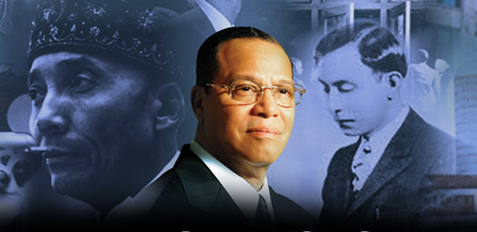
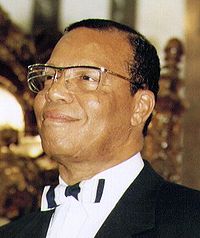
NATION OF ISLAM FOUNDER AND CURRENT LEADER (Elijah Muhammad left, and Louis Farrakhan center.) One can cast stones at Elijah Muhammad’s infidelity, Malcolm X’s incitement to riot, or Louis Farrakhan’s belief that a Black person can only be free in a Black nation but what human being has not lusted for sex or coveted money, power, and prestige?
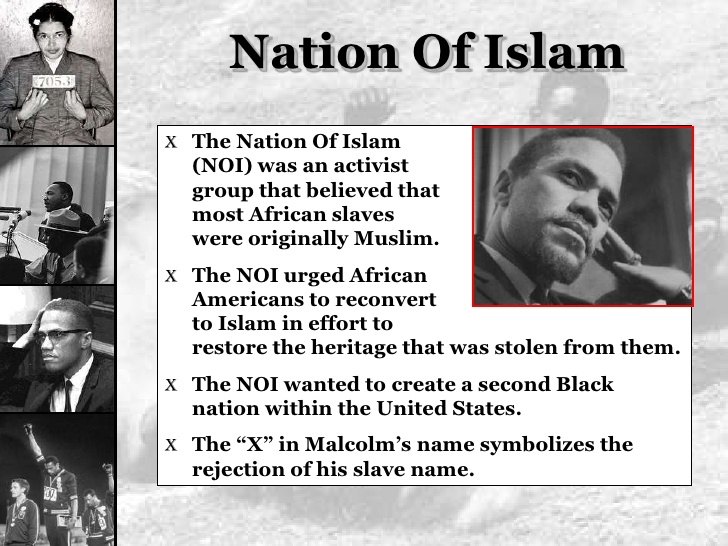
MALCOLM X (1925-1965) Malcolm X was assassinated in 1965. In the last year of his life, he split from NOI because he did not believe America could be separate and equal for black and white Americans, i.e. he endeavored to make NOI political; not just religion-based, black organization.
Manning Marable, the author of this book, was (he died in April of 2011) a professor of African American Studies at Columbia University. This American historian, with the help of Alex Haley (author of “Roots” and “The Autobiography of Malcolm X”), has written this book to educate ignorant Americans on the NOI movement in the United States.
Though “Malcolm: A Life of Reinvention” is primarily about Malcolm Little’s (Malcolm X’s) life, it tells the history of the Nation of Islam and the rise of its current leader, Louis Farrakhan Muhammad, Sr.
Malcolm X was assassinated in 1965. In the last year of his life, he split from NOI because he did not believe America could be separate and equal for black and white Americans, i.e. he endeavored to make NOI political, not just religion-based, black organization. This was a contradiction to the Nation of Islam leader’s teaching, which may have led to his assassination. Malcolm Little’s transition from uneducated hoodlum to Malcolm X, a self-educated political activist and religious leader, is a well told story in Marable’s book.
With the election of Barack Obama, one is inclined to believe Malcolm X was on the right trail (the political power trail).
With the election of Barack Obama, one is inclined to believe Malcolm X was on the right trail (the political power trail) and Elijah Muhammad, the founder of the Nation of Islam in the United States, was mistaken because he relegated the black movement to an extreme form of religion; akin to nationalism, that has the same social baggage carried by right-wing propagandists like George Lincoln Rockwell, the American Nazi Party leader of the early 60s.
LOUIS FARRAKHAN MUHAMMAD, SR (1933-PRESENT) BECAME NOI LEADER 1978
GEORGE LINCOLN ROCKWELL (1918-1967) AMERICAN NAZI MOVEMENT LEADER
Louis Farrakhan Muhammad continues Elijah Muhammad’s message by insisting on NOI’s adherence to religious, economic, and political separation of black and white people. In a practical and bigoted sense, Rockwell and Farrakhan are allies in extremis.
Malcolm X is not a saint in this biography. He is shown to be a hoodlum in transition, but he touches the nerves and lives of black and white America. Malcolm X lives and dies in America’s effort to become a true land of the free, with equality of opportunity for all.
Malcolm X’s life story kindles fear and hope in a world populated by “all too human” human beings.
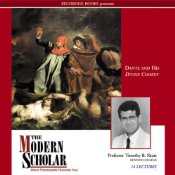
Timothy Shutt’s lectures on “The Divine Comedy” are a valuable guide to understanding Dante’s masterpiece.
Dante Alighieri (1265-1321) Alighieri is a wealthy aristocrat that represents a major leadership faction in 13th century Italy, the “White Gulphs”, which are vying for power with the Ghibelline.
The origin of the story seems simple but its meaning is complex and revelatory. Dante Alighieri is a wealthy aristocrat that represents a major leadership faction in 13th century Italy, the “White Gulphs”, which are vying for power with the Ghibelline. Their conflict is over the integrity of the Pope in Rome when the papal enclave is to be relocated to Avignon, France. The move occurs in 1309 and lasts for 67 years.
POPE BONIFACE VIII (1294-1303) Pope Boniface VIII sides with the Ghibelline to over throw the Gulphs and excommunicate Dante. Dante loses his political position, his wealth, and coincidentally, the life of the woman he loves, Beatrice.
Pope Boniface VIII sides with the Ghibelline to over throw the Gulphs and excommunicate Dante. Dante loses his political position, his wealth, and coincidentally, the life of the woman he loves, Beatrice. This crushing change in Dante’s life compels him to complete (between 1308 and 1321) what Shutt calls the greatest single piece of literature ever written.
Over a century before Martin Luther posts the “95 Theses” objecting to the church’s sale of indulgences; i.e. the sale of “the word” is a preeminent issue between the Gulphs and the Ghibelline. Pope Boniface betrays the Gulph Christian community by siding with the Ghibelline who endorse sale of indulgences.
Martin Luther (1483-1546) Over a century before Martin Luther posts the “95 Theses” objecting to the church’s sale of indulgences, the sale of “the word” is a preeminent issue between the Gulphs and the Ghibelline.
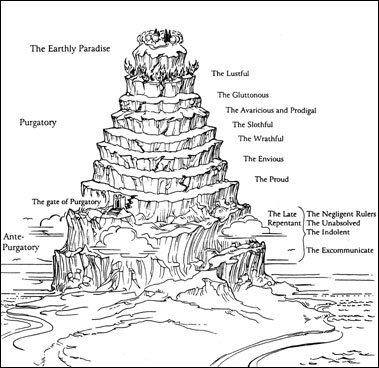
The Pope, in Dante’s view, is a traitor to his community. In the pit of Dante’s despair, he creates an image of purgatory. He writes of a hell and heaven that crystallizes human belief in the divine. Virgil becomes Dante’s guide on an imagined journey from earth, to purgatory, to hell, and back.
Dante meets the souls of the dead and explains where they are, what sin they committed, what fate awaits them, and why some sins are greater than others. Dante reveals how all sins in life may only be forgiven with the grace of God. The keys to heaven lay in asking God’s forgiveness before death.
Dante defines sin, and redemption. Human death places souls in one of three places; i.e. purgatory, hell, or heaven. All sins are not created equal but all humankind begins life in sin and can only be redeemed through good works, baptism, forgiveness, and the grace of God.
Good works alone do not protect one from hell, or purgatory. It seems all transgressions can be forgiven but only with a request for grace from God before death. Sins have a weighted hierarchy; i.e. lust as the lesser; while being a traitor to one’s community is the greatest sin of all.
Sins have a weighted hierarchy; i.e. lust as the lesser; while being a traitor to one’s community is the greatest sin of all. Hell is perdition for eternity with no surcease of pain or opportunity for escape. Heaven is a place of eternal rest, peace, and love.
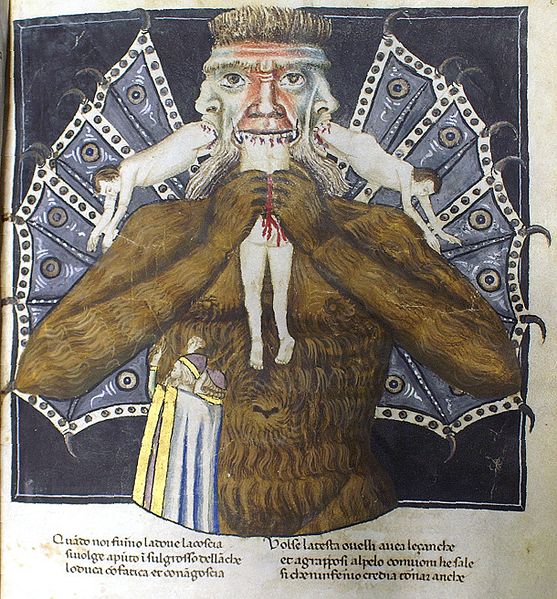
The devil does not speak but has three faces with three stuffed mouths that eternally chew on the bodies of three traitors; i.e. Brutus, Cassius, and Judas—the greatest of earth’s sinners in Dante’s poem.
Dante’s hell is sometimes hot and sometimes cold—just below the ninth and lowest circle of hell, Dante sees Lucifer who dwells in an ice-cold wasteland. The devil does not speak but has three faces with three stuffed mouths that eternally chew on the bodies of three traitors; i.e. Brutus, Cassius, and Judas—the greatest of earth’s sinners in Dante’s poem. Surprisingly, some say, Pope Boniface VIII is at the eighth circle of hell; presumably because his betrayal was the lesser of Dante’s selected and unrepentant traitors.
After passing through the final depth of hell, Virgil guides Dante back to the beginning of the journey; here, Dante meets the soul of Beatrice. Virgil leaves, and Dante accompanies Beatrice in a journey to heaven.
Dante’s heaven encompasses all that is known and unknown. Dante journeys to the planets and stars. He sees God and views an inversion of time and space. He finds earth is the center of all that is God and that nothing exists that is not created by God.
Purgatory may be a way-station to heaven for a believer that is cleansed of their sin, or it may be an eternal home for the traitor, non-believer, or pagan.
Heaven is a circle of angels that dance and spin so fast that heaven and God are everywhere at all times and in all places. There are degrees of heaven but all who are worthy will have eternal life. Degrees of heaven have no consequence to those who dwell in higher or lower levels because they are happy in their place–without envy; and with acceptance, and grace for the imperfection of their souls.
Purgatory may be a way-station to heaven for a believer that is cleansed of their sin, or it may be an eternal home for the traitor, non-believer, or pagan. Hell is perdition for eternity with no surcease of pain or opportunity for escape. Heaven is a place of eternal rest, peace, and love.
One is overwhelmed by Dante’s genius whether or not he/she is a believer. Shutt gives one a better understanding of who Dante was and why “The Divine Comedy” is a classic.
Mo Yan chooses to use reincarnation to bind China’s twentieth century history together. The choice of reincarnation adds humor but suggests something more than laughs.
Audio-book Review
By Chet Yarbrough
(Blog:awalkingdelight)
Website: chetyarbrough.blog
Life and Death are Wearing Me Out
By Mo Yan (Translated by Howard Goldblatt)
Narrated by Feodor Chin
HOWARD GOLDBLATT (TRANSLATOR OF MO YAN CLASSIC)
Cultural understanding is missing from Howard Goldblatt’s translation of Mo Yan’s “Life and Death are Wearing Me Out”. Mo Yan chooses to use reincarnation to bind China’s twentieth century history together. The choice of reincarnation adds humor but suggests something more than laughs.
Author, Mo Yan
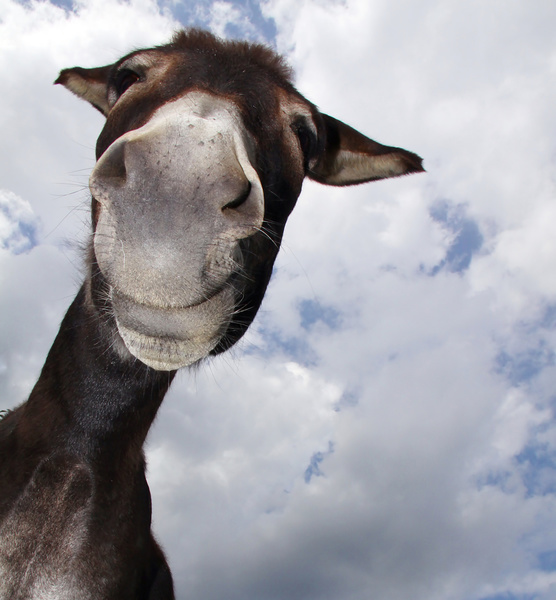
The story begins with a murdered man who comes back as a donkey, then as an ox, a pig, a dog, and finally as another man—funny, but is there rhyme or reason in the order?
China becomes communist in the 1940s under the leadership of Mao Zedong. Communism seeks re-distribution of private land into cooperatives to benefit the many at the expense of the few. Mo Yan’s story begins with China’s communist revolution and the unjust murder and confiscation of a landowner’s farm.
The murdered landowner is Ximen Nao. After death, Ximen Nao falls into an imagined purgatory to, presumably, be cleansed of his sins. Despite severe torture, Ximen Nao refuses purgatory’s judgment of his sin. In consequence, or happenstance, he is reincarnated as a donkey. The twist in his reincarnation is that he remembers his former life. Returning to life as a donkey, he meets former employees, a wife, two mistresses, and his children.
During the Communist revolution, Ximen Nao is murdered. After death, Ximen Nao falls into an imagined purgatory to, presumably, be cleansed of his sins. Despite severe torture, Ximen Nao refuses purgatory’s judgment of his sin. In consequence, or happenstance, he is reincarnated as a donkey.
Ximen Nao, as a donkey, returns to his homeland and finds that his former employee has married one of his mistresses and is farming 6 acres of his confiscated land. Ximen Nao, the reincarnated donkey, gains a grudging respect for his former employee because the employee steadfastly resists public ownership (being part of the communist co-op) of property and insists on being an independent farmer. (Communist China’s law allows a farmer to be independent of a cooperative if they choose to work the land themselves.)
The former employee and his new wife become emotionally attached to the donkey because they believe it is a reincarnation of an important person in their lives. (Later, Ximen Nao’s wife consciously acknowledges that the donkey is a reincarnation of her husband.) The independent farmer and his wife cherish the donkey’s existence and its aid in farming the land. Several incidents involving the donkey reflect on life in China during Mao Zedong’s reign.
Mo Yan straddles acceptance and rejection of communism and China’s current form of capitalism. His story skewers both political systems. In Mo Yan’s story, communism and its belief in public ownership are defeated by human nature’s drive for independence. The independent farmer lives through Mao’s Cultural Revolution and witnesses the return of a capitalist form of property ownership. Mo Yan denigrates communism’s intrusion in family affairs and how it turns son against father, brother against brother, and compels women to choose between family and a communist’ collective way of life.
Mo Yan straddles acceptance and rejection of communism and China’s current form of capitalism. His story skewers both political systems.
Capitalism and its belief in unfettered freedom are also ridiculed. Mo Yan characterizes capitalism in a story about the lives of spoiled youth. Youth that live off their family’s wealth; living for adventure; denigrating love, productive work, and respect for tradition and family.
Mo Yan shows how singular pursuit of wealth corrupts morality; how leisure becomes more important than caring for others or working for human improvement.
Is there some significance in the order of Ximen Nao’s reincarnations? Ximen Nao is first reincarnated as a donkey, then as an ox, then as a pig, then as a dog, and finally as another man. It is a clever way of observing history through the prism of different animal’s lives. It also makes one wonder about humankind’s ethnocentricity and failure to respect all living things.
Most importantly –It makes one wonder where these two Presidents are taking their countries.
Finding the right balance in life is an overriding theme in Mo Yan’s story. As the inscription on the temple of Apollo at Delphi suggests, “Nothing in excess”; Aristotle, Benjamin Franklin, Mark Twain and many others have suggested moderation in all things. Mo Yan suggests that both Chinese communism and capitalism fail to offer the right balance in life.
As Ronald Reagan famously said in his successful campaign against Jimmy Carter, “There you go again”.
Dave Eggers writes another book about a tragic human event. However, Eggers avoids character controversy like that which followed “Zeitoun”, a story about the Katrina disaster.
Eggers classifies “What Is the What” as a novel, without any claim to source-vetted facts or the integrity of its primary character.
SUDAN IN THE WORLD
“What Is the What” is about Sudan and its 20th century genocidal history. This is a story of the complex religious, ethnic, and moral conflict that exists in Sudan and in all nations peopled by extremes of wealth and poverty.
“What Is the What” is a tautology exemplified by a story of one who has something, knows it, and another that has nothing, and knows not why.
Valentino Achak Deng, the hero of Eggar’s story, tells of his father. Achak’s father explains the story of “What is the What”.
God offers man a choice of cows or something called the What. God asks, “Do you want the cows or the What?
But, man asks, “What is the What”? God says, “The What is for you to decide.”
Achak’s father explains that with cows a man has something; he learns how to care for something; becomes a good caretaker of a life-sustaining something, but a man who has no cows has nothing, learns nothing about caring; and only becomes a taker of other’s something.
By mixing truth with fiction, Eggers cleverly reveals the story of Sudan’s “lost boys”, refugees from the murderous regime of President Al-Bashir in Sudan. At every turn, Achak is faced with hard choices.
Omar Al-Bashir is deposed in April 2019 after almost 30 years in power.
Omar Al-Bashir, a Muslim Sudanese military leader who becomes President, releases dogs of war by condoning the rape and pillage of indigenous Sudanese by Muslim extremists. It is partly a religious war of Muslims against Christians but, more fundamentally, it is about greed.
Greed is engendered by oil reserves found in southern Sudan in 1978. Bashir strikes a match that ignites a guerrilla war. Eggers reveals the consequence of that war in the story of Achak, one of thousands of lost boys that fled Sudan when their parents were robbed, raped, and murdered. Bashir’s intent was to rid Sudan of an ethnic minority that held lands in southern Sudan.
Eggers cleverly begins his story with Achak being robbed in Atlanta, Georgia. But, this is America; not Sudan.
Robbers knock on Achak’s door with a request to use his telephone. Achak is pistol whipped, tied, and trapped in his apartment while his and his roommate’s goods are stolen.
There is much to be taken from the apartment. The robbers leave a young boy to guard Achak while they leave to get a larger vehicle to remove the stolen goods.
Achak identifies with the young boy. Achak recalls his life in Sudan and his escape to America; i.e.the land of the free; the land of opportunity. Achak sees the young boy as himself, victimized by life’s circumstances, hardened by poverty, and mired in the “What” (the takers of other’s something).
Eggers continues to juxtapose the consequence of poverty and powerlessness in Atlanta with Achak’s experience in Sudan. Achak’s roommate returns to the apartment to find Achak tied and gagged in an emptied apartment. He releases Achak.
They call the police to report the robbery and assault. An officer arrives to investigate. The police officer listens, takes brief notes, offers no hope for the victims, and leaves; i.e., just another case of poor people being victimized by poor people.
The episode reminds one of the Sudanese government’s abandonment of the “lost boys”. They are citizens governed by leaders who look to rule-of-law for the rich, and powerful; not the poor and powerless. They are leaders of the “what” (takers of other’s something); rather than leaders of all citizens.
Achak has been injured in the robbery. He goes to a hospital emergency room for help. Achak waits for nine hours to be seen by a radiologist. He presumes it is because he has no insurance but it is really because he has no power.
He has enough money to pay for treatment but without insurance, this emergency room puts Achak on a “when we can get around to it” list. The doctor who can read the radiology film is not due for another three hours; presumably when his regular work day begins. Achak waits for eleven hours and finally decides to leave. It is 3:00 am and he has to be at work at 5:30 am.
As Achak waits for the doctor he remembers his experience in Sudan. When the Muslim extremists first attack his village, many boys of his village, and surrounding villages are orphaned. These orphans have nowhere to go. By plan or circumstance the lost boys are assembled by a leader who has the outward-appearing objective of protecting the children. The reality of the “what” (takers of other’s something) raises its head when the children are recruited by this leader for the “red army” of South Sudan (aka SPLA or Sudan People’s Liberation Army).
The reality of the “what” (takers of other’s something) raises its head when Sudanese children are recruited by this leader for the “red army” of South Sudan (aka SPLA or Sudan People’s Liberation Army).
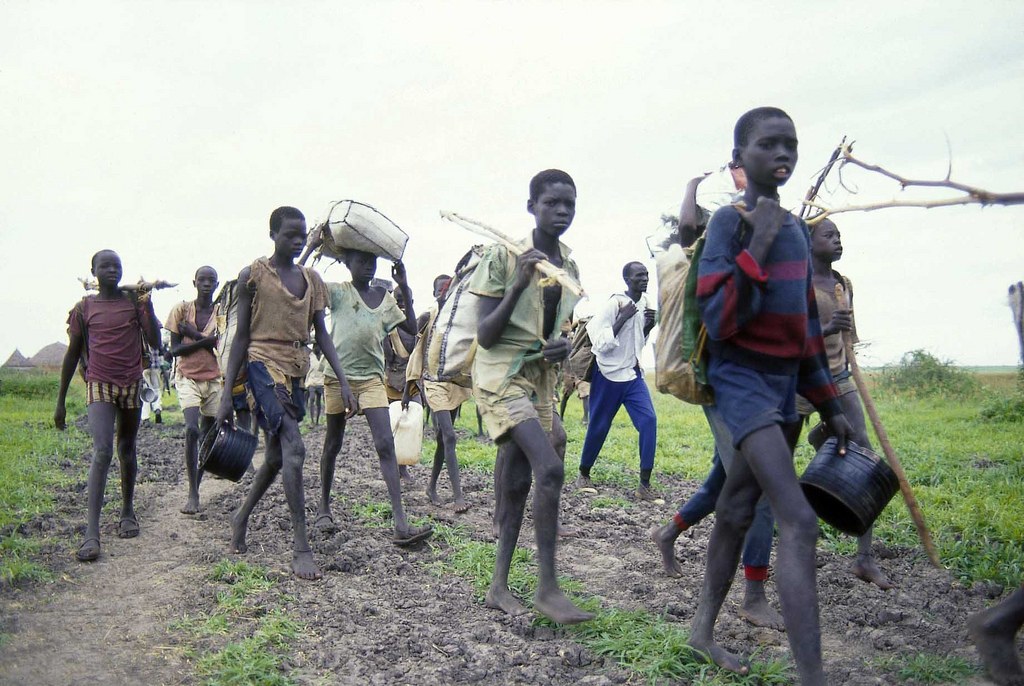
These are boys of 8, 9, 10, 11 years of age. This army-of-recruits begins a march from South Sudan to Ethiopia, a journey of over 700 miles, gathering more orphans as they travel across Sudan. Along the way, they become food for lions, and crocodiles; they are reviled as outsiders by frightened villagers and, unbeknownst to Achak and many of the boys—they are meant to become seeds of a revolution to overthrow Al-Bashir’s repressive government. These children are to be educated and trained in Ethiopia to fight for the independence of South Sudan. They are led by leaders of the “what” (takers of other’s something).
The lost boys are victims of believers in the “what”. Achak and other Sudanese’ refugees walk, run, and swim a river to arrive in Kenya, hundreds of miles south of Ethiopia. Some Sudanese were shot by Ethiopians; some were eaten by crocodiles; some died from disease and starvation.
Then, in 1991, Ethiopia’s government changes. The lost boys, a part of an estimated 20,000 Sudanese’ refugees, are forcibly ejected by the new government.
The Sudanese’ refugees arrive in Kakuma, Kenya. Achak says Kakuma is a Swahili word for “nowhere”. In 1992, it becomes home to an estimated 138,000 refugees who fled from several different warring African nations. The SPLA remains a part of the refugee camp but their recruiting activity is mitigated in this new environment. The camp is somewhat better organized but meals are limited to one per day with disease and wild animals as ever-present dangers. Education classes are supported by Kenya, Japan, and the United Nations to help refugees manage themselves and escape their past.
Achak survives these ordeals and reflects on his unhappiness in Atlanta, Georgia. Achak clearly acknowledges how much better living in America is than living in Africa. However, Achak makes the wry suggestion that Sudanese settlement in America changed his countrymen from abusers to killers of their women.
He suggests Sudanese killing of their women is because of freedom. He explains freedom exercised by women in America is missing in Sudan. In Sudan, Sudanese women would not think of doing something contrary to wishes of their husbands. Achak infers Sudanese women adapt to freedom while Sudanese men feel emasculated. The emasculation leads to deadly force in Sudanese families; a deadly force that includes murder of wives or girlfriends and suicide by male companions.
Eggers successfully and artistically reveals the tragedy of Sudan. Cultural and religious conflict in the world and American freedom are called into question. The cultural belief of parts of the Middle East, Africa, and America drive Achak from nation to nation. Achak, despite misgivings, appears to love America. But, American democracy is no utopia. Achak realizes no system of government is perfect. His ambition is to educate himself and his home country. Achak realizes education is the key to a life well lived.
What is the What? Ironically, it is more than cows; it is education that combats cultural ignorance and celebrates freedom and equal opportunity for all.
Eggers story implies America needs to re-think its policy on immigration. We are a nation of immigrants. Achak’s story highlights what is wrong with America and other parts of the world. But it also shows the “what” (“the ‘what’ that is for you to decide”) can be made better because it is more than cows.
Narrated by: Anthony Rey Perez, Marisol Ramirez, Jim Cooper, Adam Lazarre-White, James Chen
RYAN GATTIS (AUTHOR)
Ryan Gattis’s novel, “All Involved”, tells of the Los Angeles riots in 1992. It illustrates a cause for broken trust between minorities and the police. It is the story of public safety departments struggling with criminality, poverty, addiction, and discrimination.
STACEY KOON (L.A. POLICE SERGEANT)
Four Los Angeles Police officers inflict a beat-down on Rodney King while arresting him after a high-speed chase. Sergeant Stacey Koon, the commanding officer at the scene is said to have tazed King twice.
Koon argues the tazing is effective but suggests King is “dusted”; i.e. meaning hyped by PCP. The four involved officers are white. Rodney King is black. King is handcuffed and dragged to the side of the road to wait for an ambulance. There is no clearer example of how difficult it is–to be Black in America.
Officer Koon’s drug use comment is resurrected by officer Derek Chauvin in the restraint of George Floyd in 2020. Is drug use justification for beating or killing a human being?
RODNEY KING (APPEARANCE 3 DAYS AFTER BEATING 3.6.92–KING DIES IN JUNE 2012 @ 47 YEARS OF AGE) There is no clearer example of how difficult it is to be Black in America.
All four officers are indicted for “excessive force”. After acquittal by the State, six days of rioting begin. It is April 29, 1992. In the end, four police officers, Stacey Koon, and Officer Laurence Powell are convicted by a Federal court. Each serves two years in prison. Theodore Briseno and Timothy Wind, the other accused, are acquitted. Gattis does not dwell on the King’ beat down but infers it is the primer for society’s explosion in South Central Los Angeles.
In the end, four police officers, Stacey Koon, and Officer Laurence Powell are convicted by a Federal court. Each serves two years in prison. Theodore Briseno and Timothy Wind, the other accused, are acquitted.
Gattis’s novel looks at L.A’s riots through the eyes of minority communities living in the poorest parts of South Central Los Angeles. His story begins with the brutal murder of an innocent Latino by a Latin gang. The murder occurs just after the State’s acquittal of the four officers. Gattis infers the murder occurs because it could be disguised by the Angeleno’ riots.
The murder introduces a cast of characters that will scare most reader/listeners. Sadly, Gattis’s book will also energize gun-toting vigilantes, reinforce socioeconomic prejudices, and encourage right-wing pundits to argue socialism is ruining America. Fundamentally, Gattis’s novel exhibits the appalling consequence of America’s neglect of the poor.
One may argue there is no justification for rioting in America but current events and past history suggest otherwise. From the days of the American Revolution to the murder of a 32-year-old woman in Charlottesville, North Carolina by James Fields Jr. in 2017, rule-of-law has been violated by both moral and miscreant Americans.
Every riot is justified and vilified in measures equal to the power and prestige of prevailing interests. Victims of riots range from rule-of-law enforcement agencies to all socioeconomic levels of American society. However, the powerless, disrespected, and poor are recycled as perennial victims in every riot.
Those who protect the general public suffer at the time of riot but, as peace is restored, the poor return to a life of quiet desperation and crime that is largely contained and hidden from public view.
GANGS IN SOUTH CENTRAL LOS ANGELES (Money, power, and prestige are important to all human beings. However, the ways of making money in poor communities are often illegal because, like Willie Sutton said about banks–robbing, murder for hire, extortion, and drug trafficking are where the money is. Gangs proliferate in poor communities.)
Human self-interest is at the heart of what is good and bad in societies based on rule of law. The rich and middle class are served by rule of law while the poor are often left to fend for themselves. What Gattis shows in his story is that citizen’ self-interest in poor communities is the same as the general public’ but it takes a different form.
Money, power, and prestige are important to all human beings. However, the ways of making money in poor communities are often illegal because, like Willie Sutton said about banks–robbing, murder for hire, extortion, prostitution, and drug trafficking are where the money is. Gangs proliferate in poor communities. They have their own rule of law because the general public’s rule of law does not equally protect the poor.
If the poor cannot find a job, they sell their bodies or their loyalty. Turning tricks for money buys food, clothing, and housing–the necessities of life. Being a gang member or leader becomes the primary ladder for success of the poor.
The stress of being poor is a cycle of illegal selling and buying. With the use of one’s body or drugs, the poor escape the mind-numbing reality of being poor in America; i.e. at least until they run out of money, are murdered, or die from the pestilences of life. American police and fire departments treat the poor less equally because the problems of the poor are increasingly unmanageable.
The stress of being poor is a cycle of illegal selling and buying. With the sale of one’s body or the trafficking of drugs, the poor are employed in ways that satisfy the human desire for money, power, and prestige.
Gattis’s novel posits a solution. He suggests an American gang of corrections officers to threaten poor community gang leaders with murder and mayhem if they choose to persist in their murderous control of poor communities. One has to ask oneself–how can vigilantism cure the problem? The victims of this mentality are decent police and fire department operations that have sworn to protect life and property in the jurisdictions of all citizens of the United States.
Police and fire departments are caught in the middle of a war that cannot be won.
The solution for America does not lie in public safety departments being drawn down to the level of gangs but to raise gangs to the level of good citizens by genuinely educating and providing equal opportunity for all.
The map for poverty’s elimination is a destination at the end of a long road. The road to a police state, a gang-like sanction of government enforcers, is a short cut to Democratic’ Armageddon. Gattis tells a story that exposes poverty’s sharp edges and democracy’s vulnerabilities.
Broken families, broken hearts, but most of all, broken trust are described in Jill Leovy’s book, “Ghettoside”.
Leovy’s “true story”, somewhat surprisingly, deals mostly with the relationship between Black communities and local law enforcement in an area known as South Central Los Angeles. The surprise in the story is that the 2000 census shows 87.2% of the population of South Central Los Angeles is Latino–only 10.1% is Black; the remainder white, Asian, or other.
SOUTH CENTRAL LOS ANGELES (51 SQUARE MILES, 25 NEIGHBORHOODS)
The 2000 census shows of 49,728 people live on 2.55 square miles of land, made up of nine communities. One presumes Leovy chooses the relationship between Blacks and the police because it fits the particular facts of her story.
Food distribution as a result of Covid19 and unemployment.
It seems fair to suggest broken families, hearts, and trust are equally true for Latin South Central Los Angeles families because poverty and gang violence are common denominators of its residents.
Though Leovy’s story is not about poverty, “Ghettoside” (a coined word for ethnic groups killing themselves) is partly related to poorly regulated capitalism; just as genocide is partly related to totalitarianism. The poor in American cities have few legal means of escape.
“Ghettoside” appears most obviously in modern cities because of population concentration. The poor have few available living-wage jobs. The poor congregate in run down inner-city neighborhoods because that is all they can afford.
Decent education is a cost without immediate benefit; i.e. robbery, extortion, prostitution, and other illegal activities provide gainful employment, put food on the table, and pay the rent. On-job-training is provided by street gang activities.
Violence provides “street-cred” and gang affiliation provides power. Money, power, and prestige, the hallmarks of capitalism, are as coveted by the poor as the middle class and rich.
GANGS IN SOUTH CENTRAL LOS ANGELES (A son rejects the gang culture but, like all teenagers, craves his own identity. He ignores gang-culture rules of living in South Central. Standing on a corner, with a hat that is the wrong color, he is shot in the head by another teenager that presumes gang affiliation.)
This story about South Central is primarily told from the perspective of the police department. Leovy tells the “true story” of a black South Central Los Angeles’ cop who works and lives in a South Central L.A.’ community. He is an exception to the rule of most South Central policemen because he lives in the neighborhood he polices. He is an excellent homicide detective, who works hard to solve crimes in a city he loves. He raises a family that exemplifies the American dream. He comes from a lower middle class family, marries a Costa Rican wife while in the marines, and returns to South Central to become a cop. They raise three children; two younger children went to college while the oldest struggled in school. With extra effort, the oldest finishes high school. He is not interested in college but is a conscientious, hardworking young man; much like his father. The oldest son rejects the gang culture but, like all teenagers, craves his own identity. He ignores gang-culture rules of living in South Central. Standing on a corner, with a hat that is the wrong color, he is shot in the head by another teenager that presumes gang affiliation.
LAPD IN SOUTH CENTRAL LOS ANGELES (Leovy explores police department reaction to inner-city homicide to reveal how good cops are overwhelmed by a culture that victimizes itself.)
Leovy explores police department reaction to inner-city homicide to reveal how good cops are overwhelmed by a culture that victimizes itself. As the story unfolds, the police officers’ oldest son dies. The investigation is turned over to a different department that initially fails to solve the crime; not because of lack of effort but because of a bureaucratic way of conducting the investigation. The officer in charge is a meticulous detective but the record of his investigation shows he repeatedly knocks on doors of possible witnesses without actually making contact. The effort is duly noted in the “murder book” but no new evidence is found. A new officer is assigned to the case that is equally organized but pursues witnesses until he finds them. A record of attempted contacts is not acceptable to this detective.
Leovy provides detail of the new officer’s interrogation of a suspect that rivals the skill of the investigator of Raskolnikov in Dostoyevsky’s classic fictional story of “Crime and Punishment”.
The interrogation description is a pleasure to listen to and a high commendation by Leovy for the investigating detective. The case is solved but one is left with the feeling that justice is not done. A young man, a teenager, is dead. The killer is also a teenager. When asked why he murdered the police officer’s son, he said he shot him with his eyes closed; he only did it because the officer’s son looked like he belonged to a rival gang, and, after all, he is Black, so who cares?
Leovy systematically reveals how difficult it is for a good police officer to keep up with the murder rate in South Central L.A. Everything from budget cuts, to bureaucratic “cover your ass” investigation, to a culture that feeds on itself, makes a good policeman’s job un-doable.
Leovy explains how Black families believe they do not matter to the police because murders do not get solved.
Police officers are faced with mistrust that makes solving murders less important than bureaucratic record keeping that shows they are working
“Ghettoside” is a picture of hell; i.e. a picture of broken families, broken hearts, and broken trust.
When trust between citizens and police is broken, witnesses will not cooperate because they fear reprisal from the accused.
Ineffective police bureaucracy is compounded by officers that are not part of the community for which they are responsible. The irony of that observation is made obvious in Leovy’s story of a good officer who lives in the community and has a son murdered for being part of the community.
Being a cop in South Central L.A. looks like the hell described in Sartre’s play, “No Exit”. It is a play where three dead characters are locked in a room with no exit. In Leovy’s story, there are the police, the citizens, and the perpetrators. Sartre is saying “hell is other people” because each is perpetually viewed by the other as the worst part of themselves.
Knausgaard’s precise descriptions of a lived life reminds listeners of how much men have in common, whether Norwegian, American, or other.
Audio-book Review By Chet Yarbrough
(Blog:awalkingdelight)
Website: chetyarbrough.com
My Struggle, Book 1
Written by: Karl Ove Knausgaard
Narration by: Edoardo Ballerini
KARL OVE KNAUSGARD (NORWEGIAN AUTHOR)
Karl Knausgaard’s “My Struggle, Book 1” is akin to Proust’s oeuvre about life and coming of age. This comparison is somewhat apt but Knausgaard’s journey is visceral and personal while Proust’s is intellectual and universal. A listener feels like they are peeking into Knausgaard’s personal diary; while Proust’s “Remembrance of Things Past” is an intellectual exercise.
With Knausgaard, a listener feels stuck in a web, without exit; with Proust, one feels stuck but sees a way out.
Even the name of Knausgaard’s book, “My Struggle”, has an emotional feel and personal meaning. In contrast, Proust’s first book is called “Swann’s Way” which infers a more abstract and recollected universal insight.
Marcel Proust (French novelist, criitc and essayist, 1872-1922)
This is not a criticism of Knausgaard’s or Proust’s writing. Knausgaard and Proust are like spiders that weave words into webs that capture listener’s consciousness.
Knausgaard struggles with his freedom. On the one hand, he likes the independence; on the other, he misses the stability associated with family. He becomes accustomed to being alone. He covets being alone, even among friends.
Knausgaard craves the oblivion of alcohol.
Acquiring alcohol becomes a challenge that is met by having others buy it for him and eventually using his 6’ 2” height to fool corner store owners into selling him beer.
Knausgaard seeks companionship to compensate for unstructured independence but shies away from intimacy.
He struggles with growing interest in sex. He has his first ejaculation in an unconsummated bedroom experience with a girl schoolmate. He is sixteen years old.
At fifteen, Knausgaard is struggling with his need for independence.
Knausgaard reveres both his mother and father. He deeply loves both but is ambivalent and somewhat fearful of his father. Knausgaard’s need is served by a mother and father that become separated, first as a result of work, but in the end by divorce. Knausgaard begins to effectively live alone when his mother and father separate.
The way Knausgaard views life waivers between the radical left and outright anarchism.
He is financially supported by his father but his father allows Knausgaard to live largely by himself. When parental divorce becomes a fait accompli, Knausgaard emotionally cleaves to his mother while revising views of his father.
“My Struggle, Book 1” is an excellent memoir of boyhood. It is filled with experiences that remind adult men of what it is like to grow-up in modern times. Some embrace the “Sturm und Drang” of life while others close themselves off and become observers rather than participants. Knausgaard is an observer.
Knausgaard begins to see his father as an individual; as a vulnerable human being, capable of crying and subject to the same weaknesses of all men. He is married twice. He is driven by desire for success with relationships in life as a means to an end rather than ends to a mean.
Knausgaard is less observant of his mother’s humanness because he measures his life against his father’s actions and reactions. In consequence, his understanding and relationship with women is degraded.

Knausgaard’s depiction of his father’s death in the squalor of Knausgaard’s grandmother’s home shocks the senses. It reflects a truth about neglect of the poor, physically or mentally challenged, and the elderly in cultures based on self-interest.
Children who grow into relatively healthy adults believe they are immortal; i.e. “boys grown to men” believe achieving economic security, psychological health, and physical well-being is part of every life’s struggle. Knausgaard infers that when life’s struggle slaps people down, the recovered forget the un-recovered.
Knausgaard suggests those who succeed in a self-interest’ culture believe failure to overcome life’s struggle is the their own fault. One cannot escape the feeling that this is a leading cause of homelessness in one of the richest nations in the world.
Knausgaard tells of his father’s descent into alcoholism, and his grandmother’s mental collapse. Both are ignored by Knausgaard and his brother until confronted by his father’s death in their demented grandmother’s pee and shit-stained house.
There is a homeopathic comfort in hearing Knausgaard’s vignettes of life because they remind one of life as a boy growing into a man. There are no revelations in Knausgaard’s journey to adulthood. However, there are interesting and informative recollections.
Knausgaard’s precise descriptions of a lived life reminds listeners of how much men have in common, whether Norwegian, American, or other. It reminds us that we are human, imperfect, and ephemeral.