HUMANITIES SELF-IMMOLATION

Audio-book Review
By Chet Yarbrough

(Blog:awalkingdelight)
Website: chetyarbrough.blog

Assad or We Burn the Country

By: Sam Dagher

Narrated by Gary Tiedemann

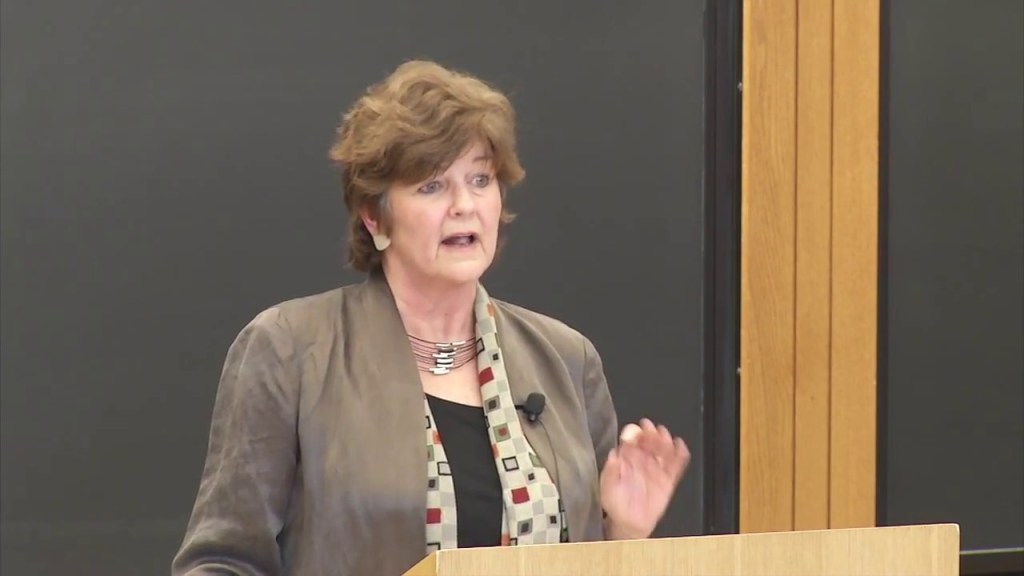
Sam Dagher (Author, senior correspondent for the Wall Street Journal)

Humanity is at war with itself.  Sam Dagher’s examination of Syria and the Assad government exposes the depth of humanities self-immolation.  Bashar Assad’s atrocities in Syria represent the indecency of power and money in the hands of autocratic leaders.  Autocrats are never exactly alike but each is corrupted by money and power.

Bashar Hafez al-Assad (Syrian President since 2000, son of Hafez al-Assad)

Hafez al-Assad (Syrian President 1971-2000.)

For Syria’s atrocities, every country in the world is guilty.  All are guilty because of apathy, support, or complicity. Dagher spares no one.  America, Russia, Turkey, France, Great Britain, Iran, Syrian generals, and indigenous Syrian leaders are complicit in the slaughter of innocents.

Russian atrocity in Syria is being repeated in Ukraine. The probability of further destruction and terror seem inevitable with the introduction of a Russian military commander being identified by the press as “The Butcher of Syria”.

General Alexander Dvornikov (Taking Charge of the Russia’s invasion of Ukraine)

SOME SAY AS MANY AS 500,000 SYRIANS HAVE BEEN MURDERED WITH OVER 11 MILLION NEEDING EMERGENCY AID.

Hafez first son is groomed to takeover after Hafez’s death. Bassel was a Syrian engineer, colonel, and heir apparent but he dies in a car crash before Hafez’s death.

Seated are Hafez and his wife Anisa Makhlouf. From left to right in the back row are Maher, Bashar, Bassel, Majid, and Bushra.

Dagher paints a picture of a feckless son of Syria’s deceased brutal dictator.  Bashar al-Asaad assumes power as President of Syria after the death of his father. He is characterized by Dagher as an effete leader with poor leadership skill who inherits a job for which he is ill qualified. (Bashar graduated from medical school in 1988 and worked as a doctor in the Syrian army. He had little military training.)  

Dagher suggests Bashar inherits money and power with the sole purpose of aggrandizing himself and his family.  Political, military, and economic wealth and power are bequeathed to Assad family members. Syrian money and power rest with relatives ranging from distant cousins to the President.

Dagher notes that Bashar uses his power and position to order imprisonment, torture, and murder of anyone opposing him. Dagher suggests Bashar sleeps with any woman he wants (married or not). In the mean time, he, his wife, and family live in isolated luxury. 

Bashar al-Assad Palace (aka Shaab Palce overlooking Damascus)

With Bashar’s inherited money, power, and position, he rewards his family, bribes his generals, arrests, tortures, and murders his opposition. To complete Dagher’s picture, he notes Bashar fawns on world leaders who socially or militarily support his rule.  

Dagher reports on Bashar’s murder of Syrians.  Bashar is shown as a vengeful leader playing one faction against another to maintain his power and position.  Today’s Putin threatens Ukraine Invasion and may murder many Russians, as well as Ukrainians–just as Bashar murdered his countrymen.

Religion is used as a tool to hide Bashar’s intent to remain in power.  Bashar paints himself as a protector of Christians from Muslim fanatics when his real motive is to cover brutal treatment of Muslim believers.

Bashar is shown to hide behind terrorism preached by Dash (aka ISIS) to justify gassing of his own people.  Dagher shows Bashar’s duplicity when he encourages Russian and Iranian intervention when his own people will not defend his regime.  Every country, including America, has their own agenda in the Syrian war.  Syrian war victims are fertilizer for Bashar’s ambition.

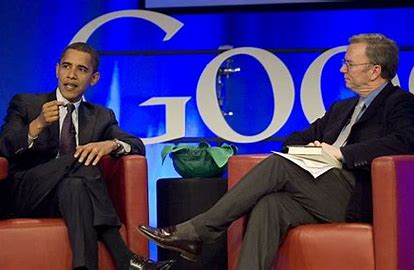
There are many complicit stories about America in Dagher’s exposure of Assad’s cruelty.  President Obama’s red-line statement about use of poison gas with no response from America; President Trump’s support of Russian intervention in a war that uses chlorine bombs to kill Syrian people; Turkey’s support of Bashar in return for repatriation of Kurdish territory; Iran’s intervention in Syria to put down Dash in return for political support from Bashar. Abu Bakr al-Baghdady-once a compatriot of Bashar and then the leader of Dash (Isis).

Though Obama faced a great deal of criticism for his red-line statement in Syria, his decision not to respond militarily was correct. It is up to the Syrian people to decide what they want to do with the Assad administration.

Dagher paints a frightening picture of Bashar and his wife.  It is a picture of self-delusion that endorses murder of their own people.  Bashar and his wife live in luxury while the Syrian people are murdered and starved.  Dagher contrasts Bashar’s wife’s placation of Syrian mothers with Syrian army atrocities. It reminds one of the French Revolution when Louis the XVI, and Marie Antoinette live in luxury while the public starves.

Asma al-Assad is the First Lady of Syria.  Born and raised in London, a graduate in computer science and French literature from King’s College.

Asma supports her husband’s atrocity.  She sees it as a justified means to modernize Syria.  A cynic would suggest her justification has more to do with Assad wealth and privilege than modernization.


Raslan’s faces trial in Koblenz as the first court proceeding against a senior member of the Assad regime. Raslan is one of two Syrians being tried for crimes against humanity. How long before Assad has to face the same fate?

The tragedy of Syria is graphically portrayed in the new television series “Transplant”.

On the one hand it tells the story of highly talented Syrians who are compelled to leave their home country. On the other, it reflects on the hardship faced by immigrants in the U.S. that are struggling to reestablish their lives.

Humanity is at war with itself.  There seems no end to violence in the world.  What is the solution?  Neither real-politic nor “let it be” answer the question.

EGYPTS REVOLUTION

Audio-book Review
By Chet Yarbrough

(Blog:awalkingdelight)
Website: chetyarbrough.blog

The Buried-An Archaeology of the Egyptian Revolution

By: Peter Hessler

Narrated by Peter Hessler

Peter Hessler (American Author, and journalist.)

Peter Hessler chooses to move from China to Egypt just before the 2011 Egyptian revolution.  He, his wife, and twin newborns live in Egypt for five years.

Hessler worked for The New Yorker as a staff writer from 2000 to 2007 and became the magazine’s correspondent for China from 2011 to 2016. 

Hessler looks at Egypt through the eyes of an American who lived in both China and Egypt as a reporter.  His perspective melds Chinese and American acculturation with interesting incite to Egypt’s history, language, and politics.

Egypt is a fascinating country for anyone who has visited or read about its ancient civilizations.  With brief comments about Egypt’s historic monuments and museums, Hessler touches the culture of modern Egypt. 

Hessler notes the extraordinary ability of Egyptians to hold two opposing thoughts and adjust behavior to accommodate both beliefs.  On the one hand, there is a sense of “let it be” when minor or major events occur in the lives of modern Egyptians.  On the other, there is a history of autocratic Egyptian rulers who insist on strict control of society.   In view of the many non-Egyptian’ governments after the Pharohs, it comes as no surprise that Egyptians are adaptive.

Sadat, Mubarak, & Nasser were military dictators before the election of Morsi who is deposed in the revolution by today’s military leader, Abdel Fattah el-Sisi.

Hessler comments on the ability of Egyptians to learn languages at varying ages of maturity.  Language skill is the lingua franca of the ability to adapt. 

From ancient times of the Assyrians, Persians, and Greeks; to more modern times of the Ottomans and British–Egypt remains Egyptian despite their adaptability.

Hessler offers an understanding of Egypt through the eyes of its citizens.  He recounts the tumultuous relationship of an entrepreneurial garbage collector and his wife.  The garbage collector is illiterate.  His wife can read and write.
The garbage collector is in his 30s when he marries his 18-year-old wife.  Their marriage leads to three and then four children.  The garbage collector is exiled from his children with the threat of divorce initiated by his conservative wife.  His wife follows Egyptian culture in covering her face but rejects some of the discriminatory aspects of a patriarchal society.

Hessler’s garbage collector is a great source of information about Egyptian culture because of the details he knows of other lives based on what Egypt’s citizens throw away.  The collector is scrupulously honest about the garbage he collects.  When he finds something in the trash that has value he returns to his customer.  It is a matter of pride; stoked by belief in a cosmic or religious wheel in his mind that tells him what is right.  However, the wheel seems to stop when it comes to relationship with his wife and children.  This leads to what Hessler suggests is a fundamental flaw in modern Egypt; i.e. women’s inequality. 

Because the collector’s wife knows how to read and write, she files an appeal to the court to strip her husband of his house and property.  She files for divorce but recants after finding the consequence of such action would make her and her children destitute.

Surprisingly, their tumultuous relationship becomes less combative as their life together matures. Their personal trials seem a paradigm of Egypt’s “let it be” and autocratic culture.

Hessler reports on the ponderous, corrupt justice system that both aids and thwarts the intentions of married couples seeking help.

Women are discriminated against based on their sex in Egypt. 

Women are raised to believe their role in life is to have and raise children, and take care of their husbands and families.  Girls are not afforded the same educational opportunities as men.  Women are expected to sacrifice their entrepreneurial right to a job when they are married.  Hessler notes female children are routinely genitally mutilated. This is a tradition based on a belief that sexual pleasure and desire are a threat to society. Hessler compares the torture of genital mutilation to the Chinese tradition of binding women’s feet.

Hessler compares Chinese with Egyptian culture to expose the consequence of sex discrimination.  The potential of women’s contribution to the economy in Egypt is eviscerated by its culture of discrimination.

In an adults most productive years, Egyptian housewives cannot work for pay outside of the home.  If a woman has a good job, she is expected to relinquish it when she is married.  In contrast, Chinese women are full participants in the economy.


Parenthetically, Hessler notes Egyptian homosexuals are persecuted for their sexual preference.  The irony of that homosexual persecution is in Egypt’s patriarchal culture that discourages social contact between the sexes.  Putting aside genetic predisposition, without social contact with women, male relationships become the only acceptable form of intimate relations.

Egypt’s demonstration against a crackdown on LGBT’ rights.

Hessler’s book is interesting because of his firsthand knowledge of the revolution that removes Morsi from the Egyptian Presidency.  In many conversations with Egyptian residents, Hessler notes the weakness of the Brotherhood in Egypt; both in number and in qualification for political leadership. 

Hessler contrasts the military with the Muslim religion of the Brotherhood.  The military has a long history in modern Egypt.  The tradition of strong leaders has an even longer history.  The Brotherhood is characterized by strong leaders who only press religion; without understanding the nature of society that desires order, safety, and economic opportunity. Order, safety, and economic opportunity are a “good despot’s” alleged intent.

Mohammed Morsi (Fifth President of Egypt for 1 year until removed from office by General Abdel Fattah el-Sisi. Morsi dies of a heart attack in 2019.)

Hessler shows the Brotherhood as an association of religious believers that have little organizational skill.  They are not educated to lead.  They are educated to worship.  That educational limitation exhibits itself in Morsi’s weak government.  Egypt flounders economically with the election of Morsi.  One can argue it is still floundering under el-Sisi but Hessler shows the military is more prepared to lead based on the tenants of worldly desire rather than religious worship.

Egyptian Brotherhood Rally

(In a population of 80,000,000, there are an estimated 600,000 dues paying members of the Brotherhood; of which 100,000 are considered militant.)

Hessler explains there are many conspiracy theories surrounding the Brotherhood’s influence in Egypt. Their small numbers and inept management skill seem unlikely to create a successful uprising in Egypt. The Brotherhood’s revolutionary impact seems symbolic more than real. However, one realizes Russian Bolsheviks were a small minority in 1917.

Abdel Fattah el-Sisi (Current President of Egypt)

Hessler notes that el-Sisi’s popularity is diminished by missteps in funding infrastructure improvements at the expense of more direct economic need.  He cites the expansion of the Suez Canal as an example of a prudent long-term aid to the economy but a neglect of medical services, justice reform, and housing needs for today’s general population.

There is also the issue of repression by el-Sisi.  Hessler recalls the incident of a tortured, and then killed, foreign student that criticizes the current government.  The author notes that el-Sisi’s defenders suggest the murder was an accident caused by young and inexperienced supporters of el-Sisi. 

In recalling my personal trip to Egypt in 2019, the Brotherhood is a big concern of the government. Tourism is a big industry for Egypt. That industry nearly dies with the election of Morsi. Some Egyptians feel something is getting done with el-Sisi; while no economic progress happened with Morsi.

Hessler offers a glimpse of the hardship Egypt faces in the 21st century.  His observations are at a local level of Egyptian society; not at the obscure level of a thirty-day tourist.  Time will tell if el-Sisi is the answer to Egypt’s failing economy. 

Sisi is acknowledged by Hessler as a good communicator.  Sisi is truly an Egyptian focusing on his perception of what Egypt needs now; not the religious salvation of the eternal.  The biggest criticism of Egypt’s leadership in Hessler’s book is the unequal treatment of women.  There seems no action taken by el-Sisi to address that reality. One wonders if the economy is likely to grow quickly enough to avoid another revolution without gender discrimination reform.

BULLY OF THE WORLD

Audio-book Review
By Chet Yarbrough

(Blog:awalkingdelight)
Website: chetyarbrough.blog

The Accidental Superpower

By: Peter Zeihan

Narrated by Peter Zeihan

Peter Zeihan (Author, American geopolitical strategist)

“The Accidental Superpower” is a wild ride.  Peter Zeihan is a geopolitical strategist and futurist who argues that geography is destiny.  His prognosis for America is perversely positive.

Zeihan suggests America is in the “cat bird” seat for this and the next (yet to be born) generation.  The “cat bird” seat implies a superior position of survival in a world headed toward crises.

“The Accidental Superpower” is a cautionary tale that suggests the tail will wag the dog. 

If America’s current actions and future intent is to abandon Bretton Woods’ history, then Zeihan implies wars will continue, famine and pestilence proliferate, millions will die, and self-interest will be humanities’ only interest.  In the era of Trump, Zeihan shows the reach and potential of bullies in the world. 

Zeihan builds a credible and terrifying argument.  The Bretton Woods Agreement was created in 1944.  Its purpose was to set up a system of rules to ensure economic stability around the world.  Zeihan notes that America has steadily abandoned the principle of Bretton Woods since 1973 when the U.S. suspended the gold standard for the American dollar. 

It is not to suggest that the gold standard should be re-instituted but that the American dollar became the new standard for world economies.  In part, because the basis for economic wealth became the American dollar.

The American dollar gives the United States an outsize influence in the world. That influence is reinforced by an unparalleled military/industrial complex.

The resources of America became a primary standard for economic stability in the world.  Zeihan argues the legitimacy of Bretton Woods is replaced by the geographic existence of the United States.  America is bordered by two oceans, blessed with an internal river transport system, natural energy resources (including Shale oil which makes the U.S. oil independent), a replenishing labor force (supplemented by immigration), and economic growth. Therein, Zeihan explains America is capable of ignoring the rest of the world.  

Realpolitik opens the door to a world dreamed of by ignorant nationalist like the past President of the United States and today’s Vladimir Putin.

This is a disturbing view of realpolitik.  Zeihan infers the United States can be the bully of the world because of its military superiority.  Military superiority is an illusion.

Putin and Trump are cut from the same cloth.

“Making America Great” changed the beneficent image of America as the land of the free to the land of autocratic whim. What history demonstrates is democracy and autocracy are riven with contradictions. Democracy is as subject to self-interested hegemonic geopolitical action as autocracy. America’s election of Trump shows how democracy can be as autocratic as Russia.

Empathy is an essential characteristic missing from a nationalist credo that believes it is “my way or the highway”. With a belief system based on “self-interest”, and the mantra of philosophers like Ayn Rand, the world seems destined to destroy itself. 

The question is — Will President Biden’s more supportive view of American government and empathetic support for the poor and lower middle class really change Zeihan’s perverse view of the world’s future? Zeihan infers no American President, whether empathetic or uncaring, will make much difference.

Zeihan supports his future predictions with a logic borne from geographic facts, history, and philosophical belief.  Zeihan’s perception of the world’s future creates fear and trembling in any who choose to believe it.

A few of Zeihan’s predictions are:

  1. China will not grow to be a superpower and will follow the path of Japan with an aging population that cannot maintain its economic growth.  The diverse nature of its population is hidden by the false belief that the Han people are of one mind.  Internal dissension will rise.  China is subject to river flooding and hemmed in by mountains and narrow waterways.
  2. Russia will covet the land of other nations because of an economy that rests on dwindling natural resources, a harsh environment, and lack of international trading ports.  The Tatar and Chechen populations will continue to plague consolidation of power in Russia.
  3. South African nations will suffer from starvation because of its lack of arable land.  Angola is one of the few African nations that may escape that fate because of its fertile land and young population.
  4. The European Union will fail because of nationalism, a lack of a viable common currency, and its failure to consolidate political power.
  5. Great Britain will become more dependent on the U.S. for trade and survival.
  6. Turkey will strengthen its influence and control over the Middle East through military strength and a young and growing population.
  7. Uzbekistan will become a more powerful independent nation because of its relatively young population and abundant clean energy (largely from hydroelectricity).
  8. Australia and New Zealand will prosper because of its vibrant agricultural economies, and ocean-bound isolation.
  9. Saudi Arabia will fail as an economic powerhouse because of its dependence on foreign labor for all industrial development. Saudi citizens are minor participants in the labor market, and unprepared to compete in an industrialized world.
  10. Iran is demographically young but burdened by an arid climate.  Its religious intolerance will be an impediment to economic growth.
  11. Spain, Portugal, and Italy are vulnerable to outside influence, inflation, high unemployment, and growing economic weakness.
  12. Germany may once again rise as a belligerent state because of its need to expand to continue its economic growth.  Its driven and well educated population reinforces industrial and technological growth.
  13. Canada will become a failed nation because of its aging demographics and diverse population.  Failure will only be abated by its relationship with the U.S.  Zeihan suggests Alberta should consider becoming part of the U.S. because of its one industry dependence (oil).
  14. The relationship between Mexico and the U.S. will improve because of proximity and mutual trade benefits.  The drug war will continue and perversely improve the Mexican economy. Drug war areas will be isolated to narrow parts of the country.
  15. Climate change is real, but its impact will be mitigated in the U.S. with hardening infrastructure in coastal cities that will mitigate or abate flooding.  Most of Florida will disappear under water.  Many island archipelagos will also disappear.
  16. Pakistan’s diverse population will continue to disrupt political control of the country.  Its conflict with India will continue despite diminishing financial support from the U.S.
  17. India’s economy will suffer from environmental degradation.

In conclusion, Zeihan suggests America will remain a superpower with outsize influence on the success or failure of other nations. 

A caveat might be America may become the bully of the world; at least until a nuclear war or accident decimates the environment. 

There is good reason to have fear and trembling for this world’s future if “self-interest” is the only criteria for well-being.

INSANITY’S RESURRECTION

Book Review
Personal Library
cheyarbrough.blog

The Professor and the Madman
By Simon Winchester
 

Simon Winchester (English author, National Book Award Winner for Non Fiction)

Simon Winchester’s book begins with a “bang”. It comes from a hand gun brandished by Dr. William Chester Minor (1834 to 1920)

Minor arbitrarily murders George Merrett on a London suburban street in 1871.

Minor is an American civil war surgeon who lived through the “battle of the Wilderness”.  An innocent and unsuspecting Englishman is shot dead by Minor in a small town near London. 

Surprisingly, this random murder is the beginning of a brief history of the Oxford Dictionary. Dr. Minor is “…the Madman”. “The Professor…” is James Murray, a lexicographer, principally responsible for the completion and final editing of the first Oxford English Dictionary.

Winchester reveals how an intelligent young physician’s life evolves from an American civil war surgeon to murderer to skilled etymologist (an expert in word origins).   He describes how Minor’s criminal madness isolates him.

After trial for murder, and conviction, Minor is sent to an English insane asylum to serve his sentence.  Minor, a Yale graduate, uses his incarceration (when not debilitated by paranoid delusions) to read books.

Broadmoor Hospital (High-security psychiatric hospital)

After the book’s murderous opening, Winchester recounts the early history of dictionaries; dating back to the 17th century.

Winchester touches on the first Oxford dictionary (before it became the OED) created by Samuel Johnson in 1755.  In 1857, over 100 years after Johnson’s original English dictionary, a speech is given at the London Library suggesting it needs to be amended.

Richard Trench (1807-1886, Irish Poet, Anglican archbishop) suggests a new, more comprehensive, Oxford English Dictionary (to become known as the OED). This monumental undertaking is estimated to take two years in Trench’s opinion. In fact, it takes over sixty.

The editor who completes the dictionary is James Murray. Murray becomes a lynch pin for the revised reputation of William Chester Minor. Minor’s resurrection is tied to his voracious reading habit and his contribution to the OED.

James Murray (1837-1915, Scottish lexicographer and philogist.)

Methodology for the OED’s reification relies on past dictionaries and volunteers.  Volunteers are recruited via flyers and letters asking for readers to glean words and quotes from books written in particular periods of time; for example, books written from 1200 to 1300.   

W.C. Minor receives one of these flyers at the asylum.  He responds and becomes an important source of information for the Dictionary. 

Minor establishes correspondence with editors of the compendium and begins delivering some of the detail needed to complete the book for publication.  It gives his life a focus that partially mitigates his madness.

Murray takes the helm 22 years after former editors earlier work to update Samuel Johnson’s master work.  Five years after Murray’s appointment, the first publication is made.  It covers A through Ant in 352 pages.

Perhaps the most productive editor of the dictionary is Professor James Murray. 

OED first edition by James Murray.

Winchester goes on to describe the odd first meeting between Minor and Murray.  Murray has no idea that Minor is in an insane asylum.  Minor is housed 60 miles from Murray’s editing facility, the Scriptorium.  Several versions of the meeting are reported.

Minor is eventually repatriated to the United States from his asylum incarceration in England (interestingly because of Winston Churchill’s intervention) but he dies ignominiously.   

Ironically, according to Winchester, the source of W.C. Minor’s story are George Merrett’s descendants (the murder victim’s family).

Dr. William Chester Minor

Insanity is not a crime. It is also not necessarily the end of one’s contribution to society.

The Oxford English Dictionary was finally completed in 1927, nearly 70 years after its conception.

GREAT LEADER THEORY

Book Review
Personal Library
chetyarbrough.blog

War and Peace
By Leo Tolstoy

Translation by Anthony Briggs
 

Leo Tolstoy (1828-1910, Author)

Among many themes in Tolstoy’s classic, “War and Peace”, is the denial of the “great man” theory of history.  

Volodymry Zelensky (President of Ukraine.

Zelensky may just be a person in the right place at the right time, but one cannot diminish his leadership in this moment of history.

President Volodymyr Zelensky’s greatness is not because of his resistance to Putin’s war but because of the leadership reflected in his interview by the “Economist” in April 2022. When asked “What does Mr. Zelensky believe victory will look like?” His response is “Our land is important, yes, but ultimately, it’s just territory.” “Victory is being able to save as many lives as possible…because without this nothing would make sense.”

In terms of America, Washington, Lincoln, and Franklin Roosevelt are historically recognized as great men. For women, it might be Abigail Adams, Sojourner Truth, and Frances Perkins. Each were men or women of their time who stood firm in their belief about what is right. Many of their decisions were unpopular at the time of their implementation, but history proves many of their actions improved the lives of Americans.

In Tolstoy’s view leaders are great because they rise to the circumstances of their times; not because they are wiser, more intelligent, all powerful, or omniscient, but because their decisions appear right in light of history.

As Presidents go, the question for some is whether America has a leader in President Trump who meets a similar or lower standard than most American Presidents? Is he just a reflection of our times or a “great man”?

The crises of today, and President Trump’s results:

  • Resolution of a trade war with China (unresolved)
  • Immigration Policy (unresolved)
  • North Korean nuclear armament (unresolved)
  • Afghanistan military withdrawal (unresolved)
  • An acceptable Taliban treaty (unresolved)
  • Peaceful government transition in Iraq (unresolved)
  • Climate change policy (withdrew from Paris Accords on climate)
  • Gun control legislation (unresolved)
  • International alliance building (Signaled lack of cooperation with traditional allies of the United States with America First Program)
  • Health care for the uninsured (Reduced number of people eligible for insurance coverage)
  • American homelessness (Unresolved)
  • The opioid crises (1.8 billion dollar funding to attack crises-a work in process.)
  • Control of an “out of control” budget deficit. (Reduced taxes that benefit the rich more than the poor and middle class and set the table for the largest deficit in American history.)
  • A coronavirus pandemic response (Unprepared in the beginning and unresolved as of October 2020.)

Tolstoy writes of conditions in 1812 Russia. He focuses on human spirit that can make individuals great enough to meet the circumstances of their time. How does Trump measure up? Is he great enough to meet the circumstances of today’s crises?

Trump’s leadership turning point internationally is withdrawal from the Paris Climate Accord, the assassination of Qassem Soleimani, and diplomatic relations with traditional European Allies.

Trump’s leadership turning point domestically is in little recognition of universal health care as an American right, and resolution of the coronavirus pandemic.

Borodino is a small town outside of Moscow.  In Tolstoy’s book, it is a site of a spiritual triumph of the Russian army over Napoleon, interpreted by some as a Russian military victory.

Leaders of the Russian army did not militarily defeat Napoleon at Borodino, but neither did Napoleon decisively defeat Russia. Napoleon moves on to Moscow but the government and its defenders leave the city to hide in the countryside.

Napoleon Bonaparte (1769-1821, Emperor of the French 1804-1814)

In history and in Tolstoy’s story, Napoleon Bonaparte’s army moves to occupy Moscow but his army abandons Russia without victory, and returns to France.  Tolstoy makes Borodino a turning point in Russia’s battle with Napoleon’s army.

It raises the question of whether a leader’s decision is a reflection of what a country stands for or what an erratic poser decides.

Napoleon lost 70,000 of his 250,000 soldiers in the Borodino battle. This is over 25% of the attacking French force in Borodino. He loses many more soldiers in the winter of his withdrawal from Moscow and his return to France.

Russian casualties from their invasion of Ukraine have the smell of Napoleon’s losses in the battle of Borodino as depicted by Tolstoy in “War and Peace”.

There are many characters and themes in “War and Peace”.  The three most memorable characters are Andrew Bolkonski, Natasha Rostova, and Pierre Bezukhov. 

Bolkonski is an elegant aristocrat with consummate personal honor, intelligence, and sophistication. However, Bolkonski elegance is found to be flawed. He fails to understand what is important in life until he is at death’s door. 

Rostova is a young ingenue, thinking of a life with an aristocrat like Bolkonski. She is beautiful but ignorant of the meaning of life until its too late. She grows to understand her ignorance as Bolkonski dies.

Bezukhov is a bumbling naïf that inherits wealth, fumbles through a foolish marriage and divorce, and grows into a life of contentment and ease when he marries Rostova.

Tolstoy is not denying superiority of some over others but his story emphasizes man’s mortality, common fragility, and ephemeral existence.  To Tolstoy, greatness dwells in all humankind with individual extra-ordinariness born of circumstance; not innate greatness.

Once again, this raises the question of Trump being an erratic anomaly or a reflection of who Americans have become. Trump lies in a hospital bed; in part because of inept management of the Covid-19 pandemic. Is this Trump’s and America’s fate or the result of human volition? Is there a great man making decisions or are circumstances compelling crises?

There is a large element of predetermination in Tolstoy’s characters.

Every character seems destined to live their lives according to a master’s plan.  To Tolstoy, innate human frailties are determinants of man’s path in life. 

Tolstoy implies happiness comes from an acceptance of fate, exemplified by the marriage of Bezuhov and Rostova after many tragedies and triumphs in their lives.

At the end of “War and Peace”, one gets some sense of what it means to be Russian or American.  The exuberance of living life, working through hardship, believing in something greater than yourself are all evident in Tolstoy’s “War and Peace. These human qualities reflect Russian and American tolerance for inept leadership.

America does not have a great American President today, but at least 3 (maybe 4) have been 70% right in the last 243 years.

If not today, what about 2025 and beyond? Can Americans vote for a person who can be 70% right?

ADHD

Audio-book Review
By Chet Yarbrough

(Blog:awalkingdelight)
Website: chetyarbrough.blog

Unbroken


By Laura Hillenbrand

Narrated by Edward Herrmann

Laura Hillenbrand (Author)

Hyperactivity in children is a blessing and curse. 

Louis Zamperini (1917-2014, American WWII Veteran, participant in the 1936 Berlin Olympics.)

Every parent that faces life with a hyperactive child listens to Hillenbrand’s story of Louis Zamperini and thinks of what might be if their child’s high energy can be focused rather than blurred by the hurly-burly of life.

Hillenbrand vivifies Louis’s life with stories of his early years of running away, hopping trains, practical joking, stealing, and raising hell.  Louis idolizes an older brother that lives a more conventional life but Louis refuses to follow the placid image of the good son; the obedient child.

Fortunately, Louis is blessed with a tolerant mother and a stern, but understanding, father who accepts Louis for himself rather than what he, or his mother, want him to be.  Louis does not outgrow his hyperactivity but channels his energy into the discipline of a sport.

With that beginning description of Louis Zamperini, Hillenbrand tells the story of Zamperini’s advance as a world class runner; i.e. the youngest member of the near 4 minute mile club of the 1936 Olympics.

Louis meets Adolph Hitler, not as a winner of the race, but as an Olympic competitor that gives all he has-to be the best he can be.

Zamperini is alleged to have said “I was pretty naïve about world politics, and I thought he looked funny, like something out of a Laurel and Hardy film.”

Louis Zamperini returning from imprisonment as a POW with his mother (Louise) and father in the backrground.)

World War II strikes the United States at Pearl Harbor.   Zamperini’s stellar running career is grounded.  He returns home to be drafted by the Army/Air Force.  He becomes a bombardier.

Zamperini is assigned to a B-24 Liberator as a bombardier.

The story of “Unbroken” begins with a rescue mission for a B-27 crew downed in the Pacific Ocean.  The rescue crew includes Louis Zamperini.   

The rescue crew is unsuccessful; i.e. the lost crew is not found. 

On the return flight, engine trouble forces the rescue plane into the Ocean. Three men (possibly four out of 20 plus men) survive the crash.  With a poorly provisioned life raft, two live to be placed in a Japanese prison camp, Louis and the rescue plane’s pilot.

This story of survival is inspirational.  It can be listened to as a true adventure.  One may also hear a cautionary tale about parenting. 

It is difficult to raise children in an affluent society where both parents must work to pay the bills. One wonders about the diagnosis and treatment of ADHD (Attention-Deficit/Hyperactivity Disorder). 

Where does a parent draw the line on drug treatment for children with this diagnosis?  Is the diagnosis real or is it a symptom of a society that does not have enough time to parent?

CHINA AND RUSSIA

Audio-book Review
By Chet Yarbrough

(Blog:awalkingdelight)
Website: chetyarbrough.blog

George F. Kennan: An American Life

By John Lewis Gaddis

Narrated by Malcolm Hilgartner

John Lewis Gaddis (Author, Professor of Military and Naval History at Yale.)

When Churchill gave his famous “iron curtain” speech in March 1946, George Kennan already understood the iron curtain’s implication and consequence. Kennan is known as “the father of containment” during the Cold War of 1947-1989.

The relevance of Kennan’s containment policy resonates with today’s American relationship with China. However, its relevance is one of contrast; not similarity. Today, there is no iron curtain that separates China from the rest of the world. The iron curtain has become a cloak. It is a cloak that obscures intent.

The age of the corona virus and China’s decision to delay world notification may or may not have changed America’s response. China’s cloaking of information will haunt the world’s corona virus survivors. Though there is no iron curtain today, secrecy and failure to disclose information fully replaces its physical barrier, and real world effect.

After the war, Kennan insisted on being relieved of duty in Russia and returned home to Wisconsin because President Truman was ignoring Kennan’s recommendations on a “sphere of influence” approach to the U.S.S.R. 

As a deputy head of the Moscow ambassadorship, Kennan sent the famous “long telegram” to the then Secretary of State, James Byrnes, explaining how the Soviet Union should be handled after the end of WWII.  The “long memorandum” makes Kennan famous because it capsulizes what became U.S./Russian foreign policy for the next 30 years.

Kennan recognizes Stalinist Russia’s pursuit of world domination as a Marxian belief of inevitability. With an eastern Russian’ ethos that endorsed persistence and patience (a quality we see in China today) Russia reveals its strength and weakness. 

Kennan recognizes the threat of Russian domination in the 50 s and 60 s. However, he believes it can be managed with patient and persistent opposition by America. Within the limitations of military and economic might, the United States could directly intervene in Russian encroachment when feasible.

When direct confrontation was not feasible, overt cooperation could be undermined based on Machiavellian’ assessment of Russian expansion.  In other words, Russian expansion could be contained and managed by a prudent use of force and guile by the United States. This approach worked with Russia. It is less likely to work with China.

China focuses on international domination through economic growth and influence.

Modern Russia has a similar ambition, but its domination is based on the threat of force and military intervention. Both countries expand their influence but Russia is constrained by a much weaker economy, and the limits of military threat and intervention.

China has little economic constraint on growth of the economy or military because of its growing prosperity, and broadening international influence.

China’s military strength is largely based on deterrent capability; backed by economic growth. Russia’s military growth is based on economic constraint, and the political limits of intervention and force.

Kennan argued Stalinist Russia’s ideology would fail because it is flawed. Kennan believed the gap between truth and lies would limit the U.S.S.R.’s reach and longevity.

Kennan believed that the role of the United States was to contain Russia until it collapsed from the weight of its’ mistaken ideological belief in the unerring truth of collectivism.

There is a strain of collectivist belief in Xi’s Chinese communism but it is tempered by economic freedoms that have improved millions of Chinese lives.

In spite of Xi’s emphasis on communist party rule, the genie of economic freedom has made China more pragmatic and less ideological.

Xi has abandoned his restraint in use of force in Hong Kong demonstrations. One doubts the abandonment of restraint is unending because it is influenced by Chinese communism’s change; a change that began with Deng Xiaoping’s policy of expanding personal economic freedom.

The Stalinist ideology that the collective is more important than the individual evolves in Russia but its evolution retains belief in force (sometimes murder) and intervention as reliable tools for world domination. That belief is Putin’s Achilles heal.

In later years, Kennan’s containment argument for the U.S.S.R. is found to be correct but even he suggests the cost was too high. He believed Russia’s decline could have been accelerated. The flaw in today’s Russia is not in exclusive belief in the collective but in use of force as a first, rather than last, resort.

Putin’s invasion of Ukraine, and intervention in Syria negatively influence world opinion.

In contrast, Xi’s “Road and Belt” initiative positively influences world opinion. (This is not to say all countries are enamored by Chinese largess because it increases their debt, but in many cases China is the financier of last resort.)

A duel, positive effect of Xi’s “Road and Belt” initiative is to create a wider market for Chinese goods. China chooses positive behavioral reinforcement while Russia chooses negative reinforcement (military action, limited energy resource distribution, cyber attacks on voting preferences in other countries) to achieve world influence.

Xi may be more ideologically driven than Putin but he is constrained by Deng’s cracked door which opens the economy to private Chinese entrepreneurs.

Things change and remain the same. George Kennan’s containment policy is reified in 2021, but now it is spoken of in regard to China and the policies of Chairman Xi. A concern one may have–this is not the 20th century. Technology has changed the world. International connectedness, economic interdependence, and environmental degradation require less containment and more cooperation.

Xi’s “Road and Belt” initiative expands China’s influence in the world while Putin’s actions diminish Russia’s influence.

Kennan, born in Wisconsin, went to Princeton after attending Wisconsin’s St. John’s Military Academy.  After receiving his undergraduate degree, rather than going to law school, he joined the newly formed U.S. diplomatic “Foreign Service” and became a vice consul in Geneva, Switzerland.  However, on a chance visit back home, Kennan met William C. Bullitt, the U.S. ambassador to Moscow, and was asked to accompany him to the U.S. Embassy in Russia in 1933.

Because of Kennan’s extraordinary foreign language ability, he became a fluent Russian language expert on Soviet affairs.  He was a student of pre and post-revolutionary Russian’ culture; he used that knowledge to forge an American foreign policy to deal with Russian expansion after WWII; i.e., his prescient grasp of Stalin’s mind, and the Russian culture, allowed the United States to contain the Russian empire within Eastern Europe by limiting American overt action and covert action through confrontation, black-ops, and diplomacy. 

To Trump, international relations should be conducted on a give and take basis; leaving only winners and losers.

America’s President has no Kennan in mind. Trump looks at international relations as a transaction. Trumps thinks diplomacy is like a business. Government is not a business and governance always suffers when dollars and cents are the only criteria for measurement of success.

President Trump’s nomination of Jon Huntsman Jr. as ambassador to Russia is a case in point. Huntsman spoke Mandarin Chinese which made him a highly credible candidate for a stint as Ambassador to China during the Obama administration. Trump appoints Huntsman to Russia because he is a wealthy Republican business man. One doubts the appointment had anything to do with Huntsman’ understanding of Russia or its language.

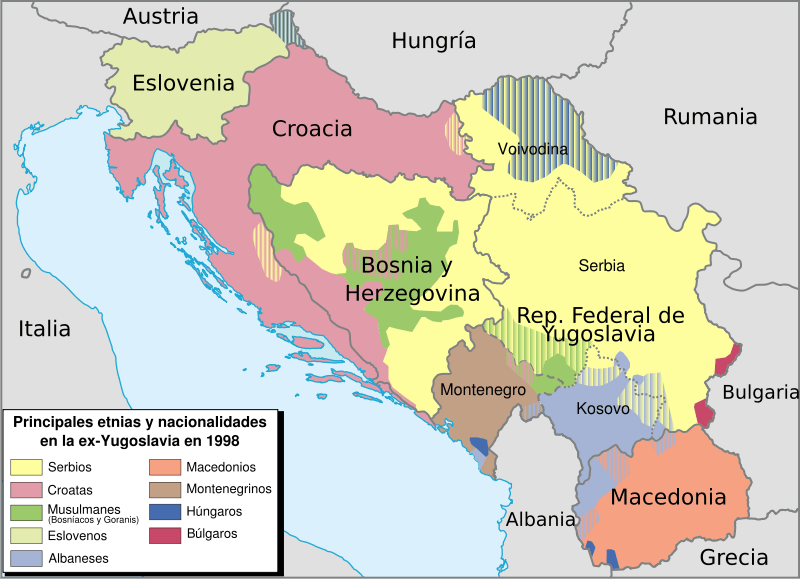
Though containment was not entirely successful, Kennan’s assessment of its spread to Yugoslavia and China were recognized as independent power structures. Yugoslavia and China believed in the value of the collective but evolved into less doctrinaire belief in “the many being more important than the one”. Yugoslavia dissolved into different states with different economic principles, and China changed its economic philosophy by acknowledging the importance of one among many.

George Kennan’s biography reinforces a belief that understanding another culture requires emergence in that culture.  Ambassadors that are not fluent in a culture’s language and fail to spend years in that culture’s environment cannot understand what policies America should adopt to protect itself and promote world peace and freedom.  One wishes all American Presidents would recognize that need in Ambassadors representing the United States.

Kennan’s biography reveals the importance of self-interest in foreign policy and how a Machiavellian manipulation of events is essential for a reliable margin of success.  Of course, some American Presidents have taken self-interest and Machiavellian manipulation to an extreme.

Trump is not the first American President to cross the line of truth and morality but he seems one of the most prolific.

Kennan is revealed as a human being in this biography, not perfectly right or entirely wrong; subject to mistakes, personal biases, and prejudice; but grounded by life in a real, not purely theoretical, world.  Kennan lived through many great events in world history, from WWII to Vietnam. His active professional life gave the United States what it needed most; i.e., perspective and practical diplomatic advice.

MILITARY INTERVENTION

Audio-book Review

By Chet Yarbrough

chetyarbrough.blog

A Concise History of the Middle East, Ninth Edition

By Arthur Goldschmidt and Lawrence Davidson

Narrated by Tom Weiner

Messieurs Goldschmidt and Davidson have created an insightful overview of the origins and impacts of an area of the world not well known or understood by much of the American public. 

Arthur Goldschmidt Jr. (Author, historian)

Lawrence Davidson (Author, History professor)

History is made up of facts but never the whole truth. Events are reported out of the context of their historical era, a time which can never be fully explained; even by the most knowledgeable historian. 

So, why is understanding the Middle East important? 

In the Middle East, more than a million human lives have been lost from war since 2001.

Since 2001, Iraq, Afghanistan, and Syrian conflicts have killed over 6,700 Americans, nearly 3,000 NATO coalition soldiers, an unpublished number of Russian and Turkish soldiers, 182,000 Iraqis, 111,000 Afghans, and 400,000 to 570,000 Syrians. 

MORE REASONS ABOUND

OIL

From an economic perspective, there is the importance of oil imports from the Middle East.

IRAQ INVASION’S COST

There is the cost of military intervention in foreign countries. The cost is in both lives and international relations.

America’s reputation in the Middle East has fallen dramatically because of our invasion of Iraq. In 2o22 the center of Middle East attention has moved from the slim possibility of democracy to reification of authoritarianism.

The perception of militant interest groups has exacerbated Middle East conflict, largely because of religious difference and economic disparity. Two powers, Saudi Arabia and Iran have replaced America’s pre-Iraq influence in the Middle East. Syria is run by a brutal dictator supported by Russia. The plight of the Middle East is for many to live in poverty under authoritarian leaders interested in power and eternal control, more than their citizen’s general welfare.

RELIGION

From a religious and cultural perspective, the Muslim religion is the second most common in the world. Iran is principally Shite, while Saudi Arabia and Syria are Sunni.

SYRIAN REFUGEES IN TURKEY (Turkey spends $30 billion on Syrian refugees.)

Countries like Turkey are overwhelmed by the cost of housing and feeding refugees from the Syrian war.

From a humanitarian perspective, hundreds of thousands of refugees have been created. Where do they go? How will they live. There are many consequential reasons for a better understanding of the Middle East. 

This audio book provides some history and, more importantly, perspective on religious belief, ethnicities, and secularism in the Middle East; i.e., it explains some of the differences within and among Middle Eastern countries. 

Goldschmidt and Davidson help one understand the difference between a Muslim Sunni and a Muslim Shiite.  Their history gives the listener a better appreciation of the importance of an Imam to a Shiite and what happens in Shiite dominated Iran versus what might occur in a majority Sunni country like Saudi Arabia or Kuwait. Syria is somewhat of an outlier because the Alawite, a minority in the Sunni religion, is in control of the government.

Goldschmidt and Davidson point out that Shiite’ beliefs are evolving because they are Imam’ interpretations of the Koran while Sunni’s beliefs are more static and grounded in literal readings of the Koran. 

The authors reflect on religious conflicts among believers in Islam, the creation and growth of the state of Israel, the secular leanings of Turkey, the Kurdish conflicts between Turkey and Iraq, the history of Iraq and its makeup of Kurds, Shiite, Sunni, and Christian factions.  They report on the Hezbollah and Palestinian movements surrounding Israel which are supported by Iran.  They touch on our 2001 New York tragedy and the hostility of al-Qaeda and its influence on American perception of the Middle East. 

“A Concise History of the Middle East” is an eye opening journey through centuries of border conflicts, colonialism, nation building, and evolving nationalism.

There is little doubt, considering what has happened in Iran (and is presently happening in Saudi Arabia, Egypt, Turkey, and Syria), that there is a growing discontent in the Middle East, a burgeoning desire for freedom; a freedom that is forged by a variety of belief systems, tempered by the will of its indigenous people. 

Goldschmidt and Davidson help one understand that, like America, there are many conflicting beliefs in the Middle East that have led to misconceptions, tragic mistakes, civil wars, and violent actions perpetrated and perpetuated by committed believers and brutal authoritarian leaders. Both believers and authoritarians are either vilified or commended by the passing of time and the distance of recorded history.

ANCIENT MIDDLE EASTERN MAP

The Middle East is shown as the world power it once was; its devolution into a variety of colonial and/or monarchical nation states; and  its re-growth as an oil producing behemoth.

The Middle East is working its way into the 21st century as a new world power.   One is drawn to the conclusion that this new world power is in a state of creation from a variety of competing Middle Eastern nation states that may or may not survive the 21st century. 

What Goldschmidt and Davidson remind one of is the folly of outside military intervention in countries of which one has little understanding.

Goldschmidt and Davidson’s writing is a gift that makes reports of the Middle East more accessible to the general public.

UNWORTHY BIOGRAPHY

Audio-book Review
By Chet Yarbrough

(Blog:awalkingdelight)
Website: chetyarbrough.blog

Washington: A Life
By Ron Chernow

Narrated by Scott Brick

Ronald Chernow (American writer, journalist, historian, and biographer, Pulitzer Prize winer.)

Fans of Ron Chernow, other reviewers, most readers, and the Pulitzer Prize panel of judges, obviously disagree with this review; not that Chernow would care.

Chernow is a respected biographer.  He has written biographies of J.P. Morgan, The Warburgs, John D. Rockefeller, Alexander Hamilton, and now “Washington: A Life”, a 2011 Pulitzer Prize winner for biography.

In fairness, Chernow writes better descriptive phrases in “Washington…” but any phrasing unworthy of a Pulitzer Prize winning book should be edited out.

In spite of its Pulitzer standing, some phrasing in “Washington A Life” is amateurish. 

Describing a person as one with “intelligent eyes” lacks clarity and concreteness.  What do “intelligent eyes” look like? 

Much of what Chernow writes is a recitation of facts with little of the color of its era.

Unquestionably, “Washington: A Life” is a well-researched biography of a pivotal hero in America’s history. but it suffers from a common failing of more memorable biographies.    Every fact may be documented but motive is obscure because motive is wrapped in a social and human context that is missing. 

Like the Pulitzer Prize winning history of Cleopatra, Chernow slips into cliché, or a “just the facts” phrasing characteristic of a Dragnet TV detective.

When Chernow strays from the facts, he sounds like an apologist for Washington. Chernow misses the essence of Washington’s rationalization of slavery’s contradiction of humanity.

Washington is plainly a slave holder, albeit less punitive than Harriet Beecher Stowe’s fictional Simon Legree.  But, like Legree, Washington treats his slaves as property to be bought, and sold, and when they escape, tracked down, and punished. 

Chernow writes “Washington rarely whipped his slaves and tried to keep slave families together”.  That makes Washington better than Simon Legree but Washington does not stand above that era’s generally accepted and wrong-headed social mores.  Washington’s “warts” are blurred in Chernow’s biography.

Chernow’s characterization of Washington’s dalliance with Sally Fairfax (a married woman) as a non-sexual infatuation stretches credulity.  Part of Chernow’s evidence is Martha Washington’s acceptance of Sally Fairfax as a personal friend rather than former paramour of George Washington.

Chernow spends a great deal of time explaining how Washington led a life of image that is difficult to penetrate.  As Chernow clearly explains, Washington assiduously represses emotions that boil beneath his facial expression; i.e. Washington could easily don a mask to hide romantic indiscretion.

Putting these negative comments aside, Chernow provides a lot of facts about Washington’s life that are not generally known.  Information about America’s great revolution makes Chernow’s near-1000 page book worth listening to, but far from understanding America’s first President. 

Like Schiff’s biography of “Cleopatra”, a reader/listener does learn a great deal about documented facts of a great historical figure.  But Washington, like Cleopatra to this reviewer, remains a mystery. 

Lin-Manuel Miranda (American composer, lyricist, rapper, singer, actor, playwright, and producer of Broadway Musicals In the Heights and Hamilton)

Chernow needs another Lin-Manuel Miranda to contextualize his uninspiring biography of Washington.

COLLECTIVIST BELIEF

Audio-book Review
By Chet Yarbrough

(Blog:awalkingdelight)
Website: chetyarbrough.blog

Darkness at Noon

By Arthur Koestler

Narrated by Frank Muller

Arthur Koestler (1904-1983, Author)

Though Stalin is never named in “Darkness at Noon”, Stalin is the “one” that encapsulates a vision of Communism that demands submission by the individual to the collective. 

When a young communist refuses to distribute Stalinist Party’ literature that ignores Nazi attacks on local Communist’ cells, he is expelled from the Party.

In real life, Koestler joined the Communist Party in Germany in 1931.  His resignation from the Party in 1938 is a likely motivation for writing “Darkness at Noon”.

Koestler’s hero is a young communist leader that disagrees with his Russian controller and is expelled from the Party in the 1930s.  The substance of the disagreement is the heart of the story.

The central character of “Darkness at Noon” is Nicholas Rubashov. Rubashov enforces Stalinist’ Communist belief in the collective, but he has doubts. Rubashov is the apparatchik who is ordered to expel a young German’ Communist because he looks at Russian Communism as a personal rather than collective savior.

Imprisonment of Putin’s political rivals, invasion of Crimea, and buildup of Russian troops on Ukraine’s border is reminiscent of Stalinist tactics before and after WWII.

Increasingly, Vladimir Putin exhibits the same drive for power as that characterized by Stalin, particularly in regard to his action in Chechnya and now Ukraine.

Koestler’s hero is characterized as one of the original participants in the 1917 revolution. As he ages, his blind acceptance of Stalin’s Communist belief in the collective waivers.  Rubashov is imprisoned and ordered to sign a confession.  The interrogators, Ivanov and Gletkin, are responsible for getting a signed confession from Rubashov. 

Ivanov, who is a former acquaintance and civil war comrade of Rubashov’s, offers an opportunity for Rubashov to redeem himself. Ivanov suggests that Rubashov confess to a lesser charge to justify incarceration for five years with a chance to return to political power.  Rubashov initially says “no” but Ivanov’s “plea bargain” approach works and Rubashov signs a confession.


However, Ivanov is later removed from power and Gletkin takes charge of Rubashov’s case.  Gletkin argues Ivanov’s approach is a mistake.  Gletkin insists on a complete confession of guilt; i.e. no redemption, only execution.

Much evidence is brought before Rubashov.  The evidence is weak but Rubashov becomes convinced through sleep deprivation, and a clever manipulation of Rubashov’s logic, that he must be executed. Rubashov’s personal feelings of guilt come from his denial of collective good. He reasons–the way he has been judged is the way he has lived his life; therefor his life should be forfeit for the cause; in the interest of the many over the few.

Gletkin might be characterized as a mindless Neanderthal because of his belief in torture, but one of many of his clever manipulations suggests he is diabolically clever.

Gletkin suggests Rubashov was given a watch when he was 7 or 8, which Rubshov acknowledges is probably correct.  Gletkin says he did not have a watch until he was a teenager and that he did not know there were 60 minutes in an hour until then.  No one in his social class looked at time in segments; waiting in line was not characterized by time but by results from waiting in line. 

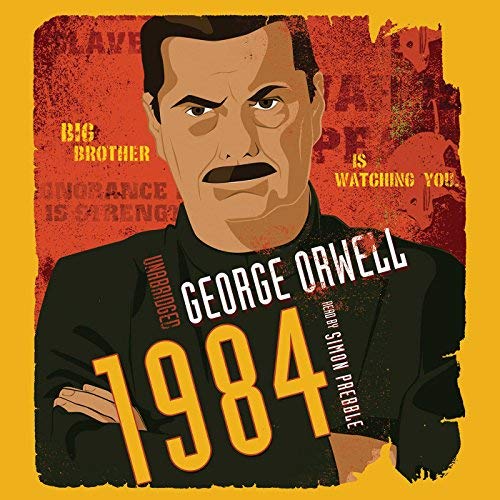
“Darkness at Noon” implies the end result is what is important; not the means and time that one stands in line. This is a quintessential belief of the “true believer” in Stalinist communism.