Every nation in the world can learn from nation-state’ mistakes in history but none can right the wrongs of the past.
Books of Interest Website: chetyarbrough.blog
“Empireworld” (How British Imperialism Shaped the Globe)
By: Sathnam Sanghera
Narrated by: Homer Todiwala
Sathnam Sanghera (Author, British journalist, born to Punjabi parents, graduate of Christ’s College, Cambridge with a degree in English Language and Literature.)
“Empireworld” offers a credible explanation of how the white race, which is a mere 16% of the world’s population, has dominated the world since the 17th century. That domination changed in the 21st century. It changed with the power and economic growth of the United States which is being challenged today by the Asian continent.
In earlier centuries, China, the Ottoman (modern day Turkey), and Mughal Empires (modern day India, Pakistan, and Bangladesh) were Asian rulers of the world
Prior to the 17th century, an empire’s influence is arguably more local because of transportation and communication limitations. What Sanghera infers is Great Britain’s growing power and influence surpassed others because of its domination of the sea and growing industrialization. The point is all of these 17th century nations were principally white with similar ambitions but only Great Britain influenced all foreign cultures of that period, with remnants extending into modern times.
France, Spain, the Dutch Republic, and Portugal were major 17th century players, but Sanghera argues the imperialist drive of Great Britain surpassed its rivals.
Sanghera focuses on GB, not only because it was white but because it represented a national power’s intent to shape the world in its own image. The image Sanghera creates is not egalitarian, democratic, or sanguine. GB is characterized as dominating, autocratic, and driven by self-interest. He suggests eleemosynary efforts by GB to aid other countries was principally to guild their own lily, not to offer other countries self-determination or freedom. Indigenous populations are inferred to be expendable in Sanghera’s “Empireworld”.
“Empireworld” is a harsh judgement of Great Britain’s history of enslavement, indigenous displacement, colonization, and confiscation of other countries’ natural resources. Sanghera systematically builds a case for GB’s attempt to English-size the world. Parenthetically, this is the same view held by some nations about America.
Sanghera recalls the history of the slave trade, Great Britain’s colonization of India, Nigeria, Australia, New Zealand, North America, and other countries of the world. He reminds listener/readers of the despoiling of the animal kingdom, confiscation of nation-state natural resources, enslavement of Africans, sexual discrimination, suppression of colonial sovereignty, displacement of indigenous peoples, and re-education or extermination of native countrymen who will not accept an English view of superiority and custom.
Sanghera tempers his harsh view of Great Britain in the conclusion of “Empireworld”. He does not deny G.B.’s history but acknowledges his countries’ measured efforts to right the wrongs of the past; which is of course not possible.
Sanghera cites G.B.’s belated effort to preserve animal and plant species, its acceptance of former colonies’ nation-state sovereignty, growing discussion about reparation for profiting from the slavery trade, endorsement of indigenous people’s rights, legislative action for sexual freedom, and support for improved health, education, and welfare of former colonial citizens. All are works in process, far from completion, but progressing. Sanghera’s history of Great Britain is the story of America. Though America avoided the colonial history of England, it has similar challenges.
Every nation in the world can learn from nation-state’ mistakes in history but none can right the wrongs of the past.
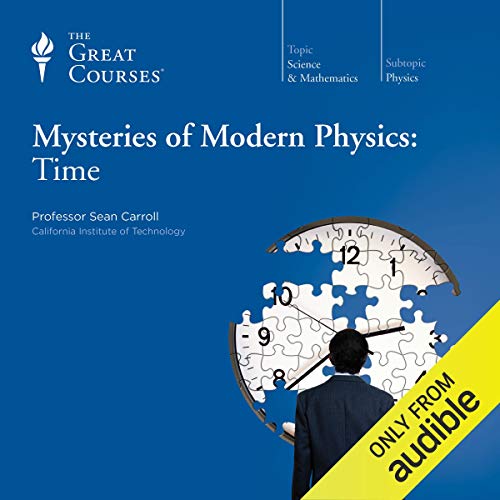
Infinity time with vintage clock. Digital generatedxr:d:DAFUp8OtUOE:4,j:43587237971,t:22121315
Carroll explains there are four physical dimensions in the world. There is length, width, depth, and a fourth dimension called time. The first three are easy to understand because they are physical characteristics while time is not. Time cannot be seen, touched, or tasted.
Time is a fourth dimension measured by calendars and clocks that divide the past and present into days, hours, minutes, and seconds. Carroll notes knowledge of length, width, and depth are of the past and present while time points to an unknown future as well as the present and past. Einstein refined the definition of time by renaming it space time which combines physical dimensions with observers’ perception of events, i.e., where and when observations occur and where the observer is located. The significance of Einstein’s space time is that the location and traveling speed of the observer affects the perceived time of events. Carroll’s attention is about time as an arrow that only points forward. Carroll explains how events of the present and past can be defined while the future is unknown. An extended meaning of the arrow of time is that it seems unlikely (though not impossible according to Carroll and the current state of physics) that we can physically return to a past.
There is a significant distinction between entropy and loss of energy. Energy is always conserved but it may not be useable for work. Entropy is about increased disorder and randomness of energy states. Carroll defines entropy as a characteristic of matter in the world which is in a state of molecular disorder, randomness, and uncertainty. This definition is reinforced by the discovery of quantum mechanics which experimentally illustrates probabilities rather than certainty at atom-level interactions. (Einstein never accepted quantum mechanics as a truth of life but only a step of discovery in physics. Einstein believed there would be a discovery that incorporates quantum mechanics in an ultimately predictive physics world.) Carroll notes a theory that explains gravity along with the proof of quantum mechanics holds a key to whether Einstein is wrong when he suggested God does not play with dice.
An interesting note by Carroll is that transition from low to high entropy has an interesting effect in an experiment with two separate enclosures that are connected. One has gas molecules in it while the other does not. There is a hole between the enclosures through which molecules can enter. Over time the two boxes will have the same amount of gas through a process of equilibration. This reinforces the idea of conservation of energy while demonstrating energy transformation.
Transformation of energy is exhibited in animal life by its eventual death, but Caroll explains it equally applies to all matter in the universe. The idea of entropy is reinforced by the arrow of time that only points in one direction.
At an atomic level, all matter transforms over time.
Entropy does not mean loss of energy. Energy is always conserved but it may not have a useful work purpose. The second law of thermodynamics, postulated by Rudolf Clausius in the 1850s, explains that heat always flows from hotter to colder through the process of entropy. For example, a low-level heat energy may not serve a work purpose, but it still conserves energy balance. Raising the heat on a cube of ice transforms its molecules from a frozen state to water to steam which conserves energy that can generate working steam molecules to power an engine.
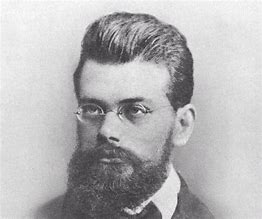
Much of Caroll’s lectures are an examination of Ludwig Boltzmann’s theory of statistical mechanics and kinetic theory. Much of Boltzmann’s contribution revolves around the concept of entropy and a detailed understanding of the behavior of particles in gases, liquids, and solids. He performed experiments that proved the conservation of energy and the equilibration of atoms and molecules as an observable phenomenon.
Boltzmann speculated that in the beginning of the universe, the chaotic activity of its beginning transformed into a lower state of entropy to create what we see in the world.
Ludwig Edward Boltzmann (1844-1906, Austrian physicist and philosopher.)
Boltzmann’s idea came before the theory of the Big Bang. The idea of the Big Bang actually presumes less entropy rather than more before the creation of the universe. Boltzmann’s idea is that the universe began in chaos (high entropy) to form what became known as a Boltzmann brain (low entropy), a thought experiment where a highly advanced brain formed in a void, from which the universe evolved. The Boltzmann brain is like the singularity of the Big Bang where cosmic dust condensed into a low entropy state and then exploded into our universe.
The origin of the universe may, in one sense, come from either a Boltzmann brain or a Big Bang. Both suggest the universe began in a low entropy state.
However, the Big Bang seems more reliably built on evidence by the measurement of an expanding universe with proven remnants (cosmic radiation) from a massive explosive event. Either theory implies the potential for a multiverse that began from a low entropy theory of our universe’s origin.
At this point in Carroll’s lectures, one’s head begins to hurt. He addresses the many ramifications of the origin of life. As one gets older, the principle of entropy takes on a personal meaning. Getting older may make one wiser but not smarter.
The human factor is at the heart of perfection with precision as the qualifying characteristic of craftsmanship or technology.
Books of Interest Website: chetyarbrough.blog
“The Perfectionists” How Precision Engineers Created the Modern World
By: Simon Winchester
Narrated by: Simon Winchester
Simon Winchester (British-American author, journalist, historian.)
Simon Winchester has a remarkable ability to simplify, detail, and vivify history’s complexity. Winchester is not new to this listener. His erudition, writing, and narration are a pleasure to read or hear. His story of the origin of the first Oxford English Dictionary, is a fascinating recollection of Dr. William Minor who shot and killed a stranger on a London street. Dr. Minor was imprisoned in an asylum for his aberrant behavior but became an important source of information for James Murray, the leading lexicographer of the “Oxford English Dictionary”.
“The Perfectionists” is about the advance of the world economy from the perspective of entrepreneurs driven to succeed. Their success, in Winchester’s opinion, is based on understanding and capitalizing on the value of precision.
James Watt (1736-1773) perfected Thomas Newcomen’s 1712 steam engineMatthew Bolton (1758-1809) partnered with Watt to perfect steam engine power generation.Charles Algernon Parsons (1854-1931) perfected the steam engine to propel steamboats.)
Though one may go back to the first century to find the first steam engine, it is the invention of James Watt, and the improvements of Matthew Boulton, and Sir Charles Algernon Parsons in the 18th and later 19th centuries that perfected steam engine utility and power. Watt created the steam engine, Boulton helped Watt perfect the steam engine for industrial use, and Parsons expanded its utility by creating steam turbines to power the propellers of steamboats. Each played a role in making steam engines more efficient with precise design and milling refinements that provided more power and wider utility.
With the advent of the industrial revolution, Winchester explains how speed and quality of production were geometrically improved by focusing on precision. He offers several industry examples, including weapon manufacture, automobile production, camera refinement, telescope resolution, airplane manufacture, watch making, and CPU design which now leads to the A.I. revolution.
Winchester notes the beginning of the industrial revolution starts with the perfection of energy production machines that power the manufacture of standardized parts for finished products.
Winchester tells the story of the French that insisted on standardizing parts for gun manufacture to increase the speed with which repairs could be made for damaged weapons. Winchester recounts the war of 1812 when Great Britain bloodied the nose of America by routing the capitol’s volunteer defense because of a lack of useable guns. He tells the story of an American rifleman with a broken trigger on his rifle who chooses to run from a British onslaught because trigger replacement would take two weeks for customization to fit his gun.
American guns were custom made which meant that when one was damaged it would take weeks for repair.
Honoré LeBlanc, a French gunsmith during the reigns of Louis XV and XVI, created the idea of interchangeable gun parts in the 18th century. Though it came to the attention of Thomas Jefferson, it did not catch hold in America until after the war of 1812. There was an effort by America to standardize parts in the early 1800s but Eli Whitney (the inventor of the cotton gin), hoodwinked the American government into a contract for standard gun parts that never materialized.
Winchester explains Eli Whitney flimflammed the American government to get a contract for standardized gun parts but never produced the product for which the government contracted.
Winchester notes Whitney knew nothing about guns and hired a crew of customizing gunsmiths who manufactured unique weapons that could not be repaired with standardized parts. Because the parts were manufactured by individual craftsman, the guns produced were not interchangeable. They did not have precisely manufactured parts that would allow interchangeability. Whitney gave a demonstration to the government with only one gun that he assembled in front of Jefferson and a government committee. He did not demonstrate any repair with standard parts. Jefferson fell for the false presentation and initially lauded Whitney. This demonstration was in 1801 which explains why a soldier might have fled because of a broken trigger in the War of 1812.
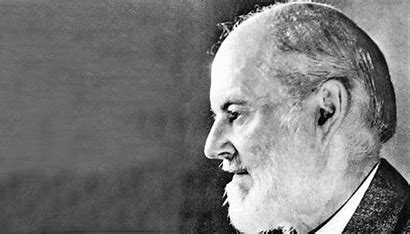
Henry Royce (1863-1933)
Winchester explains standardizing and precision making of gun parts were an essential step in the industrialization of America. Standardization and precision-made interchangeable parts became the touchstone of success in the automobile industry in the 20th century. Winchester tells the story of Rolls Royce and Ford Motor companies to make his point. Both Royce and Ford recognized the importance of precisely made standard automobile parts to garner their success in the automobile business. Though their route to success is precise manufacture of automobile parts, the wealth they created for themselves was quite different.
Henry Ford (1863-1947)
Ford became one of the richest people in the world while Royce became wealthy but not among the richest in the world. Royce chose to pursue perfection of every part of the automobile which limited his unit production and increased manufacturing cost. Though Ford perfected standardized mechanical parts, they were precisely designed only for functionality. Ford added the dimension of standardized labor to the manufacturing process. By creating an assembly line of laborers with precise replaceable mechanical parts, Ford could produce more automobiles than Royce in a shorter period of time.
The point Winchester makes is perfection of standardization (production of precisely tooled engine parts) is a cornerstone of successful industrialization. Royce expanded the concept to every part of an automobile while Ford focused on replaceable mechanical parts of the automobile.
Winchester tells a story of ball bearing manufacturing during Henry Ford’s reign when some automobiles were failing. The bearing manufacturer proved it was not their bearings with tests that showed the bearings were perfectly within precise measurement requirements. What Ford realizes is that the ball bearings were milled exactly the same and met the precise dimensions required. The problem was found to be the assembly line and human assembly mistakes. One thinks of the loss of precision in Boeing aircraft today and wonders what that means for Boeing’s future if it is not immediately corrected.
Winchester contextualizes the story of the ball bearings in recalling the history of a near catastrophic plane crash when a Rolls-Royce jet engine fails on a Qantas Airlines Airbus A380 in 2010.
Jet engines are precisely manufactured marvels of aviation. However, a tiny flaw in one oil pipe within the engine nearly caused the loss of over 400 passengers. Winchester explains Jet engines are dependent on superheated gas exchange that, if not properly cooled, will damage the engine. Every engine has a series of drilled holes that allow ambient air to cool the engine during flight. The holes are drilled in precise locations throughout the engine louvers and oil pipes to keep the engine from overheating. One of the oil pipes holes is in the wrong location which caused the engine to overheat after many flights. The failure of human oversight of the automated process and final checks by the manufacturer are the underlying cause of the near catastrophe.
More examples of the importance of precision are wonderfully offered by Winchester in “The Perfectionists”. His examination of the tech industry is as prescient as his analysis of the automotive industry and airline industry. He covers Moore’s law and how technology is advancing at an accelerating pace while inferring humanity may be at a turning point. That turning point is the crossroad between human and machine decisions about the future.
The human factor is at the heart of perfection with precision as the qualifying characteristic of craftsmanship or technology.
Winchester infers craftsmanship does not mean precision is to be sacrificed. He recalls the emphasis on precision in Japanese culture where many craftsmen assembled and repaired Seiko watches to revitalize the brand in the late 20th century. Precision is not a lost art whether work is done by machine or a craftsman, but the human factor remains a critical component of both processes. The point to this listener is that precision is only a part of what has advanced the welfare of society.
Was Einstein right when he said, “God does not play dice with the universe.”
Books of Interest Website: chetyarbrough.blog
“Particle Physics for Non-Physicists: A Tour of the Microcosmos” (The Great Book Lectures)
By: Steven Pollock
Narrated by: Professor Steven Pollock
Steven J. Pollock (American professor of physics, 2013 U.S. Professor of the Year.)
Professor Pollock attempts to explain particle physics to non-physicists in this lecture series. The explanation details the contributions of many brilliant physicists and scientists that are generally well-known to most who wish to have a better understanding of physics beyond its mathematic proofs. Parenthetically, Pollock’s history shows few contributions to physics by women, a sad reflection on world society that ignores half the world’s intelligence.
SIR ISAAC NEWTON (1642-1727)James Clerk Maxwell (1831-1879)ALBERT EINSTEIN (1879-1955)
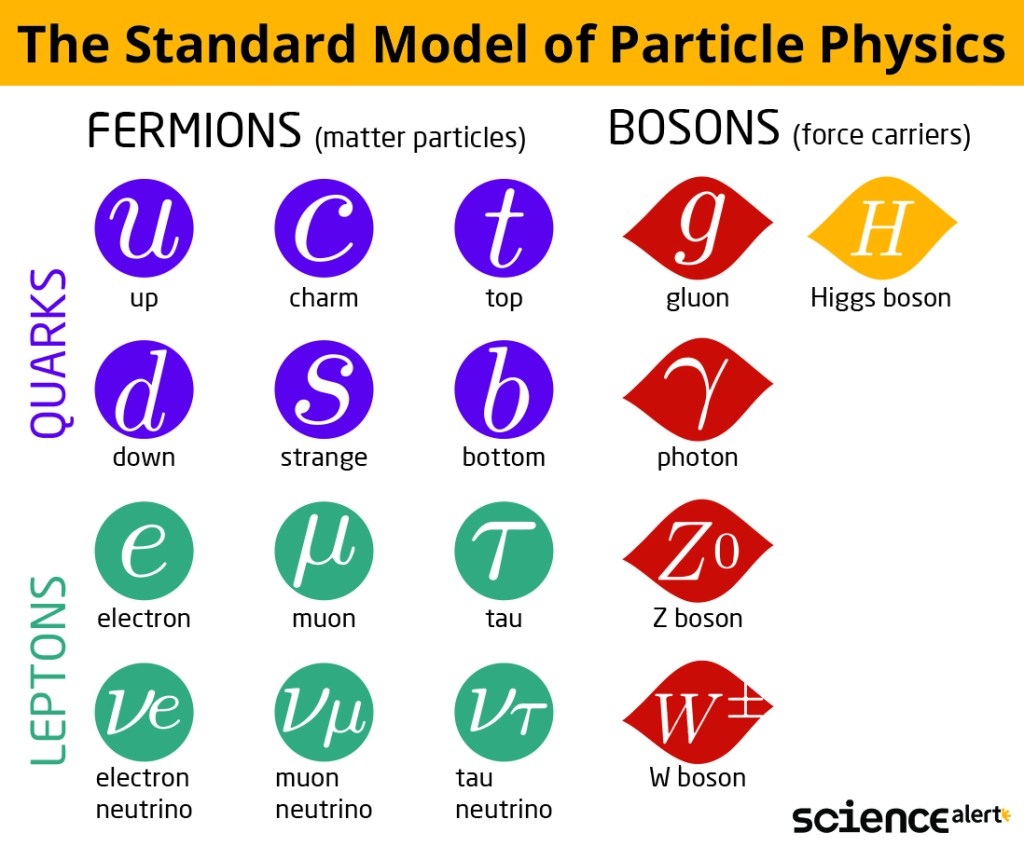
Particle physics is about the most elemental ingredients of the universe. Pollock notes the known elemental particles are either bosons or fermions which have been identified through various methods of breaking down the structure of the atom. Examples of bosons are photons, gluons, and bosons. Examples of fermions are electrons, quarks, and neutrinos.
Pollock explains fermions are the elemental particles that make up the matter of what we see. Bosons are the forces of the subatomic world that manipulate fermions. Pollock believes the standard model of physics has largely been determined and that there are unlikely to be any fundamental changes to that model. That conclusion reminds one of Lord Kelvin in 1900 who suggested “There is nothing new to be discovered in physics now.” In contrast, Albert Einstein noted “The more I learn, the more I realize how much I don’t know.” One wonders if Pollock is leaning toward a Kelvin perception of the standard model of physics by discounting Einstein’s observation about knowledge.
Higgs boson gives mass to what humans see in the world by combining the forces and matter of the sub-atomic world.
Pollock explains the evolution of research in identifying new elemental particles. Pollock notes the Higgs-Boson, the latest particle identified with the Large Hadron Collider in Geneva in 2021, suggests the same tool will lead to further particle discoveries. He explains how the LHC is the latest method for revealing unknown elemental particles by bombarding atoms with proton beams and heavy ions to discover the elemental ingredients of nature. The LHC’s ability to generate a high enough velocity to break the atom into its constituent parts remains a work in progress. Interestingly, Pollock expresses some reservations about the experimental proof of Higgs-Bosun because of the LHC’s unreliable replication of the Higgs-Bosun results. The LHC is shut down for an upgrade that will presumably prove or disprove the Higgs-Bosun discovery.
LHC CIRCULAR ACCELERATOR CERN SITESTANFORD LINEAR ACCELERATOR
Will LHC and linear accelerator experiments find more fundamental particles for the standard model of physics? Was Einstein right when he said, “God does not play dice with the universe.” Pollock implies not.
Pollock, like many physicists, believes quantum mechanics are the way the world works at an atomic level and infers the distinction is like the difference between Newtonian and Einsteinian physics. Newton’s world of physics is about earth and its existence while Einstein’s view is of the universe. Both were right within their fields of analysis, but each assumed life exists in a deterministic universe.
It seems Pollock chooses to accept the atomic level of the world operates probabilistically while the macro world operates deterministically because both show experimental proof of difference. Einstein believed the difference would be resolved by further knowledge, i.e., knowledge that explains how there can be a difference between particle physics and Newton/Einstein’ physics that reasons both are ultimately deterministic.
Like the number 47 in “Guardians of the Galaxy”, the 27 books of the New Testament offer no answer to the meaning of life.
Books of Interest Website: chetyarbrough.blog
“The History of the Bible” (The Great Book Lectures)
By: Bart D. Ehrman
Narrated by: Bart D. Ehrman Lectures
Bart Denton Ehrman (American New Testament Scholar, Wheaton College BA, Princeton Theological Seminary received a Master of Divinity and PhD.)
Bart D. Ehrman’s lectures are a revelation to one who knows little about either the Bible or the New Testament. As a scholar, Ehrman views the New Testament as history, not a religious covenant. The New Testament, as differentiated from the Holy Bible (a covenant with Israel), is a later covenant with Jesus that extends religion to all humankind.
Ehrman’s lectures are not about religious belief but about the history of the New Testament.
Removing the ideas of religious belief from his lectures will undoubtedly offend many who believe in God’s and/or Jesus’s divinity. What Ehrman does is explain how the New Testament is a flawed recollection of historical figures. The flaws come from scribes who interpret three contemporaries of Jesus–Matthew’s, John’s, and Peter’s fragmentary writings of Jesus’ ministry and teachings.
The 27 books of the New Testament are written by scribes of later centuries that are interpretations of Matthew’s, John’s, and Peter’s interpretations of Jesus’s beliefs and history on earth.
Because scribes and contemporaries’ recollection of Jesus are human, truth is in the eye and limitations of its beholders. The inference from Ehrman’s lectures is that truth is distorted by interpretations of interpretations.
Ehrman systematically reveals how the story of Jesus’s life and beliefs change over the centuries.
He gives listeners a better understanding of the complexity and false interpretations of religion that accompany the many atrocities committed by believers who foolishly murder fellow human beings. These great historical conflicts are based on interpreters’ interpretations of interpretations.
God may or may not exist, but human beings insist on their beliefs to the detriment of humanity.
History unreservedly shows–believing in religion, without concern for society leads to discrimination, mayhem, and murder. That is as clear today in the Israeli/Palestinian conflict as in the history of the Jewish holocaust and pogroms of the past.
Like the number 47 in “Guardians of the Galaxy”, the 27 books of the New Testament offer no answer to the meaning of life.
Marie Arana clearly argues the color of one’s skin has given great advantage to white citizens of the world.
Books of Interest Website: chetyarbrough.blog
“LatinoLand” (A Portrait of America’s Largest and Least Understood Minority)
By: Marie Arana
Narrated by: Cynthia Farrell
Marie Arana (Author, graduate of Northwestern University of Hong Kong with a BA in Russian Language and Literature and an MA in Linguistics.)
“LatinoLand” begins shakily with what seems an exaggeration of international Latino cultural influence in the world. However, as Marie Arana continues her report a listener/reader appreciates her knowledge of American Latino history. Her argument is that Americans have little understanding of the largest and least understood minority in the continental United States. If one continues the book beyond the first chapters, her argument about Latino culture in America becomes clear and compelling.
MarieArana was born in Peru.
Presuming from Arana’s education in Hong Kong, she speaks and understands several languages. From her book, it appears she was born into an upper-class Peruvian family who could afford a superior education for their children. Her father was a successful civil engineer who married an American from Kansas. She moved with her parents to Summit, New Jersey when she was nine years old. Arana earned two college degrees from the Northwestern University of Hong Kong.
In one sense, “LatinoLand” is about America’s greatest 21st century challenge, immigration.
More importantly, it is about human discrimination, ignorance, and inequality. Discrimination begins with perceived difference. The greatness visible marker of difference is the color of one’s skin. Arana argues discrimination begins with skin color. She explains how inequality grows from discrimination, and cultural ignorance. (Though not mentioned, human self-interest plays a role in the creation of inequality.) A mixture of ignorance and not caring for others creates fear and potential for violence.
Mosaic of children from around the world, including, Kayapo, Indian, Native American, Inuit, Balinese, Polynesian, Yanomamo, Cuban, Tsaatan, Moroccan, Mongolian, Karo, Malagasy, and Pakistani.
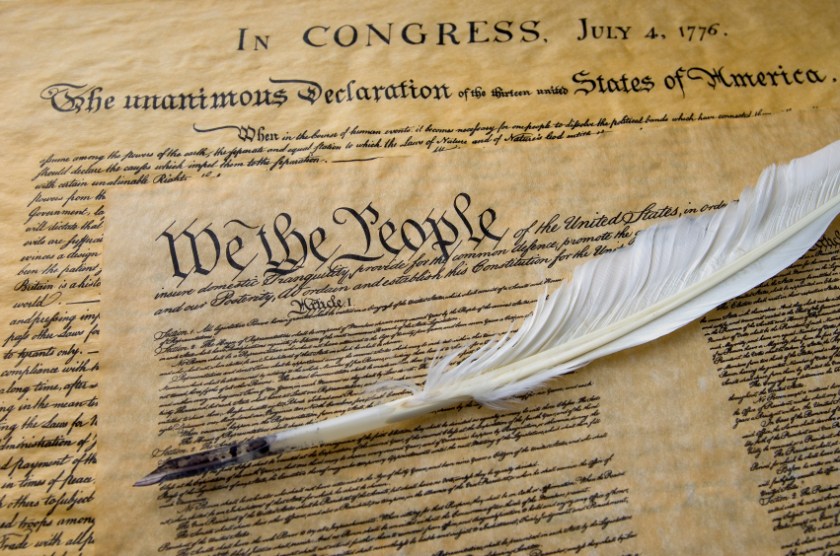
Arana notes how the color of one’s skin is one of the most prominent features of difference among humans. Skin color differences, lack of caring, self-interest, and ignorance breed economic inequality. Arana implies the American Constitution ameliorates some human failings but does not achieve its ideals. She suggests American democratic ideals have been used by some political leaders as a Trojan horse for authoritarianism. She particularly points to the difference between what Fidel Castro said about creating a Cuban democracy when he overthrew Batista, i.e., he claimed to want a democratic haven for its people. However, under Castro, Arana notes Cuba became an authoritarian dictatorship that victimized its citizens by taking their assets and using their value to create and maintain a government-controlled economy.
Arana recounts the history of Cuba, Haiti, and Puerto Rico as examples of countries that preached democratic ideals but became authoritarian dictatorships that eschewed freedom and impoverished its citizens.
Many Cubans, Haitians, and Puerto Ricans fled to the U.S. to escape authoritarian victimization. What many found was American discrimination made it difficult, if not impossible, to achieve the American ideal of freedom and independence. Immigrants could not escape poverty because of the color of their skin, their language difference, and a lack of caring by white Americans pursuing their own dreams.
She goes on to explain the first Latino becomes part of President Reagan’s cabinet as the Secretary of Education in 1988. Of course, Arana acknowledges many Latinos have succeeded in America. From sports stars to musicians to military heroes to Supreme Court justices, America has benefited from the Latino diaspora. But Arana suggests many more Latinos have not achieved the American dream because of the color of their skin.
Arana notes the Nixon Administration is the first President to recognize a separate and distinct ethnic group labeled Hispanic.
Arana suggests the labeling of ethnic groups is a chimera, a fabrication of the mind. People are a mixture of different ethnicities. She implies no one is a pure anything because of the nature of humankind. The inference is that all humans are just humans, and the only difference is in their respective cultures. Cultural differences are relevant but the color of one’s skin is the mark that bodes ill for societies’ future.
In her review of history, Arana notes how a Latino child was discriminated against by having to play in different playgrounds than white children. Only with the advance of Brown v. Board of Education in 1954 did that wrong get righted.
The proximate and initial cause of discrimination always seems to be the color of one’s skin. Interestingly, Arana notes that white skin makes a difference in many cultures, including her native culture in Peru where white skin was highly coveted and sought through marriages with white skinned relations.
Arana points to the great contributions that have been made and continue to be made by Latinos to American growth and prosperity.
Discrimination has always been a struggle because of inherent human self-interest, regardless of the ideals of the American Constitution. Arana notes the hurdles that immigrants face in getting to America, let alone becoming free and independent. Many Americans, from Presidents to Congressman to individual American citizens fight newcomers who are struggling to find a better life, employment, security, and peace.
Arana notes more Latinos are coming to America, but from other countries than Mexico. It is surprising to find more Mexican citizens are choosing to leave than come to America. This is not changing the struggle, but it clarifies Arana’s many reasons for writing her book. The ideals of the American Constitution and America’s economic wealth offer hope to immigrants.
In the 21st century, Arana notes that today more Mexicans are returning to Mexico than emigrating to the U.S.
Marie Arana clearly argues the color of one’s skin has given great advantage to white citizens of the world.
NATO is not an American Marshall Plan but a bulwark for nation-state self-determination.
Books of Interest Website: chetyarbrough.blog
“The Marshall Plan” (Dawn of the Cold War)
By: Benn Steil
Narrated by: Arthur Morey
Benn Steil (Author, American economist, senior fellow and director of international economics at the Council on Foreign Relations.)
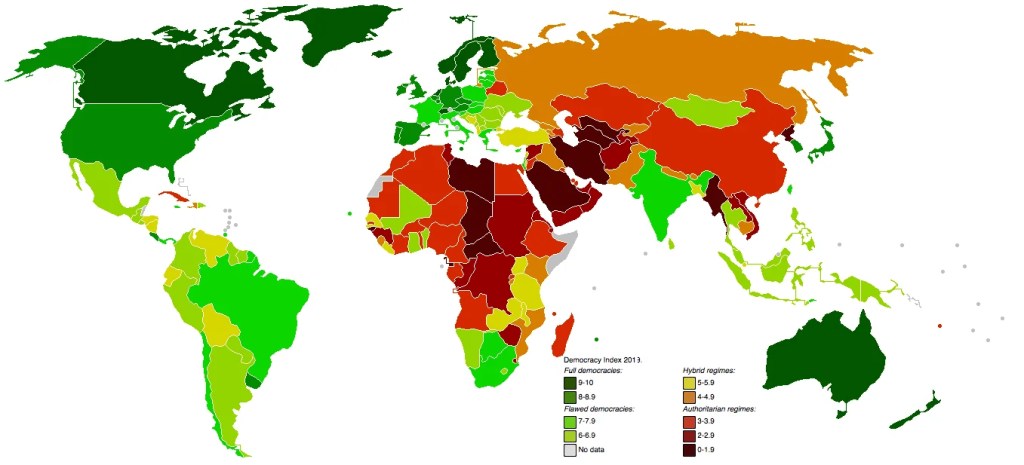
Along with an excellent history of America’s “…Marshall Plan”, there is an underlying message about two fundamental forms of government, i.e., one is democratic, and the other is authoritarian. By democratic, the point is not to suggest an idyllic understanding of American Democracy or Russian Authoritarianism. America and Russia have experienced government leadership that has been both authoritarian and democratic in the last 248 years.
One can justifiably argue America’s authoritarianism was experienced during the four years of the Trump administration (2017-2021).
In contrast Russia’s democratic experience was with Mikhail Gorbachev between 1985 and 1991. Before and after Gorbachev, democratic experience in Russia has been limited and largely authoritarian. What history of “The Marshall Plan” shows is the superior value of American democracy’s checks and balances that limit the power of authoritarian leadership by preserving deliberations of the many as opposed to the one. Trump is not the first U.S. President that was an authoritarian.
George Catlett Marshall Jr. (1880-1959, American army officer and statesman, became Secretary of State and Secretary of Defense during the Truman administration.)
History of “The Marshall Plan” shows the resilience of democratic versus authoritarian governance. Steil shows “The Marshall Plan” is created in a boiling cauldron of disagreement among branches of the American government. The conflicts between American political parties and departments of government hammered out a plan that improved the economies of both America and Europe after the war. America became the economic hegemon of the world as Russia’s economy collapsed in the early 60s.
MAO ZEDONG (1893-1976, FOUNDING FATHER OF PEOPLE’S REPUBLIC OF CHINA)Deng Xiaoping and Xi Jinping
One might argue the success of China came as a result of the more inclusive economic decision-making policies of Deng Xiaoping after Mao Zedong’s death. With Deng’s opening the economy to market-oriented reforms in 1978, worker efficiency and productivity created an economic boom in China. China’s danger today is the autocratic rule of Xi Jinping. His one-man rule nearly collapsed the economy during Covid 19. America certainly suffered from Covid, but Trump’s authoritarian character was mitigated by political resistance to unilateral Presidential decision-making.
Steil explains how Molotov delayed negotiations on “The Marshall Plan” with a clear understanding that only one person, Joseph Stalin, made decisions in Russia.
Steil notes “The Marshall Plan” is singularly disparaged and reviled by the Russian government. That disparagement is directed by one person, Joseph Stalin. There is no one to oppose the autocratic rule of Stalin’s leadership. Stalin’s opposition was either sent to the Gulag or murdered. A more balanced power structure in Russia could have taken advantage of “The Marshall Plan” but by singular fiat of one person (Stalin) implementation was impeded after WWII. The errors inherent in communism and authoritarian rule are being recreated by Putin in the 21st century.
What Steil shows is that many elected officials in America fought the principles of “The Marshall Plan”. However, the constant back and forth of government policy arguments in Congress aided European recovery after the war in a way that stabilized Europe and monumentally improved the economic growth of America.
Autocracies can certainly improve their economic growth at a pace that is superior to governments ruled by democratic ideals. However, autocracies have a much greater risk of following the wrong path because of their singular focus on one person’s decisions.
With an autocrat’s decision-making process, economic growth is either stultified or accelerated by one person’s decision. The give and take of democracies offer the benefit of different policy maker’s perspectives that may slow policy decisions but ultimately improve the odds of forward economic growth.
However, it is more than the availability of natural resources that made America economically successful. It is the give and take of a democratic process that protects America from the giant missteps that can come from autocratic rule. America has had some good to great rulers, but it has also had some ignorant, bigoted autocrats that offered minimal support for the ideals of freedom and equality. Checks and balances are the strength of American democracy. Presidents can make a difference, but they cannot destroy America’s future.
Ben Steil’s history of “The Marshall Plan” is not limited to an explanation of how important and difficult it is for America to pass important and consequential legislation.
The last chapters of Steil’s history of the Marshall Plan explains why Russia, China, and North Korea resent American encroachment on their spheres of influence. From the era of Stalin, Mao, and Kim Jong II, there has been a growing concern over the expansion of America’s sphere of influence. Steil explains how the Marshall Plan has morphed into a deepening concern about NATO expansion in Europe. As noted in an earlier, the Marshall Plan is created to aid recovery of countries that were impacted by WWII’s destruction. In reality it aided America to become the hegemon of the world. Because of the economic stimulus that revived the countries damaged by WWII, America created new markets for their industrial growth and international trade.
NATO is viewed as another vehicle for America’s economic growth and ideological threat to Putin, Xi, and Kim Jong Un’s control of their countries.
NATO is viewed as another invidious way for America to expand their influence and power. That seems an unfair evaluation of NATO. NATO is a military defense plan saying one country within NATO that is attacked by another country is an attack on all NATO countries. Every nation that has managed to become an independent country should be able to pursue there own interests.
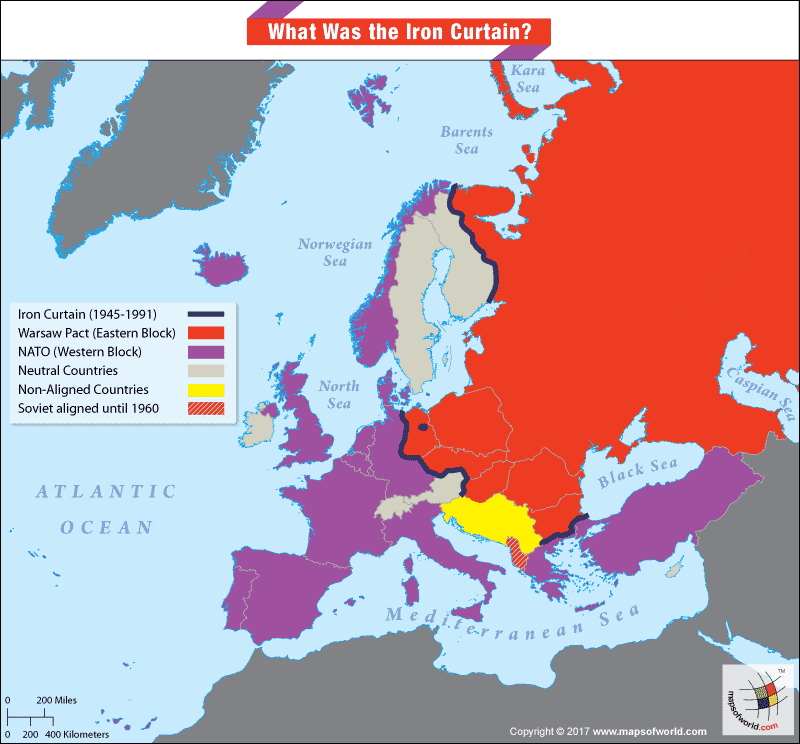
The iron curtain is rusting but its characteristic strength remains a barrier to international cooperation.
The rusting of the iron curtain comes from the tears of societies ruled by authoritarians. The authoritarians are leaders who believe their way of life is threatened. NATO is viewed as a trojan horse at the front gates of non-aligned countries.
One decries Putin’s slaughter of Ukrainians in an unjust war. Life of innocents have no value to today’s Russian leadership that believes their power and way of life is threatened.
The real-politic of authoritarian’s desire for stability and power outweigh the value of human life. The same is seen in the plight of Palestinians who are not part of the October 7th’ terrorists’ killings and kidnappings but are in the way of Israel’s retaliation against Hamas.
In my amateur opinion, China, Russia, North Korean, or other authoritarian governments have a right to rule their countries as they wish. Their citizens are the key to every leader’s longevity. NATO is an effort to offer freedom of choice to established independent countries but if the citizens of a country support their leaders, there is little NATO, or any alliance can do, except to support the sovereignty of all nations.
NATO is not an American Marshall Plan but a bulwark for nation-state self-determination.
Steil argues George Kennan is right in suggesting NATO expansion would be “the most fateful error of American policy in the entire post-Cold War era”. Kennan believed it would inflame nationalist beliefs and reinvigorate the Cold War. And so, it has–as evidenced by Russia’s invasion of Ukraine, China’s expressed intention and action toward Taiwan, and North Korea’s armaments support of Russia.
Kaplan’s last chapters make a powerful statement about what America should do to meet today’s and tomorrow’s challenges.
Books of Interest Website: chetyarbrough.blog
“Earning the Rockies” (How Geography Shapes America’s Role in the World)
By: Robert D. Kaplan
Narrated by: William Dufris
Robert Kaplan (American Author, freelance journalist and foreign correspondent.)
The first chapters of Robert Kaplan’s “Earning the Rockies” are a travel memoir about America’s growth from 13 colonies to 50 states, but the last two chapters are a considered view of America’s turbulent history and what its role should be in the world.
Kaplan explains he comes from a working-class family born in New York City.
Kaplan was raised on the East Coast. His father was a local truck driver. However, his son became a world traveler who served in the Israeli Army and worked as a freelance writer for major publications. His travels and professional reporting experience undoubtedly influence his opinions about America’s role in the world.
Kaplan’s book begins with memories of his beloved father who talked to him about many things, one of which is a belief that “Earning the Rockies” requires one to work to make a living before traveling across the country.
Kaplan writes an apocryphal story of traveling from the east to west coast of America. In reflecting on his journey, he recalls the history of America’s growth as a nation state. He writes of white settler’s displacement of Indian tribes, a journey to the northwest by leaders of the Mormon church, and America’s growth and assembly of 50 states.
In his travels, Kaplan recalls:
1) America’s territorial growth with the Louisiana purchase,
2) confrontation with Mexico to expand America’s southwestern border,
3) Civil War for union rather than separation, and
4) Mormon and other pioneer travels on the Oregon Trail to see and settle the Northwest.
America becomes an economic giant, protected from foreign interference by two oceans.
In the creation of this American geographic giant, many territorial, political, and economic conflicts were resolved. Kaplan’s suggests America’s economic growth is based on force and compromise, the keys to America’s future in the world.
Kaplan’s American heroes are George Washington, Abraham Lincoln, Theodore Roosevelt, and George H.W. Bush. He adds the extraordinary insight of Ambassador George Kennan in his analysis of Russia. Kaplan notes other great leaders, but these four Presidents and one diplomat are examples of how American leaders use force and compromise to enhance the power and prestige of democracy in the world.
Kaplan explains prudent use of force and compromise is how the west was won and how America became an economic hegemon, a power and influence in the world.
Union of America’s States was perpetuated with force, while compromise continues to ameliorate the wrongs done to Indians and Blacks in America. Those wrongs will never be removed but compromise inures to the benefit of future generations.
Kaplan argues there is an imperial elite in America, similar to what were the elite and influential intellectuals of ancient Greece.
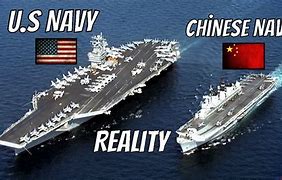
China is working toward a similar goal with its expansion of aircraft carrier and warship production.
Prudent use of power and compromise will expand the influence of every country that has hegemonic ambition. The operative word is “prudent”, i.e., navigating life with a thoughtful eye toward the future. Of course, there is a difference between China’s and America’s political prudence, but each is able to draw on resources that can change the course of history. The question becomes which has a system of government that can prudently use force and compromise to achieve peace and prosperity?
China’s and Russia’s education system leans toward communism which has not had the same level of success as capitalism.
America’s imperial elite is largely educated in American’ ivy league schools. Kaplan suggests, to the extent that these elitists grasp the importance of using force and compromise through democratic capitalism, the world has a chance for peace and prosperity.
Kaplan notes there is less geographic advantage for America today because of technological interconnectedness.
America and every nation must believe in themselves until, like all changes in society, the proof of an energy’s value becomes self-evident
Books of Interest Website: chetyarbrough.blog
“Energy” (A Human History)
By: Richard Rhodes
Narrated by: Jacques Roy
Richard Rhodes (American journalist, historian, and author.)
Richard Rhodes explains the many forms of “Energy” that have changed the course of history. The one constant is human ingenuity. The source of energy evolves over centuries of civilization. The source of energy has changed from human hands to fuel burning machines to atomic fission to fusion to information. The back and forth of human thought and action have used sources of energy to remake the world. Rhodes’ history shows progress is not always forward. Change is often resisted until results outweigh failures.
Having just gone through the first chapters of Rhode’s excellent history of energy, this review was prematurely completed because of the TikTok controversy noted in the news.
It is important to complete Rhodes’ history to have some understanding of why information is the energy of modern times. Citizens of the world are facing many of the same obstacles Rhodes wrote about in his book. That energy is information may seem incongruous to some but, Rhodes’ history about wood, coal, oil, electricity, nuclear power, and the current state of renewables is like the energy crises of information today. Rhodes does not consider what some argue is tomorrow’s energy source. Tomorrow’s energy source is information. The many trials, the fits and starts, of the energy sources Rhodes explains are the same trials facing today’s world with information as the most current iteration of “Energy”.
Energy is fuel for doing work. Its early forms are those noted in Rhodes’ history. Earlier forms of energy are still relevant, but their utility is being challenged by the immense growth of information and how information drives the future.
There are lessons to be learned about the challenges of information as energy from the experiences noted in Rhodes’ history. This is a bumpy time that shares the trials and tribulations of wood, coal, oil, electricity, nuclear power, and renewable energy of the past. Each energy source has improved the lives of its users but not without trial and error. The world is in the midst of a transition from the industrial age just as the industrial age transitioned from the agricultural age. The world is entering the information age.
The energy change today is information, most recently multiplied by artificial intelligence.
The paranoia of today is that foreign governments will use information to disrupt the progress of nations that have their own forms of government. The controversy of TikTok is a case in point. On the one hand TikTok is being used by small entrepreneurs in America to conduct their businesses. On the other, TikTok’ popularity is spreading the equivalent of porn to the public, distorting the perception and education of children. There is the added threat of influencing the public to overthrow governments. The question is would TikTok be any less a threat if it were owned and restricted to one country or another? Facebook offers the same potential as TikTok. Facebook, Google, and Amazon are energy sources for distorting truth and influencing the public in the same way as TikTok. Domestic ownership does not cure the negative potential of information distortion or abhorrent political influence.
Is TikTok going to change democratic capitalism or is it going to change Chinese communism? One suspects, it will change both. The information highway cannot be blocked. Information energy, like water, will find its own way through cracks in its environment.
The fundamental point made in the last two chapters of Rhode’s excellent history is that the world, and America, need to increase the number of nuclear energy plants based on the need to curb environmental pollution. His argument is based on learning from the nuclear accidents that have occurred, and designing nuclear power plants to mitigate the consequence of failure. He notes no energy source in the world has succeeded without learning from producer’s mistakes. Our mistakes at Chernobyl, 3-Mile Island, and Fukushima are correctable. Environmental degradation is the crises of the 21st century that threatens human existence.
America and every nation must believe in themselves until, like all changes in society, the proof of an energy’s value becomes self-evident.
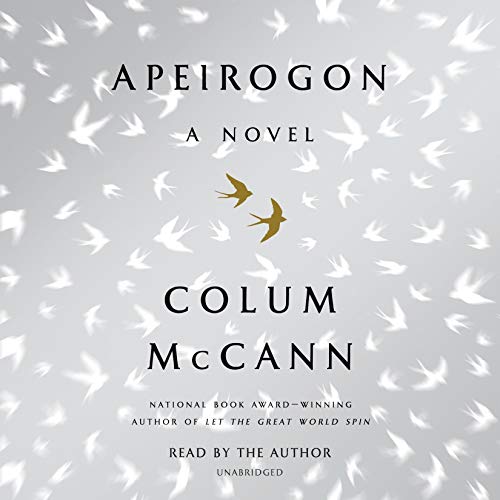
“Apeirogon” is a little too repetitive for this reviewer, but it is cleverly written and shows why political and military occupation is a fool’s leadership style.
Books of Interest Website: chetyarbrough.blog
“Apeirogon” (A Novel)
By: Colum McCann
Narrated by: Colum McCann
Colum McCann (Author, Irish writer living in New York.)
At first the idea of an Irish author writing a book about Israel seems incongruous. After the first few paragraphs, one realizes Colum McCann grasps a truth about religious conflict that is far better than most because of Ireland’s “Troubles” between the 1960s and 1990s.
“Apeirogon” is timely novel in regard to Israel’s response to the October 7 Hamas attack in Gaza. A little history helps one understand the complexity and terrible consequence of the slaughter of innocents.
An estimated 30,228 people have been killed in Gaza, 12,000 of which are thought to be Hamas combatants.
Gaza dates back to Egyptian times, populated by Canaanites who share an ancestral connection to Israelites. Gaza later became part of the Assyrian Empire in 730 BC. Assyrians intermixed with Canaanites, Israelites, Philistines and undoubtedly Palestinians. History shows historical connection between ancient Assyrians and Palestinians just as there were with Israelites. However, Israelites were forcibly relocated to Assyria from the Kingdom of Israel. Because the Israelites were descendants of the Canaanites, they predated Palestinian settlement in Gaza. Ethnic precedent and the want of land area is a part of what complicates the idea of a separate Palestinian state. Where is a homeland for a Palestinian state going to come from?
McCann chose a perfect title for his novel. An apeirogon is a geometric shape that has an infinite number of sides; just like the many sides of Israeli/Palestinian arguments for a homeland. Column McCann cleverly explores these arguments in his novel. He creates a series of Israeli/Palestinian incidents that show how each ethnic culture believes and acts in their perceived self-interests. Every chapter is titled as a series of numbers that begin with the number 1, jumps from 500 to the number 1001; then jumps back to 500 and descends to number 1 to end his story. Revelation comes in 1001. Occupation is an evil that cannot stand.
America’s civil war carries some parallels to what is happening in Israel and Gaza.
What is revelatory about McCann’s novel is its similarities to America’s civil war that ended the lives of too many Americans. Today’s conflict in Gaza is instigated by Hamas just as the Civil War was instigated by southern slave holders. America eventually forgave southern slave holders, but Black Americans continue to suffer from institutional racism. Can a one state solution as demanded by Israel’s conservatives serve Palestinians any better than white America has served Black Americans? America’s civil war ended in 1865-1866, some 158 years later, Black Americans are still discriminated against. Can Palestinians wait more than 158 years to have equal rights in an Israeli nation?
McCann’s novel repeats, too many times, the unfairness of Israel’s occupation of Gaza. Hamas has its rebellious leaders like America had John Brown who killed one Marine, wounded another, and killed six civilians. Neither Brown nor the Hamas leaders can justify their murders though both argue with righteous conviction. The United States could have split between abolitionist and non-abolitionist states, or they could move toward reconciliation. Obviously, the U.S. government prevailed with reconciliation. It seems imperative for Israeli and Palestinian leaders to take the same road as Abraham Lincoln. Hamas is a splinter group like that led by America’s John Brown. Their objective is as horribly misguided as Brown’s. Hamas’s hostage taking and murder of Jewish settlers is as reprehensible as Brown’s murders of a Marine and six civilians.
ISRAEL’S OCCUPATION OF PALESTINE
As difficult as it may be, a two-state solution seems unlikely. What American history suggests is as difficult as America has found reconciliation to be for white America’s murder and unjust treatment of Black Americans. That reconciliation remains a work in progress. However, only union offers a way toward peace. America is not there yet but it is making progress.
Two political factions, bound by both religion and ethnicity, must learn to live with each other for peace to be achieved.
There is no other land for Palestinians. Israel may have the older of the two cultures, and both Israelites and Palestinians have a much longer history of religious and ethnic difference than America. America is founded on religious freedom and equality, though not perfect in either principle. In contrast, religion is a primary determinant in Palestinian and Israeli cultures while equality seems a less prominent concern. Peace will not come without hardship, but a beginning is dependent on Israel’s abandonment of occupation. It will be one country’s leaders’ imperative to provide equal opportunity for all its citizens. The struggle will be long as is shown by America’s history but what realistic alternative is there for the Israeli and Palestinian people? What neighboring country is likely to give up their land to create a two state solution?
“Apeirogon” is a little too repetitive for this reviewer, but it is cleverly written and shows why political and military occupation is a fool’s leadership style. Israel, like white America, needs to do better in reconciling ethnic differences.