TRUTH IN FICTION

What is clear in “Waiting” is that misogyny is a multicultural reality.

Audio-book Review
 By Chet Yarbrough

Blog: awalkingdelight)
 Website: chetyarbrough.blog

Waiting

By: Ha Jin

Narrated by: Dick Hill

Ha Jin is the pen name of Jin Xuefei (born in 1956, a Chinese-American poet and novelist. Graduated from Brandeis University with an MA and PhD.)

Ha Jin’s book, “Waiting”, reminds one of our misogynistic world.

“Waiting” may be a true story or a mix of truth and fiction. The last chapter infers it is a part of Ha Jin’s life during Mao’s reign in the late 1960s as leader of China.

Ha Jin is the pen name of Jin Xuefei, a Chinese American poet and novelist. Jin’s father was a military officer in China. At 13, Jin joined the “People’s Liberation Army” during the Cultural Revolution in China. He left the army at nineteen to earn a bachelor’s degree in English at Heilongjiang University and a master’s degree in Anglo-American literature at another Chinese university. He went on to Brandies University to extend his education.

As is noted in the last chapter of “Waiting”, Ha Jin receives a scholarship to Brandeis University which is interestingly the author’s destination in America. He chooses to emigrate after Tiananmen Square’s Massacre in 1989. Of course, this is long after Mao’s cultural revolution between 1966 and the early 70s, i.e., the time of Ha Jin’s story in “Waiting” and the time of the author’s experience in the “People’s Liberation Army”.

The “People’s Liberation Army” was created as a teaching body for Mao Zedong Thought.

“Waiting” is about a 23-year-old nurse in the Peoples Liberation Army that falls in love with a doctor named Ha Jin, who is already married with a daughter who lives with her mother. The mother and daughter live in a village away from Ha Jin while he serves in Mao’s Cultural Revolution. Ha Jin may be viewed by a reader/listener as either a strong moral character or a weak “go along to get along” Maoist survivor.

Ha Jin either chooses or is compelled by the influence of the 23-year-old nurse to seek a divorce from his wife. Ha Jin takes 20 years of numerous appeals (the “Wait”) for the Chinese judicial system to finally approve the divorce.

During those 20 years, he and the nurse have no sexual relationship. In that time, the nurse is raped by a soldier who had befriended Ha Jin. The rape is unreported for the same reason many rapes are not reported today. The nurse does not believe the authorities will believe her story. The nurse tells Ha Jin of the rape. Ha Jin tries to convince her to tell the authorities. She refuses and Ha Jin reconciles himself to an understanding of her position and blames himself for what happened. As has been reported by other women who have been raped, the nurse feels guilt for the rape even though she said no and fought the rapist.

Ha Jin continues to pursue a divorce from his wife. His wife, despite Ha Jin’s numerous appeals for divorce, stands by her husband and cares for their daughter throughout the 20 years of their pending divorce. She finally agrees and Ha Jin is free to marry the nurse.

Ha Jin agrees to pay his ex-wife a monthly fee as a part of his obligation to her for their years of marriage. Ha Jin grows to love his daughter and wishes to help her succeed in life.

The nurse, at the time of marriage, is now in her early forties. She becomes pregnant and twin boys are born. The delivery is premature, but the boys are born healthy. Their fate is undisclosed. The relationship between the father and the nurse deteriorates for reasons that seem related to the hardship of the birth and a growing animosity of the nurse toward her husband.

The nurse suggests Ha Jin visit his ex-wife and daughter to see how they are doing. Ha Jin visits appears to realize he has made many mistakes in his life, not the least of which is the pursuit of a divorce and his failing marriage to the nurse.

The story ends with Ha Jin leaving China and becoming a professor at Brandies University in the United States. The listener is left to ponder which of these personalities, the husband, or the nurse and ex-wife are the strongest mental and physical humans in this battle of the sexes. At the very least, what is clear in “Waiting” is that misogyny is a multicultural reality.

ECONOMIC EVOLUTION

The demographics of life demand better care of the human population and the environment. Power, whether from individual wealth or ruling authority, needs to be refocused on service.

Audio-book Review
 By Chet Yarbrough

Blog: awalkingdelight)
 Website: chetyarbrough.blog

Braiding Sweetgrass: Indigenous Wisdom, Scientific Knowledge and the Teachings of Plants

By: Robin Wall Kimmerer

Narrated by: Robin Wall Kimmerer

Robin Wall Kimmerer (Author, Professor of Environmental and Forest Biology, PhD from the University of Wisconsin-Madison.)

Robin Wall Kimmerer’s “Braiding Sweetgrass” channels a movement for economic change around the world. Capitalism and socialism are evolving in similar ways to respond to the world’s ecological crises. Neither economic system is capable of dealing with the crises because of the governing weaknesses of their evolution. Capitalism, like socialism, is driven by human nature’s self-interests. With capitalism, unbridled self-interest views individual wealth as a measure of success. Socialism views unbridled power as a measure of success. Neither freedom of capitalism nor the power exercised in socialism will stop earths’ despoliation.

Kimmerer tries to convince listeners to recognize their self-interest is in caring for the ecology of earth and its environmental and human diversity.

This is not a new argument. Sir David Attenborough, Jonnie Hughes, Joseph Marshall III, Charles Mann, Barry Lopez and others make similar arguments. Even though they may be right, human’ interest in balancing ecology and diversity will only happen with governance that is neither purely capitalist nor purely socialist.

Kimmerer, as a scientist and descendent of the Potawatomi Indian nation, has dedicated her life to nurturing the earth with her education as a botanist. She reflects on her spiritual beliefs, historic values of her heritage, and her education to change the direction of earth’s despoilation. Attenborough and Hughes write about the importance of rewilding the world. Joseph Marshall III argues science offers the opportunity to rebalance the relationship between humanity and nature. Charles Mann recalls the history of William Vogt and Norman Borlaug with Vogt arguing for conservation while Borlaug argues for scientific research to deal with overpopulation and hunger. A more sanguine view is taken by Barry Lopez who simply catalogues and implies the demise of earth because of human habitation.

At times, Kimmerer’s solutions are too mystical and spiritual. Some of her tales will dispirit listeners. On the other hand, some of the mythology she writes about is entertaining, if not actionable.

The character of “Windigo” is a representation of the weakness of capitalism and its extremity that entails the growth of greed. Her tales of the creation of humanity reflect on the strengths and weaknesses of human nature.

What Kimmerer offers listener’s is contemplation, if not realistic solutions for earth’s despoilation.

What is wrong with capitalism and/or socialism that can be corrected to stop earth’s deterioration? It is in a middle way where money and power are not ends in themselves but tools for improvement. Service to all species of life is an objective that can only be achieved with money and power. A cultural shift is required to understand what can be done. There needs to be a shift from manufacturing and industrial growth to a service-based economy. With the advent of technology, particularly A.I. that shift is happening.

Homelessness, hunger, disease, natural disasters, pollution, mental dysfunction, failing public education, racial and religious discrimination are all solvable problems in the world. Money and power are the tools that can be used to solve those problems, but it requires the will of governments to manage those tools to focus on service to society, not manufacture of things that do not conserve the environment. This is evident in the too-long story written by Kimmerer. There is an element of irony in her book because that is what her Indian heritage practiced hundreds of years ago. Indian tribes had no need for money, but their Chiefs used their power to care for land and its diversity that served their people’s needs.

Money has become synonymous with power in both capitalist and socialist economies.

Even Indian societies in America have adopted that reality with the building of Casinos. What is missing is how that power is being used. Kimmerer explains power should be used to serve the earth’s rebirth and the needs of all life. The obvious point is that without earth’s rebirth, human society ends. The future of the world is dependent on service, not manufacturing. The demographics of life demand better care of the human population and the environment. That job can be fulfilled with a reorientation of the world’s economic rewards and punishments. Power, whether from individual wealth or ruling authority, needs to be refocused on service.

HEART RENDERING

Live as healthy a life as you can because death is a part of every life, and fulfillment is in one’s health.

Audio-book Review
 By Chet Yarbrough

Blog: awalkingdelight)
 Website: chetyarbrough.blog

Heart: A History

By: Sandeep Jauhar

Narrated by: Patrick Lawlor

Sandeep Jauhar (Author, Cardiovascular Physician, opinion writer for The New York Times.)

“Heart” is a history of cardiovascular medicine, personalized by Sandeep Jauhar, a cardiovascular physician. Jauhar’s history of cardiovascular medicine is not for squeamish listeners. It is a personalized account of advances in cardiovascular medicine by a physician whose personal life is interwoven with the ravishes of heart disease. Jauhar addresses the history of heart ailments, his family, his patients, and physician/inventors who advanced the treatment of heart disease.

Heart disease remains the top medical cause of death according to the Centers for Disease Control and Prevention (CDC) and other statistical agencies.

Jauhar notes the heart is a critical organ of the human body, but its essential function is as a pump for blood. It is a muscle. With its contraction, blood carries the nutrients and oxygen of life to organs of the body. When that pump malfunctions or stops, life is in jeopardy. Jauhar’s history of the “Heart” recounts advances in medical treatment for the heart’s repair and maintenance.

There are several reasons why Jauhar’s history is difficult for listeners to hear.

  1. Many of the most important advances in cardiology are dependent on animal experimentation before human application. To animal lovers, the thought that animals, whether they have awareness or not, are used to test pacemakers, heart transplants, and human drug treatments for heart ailment. Their earts are stopped and restarted. Animals die from tests being run by doctors and clinicians searching for answers and treatments for heart disease and other medical maladies. The human reason for this method of research poses the question–who would want sons, daughters, or parents treated without tests for the unknown consequences of experimental drug treatments and physical interventions?
  2. Descriptions of pain and anxiety of heart disease symptoms are explained with details that may scare listeners who have been diagnosed with heart disease.
  3. The balance between living and dying, pain and nothingness, is a constant presence in conversations between physician and patient. Stories of individual patient and mass casualty events are a part of Jauhar’s history of “Heart” disease and treatment.
  4. Jauhar views major advances for heart disease treatment are near their end in the 21st century.

Jauhar offers many stories showing how research and great inventions have mitigated the consequences of heart disease. The key to that observation is that inventions and interventions mitigate but do not cure the disease.

Jauhar explains an abnormal heartbeat called an arrhythmia led to the invention of an implanted mechanical electrical conduction system to automatically shock the heart when an arrhythmia occurs in a patient. The shock can be painful. However, without that shock, an arrhythmia stops the flow of blood to vital organs which may lead to death or disability. The idea of the shock creates anxiety in some patients that can induce further arrhythmia which repeats the shock. Jauhar reports one patient asks to have the implant removed because of its repeating shocks. Jauhar notes the patient dies soon after the removal of the implant.

Three-dimensional echocardiography has significantly improved diagnosis of cholesterol build-up in blood vessels that can be mitigated with drugs. Statins have been shown to reduce high cholesterol. As with any drug therapy, there are unintended consequences when something new is introduced to one’s blood stream. Muscle pain, digestive problems, and mental fuzziness can be side effects from statin treatment. As one grows older, the first two may be manageable but with age who wants to be fuzzy headed. Clarity of thought seems more and more a sadly missed luxury as we age.

Jauhar notes better diet and exercise, and no smoking are important benefits to those who have hereditary heart disease. Jauhar suggests anger management and quieting one’s thoughts through meditation offers benefits to those who suffer from heart disease. Don’t get mad and don’t try to get even because both aggravate the heart muscle.

Jauhar explains a number of inventions have led to short- and long-term treatments for cardiovascular diseases. From the example of stab wounds to congenital heart malfunction, the medical profession has invented machines that can take over the hearts’ function during surgery. More time for operation on the heart is provided to the surgeon with the use of the artificial heart pumping machines.

Christian Barnard (Resident surgeon at Grotte Schuur Hospital in Cape Town, S. Africa, Born 1922. Died 2001.)

Heart transplantation’s history is reviewed by Jauhar. The first heart transplantation was by Christiaan Barnard in 1967. The patient lived for 18 days after the surgery. The average life span for a heart transplant has risen to 10 years but the supply of healthy human hearts limits its potential. Jauhar notes the Jarvik-7, named after its inventor, is the first mechanical heart pump but its refinement has failed to repeat the success of human heart transplants. Its practical use has been limited to short term use for time to find donated hearts and extend patients’ lives during surgery.

Jauhar tells of his experience in New York on 9/11. It is a horrific story told by many writers but not with any more stomach-turning clarity than that which a participating doctor imparts.

Jauhar ends his book with the loss of his mother who may have died from a heart attack. He suggests there are other conditions that may have led to her death, but his point seems to be–live as healthy a life as you can because death is a part of every life, and fulfillment is in one’s health.

EGYPT AWAKENING

The truth of Wilkinson’s history is that ancient Egypt was one of the great nations of the world that may once again rise to prominence.

Audio-book Review
 By Chet Yarbrough

Blog: awalkingdelight)
 Website: chetyarbrough.blog

A World Beneath the Sands: The Golden Age of Egyptology

By: Toby Wilkinson

Narrated by: Graeme Malcolm

Toby Wilkinson (English Egyptologist and academic, former Fellow at Christ’s College Cambridge.)

Toby Wilkinson writes an enlightening introduction to ancient Egypt and its meaning for today’s Egyptians. The pre-modern age of Egypt reaches back to 3,200 or 3150 BCE with only southern Africa, China, and Mesopotamia appearing to have older artifacts discovered by archeologists. Long before Greek and Roman civilizations spread their beliefs around the Mediterranean and Africa, Egypt created dynasties that ruled large portions of the middle east.

Egypt’s ancient stories had been in plain sight for over 4000 years. Wilkinson notes it is not until the 19th century that Egyptian hieroglyphics are recognized as a written language. That language comes from a combination of pictures, symbols, and signs that represent words and sounds that tell the story of an estimated 170 pharaohs.

Hieroglyphics were initially presumed to be pictorial representations rather than words that tell the story of ancient Egypt. (A little independent research shows written language’ remnants have been found for older civilizations in Africa, China, and Mesopotamia. One wonders what cultural stories have been lost in their histories. Some ancient written documents are found in China but less in Africa and Mesopotamia.)

Sir Flinders Petrie uncovers the Merneptah Stele in 1896 in Thebes. The Stele is a 10-foot slab, presently exhibited in a Berlin, Germany museum. It reveals the name Merneptah, a pharaoh who reigned from 1218 to 1203 BCE.

Narmer is the most ancient Pharoh identified in a hieroglyph. His reign is estimated to have been between 3273 and 2987 BCE. These are the language hieroglyphs identifying Narmer as the first known Pharoh.

Wilkinson’s history reinforces the idea of written language’s importance to Arab culture. Of course, the most renown hieroglyphic message is on the Rosetta Stone which is an administrative decree written in 196 BC on behalf of King Ptolemy V. As is true of many ancient Egyptian artifacts, the stone is not in Egypt but in London which becomes a growing objection by modern Egyptians.

Pierre Bouchard, one of Bonaparte’s soldiers, found the Rosetta Stone at a fort near Rosetta overlooking the Mediterranean. When Napoleon is defeated in 1801, the terms of the Treaty of Alexandria gave the British the right to take the Rossetta Stone to England. (Presently shown in London at the Victoria and Albert Museum.)

Thomas Young (1773-1829, British polymath and scientist who researched the physiology of light and contributed to later scientists, like Einstein, on the principle of light as a wave.)

The value of the stone is in its opening to a translation of ancient Egyptian language and history. Dr. Thomas Young, a storied English polymath, examines the stone to analyze its meaning. Though Young did not recognize it as a language, his initial research confirmed earlier research by a French Egyptologist named Jean-Francois Champollion. Later, Champollion discovered hieroglyphics are actually an Egyptian language drawn from different written languages. With that realization, a history of Egypt becomes open to the world. The names of former Pharaohs, some of their beliefs, acts, and dates of rule become known.

Jacques Joseph Champollion-Figeac (1790-1832, died at the age of 41, French philologist.)

Around 1205 BCE , the word “Israel” is shown in Egyptian hieroglyphics. This is during the reign of Pharaoh Merneptah of Egypt’s 19th dynasty, the successor to Ramses II. The inference is that Israel was a political entity far back in the ancient history of the middle east.

John Gardner Wilkinson, English traveler, writer and pioneer Egyptologist from 1797-1875 “Manners and Customs of the Ancient Egyptians” published in 1837. He was knighted in 1839 as the first distinguished British Egyptologist. (Interestingly, though the same last name as the author, they are not believed to be related.)

An interesting point noted by Wilkinson is that Napoleon Bonaparte’s invasion in 1798 is a critical turning point in research and knowledge of ancient Egypt. Bonaparte’s purported reason for Egypt’s invasion is to protect French trade interests and to undermine Britain’s access to India and the East Indies.

Having traveled to Egypt in 2019, we visited the fort in which the Rosetta Stone was found. The fort is on the Mediterranean in the city of Rashid, sometimes referred to as Rosetta, or el-Rashid, a port city where the Nile flows into the Mediterranean.

Champollion becomes the curator of the Egyptian collection at the Louvre in 1826 and returns to Egypt in 1828 on an archeological expedition to become the chair of Egyptian antiquities at the College of France in 1831. Champollion writes a dictionary for hieroglyphic translation and a “Primer of the Hieroglyphic System of the Ancient Egyptians”.

The Louvre today with its pyramid addition at its entrance is a reminder of France’s role in revealing ancient Egypt’s history.

After Young and Champollion’s great discoveries about hieroglyphs, the reign of Muhammed Ali becomes a particular interest of Wilkinson’s history of Egypt between 1805 and 1848. The relationship between France and Egypt during Ali’s reign, with the help of hieroglyphs’ research of Champollion, much of Egypt’s history is discovered.

Toby Wilkinson notes Muhammad Ali (1769-1849) was an Ottoman Turkish military leader who became the pasha and viceroy of Egypt in 1805 with world recognition in 1842. 

Pasha Ali modernizes Egypt with advertent, as well as inadvertent, help of France and England. In 1827, Ali sends two giraffes as gifts to France. In 1830, France invades Algeria which Ali views as a threat to his rule. Ali responds by building up Egypt’s military. Ali wages war against the Ottoman Empire (from which he came) to capture Constantinople in 1840. Europe intervenes and brokers a peace in 1842 by making Ali and his descendants recognized hereditary rulers of Egypt and Sudan. Ali uses his newly recognized independence by France and England to modernize Egypt.

Ali is considered the founder of modern Egypt. He and his heirs rule Egypt until 1952. Ali introduced many reforms to modernize Egypt’s economy, society, and military. He added to Egypt’s territory with the invasion of Syria, Arabia, Sudan and Anatolia but his rise to power is halted by a coalition of Britain, France, Russia, and Austria between 1840 and ’41. Ali had become a threat to the balance of power in Europe. The coalition offers heredity rule of Egypt and Sudan to Ali to cease his aggressive action against what was then part of the Ottoman Empire. Ali rules until his death in 1849 when his grandson, Abbas I, becomes ruler of Egypt and Sudan.

Abas I, ruled from 1848-1854. He undid much of what Muhammed Ali had done to modernize Egypt. Some historians suggest Abas plundered Egypt and Sudan and allowed the infrastructure of Egypt to decay.

Before Ali’s death, he manages to create a new class of Egyptians by abolishing a feudal land system with a redistribution of land to former peasants. Cotton and sugarcane become major Egyptian exports. Ali reforms the military and creates a modern army and navy along European lines. He encourages industrialization with education of the young in a secular school system.

Jean-Francois Champollion becomes world famous for deciphering Egyptian hieroglyphs. He finds hieroglyphics are an amalgamated pictorial and Coptic language that reveals the history and rulers of ancient Egypt. Thomas Young, an English polymath contributes to the translation of hieroglyphics but concedes its fundamental revelations to Champollion. Wilkinson’s fundamental point is that Napoleon opens the door to Egyptology, the scientific study of ancient Egypt.

The French philologist Jean-Francois Champollion accompanies Napoleon in the 1798 invasion of Egypt.

The irony of Wilkinson’s history is that Egyptology begins with French, English, German, and later–American interests. Egyptians just wished for a better life than what they were experiencing in their day-to-day existence before the 1920s. However, Atkinson notes the discovery of Tutankhamen’s tomb creates nationalist pride that remains a driving force in modern Egypt. In the early years, after Napoleone’s invasion, the citizens of Egypt were focused on making a living in a hard country with little interest or realization of their ancient culture and its importance in the history of civilization.

There are many names of French, English, German, and American researchers introduced by Atkinson. Some of the most important are (left to right) Jean-Francois Champollion, Thomas Young, Sir Flinders Petrie, Karl Richard Lepsius, and Howard Carter.

The legacy of Egypt’s ancient civilization awakened a nationalist fervor among Egyptians that expelled French, English, German, and American Egyptologists that contributed knowledge of Egypt’s ancient history but confiscated many ancient Egyptian artifacts. Wilkinson argues Tutankhamen’s discovery triggered change in Egyptian nationalism. As a result of Carter’s surprising 1922 discovery of Tutankhamen’s burial site in the Valley of the Kings, Tutankhamen became a rallying cry for Egyptian independence and recognition. Whether it was the trigger for Egyptian pride in their heritage or not is somewhat irrelevant. The truth of Wilkinson’s history is that ancient Egypt was one of the great nations of the world that may once again rise to prominence.

AMERICAN DEMOCRACY

Audio-book Review
 By Chet Yarbrough

Blog: awalkingdelight)
 Website: chetyarbrough.blog

Detroit Resurrected: To Bankruptcy and Back

By: Nathan Bomey

Narrated by: Jonathan Yen

Nathan Bomey (Author, reporter at Axios, former writer for USA Today and the Detroit Free Press.)

Why is Detroit’s bankruptcy relevant to any American who does not live or plan to live in Detroit? The answer is–Nathan Bomey’s history of Detroit’s “…Bankruptcy…” defines American Democracy.

The story of Detroit’s bankruptcy exemplifies American Democracy’s strengths and weaknesses.

American Democracy’s strength is shown by Detroit’s recovery from bankruptcy in less than a year and a half. On the one hand, Democracy’s weakness is shown by the arrest of its corrupt Detroit Mayor, Kwame Kilpatrick, who is convicted for racketeering and theft that results in a 28-year prison sentence. (Compounding that weakness is the oft indicted and vilified American President, Donald Trump, who commutes Kilpatrick’s sentence after 7 years of his 28-year sentence.)

Kwame Kilpatrick (Mayor of Detroit 2002-2008.)

Detroit’s debt reaches back to Coleman Young’s tenure as Mayor of Detroit; not because of theft or malfeasance but because of the desire of the mayor to make Detroit better. Coleman is characterized as a polarizing figure whose combativeness endeared him to blacks but riled some white Detroit residents. Some suggest Young is unfairly judged by his detractors.

Coleman Young (Mayor of Detroit 1974-1993, Born in 1918, Died in 1997 at the age of 79.)

Young was the first African American to lead a major American city (the fifth largest city in America at that time). He completed a number of public works like the Renaissance Center, the Detroit People Mover, and the Joe Louis Arena.

The Americans pictured below come from many different walks of life, with Republicans, Democrats, Independents, racial, religious, and ethnic differences. They are charged with a responsibility to heal broken promises between American citizens and their local government. The following pictures are only a partial list of “movers and shakers” showing the diversity of Americans who martialed settlement of an $18 billion dollar debt to achieve the goal of getting Detroit out of bankruptcy.

The city of Detroit filed for Chapter 9 bankruptcy on July 18, 2013, with a city approved plan on November 7, 2014. That plan paves the way for its exit from bankruptcy. Chapter 9 is a form of bankruptcy that only applies to American local governments because of their continuing responsibility for public service while declaring bankruptcy. It is similar to a Chapter 11 bankruptcy, but a local government’s reorganization requires a state-appointed oversight board to review actions by the reorganized government body. The difference between Chapter 11 and Chapter 9 is that Chapter 11 eliminates an enterprise while Chapter 9 leaves a government jurisdiction in place because of its continuing public responsibilities (the provision for the health, safety, and welfare of its citizens).

Bomey’s history infers no one could have done more than the middle-aged attorney, Kevin Orr, in his management of the Detroit bankruptcy. Orr is a successful bankruptcy attorney in the Jones Day legal firm who agrees to leave the firm to manage Detroit’s fiscal crises through what promises to be a complicated and difficult bankruptcy. Orr’s ability to gain support of the governor of Michigan, Rick Snyder is the beginning of a partnership to save the motor city. These two men set the table for a “…Resurrected” Detroit.

DETROIT

Chapter 9 is a complicated process because it involves so many assets and liabilities that have to be reconciled while continuing care for local government’s citizens. This is the job taken by Kevin Orr. In addition to a city’s physical assets and their maintenance, Orr is the responsible managing agent for Detroit’s underfunded and poorly staffed services. Both working and retired employees of Detroit expect to be paid for present and past work for the city. The money needed to carry out that responsibility requires everyone to take a financial “haircut”. The magnitude of responsibilities in a city of 639,000 residents and thousands of pension-dependent former employees seems impossible. All of Detroit’s citizens and pensioners are at the mercy of a judicial system and Orr’s administration, over which they have no control and limited influence. Bomey explains how Orr’s impossible task is systematically accomplished with the help of Americans coming from nearly every ethnic, religious, and racial category in America.

Settlement of Detroit’s bankruptcy is approved by U.S. Bankruptcy judge Steve W. Rhodes on November 12, 2014.

  • The city would receive $194.8 million from the state of Michigan over a period of 10 years to help fund the city’s pension system. (a bail out approved by the Governor, Rick Snyder)
  • The city would issue $1.28 billion in bonds to pay off its creditors. (Pennies on the dollar.)
  • The city would transfer control of its water and sewer department to a regional authority .
  • The city would create a nine-member financial review commission to oversee its finances for at least 13 years.
  • The Detroit Art Collection would remain intact without jeopardizing an estimated value of over a billion dollars.

The settlement is no bed of roses for past and present Detroit employees or for investors and banks that financed Detroit’s former mishandling of government business. Pensions were cut by 4.5% with eliminated future cost-of-living adjustments and steep reductions in medical coverage for citizens who are the least likely to be able to afford an income reduction. Both UBS and Bank of America had to right off much of their loans to Detroit. Bond holders had to settle for pennies on the dollar.

Bomey’s history of the Detroit bankruptcy shows human freedom, within the framework of rule-of-law, releases the great strength of human diversity and creativity. Without freedom, diversity, and creativity Bomey shows how and why governments fail, i.e., either sooner or later. That is the lesson of Bomey’s history of “Detroit Resurrected”.

NPR

Napoli does a good job explaining the history of what many consider an American national treasure. Of course, others argue NPR is no treasure, but a bastion of liberalism designed to undermine American conservatism.

Audio-book Review
 By Chet Yarbrough

Blog: awalkingdelight)
 Website: chetyarbrough.blog

Susan, Linda Nina & Cokie

By: Lisa Napoli

Narrated by: Lisa Napoli

Lisa Napoli (American Author, Journalist, Broadcaster & Speaker.)

Lisa Napoli introduces four women, Susan Stamberg, Linda Wertheimer, Nina Totenberg and Cokie Roberts with “Susan, Linda Nina & Cokie”. They are known as the “founding mothers of National Public Radio”. Napoli shows NPR did not succeed solely because of these four women but their contribution to its ultimate success appears unimpeachable.

Napoli shows how these four women reinforce the truth and necessity of sexual equality. Equal rights have not been achieved in America (or anywhere in the world), but its struggle for women is exemplified by Napoli’s story.

All four women represent a movement for equal rights in America.

N.P.R. is created by the Public Broadcasting Act of 1967. The first broadcast to garner a national reputation is “All Things Considered”. It is co-hosted by Robert Conley, an American newspaper, television and radio reporter. The first program director of “All Things Considered” is Linda Wertheimer.

Linda Wertheimer (American radio journalist and Wellesley College graduate, directed the first “All Things Considered” N.P.R. program.)

The co-host of that program is Susan Stamberg.

Susan Stamberg (American Radio Journalist on N.P.R. who co-hosted “All Things Considered” with Robert Conley.)

The two most recognizable names in Napoli’s history of NPR are Nina Totenberg and Cokie Roberts because of their widely distributed commentary in television and newsprint. Totenberg’s supreme court news and Roberts political commentary gave them greater visibility and recognition by the public.

The story of these four women shows how important equal rights are in the world. One may argue something is lost while something is gained by families raised by working mothers. On the one hand, it seems disingenuous for someone from a rich family like Cokie Roberts to be pro-life (noted in Napoli’s book) because they have the wealth to pay for care of their children. On the other hand, as a former latch-key kid, one realizes every life is a matter of luck and circumstance.

The story of these four women infers every person finds their way and should live in a world where they have an equal right to choose their path.

There is no logical reason to believe women, or any race or ethnicity should not have equal rights. Some people are born in wealth, some in poverty, and some of one race, religion, or ethnicity. In a perfect world, there would be equal opportunity for every human being. Napoli shows America is not perfect, but it strives to improve. That becomes clear in Napoli’s last chapters that show how NPR nearly goes bankrupt because of financial mismanagement.

As noted earlier, women are not the only reason for NPR’s growth and success. As with all corporations, NPR has a management group that guides small corporations interested in becoming large corporations. The programing and growth success of NPR is initiated by its first President, Donald Quayle. After Quayle, Frank Mankiewicz becomes President (1973-1977). Rapid expansion of NPR outstrips prudent financial management of NPR’s ballooning operational costs. What is initially recognized as a 1.5-million-dollar deficit balloons to 6 million dollars. Mankiewicz is a political science and journalism graduate who had a great sense of promotion but a poor sense of cost control. Napoli notes Hunter Thompson, in “Fear and Loathing on the Campaign Trail ’72” described Mankiewicz as a “rumpled little man who looked like a used-car salesman”.

Frank Mankiewicz, political and media insider, died Oct.23, 2014 at 90 years of age.

NPR is on the edge of bankruptcy when Douglas Bennet Jr. takes over the presidency, beginning in 1983 and ending in 1993.

Douglas J. Bennett Jr., President of NPR. Restored NPR’s financial stability and directed its further growth. Died June 10,2018, at the age of 79.

By 1983, NPR, through a donation system and prudent financial management, returns to solvency. Through a combination of dues and fees paid by member stations, underwriting from corporate sponsors, and annual grants, NPR survives.

The elephant in the room is reserved for an epilogue in Napoli’s history of NPR. Napoli explains Nina Totenberg’s investigation of Clarence Thomas as he defends himself from his boorish behavior toward Anita Hill. Every rational human being recognizes Hill is sexually harassed by Thomas, but the tenor of those times was to ignore rather than vilify misogyny. With Biden as the chair of the committee to approve his nomination, Thomas becomes a Supreme Court justice. Totenberg and Thomas become famous, and Hill becomes a footnote in history.

Anita Hill as she appeared in the Clarence Thomas hearings for appointment to the Supreme Court in October 1991.

Napoli does a good job explaining the history of what many consider an American national treasure. Of course, others argue NPR is no treasure, but a bastion of liberalism designed to undermine American conservatism.

CARE ABOUT ME

Leadership that fails to understand and care for all citizens within its borders may last for some years but will ultimately fail. That is the point that is sorely missing in an earlier review of Ajami’s insightful history of the Middle East.

Audio-book Review
 By Chet Yarbrough

Blog: awalkingdelight)
 Website: chetyarbrough.blog

The Dream Palace of the Arabs

By: Fouad Ajami

Narrated by: Qarie Marshall

Fouad Ajami (Author, Lebanese American, professor and writer on Middle Eastern issues.

Fouad Ajami’s book should be listened to more than once, particularly by those who have little understanding of Middle East culture. Earlier, “The Dream Palace of the Arabs” is unsatisfactorily reviewed.

After re-listening to Ajami’s book, a major point missed in the first review is Ajami’s poignant and tragic examples of Arab despair in the Middle East.

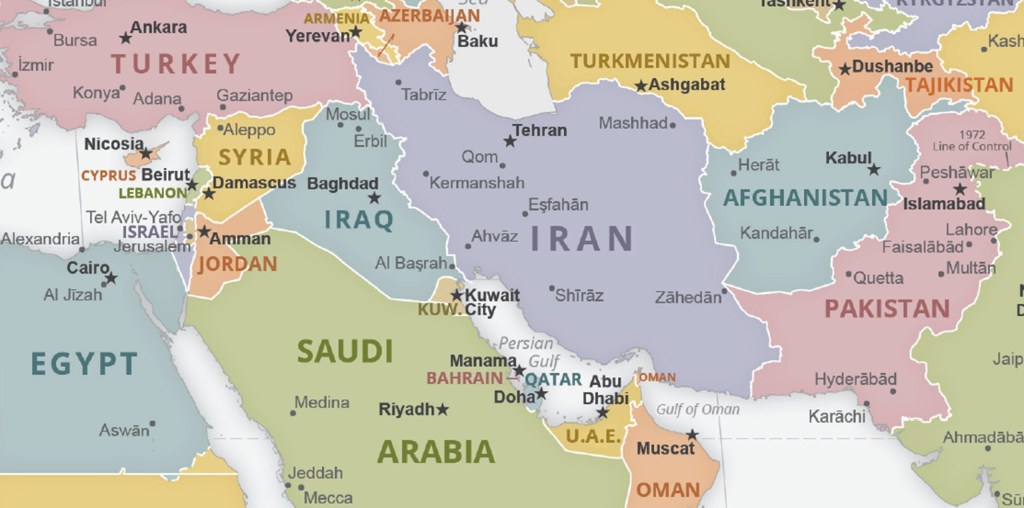
That despair is not about freedom but about care for traditions of the Middle East’s ancient and diverse cultures. The monumental discovery of oil roiled religious and ethnic differences in the Middle East. Foreign and local self-interests interfered with the peripatetic freedom of Arab cultures. Adding to that loss of freedom, the discovery of oil changed the relationship between rulers and the ruled.

Just as America is made of many races, ethnicities, and religions, it is the responsibility of government leaders to care for all its people.

In the 21st century, the Middle East has established borders even though they may not be of their citizens own choosing. The responsibility of leaders in any country is to care for their citizens. Government leaders that have recognized borders are responsible for the care of everyone within their country. When leaders fail to care about all people within their borders, they risk civil war. America has, at times, failed to care for all its citizens in its young historical life. However, those failures have not, at least not yet, led to national dissolution.

Lebanon’s Golden Age 1950-1970

Lebanon became one of the first 21st century Middle Eastern countries to realize a diverse society can be peaceful and prosperous with leaders that know how to care for all citizens within its borders. It is known as Lebanon’s “Golden Age” which lasted from the 1950s to the mid 1970s when a civil war began. When Lebanon’s leaders lost sight of the necessity of care for everyone, including Maronite Christians, Suni and Shia Muslims, and Druze within their borders, peace and prosperity declined. The same loss of care for others by leadership is true in all countries of the world made of different races, cultures, and religions.

Ajami notes Sadat is assassinated because he was seduced by American influence. That influence displaced Sadat’s care for all Egyptian citizens.

This is only partly America’s fault. Ultimately, it is a respective nations leader’s decision on how to care for their own citizens. Ajami notes Saddam Husein is abandoned by his army when America invaded Iraq because he did not care for all his people. It is the same failure that may occur in Syria and Iran if their leaders fail to learn the importance of caring about all of their citizens, not just those who believe what their leaders’ believe.

Nizar Qabbani (Syrian diplomat, poet, writer and publisher, became Syria’s National Poet.)

What makes the principle of “care about me” is clearly implied in Nizar Qabbani’s poem quoted in Adami’s book.

“Children of the Stones”

They stunned the world

With only stones in their hands.

They lit the lanterns, and came like good omens

They resisted, exploded and were martyred

And we remained ..polar bears

Heavily armored against heat (feelings)

They fought for us until they were killed

And we sat in or cafes like spitting oysters

One of us looking for business

One.. a new million

One.. a fourth wife

And breasts polished by civilization

One looking in London for a lofty palace

One working as

One seeking vengeance in bars

One, looking for a throne, an army a position of authority

Alas, O generation of treacheries

O Generation of deals

O generation of rubbish

Abraham Lincoln saved America just as great leaders in the Middle East may or may not save their countries.

Leadership that fails to understand and care for all citizens within its borders may last for some years but will ultimately fail. That is the point that is sorely missing in an earlier review of Ajami’s insightful history of the Middle East.

LESSONS OF HISTORY

The question of whether the free world should support Ukraine in every way possible can be answered. The answer is yes because Putin like Hitler will not stop.

Audio-book Review
 By Chet Yarbrough

Blog: awalkingdelight)
 Website: chetyarbrough.blog

A History of France

By: John Julius Norwich

Narrated by: John Julius Norwich

John Julius Norwich (Author, English historian, travel writer, television personality, Royal Navy veteran with degrees in French and Russian from Oxford.)

John Norwich’s “A History of France” is an intimidating summary of a country that makes one understand how young and inexperienced America is in the history of nations.

France is recognized as a nation in 987 with its first King, Hugh Capet, born in 939-died in 996 at the age of 56 or 57. (King of the Franks from 987-996.)

The actual title King of France is not used until the crowning of Phillip II in 1190 (a descendant of Capet) who died in 1223 at the age of 57. Norwich’s “…History…” recounts the many Kings of France since Phillip II.

The longest serving King is Louis XIV (the Sun King) who ruled from 1643 to 1715 (a total of 72 years).

King Louis XIV moved the center of French government to the Palace of Versailles in 1682. He is the third of five Bourbon Kings of France. King Louis XIV is noted to have expanded France’s borders while centralizing power in France. Norwich notes Louis XIV’s wife, Maria Theresa of Austria, plays a significant role in France’s history. Theresa’s three major accomplishments are to create education for serfs, consolidate the French government’s financial system, and create a unified judicial code that became a foundation for Central European Laws.

The last Bourbon King of France is Louis XVI and his queen, Marie Antoinette, who are deposed and beheaded after the 1789 revolution.

The brutality of the revolution is exemplified by factions called Royalists, Jacobins, and Montagnards. The Royalists supported monarchy and the Catholic Church. The Jacobins founded the 1789 Nation Constituent Assembly that wished to moderate authoritarianism, offer equal rights to French citizens with government intervention to insure social change. The Montagnards campaigned for the needs of the working and poorer classes of French society.

The 1789 revolution eventually led to the rise of Napoleon Bonaparte who through ascension and a series of military conquests reestablishes a French monarchy under his rule.

Charles-Louis Napoleon Bonaparte becomes the first president of France which is recognized as a Republic. However, though France is a Republic between 1848 and 1852, Charles reestablishes the monarchy in 1852 until he is deposed in absentia in 1870.

A new faction is formed called the Bonapartists. This faction roiled France throughout the 19th and into the early 20th century.

As the nephew of Napoleon, King Charles oversaw the modernization of the French economy. However, reestablishing the monarchy and his failure in the Franco/Prussian war led to a famine that permanently turned the French against monarchal rule.

Seven French revolutions finally ends France’s monarchy. However, each revolution precipitated chaos, and declarations of war from other monarchies. The final death of French monarchy did not occur until liberation after WWII.

Norwich explains there were actually seven revolutions before France becomes a permanent republic.

The first is the 1789 revolution which is most widely known by Americans. The irony of that revolution’s importance is France’s considerable support of America’s revolution in 1776. The newly established French government did not have a leadership group that could create a republic that could manage the monumental inequities of its long-established French culture. The repression of the poor created by centuries of royal leadership entailed too much animosity to avoid the Reign of Terror that caused the execution of thousands of French citizens. As many as 40,000 people were said to have been killed. It would take six more revolutions to create the lasting Republic of France.

  • The French Revolution (1789-1799)
  • The Napoleonic Era (1799-1815)
  • The July Revolution (1830), a 3 day uprising that overthrew King Charles X because he tried to restore absolutism and censor the press.
  • The February Revolution (1848), based triggered by economic hardship, discontent, and social unrest.
  • The Second Empire (1852-1870), a coup against Napoleon III despite the improvements made to France, he poorly manages and loses the Franco-Prussian War of 1870.
  • The Third Republic (1870-1940) did establish a parliamentary democracy but is tarnished by antisemitism, and WWI that killed millions of French soldiers.
  • The Vichy Regime that collaborated with Nazi Germany led to the 7th and final revolution against monarchy and for a Republic.

The collaboration of France’s Vichy Regime and Chamberlain’s appeasement agreement with Hitler’s Germany are lessons for today’s handling of Russia and the invasion of Ukraine.

The world did not fully respond to Hitler with force when Germany invaded Poland. Hitler, like Stalin and Putin, presumed the world would not respond to Germany’s taking of a sovereign country.

Whether Putin directs the murder of any opposition to his rule is not a question that can be answered but the imprisonment of Navalny and the death of Yevgeny Prigozhin is reminiscent of Hitler’s lies to the world.

The question of whether the free world should support Ukraine in every way possible can be answered. The answer is yes because Putin like Hitler will not stop.

WAR IS HELL

War is hell by any definition, but it gave philosophers focus for understanding the meaning of life. Sadly, that understanding did not change the future course of history.

Audio-book Review
 By Chet Yarbrough

Blog: awalkingdelight
 Website: chetyarbrough.blog

Time of the Magicians: Wittgenstein, Benjamin, Cassirer, Heidegger, and the Decade that Reinvented Philosophy

By: Wolfram Eilenberger, Shaun Whiteside

Narrated by: undisclosed.

Wolfram Eilenberger (German Author, award winning writer and philosopher.)

“Time of the Magicians” is particularly interesting because it tells the stories of four philosophers after WWI when Hitler is beginning his rise to power. Philosophers will undoubtably get more out of this book, but life experiences of these four men make it more interesting to the general public. The primary focus of “Time of the Magicians” is on Ludwig Wittgenstein and Martin Heidegger.

Ludwig Wittgenstein (1889-1951, Austrian-British philosopher of logic, mathematics, mind, and language, died at age 62.)

Martin Heidegger (1889-1976, German philosopher of phenomenology, existentialism, and hermeneutics, died at age 86)

Three of the four men who live in “Time of the Magicians” have a Jewish background. The two most famous philosophers are Ludwig Wittgenstein and Martin Heidegger. Heidegger supports Hitler, chooses to join the Nazi Party, and refuses to write or say anything about the Holocaust after the war. The other three philosophers leave their home countries before Hitler becomes Chancellor. Wittgenstein, as a world traveler, becomes a student of Bertrand Russell in 1911 at Cambridge. Walter Benjamin and Ernst Cassirer travel a good deal while choosing to leave Germany in 1933.

One of many interesting points in “Time of the Magicians” is that Hannah Arendt was a student of Martin Heidegger’s at the University of Marburg in Germany.

Despite Heidegger’s antisemitism, at 35 he has an affair with the 18-year-old Arendt who came from a Jewish/Catholic household. This is in the early 1920s, before Hitler’s rise, but it reflects the intellectual compartmentalization of life and human weakness that exists when it comes to sex. (At the time of the affair, Heidegger was married to Elfride Petri in 1917 and remained married until his death in 1976.)

Aside from sexual transgressions noted in “Time of the Magicians”, the biographies of these four men are about their philosophical beliefs. WWI like all wars affects people in different ways. Some, like Wittgenstein, and Cassirer join the military and fight for their countries, while others like Benjamin look for ways to avoid conscription. Heidegger didn’t join the military but served the Nazis as an academic.

Walter Benjamin (1892-1940, German Jewish essayist, philosopher, and cultural critic, commits suicide at age 48)

Joining or avoiding military service may come from good and bad motives. Wittgenstein and Cassirer fought for the Central Powers for reasons undisclosed. “Time of the Magicians” suggests Wittgenstein fought valiantly for the Central Powers and became a P.O.W. in Italy. While in prison, Wittgenstein began writing his most famous book on philosophy, “Tractatus Logico-Philosophicus”. However, the Central Powers lost to the Allied Powers (the U.K., France, and Russia) in WWI.

Heidegger supported Hitler through the end of World War II. One might conclude joining a war is a bad idea in any circumstance. As some authors have noted, there are no “good” wars. In any case, wars had a great deal to do with the philosophes of these four men.

Ernst Alfred Cassierer (1874-1945, German Jewish philosopher of phenomenology, and culture, died at age 70.)

The experience of war undoubtedly affected all four philosopher’s beliefs. Wittgenstein came from a wealthy industrial family. Wittgenstein is heir to a multi-million-dollar industrial empire. After the war, he chooses to give any fortune he might inherit to his mother, sisters, and brothers. He refuses his wealth and becomes employed in a small town in Austria where he teaches grade school. Wittgenstein refuses any financial help from his family or fellow philosophers. He is mired in poverty that remains his condition until his return to Cambridge.

Wittgenstein is characterized as a martinet but committed teacher of his young students.

His poverty and isolation seem surreal considering his education and family background. He actually has an engineering degree from the Technical University of Berlin which he received in 1908. His commitment to his young students forms a background to his belief in science with the dissection of animals and his focus on human language.

Today, we take dictionaries for granted, but they were nearly non-existent in Germany after WWI. Wittgenstein begins collecting words used by his students in class to create a dictionary that he intends to have published for schools in his area. The idea is nixed by the school administration.

Wittgenstein leaves the grade school he is teaching after an incident that involves a student who feints after being struck by Wittgenstein. This martial treatment of students is not particularly uncommon, but the parent of the student is a wealthy matron who complains to the school. The school does not discharge Wittgenstein, but he chooses to leave in the middle of the night and abandon his teaching career.

Wittgenstein’s “Tractatus…” is published in 1921 without compensation to its author.

The purpose of the book is to explain the relationship between language and reality. At the same time, it is an attempt to show the limits of science. It is characterized as a difficult book to understand but becomes highly regarded at Cambridge University in England and becomes the basis for Wittgenstein’s return to England where he is called the “God” of philosophy. This is an interesting appellation but equally interesting is the appellation given to Heidegger as the “King” of philosophy. Obviously, both men were highly regarded at Cambridge in the 1920s, but in quite different ways.

THE HELL OF THE UKRAINE WAR 2022-2023

“Time of the Magians” is a fascinating glimpse into the lives of storied philosophers and the impact on their understanding of life which appears based on their experience in the “Great War”. War is hell by any definition, but it gave philosophers focus for understanding the meaning of life. Sadly, that understanding did not change the future course of history.

TRANQUILITY/ANXIETY

Dead authors may give understanding of life that offers a “…Tranquil Mind” but change in belief by renowned living authors explain why some feel they live in an age of anxiety.

Audio-book Review
 By Chet Yarbrough

Blog: awalkingdelight)
 Website: chetyarbrough.blog

Breaking Bread with the Dead (A Reader’s Guide to a Tranquil Mind.)

By: Alan Jacobs

Narrated by: P.J. Ochlan

Alan Jacobs (Author, distinguished professor of the humanities at Baylor University, considered a Christian conservative by the media.)

Alan Jacobs offers an example of why book’ reader/listeners are “Breaking Bread with the Dead”. A personal reason for reading/listening to books is to acquire understanding of an author’s opinion. Of course, perceptions may be incorrect, but a book writer’s intended meaning, at the very least, makes a reader/listener think. Jacobs gives many examples of what past authors made him think. He explains how and why dead writers are a “…Guide to a Tranquil Mind”.

In a short book, Jacobs notes knowledge of the past gives context and perspective to the present.

Dead authors add the dimension of a past that is either very like the present or very different. When a dead author’s beliefs are more like the present, it makes one think there may be something universal about their belief. At the least, a dead author’s beliefs help one understand the difference between the past and the present. Both circumstances offer what Jacobs suggests are a “…Guide to a Tranquil Mind”. Belief either remains the same or modern life makes past beliefs unique to their time.

Renowned dead authors, or for that matter, insightful living authors make one realize how much they do not know.

Dead authors may give understanding of life that offers a “…Tranquil Mind” but change in belief by renowned living authors explain why some feel they live in an age of anxiety. In either case, it pays to seek understanding from both dead and living writers.