A CLASSIC’S TRUTH

Audio-book Review
By Chet Yarbrough

(Blog:awalkingdelight)
Website: chetyarbrough.blog

The Road to Serfdom

By Friedrich A. Hayek

 Narrated by William Hughes

FRIEDRICH AUGUST von HAYEK (1899-1992)

Hayek wrote “The Road to Serfdom” during WWII.  His observation was that Nazi Germany and its rise to power had a direct relationship with the growth of socialism, a belief that central planning and control are keys to national prosperity. 

Hayek suggests that America and Great Britain suffer a similar strain of belief.  He argues that central planning and control leads to totalitarianism.  “The Road to Serfdom” is a prescient vision of the dangers of socialism.

The dilemma of government is in drawing the line between central planning and public service. It is particularly complicated by what the intent of Article 1, Section 8 of the Constitution meant when it said a part of the purpose of government is to “promote the general welfare”

It seems common that authors of popular, sometimes classic, books are often interpreted by people who have not read them.  Authors like Harriet Beecher Stowe, Richard Wright, Ayn Rand, Vladimir Nabokov, and Friedrich Hayek are frequently commented on but content often becomes a surprise to actual readers.

Friedrich Hayek’s book is frequently lauded by American conservatives and vilified by American liberals. 

classic liberalism

In truth, Hayek is a seer for both ignorant American’ conservatives and liberals; i.e. Hayek is neither a spokesman for modern American conservatism or liberalism but a strong proponent of classic liberalism.

To be clear, today’s conservatism and liberalism are not defined in the same way Hayek defines them in his 1944 publication.  Liberalism in 1944 meant belief in freedom of choice and endorsement of laissez-faire economic principles.  1944 conservatism meant a rejection of the principles of equality with an aristocratic, “rank has privileges”, ideology.

subsidization
Contrary to Hayek’s conservatism, modern conservatives and liberals endorse subsidization of private enterprise.  Subsidization comes from tariffs, tax incentives, and other preferential treatment for private business and industry.

Principles of equality and laissez-fair economic principles are less doctrinaire in the 21st century because American political parties blur the difference.  Modern liberals are closely associated with government regulation and intervention but not necessarily laissez-faire principles. 

Modern conservatives are opposed to government in most forms of regulation and intervention, but only in principle; not in practice.  Modern conservatives, as well as liberals, endorse subsidization of private enterprise.  Subsidization comes from tariffs, tax incentives, and other preferential treatment for private business and industry.

JOHN MAYNARD KEYNES (1883-1946)

Contrary to a wide perception that John Maynard Keynes (a liberal economist in today’s parlance) denigrated “The Road to Serfdom”; Keynes, in fact, praised it.  John Maynard Keynes believed in government intervention when a state’s economy is in crisis.

According to Thomas Hazlett in the July 1992 issue of “Reason Magazine”, Keynes wrote “In my opinion it  (Road to Serfdom) is a grand book…Morally and philosophically I find myself in agreement with virtually the whole of it; and not only in agreement with it, but in deeply moved agreement”. 

Though Keynes praised “The Road to Serfdom”, he did not think Hayek’s economic’ liberalism practical; i.e. Keynes infers that Hayek could not practically draw a line between a safety net for the poor, uninsured-sick, and unemployed (which Hayek endorsed) while denying government intervention in a competitive, laissez-faire economy.

When businesses have an unfair advantage that denies competition, Hayek suggests government regulation is required.

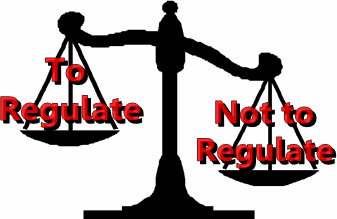
GOVERNMENT REGULATION

Where modern conservatives get “The Road to Serfdom” wrong is where Hayek writes that government has an important role in a nation’s economy that goes beyond a simplistic notion of laissez-faire. 

Where modern liberals misunderstand “The Road to Serfdom” is where Hayek explains that freedom of choice is essential within the bounds of safe pursuit of economic success.  When human safety issues from uncontrolled industrial pollution threatens the safety of society (which most modern scientific opinion calls global warming) Hayek writes government intervention is necessary.

After listening to “The Road to Serfdom”, one cannot help but believe that Hayek would be as appalled by “private” industry’s greed in the 21st century. 

Hayek wrote that big business is not bad in itself but big business that fails to compete on a level playing field because of government subsidy, through tax concession and special treatment, should be regulated by government to ensure fair play.

REGULATING BIG BUSINESS
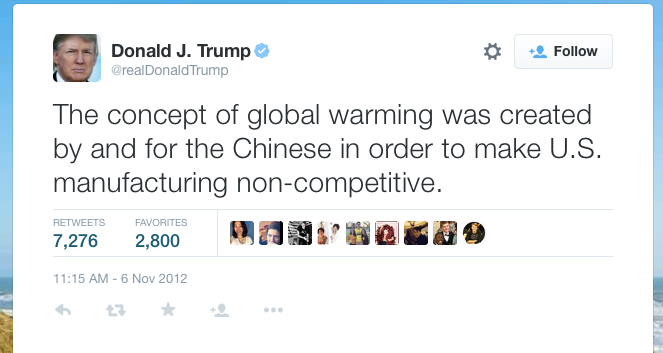
TRUMP AND CLIMATE CHANGE

In the face of overwhelming evidence to the contrary, Trump denies the reality of global warming.

One is compelled to agree with Hayek when he observes that government programs interfere with free choice when government officials create social programs they think are good for someone else.  Hayek is not saying that government should not care for the poor, work-disabled, or technologically unemployed.  He writes: “Where, as in the case of sickness and accident, neither the desire to avoid such calamities nor the efforts to overcome their consequences are as a rule weakened by the provision of assistance – where, in short, we deal with genuinely insurable risks – the case for the state’s helping to organize a comprehensive system of social insurance is very strong.” 

Hayek goes on to suggest that technological change that causes unemployment warrants government assistance.  The danger Hayek tries to make clear is that government interferes with free choice when social programs try to create false equalities.

BREAD LINES IN NEW YORK 1933
BREAD LINES IN NEW YORK 1933–Hayek is not saying that government should not care for the poor, work-disabled, or technologically unemployed. 

Hayek writes: “Where, as in the case of sickness and accident, neither the desire to avoid such calamities nor the efforts to overcome their consequences are as a rule weakened by the provision of assistance – where, in short, we deal with genuinely insurable risks – the case for the state’s helping to organize a comprehensive system of social insurance is very strong.”

Hayek is acknowledging a role for government.  The role is to regulate private enterprise in those areas where freedom of choice or equal opportunity is infringed upon. 

HEALTH INSURANCE
If insurance is not available to all in a land of prosperity, then government has a role in creating a program that will offer insurance to all. 

Hayek’s only caveat is that the insurance be offered as an affordable, free enterprise, and individual choice, not as an entitlement.

FREE TRADE IDEAL

Hayek opposes government programs that interfere with free competition among similar businesses. 

The weakness of Hayek’s argument is in idealization of humanity; i.e. human nature is that leaders in government and the private sector will drive for advantage.  In the case of one country, that advantage may theoretically be mitigated by impartial government regulation but, in a world of sovereign nations, power is inherently limited.

If China wants to subsidize steel exports, American options are limited to creating import tariffs that further distort market competition. This is the mistaken route that President Trump has taken. Further, Hayek’s idealization presumes that politicians cannot be bribed, human beings are not prejudiced, populations have an equal opportunity to succeed, and humanity is inhumanly perfect when left in a state of grace.

Hayek correctly points out the importance of money as a measure of success in a free society.  However, in today’s America, “Moneyocracy” has become an American form of government.  “Moneyocracy” is the aristocracy of the 21st century that elects public officials, denies equality of opportunity—for education, economic mobility, and employment.

GAP BETWEEN RICH & POOR

The gap between the rich and poor is widening by degrees that may bankrupt America because of an enlarging safety net for the old, the sick, the unemployed, and the unemployable.

 The field of competition for free enterprise is becoming more unequal.  Hayek observes that government intervention slips into socialism when free enterprise is artificially manipulated.  The fear is that America will begin looking for their Hitler to manage a sick economy.

Conservatives that rant against government regulation based on Hayek’s “Road to Serfdom” are as incorrect as liberals that argue Hayek wrote against social government programs for the poor, disabled, and unemployed.

DECRIMINALIZATION

Audio-book Review
By Chet Yarbrough

(Blog:awalkingdelight)
Website: chetyarbrough.blog

flowers in the blood

Flowers in the Blood: The Story of Opium

By: Jeff Goldberg, Dean Latimer, William Burroughs (Introduction

Narrated by Stephen McLaughlin

JEFF GOLDBERG (AMERICAN JOURNALIST, STAFF WRITER FOR THE ATLANTIC)
JEFF GOLDBERG (AMERICAN JOURNALIST, STAFF WRITER FOR THE ATLANTIC, & POLITICAL PUNDIT)

Published in 1981, “Flowers in the Blood” argues for decriminalization of opiates.  The idea remains controversial in 2018, and 2022.  Written by Jeff Goldberg and Dean Latimer, a listener feels misdirected by historical information.

DEAN LATIMER (WRITER FOR THE EVO, AKA EAST VILLAGE OTHER-WENT ON TO EDIT HIGH TIMES)

The feeling of misdirection is reinforced by a languid, seemingly opiated, performance of the narrator, Stephen McLaughlin. It is not that one is seduced by Goldberg and Latimer’s writing, but a listener feels cornered in a room of opium eaters.  Goldberg and Latimer reveal how opium is extracted from a flower to offer a tranquil escape from life’s stresses, with a tantalizing peek at world clarity.  Opiate extraction seems simple; the consequence of use, not.

OPIUM POPPY
Goldberg and Latimer reveal how opium is extracted from a flower to offer a tranquil escape from life’s stresses, with a tantalizing peek at world clarity.  Opiate extraction seems simple; the consequence of use, not.
brave new world
Goldberg and Latimer argue that opiates enhance natural neurotransmitters, like endorphins, to reduce stress and depression caused by living life.  This argument reminds one of a “Brave New World” where every stress in life is characterized as negative.

Goldberg and Latimer argue that opiates enhance natural neurotransmitters, like endorphins, to reduce stress and depression caused by living life.  This argument reminds one of a “Brave New World” where every stress in life is characterized as negative.

Goldberg and Latimer note that refinement of opium into morphine and heroin increases its addictive power.  They extol the pleasure of opiates while cataloging its history of addiction.  Goldberg and Latimer reflect on opium’s effect in altering cerebral states of being.  Their argument seems counter intuitive.

They note its use by artists ranging from Charles Dickens to Elizabeth Barrett Browning.  They infer opiates enhance artist’s abilities.  They realistically identify opiates’ medical benefit, while exposing its potential for addiction.  Goldberg and Latimer suggest opiates enhance artistic sensibility, and temper sociopathic homicidal acts. They begin an argument for legalizing opiates.

OPIATE LEGALIZATION
Goldberg and Latimer extol the pleasure of opiates while cataloging its history of addiction.  Their argument is counter intuitive. They begin a defense for legalizing opiates.

Goldberg and Latimer argue that there are three options.  One, continue jailing narcotic purveyors and users.  Two, legalize opiates and let the free market determine use.  Three, decriminalize opiates and offer treatment to those who become addicted.

Their argument is for number three; they suggest number one (the American standard) is ineffective, and number two would be a disaster in the making.  Goldberg and Latimer argue that America should legalize and regulate opiates and treat those who become addicted.

DRUG TREATMENT AND COUNCILING
America regulates alcohol and tobacco, both proven addictions.  Alcohol and tobacco are regulated by the market, with education on their harmful effects and government taxation to increase prices that affects consumption.  Goldberg and Latimer argue that America should legalize and regulate opiates and treat those who become addicted.

America regulates alcohol and tobacco, both proven addictions.  Alcohol and tobacco are regulated by the market, with education on their harmful effects and government taxation to increase prices that affects consumption.  These regulations have had some success, but people still have the right to drink and smoke to excess.

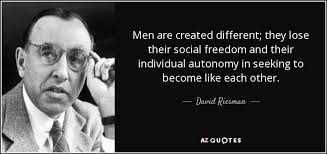
The option of opiate legalization is troubling because it infers substituting inner-direction of human beings for other-direction by government.  It increases the potential of a “Brave New World” where human choice is no longer individual but collective.

DRUG USERS
Goldberg and Latimer point out that punishing the addicted with prison is a mistake.  Those who succumb to addiction need help; not punishment.

Goldberg and Latimer point out that punishing the addicted with prison is a mistake.  Those who succumb to addiction need help; not punishment.  One can readily accept that argument but opiate regulation by the government is a step too far.  This may be a distinction without a difference but Alcohol and cigarettes are still a private sector choice with government intervention (principally tax increases and education) based on political input.

PHILIP SEYMOUR HOFFMAN (1967-2014)
The loss of Seymour Hoffman in February 2014 was a tragic loss.  Hoffman dies at the age of 46, John Belushi at 33, Kurt Cobain at 27, Billie Holiday at 44, River Phoenix at 23; all from opiate overdoses.  If opiates were legalized, would these artists have been saved—who knows?

The loss of Seymour Hoffman in February 2014 comes to mind.  Hoffman dies at the age of 46, John Belushi at 33, Kurt Cobain at 27, Billie Holiday at 44, River Phoenix at 23; all from opiate overdoses.  If opiates were legalized, would these artists have been saved—who knows?  They chose addiction to escape the insecurity and stress of life.  Their choice is their choice.  Insecurity and stress are facts in every human’s life.  America’s failure is related to treatment, not government control of human choice.

WAR ON DRUGS
With treatment programs, the government will make the objective of addicting users a waste of manufacturer’s and seller’s time.  It may not eliminate illegal drug activity but it will make it less financially viable.

America needs to continue their fight against illegal opiate manufacturers and sellers.  Threat of punishment is not the key but reduction in profitability will drive illegal manufactures out of the market.  With treatment programs, the government will make the objective of addicting users a waste of manufacturer’s and seller’s time.  It may not eliminate illegal drug activity but it will make it less financially viable.  Addiction treatment programs and substance abuse’ education are legitimate roles for state governments.  Opiates should be subject to the same laws that presently govern drug research and development.

Unfortunately, “Flowers in the Blood” fails to nuance legalization of opiates.  It leans more toward influencing uneducated poor, educated middle class, and idle rich to experiment with addictive drugs.  Goldman and Latimer are on the right track with regulation and treatment of addiction, but their book encourages drug experimentation in a culture that needs no encouragement.  Stress is a part of life and being drugged into obliviousness diminishes humanity.

UNWINDING EXTREMES

Audio-book Review
By Chet Yarbrough

(Blog:awalkingdelight)
Website: chetyarbrough.blog

The Unwinding: An Inner History of the New America

By George Packer

Narrated by Robert Fass

GEORGE PACKER (AUTHOR)

GEORGE PACKER (AUTHOR) George Parker drives a stake into America’s heart in “The Unwinding”.

George Parker drives a stake into America’s heart in “The Unwinding”.  One listening to “The Unwinding” comes away in anger, fear, and frustration—whether a Republican, Democrat, Tea Partyer, or Libertarian.

Whether a believer in unfettered free enterprise or limited government, Packer offers stories that show America is a troubled land of opportunity. It has become a land of greed; not of the free but of the shackled—a risk noted by Thomas Hobbes in the “Leviathan”.

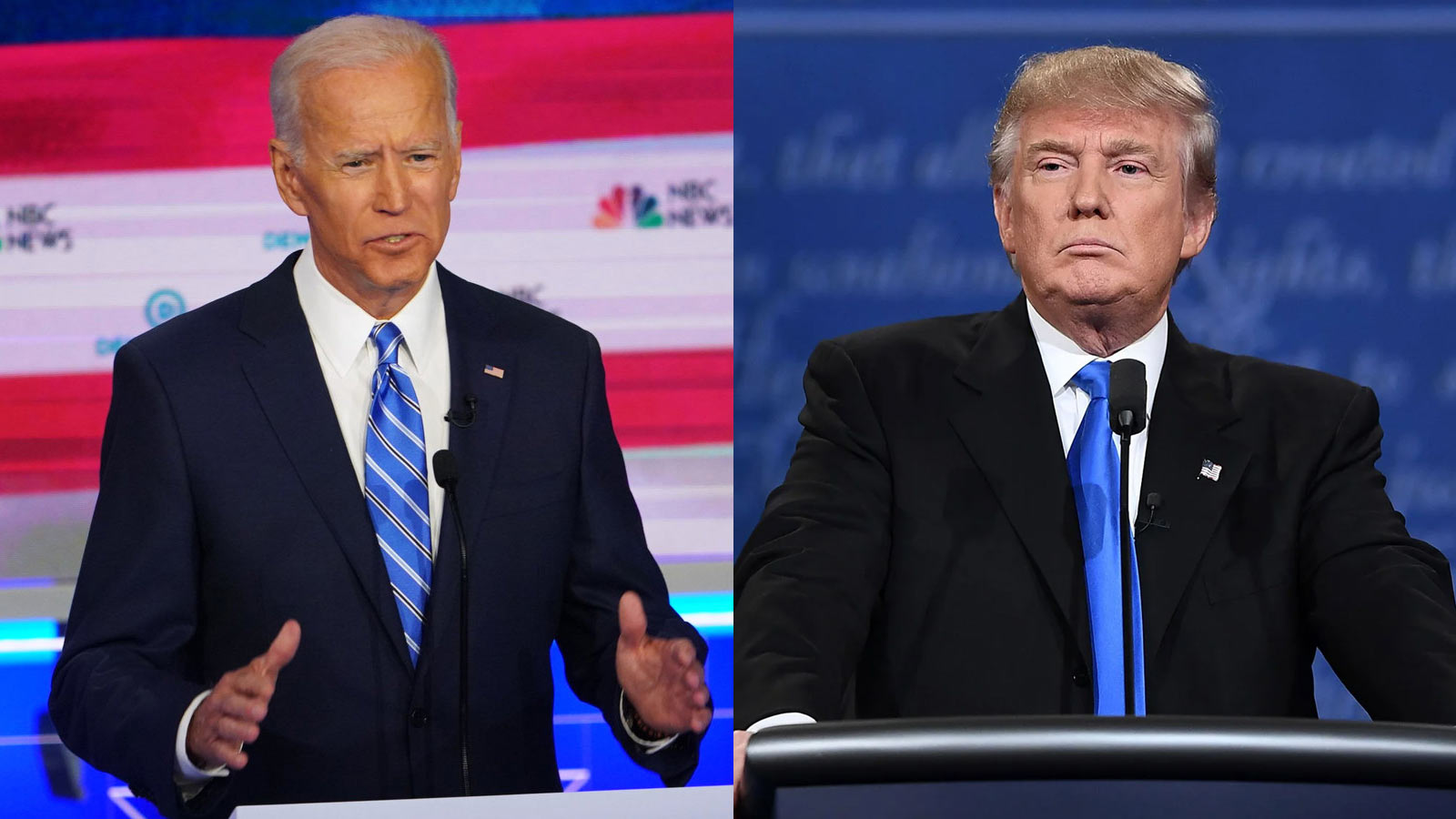
America is changing Presidents in 2021. Will anything change? Joe Biden represents a history of government organization and regulation. Donald Trump represents destruction of government organization and regulation. It seems a choice between compromise and anarchy.

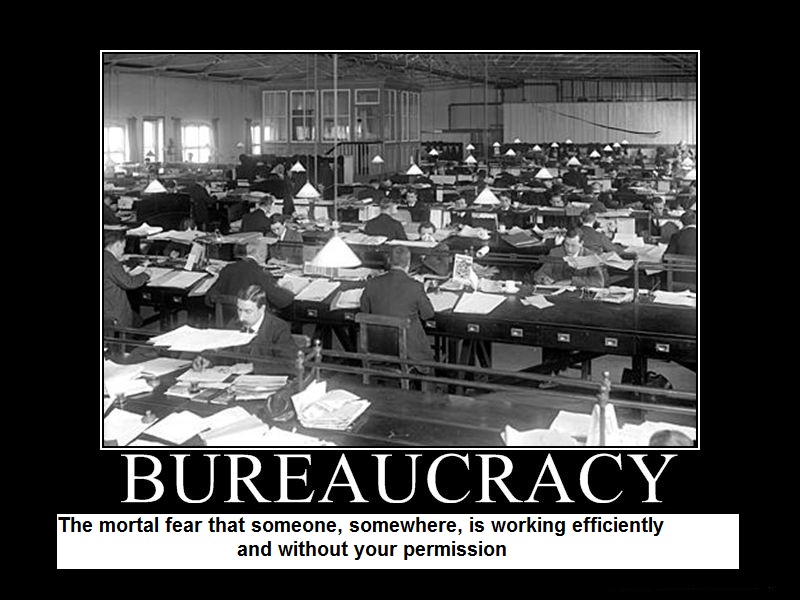
The shackles come from society’s failure to protect individuals from the tyranny of special interests.  One side argues–free enterprise is shackled by too much government; the other side argues–not enough government protects the general public.

America’s initial response to the coronaviris illustrates how far America has fallen. “Dollars and cents” government supplanted “common sense” government in President Trump’s initial preparation for the covid 19 pandemic.

Parker’s stories of people with great wealth, like Sam Walton, or poverty, like Tammy Thomas, or escape from poverty, like Jay-Z and Oprah Winfrey, or invention, like Peter Thiel, Max Levchin, and Elon Musk, or political success, like Colin Powell and Barack Obama, or entrepreneurial ambition, like Dean Price, or political ambition like Jeff Connaguhton–all seem failures, either in morals or self-fulfillment.

Sam Walton becomes one of the wealthiest people in the world by creating a marketing behemoth that offers low consumer prices but drives small business entrepreneurs out of business. Walton offers great prices by buying in bulk and selling in volume with lower margins, partly produced by low wage workers.  On the one hand it is a bargain for the consumer; on the other hand it destroys competition and reduces family incomes.

AMERICAN MANUFACTURING JOBS

AMERICAN MANUFACTURING JOBS (Many lose their jobs when companies are purchased by conglomerates that dismantle the business, out-source product development, and reduce employment by offering buyouts to higher paid long-term employees–all to provide profits to investors.)

Tammy Thomas, born and raised in Youngstown, Ohio, worked in one industry for the majority of her life.  She lost her job when the company she worked for was purchased by a conglomerate that dismantled the business, out-sourced product development, and reduced employment by offering buyouts to higher paid long-term employees–all to provide profits to conglomerate’ investors.

JAY-Z

JAY-Z (BUSINESS MOGUL, ENTERTAINER)

Jay-Z and Oprah Winfrey overcame poverty and the degradation of living in squalid slums by capitalizing on their unique abilities and life stories, stories that reflect on the huge disparity between rich and poor. Born into poverty; they unquestionably achieved success for themselves, but left behind a population with poorer and poorer prospects of escape.

OPRAH WINFREY (AMERICAN MEDIA MOGUL)

OPRAH WINFREY (AMERICAN MEDIA MOGUL) 

Peter Thiel and Max Levchin capitalize on the tech boom.  Peter Thiel becomes a billionaire through entrepreneurial skill.  However, the consequence of market collapse from financial derivatives affects even Thiel’s wealth. Thiel remains in the privileged 1% but Parker infers Thiel turns his attention to dismantling American government with greater reliance on free enterprise.

Senator Jeff Connaughton experiences both sides of America’s schizophrenia. Connaughton began as a political operative, left government to become a millionaire lobbyist, and returned to government when the derivative crises reduced his net worth.

JEFF CONNAUGHGTON (US SENATOR, FORMER LOBBYIST, FORMER WHITE HOUSE LAWYER, AND SENATE AIDE FOR JOE BIDEN BEFORE 2009)

(US SENATOR, FORMER LOBBYIST, FORMER WHITE HOUSE LAWYER, AND SENATE AIDE FOR JOE BIDEN BEFORE 2009)

Connaughton’s reaction to the financial crisis differs from Theil’s, in part because of the monumental wealth difference, but also because of their different journeys to wealth. They equally revile the influence of money in government but Connaughton believes government regulation can be effective while Theil, a Libertarian, believes government regulation is the bane of democratic society.

Parker tells the story of Dean Price. Price, a young Republican turned Libertarian (though he voted for Obama) believes America is the land of opportunity.  He struggles, works hard, achieves success, fails, starts over, seems on the road to recovery, and fails again. Price buys into the American Dream by reading Napoleon Hill’s book “Think and Grow Rich”.  He believes–if he can dream it, it can happen.

DEAN PRICE (HALF OWNER OF RED BIRCH ENERGY)

DEAN PRICE (HALF OWNER OF RED BIRCH ENERGY)

Life choices get into Price’s way. His financial problems mount to the point of losing his ownership interest in Red Birch Energy.  Price files for bankruptcy and is faced with starting over.

Price experiences rising gasoline prices and buys into the bio fuel movement of the 21st century.  He starts a company called Red Birch Energy after selling a small fast food chain that he began from nothing. As a part of his original start-up, Price built a fuel discount truck stop on his family farm with one of his restaurants as an anchor.   He takes on partners for engineering and additional financing for bio fuel equipment and farmed canola grain for the production of bio fuel. With rising oil prices, turmoil in the Middle East, and Obama’s election, it appears Price is on the road to great success.

Price takes advantage of his partners by not fully explaining his conflicts of interest in using bio fuels in his own truck stop to stave off collapse of his personal business.  His financial problems mount to the point of losing his ownership interest in Red Birch Energy.  Price files for bankruptcy and is faced with starting over.

COLIN POWELL (AMERICAN STATESMAN-RETIRED FOUR-STAR GENERAL)

COLIN POWELL (AMERICAN STATESMAN-RETIRED FOUR-STAR GENERAL) Powell became the poster child of black Republicans, only to have his reputation destroyed by endorsement of false reports about WMD that compelled the United States to invade Iraq.

Obama’s reputation for change appears a lie as much as a truth.  Government decisions to let bank’ decision-makers escape prosecution galls every American damaged by the financial crises of 2007-2008.  Obama’s unwinding of the financial crises ultimately succeeded but greed remains an alloyed characteristic of American democracy.

PRESIDENT BARACK OBAMA

President Barack Obama (2009-2017)

Price brings his stories together in the “tea party” and “occupy wall street” movements.  The growing distrust of government and burgeoning anti-government beliefs raises hackles and stokes fires of two political extremes. The “tea party” movement wants less government regulation. The “occupy wall street” demonstrators infer they want more government regulation.  The extremes are exhibited as Libertarian on one side and Marxist on the other.

OCCUPY WALL STREET PROTES

Libertarians like Theil want to minimize government intervention in the private sector, including government control of education.  “Occupy wall street” followers want government intervention, subsidization of education, and universal health coverage to equalize opportunity for lower and middle class Americans.

“Tea party” followers want less government while “occupy wall street” factions what more effective and protective government. 

TRUMP'S WALL 2

American democracy is the politics of extremes with each extreme using whatever means necessary to deny success of prudent legislation.  The consequence is a “do-nothing” congress and an ineffectual President.

The unwinding of the financial crises in the dot-com bubble of 2000-2001 and the 2007-08 subprime mortgage crises unfolds in the many stories told by Packer in this disturbing narrative.  (America’s early response to the coronavirus is similarly disturbing.)

Rand Paul (Kentucky Senator)

A professed Libertarian delays emergency funds to fight the Covid-19 pandemic by demanding an amendment. The amendment is widely understood to be be voted down, but will delay approval.

America is a nation of extremes with each extreme using whatever means necessary to thwart or delay prudent action.  The initial consequence of these extremes is a “do-nothing” congress and an ineffectual President. 

One is left with fear, anger, and frustration after completing “The Unwinding”.  The only consolation is in America’s history of (somehow) overcoming crises. America has been in crises before–in 1776, 1789, 1865, 1929, 1941, 1951, 1967-68, 2001, and 2008.  We will survive the 2020 pandemic.

SOVEREIGNTY

Audio-book Review
By Chet Yarbrough

(Blog:awalkingdelight)
Website: chetyarbrough.blog

The Origins of Political Order: From Prehuman Times to the French RevolutionTHE ORIGINS OF POLITICAL ORDER

Written by: Francis Fukuyama

Narrated by: Jonathan Davis

FRANCIS FUKUYAMA (AMERICAN POLITICAL SCIENTIST, POLITCAL ECONOMIST, AND AUTHOR)
FRANCIS FUKUYAMA (AMERICAN POLITICAL SCIENTIST, POLITICAL ECONOMIST, AND AUTHOR)

Francis Fukuyama’s analysis of state and government formation is both insightful and politically actionable.  In “The Origins of Political Order” and “Political Order and Political Decay” Fukuyama provides a basis for understanding politics and its contribution to society.

THOMAS HOBBES (1588-1679)
THOMAS HOBBES (1588-1679) Hobbes generally considered humankind to be both good and evil with a need for regulation of his/her evil instincts through government.

In previous book reviews, references have been made to Thomas Hobbes’ theory of the nature of man.  Hobbes generally considered humankind to be both good and evil with a need for regulation of his/her evil instincts through government.  He identifies government as “The Leviathan”.  Hobbes suggests “The condition of man…is a condition of war of everyone against everyone”.

PREHISTORIC HUMAN KIND
Fukuyama finds a singular and significant flaw in Hobbes’ observation.  From the beginning of time, humans associated with other humans to survive the brutish nature of life.  He suggests humans are by nature violent with that violence becoming ingrained as a societal meme to cope with the exigencies of life.  Fukuyama goes on to suggest violence and change are intertwined.

Fukuyama finds a singular and significant flaw in Hobbes’ observation.  Though Fukuyama may agree with Hobbes’ view of individual humans, he tempers it by noting humans have always been social beings.  From the beginning of time, humans associated with other humans to survive the brutish nature of life.  He suggests humans are by nature violent with that violence becoming ingrained as a societal meme to cope with the exigencies of life.  Fukuyama goes on to suggest violence and change are intertwined.

The significance of humans as societal creatures is that governments are formed by dominant tribes. Politics is the language of tribes negotiating with each other to preserve status.  However, Fukuyama notes that cultural norms are dramatically different in governments that evolve over time.  These cultural differences play out in the history of Russia, China, France, Great Britain, Italy, America, the countries of Africa, and the Middle East.

world map
Fukuyama notes cultural differences play out in the history of Russia, China, France, Great Britain, Italy, America, the countries of Africa, and the Middle East.

RELIGIOUS BELIEF
A counter-intuitive note by Fukuyama is that religion plays a significant role in civilizing, rationalizing, and establishing state governments.

A counter-intuitive note by Fukuyama is that religion plays a significant role in civilizing, rationalizing, and establishing state governments.  It is counter-intuitive because it seems in the present-day religion is tearing the world apart.  However, in the context of history, the size of tribes within countries hugely increases with the spread of religion.  Religion becomes a cultural phenomenon that ameliorates (but does not eliminate) violence among different tribes within wider territories that evolve into nation-states.

Fukuyama implies nation-state development is a living organism that evolves in the manner of natural selection identified by Darwin in the “Origin of Species”.  Characteristics of effective governments perpetuate themselves through adaptation to respective societal norms.  In other words, every society grows via its own cultural norms which suggests sovereignty should be inviolable.

Fukuyama is saying that American democracy, Chinese socialism, Russian federation, India democracy or any other system of government will be different because of their social history.  In other words, India may be classified as the world’s largest democracy but not as an American democracy because of its different societal norms.

WORLD WIDE WEB
Can the World Wide Web, the growth of science, and recognition of environmental interdependence overcome the nationalist stupidity of government leaders?

In one sense, the complexity of Fukuyama’s theory makes one less optimistic about the future of the world.  What can take the place of religion to meld societies into a common tribe?  Can the World Wide Web, the growth of science, and recognition of environmental interdependence overcome the nationalist stupidity of government leaders?

If Trump, Putin, al-Baghdadi, and Kim Jong-un represent the future, the answer is no.  On the other hand, one may argue survival of humans is dependent on experimentation by governments, enhanced by nation-state societal differences.

Just as one species evolves into an improved human, one species of government may evolve into an improved government (presuming humans survive an interregnum).

POLITICAL LOSERS/WINNERS

Audio-book Review
By Chet Yarbrough

(Blog:awalkingdelight)
Website: chetyarbrough.blog

On the Brink
By Henry M. Paulson, Jr.

Narrated by Dan Woren

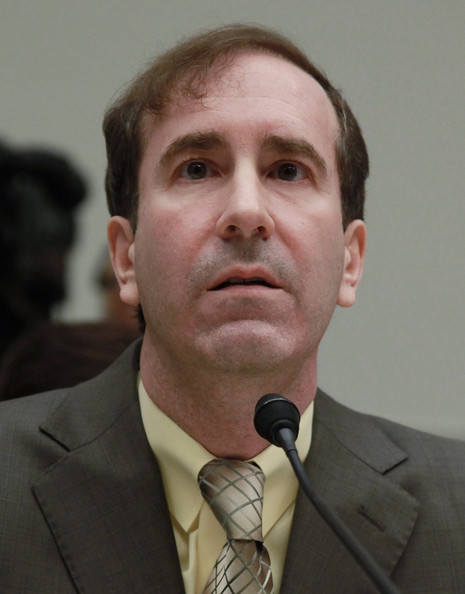
HENRY PAULSON (U.S. SEC. OF THE TREASURY 2006-2009)

HENRY PAULSON (U.S. SEC. OF THE TREASURY 2006-2009) 

Crisis reveals human strength and weakness.  Perception is not reality, but Henry Paulson, the former Treasurer of the United States, names names and paints pictures of (mostly) men in the 2007/2008 financial crisis.  In his analysis, there are political losers and winners.

How will America’s response to the Covid-19 pandemic be recalled?

This close political race will have a winner and loser. With such a close political race, the loser will be America. Divisiveness and ideological difference will remain a major obstacle in formulating foreign and domestic policy. Covid 19 will run its course. The concern is in not having a pragmatic or politically articulate President who can lead America over the next four years.

GEORGE WALKER BUSH (43RD PRES. OF THE UNITED STATES)

GEORGE WALKER BUSH (43RD PRES. OF THE UNITED STATES) Paulson characterizes Bush as a pragmatist who acts on recommendations from people he trusts.

Paulson reveals himself as a Christian Scientist, a pragmatist, and enigmatically, a somewhat left-of-center, presumably Republican, liberal.  Paulson suggests a Republican left-of-center lean when writing about his mother and wife’s reluctance for him to take the Department of the Treasury position in the Bush administration.  (Paulson’s mother strongly supported Hillary Clinton for President.)

Interestingly, Paulson characterizes George Bush as an equally pragmatic, non-ideological decision maker.  Differences between the two are in the details; i.e. Paulson analyzes his own and other experts’ details and presents informed alternatives and recommendations while Bush acts on recommendations from people he trusts.

BEN BERNANKE (CHAIRMAN OF THE FEDERAL RESERVE 2006-2014)

BEN BERNANKE (CHAIRMAN OF THE FEDERAL RESERVE 2006-2014) Paulson characterizes Ben Bernanke as a brilliant financial advisor, participant, and ally in supporting and executing complex rescue plans for a financial system nearing default.
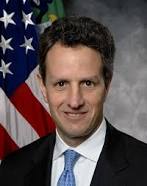
TIMOTHY GEITHNER (U.S. SECRETARY OF THE TREASURY (2009-2013)

TIMOTHY GEITHNER (U.S. SECRETARY OF THE TREASURY 2009-2013) Tim Geitner is shown as a team player that bridges the divide between political and administrative decision-making when plans are formed to rescue Fannie Mae, Freddy Mac, and AIG.

Rahm Emanuel is described as an effective political organization man who is able to get things done in a highly political environment.

Jaimie Dimon (CEO of JPMorgan Chase.)

Dimon is characterized as a rationale business man who is willing to take a risk for the benefit of more than his own aggrandizement.

John Thain seems a competent manager in crisis that makes the best of a terrible situation by moving rapidly to sell Merrill Lynch to B of A before total collapse.

SARAH PALIN (FORMER V.P. NOMINEE, FORMER GOVERNOR OF ALASKA)

Some crisis profiles shown by Paulson are less complementary.  Sarah Palin comes across as a decision maker driven by politics rather than pragmatic results.

John McCain (1936-2018, Former U.S. Senator for Arizona.)

John McCain seems to gravitate to Palin’s perception of reality by political posturing for election results rather than pragmatic solutions for the financial crisis.  Jim Bunning, the former baseball player and House of Representative’s Republican, is shown to be an ideologically driven populist extremist.
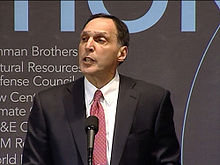
RICHARD FULD (FORMER CEO LEHMAN BROTHERS)

Richard Fuld seems arrogantly delusional about Lehman Brothers’ assets and an ineffective manager in crises.

Ken Lewis (Former CEO of Bank of America)

Lewis appears Machiavellian in grabbing what he thinks are the best and rejecting what he thinks are the worst financial risks in America’s near economic collapse.

Paulson reinforces perceptions of Barack Obama as a smart guy that grasps the big picture; ditto for Barney Frank, and Lindsey Graham but less so for Christopher Dodd.
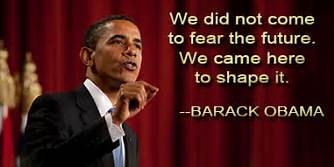
BARACK OBAMA QUOTE

Paulson reinforces perceptions of Barack Obama as a smart guy that grasps the big picture; ditto for Barney Frank, and Lindsey Graham but less so for Christopher Dodd.

Paulson suggests that Republican Senator Shelby can drive his point and take control when pushed to act but ideological belief seems to constrain proactive action in the financial crises.  Senator Reid is shown to be a consummate, seasoned political manager in the Senate and Nancy Pelosi an equally dynamic oldster in the House of Representatives.
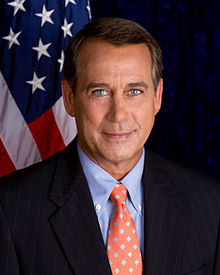
JOHN BOEHNER (FORMER SPEAKER OF THE HOUSE)

JOHN BOEHNER (FORMER SPEAKER OF THE HOUSE) Paulson suggests Boehner is unable to lead his Republican constituency and seems awkwardly suited for either a minority or majority Speaker of the House position.

In contrast, Representative Boehner is unable to lead his Republican constituency and seems awkwardly suited for either a minority or majority Speaker of the House position.

It seems today the decisions made by Bush, Paulson, Bernanke, Geitner, and Congress were correct.  After listening to Paulson’s book, one appreciates these civil servants hard work in doing the right thing.   Today is too soon to tell but Paulson gives outsiders a fascinating glimpse of people making a difference when a nation is in crisis.
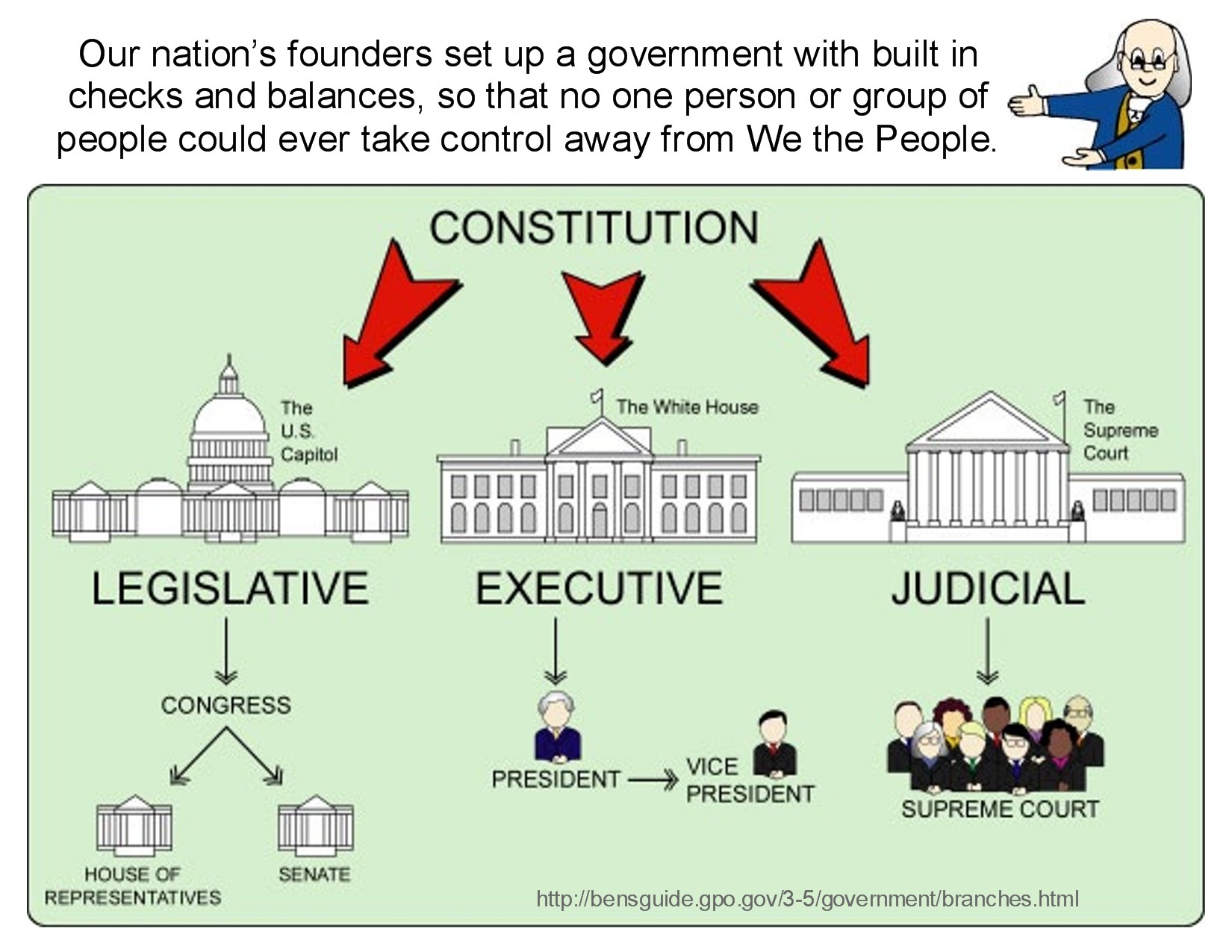
CHECKS AND BALANCES

One wonders who the political losers and winners will be in today’s immigration, world trade, Covid-19 pandemic, and budget deficit crises.

RISE AND FALL

Audio-book Review
By Chet Yarbrough

(Blog:awalkingdelight)
Website: chetyarbrough.blog

Asabiyyah: What Ibn Khaldun, the Islamic Father of Social Science, Can Teach Us About the World Today

Written by: Ed West 

Narrated by:  P. J. Ochlan

ED WEST (ENGLISH AUTHOR, JOURNALIST, BLOGGER)

ED WEST (ENGLISH AUTHOR, JOURNALIST, BLOGGER)

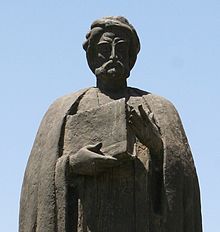
IBN KHALDUN (STATUARY SYMBOL OF ISLAMIC HISTORIAN BORN 1332, DIED 1406 AT 73 YEARS OF AGE.)

IBN KHALDUN (STATUARY SYMBOL OF ISLAMIC HISTORIAN BORN 1332, DIED 1406 AT 73 YEARS OF AGE.)

Ed West offers a brief introduction to the life of an ancient historian.  His name is Ibn Khaldun.  Khaldun describes the first known evolutionary theory of human origin.  West also notes this 14th century scholar creates the first known socio/political theory of the rise and fall of civilizations.

Khaldun explains life’s origin as a aggregation of chemicals and minerals that create organic life and, in turn, evolve into different species. 

DESCENT OF MAN

West notes that Khaldun suggests humankind evolved from monkeys. This is four centuries before Darwin’s “Origin of Species”.
Ibn Khaldun is considered by some to be the first person to write foundational theories for modern sociology, economics, and demography.  West notes that Khaldun explains how nations are formed, maintained, and destroyed by sociological, economic, and demographic forces.

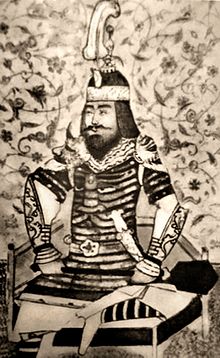
Khaldun offers counsel to the great conqueror, Amir Timur (aka Tammerlane), who plans to resurrect the 13th century Mongol empire built by Genghis Khan.  

TIMUR (AKA TAMMERLANE, 1336-1405)

TIMUR AKA TAMMERLANE IS COUNCELED BY IBN KHALDUN  (1336-1405–(Timur is said to have caused the death of over 17 million people in the effort.)

West suggests that Khaldun explains how Timur and other rulers, from the Roman empire to Genghis Kahn to Timur successfully conquered great areas of the known world.  His explanation is “Asabiyyah” (aas-sah-bee-ah), a theory that all successful conquerors establish a social environment that creates solidarity among a group of people sharing understanding, purpose, and achievement.

West explains that Khaldun expands “Asabiyyah” to a theory of civilization’s rise and fall.  Humans proliferate based on family affiliations.  Religion widens family relationships to create tribes. Tribes become a congregation of different families with common beliefs.  Tribes come into conflict and eventual settlements that grow into larger groups based on evolved common beliefs. 

At each step of widening common interest, a leader rises from the ranks.  With an accretion of social ties, villages, towns, and cities are formed with a leader at its head.  As the ties that bind continue to expand, nation-states are formed.

RISE AND FALL OF CIVILIZATIONS

Ibn Khaldun’s explanation is “Asabiyyah”, a theory that all successful conquerors establish a social environment that creates solidarity among a group of people through shared understanding, purpose, and achievement.

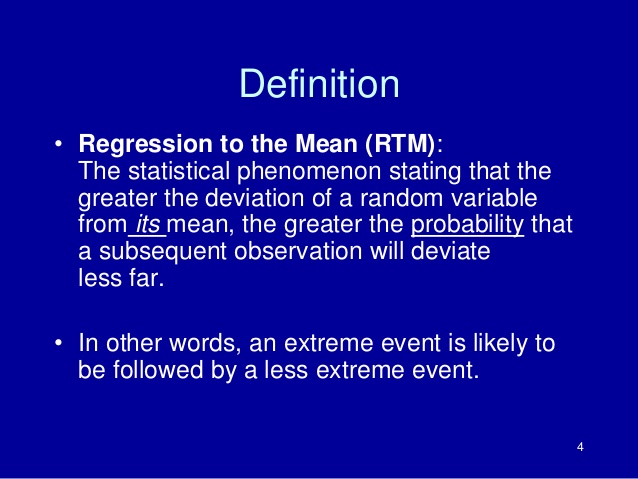
West shows that Khaldun goes on to explain how civilizations decline. First, Khaldun notes that sons and daughters of great leaders rarely exceed their parent’s leadership success.  Khaldun posits the current social and scientific belief of “reversion to a mean”. 

REVERSION TO THE MEAN

Each subsequent offspring of a great leader comes closer to the average of a civilization’s population.  Leadership diminishes in succeeding generations.

Second, Khaldun suggests diminished common beliefs lessen a civilization’s cohesion.  Religious differences rise, economic circumstances change, social groups fracture, family ties reassert themselves as ties that are more important than community.  The example that Khaldun gives is Rome’s decline as a world power. West suggests the same may be said of the United Kingdom’s decline.

AMERICAN DREAM

Has the American Dream become a lie few believe in?  Are elected officials withdrawing to their families at the expense of nation-state’ leadership?

West’s “Asabiyyah” makes one think of America.  Does today’s political conflict reflect diminishment of commonly held nation-state belief?  Is the increasing gap between rich and poor destroying the social fabric of America?  Is the divisiveness of former President Trump a reflection of a nation in decline?

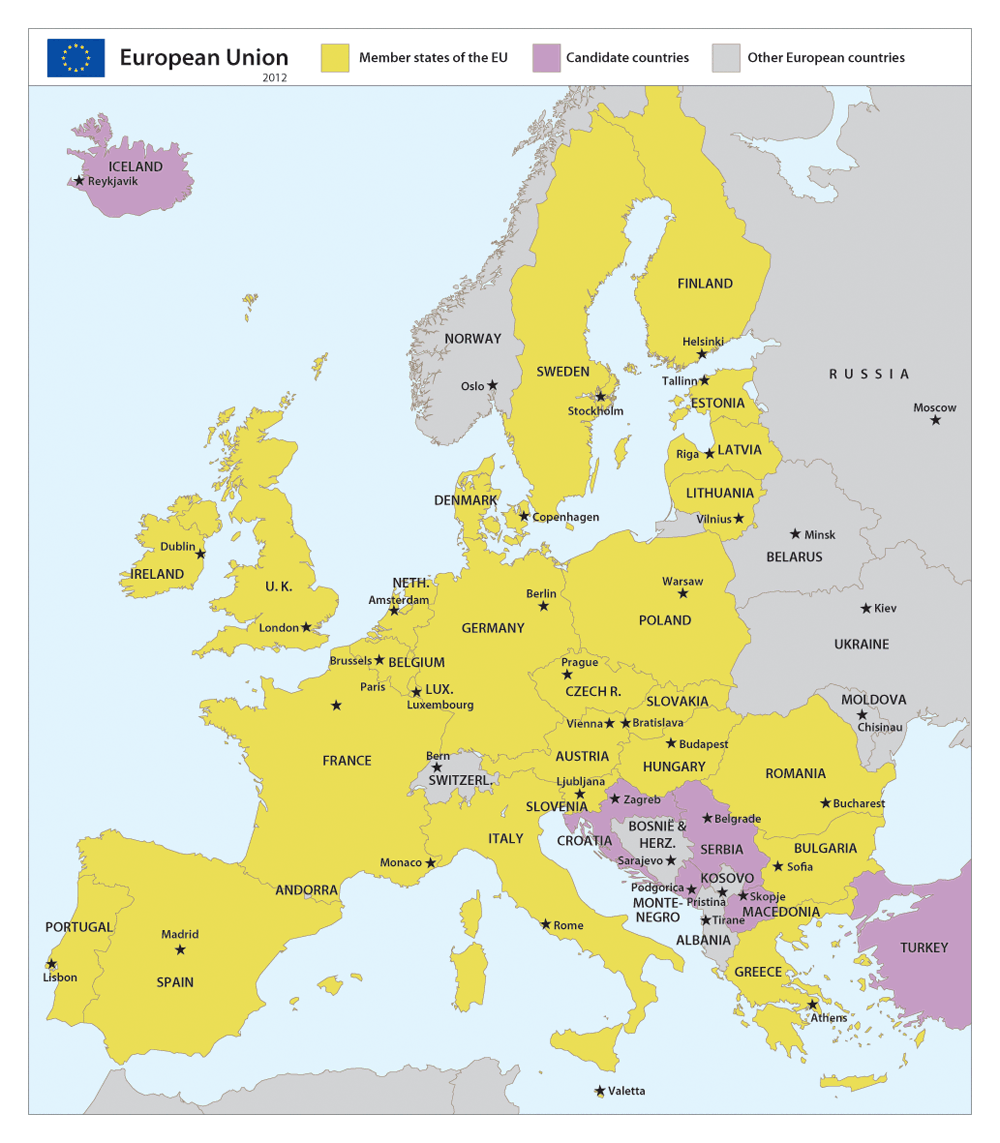
Is nationalism dead, or are we crossing a threshold where the principals of nation-state need to be expanded to include a wider community?  Is the next step reflected by the E.U. or some similar congregation of nation-states?

EUROPEAN UNION

According to West, Khaldun believes nationalism is critically important for a civilization to remain strong.  In the time of Khaldun, there was no vehicle for common beliefs except a leader’s influence over conquered nations. 

Today, there is an internet.  It seems the human family may once again be expanded.  Nation-states may not be prepared for “space-ship-earth” but there may be an interim step.

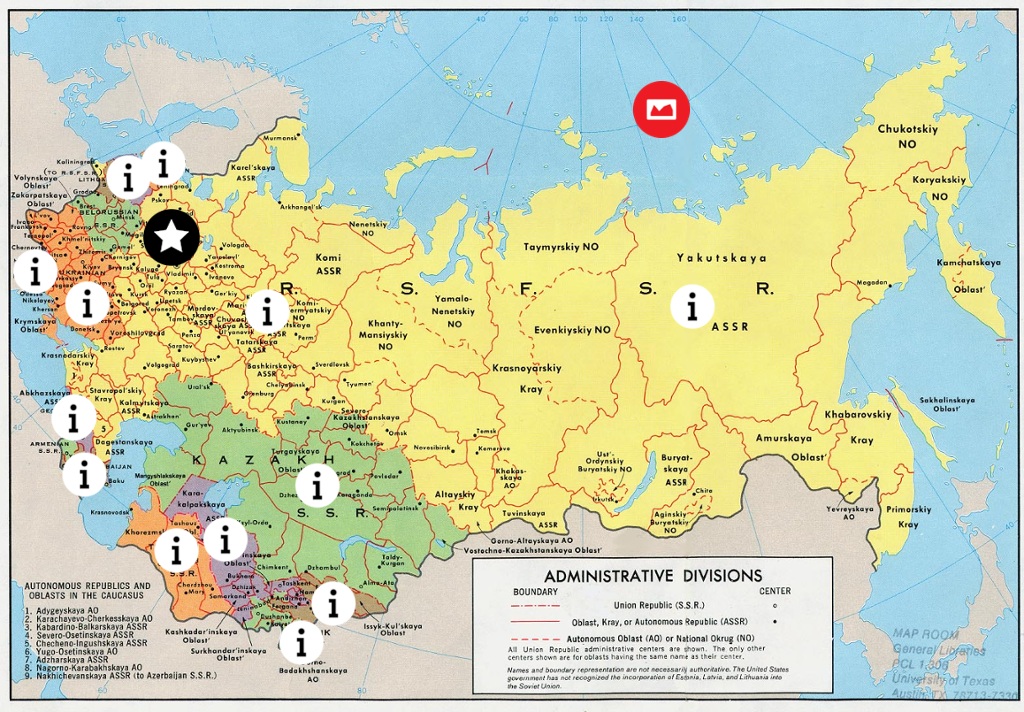
That interim step was tried during the cold war with the U.S.S.R.  It failed.  The E.U. is facing challenges today.

U.S.S.R. BREAK-UP

Trump’s America is regressing from comity to disparity with emphasis on making itself great again.  A leading question today is whether civilizations are competing to be in decline or ascendance?

Of course, leadership is key to any future.  Right now, there seem few leaders that can make civilizations grow beyond their borders. Khaldun seems as relevant today as he was in the 4th and early 5th centuries.

AGE OF UNREASON

Audio-book Review
By Chet Yarbrough

(Blog:awalkingdelight)
Website: chetyarbrough.blog

The Age of American Unreason
By Susan Jacoby

Narrated by Cassandra Campbell

SUSAN JACOBY (NOMINATED FOR PULITZER PRIZE FOR GENERAL NON-FICTION)

SUSAN JACOBY (NOMINATED FOR PULITZER PRIZE FOR GENERAL NON-FICTION)

Susan Jacoby had her book “The Age of American Unreason” published in 2012, long before the election of Donald Trump.  The title is apropos today but the substance of Jacoby’s reasoning is suspect.

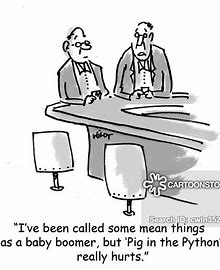
“The Age of American Unreason” interests baby boomers because it capsulizes events of the “pig in a python” era (babies born between 1946 and 1964).

Susan Jacoby’s characterization of this era of “…unreason” is over-generalized.  Jacoby free falls into a blind canyon of liberal bias; beginning with an inference that the word “folks” in speeches rather than “people” suggests demise in American intellectualism.  Considering the intellectual and ethical differences between Obama/Biden and Trump, Jacoby’s “examples and causes” for “unreason” are cringe worthy.

Jacoby writes about conflict between conservative’ belief in creationism and evolution as a cause for “…unreason”.  Many, if not most Americans, meld religious belief with evolution.  Some are agnostic and skeptical, but they have not lost their faith.  Others are genuinely atheistic.  Many current books are written to question the existence of God, but what is new?

Jacoby sites statistical studies that reinforce her opinion without conceptualizing the evolution of religious and philosophical thought.  One is more likely to prove that scientific understanding of creation is accelerating rather than regressing to mythical or spiritual explanation.  But, what is new?  Copernicus and Gallileo are simply replaced by Watson and Crick.

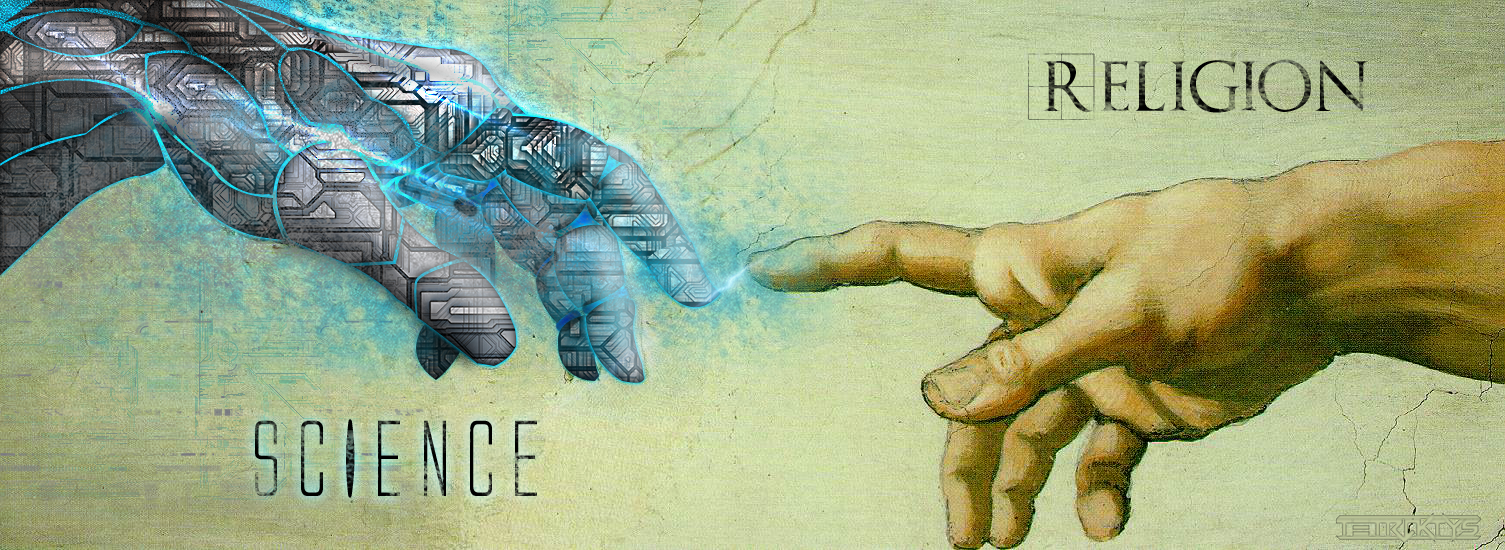
SCIENCE AND RELIGION

Change in religious belief is not revolutionary; it is gradual and evolutionary based on the advance of science. 

Jacoby insists that television, the internet, and the information age are rotting American minds through distraction and substitution.  She believes intellectualism is vilified and popular opinion is more influential and intellectually barren today than in times past.  She dwells on American education system’s failure to reject creationism with exclusive scientific explanation of natural events.

A counter argument is that television, the internet, and the information age have been a boon to humankind.  Ignorance is mitigated by a more interconnected world.  African, Asian, Middle Eastern, and North American populations become better informed about each others lives.  Humans of all cultures become more human.

RISING FROM THE DEAD, Jacoby dwells on American education system’s failure to reject creationism with exclusive scientific explanation of natural events.

RISING FROM THE DEAD

History suggests proving millennial religious beliefs as a mythology is not going to occur in a few generations, if ever.  Jacoby cherry picks information, snippets of questionable studies, speech factoids, and apocryphal stories to support her idea of a growing “…Age of Unreason”.  Her argument is unconvincing.

Jacoby suggests a diminishment of literary education.  Literary education is unquestionably different today than when Ms. Jacoby graduated from college but different is neither good nor bad; i.e. literary education from Tolstoy, Dostoevsky, Faulkner, Charlotte Bronte, Pearl Buck and other literary giants are still being consumed by the public.  Many late 20th and 21st century writers  are now, or will become, equally revered.

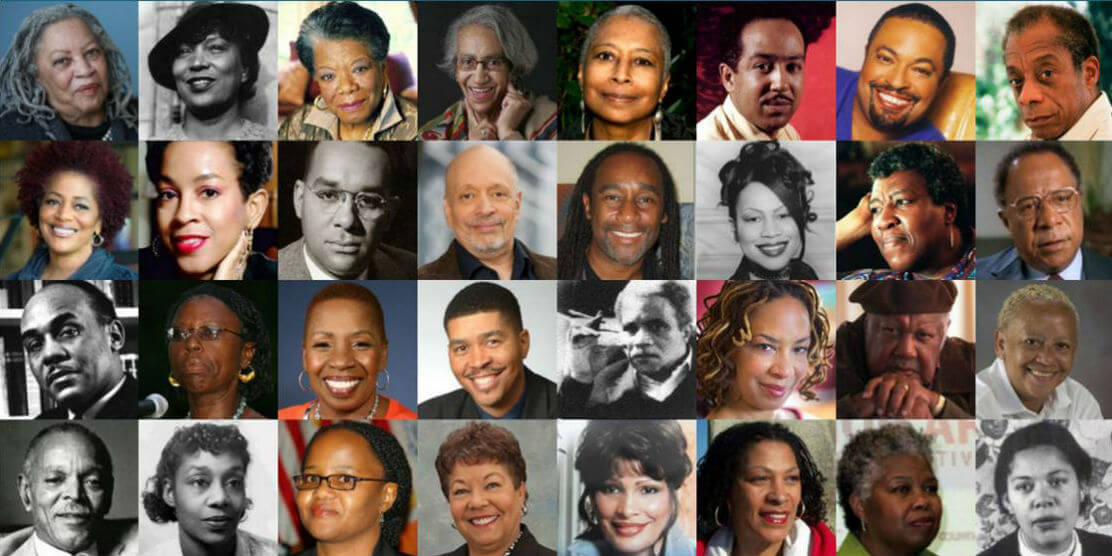
21ST CENTURY WRITERS

The medium may be different but the message is the same (after all, Jacoby’s book is available through audio books and e books).  To suggest they are not being consumed, understood, or appreciated today is a distortion of reality.

The same is true for science.  The intellectual advance of quantum mechanics, cosmology, and the science of man is astounding.  Philosophy is grounded on advances in science; with continued scientific advance there will be future philosophical intellectuals like Plato, Spinoza, and William James; in fact, they are probably here now but not with history’s perspective.

Susan Jacoby is a highly sought after writer and speaker.  One admires her reputation as a liberal but liberality is not a license to write junk thought.  Jacoby is right in the title to her book while wrong in substance.  We are in an era of “unreason” in the 21st century but this century is only slightly more than 20 years old.  Some might say it is only in the last three and a half that American “unreason” has become extreme.

LEADERSHIP

LEADERSHIP–“Unreason” is exacerbated by political leaders’ ultra-nationalism and parochial tribalism.  Leadership change will return reason to political debate just as it did in the 1940s, 50s, 60s, 70s; and now, in the 21st century.

Yesterday’s “debate” exemplifies a type of bad leader that periodically comes from America’s electoral process. Trump embarrasses democracy by dragging it down into an abyss of lies and unreason.

Today’s literature and science are not diminished by a lack of intellectual pursuit, or by speeches that use words like “folks” instead of “people”.  Today’s “unreason” is perpetuated by incompetent leadership; not by a rift between science and religion, or speech.  “Unreason” is exacerbated by political leaders’ ultra-nationalism and parochial tribalism.  Leadership change will return reason to political debate just as it did in the 1940s, 50s, 60s, 70s; and now in the 21st century.

WONDER OF THE WORLD

Audio-book Review
By Chet Yarbrough

(Blog:awalkingdelight)
Website: chetyarbrough.com

Knocking on Heaven’s Doorknocking on heaven's door
By Lisa Randall

Narrated by Carrington MacDuffie

LISA RANDALL (AMERICAN THEORETICAL PHYSICIST)

Lisa Randall believes the Large Hadron Collider (LHC) is one of the wonders of the world; competing with the pyramids of Egypt in its colossal achievement. Located near the border of France and Switzerland, it is the largest construction project ever built.

“Knocking on Heaven’s Door” is the story of the Collider’s creation, inner workings, and scientific objectives.  Along the way, Randall explores physics, sciences conflict with religion, the process of scientific research, and somewhat ineptly, the near economic collapse of the financial world in 2007.

LHC MAP SHOWING CERN SITE
“Knocking on Heaven’s Door” inspires one to visit the site, near Geneva, Switzerland.  Randall’s description is of a 17 mile tunnel that is the coldest and largest vacuum on earth, capable of hurtling particles near the speed of light to collide neutrons that are meant to separate into constituent parts.

Randall’s information about LHC inspires one to visit the site, near Geneva, Switzerland.  Her description is of a 17 mile tunnel that is the coldest and largest vacuum on earth, capable of hurtling particles near the speed of light to collide neutrons that are meant to separate into constituent parts.   The idea of such a creation challenges one’s understanding; its reality is remarkable.  How is it possible to control a neutron?  What is the point of causing neutron collisions?  Why should anyone care about particles of matter that cannot be seen?

Randall, as a physicist, does a fairly good job of answering those questions for a non-scientist.  Neutrons are a chosen accelerator particle because they are divisible.  Neutron control is exercised by magnets around an elliptical tunnel that contain accelerating neutrons within a super cooled vacuum that pushes and pulls neutrons to keep them in line.

Neutrons are particles made up of smaller elements, scientifically confirmed through repeated experiments.  The makeup of a neutron was found by forcing collisions between neutrons that broke into separate elements.  However, not all parts of a neutron have been experimentally identified.  Einstein’s balance between energy and mass multiplied by the speed of light squared shows an imbalance between known elements of a neutron and a neutron’s mass/energy equivalence.  The imbalance may be the Higgs-boson particle.

This is where the picture gets a little fuzzy for the dim-witted (meaning this reviewer).  The Higgs-boson particle is sometimes called the God particle.  It is surmised to be the glue or medium of mass in the universe; i.e. the key to dark matter and energy that make up 75% of the known universe.

The consequence of finding Higgs-boson is unknown which is the bête noire of pure science.  Scientists seek to know for the sake of knowledge; not necessarily for its practical consequence.  Is it important?  Was Einstein’s pure science important?  Hiroshima and Nagasaki answer that query.

As is well-known, Higgs-boson has been discovered.HIGGS-BOSON DISCOVERY

A quibble one may have with Randall’s book is that she digresses into derivative finance to suggest that more scientific analysis would obviate the kind of financial disaster that occurred in 2007.  She suggests that proper analysis of the risk of derivatives would have stopped the madness.  The naivete of that argument is that there were only a few that saw the collapse coming.  Scientific analysis only convinces some.  The history of politics, ignorance, and power are shown to have more influence than science or rational thinking.

TRUMP AND CLIMATE CHANGE
The President of the United States believes he is acting rationally by ignoring science and deregulating industries believed to be huge contributors to global warming.

How different is expert analysis from the scientific community on global warming.  Scientific analysis misses part of what makes human’s human; i.e. minds can know something and still act irrationally; not to mention, rationality is often in the mind of the beholder.  The President of the United States believes he is acting rationally by ignoring science and deregulating industries believed to be huge contributors to global warming.  Randal admits as much in writing about beauty and truth and clearly notes that they are not necessarily equivalent because of human subjectivity.

Randall convinces one of the formidableness of LHC and the potential of its contribution to science.  America may have missed a chance to be a leader rather than follower of one of the great contributions to science, the Large Hadron Collider.

COST OF CHANGE

Audio-book Review
By Chet Yarbrough

(Blog:awalkingdelight)
Website: chetyarbrough.blog

Factory Girls

By Leslie T. Chang

Narrated by Susan Ericksen

LESLIE CHANG (AUTHOR)

Leslie Chang is perfectly suited for this journey into the heart of China’s economic transformation. 

Ms. Chang works for the “Wall Street Journal”.  She has family generational experience of imperial and communist China from the 1920s to the present; she speaks Mandarin Chinese, and grew up in the United States.  Chang brings intimate perspective to the dynamics of economic and social change in 21st century China.

CHINESE FACTORY WORKERS

“Factory Girls” gives the world a glimpse of the tremendous cultural change occurring in today’s China.

Sixteen year old girls are leaving rural China to seek their future in the City.  With little formal education, they are fuel for the engines of China’s rapid industrial growth.  Chang follows several of these amazing young women back and forth from their rural beginnings to their immersion in the difficult life of factory work.

CHINA'S FARMING INDUSTRY

At home on one acre farms there is nothing for young women to do but eat, sleep, and be treated as a burden and betrothal obligation.

CHINESE WORKER IN THE CEMENT INDUSTRY

Anomie, culture, tremendous ambition, boredom, and opportunity lure these young women into an unknown world of commerce.  Chang notes there is little Chinese law to protect children from the abuses of industrialization.

The city beckons because it offers more than the limited opportunity of baring male children. China’s cultural history emphasizes male value and female inferiority to fuel the ambition of young women anxious to prove themselves.

The drive for money, power, and prestige are as clearly evident in women as in men.  Those drives have been unleashed by China’s industrial transformation. 

The consequence to factory girls is good and bad; i.e. a consequence of living any life.  But, for the factory girls, Chang seems to infer the cost of change is less than the cost of staying on the farm.

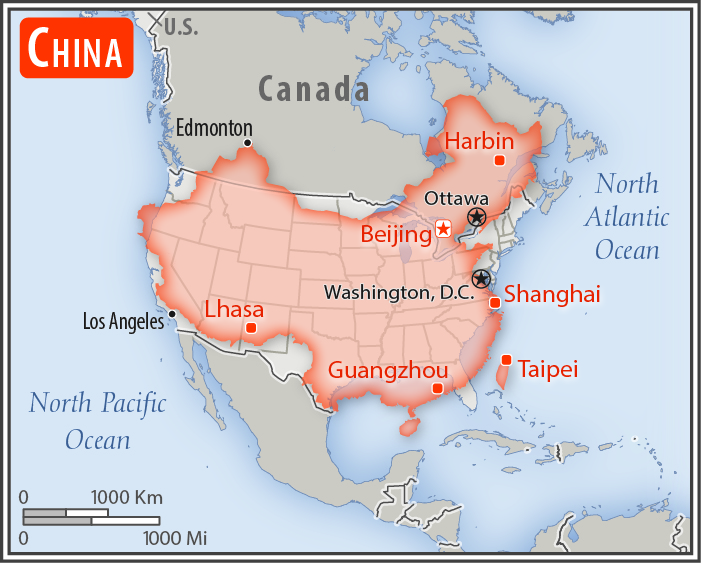
SIZE OF CHINA IN COMPARISON TO AMERICA

China is not America.  Though about the size of America, China has a population of 1.31 billion; America 325 million.

Chang’s book is frightening to American parents who have the luxury of endorsing extended childhood through college for those who have a high school education.

Imagine a sixteen year old daughter taking a train to a city where she knows no one; has no financial support, and is expected to make her own living.

It is hard to imagine an American daughter that has no opportunity except as a barer of male children.  What is a young Chinese girl to do if her life options are limited? What is any human to do if their options are unfairly limited?  The poor in America know, but that is another book.

“Factory Girls” is an impressive report of the massive cultural change occurring in China.  It is an astounding affirmation of the “will to power” explained by Friedrich Nietzsche. It is the drive of the superman (or woman) to perfect and transcend the self through the possession and exercise of creative power.

One cannot help but admire the factory girls of China; i.e. as difficult as the reality of their lives seems to be.

A BRADBURY CLASSIC

Audio-book Review
By Chet Yarbrough

(Blog:awalkingdelight)
Website: chetyarbrough.blog

The Illustrated Manthe illustrated man
By Ray Bradbury

Narrated by Paul Michael Garcia

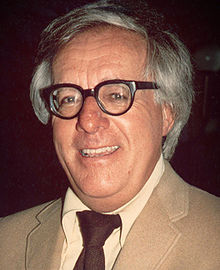
RAY BRADBURY (1920-2012)

Flights of imagination sparkle and spin in this updated 1950s  Ray Bradbury classic.  This compendium of Bradbury’ tales is titled “The Illustrated Man”.

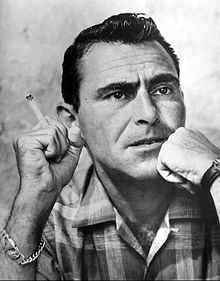
ROD SERLING (1924-1975, SCREENWRITER, TV PRODUCER, NARRATOR)

Bradbury spins stories; reminding one of late night re-runs of Rod Serling’s “Twilight Zone”.  Every episode sparkles with stars and planets, habitable by man but riddled with fear, death, and destruction.  Bradbury grasps human nature and turns it against itself by writing stories that illustrate man’s selfishness, insecurity, wantonness, and aggression.

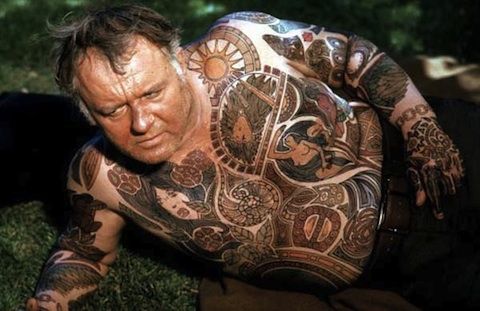
Tattoos come alive on rippling skin to act out a series of plays about mankind’s future.  Everyone fears the illustrated man because his tattoos expose the worst in man.  Belief that nuclear cataclysm will end life on earth blooms like a mushroom cloud.  Traveling to other planets changes mankind’s environment but man’s nature remains the same.

THE ILLUSTRATED MAN (PLAYED BY ROD STEIGER)
THE ILLUSTRATED MAN (PLAYED BY ROD STEIGER IN A 1969 MOVIE) Tattoos come alive on rippling skin to act out a series of plays about mankind’s future.

AYN RAND (1905-1982)
AYN RAND (1905-1982, AUTHOR WHO FIRMLY BELIEVED IN THE VIRTUE OF SELF-INTEREST) Unregulated self-interest is a dangled reward stolen by one to keep it from the many; in the end the reward is destroyed by the selfishness of each against the other.)

These are not happy stories but they are great flights of imagination.  Bradbury tells a story of human exile and deprivation that exacerbates selfishness when personal reward is dangled in front of exiled and deprived human beings.  The dangled reward is stolen by one to keep it from the many; in the end the reward is destroyed by the selfishness of each against the other.

Insecurity is a devouring beast in the story of a planet blessed by an appearance of a Visitor (presumably Jesus) just before a rocket ship lands on the planet that has been visited.  The captain disbelieves it has happened and is driven to track down this Visitor rather than settle in the insecure surroundings of a unblessed world.  The captain is left to wander the universe, never to arrive in time to actually see the Visitor.

INSECURITY
Insecurity is a devouring beast in the story of a planet blessed by an appearance of a Visitor (presumably Jesus) just before a rocket ship lands on the planet that has been visited.  The captain disbelieves it has happened and is driven to track down this Visitor rather than settle in the insecure surroundings of a unblessed world.

INFIDELITY
Wantonness is illustrated by Bradbury’s story of an unhappily married man. 

Wantonness is illustrated by the husband that is unhappily married.  He duplicates himself.  His duplicate takes his place beside his wife so he can buy a ticket to Rio to exercise his fantasy.  The duplicate is so perfect it becomes as human as the husband.  The duplicate places the wanton husband in a box to die, and buys a ticket to Rio for his wife to accompany it in its fantasy.

Human kind is aggressive.  Humans conquer and destroy civilizations.  One world of the future prepares for a second visit from mankind by becoming the image of a City.  This image devours the men of the second visit and assumes their bodies; i.e. the City image is transformed into the bodies of the humans from this second visit.  The City image plans to return to earth to destroy those who had destroyed them.

NUCLEAR DETONATION ABOVE TEST TARGET 1986
Human kind is aggressive.  When human’s conquer or destroy others, others rise to  destroy those who had destroyed them. An endless circle of life where agression eats itself.

Bradbury is a master story-teller.  Paul Michael Garcia’s narration is a tribute to Bradbury’s skill.