CHINA AND RUSSIA

Audio-book Review
By Chet Yarbrough

(Blog:awalkingdelight)
Website: chetyarbrough.blog

George F. Kennan: An American Life

By John Lewis Gaddis

Narrated by Malcolm Hilgartner

John Lewis Gaddis (Author, Professor of Military and Naval History at Yale.)

When Churchill gave his famous “iron curtain” speech in March 1946, George Kennan already understood the iron curtain’s implication and consequence. Kennan is known as “the father of containment” during the Cold War of 1947-1989.

The relevance of Kennan’s containment policy resonates with today’s American relationship with China. However, its relevance is one of contrast; not similarity. Today, there is no iron curtain that separates China from the rest of the world. The iron curtain has become a cloak. It is a cloak that obscures intent.

The age of the corona virus and China’s decision to delay world notification may or may not have changed America’s response. China’s cloaking of information will haunt the world’s corona virus survivors. Though there is no iron curtain today, secrecy and failure to disclose information fully replaces its physical barrier, and real world effect.

After the war, Kennan insisted on being relieved of duty in Russia and returned home to Wisconsin because President Truman was ignoring Kennan’s recommendations on a “sphere of influence” approach to the U.S.S.R. 

As a deputy head of the Moscow ambassadorship, Kennan sent the famous “long telegram” to the then Secretary of State, James Byrnes, explaining how the Soviet Union should be handled after the end of WWII.  The “long memorandum” makes Kennan famous because it capsulizes what became U.S./Russian foreign policy for the next 30 years.

Kennan recognizes Stalinist Russia’s pursuit of world domination as a Marxian belief of inevitability. With an eastern Russian’ ethos that endorsed persistence and patience (a quality we see in China today) Russia reveals its strength and weakness. 

Kennan recognizes the threat of Russian domination in the 50 s and 60 s. However, he believes it can be managed with patient and persistent opposition by America. Within the limitations of military and economic might, the United States could directly intervene in Russian encroachment when feasible.

When direct confrontation was not feasible, overt cooperation could be undermined based on Machiavellian’ assessment of Russian expansion.  In other words, Russian expansion could be contained and managed by a prudent use of force and guile by the United States. This approach worked with Russia. It is less likely to work with China.

China focuses on international domination through economic growth and influence.

Modern Russia has a similar ambition, but its domination is based on the threat of force and military intervention. Both countries expand their influence but Russia is constrained by a much weaker economy, and the limits of military threat and intervention.

China has little economic constraint on growth of the economy or military because of its growing prosperity, and broadening international influence.

China’s military strength is largely based on deterrent capability; backed by economic growth. Russia’s military growth is based on economic constraint, and the political limits of intervention and force.

Kennan argued Stalinist Russia’s ideology would fail because it is flawed. Kennan believed the gap between truth and lies would limit the U.S.S.R.’s reach and longevity.

Kennan believed that the role of the United States was to contain Russia until it collapsed from the weight of its’ mistaken ideological belief in the unerring truth of collectivism.

There is a strain of collectivist belief in Xi’s Chinese communism but it is tempered by economic freedoms that have improved millions of Chinese lives.

In spite of Xi’s emphasis on communist party rule, the genie of economic freedom has made China more pragmatic and less ideological.

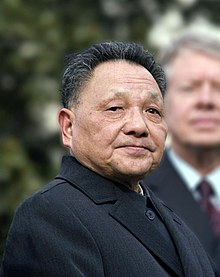
Xi has abandoned his restraint in use of force in Hong Kong demonstrations. One doubts the abandonment of restraint is unending because it is influenced by Chinese communism’s change; a change that began with Deng Xiaoping’s policy of expanding personal economic freedom.

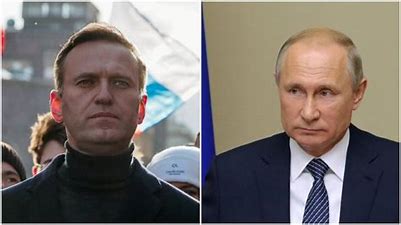
The Stalinist ideology that the collective is more important than the individual evolves in Russia but its evolution retains belief in force (sometimes murder) and intervention as reliable tools for world domination. That belief is Putin’s Achilles heal.

In later years, Kennan’s containment argument for the U.S.S.R. is found to be correct but even he suggests the cost was too high. He believed Russia’s decline could have been accelerated. The flaw in today’s Russia is not in exclusive belief in the collective but in use of force as a first, rather than last, resort.

Putin’s invasion of Ukraine, and intervention in Syria negatively influence world opinion.

In contrast, Xi’s “Road and Belt” initiative positively influences world opinion. (This is not to say all countries are enamored by Chinese largess because it increases their debt, but in many cases China is the financier of last resort.)

A duel, positive effect of Xi’s “Road and Belt” initiative is to create a wider market for Chinese goods. China chooses positive behavioral reinforcement while Russia chooses negative reinforcement (military action, limited energy resource distribution, cyber attacks on voting preferences in other countries) to achieve world influence.

Xi may be more ideologically driven than Putin but he is constrained by Deng’s cracked door which opens the economy to private Chinese entrepreneurs.

Things change and remain the same. George Kennan’s containment policy is reified in 2021, but now it is spoken of in regard to China and the policies of Chairman Xi. A concern one may have–this is not the 20th century. Technology has changed the world. International connectedness, economic interdependence, and environmental degradation require less containment and more cooperation.

Xi’s “Road and Belt” initiative expands China’s influence in the world while Putin’s actions diminish Russia’s influence.

Kennan, born in Wisconsin, went to Princeton after attending Wisconsin’s St. John’s Military Academy.  After receiving his undergraduate degree, rather than going to law school, he joined the newly formed U.S. diplomatic “Foreign Service” and became a vice consul in Geneva, Switzerland.  However, on a chance visit back home, Kennan met William C. Bullitt, the U.S. ambassador to Moscow, and was asked to accompany him to the U.S. Embassy in Russia in 1933.

Because of Kennan’s extraordinary foreign language ability, he became a fluent Russian language expert on Soviet affairs.  He was a student of pre and post-revolutionary Russian’ culture; he used that knowledge to forge an American foreign policy to deal with Russian expansion after WWII; i.e., his prescient grasp of Stalin’s mind, and the Russian culture, allowed the United States to contain the Russian empire within Eastern Europe by limiting American overt action and covert action through confrontation, black-ops, and diplomacy. 

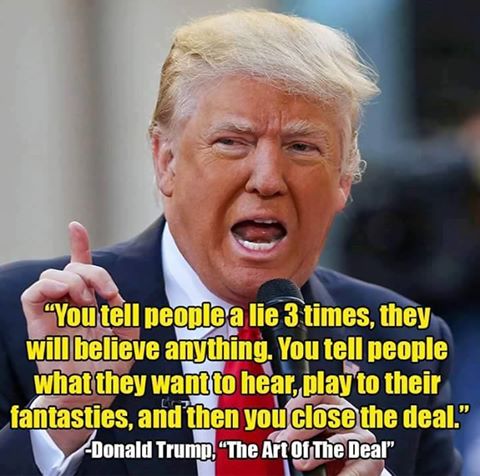
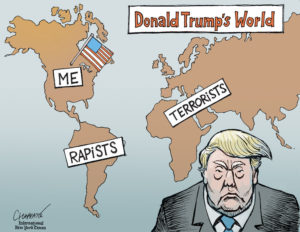
To Trump, international relations should be conducted on a give and take basis; leaving only winners and losers.

America’s President has no Kennan in mind. Trump looks at international relations as a transaction. Trumps thinks diplomacy is like a business. Government is not a business and governance always suffers when dollars and cents are the only criteria for measurement of success.

President Trump’s nomination of Jon Huntsman Jr. as ambassador to Russia is a case in point. Huntsman spoke Mandarin Chinese which made him a highly credible candidate for a stint as Ambassador to China during the Obama administration. Trump appoints Huntsman to Russia because he is a wealthy Republican business man. One doubts the appointment had anything to do with Huntsman’ understanding of Russia or its language.

Though containment was not entirely successful, Kennan’s assessment of its spread to Yugoslavia and China were recognized as independent power structures. Yugoslavia and China believed in the value of the collective but evolved into less doctrinaire belief in “the many being more important than the one”. Yugoslavia dissolved into different states with different economic principles, and China changed its economic philosophy by acknowledging the importance of one among many.

George Kennan’s biography reinforces a belief that understanding another culture requires emergence in that culture.  Ambassadors that are not fluent in a culture’s language and fail to spend years in that culture’s environment cannot understand what policies America should adopt to protect itself and promote world peace and freedom.  One wishes all American Presidents would recognize that need in Ambassadors representing the United States.

Kennan’s biography reveals the importance of self-interest in foreign policy and how a Machiavellian manipulation of events is essential for a reliable margin of success.  Of course, some American Presidents have taken self-interest and Machiavellian manipulation to an extreme.

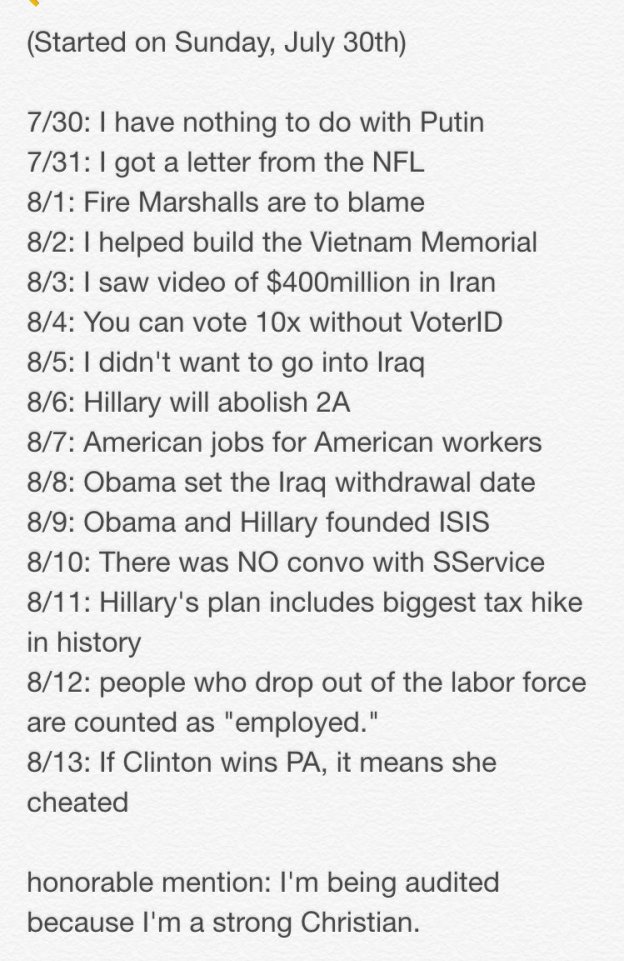
Trump is not the first American President to cross the line of truth and morality but he seems one of the most prolific.

Kennan is revealed as a human being in this biography, not perfectly right or entirely wrong; subject to mistakes, personal biases, and prejudice; but grounded by life in a real, not purely theoretical, world.  Kennan lived through many great events in world history, from WWII to Vietnam. His active professional life gave the United States what it needed most; i.e., perspective and practical diplomatic advice.

AMERICAN TAXATION

Audio-book Review
By Chet Yarbrough

(Blog:awalkingdelight)
Website: chetyarbrough.blog

A Fine Mess (A Global Quest for A Simpler, Fairer, and More Efficient Tax System

By: T. R. Reid

Narrated by T. R. Reid

T. R. Reid is a reporter for the “Washington Post”.  He is not an economist.  However, he suggests there are more equitable ways of taxing the American public than presently used by the government.

Reid’s travels around the world investigating other countries tax systems are the basis for his theory for cleaning up America’s “…Fine Mess”. Sadly, Reid has a futile unrealistic attitude that the British characterized as pissing in the wind.

Reid suggests a tax overhaul is due in America.  The last major revision was over 30 years ago.  He argues a mess has been created by incremental tax changes that have greatly exacerbated the wealth gap in America.  Reid illustrates the many ways in which the American tax system is a mess.  An often-quoted factoid is “Warren Buffet is taxed at a lower rate than his secretary”.

There are many economists that would agree with Mr. Reid.  The most famous is the French economist Thomas Piketty who wrote “Capital in the Twenty-First Century”. 

Reid argues the U.S. has the highest corporate tax rate in the world but the lowest corporate taxes collected.  Having the high rate and collecting it are two different things. 

Reid notes corporations like Caterpillar, Apple, Microsoft and others spent millions of dollars to set up legal tax shelters that reduce corporate tax to single digits; to as low as zero for some. 

Reid goes on to explain how billions of dollars are kept in corporate accounts outside of America to avoid taxation, and how that money is not repatriated to the U.S. because of current tax law. 

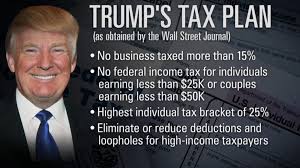
(Ironically, during Trump’s administration, corporate rate was reduced from 35% to 21%; and continues to be a significantly uncollected tax.) 

The fact that Trump paid $750 in federal income taxes (either legally or illegally) in the year he became President is an example of corporations’ failure to pay their fair share.

DEFINITION BBLR

Reid persuasively argues that a tax overhaul should be made based on the principle of BBLR, a “Broad Based Low Rate” tax.  The purpose of a tax overhaul would be to eliminate loopholes, broaden and reduce tax rates while equalizing citizen’ tax burden.  Schemes for creating tax shelters would be eliminated.   

As is widely known, millions of dollars are spent by American citizens and corporations to file tax returns.

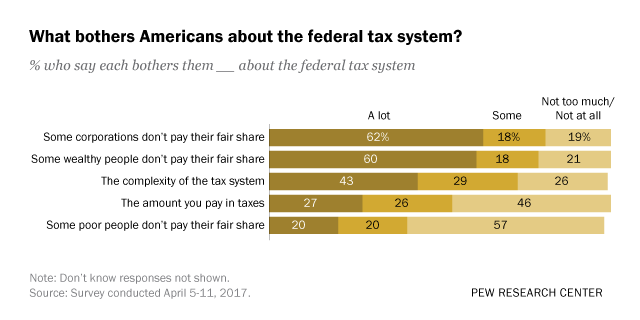
Preparing and paying taxes is laborious and confusing task for many Americans.  Even basic tax return filings are difficult for many American citizens to complete.  How many do not file because of that difficulty?  Some buy software to file taxes.  Add to software purchases and there is only growing tax-preparation costs to file for others. Those costs are borne by individual tax payers. The expense of our inefficient, and inequitable tax system multiplies geometrically when you add corporation efforts to avoid taxes.

America’s taxing inequity is glaring.  Millions of dollars are spent to avoid taxation through creation of tax shelters.  The formation of these shelters costs millions in lawyer, tax consultant, and auditing fees but save billions of dollars for corporations and the super-wealthy who legally (sometimes illegally) reduce taxable income.

“Occupying Wall Street” is not a hippie “sit in” but a plea for reform of American “moneycracy” just as Thomas Paine’s “Rights of Man” was a plea for reform of Aristocratic inheritance.

Reid’s point is that America’s “…Fine Mess” can be made simpler, fairer, and more efficient by creating a completely new tax system.  He suggests the corporate tax might be eliminated and replaced by a flat rate with no loopholes.

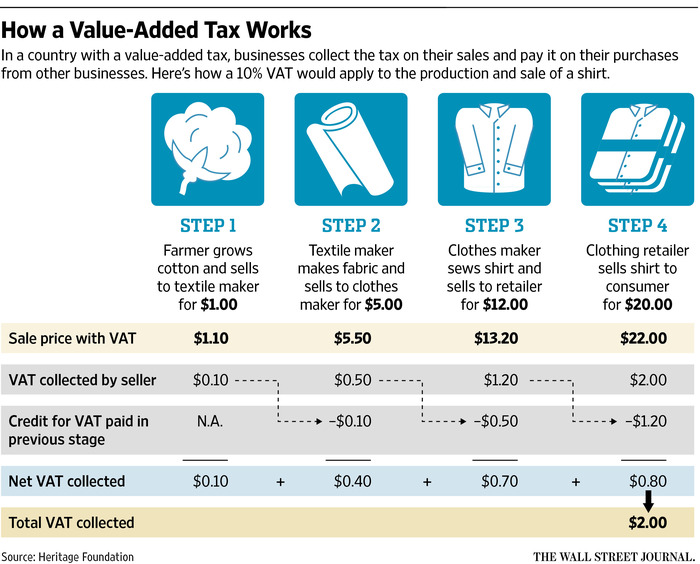
Reid argues for a “Value Added Tax”.  A VAT would be a combination of local taxes and federal taxes on all consumable goods. 

After collection, this tax would be distributed between States, and cities, as well as the Federal Government.  The purpose of these taxes would be for maintenance of local services (like education, public safety, public works, and administration), and Federally mandated services (like national defense, health, education, and public welfare).

Reid’s argument is that VAT’ enforcement would require less supervision by the government because a VAT applies at each stage of the production of goods.  Each stage of production is rebated for taxes paid by the handler that adds value. The VAT is a combination of taxes at each stage of production which is reported to the government for reimbursement.  The reimbursements must add up to the final tax charged to the consumer.  If the numbers are not the same, the IRS will be able to tell which manufacturer failed to pay their tax.

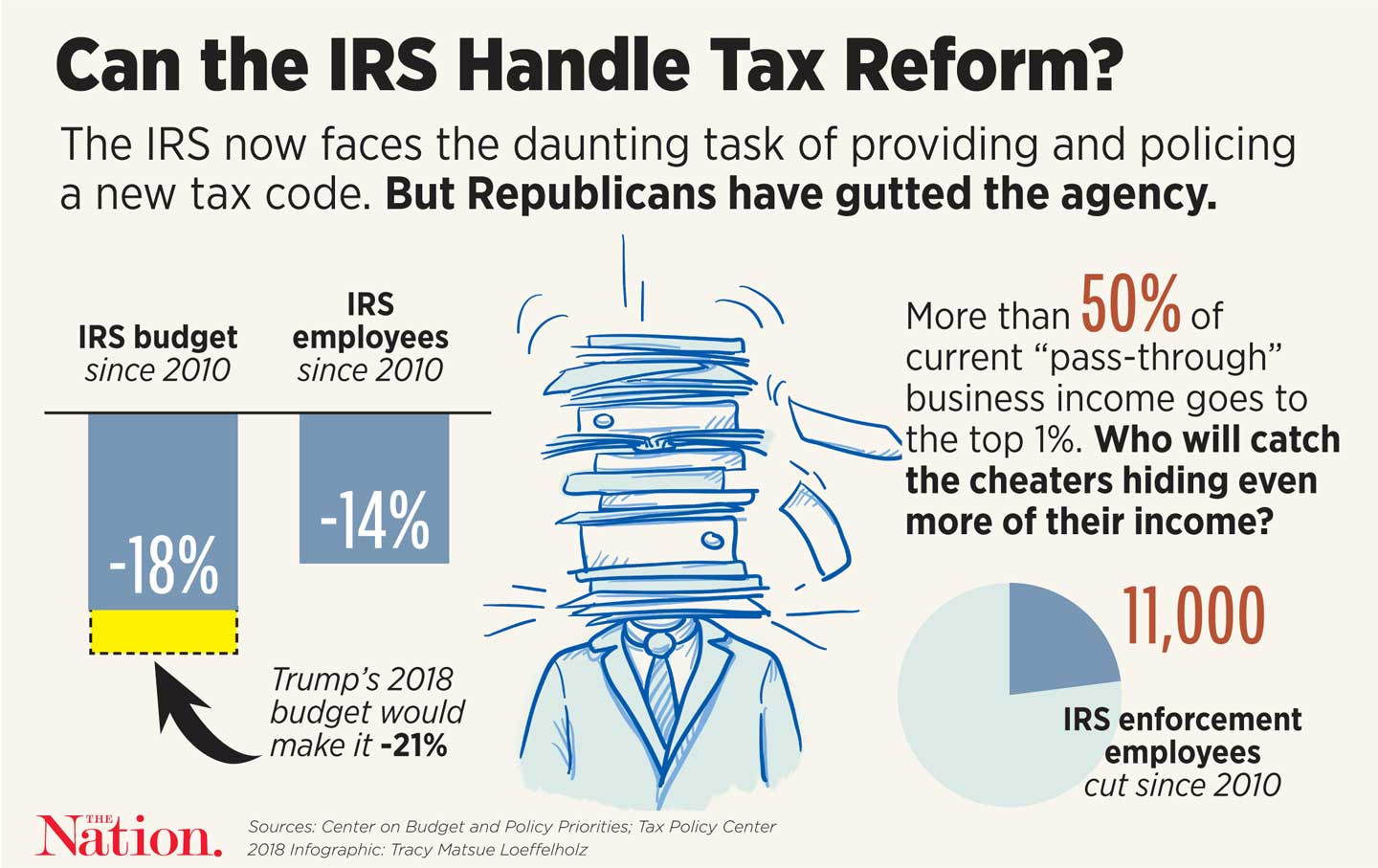
A simple computer program would be able to monitor the collection of the tax because it must balance to all reimbursements of added value.  In theory, a VAT eliminates much of the need for a massive Internal Revenue Service which Reid suggests is unable to adequately monitor the present taxation system.  Reid notes that it is impossible for the IRS to closely monitor today’s taxing system because of the complicated nature of its Congressionally legislated structure.   

Another BBLR tax recommended by Reid is a financial transaction tax that would be low but capitalize on every financial transaction in the United States. 

This transaction tax would be less than a penny per dollar but capable of raising billions of dollars based on the many financial transactions that occur in the U.S. 

Reid offers the example of Hedge Funds that specialize in massive trades for short periods of time.  These Hedge Fund trades move the stock market by fractions that reap millions for traders.  With a tax on financial transactions revenue would be created for Federal Government programs that serve the health, education, and welfare of the nation.

What concerns a listener about Reid’s argument for a Value Added Tax is its potential for continued inequity.  The poor may have to pay the same price for food, energy, and shelter as the rich.  Reid does not adequately address that concern except to suggest a system would be established to offset that inequity.

Another concern, inadequately addressed by Reid, is the impact on Hedge Fund traders business if they lose the advantage of small changes in quick trades. Will Hedge Fund transactions disappear?

Political will is another issue not adequately addressed by Reid.  What majority of congress men and women will stand up to the many lobbyists who support them in their election?   Will most Republicans and Democrats co-opt or fight special interests that object to a massive change in the American tax system? 

Finally, how would America deal with the lost jobs for tax lawyers, tax preparers, software developers, and corporations that benefit from tax preparation and tax avoidance schemes?

One may agree with Reid’s assessment of America’s tax system.  It is a “A Fine Mess”.  The question is–Do our elected representatives have the political will to clean it up; or at least make it fairer? 

Incremental change of the tax code only makes it less intelligible. In Reid’s opinion, it is all or nothing.  Reid implies “go big” or “go home” because nothing will change if the entire tax code is not replaced.

CORPORATISM

Audio-book Review
By Chet Yarbrough

(Blog:awalkingdelight)
Website: chetyarbrough.blog

The Price of Civilization

By Jeffrey Sachs

Narrated by Richard McGonagle

Jeffrey Sachs (Author, American economist, Columbia University Professor)

Jeffrey Sachs skewers modern Presidents and lionizes John Kennedy.  Written before 2016, one wonders what Sachs might have written about President Trump.

One may agree with some of Jeffrey Sachs’ observations of what is wrong with America but his solutions are academic; not pragmatic. Sachs is an idealist. Corporatism is an out sized economic benefactor for the United States.

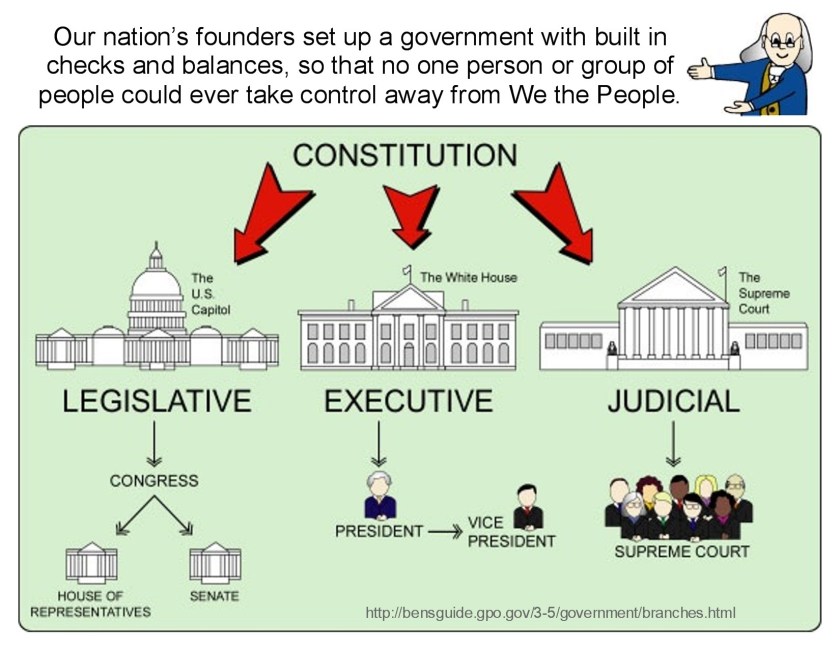
Government checks and balances are America’s only defense against corporatism.

“The Price of Civilization” is an unsatisfying audio book.  Not because it is irrelevant but because it’s saccharine idealism and disconnection from the real world.

Though much of Sach’s criticism of Obama, George Bush, Bill Clinton, and Ronald Reagan is deserved, his professorial economics is cloying because it ignores political reality and the truth of human nature.

The father of American economics, Adam Smith, is the first to have recognized the critical role of politics in economics.

Politics is a social science of give-and-take in both democratic and autocratic societies. The difference is–politics in democracy is practiced among the many; while in autocracy, politics is practiced among the few.

Just as Adam Smith’s “Wealth of Nations” includes politics in economics, Thomas Hobbes’ “Leviathan”, introduces human nature to government. Thomas Hobbes notes Human nature is both good and bad. As logic dictates, politics in economics is both good and bad.

Sachs is spot-on as an academic economist. Trump and many elected officials ignore political reality.  Public policy has always been a matter of “who’s ox is getting gored” whether Democrats, Republicans, or despots are in control of government.

Sachs cleaves to Platonic and Aristotelian platitudes like “all things in moderation”. To suggest that a philosophical awakening of the millennial generation (those born between 1977 and 1992) will cure American lassitude and political apathy is naive.


Sachs optimistically believes the millennial generation will eschew the luxuries of American dreamers (owning hot cars, nice homes, and beautiful clothes) to become voters for change.  Obama represents those voter’ beliefs but fails politically for the same reason Sachs’ book is a mess.

Changing public policy is not going to occur with an American generation that magically begins believing less is more. Re-election of a new President, whether Democrat or Republican, will not fundamentally change America’s system of choosing corporate winners and losers.

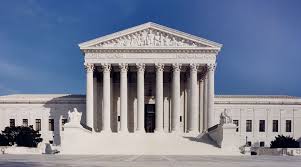
One can agree with Sachs’ observation on 2010’s “Citizens United v. Federal Election Commission” decision. The Supreme Court erred in identifying corporations as individuals with the rights of unlimited corporate donation to electors.

Defeat of gun control legislation shows how entrenched lobbyist organizations can steer the course of public policy, regardless of a democratic majority’s support of policy change.

Sachs is right in his assessment of the wrong-headedness of what he calls “corporatocracy”; i.e. the institutionalization of an election process that is founded on money rather than public representation. 

Human nature gets in the way of doing the right thing.  Humankind naturally seeks freedom.  (Las Vegas demonstration to reopen the economy during the pandemic.)

When freedom of choice is impinged upon, human beings are reluctant to change.   Of course, this is an over simplification but Sachs minimizes mankind’s innate desire for freedom. 

Las Vegas mayor Goodman wants to re-open the economy in the face of Covid19. She believes freedom and survival of the fittest is a matter of human nature; not government fiat.

She infers–if its your time to die, so be it.

Regulation of human activity impinges on free choice whenever one person thinks they know what is best for another.

Human nature is not going to change; i.e. it will always contain good and evil intention. Bernard Madoff comes from the same culture as Warren Buffet. 

Trump and the Republican party’s approved tax law and Covid19′ fiscal response illustrates contempt for the middle-class, and ignores the needs of the poor.

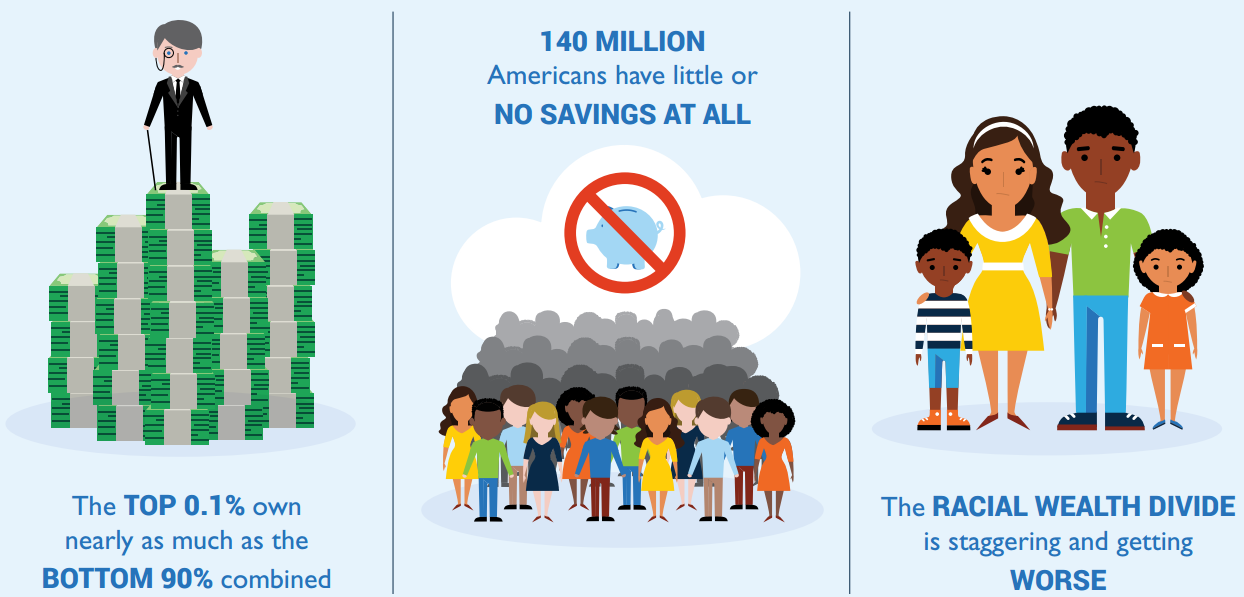
Many Americans are disgusted with the political process in 21st century America.  Even the super rich and rich are not satisfied with the status quo.  The rising gap between rich and poor embarrasses those who believe in equal opportunity for all.

How can America justify a social security tax for a movie actor’s (or sports star’s) income of millions per year when a middle income family makes $40,000 to $132,900 per year and has to contribute the same amount as a multi-millionaire.

A person with a middle class income will pay 6.2 percent of their income for social security. There is a maximum cap of $8,239.80/year/person. One who makes millions of dollars per year will not have to pay more than that $8,239.80/year; i.e. the same maximum amount a middle income person pays. No wonder social security is going broke.

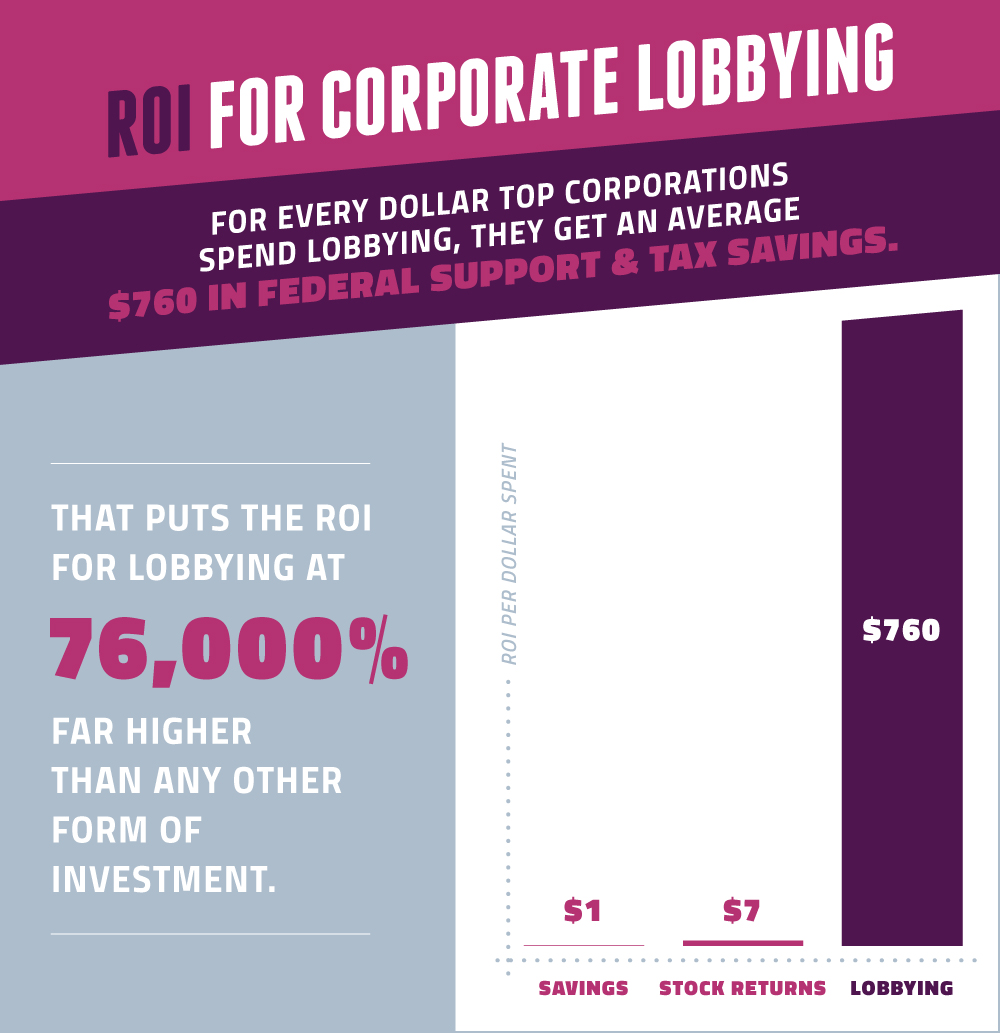
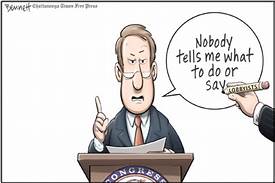
When one is elected to congress every two years, fund raising becomes the elector’s primary focus of attention.  When corporations speak, electors listen.  Lobbyists and corporate money are more important than the aggregate input of voters.  No wonder American voters are apathetic.

Sachs notes Oliver Wendell Holmes dictum about taxes.  Holmes wrote that he loved to pay taxes because taxes are the cost of civilization.  The weakness of that generalization is in the definition of civilization.  If civilization is that stage of human social and cultural development and organization that is considered most advanced, why does the richest country in the world:

  • 1)have citizens living on the street,
  • 2)have citizens imprisoned-to only isolate and punish, and
  • 3)have children dying because of poor medical care.

When an investor turns a portfolio over to a brokerage company, that investor has to “trust but verify” the actions of the brokerage company in regard to overall portfolio performance.  If the broker under performs the market, the investor knows it is time to change brokers. 

When a government under performs when public tax dollars are invested, voters cannot, without revolution, change governments. 

Sachs accurately notes there is no difference between Democrats and Republicans in the United States.  Both parties talk the talk but fail to walk the walk. Elected officials are too beholding to lobbyists and corporate America.

Americans are reluctant to pay higher taxes because they see no discernible improvement in their lives.  Why invest in a government (pay more taxes) that fails to produce improved results?

Sachs ideas for correcting America’s ills—

  1. Reduce the deficit by cutting military spending and increasing taxes.
  2. Reduce wealth disparity by investing in and retraining an obsolescent work force.
  3. Invest in and improve education with emphasis on primary and secondary graduation.
  4. Create jobs through infrastructure investment.  He argues that dependence on carbon-based energy is to be reduced by conservation with increased investment in alternative energy sources and more scientific research and development. 
  5. He argues that medical insurance should be provided to all Americans with a plan crafted by the medical community.

All of these goals are exemplary but to get there requires a massive (and unlikely) re-invention of human nature.   One could argue that many of these policies were promoted by the Obama administration, but little changed.

It is counterintuitive for a free society to choose moderate consumption.  Add mistrust of the American government and the likelihood of turning more money over to a government that does not work seems stupid to any rationale human being.

Hitler wrote in Mein Kampf, “Industry, technology, and commerce can thrive only as long as an idealistic national community offers the necessary preconditions.  And these do not lie in material egoism, but in a spirit of sacrifice and joyful renunciation.”  Sach’s idealism is a threat to an American economy that ignores the poor. It hides behind idealized Hitlerian propaganda.

Hitlerian characters are a threat to America when corporatism is the basis of public policy.

Of course, this analysis of Sach’s book is also a form of idealism.

The Korean War

Audio-book Review
By Chet Yarbrough

(Blog:awalkingdelight)
Website: chetyarbrough.com

The Korean War

By Max Hastings

Narrated by Frederick Davidson

Max Hastings (Author, British Journalist)

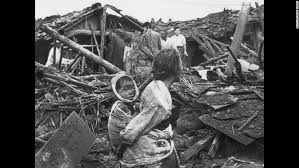
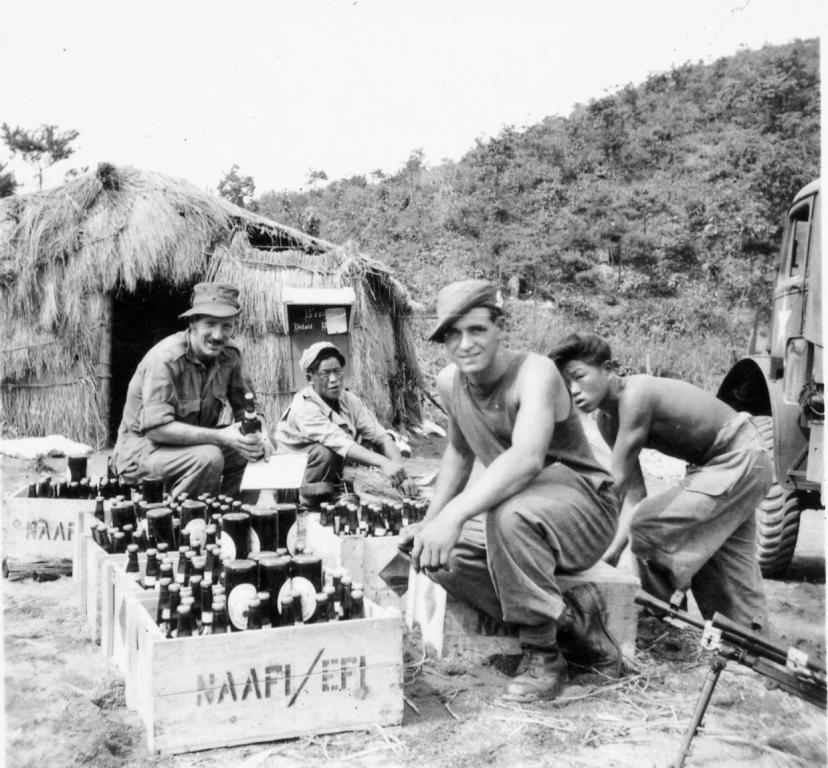
Max Hastings’ book reports the tragedy of the Korean War (1950-1953) fought by United Nations forces against North Korea and China. The end of the Korean War is a return to its beginning with no winners and mostly losers at the 38th parallel.

Hastings begins by suggesting that South Korea ultimately benefited from the war but one wonders if the cost of human blood and treasure is worth today’s North and South Korean reality.

Karl Marx said that “History repeats itself, first as tragedy, second as farce”.

Syngman Rhee (Last Head of State of the Provisional Government of the Republic of Korea)

Hastings characterizes Syngman Rhee, the Republic of Korea’s leader (1948-1960), as corrupt, though less corrupt and venal than his North Korean counterpart, Kim il sung (1945-1994).

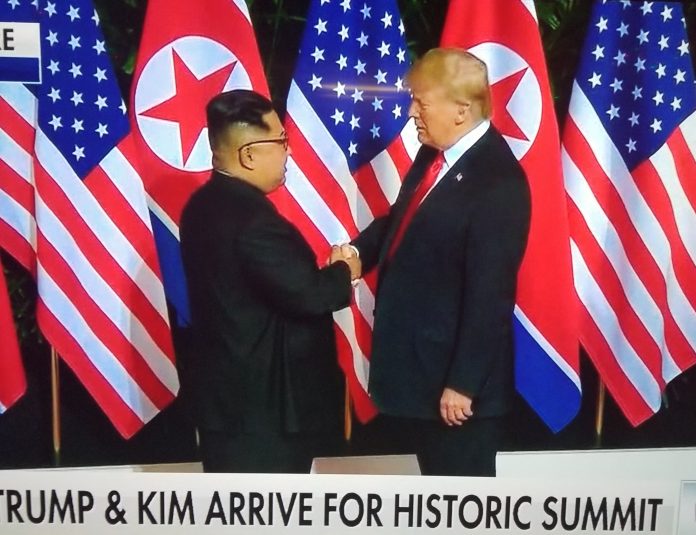
What is of concern to some Americans is President Trump’s relationship with North Korea’s new leader, the son of Kim il sung. Is the stage set for history to repeat itself?

Koje-do POW Camp

Hastings reports overcrowding, abuse, and neglect of North Korean, and Chinese P.O.W.s on Koje-do Island during the Korean war. 

Hastings notes the use of the least competent military personnel as guards while the more competent soldiers were fighting the war.  Hastings tells of prisoners at Koje-do being hung by their testicles and drowned by water hoses secured to their mouths.  How different is that to a naked prisoner at Abu Ghraib or reported water boarding of enemy combatants?

Abu Ghraib prison treatment.

How similar is Koje-do Island’s P.O.W. camp in the Republic of Korea to Iraq’s Abu Ghraib prison?

America repeats many of Korea’s mistakes in Vietnam and Iraq.  The question is–are military interventions new history or the second coming of a repeat tragedy?

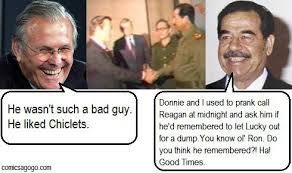
How similar is America’s support of Vietnam’s Ngo Dinh Diem (1955-1963), and Iraq’s Saddam Hussein (1979-2003)? 

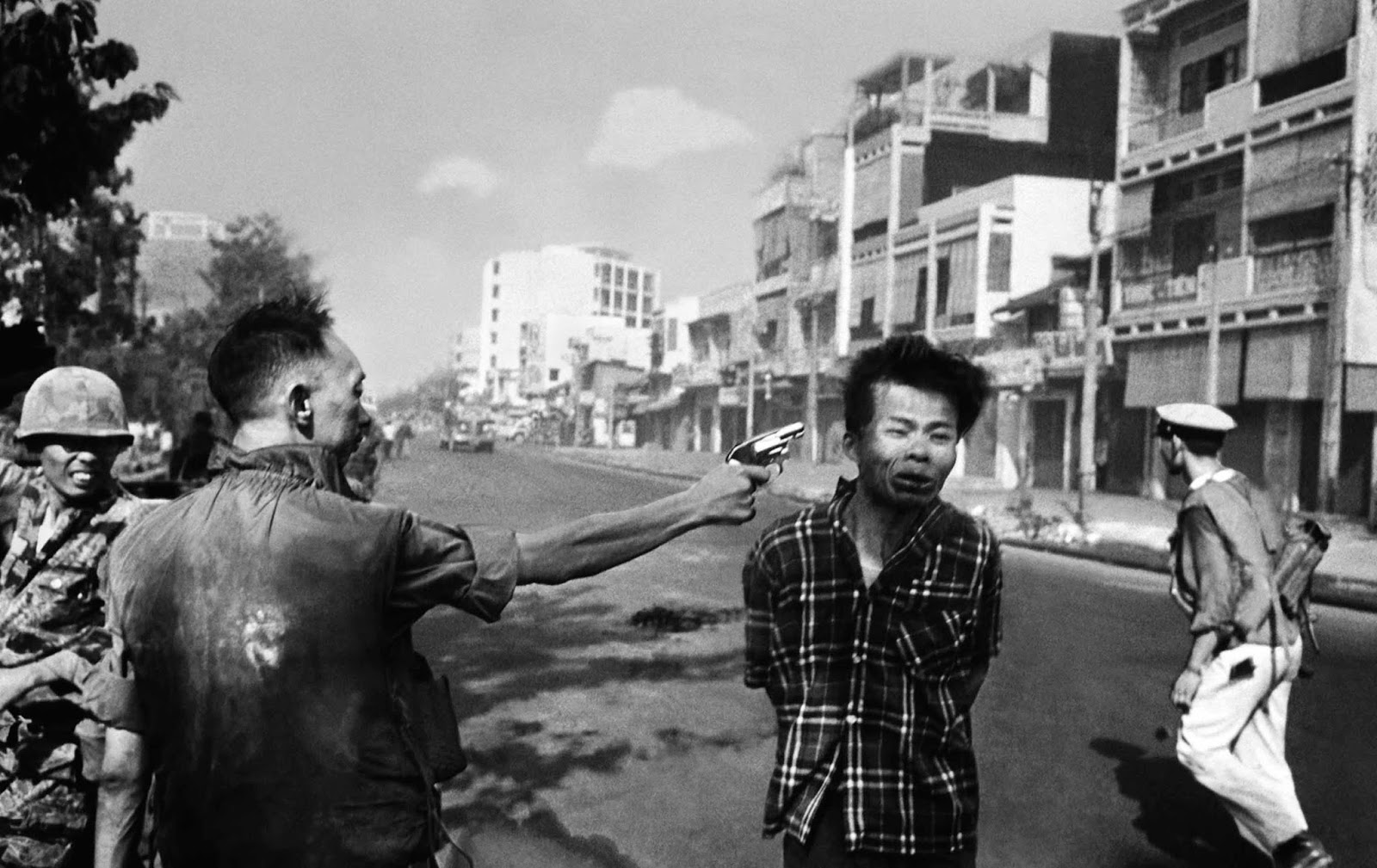
Summary execution of a Vietcong in Saigon (Gen. Nguyen Ngoc Loan shoots Nguyen Van Lem)

Vietnam’s Ngo Dinh Diem history is one of corruption as totalitarian and politically repressive as Rhee’s Republic of Korea’ government.   The wars in Korea and Vietnam are over.  Are Korea and Vietnam safer or better today than before outside military intervention?  Vietnam re-unified after the war; Korea did not.

America supported Hussein because he opposed Iran.  America’s relationship to Rhee is similar in that Vietnam historically opposed communist China.

Hussein gassed Kurds in northern Iraq and terrorized his country’s Shiite majority. Rhee declared martial law in the Republic of Korea and murdered an estimated 14 to 30,000 Koreans.

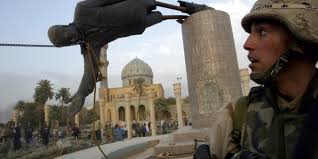
The question one may ask themselves, with Hussein dead, is Iraq safer or better today than before intervention?

Are South and North Korea safer or better as a result of the Korean war? From an economic standpoint South Korea is better and safer. That is not true in North Korea.

Francis Fukuyama, in a book titled “Political Order and Political Decay”, argues that violation of sovereign borders violates one of three pillars of a modern state. America’s invasion of Iraq destroyed the government’s ability to exercise power. The United Nations invasion of Korea results in a two state solution. That solution seems good for only some Korean citizens.

Whenever one thinks they know what is good for another there is a cognitive dissonance between what one wants and what one gets.

Hussein was a horrid ruler by American standards, but he was the head of a sovereign state. North Korea’s Kim Jong Un demonstrates the same qualities of leadership as Hussein.

Where will Trump lead America on the question of Kim’s reign? To paraphrase Samuel Clemens–history may not repeat itself, but it does rhyme.

When did human beings become “Gooks”, “Charlies”, and “Towel Heads”?  War brings out the worst in human beings by demonizing and animalizing the enemy making killing more socially acceptable.

Hastings shines a bright light on the ugliness and heroism of war.  Hastings immortalizes the Irish 1st Battalion RUR (Royal Ulster Rifles’) battles in Imjin and Kapyong in 1951 with a heart rending and inspiring story of determination and bravery.  However, his stories of fighting in subzero weather, being captured by the enemy, suffering from dysentery, seeing friends mutilated and killed, and fighting to the death for meaningless plots of ground are stomach turning episodes of despair.

After the 65th Chinese Army had exhausted itself attempting to smash through the defensive positions on the River Imjin held by the British 29 Brigade, the Brigade withdrew to a new line south of the River Han where, on 26 and 27 April, it rested and refitted for future operations. The Brigade had sustained over one thousand casualties at Imjin.

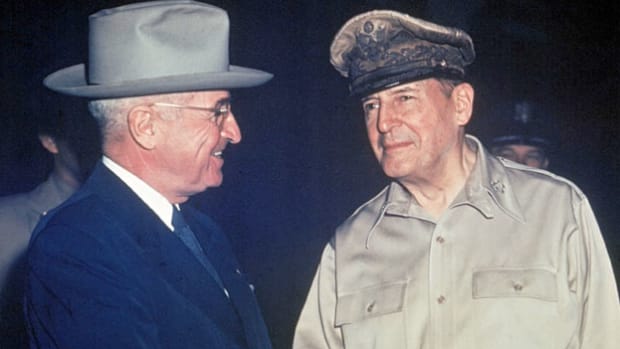
The glaring hubris of General MacArthur and his replacement with General Ridgeway by President Truman reinforces belief in the importance of good leadership.

A recurring theme in Hastings’ Korean history is the importance of ground forces’ confidence and spirit in the success of individual battles.  (This is a theme portrayed in Leo Tolstoy’s “War and Peace” which is equally well narrated by Frederick Davidson.)

Was the Korean War worth it?  Hastings fails to give a definitive answer but he provides an interesting historical background for one to consider its value.

FBI FALLIBILITY

Audio-book Review
By Chet Yarbrough

(Blog:awalkingdelight)
Website: chetyarbrough.blog

Enemies: A History of the FBI

By Tim Weiner

 Narrated by Stefan Rudnicki

Tim Weiner (American Author)

One does not come away from Tim Weiner’s book knowing where the line is drawn between value and scorn for government intrusion in the lives of Americans. This seems particularly relevant today when veracity, political bias, and honesty of the FBI is being seriously questioned

J. Edgar Hoover (1895-1972. 1st Director of the FBI from 1924 to 1972).

“Enemies…” is about the rise of the F.B.I. and J. Edgar Hoover’s role in the growth of American domestic intelligence. 

Weiner reports on questionable FBI tactics employed by Hoover.  Hoover sets the table for violation of human rights with a power that defies the intent of the American Constitution. 

Even though overt American legislation denies the right of the government to arbitrarily investigate private citizens, Hoover throws “habeas corpus”
into the trash.

(Habeas corpus is a writ requiring a person under arrest to be brought before a judge or into court, especially to secure the person’s release unless lawful grounds are shown for his/her detention.)

Weiner shows Hoover to lie about wire-tapping and gathering information on private citizens without warrant or judicial review.  This is the head of the FBI orchestrating the violation of American law. Hoover creates files that give the F.B.I. secret information about the personal sex lives of elected and government appointed bureaucrats and uses that information to influence elected officials and the American public.

Wiener suggests Hoover’s perception is that communism infiltrates all anarchist’ and most American government-opposition’ movements. Hoover crosses the line between free society and tyranny. He gathers information on individual citizens, union movements, civil rights, and accused domestic terrorists with an unshakable belief in his own perception of reality.

The historical facts of Weiner’s presentation gives context to the American communist beliefs of the 40s, 50’s, and 60’s. Hoover feeds the hysteria of his time.

A reader/listener is intellectually and emotionally torn by recounted beliefs held by some American and British citizens of Marxian communism. Some were willing to foment a social revolution by any means necessary.

Others were simply expressing a personal opinion among friends of the same opinion; not to foment revolution, but to explain what they believe denies equal protection, and/or equal rights in America. 

Wiener shows that some actions by the FBI warranted investigation. He notes Klaus Fuchs  who gave the Soviet Union secrets of the atomic and hydrogen bombs in the 50s, and the British agent, Kim Philby, who betrays American and British agents of the F.B.I., C.I.A. and British MI-5.  (Agents were murdered because of Philby’s betrayal.) 

The unfortunate consequence of Hoover’s domination of the F.B.I. is that it evolves into a vehicle of suppression, subject to the whims of one human being’s prejudices. This is particularly apparent in the rise and fall of McCarthyism.

America is a government of checks and balances and when any American agency abandons those criteria of governance, it compromises public freedom. 

Every human being is flawed; every human being is subject to the good and bad qualities of human nature.  When the F.B.I. or any government agency is dominated by one person, it fails the test of good government. That seems a justifiable critique of Hoover’s career in the FBI.

The American Constitution’s checks and balances are being used to address the FBI’s role in America.

One comes away from Weiner’s book to believe it is unfair to conflate the era of Hoover with the current administration of the FBI.

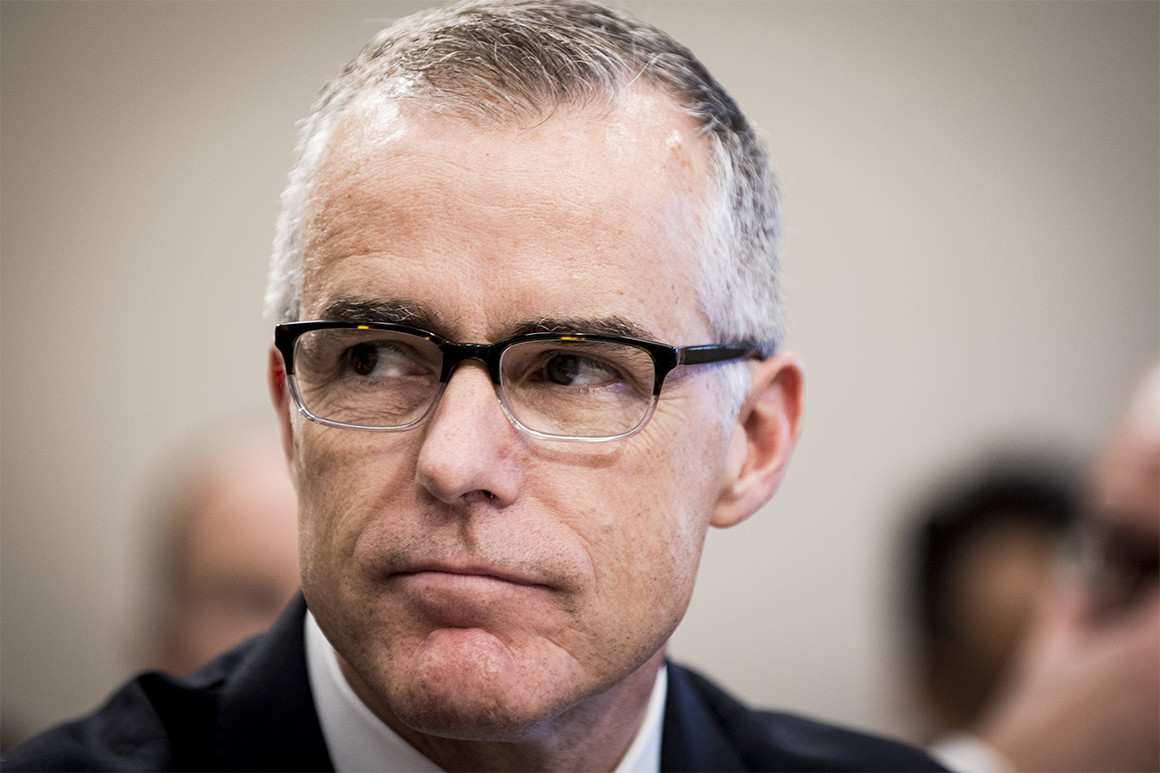
Serious questions are raised about the veracity, political bias and honesty of today’s FBI. There is the Clinton email investigation, the Trump collusion investigation, the firing of James Comey, and the Andrew McCabe and Peter Strzok dismissals.

“Enemies: A History of the FBI” is a relevant subject for the 21st century because of technology’s potential for exponentially invading personal privacy.  Checks and balances through rule of law are a free society’s only protection against human nature’s fallibility.

Michael Horowitz (American Attorney, DOJ Inspector General who is tasked with reporting FBI political bias.)

Though Horowitz’s investigative report is not to everyone’s satisfaction, there is little evidence of FBI’ political bias. There is ample evidence of human nature’s fallibility, but it only reminds us of ourselves. Individual FBI careers have been tarnished but there is no institutional political bias.

RATIONALIZATION

Book Review
By Chet Yarbrough

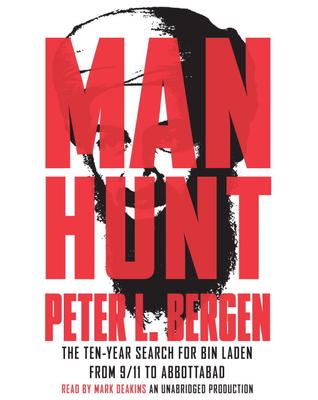
Manhunt: The Ten-Year Search for Bin Laden from 9/11 to Abbottabad
By Peter L. Bergen

Peter Bergen (British-American Journalist, Author, CNN Nation Security Analyst)

Written by Peter Bergen, Manhunt is a page turning thriller that tells America’s story of the search for and killing of Osama bin Laden, an acknowledged mass murderer.

The story of the search and killing of Osama bin Laden perversely satisfies human nature’s desire for revenge. 


Osama bin Laden (1957-2011, Saudi Arabian founder of the militant orgranization al-Qaeda.)

Osama bin Laden takes responsibility for 9/11/01 killing of nearly 3,000 innocents–one presumes bin Laden goes to his grave believing in his rationalization for terror and murder. 

Osama Bin Laden and his followers believe America manipulates and subverts Middle Eastern culture and religious belief. Bin Laden called Americans infidels who deserved death because they did not believe in the “truth” of Allah.  To most Muslims this is a distortion of the true meaning of Islamic faith and a false interpretation of the Koran.

Bin Laden’s son is alleged to have the same sentiment as his father. Hamza bin Laden is rumored to be the new leader of al-Qaeda with the same terrorist ambitions. America offers a $1,000,000 bounty for the capture of Hamza bin Laden. (Killed in 2019–alleged to have been a result of America’s counter intelligence operations in Pakistan and Afghanistan.)

Many, if not most, Muslims argue that Osama bin Laden misrepresented the Koran and its teaching about life and the hereafter. To many, the nature of the living is to be free to choose what one believes and to live in peace with your neighbors. 

Al Qaida’s rationalization for terrorism comes from an interpretation of the Koran that condones indiscriminate murder of others; including believers in the faith. This is appalling because it involves murder of innocents. How can a babe in arms be guilty?

Biblical literature of all major faiths, at different times, have notoriously rationalized murder of innocents. The God of Abraham is a vengeful God in the Old Testament. The Old Testament speaks of killing every man, woman, and child in ancient communities because of failure to follow the word of God. How can a child in the womb be guilty of not following the word of God?

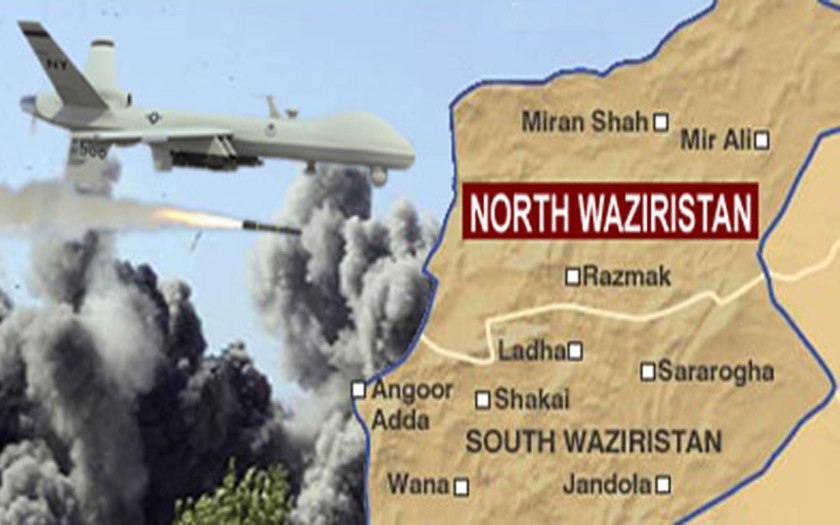
American rationalization for drone use also murders innocents.  There is a calculated number given as an acceptable number of innocents to be killed in a drone attack on suspected terrorists.

Osama bin Laden manages to evade capture for over ten years after 9/11.  Bergen infers this long period of evasion is a result of distracted American military focus, poor American intelligence, and political ambivalence of Middle Eastern allies.

The key to tracking Osama bin Laden is Ibrahim Saeed Ahmed, aka Abu Ahmed al-Kuwaiti (the Kuwaiti).  Bergen explains that Ahmed is a trusted courier for Osama bin Laden.  Ahmed is summoned to a compound in Abbottabad, after having been away from al Qaida for nearly a year.  This summoning and extensive surveillance of the Abbottabad compound suggest a high ranking al Qaida leader is hiding in this northeastern Pakistani’ city of nearly 1.5 million people.

Ibrahim Saeed Ahmed (al-Qaeda member and courier that lead Navy Seals to Osama bin Laden in Pakistan.)

Osama bin Laden Pakistan compound in plain sight of the Pakistani military.

Bergen explains how American government leaders and military analysts monitor and eventually infiltrate the Abbottabad’ compound for actionable intelligence.  The focus of the team is to determine who the high ranking person is in the Pakistani compound.  Speculation grows to a 50% chance that the person is Osama bin Laden.

Location of the bin Laden compound in relation to the Pakistan Miltary Academy.

The highest government and military leaders of America wrestle with life and death decisions; often based on too few facts for guaranteed mission success. 

Bergen’s build up to the decision to send a team of Navy Seals into the compound rivals the best drama one can write about a secret military mission. 

Bergen illustrates the difference between being a manager and a leader.  The former keeps an organization running; the latter gives organization purpose. 

Just as one President chooses not to cross the border of Iraq in operation Desert Storm, a second chooses to invade Iraq, and a third chooses to illegally cross Pakistan’s border. Some argue America is right twice and wrong once. (The misleading representation of WMD in the invasion of Iraq was a mistake for which America and the world continues to pay.)

Right or wrong, American Presidents show themselves to be leaders. Even Trump leads in his own way. The concern is in where facts begin and rationalization ends.

Woodward exposes Trump’s intentional decision to mislead the public. The corona virus nears 200,000 American deaths with projections of up to 400,000.

By the end of Bergen’s story, a listener understands the complexity of the decisions made by American Presidents. On reflection, one realizes bin Laden, Mao, Stalin, and Hitler were also leaders. In that recognition, one realizes how important it is for nations’ political systems to choose their leaders carefully.

AMERICAN RIGHTS

Audio-book Review
By Chet Yarbrough

(Blog:awalkingdelight)
Website: chetyarbrough.blog

Rights of Man


By Thomas Paine

Narrated by Arthur Morey

Thomas Paine (Author 1737-1809)

It seems time today to read Thomas Paine’s “Rights of Man”.  Though his primary purpose is to refute Edmund Burke’s condemnation of the 1789 French revolution, his observations on British Aristocracy are the essence of today’s American “moneyocracy”.

Though President Trump is not the originator of American “moneyocracy”, he is its quintessential representative.

In spite of domestic mass murders by demented Americans, Trump and many of his followers insist on giving voice to the NRA’s belief in an American right to buy automatic weapons designed only to kill people.

Uvaldi, Texas elementary school shootings 5.24.22

It takes money to run a campaign for public office. Trump, like most politicians, panders to lobbyist’ and business’ interests that distort the American electoral process.

The appeal of Trump has to do with American’s desire to be left alone. Whether a misogynist, a gun toting individualist, a federal tax cheat, or an independent morally upright American, many believe that is their right. Trump exemplifies the right to be left alone.

Beginning with congress’s approval of tax reform, America’s ballooning deficit is a direct consequence of a mistaken belief that “a rising tide lifts all boats”. Contrary to the tired refrain “jobs, jobs, jobs” to make “America Great Again”, the current administration is setting the table for the world’s next economic crises.

The “Occupy Wall Street” demonstrations are an amorphous scream of disgust by an educated population that resents American “moneyocracy’s” control of the economy, elected representatives, the election system, and the “Rights of Man”.  “Moneyocracy” is an inheritable line of an American aristocracy.

Instead of 18th century Aristocratic control of British government, 21st century America substitutes the wealth of individuals and corporations (classified as individuals) to control American Democracy. This is not a partisan issue in America.

Every President, Republican or Democratic, has sided with corporate interests in this era of corporate largess. The world is in a state of economic upheaval that is fueled by technology. That economic upheaval is not adequately addressed by corporate America. The government continues to subsidize yesterday’s economy at the expense of middle and lower income citizens.

Management executives that are employees of corporate America take salaries 50 times or more than salaries of their average employee. 

The new controller of our economy, the primary interest group of elected representatives, and the master of the American election system is corporate America.

Wealth is the new hereditary right of succession. Corporate America is the thief and ruler of inherent “Rights of Man”.

Once individual compensation reaches beyond rationality, money becomes fuel to maintain America’s “Moneyocracy”, the new hereditary right of succession.

The controller of our economy and political representation is corporate America.

The primary interest group of elected representatives, the master of the American election system, and ultimately, the thief and ruler of inherent “Rights of Man” are corporations and the super-rich. Of course, the rich have always been in control of American government. However, now the rich are not just singular individuals. They are corporations classified as individuals.

The Supreme Court in “Citizens United v Federal Election Commission” in 2010 rules that corporations are persons with the right to support candidates for office with as much money as they want to influence government policy.

The Supreme Court’s unwise decision based on freedom of speech identifies corporations as persons. With that nose in Democracy’s tent, corporations could offer millions of dollars to election campaigns. What human being cannot be influenced by such largess? Excessive executive compensation perpetuates “moneyocracy”, but corporate influence is the cause of the loss of the “Rights of Man”.

Tax change is a smoke screen that obscures the real danger of American decline in the 21st century.  It is too blunt an instrument to bludgeon the rich. It smacks of false patriarchy and jingoist rhetoric. 

American history shows that Americans believe that hard work is the source of success but being American does not guarantee a free ride. Equal opportunity is where America fails.

Education, anti-discrimination legislation, and equality of opportunity have to be strengthened. Corporate America needs to step up. Corporations need to quit wasting money influencing legislators and invest in human rights.

Corporations need to subsidize education by re-training their employees to meet changes wrought by technology.

Corporations must insist on equal treatment of employees, by gender and/or ethnicity. The government needs to re-enforce equal opportunity for all.

America needs to return to the ideals of equal opportunity by allowing entrepreneurs to create wealth through human productivity.  Money is not an end but it has become an end that has no end; i.e. high salaries perpetuate themselves through an Aristocratic “moneyocracy”.  If one says they make a $1,000,000 a year they are saying they are better then someone who makes $10,000 or $100,000 a year.  Salaried compensation is perceived as human value. 

Denying salaries that exceed 50 times average employee compensation is not denying the creation of wealth.  Entrepreneurs that create productive companies that grow to multi-billion dollar enterprises have opportunity to become billionaires; not from salaries, but from building human productivity that creates wealth.

“Occupy Wall Street” is an unlikely precursor of another American Revolution; however, it may be a symptom of an American cancer that debilitates productive life without killing the patient.  “Occupying Wall Street” is not a hippie “sit in” but a plea for reform of American “moneycracy” just as Thomas Paine’s “Rights of Man” was a plea for reform of Aristocratic inheritance.

ADDENDUM: Does the “right to be left alone” extend to pandemics? The question is raised when it comes to a pandemic that has killed over 783,000 people in the United States as of November 15, 2021. (Statistics provided by “worldometer”, a reference website that provides real-time statistics. Considered the best free reference website by the American Library Association.)

UNBRIDLED CAPITALISM

(Blog:awalkingdelight)
Website: chetyarbrough.blog

Audio-book Review
By Chet Yarbrough

White Tiger

By Aravind Adiga

Narrated by John Lee

ARAVIND ADIGA, INDO-AUSTRAILIAN AUTHOR, Winner of the Booker Prize in 2008 for “White Tiger”.

“White Tiger” pictures the chasm between haves and have-nots. It reminds one of “Native Son”.  Like “Native Son”, “White Tiger” speaks about the ugly consequence of discrimination and poverty. 

A big difference between “White Tiger” and “Native Son” is in the tragi-comic rendition of “White Tiger” on Netflix. One wonders if “White Tiger” is meant to be satire or a reflection on a flaw of capitalist self-interest. Maybe both.

A visiting dignitary from China is given a note by a former Indian servant who describes his entrepreneurial success in India.  The servant tells the story of his rise from the second lowest caste in India to successful entrepreneur. He is from a lower caste of the poor, but now he is rich.

The caste system remains strong in India. Having traveled there in 2018, our tourist guide notes his family is from the warrior class.

undefined

In speaking of his daughter, he explains that though he has limited control over whom she marries, his biggest concern is that she marry within her class. Caste ancestry still binds and defines much of India’s culture.

In “White Tiger”, Balram is the main character. Balram is an uneducated but clever observer of society. He is acutely aware of his position in life. 

Balram is destined to be a breaker of social convention. 

In India (and around the world) changing sociopolitical ideals, collapsing religious belief, deteriorating family ties, and human nature’s “good and evil” amplify the chasm between rich and poor.  

An irony of Balram’s story is that it is between two countries that have different political philosophies; i.e. one, democratic; the other communist. Their socioeconomic maladies are similar.  Both countries have dense populations, high industrial growth, and consequential environmental degradation. The common thread is China‘s and India’s drive toward capitalism.  

Balram considers himself a social entrepreneur who becomes a successful capitalist by breaking social convention. His broken convention is murder.

As the Indian servant’s story progresses, Richard Wright’s “Native Son”  and Adiga’s “White Tiger” metaphorically meet. Both carry out wanton murders of sociologically ignorant human beings. 

Bigger Thomas (the main character in “Native Son”) and Balram are one side of a capitalist’s coin, minted by poor education, poverty, and discrimination.  Their capitalist reality corrupts thought and action.

“White Tiger”, like “Native Son”, is a world warning about the consequence of the growing chasm between rich and poor; i.e. as long as societies believe that “a rising tide lifts all boats”, discontent and hostile action of the poor is the main thing that will rise.

Lack of prudent regulation of capitalism leads to the worst in human nature. Even though “prudent” is in the eyes of the beholder, ignoring the poor is a monumental failure of any society, whether capitalist or communist. Equality of education and opportunity are capitalism’s saving grace but grace is not natural to man; i.e. prudent regulation of human nature is required.

“White Tiger” is a credible warning of the danger of unbridled capitalism.

WINNERS AND LOSERS

Audio-book Review
By Chet Yarbrough

(Blog:awalkingdelight)
Website: chetyarbrough.com

Embracing Defeat
By John W. Dower

Narrated by Edward Lewis

JOHN W. DOWER (AMERICAN AUTHOR, HISTORIAN)

Victory is sweet; defeat is bitter.  Victory engenders responsibility for the defeated; defeat demands fealty to a victor. Fealty is not the goal of a victorious leader who seeks lasting peace.

Peace among nations has a price. John Dower’s reflection on WWII and Japan holds lessons for today’s American leadership and Putin’s folly.

John Dower, in “Embracing Defeat”, endeavors to picture Japan’s condition; i.e. the state of its economy and its people, after surrender in WWII. 

History’s complexity is difficult to capture in words.  Dower makes an effort to explain the context of post war Japan by showing Japanese attitude in media reports and literature of the time.  The irony of Dower’s effort is that media reports and literature are censored by Allied forces, particularly the United States. This is not unlike Vladimir Putin’s control of Russian media during the Ukraine invasion. Putin will undoubtedly use that control to soft petal a hopeful settlement, though unlikely palliative acceptance by Ukraine.

MICHINOMIYA HIROHITO (124TH EMPEROR OF JAPAN 1901-1989)
Dower covers the history of an American white wash of Hirohito’s war complicity and responsibility.  The American government uses Hirohito to make occupation and influence in Japan more acceptable to its population.  It became politically expedient to hide Hirohito’s true involvement in Japan’s war plans. 

Dower reports on post-war trials of Japanese military and government leaders; i.e. Dower writes about trial testimony of Japan’s WWII’ atrocities but his history shows that victor’ justice is not necessarily victim’ justice.

Hideki Tojo as hero and/or goat–tried and convicted; sentenced to a prison in which he dies. Tojo refuses to implicate the Emperor in his actions during the war.

In spite of (partly because of) American military occupation of Japan, financial aid is misdirected and food goods and material are stolen, a black market develops, gangs are formed, and corruption thrives. (Sounds like Iraq after America’s invasion.).  Prostitution became a way of making a living, and immoral behavior became semi-acceptable because of rising poverty.

NICOLAS MADURO (PRESIDENT OF VENEZUELA SINCE 2013)
A case in point today is the President of Venezuela, Nicolás Maduro. Are his actions a “crime against humanity” or is he fighting for his country’s independence?


Economic sanctions are as likely to punish the innocent as the guilty in countries that fight for their own identity. One’s interest is peaked by Japan’s experience after WWII because of the current Middle East muddle. 

Syria, Iraq, and Iran are challenged by domestic unrest and punitive actions by non-indigenous forces.  These three countries are particularly impacted by military and/or economic pressures from outsiders.  What is going to happen in those countries?  Are there any clues in the great change that occurred in Japan after WWII?

General MacArthur assumed the role of “Dear Leader”, treating the Japanese like 12-year-olds that were to be taught the ways of Democracy with a capital “D”.  This role by MacArthur in post war Japan is accepted by many Japanese because of centuries of Imperial control, exemplified by Emperor Hirohito.

BONNER FELLERS (U.S. ARMY OFFICER, SERVED AS A MILTARY ATTACHE IN WWII)
Dower also suggests that a large part of General MacArthur’s success is due to Major Bonner Fellers, a Japanese scholar that predicted Japan’s war several years before the attack on Pearl Harbor.  Major Fellers’ respect and understanding of Japanese culture and his influence contributes much to the success of American policy in post war Japan. 

One may hope for a similar go-between if a settlement can be reached between Russia and Ukraine.

Fellers recognizes Japan’s people, with new found freedom, are inwardly driven toward a capitalist philosophy inherent in democracy.  The Japanese did not abandon their ideas of production, the ideas of small business cooperation to achieve common goals.  Those ideas made them a military behemoth in the 1920s.  They redirected that belief system toward domestically driven capitalism. Japan became a dominant 20th century economic power. Japan’s experience suggests that freedom will not be denied but how it exhibits is a mystery wrapped in nation’s histories, beliefs, and practices.

Are there equivalents of “Major Bonner Fellers” to guide America’s policy toward other countries like Venezuela the Middle East, and today’s Russia/Ukraine conflict?

America can help or hinder a peoples’ drive for freedom but where it leads in Venezuela, Iraq, Iran, or Ukraine must be their peoples’ decision.

Nature abhors a vacuum (Spinoza).  The centralized governments and economies of Venezuela, Syria, Iraq, Iran, and Ukraine will be occupied democratically, autocratically, or some combination thereof, when domestic tumult subsides. 

A peaceful settlement of the Russia/Ukraine war will be difficult. Outside countries cannot mandate lasting peace within other countries; let alone their own country. Sovereignty should be recognized as an inalienable right. It is not America’s or other countries’ job to pick winners and losers.

CHINA

Audio-book Review
By Chet Yarbrough

(Blog:awalkingdelight)
Website: chetyarbrough.blog

When China Rules the World


By Martin Jacques

Narrated by Scott Peterson

MARTIN JACQUES (AUTHOR, BRITISH JOURNALIST)

Martin Jacques has written an interesting book about China’s rise as a world economic power.  His overview of the geo-political and Realpolitik relationships of the east and west are interesting; particularly in light of the Trump administration.

“When China Rules the World” has interesting details that inform but do not convince one that China will rule the world.  The provocative title drives the bus but it does not reach its destination. 

World control is a myth that causes wars and destroys the best and brightest, as well as the mean and maniacal. 

What is happening in China is remarkable.  China’s transition from Maoist communism to capitalist communism is a caterpillar turning into a butterfly; i.e. China has grown wings but it still lives in a world constrained by its environment.

Though President Xi is re-instituting some Maoist mistakes, China’s world wide investment in infrastructure is based on capitalist beliefs. Xi has an internationalist focus, just like that which made America great; at least, until Trump’s Presidency.

Chairman Mao’s cultural revolution and belief in enlarging collectivist ideology nearly destroys China’s path to prosperity

Xi is attempting to open new markets by financing infrastructure improvements in African, Middle Eastern, and Asian countries. He is creating customers for Chinese product.

Undoubtedly, Xi is also trying to seduce other nations into belief in Xi’s form of Communism. This is not unlike America’s intent to democratize the world.

Jacques argues that a 90% Han Chinese cultural domination of 1/5th of the world’s population will change the nature of the 21st century.  In a limited sense, that is undoubtedly true.  However, regardless of the type of government rule, human nature is the same.

Money, power, and prestige, are the primary motivations of humankind. Whether one is Han Chinese, Tibetan, Uighur, Indian, Hispanic, Black, or any singular ethnic group, all humans seek control of money, power, and prestige. These innate drives are the speedometer, brakes, and steering wheels of nation-state’ leaders and followers. 

There are dominant factions in every culture that are not necessarily the majority of a culture’s population.  Jacques’ early comments suggest China’s 5000 year history reflects a cultural conformity greater than any other country in history while later he acknowledges that the predominant Han population is highly diverse in its beliefs.

Cultural conformity is not the relevant issue; i.e., dominant cultures, whether a majority or minority of an indigenous population, are the game changers of a nation’s history. 

Jacques argues that China’s cultural history of familial respect and veneration will have profound affects on the future of world economies.  Jacques has a valid point. However, the history of modernization suggests that the fabric of extended filial obligation will be ripped apart in China just as it has in every industrializing nation. 

China, just as all modernizing nation-states, will see deterioration of familial bonds.

Human nature is immutable.  As an agrarian culture moves to the city and parents are compelled to work for wages, family structure and filial commitment deteriorates.

Of course, capitalism is not the same in China as it is in the western hemisphere.  As Jacques reports, major capitalist businesses are state owned in China.  They compete in the world market but government support mitigates much of the free enterprise ideal of capitalist economies.  However, no nation-state operates as a free enterprise capitalist country; i.e. government has always played a role in capitalist nations.  Government subsidy of industrialization is a matter of degree.   

It may be that China will change the way industrialized countries compete but global economic domination is no longer possible in a tech savvy world that recognizes knowledge is power and natural resources are limited.

All the world knows how each culture in the world lives. With that knowledge, countries will gravitate to systems of government that serve its dominant culture best. Best is defined as what is most important to the dominant culture in the context of either money, power, or prestige.

Long term, China is facing a tougher road to modernize because of population, environmental degradation, and dwindling natural resources, but their short term prospects look better than most other nations. 


New estimates from the U.S. Census Bureau put China in the lead with 1.34 billion residents, followed by India with 1.19 billion. The United States is a distant third with 311.1 million people.Jul 6, 2011

As Jacques points out, China’s savings rate is over 20%, with a GDP growth rate 3 times that of America.  The cost of dwindling natural resources is more affordable to China than most other modernizing countries.  However, all economies are closely tied to each other and a major failure in America or Europe will have great consequence for the world economy which will significantly affect China’s short term advantage. 

With a failure of a western countries economy, China’s drive toward modernization will be in danger. That danger is demonstrated today by America’s creation of a trade war with China.

Some argue this burgeoning trade war is hurting the Chinese economy more than the American economy. That may be true in the short term, but the efficacy of trade wars are questionable in the long term; particularly in our internet connected world.

Jacques’ book is worth its purchase price and a consumer’s time because he exposes some of the cultural biases of China that are not widely known.  His suggestion that discrimination is as prevalent in China as it is in the United States is reprehensible, and disgustingly familiar.  Globalization is real.  Human nature is immutable.  All mankind travels on the same space ship; i.e. our blue ball.  At the very least, China is proving that our environment is fragile and natural resources are finite.