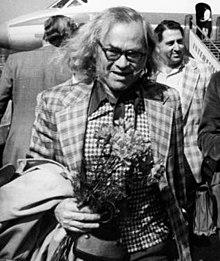
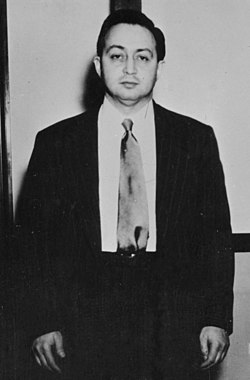
AMERICAN DIPLOMACY

Audio-book Review
By Chet Yarbrough

(Blog:awalkingdelight)
Website: chetyarbrough.blog

America and Iran (A History, 1720 to the Present)

By: John Ghazvinian (Executive Director of the Middle East Center

at the University of Pennsylvania.)

Narrated by: Fred Sanders

John Ghazvinian (Author, historian and former journalist with a Doctorate from Oxford University.)

John Ghazvinian has written an important book to help one understand Iran and its relationship to America.  It reminds one of how important respect for different cultures is for effective foreign policy.  In the real politic of international relations, ignorance of nation-state’ cultures are a recipe for world conflagration.
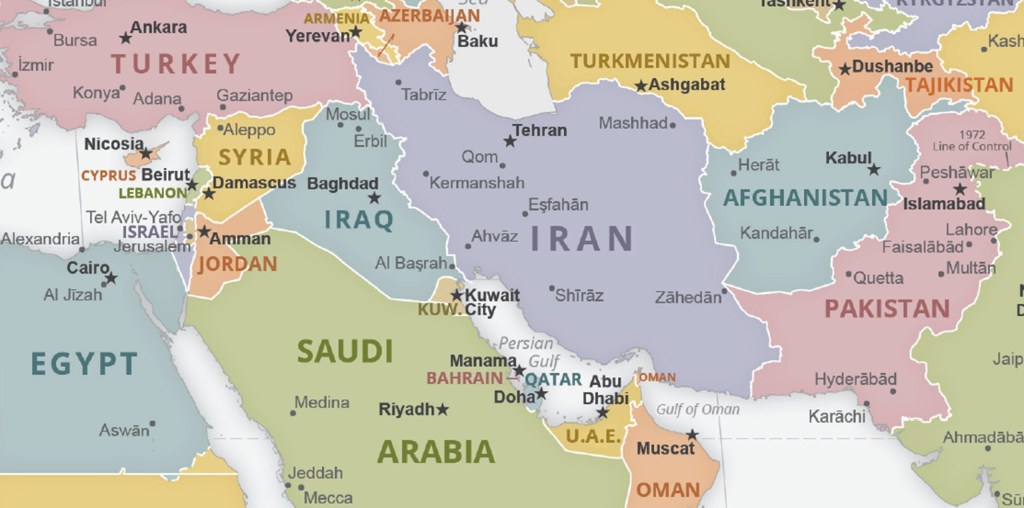
Listening to Ghazvinian reminds one of how important well-informed diplomats and foreign service officers are for world peace. 

Unlike George Kennan in his 1946 “long telegram” about Russia, American diplomats fail America and Iran.  

As a diplomat, Kennan understood Russia because he spoke Russian and studied its history before offering a diplomatic opinion about how America should deal with the U.S.S.R.  Kennan’s containment policy served America well despite Stalin’s horrendous treatment of the U.S.S.R.’s people.  

Few, if any, American diplomats of importance before and after the 1979 revolution in Iran appear to have much understanding of Iranian language or its remarkable history.  Ghazvinian notes the well-intentioned but inept handling by President Carter of the student takeover of the American embassy in Iran.  He recounts the preening and then waffling treatment of Iran by every President of the United States before and after the 1979 revolution.

Zbigniew Brezezinski (U.S. National Security Advisor to President Carter 1977-1981.)

Ghazvinian recounts the hostility of the diplomat Zbigniew Brzezinski (President Carter’s National Security Advisor) toward Iran.

Recognizing 9/11 and its momentous impact on the American psyche, President George W. Bush’s administration exercises an obstinate, and Ghazvinian suggests, ignorant assessment of Iran, its history, nuclear ambition, and role in the Middle East.  This second Bush administration is characterized as an abject diplomatic failure when it comes to dealing with the Islamic Republic of Iran.
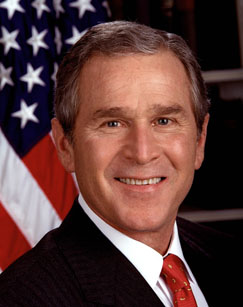
George W. Bush (43rd President of the United States).

Ghazvinian’s book illustrates how America during the Shah years (prior to 1979) views Iran as a buffer against communism and an ATM cash machine for the American economy.  Iran purchases billions of dollars of American weapons.  American defense industry corporations reap huge rewards from business with Iran.  Equally lucrative were American ancillary military training companies that were paid big money by an effete and highly privileged Iranian Shah. 

The Shah of Iran is fascinated by American military hardware.  In that infatuation, the Shah fails to serve the domestic needs of Iran’s citizens. 

At direction of the Shah, vast oil resources are used to enrich the American economy rather than aid the social and economic growth of Iran’s citizens.  America did not concern themselves with Iran’s people because it hugely benefited from Iran’s government purchases of military equipment.

Ghazavinian explains how American Presidents from Eisenhower to Kennedy, Johnson, Nixon, Ford, Carter, (and after the Iranian revolution)—Reagan, H.W. Bush, and Clinton fail America in its diplomatic relationship with Iran. 

None of the American Presidents effectively manage either Iran’s threat or potential real-politic’ benefit to world peace and prosperity. 

In the 20th century, Ghazavinian notes the closest any American President came to understanding Iran is H.W. Bush.  However, American political opposition thwarts H.W.’s opportunity to mend broken trust. 

In an overture to H.W., after the successful ejection of Hussein from Kuwait, the Islamic Republic’s President offers a peace proposal to America.  Bush acknowledges the overture and wishes to capitalize on Iran’s written commitment to ameliorate Hezbollah opposition to the State of Israel and to reestablish diplomatic relations with America.  However, Bush’s party leaders object, based on a belief that Iran is a terrorist state that cannot be trusted.  Iran’s diplomatic opening is lost. 

Ghazavinian notes Iran’s interest in improving diplomatic relations during H.W. Bush’s administration is partly related to America’s quick military defeat of Iraq. 

Iran had fought the Iraqi army for over 20 years without defeating or removing Hussein.  American forces removes Hussein and defeats his army in six weeks. The author infers fear of American invasion of Iran should not be overstated. However, Ghazavinian does imply America’s quick defeat of Iraq’s army sent a message to Iran.  For the first time in history, Ghazavinian notes the Islamic Republic of Iran put its commitment to improve diplomatic ties with America in writing.

Even though America exacerbates Iran’s crisis, Ghazavinian suggests Iran is responsible for the situation in their own country.  The author notes the last Shah of Iran fails to listen to his people.  Iran’s wealth is spent on the latest American military equipment while most Iranians are poor, malnourished, and caught in a cycle of despair.  Iran’s people are looking for a leader who will listen to their plight.  They turn to an exiled religious leader.

Ruhollah Khomeini (1st Supreme Leader of Iran, 1979-1989)

The last Shah of Iran, Mohammad Reza Pahlavi, exiles Imam Ruhollah Khomeini to France where he becomes the voice of the people who have been ignored by their government. 

Ghazavinian suggests Khomeini begins as a religious teacher but is seduced by the politics of government.  The seduction comes from the student takeover of the American consulate in Iran.  Khomeini initially views the takeover as inappropriate but begins to see the political value of American hostages in negotiating with America. 

In Ghazavinian’s opinion, Khomeini abandons his religious teaching with the political decision to use American Embassy hostages as a lever for change.  Prior to Khomeini’s political use of the Iranian student’s takeover, there was a separation between church and state.  Now church and state became intertwined. 

Mahmoud Ahmadinejad (President of Iran 2005-2013)

Ghazavinian notes the rise of Mahmoud Ahmadinejad.  This former mayor of Tehran exemplifies the melding of church and state in Iran’s governance.  Interestingly, Ghazavinian creates a revisionist (less negative) history of Ahmadinejad. He may be showing a more accurate picture of this populist, poorly educated, President, or he may be gilding a fundamentalist ignoramus.

Ahmadinejad is best known by Americans as the fool who said the holocaust is a myth.  Ghazavinian argues Ahmadinejad’s words were mis-translated.  In any case, Ahmadinejad, in contrast to former Iranian Presidents, listens to the Iranian under-class.  He increases wages and initially improves the lives of many Iranians.  Ghazavinian notes the cost of those improvements caused inflation, diminishing the economic good but not the intent of this new President.

Ghazavinian suggests Ahmadinejad compares to George W. Bush in some sense.  Like W. Bush, Ahmadinejad is viewed like the guy next door.  His jokey way of dealing with people is like W. Bush’s.  On the other hand, unlike Ahmadinejad, W. Bush is well educated and wealthy. 
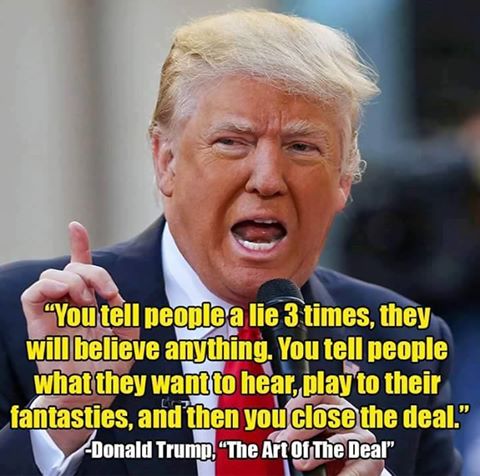
Ahmadinejad seems more like Trump (though not a billionaire) than George W. Bush.  Ahmadinejad, like Trump, taps into the real needs of an underclass ignored by government. 

Many Iranians approve of Ahmadinejad’s effort to raise the social and economic conditions of Iran’s underclass.  The same might be said of many Americans who supported Trump’s stated intent but unrealized goal.

A reset of American relations with Iran is attempted in the Obama administration but Ghazavinian argues Obama reverts to the diplomatic mistakes of past American administrations. 

Politics interferes with Obama’s initial attempt to renew relations with Iran. Obama shows a disdain for Benjamin Netanyahu’s jingoistic opposition to any American effort to repair diplomatic ties with Iran. However, in an election year Obama is painted into a corner that delays any improvement in Iranian diplomacy. It will be interesting to see how President Biden deals with Iran.

Ghazavinian fails to paint a complete picture of modern Iran. There is little explanation of the covert activity of Iran in middle east destabilization. The element of religious fanaticism and proselytization among some of the Ayatollah’s followers is not fully examined. Ghazavinian uses his final chapter in a vituperative and somewhat justified assessment of Israel without fully explaining what Iran’s agenda is in the Middle East.

The valuable substance of Ghazavinian’s history is in the immense importance of understanding any country’s culture.  Before making decisions about what, where, why, and how to diplomatically engage another country, one must have some cultural understanding of both allies and opponents.  It does not mean real-politic will not be used to get one’s way but that there needs to be a respectful understanding of why there is opposition.  In that understanding, there is the chance of finding common ground to arrive at a mutual, if not amicable, agreement.  Without cultural respect and understanding, chaotic unpredictability is unleashed.
EMPERORS

Audio-book Review
By Chet Yarbrough

(Blog:awalkingdelight)
Website: chetyarbrough.blog

From Yao to Mao (5000 Years of Chinese History)

By: Kenneth J. Hammond (Great Courses)

Lecturer-Professor Kenneth J. Hammond

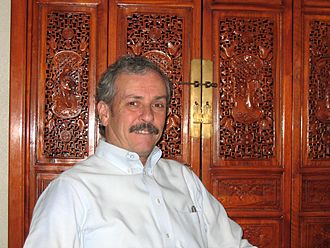
Kenneth J. Hammond (Professor of History at New Mexico State University.)

In some ways, America’s 300 hundred years is a microcosm of Kenneth Hammond’s informative lectures on China’s 5,000-year history.  Not to carry this idea too far, America has no emperors and is a mere baby in the history of the world.  However, social struggles of China and America have striking similarities.

The fabric of a nation’s society is woven by leaders and followers.  Hammond recounts long stretches of China’s history that demonstrate social and political changes that predate and foretell America’s history.  American presidents are unlikely to experience dynasty. However, there are similarities between American leaders and the reign of Chinese Emperors.

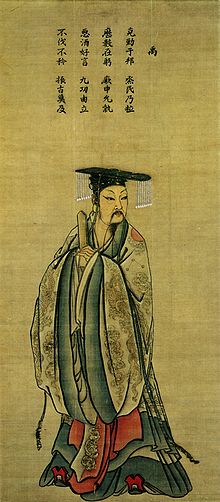
Yu the Great (2123 BC to 2025 BC–95 years of life.)

In 2070 BC, “Yu the Great” manages to organize China’s fragmented ethnic groups into a kingdom.  Yu makes the first written record of an attempt to control nature.  By introducing flood control, Yu improves the lives of millions of his followers in what becomes China’s Xia dynasty. This dynasty, with various emperors, lasts for over 400 years. 

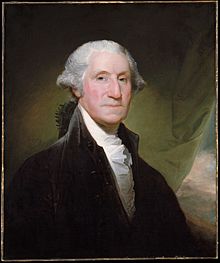
Yu is characterized as an “upright moral character”. Though the Xia dynasty is a hundreds years longer than the United States, Yu reminds one of George Washington’s brief role in America. 

Both set the stage for all national leaders who have successes and failures in their journey through history.  National leaders strive to form one nation from people of many different ethnicities and beliefs.  Successful national leaders manage external and internal crises to unite disparate followers.

Hammond identifies 16 different China’ eras, from Yao to Mao.  China’s leaders are not uniformly successful which can be equally said of Presidents of the United States.  At times, leaders of nations are petty, greedy, self-righteous, and wrong but China became the most advanced, powerful, and rich country in the world at different times in their history. 

Religion and society play parts in both China and America’s rise in the world. 

Confucianism, Buddhism, Christianity, and Islam play parts in China’s successes, and failures.  Hammond notes how Confucius belief reinforces importance of family in the success of nationhood.  Buddhism, though imported from India, instills introspection, meditation, and abstinence into China’s leaders during tumultuous times.  At times, Christianity and a burgeoning Islam threaten China’s future.  Hammond recounts a claimed brother of Jesus who nearly overthrows a Chinese emperor but fails. 

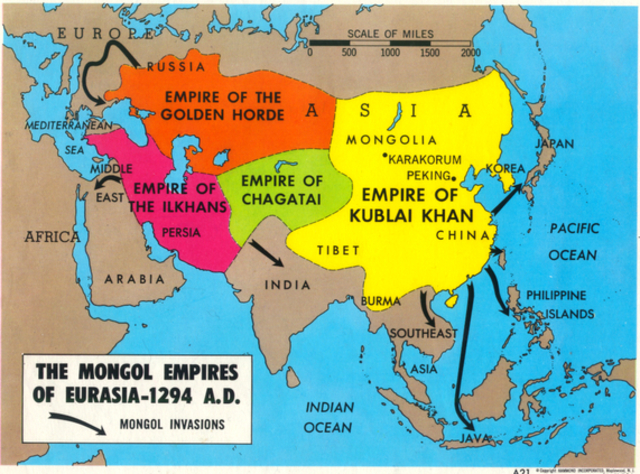
The Uyghurs, a largely Muslim Chinese minority, join Genghis Khan to establish the Mongol Empire.  This empire rises at the end of the Song Dynasty that leads China for several generations.  The Islamic faith is adopted by descendants of Genghis.  It plays a role in China’s history.  Fundamental religious and societal conflicts are equally evident in America’s short history.

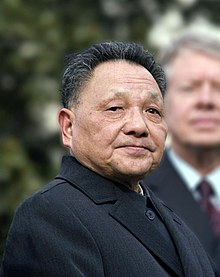
In Hammond’s last lecture, he reviews China’s pragmatist movement. Deng Xiao Ping, in modern China, introduces capitalism into Maoist communism. Private property (though restricted by government limits) encourages accumulation of private wealth.

Entrepreneurial vigor is unleashed in China. 

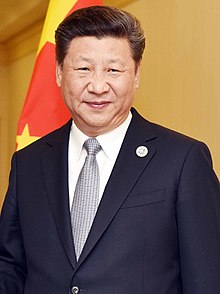
Hammond chooses not to mention Xi but conflicts between Maoist communism and Deng’s capitalist introduction are renewed. Xi reinforces the importance of the communist party at the expense of capitalism. One might argue Xi’s political moves are to combat the temptation of greed.

However, human nature ensures greed will play into communist party bureaucracy just as it does in capitalism.  Capitalism and communism have a common failing—the desire for power which comes from entrepreneurial wealth as well as bureaucratic privilege.

One gathers from Hammond’s history of China that there remains no perfect form of governance.  Every country’s leadership deals with the failings of human nature. 

All these conflicts are evident in America’s 300 years—they are played out in China’s history.  China has managed to remain a nation state for 5,000 years.  Presumably, America can do the same. 

There are no pat answers that can abate the rise and fall of China or America.  Rome is no longer Rome, but Italy is still Italy.  The same may be said of America if one uses China’s history as a guide.

FREEDOM OF THE PRESS

Audio-book Review
By Chet Yarbrough

(Blog:awalkingdelight)
Website: chetyarbrough.blog

Reporter (A Memoir)

By: Seymour M. Hersh  

Narrated by: Arthur Morey

Semour M. Hersh (Author, investigative journalist, Pulitzer Prize winner)

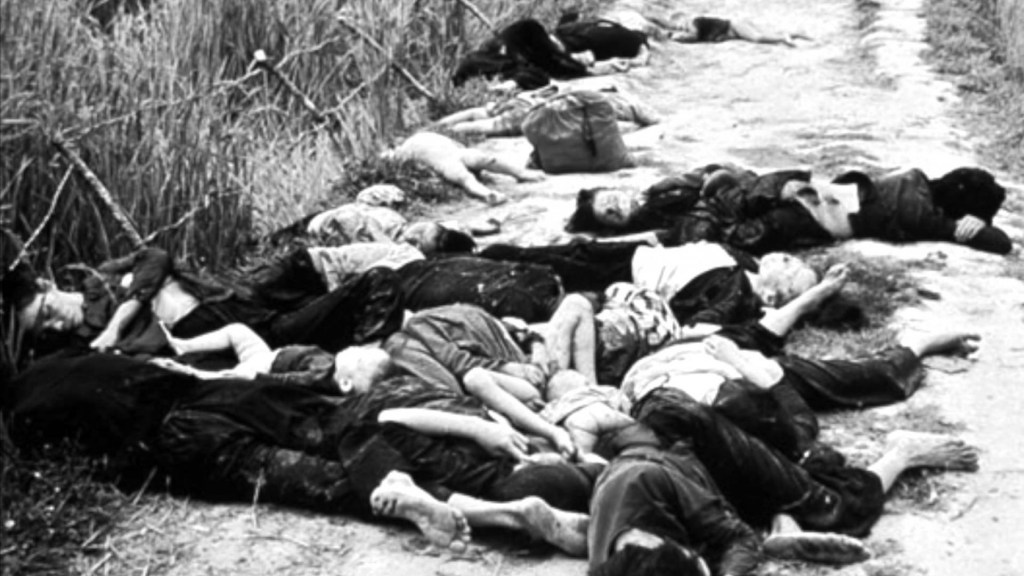
“Reporter” reveals why freedom of the press is both feared and revered.  Seymour Hersh is an investigative reporter.  After listening to “Reporter”, one realizes Hersh is among the best journalists of the 20th and 21st century. To many newspaper readers (embarrassingly including this reader) Hersh is not well known.  Hersh’s reporting uncovered the My Lai massacre early in his career and followed that with revelations about the clandestine bombing of Cambodia, CIA exposure of domestic spying, and a still controversial contention that Obama lied to the American people about the Abbottabad raid that leads to the death of Osama bin Laden.

Hersh’s reporting uncovered the My Lai massacre early in his career.

The tenor of “Reporter” is personal to Hersh as one suspects all his reporting has been throughout his career.  His tenacity in confirming facts before writing a story lets one know Hersh is relentless.  When one is interviewed by Hersh, one suspects there is fear of being misunderstood or misquoted.  “Reporter” alludes to that fear in anecdotes of his search for facts.

The NYT’s paper on 10.11.21 writes about a difference of opinion about how news should be covered.

Hersh shows no fear or favor but his pursuit of facts gives no value to reasons for misleading public perception of events.  This is not criticism of the duties of an investigative reporter, but facts do not always speak for themselves. 

One knows America’s government has mislead the public many times in its history.  Whether that misleading is justified or not is not the concern of reporters like Seymour Hersh.  To Hersh, all that matters is–facts speak for themselves.  Therein lies the fear of freedom of the press.

The problem with thinking that facts speak for themselves is that all the facts revealed are never all the facts. 

The many books that have been written about historic figures is ample evidence of the problem.  With the principle of facts speak for themselves there would be no revisionist history.  History is re-written in every generation. One wonders what the perception of Vladimir Putin will be after the events of his Ukranian war.

This is not to denigrate the great work reporters like Hersh provide to Americans.  Without freedom of the press America would not be America. 

Even though all the facts are never known, those that are known should be revealed in real time.  How else can freedom be preserved?  Hersh, like all good investigative reporters, is not always on the right side of history.  Not because his facts are wrong, but that they fail to tell the whole story. 

One presumes Russian historians will view Putin differently than western or Ukrainian historians. Hero or villain? –to most Ukrainians, one suspects the latter rather than the former. To Russia’s residents, Putin’s Ukrainian war may be either or both.

Every human being is trapped in their own world of experience and genetic predisposition. Facts are by nature pieced into our personal experience and predisposition. Facts do not change but they are influenced by one’s perception of reality.

Many consider Henry Kissinger to have been one of the most highly regarded Secretary of States in the 20th century.  Hersh uncovers facts which suggest that is wrong.  Hersh’s facts are compelling.  They show Kissinger lies and distorts the truth. 

Kissinger flatly denies spying on government employees while Hersh reveals facts that clearly show Kissinger lied. To Hersh, much of the secret opening of China to America happens as a result of an Arab go-between, not Kissinger’s diplomatic skill. 

The covert bombing of Cambodia during the Vietnam war is a policy soundly supported, if not initiated, by Kissinger.  Hersh’s facts speak for themselves, but one doubts they tell the whole story.  The whole story is left to historians. Though it may seem a contradiction, investigative reporter’s revelations in real time are good for American government. Only with transparency, can government become better.

Secret American bombing of Cambodia.

A most interesting chapter of Hersh’s book is an episode to expose the bad deeds of Gulf and Western Oil in the 70s. 

His investigation is toned down and effectively stopped by his employer’s lawyers because of fear of its repercussion.  Hersh concludes it is imprudent to expose seamy activities of corporate America because of potential negative economic consequence to publishers.  Hersh does not back off from private industry investigations but he only refers to one other effort to expose corporate shenanigans. “Reporter” primarily focuses on government employee and policy miss-directions and lies.

Though Hersh is a Democrat, he shows no favor. Hersh notes that facts show President Obama distorted the truth in the hunt and killing of Osama bin Landen.

Hersh dutifully reveals evidence that strongly suggests Pakistan cooperated in the plot to capture or kill bin Laden. Facts suggest bin Laden was not buried at sea but his bullet-ridden remains were dropped from a helicopter into the sea. Those may be the facts but do they explain the whole truth?

“Reporter” is a memoir of a great newsman who is justifiably proud of his contribution to freedom of the press.  America needs driven reporters like Seymour Hersh even though print and media news can never reveal all the facts in real time. 

There is good reason to both fear and revere freedom of the press. Fear comes from truthful as well as false reporting of facts.  Freedom is dependent on good reporting by reputable reporters.

LIBERTARIANISM

Audio-book Review
By Chet Yarbrough

(Blog:awalkingdelight)
Website: chetyarbrough.blog

The Inevitable (Understanding the 12 Technological Forces That Will Shape Our Future)

By: Kevin Kelly

Narrated by George Newbern

Kevin Kelly (Author, co-founding executive of Wired magazine).

Kevin Kelly’s book is a Libertarian’s guide to minimalist government. Kelly paints a clear picture of today’s internet of things and the direction in which it seems to be heading. If sharing replaces ownership, American Democracy must change or die. 

Kelly implies the evolution of technology will make all but defense of country the sole purpose of government.  This is a Libertarian dream.  What Kelly glosses over is the disinformation system of a sharing economy that misleads the public and foments anarchy.

Kelly argues block chain technology decentralizes the last bastion of government oversight by producing value (bit coin) based on an algorithm. Kelly infers there is no need for a Federal Reserve, or a bureaucracy to assure value of exchange, if currency is based on a mathematical formula.

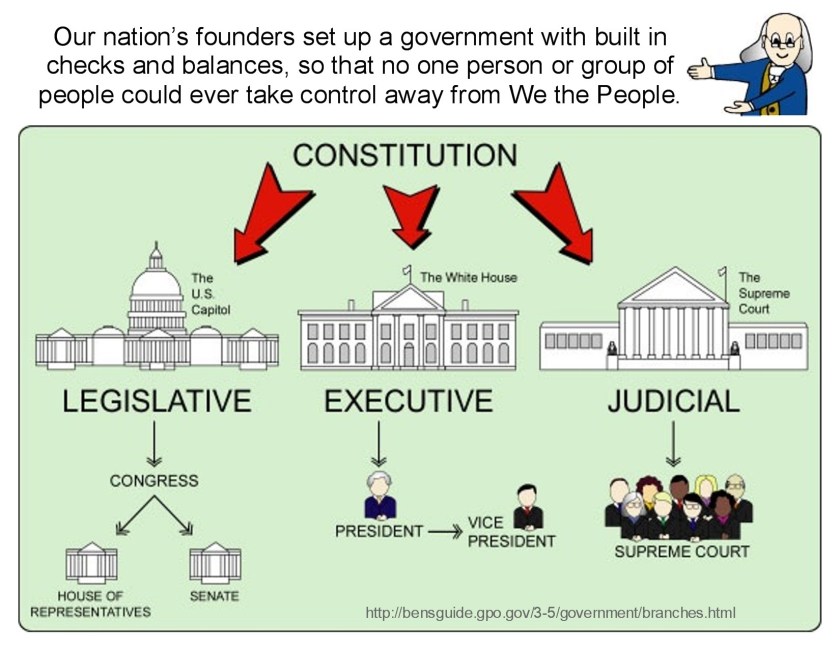
Without the oversight of government, which includes bureaucratic regulations, a sharing economy diminishes the role of checks and balances.  Kelly correctly outlines what is happening in this technological world, but his extrapolation is frightening. 

In Kelly’s vision of a sharing economy, democracy is at risk of anarchy like that seen on January 6, 2021.

The public puts its head in the sand if they ignore Kelly’s view of the 12 technological forces in play today.

He describes flowing, screening, accessing, sharing, filtering, remixing, tracking, and questioning as the twelve technological forces that make the public codependent.  His observations reflect the “now” that presages a future.

The terror in Kelly’s observation is that human nature is not going to change in a sharing economy where nothing is owned but only shared.  Humans will game the system either by raiding the block chain vault or manipulating code to enrich their lives at the expense of others. 

Without a degree of centralized oversight (government), anarchy replaces equal rights and rule of law.

Any realization of codependence is anathema to the tradition of America. Human beings do not interpret the truth of facts in the same way.  Each has their own view of the world and their place in it. 

There will always be climate deniers, tree huggers, gun lovers and gun haters.

Kelly acknowledges there is need for some oversight of a sharing economy but implies the inclusion of everyone’s expression or belief will result in balanced self-governance and companionable A.I. for societal improvement. One may have a difference of opinion based on the events of January 6, 2021. That event’s aftermath will offer further clues to American Democracy’s future.

Decentralization by the internet of things and A.I. dependence may be as “…Inevitable” as Kevin Kelly suggests.  The question today has to do with what can be done to allay its negative consequences. Libertarianism is not the answer.

INDIAN INVISIBILITY

Audio-book Review
By Chet Yarbrough

(Blog:awalkingdelight)
Website: chetyarbrough.blog

The Night Watchman

By: Louise Erdrich

Narrated by Louise Erdrich

Louise Erdrich (Author, National Book Award winner plus other honorifics.)

(Louise Erdrich grew up in Wahpeton, North Dakota. Erdrich’s parents, a Chippewa mother and German father, taught at the “Bureau of Indian Affairs” in Wahpeton.  She is a member of the Turtle Mountain Band of Chippewa Indians and her husband was the director of “Native American Studies” at Dartmouth.)

Like Ellison’s “…Invisible Man”, Louise Erdrich offers “The Night Watchman” to show how invisible native Indians are in America. 

The headline in the 1/4/21 “New York Times” National page is “Indian Country Loses a Hospital at a Crucial Moment–Tribe Members Feel Abandoned as the U.S. Turns a New Mexico Facility Into a Clinic”–today’s example of Indian invisibility.

“The Night Watchman” is not Erdrich’s first attempt at explaining Indian’ invisibility.  She also wrote the best seller “The Round House”.  Both reveal the ignorance and unfairness of Indian reservation life and American government attempts to subsume Indian culture.

Erdrich notes “The Night Watchman” is a true story with names changed to hide American political shamefulness and abhorrent treatment of a young Indian woman. 

Erdrich offers a distinctive picture of Indian reservation life and reminds one of American power’s ill treatment of Indian people.

America’s history of violating contractual agreements with Indian tribes is well documented.  A part of Erdrich’s story shows how those contractual agreements are broken.

(This is a photo copy of a Senate Agreement with Crow Indians for Sale of Their Reservation in Montana-1891)

An elected official submits a bill to a state legislature suggesting native Indians have achieved equality before the law and that they have become Americans who should not be restricted to reservations (a euphemism for break-up of Indian culture and land confiscation).  The submitted bill gives no value to the tradition and history of Indian culture.  The bill might offer compensation to a tribe for the taking of the land, but at an unspecified price.

The people of the reservation are legally notified of the prospective legislative bill.  People on the reservation are offered a public hearing to discuss the bill. 

There is no offer of financial help for traveling to the hearing or for legal defense of Indian contractual rights to the reservation land. 

In Erdrich’s story, effort to organize and pay for travel and legal expense is left to reservation people who have no money to spare. What money they have is to survive, to have a roof over their head, and food on the table.

“The Night Watchman” is a story of big government against “invisible” Indians. 

The bill is created by a Mormon legislator in the state whose family settled in the area in the 19th century.  He argues reservation land was a temporary holding until Indians were integrated into American culture.  The legislator reasons the day for full integration into American culture had come.  He reasoned job availability, education, and welfare of tribal populations had reached the same level available to all Americans.  It is the same lie offered to women and minorities in the history of the world.

Erdrich’s story begins with vignettes of Indian life on the reservation.  This is somewhat confusing but gains momentum as her characters are fully developed.  The night watchman is an Indian named Thomas Wahhashk.  He works off the reservation at an industrial plant.

Patrice Paranteau is an Indian who works at the same plant as Thomas.  She has a sister named Vera who has left the reservation to live in the city.  Vera disappears.  The disappearance of Vera is one of the drivers of Erdrich’s story.  What happens to Vera is unconscionable.  She is kidnapped and held in a ship’s hold to be abused by its sailors. Patrice goes to the city to find Vera but only finds Vera’s baby who appears abandoned. 

There is a burgeoning love story threaded into Erdrich’s story that reflects the striving of Patrice to become an equal partner in life.  Patrice chooses her own path to become an independent woman in a world defined by government and men.

Erdrich’s story reminds one of Ellison’s invisible Black who identifies with a personal culture while wanting to be treated as an equal in American culture. 

Minorities do not wish to lose their identity but to be equal participants in a wider culture. It should not be difficult to be a Black, Hispanic, Asian, Indian, or other American and enjoy the benefits of democracy’s freedom.

Erdrich combines the theme of cultural identity with a story of human relationship, hardship, success, and failure.  Erdrich offers a glimpse of how hard it is to be an Indian in a culture dominated by a largely white culture. 

Erdrich, like Ellison, shows how multiculturalism is denied by a country that purports to believe in equality of opportunity for all. 

Like Ralph Ellison pictures what it is like to be Black in America, Louise Erdrich tries to write what it is like to be Indian in America.

LIBERTARIANISM 1

Audio-book Review
By Chet Yarbrough

(Blog:awalkingdelight)
Website: chetyarbrough.blog

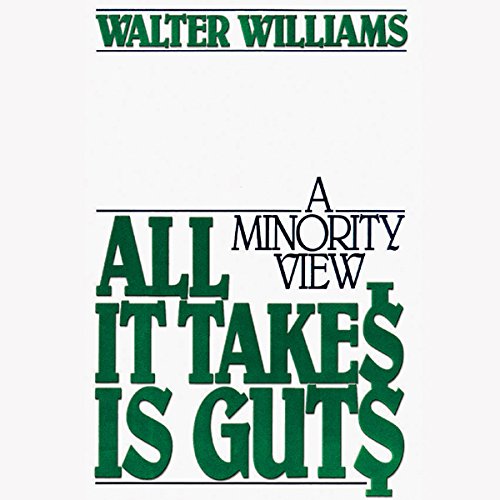
All It Takes Is Guts (A Minority View)

By: Walter E. Williams

Narrated by Peter Kjenaas

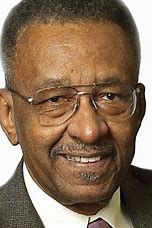
Walter E. Williams (1936-2020, Economist, essayist, political pundit)

Walter E. Williams addresses the conflict between what he perceives as “reality” and “darkness” in essays on Libertarianism.  Williams essays were written in the 1980s, but they resonate with Libertarians today. 

The focus of Libertarians’ is on individual freedom and objection to any coercion by government to compel actions of an individual for the good of society. They generally endorse individual liberty and private property. They defend civil liberties like equal rights for all; some argue for decriminalization of drugs, and open borders. They oppose most military interventions.

To some, Williams is a hero of democratic, capitalist freedom. To others, Williams is a nihilist like Kurtz in “The Heart of Darkness” who implies there is little difference between most government representatives (“civilized” people in Kurtz’s world) and savages.  Williams argues that government regulation distorts the American constitution’s explicit guarantee of freedom.

Williams consistently argues that any government tax collections promoting the general welfare of Americans is stealing from one American to give to another.  He suggests individual liberty and defense are the only Constitutionally mandated requirements of American government. To Williams and many Libertarians, taxes should only be collected for those two fundamental purposes. 

However, in 1937 the Supreme Court defined “the welfare clause” of the Constitution as a right of the federal government to legislate welfare for American citizens.

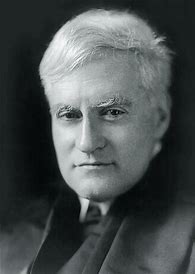
Benjamin N. Cardozo (1870- 1938, Associate Justice of the Supreme Court, Wrote 7-2 majority opinion on the welfare clause of the Constitution.)

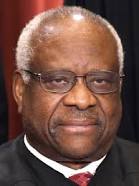
Williams joins an elite cadre of educated Black Americans that have achieved success in America. Like avid abolitionist Frederick Douglas, fellow economist Thomas Sowell, and Supreme Court Justice Clarence Thomas, Williams is a convert to Libertarianism.  They feel they have the right to their Libertarian arguments because of their achievement.  They infer their success is available to anyone who exercises their right to freedom of choice.

Libertarian Americans believe American government should not legislate or promote equality based on race, ethnicity, or any measure of human difference. Government should only legislate or promote based on public defense and individual freedom.

Williams argues public education, food stamps, care for the homeless or disabled should not be paid by government because it denies individual freedom of choice and reinforces perpetual economic dependence. Williams’ argument is based on the belief that American economic prosperity and common good come from capitalists’ freedom to choose. 

Libertarians argue for no government legislation that provides help to the unemployed, homeless, and indigent. They suggest legislation that supports such service should be abolished. Libertarians believe that “individual freedom of choice” made America the richest country in the world. Libertarians believe any infringement on individual rights diminishes America’s competitive spirit, innovation, and economic opportunity.
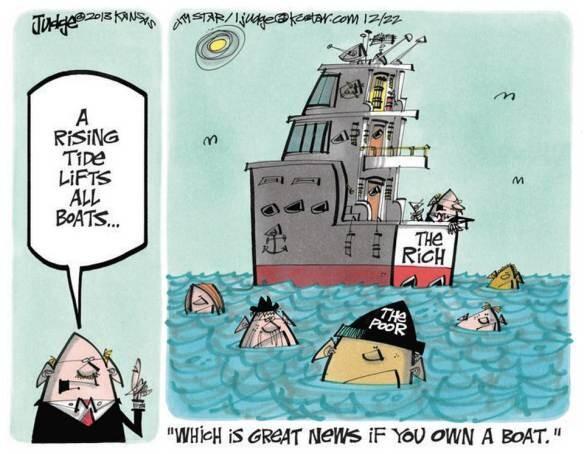
To a Libertarian, a rising economic tide raises all boats. 

Williams implies the poor are poor because of their choices; not because of their genetic makeup, economic circumstance, or discrimination. Williams and other Libertarians argue that choices made by government to help others diminishes freedom and steals money from tax-paying citizens.

One must ask oneself, what would have happened to America without President Roosevelt’s government intervention in the depression? What would have happened without George Bush’s decision to bail out America in 2007? What would have happened without Barack Obama’s rescue of General Motors, Fannie Mae, and Freddie Mac in his first term in office? What would have happened if the federal government had responded more forcefully when the pandemic infected America?

What would have happened if President Trump had managed the beginning of Covid19 better?

Some are pleased by William’s argument; others are appalled.  The “some” that are pleased are those who have overcome life’s challenges.  The “some” that are appalled suggest genetic circumstance is a matter of luck and birth.

Drive for equality of opportunity and treatment is affected by genetics and how one is raised. Genetics, family love, and life’s challenges are affected by economic well-being, homelessness, education, and health that can be positively influenced by good government.
Overcoming adversity is the sine non quo of Williams’ argument. Williams aptly observes the waste that is inherit in America’s legislative system.  Pork barrel negotiations between the Senate and House of Representatives create legislation that reminds one of blind men touching an elephant. Each describes a different image–a tree trunk, a hose, a feather duster; with none realizing it is an elephant. 

Omnibus Congressional legislation regularly stretches to more than 1,000 pages which few elected representatives fully read or understand. 

This is a part of a Libertarian’s objection to use of tax dollars for the common good.  It often benefits the few rather than the many, and inevitably has unintended consequence.

One might agree with the legislative’ waste argument of a Libertarian, but legislation that serves the homeless, the hapless, the ill, and the hungry throws out valuable help when circumstances are beyond their control.

The Covid19 pandemic is an example of circumstances beyond individual human control. 

America is the richest country in the world.  Capitalist democracy is messy, but freedom is only part of America’s history of economic prosperity.  We are free but freedom has always been qualified. 

Every American who survives and prospers from American democracy deserves their success, but each has an obligation to help those who are failing.   Democracy is too complicated for a singular person or company to provide for health, education, and welfare of a nation. 

Williams essays leave out good government as an essential ingredient of success for any Democracy. Taxes are the obligation of every American to insure that success. There should be no homeless, uneducated, or hungry citizens in America, the richest nation in the world.

INTERNATIONAL IDEALISM

Personal Observation

Author: Chet Yarbrough

Qualifications: None

Idealism is a fine quality within the borders of one’s own country.

America should drive to be the best democracy in the world. However, idealism outside the borders of one’s own country leads to disaster, not peace or prosperity.

Barack Obama’s tenure as President of the United States made America a better country.

Because of idealism, Obama succeeded in improving race relations, medical treatment for millions of uninsured citizens, and return of some American’ international respect.

However, Obama’s success in international intervention is arguably less exemplary. That is true of many Presidents of the United States who fail to gain the explicit cooperation of other sovereign nations when intervening militarily in another country.

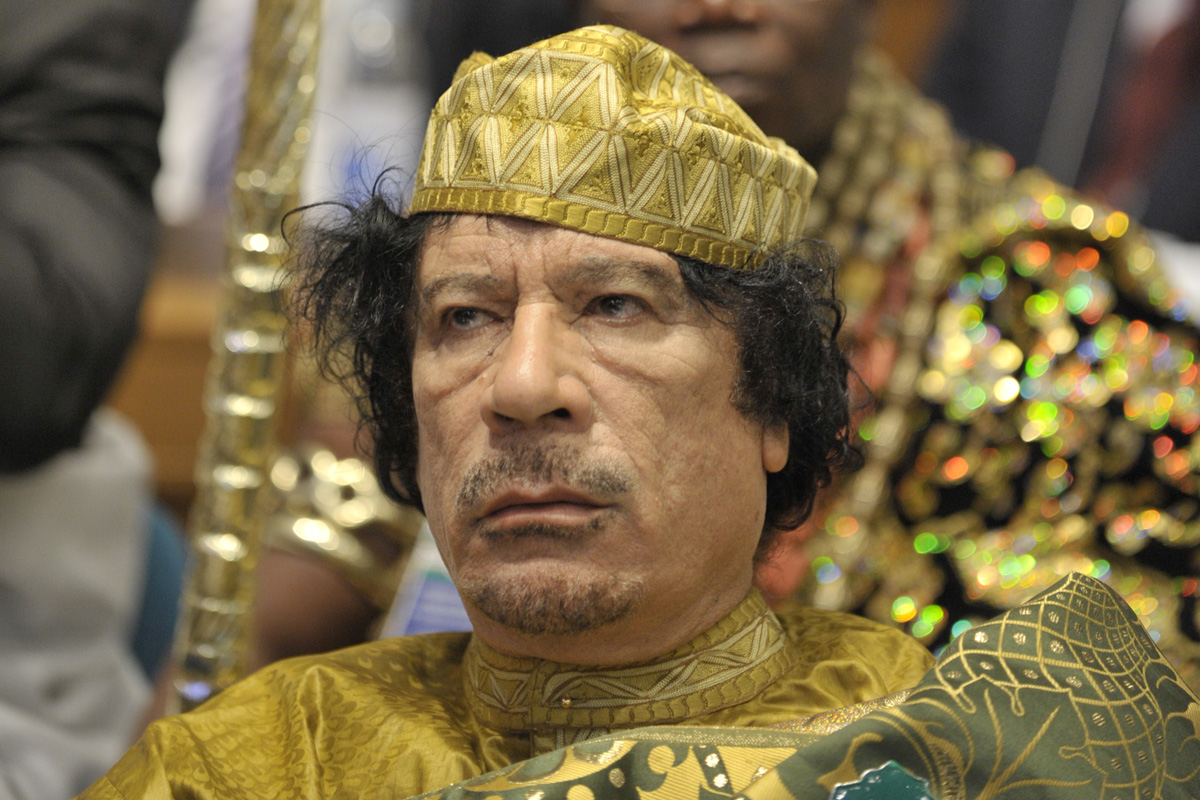
Our intervention in Libya had 4 U.N. abstentions for U.S. bombing of the country. After America’s intervention, Muammar Gaddafi is murdered by the Libyan people. This is not to say Gaddafi did not deserve his fate, but American intervention left Libya a failed state that remains failed 9 years later.

With the exception of WWI and WWII, America’s history of military intervention is abysmal. One must ask oneself–are Bosnia/Herzegovina, Afghanistan, Libya, Iraq, Iran, or Korea better off today than before American intervention? Idealism is not exportable, whether it is America, Germany, China, United Kingdom, France, Russia, or any other militarily powerful sovereignty.

Though people of the world may have similar ambitions and motivations, they are raised in countries that have their own cultural traditions, religions, legal systems, and histories. Even if all humans have a desire for money, power, and prestige; they are bound by their own country’s history and culture.

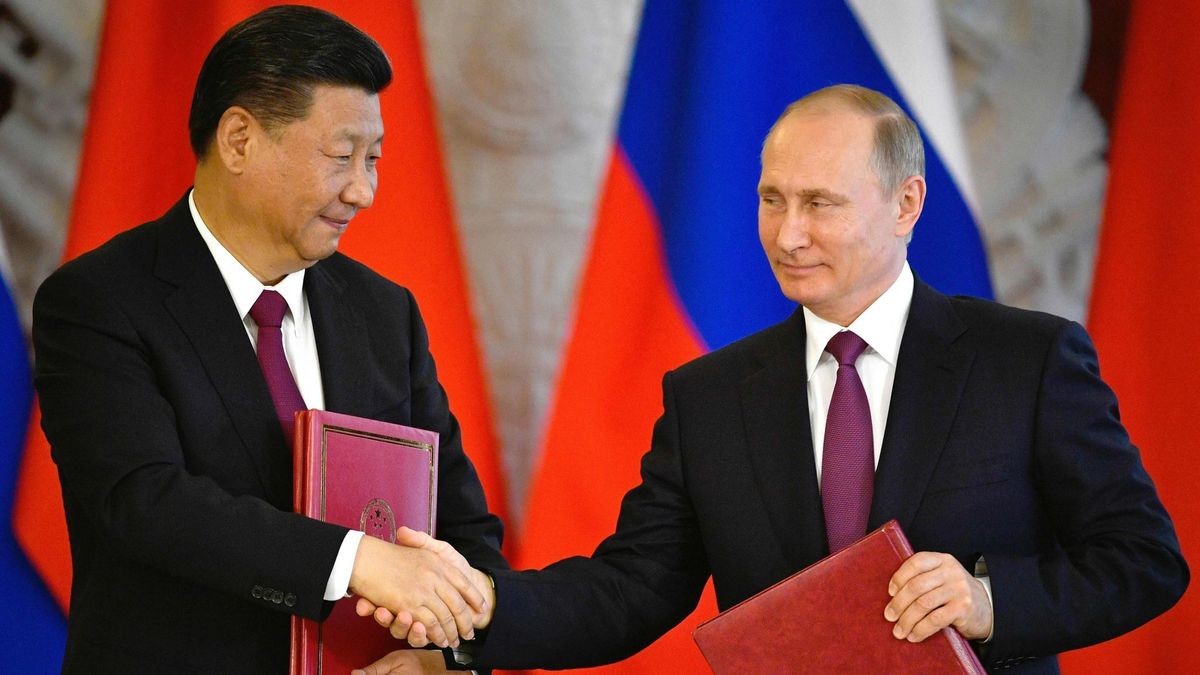
One might argue Khadafy, Saddam Hussein, Ayatollah Khomeini, Hosni Mubarak, Xi, Putin, and Kim Jong-un either led or are leading the most repressive and authoritarian countries in the world. Their reigns are readily associated with imprisonment, torture, and murder. (Some would argue America has a history of the same transgressions.)

In America’s recent history, with the exception of H. W. Bush’s ejection of Hussein from Kuwait, American Presidents have improperly intervened in other countries’ sovereignty.

H.W. chose not to eliminate Hussein once America achieved its objective of removing Iraqi forces from Kuwait.

Clinton’s intervention in Bosnia/Herzegovinian, George Bush’s intervention in Iraq, and Obama’s intervention in Libya are three examples of countries that remain in turmoil. America had little effect on meaningful change from American intervention in these countries.

Sovereign idealism is not exportable. Only national examples can be set for sovereign nations to show how their form of government is better than another’s. “Example” is the best one country can do for another. In the world of realpolitik military intervention, without overwhelming international cooperation, is a fool’s errand.

This is not to argue that international influence and political diplomacy should not be used to fight against false imprisonment, torture, rape, and murder but sovereign nations must be respected for their own choices. Only a sovereign nation’s citizens can make right or wrong decisions about their country’s leadership.

This is not to argue for isolation but to realize no nation has a right to invade another nation’s sovereignty. It is up to each nation to choose their own path.

Every sovereign nation has a right to condemn another through national example, economic sanction, economic support, or political persuasion. But, American military intervention in a sovereign country is an error of immense consequence. In the case of Iraq—American soldier’s deaths, injuries, and American dollars are wasted. The evidence of that waste is in the Iraqi government’s continued dysfunction.

LOSS OF TRUST

Audio-book Review
By Chet Yarbrough

(Blog:awalkingdelight)
Website: chetyarbrough.blog

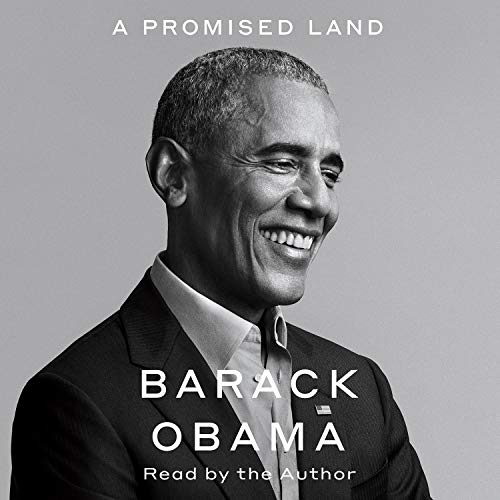
A Promised Land

By: Barack Obama

Narrated by Barack Obama

Barack Obama (44th President of the United States.)

One does not have to be a fan of former President Obama to appreciate his authorship and presentation in “A Promised Land”. Putting aside animosity about political parties, Obama rings America’s liberty bell. Americans have lost their trust in democracy.

“A Promised Land” is a clarion call to every politician to quit bickering. Being a President, Congressional leader, or Supreme Court justice should not be about self aggrandizement but about representing the American public. Mitch McConnell, Nancy Pelosi, President Trump, and President-Elect Biden have one more chance to return trust in government to Americans.

Procedural delays in the Senate on the Corvid relief bill victimize the poor and lower middle class. McConnell and Johnson should be ashamed. Their ability to pay a mortgage or monthly rent is not in question, but what about others?

Trump’s usual lies and misrepresentations are pitched again to deluded Republicans. As the March 2, 2021 editorial page of the WSJ notes–“If he was so great for the GOP, why is the party now out of power?”

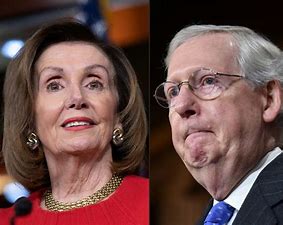
Obama is a great orator and writer who offers insightful thumbnail opinions about the character of elected officials in American government. He may not be objective but he is extraordinarily persuasive. He argues Mitch McConnell is more concerned with power than any other motivation for being a representative of the United States. In today’s headlines, that opinion seems prescient.

Mitch McConnell (Senate Majority Leader from Kentucky)

McConnell chooses to obstruct the Covid relief legislation until after the decision in Georgia. He wants a Republican controlled Senate to approve Covid relief legislation. He cares not a whit for Americans who are suffering. It is about power, power that corrupts his judgement.

The Georgia race for the Senate is a calculated maneuver by McConnell to exercise power that might slip out of the Senate’s hands.

Nancy Pelosi (Speaker of the U.S. House of Representatives.)

The case might be made that Nancy Pelosi plays the same game for power. That might be true except it seems Pelosi has been consistent in her belief that another Covid19 relief package is necessary for the good of all Americans. In contrast, the leader of the Senate at one point argued that no additional assistance is required because the economy is getting better.

What makes “A Promised Land” interesting is its candor about the office of the President of the United States and the limitations of a President’s or any human being’s judgment. Unlike the tenure of Trump, Obama consistently demonstrates empathy for the people of America. In one sense, some may interpret that as a weakness. Others will see it as the greatest strength of democratic government.

When a President makes life and death decisions for the American people, one presumes he/she is driven by something called the “greater good”. Of course, “greater good” is interpreted differently by every culture, every individual, and every political leader.

“A Promised Land” is a summary of Obama’s vision of the “greater good”. History will be the final arbiter of Obama’s and Trump’s contribution to America as Presidents of the United States.

LABELING

Audio-book Review
By Chet Yarbrough

(Blog:awalkingdelight)
Website: chetyarbrough.blog

Democracy in Chains: The Deep History of the Radical Right’s Stealth Plan for America

By: Nancy MacLean

Narrated by Bernadette Dunne

Nancy MacLean (American author, historian, professor at Duke University)

Labeling people is mind numbing.  Labeling of political and economic interests is a crime against reason.  Democrat, Republican, conservative, liberal, libertarian, Tea Partier, right-wing, and left-wing are some of the most common political labels. In the light of reason, none of these labels make consistent sense. 

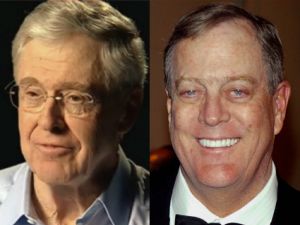
In modern American politics, labels attach themselves to people like Nancy Pelosi, Mitch McConnell, Donald Trump, Joe Biden, and the Koch Brothers. 

In economic theory, political labels attach themselves to Adam Smith, Ludwig von Mises, John Maynard Keynes, Friedrich Hayek, James Buchanan, Milton Friedman, and others.

The only common characteristic of these representatives is that they are human’.  Their labels only speak of partial truths about what they believe and what economic policies they support.  Nancy MacLean uses most of these labels to make her case for “Democracy in Chains”. 

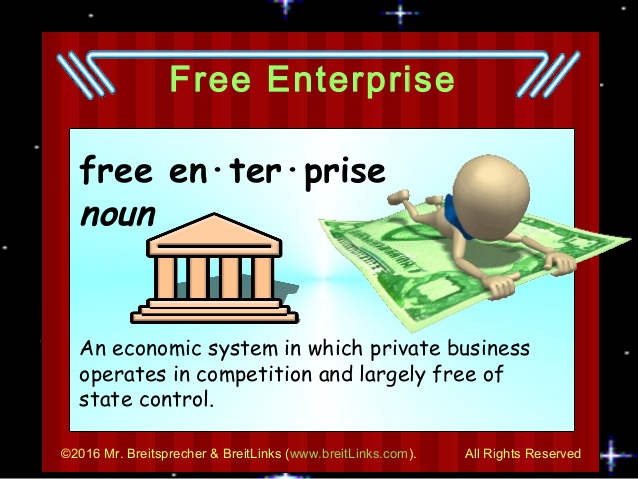
Depending on one’s point of view, MacLean enlightens one side of her argument that, indeed, democracy is in chains.  The chains of which she writes are manufactured, distributed, and applied by corporate America. MacLean identifies Noble Prize winner in Economics, James Buchanan, as the theorist that gave momentum to the Koch brothers’ political drive for unfettered free-enterprise.

Humans, even historians, are not omniscient.  They are burdened with personal experiences that shape their beliefs and often compound their biases.  Beliefs are not objective.  They are right and wrong within the boundaries of facts and societal norms.  Facts are facts, but norms are accepted behaviors that conform to a group, community, or culture. 

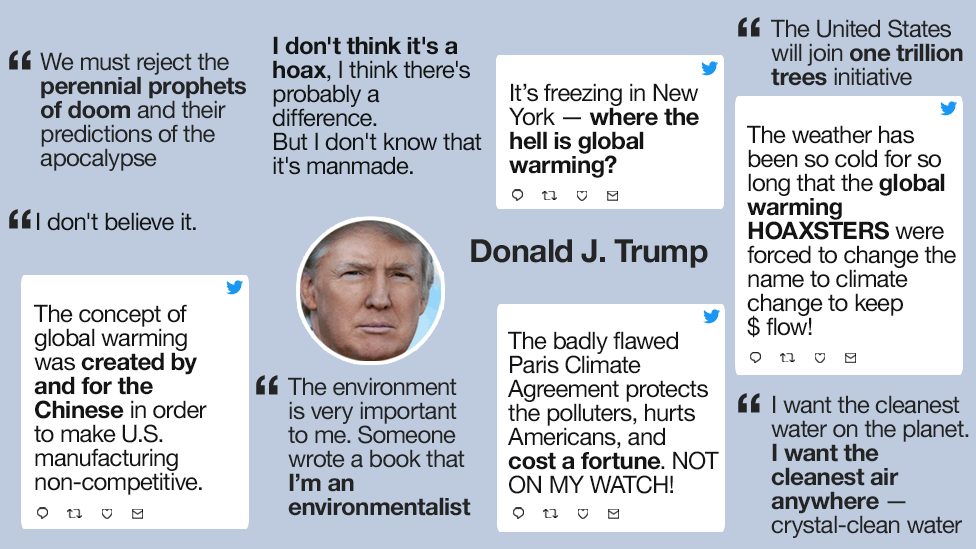
An appeal Trump has to some Americans has to do with his consistency in denying the truth. Covid19 is a devastating killer but Trump gives comfort to many who want to believe his denial of reality. The same might be said about Trump’s global warming opinions. The science shows his chosen facts are wrong and America will pay for it in one way or another.

Trumpism is a disease of America’s own making but this too will pass. History will reflect how dangerous modern media is in promoting the worst qualities of the American electorate.

Societal norms change with time and human experience.  Facts do not change but their interpretation is changed by new societal norms.

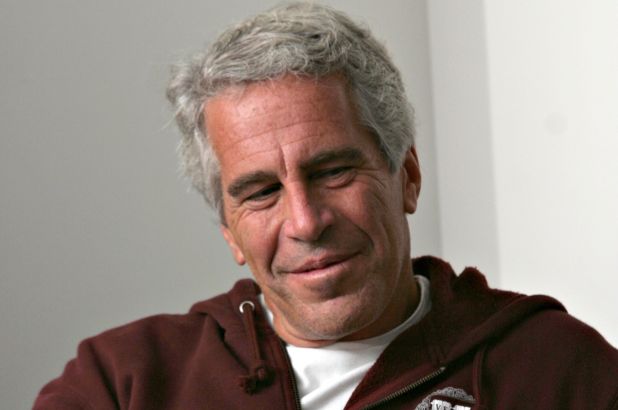
A prime example of facts that change, based on social norms, is the fact of world misogyny. “Me Too” has changed the meaning of the fact. Harvey Weinstein is now in prison and Jeffrey Epstein killed himself.

Slavery, misogyny, discrimination based on race, color, or creed, religious intolerance, and murder in war have been societal norms at different times in world history.  MacLean suggests “Democracy in Chains” comes from a conspiracy of libertarians hiding among Republicans to reinterpret the Constitution of the United States.

That part of the American Constitution’s preamble that says the purpose of government is to provide for “general welfare” of all, is at issue with political and economic labels. 

MacLean creates an argument that sounds like a conspiracy theory, a cabal of rich benefactors and political zealots who collude to reinterpret the American Constitution. 

The principals of this conspiracy are the Koch brothers based on a theory grounded on an interpretation of von Mises’ economics. 

Ludwig von Mise’s economic theory is artfully resurrected by the economist James Buchanan, modified by Friedrich Hayek, and reinforced by Milton Friedman.

Buchanan’s fundamental argument is that free enterprise should be free. He argues that the profit motive outweighs the negative consequence of social inequity by offering equal opportunity.

In Buchanan’s opinion, the only purpose of government is to provide for the common defense of the country. Education should be financed by private ownership of schools. Buchanan argues government financing of social service interferes with the benefits of a free market.

Buchanan reinforces a Spencerian belief in a “survival of the fittest”, a beggar thy neighbor distortion of Darwinian evolution. MacLean suggests the Koch brothers adopt Buchanan’s economic theory and implement it through clandestine proselytizing of others, and financial support for candidates who will vote for maximal unregulated free enterprise.

Herbert Spencer (1820-1903) conflates Darwinian evolution with free enterprise.

MacLean points to the folly of Buchanan’s economic policy in his consultation with President Augusto Pinochet in Chile. Buchanan recommends creation of a constitution that establishes and enforces Buchanan’s free-enterprise theories that forbade trade unions and encourage privatized social security. Unlike America, Pinochet’s free-enterprise government had no checks and balances.

Augusto Pinochet (Junta leader, military Commander and Chief, and then President of Chile from 1974-1990, died in 2006.)

With military oversight and control, Pinochet’s government victimized its citizens in the guise of a government that supposedly embraced libertarian free-enterprise. In fact, Pinochet’s constitutional government enriched a small minority and victimized (both economically and physically) the majority of the Chilean population.

Ludwig von Mises, an economics professor of the Austrian school, is the teacher of Friedrich Hayek.  MacLean reviews papers written by James Buchanan who endorses von Mises economic theory; without any acknowledgement of Hayek’s tempering of von Mises’ “no quarter” for the poor or disabled.  Buchanan becomes a theorist who motivates the Koch brothers to spend millions of dollars to undermine Government regulation of free enterprise.

MacLean explains how the Koch brothers create a non-profit foundation to elect Senators and Representatives to undermine unionization, government support of public health, public education, social security, and other public services supported by government tax dollars.  This cabal is formed in the 1960s, particularly after Johnson’s “Great Society” movement.  The cabal is built on belief that health, education, and welfare are best served by free enterprise, not government programs.

MacLean notes how this cabal fights increased taxes on the rich to pay for public services that subsidized public health, education, and welfare.  Buchanan identifies federal taxes as a form of confiscatory government action, tantamount to a tyranny of the majority over a rich minority.

The cabals’ argument is that private enterprise is the real engine of improved public health, education, and welfare for all Americans. Their supporting evidence is the rising wealth of the economy, and the general health of the American population. 

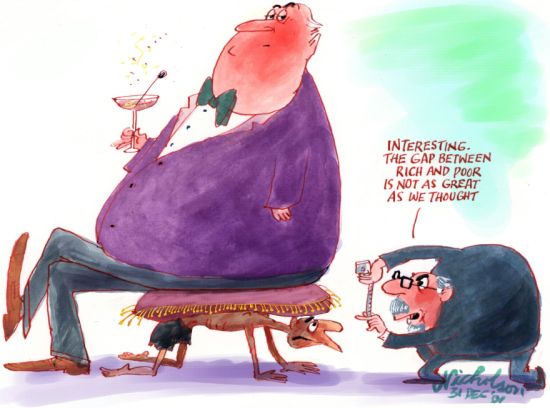
The “libertarian” Koch followers imply the gap between rich and poor is a motivation for climbing the ladder of American opportunity.

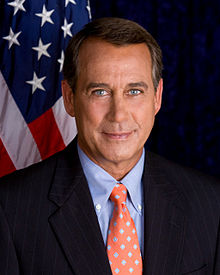
Though MacLean labels this cabal as Libertarian in motive, it hides behind a cloak of Republicanism. MacLean argues that Republicans who fight this secret organization either change their tune or lose their public office.  Her evidence is Republicans who have lost their seat in Congress, like John Boehner, or switched their tune, like Orrin Hatch, who retired after 42 years as a Republican Senator from Utah.

Putting aside labels, “Democracy in Chains” is simply about self-interest.  Human nature is to seek one’s own interest whatever one’s political or economic label.  Until self-interest becomes care for all Americans, there will be opposition to government tax dollars for public health, education, and welfare.

MacLean implies American Democracy is chained by the self-interest of the rich and industry lobbyists who feed the electoral process. The issue of government competence is deeply affected by dollars spent by corporations and the rich to elect sycophants.

The election process in America needs reform.    Government competence in providing public welfare is distorted by lobbyists pursuing their own agenda. 

Only competent government can deal with the complex causes of homelessness, a failing public education system, international conflict, pandemics, and environmental disasters.

When homelessness, poor education, crime, a pandemic, or physical disaster directly affects the self-interest of the many, even the …Radical Right…will turn to government for help. 

An irony of MacLean’s labeling of the Koch cabal is Donald Trump’s election as the President of the United States.

Trump is his own label, neither Republican, conservative, libertarian, or liberal, but he is a product of the Koch brothers’ division of the Republican party.

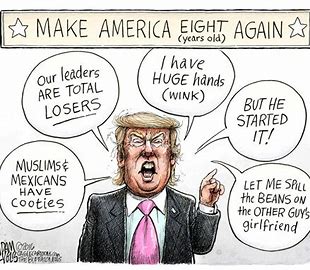
Trump’s veto of Congress’s approval of a Defense bill and Covid19 relief reflect the temper tantrum of an eight year old.

Trump’s life may be spared by the experimental medicine he has been given. His response is “don’t be afraid” of Covid19. Whether he lives or dies, all people should be afraid.

Trump is a carnival barker trying to attract patrons to an entertainment venue. He has no particular philosophical underpinning. That may explain why he became the President of the United States. America has lost its way.

Toward the end of MacLean’s book, the libertarian attack on social security is shown as a penultimate example of the threat of ideas in the United States. The irony of that statement is that the U.S. is a monumental beneficiary of ideas in its Constitution.

MacLean explains how Buchanan recognizes how social security in the United States is an election killer for anyone who argues it should be privatized. Buchanan, and presumably the Kochs and their followers, devise a scheme to split the electorate that supports social security.

  • Co-opt those nearing retirement by making them exempt from any changes in the social security benefit.
  • Offer IRA’s as an attractive alternative to government subsidized social security.
  • Enlist the finance industry into a campaign for privatization of social security as a benefit to them for more private investment through their investment houses.
  • Emphasize the frail financial viability of social security for the younger generation by suggesting it will go bankrupt before they are eligible.
  • Explain the potential for increase in taxes on the rich to maintain social security when now their contribution is limited to the same payroll contribution as the poor and middle class.

If this divide and conquer scheme works, opposition to privatization of social security becomes less of a problem for “libertarians” who wish to be elected. The principle of divide and conquer exemplifies a nation founded on self-interest. To true believers-everyone needs to fend for themselves. Only the strong (the relatively rich, and/or clever) will survive in Buchanan’s world.

As Supreme Court’ Justice Oliver Wendell Holmes said, “Taxes are what we pay for a civilized society.”  That may be liberal jargon, but private enterprise would have foundered, and society would have been less civil without checks and balances written into the Constitution.  MacLean makes a strong case for reducing corporate influence in the American electoral process.

RUSSIAN ESPIONAGE

Audio-book Review
By Chet Yarbrough

(Blog:awalkingdelight)
Website: chetyarbrough.blog

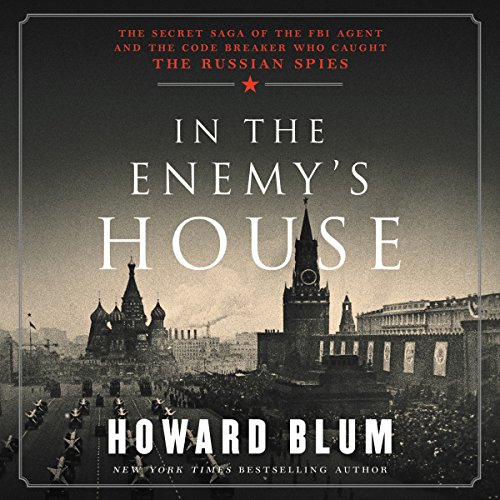
In the Enemy’s House (The Secret Saga of the FBI Agent and the Code Breaker Who Caught the Russian Spies

By: Howard Blum

Narrated by David Colacci

Howard Blum (American author and former reporter for NYT and The Village Voice)

Howard Blum offers some clarity and historical perspective on the infamous Rosenberg spy case.  One might argue it is as much a revision of history as a clarification.  Blum accesses historical files not available in the past to write this book. 

These files explain how a Russian spy network was set up, who the agents were, why and how American collaborators were recruited, and the way information was transmitted.

Though the Rosenberg’s may be guilty of espionage, their motive appeared ideological, not economic.  Blum raised the question whether the Rosenberg’s betrayal of America warranted execution.

“In the Enemy’s House” reveals some facts about the halcyon days of the FBI.  A listener finds how FBI agents are chosen, the internecine conflicts that occur when investigations go awry, and how difficult it is to live an agent’s life.

FBI agents are chosen from the general public.  Some may be highly educated, others less so, but all are patriotic, loyal, and committed to American ideals and pursuit of truth.  They are subject to judgement errors in their personal lives, their suspect’s lives, and in their understanding of the truth. They, like all human beings, make mistakes. 

Expertise in the field for FBI agents varies.  The example is in the way suspects are followed, how long suspects are tracked, and how suspects are questioned.  As in all life’s endeavors, some are better than others in doing their jobs.

The isolation of agents and the long hours of suspect’ investigations have an impact on personal lives.  Like police work in general, stress is put on family relationships.  In the era the author covers, being married makes a wife a potential liability because of inadvertent disclosure of classified information.  Blum notes that Robert Lamphere, the principle agent in the story, is personally warned by Herbert Hoover about disclosure risks because of marriage’ intimacy.

Robert J. Lamphere (1918-2002, FBI Agent.)

Lamphere joined in 1941.  In 1945, he is assigned to the Washington, DC office to investigate Soviet atomic espionage, particularly regarding the Manhattan Project.  In 1947 he is assigned to supervise Soviet code breaking and is introduced to Meredith Gardner, who is considered by many to be a linguistic genius. 

Meredith Gardner (working among mostly women in the cryptographic Arlington bldg) provides leads to the FBI that reveal two of the most famous names in communist espionage history, the Rosenberg’s, and Karl Fuchs. Gardner dies in 2002.

A looming issue in Blum’s history is the decision to execute the Rosenberg’s for spying for the Russians.  Blum tells the story of an FBI investigation of Russian espionage, code name Venona.  Russia’s spy network recruited western scientists and ideological converts who believed communism is the future.

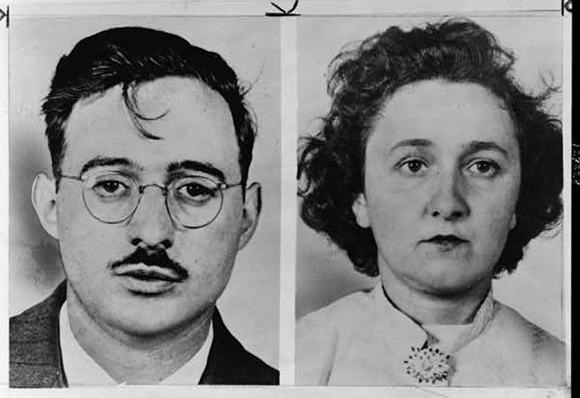
Blum describes “Operation Enormoz” as a Russian spy network that recruited Julius and Ethel Rosenberg, and Karl Fuchs to pass information about the nuclear bomb to agents of the U.S.S.R.

The judge in the Rosenberg case warranted execution for both Julius and Ethel Rosenberg. The judge reasoned, with the advent of the Korean war and communist China’s invasion of the northern peninsula, the Rosenberg’s gave license to Americans who might betray their country.

Irving Robert Kaufman (1910-1992–Presiding judge in the Ethel and Julius Rosenberg case.)

Blum infers, even if that judgement is correct, the facts revealed in his book suggest Ethel Rosenberg was not an active participate in her husband’s betrayal of America.  Blum’s research shows deciphered encryption from Russian messages show Ethel Rosenberg did not participate in the spying activity of her husband. 

An FBI agent and a brilliant linguist expose the Russian spy network in America by deciphering coded messages. The agent and linguist could not provide evidence that might have exonerated Mrs. Rosenberg because the Russians did not know their coded messages had been cracked.  If the evidence the FBI agent had were revealed, America would have lost a critical source of intelligence.

One of the greatest surprises in Blum’s book is that the spy network that led to Stalin’s atomic bomb has little to do with financial bribery.  It had more to do with the success of communist propaganda. 

In the internet age, Russia’s success in the 1940s suggests how dangerous Russian interference in American elections is in the 21st century.

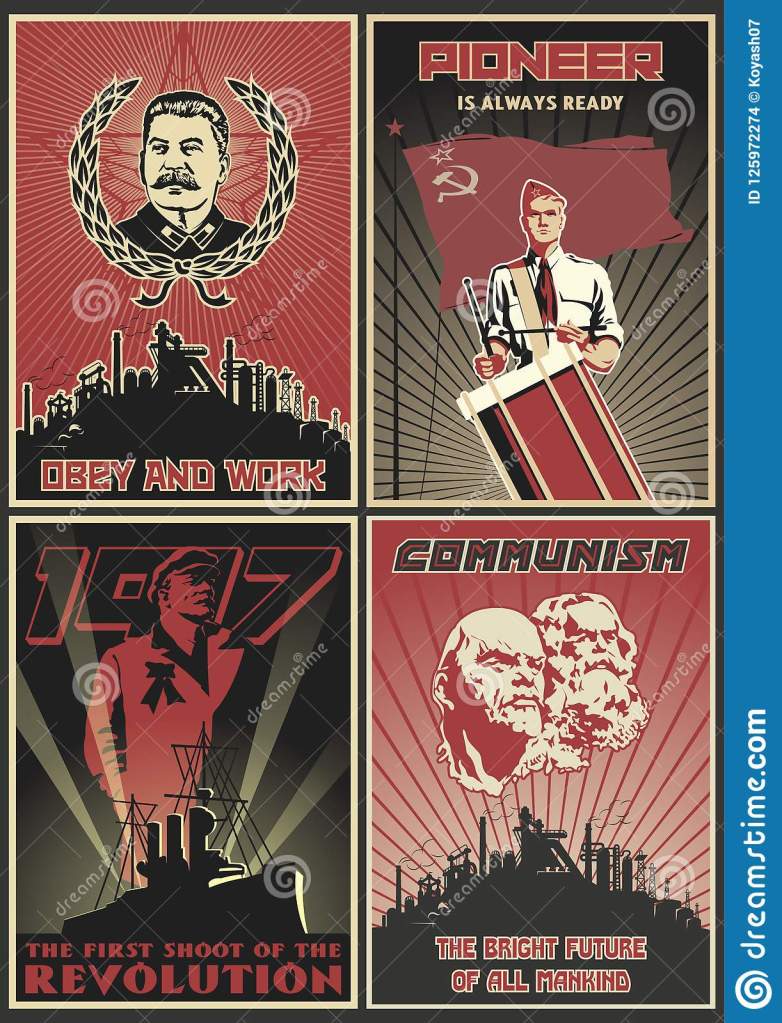
Blum touches on growing communist hysteria gripping America after the war.  As history books reveal, Stalin tries to thread a needle by entering an alliance with Germany to expand the Russian empire and avoid a ground war with Germany. 

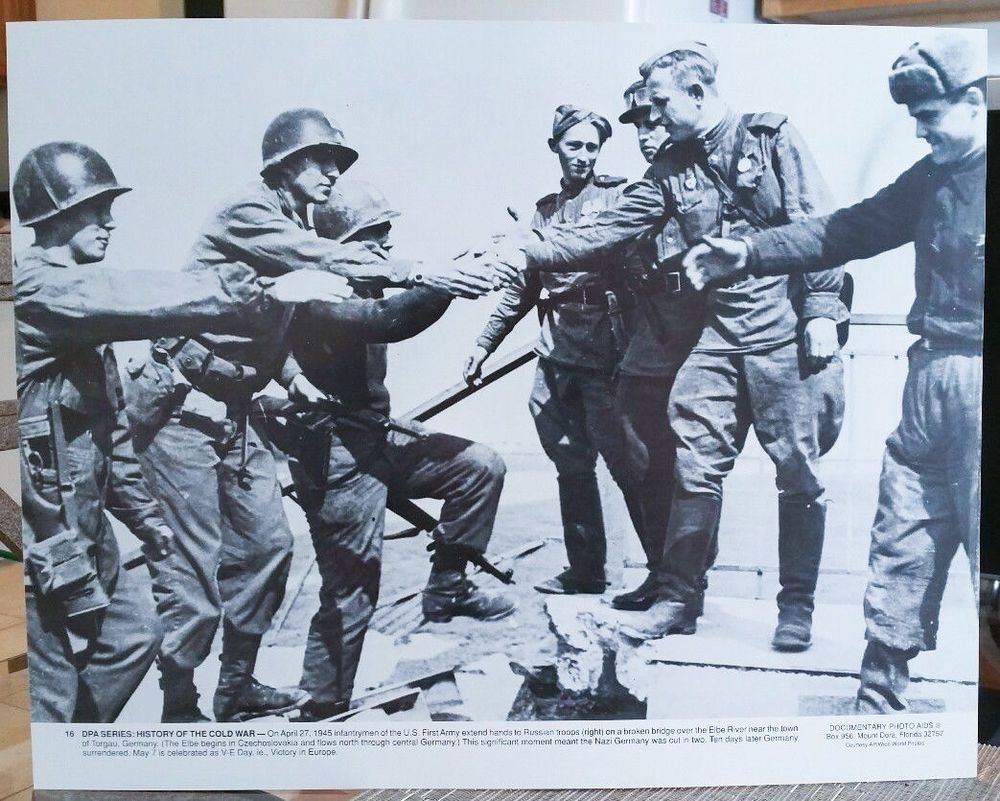
Stalin realizes his mistake in 1941 when Germany invades the U.S.S.R. Stalin is compelled to join the Allied Powers against Germany.  Both Americans and Brits are suspicious of Stalin. However, Stalin’s change in sides becomes critical to the outcome of the war. 

The Russian army is the only effective fighting force on the eastern front.  Russia is estimated to have lost 16,825,000 civilians and soldiers in WWII.   The WWII’ casualty estimate (both Allied and Axis powers) is 60,000,000.  If these estimates are correct, over 20% of WWII casualties were U.S.S.R. soldiers and citizens. 

By any measure, the eastern front and Russia’s fight with the Germans was critical to Allied success in WWII.

Some Americans were sympathetic to the ideological goals of Russian communism.  The truth of Stalin’s Russian gulags and the KGB were generally unknown to many Americans before, during, and immediately after the war.

Some civilians were seduced by communist propaganda to become tools of a Russian spy network.  Blum recounts the two most notorious Russian spy’ incidents.  Blum tells the story of the discovery and prosecution of the Rosenberg’s and an British scientist named Karl Fuchs.

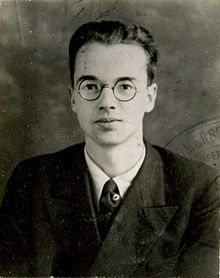
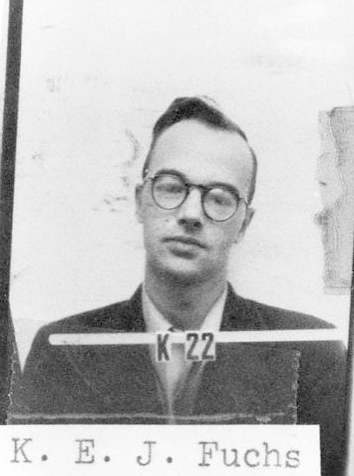
Klaus Fuchs (1911-1988, served nine years in prison for providing theoretical information on nuclear weapons to Russia in the 1940s.)

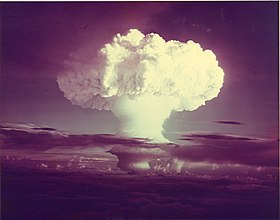
America’s realization of the Russian spy network’s existence became widely confirmed with Russia’s detonation of its first atomic bomb in 1949.  This is during the McCarthy era when Russian spies were alleged to be under every bed and in every government agency. 

Joseph McCarthy (Republican Wisconsin Senator who fanned the flames of communist infiltration in America).

President Truman initially did not believe the Russian’s had the scientific capability to create the bomb. 

But the facts prove otherwise.  In one sense Truman may have been right.  Russia’s atomic bomb success does not strictly come from Russian scientists. Stalin creates a world wide spy network to steal other countries’ scientific work. 

Daniel Patrick Moynihan (1927-2003, NY State Senator)

Blum notes that Patrick Moynihan said Russian scientists, with German expatriate help, would have discovered the bomb anyway.  

The point is science is a universal pursuit.  (After all, America used Wernher Von Braun to accelerate experiments in rocketry that led to America’s moon landing in 1969. This is the Von Braun who created Nazi Germany’s V-2 rocket program that terrorized London.)  

What is surprising to America is a nuclear detonation by Russia, only four years after Hiroshima.  Blum suggests Russia could not have done it in such a short time without stealing American and British scientist’s work.  On the other hand, Blum infers Russia would eventually succeed in creating a nuclear bomb, without stolen scientific documents. 

As most will recall, trade secrets have always been an issue in international trade.  In the past, Japanese, South Koreans, and now Chinese are accused of stealing American trade secrets.  Of course, weapons of mass destruction are a more serious threat, but the principle is the same.  

All nations seek economic and social advantage, with science as a universal pursuit.

“In the Enemy’s House”, there is a nagging feeling that execution of the Rosenberg’s was wrong. The inference is that if all the facts were known, the Rosenberg’s execution would have been commuted to a term in prison. Blum’s argument is not particularly compelling when taken out of the context of its time. However, considering no one else was executed for treason in the Venona investigation, the Rosenberg execution seems unjust.