Graduate Oregon State University and Northern Illinois University,
Former City Manager, Corporate Vice President, General Contractor, Non-Profit Project Manager, occasional free lance writer and photographer for the Las Vegas Review Journal.
America’s Bitter Pill: Money, Politics, Backroom deals, and the Fight to Fix Our Broken Healthcare System
Written by: Steven Brill
Narrated by: Dan Woren
STEVEN BRILL (AMERICAN LAWYER, JOURNALIST, AUTHOR)
“America’s Bitter Pill” is a policy wonk’s dream and an American citizen’s nightmare. It reveals the role of money and politics in American government. Steven Brill overwhelms readers, which are not policy wonks, with disgusting political backroom deals and entrenched private and non-profit interests. The disgust comes from the distortion of the most important legislation passed by the American’ Federal Government since the New Deal. Government leaders, private industry, and non-profit corporations worry more about being re-elected or having their pockets lined than providing basic health coverage to the American’ public.
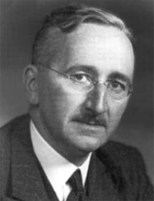
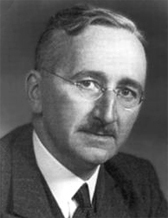
Even the “god” of conservative economics, Friedrich von Hayek, believed government had a responsibility to provide “…a comprehensive system of social insurance in providing for those common hazards of life against which few can make adequate provision.”
Brill indicts a political process that seems freighted with more venal self-interest than good will. How can one argue that the private sector through an “invisible hand” is adequately providing health care to a general public in the richest country in the world? Too many Americans have no health coverage because they cannot afford it. All one has to do is ask how many Americans do not go to the doctor because they cannot afford the visit and do not have insurance against catastrophic illness. Even the “god” of conservative economics, Friedrich von Hayek, believed government had a responsibility to provide “…a comprehensive system of social insurance in providing for those common hazards of life against which few can make adequate provision.”
What Brill shows is that the value of high profits to private and non-profit insurance and medical facilities is more important than offering reasonably priced health care to the general public. What every special interest lobbied for in the Affordable Care Act depended on improving or maintaining profit. “America’s Bitter Pill”, the Affordable Care Act, is laced with greed. The Affordable Care Act has extended insurance to more people in the United States than ever before, but it continues to rankle knowledgeable Americans because it is based on the false belief that it will cure an incurable disease, human greed.
ADAM SMITH (1723-1790, AUTHOR OF -THE WEALTH OF NATIONS-Many politicians hid behind the mythic part of an “invisible hand” to rationalize their cave-in to special interests.)
Many politicians hid behind the mythic part of an “invisible hand” to rationalize their cave-in to special interests. Hiding is shown to be non-partisan by Brill because it includes both Democrats and Republicans. The mythic part of the “invisible hand” is the belief that self-interest is always in the best interest of the public.
President Obama chose the only path he could see to have any chance of passing an Affordable Care Act. The only voting majority in America’s bicameral Congress that had any chance of success is shown by Brill to be dependent on acceptance by insurance companies, hospitals, the pharmaceutical industry, and ancillary medical service equipment manufacturers.
An optimist chooses to believe America’s flawed legislative system will, in the long run, serve its public better than any other known form of government. The optimist believes the Affordable Care Act will be improved over time and will mitigate increased health care costs. The pessimist believes the Affordable Care Act is a boondoggle. The pessimist believes American government is accelerating its move toward tyranny. A realist suggests the Affordable Care Act is Democracy in action.
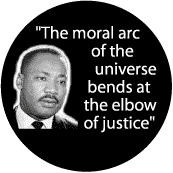
Even in these troubled times, the messiness of American Democracy bends toward a resolution of intractable social ills.
The momentum for health reform, ecological balance, and equal rights is unstoppable. No singularly elected American politician will change the direction of that momentum.
The Body Keeps the Score: Brain, Mind, and Body in the Healing of Trauma
Written by: Bessel van der Kolk, MD
Narration by: Sean Pratt
BESSEL van der KOLK (DUTCH PSYCHIATRIST, SPECIALIZING IN ATTACHMENT, NEROBIOLOGY, AND DEVLOPMENTAL ASPECTS OF TRAUMA’S EFFECTS ON PEOPLE)
Dr. Bessel van der Kolk argues that trauma has a neurological connection between mind, body, and time. Kolk offers numerous examples of patients who suffer from the trauma of war, rape, accident, and childhood experience to support a belief that “The Body Keeps the Score” and human consciousness pays the price.
In a limited sense, Kolk’s argument is convincing. The limited sense is in one’s definition of trauma. Trauma that clinically demonstrates disconnection between mind, body, and time, as proposed by Kolk, is a credible argument. However, Steven Pinker suggests a part of Kolk’s argument seems overdrawn. Steven Pinker is an American psychologist, cognitive scientist, and linguist. He is a Professor in the Department of Psychology at Harvard University.
Steven Pinker is an American psychologist, cognitive scientist, and linguist. He is a Professor in the Department of Psychology at Harvard University.
Pinker argues that human beings become who they are from genetics and life experience, largely exclusive of parenting. In contrast, Kolk suggests parenting plays a significant role in a child’s consciousness as a mature adult. Kolk argues that the trauma of parental abuse, neglect, and egoistic child’ indulgence form mind-body-time’ disconnects that profoundly affect mature adults. Kolk’s parenting arguments fly in the face of studies cited by Pinker that suggest less than one percent of a parent’s upbringing makes a difference in a child’s adulthood.
This may be a distinction without a difference if one accepts Kolk’s references to experience and sociological studies that show juvenile delinquency is credibly correlated with childhood trauma from incest, neglect of basic human needs like food or water, or hyper-vigilant (smothering) parental attention to children who sometimes just want to be left alone. Presumably, children in that type of hostile environment do not represent the general population.
Modern acceptance of PTSD in veterans of combat reinforces Kolk’s argument. The generally accepted definition of PTSD by the American Psychological Association “…is an anxiety problem that develops in some people after extremely traumatic events, such as combat, crime, an accident or natural disaster.”
What Kolk argues is that trauma often becomes an imprinted mind /body’ experience that disconnects from time. Modern acceptance of PTSD in veterans of combat offers evidence for Kolk’s argument. The generally accepted definition of PTSD by the American Psychological Association “…is an anxiety problem that develops in some people after extremely traumatic events, such as combat, crime, an accident or natural disaster.”
This broad definition is expanded by Kolk in two significant ways. One, those suffering from PTSD are riven with anxiety by a trauma that is stuck in time, i.e., time that stands still. Kolk explains that a PTSD sufferer recalls a past trauma as though it is happening now, and his/her body reacts in the same way it did when the trauma first occurred. The body’s chemical and hormonal reaction is the same as though the past trauma is happening now.
CHILD SOLDIERS OF MEXICO’S DRUG GANGS (Kolk’s second significant expansion is belief that children experience the equivalent of PTSD from parents’ psychological and physical abuse during their children’s childhood.)
Kolk’s second significant expansion is belief that children experience the equivalent of PTSD from parents’ psychological and physical abuse during their children’s childhood. A child’s chemical and hormonal response to recalled childhood trauma repeats itself. In some, time stands still when trauma is recalled, and the body repeats its physiological response. However, evidence is more anecdotal than scientifically measurable.
MASS MURDERERS-Psychiatric interviews rely on patients’ remembrance of things past which are historically unreliable. Sociological surveys cannot be done without the bias of a person or group that designs the questions that are to be asked of the person that answers the survey.
Kolk infers that the psychological maladies of adults can be significantly reduced by better parenting. The difficulty one has in accepting this argument is that documentary proof is in anecdotal evidence from psychiatrist interviews of patients and sociological surveys of defined populations, both of which are inherently biased. Psychiatric interviews rely on patients’ remembrance of things past which are historically unreliable. Sociological surveys cannot be done without the bias of a person or group that designs the questions that are to be asked of the person that answers the survey.
Kolk may be correct but there is enough reservation in the Psychiatric community to deny Kolk’s request for a psychiatric diagnosis of Developmental Trauma Disorder for children.
This is a frustrating issue because there are unquestionably millions of children that are abused and neglected in the world. These children are often not treated for their psychological problems because insurance is not available for un-diagnosed patients. If Kolk is correct, a diagnosis would be a first step in developing a course of medical treatment that is at least partially covered by insurance.
There is also the tangential argument made by psychologists like Steven Pinker that do not believe parenting has much to do with how children grow into adults. Nevertheless, one’s heart goes out to those children that are abused by their parents or are deprived of the basic needs of life.
SCOTT L. MONGOMERY (AUTHOR, AMERICAN GEOLOGIST, AFFILIATE FACULTY MEMBER UNIVERSITY OF WASHINGTON)
DANIEL CHIROT (AUTHOR, PROFESSOR OF RUSSIAN AND EURASIAN STUDIES @ UNIVERSITY OF WASHINGTON.)
“The Shape of the New” is about the power of ideas. Scott L. Montgomery (a geologist and professor) and Daniel Chirot (a winner of a Guggenheim Fellowship for Social Sciences) write about three ideas rarely argued in polite conversation; e.g. economics, politics, and religion.
Montgomery and Chirot capsulize the importance of their subject by paraphrasing Victor Hugo’s line in “Les Miserable”. “One can defeat an army but not an idea”. (The actual quote is: “An invasion of armies can be resisted, but not an idea whose time has come.)
The essence of the author’s augment is that Smith’s, Marx’s, and Darwin’s ideas are seminal beliefs that define the modern world.
Among others, Montgomery and Chirot profile the ideas of Adam Smith, Karl Marx, Charles Darwin, Alexander Hamilton, Thomas Jefferson, Jerry Falwell, and Sayyid Qutb. Each represents ideas that are part of modern world socioeconomic and religious thought. Smith’s, Marx’s, and Darwin’s ideas largely standalone, but Hamilton, Jefferson, Falwell and Qutb rest on the shoulders of others.
Adam Smith (1723-1790, Scottish economist)
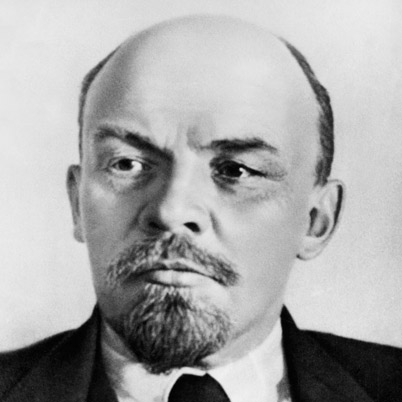
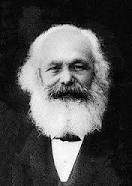
KARL MARX (BORN TRIER, GERMANY 1818-DIED LONDON, ENGLAND 1883)
Marx’s dialectic suggests capitalism is just a phase in an economic cycle that will evolve into communism.
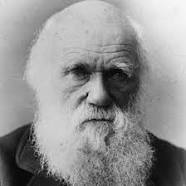
CHARLES DARWIN (1809-1882) FOUNDER OF THE THEORY OF THE ORIGIN OF SPECIES.
Hamilton grasps the importance of centralized control of money and national debt to support mercantilism, and free enterprise. Jefferson tempers Hamilton’s nationalist control with arguments for states’ rights that reflect on concerns raised by Smith, and then Marx, about unregulated economic power.
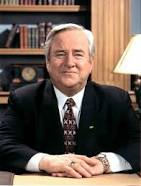
Jerry Falwell begins the evangelical Moral Majority that decries homosexuality and abortion, and posits belief in salvation only through faith in a Christian God.
SAYYID QUTB (1906-1966, EGYPTIAN AUTHOR,EDUCATOR,ISLAMIC THEORIST,POET,AND LEADING MEMBER OF THE MUSLIM BROTHERHOOD) Qutb (pronounced “kootube), like Falwell and Christianity, believes only in his faith, a Mohammedan God.
Smith’s, Marx’s, and Darwin’s ideas play out in religions and nation-states that deeply influence the modern world.
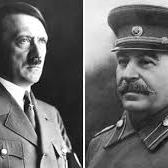
Hamilton, Jefferson, Falwell, Qutb, Lenin, Stalin, Hitler, Mao, and other leaders adopt, adapt, and distort Smith’s, Marx’s, and Darwin’s ideas; figuratively leading humanity to heaven and hell.
What Montgomery and Chirot do is return to original texts of Smith, Marx, and Darwin to show how their ideas penetrate Hamilton’s, Jefferson’s, Falwell’s, and Qutb’s thoughts and actions. As Smith’s ideas are more widely disseminated and read, America’s economic policy changes. The world’s economy evolves.
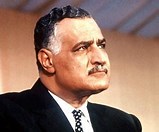
Falwell and Qutb reflect on unleashed sectarian beliefs consequent to Darwin’s idea of evolution. If there is no God, then what in life is not permitted? Qutb disapproves of Gamal Abdel Nasser’s westernization of Egypt because it violates the Quran and Muslim Arab identity.
Gamal Abdel Nasser 1918-1970 (Egyptian politician, 2nd President of Egypt 1954-1970).
Montgomery and Chirot note that much of the religious right is reactionary. The religious right challenges the socioeconomic belief of Smith’s sectarian vision of the invisible hand. To a Christian, the invisible hand can only be God’s hand. Marx and Darwin’s science only has relevance if it fits God’s plan.
To Qutb, the true path for humankind is through the word of the Koran. The authors question the good works of the evangelical movement when it infringes on human freedom and ignores scientific evidence. On the other hand, the authors note that religion plays an important role in the history of morality. Many question the direction of evangelicals but religions continue to shape morality in good and bad ways.
China’s rapid advance may not be exactly what Marx predicts but it is a kind of capitalist evolution that incorporates some of the tenants of communist centralized control.
Just as Deng’s and Xi’s interpretation of Marxism distorts communism, Keynes’ and Hayek’s belief in free enterprise distorts Smith’s economics.
Darwin’s view of evolution is morphing into arguments for genetic manipulation to create more perfect human beings. One questions whether this is a step toward Nazism or nirvana.
As Victor Hugo notes, “An invasion of armies can be resisted, but not an idea whose time has come.” Montgomery and Chirot have written an informative and interesting history of “..Big Ideas and How They Made the Modern World”.
In the end, “The Shape of the New” is a tribute to the importance of a liberal education. One may be a genius, but without a liberal education genius is often so narrowly focused, it leads to societal destruction.
JEAN EDWARD SMITH (AUTHOR, JOHN MARSHALL PROFESSOR OF POLITICAL SCIENCE AT MARSHALL UNIVERSITY & PROFESSOR EMERITUS AT THE UNIVERSITY OF TORONTO)
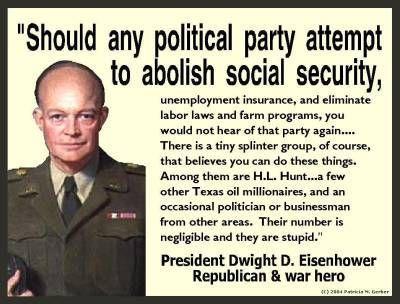
Jean Edward Smith’s biography of Dwight Eisenhower defines the meaning of political leadership. Smith does not show Eisenhower to be a great intellect or military genius. Smith suggests Eisenhower is similar to Ulysses Grant in having come from a modest family to rise to the office of President of the United States.
Like Grant, Eisenhower is shown to be a consummate leader who politically manages and develops people who understand how to get things done. Unlike Grant, Smith shows Eisenhower to be a better President than battlefield commander.
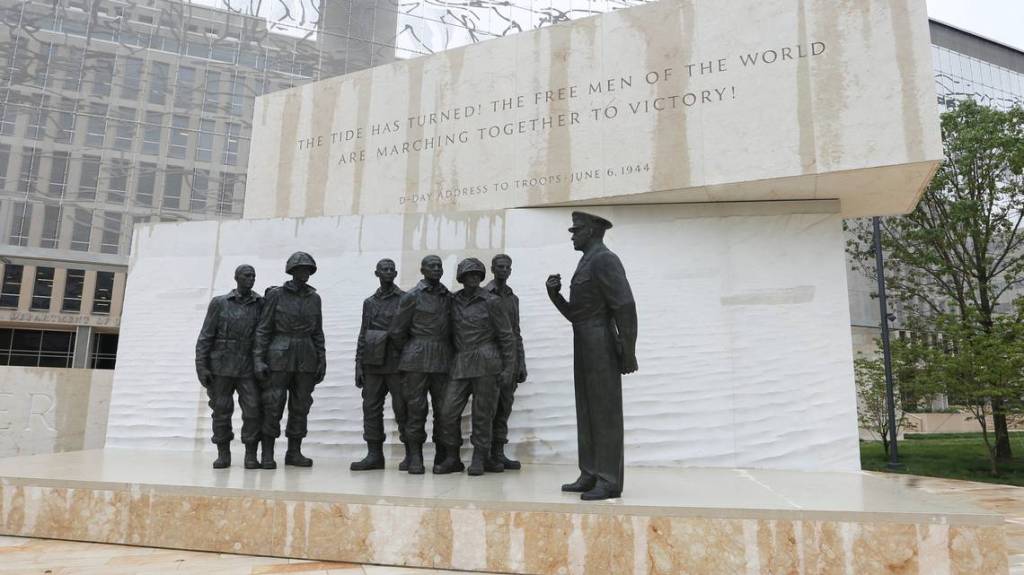
The newly revealed Eisenhower monument in Washington D.C. shows Eisenhower in command of others. It correctly infers Eisenhower is a leader who trusts others to be the best they can be. Eisenhower is not a doer but a manager of others who do.
Eisenhower leads Allied forces on D-Day by using the best battlefield generals of WWII. Smith implies–without the Allied generals’ experience in battle, Eisenhower would likely have failed on D-Day.
Smith notes that Eisenhower had minimal combat experience. The one time Eisenhower directly manages a battle is in Sicily. If it had not been for superior manpower and material, Smith argues Eisenhower would have been defeated. Smith goes on to suggest that British Field General Montgomery is unjustly scapegoated for Eisenhower’s Italian campaign mistakes.
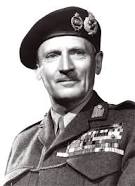
FIELD MARSHAL BERNARD MONTGOMERY (1887-1976, ENGLISH FIELD MARSHAL THAT MATCHED WITS WITH GERMAN FIELD MARSHAL ERWIN ROMMEL)
Smith also notes Montgomery’s role in D-Day is unfairly characterized. Montgomery argues for concentrated forces at critical points in German defenses; while Eisenhower demands a broad frontal attack along the entire front. Eisenhower’s tactics, in some generals’ opinions, prolong the end of the war by six months; i.e. increasing the casualty count and stalling Montgomery’s advance on Omaha Beach.
However, Smith’s biography of Eisenhower shows that military successes and failures make him a perfect political leader.
Smith reveals an inner moral compass that defines Eisenhower’s beliefs and decisions. Eisenhower uses that moral compass to become Supreme Commander of the Allied Expeditionary Forces in WWII; and later, President of the United States.
Smith infers, despite tactical failures as a battlefield commander, Eisenhower’s innate ability to get things done through other people make him one of the great twentieth century American Presidents.
Eisenhower is no saint. His power as Allied forces’ general leads to the Somersby affair even as Eisenhower professes a deep need and affection for his wife, Mamie.
Smith offers a comprehensive picture of Eisenhower. Eisenhower is no moral saint. His power as Allied forces’ general leads to the Somersby affair even as Eisenhower professes a deep need and affection for his wife, Mamie.
Somersby appears to have been loved by Eisenhower, but she is unceremoniously dumped in a “Dear John” letter when Eisenhower is ordered back to the United States. On the one hand, Smith is showing Eisenhower is human; on the other, Smith is showing the perfidy of men in power positions.
Smith explains Eisenhower’s path to the presidency. A part of that trail is festooned with Eisenhower’s sense of duty, but it is also tainted by the power and glory of high office. Eisenhower is solicited by both Democratic and Republican parties. In the end, the Republican platform more closely adheres to Eisenhower’s belief in fiscal conservatism.
However, Smith shows Eisenhower to be a domestic social liberal. Eisenhower is no ideologue. The inner compass that directs Eisenhower’s life recognizes the cruelty of poverty, the shallowness of red-baiting exemplified by Joseph McCarthy, and the importance of patience when dealing with international and domestic affairs.
Eisenhower resists the hawkish tendencies of his Republican colleagues. He insists on withdrawal from the Korean conflict. Eisenhower abjures any suggestion that nuclear bombs should be used to attack American enemies. He forthrightly confronts Governor Faubus when the governor refuses to integrate schools in Little Rock, Arkansas.
MOHAMMAD MOSADDEGH Though Eisenhower initially rejects a British assassination plot against Mosadegh in Iran, he changes his mind when he begins to believe oil availability is more important than one human life. (1882-1967)
On the other hand, Eisenhower succumbs to the machinations of his defense department and several covert plans to overthrow foreign governments. Though Eisenhower initially rejects a British assassination plot against Mossadegh in Iran, he changes his mind when he begins to believe oil availability is more important than one human life.
Though Mossadegh dies from natural causes, America supports a military junta that overthrows Iran’s government. Eisenhower’s support of the overthrow is based on British settlement of an Iranian oil agreement with Iran, and Iranian oil availability in the United States.
Eisenhower also mistakenly establishes the domino theory of communist infiltration. Though he refuses to support the French in Indochina, he believes the fall of Vietnam will expand communism in Southeast Asia. Eisenhower sets the table for Kennedy’s and Johnson’s mistakes in Vietnam.
Eisenhower is well-known for his opposition to the military/industrial complex growing in America. He insists on balancing the budget by reducing military expenditure. He reduces financing for American military forces while strengthening Air Force capability as a more modern military deterrent. Eisenhower faces down numerous military commanders that insist on expanding conventional forces that can intercede in foreign conflicts without employing weapons of mass destruction (an argument that is being made by today’s military establishment).
Eisenhower mistakenly establishes the domino theory of communist infiltration.Eisenhower faces down numerous military commanders that insist on expanding conventional forces that can intercede in foreign conflicts without employing weapons of mass destruction (an argument that is being made by today’s military establishment).
Smith shows that Eisenhower refuses to balance the budget by cutting domestic programs that serve the poor and aged. Eisenhower presses unsuccessfully for increases in medical services for the American public (quite different from today’s Republican President).
Smith offers a balanced picture of Dwight Eisenhower. America benefited from Eisenhower’s political acumen. He may not rank with Washington and Lincoln, but he drew from an inner moral compass that makes human beings as good as they are capable of being.
In contrast to America’s current President, Eisenhower made one proud to be an American. (This review was written when Trump was President of the United States.)
David Brooks (Author, Political and social commentator) Of course, Brooks means both men and women in his singular reference to Adam. In David Brook’s “The Road to Character”, the forces of nature are classified as Adam one and Adam two. Adam one is characterized by logic, and rationality. Adam two is characterized by sex-drive, instinct, … Continue reading “ADAM ONE AND TWO”
Audio-book Review
By Chet Yarbrough
(Blog:awalkingdelight)
Website: chetyarbrough.blog
The Road to Character
Written by: David Brooks
Narration by: Arthur Morey, David Brooks
David Brooks (Author, Political and social commentator)
In “The Road to Character”, David Brooks refers to Adam one and two (a nod to biblical creation) as two forces of nature embodied in all human beings.
Of course, Brooks means both men and women in his singular reference to Adam.
In David Brook’s “The Road to Character”, the forces of nature are classified as Adam one and Adam two. Adam one is characterized by logic, and rationality. Adam two is characterized by sex-drive, instinct, and emotion. Brooks suggests these characterizations apply to both sexes.
Of course, categorization of logic and instincts in human beings is not a revelation. But, Brooks notes these categorizations are the foundation for character. Brooks does a masterful job of recalling several historical figures that are the gravel base and pavement for his “…Road to Character” argument.
Because Brooks turns to the past, there is an inference, and some suggestion, that the present and future are threatened by an imbalance between logic and instinct; with a result that implies diminished character in modern times.
The seemingly erratic behavior of the past President of the United States offers evidence to support Brooks’ observation.
FRANCES PERKINS (1880-1945, SERVED AS U.S. SECY. OF LABOR 1933-1945)
Brooks recalls the first woman Cabinet Member, the U.S. Secretary of Labor, Francis Perkins. Perkins is raised in a wealthy family in Maine, educated at Mount Holyoke College, University of Pennsylvania, and Columbia. Perkins becomes the woman behind the New Deal of Franklin Delano Roosevelt.
In spite of her wealthy upbringing, Perkins is incensed by poverty and its causes. Her “Adam one” tells her that poverty is not caused by lethargy or want of ambition but by social circumstance.
Perkins is drawn to this conclusion by the struggles of her own life and those around her. Perkins becomes engaged with humanity while struggling with a mentally deranged husband and a financially and emotionally dependent daughter. Perkins lives a life that shows she is not in control of “Adam two” but that “Adam one” can ameliorate through hard work and service to others. Perkins is a consummate organizer; i.e. an essential manager needed to make Roosevelt’s New Deal effective. She supports her husband and daughter throughout the struggles of her life.
Brooks goes on to give thumb nail histories of Dwight Eisenhower, George Marshall, Bayard Rustin, Mary Ann Eliot (aka George Eliot), Samuel Johnson, and others. In each vignette, Brooks outlines a struggle between “Adam and Eve one” and “Adam and Eve two” views of the world.
DWIGHT EISENHOWER (1890-1969)
Brooks notes Eisenhower’s caddish dismissal of his long-term mistress as evidence of a character formed by an “Adam one” view of the world. The importance of Eisenhower’s duty to family, to position as President, and as example to country outweigh “Adam two” emotions of an illicit affair; i.e. he summarily dismisses his mistress with a memo.
Brooks suggests the importance of Eisenhower’s duty to family, to position as President reflect “Adam one” behavior that outweighs “Adam two” emotions of an illicit affair.
Brooks stories reflect on the agony felt by human beings struggling with logic and rationality, and its conflicts with spirit, sex drive, instinct, and emotion.
Eisenhower engages Civil Rights conflicts during his presidency. However, his engagement is principally based on upholding “rule of law” when the Supreme Court settles Brown v. Board of Education.
One presumes Eisenhower’s political decisiveness is based on an “Adam one” belief in Constitutional enforcement of the law of the land. Eisenhower’s road to character is paved with “Adam one” duty. Jean Edward Smith’s “Eisenhower in War and Peace” reinforces Brook’s assessment.
The same case is made for General George Marshall. Duty-to-country is at the base of Marshall’s public “…Road to Character.”
GENERAL GEORGE C. MARSHALL, (1880-1959)
Like George Washington, Marshall serves his country without desire for fame or fortune but with a reasoned need to do what they perceive is right.
Like Washington, Marshall is a hard task master. He expects much from his army and from himself. He is confident, without being arrogant. He suppresses “Adam two” emotions to do his duty. He confronts obstacles directly. Outwardly, Marshall neither fears any man or position.
The folly of hubris is never evident in either Washington’s or Marshall’s actions but each is willing to do what their country asks of them. Brooks tells the story of Marshall wanting to lead the D-Day invasion but agreeing with Roosevelt’s decision to appoint Eisenhower, Marshall’s subordinate.
Harry Truman (1884-1972. 33rd President of the United States.)
Marshall intends to retire after the war but is called to duty by Truman to form the Marshall Plan for the recovery of Europe.
Ironically, the Marshall Plan cements Marshall’s name in history. The point being made by Brooks is that seeking fame is a fool’s road to character. Marshall did his duty. He did not seek fame. Fame found him through good works based on character.
Brooks notes how Marshall confronts General Pershing when he criticizes Marshall’s lesser command; and later, confronts Roosevelt when the suggestion is made that WWII will be a war of machines rather than men.
A surprising thumb nail history is given of Bayard Rustin, a black activist that happens to be gay. Rustin is compelled by “Adam two” emotions that drive him to serial relationships with men. Rustin is shut out of King’s march on Washington because of a threat from Adam Clayton Powell Jr. to expose an intimate King-Rustin relationship. Rustin remains in the movement but is forced to reduce his profile.
BAYARD RUSTIN (1912-1987, Social Movements leader for civil rights, nonviolence, and gay rights.)
Brooks notes that Rustin is a primary influence in Martin Luther King’s non-violence, pacifist movement, founded on Gandhi’s philosophy of resistance.
Though Rustin’s “Adam two” sex-drive besmirched his character, “Adam one” logic placed him on the right side of history.
Another fine vignette is the story of Mary Ann Eliot; better known as George Eliot. Mary Ann is raised in a strict catholic environment. She rebels by denying the myths of Christ’s story of resurrection and healing. She firmly believes in God but not the truth of biblical apocryphal stories.
After Eliot’s father’s death, Mary Ann is driven by her emotions and sex-drive to become serially involved with men for gratification, attention, and recognition. This insatiable desire continues until she meets the love of her life, George Lewes.
It is Mary Ann Eliot’s courage to flaunt convention that paves her “…Road to Character.” Like Rustin, Eliot struggles with her personal life but through hard work and insight to human nature, she becomes a woman of substance and a writer of great human understanding.
George Lewes becomes Eliot’s muse, constructive critic, and eternal admirer. Eliot becomes the famous writer of “Middle March” and “The Mill on the Floss”. Lewes is characterized as a lesser light but exactly what Eliot needs to realize her literary gift.
George Henry Lewes (1817-1878, Philosopher, literary, theatre critic.)
Lewes is married but has a reputation for philandering. Eliot chooses to become Lewes companion in Europe in spite of the harm it would do her reputation.
Brooks profiles Samuel Adams and Montaigne in the last chapters of his book. They are equally well-formed men of character; forged in the face of human struggle.
In the end, Brooks suggests “The Road to Character” is defined by the base upon which the pavement is laid. What is troubling about Brooks’ conclusion is the inference that the way children were raised in the past is better than they are raised today. The inference is that children are not punished enough or are too coddled with praise to be motivated to achieve great and good things. Further, that today’s environment fails to build character because there is less understanding or appreciation of hard work and its rewards.
Brooks may be misreading today’s youth. Today’s youth are children longer than in the past. They also have more years to live. Human hardship will always be with us and even the coddled learn from mistakes made in their youth.
The substance of character has not changed but it may take more years to reveal it.
“The Sympathizer” defines the idea of a world citizen. It is the first novel of Viet Thanh Nguyen. In the beginning, “The Sympathizer”, Nguyen’s fictional hero, seems like another version of a war Americans would like to forget. Chugging through the story a listener nearly derails but the denouement spectacularly realigns one’s senses.
As widely acknowledged, America’s abandonment of Vietnam in 1973 left thousands of South Vietnamese soldiers in peril. (A scenario that may repeat itself in 2021 with America’s departure from Afghanistan, but that is another story).
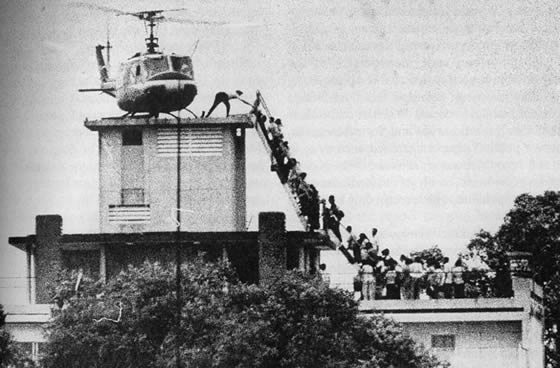
In 1975, the last American marine leaves the roof of the American Embassy in Saigon. Nguyen’s novel begins with hard decisions made by South Vietnamese commanders to identify native supporters, and their families, who would or would not be saved by American military transport. Nguyen’s main fictional character is chosen to be one of the lucky evacuees. The irony of that selection is that he is a communist sympathizer, a spy.
In 1975, the last American marine leaves the roof of the American Embassy in Saigon.
Nguyen’s spy is a Vietnamese outcast. He is one of the “children of the dust” noted in the musical “Miss Saigon”. He is a bastard son of a white American priest who seduces his teenage mother. As a sympathizer, he becomes an undercover agent working for a committed South Vietnamese general. It appears this communist sympathizer has gained the trust of the General by being the go-between for the murder of North Vietnam collaborators.
When evacuation from Saigon is imminent, the General asks the sympathizer to choose who should join them on their flight to America.
When evacuation from Saigon is imminent, the General asks the sympathizer to choose who should join them on their flight to America. The sympathizer has two close friends. One friend is a communist; the other is not. The three are “blood-oath” brothers, characterized as “The Three Musketeers”. The two friends are chosen by the sympathizer to go on the journey to America. The communist friend declines and stays in Vietnam to be the sympathizer’s handler; the other friend agrees to leave when his wife and son become collateral damage in the war. His communist friend tells the sympathizer to never come back to Vietnam. The significance of that statement becomes clear at the end of the story.
Most of the novel is about the sympathizer’s experience in America. He experiences a degree of freedom and independence never felt before.
Most of the novel is about the sympathizer’s experience in America. He experiences a degree of freedom and independence never felt before. But he still reports to the General. His close non-communist friend is an assassin for actions demanded by the General. The sympathizer is the go-between when orders are given.
The obvious irony is that this communist sympathizer carries out orders to kill suspected communist sympathizers in America when he is the penultimate sympathizer.
The General is planning an insurgent action to be organized in Thailand to attack communists in Vietnam. The sympathizer’s best friend is selected as one of the people to go to participate in the insurgency. The sympathizer asks the General to let him go. However, his primary reason for going is to protect his friend. The General initially says no but recants when another suspected spy is targeted.
The General advises the go-between sympathizer that he does not feel he is qualified for the Thailand mission because he has never killed anyone himself. If he can murder the newly suspected spy, the General will let him go on the Thailand mission.
The sympathizer, upon returning to Vietnam, is protected by his friend by using sleep deprivation to make him understand something he knows but cannot remember; the other is left to be physically tortured by camp rules, but not killed because of the camp commander’s orders.
The sympathizer haphazardly murders a suspected spy and goes to Thailand. The valued meaning of the story becomes clearer.
The sympathizer and his friend are caught by a communist cadre. The cadre is led by the communist friend (the third musketeer) that told the sympathizer to never come back to Vietnam.
Both the sympathizer and the non-communist friend are imprisoned, under the command of their communist friend. Under the guise of communist re-education, the communist friend protects his two blood-brothers. The sympathizer is protected by his friend by using sleep deprivation to make him understand something he knows but cannot remember; the other is left to be physically tortured by camp rules, but not killed because of the camp commander’s orders.
While many escaped death from America’s abandonment of the South Vietnamese, the communist friend who stayed is severely wounded from an American napalm attack. His experience from the severe wounds and life under communist rule appears to have taught him an indelible lesson.
While many escaped death from America’s abandonment of the South Vietnamese, the communist friend who stayed is severely wounded from an American napalm attack.
The communist friend asks the sympathizer what is most important about being either a citizen of America or of Vietnam. After many days of sleep deprivation, the sympathizer says it is freedom and independence. Wrong says the friend. After more sleepless days, the sympathizer says death. Wrong again. Finally, after more wakeful nights, the sympathizer answers the question correctly.
All people are citizens of the world.
The answer is a seven letter word–nothing. The answer cuts through political ideology. All people are human beings; subject to the sins of being human. All people are citizens of the world.
ELIZABETH KOLBERT (AUTHOR,AMERICAN JOURNALIST,PROFESSOR AT WILLIAMS COLLEGE)
Homo sapiens are the only species that has the capacity to change events to conform to plan.
Elizabeth Kolbert argues that the fate of life on earth is subject to the randomness of nature’s cataclysmic events and the will of society.
“The Sixth Extinction” recounts the history of five worldwide extinctions. In recounting that history, Kolbert and most scientists suggest there is a pending sixth extinction. The difference between the first five and a presumed sixth is the birth and maturity of humankind.
To some listeners, this story is tiresome. It is tiresome because the future seems so far away. It is tiresome because some think it a hoax. It is tiresome because humans are an adaptive species. It is tiresome because some believe it is God’s plan. It is tiresome because science says extinction is a part of evolutionary science.
TRUMP’S VIEW ON CLIMATE CHANGE:
A fatalist might read Kobert’s book and think it implies a “…Sixth Extinction” is inevitable, regardless of one’s belief. President Trump and other “do-nothings” sing “Be Happy, Don’t Worry”. There is nothing that can be done; so why try?
The truth is– much can be done to abate the consequence of wild fires, hurricanes, and other cataclysmic events.
Cities can be hardened against flooding.
Forests can be better managed.
At risk populations can be permanently relocated. It’s a matter of recognition of threat and political will to mitigate environmental consequence.
In spite of, earth’s rising average temperatures, melting icebergs, and seashore flooding, the story of extinction offers no sense of urgency.
Some believe wildlife extinction is a part of the natural order of existence; others, a cataclysm of human-caused events, while coreligionists believe it is a part of “God’s” plan. And finally Kolbert and others believe science will provide a solution for humans to escape extinction.
Kolbert’s book is popular, and is awarded the 2015 Pulitzer Prize for general non-fiction because she writes well and has a point of view that offers hope for the future of humanity. She infers science will provide a plan for humans to escape extinction. On the one hand, Kolbert decries the death of bat species, the acidification of earth’s oceans, and the loss of coral reefs. On the other, she suggests human life prevails because it has shown capacity to change.
The real fear that Kolbert, and many other journalists, scientists, and politicians talk about, is that society will not respond to manmade degradations of earth’s environment soon enough to delay an inevitable “…Sixth Extinction”.
Kolbert infers artificial preservation of endangered species is a fool’s errand in the face of habitat destruction. After all, what is the point of preserving a species in a zoo or in a frozen state of animation if natural habitats are destroyed?
Another way of interpreting Kolbert’s theme is to argue that loss of life’s diversity is a consequence of earth becoming an island of sameness. She calls loss of diversity is an island of sameness because environmental degradation introduces the same bacteria, the same pollutants, and the same adaptive needs to survive.
Biodiversity becomes less possible because of the interconnectedness of continents, consequent to international travel and species introduction to all continents of the world.
One may argue this is the fault of human civilization. That seems wasted intellectualization. The advance of civilization naturally induces loss of biodiversity. But, Kolbert’s theme suggests interconnectedness is only a proximate cause of loss of biodiversity. She argues it does not have to be a cause for a “…Sixth Extinction”.
Kolbert’s argument reminds one of the Serenity Prayer:
“God, grant me the serenity to accept the things I cannot change,
The courage to change the things I can,
And the wisdom to know the difference.”
“The Sixth Extinction” notes that human beings are the only species that shows the capacity to change events to conform to plan.
What humanity needs is the political will to mitigate the causes of human environmental pollution. It is not that a “…Sixth Extinction” will not occur, but human beings need not be the proximate cause.
JAMES BALDWIN (1924-1987 AMERICAN NOVELIST, SOCIAL CRITIC)
Go Tell It on the Mountain because God is not there. Go Tell It on the Mountain because no one listens. Go Tell It on the Mountain because no one cares. James Baldwin rages against culture that makes one, what one is not. Baldwin wins fame from a book that defines the chains of discrimination. He explains why and how culture is a curse. Baldwin tells a story that explains why being different denies equal opportunity.
Go Tell It on the Mountain is partly auto biographical. It tells of the author’s remembrance of his childhood and formative years. In broad perspective, Go Tell It on the Mountain shows how Americans are born as equals but deprived of potential by culture. Though published in 1953, the truth of Baldwin’s observations about culture is institutionalized in America.
Baldwin writes a story about three economic opportunities for early 20th century black Americans. They are announced by Baldwin as robber, pimp, or preacher. Today, some believe blacks are still not suited for more.
Only when human beings are treated as equal will stereotypes disappear.
Baldwin’s story is about two fathers of the same boy. One is the natural father; the other is a stepfather. The birth father is characterized as naturally smart. He moves from the rural south to the urban north with a woman he does not marry. The father is arrested for being at a store when two black men rob it. Because the father is in the wrong place at the wrong time, he is sent to jail for trial. The father is accused but not convicted. He is so shaken by the experience; he slits his wrists and dies. What would this father have become if he had not been arrested and jailed? The innate skill of a human being may be a combination of genetics and environment but if one’s color says you can only be a robber, a pimp, a preacher, a sports star, or an entertainer; being smart is not enough. Only when human beings are treated as equal will stereotypes disappear.
The irony of a stepfather/ preacher’s abuse is that he is biblically as sinful as most human beings. (In retrospect, knowing that Baldwin is gay, one surmises how abusive a religious stepfather might be.)
The second father of the same boy, a stepfather, also gravitates from the rural south to the north but he is older and knows success as a preacher. He is not characterized as particularly smart but he believes in God and talks the talk of a good man who will rescue an unwed mother and her child from a life of despair. However, the stepfather is a martinet. He severely punishes his wife and children for what he considers sin or disrespect. The irony of the preacher’s abuse is that he is biblically as sinful as most human beings. (In retrospect, knowing that Baldwin is gay, one surmises how abusive a religious stepfather might be.)
What makes Baldwin’s book important is its reflection on a part of American culture that denies equal opportunity for all. A smart man kills himself because he is black and has experienced the hate and inequality of discrimination. A preacher beats his wife and sons because he believes he has a right, given by God, to assay sin and punish those who violate his limited understanding.
What makes Baldwin’s book important is its reflection on a part of American culture that denies equal opportunity for all.
INSTITUTIONAL DISCRIMINATION
Being smart or being religious is not enough; particularly if you are a minority or a woman because cultures stultify individuality and restrict opportunity. Individuality and opportunity are hindered by poor education and biases that are eternally engendered (institutionalized) by discrimination. Blacks have shown they are more than criminals, preachers, sports stars, and entertainers. And women have shown they are more than child bearers and housewives but America continues to struggle with equal opportunity for all. Baldwin exemplifies America’s struggle in Go Tell It on the Mountain.
WILLIAM FELIX BROWDER (AKA BILL BROWDER-CEP AND CO-FOUNDER OF HERMITAGE CAPTIAL MANAGEMENT, NOTED CRITIC OF PUTIN)
If only a few of Bill Browder’s facts and accusations are true, the realpolitik of Vladimir Putin shocks the senses. “Red Notice” reflects on the diplomacy of Russian power.
In his book, “Red Notice”, Browder tells a story that implies Putin is a thug. Browder infers that Putin will lie, steal, and murder with the brutality of Joseph Stalin, the cunning of Machiavelli, and the tenacity of Genghis Kahn. Browder believes Putin uses his position as President to acquire wealth as second only to his desire for power.
Acquiring wealth is something Browder knows quite a lot about. William Browder is an investment fund manager/partner who ventures into Russia at the beginning of glasnost. Russian businesses and industries became private rather than state-owned enterprises at the end of the 20th century.
Beginning in 1996, Browder and his investors assemble a capital investment fund worth billions of dollars in 2005. Browder began the fund with other people’s money. The fund becomes known as Hermitage Capital Management. As a result of his analysis, Browder’s investment group buys Russian assets at steeply undervalued prices. He earns over two hundred million dollars per year for himself in 2006 and 2007.
BROWDER’S STORY OF HERMITAGE CAPITAL:
In 2005, Browder is deported by the Russian government. In 2006, Browder is black listed by the Russian government as a “threat to national security”. In March of 2013, the bank that serves as trustee and manager of Hermitage Capital Management announces it will cease funding operations in Russia. Browder gleefully points out in “Red Notice” that all of Hermitage Capital Management assets had been surreptitiously withdrawn in 2007. Browder is presently being sued in absentia by the Russian Government for tax evasion. Therein lays a tale of suspicious deaths, human greed, and conspiracy.
Browder assembles a great deal of evidence that suggests two people are murdered; that murder’ accomplices are paid a great deal of money, and that President Putin either sets the example for thuggish behavior or is complicit in a scheme that defrauds the Russian people.
DUTCH JOURNALISM’S INVESTIGATION OF THE RISE OF PUTIN:
SERGEI MAGNITSKY (1972-2009, RUSSIAN ACCOUNTANT AND AUDITOR VITIMIZED IN RUSSIA–WORKED FOR BILL BROWDER)
The two alleged murders are Sergie Magnitsky and Alexander Perepilichnyy. Magnitsky dies in the custody of the Russian government. He is identified as an attorney in Browder’s book but research suggests he is not licensed as an attorney in Russia. Magnitsky discovers a scheme by Russian government employees to recover taxes paid by Browder’s companies in Russia. The scheme is based on charges that the companies that paid the taxes were illegally pilfered by Browder’s investment company. The companies were transferred, without Browder’s knowledge or authorization, to shell company Russian owners. These owners are found to be two officers in the Russian secret police. The new owners suggest the companies they own have been pilfered and that they should be reimbursed for taxes that were paid to the government because of Browder’s fraudulent transfer of worthless assets.
Magnitsky and two Russian lawyers present evidence to the Russian government about the fraud being perpetrated by the two Russian officers. The two Russian lawyers decide to flee their country when they believe they are going to be arrested. Magnitsky believes facts speak for themselves; that he is safe, and the government will recognize and arrest the real criminals. Magnitsky is arrested, beaten, and dies in prison. The two officers, Artem Kuznetxov, and Pavel Karpov remain free.
MAJOR KARPOV EXPOSE:
ALEXANDER PEREPILICHNY (OLIGARCH THAT MAY HAVE BEEN MURDERED AT AGE 44 FOR EXPOSING RUSSIAN TAX FRAUD CASE ASSOCIATED WITH BROWDER INVESTIGATION)
Alexander Perepilichny was a Russian business man who defected from Russia in 2009. Perepilichny dies at the front door of his residence in the UK. Magnitsky was a forensic accountant in Russia. Living in England in 2012, he contacts Browder to say he has evidence of how the Moscow tax office rebated taxes to the two government officials. Browder contacts the chief constable of Surrey in England to tell them of Perepilichny’s evidence. Browder accuses Russian officers of fraud, costing the Russian state $230 million dollars.
Three videos of the alleged fraudsters are created as evidence of the Russian officers’ fraud. The evidence relies on their life style versus the income they receive from the Russian government. In Browder’s book, this evidence is overlaid with the prosecution of Russian oligarchs by Putin with the inference that those oligarchs that do not offer money to Putin are at risk of being jailed.
SYNOPSIS OF THE MAGNITSKY CASE:
“Red Notice” is a powerful statement about one man’s view of Vladimir Putin. As noted at the beginning of this review, “if only a few of Bill Browder’s facts and accusations are true…” Putin’s reputation, if not his power and wealth, are diminished. At the same time, Browder’s ludicrously large capitalist windfall at the expense of the Russian economy, and two Russian’ deaths, does little for his reputation.
Thieves of State: Why Corruption Threatens Global Security
Written by: Sarah Chayes
Narration by: Sarah Chayes
SARAH CHAYES (AUTHOR, SENIOR ASSOCIATE IN THE DEMOCRACY AND RULE OF LAW PROGRAM AT CARNEGIE ENDOWMENT FOR INTERNATIONAL PEACE)
Unquestionably, Hamid Karzai and his administration were corrupt during his ten years as President of Afghanistan. There is ample proof of corruption. “Thieves of State” is a tiresome revelation by an author one admires for confronting state sanctioned corruption. However, Sarah Chayes etiology for corruption is askew.
As Sarah Chayes notes, Mubarak’s government in Egypt was comparably corrupt. Chayes ten years in Afghanistan and her ability to speak Arabic offer tremendous credibility to her observations. However, her suggestion that corruption threatens global security is tiresome because “Thieves of State” exist in all forms of government, including the United States.
HOSNI MUBARAK (FOURTH PRESIDENT OF EGYPT 1981-2011)
Most, if not all, governments have some level of corruption because their leaders are human. In Afghanistan, Karzai protects his family’s interest by allowing his brother to sell land at high prices when it is virtually given to him by the government.
President Trump chooses to stay involved in the management of his corporate interests around the world. His justification is day-to-day management is in the hands of his sons. How credible is that argument?
HAMID KARZAI (PRESIDENT OF AFGHANISTAN 2004-2014) Karzai protects government functionaries that require bribes for favors because they are loyal to him.
Trump has tweeted that loyalty, above all, is expected from the people who report to him. Trump chooses to use government functionaries that are closely tied to industries that the government intends to regulate. When does loyalty become more important than fair-dealing?
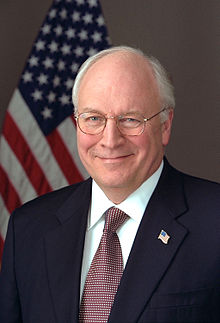
Greed is a part of human nature. It is disingenuous to think Vice President Cheney did not have an interest in seeing his former employer become the military supplier in the Iraq war.
Money, power, and prestige motivate all human beings. Societies only defense is government regulation but even that is subject to human nature and motivational force.
Rod Blagojevich (Former Governor of Illinois)
Desire for money, power, and prestige has no political party. It is in the nature of all humankind. Ironically, President Trump sets Rod Blagojevich free at the end of his presidency.
The irony is multifold. Trump is elected as a Republican, Blagojevich is elected as a Democrat. Trump is alleged to have tried to bribe a foreign head of state. Blagojevich is alleged to have tried to bribe a former President. Both choose use their elective offices to advance their ambition for more money, power, and prestige.
Chayes is absolutely right when writing about how important it is to listen to the general population about their government and its affect on their lives. Only then can one gain some understanding of a nation’s corruption. The consequence of human nature’s truths are dire. Human nature’s truth, when added to an outsider’s cultural misunderstandings, can be catastrophic.
Chayes suggests that an Afghani citizen will refuse to warn Afghani policemen of an IED “…because policemen require bribes to do their job”. Chayes concludes “…corruption is a threat to global security”.
This is a reasonable conclusion but what can an outsider do about it? Correction of corrupt practices can only come from the people who are governed. America can only lead by example; not by force of arms. America fails itself and the countries it forcefully tries to change. Yesterday it was Vietnam, Iran, and Iraq– today it is Afghanistan.
KARL MARX (BORN TRIER, GERMANY 1818-DIED LONDON, ENGLAND 1883) History shows that cultural outsiders destroy national comity and identity. Marx was an outsider in the Russian revolution but he formed the basis for communism’s takeover of Russia.
Lenin, Stalin, and to a lesser extent, Trotsky (all indigenous Russians) changed the government based on an outsider’s machinations. The same can be said of Mao’s China and Castro’s Cuba. Change comes from an outsider’s interference; while revolution only comes from within. The only consequential role an outsider like Chayes can play is publicizing indigenous public discontent. That is the true value of her observations in “Thieves of State”.
Chayes points to a Nigerian oil CEO who makes $1,000,000 per year. Chayes exposure of kleptocracy in Nigeria is only legally different from that which exists in the United States. The difference is that kleptocracy in America is legalized by a stable government. Robert Walker of Andarko Petroleum makes over $15,000,000 per year. American tax subsidies and American tax policy subsidize the oil industry. THIS TYPE OF CORRUPTION IS LEGAL IN AMERICA.
The American government protects CEO incomes that reinforce a widening gap between rich and poor. At least two of President Trump’s cabinet are billionaires and most are multi-millionaires. Few of the super-rich have much interest in, or concern for, the poor.
Chayes’ book would be more interesting if she had contrasted America’s corruption with Afghanistan’s. She limits her comparisons to medieval Eastern, African, and European cultures. Listening to “Thieves of State” is off-putting because America, like all nation-states, have some level of corruption; i.e. legalized corruption is still corruption.
Invading Afghanistan is understandable because of its role in harboring terrorists. However, it is a waste of American lives to believe an outsider’s intervention will change the hearts and minds of an indigenous population.
If America makes the mistake of invading Iraq or throwing money at the Afghanistan economy, it is only we Americans who are to blame. It is not only the fault of Afghani or Iraqi corruption. It is the innate nature of humanity. Fault lays at the feet of an outside country invading a foreign culture.
Respectfully, Chayes invested her time in understanding Afghanistan which puts her far and away ahead of most Americans but she misses the root cause of corruption which is unregulated human nature. That is why many countries that have poor government regulation turn to religion.
If a secular government cannot regulate human nature, Taliban-like martinets fill the vacuum with public executions or Mullah Dictates. Neither secular nor religious governance is a guarantee of perfect human justice, equality, or equity. Justice, equality, and equity must come from the desire of indigenous populations.



 Even in these troubled times, the messiness of American Democracy bends toward a resolution of intractable social ills.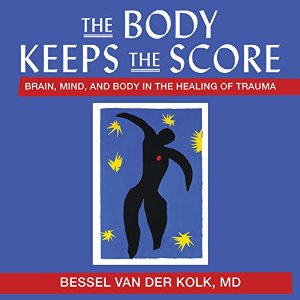






































 In spite of, earth’s rising average temperatures, melting icebergs, and seashore flooding, the story of extinction offers no sense of urgency.

















 REVIEWS AND VIEWS OF LIFE