Graduate Oregon State University and Northern Illinois University,
Former City Manager, Corporate Vice President, General Contractor, Non-Profit Project Manager, occasional free lance writer and photographer for the Las Vegas Review Journal.
ALAN PATON (1903-1988, SOUTH AFRICAN AUTHOR) “Cry, the Beloved Country” is less brutal than Wright’s “Native Son” or Morrison’s “Beloved” but it strikes at the heart of apartheid and the insidious nature of discrimination and slavery.
In reading “Cry, the Beloved Country”, one should remember it was published in 1948. Alan Paton’s book updates Stowe’s “Uncle Tom’s Cabin”. It is less brutal than Wright’s “Native Son” or Morrison’s “Beloved” but it strikes at the heart of apartheid and the insidious nature of discrimination and slavery.
Paton was a South African white man who lived the life he wrote about. Paton, among other things, managed a black reform school in South Africa in the early 40s. One is reminded, in some ways, of Nelson Mandela’s life in Paton’s main character, Stephen Kumalo. In other ways, Mandela moves way beyond Kumalo.
One can argue Paton’s main character, Kumalo, deserves the pejorative meaning of a modern “Uncle Tom”. Maybe Kumalo is a black man considered to be excessively obedient or servile. On the other hand, Kumalo is a hero—the best of what a black person can be in the circumstance of apartheid.
Contrary to one’s belief about Mandela, Kumalo is like Uncle Tom in Harriet Beecher Stowe’s book. He is a good man; a wise man, but he fails to understand the terrible truths of discrimination and its insidious effect on society–both on the discriminated and the discriminator. One doubts that Mandela ever had any misunderstanding of discrimination’s effect on society.
One can argue Kumalo deserves the pejorative meaning of a modern “Uncle Tom” definition. But Paton makes the reader or listener walk in Kumalo’s shoes. Maybe Kumalo is “a black man considered to be excessively obedient or servile”; on the other hand, Kumalo is a hero—the best of what human beings can be in the circumstance of history. Therein lays a comparison with Mandela and his decision to invite a suppressive white government into his administration. The goal of Paton, his character Kumalo, and Mandela was to preserve a beloved country.
The execution of Kumalo’s son, the prostitution of his sister, the corruption of his brother are consequent behaviors of discrimination; Kumalo sees but fails to act because he is seduced by faith and constrained by white suppression.
Apartheid (Discrimination is shown by Paton to be a complex evil.)
Life is full of compromise; full of good and evil. The fictional Kumalo and real Mandela did the best they could in the circumstance of their lives; which seems better than can be said of 99% of the human race.
NELSON MANDELA (1918-2013)
“Cry, the Beloved Country” begs the question of what is right by inferring much of South Africa’s suppression was driven by white’ fear. More succinctly, discrimination is shown by Paton to be a complex evil.
Paton creates characters with a growing white understanding of the damage caused by discrimination while subtly injecting a more militant black movement. Again, one is reminded of Mandela’s early life which led to imprisonment.
“Cry the Beloved Country” gives one some sense of what life must have been like for Nelson Mandela.
By: Michel Eyquem de Montaigne, Donald M. Frame (translator)
Narrated by Christopher Lane
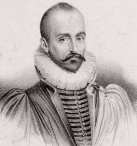
MICHEL DE MONTAIGNE (1533-1592)
Michel Eyquem de Montaigne, a sixteenth century philosopher and writer, wrote and re-wrote “Essays”, originally published in the 1580s. Essay was a new form of writing. Montaigne’s subject is the philosophy of life and death.
Montaigne writes his collection of essays while cloistered in a château in southwest France. Donald Frame translates and compiles three volumes of Montaigne’ essays into one book–“The Complete Essays of Montaigne”, first published in 1957.
Montaigne, born into a family of wealth, affords the luxury of time for personal reflection and contemplation.
Montaigne, born into a family of wealth, affords the luxury of time for personal reflection and contemplation. Not surprisingly, Aristotle wrote that life depends upon awareness and the power of contemplation. In one respect, this quiet life is a contradiction in Montaigne’s philosophy. Montaigne reflects on history and ancient times to explain how life should be lived when his life seems a shadow of most people’s reality, the reality of a day-to-day fight for survival. There is reader skepticism about the 1% life of Montaigne versus the 99% life of most people.
Montaigne, with great family wealth and a storied education, becomes a Mayor of Bordeaux. He draws on a privileged life and recorded lives of great philosophers and leaders to create insight about lives of those that “do”, and have little time, or no time, to contemplate.
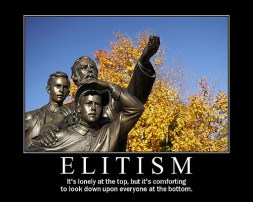
Montaigne is modest about his erudition but there is an elitist odor that clings to his self-effacing commentary.
Montaigne suggests the appeal of his essays lies in the middle of the human population. Montaigne suggests the in-between are those who are not highly intelligent, who are abysmally ignorant; preferentially plebeian, and ordinary. In other words, people of course nature and manner, like this critic. In spite of this elitist leaning, the wisdom noted in Monsieur Montaigne’s essays is enlightening.
This is a one thousand page journey with something for everyone. Montaigne suggests humans need to embrace life and eschew tragic interpretations of death. Life and death are only stories of being. Death is inevitable and should not be feared. Death should be embraced like life; it is merely a final act, a denouement of life; well or poorly lived. In Montaigne’s opinion there are justifications for ending one’s life volitionally but only for valued reason.
Montaigne suggests humans need to embrace life and eschew tragic interpretations of death. Death should be embraced like life; it is merely a final act, a denouement of life; well or poorly lived.The interpretation of justification and value are lines un-clearly drawn by Montaigne.
Montaigne suggests women may choose to kill themselves rather than be raped. Men may choose to kill themselves and murder their families to avoid enslavement by an enemy. The defeated may kill themselves if mortally ill or wounded. To Montaigne, euthanasia is permissible at death’s door. Today, the lines are only slightly more clearly drawn and only in a few of the American States (like Washington, Oregon, Montana, Vermont, and California).
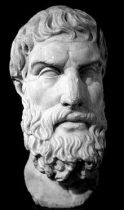
EPICURUS (341 BCE-270BCE). Founder of one who believes living life is meant to be the pursuit of pleasure.
Montaigne is Epicurean in the sense that he believes living life is meant to be a pursuit of pleasure. However, the pursuit of pleasure is not defined by money, power, or prestige. Those pleasures are diminished by their attainment because they are insatiable human desires.
“Not-needed” things become human’ handcuffs. Life becomes an unending accumulation of things that fail to satiate desire.
When one makes more money than needed to sustain life, he/she buys more of what is not needed. Those “not-needed” things become human’ handcuffs. Owners worry about losing things; worry about replacing things; worry about keeping up with neighbors. Life becomes an unending accumulation of things that fail to satiate desire.
Power never rests. Power is always moving like an electron around a nucleus of followers. Leaders are enslaved by followers.
Leaders worry about followers, worry about competition for position, worry about their place in history; they die alone just like every human being. Power is an ephemeral pleasure that never rests in one place.
Leaders with power are targets for support or destruction. Power is an ephemeral pleasure that never rests in one place.
Prestige comes from respect of fellow human beings. It is outside the control of the seekers or the chosen; it is limited by the opinion of others; it changes like the direction of the wind or the habits of the culture within which one lives.
Life is not an either/or proposition despite Kierkegaard’s philosophy. Humans are good and bad; no one is totally one or the other–not even America’s challenged leaders.Montaigne disdains habit because it contains un-grounded reason that distorts nature.
Montaigne attacks cultural shibboleths that are based on unfounded reason. Because one says the earth is the center of the universe does not make it so but a universe of fiction may grow around a culture of mysticism that defies the natural state of being. Montaigne insists on skepticism when confronted with culturally reinforced habit that is not bound by nature.
To Montaigne, pleasure lies in self-understanding; doing what one is best at; and letting go of life when it fails to improve self-understanding or keeps one from valuing existence.
Pleasure lies in self-understanding; doing what one is best at; and letting go of life when it fails to improve self-understanding or keeps one from valuing existence. Montaigne cites many ancient philosophers like Plato, Aristotle, Epicurus, and Lucretius that reinforce his arguments.
Plato drives the point of virtue as the human characteristic of doing what one is best at doing. Montaigne notes that both Plato and Aristotle emphasize the importance of education for self-understanding. Self-understanding inures to the benefit of humankind by revealing to each what they are best at and giving them tools (through education) to be the best they can be. Montaigne insists on learning; not rote memorization, but clear understanding. Montaigne argues that it is not reciting what someone has said but understanding what is meant by what is said. This is a somewhat ironic statement in view of Montaigne’s voluminous quotes from dead philosophers.
Montaigne infers education opens all doors to self-understanding and the pleasures of a good life and honorable death.
Montaigne reflects on his upbringing and his Father’s drive to educate his son by making Latin Montaigne’s first language, the language of scholarship in the 16th century. Montaigne did not only live the life of a scholar. He was elected mayor of Bordeaux before retiring to his cloistered existence as a writer of the “…Essays…” Montaigne applauds his father for providing him an education and infers that every family is obligated to support education of their children.
Montaigne died from complications of tonsillitis at the age of 59. Frame’s translation of Montaigne’s essays offers a philosophy of life in a horse-size pill. It encourages the old but escapes the young because life happens too fast.
As George Bernard Shaw notes, youth is wasted on the young; probably because they are too busy for contemplation. “The Complete Essays of Montaigne” is an insightful guide for the conduct of life and the acceptance of death.
The Origins of Political Order: From Prehuman Times to the French Revolution
Written by: Francis Fukuyama
Narrated by: Jonathan Davis
FRANCIS FUKUYAMA (AMERICAN POLITICAL SCIENTIST, POLITICAL ECONOMIST, AND AUTHOR)
Francis Fukuyama’s analysis of state and government formation is both insightful and politically actionable. In “The Origins of Political Order” and “Political Order and Political Decay” Fukuyama provides a basis for understanding politics and its contribution to society.
THOMAS HOBBES (1588-1679) Hobbes generally considered humankind to be both good and evil with a need for regulation of his/her evil instincts through government.
In previous book reviews, references have been made to Thomas Hobbes’ theory of the nature of man. Hobbes generally considered humankind to be both good and evil with a need for regulation of his/her evil instincts through government. He identifies government as “The Leviathan”. Hobbes suggests “The condition of man…is a condition of war of everyone against everyone”.
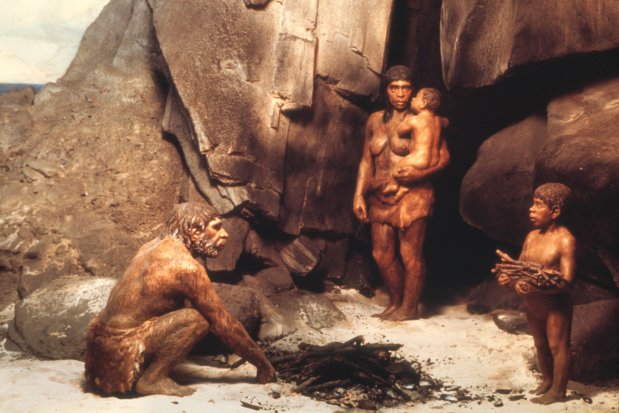
Fukuyama finds a singular and significant flaw in Hobbes’ observation. From the beginning of time, humans associated with other humans to survive the brutish nature of life. He suggests humans are by nature violent with that violence becoming ingrained as a societal meme to cope with the exigencies of life. Fukuyama goes on to suggest violence and change are intertwined.
Fukuyama finds a singular and significant flaw in Hobbes’ observation. Though Fukuyama may agree with Hobbes’ view of individual humans, he tempers it by noting humans have always been social beings. From the beginning of time, humans associated with other humans to survive the brutish nature of life. He suggests humans are by nature violent with that violence becoming ingrained as a societal meme to cope with the exigencies of life. Fukuyama goes on to suggest violence and change are intertwined.
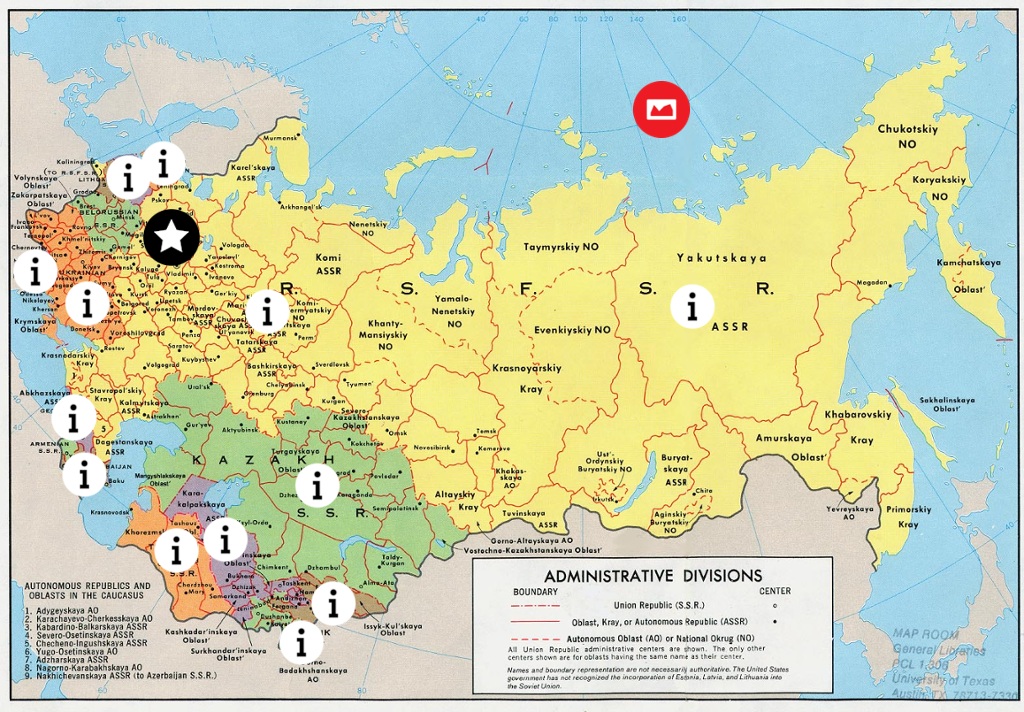
The significance of humans as societal creatures is that governments are formed by dominant tribes. Politics is the language of tribes negotiating with each other to preserve status. However, Fukuyama notes that cultural norms are dramatically different in governments that evolve over time. These cultural differences play out in the history of Russia, China, France, Great Britain, Italy, America, the countries of Africa, and the Middle East.
Fukuyama notes cultural differences play out in the history of Russia, China, France, Great Britain, Italy, America, the countries of Africa, and the Middle East.A counter-intuitive note by Fukuyama is that religion plays a significant role in civilizing, rationalizing, and establishing state governments.
A counter-intuitive note by Fukuyama is that religion plays a significant role in civilizing, rationalizing, and establishing state governments. It is counter-intuitive because it seems in the present-day religion is tearing the world apart. However, in the context of history, the size of tribes within countries hugely increases with the spread of religion. Religion becomes a cultural phenomenon that ameliorates (but does not eliminate) violence among different tribes within wider territories that evolve into nation-states.
Fukuyama implies nation-state development is a living organism that evolves in the manner of natural selection identified by Darwin in the “Origin of Species”. Characteristics of effective governments perpetuate themselves through adaptation to respective societal norms. In other words, every society grows via its own cultural norms which suggests sovereignty should be inviolable.
Fukuyama is saying that American democracy, Chinese socialism, Russian federation, India democracy or any other system of government will be different because of their social history. In other words, India may be classified as the world’s largest democracy but not as an American democracy because of its different societal norms.
Can the World Wide Web, the growth of science, and recognition of environmental interdependence overcome the nationalist stupidity of government leaders?
In one sense, the complexity of Fukuyama’s theory makes one less optimistic about the future of the world. What can take the place of religion to meld societies into a common tribe? Can the World Wide Web, the growth of science, and recognition of environmental interdependence overcome the nationalist stupidity of government leaders?
If Trump, Putin, al-Baghdadi, and Kim Jong-un represent the future, the answer is no. On the other hand, one may argue survival of humans is dependent on experimentation by governments, enhanced by nation-state societal differences.
Just as one species evolves into an improved human, one species of government may evolve into an improved government (presuming humans survive an interregnum).
PHILLIP ROTH (WINNER OF THE PULITZER PRIZE FOR FICTION, MAN BOOKER INTERNATIONAL PRIZE AND MORE)
Figuratively, Phillip Roth skins an onion in his book, The Human Stain. He exposes the invidious nature of discrimination and truth’s distortion in a story about a college professor’s life.
In an ironic Buddhist’ way, Roth’s writing stings the eyes of wisdom and the material world; i.e. The Human Stain offers a nuanced explanation of human nature.
Roth exposes layers of who we are by recounting President Clinton’s contretemps with Monica Lewinski; stories of a “free” but tainted press, the many forms of discrimination, and incidents of sexual exploitation. Each peel of the onion reveals a stinging criticism of human beings and the material world.
Roth’s story is about Coleman Silk, a tenured professor, nearing the end of his career at a small university. He is seventy-one years old. His career is ended in disgrace. The disgrace is caused by the use of words, taken out of context, and given dishonest meaning by others.
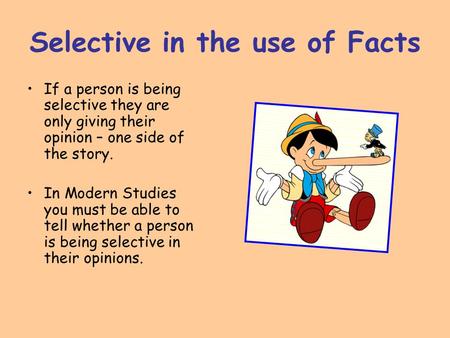
Today appears no different from yesterday. Humans lie through conscious and subconscious selection of facts. People looking at the same event view that event differently. Each person creates their own story based on their life experience.
Silk resigns from the university. His wife dies. In general, he blames the world; more specifically the press and university, for his wife’s death. He has an affair with a 35-year-old woman; they die in a mysterious accident that is inaccurately reported by newspapers reporting rumor and colleague’ distortion rather than fact.
Phillip Roth implies objective truth is an oxymoron. Are good and evil in the world only defined by society’s acceptance? Is the same true for morality and amorality?
That is the basic outline of The Human Stain but Roth peels layers of life off twentieth century history with fictional characters who illustrate and argue that stains are an inevitable consequence of living any life. His hero, Silk, tells a white lie near the beginning of adulthood and is pilloried for a Black accusation near the end of his life. Roth’s story infers every lie leaves a stain and every human being is a liar.
PTSD -The veteran husband, now ex-husband, is stained as a soldier trained to kill by the military. He is expected to return from Vietnam as though the past is past. However, the past is never past; it lives in memory and acts on the future. It is his stain.
Silk’s lover, in Roth’s depiction, is a woman stained by abuse of a stepfather, and later in life, by a husband. The abused child, and wife, carries her stains and spirals down to a dark place filled with despair. The veteran husband, now ex-husband, is stained as a soldier trained to kill by the military. He is expected to return from Vietnam as though the past is past. However, the past is never past; it lives in memory and acts on the future. It is his stain. He is diagnosed with PTSD.
A colleague of Silk’s is stained by a failure to come to his aid when Silk is unjustly vilified by the University. Monica Lewinski’s stain is literal and figurative with a soiled dress and the public’s vilification. President Clinton’s stain is weakness of character, lying about an affair, cheating on a wife. Every human being in Roth’s story is stained by life and must choose to live with it or die from it.
By the end of The Human Stain, one is reminded of the biblical phrase, “he who is without sin can cast the first stone”. How ridiculous was it to impeach President Clinton? How stupid is it to believe returning from a war is like turning off a light? Roth’s story infers every lie, and we are all liars, leaves a stain; every human experience leaves an imprint, some of which are stains.
ADAM SMITH (1723-1790, AUTHOR OF -THE WEALTH OF NATIONS)
“The Wealth of Nations” is often referred to but rarely read or listened to in the 21st century. Thirty Six hours of an audio book is punishing. However, one is surprised by Adam Smith’s prescient understanding of the value of freedom and his appreciation of the American and British conflict over American’ colonization.
“The Wealth of Nations” is not only about economics. It is about politics as an essential ingredient of economics.
Britain was among the mercantile leaders of the world when his book was published in 1776, the year of American Independence.
Dutch dominance had receded; Spain and France were vying for monarchical rule of Western Europe while Napoleon was soon to dominate the east and west European continent. British imperialism was on the rise. Britain became the dominant moral and economic power of the 19th century.
Adam Smith’s publication defined and codified economics while recognizing the economic limitation of imperialist expansion. Long before Britain’s ascension to the moral and economic leader of the world, Smith noted the error of denying self-determination to distant colonies.
Contrary to President Trump’s “America First”, Smith believed that whatever is produced at the cheapest price and best quality for the consumer is the guiding principle of “The Wealth of Nations”.
Smith argued that business regulation should begin with the best interest of the consumer at the forefront of legislation.
In general, Smith argues that trade monopolies are bad and competition is good. Governments that restrict trade hurt the consumer; therefore, tariffs on foreign goods should be abolished. To Smith, anything that restricts free trade is bad.
Former Secretary of the Treasury, Jacob Lew agrees with the father of economics–eliminating tariffs imposed on goods…would help ease inflation (Nov 3o, 2021 CNBC article). Concern over job loss in America if trade tariffs are eliminated is absurd when looked at through the eyes of an economy transitioning from industrialization to technology.
Freedom was a big deal to Adam Smith. The essence of Smith’s view of economics is that the consumer should be the beginning and end point of all economic decisions and actions. In some respect, this narrow interpretation of “The Wealth of Nations” suffers from the same nearsightedness of a more contemporary author, Ayn Rand.
Rand argues that competition, without government interference, is essential to progress. Both authors ignore weaknesses inherent in human nature that demand some level of government regulation.
On the other hand, government regulation is subject to the same human frailties as business. Laws of “unintended consequence” play out in both political and business decisions. The consumer is an employee as well as an employer.
The economic consequences of wages that do not meet the basic needs of family survival because of foreign competition, technology, industrial obsolescence, etc. have real consequence to employers as well as employees. Bankruptcies occur, unemployment rises, the rich become less rich and the poor starve. Just as Smith’s reviled monopolies, free markets have consequences.
Smith is right. Rand is right. But, both are idealistic rather than realistic because of the nature of humankind. They both infer everything works out in the long run when humankind is left alone.
JOHN MAYNARD KEYNES (1883-1946)
John Maynard Keynes noted, we are all dead in the long run. (In fairness, Smith does acknowledge limited circumstances in which government regulation is justified.)
What is fascinating about Smith’s work is its historical context. He infers that American colonies have reason for discontent because of British taxation without representation. He also suggests Britain’s imperialist decisions and actions should be tempered by a cost benefit analysis of what British subjects receive in respect to costs of managing economies thousands of miles away.
Smith effectively introduced rationality to economics. Capitalism became a marriage between politics and economics.
One can argue that Britain followed Smith’s advice about imperialism through the 18th and 19th centuries to become the most powerful nation in the world. But Britain’s grasp of the cost of imperialism began to slip in the 20th century and a decline in economic strength began. The cost of imperialist policy exceeded the benefit; not to mention, the inherent immorality and unfairness of cultural subjugation.
Visiting “The Wealth of Nations” is a worthwhile journey into history. Is there a 21st century Adam Smith in America’s future or is he/she pottering around Asia, Europe, the Middle East or Africa and not yet recognized?
HENRY PAULSON (U.S. SEC. OF THE TREASURY 2006-2009)
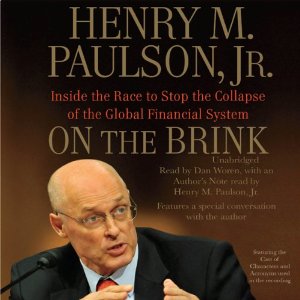
Crisis reveals human strength and weakness. Perception is not reality, but Henry Paulson, the former Treasurer of the United States, names names and paints pictures of (mostly) men in the 2007/2008 financial crisis. In his analysis, there are political losers and winners.
How will America’s response to the Covid-19 pandemic be recalled?
This close political race will have a winner and loser. With such a close political race, the loser will be America. Divisiveness and ideological difference will remain a major obstacle in formulating foreign and domestic policy. Covid 19 will run its course. The concern is in not having a pragmatic or politically articulate President who can lead America over the next four years.
GEORGE WALKER BUSH (43RD PRES. OF THE UNITED STATES) Paulson characterizes Bush as a pragmatist who acts on recommendations from people he trusts.
Paulson reveals himself as a Christian Scientist, a pragmatist, and enigmatically, a somewhat left-of-center, presumably Republican, liberal. Paulson suggests a Republican left-of-center lean when writing about his mother and wife’s reluctance for him to take the Department of the Treasury position in the Bush administration. (Paulson’s mother strongly supported Hillary Clinton for President.)
Interestingly, Paulson characterizes George Bush as an equally pragmatic, non-ideological decision maker. Differences between the two are in the details; i.e. Paulson analyzes his own and other experts’ details and presents informed alternatives and recommendations while Bush acts on recommendations from people he trusts.
BEN BERNANKE (CHAIRMAN OF THE FEDERAL RESERVE 2006-2014) Paulson characterizes Ben Bernanke as a brilliant financial advisor, participant, and ally in supporting and executing complex rescue plans for a financial system nearing default.
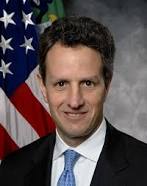
TIMOTHY GEITHNER (U.S. SECRETARY OF THE TREASURY 2009-2013) Tim Geitner is shown as a team player that bridges the divide between political and administrative decision-making when plans are formed to rescue Fannie Mae, Freddy Mac, and AIG.
Rahm Emanuel is described as an effective political organization man who is able to get things done in a highly political environment.
Jaimie Dimon (CEO of JPMorgan Chase.)
Dimon is characterized as a rationale business man who is willing to take a risk for the benefit of more than his own aggrandizement.
John Thain seems a competent manager in crisis that makes the best of a terrible situation by moving rapidly to sell Merrill Lynch to B of A before total collapse.
Some crisis profiles shown by Paulson are less complementary. Sarah Palin comes across as a decision maker driven by politics rather than pragmatic results.
John McCain (1936-2018, Former U.S. Senator for Arizona.)
John McCain seems to gravitate to Palin’s perception of reality by political posturing for election results rather than pragmatic solutions for the financial crisis. Jim Bunning, the former baseball player and House of Representative’s Republican, is shown to be an ideologically driven populist extremist.
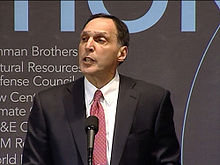
Richard Fuld seems arrogantly delusional about Lehman Brothers’ assets and an ineffective manager in crises.
Ken Lewis (Former CEO of Bank of America)
Lewis appears Machiavellian in grabbing what he thinks are the best and rejecting what he thinks are the worst financial risks in America’s near economic collapse.
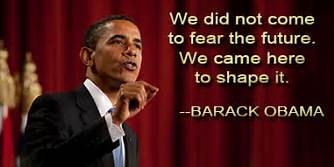
Paulson reinforces perceptions of Barack Obama as a smart guy that grasps the big picture; ditto for Barney Frank, and Lindsey Graham but less so for Christopher Dodd.
Paulson reinforces perceptions of Barack Obama as a smart guy that grasps the big picture; ditto for Barney Frank, and Lindsey Graham but less so for Christopher Dodd.
Paulson suggests that Republican Senator Shelby can drive his point and take control when pushed to act but ideological belief seems to constrain proactive action in the financial crises. Senator Reid is shown to be a consummate, seasoned political manager in the Senate and Nancy Pelosi an equally dynamic oldster in the House of Representatives.
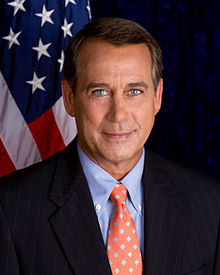
JOHN BOEHNER (FORMER SPEAKER OF THE HOUSE) Paulson suggests Boehner is unable to lead his Republican constituency and seems awkwardly suited for either a minority or majority Speaker of the House position.
In contrast, Representative Boehner is unable to lead his Republican constituency and seems awkwardly suited for either a minority or majority Speaker of the House position.
It seems today the decisions made by Bush, Paulson, Bernanke, Geitner, and Congress were correct. After listening to Paulson’s book, one appreciates these civil servants hard work in doing the right thing. Today is too soon to tell but Paulson gives outsiders a fascinating glimpse of people making a difference when a nation is in crisis.
One wonders who the political losers and winners will be in today’s immigration, world trade, Covid-19 pandemic, and budget deficit crises.
The Story of the Lost Child: The Neapolitan Novels, Book 4
Written by: Elena Ferrante
Narrated by: Hilliary Huber
ELENA FERRANTE (AN ANONYMOUS ITALIAN AUTHOR, PRESUMED TO BE A WOMAN.)
Mark Twain said, “Write what you know” but fails to warn of its consequence. Elena Ferrante completes Twain’s aphorism in “The Story of the Lost Child”. The consequence of “writing what you know” is to reveal who you are and what you think of your family, friends, lovers, and acquaintances. Often, that reveal is not flattering. To “write what you know” can be psychologically, morally, and financially damaging.
“The Story of the Lost Child” is a fourth book in Ferrante’s series about two poor women who achieve economic and social independence in Italy during the sixties, seventies, and eighties. Ferrante takes the story through modern-day Italy and the events of life that change the two main characters that are growing old.
Without doubt, the greatest heroine of Ferrante’s novels is Lila; a street educated woman with immense energy, intelligence, and a superior perception of reality. Lila is the sun around which others, both men and women, revolve around.
Without doubt, the greatest heroine of Ferrante’s novels is Lila; a street educated woman with immense energy, intelligence, and a superior perception of reality. Lila is the sun around which others, both men and women, revolve. Through will and intelligence, Lila grasps the value of computers in the sixties and builds a company around its potential.
The second heroine, Elena Greco, is a college educated fiction writer. Though both women are equally successful in achieving independence, Elena is a recorder, more than actor, in life. Elena achieves independence through reaction. Lila makes things happen. Elena lets things happen. Lila chooses to stay in her neighborhood, and fights local Italian corruption that impedes her business. Elena writes about people in the neighborhood but leaves its environment; only to return to record rather than confront her community’s dysfunction.
As is evident to anyone who lives long enough, there are turning points in life.
As is evident to anyone who lives long enough, there are turning points in life. Ferrante reveals those turning points in Elena and Lila’s lives. Though Ferrante suggests more women than men read her books (which may be true), her characters’ journeys and life experience resonate with all human beings.
Men and women begat children that parents raise with varying degrees of attention. Children’s lives happen in an environment over which they have no control. What makes Ferrante’s stories universal is the truth of her observations.
Both men and women are capable of promiscuity. Both husbands and wives neglect their children; sometimes because of work or pleasure, and others because of overweening self-interest. Children live life in the moment and absorb all they see and feel through a prism of parental genetics. “The Story of the Lost Child” embarrassingly and truthfully reveals how human beings are foolishly misled by self-interest, and ephemeral pleasures.
Children live life in the moment and absorb all they see and feel through a prism of parental genetics. “The Story of the Lost Child” embarrassingly and truthfully reveals how human beings are foolishly misled by self-interest, and ephemeral pleasures.
Elena is married but falls in love with a former lover of Lila’s. He is a married man with children but says he will leave his wife for Elena. Elena, after divorcing her husband, finds her lover is a philandering liar. Elena is so consumed by love she agrees to an absurd two family relationship; i.e. allowing her lover to continue his marriage and their affair.
Lila had been involved with this guy and warns Elena of his character, but Elena chooses to ignore her friend’s warning until she finds him “stooping” the maid in their apartment bathroom.
Surprisingly, Elena accepts her lover’s sexual proclivity, in part because of her pregnancy. Elena continues the affair until it becomes clear she is merely one among many women in his sexual network.
Elena’s decision to leave her lover is complicated by the pregnancy. Her lover remains a part of her life because of the baby. The strength to leave her lover is bolstered by Lila’s counsel and support. Lila’s and Elena’s friendship enters a phase of reconciliation after many breaks in continuity between childhood and adulthood. They become allies in combating the corruption of their local community; i.e. Lila as a fighter, Elena as a recorder of nefarious acts.
An underlying theme in Ferrante’s fourth Neapolitan Novel is the impact of parental life on children. Decent parents love their children but a parent’s love is within a context of a living and lived life.
An underlying theme in Ferrante’s fourth Neapolitan Novel is the impact of parental life on children. Children grow into their own lives but they are both genetically and environmentally affected by their parents.
Ferrante shows human beings are by nature self-absorbed. When adults become parents, they do not lose their own lives, their own experience, their own desires. Decent parents love their children but their love is within a context of a their own lived life.
The title of this fourth novel is “The Story of the Lost Child” because Lila loses her daughter. That loss is because of parental self-absorption. Both Lila and Elena are focused on getting ahead in life. Each’s self-absorption exhibits in different ways but both have an impact on their children’s lives. Lila’s and Elena’s self-absorption is not criminal neglect; i.e. both Lila and Elena lose their children. Lila’s self-absorption is in building a computer company and fighting corruption in her neighborhood. Elena’s self-absorption is in writing books, and living a life that feeds her literary imagination.
Elena Ferrante, whoever she is, has written a story that lionizes women in some ways but humanizes and degrades them in others. Of course, all human beings are flawed; that is why “writing what you know” has consequences.
There is an obvious difference in their losses. The loss is physical (with no chance of redemption) in Lila’s case because her youngest child dies before adulthood. It is a relationship loss (with some chance of redemption) in Elena’s case. Elena’s children become estranged from the consequences of their mother’s lived life.
Elena Ferrante, whoever she is, has written a story that lionizes women in some ways but humanizes and degrades them in others. Of course, all human beings are flawed; that is why “writing what you know” has consequences.
36 Arguments for the Existence of God By Rebecca Newberger Goldstein Narrated by Stephen Pinker, Rebecca Newberger Goldstein, Oliver Wyman
REBECCA NEWBERGER GOLDSTEIN
Rebecca Goldstein writes like Stephen Pinker on steroids. (Coincidentally, Goldstein is married to Pinker.) Goldstein’s novel is not the story one expects from its title because “36 Arguments for the Existence of God” is about denial; not affirmation of existence.
STEVEN PINKER (Cognitive psychologist, linguist, and author who wrote “How the Mind Works”, “The Blank Slate”, “Angels of Our Better Nature”, etc.)
A more apt title for Goldstein’s book might be “The Science of Human Nature Denies the Existence of God”.
Goldstein has done a masterful job of creating “fear and trembling” in believers. This is “fear and trembling” in the opposite sense of Soren Kierkegaard’s meaning. Kierkegaard’s meaning awakens believers in God. Kierkegaard, an author, theologian, and philosopher, argues one should fear and tremble at the truth of God’s existence.
SOREN KIERKEGAARD 1813-1855 (Kierkegaard, an author, theologian, and philosopher, argues one should fear or tremble at the truth of God’s existence.)
On one level this is a story about a man named Cass Seltzer and his personal (sometimes romantic) relationships.
On a second level it is about human ethnocentrism. Characters, including Cass Seltzer, see through myopic eyes based on who they have become and what peer group they belong to.
On a third level “36 Arguments…” is about human nature and cultural memes (Richard Dawkins defines a cultural meme as an inherited learned behavior).
On multiple levels, Goldstein’s writing is about the elephant in the room; i.e. mankind’s belief in a Supreme Being.
The story of Cass Seltzer’s life is absorbing. The women he loves are monumentally independent, fantastically alluring, and maddeningly self-centered (as self-centered as Cass Seltzer). Each character believes what they believe with conviction that directs their lives.
The introduction of Felix Fidley exemplifies tribal ethnocentrism and conviction; i.e. a believer who says one way is the only way.
Goldstein’s introduction of Felix Fidley in her novel exemplifies tribal ethnocentrism and conviction; i.e. a believer who says one way is the only way.
Ms. Goldstein cleverly introduces the town of New Walden. Its isolated belief system reflects the heritability of good and bad genetic markers and memes that trap people in worshipful repetition. One might categorize it as a cult or, more politely, a commune.
Finally, Goldstein creates a straw man debate about God, The debate is conducted in the next to last chapter. It pits Cass Seltzer against a purportedly renowned debater. Seltzer beats his debate opponent. Believers in God lose. In the last chapter, 36 arguments for belief in God are stated and refuted.
One doubts Goldstein will change the world with her book but its rational arguments are a big add to the non-believing world’s arguments for a scientific theory of the world that explains everything about everything.
One doubts Goldstein will change the world with her book but its rational arguments are a big add to the non-believing world’s arguments for a scientific theory of the world that explains everything about everything.
Faith is always a refuge but is it enough?
If you are a believer, “36 Arguments…” is a clear explanation of your battleground; it reveals the manifesto, strategy, and tactics of a non-believer. Faith is always a refuge but is it enough?
“36 Arguments for the Existence of God” is a fascinating piece of literature.
Asabiyyah: What Ibn Khaldun, the Islamic Father of Social Science, Can Teach Us About the World Today
Written by: Ed West
Narrated by: P. J. Ochlan
ED WEST (ENGLISH AUTHOR, JOURNALIST, BLOGGER)
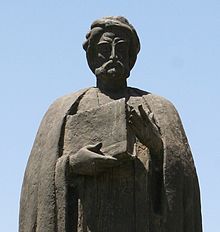
IBN KHALDUN (STATUARY SYMBOL OF ISLAMIC HISTORIAN BORN 1332, DIED 1406 AT 73 YEARS OF AGE.)
Ed West offers a brief introduction to the life of an ancient historian. His name is Ibn Khaldun. Khaldun describes the first known evolutionary theory of human origin. West also notes this 14th century scholar creates the first known socio/political theory of the rise and fall of civilizations.
Khaldun explains life’s origin as a aggregation of chemicals and minerals that create organic life and, in turn, evolve into different species.
West notes that Khaldun suggests humankind evolved from monkeys. This is four centuries before Darwin’s “Origin of Species”.
Ibn Khaldun is considered by some to be the first person to write foundational theories for modern sociology, economics, and demography. West notes that Khaldun explains how nations are formed, maintained, and destroyed by sociological, economic, and demographic forces.
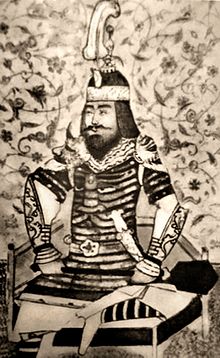
Khaldun offers counsel to the great conqueror, Amir Timur (aka Tammerlane), who plans to resurrect the 13th century Mongol empire built by Genghis Khan.
TIMUR AKA TAMMERLANE IS COUNCELED BY IBN KHALDUN (1336-1405–(Timur is said to have caused the death of over 17 million people in the effort.)
West suggests that Khaldun explains how Timur and other rulers, from the Roman empire to Genghis Kahn to Timur successfully conquered great areas of the known world. His explanation is “Asabiyyah” (aas-sah-bee-ah), a theory that all successful conquerors establish a social environment that creates solidarity among a group of people sharing understanding, purpose, and achievement.
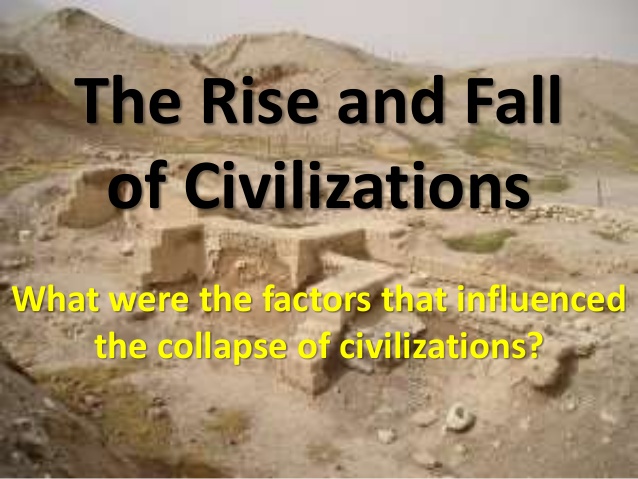
West explains that Khaldun expands “Asabiyyah” to a theory of civilization’s rise and fall. Humans proliferate based on family affiliations. Religion widens family relationships to create tribes. Tribes become a congregation of different families with common beliefs. Tribes come into conflict and eventual settlements that grow into larger groups based on evolved common beliefs.
At each step of widening common interest, a leader rises from the ranks. With an accretion of social ties, villages, towns, and cities are formed with a leader at its head. As the ties that bind continue to expand, nation-states are formed.
Ibn Khaldun’s explanation is “Asabiyyah”, a theory that all successful conquerors establish a social environment that creates solidarity among a group of people through shared understanding, purpose, and achievement.
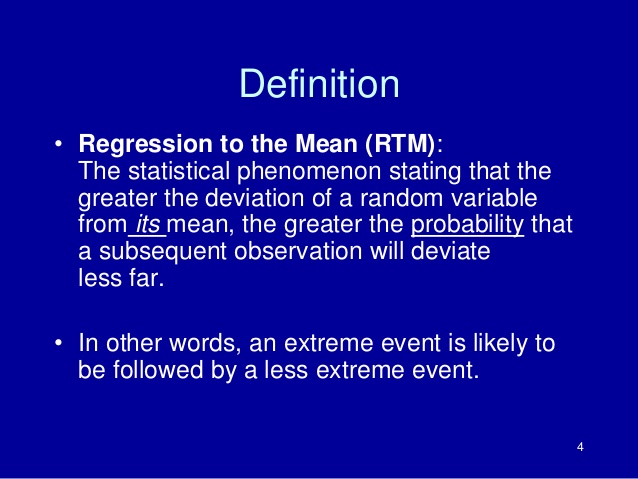
West shows that Khaldun goes on to explain how civilizations decline. First, Khaldun notes that sons and daughters of great leaders rarely exceed their parent’s leadership success. Khaldun posits the current social and scientific belief of “reversion to a mean”.
Each subsequent offspring of a great leader comes closer to the average of a civilization’s population. Leadership diminishes in succeeding generations.
Second, Khaldun suggests diminished common beliefs lessen a civilization’s cohesion. Religious differences rise, economic circumstances change, social groups fracture, family ties reassert themselves as ties that are more important than community. The example that Khaldun gives is Rome’s decline as a world power. West suggests the same may be said of the United Kingdom’s decline.
Has the American Dream become a lie few believe in? Are elected officials withdrawing to their families at the expense of nation-state’ leadership?
West’s “Asabiyyah” makes one think of America. Does today’s political conflict reflect diminishment of commonly held nation-state belief? Is the increasing gap between rich and poor destroying the social fabric of America? Is the divisiveness of former President Trump a reflection of a nation in decline?
Is nationalism dead, or are we crossing a threshold where the principals of nation-state need to be expanded to include a wider community? Is the next step reflected by the E.U. or some similar congregation of nation-states?
According to West, Khaldun believes nationalism is critically important for a civilization to remain strong. In the time of Khaldun, there was no vehicle for common beliefs except a leader’s influence over conquered nations.
Today, there is an internet. It seems the human family may once again be expanded. Nation-states may not be prepared for “space-ship-earth” but there may be an interim step.
That interim step was tried during the cold war with the U.S.S.R. It failed. The E.U. is facing challenges today.
Trump’s America is regressing from comity to disparity with emphasis on making itself great again. A leading question today is whether civilizations are competing to be in decline or ascendance?
Of course, leadership is key to any future. Right now, there seem few leaders that can make civilizations grow beyond their borders. Khaldun seems as relevant today as he was in the 4th and early 5th centuries.
SUSAN JACOBY (NOMINATED FOR PULITZER PRIZE FOR GENERAL NON-FICTION)
Susan Jacoby had her book “The Age of American Unreason” published in 2012, long before the election of Donald Trump. The title is apropos today but the substance of Jacoby’s reasoning is suspect.
“The Age of American Unreason” interests baby boomers because it capsulizes events of the “pig in a python” era (babies born between 1946 and 1964).
Susan Jacoby’s characterization of this era of “…unreason” is over-generalized. Jacoby free falls into a blind canyon of liberal bias; beginning with an inference that the word “folks” in speeches rather than “people” suggests demise in American intellectualism. Considering the intellectual and ethical differences between Obama/Biden and Trump, Jacoby’s “examples and causes” for “unreason” are cringe worthy.
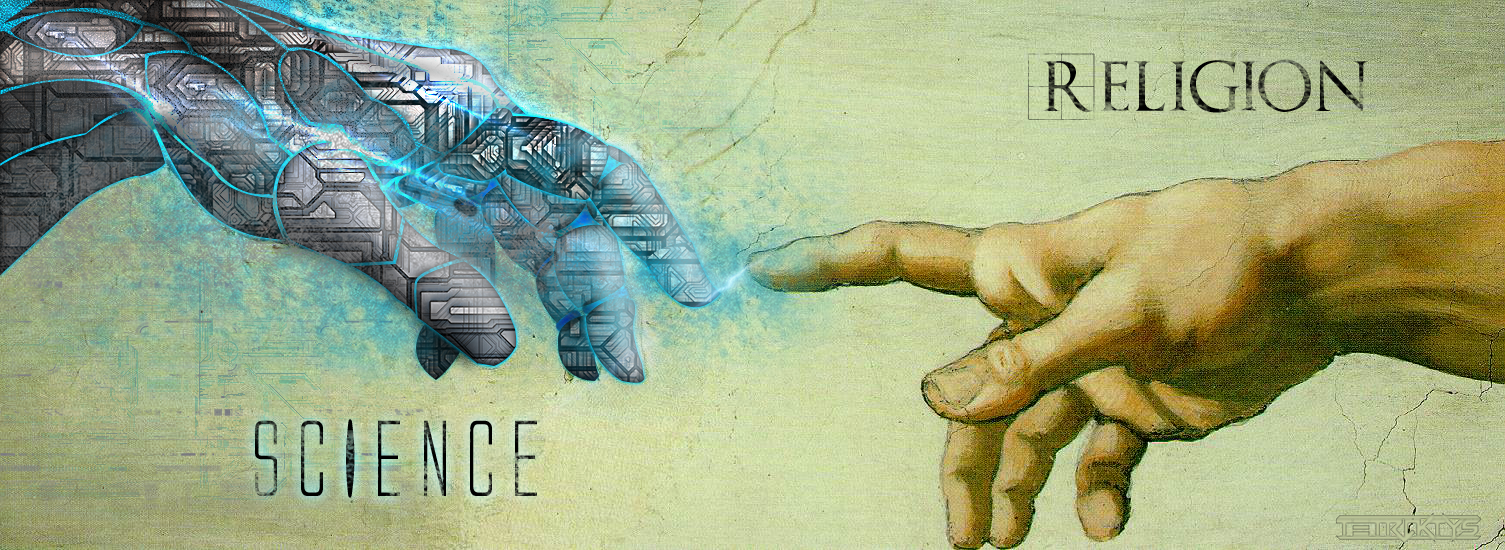
Jacoby writes about conflict between conservative’ belief in creationism and evolution as a cause for “…unreason”. Many, if not most Americans, meld religious belief with evolution. Some are agnostic and skeptical, but they have not lost their faith. Others are genuinely atheistic. Many current books are written to question the existence of God, but what is new?
Jacoby sites statistical studies that reinforce her opinion without conceptualizing the evolution of religious and philosophical thought. One is more likely to prove that scientific understanding of creation is accelerating rather than regressing to mythical or spiritual explanation. But, what is new? Copernicus and Gallileo are simply replaced by Watson and Crick.
Change in religious belief is not revolutionary; it is gradual and evolutionary based on the advance of science.
Jacoby insists that television, the internet, and the information age are rotting American minds through distraction and substitution. She believes intellectualism is vilified and popular opinion is more influential and intellectually barren today than in times past. She dwells on American education system’s failure to reject creationism with exclusive scientific explanation of natural events.
A counter argument is that television, the internet, and the information age have been a boon to humankind. Ignorance is mitigated by a more interconnected world. African, Asian, Middle Eastern, and North American populations become better informed about each others lives. Humans of all cultures become more human.
RISING FROM THE DEAD, Jacoby dwells on American education system’s failure to reject creationism with exclusive scientific explanation of natural events.
History suggests proving millennial religious beliefs as a mythology is not going to occur in a few generations, if ever. Jacoby cherry picks information, snippets of questionable studies, speech factoids, and apocryphal stories to support her idea of a growing “…Age of Unreason”. Her argument is unconvincing.
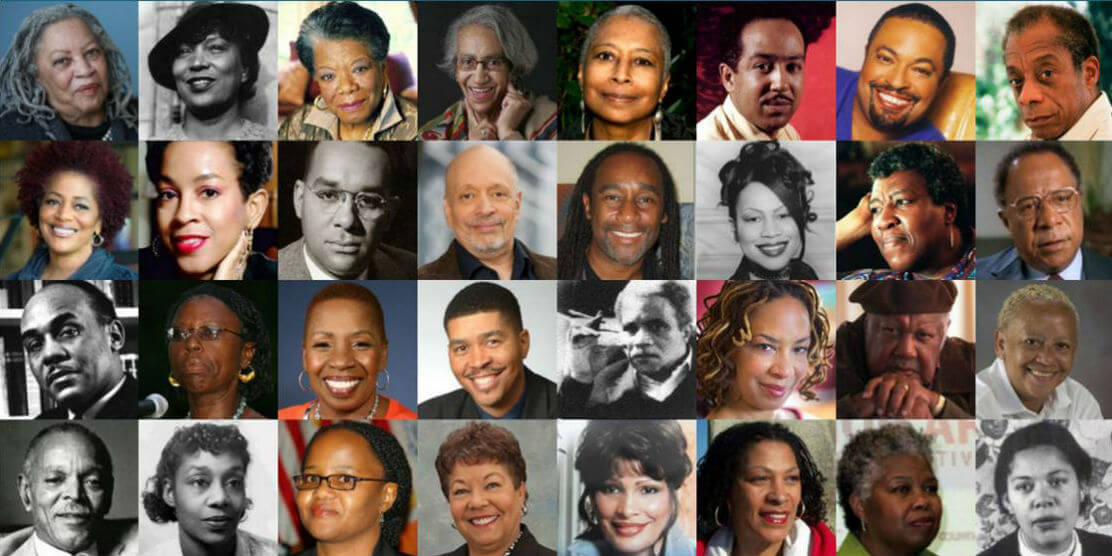
Jacoby suggests a diminishment of literary education. Literary education is unquestionably different today than when Ms. Jacoby graduated from college but different is neither good nor bad; i.e. literary education from Tolstoy, Dostoevsky, Faulkner, Charlotte Bronte, Pearl Buck and other literary giants are still being consumed by the public. Many late 20th and 21st century writers are now, or will become, equally revered.
The medium may be different but the message is the same (after all, Jacoby’s book is available through audio books and e books). To suggest they are not being consumed, understood, or appreciated today is a distortion of reality.
The same is true for science. The intellectual advance of quantum mechanics, cosmology, and the science of man is astounding. Philosophy is grounded on advances in science; with continued scientific advance there will be future philosophical intellectuals like Plato, Spinoza, and William James; in fact, they are probably here now but not with history’s perspective.
Susan Jacoby is a highly sought after writer and speaker. One admires her reputation as a liberal but liberality is not a license to write junk thought. Jacoby is right in the title to her book while wrong in substance. We are in an era of “unreason” in the 21st century but this century is only slightly more than 20 years old. Some might say it is only in the last three and a half that American “unreason” has become extreme.
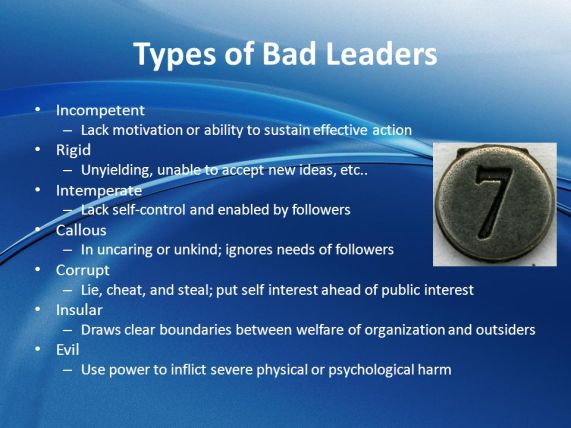
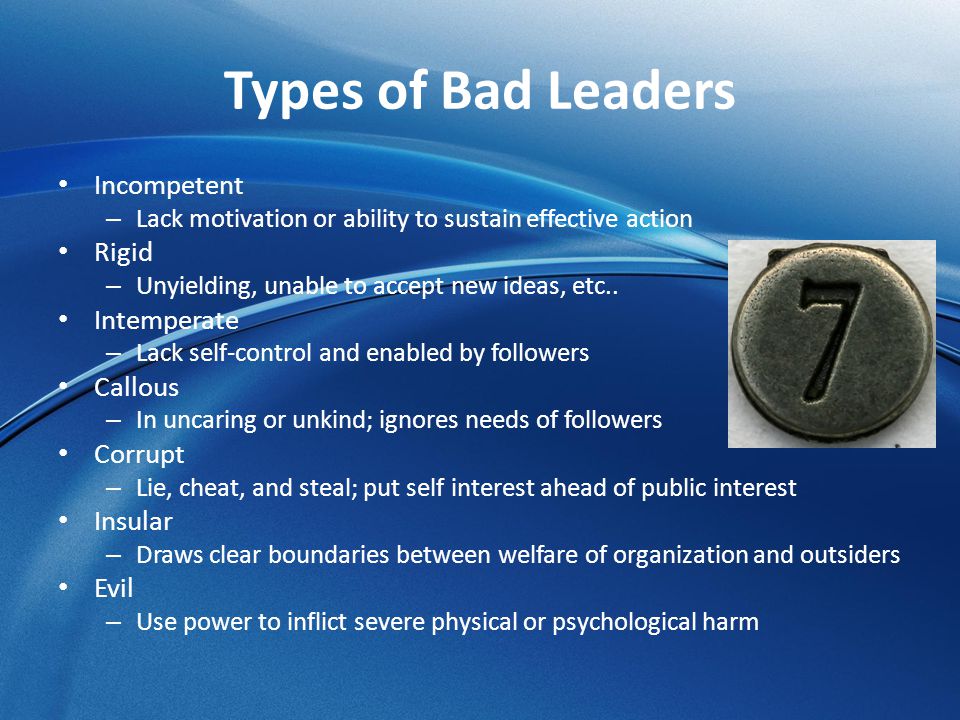
LEADERSHIP–“Unreason” is exacerbated by political leaders’ ultra-nationalism and parochial tribalism. Leadership change will return reason to political debate just as it did in the 1940s, 50s, 60s, 70s; and now, in the 21st century.
Yesterday’s “debate” exemplifies a type of bad leader that periodically comes from America’s electoral process. Trump embarrasses democracy by dragging it down into an abyss of lies and unreason.
Today’s literature and science are not diminished by a lack of intellectual pursuit, or by speeches that use words like “folks” instead of “people”. Today’s “unreason” is perpetuated by incompetent leadership; not by a rift between science and religion, or speech. “Unreason” is exacerbated by political leaders’ ultra-nationalism and parochial tribalism. Leadership change will return reason to political debate just as it did in the 1940s, 50s, 60s, 70s; and now in the 21st century.























































 REVIEWS AND VIEWS OF LIFE