AMERICAN TAXATION

Audio-book Review
By Chet Yarbrough

(Blog:awalkingdelight)
Website: chetyarbrough.blog

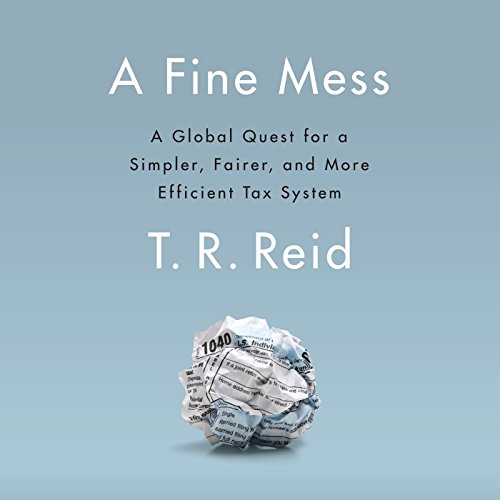
A Fine Mess (A Global Quest for A Simpler, Fairer, and More Efficient Tax System

By: T. R. Reid

Narrated by T. R. Reid

T. R. Reid is a reporter for the “Washington Post”.  He is not an economist.  However, he suggests there are more equitable ways of taxing the American public than presently used by the government.

Reid’s travels around the world investigating other countries tax systems are the basis for his theory for cleaning up America’s “…Fine Mess”. Sadly, Reid has a futile unrealistic attitude that the British characterized as pissing in the wind.

Reid suggests a tax overhaul is due in America.  The last major revision was over 30 years ago.  He argues a mess has been created by incremental tax changes that have greatly exacerbated the wealth gap in America.  Reid illustrates the many ways in which the American tax system is a mess.  An often-quoted factoid is “Warren Buffet is taxed at a lower rate than his secretary”.

There are many economists that would agree with Mr. Reid.  The most famous is the French economist Thomas Piketty who wrote “Capital in the Twenty-First Century”. 

Reid argues the U.S. has the highest corporate tax rate in the world but the lowest corporate taxes collected.  Having the high rate and collecting it are two different things. 
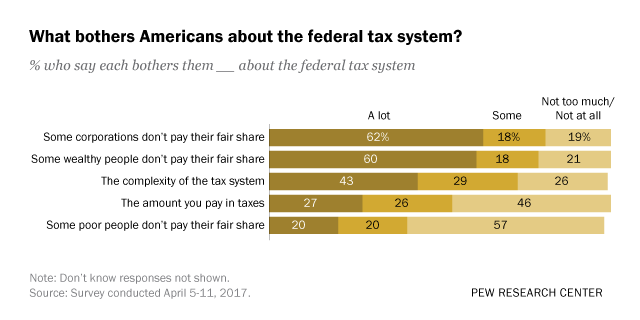
Reid notes corporations like Caterpillar, Apple, Microsoft and others spent millions of dollars to set up legal tax shelters that reduce corporate tax to single digits; to as low as zero for some. 

Reid goes on to explain how billions of dollars are kept in corporate accounts outside of America to avoid taxation, and how that money is not repatriated to the U.S. because of current tax law. 

(Ironically, during Trump’s administration, corporate rate was reduced from 35% to 21%; and continues to be a significantly uncollected tax.) 

The fact that Trump paid $750 in federal income taxes (either legally or illegally) in the year he became President is an example of corporations’ failure to pay their fair share.

DEFINITION BBLR

Reid persuasively argues that a tax overhaul should be made based on the principle of BBLR, a “Broad Based Low Rate” tax.  The purpose of a tax overhaul would be to eliminate loopholes, broaden and reduce tax rates while equalizing citizen’ tax burden.  Schemes for creating tax shelters would be eliminated.   

As is widely known, millions of dollars are spent by American citizens and corporations to file tax returns.

Preparing and paying taxes is laborious and confusing task for many Americans.  Even basic tax return filings are difficult for many American citizens to complete.  How many do not file because of that difficulty?  Some buy software to file taxes.  Add to software purchases and there is only growing tax-preparation costs to file for others. Those costs are borne by individual tax payers. The expense of our inefficient, and inequitable tax system multiplies geometrically when you add corporation efforts to avoid taxes.

America’s taxing inequity is glaring.  Millions of dollars are spent to avoid taxation through creation of tax shelters.  The formation of these shelters costs millions in lawyer, tax consultant, and auditing fees but save billions of dollars for corporations and the super-wealthy who legally (sometimes illegally) reduce taxable income.

“Occupying Wall Street” is not a hippie “sit in” but a plea for reform of American “moneycracy” just as Thomas Paine’s “Rights of Man” was a plea for reform of Aristocratic inheritance.

Reid’s point is that America’s “…Fine Mess” can be made simpler, fairer, and more efficient by creating a completely new tax system.  He suggests the corporate tax might be eliminated and replaced by a flat rate with no loopholes.

Reid argues for a “Value Added Tax”.  A VAT would be a combination of local taxes and federal taxes on all consumable goods. 

After collection, this tax would be distributed between States, and cities, as well as the Federal Government.  The purpose of these taxes would be for maintenance of local services (like education, public safety, public works, and administration), and Federally mandated services (like national defense, health, education, and public welfare).

Reid’s argument is that VAT’ enforcement would require less supervision by the government because a VAT applies at each stage of the production of goods.  Each stage of production is rebated for taxes paid by the handler that adds value. The VAT is a combination of taxes at each stage of production which is reported to the government for reimbursement.  The reimbursements must add up to the final tax charged to the consumer.  If the numbers are not the same, the IRS will be able to tell which manufacturer failed to pay their tax.
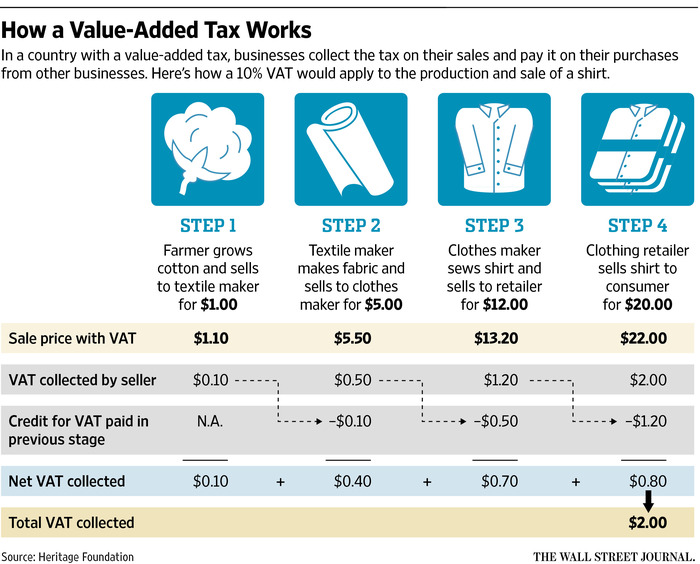
A simple computer program would be able to monitor the collection of the tax because it must balance to all reimbursements of added value.  In theory, a VAT eliminates much of the need for a massive Internal Revenue Service which Reid suggests is unable to adequately monitor the present taxation system.  Reid notes that it is impossible for the IRS to closely monitor today’s taxing system because of the complicated nature of its Congressionally legislated structure.   

Another BBLR tax recommended by Reid is a financial transaction tax that would be low but capitalize on every financial transaction in the United States. 

This transaction tax would be less than a penny per dollar but capable of raising billions of dollars based on the many financial transactions that occur in the U.S. 

Reid offers the example of Hedge Funds that specialize in massive trades for short periods of time.  These Hedge Fund trades move the stock market by fractions that reap millions for traders.  With a tax on financial transactions revenue would be created for Federal Government programs that serve the health, education, and welfare of the nation.

What concerns a listener about Reid’s argument for a Value Added Tax is its potential for continued inequity.  The poor may have to pay the same price for food, energy, and shelter as the rich.  Reid does not adequately address that concern except to suggest a system would be established to offset that inequity.

Another concern, inadequately addressed by Reid, is the impact on Hedge Fund traders business if they lose the advantage of small changes in quick trades. Will Hedge Fund transactions disappear?

Political will is another issue not adequately addressed by Reid.  What majority of congress men and women will stand up to the many lobbyists who support them in their election?   Will most Republicans and Democrats co-opt or fight special interests that object to a massive change in the American tax system? 

Finally, how would America deal with the lost jobs for tax lawyers, tax preparers, software developers, and corporations that benefit from tax preparation and tax avoidance schemes?

One may agree with Reid’s assessment of America’s tax system.  It is a “A Fine Mess”.  The question is–Do our elected representatives have the political will to clean it up; or at least make it fairer? 

Incremental change of the tax code only makes it less intelligible. In Reid’s opinion, it is all or nothing.  Reid implies “go big” or “go home” because nothing will change if the entire tax code is not replaced.
GENETICS ACHILLES HEEL

Audio-book Review
By Chet Yarbrough

(Blog:awalkingdelight)
Website: chetyarbrough.blog

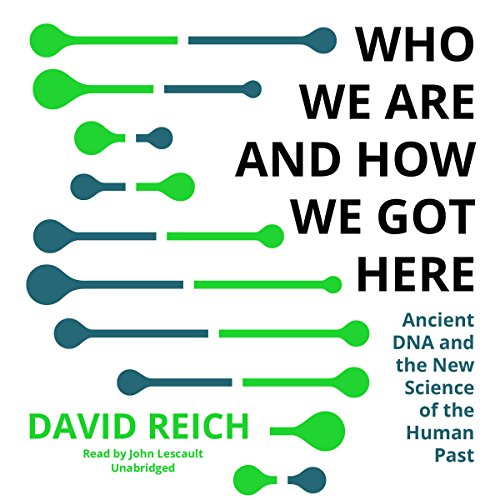
Who We Are and How We Got Here

By: David Reich

Narrated by John Lescault

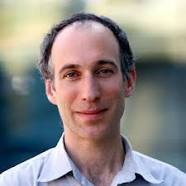
David Reich (Author, geneticist)

Reich explains how the concept of the origin of homo sapiens has evolved since the discovery of “Lucy” in East Africa in 1974.

Few scientists disagree about humankind’s place of origin.  It may have been somewhere other than East Africa, but human origin is genetically linked to the African continent. 

However, Reich notes that geneticists no longer believe African origin is an adequate interpretation of the wide differentiation of human beings.  The evolution of homo sapiens is not like the branches of a tree but more a tapestry of interwoven threads.

Listening to “Who We Are and How We Got Here” reminds one of the Dragnet’s 1950s-character Joe Friday saying, “just the facts ma’m”.  Aside from Officer Friday’s hint of sexism, it is never just the facts. 

Genetic evolution is always interpretation of facts.  Interpretation is David Reich’s “Achilles heel” for exploring and expanding DNA research to determine “Who We Are and How We Got Here”.

Humans interbred to create a fabric of intermingled genetic characteristics that came together, separated, re-combined and changed over thousands of years.

Genetic discoveries of Neanderthal and Denisovan genetic markers show there is no direct line of descent from the “Lucy” origin of homo sapiens.  Genetic studies show that DNA changed as the human species grew. Some genes survived and evolved while others disappeared. Current theory discounts the principle of an “immortal gene” in the sense that the origin genes changed into something entirely different.

The great controversy that Reich explores is factional resistance to genetic research because of fear of misuse of the data.  There is ample evidence to substantiate that fear.

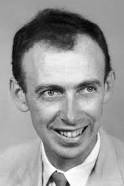
James Watson (American molecular biologist, Nobel prize winner and co-author of the double helix structure of DNA)

In 2007, Dr. Watson told a British journalist that he was “inherently gloomy about the prospect of Africa” because “all our social policies are based on the fact that their intelligence is the same as ours, whereas all the testing says, not really.”

Reich adds to the “Watson story” by saying he met Watson and was appalled by his comments about Jews being intrinsically smarter than the general population.  

Somewhat disingenuously, Reich notes that a disproportionate number of Ashkenazi Jews have received Nobel prizes. Is that fact relevant to genetic research? Does it apply to all Jews or just Ashkenazi Jews. Reich is an Ashkenazi Jew. Is this a reflection of the same concern over misuse of genetic information?

Genetic facts have been used by prominent scientists, like Watson, and ignorant political leaders, like Adolph Hitler, to falsely interpret genetic evidence. Genetic information opens a door to racist arguments for racial superiority.

Information banks created by Google, Facebook, Microsoft, and Amazon are weapons of privacy destruction. In modern times, the only possible defense is “a right to be forgotten”.

One comes away from Reich’s book only semi-convinced of his search for truth through genetics.  Reich insists that the benefits of genetic research far outweigh the potential harm the research may cause. 

His point is that there are genetic studies that prove some genetic markers make people more susceptible to disease like anemia for blacks and Tay-Sachs disease for Ashkenazi Jews.  With exposure through genetic research, these medical maladies may be cured.  Without knowledge of genetic predisposition, there is less focus on what might cure certain diseases.

The problem always comes back to interpretation of facts; not the facts themselves.  Reich certainly has a point in insisting on continuing genetic research but how does one protect themselves from misinterpretation of facts. 

Dr. Watson is a Nobel prize recipient.  Look at what his interpretation of genetic facts became.   

Six million Jews were murdered by Nazi Germany’s belief in a master race of genetically “pure” Germans.  Reich’s work suggests there are no “pure” races. There are only similar genetic traits among a few isolated populations.

Do potential medical benefits from genetic research outweigh a racist use of genetic facts?  “Who We Are and How We Got Here” seems much less important than “Here We Are and What Can We Do About It”. Particularly considering our experience with the Covid19 pandemic.

AMERICAN JURISPRUDENCE

Audio-book Review
By Chet Yarbrough

(Blog:awalkingdelight)
Website: chetyarbrough.blog

Snow Falling on Cedars

By: David Guterson

Narrated by George Guidall

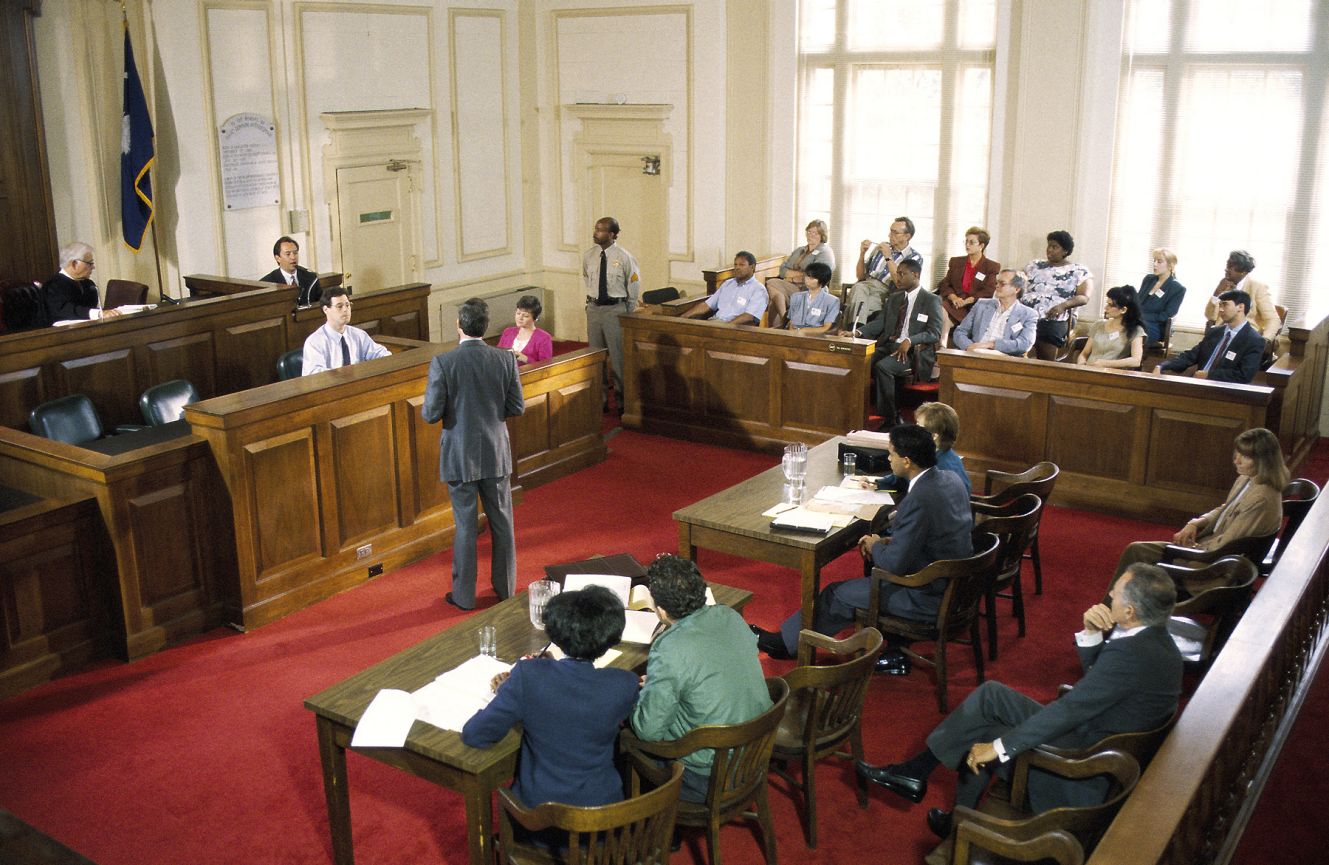
David Guterson creates a court room drama in “Snow Falling on Cedars”.  The court case is presided over by a competent Judge, a determined prosecuting attorney, and a detail-oriented public defender.

“Snow Falling on Cedars” reflects on a criminal trial’s strengths and vulnerabilities.  It is a story of institutionalized discrimination that is as relevant today as in the 40s and 50s.  Though the author, Guterson, is not a lawyer, he is the son of a criminal defense attorney. 

As an author, Guterson tells the story of a Japanese American citizen accused of first-degree murder.

The story unravels slowly but with beautifully written descriptions of an island community off the Washington coast.  The setting begins in the 1940’s and ends in the 50’s. 

The historical relevance of “Snow Falling on Cedars” may be repeated in the tribulations of Carlos Ghosn; not in the sense of indictment, but for being guilty or innocent based on cultural bias.

Carlos Ghosn–Former CEO of Renault, Nissan, and Mitsubishi Motors (indicted by Japan) who escaped to Lebanon to avoid a trial which he believes is culturally biased.

“Snow Falling on Cedars” is equally a reminder of today’s appalling American attacks on Asian Americans.

The accused, Kabuo Miyamoto, is a gill-net fisherman like the person who is murdered.  The crime allegedly occurs on a foggy night when both fishermen lay their nets in the open sea.

The victim is Carl Heine, a childhood friend of Kabuo before the war.  Kabuo’s wife is Hatsue Miyamoto who also grew up on the island.  A fourth major character is Ishmael Chambers, the local newspaper publisher.  All three men serve in WWII.

In early chapters of Guterson’s story, a young Ishmael falls in love with Hatsue.  However, at a critical point in their burgeoning feelings, Hatsue, her family, and all Japanese-descent Americans are interned in a northwestern camp during the war.  The internment separates Ismael from Hatsue and she eventually marries Kabuo.

A NORTHWEST JAPANESE INTERNMENT CAMP:

This is the era of Pearl Harbor, WWII, and Japanese American internment. 

The story explores the nature of human beings in a small American community.

Kabuo, Carl, and Ismael serve in the military during WWII.  Kabuo serves on the German front; Ismael on the Japanese front.  Carl’s location during the war is superfluous except that he served and was the son of a local strawberry farmer who employed Hatsue’s father.

Before WWII, Americans of Japanese descent were not allowed to own property on the island.  Hatsue’s father makes a deal with Carl’s father to buy 7 acres of land for strawberries on an unrecorded contract. (This private contract violates the intent of the law.)  The last 2 payments on the property are not made because of Japanese American internment during the war. 

A feud rises between the Miyamoto family and the Heine family because the 7 acres is sold to another, based on Miyamoto’s payment default.  There had been a verbal agreement for the last two payments but it is dishonored because Carl’s father, who had made the agreement, died. This is interpreted as Miyammoto’s motive for the murder of Carl on a foggy night of fishing.

The American judicial system’s intent is to mitigate unfairness by having 12 jurors of one’s peers, competent legal investigators, judges, and attorneys. However, fairness often takes a back seat to politics.

Facts of a trial, whether true or not, are subject to interpretation.  What one sees, hears, or feels affects opinions. 

Guterson creates characters that fulfill the intent of the American judicial system.  The 12 jurors are islanders (though none are Japanese Americans).  The investigators are thorough (though they miss two important but obscure facts).  The judge is competent.  The prosecution and defense attorneys are fully prepared in presenting their arguments.

In spite of America’s intent, Guterson illustrates how America’s judicial system is subverted by human nature.  Guterson peels back the layers of human nature that distort truth. 

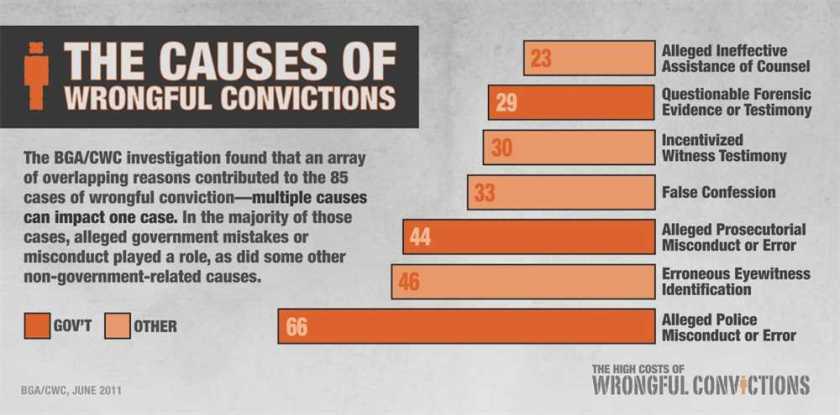
Here is where the reinstitution of the death penalty by William Barr raises the question of “common good”. Juries do make mistakes.

How many innocent people have been convicted and executed in the United States? The Human Rights Foundation reports 31 innocent people were executed between 1973 and 2004.

Facts are immutable but facts are woven into stories by the human mind.

Those stories fit preconceived notions borne from personal experience and internalized opinions.  Personal opinions are a fungible commodity that can distort the truth.

Facts are clear.  Miyamoto is a Japanese American.  Carl Heine is a white American.  However, during the trial these facts are interpreted differently.  The prosecutor points to facts for guilt and the defending attorney points to facts for innocence.  The truth of facts is to be adjudicated by a jury of peers. However, a jury of “peers” listens to prosecution and defense arguments and makes a judgement based on their personal interpretation of the facts and arguments of the attorneys. 

Guterson cleverly interjects the feelings generated by the main characters who served in WWII.  Kabuo feels guilty for having killed a young German soldier who seemed to be asking for mercy.  Kabuo’s guilt for murdering the young German makes him feel a cosmic force, like fate, is leading him to the gallows.  He begins to think he should die.

Ismael lost an arm in the war and led a broken-hearted life because of Hatsue’s marriage to another man.  Ismael resents Hatsue’s rejection of him and chooses to withhold a crucial fact in the trial.

Layers upon layers of human nature’s fragility bares witness to the truth.

A man’s life hangs in the balance.  Will he be convicted for murder based on facts or truth?  Is Miyamoto guilty or innocent?  Or, like all human beings, is he guilty of some things and innocent of others?

In some sense, the American judicial system is on trial in “Snow Falling on Cedars”.  Truth is a slippery slope.  Facts are immutable but interpretation is fungible.  Knowing facts is only part of the truth.  Therein lies the tragic reality of institutionalized discrimination.

WORDS MATTER

Audio-book Review
By Chet Yarbrough

(Blog:awalkingdelight)
Website: chetyarbrough.blog

Milkman

By: Anna Burns

Narrated by Brid Brennan

Anna Burns’ “Milkman” touches on Ireland’s conflict over independence. Though the story is set in Ireland’s period of conflict, the books fundamental message is “words matter”. 

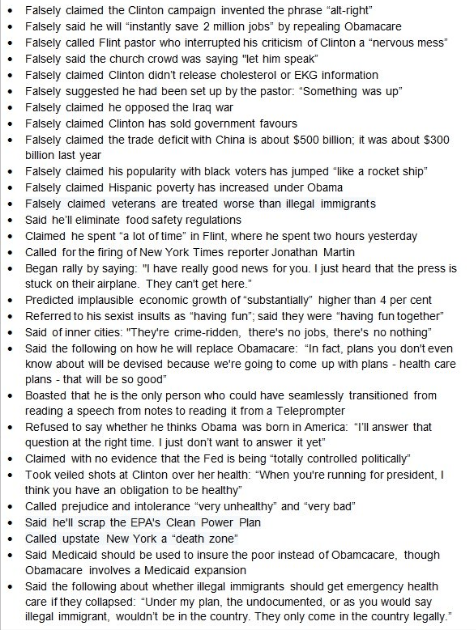
“Words matter” is a timely subject in the era of President Trump’s America. President Trump is a showman with no moral compass. Appearing to be what his constituency wants is his “reason for being”. The consequence of Trump’s words increases extremist actions on both the left and right.

These are the indicted extremists planning to kidnap the governor of Michigan.

From saying Mexico sends their “rapists and criminals” to the United States–to saying he could “…stand in the middle of Fifth Avenue, shoot somebody, and I wouldn’t lose any voters” is absurdist language. It energizes political extremism.

How many people are not wearing masks or practicing social distancing because of Trump’s ambiguous comments about the danger of Covid19? His words have particular consequence because of his position as President of the United States.

Those who are not wearing masks are not entirely Trump’s fault but Burns’ story shows how people fail to think for themselves and are influenced by what people in authority think and say.

Burns tells the story of an 18-year-old girl, a middle child of a presumably Catholic family, who is defined by other people.  She is influenced by others because of their words and the examples they set.

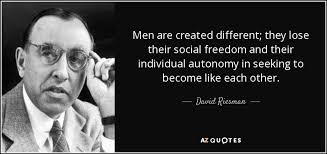
This is an old story; philosophically revealed by David Reisman in a 1950s book, “The Lonely Crowd”. 

Contrary to the main character’s professed independence, this 18-year-old allows herself to be defined by what other people think of her.  Reisman called this malady “other directedness” meaning humans being more concerned about what other’s think of them than what they think of themselves.  This “other directedness” erodes independence. The development of a personal, moral inner compass is subverted by concern over what other’s think.  We become what others want us to be rather than who we choose to be based on a personal moral code.  In Reisman’s language we become “other directed” rather than “inner directed”.

There are two milkmen in Burns’ story.  One is a 30ish leader of a violent Irish independence group; the other is a 30ish bachelor emotionally connected to the 18-year-old’s family.  Rumor is spread that the independence leader, who is married, is sleeping with the young girl. 

The girl’s mother believes the rumor and berates her daughter for an affair that does not exist.  The 30ish bachelor is generally viewed as a maverick in the town who likes no one and chooses to live alone.  In fact, he is a caring human being that decries the violence of Ireland’s conflict and treats people with respect and kindness.  In Reisman’s vernacular, he is “inner directed”.  He lives his life in accordance with a personally developed inner moral compass.

Ironically, the young girl is intimately involved with a young man who she later finds is having an affair with another man.  There are many ways to look at these characters’ circumstances but fundamentally it clarifies the truth that humans are more than what words make them to be.

Words can do great harm when used by a showman who has no inner moral compass.  

Kimberley Strassel’s defense of Trump’s response to Covid19 in the 2/12/21 WSJ editorial is appalling . Most in the medical community emphasized the use of masks while Trump denigrated its importance, conducted rallies without masks, and made wearing one a political statement.

Importantly, a showman’s words reinforce what other people think rather than what a singular person’s inner moral compass would dictate.  Relationships become infected by what people think; more than by what they do.  It is particularly confusing to a young person of 18, but it is a confusion that pervades all human relationships, regardless of age.

“Jane Eyre”, by Charlotte Bronte, is a story about a young woman who listens and follows her inner moral compass.  She refuses to bow to what other people say she should do.  She chooses her own path. 

This is a crossroad that Burns’ 18-year-old is confronted with in “Milkman”.  It is a crossroad that her gay boyfriend fails to negotiate.  It is unclear that Burns’ main character is ready to come to grips with “other directedness” but leaves one with the impression that she is beginning to find her own way.

Former Ambassador of the United States to Ukraine, Marie Yovanovitch.

“Milkman” addresses the human need for an internal moral compass.  Words are weapons of mass destruction in the hands of amoral leaders. (Reference here is to the despicable way the Trump administration treated America’s ambassador to Ukraine.)

CLOSED MINDS

Audio-book Review
By Chet Yarbrough

(Blog:awalkingdelight)
Website: chetyarbrough.blog

The New Jim Crow: Mass Incarceration in the Age of Colorblindness

By: Michelle Alexander

Narrated by Karen Chilton

MICHELLE ALEXANDER (AUTHOR, CIVIL RIGHTS ADVOCATE, VISITING PROFESSOR AT UNION THEOLOGICAL SEMINARY)

Multicultural societies are threatened by closed minds. Michelle Alexander pulls no punches in explaining how American minds are not exempt.  From both conscious and subconscious actions, people who are perceived as different are treated unequally.   

America, like most (if not all) nations, is a failed egalitarian state.  From its early history, America has striven to mitigate inequality but with mixed results, and only marginal successes.

This is not to suggest America is less egalitarian than most nations but that unregulated human nature is a danger to all nations. Witness the murderous regimes of Qaddafi, Saddam Hussein, and more recently, al Assad in Syria.

Two police officers are shot during a public protest over the police shooting of Breonna Taylor (a police raid’s innocent bystander). Where does this end? Public policy failures should not be used as an excuse for violence. No one wins, everyone loses.

Money, power, and prestige corrupt every nation’s leaders; whether well or poorly educated. America is different from many nations because society is subject to a system of checks and balances. However, checks and balances have not saved America from discrimination and inequality.

As memorialized in the Constitution’s 14th Amendment (which requires equality of all before the law) America attempts to treat all people equally.  America succeeds in principle and fails in practice. 

Though the American mind is willing, the will fails to support the mind.  Alexander notes how some laws passed by the American government purposely, and sometimes inadvertently, undermine the Constitutional guarantees of equality for all.

The veil of which Dubois is speaking is the real affect of American laws and customs on black Americans. It is the same veil one sees in history that is written by victors; not the defeated.

Examples of unequal treatment are noted by Alexander.  She exposes the insidious affects of the war on drugs and America’s “3 strikes law” that disproportionately affect the poor; particularly those raised in black communities.

Alexander reflects on America’s failure to address root causes of crime—like unemployment, inadequate medical care, poor education, and racial discrimination.  She suggests those failures are exemplified by “…New Jim Crow” laws.  Her point is that “…New Jim Crow” laws are re-hatched by the War on Drugs and “3 strikes law”. 

Jim Crow laws segregated the Southern United States in the late 19th and early 20th century.  Her argument is that today’s Jim Crow laws are like Dubois’s explanation of the veil of American acts of conscience.  It is a veil in the guise of fighting crime. 

No one wants crime; whether poor or rich. The author does not argue that fewer violent crimes occur in poor communities.  She acknowledges more violent crimes occur in poor communities. But, poor communities, like all communities, abhor the reality of violent crime. 

Whether poor or not, all want protection from violence.  No one wants to see their family threatened.  Those truths make the policies of the War on Drugs and 3 strikes appealing to most Americans.  Alexander’s point is these well meaning policies do not address the root causes of crime. They attempt to treat symptoms rather than offer cures. In treating the symptoms, the underlying causes remain untouched and ever virulent.

Alexander suggests the war on drugs and “3 strikes law” are a return of Jim Crow laws that segregated the Southern United States. 

The War on Drugs and 3 strikes neglect the reality of living in poor neighborhoods.  Poor neighborhoods resort to drug use and sale because it is the only job available, or often the only way of escaping the reality of being trapped in a circle of despair.  

When a person is convicted of a violent crime, manufacture or sale of drugs, or minor drug charges, they are marked for life. 

Job applications ask if they have ever been convicted of a crime. If the answer is yes, most are left with poor prospects for employment or advancement.  No effort is made to rehabilitate but only to isolate. Once a criminal, always a criminal.

America chooses not to spend money to educate the young in poor school districts.  America chooses to ignore the circumstances of drug addiction or the need for medical treatment.  Crime is a zero-sum game with no treatment for the psychologically disturbed. Little investment is made in rehabilitation or re-introduction into society for the first-time offender.  

The drug laws and “3 strikes law” dis-proportionally fall on the poor and black as evidenced by America’s prison population.  Alexander argues the real effect of these laws is the same as the historic Jim Crow laws.  They segregate minorities from the dominate American culture.

Alexander’s book is difficult for some to read because it denies the universality of the American Dream.  What is forgotten is how much the luck of race and circumstance play in everyone’s life.  Equally forgotten is the good for those in power is not always good for those without power. 

Dubois and Alexander have something in common.  Minds must be kept open to the truth.  Empathy is needed by both those in power and those without power.  Trust must come from both sides of any power structure. 

No singularly elected person or autocrat will unwind history’s discrimination. Respect for difference and rule of law are the best one can expect. With respect and rule of law, equal opportunity is possible.

Police who brutalize the poor are as guilty of crime as the poor who victimize the rich.  Each needs to put themselves in the other’s shoes to understand their own closed mindedness. 

With better understanding of ourselves and others, more will be done to constructively address public policy failures.  The alternative is increased cultural deterioration, discontent, and violence.  

HISTORY’S SKEPTIC

Audio-book Review
By Chet Yarbrough

(Blog:awalkingdelight)
Website: chetyarbrough.blog

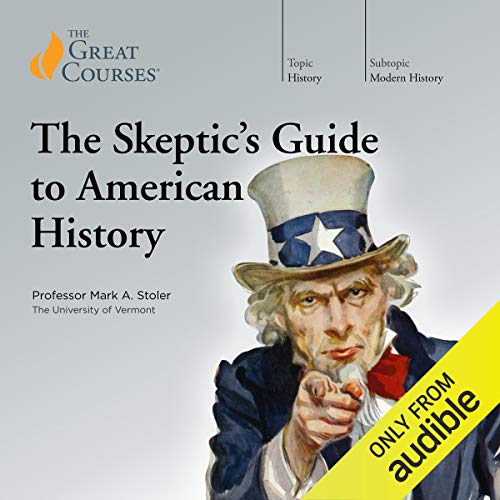
The Great Courses: The Skeptic’s Guide to American History

By: Professor Mark A. Stoler

Narrated by Professor Stoler

Mark A. Stoler, Ph.D. Professor Emeritus of History at the University of Vermont

Contrary to popular opinion, Professor Stoler argues history does not repeat.  Stoler suggests history reflects current beliefs influenced by past remembrance. 

What is the truth of history?  Is there a truth?  Mark Stoler, like many historians, sets out to debunk modern perceptions of history.  To professor Stoler, context and interpretation are the arbiters of history’s truth.

The frustration one has with historian’s analysis of the past is with “fact choices” and interpretations. Historians write about the past through the prism of the present. The result confuses readers who seek knowledge and truth. 

The value of Mark Stoler’s lectures is realization that facts of history are immutable; interpretation is not. That may be what Conway meant but not what she said. There are no “alternative facts”.

Some suggest Kellyanne Conway’s comment about “alternative facts” means there is no truth.

Councilor to President Trump

An example would be historians who argue about past Presidents by choosing facts of history that support their argument.  A past President of the United States is great, average, or awful depending on what facts are chosen and how those facts are interpreted.  History seems revised in every generation. 

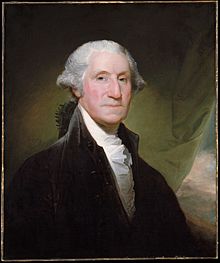
George Washington is the father of our country. Washington made many mistakes as leader of the military during the American Revolution.  However, Washington won the most important American battles of the revolution leading to British withdrawal.

Thomas Jefferson sold all his slaves (except for the offspring of Sally Hemmings, his black mistress) to pay debts before his death.  He believed blacks were inherently less intelligent than whites. Thomas Jefferson drafted the Declaration of Independence which stated “We hold these Truths to be self-evident, that all Men are created equal…” 

Abraham Lincoln proposes a plan to ship all American Negroes to another country to solve the issue of slavery.  Lincoln executes the emancipation proclamation that frees American slaves.

Franklin Roosevelt supported industry over labor during the depression.  He represented the upper-class of society. Roosevelt created jobs for American unemployed with a government financed program, the WPA. 

Stoler infers there is truth, but it lies in knowing history is a phenomenon that cannot be separated from the present.  The facts of the past do not change but unreported facts are dredged up by subsequent historians and history is revised.  We call this revisionist history; i.e. a euphemism for reinterpretation of selected facts of history.   

The election is nigh–Stoler infers there is truth that cannot be separated from the present. The facts of the past do not change but unreported facts are dredged up by subsequent historians and history is revised. Which way Trump?

That is why Stoler insists history does not repeat itself while Twain suggests history rhymes.  With human nature as it is, the past is always present but in similar; not identical ways.  History is not repeating itself. New history is being made based on new facts that fit modern societal norms.  Stoler implies context of the present has changed history of the past.   

Stoler supports his argument with numerous examples:

  1. The origin of religious tolerance is not a founding principle of America.  Early Americans were as religiously intolerant as the countries from which they came.  Stoler suggests religious tolerance evolved in American history through the mechanism of unintended consequence.
  2. Stoler argues American history is a story of imperialism, and that America has never been an isolationist country.
  3. Stoler explains George Washington, Abraham Lincoln, and Franklin Roosevelt remain as the three highest rated Presidents but with interpretations of history that have changed in different eras.  Many American Presidents have risen and fallen in the eyes of historians.  Wilson fell in part because of disclosed information about his racism.  Grant rose in part because of disclosed information about his opposition to Andrew Johnson (Abraham Lincoln’s Vice President) who condoned slavery.
  4. In Stoler’s opinion, one of the greatest unsung heroes of American history is George Marshall because of his service to country.
  5. To Stoler, America’s role in WWI and WWII is misleading in many American histories because of misinterpretation of America’s contribution to the war’s beginnings and endings.  Nationalism often gets in the way of objective truth when assessing any countries role in war.
  6. Stoler notes the United States has never had a laissez-faire government.  American government has always had an out sized influence over winners and losers in the economy.

Stoler’s lectures are a remembrance of things past, but just as with all historians, Stoler reports facts he chooses to recognize.  The value of his lectures is realization that facts of history are immutable; interpretation is not. 

Support of capitalism is not the problem in America. It is the failure of the #Federal government’s bureaucracy, the FBI, the President, and Congress to do their jobs

There are no alternative facts in history. Is that a truth or another fiction foisted on every new generation? Is Trump’s challenge to the 2020 election fact or delusion? History will show it to be both.

RUSSIAN ENIGMA

Audio-book Review
By Chet Yarbrough

(Blog:awalkingdelight)
Website: chetyarbrough.blog

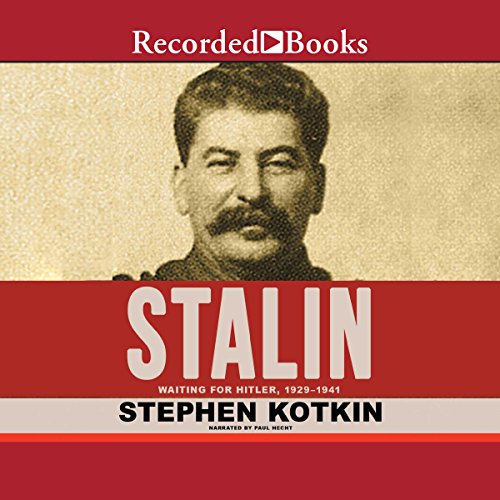
Stalin. Volume II: Waiting for Hitler

By Stephen Kotkin

Narrated by Paul Hecht

Stephen Kotkin, Author, Historian, Professor

In 1939, Churchill calls Russia a riddle, wrapped in a mystery, inside an enigma.  Stephen Kotkin unravels some of that enigma in “Stalin. Volume II” but the unraveling is marred by details that will only appeal to historians; not dilettantes. Nevertheless, a dilettante listening to nearly 50 hours of narration will find much to recommend Kotkin’s second volume of what is to be a trilogy.

Was Stalin a mad man, committed idealist, or something else?  Was Stalin paranoid and highly calculating, or something else?  Was Stalin a detailed planner or reactionary?  What drove Stalin to eliminate 90% of Russia’s military leadership before WWII? 

Since Russia’s invasion of Ukraine on February 2nd, 2022, the same questions may be asked of Putin. The answers are similar except Putin is at the beginning of his career as “The Red Tsar”.

In “Stalin, Volume II” Kotkin describes a despot.  Stalin controls a population of over 109 million people before and during WWII.  Before the war, it is estimated–between 5.7 and 7.0 million die from famine in Stalin’s Russian agricultural collectivization.  During the war, Russia is estimated to have had 10,700,000 military deaths, and 12,500,000 civilian deaths, of which 1,000,000 were Holocaust victims. 

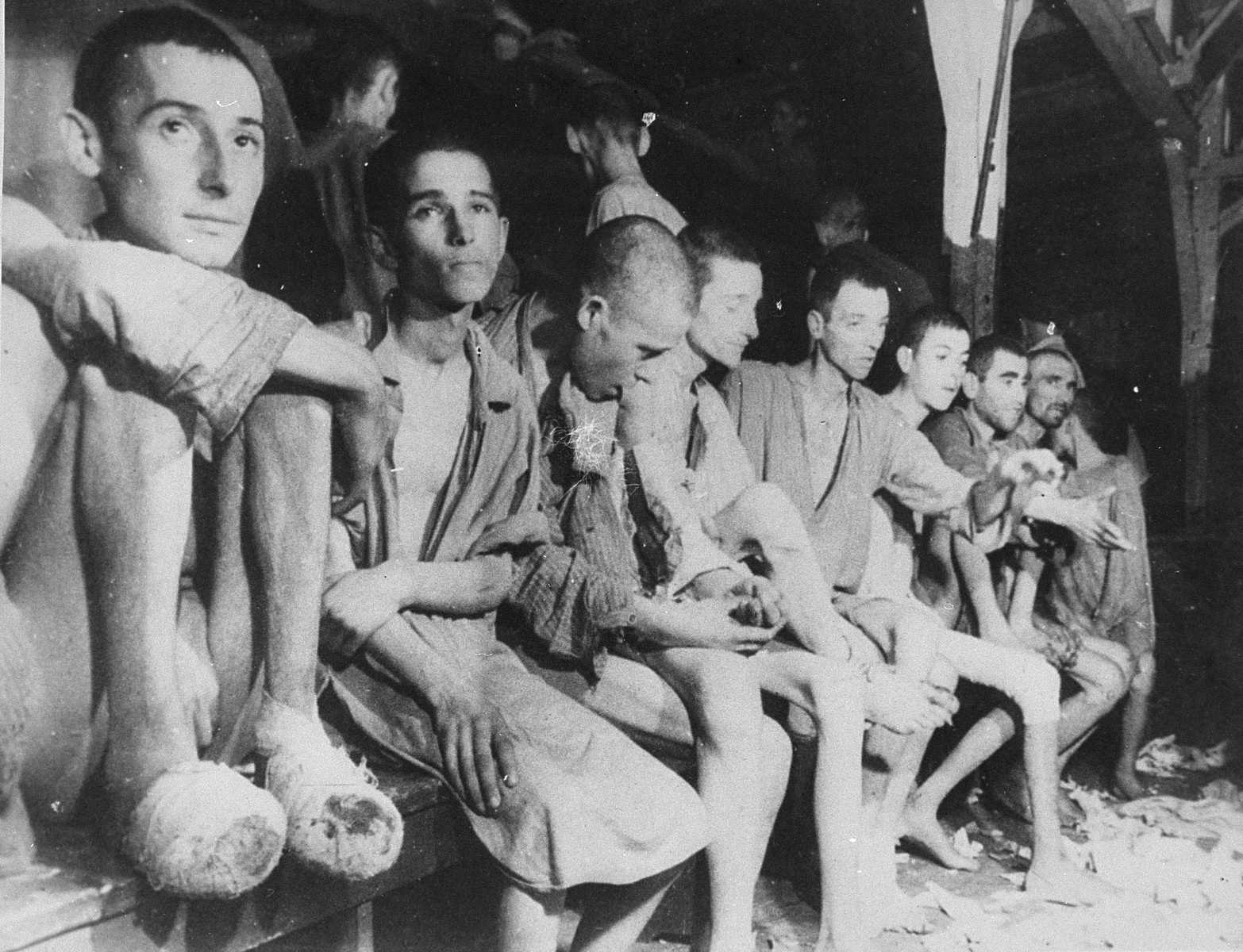
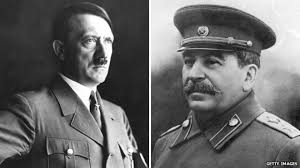
It seems Stalin’s administration before and during WWII led to 23,000,000 Russian deaths. In contrast, Hitler’s administration’s toll is estimated at 7,000,000 deaths; of which 6 million were Jews. 

This is not to trivialize loss felt by any culture or nation, but–none exceed Stalin’s atrocity. 

(An exception may be China and the famine during Mao’s administration. An estimated 45,000,000 died in the 1958-62 “Great Leap Forward”, led by the “Gang of Four”, a cabal that Mao later opposed.) Communism is clearly shown to be a treacherous and ultimately failed form of governance.

The ultimate question is –how could Stalin remain in power before, during, and after WWII? What people or nation would countenance 23,000,000 deaths?  “Stalin, Volume II” offers a credible explanation. 

Kotkin infers Stalin is neither a mad man nor committed idealist.  Stalin is driven by an insatiable need for power and international influence. This seems an apt description of Vladmir Putin.

Kotkin shows Stalin is highly calculating more than paranoid.  The clue is in the fact that Stalin never countenanced bodyguards because he did not fear assassination.  His longevity is the result of pragmatic use of power to eliminate rivals.  (Navalny comes to mind in the case of Putin.)

Alexei Navalny (Putin’s political prisoner. Noted receiver of the Sakharov Prize in 2021, Founding member of the defunct Anti-Corruption Foundation.)

Stalin assiduously pursues the preeminence of Russia as a communist state, not a Stalinist state.  Contrary to some historian’s analysis, Stalin did not intend to create a “cult of personality”. Kotkin infers Stalin’s goal was to create a wider, more hegemonic, state of communism. (This may be where Stalin and Putin are different. Putin seems to pursue a “cult of personality” more than a hegemonic communist state.)

Stalin’s purge-

Stalin’s sleight of hand maneuvering is accomplished by publicly denying honorifics as leader of the state. 

With that pirouette, Stalin systematically undermines any rivals by using state apparatchiks like the NKVD to arrest, torture, and obtain confessions. By branding rivals as “enemies of the state”, Stalin eliminated leadership competition.

Because Putin pursues a “cult of personality”, a Stalinist purge would be a hyperbolic characterization of his political actions. However, Putin is at the beginning of his role as dictator.

Stalin operates as a bully without outwardly appearing to be a bully.  Each competitor who defies or competes with Stalin’s policies or position is confronted after gathered false or true accusations.

A confrontation can be direct or indirect depending on Stalin’s whim. If it is a close associate, confrontation is personal and accusatory in a way that causes some to commit suicide; some to be disgraced and sent to a gulag, and a few to defect.

Through personal intimidation, and the help of a secret police, Stalin systematically destroys public perception of potential competitors.  They are summarily tried, convicted, and sentenced to Gulags, or executed.

Pavel Mikhalev, a wandering monk, was arrested in August of 1937 at the height of Stalin’s Great Purge for “counterrevolutionary activities”. He was tried on October 10 and shot on October 13. Mugshot taken in Moscow on October 13, 1937.

Stalin’s “hang man”, Lavrenty Beria.

Stalin replaces executed competitors with young followers.  They are drawn from backgrounds of a less grounded education; similar to Stalin’s.  These young followers become fierce defenders of Stalin; undoubtedly, in part, out of fear, but also out of appreciation for their gift of limited power and prestige in roles traditionally held by older citizens.

Stalin seduces new young leaders with dachas and improved economic benefits.  Stalin appeals to the middle and lower classes; bypassing the upper-class or well educated.

A negative consequence of this system of promotion is lack of experience in leadership or management.   

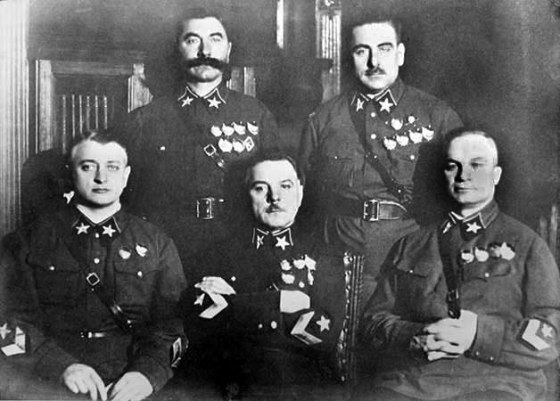
PURGED MILITARY LEADERS BY STALIN

Kotkin notes an estimated 90% of experienced military leadership is removed by Stalin before the war. The consequence is to make cannon fodder of many Russian soldiers as they are thrown into battle against better equipped and experienced German soldiers.  Nevertheless, Stalin maintains control of Russia by recruiting from the young who are motivated by their own ambition.

Stalin, above all else, is shown to be a pragmatist in his increasing control of Russia after the revolution.  

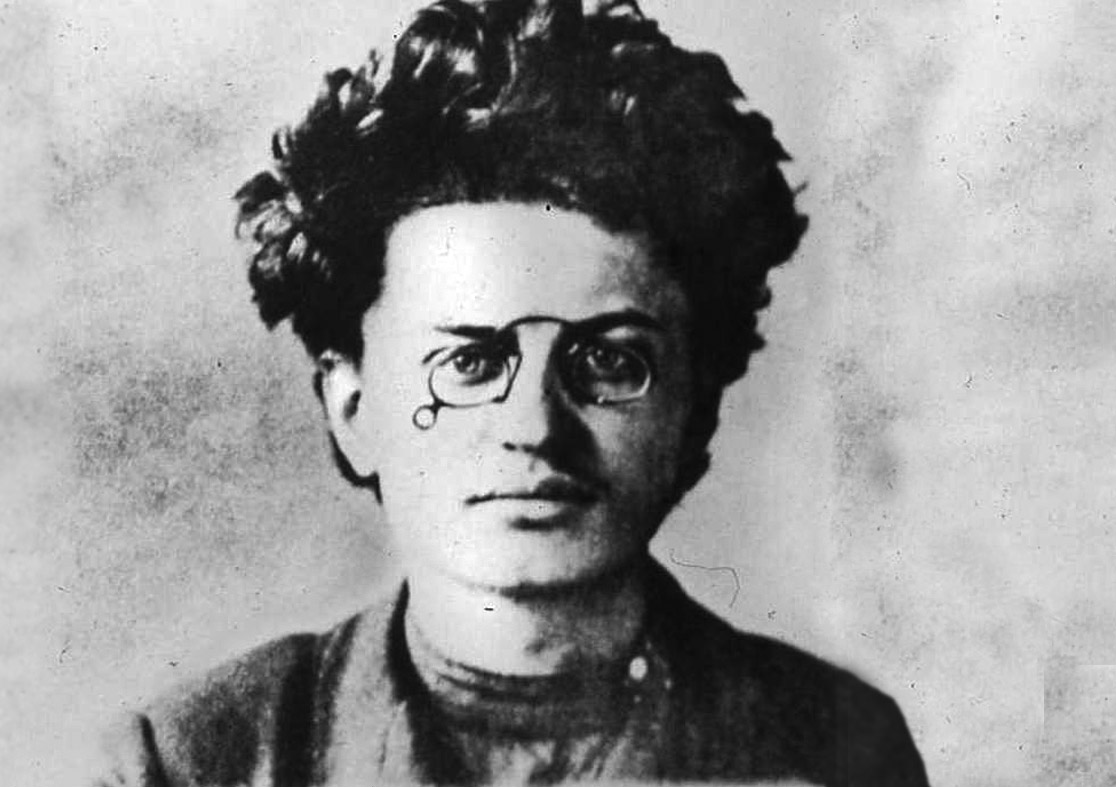
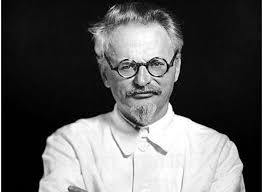
Prior to WWII, Trotsky attempts to form a competing communist party in Spain but is trumped by Stalin’s maneuvering. Stalin opposes Franco’s fascist fight. He balances his enmity toward Trotsky with armament provisions to Spain’s communist party. That support diminishes Trotsky’s effort to form a competing communist party.

TROTSKI

By discrediting Trotsky’s ideological support, Stalin undermines Trotsky’s success in forming any independent communist party.  Kotkin notes that Stalin forestalls separate recognition of outlying communist parties by using Russia’s industrial capability to co-opt nascent movements.  Stalin wishes to capture outlying communist movements by making it a part, rather than competitor, of Russian communism.

Stalin’s competition is either exiled or jailed.  His ideological rival is Trotsky whom Stalin tries to have assassinated after exile from Russia.  (Stalin finally succeeds in having Trotsky assassinated in Mexico.) 

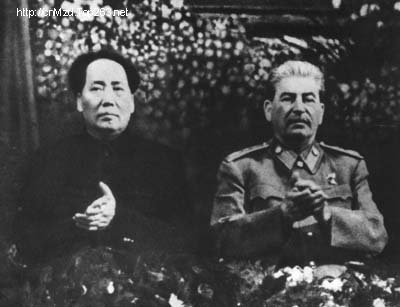
CHINA’S CHIANG KAI SHEK & MAO ZEDONG–eg. STALIN’S REALPOLITIC

Another example of Stalin’s pragmatic effort to extend territorial influence is in his playing Chiang Kai Shek forces against Mao’s communist movement.  On the one hand, Stalin wants to spread communism in China but not Mao’s version.  When Chiang Kai Shek is captured by Chinese communists, Stalin forbids Mao from executing him. Stalin insists on Chiang being released to join with the communists to combat Japan’s interest.  Chiang refuses to join Mao but Stalin’s influence on China is undiminished. Stalin is playing a long game by offering arms support to Mao while resisting either Japan’s encroachment or Chiang’s defeat of Maoist communism.

Stalin is not characterized as a genius as is evidenced by his being duped by Germany.  Stalin’s pragmatic effort to keep Russia out of war discounted Hitler’s oft spoken opposition to communism.  Stalin fails to intellectually grasp the monomaniacal intent of Hitler.

Stalin is shown by Kotkin to be a consummate consumer of information. He uses information to make decisions about who to eliminate that might challenge his control.  But, Stalin misses the realpolitik intent of Hitler.

In contrast to Stalin’s obsession for information, Hitler is shown to shoot from the hip.  Hitler is neither a pragmatist nor an information addict.  In shooting from the hip, Hitler chooses to fight WWII on two fronts which is the beginning of the Third Reich’s end.

Kotkin’s second volume about Stalin is more for an historian than the general audience. The first volume is more audience friendly.

Nevertheless, the second volume is a worthy history of what makes Russia what it was and may still be.

TURKEY 2019-A HOME OF ONE’S OWN

TURKEY 2019

A Home of One’s Own
By Chet Yarbrough

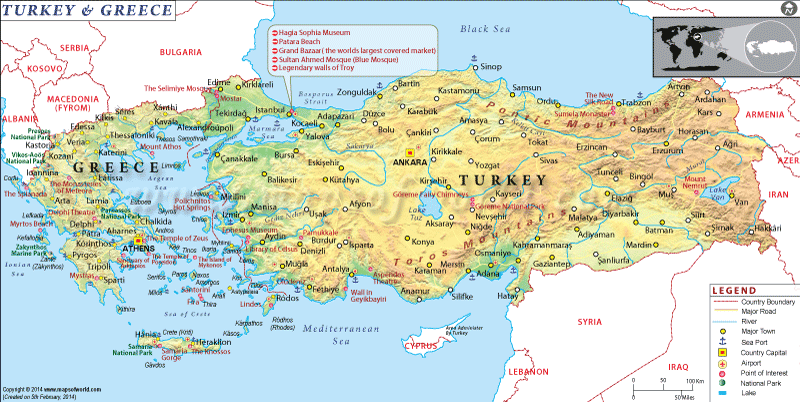
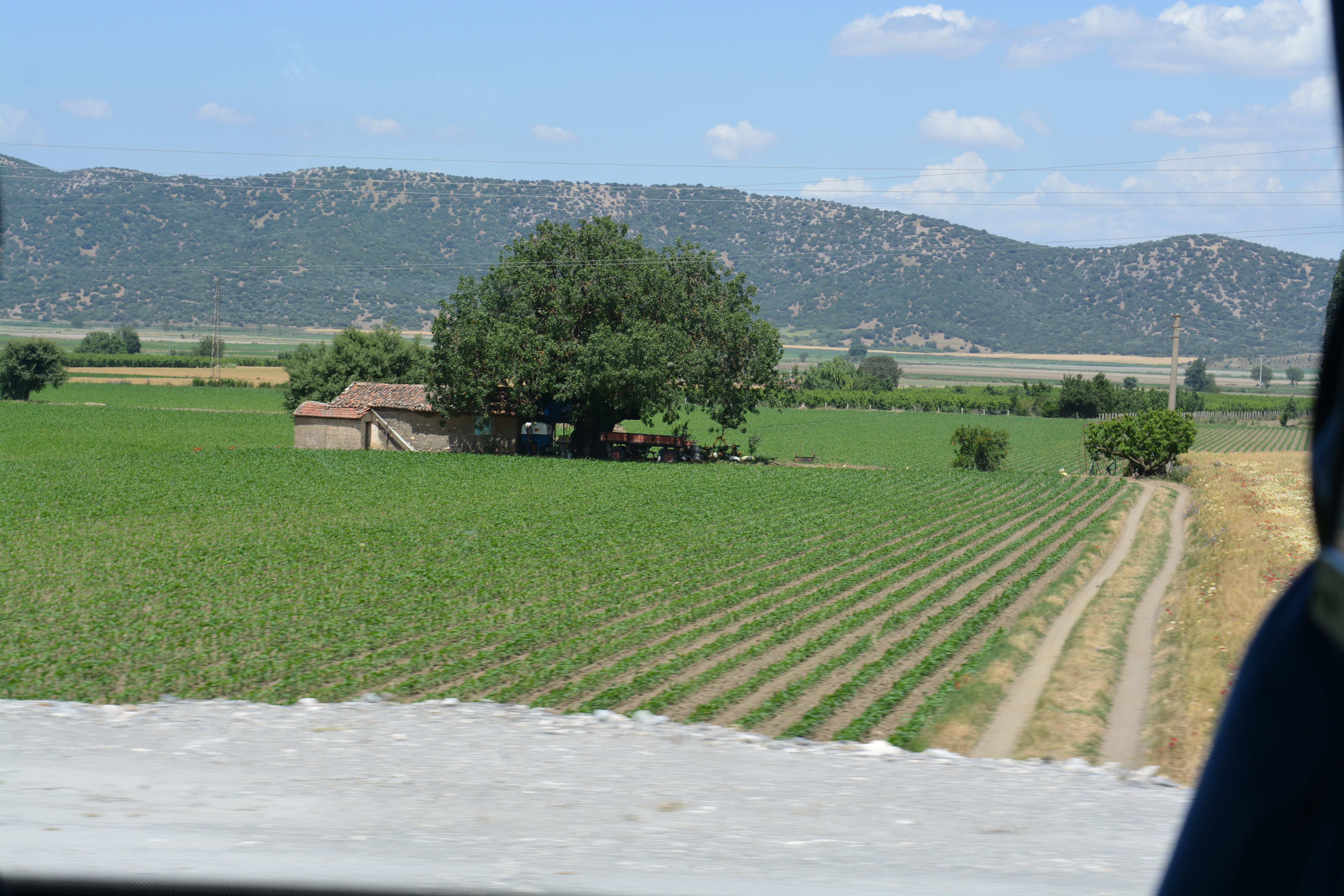
There are a variety of ways citizens of Turkey choose to live.  Some choose to live in homes that are monuments to Turkey’s past.  A few live in rock homes dating as far back as 1800 BC.

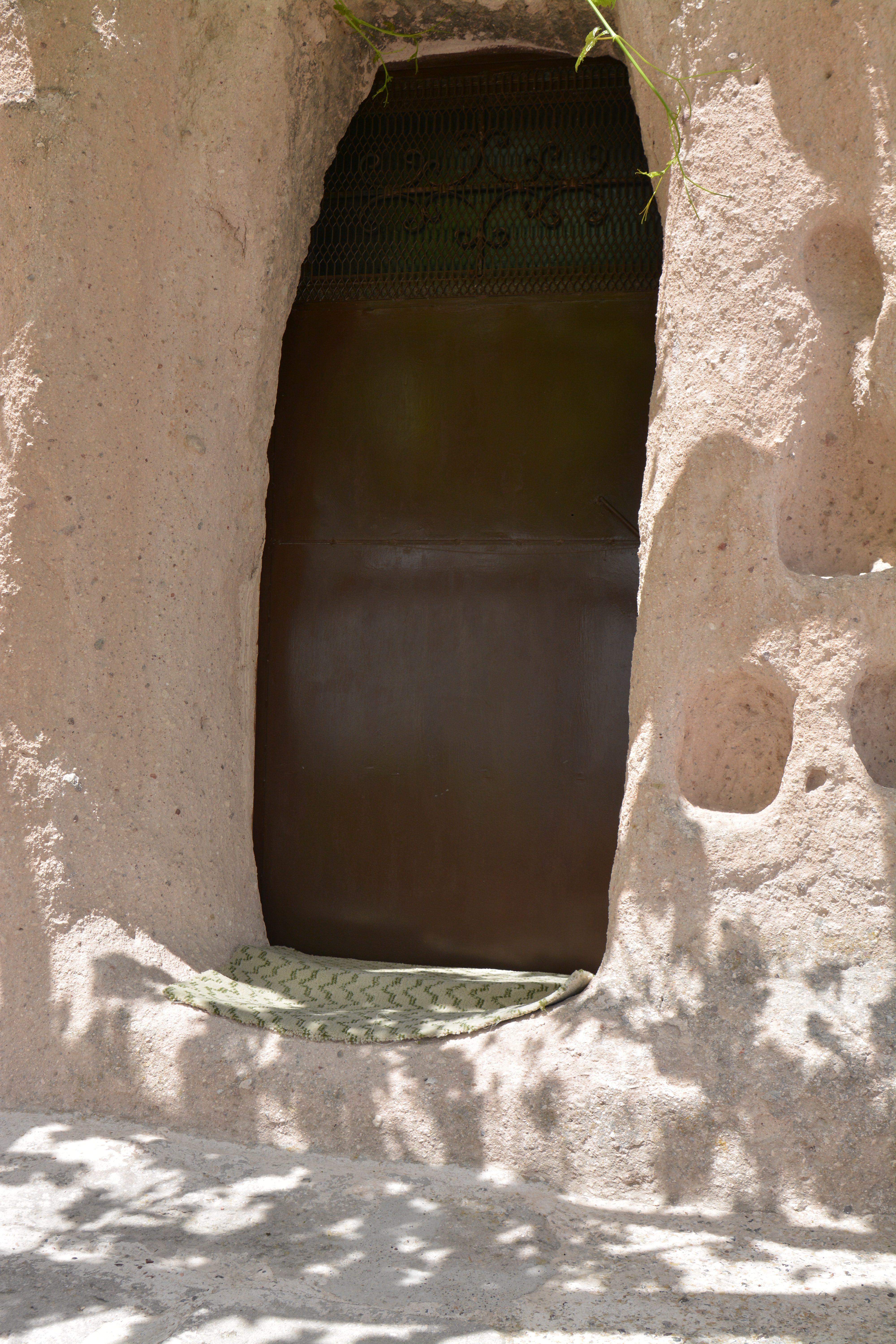
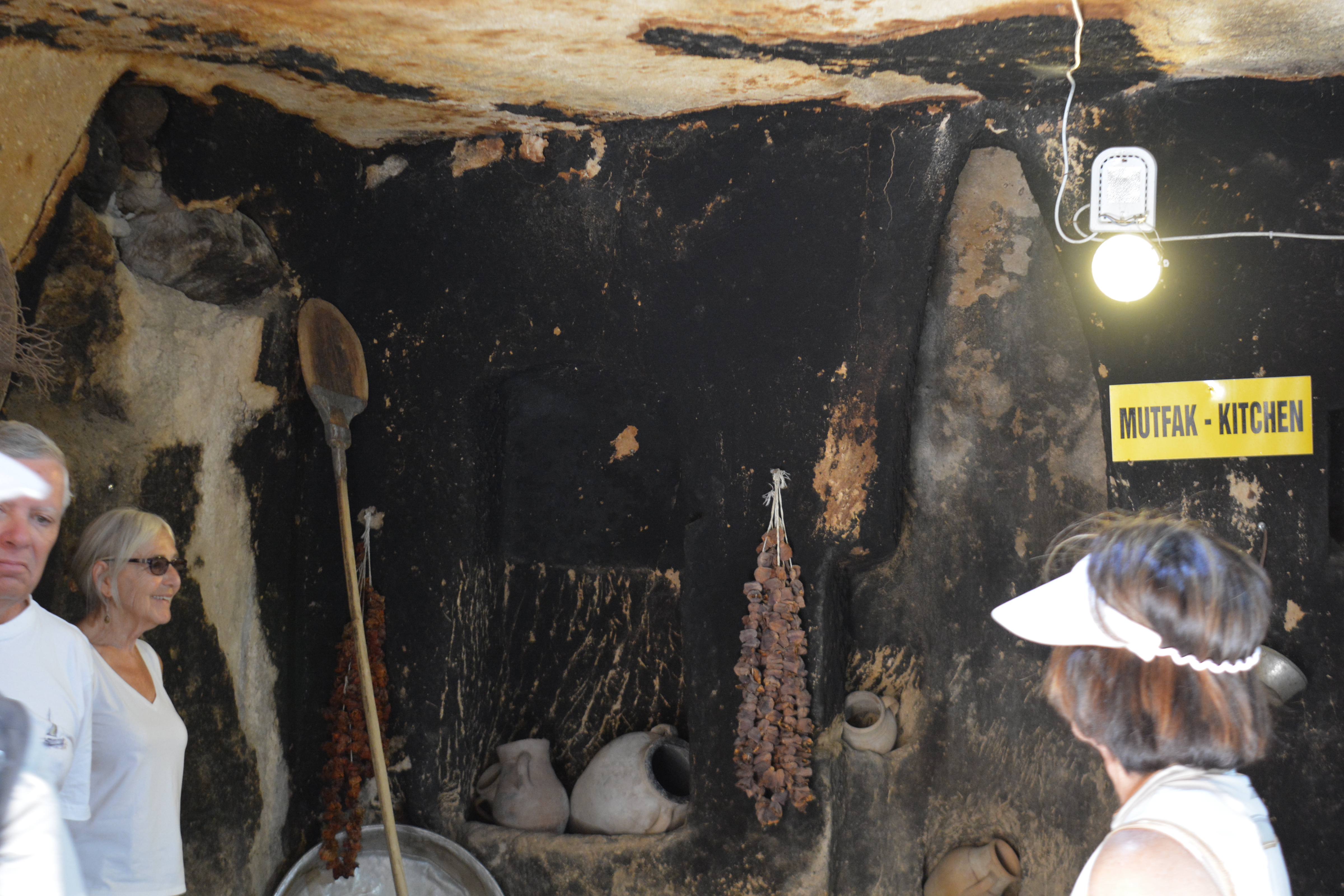
This home in Capadocia is a few feet from town. A husband, wife, and son live here. It is rented from the government of Turkey for what constitutes an annual property tax. The family can live in the home as long as related generations live there, and pay the taxes. The home is preserved by the State as a monument to Turkey’s past. It cannot be structurally modified without prior approval of the State. The few homes in this program are inspected annually for any forbidden structural changes.

This is a highly coveted style of living. The current occupants note their son is considered quite privileged by his school mates. This particular home is a social gathering place for local friends of the family. The wife is the descendant-connection that keeps this home in the family. Her marriage assures inheritance by future generations that have any blood relationship.

The temperature inside the home is perfectly comfortable when outside temperatures reach above 80 degrees. In the severest winter months, heat comes from a vented stove that is temporarily set in the middle of the living room. The home has electric wiring for lighting and appliances. The floors are covered with beautiful hand-made carpets made by past and present generations.

While sipping tea in the living room, the warmth, and cleanliness of the home floods your senses.

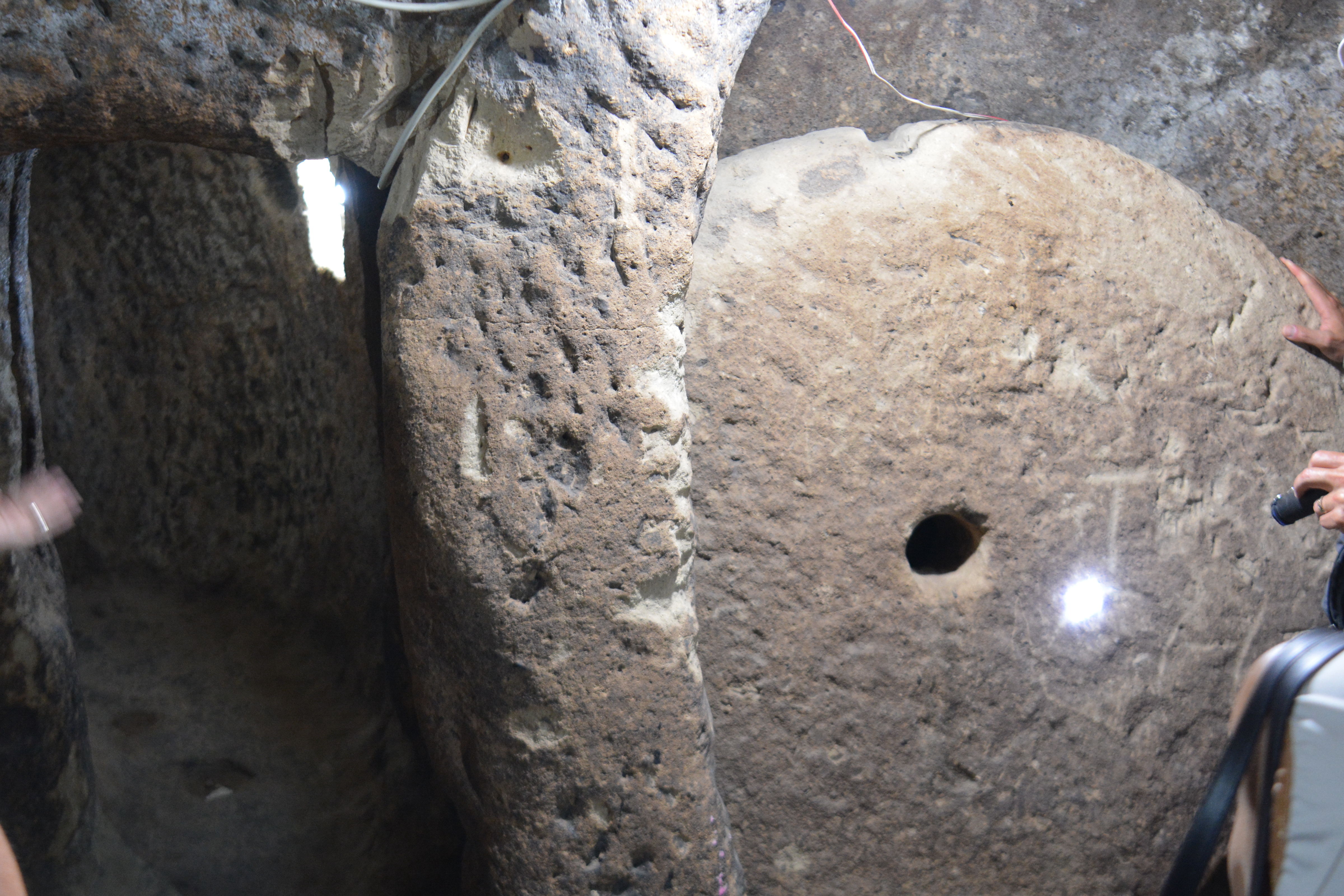
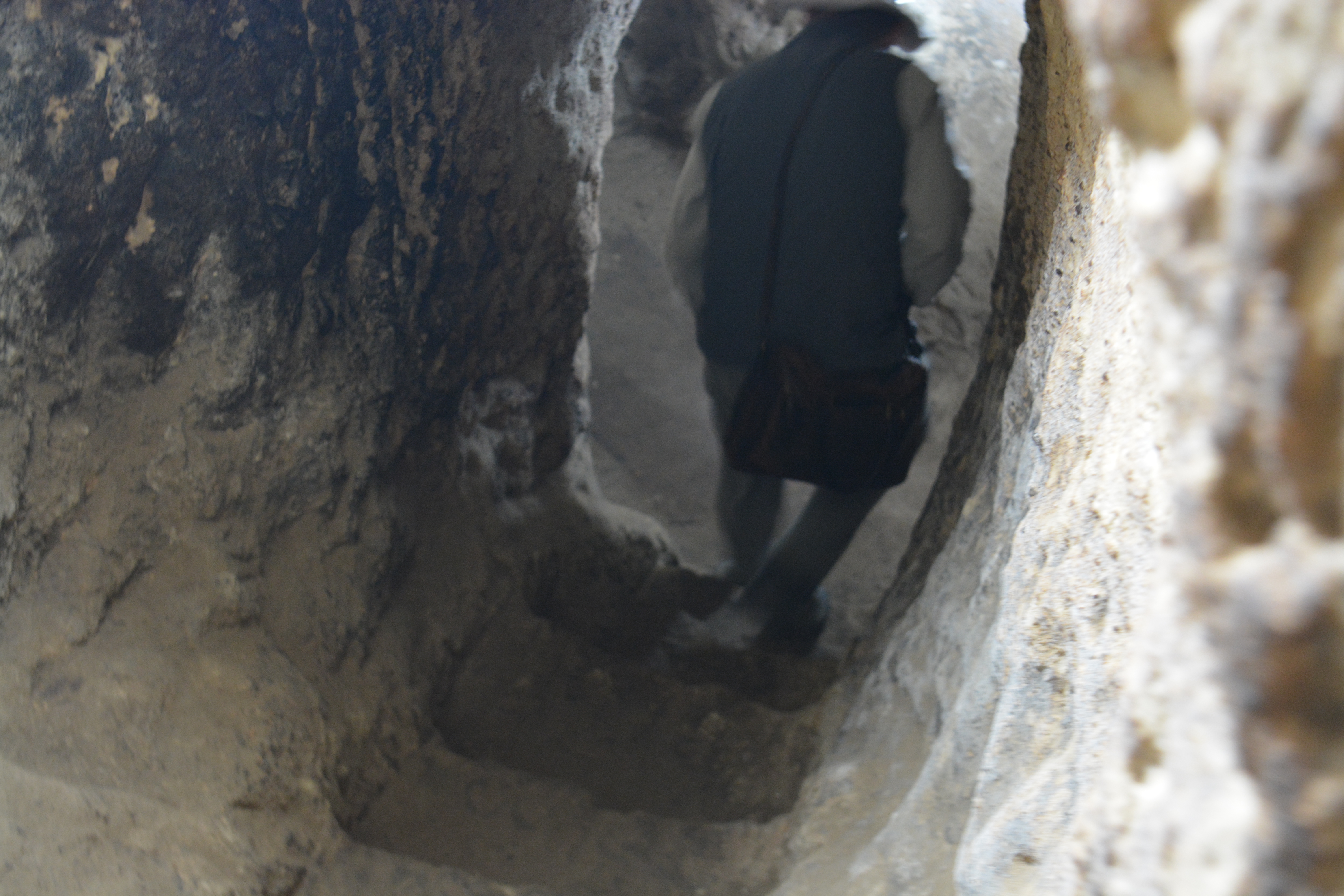
In another part of the city, in an older part of Capadocia, there is an underground communal enclave of passageways and rooms. They are carved into ancient rock formations. It served as a refuge for Christians. It was used in the 8th and 7th centuries BCE. It reaches a depth of as much as 200 feet in the Derinkuyu district of Capadocia. Its purpose was to protect Greek orthodox Christians from many wars occurring in that era. As many as 20,000 people sought refuge in this underground city.

Massive rock door wheels secured passage ways and rooms in the underground city. The wheels were leveraged by spears or staffs to open and close the passage way.

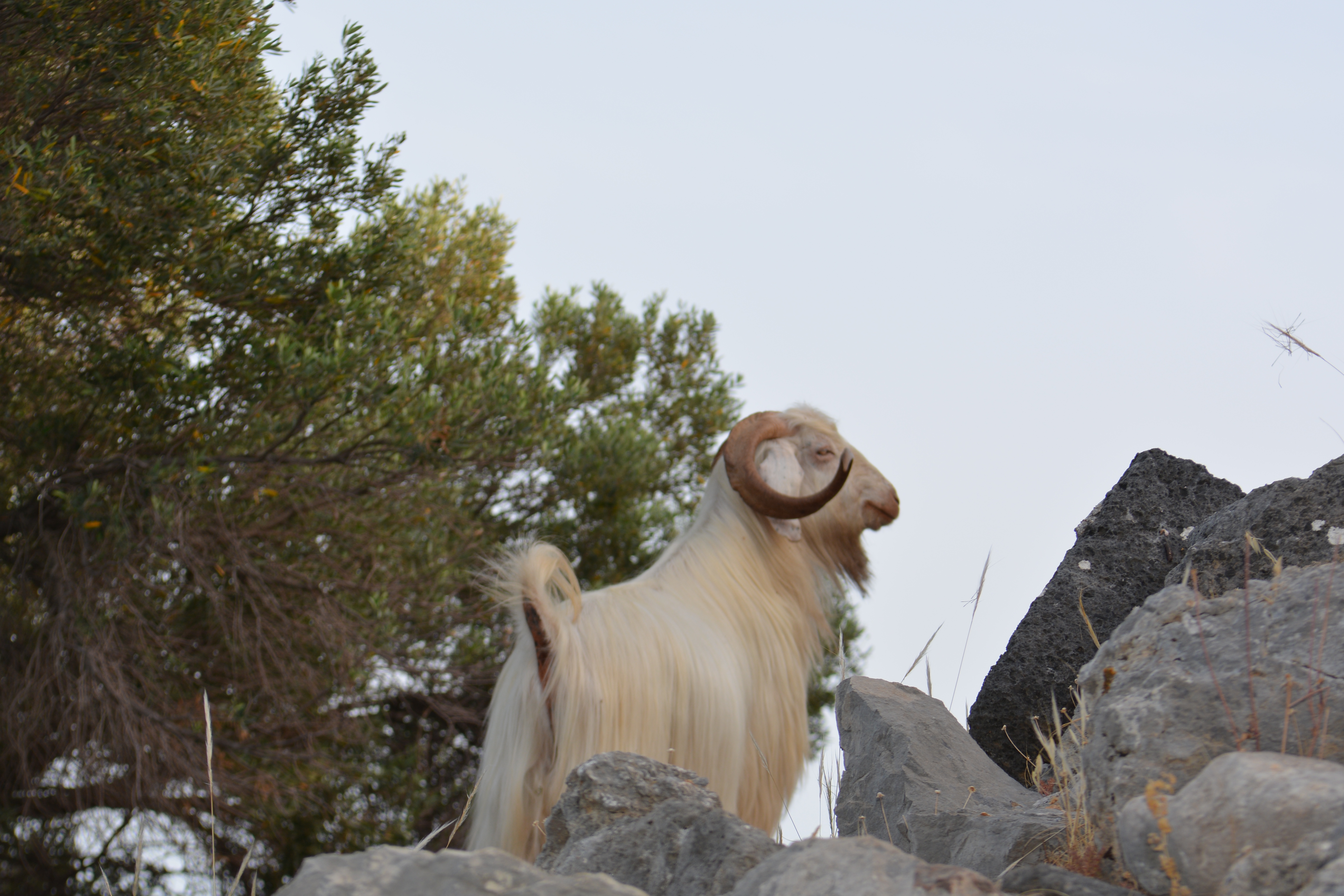
Another style of living in Turkey is in national parks–occupied by nomads whose lifestyles reach back to the 3rd century BC.  In winter months, nomads move to the city, but return every spring to tend their farms and goat herds. They, like the previously mentioned families retain their place on the State’s land as long as their descendants continue to use it during habitable months.

Each nomadic family builds their own house, out-buildings, and fencing. When they leave, those structures become expendable. Many live an “off the grid” existence, supplemented by periodic visits to the city to sell their goats. The couple noted below have a daughter that stays with her grandparents in the city during the school year. The father acknowledges he may be the last of his family to live this life because his daughter has other ambitions.

The remainder live in houses reminiscent of modern America.

The state controls a high proportion of land through the authority of the Under Secretariat of Treasury. Through inheritance rules set by the General Directorate for Foundations, the government indirectly controls Turkey’s historic sites.

One presumes the reason for much of Turkey’s control of land is because of its historic character.  For nomads, the tradition of a nomadic population (though now quite small) is preserved for cultural reasons. This reminds one of a Hong Kong guides’ disappointment in the loss of traditional market places in semi-autonomous regions of China.

In addition to Turkey’s effort to preserve history and tradition, its cities are intent on being or becoming modern metropolises. It strives like all countries of the world to join the technological age to better serve its national interests and public needs. Turkey struggles with the same economic concerns evident in other countries of the world. The difference is that so much more ancient history is evident in Turkey than in many other parts of the world.

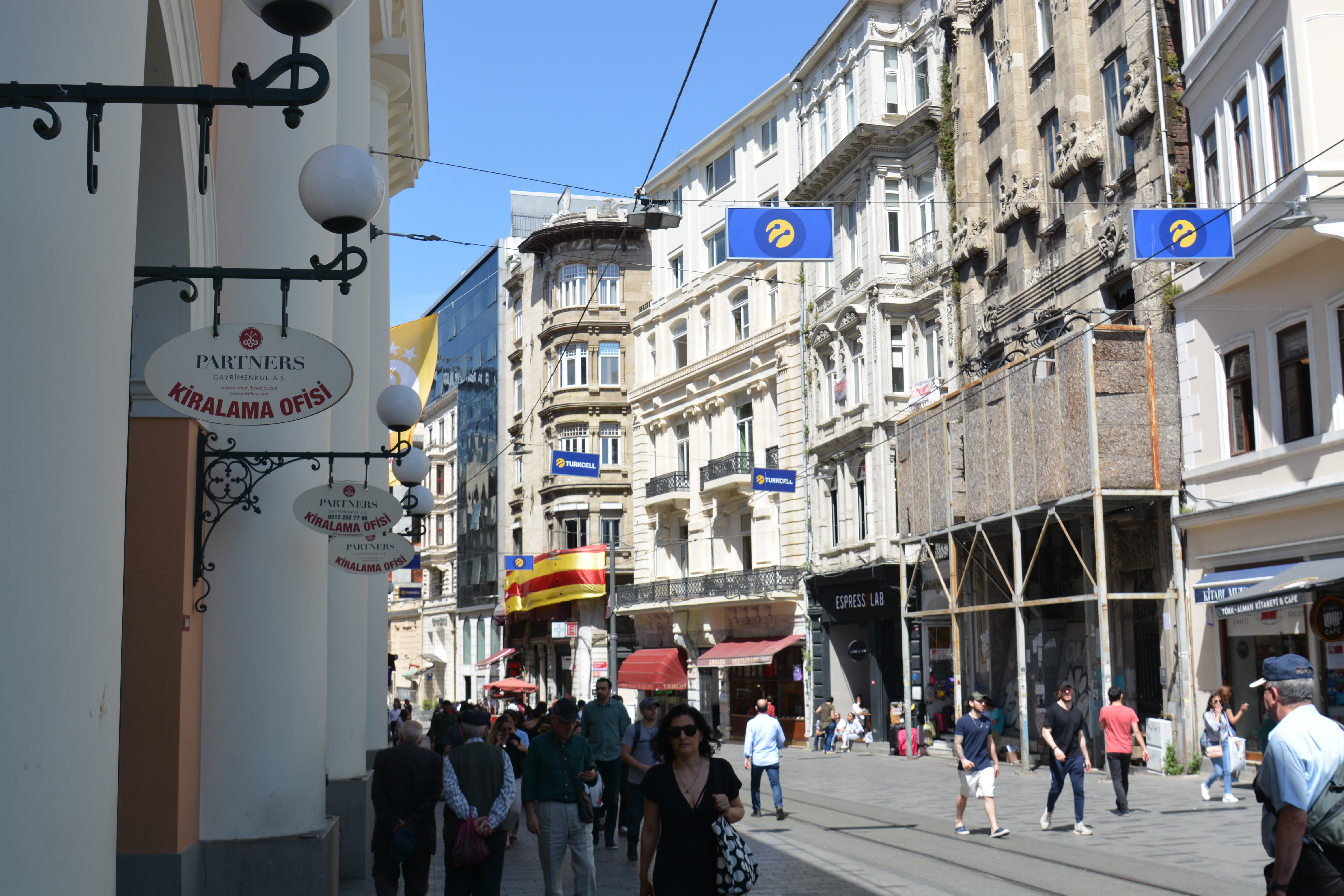
Istanbul and Ankara are modern metropolises.

Interestingly, it seems relatively easy to become a Turkish citizen.  You can be born in a family with one parent who is a Turkish citizen, and you have citizenship.  You can marry a Turkish citizen and receive citizenship after 3 years of marriage.  Or, you can simply live in Turkey for 5 years (without any absence over a total of 6 months in the 5 year period) and become a citizen.  The 5-year rule involves a residence permit which requires a foreigner to have a passport/travel document that is valid for at least 60 days after the expiration of a requested residence permit.

Today, it is possible for foreigners to own property in Turkey.  There are limits to the size of the property (about 7.4 acres per foreigner), and some special rules depending on which city or area one wishes to live.  In 2007 an estimated 75,000 foreign nationals owned property in Turkey.

TURKEY 2019

Travel
By Chet Yarbrough

(Blog:awalkingdelight)
Website: chetyarbrough.blog

Turkey in 2019

Written by: Chet Yarbrough

Turkish school visit 2019

Spending three weeks is not enough time to learn much about a country.  However, with the help of local guides, and O.A.T.’s policy of travel, there is a glimmer of what life is like in whatever country you visit. 

O.A.T. provides educated local guides, a school visit, shopping opportunities, artisan worker experiences, historic site hikes, controversial subject presentations, and dinners at numerous local eateries in their programmed trips abroad. Emphasis is placed on cultural immersion. There is an opportunity to have dinner with a local family and to meet local business people.

O.A.T.’s professional guides explain the history of ancient sites and answer questions about current events while traveling between cities and towns.  Travelers gain first-hand views of a country’s culture and history.

Prior to leaving, our guide to Turkey suggests reading “Birds Without Wings” (reviewed earlier in this blog) as an introduction to Turkish society.  This historical novel offers a record of Turkey’s ascendance as an independent nation; just before, and after WWI.  Turkey is a complex state; re-defined by its Turkish heritage after the war.

In every Turkish city and town, there is an image or statue of the founder of the Turkish Republic.  His name is Mustafa Kemal Ataturk.

Ataturk is Turkey’s George Washington.  He is revered in the same manner as America’s first President.  The formation of an independent secular state is what the founder of the Republic demanded. Leaders of Turkey, since Ataturk, have insisted on Turkey’s independence and a government unrestricted by religious belief.

There is an historical continuity in Turkey that seems poorly understood in America.  That continuity is the secular nature of its government. 

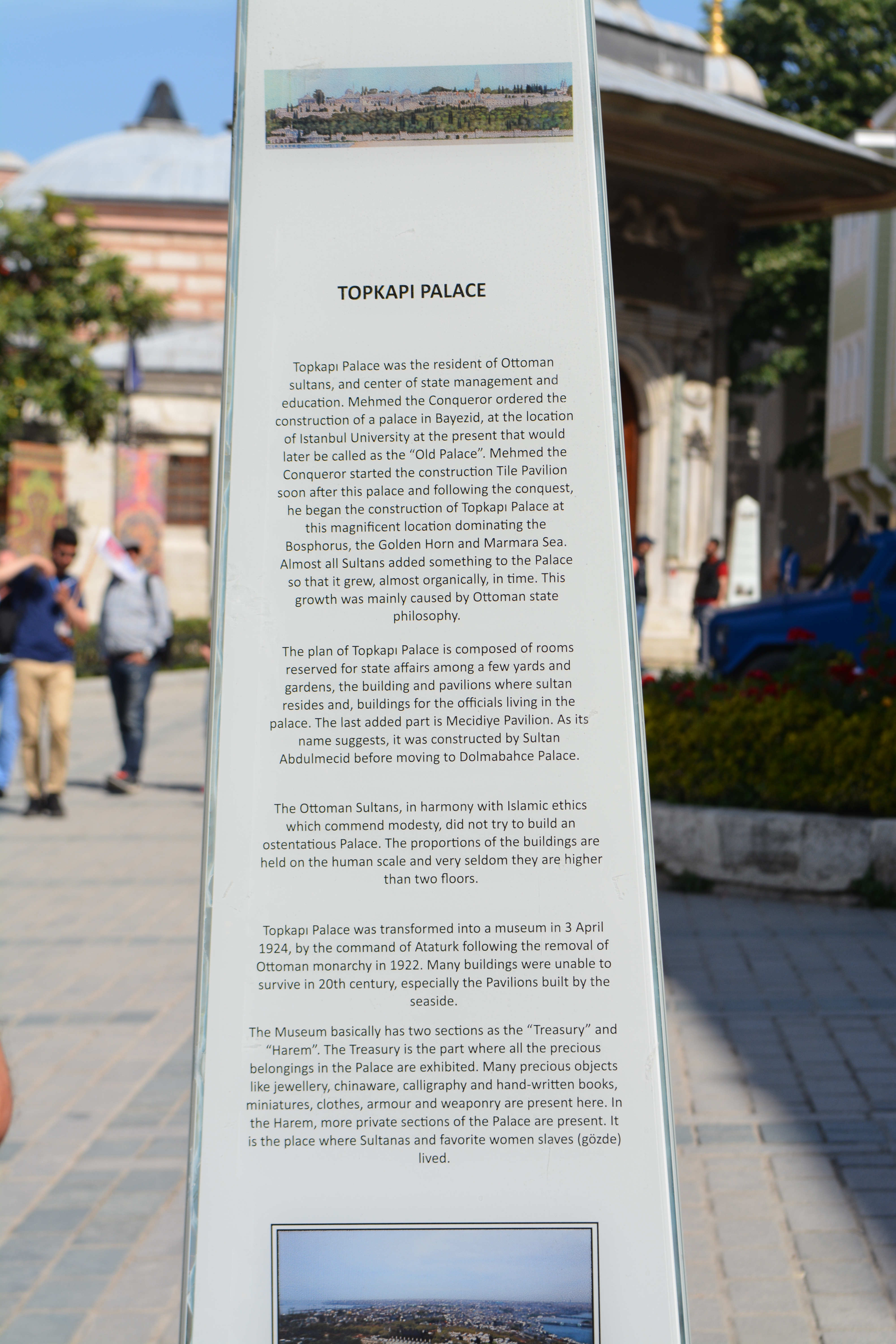
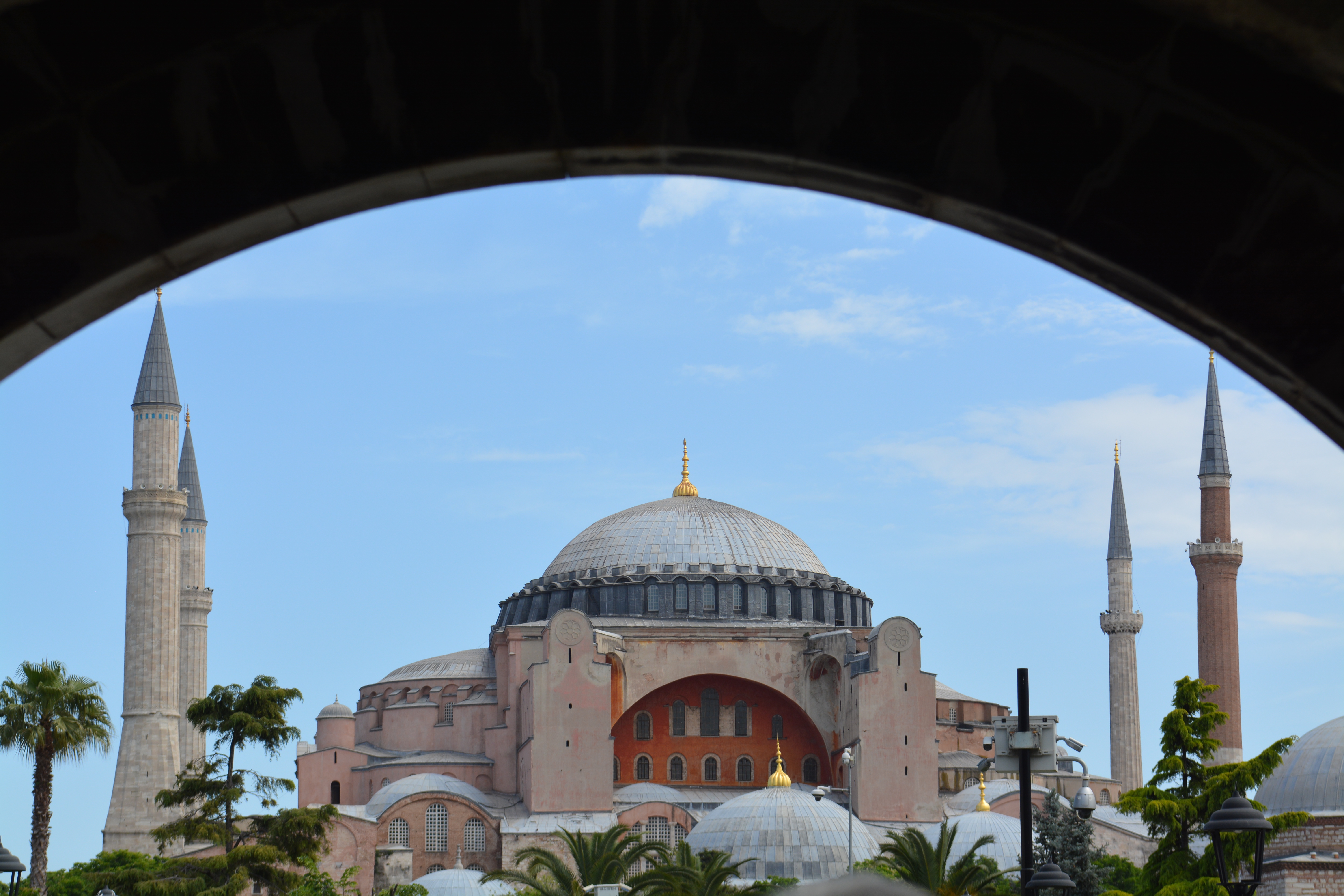
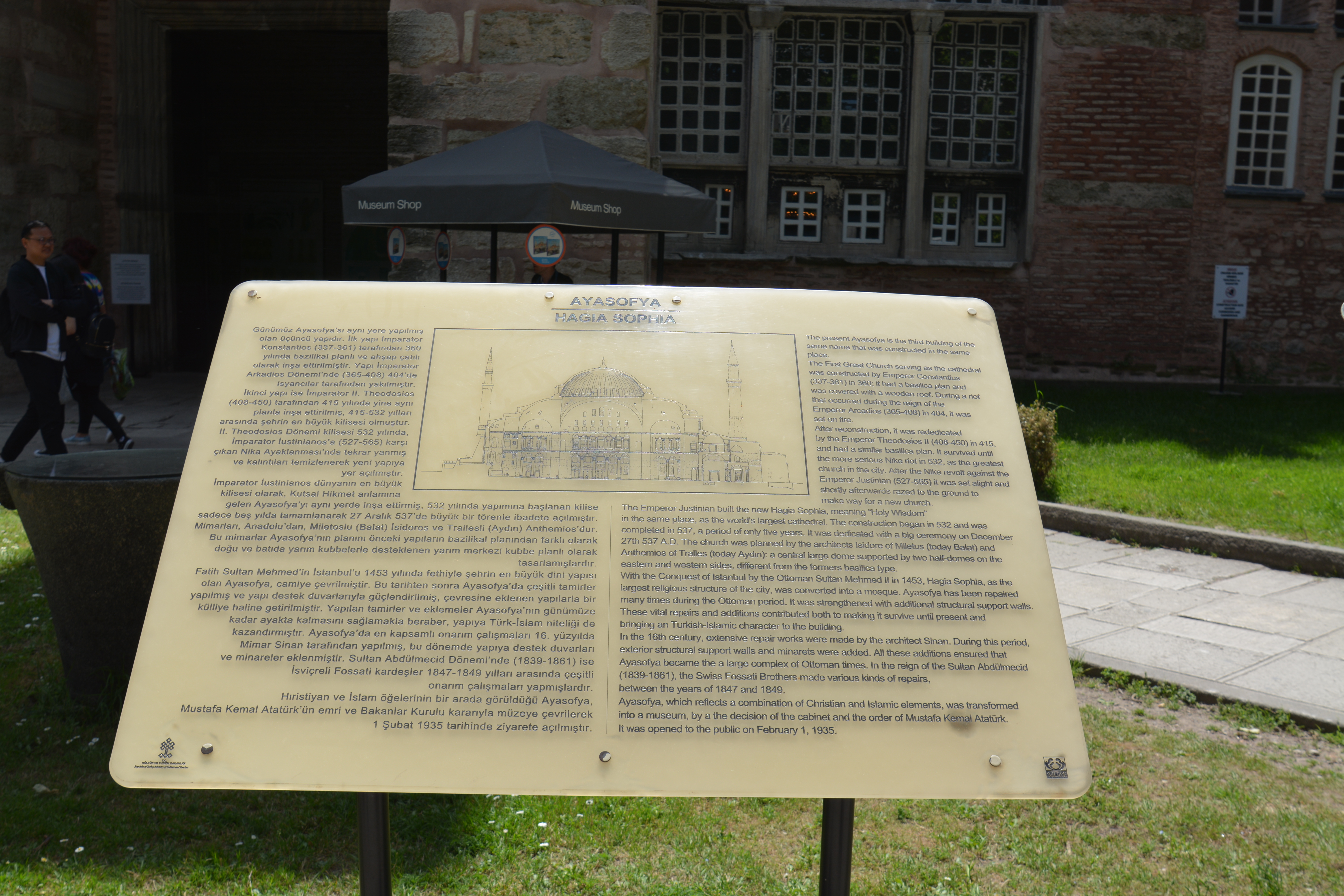
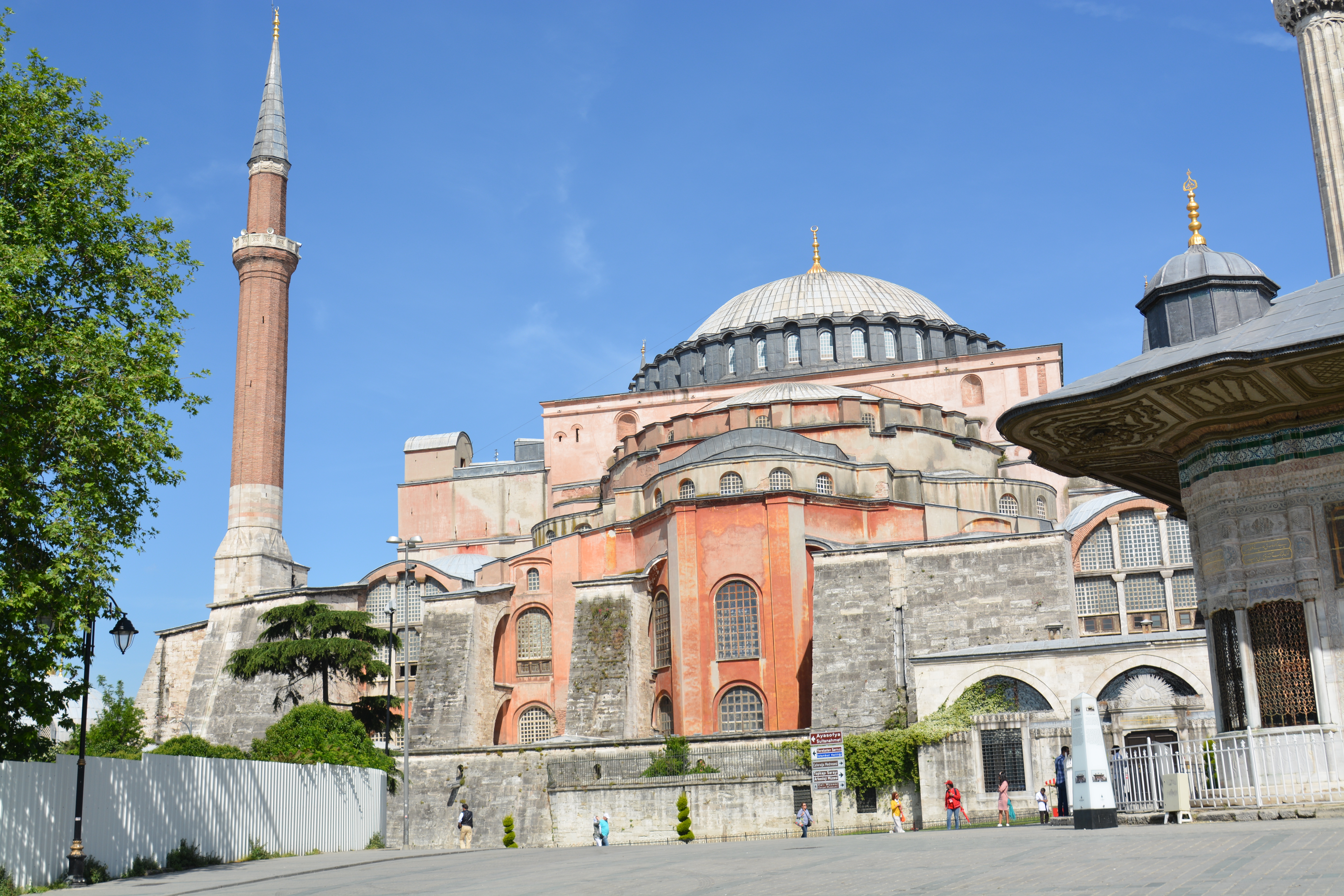
In 1923, Ataturk founded the republic as an independent and secular state.  Even before modern times, when Turkey is part of the Ottoman Empire, emphasis is on government’s independence from religion.  The Ottoman Empire’s history of diversity in religion is clearly shown by remains of Christian relics, churches, and seminaries in a tour of Turkey’s older cities, and towns.

Turkey is often perceived as a singular Islamic state.  Yes, over 98% of its population identifies itself as Muslim.  However, America’s population classifies itself as over 70% Christian.  Just as American government is not a theocracy, Turkish government is not defined by its religion. Turkey is not a theocracy like Iran, Afghanistan, Yemen, or Saudi Arabia. 

Neither America nor Turkey could deny religion’s influence on culture, but day to day life is primarily an economic; not religious struggle. 

Though one cannot deny Muslim cultural influence, Turkey tightly controls religious radicalization of its citizens.  Like America, the Turkish government has never been dominated by a religious faction. 

At worst, religion becomes a crutch used by both Turks and Americans to gather followers who desire power; not religious enlightenment.  At best, religion in both Turkey and America is a refuge from the hardship of life.

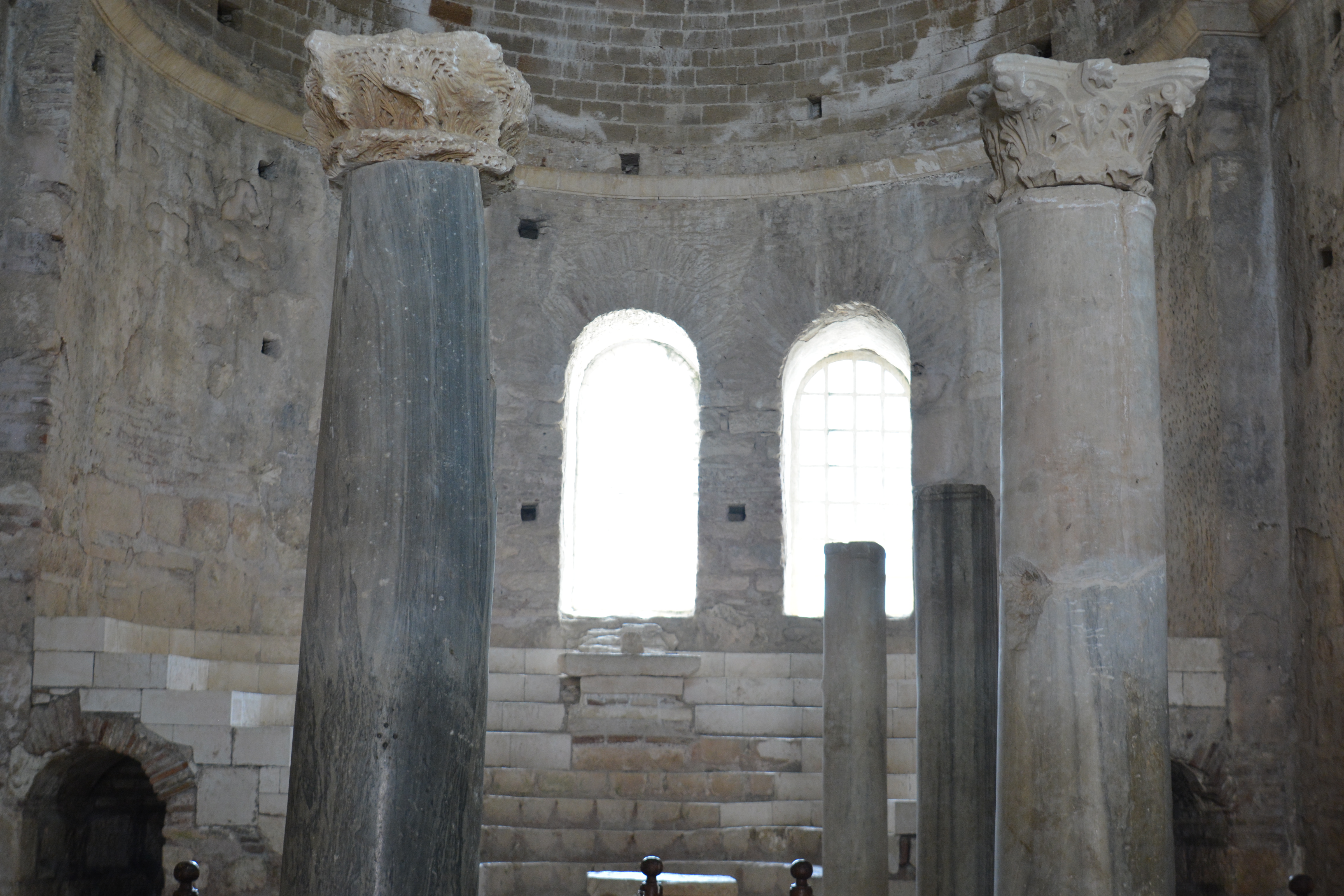
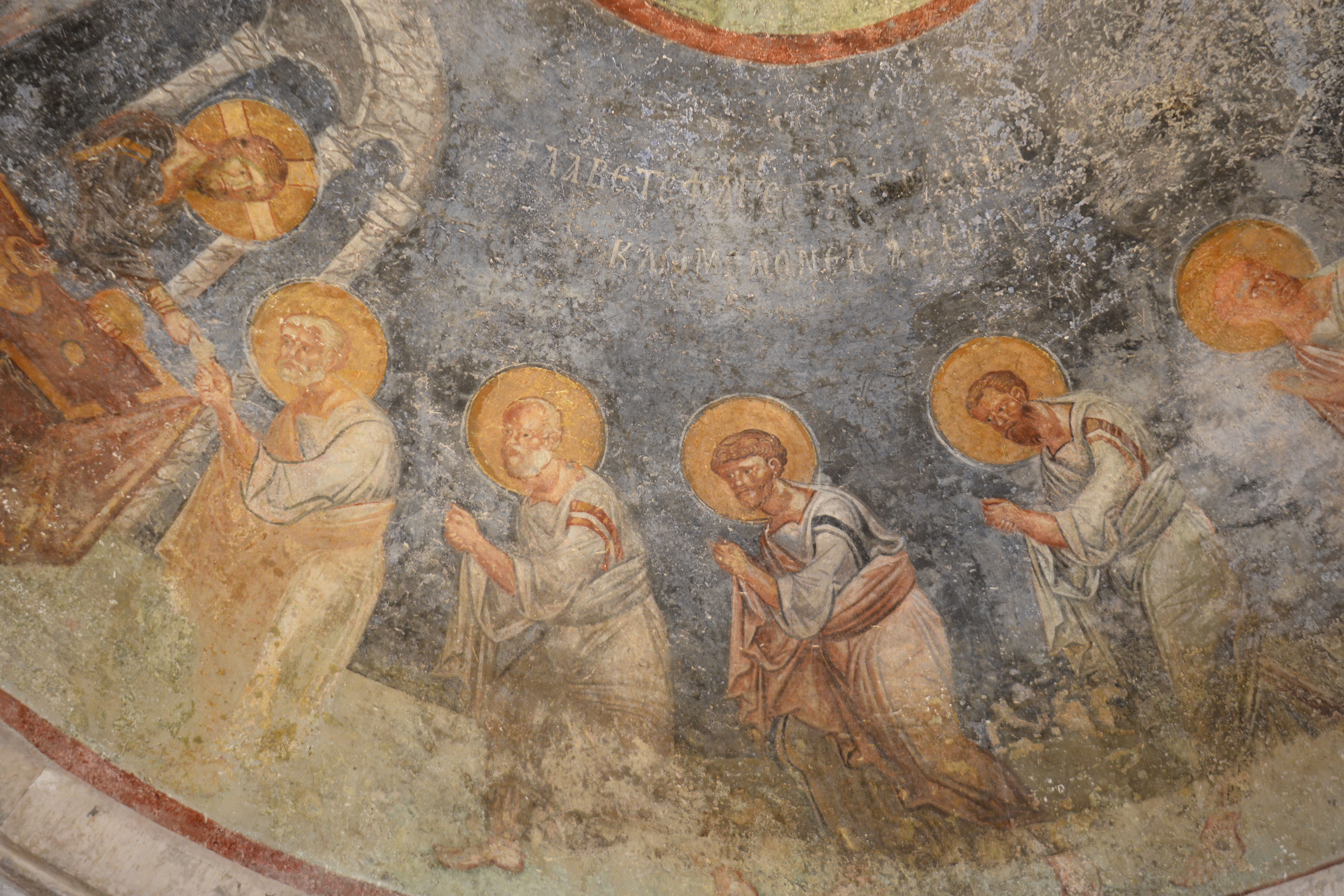
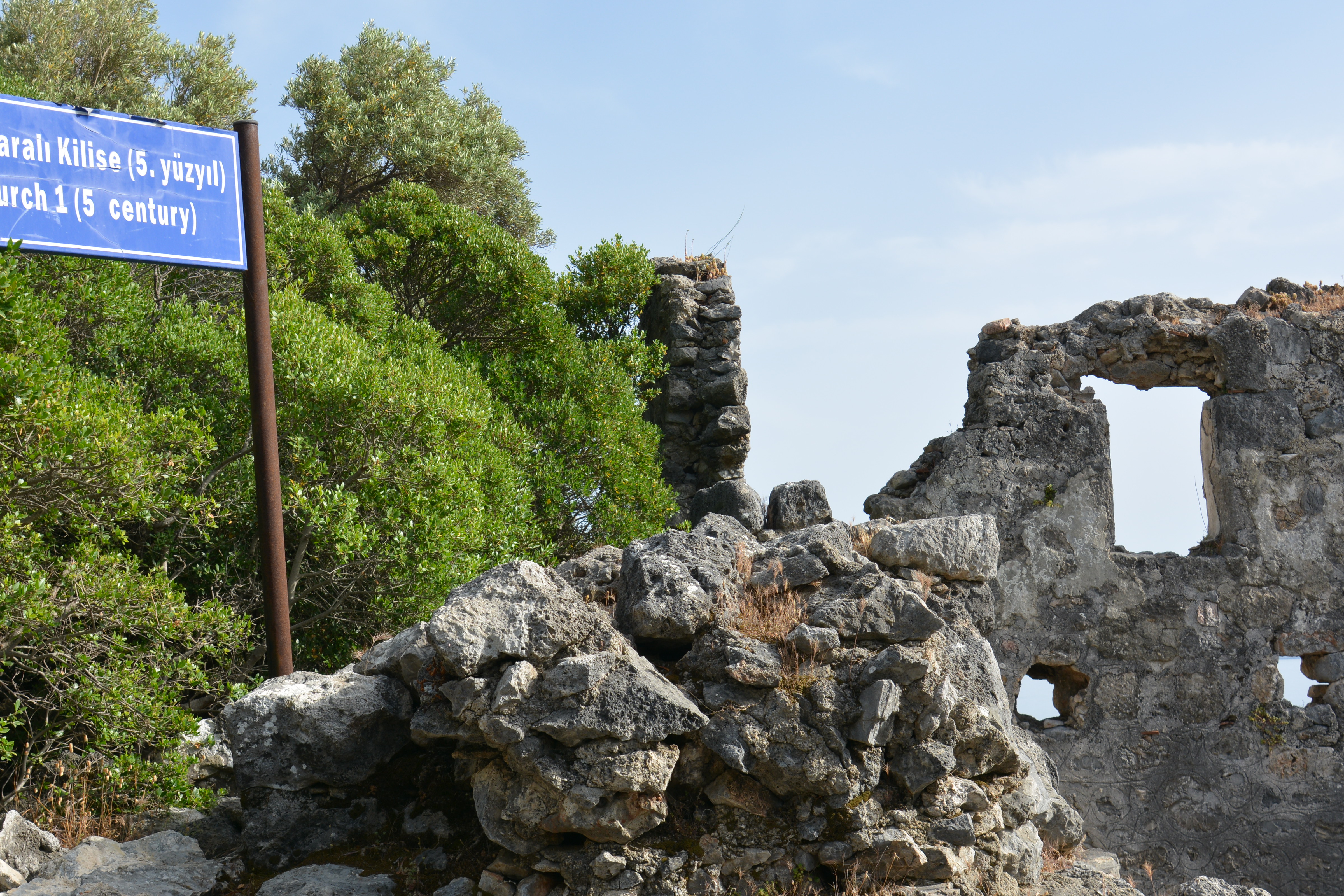
Ironically, the creation and evolution of a singular Christian faith is shown in many ancient Turkish sites.  At the time of the Greco/Roman era, when Christianity began its conversion of pagan and Jewish followers, many churches and monasteries dotted the Mediterranean coast of what became Turkey.  Religious Saints like Saint George, Nicholas, Stephen, Peter, Paul, and John were born or preached in Turkey. St. John spent the last 23 to 30 years of his life in Turkey. St. Paul visited Turkey in all three of his missionary journeys.

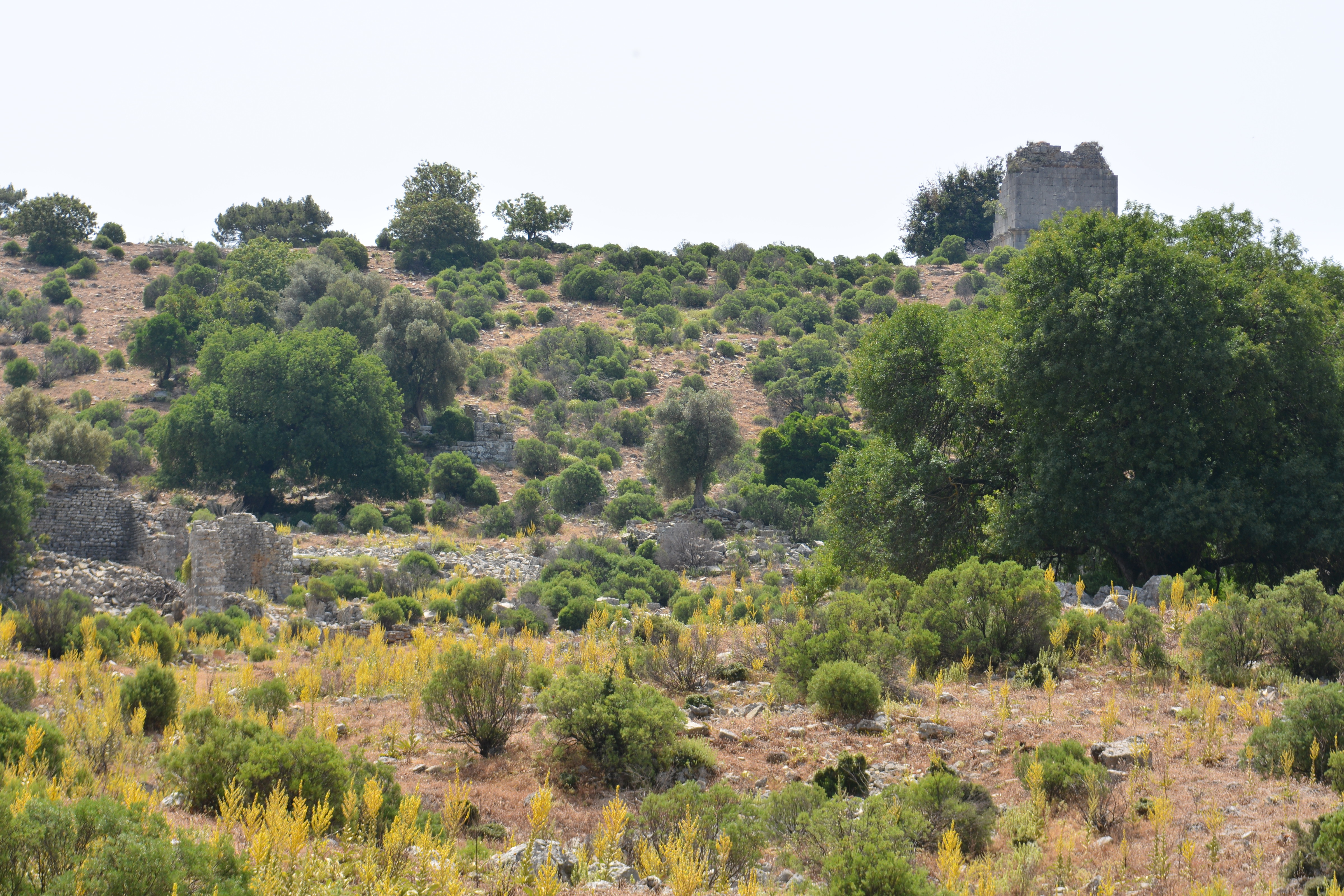
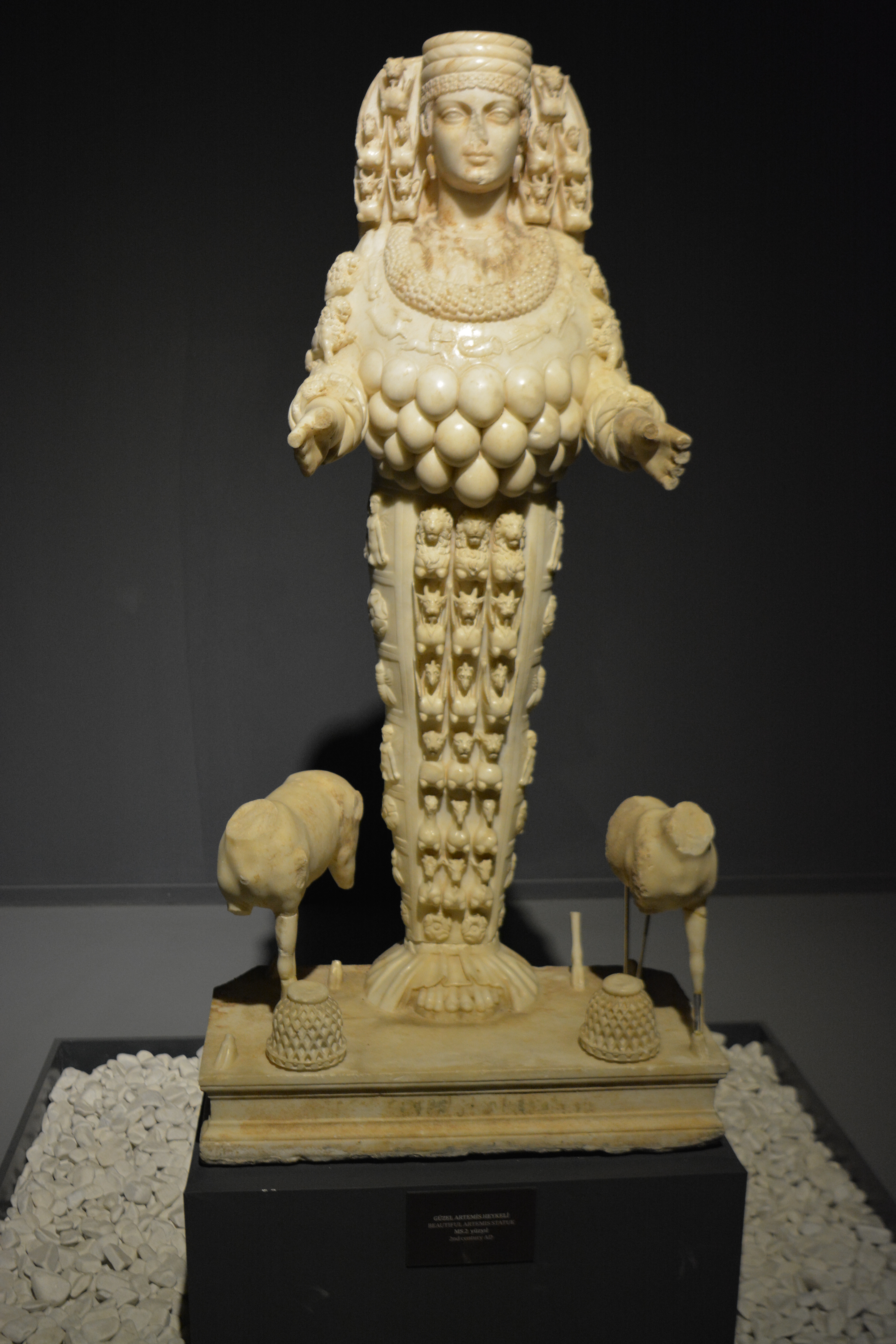
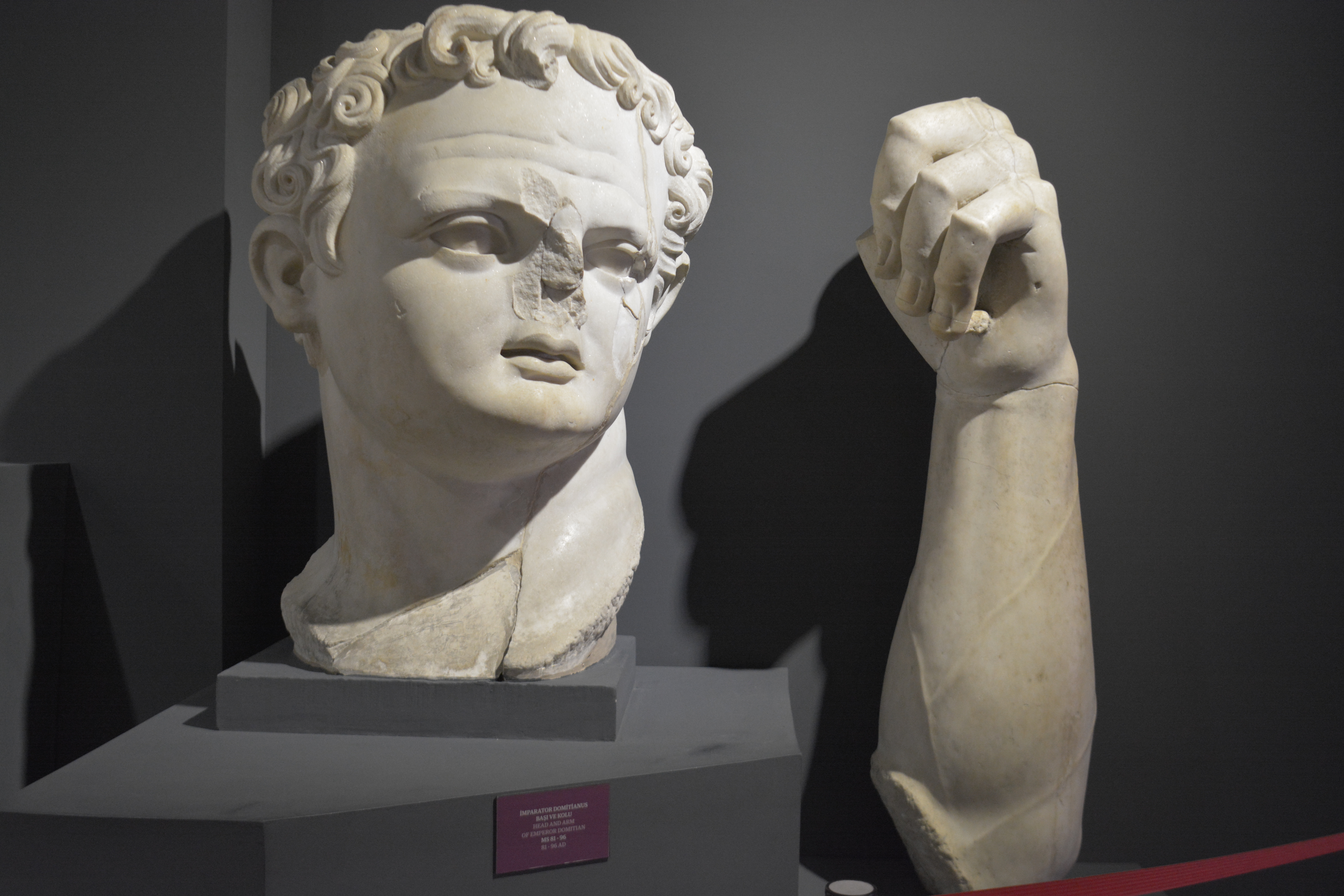
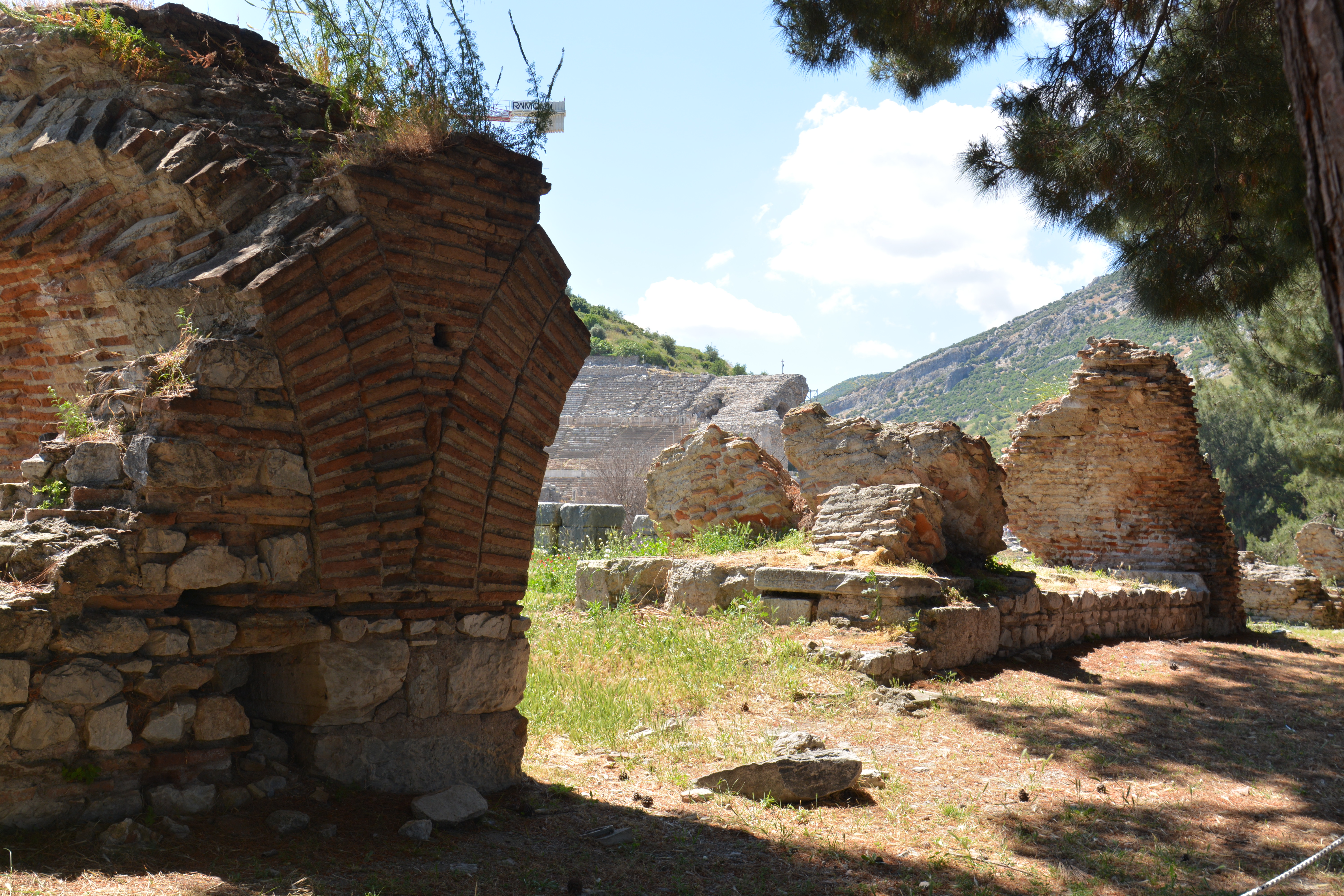
The history of Turkey, though not known by that name before the early twentieth century, goes back to the pre-Christian era.  Artifacts and relics of the past are everywhere in Turkey.  Some reflect on an age before Christianity.  Most reflect on the world’s conversion from pagan belief of many gods to belief in one God.

Aside from the extraordinary history of Turkey, our guide explains his view of current affairs.  We pepper our guide with many inane, and a few (hopefully) interesting questions.  The following paragraphs are personal opinions rather than objective truths of what modern Turkey looks like.

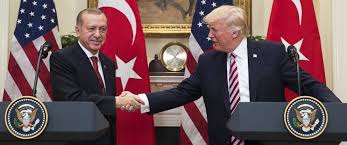
Ruling Turkey, as is true of all nations, is complicated.  The current leader of Turkey is President Recep Tayip Erdogan.  He is not the first popularly elected head of state (there was Menderes in the 50 s, Demirel in the 70 s, and Ozal twice in the 20th century), but Erdogan is the first popularly elected President in Turkey’s 21st century.

Like a lion tamer, Erdogan manages his country with one lion on the right; one on the left, and his country’s lion in the middle.  Russia, China, India, Great Britain, the European Union, and the United States (among others) are important trading partners for Turkey.  Each country takes its position on the left and right in the lion’s cage, while the leader of Turkey focuses on the middle lion (Turkey’s citizens).

American news media suggest Erdogan is maneuvering to be the modern world’s Muslim leader. Two flaws in that ambition are Erdogan’s troubled economy and his reluctance to condemn China’s treatment of the Uighurs.

In 2022, Erdogan demonstrates his power and influence in international relations by using the tools of realpolitik in the Russia/Ukrainian war. As a NATO member state, Erdogan cleverly objects to Sweden’s and Finland’s application for membership.

According to the New York Times, Erdogan is not flatly vetoing the NATO application. By “sitting on the fence”, Erdogan places himself in a position that might lead to a negotiated peace between Russia and Ukraine.

An estimated 80% of Turkey’s energy comes from fossil fuels.  Gas and oil comprise most of that energy.  Significantly, more than 70% of that gas and oil is imported from Russia and Iraq, with Iran playing a major role.

The spat between the U.S. and Turkey over military equipment ignores the reality of Turkey’s energy and defense needs.  Russia and Iraq supply much of the energy Turkey needs for economic growth. Erdogan must walk a tight rope that offers a satisficing solution to two opposing world powers; Russia and the U.S., which are important players in Turkey’s future. 

One doubts President Trump cares about the realpolitik situation of Turkey’s leadership.

Nationalism is the order of the day for many world economic powers.  “America First” is Trump’s rallying cry. President Erdogan joins that nationalist movement with a revised Turkish constitution.

Erdogan changes the constitution to enhance Presidential control of government.  Like Trump, Erdogan attacks internal dissension by weakening checks and balances offered by other branches of government.

Because of Turkish Constitution changes, Erdogan acquires a more powerful and longer-term leadership role in government.  Though Erdogan is the first democratically elected President, his first elections show an anemic 36% and 47% winning vote for office, and less than 52% vote in his most recent election as President. 

In the case of Ataturk, his recommendation for democracy in Turkey was a moment of “do what I say; not what I do” because Ataturk came to, and retained, power without democratic election.  Multi-party democracy arrives in 1950 when the first truly democratic election is held., 12 years after Ataturk’s death.

Since its founding by Ataturk in 1923, Turkey has had a unitary form of government; i.e. a political organization with a central supreme form of government. However, the 2017 Constitution, adopted in a 2018 vote (some say, a controversial vote), weakens the judicial branch of the Turkish government. 

Erdogan became a political power as mayor of Istanbul from 1994 to 1998. In 2003, he became Prime Minister of Turkey. With changes in the Constitution, which is approved in 2018, Erdogan became Turkey’s first popularly elected President.  The parliamentary form of government in the pre-2018 Constitution changes the “head of state” from Prime Minister (a less powerful leadership position) to President of the Republic.  The significance of the change is that Erdogan can now serve up to two five-year terms. 

Erdogan’s recent imprisonment of alleged revolutionary conspirators is evidence of the judiciary’s weakened position. 

Without trial, and often because of association rather than volitional act, citizens are accused and jailed for a surmised conspiracy to overthrow the government.  The judiciary has been able to get some “guilt by association” prisoners released but it is a procedural, long term struggle; reminiscent of repressive government.  It can take months if not years for the falsely imprisoned to get a hearing before the court.

Erdogan voided Istanbul’s recent election for mayor. The voided election showed an 83.86% turn out with Ekrem Imamoglu getting 48.77% of the vote while the Erdogan party’ candidate received 48.16%

Erdogan’s seeming loss of support in Istanbul implies rising discontent with his leadership. 

A possible successor to Erdogan might be the Istanbul opposition-party’ candidate, Imamoglu, who seems to have been popularly elected in the voided election.

As Lord Acton, the historian, said “Power tends to corrupt, and absolute power corrupts absolutely.”  There is the risk that Erdogan is travelling down that road.  Some may argue the same for President Trump.  Erdogan’s position may be threatened at the next election if he persists in unjust incarcerations.  Add that to a weakening economy, and 2017’s change to popular elections, Erdogan may lose his second Presidential bid for office. 

AMERICAN WALL STREET JOURNAL ARTICLE PUBLISHED 6/14/2019:

To be fair, leadership of any popularly elected national government is difficult and complicated.  One must experience the complexity of democratic leadership to truly understand its difficulty.  America’s experience is that “check and balance” are an essential ingredient of good democratic government.  

Autocratic judgement by one leader may result in Stalinist purges with false arrests, torture, bogus confessions, and executions without a check and balance on Presidential fiat.  One wonders if Erdogan is as far-sighted as Mustafa Kemal Ataturk in recognizing the importance of democratic governance.

An interesting side note is Turkey’s interest in becoming a part of the European Union.  Based on the nationalist movement evidenced by Brexit and present/past expenditures of Turkey to secure their borders, it seems unlikely it will become part of the E.U. any time soon. 

Joining the E.U. may have economic value but nationalism gets in the way of practical economics, and open borders.

Our guide invited a Syrian refugee to tell us of his journey to Turkey across the Syrian border.  His story is harrowing in that he came with little, did not know the language, and had to rely on the kindness of Turkish citizens to survive.  He is a Kurd.  His family remains in Syria.

One final aside is the temporary housing afforded by Turkey to Syria refugees.

Some may presume Syrian refugees are as likely to be Isis revolutionaries as citizens escaping the terror of war.  The billions of dollars spent by Turkey to house these refugees, and close monitoring of citizen’s status as residents or refugees, offers hope that fleeing Syrians are being properly cared for and fairly treated.  All arms are taken from those crossing the border, but beliefs cannot be controlled.  No publicly revealed records are kept of any past actions of Syrian refugees.  Even without weapons, the power of ideas can resurrect Isis ambitions.

E.U. membership would offer some help in covering the cost of refugee camps, but current costs far exceed the amount offered by E.U. membership.  Some suggest E.U. membership is being denied to Turkey because of the size of its Muslim population.  This is an interesting but weak reason for denial because Turkey has always been a secular state. The irony of that concern is that open borders (required by E.U. membership) could mean Christians would return to Turkey after their WWI ejection.  How would the Turkish population feel about repatriation of the long absent Christians?

All of this E.U.’ conjecture seems moot because it seems likely that Turkey’s nationalists would reject any offer to join the E.U.  Maybe, when nationalism becomes less important, and people realize we are all part of the human race, there will be no borders between nations. Ha.

Our trip to Turkey is in our memories and hearts. Thank you Mustafa Kemal Topcu.  You represent your country with love, and show unwarranted respect for tourists’ foolish and impertinent questions.  Turkey is a beautiful country; with a remarkable history and welcoming people.

MYTH’S APPEAL

Audio-book Review
By Chet Yarbrough

(Blog:awalkingdelight)
Website: chetyarbrough.blog

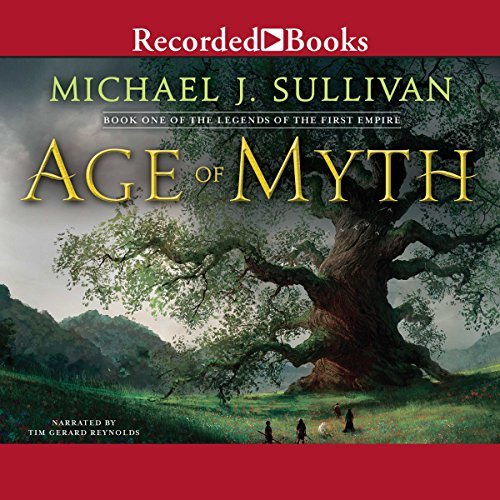
Age of Myth

Written by: Michael J. Sullivan

Narrated by: Derek Tim Gerard Reynolds

Fans anxiously wait for the finale of “Game of Thrones”. Why has this fascinating mythological story captured the world’s interest? Why listen to a book of fiction; particularly when freighted with supernatural events? Michael Sullivan offers an answer in “Age of Myth”.

It is the thrill of discovering a good story with characters one likes, or reviles. Tribal bravery, cowardice, betrayal, honor, and morality are crystallized in each chapter of Sullivan’s story.

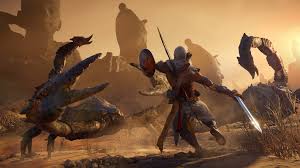
Sullivan begins and ends “Age of Myth” with battles. The beginning battle introduces Raithe, a killer of false gods (aka, the god killer). The god killer becomes protector of Persephone, the leader of a Rhune tribe. Persephone is introduced as the former 2nd chair of Dahl Rhen (a Rhune village). She is the widow of the deceased ruler of Dahl Rhen.

The ending battle produces Gryndal, a wielder of the black art. Gryndal is First Minister to the Fane (the Fane is leader of the Fhrey tribe). Gryndal can harness the forces of nature to destroy all that block his path to power. Gryndal’s obstacles are removed through guile, deception, and force.

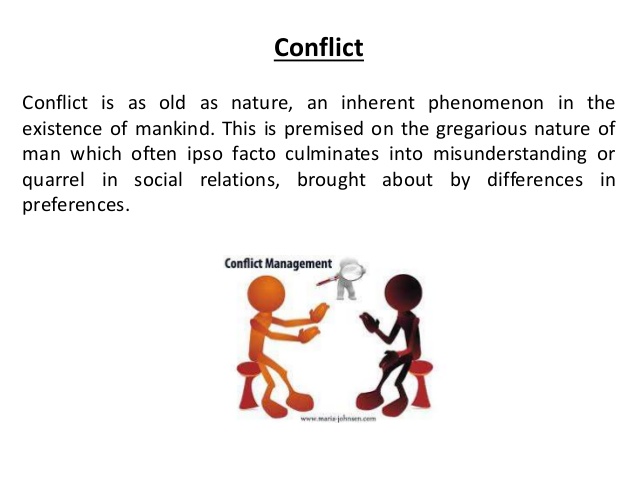
Sullivan’s characters represent a fundamental conflict in life. He describes an age of tribal war with all against all. Mysteries are explained while Sullivan tantalizingly ends the first book of the series.

Sullivan’s mythical world offers a slender hope for freedom and equality of all living things. This may be a myth, but it gladdens the heart and pleases the soul.