Graduate Oregon State University and Northern Illinois University,
Former City Manager, Corporate Vice President, General Contractor, Non-Profit Project Manager, occasional free lance writer and photographer for the Las Vegas Review Journal.
The value of Dorey-Stein’s memoir is how a twenty something adult makes his/her way in America. What Dorey-Stein reflects is not just for women. It reveals much about every human’s ambition to make their way in the world.
“From the Corner of the Oval” is a subjective view of the power and prestige of an American President. The President’s power is limited, and his prestige is largely manufactured by the media. However, Dorey-Stein’s story of aides who serve an American President is a journey of extraordinary privilege.
What will draw some to Dorey-Stein’s book is curiosity about what it is like to be an aide in an American Presidential Administration. Some of that curiosity is satisfied. “From the Corner of the Oval” offers a view of Barack Obama from the perspective of a true believer.
The universality of Dorey-Stein’s memoir is a magnification of what it is to be in your twenties, on your way to a future. Opportunity is presented to all people of the world, but few grasp its temporal significance. Only in reflection is lived experience understood.
In the beginning of adulthood, when one is on their own, they choose to do one thing or another to satisfy their need for fulfillment. Fulfillment is a measure of three things—acquisition of money, power, and some measure of prestige. Each of these measures are quantitatively and qualitatively different for every person.
Some desire money more than power, power more than prestige, or prestige more than money. It is a circle of insatiable desire.
Dorey-Stein writes of her experience as a woman in her twenties. She has experienced employment, loss of employment, search for new employment, reemployment, the luck (both good and bad) of sex as a single person, and partner infidelity as a perpetrator and victim. Many people in their twenties encounter these experiences. Dorey-Stein works through these experiences in her well-written and interesting memoir.
The seemingly worst part of her experience is infidelity. One concludes good and bad experiences are overcome by her position as aide in a Presidential administration, some close confidential friends, physical health, and her supportive parents.
Fidelity is a nearly insuperable difficulty for Dorey-Stein, just as it is for many human beings.
Sex is a biological necessity for continuation of any species. From puberty to your twenties through death, sex is present in practice or thought. Dorey-Stein shows the consequence of power and prestige mixed with a natural desire for sexual relationship.
Many may be appalled by the role money, power, and position play in genuine affection and love, but that is life. Along the way, Dorey-Stein gives her reader/listeners a seat in the oval office, Air Force One, and a tour of the world at government expense.
Jordan Ellenberg (Author, American mathematician, Professor of mathematics at University of Wisconsin-Madison).
Like listening to Brian Greene (a theoretical physicist), Jordan Ellenberg reminds one of what it must be like to be the smartest person in the room. One feels better from the experience of listening to “How Not to Be Wrong”, but understanding will be a struggle for most non-mathematicians. A non-mathematician leaves Ellenberg’s book better informed, if not entirely enlightened.
A non-mathematician may be hesitant to take Ellenberg’s book in hand. Ellenberg does not convince one that mathematics will always help one “…Not…Be Wrong”. However, Ellenberg convincingly argues mathematics will offer a better chance of being right.
Ellenberg is a professor of mathematics. He capsulizes mathematics as the language of science. He reveals how mathematics offers a qualified understanding of reality.
It is impossible to deny the validity of Ellenberg’s claim that mathematics is the language of science.
It is difficult to conceive of truth without mathematics because it provides a basis for repeatable experimental results. However, we live in a world of probabilities according to quantum mechanics. That implies mathematics cannot be the sole determinate of truth.
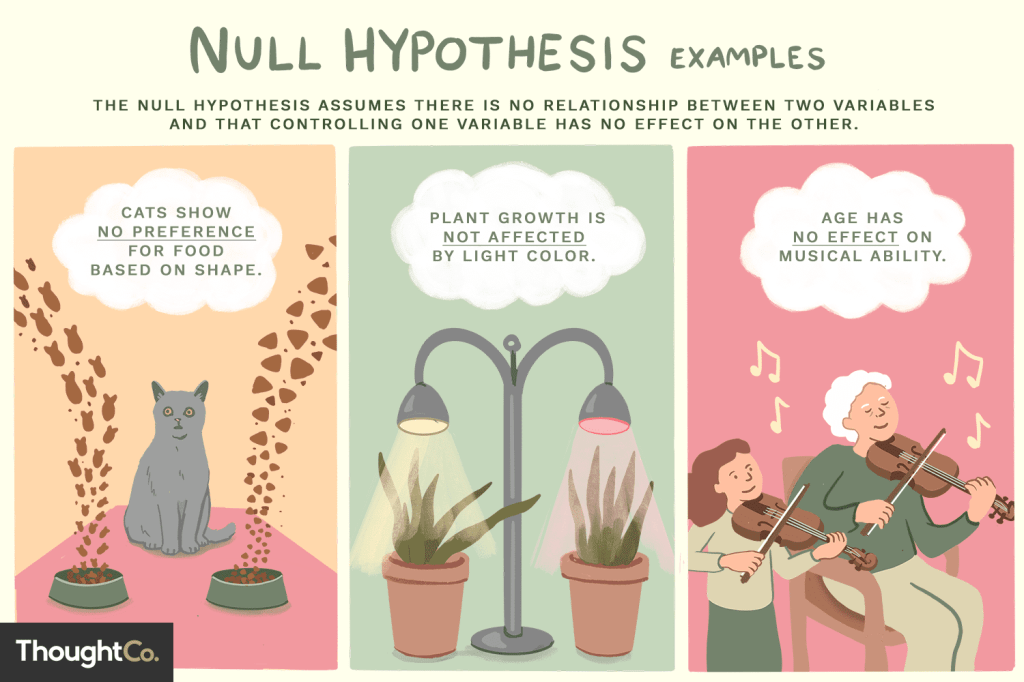
Ellenberg shows how “right” is qualified by mathematical proof. Like Brian Greene, Ellenberg shows how mathematics brings one closer to truth but only to the point of a “null hypothesis”. A null hypothesis is a repeatable experiment where there is zero (null) difference in results. Being right is dependent upon the same results from population samplings and relevant repeatable experiments.
What strikes at the heart of Ellenberg’s explanation of “How Not to Be Wrong” is human natures tendency to make events conform to plan. Human beings can lie to themselves.
Lying to oneself is the source of conspiracy theories based on the human strength and weakness of seeing patterns in nature. Perceived patterns from observation may or may not meet the criteria of a “null hypothesis”. Ellenberg suggests one should be skeptical of observed patterns that defy common sense.
What is disturbing about Ellenberg’s explanation of “How Not to Be Wrong” is that probability enters into the equation of truth.
This is the same fundamental law noted by theoretical physicists like Brian Greene. With the use of mathematics as the language of science, one can only expect a probability of truth: not certainty.
Ellenberg notes one must keep in mind–not being wrong is entirely different from being right. Determination of whether one is right or wrong is two-edged where one edge offers a probability of being right while the other implies possibility of being wrong. The uncertainty of probability is a lighted match that can burn down a forest of science.
That match is fanned into a flame by those who disparage all of science because of revised theories based on newly discovered facts. As an example–our recent experience with the former President of the United States who discredited the science of masking and distancing during the Covid 19 pandemic.
Ellenberg gives numerous examples of people who are misled by population sampling and the concept of correlation. Human nature often misleads people to see patterns where cause is unrelated to effect. Ellenberg argues that better understanding of mathematics can teach humans “How Not to Be Wrong”.
Being right is always qualified by some level of probability. Ellenberg explains repeatable experiment, with a level of consistency in mathematical proofs, is our way of not being wrong. Good to know, but daunting to achieve when mathematics is the only avenue for understanding.
Don’t we all want to know “How Not to Be Wrong”? Is the language of mathematics the only avenue for understanding? Therein lies the fear of realizing you are not the smartest person in the room.
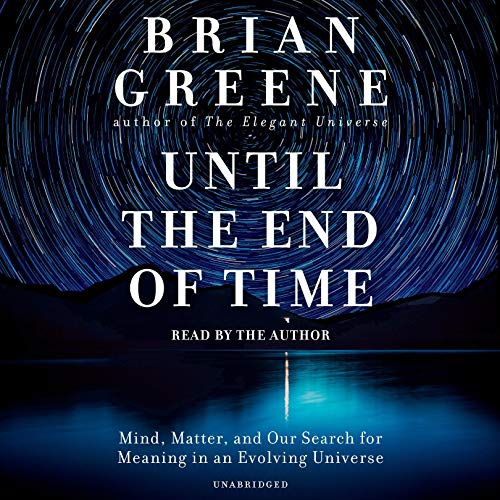
There is a great deal to unpack in Brian Greene’s “Until the End of Time”. As is true of many of Greene’s scientific observations, much of his self-effacing intelligence and science-based opinion is lost in the ignorance of his listeners, not to mention this listener. However, where Greene’s beliefs intersect with one’s limited knowledge, his theory of the ending of time and life is immensely rewarding and enlightening.
Greene does not argue there is no God. However, he suggests modern science shows there is no reason for God to exist to create life.
To Greene, there is more verifiable proof of life in science than verifiable proof of God in either science or religion.
In Greene’s thought, God and religion may have a great deal to do with sustaining human life, but in ways more sociological than religious. Weather one is a believer, atheist, or agnostic makes no difference to Greene. He carefully constructs an explanation of how science shows life may have come into existence, why stories of life may explain belief in God, and why humans are fundamentally different from other forms of life. The fundamental point of “…the End of Time” has to do with human mortality. Human mortality lies at the core of Greene’s view of time and life.
Greene suggests the laws of physics founded by luminaries like Newton, Einstein, Heisenberg, Bohr, and Erwin Schrodinger offer evidence for the basis for life on earth, with or without God. Greene explains the principle of thermodynamics, the fundamental science of energy that creates and sustains life.
Greene explains–the physics of energy (thermodynamics) ensures eventual death. All life is pre-determined by the fundamental law of entropy. The fate of time and life began with a bang. This singular event disbursed tightly organized atomistic particles into a continually less organized space.
Greene notes that all forms of life are subject to entropy, a gradual decline from order to disorder. Greene argues that entropy acts at an atomistic level to determine the fate of all living things. Greene suggest laws of quantum mechanics determine the course of life for all “living” things.
To Greene, humankind is free to make choices. However, he argues humankind does not have free will. The physics of science show that all living things cannot choose to live forever. Humans can choose how to live, what to think, who to love, who to hate but they cannot choose one Nano second longer than what is dictated by the fundamental law of entropy.
Greene notes the science of Darwinian evolution and genetic inheritance is a relevant reinforcement of his argument for the inevitable extinction of life. The entropy accompanying human habitation is evident in pollution of the air we breath and the water we drink. (Though Greene does not address advances in genetic inheritance through gene manipulation, genetic manipulation does not negate Greene’s overriding concept of entropy.)
Just as earth’s environment slowly degrades, genetic inheritance as a process will eventually lead to extinction. Humans, just as dinosaur’s, sabre tooth tigers, and Dodo birds will disappear. All life adapts to change until the speed of environmental change becomes greater than the speed of evolutionary adaptation.
Greene agues humankind’s recognition of mortality shapes lives as consequentially as evolution. The significance of Greene’s argument is that religion is founded on acknowledgement of eventual death. Knowing that one cannot live forever, creates the desire for something beyond death. Greene elaborates by arguing that human lack of control over natural events compels creation of stories about a Supreme Being. *
The big picture in “Until the End of Time” is that the world and life is heading for an end. Based on the science of physics, there is an “…End of Time” for humankind, based on the immutable and experimentally proven laws of thermodynamics. Entropy is evident in the science of quantum mechanics (the physical properties of nature at the scale of atoms and subatomic particles), and the science of a continually expanding universe.
What does this mean to us? Humans still make their own choices on how to live, love, and hate in their lifetimes. The singer, Bobby McFerrin, suggests “Don’t Worry Be Happy”. Others suggest the meaning of life is to live in the moment. Brian Greene suggests it is up to you. Our lives and death may be pre-determined, but we have freedom to choose how we live, love, and work.
In re-thinking Greene’s belief in the physics of entropy, one wonders about the concept of energy never being destroyed. Einstein’s formula of E=MC2 implies our corporal bodies may die but atoms transmogrify. What does that suggest about the entropy of human life?
* Greene acknowledges the slim possibility of Devine existence but considers it much less probable based on the discipline of science and the existence of entropy. Greene does not discount the comfort religion offers humankind, including the rituals that help one cope with life and the passing of loved ones.
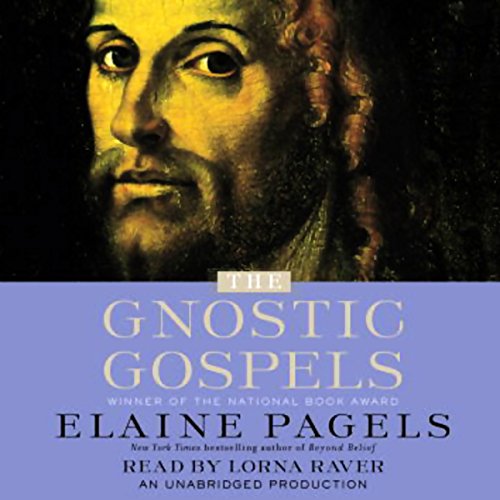
Elaine Pagels is a Professor of Religion at Princeton University. She has a Ph.D. in religion from Harvard University. Modern Library calls Pagels’ book, “The Gnostic Gospels” one of the 100 most important books of the twentieth century.
Like the beginning of a story of adventure and mystery, Pagels recounts the discovery of a fifty-two text collection of papyrus sheets recounting the beginnings of the Christian church.
For all religious organizations and particularly the Christian church, “The Gnostic Gospels” shakes the foundation of institutional religion.
According to Pagels, the Coptic text of “The Gnostic Gospels” show that in the near-beginnings of the Christian religion there were questions about who Jesus was and what he was about.
Was Jesus simply a prophet or the Son of God?
Was he preaching for the creation of a religion ?
Were historical facts manipulated to create a religious hierarchal institution?
Was Mary Magdalene a conjugal companion or disciple?
Pagels’ interpretation of “The Gnostic Gospels” suggests Jesus was a prophet; that his life story was manipulated to create a religious hierarchal institution, and that Mary Magdalene was a disciple.
A fundamental theme of “The Gnostic Gospels” is that the “Kingdom of God” is present within every human being, then and now, and that self-knowledge is the source of admittance to grace.
If one believes this teaching, it does not mean one must abandon organized religion but it redefines the role of the church.
Pagels’ interpretation of the “Gnostic Gospels” implies the role of the church is not to ritualize admittance to the “Kingdom of God” by christening mankind or bludgeoning all who do not accept a church’s vision of religion.
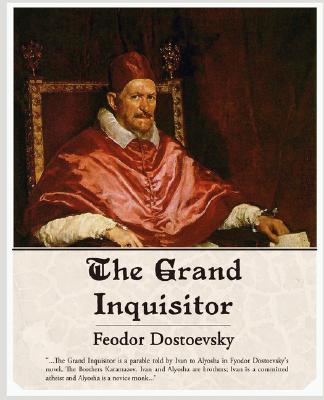
It suggests the church’s role is to aid personal revelation. Maybe Dostoevsky’s parable of “The Grand Inquisitor” is more insight than imagination.
Doubt remains at the conclusion of “The Gnostic Gospels”, even after reading Pagels’ insightful interpretation. Gnostic documentation is distant from “witnesses to the truth”. “The Gnostic Gospels” were written 300 or 400 years after Jesus’s time.
Re-listening reprises its deeply religious overtone and its depiction of how some novelists view and reinforce inequality of the sexes.
Vasily Kachalov as Ivan Karmazov.
The role of religion in life is vivified by Ivan Karamazov, the 4th son and brother of the Karamazov family.
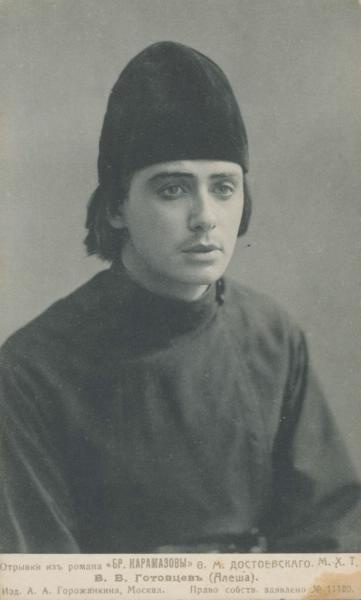
Depiction of Alyosha Karamazov.
Ivan tells his youngest brother, Alyosha, of an imagined poem. It is named “The Grand Inquisitor”. It is a story of the return of Christ noted in the Christian bible as the second coming.
Ivan offers a societal interpretation of the concept of God in his narrative poem. He explains to his brother Alyosha–if the Son of God returns to earth and shows his divinity through miracle, the returning Christ would be captured by church elders and rejected as humankind’s Savior.
Christ’s capturer in Ivan’s poem is a wizened bishop (the Grand Inquisitor) who explains faith is more important than the second coming.
The bishop explains the Church is commissioned by Christ’s Father to rule the world. With God’s commission, “The Grand Inquisitor” argues the Church dutifully manages human sin and confession. The inference is that a “second coming” will not successfully eradicate human sin because it is ineradicable.
The bishop argues the return of Christ is not as important as the church’s management of sin and its gift of hope to the people of the world.
In contradiction of Ivan’s poem and his societal interpretation of religion, Dostoevsky creates Father Zosima. Zosima tells his life story as a relatively wealthy young military officer who becomes a venerated monk.
Despite a secular life of sin, Zosima requests forgiveness from those he has sinned against. Because of his spiritual awakening, Zosima requests forgiveness, and with the help of a stranger’s confession, reconciles and accepts the word of God.
Zosima recalls the truth of God who tests Job’s faith by allowing the devil to take all his earthly wealth, health, and family. Job never gives up his faith in God. Zosima recounts reconciliation and forgiveness of Joseph’s brothers who sold him into slavery. Zosima commits his remaining life to God with these two biblical parables. Zosima’s life story foreshadows Ivan’s conversion from belief in the “…Grand Inquisitor” to belief in God’s truth.
Parable of Joseph
For God’s believers, Dostoevsky argues the world will change just as Zosima changed. The change will come from salvation based on repentance, confession, and acceptance of God’s truth.
Dostoevsky suggests God’s truth is that no one should stand in judgement over another, each should pray for theirs, and their brother’s redemption. Zosima argues this change will come upon the world gradually based on a growing diminution of the human desire for money, power, and prestige. Care for others becomes as great as care for oneself. To Dostoevsky, this is an evolutionary imperative based on the biblical word of God.
The truth Zosima refers to is that all men are created equal, they should be treated with respect, and forgiven for their inevitable sins.
A blaring irony of “The Brothers Karamazov” is the reprehensible characterization of women. Dostoevsky’s vision is patriarchal. Women bare children keep the house and obey their husbands. There is no room for women’s equality. They are a mere rib of Man.
One might argue there has been progress for women since the 19th century, but women are still battered, women are generally paid less than men for the same work, and women are often treated like slaves.
“The Brothers Karamazov” is a classic. It is prescient for these times. One might argue that more attention is being given today to sexual, ethnic, religious, and racial inequality. However, progress is slow. America has taken many steps back, and few steps forward.
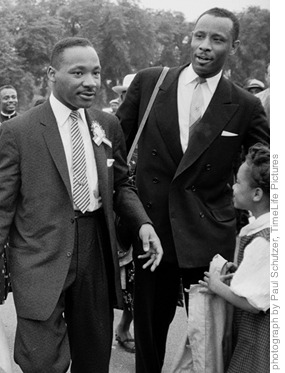
Dostoevsky’s “…Brothers Karamazov” is a reminder of Martin Luther King, Jr’s quote— “the arc of the moral universe is long, but it bends toward justice.” Maybe, but this generation doubts its truth.
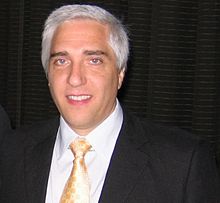
STEVEN NOVELLA (AMERICAN CLINICAL NEUROLOGIST, ASST. PROFESSOR AT YALE UNIVERSITY SCHOOL OF MEDICINE)
Many listener/readers will be disappointed, if not outraged, by Steven Novella’s criticism of alternative medicine and medical treatments. He notes that many such treatments are untested by properly conducted experiment, and replication. He notes many alleged medical treatments and cures either fail clinical tests or are not tested at all.
The significance of Novella’s argument strikes at the heart of anecdotal evidence used to advertise unproven cures for minor, as well as major medical conditions. With freedom of advertising, unproven claims of miracle cures are fed to the public. Their claims are to improve health for everything from fatigue, to joint pain, to erectile dysfunction.
Over the counter supplements and game playing are alleged to improve health and memory. Their only proof is anecdotal experience. Some advertisements of the OTC’ treatments claim to improve memory, abate Alzheimer’s, and reduce the negative effect of dementia. Support in the media comes from anecdotal stories from users of these alleged remedies.
One of the most heavily advertised health supplements for brain health today is Prevagen. Prevagen is dosed with a protein found in jelly fish.
Novella takes on the vitamin and herbal industry by noting vitamin supplements, plant and animal extracts are an unregulated industry. The FDA gives free reign to manufacturers, advertisers, and sellers of supplements which:
1) vary dramatically in their alleged ingredients, and
2) have no clinically proven benefits.
Novella explains (and most have heard this) that a balanced diet is the best prescription for healthy living. Novella notes the only exception is when there is a vitamin deficiency revealed in a blood test.
Many OTC drugs are supported by lab-coat wearing and white-shirt-and-tie actors. No reputable clinical trials are required to sell Ginkgo Biloba, Ginseng, Echinacea, and other herbal medicines.
Next, Novella takes on the Chiropractic and Acupuncture industry. Novella argues these two industries have never had clinically proven benefits. Novella implies Chiropractors talk of “vertebral subluxation” as a cause for disease that can be cured with manipulation of the body. He suggests that is quackery. Novella implies this is junk science foisted on an unwary public. No clinically reproducible experiments of this Chiropractic diagnosis and treatment have proven such a claim. Novella attacks the validity of acupuncture with the same argument. His conclusion is that any positive results are from the placebo effect, not from clinically reproduceable tests.
The body naturally fights disease with one’s own immune system. People get better and feel better because their immune system cured them. Novella explains feeling better after taking a herbal supplement may be a result of the placebo effect. Feeling better is reinforced by testimonials of those who say it worked for him or her. The obvious risk of the placebo effect is that someone who needs medical treatment will choose an alternative medicine that delays proper treatment by a qualified medical professional.
Novella suggests feeling better is not a measure of efficacy. Feeling better may be from getting over an illness.
The public is forearmed by Novella’s critique of alternative medicine. Be skeptical about what your friend, an acquaintance, a mother, a sister, a brother suggests is a remedy for your malady. Be particularly skeptical of an industry unsupervised by the FDA. Everyone should be wary of unqualified medical treatment, prescribed medicines, vitamins, and herbs. Companies in the field of alternative medicine are not in the business for your health. They are in the business of making money.
It seems prudent to suggest one should reserve a measure of skepticism for all purveyors of cures, even medical professionals. As is true of all humans, medical professionals can be seduced by the desire for money, power, and prestige–even at the expense of those who seek care.
This book is written before Covid19. Politicization of science is a danger to humanity. Science is never perfectly right. There should always be some level of skepticism about new medical or drug treatments. Freedom to choose whether one should get a jab for Covid19 pales in comparison to death statistics of those who ignore the science.
After listening/reading Novella’s book, it seems prudent to be skeptical of all who prescribe cures for mental and physical illness. However, death statistics from Covid19 are compelling evidence to prove those who choose not to get the jab threaten the lives of others, not just themselves.
Bruce E. Fleury (Professor of Practice in the Dept. of Ecology and Evolutionary Biology at Tulane University)
“Mysteries of the Microscopic World” is a reflection on the “The Invisible Realm”, the world of bacteria, viruses, fungi, and protozoa.
It is somewhat dated because of today’s history of Covid19. However, Fleury offers a modern understanding of pandemics and the role germs play in human life.
Antonie van Leeuwenhoek (1632-1723)
Fleury explores a world unseen until the 17th century. Antony van Leeuwenhoek is identified as the first to see the “…Microscopic World” in 1683.
However, the microscopic world was not considered important until the 19th century when puerperal fever was found to be caused by germs. A germ theory of disease originated with Ignaz Semmelweis, a Hungarian physician in the 1840s. Many babies were dying from puerperal fever because doctors were going straight from deceased patients’ autopsies to delivery operating rooms.
An interesting side note by Fleury is Semmelweis’s germ theory required careful hand washing before delivering babies. Washing hands is still not carefully followed, even by the medical profession. Fleury suggests only 50% of doctors and nurses properly wash their hands.
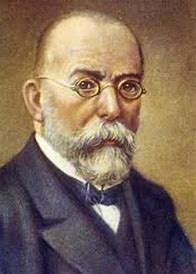
In the late 1850s Louis Pasteur suggested the spread of microorganisms (germs) could explain infectious disease. Pasteur, and later Robert Koch, began to isolate bacteria of diseases like anthrax, TB, and cholera. The race for understanding the microscopic world’s relationship to disease is launched.
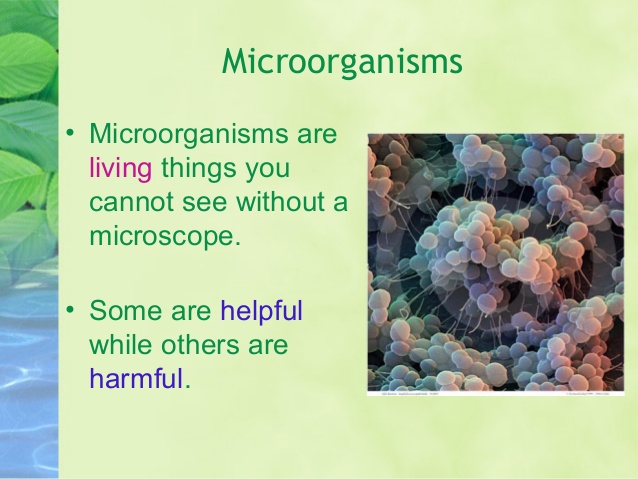
Fleury explains this microscopic world is not only a disease producer. It also aids human existence by offering microorganisms that get rid of wastes and remove toxic chemicals from the body. Fleury notes some humans die from microorganisms, but they cannot live without them.
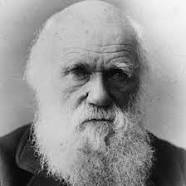
Fleury explains how the microscopic world follows the same Darwinian evolutionary path as the macroscopic world. The microscopic world, like the animal world, evolves with random adaptation that sustains all life.
The two edges of this microscopic world can cure or kill. Fleury explains how this unseen world evolves in the same way the animal kingdom evolves. Today’s Covid19 virus changes to preserve itself. Covid19 evolves like any life force to become resistant to current drug treatment. Pfizer and other drug manufacturers are tasked with modification of their drug formulas to defeat viral and bacterial evolution.
In Fleury’s history of pandemics, listeners/readers will find interesting facts that parallel today’s Covid19’ experience. A striking parallel is the 1918 Flu pandemic. It killed an estimated 50-100 million people.
Today the world has lost over 2.5 million people from Covid19, but it pales against the 1918 pandemic’ loss of an estimated 50 to 100 million people.
The 1918 world population is estimated at 1.8 billion. The world’s population today is at 7.674 billion, over a six-fold increase. Today’s 2.5 million people lost from Covid19 could become several times greater based on today’s population.
This reminds one of the Texas and Mississippi governors’ choice to return to business as usual with no mask mandates and reopened businesses.
It may be that medical science and vaccination is so much better today than in 1918, but these governors are gambling with American lives. Covid19 may kill many more.
Fleury reminds reader/listeners of the history of wars and how the microscopic world of poisons, and disease-producing germs were used to defeat combatants. He notes how small armies were able to defeat large armies. Fleury tells stories of smaller military forces throwing bags filled with poisonous snakes into enemy camps to create chaos and death, lethal gas use in explosive devices that are thrown into enemy foxholes, and deadly smallpox impregnated blankets given to native Americans by American settlers. He notes how small expeditionary invasions decimated empires by introducing germs that came from their home countries. Explorers and soldiers were carriers of germs that had never been seen in the new world. Millions have died from this newly weaponized unseen world. Fleury notes that biological research and warfare are ongoing threats to the human race.
In the Sunday NYT’s on 3/7/21, an article criticizes the use of public funds to stockpile an Anthrax vaccine when so many problems have arisen in the fight against Covid19. The complaint largely revolves around one company’s high profitability and government influence in preparing an anthrax antidote stockpile to protect against biological attack by terrorists.
Fleury notes that anthrax bacterium is “…a perennial favorite in every nation’s biological arsenal.” Anthrax causes a rapid and painful death within 12-24 hours and the bacterium can last for 40-80 years in soil.
One has to wonder why can’t government “chew gum and walk” at the same time. Stockpiling an Anthrax antidote and being prepared for a Covid19 type of pandemic could be done at the same time. After all, America is the richest nation in the world.
Many presume Aids has been cured because it is not in the press like it used to be. Something not widely known is that Aids has no known cure. It remains a killer. Only palliative treatment has been found to extend life and Fleury notes the treatment is quite expensive. Aids is caused by a germ that attacks the immune system. It is introduced through sexual contact or re-use of hypodermic needles.
Aids eventually kills nearly all Aids carriers, either from cancer or some other disease that takes advantage of a carrier’s compromised immune system. Fleury notes an exception is a small minority of carriers with a genetic variation that allows them to live a long life.
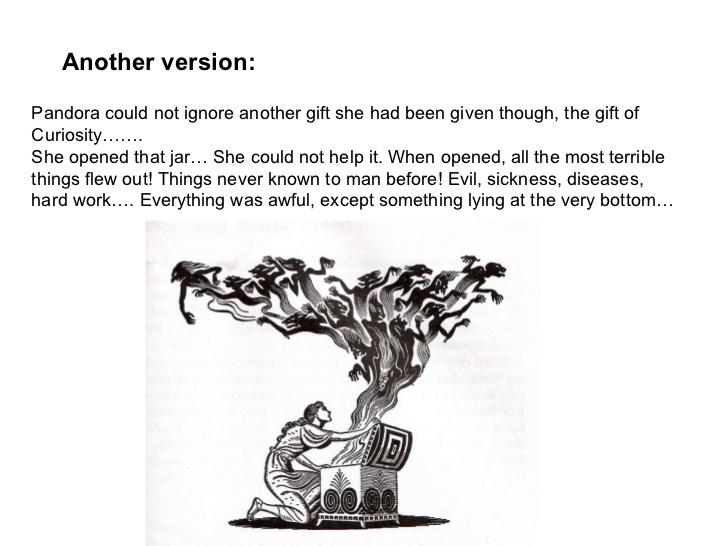
Fleury explains there is a race between microbes and humans. As antibiotic treatment improves, microbes mutate into strains that resist treatment. What worked yesterday may not work tomorrow. Fleury implies there is a natural balance among all living things. Humans may be destined for extinction, but Fleury reminds us of the myth of Pandora. She left hope in the bottom of the box when all the evils were unloosed on the world.
World leaders struggle with opening their economies at the right time, in the right way, to avoid a return to rising death rates from the Omicron variant of Covid19.
If hope is all that is left, ancient philosophers light different ways to recover. Socrates looks to dialog with others and communication with the gods. Confucius looks to the DAO, i.e., the “way” that gives harmony to human nature. In today’s parlance, talk to the afflicted and pray to your God. For believers in the DAO, seek peace between tribes of the world.
Ayad Akhtar (American author, playwright, novelist, and screenwriter-received 2013 Pulitzer for Drama.)
When listening to “Homeland Elegies”, one must remind oneself it is a novel. It is written by an author and screenwriter who can create characters with singular insight and theoretical power to change the world. Though there have been such people in history, they are never recognized in real time. Extraordinary people are only found in the perspective of history or in fictional stories by creative writers.
Many in history might be considered in the category of extraordinary people. They were not perfect, but they changed America, and in some cases the world, for the better. Extraordinary people are either revivified historic figures, or imaginary characters created by authors like Ayad Akhtar.
Pakistan, to many Americans, is a riddle wrapped in an enigma (a phrase Churchill used to describe Russia in the 1930s). The author manages to reveal some of that riddle in “Homeland Elegies”.
Without delving into the history of the author, the author’s main character is named Akhtar. One gathers from his novel, that Akhtar is an American, but his parents are from Pakistan. Akhtar is born into an upper-middle class family whose father is a renowned cardiologist.
Akhtar’s father sees Trump as a man like himself. Akhtar’s father is flawed in ways like Trump. Both Trump and Akhtar’s father look at life’s decisions as transactions with winners and losers.
Trump and Akhtar’s father’s mutual history of dalliance with prostitutes, their failure as business investors, and their unshakeable belief in the value of capitalist self-interest make Akhtar’s father and Trump brothers in both character and ambition.
Politically, the character Akhtar and his father are opposites. Akhtar’s father appears to have voted for Trump in the 2016 election; in part because of a brief medical encounter with Trump long before he became President. Akhtar argues with his father about Trump’s public persona. Trump’s lack of empathy, and his transactional domestic and foreign policy actions are “red flags” to his son. Though Akhtar loves his father, he attempts to bully him into changing his mind about Trump.
The author shows why Trump appeals to many Americans. The “…Elegies” help explain why disparaged American minorities (both nonwhites, and extreme libertarians), as well as white voters, support Trump.
Trump’s support crosses all strata of American life, including the rich, poor, educated, and un-schooled. Many Americans vote for and revere Trump. Trump’s appeal is not to any precise citizen category. His appeal is to every American that wants to be rich enough to be left alone by government or any outside interference.
One of several serious reflections by the characters in the “…Elegies” is an American Pakistani who uses Trump’s memes to punish anti-Islamist local governments that deny American Pakistani equality. This character is a brilliant strategist and wealthy investor. This super-wealthy investor, a born-in-America Pakistani, creates a hedge fund to be sold to communities that formerly denied Muslim equality in their cities.
This hedge fund creator concocts a hedge fund scheme to make money at the expense of anti-Muslim American city governments. Greed of government public fund’ investors blinds them to carefully worded risks in the hedge fund prospectus. In the end, these city bureaucrats nearly bankrupt their cities because of their failure to read the fine print. The cities governments sue the creator of the hedge-fund but are unsuccessful because the prospectus clearly explains the fund’s risk. The hedge-fund profits even more by having hedged against the fund because they knew what would happen to the original investment.
In a trip to Argentina last year, our guide suggested the same hedge-fund profiteering occurred in their country. Argentina fell prey to the same corporate shenanigan. Corporate investors profited twice (first in selling bonds and second from hedging against default). The Argentine people paid the price through inflated consumer prices and devalued currency.
The hedge fund creator has no empathy for citizens who are pawns in a scheme bought into by their local representatives.
The hedge fund creator’s primary objective is to punish local governments that had discriminated against creation of Muslim places of worship. The hedge fund creator exhibits the same characteristic that many ascribe to former President, Donald Trump. Trump shows little empathy for the public while focusing on those he wants to punish, regardless of collateral damage to innocent bystanders.
Two interesting perspectives come from this elegy of a super-wealthy American Pakistani investor.
He explains why Eastern and Western cultures had such different economic histories. He notes corporations led to accumulation of wealth in Western nations. In contrast, in the hay days of the Muslim Empire, individual wealth was disbursed to relatives who steadily diminished capital and retarded the general welfare of the Empire. Eastern nations failed to adopt the idea of corporations for 300 years. In that 300 years, accumulated wealth in corporations allowed Western economies to grow while the East foundered.
His second message is ironic. Individual managers of corporate wealth diminished the moral center of Western nation’ capitalism. The human flaw of greed became good.
The underlying theme of “Homeland Elegies” is that corporations have diminished the ideals of Adam Smiths’ theory of capitalism.
All races, colors, creeds, and religions succumb to the Hobbesian faults of being human. Only empathy for others can blunt the ill effects of corporatism and the wealth machine that feeds on the lives of the poor and near poor.
The author expands this argument in the elegy of a wealthy Black American who understands why Trump will win the 2016 election. This wealthy lawyer recognizes the link between corporate wealth and discrimination. He can see Trump will be elected in 2016 because White America wishes to maintain control of corporate wealth.
The counter to Trumpism in this American’s mind is to fight for control of corporate wealth; not to empathize with the poor, homeless, and non-white populations because it is a waste of time.
The S.P.A.C. (special, purpose acquisition company) movement reinforces this Black American’s argument.
Corporate and personal wealth are often experienced as a superpower created by the faults of human nature (namely greed). Citizens are not seen empathetically but only as transactions between company and customer.
Corporations see individual citizens and consuming customers as fodder for economic growth.
The author abandons a central corporatist distortion of reality with elegies of his personal sexual experience. The character of Akhtar falls somewhere between caring and transactional sexual relationships. In one encounter, it seems there is care for another; in most others, sex seems simply a pleasurable transaction. The inference is that casual sex is the equivalent of corporate greed.
The author’s main character sees sexual experience is often a transactional rather than caring experience between adults.
Ayad Akhtar is an insightful writer that gives listener/readers much to think about; not the least of which is unfair treatment of American citizens born here by former immigrant parents. One might look forward to seeing Akhtar’s theatrical production for better understanding of American culture.
The Disordered Mind (What Unusual Brains Tell Us About Ourselves)
By: Eric R. Kandel
Narrated by David Stifel
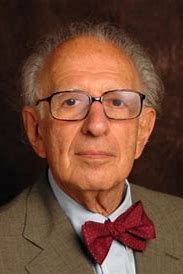
Eric Kandel (Author, Austrian-American MD, Neuroscientist. recipient of the 2000 Nobel Prize in Physiology)
In “The Disordered Mind”, Dr. Kandel offers an explanation of what is known about the physiology of the human brain. What is thinking? How does the brain work? What is consciousness? What causes brain dysfunction? What is mental illness? How can mental illness be diagnosed and treated?
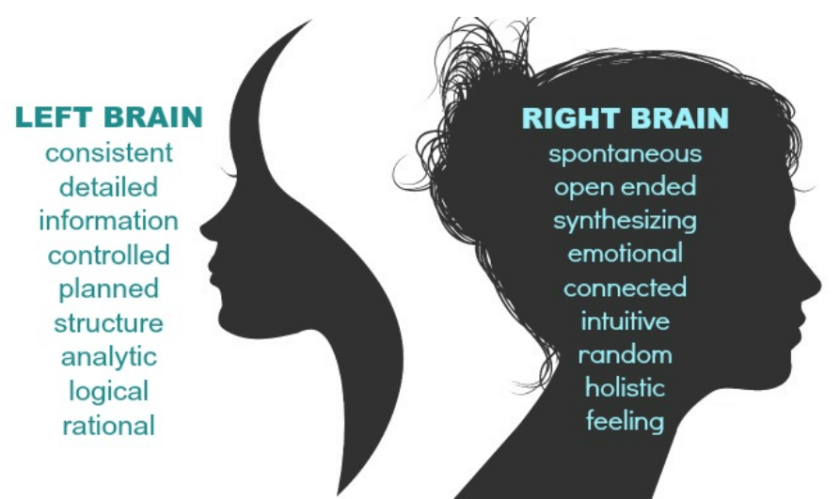
Most know there are two distinct halves of the human brain. What is less well known is that the left and right brain hemispheres conflict with each other.
Kandel explains that right brain activity generates much of human creativity while the left brain is tasked with logic. It is not that the two halves of the brain never cooperate with each other. However, regions of the brain frequently interfere with each hemisphere’s understanding of what humans see, feel, hear, and think. With those senses, human thought and action is affected.
MAPPING THE BRAIN
Damage or disease of either side of the brain is a proximate cause of psychiatric disorder but the interconnection of the two sides makes diagnosis and cure a hit and miss proposition. The physiology of the brain is complex and difficult for today’s practitioners. To diagnose or cure symptoms of brain injury or disease requires precise information about location and physiological characteristics of brain function. Kandel notes that brain imaging has been a boon to understanding how the brain functions and where thought and action originates and initiates, but interconnectedness thwarts precise understanding.
Kandel informs us of symptoms of various brain injuries and diseases and how science searches, stumbles, and recovers to find ways to ameliorate physical and mental disorders caused by brain dysfunction. He explains how too much or too little of naturally produced chemicals like dopamine and melatonin affect brain function. Kandel notes how normal behavior becomes unbalanced with excess or diminishment of brain chemistry.
The origin of artist creativity is explored by Kandel. Kandel implies the dada movement reflects bizarre subconscious images that titillate the public because they resonate with one’s own subconscious.
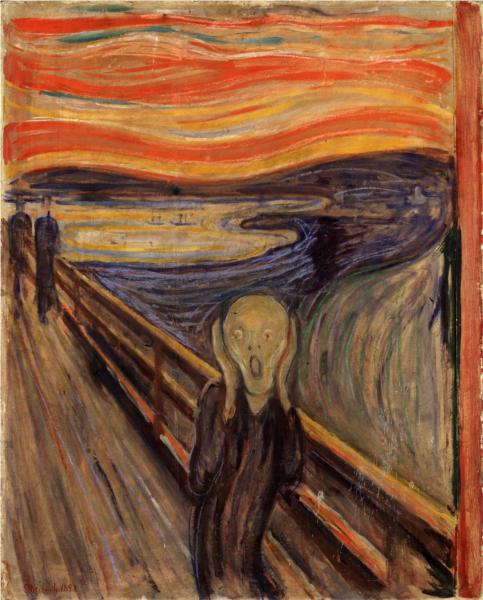
Artists are exhibiting right brain evocations. This reminds one of Edmund Munch’s Scream and his note hidden in the painting that says, “Could Only Have Been Painted by a Madman”. Kandel dismisses that characterization of artists. Kandel suggests they are simply magnifying right brain neural activity.
Kandel notes the progress that has been made in abating, if not curing, psychiatric disorder. It is surprising to find how many treatments have been discovered accidently. This is not meant to diminish leaps of science in mapping the brain or creating medicinal treatments for psychosis and neuropathy but it discloses much of the luck that leads to palliative, if not curative, care.
Kandel notes a fundamental cause of certain psychiatric disorders have been found to be misfolded proteins that negatively affect biological activity and, in some cases, increase neuronal toxicity. This misfolding is considered to be a cause of antitrypsin-associated emphysema, cystic fibrosis, and other maladies.
A somewhat surprising disclosure by Kandel is that physical change of the brain is shown from use of psychotherapy as well as physical or chemical intervention. Kandel suggests psychotherapy is an important part of treatment for patients being treated with drugs or surgical intervention. Kandel infers physiological change in the brain can be as consequential with psychotherapy as with drug or surgical treatment. However, he suggests both forms of treatment offer more lasting success.
There is a lot to unpack in Kandel’s book about “The Disordered Mind”. Many who read/listen to this book will conclude that treatment of drug addiction and other psychological imbalances need more scientific research and better diagnosis and treatment.
Janna J. Levin (Author, American theoretical cosmologist and professor of physics.)
Janna Levin writes a brief history of the invention of the Laser, Interferometer, Gravitational-Wave Observatory, LIGO for short.
Janna Levin is a professor of physics and a theoretical cosmologist. Obviously, a well-educated and intelligent person but not an accomplished writer. Levin’s history fails to capture a coherent picture of what LIGO is or who the scientists were that pursued understanding of gravitational waves. The many scientists involved are a confused jumble of characters who are never clearly described except as scientists in pursuit of an elusive discovery. Levin does offer character quirks of many of these scientists but fails to bring them to life. The significance of gravitational waves in Levin’s story seems less stellar because it is given little context in the world of science.
The best one can say about Levin’s story is that it sparks interest in a layman’s understanding of Einstein’s theory of gravitational waves.
Levin offers some understanding of the subject but misses a succinct description without a listener having to turn to other sources for clarification. Gravitational waves are air particles–that vibrate like a guitar string when it is strummed, or a drum is beat. That is as close as Levin gets to a definition. Einstein predicted cosmic’ gravitational waves are created when phenomenon like black holes, or “Big Bangs” occur.
One reason Levin’s story holds interest for this critic is that two LIGO’ observatories had to be created to confirm Einstein’s theory. One was in eastern Washington, the Hanford nuclear reservation, and the other was in Louisiana. I lived in the Hanford area in the seventies, not as a scientist but as a project manager for a local developer.
It has always been something of a mystery that eastern Washington continued to develop after WWII when Hanford played a big role in the science of nuclear fission that led to Hiroshima’s and Nagasaki’s bombing. One thought, Hanford’s nuclear program would wind down with mitigation of nuclear contamination in the area, but the area continues to grow. LIGO is one of the reasons Richland, Kennewick, and Pasco (known locally as the Tri-Cities where Hanford is located) continues to grow.
One must acknowledge Levin’s story offers some personal insight to the nature of scientific discovery. She shows how a community of scientists is plagued by the same insecurities and ambitions of any human organization. There are always organization’ struggles over who is in charge, how internal conflict is resolved, and how money, power, and prestige affect productivity.
Levin implies conflict may be more intense in scientific pursuit because personal motivation is different. She seems to imply scientists are more motivated by power and prestige than money. One doubts that is true because humans within any organization have degrees of desire based on all three motives.
The beginning of Levin’s story is with Rainer Weiss, a professor of physics at MIT. Weiss’s interest in gravitational waves began with his interest in radio waves and refinement of phonographic reproduction.
As a child, Weiss experimented with speaker systems and refined reproduction through tinkering with how records reproduce music. Levin suggest Weiss’s personality is deeply affected by his families experience with authority in Germany during the Nazi’s rise to power.
Weiss pursues his interest in gravitational waves with Soviet scientists, and two Scots named Ronald Drever and James Hough. Levin imprecisely explains their collaboration and how each conflict with the other over control of the science of gravitational waves. Drever is a brilliant tinkerer who designs a rudimentary gravitational wave detector. In 1980, the National Science Foundation funds a large interferometer study at MIT.
Ronald Drever (1931-2017, Scottish pioneer on laser measurement and gravitational wave observation.)
After fits and starts, Rochus Vogt is appointed as director of the development at the LIGO project. Levin, also a family victim of Nazism, notes that Vogt is an important first director because of his ability to organize scientific research. However, Vogt is noted as an authoritarian that often conflicts with other scientists (like Drever) who worked on LIGO.
Levin explains Vogt was a manager who resented authority of any kind but had a high degree of organizational skill. Levin suggests Vogt’s family experience with Nazism fed his dislike of supervision or direction from others.
Levin explains Vogt had a great deal to do with successfully raising funds for LIGO’s early development. However, he was eventually fired for his authoritarian way of dismissing other team members ideas and his objection to superiors’ oversight.
Levin notes the massive size and cost of the project which finally locates in two states, Washington, and Louisiana. Funding is key to its development and is delayed for various reasons. The politics of science research is touched on by Levin but not clearly defined. One surmises from Levin’s book that location of expensive projects are as much a political as science-based decision.
There are many pessimists and a few optimists on the value of this research. The time it took to confirm or deny the theory of cosmic gravitational waves is long, expensive, and seemingly serendipitous. Attempts to prove Einstein’s 1916 theory began in the 1960s, but it takes over 50 years to even begin to prove the existence of gravitational waves. In the end, Levin recounts the success of these scientists’ efforts on February 22, 2016.
A gravitational wave is recorded on September 14, 2015, when two black holes collide light years away. In the following year, the gravitational wave’s finding is fully recognized. The record of the wave confirms Einstein’s theory of gravitational waves.
Without Levin’s final chapter, “Black Hole Blues…” would be a literary failure. However, with this chapter Levin nearly redeems her story. Without science, the world would remain in the dark ages; burdened by myth and superstition that distorts the true value of being human.