BOXING

Audio-book Review
  By Chet Yarbrough

(Blog:awalkingdelight)
Website: chetyarbrough.blog

Ali (A Life)

By: Jonathan Eig

Narrated by Kevin R. Free
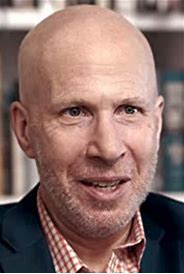
Jonathan Eig (Author, Former reporter for WSJ, Eig also wrote Luckiest Man, and Opening Day.).

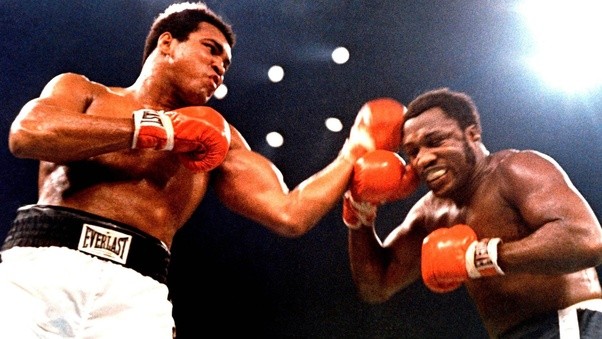
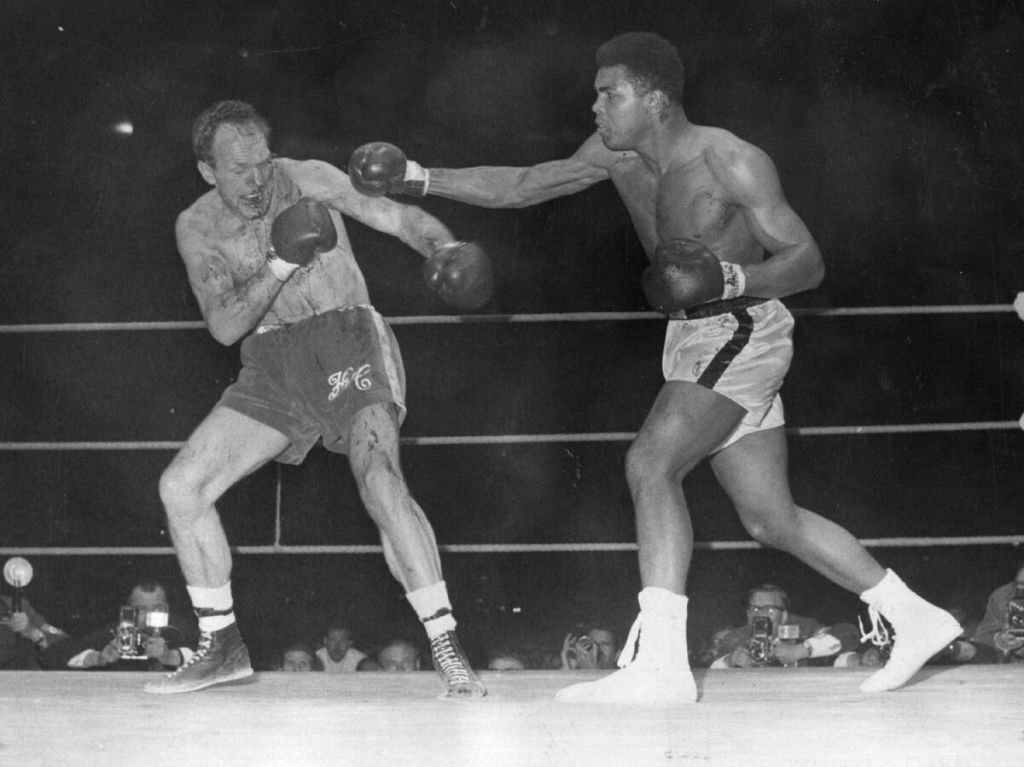
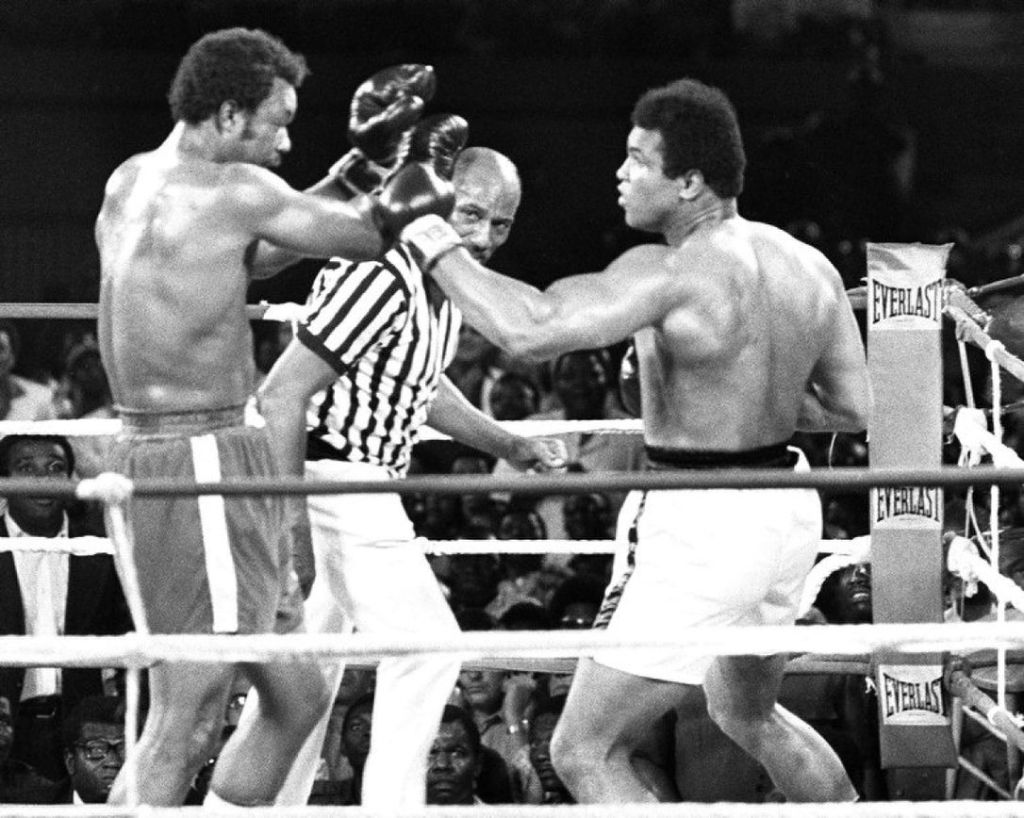
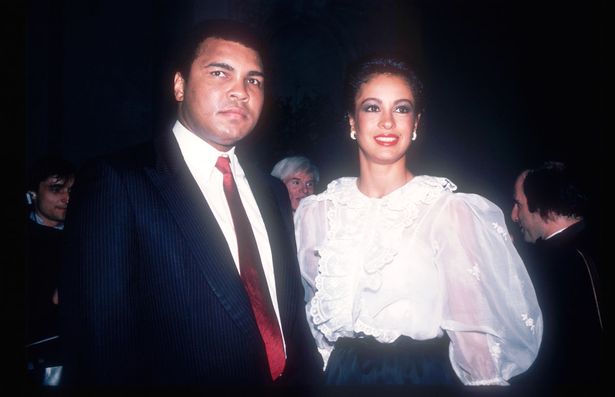
Jonathan Eig’s research of Muhammed Ali’s life offers some surprises to listener/readers. One who grew up in the sixties will be reminded, entertained, and appalled by Eig’s biography of the greatest heavyweight fighter of all time.  Muhammed Ali, aka Cassius Clay, The Greatest, The Champ, The Louisville Lip, and less flattering nicknames, shows Ali lives up to every name noted in Eig’s biography of Muhammed Ali.

A criticism one may have of Eig’s detailed biography is its length. The last chapters dwell on Ali’s deterioration as a boxer with more detail than necessary. It becomes too repetitive in its reification of a man’s life who is ultimately only human.
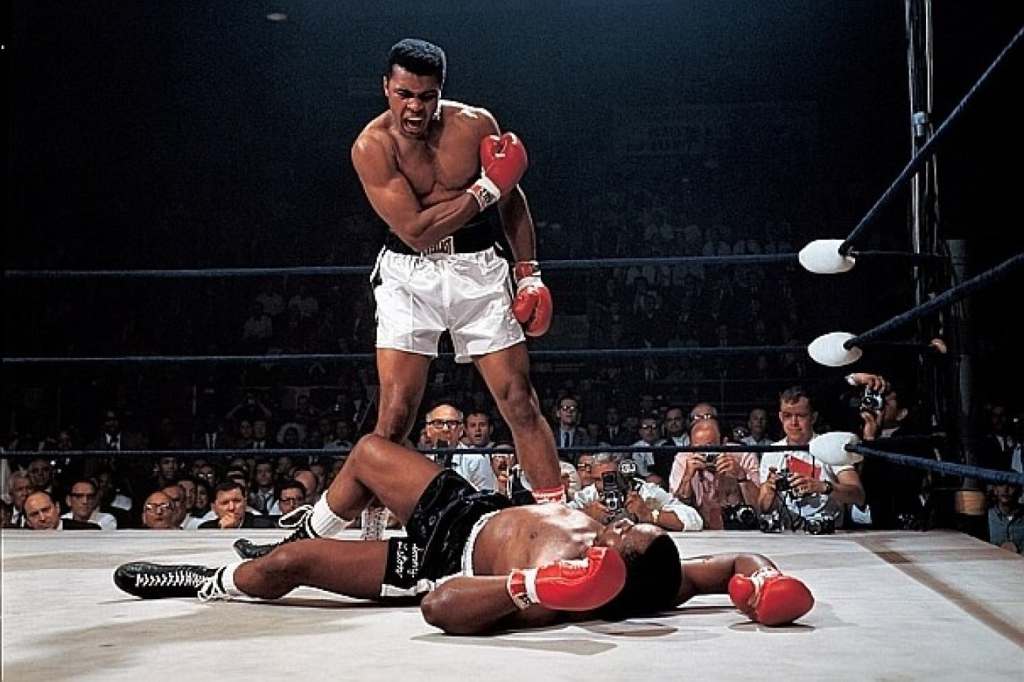
The defeat of Sonny Liston

One might think sports, particularly boxing, is no measure of intelligence. However, Eig notes Ali had an instinct for knowing when a punch is going to be thrown. Ali’s reflexes responded with such great speed punches often missed their target.  That skill and Ali’s showmanship made him the greatest heavyweight boxer of all time.  Ali’s voice and opinion during the early years of his fighting career show him to be a brilliant actor, comedic insulter, and revered representative of Black America. What hid the truth of Ali’s intelligence is standardized testing, and the social circumstance of the 1960s. 

There are many forms of intelligence. 

Ali is classified as 4f by the military when he flunks its reading and comprehension test for the draft.  Eig suggests Ali is dyslexic which makes reading a laborious and unrewarding task.  To reinforce the idea that Ali is dyslexic, Ali only receives a high school diploma because of his school principal’s intervention. The principal recognizes something in Ali that is missed by standardized tests. As most Americans know, Ali goes on to become the heavyweight champion of the world by beating Sonny Liston, a monster of a man who was a 7 to 1 favorite to beat Cassius Clay before the fight began.  What is revealed by Eig’s research is the complexity, the joy, and sorrow of Muhammed Ali’s life and world renown.

Ali beats Sonny Liston and becomes the heavyweight champion of the world.  After his ascension to champion, Ali does not want to be drafted. He does not see how he could be ineligible for the draft when he was evaluated by the service and found to be 4f but now is considered draftable.  He enjoys his life as it is and notes that he has no desire to go to war against Vietcong for whom he has no understanding or hate.  Ali refuses the draft without arguing his newly found Muslim faith could make him a conscientious objector.  The government sentences him to 5 years in prison.  Ali is stripped of his title and banned from boxing for 3 years. He is 25 years old and in the prime of his boxing career.
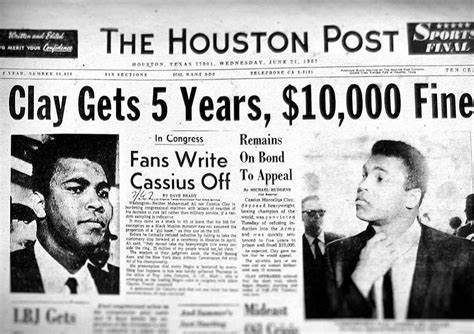
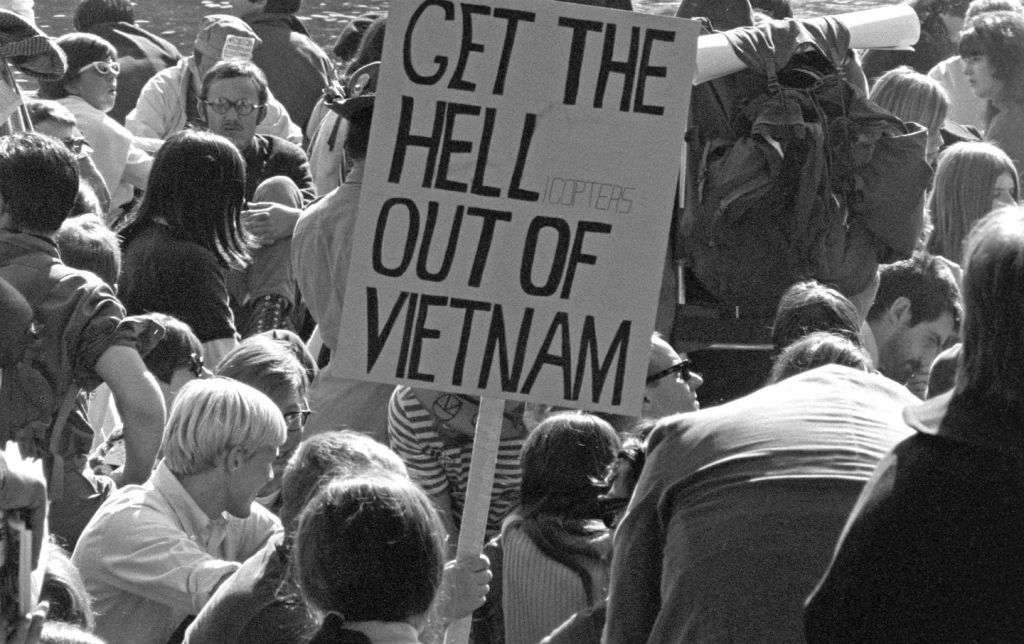
Those who grew up in the sixties knew of Ali whether they were sports fans or not.  Vietnam is raging in the sixties.  Many young, and some older Americans rebel against government overreach with anti-war protests, and human rights demonstrations.

While many enlist or are drafted into the service, a few burn their draft cards and escape to Canada. Some draft dodgers stay in America and publicly fight the draft because they view Vietnam as an unjust war.  Ali chooses to stay in America and fight the draft based on his early 4f classification.  Though that argument does not stand up, Ali refuses to be drafted.
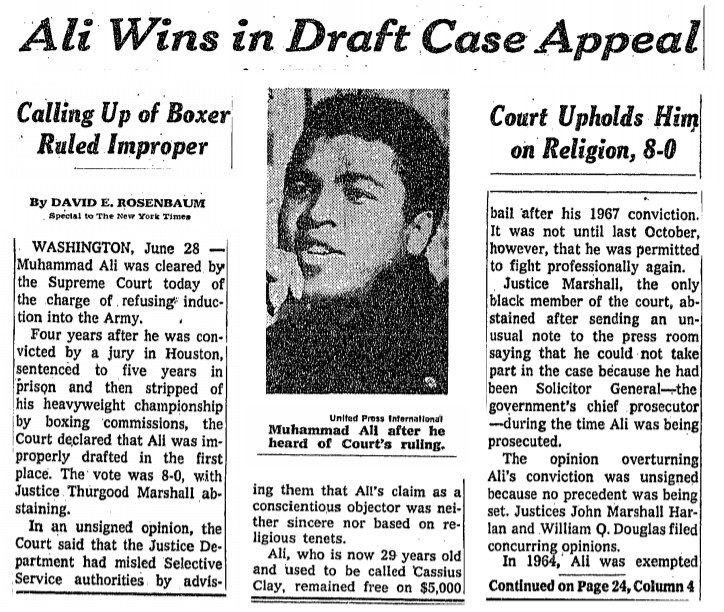
With the help of growing public unrest, Ali is eventually released from a lower court’s charge of draft dodging by the Supreme Court of the United States. His ban from boxing is removed but only after the suspension removed Ali from the healthiest years of his boxing life.

What makes Eig’s biography so interesting is there is no singular motive for Ali’s choices in life.  Ali is a human puzzle.  He chooses to become a Muslim and devotes his life to the Nation of Islam (NOI). Ali appreciates NOI’s teaching because it directly challenges white America for unfair treatment of Black Americans.  However, Ali is not a religious zealot. He is shown to be a human with many of the same failings of all human beings.  He prays to Allah but violates many preachments of NOI. He pursues conjugal pleasures of other women while married.

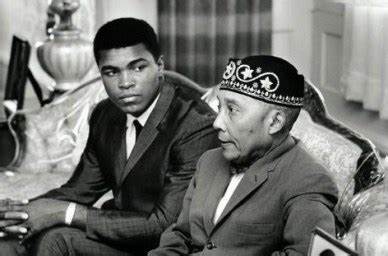
Ali is suspended from NOI for a year by the order of NOI’s leader, the Honorable Elijah Muhammad. The suspension is not because of philandering but because of Ali’s public pronouncements about boxing as the source of his fame and fortune.

Elijah Muhammed, the leader of NOI, considers sports and entertainment as frivolous and unworthy of anyone who believes in the Muslim faith.  Ali accepts the punishment and is never officially released from his banishment, though he remains a Muslim.
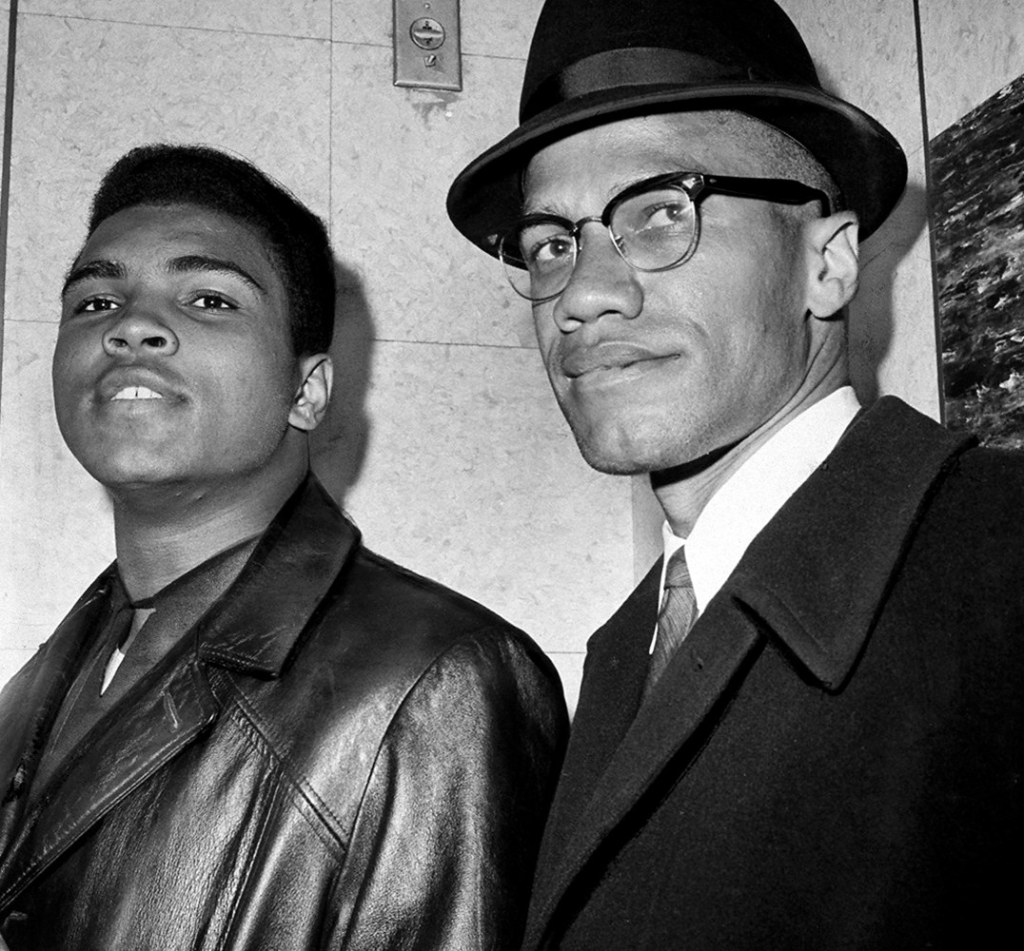
Ali does not abandon his religion, but he says his greatest regret in life is having abandoned his friend, Malcolm X (aka Malcolm Little) who criticized Elijah Muhammad’s flaunting of marriage vows because of sexual relationships with women other than the leader’s wife.

Malcolm X is murdered.  Some say he was murdered at the direction of NOI.  One wonders if Ali is fearful of the power of Elijah Muhammed or just aware of NOI’s potential for harming followers if they differ with the leader’s pronouncement.  Eig’s biography implies Ali’s intelligence and hedonism are likely motives for Ali’s actions, not fear of NOI’s punishment.  After all, Ali is a prolific violator of his own marriage vows and cash income from fighting remain his most important goal.  However, it is a puzzle that Ali said his biggest regret is abandoning his friendship with Malcom X who vilified Elijah Muhammad’s morality and rejected belief in a separate, exclusively Black, NOI nation.

Eig’s biography implies Ali is inadvertently, rather than deliberatively, on the right side of history.  One wonders if it is inadvertent.  Vietnam is a tragedy, badly managed by America.  Resistance to the war, Malcolm X’s recognition of the equality of all human beings, and Ali’s regrets about their friendship being broken suggests something more about what Ali really believed. Hedonism is one of many faults of humanity. Eig clearly shows Ali is no Saint, but Eig implies Ali has a moral center beyond his ill treatment of women. 
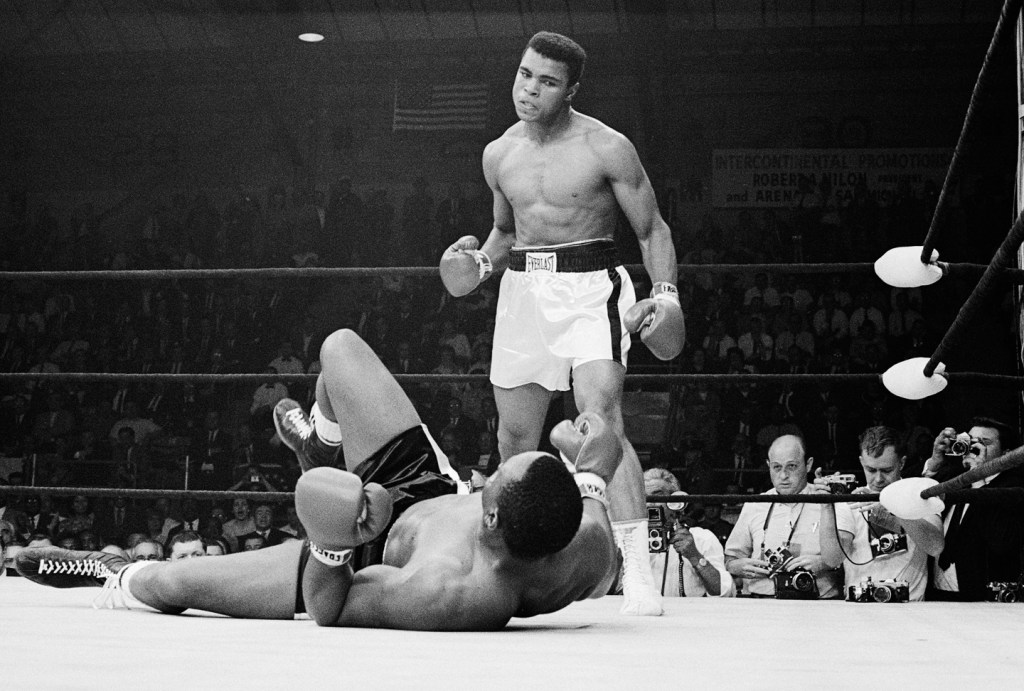
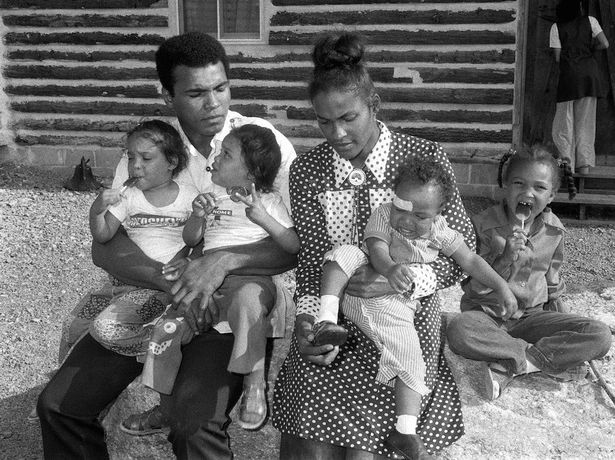
The last half of Eig’s book recalls Ali’s boxing matches, his relationships, and the terrible impact of boxing on the human brain and body.  Ali is shown to be an inveterate user of prostitutes when training for fights regardless of its consequence to four marriages.  (It’s interesting to note that the Muslim faith accepts the right of men to have four wives at the same time.  This is forbidden in America but violated by more than one religion.  Is it a coincidence that Ali marries four women?) 
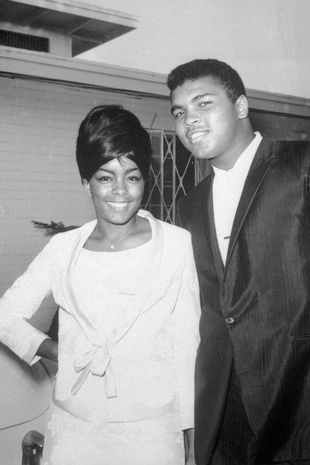
It is difficult to believe a fighter could fight for 15 rounds when 3 rounds for an amateur are exhausting.  Ali’s stamina throughout his boxing life is seemingly supernatural.  He loses and wins the Heavyweight Championship’ title 3 times in his boxing career.

Eig’s detailing of Ali’s fights is particularly interesting to anyone who has boxed as an amateur or professional.  Eig points out Ali’s change in the way he fought left-handed boxers without understanding that leading with one’s right is what a trainer tells a right-handed fighter to do when fighting a lefty. 
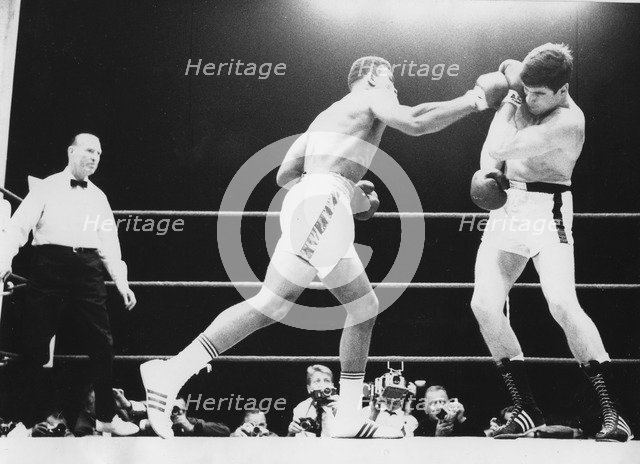
Ali, and opponents like Frazier, show energy and determination that seem other-worldly.  One wonders how much of that energy and determination is based on subliminal punishment for a profligate or hedonistic life.  That may be personal psychobabble more than objective interpretation of Eig’s biography of Ali. One may ask oneself; what avenues were open to Black Americans in the 1960s to become rich and famous in order to be hedonistic?

Ali obviously fought for money and fame, but Eig shows Ali and other boxing champions pay a very high price.  Ali died at 74 years of age but suffered from diagnosed Parkinson’s for 32 of those years.  Though there is no proven direct correlation for Parkinsons’ diagnosis, it has been shown that boxers are more suspectable than the general public to speech impediment, Alzheimer’s, and erratic body movement from blows to the head. Frazier died at the age of 67.  (Ali was 33 and Frazier was 31 in the “Thrilla in Manilla”, the fight of the century–it is won by Ali in this third fight between the two, but that fight sent both to the hospital after its conclusion.)

Eig pulls no punches in his biography of Ali.  Ali was a flawed human being that treated women as property.  Ali entertained the world in his rise to fame.  Ali made the most of what he could in the time he lived.  Ali was the greatest in some ways and the least in others.  He exemplified much of what many want to achieve but at a price few are willing to pay.

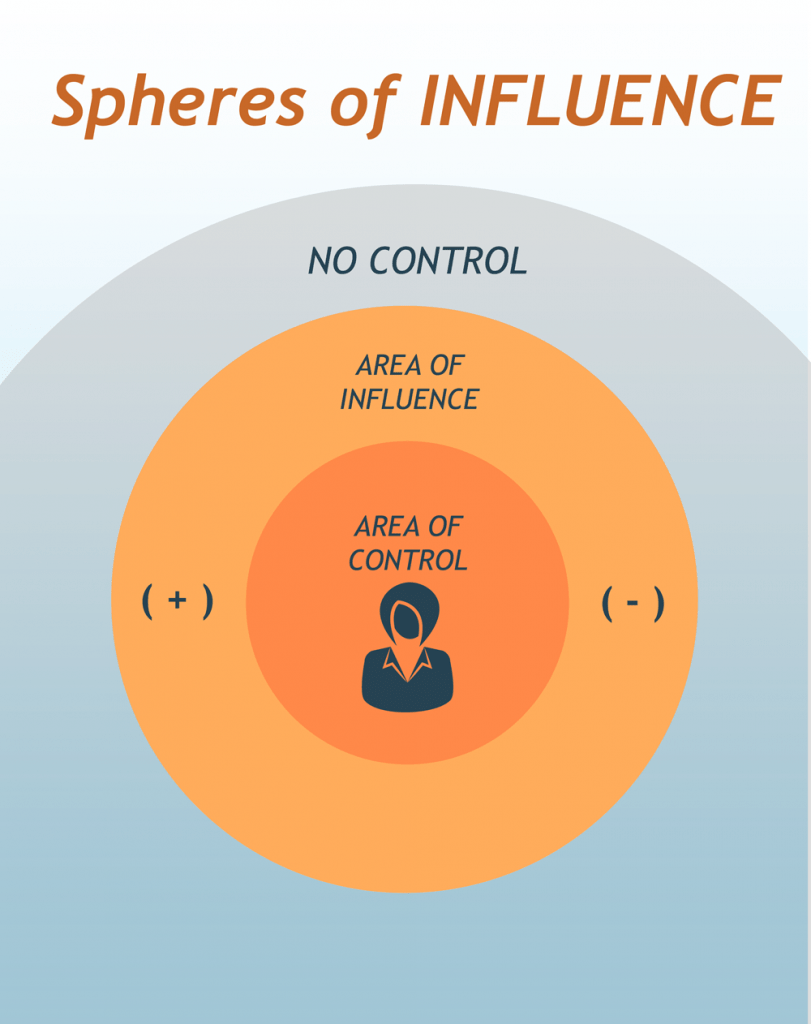
SPHERES OF INFLUENCE

Audio-book Revie
By Chet Yarbrough

(Blog:awalkingdelight)
Website: chetyarbrough.blog

Destined for War (Can America and China Escape Thucydides’s Trap?

By: Graham Allison

Narrated by Richard Ferrone

Graham Allison (Author, American political scientist, Professor of Government at Harvard.)

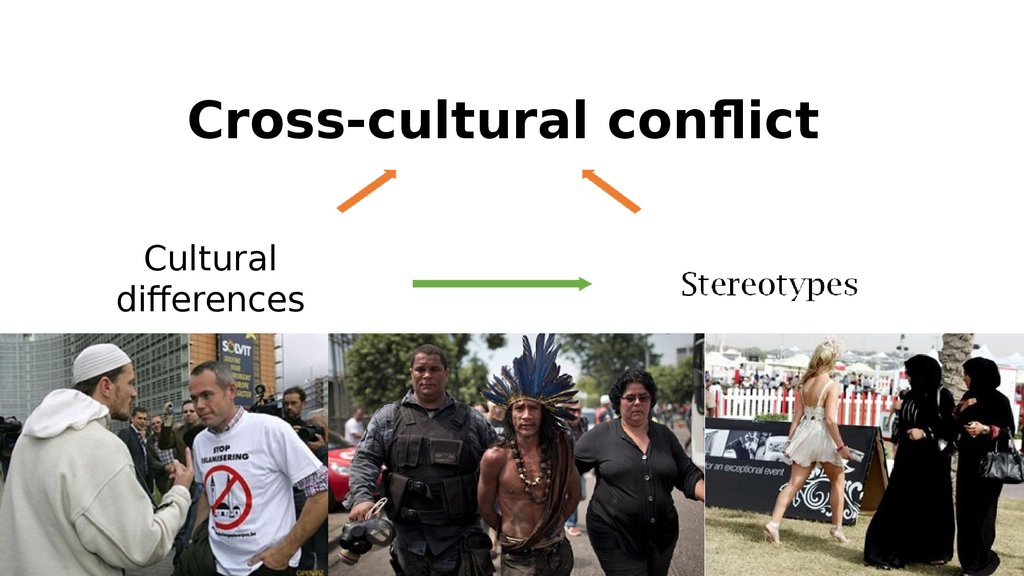
Allison briefly reviews the history of war to reinforce an argument about its causes.  He suggests wars come from the rise of competing hegemonic powers. A quibble one may have with Allison’s argument is that it diminishes reasons beyond power that led to WWII. The rise of Hitler may not have occurred if reparations for WWI had not been excessive.  However, his main point is that cultural differences are seeds from which power and conflict grows.  Allison suggests, when nation-state’ cultures are different, countries competing for political and economic power incline toward war. He gives many relevant and convincing examples.

Graham Allison suggests the cause of war is defined by Thucydides (Greek Historian of the Pelopnnnesian War, Born 460-455 B.C., Died 400 B.C.) in the fifth century BC. 

The “Thucydides’s trap” is when one country achieves a competitive level of political power it challenges existing hegemonic powers, leading to conflict and probable war. 

Allison argues that war is not inevitable but that to avoid it requires acceptance of spheres of influence.  This is not a new concept.  The terms “sphere of influence” became legally significant in the 1880s when Africa was being colonized by European countries.  It was meant to explain a colonizer’s political claim for exclusive control of a particular area of the world.

Vladimir Putin argues Ukraine is Russian territory because it was a part of the U.S.S.R. under the repressive hand of Joseph Stalin. Putin like all colonizers believes his regime has a political claim for exclusive control of another country. He makes the same mistake of ignoring Ukrainian cultural identity, i.e., the same mistake of all interventionist countries of the world.

Allison notes that China’s Chairman Xi is the same as America’s Ex-President, Donald Trump.  That “sameness” is Xi’s goal of making China “Great Again”.

Putin joins the ludicrous “Great Again” club with the invasion of Ukraine.

Allison explains China is culturally unique based on its history, reaching back to 1600 B.C.  Like Ancient Egypt (3400-3200 B.C.), China is as culturally different as any nation-state in the world.  Allison offers a highly intelligent and informative analysis of how different Chinese culture is from American culture.

To avoid war, Allison argues America, the alleged current hegemon of the world, must couch its political behavior and power in ways that acknowledge cultural difference between itself and rising presumed hegemons of the world.

Allison recalls the history of England’s dealings with America after the 1776 revolution.  England reluctantly accepted America’s eventual rise to hegemon of the world. (Some would argue, England’s decision to remove itself from the European Union accelerates that decline.)

The United Kingdom’s economic, military, and political power (its sphere of influence) diminishes as America’s flourishes.  England remains a power in the world, but its sphere of influence steadily declines.

Russia struggles with their sphere of influence because of the collapse of the U.S.S.R.  In 2022 Russia invades Ukraine, just as they did Crimea in 2014, to re-expand its sphere of influence.  Russia maneuvers to politically enlist China as an ally to accomplish that end. Putin undoubtedly cultivates China’s objection to America’s attempt to expand its sphere of influence in the far east.

The issues of Ukraine and Georgia are more precarious for Russia than the rest of the world. Putin’s demand to expand Russia’s sphere of influence renews a cold war that will inevitably become hot. The only question is where the heat will lie.

Robert Kagan reveals the fundamental mistake made by Putin in a May-June 2022 “Foreign Affairs” article. History reveals mistakes of great nations like France, Great Britain, Germany and Japan in thinking they could remain or become world hegemons by force. All ignore the cultural identities of their respective victims.

Kagan’s point is Great Britain adjusted to its changed role from hegemon to a nation among nations. England prospered and maintained its integrity as an independent nation, capable of improving the lives of its people without falling on the sword of its hegemonic past.

Ukraine will become Putin’s American’ Vietnam. It is a war that can only be resolved at the expense of many Russian’, and Ukrainian’ soldiers’ lives. The most other countries can do is support Ukrainian resistance while pursuing a diplomatic solution that respects sovereign independence.

The inference one draws from Allison’s book is that America must recognize the cultural difference between itself China, and Russia to avoid another world war.  Like Rome, the United Kingdom, France, Spain, the former U.S.S.R., and other hegemons of world history, America must adjust its behavior to be a nation among nations, not a hegemon, but a singular influence on other nations. America effectively operates within a sphere of influence. America’s sphere of influence is indirectly challenged in the Far East by China and directly by Russia’s errant invasion of Ukraine.

Allison’s view of the world gives weight to Putin’s great concern about Ukraine’s independence and implied wish to join NATO. The fear Putin has is a reminder of even Gorbachev’s opposition to western encroachment on eastern bloc independence.

The sense one draws from Allison’s insight about culture is that no country in history has ever treated its citizens equitably.  In America, the stain of slavery and native Indian displacement remain festering wounds.  When and if those wounds heal, America’s sphere of influence will either grow or diminish.  In China, it may be the wounds of Uighur discrimination and Han superiority that wounds its future as a hegemon.  In Afghanistan, the unfair treatment of women may doom its sphere of influence.  In Russia, it will be the mistakes Putin makes in violating the sovereignty of Ukraine.

Every nation’s sphere of influence is affected by internal cultural errors and external cultural influences.  Only a state that adjusts to the demands of its culture will survive.  Culture is not exportable, but it has weight.  Foreign cultures can only be an influencer to other countries.  A culture imposed by force will fail as both America and France proved in Vietnam.  Cultural change must come from its own citizens as it did with the U.S.S.R. in 1991. 

Spheres of influence evolve.  They are not static. 

America’s goal should be to understand other cultures.  In that understanding, there must be acceptance of a competitor’s sphere of influence. Allison is not suggesting America withdraw from the world stage, but that engagement be along the lines of a containment strategy like that proposed by the former ambassador to Russia, George Kennan, in the 1950s.  Kennan’s long memorandum is born of an intimate understanding of Russian culture.

Allison argues America should pursue a policy of minimizing conflict while promoting democracy to citizens who seek freedom and equality. 

Allison recommends engagement with rising hegemonic powers with an eye on their respective cultures.  Allison argues, only with understanding of cultural difference is there a way to avoid Thucydides’ trap.

One cannot deny the economic success of China.  At the same time, anyone who has visited China in recent years knows of dissidents who object to communist monitoring and control of citizen freedom.  Tiananmen Square remains a rallying point for mainland China resistors.  Hong Kong continues to demonstrate against Xi’s influence on the lives of local business owners. Taiwan objects to Xi’s intent to repatriate their island country. Tibetans are denied their rights as followers of Buddhist belief.

In sum, one comes away from Allison’s book with the hope of a future without war.  Hegemonic powers will rise, and fall based on the evolution of their respective cultures.  History suggests governments that rely on the “rule of one” in modern times will not last.  Adding population demographics and ecological threats, China’s “rule of one” suggests the best policy for American democracy is acceptance of spheres of influence with a policy of Kennan-like’ containment.  Chairman Xi is mortal, and mortality is the penultimate harbinger of change. In the long run, freedom and equality will change the nature of even the oldest cultures.

Allison’s enlightening history of spheres of influence discounts many conflicts occurring within nations that have little to do with national interests or international conflicts. Of particular concern are tribal and religious conflicts occurring in Africa, Latin America, and parts of the Middle East. Warlord and gang-like leaders have little nationalist interest beyond self-preservation. The consequence is displacement and impoverishment of millions who have no future.

PERSONAL RELATIONSHIP

Personal relationship is the beginning and end of all that matters in life. 

Audio-book Revie
By Chet Yarbrough

(Blog:awalkingdelight)
Website: chetyarbrough.blog

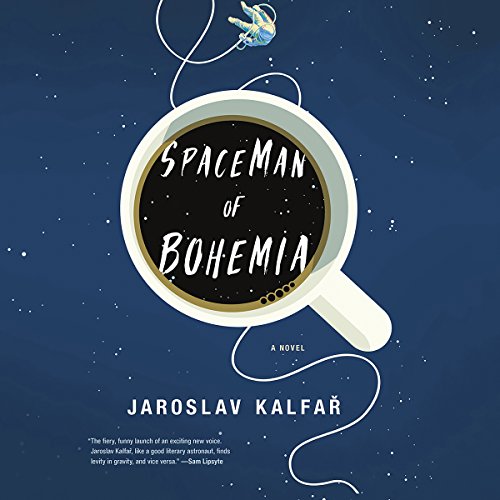
Spaceman of Bohemia

By: Jaroslav Kalfar

Narrated by Jot Davies

The author, Jaroslav Kalfar offers a perception of communist Czechoslovakian history.  Kalfar became a resident of Brooklyn, New York at the age of 15.

“Spaceman of Bohemia” is partly a “stream of consciousness” tale. Just as a reader/listener thinks the story is complete, a new story begins with a similar thematic destination.  In an implausible space journey to a galactic dust cloud and a miraculous rescue, a Bohemian astronaut is saved by a Russian spaceship. The spaceman of Bohemia’s spaceship is compromised by dust from the cosmic cloud he is inspecting.  

The Russian spaceship comes out of nowhere and is part of a top-secret program that explores the universe without knowledge of the rest of the world. The spaceman’s story begins with a young boy in communist Czechoslovakia just before the 1968 Prague Spring and Czechoslovakia’s democratization in 1989.

Jakub is the teller of this tale.  In recounting his life, Jakub offers a history of what life is like for families that supported a repressive communist regime before the Prague spring movement. 

Jakub’s father is employed by the secret police who torture dissidents at the direction of the communist party.  One of those dissidents is tortured by Jakub’s father.  After the communist party is rejected by the Czechs, this particular tortured dissident returns to seek revenge on Jakub’s family. 

As a real-life example of dissident torture in Czechoslovakia, a Slovak priest dies from torture and radiation poisoning from forced labor during the communist era. He is beatified by the church after his death.

After Jakub’s father dies, he is raised by his grandparents.  However, they are evicted from their home that Jakub’s grandfather had built.  The eviction occurs because of political influence used by the dissident who had been tortured by Jakub’s deceased father.

Jakub becomes a Czech astrophysicist. As a scientist, he discovers a new life form in cosmic dust.  Because of that discovery, he is called upon by his government to become an astronaut to make a trip to analyze a distant cosmic dust cloud.   The true reason the Czech government calls for Jakub to become an astronaut is revealed at the end of the story.  It is the influence of the tortured dissident.

Jakub’s ego, patriotism, and the added weight of the Czech republic’s storied history of science (referring to the likes of Bolzano, Purkinje, Wichterle, Heyrosky, etc. and oddly, Nikola Tesla who was a Serbian) entice Jakub to take the risky space journey.

Cosmic dust cloud.

The journey to the cosmic cloud takes several months.  As the journey toward the cloud continues, Jakub meets, at least metaphorically, an alien that has the general form of an arachnid, but with 13 eyes. 

The arachnid has lived for centuries and is able to communicate directly with Jakub.  The arachnid calls Jakub “skinny human”.  The arachnid can read Jakub’s mind which suggests it is a figment of Jacob’s imagination. That idea takes a listener into a state of suspended disbelief that becomes more surrealistic as the story progresses.

As the spaceship reaches the cosmic cloud, it becomes disabled by dust particles that penetrate the life support system of Jacob’s vessel. 

As the “Spaceman…” nears death, a Russian spaceship rescues Jakub. The approaching spaceship is a part of a secret Russian science program that has explored the universe for many years.

Everyone in Czechoslovakia presumes Jakub is dead.  The Russian’s plan is to keep their rescue of Jakub secret.  As they near earth, Jacob impresses one of the cosmonauts (who incidentally has lost his mind) and helps him take over the Russian spaceship. It crashes into the ocean.  Jacob escapes and returns to his home country.  

Those are the general details of the story, but its appeal is in the author’s skillful use of words and his characterization of human relationship and fragility.  As the author explores human relationships, he exploits beliefs in authoritarian, democratic, communist, and capitalist government’ deficiencies. 

Jakub marries a free-spirted artist, a woman whom he loves.  She also loves him but resents his self-centeredness. 

Jakub chooses to take this dangerous journey without considering his wife’s opinion.  He treats her as a non-person; not worthy of consideration when deciding something that deeply affects both their lives. She decides to leave Jacob just as he left her, without explanation.  Jakub is only part way through his journey to the cosmic cloud when she leaves.  She chooses not to explain anything to Jakub in their weekly contacts while he is in space.  She just leaves. 

Jakub’s wife works with a psychiatrist that helps her understand the decision she makes to leave her husband. 

The meetings are transcribed, and Jakub is given a copy of the transcript when he returns to earth.  He realizes the mistake he has made and hopes to reenter the relationship he has lost.  When he sees his wife, he realizes there is no chance for reconciliation because of the past.  He recognizes his failure as an equal partner to a woman of substance.

Personal relationship is the beginning and end of all that matters in life.  Kalfar tells a story of human fragility.  Life is not government.  Life is not politics.  Life is not economics. 

THOUGHT IS A BEGINNING

Audio-book Review
By Chet Yarbrough

(Blog:awalkingdelight)
Website: chetyarbrough.blog

The Secret Garden

By: Frances Hodgson Burnett

Narrated by: Carrie Hope Fletcher

Frances Eliza Hodson aka Frances Hodgson Burnett (1849-1924, Author, British American citizen died in New York.)

              “The Secret Garden” is a period piece.  One should read/listen to “The Secret Garden” with an understanding that it is a story of its time, not of the 21st century.  It tells of wealth’s privilege at a time when poverty is ignored and perceived as a natural part of civilization.  “The Secret Garden” was serialized in a 1911 publication called “The American Magazine”. 

“The Secret Garden” is a story of childhood privilege and neglect.  The story begins in India and ends in an English manor house.  It is a story of how some children overcome the circumstance of parental neglect. 

The first character introduced is Mary who lives in India with her British parents. 

The second is Colin who lives with his father in England. 

              Because of implied wealth and virtual absence of parents, two ten-year-old cousins are raised by servants.  Their early perception of the world is that they are masters of their domain.  At the age of ten, both children have been neglected by their parents.  Mary is characterized as unattractive with a beautiful mother who has turned her parental responsibility over to Indian servants.  Mary’s father is never a part of the story. 

Cholera strikes India in 19th century. Both of Mary’s parents die from Cholera, and she is carted off to England to live with her uncle.

Mary’s uncle lives in a 100-room mansion in the English countryside.  Mary arrives at the manor and is greeted by servants, not her Uncle.

              Her Uncle lost his beloved wife in the birth of their son.  The son, Colin, is isolated in one room of the mansion, cared for by servants, and rarely visited by his father.  Colin believes he is going to die because of a physical affliction that is presumed to have come from his father’s unspecified condition, a condition of melancholy more than physical being. 

                Mary begins to recognize people who care for her are not slaves when she returns to England.  Her realization comes from being taken out of India’s way of life into an English countryside where servants are noted as somewhat independent while handcuffed by low wages paid by employers and the independently wealthy.

The consequence of Mary’s and Colin’s neglected upbringing is their characterization as imperious martinets who order their care givers as though they were slaves.

              Mary begins to realize English servants are more than order takers.  They have lives of their own.  She begins to realize one must treat others as she wishes to be treated. 

The author makes it clear that Mary’s steely imperiousness has not left her but that she tempers its use as she becomes better acquainted with the poor who must work to live.

A secret garden is the center of the story because it is a symbol of life’s resurrection. 

               Even the most neglected and spoiled children can be metaphorically planted in a different environment to become more caring and understanding.  A secret garden changes Mary and Colin into better human beings.

The key to understanding “The Secret Garden” is that thought makes humans who they are and what they become.   

              Colin is introduced as an invalid that is unable to cope with the world as it is.  He is neglected by a father who may blame him for the death of his beloved wife.  Colin is ten but acts like a two-year-old.  He is as imperious as Mary when she lived in India.  Because of Mary’s experience in India, she understands Colin’s reasons for acting as a two-year-old.  In that understanding she uses her experience in India and her newly acquired knowledge of English life to lure Colin out of his melancholy.  She talks of a secret garden that was created by Colin’s mother before her untimely death.  Mary found the key to the Secret Garden and the metaphorical key to Colin’s health and happiness.

               Frances Burnett created a story that explains how children who are neglected by parents can change the direction of their lives.  The course of one’s life begins with thought.  Good thoughts lead to good actions.  Bad thoughts lead to bad actions. After Burnett’s story, a final thought is–weather neglected or not, it is a child’s choice.

MIDDLE EAST AGENDAS

Without understanding of foreign cultures and economic assistance for those victimized, world conflagration is an ever-present danger. One must ask oneself–how wise is it to use political policy, religion, or trade to victimize the poor and disenfranchised?

Audio-book Review
By Chet Yarbrough

(Blog:awalkingdelight)
Website: chetyarbrough.blog

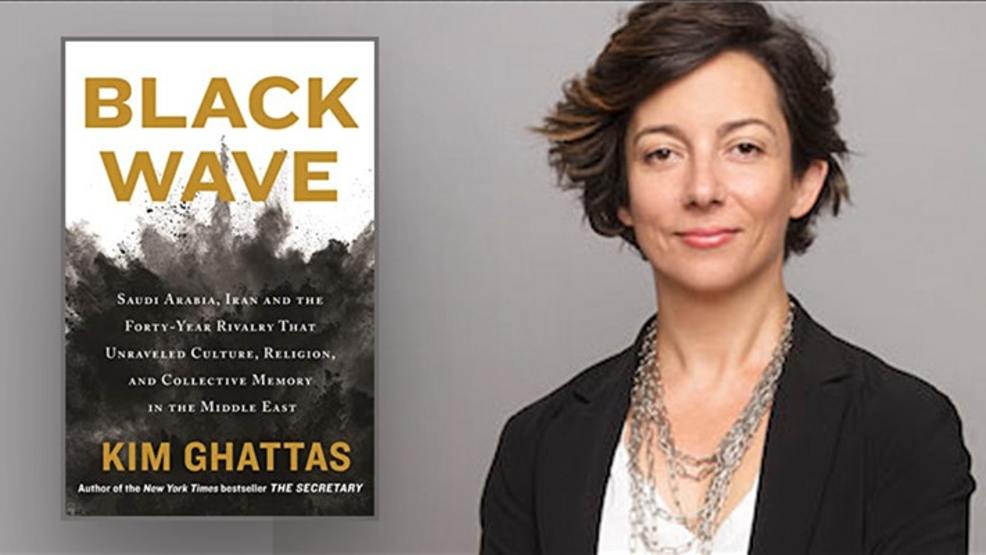
Black Wave (Saudi Arabia, Iran, and the Forty-Year Rivalry)

By: Kim Ghattas

Narrated by: Kim Ghattas, Nan McNamara

Kim Ghattas (Author, Dutch Lebanese Journalist for the BBC)

Kim Ghattas capsulizes the causes of cultural and religious conflict in the Middle East. Her complex explanation of politics in the Middle East shows the importance of religious freedom and the negative consequence of mixing religion in nation-state governance.  Ghattas’s intimate understanding and experience in the Middle East illustrates how ignorant America has been in confronting Middle Eastern leaders in their struggle for peace in their own countries.

“Black Wave” is a difficult book to summarize.  Some reader/listeners will conclude from Gattis’s book that the heart of Middle Eastern conflict is religious intolerance.  However, it is not religion itself but political leaders who distort religious belief for personal power that roils the world.  America has its own religious zealotry, but it is tempered by a political culture that demands freedom of religion, independent of political governance.  It does not keep American political leaders from distorting religion for their own agendas, but it tempers its potential for state acceptance of orchestrated violence.

Osama bin Laden used religion to justify his directed murder of innocents.  He sought political power at the expense of religion. 

Ghattas dances around America’s bungled effort to democratize the Middle East.  Some would argue Iran democratically elected an Imam to lead their country. Ghattas notes the Kingdom of Saudi Arabia clearly fears popularly elected leaders.

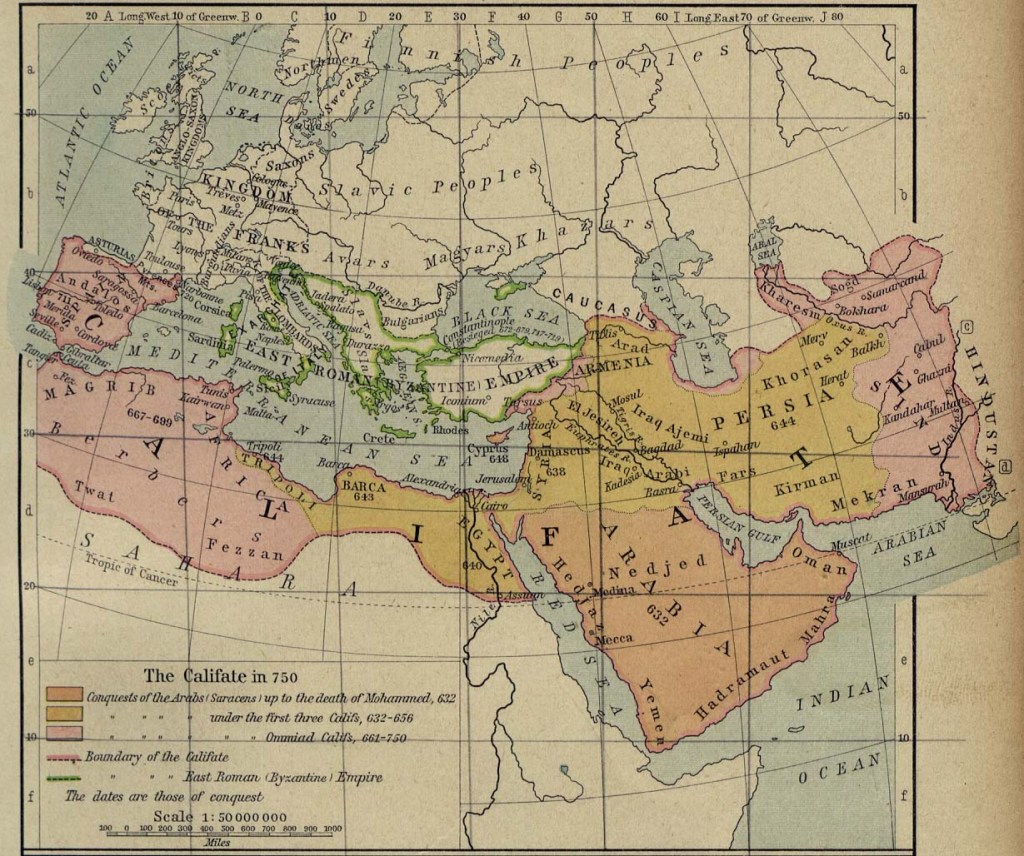
In ancient times, the middle east is known as Mesopotamia, the Arabian Peninsula, the Persian Empire, and Babylonia (Iran, Iraq, Syria, Turkey, Egypt, Afghanistan, Pakistan, and today’s Saudi Arabia). 

America’s self-interest has made many enemies in the Middle East.  America is a cultural and political baby in respect to the ancient cultures of the Middle East. The birth of the Islamic religion dates to 7th century in Saudi Arabia. 

As is true of all religions that have stood the test of time, the Islamic religion has broken into different factions that consider themselves Islamic but with different interpretations of their faith. 

The added dimension of poverty, cultural identity, and economic inequality encourage belief in religion. A religious believer’s purpose in the world is to gain some peace in this world, with hope for eternal life in the next. Therein lies the source of much violence within and among all countries of the world. There can be little peace in a world where people are being indiscriminately murdered, starving and treated unequally.

An example of how violent and unfair nations can be is Syrian leaders’ murder of its own people.

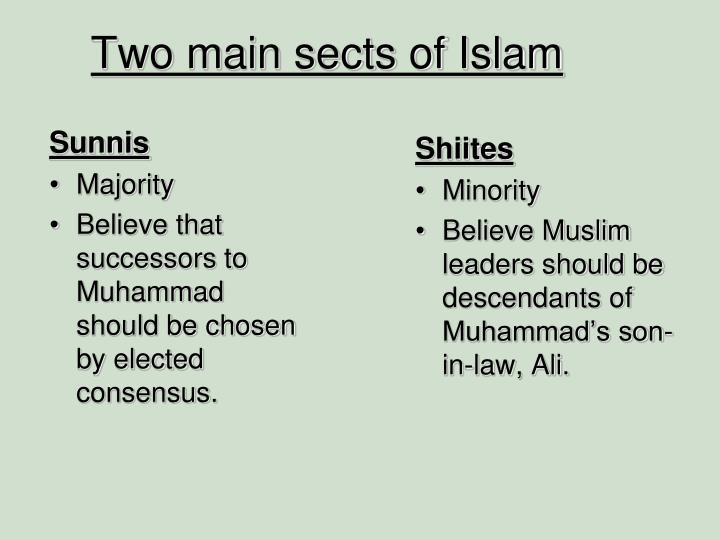
Ghattas explains there are two major versions of the Islamic religion in the Middle East.  One is Sunni, the other is Shite. 

The hegemon for the Sunni Islamic religion lies in several countries but its center of power is Saudi Arabia.  The center of power for Shite belief is Iran.  “Black Wave” recounts a history of both power centers and how they use religious belief to increase their influence and power in the Middle East.

 Ghattas argues religious interpretation is a tool used by Saudi Arabian’ and Iranian’ leadership to gain power and influence in the Middle East.  Ghattas infers the leaders of Iran and Saudi Arabia do not believe in peaceful coexistence but in hegemonic power.  They use the Islamic religion to maintain control of their power.  When state power is threatened, their leaders’ resort to interpretations of Islam that preserve their control. 

Citizens of any country may be murdered by zealots, domestic terrorists, or foreign invaders. Leaders seeking power care little for those who believe in an afterlife or the luxury of their current life as long as they are obedient servants of the state.

Ghattas recounts many examples of Middle Eastern leadership that show little concern for their citizens, e.g., Saudi Arabia’s murder and dismembering of Jamal Khashoggi, Syria‘s gassing of Syrian citizens, and Iran’s imprisonment and torture of citizens who choose not to follow political leaders’ interpretations of the Koran.

 Ghattas’s book implies the consequence of American ignorance of Islamic beliefs victimizes the poor, powerless, and disenfranchised.  A western country that does not understand the subtlety of religious beliefs in the Middle East has little influence on the course of events.  With a better understanding of Islamic faith and how it is being used by Saudi Arabia and Iran, there is some hope for peace. 

Understanding and acceptance of those who fervently believe in a religion, along with economic opportunity for those who are victimized by hardship and/or violence, offers some hope for peace.  Without understanding of foreign cultures and economic assistance for those victimized, world conflagration is an ever-present danger. One must ask oneself–how wise is it to use political policy, religion, or trade to victimize the poor and disenfranchised?

BRAIN SKEPTIC

Audio-book Review
By Chet Yarbrough

(Blog:awalkingdelight)
Website: chetyarbrough.blog

The Idea of the Brain (The Past and Future of Neuroscience)

By: Matthew Cobb

Narrated by: Joe Jameson

Matthew Cobb (Author, British zoologist, professor of zioology at University of Manchester.)

Matthew Cobb is a skeptic.  “The Idea of the Brain” cautions the public about claims of doctors, psychologists, chemists, neuroscientists, philosophers, and technologists who claim breakthrough understandings of the brain.  Cobb explains the history of how, where, and why the brain creates thought and action. Even to this day in the 21st century, brain function remains a mystery to science and the general public.  Cobb does not deny progress has been made but his history of “The Idea of the Brain” shows progress has been slow, often misleading, and sometimes flatly wrong.

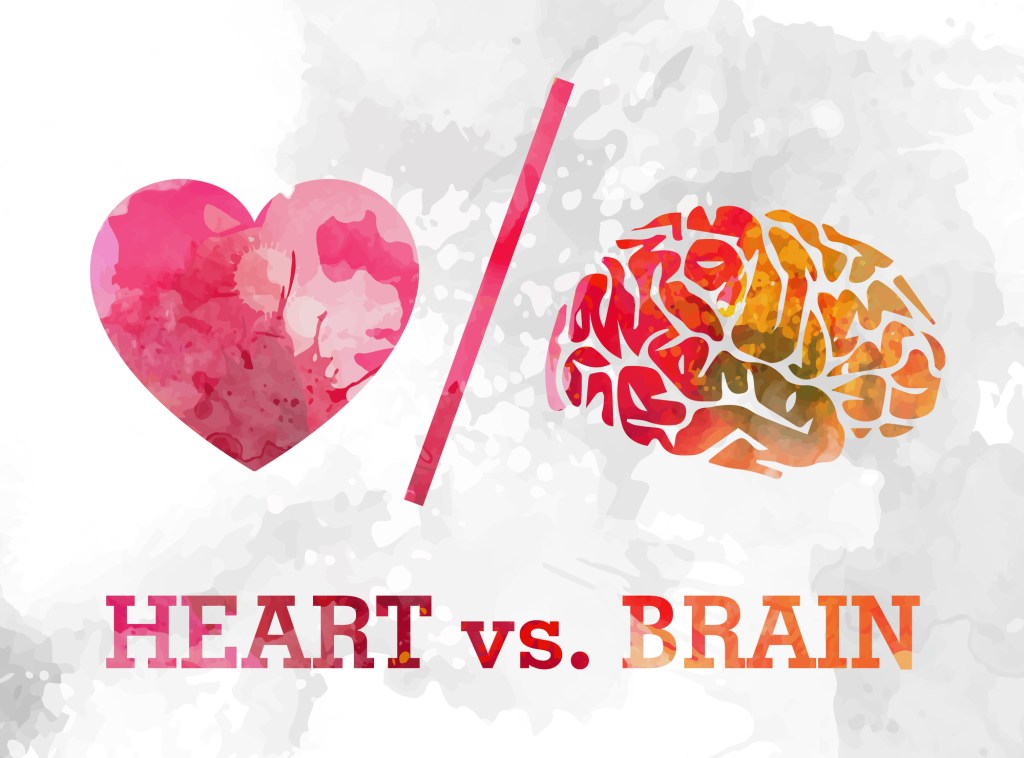
He explains how, in the time of Aristotle, the source of human’ intelligence and emotion were believed to be in the heart.

As the present takes hold, it becomes clear that intelligence and emotion come from chemistry and neuronal activity of the brain and body with its primary loci in the brain.  The shift in understanding from heart to brain is proven by science, but details remain as much a mystery in the present as in the past.

MRI

Cobb skeptically reviews modern science’s explanation of brain function.  He questions the detail value of brain imaging (MRI), and researchers’ comparison of computers with brain function.    MRI does not analyze brain function at a neuronal level.  It offers broad information about areas of the brain that influence action.  It fails to reveal anything about the brain at a neuronal level.

Cobb acknowledges brain imaging offers some insight to specific areas of the brain that process information for thought and action.  However, Cobb notes MRI is a blunt instrument of analysis because it only indirectly notes stimulus by showing increased blood flow to specific areas of the brain.

“The Idea of the Brain” recalls the history of patients who have been treated for epileptic seizures. The seizures are partially abated by brain surgery.

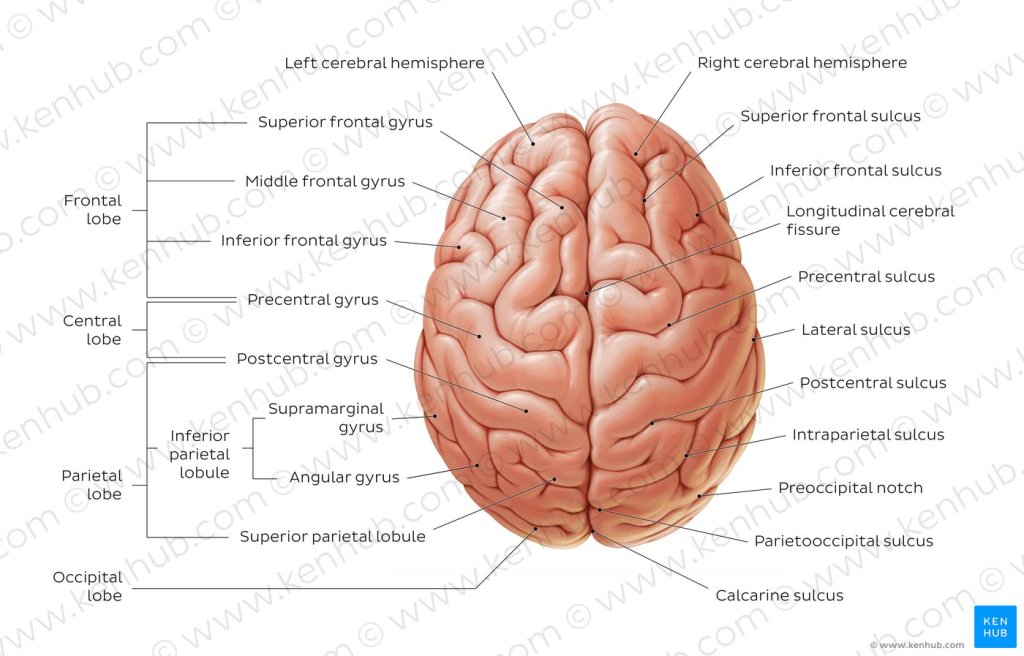
The consequence has been mixed in that the seizures are reduced but some motor skills or memory functions are diminished.  Cobb also explains a consequence of separating the two lobes of the brain.  When they are separated, the surgery literally makes the person of two minds, one of which knows little about the other’s thoughts and actions. The separation of the two halves of the brain confirms the differences in perception and utility of each lobe of the brain in viewing and understanding the world.

Cobb goes on to criticize comparison of brains to computers by noting neuronal activity is much more complex than the most sophisticated computer programs. 

He notes a brain’s network of neuronal activity is different from a computer’s processing of information in fundamental ways.  A brain predetermines future action of the body before it knows what action will be taken.  There is no predetermination in a computer.   

Cobb explains a human brain processes information through chemical as well as electrical impulses.

Cobb notes brains create reality from past recollection and present perception. A brain reconstructs the past from experience and interpretation.  A computer does not interpret the past or create thought.  Input to a computer is based on coding past and present information that is interpreted and input by humans. There is no homunculus in the human brain. A human brain mysteriously creates the past and present to form thoughts and action.  Human thoughts and actions are based on emotion, imprecise memory, and intellect.  Computers only correlate, not create, information. A computer devises plans based on correlation rather than creative thought implied by human neuronal activity.

Cobb makes the point that today’s computers do not think in a human sense.  Computers do not create but only correlate information with results that are plans for action and execution. 

Cobb suggests a computer singularity like that suggested by some futurists is too far into the future to be predictable.  Until there is testable proof and understanding of human neuronal action, computers will remain lifeless tools of humankind.

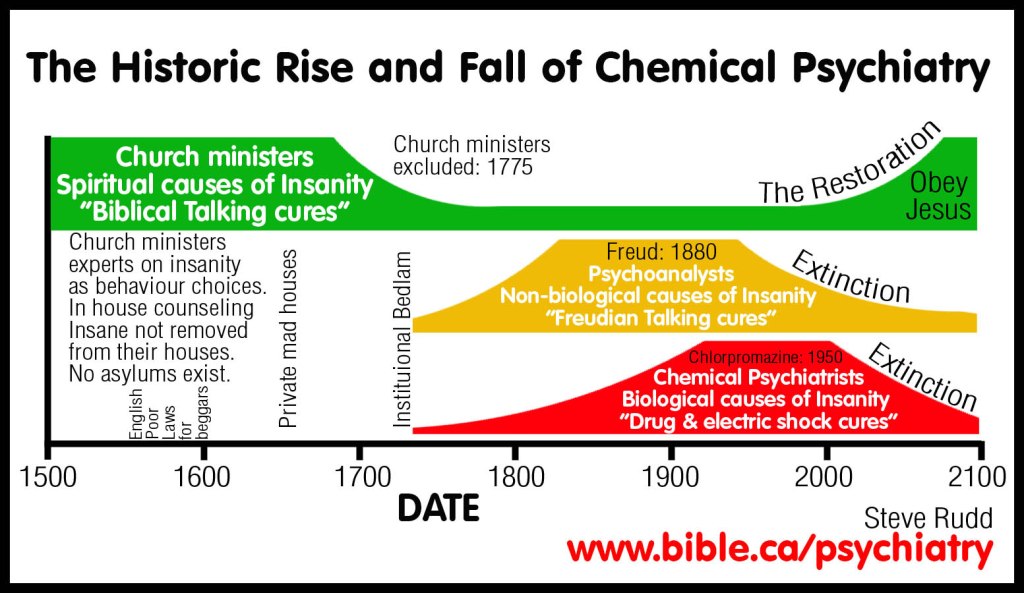
Cobb’s research makes him skeptical of chemical treatment for psychological disorders because of their unsuspected side effects.  He acknowledges some of their success in abating Parkinson’s symptoms and other chemically caused maladies.  However, Cobb forthrightly warns anyone taking prescribed drugs for mental disorder to continue taking their drugs under the supervision of qualified physicians.  Cobb notes two major pharmaceutical companies have abandoned research for chemical treatment of mental disorders because of their imprecise medicinal benefit.

In the end, Cobb is optimistic about science’s ability to fully understand the brain.  However, he suggests it will be centuries before full understanding is achieved.  Cobb believes the avenue for further research should be on living things which have fewer brain cells.  He argues the complexity of neuronal function requires understanding at a neuronal level before expecting a breakthrough that will reveal the mystery of consciousness and human thought and action. 

To Cobb, science requires experimental proof.  That proof must begin with repeatable experiments that result in the same answers by different experimenters.  He argues understanding at a neural level will be key to understanding brain function and its chemical and electrical activity. 

Cobb implies present-day computer comparison to the brain is a dead end.  He infers–when neuronal brain activity is understood, today’s comparison of computers to brains will be the equivalent of science recognizing the brain, not the heart, is the source of thought and action.  Cobb’s implication is that with an understanding of neuronal brain function, artificial intelligence may, in the far future, create life and consciousness. The ramification of that thought is that human procreation may be a thing of the past.

CIVIL RIGHTS

Audio-book Review
By Chet Yarbrough

(Blog:awalkingdelight)
Website: chetyarbrough.blog

Great Figures of the Civil Rights Movement

By: The Great Courses

Narrated by: Hasan Kwame Jeffries

Hasan Kwame Jeffries (Author, associate professor of history at Ohio State University,)

A timely refresher on the civil rights movement is given by Hasan Kwame Jeffries in the “Great Figures of the Civil Rights Movement”.  It is timely because of the resurrection of the assassination of Malcolm X and its reification of a fundamental split in the black civil rights movement in America.

Viet Nguyen writes in his fictional novel, “The Committed, “I am from my mother”. Nothing else matters. Color, national origin, religious belief, or sexual orientation do not determine the value of a human being.

Marcus Garvey (1887-1940, publisher and jornalist, black nationalist.)

Jeffries reminds us of the movement initiated by Marcus Garvey.  Though the idea of a return to Africa has come up many times in the history of America, Garvey established a black movement for the creation of an independent African nation.

To one who believes in the principles of freedom and equality for all, the idea of equality through independence is wrong.  All humans live on space ship earth. It is the principle of our equal humanness that preserves civilization. Separate is not equal. The problem is human freedom, equality, and equality of opportunity are works in progress toward a goal of equal treatment by society. 

Women and minorities are not treated equally in America or in most places of the world.  Since America’s beginning as a republic, many believed in qualified freedom, and a few in universal equality, but equality is falsely preached by white power and never achieved.  Slavery is an undeniable truth in world history.  In America, atrocities of black slavery in the south and institutional discrimination in the north are well documented.  It is no wonder that Marcus Garvey successfully tapped into a desire of many black Americans to achieve equality through separation.  Separation’s appeal is in its potential as a base for political power. Even though that power is limited by being a faction in a dominant social and political power structure.

What Jeffries shows is that Garvey is the father of the idea of Black Power that is symbolized by the Black Panther movement in the mid-20th century. 

From Jeffries’ history, one can see and understand a more nuanced and broader American civil rights movement.  White American power did not exhibit much understanding of the black power movement in the 1960s. White America responded with violence. White America murdered Fred Hampton, the Chicago Black Panther Chairman and local leader.  This unjust murder lies at the feet of the City of Chicago and the FBI.

Stokely Stanford Carmichael aka Kwame Ture (1941-1968, 4th Chairman of the Student Nonviolent Coordinating Committee.)

Jeffries notes the idea of Black Power came from a Stokely Carmichael’s rallying slogan in the 1960s.  (The phrase is said by some to have originated in a non-fiction book, “Black Power”, written by Richard Wright and published in 1954.) Carmichael participates in the 1961 Freedom Rides in Alabama.  They were organized by CORE (Congress of Racial Equality) to desegregate public transit services and restaurants.  In 1961, Carmichael and others travel to Jackson, Mississippi to sit in a segregated restaurant.  Carmichael, along with other freedom riders, is arrested for disturbing the peace. He is sent to prison for 53 days in Sunflower County, Mississippi.  Because of Carmichael’s bravery and oratorical skill, he became a full-time organizer for SNCC (Student Nonviolent Coordinating Committee).

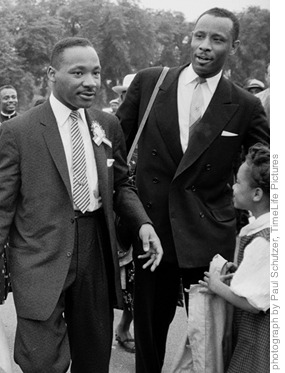
Of course, the stars of the non-violent black movement are best known as men like Martin Luther King. 

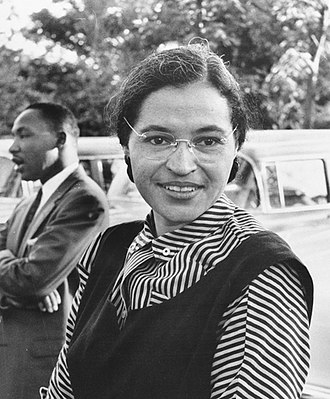
King’s history is well known but Jeffries notes there were many black women that became extremely important to the movement for black emancipation.  Ella Baker becomes involved with the NAACP (1938-53), SCLC (1957-60), and the initial foundation of SNCC (1960-66) as a black activist and highly successful recruiter. Rosa Parks becomes the face of the bus boycott in Montgomery, Alabama.  Diane Nash, as a Freedom Rider, is known for integrating lunch counters in Nashville, Tennessee.  Nash is also a co-founder of SNCC.  Fannie Lou Hamer fights for women’s rights as the vice-chair of the Freedom Democratic Party in Mississippi.  The newly formed party successfully gets several local black politicians elected in Mississippi.  Jeffries notes the FDP is less successful on a national level, but Hamer is elected to the U.S. Senate in 1964, and later serves in the Mississippi State Senate.

In order pictured left to right: Ella Josephine Baker (1903-1986, Political activist for the NAACP, SCLC, and SNCC.), Rosa Parks (1913-2005, Civil Rights Activist, best known for the Montgomery bus boycott.), Diane Judith Nash (Freedom rider and co-founder of SNCC.), Fannie Lou Hamer (1917-1977, Civil rights leader, Vice charwoman of Freedom Democratic Party, Co-founder of National Women’s Political Caucus.)

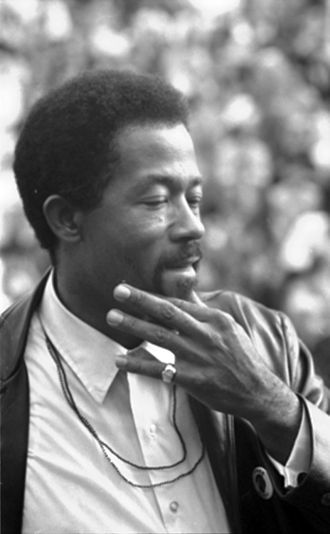
Eldridge Cleaver (1935-1998, spent 7 years in exile in Cuba, returned in 1975, joined the Church of Jesus Christ of Latter-day Saints and became a conservative Republican.)

Jeffries glosses over Eldridge Cleaver’s leadership in ambushing Oakland police officers (two officers were wounded) and his arrest and escape to Cuba to avoid trial.  However, Kathleen Neal Clever, who married and divorce Cleaver, became an active member of the Black Panther Party that helped feed people, provide family medical care services, and provide transportation for families to visit loved ones in prison.  Jeffries notes Kathleen Neal Clever came from an upper middle class black family and supported the early founders of the Black Panther organization with her father’s witting or unwitting financial support.

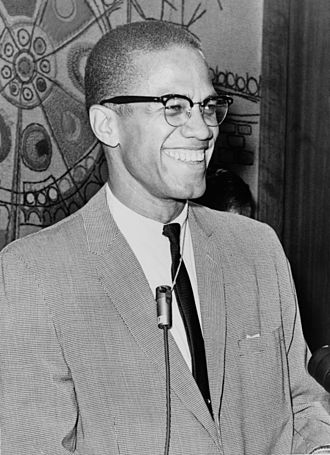
One of the most interesting chapters of Jeffries book is about Malcolm X, particularly because of the recent release of a wrongly accused assassin.  Jeffries implies Malcolm X is assassinated by the Nation of Islam.  Jeffries infers the assassination is related to Malcolm X’s disillusion with the founder’s (Elijah Muhammad) dissolute sexual behavior, and NOI’s belief that the races should be separated to form a black nation to compete with all nations. 

Malcolm X came to believe all people are created equal in the eyes of God, while arguing the separatist ideal of NOI and Marcus Garvey were wrong.  The history of Malcolm X’s journey through life is fascinating, short, and impactful.  One cannot help but wonder how Malcom X could have changed the course of history had he not been assassinated.

Jeffries could have gone further back in history to tell the story of American black nationalism but he has done a great job of identifying the history of the 20th century heroes of the movement.

FORMULA FOR PEACE

Audio-book Review
By Chet Yarbrough

(Blog:awalkingdelight)
Website: chetyarbrough.blog

The Anatomy of Peace

By: The Arbinger Institute (Third Edition: Resolving the Heart of Conflict)

Narrated by: Kaleo Griffith

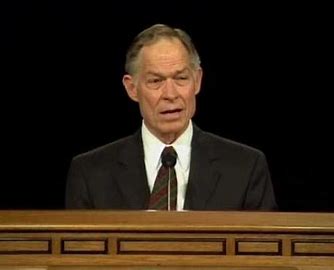
The Arbinger Institute was founded in 1979 by Dr. C. Terry Warner.  He co-authored “Leadership and Self Deception”.  In 1967 he received his Ph.D. from Yale University and is a professor at Brigham Young University. 

          The Arbinger Institute offers leadership training and consulting to organizations, families, and individuals around the world.   

              In “The Anatomy of Peace” a story is told about an Israeli and Palestinian who run a  youth camp for troubled children.  One presumes this is a story, not an actual event, that is designed to advise reader/listeners of the “…Institutes” beliefs.

“The Arbinger Institutes” objective is to identify the causes of human conflict and how it can be resolved.

              As the world knows, the Israeli/Palestinian conflict continues to rage without any evidence of resolution.  Some argue the solution is splitting the area into two states.  Others insist only one state is necessary with representation by resident voters.  “The Anatomy of Peace” argues neither solution addresses the fundamental cause for conflict, nor will it result in peace.

              Before explaining the camp leader’s histories in the middle east, the story begins with a young girl arguing with her family about being left at the camp for two weeks.  The young girl refuses.  The camp is in Arizona where temperatures rise well above 100 degrees in the summer.  This young girl runs away with no shoes on her feet.  She is followed by two young people who were once miscreates enrolled at the camp but are now employees.  They follow her, and catch up after several hours of flight to find her feet bloody and burned.  One of the two camp employees offers the shoes she is wearing to the runaway.  The runaway refuses.  Both employees choose to take their shoes off and continue running after her.  When she stops in a shopping center where she sees a friend of hers, they all come together.  The runaway looks at the camp employees and is shocked to see her pursuers had taken off their shoes.  The runaway agrees to stay for two weeks at the camp.  Her reason for staying is symbolic.
              The troubled children’s camp is run by an Israeli and a Palestinian who are at peace with each other despite the conflict in their home country.  Both have lost their fathers because of war.  In their younger adult lives, both harbored hate for their enemies, the killers of their fathers and countrymen.  Their respective stories are about how each overcomes their hate.  It is same as the story of the runaway.  They recognize each other as human beings.  They refer to Martin Buber who wrote the book “I and Thou” which recognizes the importance of reverencing the humanness of all human life.

Martin Buber (1878-1965, Author, 20th century philosopher.)

              The point is made that all people conflict with themselves when they treat others as objects rather than fellow members of humanity.  The principle of meditation is raised to get in touch with yourself, to understand yourself, to realize that in-common humanness is what must be recognized for peace to come among combatants.

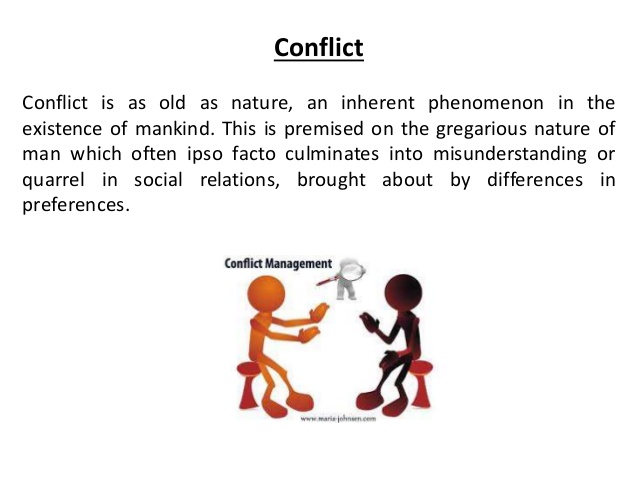
              What the authors argue is that humans create boxes that carry the weight of who they are–which is not who they really are or mean to be.  In knowing oneself and the boxes we create for ourselves, we act in ways that defy the truth of all people’s humanness.  This idea is old.  It is the same idea that ancient Greeks spoke of when saying “know thyself”.  The Institute teaches that in self-understanding (knowing what boxes one is in) and realization of all people’s humanness, one can find peace. 

              The idea is to stay out of boxes that define you. This seems too simple. However, it is not simple or easy because of our inability to break out of boxes that have been formed over years of experience.   The first step is to not objectify other human beings.  Human labeling puts one in a  box.  The box creates someone who is an object, not a fellow human being.  The second is to know yourself and understand your boxes.  The last step is to get rid of the boxes.  Have empathy and do the things that make you feel good about your humanness.

The author makes the point that many things in life are beyond our control but those thoughts and actions that are within our control should be done in ways that make us feel good about ourselves.

                They argue you are in a box if you do not feel good about what you do.  Self-awareness sets one free to find peace.  There is a great deal to offer leaders and managers of other people in the teachings of the Arbinger Institute. A skeptic may find the Arbinger Institute’s formula for peace Pollyannaish. It will only change those who choose love and self-understanding in the face of human nature’s desire for money, power, and prestige.

Does the Arbinger Institute’s formula for peace have any application to the realpolitik of Russia’s interest in Ukraine and Georgia?

In Tolstoy’s view leaders are great because they rise to the circumstances of their times; not because they are wiser, more intelligent, all powerful, or omniscient, but because their decisions appear right in light of history.

What boxes inhibit President Zelensky and Putin?

BRAIN FUNCTION

Audio-book Review
By Chet Yarbrough

(Blog:awalkingdelight)
Website: chetyarbrough.blog

The Secrets of Consciousness

By: Essays in Scientific American

Narrated by: Coleen Marlo

A lot of ground is covered in “The Secrets of Consciousness” but for many who are interested in the subject, little new is revealed. 

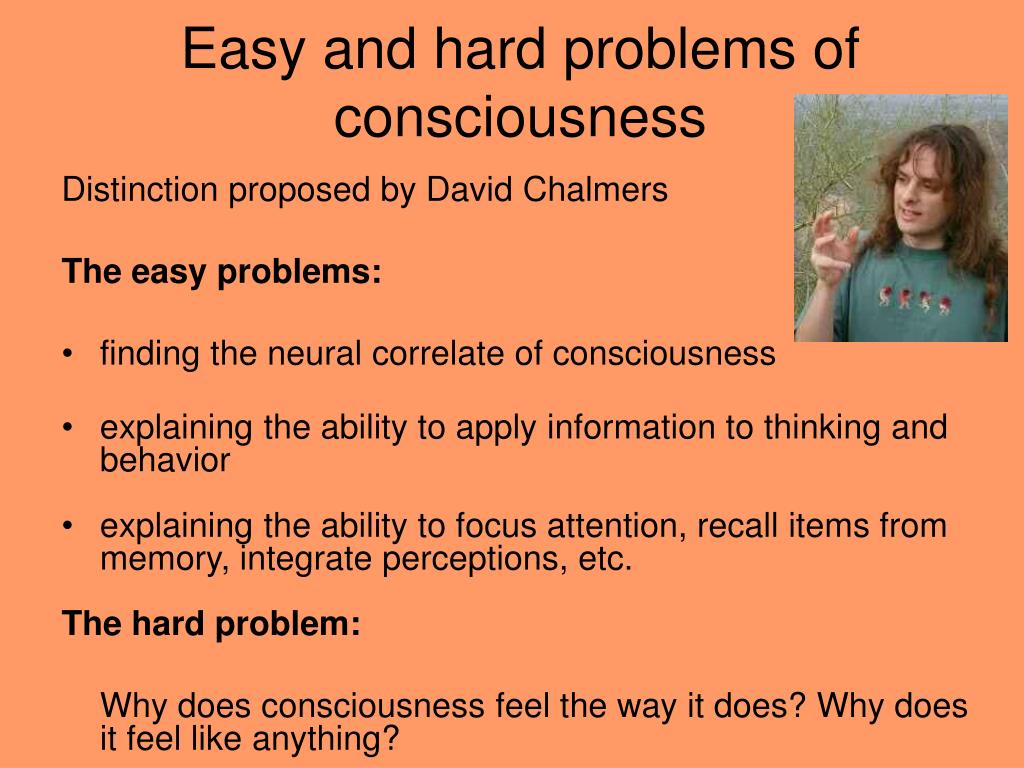
Many articles and books have been written about the easy and hard part of the theory of consciousness. 

The easy part is knowledge of the physical characteristics and mechanics of brain function–the “how and where” of information that is stored and transmitted by the brain. 

The hard part remains the explanation of what consciousness means, particularly the “whys”. Why are living things aware of themselves, others, and the world from information transmission within a brain.  Why do humans get angry?  Why do we love?  Why do we hate?  Why are we sad or happy?  Is everything in the universe conscious?

(It is somewhat surprising that “A Thousand Brains” theory is not revealed in “The Secrets…” but it may be timing of publication. Or it may be scientist’s discounting of an engineer’s qualification for understanding consciousness.)

Consciousness is explained as an all-encompassing part of nature.  There is an avenue for consciousness in A.I., once the mechanics of consciousness are fully understood. The focus of first chapters are on scientific experiments showing all living things exhibit consciousness through their actions. 

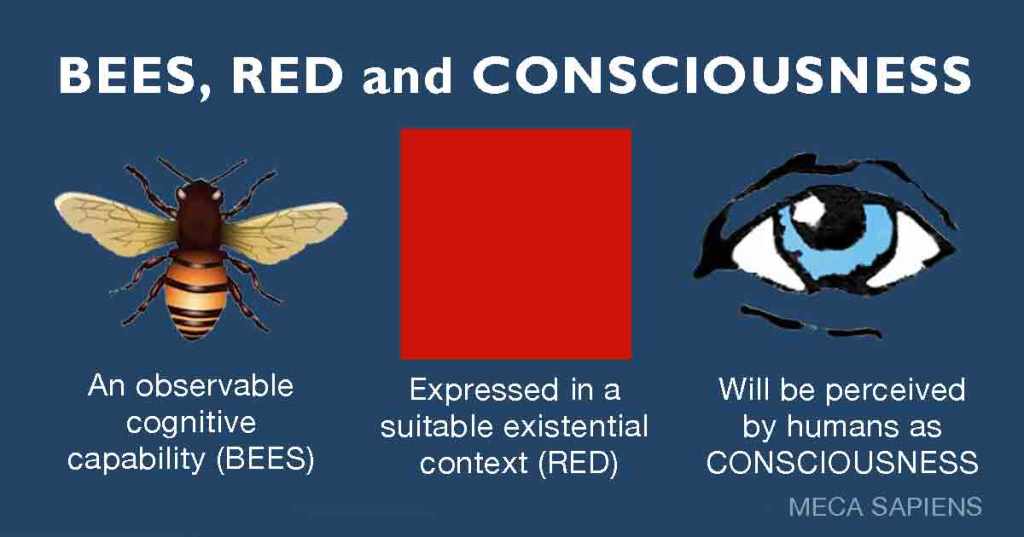
For example, bees show consciousness by seeing red and in choosing the site of their nests with an ability to consciously navigate the world.

Following chapters explain parts of the brain and the mechanics of brain function.  They explore the complexity and interconnections of the brain and how different parts of the brain have specific functions.  This is the easy part of understanding consciousness because it is something that can be physically measured through brain scans and experiments that correlate actions with brain stimuli.  

Next, there are explanations of how experiments with brain stimuli offers potential for reading one’s mind without verbal communication. 

It opens the door for a consciousness meter that may allow some level of predictability and mind control.  In a positive sense, stimulus experiments might hold a key to reawakening consciousness in comatose patients.  The negative sense is the potential for brain washing a non-conforming human being.

Section 4 of these “Scientific American” articles is about “Altered States of Reality”. 

A particularly bizarre and threatening chapter suggests someone who sleepwalks can murder another person without being legally guilty of murder.

The last two sections of articles deal with psychoactive drugs, spiritual belief, and their effects on brain function.  A listener might view these articles as incentive to experiment with consciousness in two fundamentally different ways. One is with the use of psychedelic’s. The other is to join a monastery or convent.

The last article deals with the end of life. It reveals a possible explanation of why some see a white light just before dying.

Science argues the end of life is the end of consciousness. There is nothing after death–no heaven, no hell, just nothingness.

As an introduction to consciousness, this compendium is interesting.  However, after completion, the hard part of consciousness remains a secret.

COWBOY TALES

Audio-book Review
By Chet Yarbrough

(Blog:awalkingdelight)
Website: chetyarbrough.blog

The Trail to Crazy Man

By: Louis L’Amour

Narrated by: Jim Gough, Christopher Lane

Louis L’Amour (LaMoore) (1908-1988, Author.)

Louis L’Amour has been gone for many years but “The Tale of Crazy Man” is a good introduction to an entertaining storyteller.  L’Amour tells two short stories. Christopher Lane’s narration and twists of the second story make it the better of the two, but L’Amour’s skill pleases reader/listeners in both.

Recalling L’Amour’s Sackett family saga (seventeen stories) makes a reader/listener appreciate cowboy tales where honest, upright heroes always win.  

L’Amour’s stories are of an idealized American west where good always overcomes evil.  Though his heroes are preternaturally perfect, L’Amour satisfies a human desire for wholesomeness.

The first story in “The Trail..” is about a wild west gang leader’s adopted son who is to take over his criminal empire.  L’Amour infers the putative father lives in the American west when only the strong survive by being the most ruthless in the era in which they live.  The adopted son is shielded from that early western belief by being formally educated while being taught to be a great tracker who is fast and accurate with a gun.  As the father grows older, he grooms his adopted son to takeover the gang and a ranch that covers a wide area of the country.

The adopted son chooses not to follow his mentor’s outlaw ways. L’Amour implies the west is evolving, with education making a difference. By the end of the story, the father appears reconciled to the change. The adopted son seems destined to make future use of the former outlaw’s acquired wealth for peace and an improved society.

The second tale is about two cowboys that have been drugged and indentured by a tyrannical sea captain docked in San Francisco.  One cowboy dies on the ship with a commitment from the other cowboy to take care of his wife and daughter who he left in Wyoming. Before being highjacked, the dying cowboy had gone to San Francisco to pay off a mortgager on the ranch on which his wife and daughter were living.

When the deceased cowboy’s friend and some fellow captives escape their indenture, two of the cowboys stay together to travel from the west coast to Wyoming to fulfill the dead father’s last wish.  What the friends find is a small town, in which the wife and daughter live, is controlled by two men.  One of the men is the mortgage lender that had been paid off. He pocketed the payment without telling the wife and daughter that the mortgage had been paid. Then, he arranged for the dead father’s kidnapping by the San Francisco Sea captain. 

These two town leaders are evil men but their evilness is different.  One is an uneducated thug who relies on violence to control the town.  The other is an educated thug who relies on stealth and cleverness to control the town.  The two thugs do not like each other but are partners in control of the town. 

The deceased father’s wife is dead.  The educated thug plans to marry the daughter who views the lying mortgage lender as a benefactor by not foreclosing on their ranch.  The uneducated thug plans to take the daughter by force. There are several plots in this second short story.    Both thugs are indirectly and directly dealt with by the cowboy who had made the commitment to the deceased father.

L’Amour writes with clarity and concreteness.  His stories are simple allegorical tales about good and evil.  They are wonderfully entertaining and leave one happy with the thought that good always overcomes evil.