Graduate Oregon State University and Northern Illinois University,
Former City Manager, Corporate Vice President, General Contractor, Non-Profit Project Manager, occasional free lance writer and photographer for the Las Vegas Review Journal.
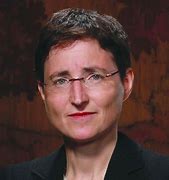
Laurel Snyder (American Author, Poet, writer of children’s books, and PBS commentator.)
“My Jasper June” is a beautifully rendered story of life by Laurel Snyder. Snyder shows different ways of coping with life’s broken parts. It takes place in Atlanta, Georgia, but it could be in Anywhere, America. It is a story of a 13-year-old girl, her friend, and her family. Every parent who has a teenage child will be entranced by Snyder’s tale.
Having lived long, older reader/listeners know every life has broken parts. We either recover from the broken parts or we lose our way.
Snyder’s novel of a family who loses a son from drowning may be at the extreme end of life’s broken parts, but every life is touched by loss and hardship.
Snyder shows how a mother, father, and daughter respond to a child’s loss in their family.
Snyder’s story explains a broken part in life is suffered individually. Being broken comes in many forms. It may be a death of a loved one, failure in work, failure as a mother-father-daughter-son, failure in intellect, failure in physical health, so on, and on. Every person is broken in their own way. Care for broken parts is often lost in a fog of grief and despair. That grief and despair only disappears with time, understanding, and action.
Snyder’s novel shows grief is ameliorated with acceptance and reworking of one’s perspective.
Snyder’s story is not just about a death in the family. There are many ways Snyder’s story resonates with its reader/listeners. The most significant is in ways of coping with broken parts of one’s life. Some run from problems, but as the boxer Joe Louis famously said, “You can run but you can’t hide.” Snyder shows healing from broken parts can only begin with being honest with yourself and those around you. Understand how you are broken and explain the broken parts to those who are important to you. Snyder shows with understanding of what is broken, plans can be made, and actions taken.
Snyder’s novel shows–only with honesty of explanation can one’s relationship with another be restored.
Laurel Snyder’s story is as interesting and satisfying in its end as in its beginning.
War is hell by any definition, but it gave philosophers focus for understanding the meaning of life. Sadly, that understanding did not change the future course of history.
Audio-book Review By Chet Yarbrough
Blog: awalkingdelight Website: chetyarbrough.blog
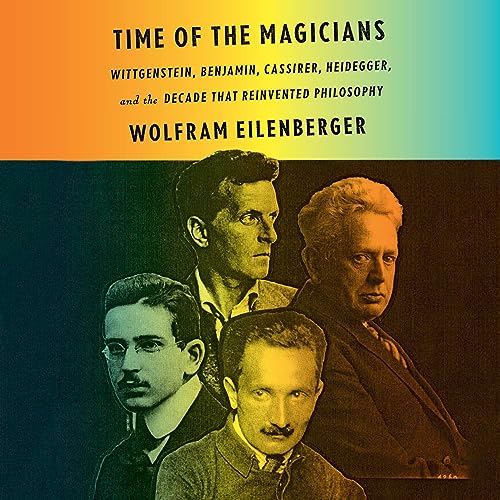
Time of the Magicians: Wittgenstein, Benjamin, Cassirer, Heidegger, and the Decade that Reinvented Philosophy
By: Wolfram Eilenberger, Shaun Whiteside
Narrated by: undisclosed.
Wolfram Eilenberger (German Author, award winning writer and philosopher.)
“Time of the Magicians” is particularly interesting because it tells the stories of four philosophers after WWI when Hitler is beginning his rise to power. Philosophers will undoubtably get more out of this book, but life experiences of these four men make it more interesting to the general public. The primary focus of “Time of the Magicians” is on Ludwig Wittgenstein and Martin Heidegger.
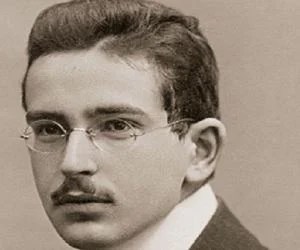
Ludwig Wittgenstein (1889-1951, Austrian-British philosopher of logic, mathematics, mind, and language, died at age 62.)
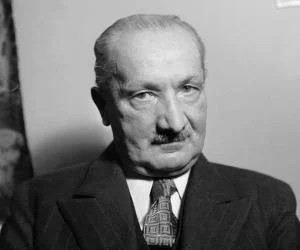
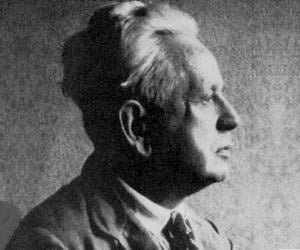
Martin Heidegger (1889-1976, German philosopher of phenomenology, existentialism, and hermeneutics, died at age 86)
Three of the four men who live in “Time of the Magicians” have a Jewish background. The two most famous philosophers are Ludwig Wittgenstein and Martin Heidegger. Heidegger supports Hitler, chooses to join the Nazi Party, and refuses to write or say anything about the Holocaust after the war. The other three philosophers leave their home countries before Hitler becomes Chancellor. Wittgenstein, as a world traveler, becomes a student of Bertrand Russell in 1911 at Cambridge. Walter Benjamin and Ernst Cassirer travel a good deal while choosing to leave Germany in 1933.
One of many interesting points in “Time of the Magicians” is that Hannah Arendt was a student of Martin Heidegger’s at the University of Marburg in Germany.
Despite Heidegger’s antisemitism, at 35 he has an affair with the 18-year-old Arendt who came from a Jewish/Catholic household. This is in the early 1920s, before Hitler’s rise, but it reflects the intellectual compartmentalization of life and human weakness that exists when it comes to sex. (At the time of the affair, Heidegger was married to Elfride Petri in 1917 and remained married until his death in 1976.)
Aside from sexual transgressions noted in “Time of the Magicians”, the biographies of these four men are about their philosophical beliefs. WWI like all wars affects people in different ways. Some, like Wittgenstein, and Cassirer join the military and fight for their countries, while others like Benjamin look for ways to avoid conscription. Heidegger didn’t join the military but served the Nazis as an academic.
Walter Benjamin (1892-1940, German Jewish essayist, philosopher, and cultural critic, commits suicide at age 48)
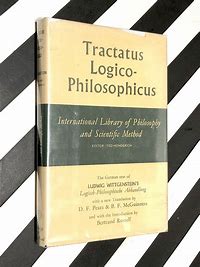
Joining or avoiding military service may come from good and bad motives. Wittgenstein and Cassirer fought for the Central Powers for reasons undisclosed. “Time of the Magicians” suggests Wittgenstein fought valiantly for the Central Powers and became a P.O.W. in Italy. While in prison, Wittgenstein began writing his most famous book on philosophy, “Tractatus Logico-Philosophicus”. However, the Central Powers lost to the Allied Powers (the U.K., France, and Russia) in WWI.
Heidegger supported Hitler through the end of World War II. One might conclude joining a war is a bad idea in any circumstance. As some authors have noted, there are no “good” wars. In any case, wars had a great deal to do with the philosophes of these four men.
Ernst Alfred Cassierer (1874-1945, German Jewish philosopher of phenomenology, and culture, died at age 70.)
The experience of war undoubtedly affected all four philosopher’s beliefs. Wittgenstein came from a wealthy industrial family. Wittgenstein is heir to a multi-million-dollar industrial empire. After the war, he chooses to give any fortune he might inherit to his mother, sisters, and brothers. He refuses his wealth and becomes employed in a small town in Austria where he teaches grade school. Wittgenstein refuses any financial help from his family or fellow philosophers. He is mired in poverty that remains his condition until his return to Cambridge.
Wittgenstein is characterized as a martinet but committed teacher of his young students.
His poverty and isolation seem surreal considering his education and family background. He actually has an engineering degree from the Technical University of Berlin which he received in 1908. His commitment to his young students forms a background to his belief in science with the dissection of animals and his focus on human language.
Today, we take dictionaries for granted, but they were nearly non-existent in Germany after WWI. Wittgenstein begins collecting words used by his students in class to create a dictionary that he intends to have published for schools in his area. The idea is nixed by the school administration.
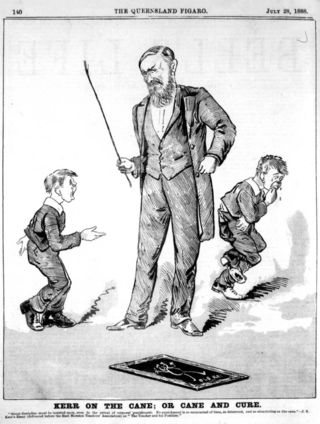
Wittgenstein leaves the grade school he is teaching after an incident that involves a student who feints after being struck by Wittgenstein. This martial treatment of students is not particularly uncommon, but the parent of the student is a wealthy matron who complains to the school. The school does not discharge Wittgenstein, but he chooses to leave in the middle of the night and abandon his teaching career.
Wittgenstein’s “Tractatus…” is published in 1921 without compensation to its author.
The purpose of the book is to explain the relationship between language and reality. At the same time, it is an attempt to show the limits of science. It is characterized as a difficult book to understand but becomes highly regarded at Cambridge University in England and becomes the basis for Wittgenstein’s return to England where he is called the “God” of philosophy. This is an interesting appellation but equally interesting is the appellation given to Heidegger as the “King” of philosophy. Obviously, both men were highly regarded at Cambridge in the 1920s, but in quite different ways.
THE HELL OF THE UKRAINE WAR 2022-2023
“Time of the Magians” is a fascinating glimpse into the lives of storied philosophers and the impact on their understanding of life which appears based on their experience in the “Great War”. War is hell by any definition, but it gave philosophers focus for understanding the meaning of life. Sadly, that understanding did not change the future course of history.
Through Two Doors at Once (The Elegant Experiment That Captures the Enigma of Our Quantum Reality)
By: Anil Ananthaswamy
Narrated by: Rene Ruiz
Anil Ananthaswarmy (Indian author, and science journalist, Journalism Research fellow at MIT.)
Anil Ananthaswarmy makes a valiant effort to explain the “…Enigma of Quantum Reality” with “Through Two Doors at Once”. It takes a writer’s courage and determination to explain what science presently understands about quantum physics; particularly, to someone whose education is limited to reading and liberal arts.
Ananthaswarmy notes Einstein acknowledged the truth and value of quantum physics.
Ananthaswarmy’s history of the quantum world is like the difference between Newton’s physics laws on earth and Einstein’s physics laws in the universe.
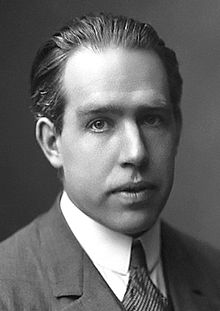
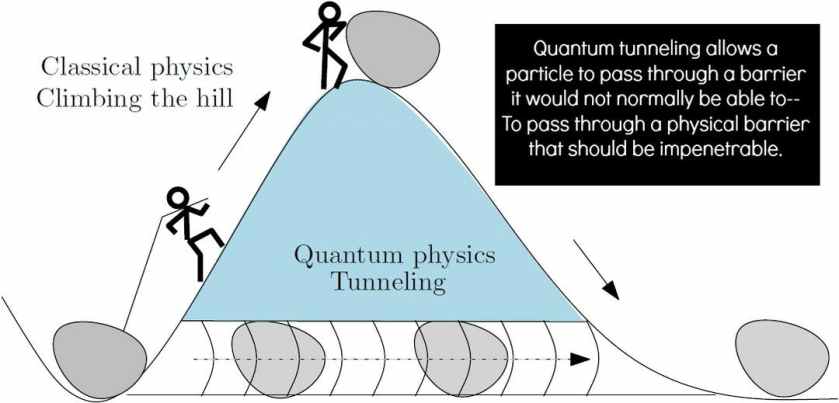
Both Newton and Einstein argued life exists in a cause-and-effect world, but quantum mechanics theorists, Bohr (on the left below) and Eisenberg, and many of today’s scientists suggest otherwise. They believe life on a microscopic scale is probabilistic, not ordered by cause and effect as implied by the classical physics of Newton and Einstein.
“Through Two Doors at Once” is a history of experiments that confirm the probabilistic nature of quantum mechanics. The theory of quantum mechanics implies the nature of reality is probabilistic. Einstein fully acknowledges the validity of quantum mechanics as a part of the physics of life but insists there is a more fundamental law of physics, not defined as probabilistic. In Einstein’s and some scientist’s opinions that undiscovered fundamental law of physics will confirm life exists in a cause-and-effect, rather than probabilistic, universe.
Ananthaswarmy gives listeners the history of differences of opinion about the nature of reality. Some may think–why care?
Isn’t existence all that matters? Others suggest it matters because understanding the nature of reality changes belief in ourselves. Are humans in the universe more important than rocks, plants, or other forms of existence? There is no answer in Ananthaswarmy’s book, but it is a good summary of how science has different views of the fundamental laws of nature.
The point is that existence of quantum mechanics implies whatever one does in the world may not have predictive meaning, only endless probabilities.
At a microscopic level, quantum mechanics implies reality is a matter of chance, not cause and effect. Quantum mechanics denies predictability unless, as Einstein insisted throughout his life, we live in a world that has a natural law that explains all life’s consequences are based on defined actions.
Einstein’s holy grail is a physics theory that explains everything about everything.
Followers of Einstein’s classical physics may believe in quantum mechanics but only see it as a part of reality, not a complete theory of reality. After all, 68% of the universe is dark energy and 27% is dark matter. Everything observed by humans constitutes a mere 5% of the universe.
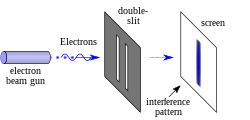
The idea of a “two split experiment” isolates a single proton or electron to test the theory of quantum uncertainty. (An experiment first performed by Thomas Young in 1801.)
What is amazing about Anathaswary’s history is how inventive scientists have been in proving quantum mechanics is real. That amazing accomplishment leads to proof that physics reactions are not only local but exhibit spooky action at a distance (entanglement). With as much of the universe’s energy and matter not observable, it seems Einstein had a point in suggesting quantum mechanics would be drawn back into a “cause and effect” world. As recent as this week, the activity of muons in dark energy suggests there is more to the story of the predictability of life.
The building of a mechanism to isolate one elemental particle of an atom for a “two split experiment” boggles the uninformed mind. Ironically, human inventiveness gives one confidence that Einstein’s goal of a unified theory of everything is conceivable. It seems a matter of time for science to discover what makes life real. Ananthaswarmy’s “Through Two Doors at Once” gives hope for young scientists, like the 26-year-old Einstein, to guide humanity to the meaning of life. Hopefully, before humanity kills itself with two-edged discoveries like e=mc2.
Dead authors may give understanding of life that offers a “…Tranquil Mind” but change in belief by renowned living authors explain why some feel they live in an age of anxiety.
Breaking Bread with the Dead (A Reader’s Guide to a Tranquil Mind.)
By: Alan Jacobs
Narrated by: P.J. Ochlan
Alan Jacobs (Author, distinguished professor of the humanities at Baylor University, considered a Christian conservative by the media.)
Alan Jacobs offers an example of why book’ reader/listeners are “Breaking Bread with the Dead”. A personal reason for reading/listening to books is to acquire understanding of an author’s opinion. Of course, perceptions may be incorrect, but a book writer’s intended meaning, at the very least, makes a reader/listener think. Jacobs gives many examples of what past authors made him think. He explains how and why dead writers are a “…Guide to a Tranquil Mind”.
In a short book, Jacobs notes knowledge of the past gives context and perspective to the present.
Dead authors add the dimension of a past that is either very like the present or very different. When a dead author’s beliefs are more like the present, it makes one think there may be something universal about their belief. At the least, a dead author’s beliefs help one understand the difference between the past and the present. Both circumstances offer what Jacobs suggests are a “…Guide to a Tranquil Mind”. Belief either remains the same or modern life makes past beliefs unique to their time.
Renowned dead authors, or for that matter, insightful living authors make one realize how much they do not know.
Dead authors may give understanding of life that offers a “…Tranquil Mind” but change in belief by renowned living authors explain why some feel they live in an age of anxiety. In either case, it pays to seek understanding from both dead and living writers.
Walter Russell Mead (American Author, Professor of Foreign Affairs and Humanities at Bard College, taught American foreign policy at Yale.)
Walter Russell Mead hardens the consequence of race and creed in the history of the modern world. Mead offers a biblically influenced history of human progress in “The Arc of a Covenant”. One cannot diminish the value of human diversity, but Mead implies millions who were murdered, maimed, or imprisoned in history have paid a price for human progress. Mead suggests the greatest price paid is by Jews who were largely abandoned by Franklin Roosevelt’s America and imprisoned, gassed, and murdered in WWII.
Despite America’s decisive role in WWII, largely orchestrated by Franklin Roosevelt, Mead suggests President Truman’s actions to end the war and gain the peace shine as brightly as the social programs created by his predecessor.
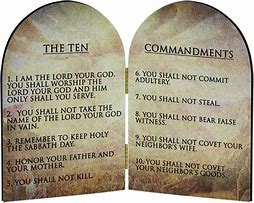
As is widely known, the Ark of the Covenant carried two stone tablets that were given to Moses by God that contain the Ten Commandments.
Mead implies these commandments were adhered to by Truman more than any President before or after his presidency. He notes that despite Truman’s lack of a college degree and inexperience as a politician, he utilized the universal values of the ten commandments to guide America out of war into a peace meant to reinforce the “…Covenant” given to Moses by God. It is clear from Mead’s history, that Truman did not do it alone, but he led the effort with the support of his predecessors, direct reports, and successors.
As the 33rd President, Truman re-engaged the U.S. in internationalist foreign policy, adopted Kennan’s recommendation of containment of U.S.S.R. during the Cold War, passed the Truman Doctrine that helped eliminate the communist threat in Greece and Turkey, responded to the Berlin Wall crises with the Berlin Airlift, and passed the $13 billion dollar Marshall Plan to aid Western European recovery after WWII. Truman also ended racial segregation in the Armed Services, and established the NSC, the CIA, and the NSA.
In America, Henry Cabot Lodge and evangelist, William Blackstone, were two predecessors to Truman that martialed American opinion to support the Balfour proposition of Englishman Arthur Balfour who recommended support for a Jewish homeland in Palestine. To an evangelist, one presumes the motivation is biblical belief in the prophecy of Armageddon that is to occur in the Middle east with the return of Jesus Christ to save believers in the faith. Lodge supports Zionism (a 19th century plan for a Jewish homeland in Palestine) as the Chairman of the Senate Republican Conference from 1918 to 1924.
In 1946, Palestinians refuse to agree to a separate Jewish homeland in their country. They would only agree based on a one state solution where Jews would be a minority in a Palestinian controlled state. The consequence of that refusal is to diminish the territorial control of the Palestinian people.
Mead notes the British walked a fine line between their need for oil from the Middle East and their effort to fulfill the promise of the Balfour agreement.
The conflict between Jews and Palestinians is initially controlled by the British military when the Jewish settlements first came to Israel. In the end, the British need for oil is greater than their continuing act as arbitrator for the Palestinian/Jewish conflicts.
The British decide to turn the conflict over to the United Nations which was formed in 1945 as a replacement for the League of Nations.
Though this body is meant to resolve international conflicts, it has five permanent members that have veto powers over its policies. They are China, France, Russia, the UK, and the US. Russia for a short time supports an independent Jewish State but becomes a notorious abuser and murderer of Russian Jews during the Stalinist years.
By a slim margin, with Stalin’s real-politic support, a UN resolution is passed to create a Jewish state in Palestine.
Stalin’s goal is to drive a wedge between Western powers like the UK and the US by supporting the resolution. The UK needs Arab oil even at the expense of the Balfour plan and the UN resolution. In enforcing the partition, Mead notes Truman is caught between the jaws of Cerberus guarding what is the hell between Arab states and a boundary line for Israel.
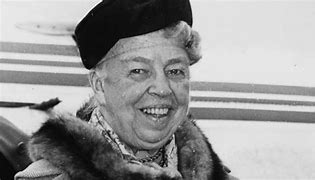
Mead explains Eleanor Roosevelt is a major force in politics of the U.S., particularly after the death of President Roosevelt.
She supports the UN resolution and expects the American government to enforce its implementation. In 1948, Mead notes Truman plans to enforce the UN resolution with the American military, if necessary, which is not popular with some American leaders and U.S. voters.
Mead illustrates how America aided Israel in its early formation, but notes Israel grew strong on its own. After the end of the Cold War, the world enters a Cold Peace. Mead drops a cultural bomb on his readers by noting America’s role as western world savior morphs into western world goat. Mead infers that transmogrification is the base upon which Donald Trump is elected. He suggests the fall of the U.S.S.R. seemingly created a bed of roses but turned into a crown of thorns.
Mead suggests America in in a post-cold-war era. America’s left-wing support of Israel is now Right-wing support.
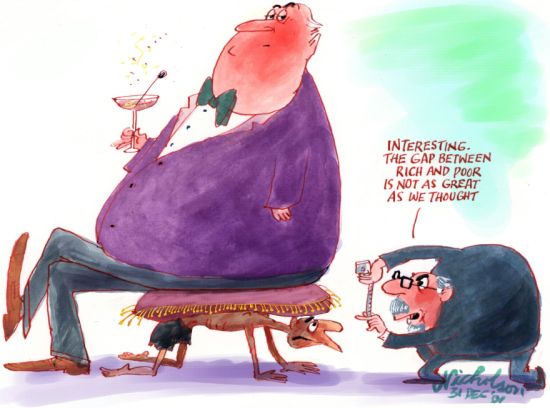
Deregulated growth of the economy is a causal factor in the widening gap between rich and poor. 9/11 destroyed America’s self-confidence by suggesting America cannot protect itself, let alone spread democratic values in the world. American power emulates authoritarian government with slogans like “Make America Great” with an underlying disregard for foreign relations and world peace. Mead suggests there is a growing loss of faith in American government.
It is sad to think how vilified and unfair history has been to such a small ethnic minority.
What seems glaringly obvious in Mead’s “too long” story is the immense contribution Jews have made to the United States. As a small minority, their contribution to the world outstrips any ethnic group in this dilatant’s flawed memory. Mead gives some perspective to that realization.
Gender and Our Brains (How New Neuroscience Explodesthe Myths of the Male and Female Minds.)
By: Gina Rippon
Narrated by: Hannah Curtis
Gina Rippon (British Author, neurobiologist, received a PhD in physiological psychology, professor at Aston Brain Centre, Aston University in Birmingham, England.)
Gina Rippon develops an argument, reinforced by literature but indeterminant by science, that there is little intellectual or social difference between the sexes. Like white dominance of the western world, Rippon implies difference between the sexes has been institutionalized and biased by society.
Though Rippon does not reach back to fossil evidence of human beings, one might make a case for the beginning of biased human socialization in the discovery of homo habilis males and females that lived 2.4 to 1.4 million years ago in Eastern and Southern Africa. Ironically, “homo habilis” is Latin for “handy man”.
The vary choice of identification of the oldest known fossil is a reminder of the influence of socialization and gender discrimination by the actions and definitions of science researchers. ((Hardly a surprise when only 38% of the population of Science, Technology, Engineering and Mathematics’ (STEM) bachelor’s degrees are held by women.)) Conceivably, in the beginning of history men dominated women because of inherent physical strength and a division of labor that set sexual bias for generations to come.
In “Gender and Our Brains”, Rippon is raising the chicken and egg paradox for the origin of male and female identity.
Is one born with a gender identity like a chicken or is one born as an egg with a chicken’ identity determined by socialization?
Having been raised by a mother with the only consistent father figure in the family being an older brother, this reviewer’s belief is as clouded as the conclusions reached by Rippon. There is as much evidence for being born as a chicken as an egg in the history of science and sociology. The conclusion one may draw from “Gender and Our Brains” is “let people choose to be whom and what they desire to be”.
Society should neither condemn nor deny a person’s sexual preference. Just as racial and ethnic minorities should not be discriminated against, neither should those who choose a sexual identity.
Societal acceptance and equality of opportunity should be the same for all. There is no justification for denial of equal rights and opportunities based on what one becomes as an individual whether one’s life is an inherent or learned difference. The only reason sexual identity is a controversial question is because societies lean toward a “we/them” mentality. Why should one care whether one identifies as male or female if they make a positive contribution to society. America is founded on the principles of equal treatment and opportunity for all, not just a white, largely male, majority.
Rippon’s conclusion is that human beings may or may not have a sexual identity when they are born. Science experiments and studies give no distinct answer to inherent sexual identity.
If sexual identity is inherent (which is neither proven or unproven by science), socialization is shown to influence sexual identities maturation and how men and women behave toward each other. Rippon argues if sexual identity is partly determined by socialization, then socialization is where equality of the sexes should and can be reinforced.
Rippon makes a convincing argument that there is minimal difference between men and women except in their role in human reproduction.
Many literary stories believe in the equality of the sexes. Rippon’s fundamental point is that all humans are born equal whether male, female, or other. Her inference is that the world needs to get over discrimination and promote equal rights and opportunity for all because any natural origin of sexual identity remains a scientifically indeterminant puzzle.
Evan S. Connell (American Novelist, 1924-2o13., died at age 88.)
Evan Connell captures a woman’s middle-class life in the twentieth century. “Mrs. Bridges” is a story of a twentieth century woman whose life begins in the middle-class and rises to the upper middle-class. She marries, has three children (one boy and two girls) with a husband who becomes a highly successful lawyer. Her son is characterized as moderately intelligent with two sisters, one sister characterized as smart and haughty and another quiet and reserved. The story is set in middle America.
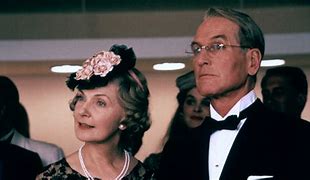
In 1959, “Mrs. Bridge” received the National Book Award in fiction. The novel became a moderately successful movie, “Mr. and Mrs. Bridge”, starring Paul Newman and Joanne Woodward.
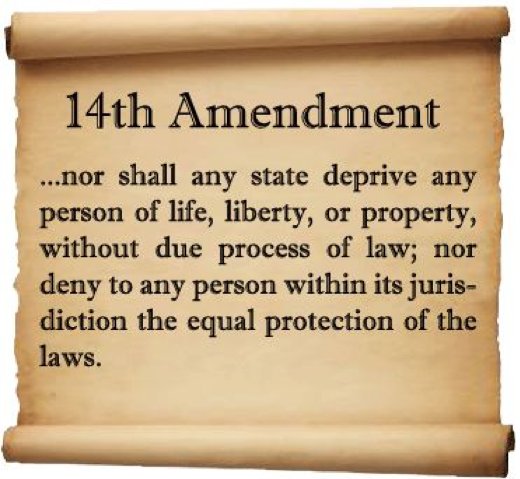
“Mrs. Bridge” will resonate with many women’s and men’s aspiration in America. It is a reminder of what it is like to be an American in a world ruled by white men, i.e., not women or people of color. “Mrs. Bridge” is a wife slowly becoming aware of an evolving society that is far from the ideals of equality of opportunity outlined by the 1868′ 14th Amendment.
The Bridge’s smart and haughty daughter graduates from high school, chooses not to attend college, and decides to move from the Midwest to New York. She moves to Greenwich Village and finds a job as a manager’s assistant while living a bohemian life that mystifies her mother.
The son chooses to go to college and appears on his way to becoming an engineer with a fascination for measurement and construction. He seems to have a plan to achieve his father’s success. However, he rebels in a different and similar way to his sister by dating girls who do not reflect the staid relationship of his parents. On the one hand, the son strives to emulate his father, on the other, he rejects the privileges of wealthy upper-class existence in white America.
The youngest daughter takes a different route to adulthood. She is the quiet one who never challenges her mother or father.
She turns to religion. Ironically, she abandons her religious obsession, marries a plumber’s son who drops out of college to take over his uncle’s business with the ambition of becoming a financial success like his new wife’s father. That goal is unrevealed in Connell’s story, but he shows their marriage is rocky, presumably because of their societal upbringing. The husband unjustifiably strikes his wife. He apologizes but Connell infers the reason for their conflicts is because of the different economic circumstances in which they were raised. The Bridge’s young daughter is accustomed to having housework done by servants while the plumber’s son is self-reliant and an ambitious doer. The story infers they stay together but it is an untold exploration of their remaining lives.
Nearing the end of this family’s story, Connell illustrates the growing boredom in Mrs. Bridges’ life.
The children grow away from her. She feels a sense of loss of purpose in life. Housework is now entirely done by servants. The children no longer listen to her or seek her advice. Her husband is consumed by his work. No one seems to need or care about her. The only solace seems to be in wealthy women friends who are experiencing a similar ennui. One of these upper-class women commits suicide. Mrs. Bridges suggests to her husband that she should see a psychiatrist for her growing depression. Her husband suggests that is nonsense and the idea is dropped.
The life of the Bridges family is disrupted by WWII. The son chooses to leave the university and enlist in the Army. The implication is that life goes on for the family as it had before, but the experience of war is only reinforcing the dynamics of their family’s socialization.
Self-interest permeates human life. In a capitalist culture, self-interest is measured by wealth.
One suspects some who have lived this twentieth century life see themselves in Connell’s story of the Bridges family. In socialist culture, self-interest is measured by power. In a communist culture, self-interest is a combination of wealth and power as evidenced by Russia’s and China’s rule in the 21st century.
The value of Connell’s “Mrs. Bridge” is in its dissection of American society, and not just of its time but of today.
Its story implies American wealth should not be a measure of human value. The gap between rich and poor is a measure of how far America is from the intent of the Constitution’s statement “all men are created equal”. Connell’s story infers the statement in the American Constitution should have been “all people are created equal”, not just men. In being created equal, the 14th Amendment stipulates all citizens are to have equal rights in pursuit of life, liberty, and property.
Connell masterfully shows the strength and weakness of American society. Its strength lies in freedom to exploit human self-interest. Its weakness is in believing wealth is a measure of human value.
There must be no discrimination in society based on sex, race, religion, or ethnicity for equality of opportunity to evolve. That is aspirational in America, but whether equal opportunity can ever be achieved is problematic based on the nature of human beings.
War is only a destroyer, not a builder of society. Samet implies the truth of war will continue to be distorted by both victors and losers who tell the tale.
Looking for the Good War: American Amnesia and the Violent Pursuit of Happiness
By: Elizabeth D. Samet
Narrated by: Suzanne Toren
Elizabeth D. Samet (Author, Professor of English at West Point.)
Elizabeth Samet’s “Looking for the Good War” tells a hard truth about war. Samet’s history of war is like the refrain from the Temptations’ song:
War, huh yeah What is it good for? Absolutely nothing, oh hoh, oh War huh yeah What is it good for? Absolutely nothing, say it again y’all
THE FEAR OF WAR IN VIETNAM
As a professor at West Point, it seems incongruous for Samet to write this book. On the other hand, who would better understand a career for future military officers than a West Point’ professor? The command structure of the military requires soldiers do what they are ordered to do. In that doing, they may lose their minds, their lives, or their physical health. Samet raises the hard truth of every war, i.e., a soldier’s duty is to follow orders and when necessary, kill or be killed.
Samet questions stories, films, and images that glorify war.
Samet implies, once war is declared, its causes and consequences become fictionalized tales.
Once a country is compelled to defend itself in war, like Ukraine, Samet infers a “…Good War…” becomes fiction.
Truth of war becomes distorted by memory, and human bias that is memorialized by the visual arts and literature. The support for Samet’s view of war is in art and media representations of its history. From Picasso’s Guernica that illustrates the real horror of war to movies like Sands of Iwo Jima, war’s reality is distorted. Art and literature tell different truths.
Samet often refers to Shakespeare’s plays and his many observations about war, i.e., about its perpetrators and victims. From Julius Caesar to Richard III, to Henry IV, to Henry V, to Henry VIII, Samet quotes Shakespeare’s lines like
“Cry havoc’ and loose the dogs of war, That this foul deed shall smell above the earth With carrion men, groaning for burial.”
Samet argues Tom Brokaw, and Robert Rodat (screenwriter for “Saving Private Ryan”) glorify the winning side of WWII by choosing narratives that distort the true nature of war.
Samet is not alone in her opinion about the history of war distorting truth. American author and television writer, Rebecca Serle says the same. To Serle and Samet, history is a personalized perception, a truth imprinted on the minds of combatants. This personalized truth is an interpretation of what one experiences. War’s events are interpreted by the understanding of those who choose to write, paint, or film war’s events. War’s events become interpretations of interpretations. Samet implies a “…Good War…” is oxymoronic, a contradiction of words because there are no good wars.
American author and television writer, Rebecca Serle, wrote “History, memory is by definition fiction. Once an event is no longer present, but remembered, it is narrative. And we can choose the narratives we tell–about our own lives, our own stories, our own relationships.”
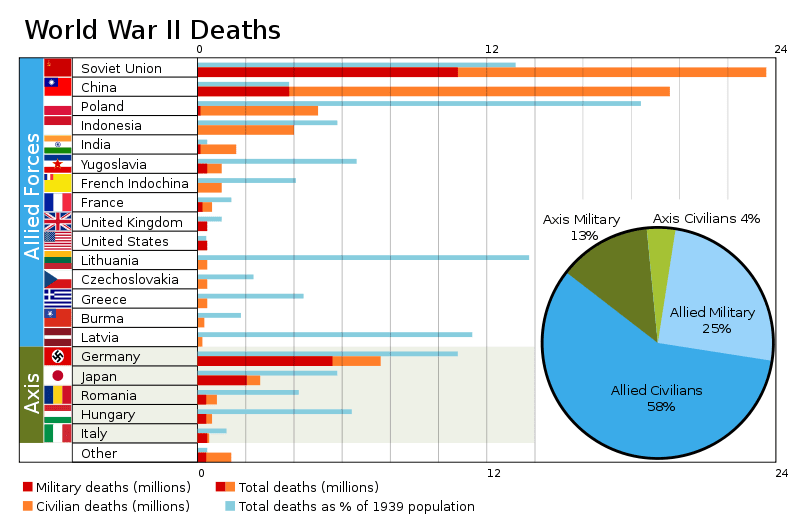
Samet is arguing no war is a good war because war is inherently bad for the mental and physical existence of human life. She argues narratives of America’s Civil War are prime examples of the distortion of truth about a “…Good War…” in the same sense as Brokaw’s WWII narrative. Samet coldly notes America’s idealization of rebel opposition to union and civil rights falls into the same category as the idealization of America’s role in WWII. There were singular brave actions in both wars, but those stories of bravery distort the reality of death and destruction, murder of human beings, an aftermath of coping with loss or permanent injury of loved ones, and the consequence of destroyed homes and economies of warring nations. Both WWII and America’s civil war solved nothing. Discrimination has not disappeared. Mass killings still occur. The only difference is in the organization, execution, and volume of deaths and injuries. There is no “…Good War…”
Samet explains neither WWII or the American Civil war were examples of a “…Good War…”. That statement shocks the senses.
Just as America did not save the world for democracy in WWII, America’s Civil War did not erase institutional racism. Racism hardened after America’s civil war and continues to this day.
Axis powers chose to wage war just as Allied powers chose to defend themselves. The story told by victors tends to view war by focusing on heroic events of conflict rather than war’s atrocity and aftermath. The story told by losers is one of blame for miscreant leaders who misled their countries into war. Both stories are fictions to justify new leader’s perceptions of reality. More importantly, Samet clearly explains how memory distorts the truth of what is accomplished by waging war.
Samet is simply writing about the fundamental truth–war is hell for all human beings, whether victors or losers.
The upside-down world of George Orwell notes “War is peace, Freedom is slavery. Ignorance is strength.” This is the world of which Samet writes. Samet explains what Orwell satirizes. War is hell. “Equal rights” are an unaccomplished ideal. Ignorance of war’s truth is compounded by distorted memories of the past.
As seen in Ukraine, Myanmar, Ethiopia, and Sudan–wars continue to roil the world. War is only a destroyer, not a builder of society. Samet implies the truth of war will continue to be distorted by both victors and losers who tell the tale.
Between Two Kingdoms (A Memoir of a Life Interrupted)
By: Suleika Jaouad
Narrated by: Suleika Jaouad
Suleika Jaouad (American author, and motivational speaker.)
Suleika Jaouad offers a guide to veterans of life. Jaouad’s book goes on a little too long, but its message resonates with some who feel challenged by the life they live. “Between Two Kingdoms” is about living and dying. Whether one is a child or adult living through war or peace, Jaouad offers a guide for survival.
Every person faces challenges in their life.
Jaouad contracts leukemia, a frequently fatal cancer that affects the production and function of blood cells. Jaouad recognizes her challenge is a combat between the kingdoms of living and dying. Like any veteran of life, Jaouad’s experience affects her life, even after diagnosis of remission. Jaouad’s recovery from cancer will resonate with the old and young, veterans of war, and every person of any age coping with memories of their experience.
Whether one is in their childhood, twenties, middle age, or seventies, they are living between two kingdoms, i.e., the kingdom of living and the kingdom of dying.
Jaouad’s story is highly personal. The first chapters reflect on a twenty something young woman just beginning her independent life. She has the personal experiences of many young adults making their way in life. Her sexual relationships and personal achievements are similar to many people of her age. What strikes a listener about her self-understanding is its universal applicability. The only difference is in what triggers that self-understanding. Triggers come from the circumstances of life. The trigger may be cancer, the experience of war, the loss of a loved one, a psychological trauma, or physical injury.
Jaouad explains how she psychologically and emotionally copes with her cancer.
In that explanation, a guide is offered to every person who struggles with unexpected traumas in their life. Trauma takes many forms that Jaouad explains may be both physical and mental. She shows the physical consequence of leukemia but also the mental consequence of dealing with it, dying from it, and (in her case) recovering from it. It is in the dealing part that a listener will find the most value.
Jaouad is helped by America’s medical system but a great deal of her ability to cope is based on others’ help.
She is supported by her mother and father, an intimate boyfriend, and patients in the hospital in which she is treated. The boyfriend, also in his twenties, sticks with her through the first years of treatment. The hardship of treatment overwhelms the boyfriend’s capacity to deal with what Jaouad is going through. The relationship breaks down and the boyfriend leaves. As Jaouad begins recovery, after remission, she meets a jazz musician who becomes quite famous. The former boyfriend returns to try and mend their relationship but fails.
Before Jaouad marries, she chooses to see America by traveling with a small dog and lecturing on what she has learned from her leukemia ordeal.
Jaouad has always aspired to be a writer and has kept a diary of her life. She became a professional writer and lecturer.
Jaouad eventually marries the jazz musician. Jon Batiste, former band leader and musician on Stephen Colbert’s late night TV show.
“Between Two Kingdoms” is an enlightening story of Jaouad’s very personal life. Every generation may find something in her book that may help them cope with their lives.
Essential Physics (A Scientist’s Guide to Life’s Biggest Questions)
By: Sabine Hossenfelder
Narrated by: Gina Daniels
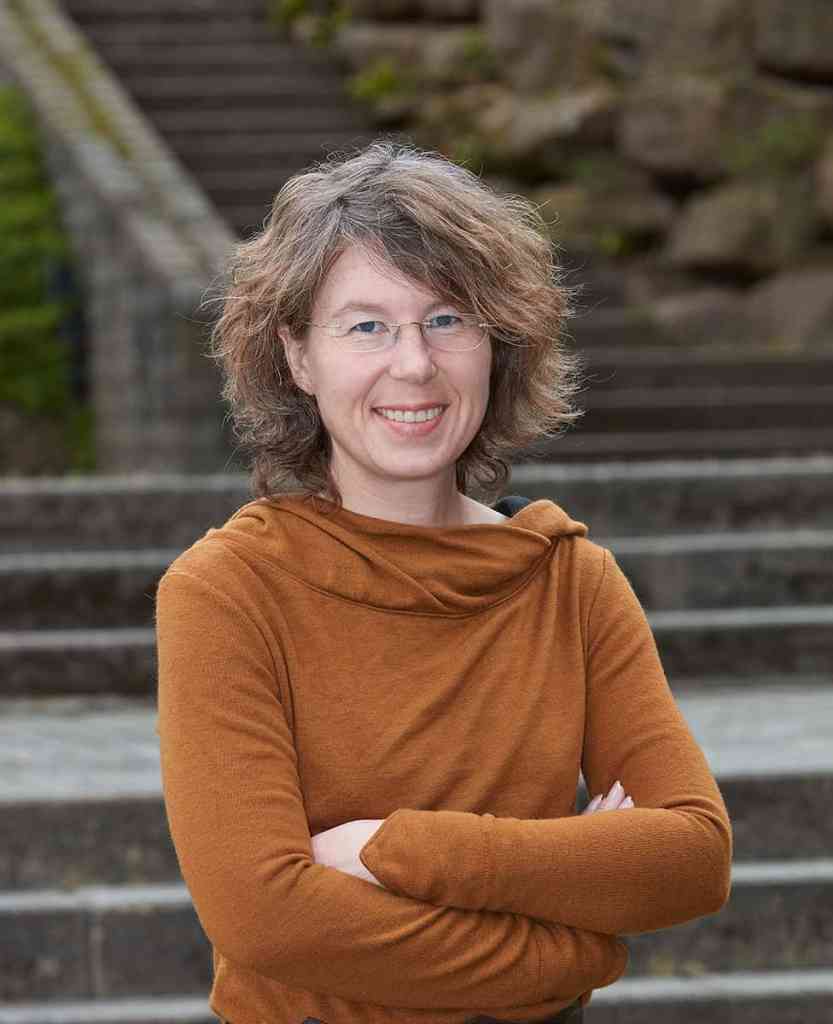
Sabine Hossenfelder (Author, German theoretical physicist, science communicator.)
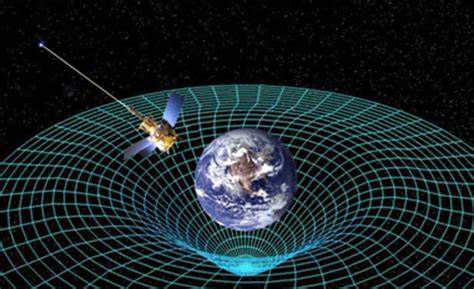
Sabine Hossenfelder creates unease in listeners who struggle with understanding a world determined by the science of physics. Her first chapter is about the mystery of time. Time is an illusion created by one’s mind. Your time is not my time because our perspectives are influenced by how fast we are moving. If we are in the same room, or one of us is on a train and the other is at the station, the difference is so infinitesimally small, times’ relativity is not comprehended. However, in spacetime with the effect of gravity on radio signals and rocket guidance, time’s relativity becomes navigationally critical.
Hossenfelder notes Einstein explains time is relative and not a constant force of nature because time and space are linked in a way that infers “now” has no meaning.
One can understand the words just written but remain confused about what is called spacetime and its meaning for the past, present, and future. Hossenfelder notes the importance of this physics truth in explaining how travel in space at high velocities cannot be planned for arrivals at specific locations without understanding time’s relativity. Here is where Hossenfelder excels as a science writer. One may not understand the physics of time, but its practical application in space flight and science experiment proves its truth.
One may not understand the physics of time, but its practical application in space flight and science experiment proves its truth.
Hossenfelder, when asking questions of scientists, often asks if they believe in God. Hossenfelder notes most of the scientists she interviews are agnostic but wants to better understand where a scientist’s point of view differs from her own. The inference one draws from Hossenfelder’s question is that God may or may not exist. Her agnosticism implies today’s science neither proves nor disproves His/Her or Its existence.
Hossenfelder’s point is there is no way for science to test or measure the existence of God.
There are a number of interesting thoughts expressed in “Essential Physics”. Hossenfelder believes free will is limited, if not nonexistent, because of the laws of physics. The puzzle of that belief is that present understanding of quantum mechanics is that physics outcomes are probabilistic, not pre-determined actions and their consequences. One may believe there is an undiscovered law of physics that explains “everything about everything” as argued by Einstein. If that undiscovered law of physics is found, then life may arguably be a matter of causes and consequences. On the other hand, what about the person who chooses to do something contrary to what their conscious mind tells them to do? This is a circular argument. The circular argument is that a contrary decision may be a part of a person’s nature which infers their decision remains pre-determined. It is difficult to accept the belief that our lives are predetermined even if Einstein is right and there is an undiscovered physics law that makes quantum physics predictable.
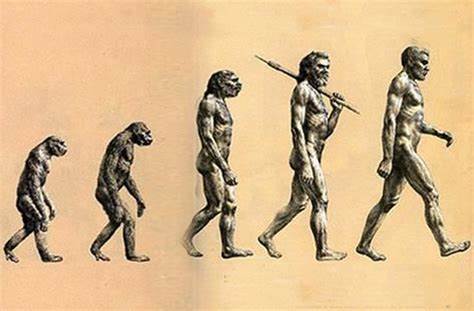
The details of evolution show random modifications of species have determined the makeup of life on Earth.
Hossenfelder discounts belief in a universe made for humans by a superior being. As she notes, evolution suggests otherwise. “The Origin of Species” postulated by Darwin has been supported by science since its publication in 1859.
The science community has tested chemical interactions of the early chemical elements of earth to show prokaryotes and eukaryotes of cellular life can be created from chance chemical and heat interactions.
Hossenfelder raises the question of whether the cosmos has consciousness. She speculates on the origin of the universe as a creation of a superior being or the evolution of a universe from something like the “Big Bang”. Her opinion leans toward the “Big Bang” and evolutionary physics by noting scientific experiments that demonstrate how nature, rather than God, created the Universe.
In writing about consciousness, the author notes the similarity between interstellar atmospheric strings that resemble neuronal connections of the human brain.
“Essential Physics” may help some get closer to understanding the current state of science’s explanation of life, but one may choose to be skeptical because sciences’ pursuit of understanding life remains a work-in-progress. Physics study to date offers no answer to the meaning or destination of life. The truth remains in an “uncanny valley”, a psychological concept of human unease, most recently compounded by genetics discoveries, computer animations, and A.I. influence on life.