Graduate Oregon State University and Northern Illinois University,
Former City Manager, Corporate Vice President, General Contractor, Non-Profit Project Manager, occasional free lance writer and photographer for the Las Vegas Review Journal.
A “Chicken in Every Pot” will not come from fixing food prices or from job creation by reducing taxes on the wealthy.
Website: chetyarbrough.blog
AMERICAN POLITICS
Anyone who has read this blog knows its writer is not a fan of former President Trump. His position on immigration, tax policy, and American Constitutional ideals are only political props for rambling, muddled speeches that dangerously divide America. His promotion of American division was made clear on January 6, 2021.
Trump’s promotion of American division was made clear on January 6, 2021.
His speeches about immigration are only meant to vilify rather than manage its impact on the economy. It is the failure of Congress to approve legislation meant to ameliorate some of immigration policy’s faults. Trump waves a false flag of immigrant invasion when he is only a 2nd generation immigrant himself.
The vilification of immigration is a false flag.
He is supported by some wealthy Americans like Ms. Adelson whose family made a fortune in the Las Vegas casino business. In his 2017 election he was supported by the Koch family, one of the largest privately-owned companies in America. The argument made by many wealthy donors for Trump’s re-election is a belief that with the less taxes they pay, more jobs are created to lift the poor into the middle class. It is the ideal of capitalism and government that creates jobs. It is the ideas and hard work of people, not inherited wealth, that have made America great.
Trump believes in “trickle down” economic policy. His belief in cutting taxes is based on that belief.
Trump forgets where he came from. Despite his family success in America, Trump’s speeches reek with vile comments about immigrants. Without detailing some of the bad things Trump has done to become rich and influential, he lies about his past failures, and the worth of his assets. Trump revels in his moral turpitude. He is found liable for defamation and sexual abuse. He is a convicted of civil fraud for inflating his wealth to gain favorable bank loans. Trump does not represent what makes America great. He represents what makes America and capitalism flawed.
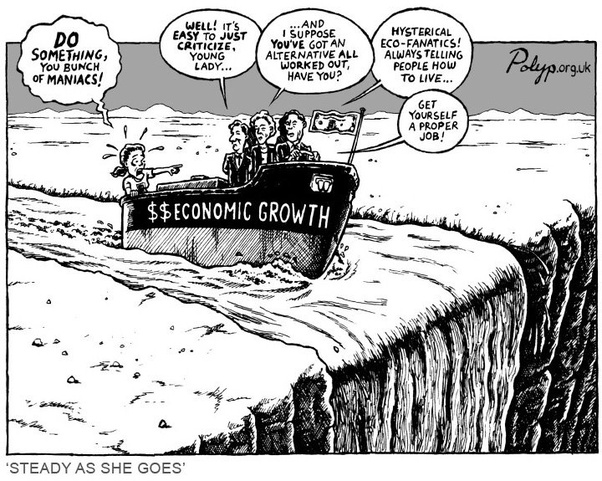
Trickle-down economics to reduce poverty, like the current economic idea of Kamela Harris for regulating food prices to help the poor, is not supported by history.
A “Chicken in Every Pot” will not come from fixing food prices or from job creation by reducing taxes on the wealthy. Roosevelt knew that; hopefully Trump will not be re-elected, and Kamela Harris will not make Hoover’s mistakes.
Trust is the most important characteristic of a patient’s relationship with their physician.
Books of Interest Website: chetyarbrough.blog
“How Medicine Works and When It Doesn’t” Leaning Who to Trust to Get and Stay Healthy
By: F. Perry Wilson MD
Narrated By: Shawn K. Jain, F. Perry Wilson
F. Perry Wilson MD (Author, Harvard graduate with honors in biochemistry, attended medical school at Columbia College of Physicians and Surgeons. He is a practicing nephrologist at Yale New Haven Hospital.)
Doctor F. Perry Wilson is a physician with a biochemistry degree from Harvard, and a medical degree from Columbia College of Physicians and Surgeons. Wilson works at Yale New Haven Hospital where he specializes in kidney issues. Wilson’s book is a problematic view of doctor/patient relationship and what a patient can or should believe about a physicians’ medical diagnosis and treatment. A problematic view is not Dr. Wilson’s intent, but it is a conclusion a reader/listener may arrive at as he/she completes “How Medicine Works and When It Doesn’t”.
Dr. Wilson argues any advice from medical professionals may be listened to with skepticism but not disdain.
In general, that argument seems logical and fairly balanced. Wilson infers skepticism extends to trained medical professionals and the medical industry in general. The reason a lay person may accept that conclusion is based on personal experience and rationality.
As one who has been diagnosed with heart trouble from blocked arteries and medical treatment for an alleged heart attack, the last ten years have been an educational journey.
The first cardiologist who reviewed details of a physical weakness felt while working, suggested the weakness may have been caused by a mild heart attack. After a heart scan, the cardiologist found an artery serving the heart had a blockage. The doctor recommended a stent be inserted to clear the blockage. After surgery, the cardiologist noted the stent could not get through the blockage. Changing cardiologists seemed a prudent action considering the doctor’s failure.
A new cardiologist recommended regular check-ups, stress tests, and medicine to address the cause of the blockage.
Ten years have passed and there have been no further incidents, but relocation required finding a third cardiologist who reviewed medications, conducted further tests. The new cardiologist recommended continued medical treatment largely based on statin prescriptions and further tests. Here is where Dr. Wilson’s book becomes problematic to a patient seeking medical advice from trained medical specialists.
As noted by Thomas Hager in “Ten Drugs”, the relationship between statins and blocked arteries as a cause of heart attacks is somewhat unclear. The unclearness is not that taking stains reduce cholesterol but that statins have side effects. Science-based tests show statins do reduce cholesterol but inhibit memory, reduce cognition, and may cause liver and kidney damage. To add to negative side effects, there is medicine producing industry’ bias that promote statins because they are big revenue producers.
What Doctor Wilson’s book reminds one of is the mid twentieth century game show “Who Do You Trust”. Wilson infers truth is only science-based probability, not certainty.
What both doctor and patient know is based on experience and education, not certainty. For both doctor and patient, it comes down to “Who Do You Trust”.
Wilson’s book is an important example of why patients should use their intuition to trust or change doctors when their health is at risk.
Doctors have spent the greater part of their lives understanding human medical problems and the effect of drugs in treating patients. Patients are unlikely to have had the same level of training or understanding about their own health or the health of the general population. What a patient is left with is the principle of trust. If one trusts the doctor who is prescribing and/or treating one for their illness, the probability of good outcome is logically better.
Doctor Wilson acknowledges profit motive for pharmaceutical companies drives their relationship with the medical profession and the public.
He offers concrete examples of mistakes that have been made by the pharmaceutical companies like the Thalidomide prescriptions that harmed unborn children. Of course, mistakes get made in every discipline of life. The other side of mistakes are the incredible success of vaccines for polio, smallpox, and our world’s most recent crises, Covid 19.
The conclusion one draws from Wilson’s book is trust is the most important characteristic of a patient’s relationship with a physician.
This is not meant to suggest one should shop for a doctor that tells one what they want to hear but to depend on the education and experience of a person who knows more about medicine and its effects than you.
Hager’s history of the drug industry illustrates the strength and weakness of human nature whether one is a capitalist, socialist, or communist.
Books of Interest Website: chetyarbrough.blog
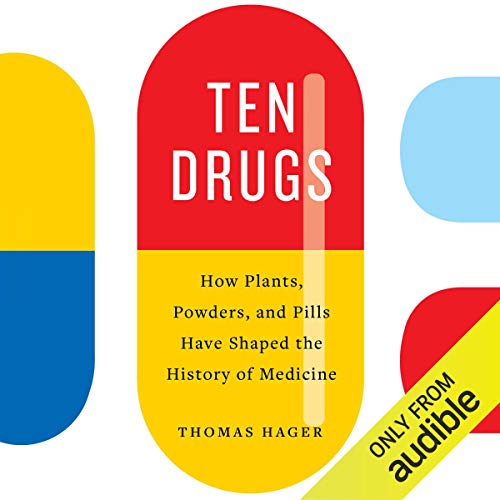
“Ten Drugs” How Plants, Powders, and Pills Have Shaped the History of Medicine
By: Thomas Hager
Narrated By: Angelo Di Loreto
Thomas Hager (Author, science historian, editor, publisher, Oregon native, received master’s degree in medical microbiology and immunology from the Oregon Health Sciences University.)
“Ten Drugs” is a critical view of today’s drug industry, its drug discoverers, the medical profession, and its manufacturers. Hager explains opium is proven to have been used by Mesopotamian Sumerians in 3400 BCE but older than its known cultivation. The Sumerians called it “hul gil” which means “joy plant”.
Thomas Hager begins with opium and its discovery thousands of years ago when the bitter taste of a poppy seed capsule is tasted by a curious African’, Egyptian’, Greek’, or Roman’ Homo erectus.
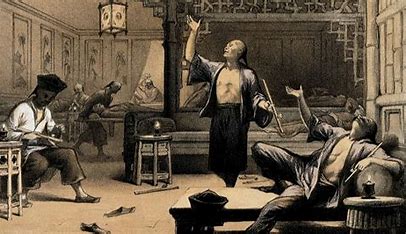
Wide use grew to affect national relations between China and the western world in the opium wars of 1856-1860. China’s Qing dynasty lost territorial control of Hong Kong to Great Britain when opium became a cash cow for international trade.
Hager explains how opium offered both risk and reward to the world. It threatened society with addiction and overdose while offering surcease of pain for the wounded or health afflicted.
Addiction significantly increased among the Chinese during and after the opium wars. After many tries to prohibit opium, it was in the early 20th century that addiction was internationally condemned. It was the People’s Republic of China in 1949 that launched an aggressive anti-opium campaign that dramatically reduced opium purchase and use in China. Later, Hager infers China’s success in eliminating the trade is by murdering its dealers and penalizing its users. Ironically, Hager notes former President Trump called for the death penalty for drug dealers to combat America’s drug crises, a policy only likely to be implemented in an authoritarian country.
The first opium war in China, 1841.
Hager infers China’s success in eliminating the trade is by murdering its dealers and penalizing its users.
Hager explains the history of opium evolved into drug derivatives like morphine, laudanum, and codeine to offer pain relief from a variety of medical maladies. These derivatives were effective but still carried the risk of addiction. Hager explains later that addiction is related to nerve system receptors at a molecular level that create a craving for the effects of particular drugs. Opium and its derivatives eventually became regulated because of their addictive character. In America, the Harrison Narcotics Tax Act of 1914 marked the beginning of strict control of opium’s derivative prescriptions in the U.S.
Edward Jenner (1749-1823, English physician and scientist who discovered the use of cowpox to inoculate against smallpox.)
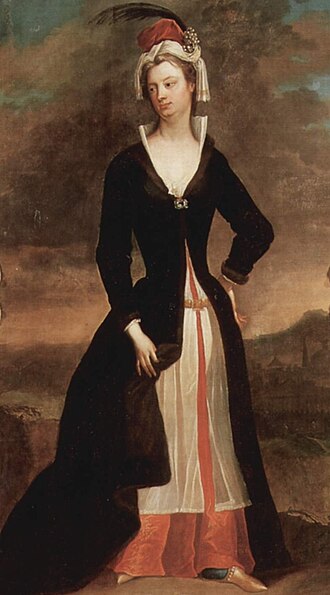
Hager moves on to vaccination. Interestingly, Hager explains the discoverer of inoculation by transfer is not Edward Jenner (1749-1823), a British physician called the Father of Immunology. It was a wealthy English woman named Lady Mary Worley Montague who learned of the use, of what became known as vaccination, in Turkey. She had survived a smallpox infection. Ms. Montague accompanied her husband, who was the British ambassador to the Ottoman empire in 1716.
Ms. Montague learned of a Turkish custom of transferring infected smallpox exudate to healthy children to give them a milder form of smallpox. That transferred exudate inoculated the young from getting a fatal dose of the disease in later life. Smallpox is estimated to have killed over 300,000,000 people (a statistic roughly equivalent to every person alive in the U.S. in the in the 1990s). The Turkish custom of inoculation was found highly effective.
Lady Mary Worley Montague who learned of the use of vaccination in Turkey. Earlier in her life, she had survived a smallpox infection.
In her return to England, Ms. Montague widely disseminated information about the success of the Turkish custom to prevent smallpox. Edward Jenner chose to use cowpox as a substitute tissue for smallpox vaccination of his patients. Jenner found cowpox infected tissue was equally effective in immunization and less dangerous than the using smallpox exudate. Jenner’s discovery of cowpox vaccination in 1796 became widely accepted but nearly 80 years after Ms. Montague’s worldwide promotion of Turkey’s vaccination procedure. Jenner’s vaccination success led to the World Health Organization’s claim that smallpox eradication could be achieved through an international inoculation program. Smallpox is alleged to have been eradicated as a disease in 1980.
The next drug identified as important by Hager is sulfa, a major cause of death from infected open wounds.
The common cause is a bacteria called Streptococcus. Bayer Corporation, a dye manufacturer in Germany, decides to enter the drug industry because their investment, facilities, and research scientists were ideal for entry into research and manufacture of drugs. They compound a drug called Prontosil that is discovered as a sulfa based chemical compound that successfully kills Streptococcal bacteria that cause fatal infections from open wounds. Bayer’s discovery saved many lives as WWII was gathering in the 1930s. Ironically, one of the saved lives is FDR’s son who had a severe streptococcal infection in 1936.
Hager notes personal mental illness and social dysfunction are perennial maladies that plague society through the 21st century.
Isolation and various therapies have been used to address mental illness. In early days, asylums were created to isolate patients who could not cope with daily life. Palliative treatment ranged from isolation to Freudian consultation, to electroshock, to newly discovered drug treatments. Though not mentioned by Hager, a little research shows the first significant breakthrough drug was lithium in 1949.
John Cade (1912-1980, An Australian psychiatrist discovered the effects of lithium carbonate as a mood stabilizer in 1948.)
Lithium was actually discovered in 1817 but did not get used for mental illness until 1948 when John Cade, an Australian psychiatrist, found that lithium carbonate stabilized mo0d and reduced the severity of manic episodes in patients.
Though Hager doesn’t mention lithium, he notes the French chemist Paul Charpentier identified antihistamine in 1950 as an antipsychotic to aid his patients’ erratic behavior. The use of Thorazine became a common drug synthesized by Rhone-Poulenc Laboratories in France. It was released in the 1950s and considered a major breakthrough in psychiatric treatment. It had a calming effect on severely schizophrenic patients by attacking excess dopamine production in the brain.
The major criticism Hager has of drug manufacturers and the medical industry is in the inherent influence of money, power, and prestige that distorts honest evaluation of drug effectiveness and side effects.
The drug industry depends on the success of their research for new drug discoveries to maintain the cost and improve the value of their businesses. However, human nature gets in the way of every human being. The lure of more money, power, and prestige enter into evaluative judgements and descriptions of tests for new drugs. The financial success of a drug that mitigates or cures particular societal ills make millions, if not billions, of dollars for drug manufacturers. Drug manufacturers are not eleemosynary institutions. They are in the business of making money and preserving their longevity while enriching themselves and their stockholders. Hager argues human nature distorts the truth of drug efficacy with tailored reports of a drug’s true benefit and potential for harm. He offers statins as an example of drug manufacturers’ misleading promotions.
Hager reviews the history of statins and correlations drawn by the medical industry about their efficacy in reducing heart ailments.
He suggests clinical studies by manufacturers often distort the entire effect of statins in preventing heart attacks. Statins are designed to reduce cholesterol in the blood stream. However, many studies that correlate cholesterol with heart disease are only partly related to heart attacks while having measurable side effects that diminish human cognition, memory, and potential organ damage, i.e, liver and kidney damage. Hager cautions those who take statins not to stop without discussing it with their physicians. However, Hager recounts an unsolicited personal contact that suggested he should be taking a statin because he is over 60 and had a brain vessel bleed in his earlier medical history. The contact recommended Hager take a statin based on that history. Hager notes that he felt his private medical history had been hacked, and that the contact is evidence of drug industry promotion of statins for profit more than public benefit.
In Hager’s last chapters, he explains how the drug industry is being attacked for influence peddling. In drug manufacturers drive for profits, they offer incentives to the medical profession (e.g. trips to conferences in exotic resorts, personal solicitations from sales reps, etc.) to use specific drugs in their practices.
In the end, Hager argues there are exceptions to the medical industries drive for profits by telling the story of British researchers Georges Kohler and Cesar Milstein who made a discovery in 1975 that changed the focus of drug manufacturer to what is called monoclonal antibody drug development. Kohler and Milstein found a process for creating drugs that have fewer side effects by creating antibody drugs that exclusively attack diseases at a molecular level. The irony of their discovery is Kohler and Milstein chose not to patent their discovery. If they had patented their discovery, they could have gained income for every company who chose to create monoclonal antibody drugs.
British researchers Georges Kohler and Cesar Milstein
Research is growing to create drugs that more precisely address the known molecular cause of disease without affecting the general health of patients. Not surprisingly, today’s manufacturers of monoclonal drugs use Kohler’s and Milstein’s process while requiring patents for their drugs.
Hager’s history of the drug industry illustrates the strength and weakness of human nature whether one is a capitalist, socialist, or communist.
One chooses how they live life, but death is nature’s or God’s choice, a thing beyond human’ control.
Books of Interest Website: chetyarbrough.blog
“The Theater of War” What Ancient Greek Tragedies Can Teach Us Today
By: Bryan Doerries
Narrated By: Adam Driver
Bryan Doerries (Author, Artistic Director of Theater of War Productions, an evangelist for classical literature and its relevance to today’s lives.)
The title and book cover of “The Theater of War” is as puzzling as Bryan Doerries’ beginning vignette of his personal life. Doerries graduates from Kenyon College where he majors in the classics. He goes on to earn a Master of Fine Arts in Directing from the University of California. “The Theater of War” recounts Doerries’ journey to become cofounder, artistic director, and historian for creation of a theatrical teaching tool about life and death. The trigger for his understanding comes from the last days of his personal relationship with Laura Rothenberg who dies at 22 from cystic fibrosis. Her death is the introduction to why “The Theater of War” is created.
Doerries and Phyllis Kaufman are co-founders of “The Theater of War” Productions. Ms. Kaufman was the producing director from 2009 to 2016. She died at the age of 92 in 2023 but was instrumental in organizing production events, coordinating actors, and ensuring practical aspects of theatrical presentations.
“The Theater of War” is about the living and how to deal with permanent disability or death. Death comes in many forms from different causes but as the Latin expression says “Memento mori”, “Remember you must die” because death is a part of every life. Doerries explains how famous Greek tragedies were, and still are, teaching tools for those who have life and death influence over others. What “The Theater of War” creates are acted reproductions of classic Greek tragedies for living life when you or someone you know is permanently disabled or killed.
With the help of actors like Adam Driver (who narrates the book), the great tragedies of Sophocles and Aeschylus are presented to military, penal, and nursing audiences across America.
Combat veterans, prisoners, and terminally ill patients face extreme conditions of life. Combat may end in death or future disability. Prison life is about loss of control of oneself and being under the control of others. Terminal illness is also about loss of control of oneself when one is diagnosed as destined for death.
The suicide of Ajax as depicted on an ancient vase in the British museum in London.
Sophocle’s tragedy, “AJax”, offers the truth of psychological trauma and moral injury from battle. In despair, Ajax kills himself because he feels deeply humiliated by the gods for not being given the armor of Achilles who is killed in the Trojan war. Achilles’ armor was given to Odysseus rather than him.
Sophocle’s “Philoctetes” explains the pain and personal isolation that comes from the physical and emotional damage from war. Today, it is diagnosed as PTSD.
Sophocles “Antigone” deals with civil disobedience, justice, and conflict between personal and state ethics. These conflicts are reflected in mobs of unruly citizens demonstrating against what they perceive is wrong.
Aeschylus’s “Prometheus Bound” reflects on the unfairness of a penal system that infringes on human rights.
The recited dramas offer cathartic release and potential change to those who are personally affected by their situational experience. That is the purpose of the presentations. Doerries creates theatrical readings of these classics before military, penal, and nursing personnel.
The presentations lead to questions and answers about the truth of societal disagreement, death’s inevitability, and how to live with their consequences.
Some military generals and prison guards are offended by the implications of their mistakes, but the plays recitals provide a forum for discussion that offer potential for improved human understanding and societal decisions and action.
The Greeks understood dying is part of life. One chooses how they live life, but death is nature’s or God’s choice, a thing beyond human’ control.
Understanding our place in the world as a democratic nation is the real value of travel.
Books of Interest Website: chetyarbrough.blog
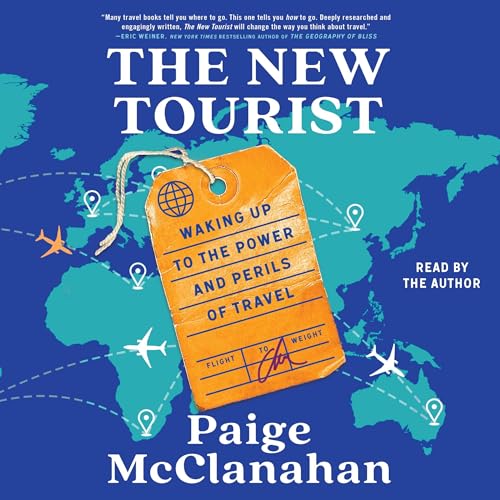
“The New Tourist” Waking Up to the Power and Perils of Travel
By: Paige McClanahan
Narrated By: Paige McClanahan
Paige McClanahan (Author, journalist, world traveler.)
“The New Tourist” offers a mixed message about travel outside of one’s own country. As a journalist, paid for her travel, Paige McClanahan explains the power and peril of travel in a way that misses the point. She explains the power of travel as an economic benefit to travel writers and countries which travelers visit. One peril she notes is the destruction from tourists who damage pristine natural environments because citizens of a host country are often not accustomed to crowds of travelers. One who travels and writes of their adventures encourages travel to exotic places that may or may not be prepared for high tourist traffic. Unpreparedness is partly due to host countries interest in the economic benefit of tourist visits but are disinclined to spend potential profits on preparation for high tourist traffic that may not arrive.
Like the Maui wildfires in 2o23, better Hawaiian’ preparation may have saved 102 lives and the beautiful town of Lahaina.
Ironically, travel writers like McClanahan are partly to blame for writing of great travel experiences they have had as tourists. They make a living by writing about their travels around the world.
There is a balance between tourist satisfaction and host countries’ benefit but finding the balance is a work in progress that may not begin before damage is done.
What McClanahan misses in her book, is the great benefit of traveling to learn about other cultures.
From personal experience, I have been surprised by natives of other countries who know so much about life and what their personal experiences have meant to them. In Africa, a native guide explains the night sky in a way that reminds one of a college astronomy course. In the former Yugoslavia, an older person explains how much she misses Tito as the ruler of her country. Visiting Turkey’s Cappadocia, one visits an underground “city” meant to protect Christians from people of another faith. In China, the incident of Tiananmen Square is told by a young man in a way that makes one understand authoritarianism carries a threat. In India, one is overwhelmed by the gap between the rich and poor, the monuments of a great nation’s antiquity, and the remnants of British colonization. In Thailand, you find there are citizens who admire their king, others that revile the army that is running the country, and youth that want change. A traveler learns of the killing fields of Cambodia and the mine fields left behind by America and Vietnam as a reminder of America’s folly in believing the lie of falling dominoes. These are a few examples of what can be learned by travel to other countries.
McClanahan briefly alludes to some of cultural benefits of travel, but her book focuses more on travels’ economic benefits for writers and host countries.
Understanding our place in the world as a democratic nation is the real value of travel.
Communism has failed in every country that has tried to institute what their rulers believe is in the best interest of their citizens.
Books of Interest Website: chetyarbrough.blog
“Red Famine” Stalin’s War on Ukraine
By: Anne Applebaum
Narrated By: Suzanne Toren
Anne Applebaum (Author, journalist, historian, wrote Pulitzer Prize for Non-Fiction with “Gulag: A History”.)
As an accomplished historian, Anne Applebaum offers an insightful view of the 1917 Russian Revolution and its rule over Ukraine, the breadbasket of Europe. Her history is a reminder of the Stalin’ atrocity which is being reinvented by Vladimir Putin in his invasion of Ukraine. The striking difference is that Putin, unlike Stalin, cares less about stealing Ukraine’s agricultural productivity than Russia’s return to a dead past. Applebaum’s history leads one to conclude that Russia’s twenty first century youth, its oil wealth, and political influence are being wasted by Putin. The past never precisely repeats itself, but Putin is committing many of the same mistakes made by Lenin and Stalin in the early 20th century.
Ukraine is an independent nation with its own evolving culture.
Applebaum’s history shows that only through covert and overt repression could Ukraine become a part of the Russian nation. Putin’s war may succeed in the short term, but Ukrainian independence will reassert itself when Russia’s leadership realizes the cost of repression is greater than the benefit of colonialization. Just as Israel will realize it cannot eradicate an idea by cutting off heads of its leaders, Russia will not erase a culture by murdering nationalist defenders.
Holodomor, The Ukrainian Famine That Killed Millions in 1932-33.
Applebaum addresses the history of the 1921′ and early 1930s’ famines in Ukraine to reveal the anguish felt by some, if not all, native Ukrainians. The Russification of Ukraine began with the 1917 revolution. Lenin, and later Stalin, were dealing with the many difficulties of establishing a new form of government in a nation accustomed to monarchal control. They viewed communism through the eyes of a people accustomed to totalitarian control. Lenin, with the help of associates like Stalin, preached the fiction of social and economic equality that gives every citizen compensation according to their abilities and needs. That impossible objective melded with Russia’s history of monarchal control of its citizens.
Lenin, and then Stalin, use their power to lead and govern, like the Russian Czars of its past, but with the curtain of communism to hide their ambition.
Applebaum’s story of Ukraine’s treatment in the Lenin’ and Stalin’ years (and today’s Putin’ years) reveals the cruelty and consequence of totalitarian rule. Applebaum focuses on two famines in Ukraine’s history, the famines of 1921-23 and 1932-33. The first famine is caused by drought, consequences of WWI and the complicated change in Russian governance after the 1917 revolution. By the time of the so-called famine in1932-33, Russia’s new form of government had stabilized with one ruler exercising control over the interpretation and actions of a communist government. By 1927, Stalin had become the undisputed leader of Russia.
Ukraine is considered the breadbasket of Europe.
In 1922, Stalin views Ukraine as a source of food to stabilize Russian control of what became known as the U.S.S.R.
Stalin, like Mao in China, believed collectivization of farmland and its cultivation would improve agricultural production in Ukraine. Like the experience in China, farm collectivization had the opposite effect. It reduced production and demotivated farmers. When production declined in Ukraine, Stalin ordered Russian troops to confiscate grain and the livestock of Ukraine citizens in the 1932-33 so-called famine. Arguably, that famine is manmade, not caused by nature but by Stalin’s decision. Stalin ordered confiscation of Ukrainian food and livestock provisions for the Russian people. Stalin created a famine and caused the death of an estimated 4,000,000 Ukrainian citizens.
Like Stalin in 1932, Putin chooses to murder Ukrainian citizens without concern about war’s inhumanity.
Communism has failed in every country that has tried to institute what their rulers believe is in the best interest of their citizens.
One recognizes the many mistakes a father or parent can make in their lives in failing to be the best they can be for their children.
Books of Interest Website: chetyarbrough.blog
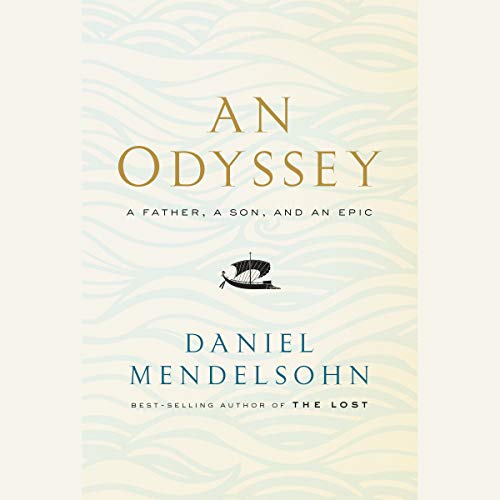
“An Odyssey” A Father, a Son, and an Epic
By: Daniel Mendelsohn
Narrated By: Bronson Pinchot
Daniel Adam Mendelsohn (Author, essayist, critic, columnist, and translator, Professor of Humanities at Bard College.)
“An Odyssey” is a memoir that combines Mendelsohn’s life and educational experiences with Homer’s “… Odyssey”. As most know, “The Odyssey” is one of two ancient Greek epic poems, the other being “The Iliad”. Both are attributed to Homer who is questioned by some scholars as neither the soul creator nor (necessarily) its singular author. Both poems are said to have come from an oral tradition in ancient times, told and re-told, with no written editions until the late 8th or early 7th century BCE. Homer is believed to have lived in the 9th or 8th century BCE which makes it possible for him to be the originator, but no one really knows. Homer seems a singular source, or one of many who told and retold the epic poems.
In a broad sense, Daniel Mendelsohn’s memoir is about parenting but in a more succinct view, it is about fatherhood and the inevitability of death.
“An Odyssey” is a tribute to Mendelsohn’s father, his intellect and his impact on his son’s understanding of life. Mendelsohn cleverly intersperses “The Odyssey” of the heroic life of Odysseus with the accomplished life of his father.
The two poems tell the history of the Trojan War with the main character of “The Iliad” being Achilles, while Odysseus is the main character of “The Odyssey”.
Both heroes are characterized in “The Odyssey”. Achilles is recalled as the greatest warrior of the Trojan War who dies as a hero. Odysseus is also a warrior but is noted as a strategist who skillfully manipulates others with his cunning wit and intelligence. In Odysseus’ return, he meets Achilles in a nether world to find Achilles regrets his fate. Achilles explains he would have rather continued in life than being remembered by the living as heroic in the nether world of death.
Daniel Mendelsohn, like Odysseus, is a witty teacher who uses his intelligence to dissect “The Odyssey” by giving listeners a memoir of his relationship with his father.
In that dissection, one gains some understanding of “The Odyssey” while glimpsing what it was like to be raised by a loving but strict father.
What Mendelsohn introduces is every father’s role in raising children.
A theme that runs through “The Odyssey” is Odysseus’s troubled ten-year journey to Ithaca after the Trojan war but what Mendelsohn introduces is every father’s role in raising children. Mendelsohn’s father is nearing the end of his life. He is a retired engineer who worked for the American government on high security projects before becoming a professor. In retirement, his father chooses to attend his son’s class on “The Odyssey”. Mendelsohn combines his father’s attendance in his class with a real and reimagined trip they take to retrace Odysseus’s travels in “The Odyssey”.
Mendelsohn’s father has strong opinions about the character of Odysseus, and he expresses them in class.
Mendelsohn’s father characterizes Odysseus as a poor leader who lost all his men in his return to his homeland. Mendelson’s father gives the example of the cyclops who imprisons and eats some of Odysseus’s men but, after a clever escape, Odysseus foolishly chooses to taunt the cyclops. The cyclops nearly sinks the ship and appeals to Poseidon to kill the escaped sailors (none of which survive) because of Odysseus’s taunt. Mendelsohn’s father characterizes Odysseus as a poor leader of men, a braggart, liar, and cheater on his wife, Penelope.
There is a sense of the Professor learning many things about his father from discussions in the class. At the same time, listeners gain personal knowledge of the epic poem, its universal meaning, and why it is considered a classic. From the class discussion about Telemachus, the son of Odysseus, one realizes the tale is about the role of fathers and, to a lesser extent, mothers in educating their children. Mendelson admires his father for his intelligence, fidelity and what he believes is unbending truthfulness. On the other hand, Mendelson is embarrassed by his father’s slovenly dress, eating habits, and what he perceives as his father’s parental neglect during his childhood.
Mendelsohn’s father does not fear death but is afraid of the mental and physical deterioration that comes before death.
Mendelsohn seems hurt by his father’s emotional distancing but becomes less hurt as he gains a clearer understanding of where that distancing comes from. Mendelsohn’s father lives in a black and white world. Everything is one way or another. The end of one’s life is often gradual and only becomes one way or another at the very end. There is an inkling of tragedy to come as his father finally dies.
Truth and a lie are two sides of a coin. The fear of losing one’s physical or mental abilities is not a choice but something beyond one’s control.
Understanding what is black, white, true, or false loses meaning as one nears the end of life. Mendelsohn’s father has lived a life where he depended on himself. He made his own choices. As one’s body or mind deteriorates, depending on oneself become problematic. That loss of control is the fear of Mendelsohn’s father. Here is the tragedy of Mendelsohn’s story.
Mendelsohn’s father’s life is extended by the desires of his family and his doctor’s ministrations, despite the diminishing quality of his father’s life. Mendelsohn’s brilliant father lives months after his debilitating stroke. The only point one can see in the extension of life when death is imminent seems to be a family’s grief, and a kind of selfishness over loss of a loved one. There seems a high degree of selfishness in extending the life of one who is at the end of their life.
As a father, there is much more to be learned in Mendelsohn’s story about what it means to be a good father.
One recognizes the many mistakes a father or parent can make in their lives in failing to be the best they can be for their children.
Listening to fiction is considered by some to be a waste of time. What is missed by that opinion is the insight authors have of the society in which they live. As a reviewer from the baby boom generation, it is interesting to find what an author of the 1977 to 1983 generation (called Xennials) think about American life. Xennials grew up in the gaming generation, gaming is an experience some in the “boomer generation” do not understand and have little interest playing.
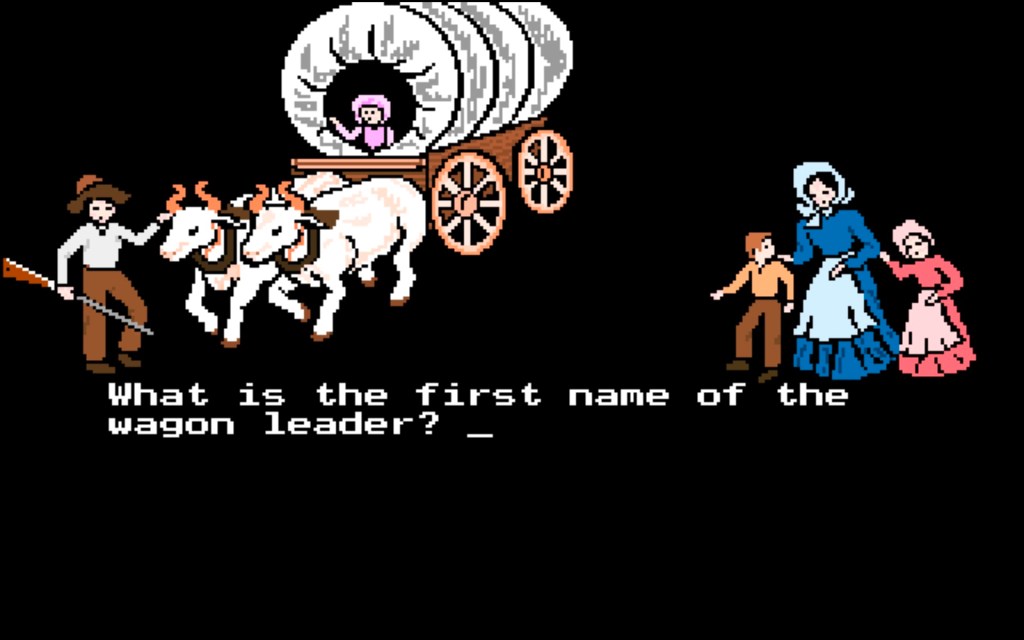
Xennials and other Gamers look to “Oregon Trail” or other games of their generation as an entertainment and representation of what life is today or was in the past.
Gabrielle Zevin writes an insightful introduction to her view of the Xennial generation’s view of 21st century American society. The author’s insight is limited to an estimated 10 percent of the Xennial population because her main characters have high intelligence quotients. Her characters have intellectual tools that get them into an Ivy League university. Zevin offers a vivid picture of high achievers in America.
Gaming is viewed by many Boomers as a waste of time and money but to those in the industry, it is a way to gain wealth and fame. Gaming is a sophisticated way to represent life in a virtual world.
Whether rich, poor, educated, or uneducated, gaming has an appeal to many who wish to escape the real world. Zevin tells a story of her generation and how a few become wealthy in the gaming industry. Her clever story shows how three teenagers from different racial, economic, and social backgrounds become successful entrepreneurial gamers. The only common denominator of her main characters is higher than average intelligence but despite that qualification, their life’ experiences have broad appeal to a listening audience.
“Tomorrow…” begins in a hospital with Sam and Sadie. Sam is in the hospital because of a crushed foot from a sports car’ accident that kills his mother.
Sadie is at the hospital because she is visiting her sister who has cancer. Sam and Sadie meet in a commons area of the hospital where Sam is playing a computer game. Both are high school age and are familiar with computer gaming. Sam responds to Sadie’s questions about the game he is playing. Reader/listeners find this is the first time Sam has talked to anyone for the weeks he has been in the hospital. When the nurses find that Sam is talking to Sadie, they ask her to visit regularly to aid Sam’s recovery. The two children become friends.
When Sam finds Sadie was visiting him because of the nurse’s ask, he is upset because it implies Sadie does not necessarily care for him as a friend.
As a young boy, Sam chooses to reject Sadie’s friendship. Some years after their breakup in the hospital, Sam sees Sadie catching a local train near Harvard, a university they are both attending. Sam calls out to Sadie, and they have a brief conversation. They become reacquainted and eventually renew their friendship. This renewal is a lesson about misunderstandings between people and false beliefs about each other because of poor communication. The story goes on to illustrate consequences of other relational misunderstandings.
Sadie takes a class on programing from a Harvard professor who becomes Sadie’s lover, another human relational mistake. The professor is married, and the relationship evolves into one of physical abuse.
The professor returns to his wife and Sadie decides to move to California with her friend Sam to start a company with the help of Marx, a friend and roommate of Sam’s at Harvard. The money for a gaming company start-up presumably comes from Sadie’s and Marx’s upper-class families. All three are Harvard graduates but Sam is a scholarship student that has little money. Their first invented game is a financial success. Start-up money is undoubtedly important, but it is the intelligence and education of the three characters that makes the company a success. Their company and their social relationships evolve. Their second game is a dud, but future games continue their business success.
There are stresses in the relationships between these three entrepreneurs.
Sadie is initially the more expert programmer of the two coders (Sam and Sadie). She is somewhat frustrated by Sam’s public face for the company because of his public identification with the gamer’ character created in their first successful game. She resents the public’s belief that Sam’s coding for the company and its success are more important than her technical contribution. Sam and Sadie come close to abandoning their friendship because of the public’s perception of the creators’ successful game release.
Sadie eventually marries Marx, the business manager, with Sam somewhat ambivalent about their relationship.
Despite Sadie’s discontent about Sam’s identification with their success, Sam grows jealous about her relationship with Marx. The three characters deeply love and respect each other but the dimension of intimacy between Marx and Sadie become a stressful dynamic for the trio. This is life, and all people of any age, education, or intelligence can see themselves in Zevin’s story.
Nearing the end of “Tomorrow…”, Marx is killed by a bullet from two gunman who storm the gaming business’ office because of Sam’s support of same-sex marriage in their latest successful game.
Sadie is pregnant and is grief stricken by Marx’s death. American gun violence and hate crime are shown by the author as a measure of modern times. The name of the gaming company that Sadie, Sam, and Marx form is “Unfair Games” which seems an ironic assessment America society.
Unlike a gamer’s reboot of virtual life, real life does not reboot. One wonders if gun violence in America is influenced by gaming, as well as Americans’ misrepresentation of the “…right to bear arms” in the Constitution of the United States.
Eugenics and the fickle political nature of human beings outweighs the benefits of Harden’s idea of choosing what is best for society.
Books of Interest Website: chetyarbrough.blog
“The Genetic Lottery” Why DNA Matters for Social Equality
By: Kathryn Paige Harden
Narrated By: Katherine Fenton
Kathryn Paige Harden (Author, American psychologist and behavioral geneticist, Professor of Psychology at the University of Texas at Austin.)
“The Genetic Lottery” is an important book that may be easily misinterpreted. Hopefully, this review fairly summarizes its meaning. Fundamentally, Kathryn Paige Harden concludes all human beings are subject to a genetic lottery and the culture in which they mature. It is not suggesting all human beings are equal but that all can develop to their potential as long as he/she has an equal opportunity to become what their genetic inheritance, education, and life’s luck allow.
Harden explains racial identity is a false flag signifying little about human capability.
Every human being is born within a culture and from a mother and father who have contributed genetic DNA they inherited from previous generations. DNA carries genetic instructions for development, growth, and reproduction of living organisms. Those instructions are a blueprint for an organism’s growth. However, the genetic information passed on to future generations varies with each birth and is subject to a lottery of DNA instructions.
The lottery of genetics extends a multitude of characteristics ranging from intelligence to height to the color of one’s skin.
One may become an Einstein, or a slow-witted dolt. One may be born healthy or destined to die from an incurable disease. The growing understanding of genetics suggests the potential for human intervention to prevent disease, but also the possibility of creating a master race of human beings. That second possibility is a Hitlerian idea that lurks in the background of science and political power. It revolves around the theory of eugenics.
Harden suggests an ameliorating power of eugenics is its potential for offering equal opportunity for all to be the best version of themselves within whatever culture they live.
Putting aside the potential of human genetic theory’s risk, Harden explains every human is born within a culture that reflects the genetic inheritance of the continent on which they are born. The combination of the human genetic lottery and the culture in which humans live create ethnic identity and difference. Differences are the strengths and weaknesses of society. Strengths are in the diversity of culture that adds interest and dimension to life. The weakness of society is its tendency to look at someone who is different as a threat or obstacle to a native’s ambition or cultural identity.
Harden suggests every human being’s genetic code should be identified to aid human development by creating an environmental support system that capitalizes on genetic strengths and minimizes weaknesses.
This idealistic view of genetics is fraught with a risk to human freedom of thought and action. Science is generations away from understanding genetics and its relationship to the weaknesses and strengths of human thought and action. Understanding what gave Einstein a genetic inheritance that could see and understand E=MC squared is not known and may never be known. The luck of genetic inheritance and the lottery of life experiences are unlikely to ever be predictable. One interesting note in the forensic examination of Einsteins brain (recorded in another book) is that he had a higher-than-normal gilia cell ratio, non-normal folding patterns in his parietal lobe, and a missing furrow in the parietal lobe that may have allowed better connectivity between brain regions.
The threat of eugenic determinism and the fickle political nature of human beings outweighs the benefits of Harden’s idea of choosing what is best for society.









































 REVIEWS AND VIEWS OF LIFE
