
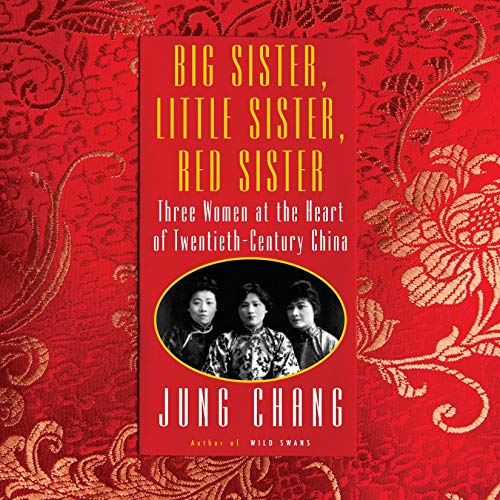
Audio-book Review
By Chet Yarbrough
(Blog:awalkingdelight)
Website: chetyarbrough.blog
Big Sister, Little Sister, Red Sister (Three Women at the Heart of Twentieth-Century China.)
By: Jung Change
Narrated by: Catherine Ho
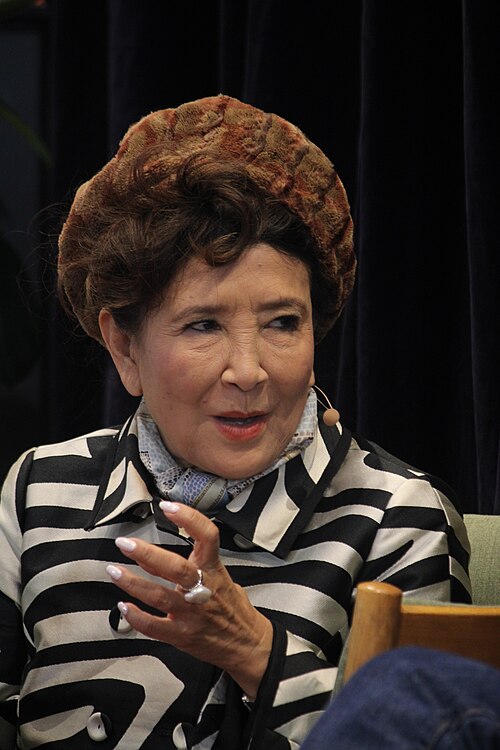
Jung Change (Author, Chinese-born British writer whose autobiography is banned in the Peoples Republic of China.)
“Big Sister, Little Sister, Red Sister” is an historically important book about major political struggles that have shaped modern China. It is a story of three sisters who were closely connected to early twentieth century China when it was teetering between being a Republic, independent of the West, and later a communist autocracy. Though China is not yet, by definition, a republic, twentieth century China seems destined to follow Sun Yat-sen’s “Three Principles of the People”. 1) Nationalism-being independent and sovereign. 2) Democracy with Executive, Legislative, Judicial, Examination, and Yuan Control branches 3) A government that attends to people’s livelihood concern including land reform, regulation of capital, and improved living standards for all.
Sun Yat-sen notes the Qing Empire’s decline and emphasizes a need for China’s sovereignty and unity as a singular nation. He insists on independence from the influence of the West. He demands reduction of foreign influence in China from unequal treaties between the West and China. He seeks political unity by reinforcing Chinese national identity. His goal is to establish China as a constitutional democracy in stages beginning with initial military rule but evolving through political tutelage of the people about democracy. His goals are delayed (if not defeated) by the class revolution led by Mao Zedong. China’s historical transition is viewed through the history of three sisters, one which is married to Sun Yat-sen, a second who marries Chiang Kai-shek, and a third older sister who holds the wealth behind the influences of their marriages.
The three sisters of the Soong family.
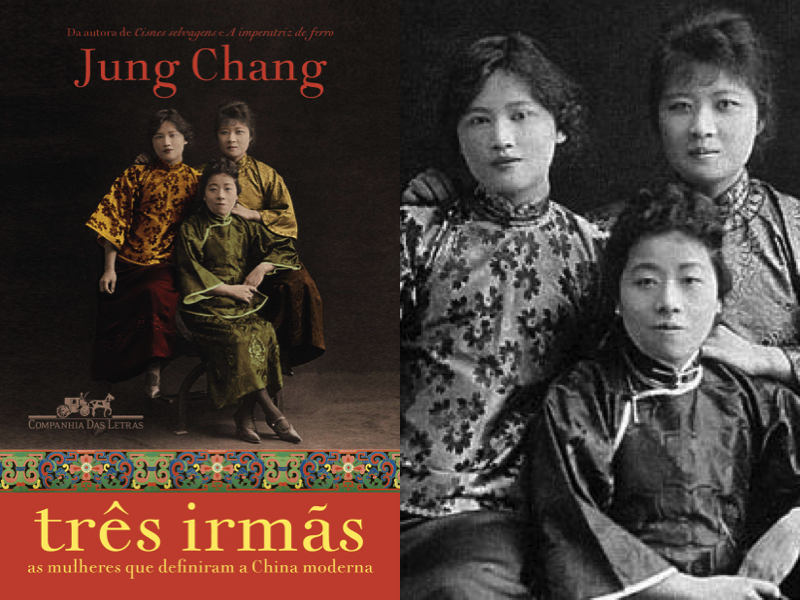
The oldest of the three sisters creates wealth through personal effort and a marriage to H. H. Kung, one of the wealthiest financiers and businessmen in China. All three sisters are educated in the United States. Their father was a Methodist Christian minister educated in America. The oldest sister (Big Sister), Soong Ai-ling became one of China’s wealthiest women. “Red Sister” married Sun Yat-sen, the founder of the Chinese Republic who served as a high-ranking member of early 20th century rule of China. “Little Sister” married Chiang Kai-shek, the leader of Nationalist China.
Soong Ai-ling (Graduated for Wesleyan College, became a secretary for Sun Yat-sen.)
CHIANG KAI-SHEK (China’s ruler from 1928-1948)

Jung Change’s story unfortunately obscures the momentous differences between Chiang Kai-shek’s and Mao Zedong’s rule of China with a somewhat ponderous history of the marriages of two of three daughters born in the Soong family. All three sisters are raised as Methodists in America. Chiang Kai-shek ruled China from 1928 to 1948 and governed Taiwan until 1975. His rule is guided by the political beliefs of Sun Yat-sen.
Chiang Kai-shek ruled China as a nationalist one-party state under the Kuomintang (KMT) while Mao ruled China under the Chinese Communist Party. Mao also used the KMT to enforce his rule as leader of the CCP. The contrast between these two rulers is poorly organized in the writing of “Big Sister, Little Sister, Red Sister”. The author’s history obscures, if not diminishes, the book’s historical importance. It reveals many interesting and surprising facts about early and mid-century China, but the author’s focus is too fragmented.
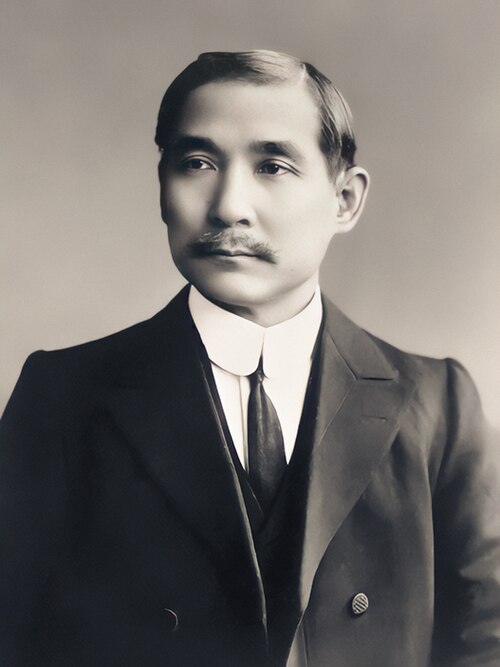
Sun Yat-sen (Chinese physician, revolutionary and political philosopher who founded the Kuomintang and set the table for what became Taiwan.)
Chiang Kai-shek adopts Sun Yat-sen’s “Three Principles of the People” in his rule of China. The Kuomintang enforces the principle of unity of China with the presumed intent to democratize the government in the future as was envisioned by Sun Yat-sen. Democratization would take time to educate citizens on the principals of political representation. The KMT would exercise military rule until the principals of representation could be understood by China’s citizens. Even when Chiang is exiled in Taiwan, the KMT is in control of its citizens until Chiang’s death. Chiang dies from pneumonia and other ailments in 1975. Taiwan did evolve, as Sun predicted, into a democracy similar to America’s after Chiang’s death. Taiwan endorsed fully competitive elections in 1992 and had its first direct presidential election in 1996. This seems a fulfillment of Sun Yat-sen’s longer-term goal in the “Three Principles of the People”. Sun Yat-sen died from liver cancer in 1925. He was 58 years old.
Rules of nation-state leadership and representation had to be taught to the citizens in Sun’s view of China’s future.

The two sisters of the wealthy Soong family are shown to have had an important impact on the philosophy of rule in China. Sun Yat-sen’s ambition and beliefs gained credibility by being married to a daughter of the wealthy Soong family. Soong Ching-ling is celebrated as the “Mother of Modern China”. She becomes the bridge between Sun Yat-sen’s political beliefs and what became Communist China when Mao Zedong rose to power. Sun Yat-sen’s wife stayed in mainland China and supported the new Communist government.
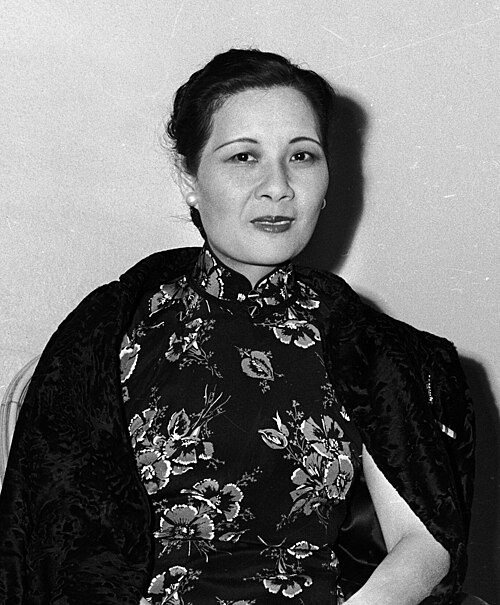
Soong Mei-ling (First Lady of the Republic of China, wife of Chiang Kai-shek.)
As the wife of Chiang Kai-shek, Soong Mei-ling became the ambassador of China to the West. Because of her fluency in the English language, she helped America understand Chinese government’s relationship to the West. She secures American sympathy during China’s war against Japan and acts as an intermediary between Chinese and American leaders with her intimate understanding of both cultures.
Soong Ching-ling (Chinese politician and activist wife of Sun Yat-sen.)
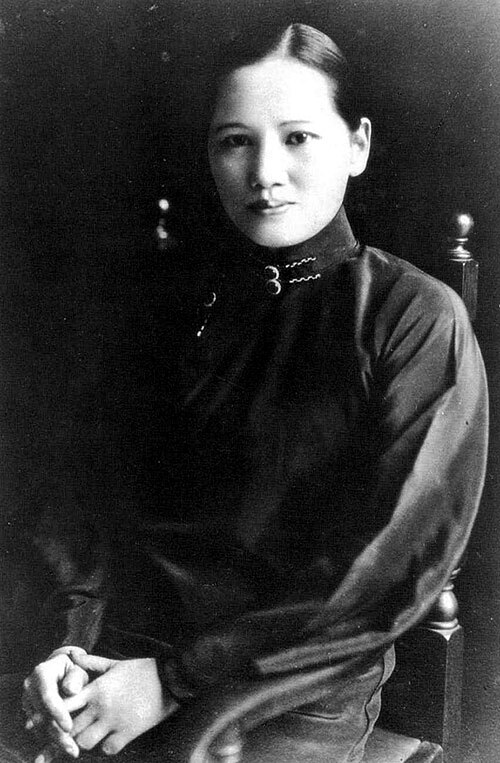
In contrast to Soong Ching-ling, Soong Mei-ling leaves mainland China to follow her husband to Taiwan. After her husband’s death in 1975, she returns to the United States and dies in New York at the age of 105. In the end, the three sisters were closely allied with China but ended up on opposite sides of the 2oth century’s greatest ideological divide. Soong Ching-ling (Sun Yat-sen’s widow) became a firm believer in Communist China. Soong Mei-ling sided with her husband and became a leading figure in Nationalist Taiwan, while Soong Ai-ling, the oldest and wealthiest of the three, chose to leave China and return to the United States.
It is surprising to find that three Chinese sisters with American Christian backgrounds had prominent roles in China’s twentieth century leadership. “Big Sister, Little Sister, Red Sister” shows that wealth, belief in something greater than oneself, and human relationship are the powers behind revolution.


