

Books of Interest
Website: chetyarbrough.blog
How to Rule the World (An Education in Power at Stanford University.)
Author: Theo Baker
Narration by: Theo Baker

Theo Baker (Author, former student journalist for “The Stanford Daily”.)
Theo Baker wrote for “The Stanford Daily” newspaper at Stanford University and received the George Polk Award for his reporting. His writing contributed to the resignation of the Stanford University President, Marc Tessier-Lavigne. Theo Baker, as the son of two journalist (Peter Baker and Susan Glasser) appears to have learned something about research and newspaper reporting from his parents. Theo Baker enrolled at Stanford at the age of 17 in 2022 and graduated in 2026 with a degree in history. To have joined Stanford at 17 years of age says something about his intellect, and pre-college academic achievement.
The value of education.

Personally, as a graduate of no-name universities in America, the picture Baker creates of Stanford makes one envious of the opportunities offered by a highly regarded University. On the one hand, most young students interested in college cannot afford the tuitions of Ivy-plus schools and many may not have either the education, or privileges of wealth that good preparatory schools provide. The added benefit of being a Stanford student is its being located in Silicon Valley, the best area of the country for those who pursue programming skills. Though Baker is more tech savvy about programming than past generations, his chosen field of study is history.

Influence.
What Baker interestingly points out is that classroom learning is less important than networking and raising entrepreneurial capital at Stanford. What is a little off-putting in Baker’s story is it implies Stanford’s culture of entrepreneurship is more important than scholarship. The focus of students seems not on education but in the goal of becoming gob-smacking rich. Having recently read a book about the Founding Father’s of America, one wonders what would have become of America if the Founders had focused more on personal wealth than the future of the country. This is, of course, sour grapes of a book-reviewer because the reality is Ivy-plus Universities have trained many students who have become great contributors to American government and America’s way of life, without becoming gazillionaires.
Technology research.

Baker refers to student’ millionaires while at Stanford because of their inordinate wealth and early success in tech-fund raising and creative computer programing. He implies the student culture of Stanford measures achievement on entrepreneurial networking more than academic achievement. A startup founder who raises the most money is elevated above high academic achievement in Stanford’s student culture. Getting good academic grades is important but it takes a back seat to a student’s ability to raise start-up capital, sell their programming, and/or create stock market start-ups. Those who are good at raising capital become among the institutionally privileged at Stanford. Academic success is primarily important as it relates to an entrepreneurial end rather than an educational achievement. Baker is not saying Stanford academic success is not real, but it is overshadowed by social networking, entrepreneurship, and financial reward. It reminds one of a book about the history of Reddit’s early recruits and a skilled programmer who commits suicide. Aaron Schwatz went to Stanford in 2004. Ironically, he like Baker is only 17. However, he left after a year. He joined Reddit and became a millionaire, but his wealth seems to have meant little to him in regard to what he believed or what he hoped to achieve in life.

American universities.
In any case, the Stanford President resignation is only a part of Theo Baker’s book. Ivy-League and Ivy-plus schools in America are inferred to be networks of inherited privilege and social connection with Stanford student’s primary goal of becoming filthy rich more than broadly educated. Though no mention is made of Aaron Schwartz’s death, wealth seems a weakness rather than goal for either students or faculty at Stanford.
For a person to say they graduated from Harvard, Princeton, Yale, Columbia, Cornell, or the University of Chicago is highly regarded by the public. When an Ivy-plus University like Stanford makes networking and making money more important than public service or academic achievement, one becomes somewhat disillusioned.
Silicon Valley,

Stanford definitely has advantage over other Ivy League and Ivy-plus schools because of Silicon Valley. One suspects the power of networking is generally much greater in Ivy League universities because of the average wealth of families who live in well-funded school districts, can pay expensive tuitions, and have either funded or been educated themselves in Ivy League or Ivy-plus universities. Becoming wealthy is a genuine achievement in life but real value should (but does not) come from equal opportunity. Without equal opportunity, society becomes less civil and inclined to believe human value is based on wealth, not character. The power of wealth creates a land of the “haves” and “have nots”.
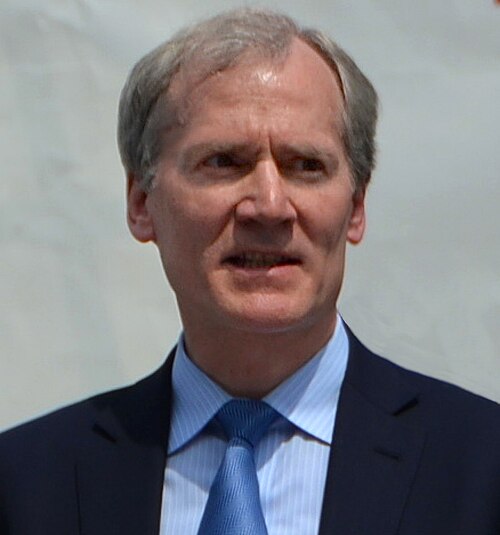
Marc Trevor Tessier-Lavigne (Canadian-American neuroscientist. President of Stanford 2016-2023.)
Baker’s reporting is central to Tessier-Lavigne’s resignation from Stanford. Discovered irregularities of Tessier-Lavigne’s research on an Alzheimer’s cure reported by Baker in the Stanford paper led the Stanford Board of Trustees to launch an investigation into their President. The Board concluded Tessier-Lavigne’s research papers were flawed by manipulated data that induced Genetech to recruit him in 2003 when he was then President of Rockefeller University and later Stanford. In the end, the President of Stanford is not found guilty of any crime because the research manipulations were considered oversight failures that were retracted before any harm to the public. After his resignation, Tessier-Lavigne went on to become co-founder and chair of Xaira Therapeutics, an AI-biotech company.
Past and present generations.

Putting aside Baker’s good fortune in entering Stanford and working for the Stanford paper, he reveals the motivation of many young Americans today. The fate of Stanford’s President, Tessier-Lavigne, introduces a part of the theme of Baker’s book. Tessier-Lavigne is compelled to resign, in part, because of research and writing by this 17-year-old student in Stanford’s local paper. It is a story of the power of truth and the deleterious effects of seeing position or wealth as a measure of one’s value in society. Whether President of the United States, a newspaper journalist, or President of an Ivy-plus university, real power is ultimately in the truth.
As Oscar Wilde’s dialogue between two people said in “The Picture of Dorian Gray”–“Young people, nowadays, imagine that money is everything.” The response is “Yes, and when they grow older they know it.” That was written in 1891. Baker infers not much has changed in the 21st century.

