AMERICAN LIFE

Governmental and educational institutions are the foundations of Democracy. They must stand and support the right to free speech without committing, allowing, or condoning violence in the exercise of that right. (Of course, this is easy to say but difficult to follow because of the loss of emotional control by protectors of the public and/or protesters.)

Books of Interest
 Website: chetyarbrough.blog

The Coddling of the American Mind (How Good Intentions and Bad Ideas are Setting Up a Generation for Failure)

Author: Jonathan Haidt, Greg Lukianoff

Narrated By: Jonathan Haidt

This is an interesting book written by a social psychologist and a free speech advocate. The authors suggest the focus for parents of Generation Z have, in some ways, become overly protective of their children. They argue– Gen Z’ parents are not addressing the mental health issues caused by this technological age. Jonathan Haidt and Greg Lukianoff argue society has become more attuned to children’s protection than the reality of living in a world of diversity.

With the societal change that has accompanied the birth and maturation of Generation Z, immersive tech like AR and VR, along with AI and smart devices, is having profound effects on society.

Haidt and Lukianoff suggest parents focus too much on keeping their children safe to the point of stifling their intellectual growth. The example they give is of the mother who is publicly ridiculed for allowing her 8-year-old son to find his way back home from a city market by mass transit. She prepares him for the excursion with a transit schedule, pocket money, a cell phone, and general information he needs to find his way home. The boy successfully finds his way home and allegedly expresses happiness about what he views as an adventure and accomplishment.

Undoubtedly, there is some truth to the authors’ suggestion that parents are too protective of their children. Thinking of a single mother who has to work but has children at home. Many single parents cannot afford a babysitter, so leaving their children during the day is not uncommon. Single parent families do the best they can but if children are old enough to fill a cereal bowl for breakfast, they are expected to take care of themselves.

John Walsh (Became a child protection advocate, producer, and actor after the murder of his son.)

On the other hand, the writers note the horrible tragedy of John Walsh who’s six-year-old son is kidnapped in 1981. The six-year-old is found two weeks later with a severed head. Though child kidnappings rarely end in such a horrific way, one can understand why many parents became highly protective of their children after the 1980s. Haidt and Lukianoff acknowledge the horrific murder of Walsh’s son, but history shows unsupervised children that are harmed is much less than 1 percent of the dependent children population. What the authors suggest is that some of the overprotection of children since the Walsh tragedy in 1981 has been counterproductive.

Allergy immunity.

As an example of over protection, the authors suggest peanut butter allergies have risen because of inordinate fear by the public. They suggest that early life exposure to peanuts would have provided immunity and fear of exposure is the proximate cause for today’s rise in allergic reactions. Putting aside the theory of a human body’s creation of developing an allergy immunity, the frustration one has with monitoring a child’s life experience is in knowing where to draw the line between reasonable supervision and overprotectiveness.
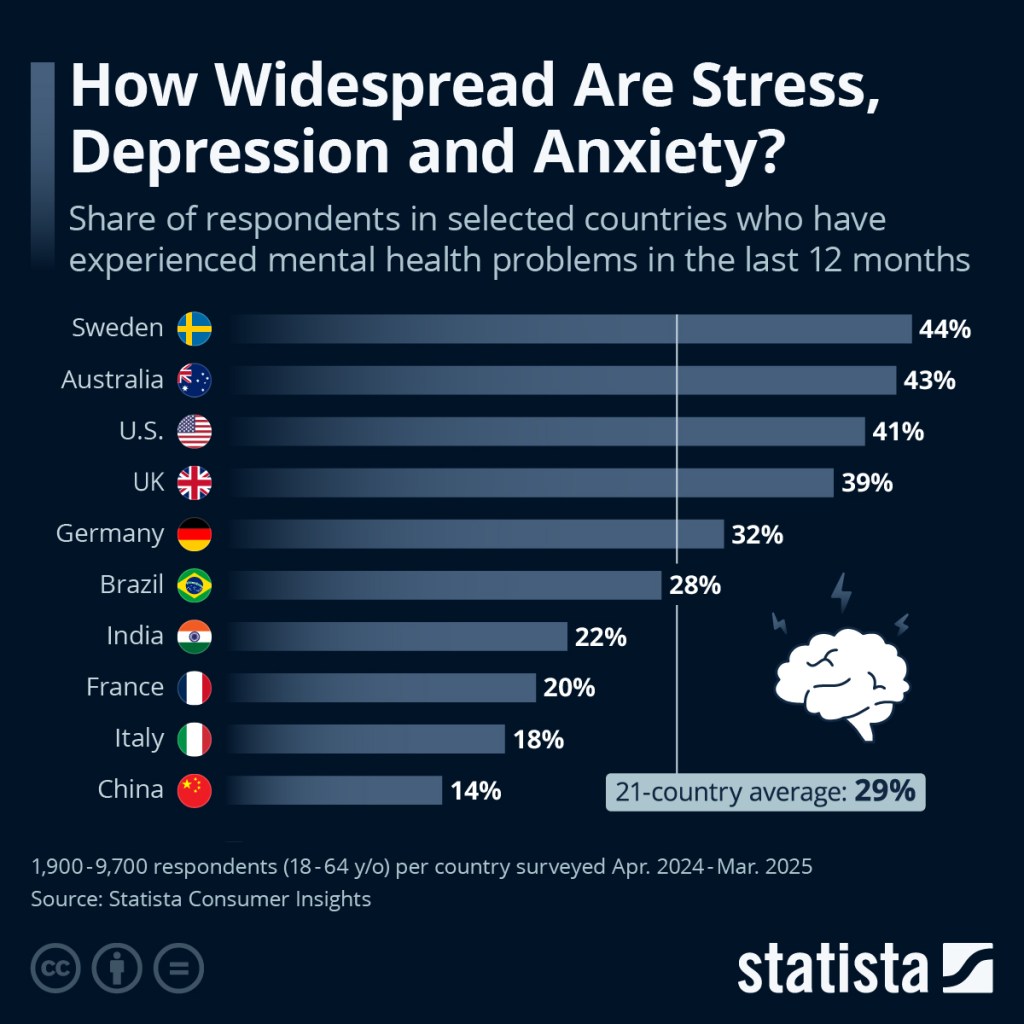
The authors infer the widespread rise in stress, anxiety, and depression in America is partly due to overprotectiveness.

Undoubtedly suppression of free inquiry and play diminishes the potential of a child’s development. Haidt and Lukianoff argue overprotection has contributed to a rising anxiety and depression in Generation Z and society in general. The authors cite national surveys that show increased rates of anxiety, depression, and self-harm. They note hospitalization and suicide rates are increasing based on self-inflicted injuries among teens with sharper rises among females. They note colleges and universities are reporting higher demand for mental health services.

Whether stress, anxiety, and depression are because of over protection remains a question in this listener’s mind. One suspects that children are cared for in too many different ways for research to conclude that stress, anxiety, and depression increases due to overprotection. It is more likely due to parental inattention because of work that takes them away from home and personal fulfillment in their own lives which are only partly satisfied by being parents.

Rather than parental overprotection, it seems intensified social media and smartphone use accelerates stress, anxiety, and depression in children and society in general.

Constant connectivity, online comparison, and cyberbullying are having outsized effects on emotional stability. The authors suggest overprotective parenting compounds the negative consequence of connectivity by depriving children of experience that can build their resistance to anxiety and depression. That may be partly true but not the whole story. Smart phone screen addiction takes one away from day-to-day real-life experience. The idea being that experiencing life’s failures and successes builds resistance to anxiety and depression whereas smart screens are pictures of life not lived by the person who is looking at them. Smart phones open the Pandora’s box of judgement which can either inflate or deflate one’s sense of themselves.

A large part of Haidt’s and Lukianoff’s book addresses the public confrontations occurring on campuses and the streets of America that are becoming violent demonstrations rather than expressions of opinion.

They suggest street demonstrations can be used constructively if participants would commit themselves to open dialogue and diverse viewpoints. Participants need to be taught cognitive behavioral techniques that can mitigate emotional reactions while building on psychological resilience. Rather than reacting emotionally to what one disagrees with, participants should focus on diverse viewpoints that allow for disagreement but do not become physical conflicts. We are all an “us”, i.e. not an “us and them’. Confrontation can be the difference between a white supremacist plowing into a crowd in Charleston, South Carolina and non-violent protest by leaders like Martin Luther King Jr. or Václav Havel. People like President Trump see the world as “us vs them” rather than one “blue marble” hoping to find another that can support human civilization.

Peaceful protests are an opportunity to understand human diversity without losing one’s humanity. Race, creed, and ethnicity are who we are and what we believe. Protesters should not be used as an excuse for violence but for understanding. Of course, this is a big ask which is too often unachievable.

The authors believe humanity can do better by allowing children to learn from their experiences while accepting diversity or difference of opinion without violence. Children and adults can be taught by experience and guidance to manage stress. Free play, risk-taking and real-world problem-solving come at every age and they can make a difference in human life. This listener only partially agrees with the author’s belief that “helicopter parenting” is interfering with free play and reasonable levels of risk taking. Democratic cultures need to reaffirm free speech as a mandate; with violence being unacceptable on every side of the aisle.

Anti-Trump demonstration.

Governmental and educational institutions are the foundations of Democracy. They must stand and support the right to free speech without committing, allowing, or condoning violence in the exercise of that right. (Of course, this is easy to say but difficult to follow because of the loss of emotional control by protectors of the public and/or protesters.)

MEDIA SELF-INTEREST

One may question William’s characterization of Facebook’s “Careless People” as more like calculating self-interested managers than careless employees.

Books of Interest
 Website: chetyarbrough.blog

Careless People (A Cautionary of Power, Greed, and Lost Idealism)

By: Sarah Wynn-Williams

Narrated By: Sarah Wynn-Williams

Sarah Wynn-Williams (Author, Ex-Meta executive, presently barred from criticism of Meta, formally known as Facebook.)

As noted in the sub-title of “Careless People”, Meta (formerly known as Facebook) is criticized as an international influencer of society that has lost its sense of ethics, i.e. the ability to see the difference between right and wrong. Facebook originally intended to be a forum for the connection of people interested in sharing ideas, communicating with others, and building positive social connection. Instead, the author’s experience as a Facebook’ executive found that expansion, profit, and political influence became an unethical pursuit by the major shareholders (particularly Mark Zukerberg) and managers of the corporation. She argues leadership of Facebook recklessly pursued income, expansion, and political influence around the world with little ethical oversight.

New Zealand (The birthplace of Sarah Wynn-Williams)

Ms. Williams was born in New Zealand but went to work for Facebook and became a U.S. citizen. Her work at Facebook led to a promotion that made her the Director of Global Public Policy which provided opportunity to travel the world soliciting business for Facebook in other countries. Her experience informs listeners of what Meta’s corporate goal: “give people the power to build community and bring the world closer together” became something less as a result of careless management oversight.

Williams begins with a story of a harrowing trip to Myanmar, presumably after their revolution in 2021.

The military coup that ousted the democratically elected government appears to have just begun when Williams had an audience to pitch the Facebook platform to its military government. Just getting to the building where the meeting was to be held was a trial but her position as a representative of Facebook ended with her arrival at a headquarters building of the new regime. It is an interesting story because it shows the power of Facebook association in a country that just had a coup d’état that ended civilian rule. Millions of Myanmar citizens were displaced by widespread human rights abuses with civilian arrests and violence. One wonders what “giving people the power to build community” means in what became a military totalitarian state. (When visiting the Baltics last year, our guide expressed a love for Myanmar’s citizens and the country but was told by Myanmar friends it is unsafe to visit since the coup.)

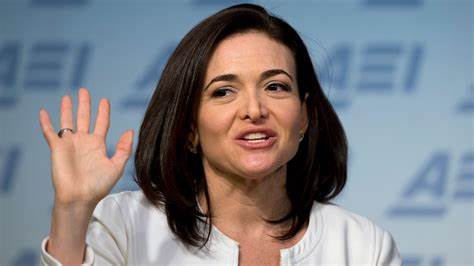
Williams worked directly with Sheryl Sandberg, the COO of Facebook.

Later, Williams explains a meeting with a Japanese official where Sandberg and Williams go to promote interest in Facebook which had not been a part of the Japanese media environment. The involvement of Williams was primarily to support Sandberg’s pitch. Williams indicates Sandberg was quite complementary of Williams’ assistance after the meeting which gives context to their relationship. A subsequent description of Sandberg’s strong, sometimes harsh, personality and influence on Facebook employees is given by Williams. The Japan’ meeting was successful because Facebook entered the market in 2010. Its popularity is said to have declined with Instagram and LINE being the dominant platforms, but Facebook maintains a presence in the country.

Societies interconnectedness is a boon and bane for 21st century society.

The pandering of Zukerberg, Bezos, Musk, Cook, and Pichai to world governments is made suspect by William’s experience as an employee of Facebook. Media companies have become too big to fail and too ungovernable to manage. Even though the internet more intimately connects the world, the platforms of today’s giants of information create a forum for control and conflict rather than a place to encourage social comity.

Robert Kaplan (Author of “Waste Land”.)

As noted by Robert Kaplan in “Waste Land”, the growing decline of Russia’s, China’s and America’s governments has been increased with world interconnectedness. It appears from William’s experience at Facebook, there is some truth in Kaplan’s observation. Kaplan’s solution is to dismantle these giants and encourage competition to defray their principal stockholder’s influence.

As the Turkish saying goes, “a fish rots from the head down”. Williams frequent contact with Mark Zuckerberg gives weight to her view of Facebook culture. Mr. Zuckerberg seems to carelessly lead Meta into the arena of politics by promoting Facebook’s media clout to political parties because it raises revenues with political advertising and influences government policy on media’ regulation. Frighteningly, Williams notes Zuckerberg considers running for President with the power of Meta to support his candidacy. One may question William’s characterization of Facebook’s “Careless People” as more like calculating self-interested managers than careless employees.

AMERICAN HOPE

From Fukuyama’s intellectual musing to our eyes and ears, one hopes he is correct about America’s future in the technological age.

Books of Interest
 Website: chetyarbrough.blog

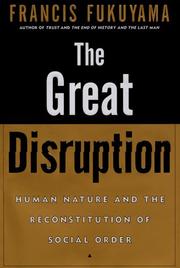
The Great Disruption (Human Nature and the Reconstitution of Social Order)

By: Francis Fukuyama

Francis Fukuyama (Author, political scientist, political economist, international relations scholar.)

Francis Fukuyama argues America is at the threshold of a social reconstitution. Fukuyama believes we are at Gladwell’s “Tipping Point” that is changing social norms and rebuilding America’s social order. He argues the innovation of technology, like the industrial revolution, is deconstructing social relationships and economics while reconstructing capitalist democracy.

The immense power of big technology companies like Amazon, Google, and Facebook have outsized influence on American society. They change the tone of social interaction through their ability to disseminate both accurate and misleading information. They erode privacy and create algorithms tailored to disparate interest groups that polarize society. The media giant’s objective is to increase clicks on their platforms to attract more advertisers who pay for public exposure of their service, merchandise, and brand.

To reduce outsize influence of big tech companies, Fukuyama suggests more technology has an answer.

There should be more antitrust measures instituted by the government to break monopolistic practices and encourage competition with large technology companies. Algorithms created by oversight government organizations can ensure transparency and reduce harmful content to reduce big tech companies influence on society. (One doubts expansion of government agencies is a likely scenario in today’s government.)

On the one hand, technology has improved convenience, communication, and a wider distribution of information.

On the other, technology has flooded society with misinformation, invaded privacy, and polarized society. Technology has created new jobs while increasing loss of traditional industry jobs with automation. Trying to return to past labor-intensive manufacturing companies is a fool’s errand in the age of technology.

Luddites during the Industrial Revolution.

Like the industrial revolution, the tech revolution’s social impact is mixed with a potential for greater social isolation, and job displacement with the addition of wide distribution of misinformation. The positives of new technology are improvements in healthcare product and services, renewable energy, and climate understanding with potential for improved control.

Face-to-face interactions become less and less necessary. Children’s access to technology impacts parental supervision and relationship. Fukuyama suggests setting boundaries for technology use needs to be a priority in American families. Technology can open the door to better education, but it also becomes a source of misinformation that can come from the internet of things. Employers have the opportunity to help with work-life balance by encouraging flexible hours and remote work. (Oddly, that suggestion is being undermined by the current government administration and many American companies.)

Economic growth, access to information, and global connectivity have been positively impacted by technology. However, the concentration of power, misinformation, and surveillance of social media has diminished privacy and eroded individual freedom. There are concerns about technology and how it is good and bad for democratic capitalism.

The good lies in increased efficiency, innovation and creation of new markets, through globalization. However, today’s American government shows how tariffs are a destroyer of globalization. Fukuyama implies A.I. and automation is displacing workers and aggravating economic inequality because it is being misunderstood for its true potential and also being misused. Personal data is used to manipulate consumers in ways that challenge the balance between corporations and consumers.

Fukuyama argues private parties will grow in America to create software that will filter and customize online services.

With that effort control of the influence of big tech companies will be diminished. With decentralization of big tech power and influence, society will theoretically become less polarized and more consensus oriented. The capitalist opportunity for tech savvy startups that diminish influence of big tech companies will re-create diversification like that which the matured industrial revolution gave to new manufacturers. Like Standard Oil and other conglomerates of the industrial revolution, businesses like Amazon, Google, and Facebook will have competition that diminishes their power and influence.

American Government will grow to regulate the internet of things just as it has grown to regulate banks, industries, and social services.

Service to citizens will become a bigger part of the economy as a replacement for manufacturing. Family life will re-invent itself as a force of society because of the time saved from manufacturing product to improve human relationships.

From Fukuyama’s intellectual musing to our eyes and ears, one hopes he is correct about America’s future in the technological age.

A REWIRED GENERATION

“The Anxious Generation” is a much-needed warning to America and the world.

Books of Interest
 Website: chetyarbrough.blog

“The Anxious Generation” (How the Great Rewiring of Childhood is Causing an Epidemic of Mental Illness)

By: Jonathan Haidt

Narrated by: Sean Pratt & Jonathan Haidt

Jonathan Haidt (Author, American social psychologist, Professor of Ethical Leadership NY University Stern School of Business.)

“The Anxious Generation” is a well-documented and disturbing analysis of the impact of the internet on American children. It undoubtedly reflects a similar but undocumented impact on children with internet access around the world.

Anxiety is defined as apprehensive uneasiness or nervousness that exhibits itself either physically and/or mentally.

The internet is an information vehicle that can create anxiety in every human being, but Haidt shows its generational significance in the young, i.e., those of 18 years of age or younger. Haidt argues the internet is particularly harmful to girls but suggests it has significant social consequence for boys. Whether male or female, the formative years of children are significantly changed by the ubiquitous presence of cell phone’ internet access.

Haidt implies the role of girls in American society is particularly affected by the internet because of social inequities between the sexes. Physical appearance for women is weighted with more significance than other qualities of being human in America. The point is that rather than innate human capability, perceived beauty becomes a dominant desire of most young American girls.

Haidt notes the internet offers a constant reminder of how one looks to others.

Young American girls are bombarded with internet information about how they look and what others think of their looks. Heidt argues the barrage of information from mobile phone’ access to the internet creates extraordinary anxiety among girls. They become anxious about how others measure their appearance. Some become depressed. Some exhibit anorexic behavior. Some choose to cut themselves. Some withdraw from society. At an extreme, some commit suicide.

Additionally, Haidt notes the allure of internet sexual predation of young girls by men who use the internet to lure young girls and women into compromising pictorial positions by appealing to their desire to be recognized as desirable and beautiful. Added to this sexual predation is the power of the internet to demean, ridicule, and abuse young girls concerned about their place in the world.

Haidt argues boys are also deeply affected by the ubiquitous internet, but their anxiety is caused by growing isolation. Rather than making boyhood friends, participating in sports, attending parties, they become addicted users of the internet who are driven to improve their scores on Fortnite, Halo, or Call of Duty. At the same time, the availability of porn exacerbates misogyny and reinforces a distorted view of society. Their growing isolation in imagined worlds interrupts their psychological growth in the real world of success and failure. Computer gaming reduces social connection. Haidt speculates the availability of free porn decreases boy’s interest in risking the complications and potential of dating. Young boys have the risk of being turned down when asking a girl for a date. There is no risk of being turned down by a free porn site.

(One wonders if young boys associate success in gaming with success in life without understanding the importance of education and gainful employment for socially recognized identities. Without an education and employment, a spiral of homelessness and despair consumes young men’s lives. This is not a Haidt conclusion, but it seems plausible.)

Haidt suggests increases in suicides for young men is caused by the early life’ allure of the internet age.

Haidt explores the possibility of a loss of faith or spirituality as a consequence of internet addiction. Haidt speculates distraction of the internet replaces the camaraderie created by religious services. This seems reasonable in one way but too speculative in another. History shows religion has been as much a cause of social destruction as social benefit.

In the last chapters of Haidt’s book, he addresses constructive ways of dealing with cell phone ubiquity and the negative consequence of internet addiction.

The most reasonable suggestions are for cell phone programing to include internet restrictions based on the age of the user. He goes on to argue cell phones should be placed in lock bags or secured by school administrations during classes. The burden of age verification should be put on internet providers and phone manufacturers with penalties for failure to comply with mandated requirements.

A fundamental point of Haidt’s book is that free play time is an essential part of childhood development.

That play time should be for socialization, not internet exploration. A fundamental flaw in Haidt’s prescription is in the need for better parent supervision when many families are broken, or too burdened by gainful employment to reasonably care for their children. This is not to argue Haidt is incorrect in identifying what should and could be done to address the negative impact of cell phone addiction. “The Anxious Generation” is a much-needed warning to America and the world.

TWITTER FAILURE

One suspects Musk is at a crossroad. He will either sell X at a loss or figure out how the forum can provide a service to the public for which it is willing to pay.

Books of Interest
 Website: chetyarbrough.blog

“Extremely Hardcore” (Inside Elon Musk’s Twitter)

By: Zoë Schiffer

Narrated by: Jame Lamchick

Zoë Schiffer (Author, senior reporter at “The Verge”, freelance journalist, experience as a tech content manager.)

Zoë Schiffer’s “Extremely Hardcore” is a send-up of Elon Musk’s takeover of Twitter. Elon Musk believes in freedom of speech with a commitment that results in the dismantling of Twitter. What Schiffer makes clear to some who listen to her book is that the failure of Twitter is not because of Musk but because of the ideal of free speech.

Musk made an error in trying to shift Twitters’ income source from advertising to users. Only with advertiser revenues could Twitter pursue the ideal of free speech.

Musk’s task should not have been to do what has not been possible because of the nature of human beings. Free speech is a laudable but unachievable goal because human beings are influenced by the way they are raised and the experience of living. Advertisers want to know that the media on which they advertise is not going to offend its customers. Musk is unquestionably a genius and a credit to human progress but creating a forum for free speech is an unachievable goal.

Jack Dorsey (American internet entrepreneur, philanthropist, and programmer.)

The co-founder of Twitter, Jack Dorsey, was no better at creating a free-speech forum than Elon Musk. Dorsey was liberated from the struggle to achieve the unachievable by Musk when Twitter was sold. The only chance for X’s survival is for Musk to offer a service that goes beyond the ideal of free speech to a forum that acknowledges some free speech is harmful and that X’s media forum can serve the public in some other way.

Twitter appeared to be a bloated organization that was organized to do the impossible. Monitoring and regulating free speech bureaucratized Twitter in ways that made profitability difficult, if not impossible. On the other hand, Twitter offered a free service to a public that craves attention and recognition. X cannot survive as a free speech forum because it cannot survive its debt service based on people who are only seeking attention and recognition.

Musk’s choice to change Twitter to an organization called X is only going to succeed if he manages to either return it to a monitored public forum or a service beyond the unachievable principle of free speech.

The history of Reddit and its successful public stock offer earlier this week shows that a monitored public forum can be successful. One wonders if Musk will take the hint and emulate Reddit’s success. His mistaken belief about freedom of speech suggests he will not invest in re-bureaucratization of what is now called X.

One suspects Musk is at a crossroad. He will either sell X at a loss or figure out how the forum can provide a service to the public for which it is willing to pay.