EGOTISTICAL UTILITARIAN

“Greenlights” offers a different view of who McConaughey is than what one might think of him based on his public persona.

Books of Interest
 Website: chetyarbrough.blog

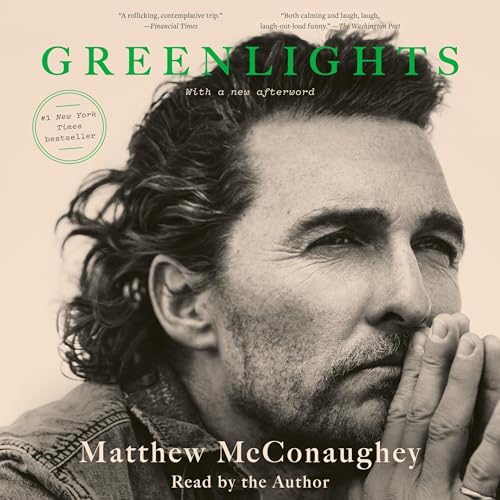
Greenlights

Author: Matthew McConaughey

Narrated By:  Matthew McConaughey

Matthew McConaughey (Author, actor born November 4, 1969, in Uvalde, Texas.)

“Greenlights” is a self-narrated autobiography of the famous actor Matthew McConaughey. The picture he creates of himself seems naked and unafraid. His narration gives a sense of a person acting in a movie who tells of the strengths and weaknesses of a person who speeds through the greenlights of life, believing in only God and himself. McConaughey idolizes his deceased father while seemingly acknowledging how much he is who he is because of his mother.
A listener senses they are witnessing a heartfelt theater presentation, where a person earnestly strives to live fully in the moment, embracing the understanding that every experience is a valuable part of life’s journey. This journey, rather than instilling fear, invites acceptance and courage, grounded in the belief that God is at the helm, guiding each step with love and purpose.

The self-confidence McConaughey exhibits borders on arrogance, but his presentation is entertaining and revealing. A listener feels they are experiencing a theater presentation of a person who strives to live in the moment with confidence that everything that happens is a part of life’s journey, not to be feared but embraced because God is in charge. With the dimension of good looks, and self-confidence McConaughey boldly embraces life while searching and reflecting on its meaning. He seems to revel in success and not brood over failure. He believes in discipline, respect, and love even though they often demand more than he can provide.

McConaughey’s biography makes one reflective.

His sense of humor and willingness to live life as it happens are entertaining. On the other hand, there is a sense that his self-confidence can become a threat to others and himself. He writes of his experience as an exchange student in Australia where he lives with a family who demands a behavior with which he disagrees. The result of his opposition is confrontation with the family and a change in his Australian family sponsorship. McConaughey’s side of the story is all one hears but it seems unlikely that a family would not be screened before a foreign student is invited to their home for a year.

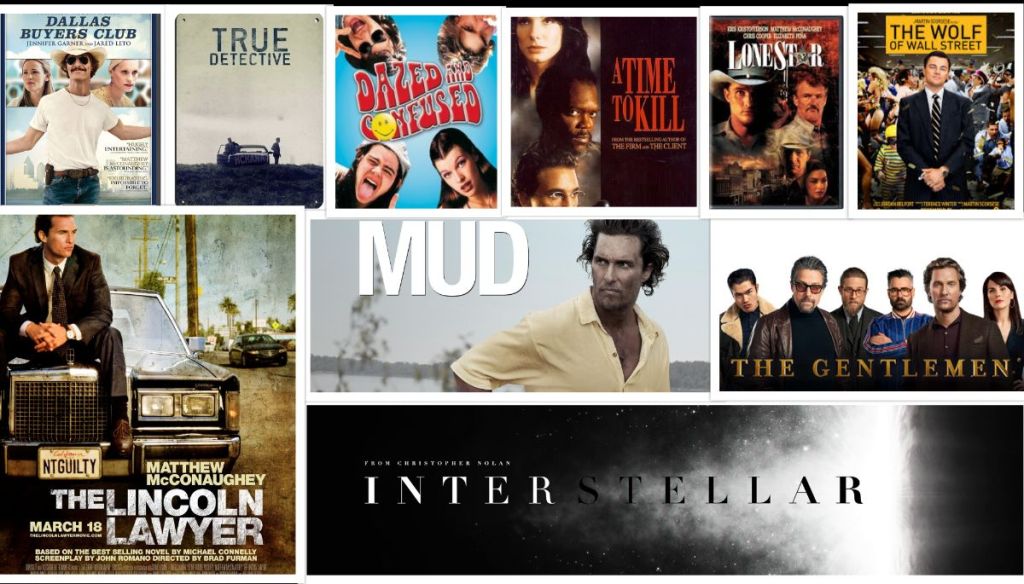
“Dazed and Confused” movie.

With a line widely recognized by movie goers, i.e., “Alright, alright, alright”, from “Dazed and Confused”, McConaughey became a recognized actor. The movie was released in 1993. It is about the last day of school in a small Texas town. After that movie, McConaughey makes a good living as an actor. He proves himself as a talented actor in “A Time to Kill”. He plays a lawyer in a racially charged courtroom drama.

Camila Alves (Brazilian American model.)

McConaughey’s bon vivant life changes when he meets his future wife, Camila Alves.

Alves is a Brazilian American model and entrepreneur who McConaughey meets in the early 2000s. They become committed to each other soon after their meeting and have their first child in 2008. McConaughey explains how they call his mother in the middle of the night to give her the great news. McConaughey is surprised when his mother is outraged by having a child with a woman to whom he is not married. A listener/reader recognizes how important and influential McConaughey’s mother is to his growth from boyhood to adulthood.
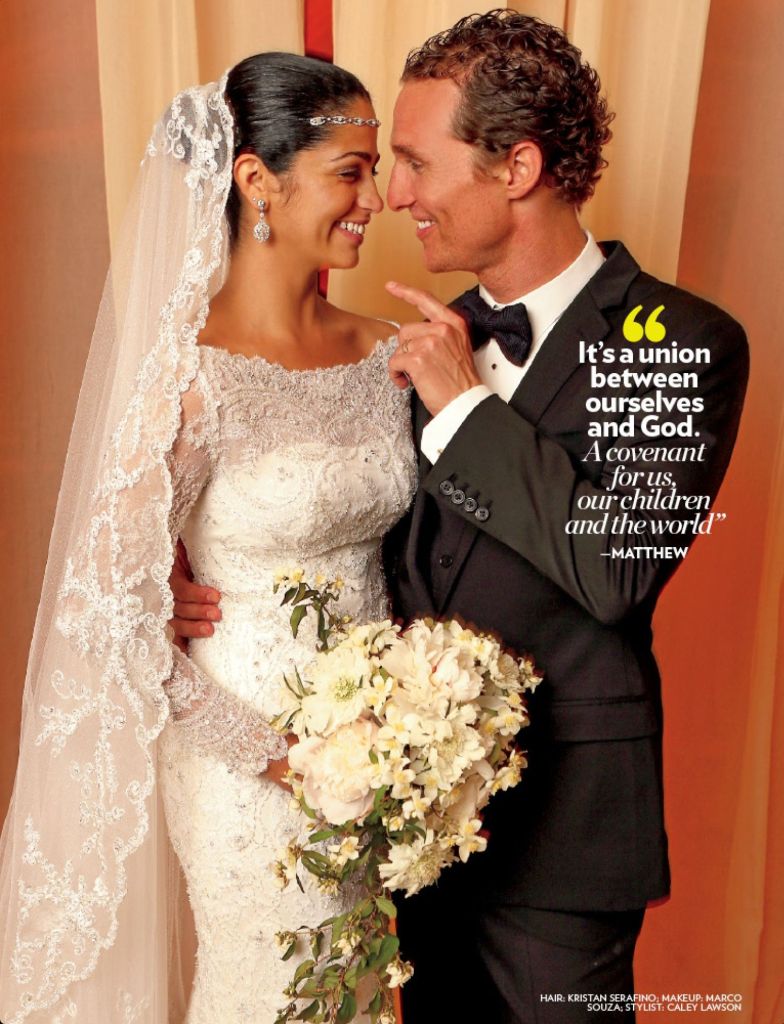
McConaughey and Alves marry four years after the birth of their son and a daughter.

Now, in his early 40s, he changes the course of his life. He had made a good living as an actor, i.e. making a number of forgettable romantic comedies after proving his acting ability. After making millions, McConaughey and his growing family leave the business of only making money to buy a property in Austin, Texas. They have a third child. He refuses to make any more romcom movies. He disappears from the limelight for nearly two years when he receives offers to make three movies that make him the mega-star he becomes.

A McConaughey’ mega hit shows how committed he is to the art of acting by losing 50 pounds of his muscular body to play the part of an HIV victim.
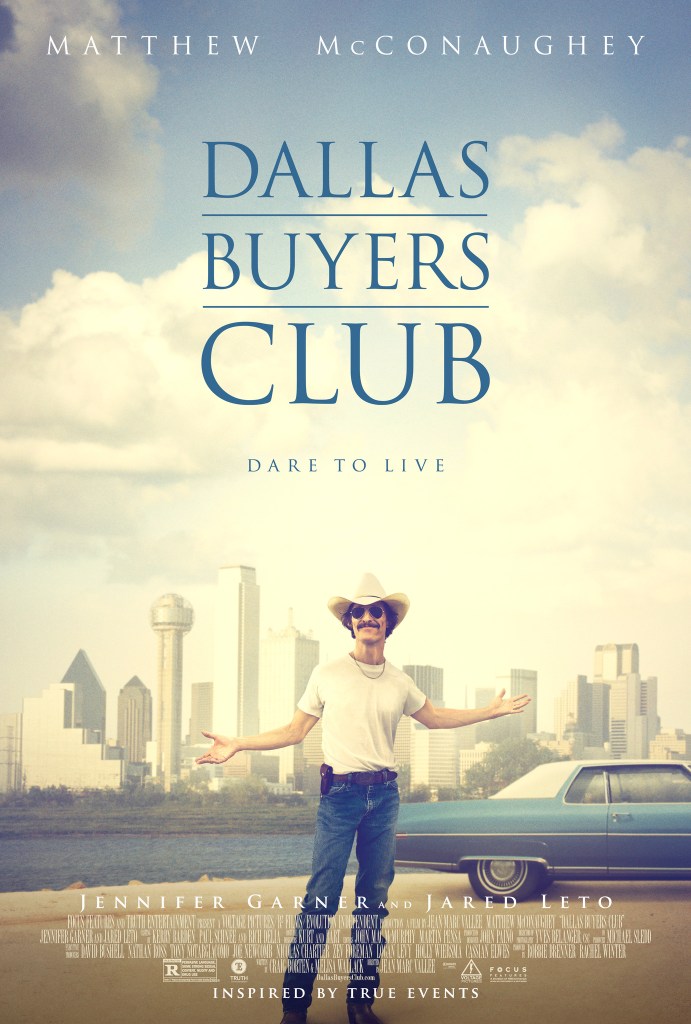
With the release of “Dallas Buyers Club” in 2013, McConaughey’s shows how he had grown professionally. He received an academy award for his performance. At this point in his life, he and his wife have three children under the age of six. Movie rewards, a beautiful wife, and three young children make McConaughey feel he is a better actor because they sharpen his sense of purpose in life. The complexity of his life is translated in the way he expresses himself in the mini-series True Detective, and movies like Lincoln Lawyer, and Mud. The characters he plays are introspective and layered. He recognizes hardship is a part of life that makes one grow as a human being.

“Greenlights” offers a different view of who McConaughey is than what one might think of him based on his public persona.

MUSK

Musk, like all human beings, is imperfect. His association with a President who feels money is more important than humanity only feeds Musk’s ineptitude as a manager of people.

Books of Interest
 Website: chetyarbrough.blog

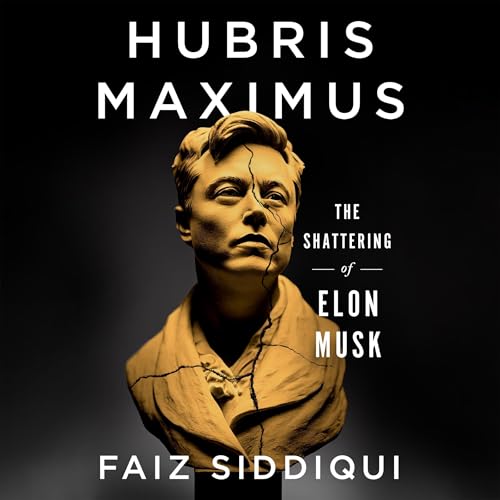
Hubris Maximus  (The Shattering of Elon Musk)

By: Faiz Siddiqui

Narrated By:  André Santana

Faiz Siddiqui (Author, technology reporter for The Washington Post)

Faiz Siddiqui exposes the character of Elon Musk as a brilliant entrepreneur with an outsized pride in his ability that reflects an arrogance that diminishes his genius. Musk’s success with Tesla and SpaceX accomplishments are equal, and in some ways exceed, the business successes of John D. Rockefeller and Steve Jobs. In wealth, Musk exceeds Rockefeller and in inventiveness, he competes with Steve Jobs.

As brilliant as Musk shows himself to be, his fragile ego diminishes his genius.

Siddiqui reveals how petty Musk can be while balancing that pettiness with his contribution to creative ideas that will live far beyond his mortal life. Musk’s development of space travel and communication satellites for the world with a non-governmental, free enterprise operation is a tribute to the power of capitalism. His next immense contribution, though controversial and a work in progress, will be self-driving transportation.

Elon Musk’s Successful Return of Rockets Launched into Space.

Siddiqui’s picture of Musk’s flawed personality is somewhat balanced by the image of a person driven to succeed. However, that drive is not something that naturally translates to organizational performance. Musk is not a developer of people and should not be in charge of an organization’s management. Like Apple employees that kept some of their work undisclosed to Steve Jobs when the mobile phone was being considered, Musk needs to leave management of employees to others. People management is a skill set that Musk does not have as was made quite clear with his acquisition of Twitter and his work with DOGE. DOGE feeds Musk’s managerial weaknesses with President Trump’s mistaken belief that cost of government is more important than effectiveness. DOGE is a growing tragedy of American governance.

Musk is right about the value of self-driving vehicles, but he is trying to produce the wrong product to prove his belief.

Self-driving vehicles will reduce traffic accidents, injuries, and death but the product to achieve that goal is what Musk should be working on. The game of Go is estimated to have 10 to the 172nd power of possible positions. Self-driving cars probably have a similar astronomical number of possible causes of accidents.

Musk, or someone with his creative genius, needs to create a product that can be sold to all vehicle manufacturers.

This newly invented product would use AI to learn, reinforce understanding of vehicular movements, accidents, and incidents. That accumulated information would allow creative play in the same way GO became an unbeatable game for human beings playing against a programed computer. Musk is putting the cart before the horse by building cars and then making them safe, self-driving vehicles. The first step is to gather information from as many driven vehicles as possible, collate that information, and use computer power to creatively play with the information. That information, like learning the moves of GO would create self-driving algorithms that would reduce self-driving vehicle’ accidents, injuries, and deaths.

A sad reveal in “Hubris Maximus” is that an American treasure, Elon Musk, is being vilified for the wrong reasons.

Musk’s contribution to the reduction of air pollution has benefited the world. His vision of interstellar travel may be the next step in human expedition, exploration, and habitation of the universe. Earth’s interconnectedness is vitally enhanced by Musk’s satellite system. The universe is humanity’s next frontier.

Musk, like all human beings, is imperfect. His association with a President who feels money is more important than humanity only feeds Musk’s ineptitude as a manager of people.

MUSIC APPRECIATION

Listening to the examples of Professor Greenberg’s views on music make this audiobook an immense pleasure. It is a long audiobook but one who takes long walks will be highly entertained by the Professor’s insight to music of the world.

Books of Interest
 Website: chetyarbrough.

Great Courses-How to Listen to and Understand Great Music, 3rd Edition (A Cultural History)

By: Robert Greenberg

Narrated By: Professor Greenberg

Robert Greenberg (Great Courses Professor, historian, composer, pianist, speaker, and author.)

This is a history of Great Music by a remarkable professor who fully utilizes the value of audiobooks in his teaching. Though this is a long audiobook, every lecture is a pleasure for a listener who knows little about the history or styles of music. Professor Greenberg’s enthusiasm and pointed opinions about music and its evolution are informative, clearly explained, and fabulously entertaining, particularly for non-musicians.

The professor’s storytelling is highly entertaining. He reviews the history of music anecdotally, interspersed with musical examples (some of which are his own piano playing) and precise definitions of words used in music that offer clarity and entertainment to his audience.

The span of history which Greenberg covers is from ancient music traditions to the progressive development of Western music. He helps one understand what to listen for when attending musical presentations. He spans Renaissance, Baroque, Classical, Romantic, and 20th-century music. From Bach’s Baroque musical production to Shostakovich’s politically tinged symphonies, one learns how music is exemplified and amplified by history.

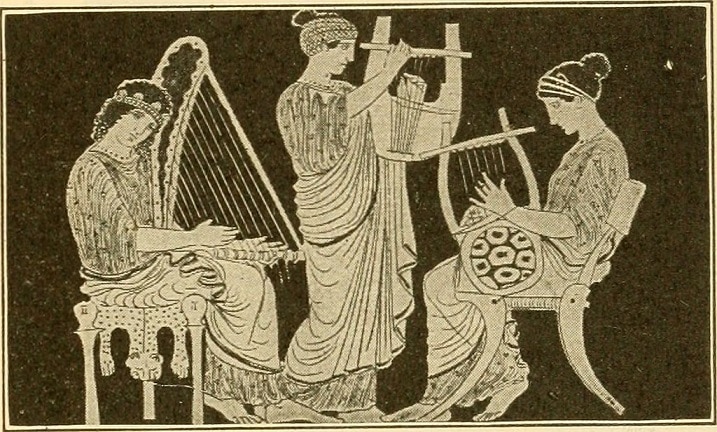
Greenberg begins with ancient Greek and Roman music.

He explains the role of music in Greek tragedies and offers examples of Gregorian chant and medieval polyphony (two or more independent melodies that are interconnected). He notes Bach’s fugues as polyphonic hallmarks of Western classical music that rose in the Renaissance and Baroque periods.

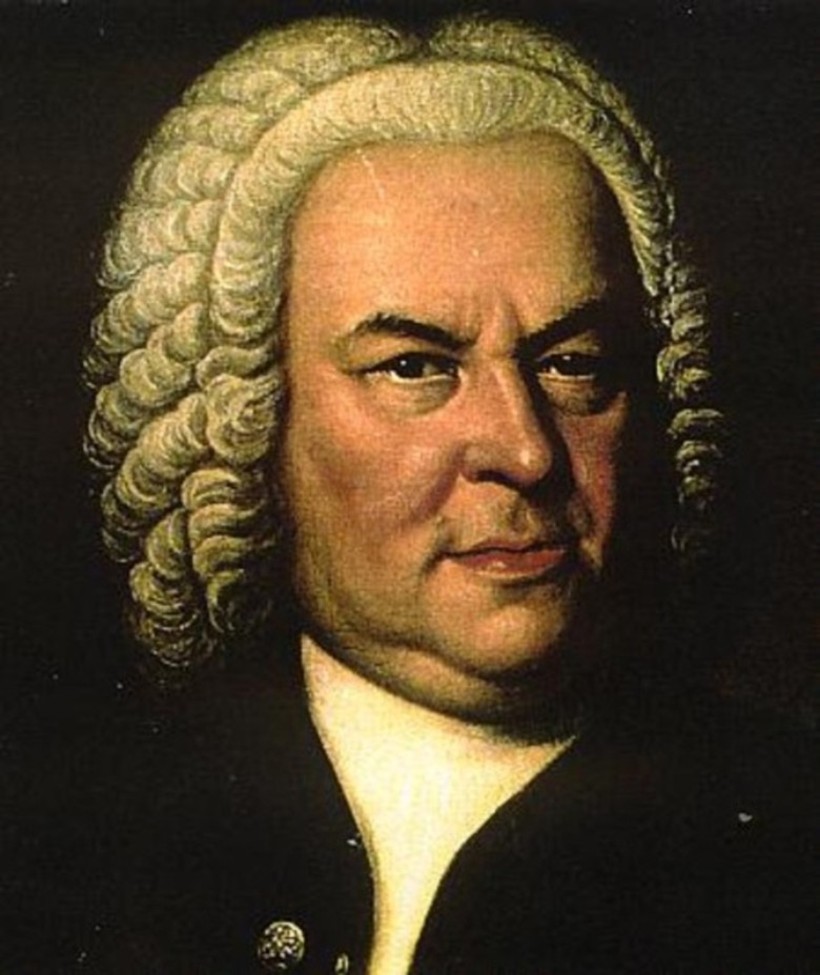
Johann Sebastian Bach (1685-1750, German composer and musician of the late Baroque period.)

Greenberg provides examples of a fugue and concerto. A fugue is a musical composition with a theme that is interwoven with overlapping voices. He offers the example of Bach’s music.

Antonio Vivaldi (1678-1741. Italian composer, virtuoso violinist of Baroque music.)

In contrast, concerto is a solo instrument (or a group of soloists) offering an orchestral presentation infused with dialogue. The Four Seasons by Vivaldi would be an example but the fascinating point is that the dialogue is in music, i.e. no words, but a clear representation of the seasons in an abstract way. You hear the sounds of spring, summer, fall, and winter.

Greenberg offers definitions of musical terms.

Greenberg also defines a number of musical concepts and terms:

Melody: A sequence of musical notes that are perceived as a single entity, often referred to as the “tune.”

Harmony: The combination of different musical notes played or sung simultaneously to produce a pleasing sound.

Polyphony: Multiple independent melodies played or sung simultaneously, creating a complex and interwoven texture.

Sonata Form: A musical structure commonly used in the first movements of symphonies and sonatas, typically consisting of an exposition, development, and recapitulation.

The Professor notes the fundamental difference between German and Italian classical music.

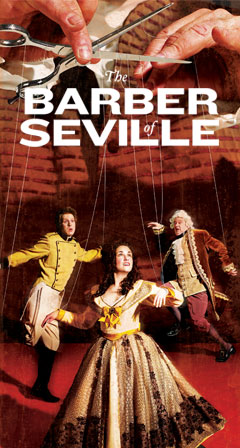
The Italians created opera to illustrate the emotions of life through operatic story telling. Germans highlight intellectual depth and structural complexity. Greenberg notes Italians celebrate the melodic beauty and operatic flair of music. This difference is exemplified by the Catholic church’s sale of indulgences.

Martin Luther (1483-1546)

Greenberg recounts the history of the Reformation. He notes the impact of Martin Luther (1483-1546), the key German figure in the Protestant Reformation who posted the 95 Thesis that criticizes the Catholic Church’s practice of selling indulgences for sinners to get into heaven. The 95 Thesis was a direct challenge to the authority of the Pope to use indulgences to raise money for the Catholic Chruch. Luther believed only faith, an emotionally grounded intellectual belief, could pave one’s way to heaven.

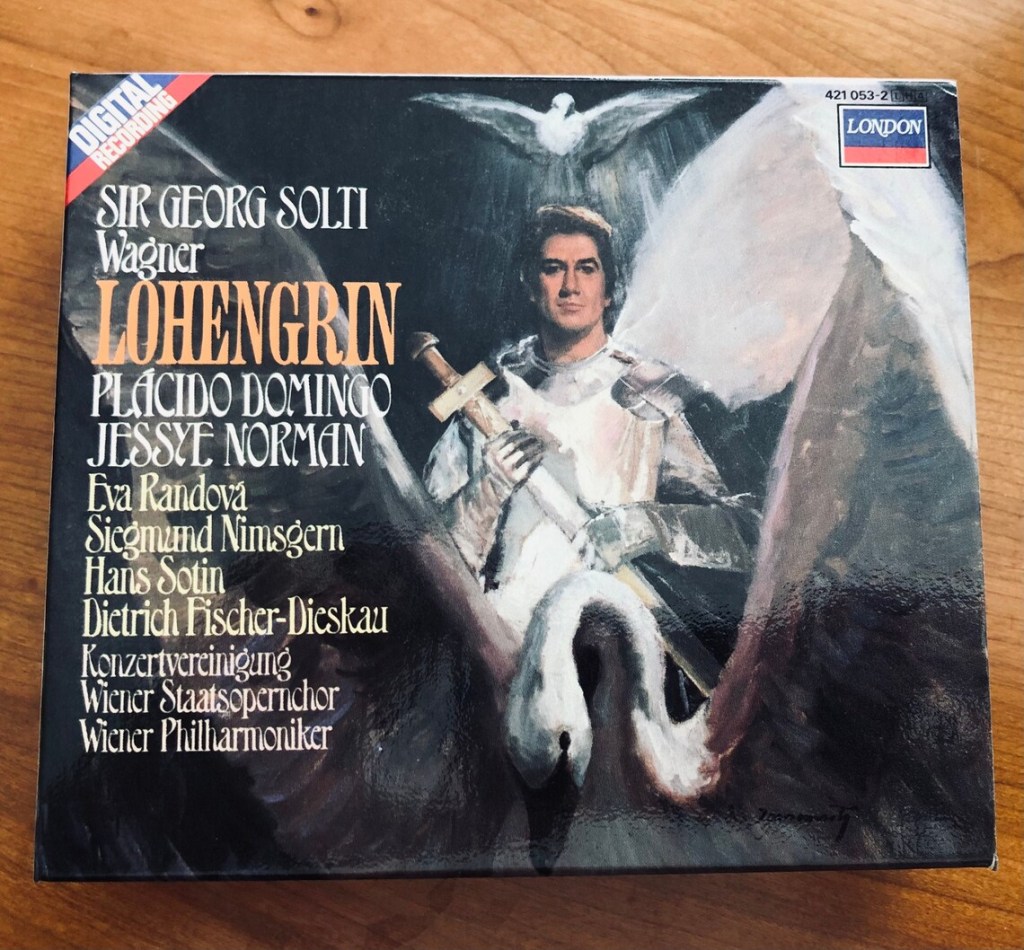
Rather than an Italian Rossini or Puccini opera, German operas have complex narratives with composers like Wagner and Straus who are exploring ideas like destiny, heroism, and the human condition. Both German and Italian operas engage emotions, but German operas tend to explore philosophical, mythological, or psychological themes while Italians focus on heart-wrenching human emotions.

Listening to the examples of Professor Greenberg’s views on music make this audiobook an immense pleasure. It is a long audiobook but one who takes long walks will be highly entertained by the Professor’s insight to music of the world.

THE COLOR LINE

Marie Arana clearly argues the color of one’s skin has given great advantage to white citizens of the world.

Books of Interest
 Website: chetyarbrough.blog

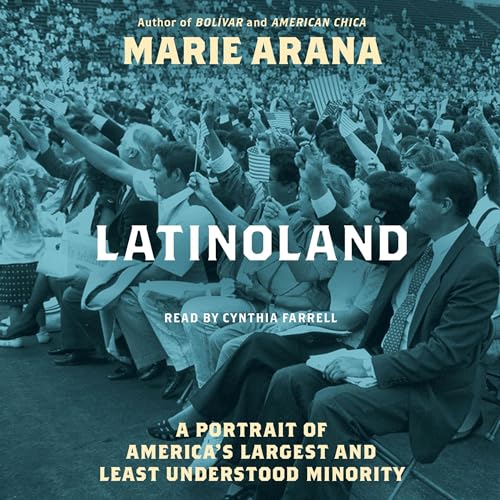
“LatinoLand” (A Portrait of America’s Largest and Least Understood Minority)

By: Marie Arana

Narrated by: Cynthia Farrell

Marie Arana (Author, graduate of Northwestern University of Hong Kong with a BA in Russian Language and Literature and an MA in Linguistics.)

“LatinoLand” begins shakily with what seems an exaggeration of international Latino cultural influence in the world. However, as Marie Arana continues her report a listener/reader appreciates her knowledge of American Latino history. Her argument is that Americans have little understanding of the largest and least understood minority in the continental United States. If one continues the book beyond the first chapters, her argument about Latino culture in America becomes clear and compelling.

Marie Arana was born in Peru.

Presuming from Arana’s education in Hong Kong, she speaks and understands several languages. From her book, it appears she was born into an upper-class Peruvian family who could afford a superior education for their children. Her father was a successful civil engineer who married an American from Kansas. She moved with her parents to Summit, New Jersey when she was nine years old. Arana earned two college degrees from the Northwestern University of Hong Kong.

In one sense, “LatinoLand” is about America’s greatest 21st century challenge, immigration.

More importantly, it is about human discrimination, ignorance, and inequality. Discrimination begins with perceived difference. The greatness visible marker of difference is the color of one’s skin. Arana argues discrimination begins with skin color. She explains how inequality grows from discrimination, and cultural ignorance. (Though not mentioned, human self-interest plays a role in the creation of inequality.) A mixture of ignorance and not caring for others creates fear and potential for violence.

Mosaic of children from around the world, including, Kayapo, Indian, Native American, Inuit, Balinese, Polynesian, Yanomamo, Cuban, Tsaatan, Moroccan, Mongolian, Karo, Malagasy, and Pakistani.

Arana notes how the color of one’s skin is one of the most prominent features of difference among humans. Skin color differences, lack of caring, self-interest, and ignorance breed economic inequality. Arana implies the American Constitution ameliorates some human failings but does not achieve its ideals. She suggests American democratic ideals have been used by some political leaders as a Trojan horse for authoritarianism. She particularly points to the difference between what Fidel Castro said about creating a Cuban democracy when he overthrew Batista, i.e., he claimed to want a democratic haven for its people. However, under Castro, Arana notes Cuba became an authoritarian dictatorship that victimized its citizens by taking their assets and using their value to create and maintain a government-controlled economy.

Arana recounts the history of Cuba, Haiti, and Puerto Rico as examples of countries that preached democratic ideals but became authoritarian dictatorships that eschewed freedom and impoverished its citizens.

Many Cubans, Haitians, and Puerto Ricans fled to the U.S. to escape authoritarian victimization. What many found was American discrimination made it difficult, if not impossible, to achieve the American ideal of freedom and independence. Immigrants could not escape poverty because of the color of their skin, their language difference, and a lack of caring by white Americans pursuing their own dreams.

She goes on to explain the first Latino becomes part of President Reagan’s cabinet as the Secretary of Education in 1988. Of course, Arana acknowledges many Latinos have succeeded in America. From sports stars to musicians to military heroes to Supreme Court justices, America has benefited from the Latino diaspora. But Arana suggests many more Latinos have not achieved the American dream because of the color of their skin.

Arana notes the Nixon Administration is the first President to recognize a separate and distinct ethnic group labeled Hispanic.

Arana suggests the labeling of ethnic groups is a chimera, a fabrication of the mind. People are a mixture of different ethnicities. She implies no one is a pure anything because of the nature of humankind. The inference is that all humans are just humans, and the only difference is in their respective cultures. Cultural differences are relevant but the color of one’s skin is the mark that bodes ill for societies’ future.

In her review of history, Arana notes how a Latino child was discriminated against by having to play in different playgrounds than white children. Only with the advance of Brown v. Board of Education in 1954 did that wrong get righted.

The proximate and initial cause of discrimination always seems to be the color of one’s skin. Interestingly, Arana notes that white skin makes a difference in many cultures, including her native culture in Peru where white skin was highly coveted and sought through marriages with white skinned relations.

Arana points to the great contributions that have been made and continue to be made by Latinos to American growth and prosperity.

Discrimination has always been a struggle because of inherent human self-interest, regardless of the ideals of the American Constitution. Arana notes the hurdles that immigrants face in getting to America, let alone becoming free and independent. Many Americans, from Presidents to Congressman to individual American citizens fight newcomers who are struggling to find a better life, employment, security, and peace.

Arana notes more Latinos are coming to America, but from other countries than Mexico. It is surprising to find more Mexican citizens are choosing to leave than come to America. This is not changing the struggle, but it clarifies Arana’s many reasons for writing her book. The ideals of the American Constitution and America’s economic wealth offer hope to immigrants.

In the 21st century, Arana notes that today more Mexicans are returning to Mexico than emigrating to the U.S.

Marie Arana clearly argues the color of one’s skin has given great advantage to white citizens of the world.