Robinson shows society treats people unequally, wages war for power, lacks control over behavior, and deceives itself about human nature.
Books of Interest Website: chetyarbrough.blog
“Gilead”
By: Marilynne Robinson
Narrated By: Tim Jerome
Marilynne Robinson (Author, received the 2005 Pulitzer Prize for fiction for “Gilead”.)
“Gilead” is a Pulitzer Prize winning novel. It is cleverly written by Marilynne Robinson and beautifully narrated by Tim Jerome. Some listeners may have a hard time getting through its religious point of view. It is largely about belief in God. However, it’s truth about human nature makes it a classic regardless of one’s religious beliefs.
In broad outline, it is about three generations of preachers, a grandfather, his son, and a grandson, who live in Gilead, Iowa.
There is the grandfather who fights on the Union side of the Civil War in Kansas, presumably because of belief in human equality and union. However, it appears his son cannot justify killing of any human being, for any reason. Later, a listener/reader finds there is a rift between the Civil War’ preacher and his son who also becomes a preacher. The son becomes a father who has his own son. This book is like a letter to his son to explain his journey through life and what he has learned. The story begins by recalling a trip he and his son take to discover the grandfather’s grave in Kansas.
The journey is in the late 19th century.
The grandson accompanies his father on the arduous journey from Gilead to Kansas. They begin in a horse drawn carriage but because of weather leave the horse and carriage to walk the last miles. It is hot. One realizes the father’s decision to travel with his son is for many reasons beyond companionship. One presumes the father is ambivalent about the grandfather’s decision to join union soldiers with a willingness to kill secessionists opposed to abolition. One wonders if the father is saying there is no justification for War. The story gains broader interest at this point.
KILLING IS NEVER JUSTIFIED.
After having found the grave, the father relates a story of burying his father’s gun and some shirts. The gun and clothing are dug up. The bloodied and dirty clothes are washed, but they do not come clean. The wife of the letter writer and preacher finally throws them away, but the gun is reburied, dug up again, dismantled and thrown into a lake by the preacher. The vignette suggests the father believes killing is never justified, even in a war meant to preserve union and abolish slavery.
Preachers.
The father’s writing suggests there is a gap in ages between him and his wife. We find he is 67 when he marries his wife who is in her 30s. The preacher is nearing death by the time of the letter to his son is written. With the gap in their ages, there is a hint of jealousy about a man raised by the preacher’s best friend, who is also a preacher of the cloth. The son is Jack Boughton. Jack often played baseball with the preacher’s son, but the preacher had been told by Jack Boughton’s father to be wary of Jack.
The carrot and stick of parenting.
The impact of neglectful parenting is referred to in a sermon noted in the preacher’s story. Jack Boughton’s intelligence and education combined with parental neglect is inferred to be a cause of atheism and a penchant for illicit behavior. This creates a tension between the preacher and his close friend’s son, particularly when the childhood friend visits the preacher’s wife and son.
One comes away from Robinson’s story with a summary of the flaws of humanity. At the end of the author’s story, Jack Boughton has created a second human nature crises that will resolve itself in either happiness or tragedy. Robinson shows society treats people unequally, wages war for power, lacks control over behavior, and deceives itself about human nature.
Is belief in God worth it? Cook’s history of Muslimism and knowledge of Christianity makes one wonder.
Books of Interest Website: chetyarbrough.blog
“A History of the Muslim World From its origins to the Dawn of Modernity”
By: Michael Cook
Narrated By: Ric Jerrom
Michael A. Cook (British historian, scholar of Islamic History)
Professor Cook overwhelms one with a voluminous examination of the Muslim World. His history really begins before the birth of the Arab prophet, Muhammad (570-632). However, it is after Muhammed’s revelations and his departure from Mecca in 610 CE, when he and his followers settle in Medina (622) that a more documented history is revealed. Arabs are identified as a nomadic tribe who occupied the Arabian Peninsula, Syrian Desert, North, and Lower Mesopotamia in the mid-9th century BCE. However, notable territorial regions first appeared in the 14th century BCE with the Assyrian and Neo-Assyrian Empires. Cook suggests it is in the 7th century CE that Islam became a force in the Middle East. After the Prophet Muhammad’s death in 1632, the Rashidun Caliphate established itself (632-661 CE).
(REVIEWER’S NOTE: Scribes recreated fragmentary writings and legends of long-dead contemporaries of Christ in the case of the Holy Bible, just as the thoughts of the “last messenger of Allah” were recorded by scribes. Modern science experiments explain human minds do not precisely record or recall the past. The human mind recreates the past and fills any gaps that may arise to complete the mind’s imprecise memory. That is why scribes of biblical or unbiblical history are interpretations of facts of the past, and not necessarily accurate facts of the past.)
With the Ottoman Empire’s dissolution, Turkey, Greece, Serbia, Bulgaria, Romania, Albania, Montenegro, and Macedonia were formed. Three Arab nation-states came out of the Ottoman Empire’ dissolution. They were Syria, Iraq, and Transjordan (now Jordan).
Interestingly, modern states with the highest number of Arab speaking residents are Egypt, Sudan, Algeria, Iraq, Morocco, Saudi Arabia, and Yemen. Only Egypt and Sudan have more than 10% of their population who use Arabic as their primary language. The point of this realization is that Professor Cook is writing a history of the Muslim religion, not Arab culture.
What Cook shows is how Muslim belief (24% of the world population) impacted the world.
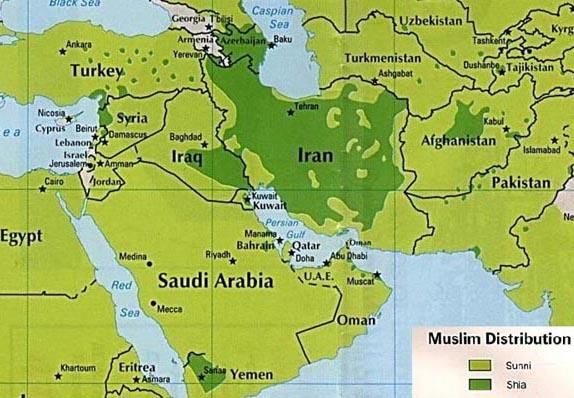
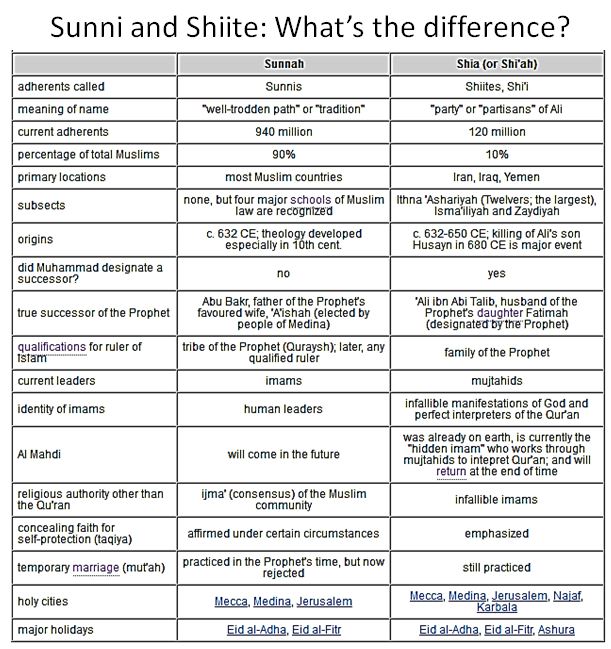
Cook begins to explain the split between Sunni and Shia religious belief. In the modern world, only Iran, Bahrain, Yemen, and Iraq have Shia-majority populations with a significant Shia community in Lebanon and Afghanistan. Sunni religious belief is practiced by a majority population in nearly 20 countries with a mixture in Egypt, Turkey, Pakistan, Saudi Arabia, Yemen, Eritrea, Syria, Afghanistan, Lebanon, Turkmenistan, and Azerbaijan.
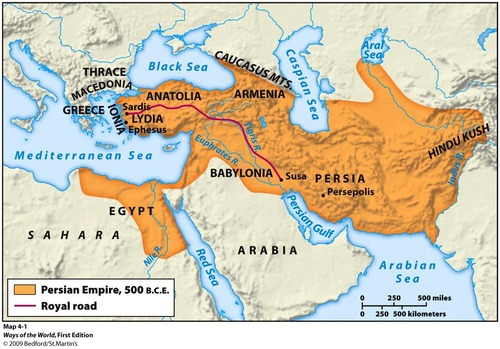
A surprising observation by Cook is the impact of a language change in the Middle East. Persian (aka Farsi) became a bridge connecting the diverse communities and histories of the Middle East. This change largely took place between the 9th and 11th centuries. It significantly impacted Muslim cultural beliefs and Iranian culture in general.
Cook implies the colloquialization of translations by Farsi (the language of Persia) of Arab Caliphate’ triumphs and failures molded beliefs of Middle Eastern nation-states. Countries like Iran either adopted or rejected Farsi’ stories of accomplishments and failures by Arab Caliphates. Some failure is associated with moral turpitude, a falling away from Qur’anic teaching, translated into Farsi language.
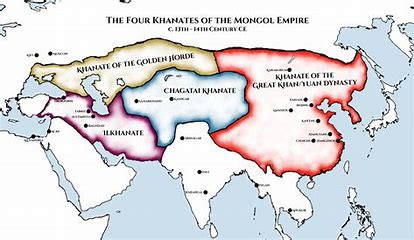
(Genghis Khan’s sons establish four kingdoms in the Middle East that lasted until 1368.)
Though none of the kingdoms practiced a particular religion, each influenced the course of religious acceptance. The environment they created allowed Christian religion to spread from Russian territory, while Turkish influence leaned toward Islam. Cook explains how young rebel leaders gained followers by successfully defeating and pillaging villages that had poor defenses. With each successful raid, more young people would join the raiders. This incremental growth led to the spread of Christian and Islamic religious influence, depending on the religious leaning of raiding parties.
Cook clearly illustrates how Arab culture lies at the heart of Islamic religion despite its nomadic existence. From the first madrasas (Islamic schools) in the Abbasid Caliphate in the 9th century, the teachings of the last messenger of Allah began with Arabs. Cook explains the religion is unlikely to have flourished without other cultures adoption. Without Persian, Turk, Uzbek, and Mongol societies adoption, the spread of Islam would have been minimized. Muslim belief evolved in a cauldron of conflict with Christianity, Judaism, and other indigenous religions but prevailed as a religion with two faces, i.e., the Suni and Shia Divide.
Like the schism between Catholics and Protestants, Sunni and Shia believe in one God but differ in ways that have roiled the world. In the case of Catholics and Protestants, there is the French wars of 1562-1598, the European thirty years war of 1618-1648, and the Troubles in Ireland in 1968-1998. In the case of Sunni and Shia, there was the battle of Karbala in 680 CE, the Safavid-Ottoman wars in the 16th-17th centuries, the Lebanese Civil War of 1975-1990, the Iraq War of 2003-2011, and the Syrian Civil War that began in 2011 and continues through today.
The forgoing were only human deaths within the two major religions of the world, while neglecting the atrocities incurred between Christianity and Islam. There were the Crusades between the 11th and 13th centuries, the Battle of Lepanto in 1571, The Siege of Vienna in 1683, and the Lebanese Civil War between 1975-1990.
Later chapters of Cook’s history reveal the conflicts between the Islamic religion and other major religions in the Middle East, besides Christianity. Many leaders are identified for historians who will be interested in knowing more, but the names become a blur to a dilatant of history.
Like the number 47 in “Guardians of the Galaxy”, the 27 books of the New Testament offer no answer to the meaning of life.
Books of Interest Website: chetyarbrough.blog
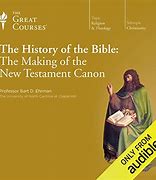
“The History of the Bible” (The Great Book Lectures)
By: Bart D. Ehrman
Narrated by: Bart D. Ehrman Lectures
Bart Denton Ehrman (American New Testament Scholar, Wheaton College BA, Princeton Theological Seminary received a Master of Divinity and PhD.)
Bart D. Ehrman’s lectures are a revelation to one who knows little about either the Bible or the New Testament. As a scholar, Ehrman views the New Testament as history, not a religious covenant. The New Testament, as differentiated from the Holy Bible (a covenant with Israel), is a later covenant with Jesus that extends religion to all humankind.
Ehrman’s lectures are not about religious belief but about the history of the New Testament.
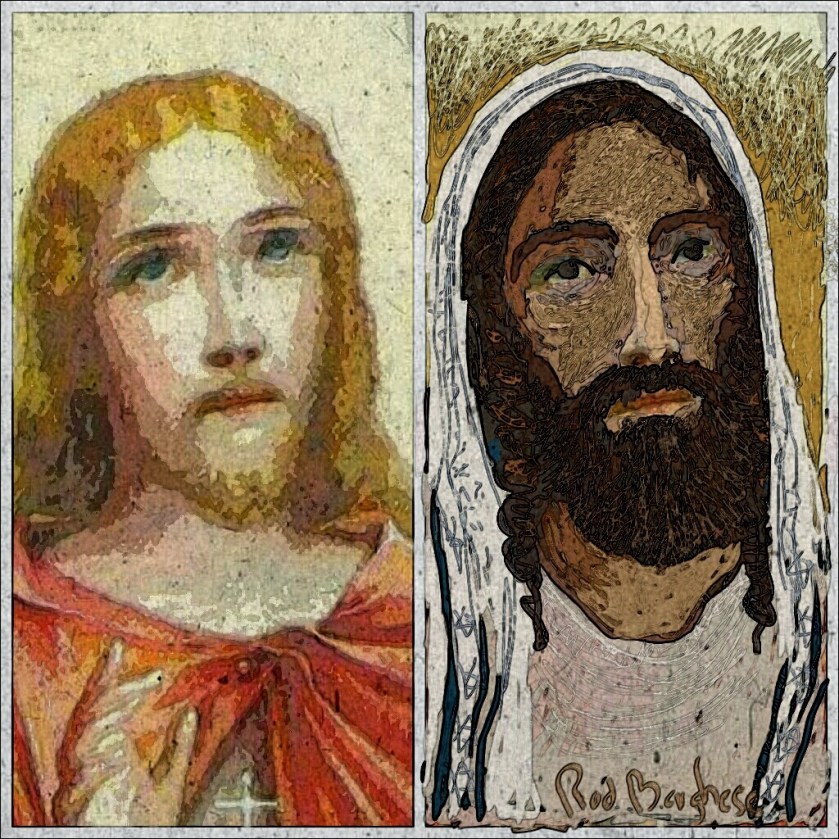
Removing the ideas of religious belief from his lectures will undoubtedly offend many who believe in God’s and/or Jesus’s divinity. What Ehrman does is explain how the New Testament is a flawed recollection of historical figures. The flaws come from scribes who interpret three contemporaries of Jesus–Matthew’s, John’s, and Peter’s fragmentary writings of Jesus’ ministry and teachings.
The 27 books of the New Testament are written by scribes of later centuries that are interpretations of Matthew’s, John’s, and Peter’s interpretations of Jesus’s beliefs and history on earth.
Because scribes and contemporaries’ recollection of Jesus are human, truth is in the eye and limitations of its beholders. The inference from Ehrman’s lectures is that truth is distorted by interpretations of interpretations.
Ehrman systematically reveals how the story of Jesus’s life and beliefs change over the centuries.
He gives listeners a better understanding of the complexity and false interpretations of religion that accompany the many atrocities committed by believers who foolishly murder fellow human beings. These great historical conflicts are based on interpreters’ interpretations of interpretations.
God may or may not exist, but human beings insist on their beliefs to the detriment of humanity.
History unreservedly shows–believing in religion, without concern for society leads to discrimination, mayhem, and murder. That is as clear today in the Israeli/Palestinian conflict as in the history of the Jewish holocaust and pogroms of the past.
Like the number 47 in “Guardians of the Galaxy”, the 27 books of the New Testament offer no answer to the meaning of life.
Sartre seemed right when he wrote “hell is other people” in “No Exit”. Neither belief in humanism nor God seem to hold an answer for humanity’s future.
Books of Interest Website: chetyarbrough.blog
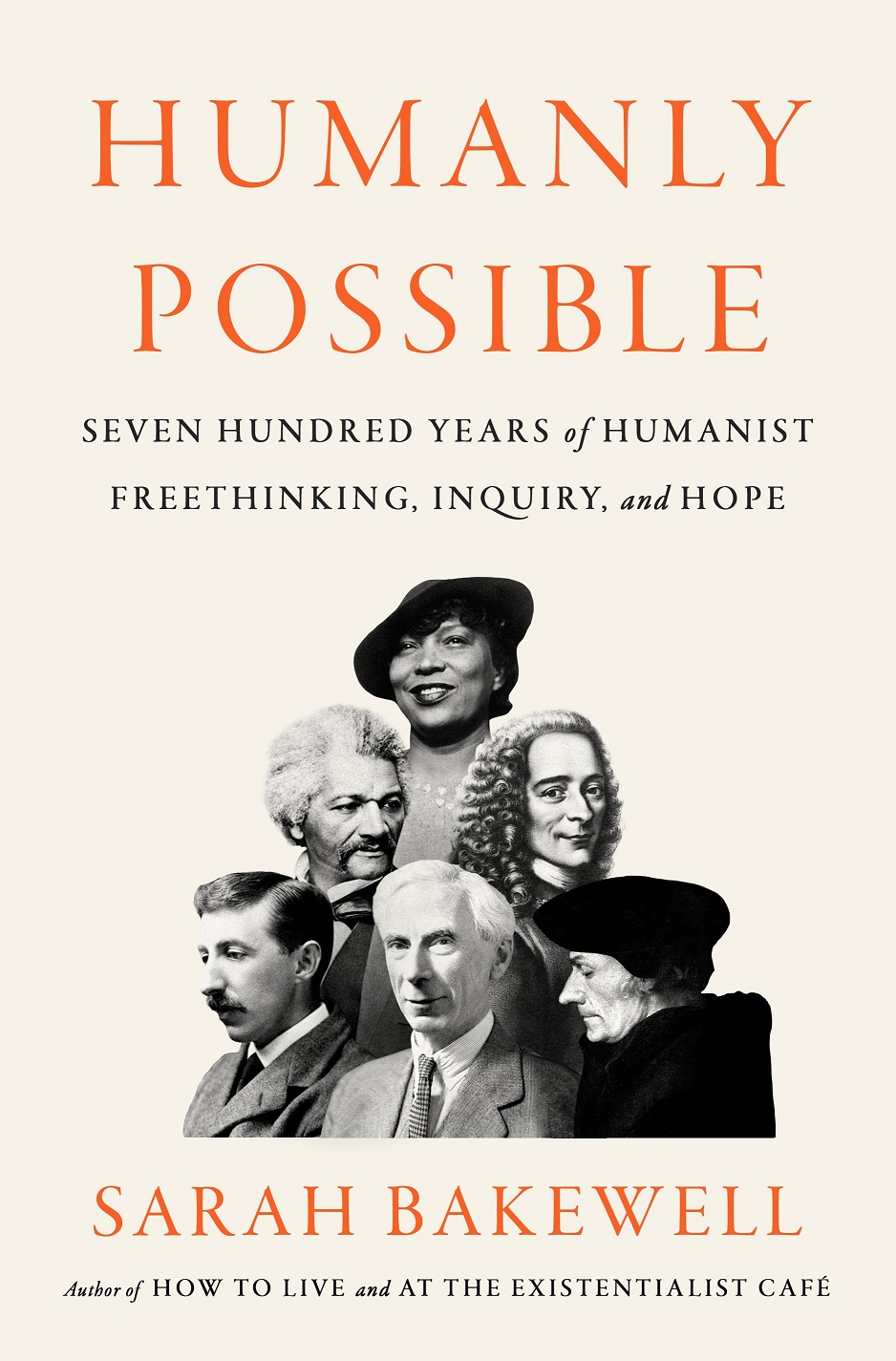
“Humanly Possible” (Seven Hundred Years of Humanist Freethinking, Inquiry, and Optimism)
By: Sarah Bakewell
Narrated by: Antonia Beamish
Sarah Bakewell (British author and professor, received the Windham-Campbell Literature Prize for non-fiction in 2018.
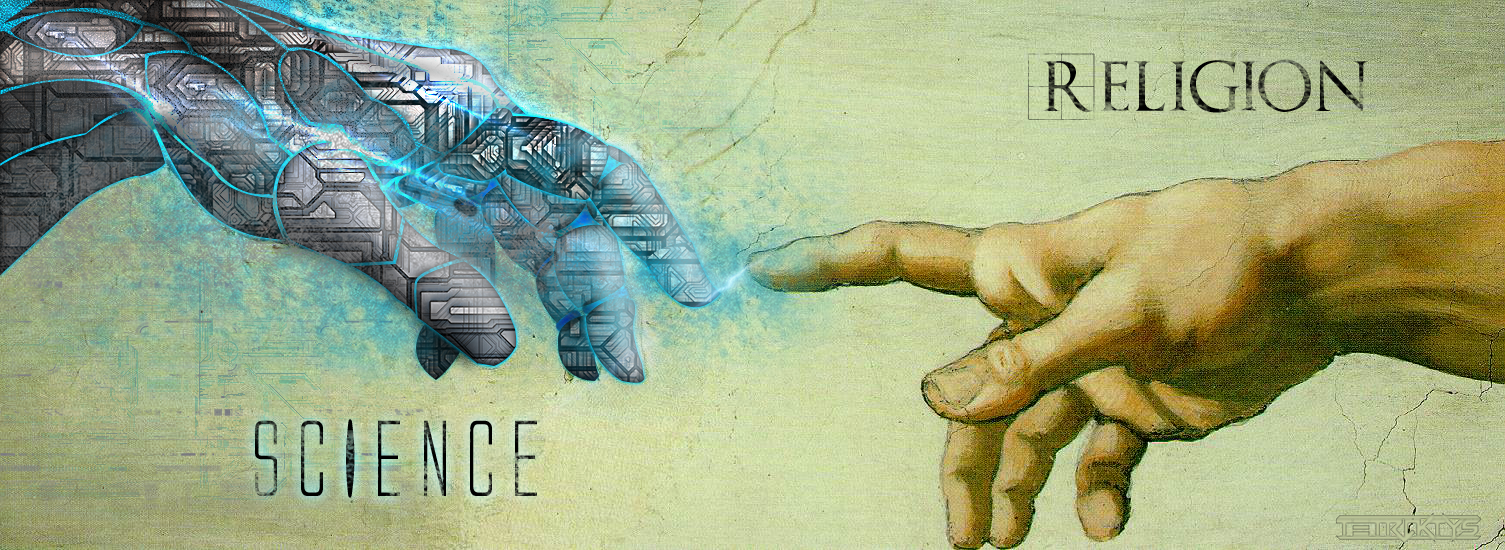
Sarah Bakewell provides a detailed history of humanism. To many, Bakewell’s story is a history of society falling away from God. Bakewell puts religion aside while explaining why and how humanists challenge religious belief and lean toward science as an explanation of life.
Bakewell notes humanism reaches back to the 5th century BCE with the Greek philosopher Protagoras. He was a teacher identified by Plato in a dialogue titled “Protagoras”. Through Plato’s dialogue, one finds Protagoras taught the importance of literature, and art that infers a set of moral principles to guide human behavior. Several centuries later, Diogenes Laertius writes “Lives of the Philosophers” that adds to history’s knowledge of Protagoras’s beliefs. Protagoras taught public speaking, poetry criticism, citizenship, and grammar.
Protagoras (490-420 BCE, Bakewell suggests Protagoras set the foundation for the humanist movement.)
Francesco Petrarch (1304-1374) takes up the humanist movement during the Italian Renaissance. Petrarch became internationally known as a humanist. He traveled extensively, looking for Classical manuscripts and ancient texts to recover the knowledge of Greek and Roman writers. He discovered letters that told of Cicero’s personal life–what it was like in the late Roman Republic (106-43 BCE). Cicero’s observations showed the importance of human character in the way one lives life.
Francesco Petracco (1304-1374, Italian scholar and poet and one of the earliest students and promoters of humanism.)
Collection of ancient manuscripts by Petrarch and Coluccio Salutati (1331-1406) of Florence expanded the humanist movement. Giovanni Boccaccio writes “The Decameron”, a collection of short stories that reinforces the principles of human worth and dignity, belief in reason and human ethics, and the value of critical thinking, i.e., humanist ideals.
Desiderius Erasmus (1469-1536)Sir Thomas More (1478-1535)William Shakespeare (1564-1616)
The humanist mantle is picked up in England and the wider part of continental Europe after the early 15th century. Erasmus, Sir Thomas More, and William Shakespeare, reinforce the movement. Desiderius Erasmus is a Dutch humanist. He attacks the excessive powers of the papacy. He values human liberty more than orthodoxy. He inspires the Protestant Reformation and the Catholic Counter-Reformation. He emphasizes the study of classics over medieval tradition. Erasmus has great impact on the Renaissance and its religious and intellectual climate with an eye for life on earth, more than an afterlife. He wrote “The Praise of Folly”, satirizing religious practices based on superstition and impiety. Though he hoped for divine mercy, Erasmus emphasized faith and good deeds in life, humanist ideals.
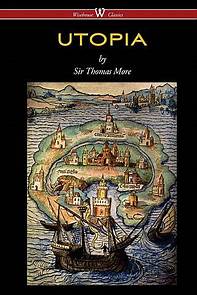
Bakewell notes Sir Thomas More writes “Utopia”, published in 1516, that describes an ideal society that addresses penology, state-controlled education, religious pluralism, divorce, euthanasia, and surprisingly, women’s rights.
Shakespeare’s plays introduce psychological realism and depth to human thought and action. Much of what he writes is secular rather than religious. Shakespeare implies life on earth is more than preparation for an afterlife.
Shakespeare suggests life on earth is more than preparation for an afterlife. Death is viewed as final, a humanist view of life and death.
Bakewell goes on to write of Denis Diderot, David Hume, Kant, Adam Smith, and Voltaire. They become leaders of humanism in the 17th and 18th centuries. Diderot emphasizes critical thinking, education, and secular values. Hume writes “A Treatise of Human Nature” to explain human morality. Adam Smith’s “Wealth of Nations” reflects on national economic growth and how the principle of “raising all boats” comes from free enterprise and free trade, humanity in action.
Denis Diderot (French philosopher 1743-1784)David Hume (Scottish philosopher, 1711-1776) Immanuel Kant (German philosopher, 1724-1804)Adam Smith (Scottish economist and philosopher, 1723-1790)VOLTAIRE aka FRANCOIS-MARIE AROUET (1694-1778, WRITER, PHILOSOPHER, PLAYWRIGHT, HISTORIAN)
The idea of humanism is rocketed into American thought by Charles Darwin’s “Origin of Species”.
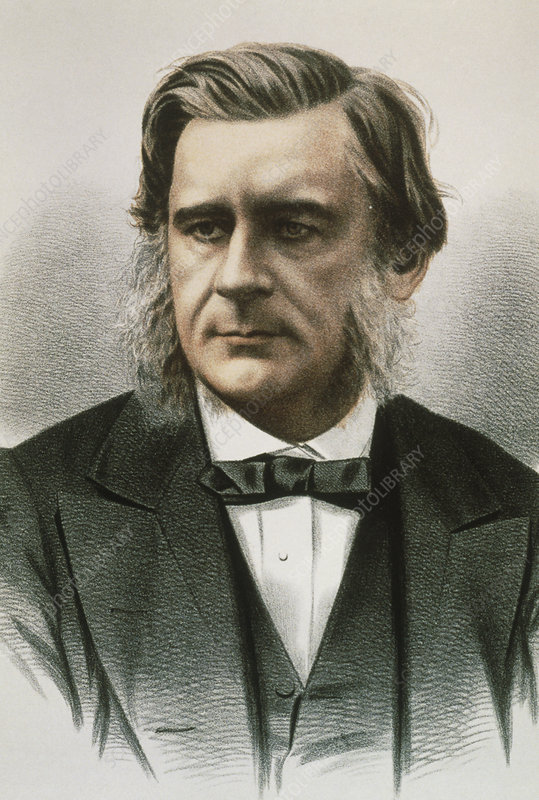
CHARLES DARWIN (1809-1882) FOUNDER OF THE THEORY OF THE ORIGIN OF SPECIES.Thomas Huxley. Coloured portrait of the British biologist Thomas Henry Huxley (1825-95). Huxley was the main advocate for the theory of evolution in scientific debates because Charles Darwin, its co-proposer, was a shy man who shunned publicity. One of the most famous debates on Darwin’s theory in which he took part occurred at a meeting of the British Association for the Advancement of Science in Oxford in 1860. Huxley’s research on primates firmly established man in this biological order, providing further scientific evidence for evolution. Huxley also did work in palaeontology and zoology. This artwork was taken from A Modern Portrait Gallery, volume 3 (1881).
Natural selection became a science-based explanation for the origin of species, including human beings. Its impact is evident in the personal transition of Darwin (the son of a medical doctor and grandson of a botanist), who planned to join the clergy, but became a person who identifies himself as an agnostic. Thomas Henry Huxley publicly endorses Darwin’s theory and coins the term “agnosticism” in 1869. Many of the scientific community joined that endorsement during Darwin’s life.
As Bakewell advances her history into the twentieth century, Thomas Mann and Bertrand Rusell carry the torch of humanism. The interesting point made about humanism by Mann is that a humanist must guard against the tendency to reason too much. The rise of Nazism in Mann’s home country and the repressiveness of Stalin’s (and now Putin’s) communism are examples of what concerned Mann. On the one hand, Mann recognizes the “unbearable pity for the sufferings of mankind” but also the danger of accepting authoritarian leaders who preach nationalist socialism or communism while promoting nationalist hegemony, forced labor, racial discrimination, ethnic cleansing, and gender inequality. The rise of Nazism and Putin’s invasion of Ukraine show how authoritarian reasoning can magnify the sufferings of humanity.
Paul Thomas Mann (1875-1955, German novelist, won Nobel Prize in literature 1929, wrote “Buddenbrooks “and “The Magic Mountain”)Bertrand Arthur William Russell (1872-1970, British philosopher, historian, social critic.)
Bertrand Russell, a British philosopher, mathematician, logician, historian, and humanist activist, warned against superstition and preached the importance of education. Both Mann and Russell advance the ideals of humanism. One still reserves judgement about humanist’ rejection of God when both religion and science have a mixed history for humanity.
Bakewell does not end with just a history of humanism. She speculates on where humanism may go from here.
She acknowledges her own beliefs as a humanist. She notes humanism has been noted in the past as a fragile vessel for transporting humanity into a future. The vessel’s fragility is in the nature of human beings.
Few can doubt we are self-interested animals that have to come to grips with what is ultimately in our self-interest.
Human self-interest must change from greed for money and/or power for humanism to work. If self-interest rests anywhere, it needs to be in the prestige that is earned by being engaged with the welfare of humanity. In light of history, human pursuit of societal welfare seems only to appear when annihilation is nigh. The war in Ukraine and human history are evidence of humanity’s failures. When perceived threats to peace and happiness disappear, humanity returns to the destructive self-interest of money and power.