HOSTAGE

Over 230 human beings remain political hostages in this unpredictable world.

Books of Interest
 Website: chetyarbrough.blog

In the Shadows (True Stories of High-Stakes Negotiations to Free Americans Captured Abroad)

By: Mickey Bergman, Ellis Henican

Narrated By: Assaf Cohen, Mickey Bergman

Mickey Bergman tells a fascinating personal story about his life as a political hostage negotiator. He and a mysterious Lebanese friend he names “George” met at Georgetown University and became interested in political hostage negotiations. A precipitating event that led to their early friendship is the kidnapping of an Israeli soldier by a Palestinian Hamas faction in Lebanon. As a former Jewish military soldier, Bergman became friends with “George”, a Lebanese Muslim student at George Washington University. With similar beliefs about the unfairness and human tragedy of hostage taking for political purpose, they become partners in the release of the Israeli soldier from Hamas.

As a reminder of the of the October 7, 2023, kidnaping of over 100 Jewish hostages by Hamas, Israel has occupied Gaza and murdered an estimated 4o,000 Palestinians.

In the kidnaping of one Israeli soldier, Bergman explains that murder or kidnapping of 1 Israeli is viewed by some in the government and Israeli citizens as not 1–but six million and 1 atrocities.

A singular kidnaping, let alone the October 7th Hamas attack, gave warrant to some in Israel’s government to wage occupation and war on Gaza.

(This reasoning gives a sense of the current state of the Gaza war but also explains why hostage negotiation is such a complicated and lengthy process that can as easily end in failure as success.)

From Bergman’s friendship with “George”, he gathers interest in the pursuit of peace, regardless of social, religious, economic, or political difference. As a twenty something graduate, Bergman receives a call from the Clinton Global Initiative to join their organization after graduation. CGI was formed by former President Clinton and his family in 2005. Its stated purpose was to devise and implement solutions to world challenges like climate change, health equity, world economic growth, and peace among nations. It gave Bergman his first thoughts about what would become his mission in life, i.e., the liberation of hostages unjustly held by factions of countries or governments for political rather than criminal infraction. “In the Shadows” explains how suited Bergman is for the life he chooses. Raised in Israel, highly educated, experienced as a soldier, from a stable and loving family, Bergman understands the grief and joy of families dealing with and hoping for their mothers, fathers, sons or daughters release from a foreign prison.

Formed in 2005 to address world problems.

Bergman’s early experience as a go-between for the release of the Israeli soldier, with the help of his Lebanese friend from college, show how important non-governmental citizens can be in freeing political prisoners. Bergman and his friend’s families have important indirect contacts at high levels in the Israeli and Lebanese governments. The two young graduates create back-channel contacts to Jewish and Lebanese governments that eventually get Hamas to release the Israeli soldier. They found it a slow, tedious process of give and take allowing political points to be made by factions and governments while providing an opportunity to free a hostage who was only doing his government ordered job.

Bergman is everyman who wishes to be the best he can be within their natural gifts of birth, education, and experience.

Bergman is drawn into the circle of Governor Bill Richardson of New Mexico who formed the Richard Center in 2011. Bergman learns how to become a more effective hostage negotiator. Richardson’s methodology in negotiation is a post-graduate course in effective international negotiation.

The Richard Center was formed in 2011 to focus on promoting international peace and dialogue; particularly to negotiate hostage and prisoner releases. The Richard Center continues its work today.

Bill Richardson (1947-2023, died at age 75, a former Governor of New Mexico, 9th US Secretary of Energy, US Ambassador to the UN, who was elected to the U.S. House of Representatives for New Mexico.)

Richardson’s rules of negotiation:

  1. Never close the door to your contacts.
  2. Deflect attention from yourself with the people you take with you when you negotiate.
  3. As leader of a mission, observe reactions of your opposing audience to associates’ arguments, i.e. the same arguments you discussed with your associates before the meeting.
  4. Present a final pitch for hostage release based on what you have learned from the audiences’ reactions to your support staff’s arguments.

Richardson is shown by Bergman to be a master of negotiation and a great teacher of the art. You will not always win the argument, but you will have used the most persuasive details based on seeing and hearing the oppositions’ reactions to associates’ arguments.

“In the Shadows” tells the hostage stories of Brittney Griner, Danny Fenster, Otto Warmbier, Trevor Reed, Paul Whelan, and Kenneth Bae.

Bergman does a great job of explaining how difficult, dangerous, and often unsuccessful hostage negotiations can be. The release of Griner is heartwarming. The death of Warmbier is heart breaking. The delay of Paul Whelan’s release is frustrating and indicative of the complexity of hostage negotiation.

The many stories Bergman tells are interspersed with hardship in his own life that show how human and vulnerable we are despite our intelligence, experience, and education. Over 230 human beings remain political hostages in this unpredictable world. Though Governor Richardson recently died, Bergman carries on with the Richardson Center for Global Engagement.

OCCUPATION

“Apeirogon” is a little too repetitive for this reviewer, but it is cleverly written and shows why political and military occupation is a fool’s leadership style.

Books of Interest
 Website: chetyarbrough.blog

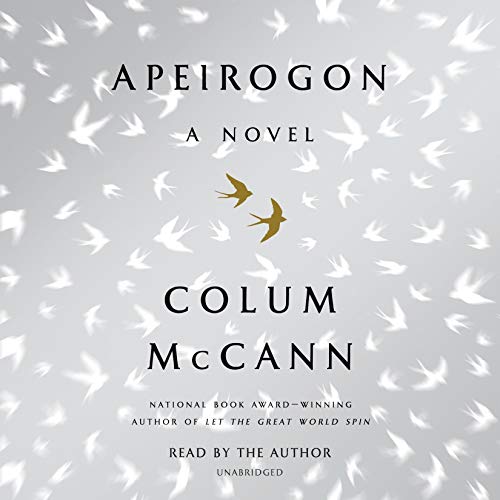
“Apeirogon” (A Novel)

By: Colum McCann

Narrated by: Colum McCann

Colum McCann (Author, Irish writer living in New York.)

At first the idea of an Irish author writing a book about Israel seems incongruous. After the first few paragraphs, one realizes Colum McCann grasps a truth about religious conflict that is far better than most because of Ireland’s “Troubles” between the 1960s and 1990s.

“Apeirogon” is timely novel in regard to Israel’s response to the October 7 Hamas attack in Gaza. A little history helps one understand the complexity and terrible consequence of the slaughter of innocents.

An estimated 30,228 people have been killed in Gaza, 12,000 of which are thought to be Hamas combatants.

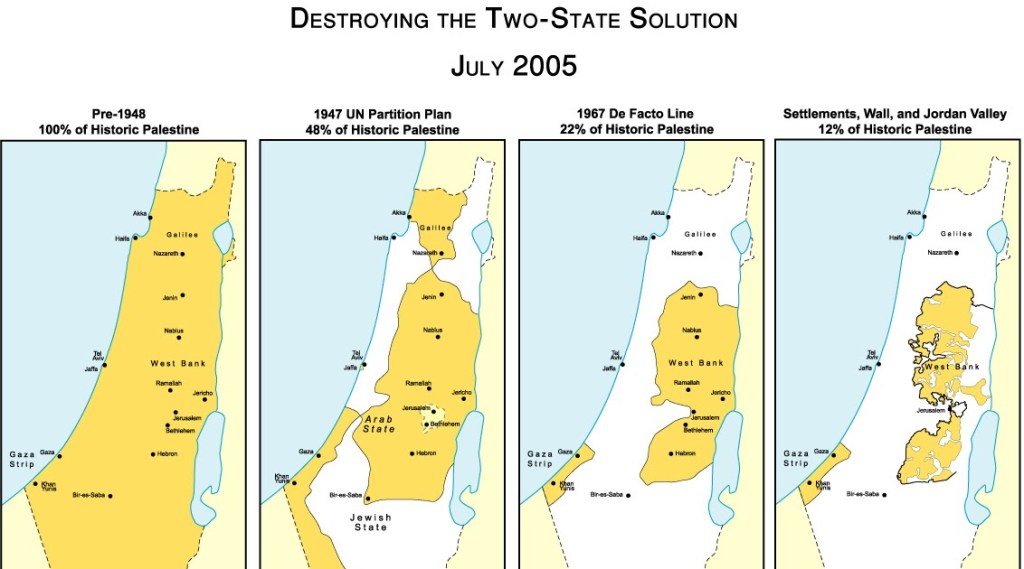
Gaza dates back to Egyptian times, populated by Canaanites who share an ancestral connection to Israelites. Gaza later became part of the Assyrian Empire in 730 BC. Assyrians intermixed with Canaanites, Israelites, Philistines and undoubtedly Palestinians. History shows historical connection between ancient Assyrians and Palestinians just as there were with Israelites. However, Israelites were forcibly relocated to Assyria from the Kingdom of Israel. Because the Israelites were descendants of the Canaanites, they predated Palestinian settlement in Gaza. Ethnic precedent and the want of land area is a part of what complicates the idea of a separate Palestinian state. Where is a homeland for a Palestinian state going to come from?

McCann chose a perfect title for his novel. An apeirogon is a geometric shape that has an infinite number of sides; just like the many sides of Israeli/Palestinian arguments for a homeland. Column McCann cleverly explores these arguments in his novel. He creates a series of Israeli/Palestinian incidents that show how each ethnic culture believes and acts in their perceived self-interests. Every chapter is titled as a series of numbers that begin with the number 1, jumps from 500 to the number 1001; then jumps back to 500 and descends to number 1 to end his story. Revelation comes in 1001. Occupation is an evil that cannot stand.

America’s civil war carries some parallels to what is happening in Israel and Gaza.

What is revelatory about McCann’s novel is its similarities to America’s civil war that ended the lives of too many Americans. Today’s conflict in Gaza is instigated by Hamas just as the Civil War was instigated by southern slave holders. America eventually forgave southern slave holders, but Black Americans continue to suffer from institutional racism. Can a one state solution as demanded by Israel’s conservatives serve Palestinians any better than white America has served Black Americans? America’s civil war ended in 1865-1866, some 158 years later, Black Americans are still discriminated against. Can Palestinians wait more than 158 years to have equal rights in an Israeli nation?

McCann’s novel repeats, too many times, the unfairness of Israel’s occupation of Gaza. Hamas has its rebellious leaders like America had John Brown who killed one Marine, wounded another, and killed six civilians. Neither Brown nor the Hamas leaders can justify their murders though both argue with righteous conviction. The United States could have split between abolitionist and non-abolitionist states, or they could move toward reconciliation. Obviously, the U.S. government prevailed with reconciliation. It seems imperative for Israeli and Palestinian leaders to take the same road as Abraham Lincoln. Hamas is a splinter group like that led by America’s John Brown. Their objective is as horribly misguided as Brown’s. Hamas’s hostage taking and murder of Jewish settlers is as reprehensible as Brown’s murders of a Marine and six civilians.

ISRAEL’S OCCUPATION OF PALESTINE

As difficult as it may be, a two-state solution seems unlikely. What American history suggests is as difficult as America has found reconciliation to be for white America’s murder and unjust treatment of Black Americans. That reconciliation remains a work in progress. However, only union offers a way toward peace. America is not there yet but it is making progress.

Two political factions, bound by both religion and ethnicity, must learn to live with each other for peace to be achieved.

There is no other land for Palestinians. Israel may have the older of the two cultures, and both Israelites and Palestinians have a much longer history of religious and ethnic difference than America. America is founded on religious freedom and equality, though not perfect in either principle. In contrast, religion is a primary determinant in Palestinian and Israeli cultures while equality seems a less prominent concern. Peace will not come without hardship, but a beginning is dependent on Israel’s abandonment of occupation. It will be one country’s leaders’ imperative to provide equal opportunity for all its citizens. The struggle will be long as is shown by America’s history but what realistic alternative is there for the Israeli and Palestinian people? What neighboring country is likely to give up their land to create a two state solution?

“Apeirogon” is a little too repetitive for this reviewer, but it is cleverly written and shows why political and military occupation is a fool’s leadership style. Israel, like white America, needs to do better in reconciling ethnic differences.

UNITY IN SEPARATION?

Civil wars are a lesson to the world.

Books of Interest
 Website: chetyarbrough.blog

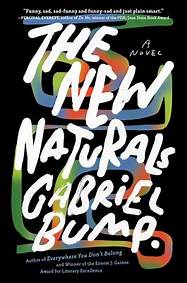
“The New Naturals”, A Novel

By: Gabriel Bump

Narrated by: Robin Miles

Gabriel Bump (Author, MFA in fiction from the University of Massachusetts, grew up in Chicago, Asst. Professor U of M.)

In “The New Naturals” Gabriel Bump shows why societal unity with racial separation is unlikely to be achieved. Without the power and influence of money, leadership is not enough. Bump’s story reminds one of Hamas in Palestine and their deluded belief that they can unify the Palestinian people by creating an underground movement to unify Palestine. Hamas fools themselves just as the leaders of “The New Naturals” show unity fails when the influence and power of money is lost. Of course, the two issues are different because Middle Eastern religion is an element of the fundamental difference between Palestine and Israel. However, money’s influence and power are a major contributor to the Middle East’s conflict.

Bump writes of a Black American movement to create an independent society financed by a donor with great wealth. The donor finances the vision of two Black academics who choose a mountain in Massachusetts to create a literal underground community for Black American citizens. The dream of “The New Naturals” disappears when the financial backer quits her support of the movement. As the donor’s financing disappears, a “smash and grab” mentality infects the movement’s leadership. Loss of financing criminalizes the movement. What could not be achieved with the influence and power of money, led to “smash and grab” criminalization of the movement.

The vision of “The New Naturals” founders is a hope to educate and establish a group of like-minded Black Americans, independent of America’s white dominated culture.

Like the waste of money in building the Hamas’ tunnels in Palestine, these Black separatists choose to use their financial support for tunnels and rooms bored into a mountain. The Black movement is peopled with relatively well-educated Black families wishing for a better life. It devolves with its loss of funding into a group of thugs who insist on separation.

In America, the political choice has been made, i.e., regardless of race, religion, or ethnicity, all who have citizenship in America are Americans.

America has been one nation since 1776. American unity among its citizens is sorely challenged during America’s civil war but it remains the law of the land. Bump’s story explains why, despite continued American inequality, all who have citizenship are Americans. Equality in America is a work in progress. What informs our future is that American identity is a socially and legally enforceable fact.

As noted in 1954 by the U. S. Supreme Court in “Brown v. Board of Education”, the idea of “separate but equal” perpetuates injustice and inequality.

Palestine is considered the birthplace of Ancient Egypt, Israel and the Persian Empire. Though Palestine’s independence was not recognized until 1988, Israel only became a nation-state in 1948. Both societies have a long history as nationalist movements with their own beliefs. Israel and Palestine have earned a right to their own identity. The holocaust was a turning point for the right of a Jewish nation to be created. The current slaughter of innocents in Palestine may be the turning point for Palestine’s right to nationhood.

Civil wars are a lesson to the world. One hopes both Israel and Palestine come to an agreement to either create two nations or one; with unity as separated or as one unified nation-state.