HUMAN

What is the value of high IQ? If everyone was smarter, would they be happier? It seems the only real value of genetics is in the prevention of known diseases, not in improvement of IQs or creation of a perfect human being (whatever that is).

Books of Interest
 Website: chetyarbrough.blog

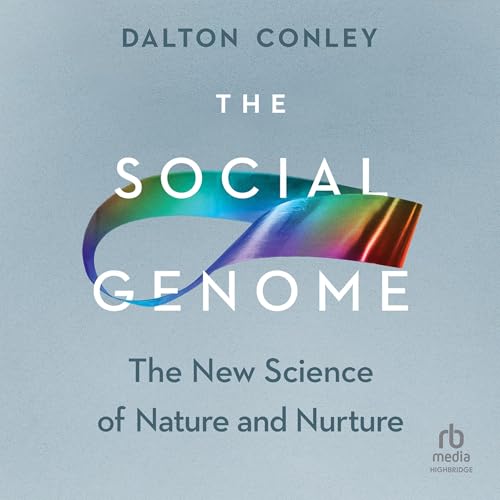
The Social Genome: The New Science of Nature and Nurture

By: Dalton Conley

Narrated By: Christopher Douyard
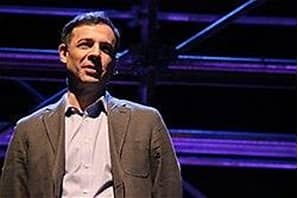
Dalton Clark Conley (Author, Princeton University professor, American sociologist.)

Dalton Conley offers a complex explanation of why one child intellectually and financially excels while others are left behind. The “Social Genome” is an attempt to explain the complexity and inadequacy of genetic research. Not too surprisingly, there seems a correlation between wealth and intellectual development, but its relationship includes familial and environmental nurturing in ways that are too complex for today’s science to measure.

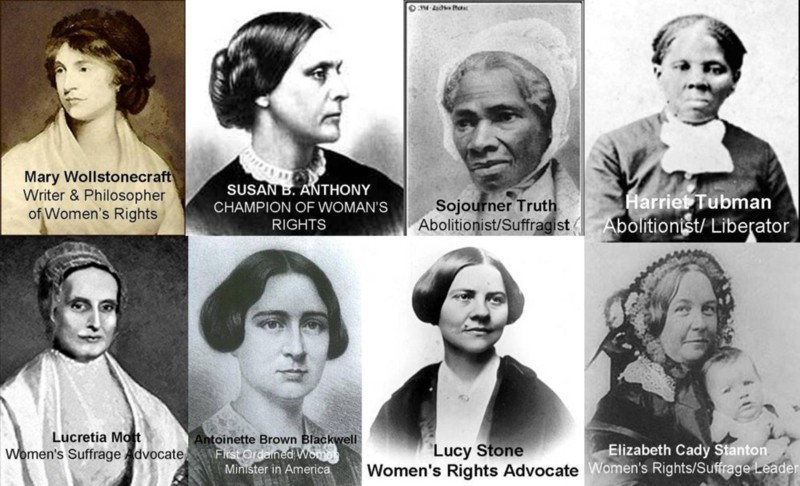
FAMOUS WOMEN IN HISTORY (Many women are as intellectually strong and mentally tough as men, e.g.  Cleopatra, Sojourner Truth, Indira Gandhi, Golda Meir, Benazir Bhutto, Malala Yousafzai, and others.)
Dalton argues both genetics and environment shape human intellect and economic success. However, science’s current knowledge of genetic and environmental impact is not clearly understood in a way to aid human development. The current limitations of science make it impossible to determine the precise genetic and environmental factors that shape human development. Dalton offers many examples of how genetics and environment are relevant to human development, but neither are precisely measurable nor manageable.
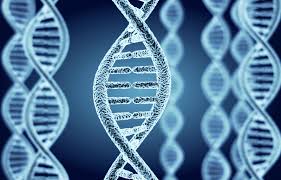
The idea of clearly understanding the genetic and environmental causes of who humans become is a bit frightening.

Even if it were possible to achieve precise measurement of genetic and environmental influences, should that knowledge be used to create designer human beings?

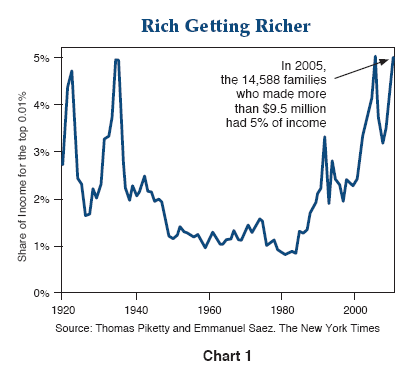
Piketty argues that the income gap widens after World War II.  He estimates 60% of 2010’s wealth is held by less than 1% of the population. 
Dalton does believe there is a correlation between economic well-being and IQ, but the correlation is affected by genetic inheritance. Dalton concludes economic well-being is a positive factor in IQ improvement. That raises questions about how one can improve the economic well-being of a society to improve IQ. Dalton infers there is no one size fits all solution for IQ improvement. Nurture and nature are too intimately intertwined to know how IQ of a society can be improved. A conclusion one may draw is that environmental and societal factors like human nutrition, general education and improved equal opportunity can mitigate IQ diminishment. Whether one should modify human genomes is a step too far.

In many ways, this is a frustrating book to listen to or read.

If all people looked more alike than different would there be less conflict in the world? No, but being of one race or another makes a difference in one’s opportunities in the world. What is the value of high IQ? If everyone was smarter, would they be happier? It seems the only real value of genetics is in the prevention of known diseases, not in improvement of IQs or creation of a perfect human being (whatever that is).
LIFE’S LOTTERY

Eugenics and the fickle political nature of human beings outweighs the benefits of Harden’s idea of choosing what is best for society.

Books of Interest
 Website: chetyarbrough.blog

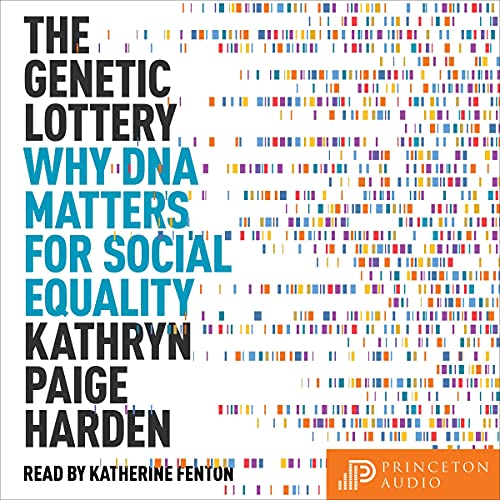
“The Genetic Lottery” Why DNA Matters for Social Equality

By: Kathryn Paige Harden

Narrated By: Katherine Fenton

Kathryn Paige Harden (Author, American psychologist and behavioral geneticist, Professor of Psychology at the University of Texas at Austin.)

“The Genetic Lottery” is an important book that may be easily misinterpreted. Hopefully, this review fairly summarizes its meaning. Fundamentally, Kathryn Paige Harden concludes all human beings are subject to a genetic lottery and the culture in which they mature. It is not suggesting all human beings are equal but that all can develop to their potential as long as he/she has an equal opportunity to become what their genetic inheritance, education, and life’s luck allow.

Harden explains racial identity is a false flag signifying little about human capability.

Every human being is born within a culture and from a mother and father who have contributed genetic DNA they inherited from previous generations. DNA carries genetic instructions for development, growth, and reproduction of living organisms. Those instructions are a blueprint for an organism’s growth. However, the genetic information passed on to future generations varies with each birth and is subject to a lottery of DNA instructions.

The lottery of genetics extends a multitude of characteristics ranging from intelligence to height to the color of one’s skin.

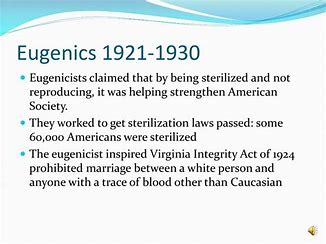
One may become an Einstein, or a slow-witted dolt. One may be born healthy or destined to die from an incurable disease. The growing understanding of genetics suggests the potential for human intervention to prevent disease, but also the possibility of creating a master race of human beings. That second possibility is a Hitlerian idea that lurks in the background of science and political power. It revolves around the theory of eugenics.

Harden suggests an ameliorating power of eugenics is its potential for offering equal opportunity for all to be the best version of themselves within whatever culture they live.

Putting aside the potential of human genetic theory’s risk, Harden explains every human is born within a culture that reflects the genetic inheritance of the continent on which they are born. The combination of the human genetic lottery and the culture in which humans live create ethnic identity and difference. Differences are the strengths and weaknesses of society. Strengths are in the diversity of culture that adds interest and dimension to life. The weakness of society is its tendency to look at someone who is different as a threat or obstacle to a native’s ambition or cultural identity.

Harden suggests every human being’s genetic code should be identified to aid human development by creating an environmental support system that capitalizes on genetic strengths and minimizes weaknesses.

This idealistic view of genetics is fraught with a risk to human freedom of thought and action. Science is generations away from understanding genetics and its relationship to the weaknesses and strengths of human thought and action. Understanding what gave Einstein a genetic inheritance that could see and understand E=MC squared is not known and may never be known. The luck of genetic inheritance and the lottery of life experiences are unlikely to ever be predictable. One interesting note in the forensic examination of Einsteins brain (recorded in another book) is that he had a higher-than-normal gilia cell ratio, non-normal folding patterns in his parietal lobe, and a missing furrow in the parietal lobe that may have allowed better connectivity between brain regions.

The threat of eugenic determinism and the fickle political nature of human beings outweighs the benefits of Harden’s idea of choosing what is best for society.

BIODIVERSITY

Human population growth is slowing, and awareness of biodiversity is improving but is the trajectory of global warming outpacing human action?

Books of Interest
 Website: chetyarbrough.blog

Biology: The Science of Life

Author: Great Book Series

Narrated By: Professor Stephen Nowicki

Stephen Nowicki, Ph.D. (Bass Fellow and Professor of Biology @ Duke University, Associate Chair of the Dept. of Biology and Neuroscience.)

This is a dauting series of lectures with a theory of the beginning of life. It addresses living things in general but more specifically what is known about human life. Not surprisingly, it is immensely complicated.

There may have been an Adam and Eve in history, but Science infers any garden of Eden had to have been long after the beginning of life on earth.

Nowicki explains how Stanley Miller conducted an experiment in 1952 that simulated conditions of the early days of earth’s formation. Methane, ammonia, hydrogen, and water were present in those early days. These ingredients were used in a controlled environment, with the help of energy (primordial lightening), to combine into amino acid compounds that are essential to life. These basic chemicals were present in the early days of earth. These amino acid compounds are the building blocks of life.

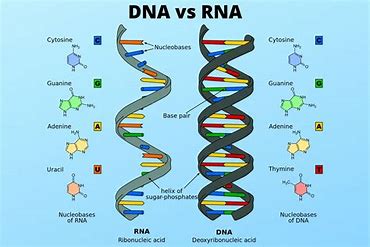
With amino acids, it became possible for DNA and RNA formation. DNA and RNA are shown to synthesize proteins leading to cellular process and organic development.

From these early beginnings, a natural selection process is initialized, i.e. evolution began which led to complex organisms like viruses, bacteria, animals, and eventually humans. Nowicki goes on to explain the complex biology of science. This is a point at which understanding by a lay reader/listener becomes difficult and only partially comprehensible. He begins with a detailed discussion of genetics, the study of genes, their discovery and function.

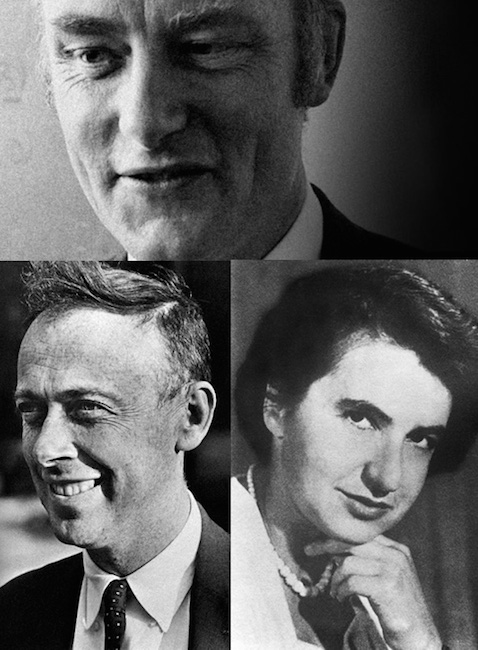
With the help of Rosalind Franklin (lower right), Watson (lower left) and Crick came up with the double helix model made of deoxyribose sugar that alternates with phosphate group strands.

The most famous pioneers of genetics are James Watson and Francis Crick. The genetic model they created reveals the backbone (organizational structure) of genes. With addition of nucleotides (adenine, thymine, guanine, and cytosine) to the gene backbone, genetic instructions are encoded by single strands of RNA into double strands of DNA. RNA’s single strands direct ribosomes that prevent mutation and maintain genetic integrity.

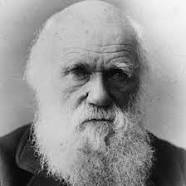
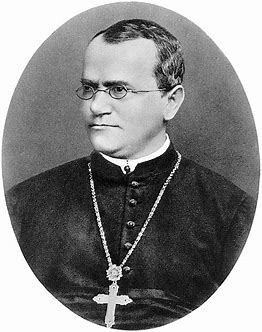
Nowicki jumps back in history to explain Darwin’s theory and proof of evolution. In addition, he recounts Gregory Mendel’s discovery of genetic inheritance. (Though Darwin and Mendel were contemporaries, it is not believed they ever met.) Mendel found, in breeding pea plants, that pea plants inherited certain traits of their parent plants with first generation plants having one color flower while second generation had 1/3rd to 2/3rd color differences that experimentally suggest inheritability of appearance. Mendel had no knowledge of genetics but was aware of Darwin’s writing. Ironically, Mendel discovered that inheritance had distinct genetic units of dominant and recessive characteristics explained how second-generation pea plants had mixed colors. This inheritable element of a gene became known as an “allele”, a word coined by British geneticist William Bateson in the early 1900s.

A listener/reader is only 1/4 of the way through Nowicki’s lectures at this point. Many of the remaining lectures delve into the details of gene function that will be interesting to biology students but only confuse and tire a dilettante.

To this reviewer, the two most enlightening features of Nowicki’s lectures are his views on the origin of human life and the ecological loss of biodiversity that threatens human existence. Nowicki challenges religious belief in the origin of life with a convincing argument for nature’s creation of human existence. His last lecture addresses global warming, reduced biodiversity, and the consequences of a loss of earth’s laboratory of medicinal cures for human ailments.

Nowicki leaves listener/readers with belief in humanity’s and earth’s environmental correction but with reservation. Human population growth is slowing, and awareness of biodiversity is improving but is the trajectory of global warming outpacing human action?