

Books of Interest
Website: chetyarbrough.blog
On Anarchisn
Author: Noam Chomsky, Nathan Schneider
Narrated By: Eric Jason Martin
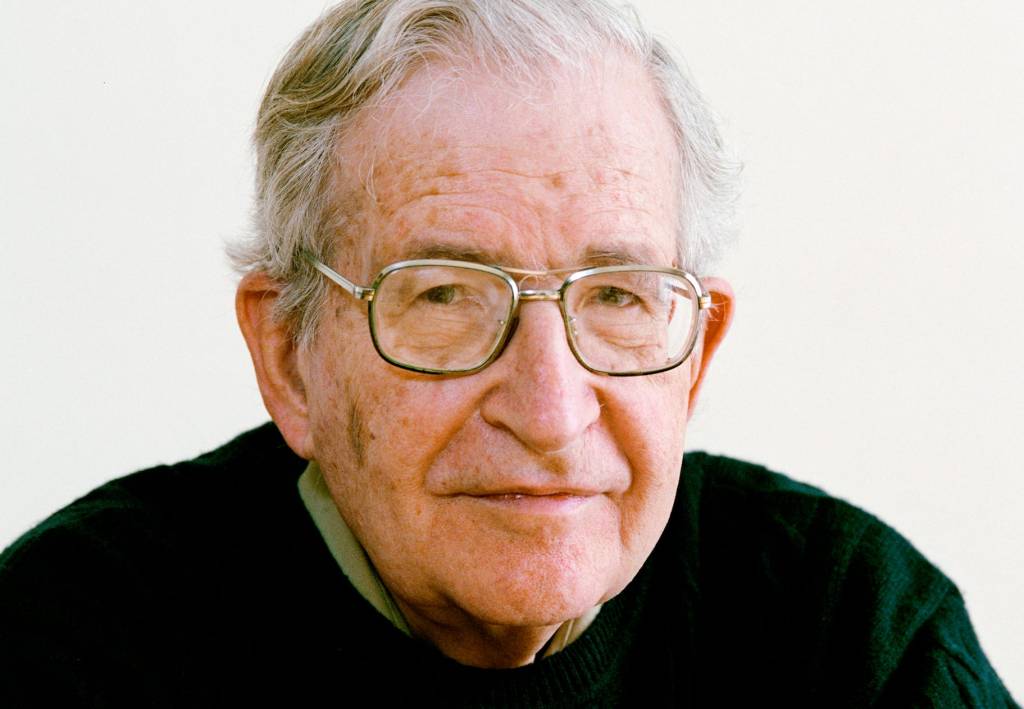

When one thinks of a political system called Anarchism, the first thing that comes to mind is a vision of rampant disorganization where there is no sense of direction or social cohesion.
Noam Chomsky is a polarizing figure who is admired as an anti-capitalist and anti-imperialist who fiercely criticizes U.S. and Israeli foreign policy. He views Israel as a client state of the U.S. that relies on authoritarianism to manage their countries roles in the world. He notes America’s interventions in Vietnam, Central America, Iraq, and Afghanistan as evidence of America’s failure as a democracy. He views Israeli foreign policy in regard to Gaza as infected with hypocrisy and violence with a narrow view of territorial expansion. He feels both America and Israel are driven by strategic and economic interests, not by the idealism of democracy.
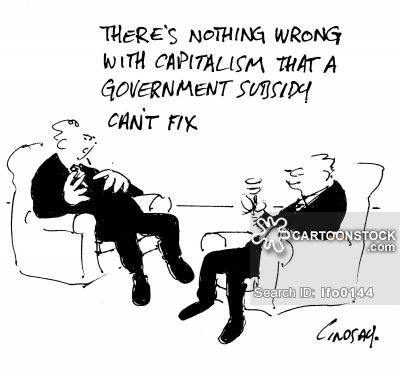
Chomsky is a fierce critic of capitalism and imperialism because both marginalize citizens’ freedom of thought and action.
Chomsky’s view is that anarcho-syndicalism is a better form of government where power is decentralized and citizens can and should collectively manage their own affairs through direct democracy and cooperative organizations. He argues for participatory democracy by voluntary associations that are freely formed into cooperative communities. There should be no centralized authority with all workplaces and production controlled by the workers themselves. He believes in libertarian socialism because he sees it as the most humane and rational extension of Enlightenment ideals in society. Any authority exercised by a government entity in a libertarian socialist country, in Chomsky’s opinion, is the most humane and rational extension of the ideals of the Enlightenment.

The Age of Enlightenment or sometimes called the Age of Reason was a movement in the late 17th century that extended into the 19th century.
It emphasized the power of reason, science, and individual liberty as the tools for the reform of society. The tools of reason, science, and liberty were believed to be the natural rights of humanity, and the possibility of improving society through education and reform based on science.

Francisco Franco (Spain’s dictator 1939-1975.)
Chomsky argues those tools were engaged by Spanish revolutionaries during Franco’s dictatorship in Spain. Chomsky notes workers took control of factories and farms in Catalonia and Aragon that were run collectively and democratically by workers. He believes voluntary cooperation thrived. He believes the anarchist movement grew through three generations based on education and considered organization of Spanish interest groups. However, Franco’s forces with the help of England, Germany, and Italy defeated the movement.
Republican factions fought against Franco’s government in the 1930s.
Chomsky believes revolutionaries against Franco were practical visionaries that showed how anarchy could be a legitimate and superior way of governing a nation.

Surprisingly, there are several examples besides Spain’s revolution that were collectivist organizations that could be classified as anarchies. From 1918-1921, the free territory of Ukraine was led by Nestor Makhno during Russia’s Civil War. It was ended by Russian communism after its ascension in 1917. Modern communes were set up in Mexico’s Zapatista territories with autonomous zones that had collective farming and indigenous self-rule. Of course, in ancient times there were hunter-gatherer societies that shared norms, and governance through consensus decision-making and resource sharing. However, there is a history of atrocity, failure, and disruption by governing bodies that have tried Anarchy. Spain’s effort fell apart in 1939. Freetown Christiania in Denmark, in a neighborhood in Copenhagen has struggled with Anarchy since 1971. A number of legal battles have been fought over commercial ownership and control. By some measures, the kibbutz movement in Israel has been successful. However, even Chomsky notes friction comes within kibbutz communities over disagreement with elected leaders. Research shows that some kibbutzim are privatizing and paying differential wages for communal services. Collectivism is becoming harder to maintain.

Chomsky is considered by some to be the most important intellectual alive today. He is highly respected for theories on the understanding of language based on modern cognitive science.
Chomsky has shaped how we think of human capabilities. He is famous for his dissents which are naturally about government control and media manipulation. He was against the Vietnam war and opposed Israeli occupation because of his libertarian socialism, a form of anarchy or a collective that is purely democratically determined. He is reported to be an excellent lecturer and capable of going toe to toe with experts in linguistics, philosophy, political science, and education. His opinions have global reach with translations in many languages.
In reading/listening to Chomsky some will conclude he is wrong about there ever being a nation-state that will be successfully governed as an Anarchy because of the nature of human beings. Whether one believes in Hobbes’ view of selfish humans, Rousseau’s belief in people being corrupted by society, Kant’s belief in rationality, or Sartre’s belief in human choices and actions, there will always be dominant personalities who will victimize those whom they commune. Human nature as defined by Hobbes, Rousseau, Kant, Sartre, and other brilliant philosophers infer there will always be miscreate leaders that will destroy egalitarianism, the foundational principle of anarchy. Human nature, as it exists today, is unlikely to change.
 REVIEWS AND VIEWS OF LIFE