
Books of Interest
Website: chetyarbrough.blog
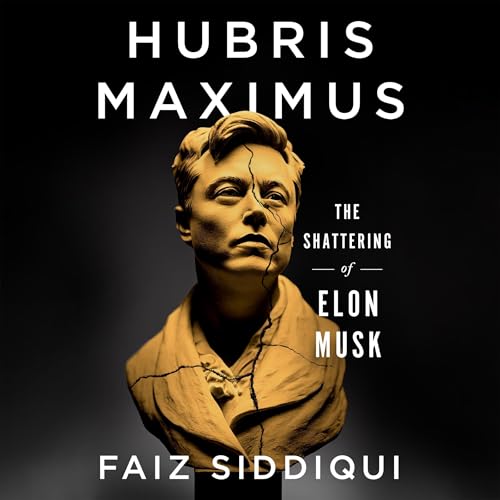
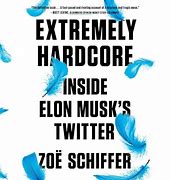
Hubris Maximus (The Shattering of Elon Musk)
By: Faiz Siddiqui
Narrated By: André Santana
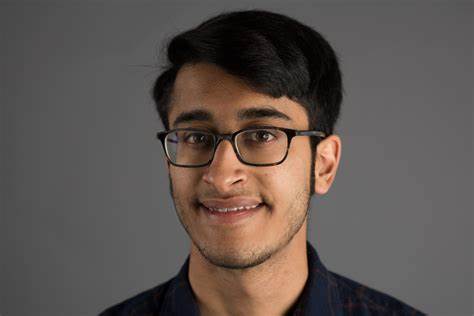
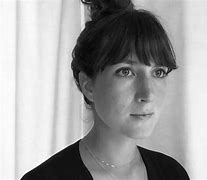
Faiz Siddiqui (Author, technology reporter for The Washington Post)
Faiz Siddiqui exposes the character of Elon Musk as a brilliant entrepreneur with an outsized pride in his ability that reflects an arrogance that diminishes his genius. Musk’s success with Tesla and SpaceX accomplishments are equal, and in some ways exceed, the business successes of John D. Rockefeller and Steve Jobs. In wealth, Musk exceeds Rockefeller and in inventiveness, he competes with Steve Jobs.
As brilliant as Musk shows himself to be, his fragile ego diminishes his genius.

Siddiqui reveals how petty Musk can be while balancing that pettiness with his contribution to creative ideas that will live far beyond his mortal life. Musk’s development of space travel and communication satellites for the world with a non-governmental, free enterprise operation is a tribute to the power of capitalism. His next immense contribution, though controversial and a work in progress, will be self-driving transportation.

Elon Musk’s Successful Return of Rockets Launched into Space.
Siddiqui’s picture of Musk’s flawed personality is somewhat balanced by the image of a person driven to succeed. However, that drive is not something that naturally translates to organizational performance. Musk is not a developer of people and should not be in charge of an organization’s management. Like Apple employees that kept some of their work undisclosed to Steve Jobs when the mobile phone was being considered, Musk needs to leave management of employees to others. People management is a skill set that Musk does not have as was made quite clear with his acquisition of Twitter and his work with DOGE. DOGE feeds Musk’s managerial weaknesses with President Trump’s mistaken belief that cost of government is more important than effectiveness. DOGE is a growing tragedy of American governance.

Musk is right about the value of self-driving vehicles, but he is trying to produce the wrong product to prove his belief.
Self-driving vehicles will reduce traffic accidents, injuries, and death but the product to achieve that goal is what Musk should be working on. The game of Go is estimated to have 10 to the 172nd power of possible positions. Self-driving cars probably have a similar astronomical number of possible causes of accidents.

Musk, or someone with his creative genius, needs to create a product that can be sold to all vehicle manufacturers.
This newly invented product would use AI to learn, reinforce understanding of vehicular movements, accidents, and incidents. That accumulated information would allow creative play in the same way GO became an unbeatable game for human beings playing against a programed computer. Musk is putting the cart before the horse by building cars and then making them safe, self-driving vehicles. The first step is to gather information from as many driven vehicles as possible, collate that information, and use computer power to creatively play with the information. That information, like learning the moves of GO would create self-driving algorithms that would reduce self-driving vehicle’ accidents, injuries, and deaths.

A sad reveal in “Hubris Maximus” is that an American treasure, Elon Musk, is being vilified for the wrong reasons.
Musk’s contribution to the reduction of air pollution has benefited the world. His vision of interstellar travel may be the next step in human expedition, exploration, and habitation of the universe. Earth’s interconnectedness is vitally enhanced by Musk’s satellite system. The universe is humanity’s next frontier.
Musk, like all human beings, is imperfect. His association with a President who feels money is more important than humanity only feeds Musk’s ineptitude as a manager of people.








 REVIEWS AND VIEWS OF LIFE