AMERICA’S BEGINNING

History buffs will be fascinated by Atkinson’s history of America’s Revolution, but it is a bit too long for this non-historian.

Books of Interest
 Website: chetyarbrough.blog

The Fate of the Day (The War for America, Fort Ticonderoga to Charleston, 1777-1780)

AuthorRick Atkinson

Narration by: Grover Gardner, Rick Atkinson

Rick Atkinson (American author, journalist, and military historian.)

Atkinson is an accomplished writer who has won Pulitzer Prizes for both histories and journalism. “The Fate of the Day” is a well written book about America’s war of independence. It is highly entertaining because of Atkinson’s detailed descriptions of the times and the major combatants in the revolutionary war. It gives reader/listener’s a view of the rag-tag and multi-cultural colonial military and British leaders. “The Fate of the Day” illustrates the colonists’ successes and failures against a much better trained and experienced British military.

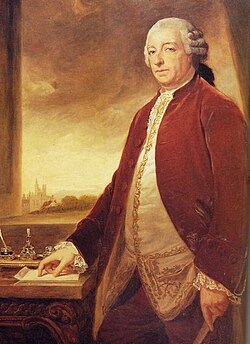
Sir Henry Clinton on the left and Lord George Germain on the right.

Atkinson offers a picture of Great Britain’s incompetence, arrogance, and misjudgment of the colonies fight for independence. Atkinson explains that Sir Henry Clinton, the Commander-in-Chief of the British Forces, though quite smart and considered a gifted strategist, fails to communicate clearly to his British field officers. Compounding that confusion is Lord Germain, the Secretary of State in England, to whom Clinton, Howe, and Cornwallis reported. Germain gave orders that were too far removed from the field of action. It caused many misunderstandings and confusion that diminished the effectiveness of British forces during the colonists’ battles for independence.

George Washington.

However, Atkinson also explains the faults of the Colonies’ leadership during the revolution. The stoic George Washington learned his role in the revolution on the job. He had no experience in the tactics of battle which led to misjudgments in the field. However, his skill in managing Congress, the states, and his fractious international officers offset his tactical mistakes. Washington instilled resilience, discipline, and courage in his subordinates. He held the army together despite poor military provisioning, erratic and meager pay, inadequate recruitment and training for war in an often-harsh environment.

Nathanael Greene (Major General in the Revolutionary War for America’s independence.)

Washington has some good field commanders reporting to him. Nathanael Greene is a self-taught militia officer who became a sophisticated strategist. He had a strategy to defeat British forces in the south with his troop mobility and attrition in fighting British superiority. Green avoids decisive battles with the British by evading superior forces and coordinating local militias to harass and ambush British forces. (A reminder of the Vietcong in America’s future war.) This causes the British to spread their forces to try and defend everywhere at once which only made them more vulnerable to attack. Atkinson gives the example of Greene’s retreats across North Carolina that make Cornwallis pursue Union soldiers over rough terrain which made Cornwallis outrun his supplies. By the time they reached Virginia, Cornwallis and his troops were overextended. Though Green did not win many battles, he effectively undermined British resolve to continue the fight.

Benedict Arnold (American-born British military officer who fought with distinction for the American Continental Army.)

In contrast to Greene, Atkinson profiles the infamous Benedict Arnold. It is a surprising contrast because Arnold betrayed the colonies by defecting to the British. Atkinson explains Arnold risked his life in defense of America’s drive for independence. He was heroic in that drive but felt unrecognized. Arnold led the surprise seizure of Fort Ticonderoga, the first major victory of the war. Atkinson notes Arnold led his troops on the assault of Quebec in 1775 which required a 300-mile march for which his men nearly starved; some dying on the march. Arnold led the assault and was shot in the leg. Even though wounded again in the leg at the Battle of Saratoga, he fought through 1777 when his tactical military actions compelled Burgoyne to surrender. Atkinson shows Arnold to be a smart, heroic commander but his emotions, the lack of recognition or promotion led him to defect to the British. The irony is that he is never trusted by either America or the British because of his defection.

America’s Revolutionary War.

Atkinson’s book is compelling because of the cinematic way he tells the story of America’s Revolutionary War. Picking details of heroes like Washington, and Greene which ranges from Washington’s trouble with his teeth to the clever strategy of guerilla war conducted by Greene to the bravery and defection of Arnold. Atkinson’s story helps one understand how human and creative early settlers of America were, not unlike the better American leaders of today.

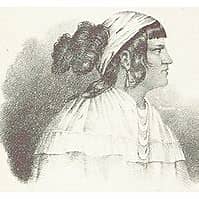
Ben Franklin (America’s chief diplomat in Europe during the Revolution.)

Atkinson explains Ben Franklin is the colonists’ chief diplomat in Europe. Franklin’s charm as a a political operator who is willing to lie and flatter the French gave him celebrity and influence in the French court. He manages to create a French alliance that eventually supplied material and military power for support of the colonies against Great Britain. Of course, it helps that the French were vying for their own influence against the growing hegemony of England.

The Marquis de La Fayette (French miliary officer and politician who volunteered to serve in the Continental Army.)

Even before France began supporting the colonists, a young soldier named Lafayette joined the Revolution. The French aristocracy originally objects to the wealthy young aristocrat’s involvement. In response, Lafayette sales to America as a 19-year-old who believed in the colonists’ cause. His early experience as a soldier in France made him a general officer in the Continental army. He rode next to George Washington which gave weight to the Revolution’s global importance by internationalizing the war.

America’s independence.

History buffs will be fascinated by Atkinson’s history of America’s Revolution, but it is a bit too long for this non-historian.

Truman

Truman’s presidential accomplishments were not done alone but he managed highly educated and experienced people who got things done. He had the respect of people who reported to him, and he was tough, pragmatic, and willing to make hard decisions when circumstances required leadership.

Books of Interest
 Website: chetyarbrough.blog

Truman

By: David McCullough

David McCullough (1933-2022, Author, historian, winner of a Pulitzer Prize, the National Book Award, and later given the Presidential Medal of Freedom in 2006.)

One of the great historians of the modern age, David McCullough received the National Book Award for “Truman” in 1982. As a biography of an American President, it is among the best ever written about a President whom few regard as being in the category of Washington, Lincoln, or FDR. Every chapter is a pleasure to read because it reminds one of why many consider America the best country in the world in which to live. This portrait of the 33rd President of the United States shows a man of modest means, without a college degree, who grows to become a great manager of others and leader of a post WWII world.

President Harry S. Truman (1884-1972, President from 1945-1953.)

Thrown into the Presidency after 82 days as Vice President of the United States, Truman became President. FDR died April 12, 1945. Germany was near defeat by the Allies. Within a month, on May 8th, the Allies celebrated what is known as V-E Day, Victory in Europe Day. Truman is faced with a decision on how best to end WWII by defeating Japan. Though when he rose to the Presidency, he had not been informed about the Manhattan Project. He was fully briefed on April 25, 1945, by Henry Stimson and General Leslie Groves, leaders of the Manhattan Project. In mid-July of 1945 the first atomic bomb was successfully tested and Truman described it as “the most terrible bomb in the history of the world”.

Captain Harry Truman November 1918.

As a former veteran and captain in WWI, Truman knew what continuing the war meant to the lives of American soldiers.

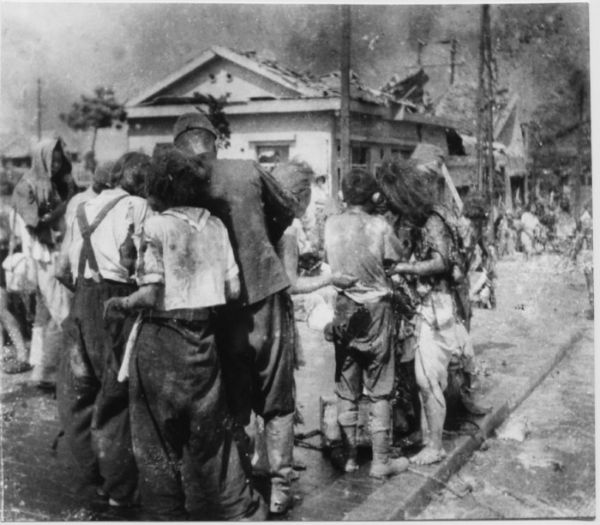
As a former veteran and captain in WWI, Truman knew what continuing the war meant to the lives of American soldiers if Japan were conventionally attacked by Allied forces. He ordered the use of two atom bombs, one on August 6, 1945, on Hiroshima and a second on Nagasaki on August 9, 1945. There was no official warning. Leaflets were dropped over some Japanese cities on August 6, but one suspects that was just a precedent to instill fear about further destruction if Japan refused to surrender.

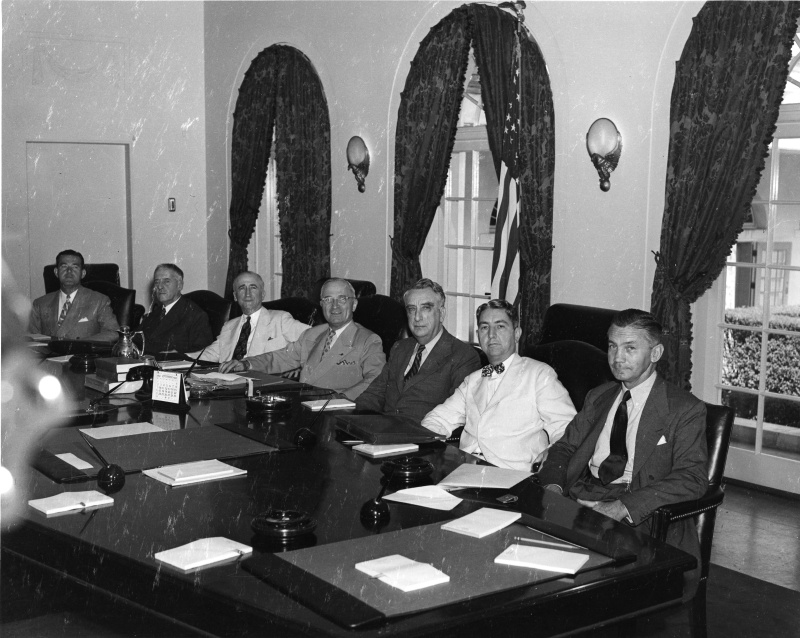
TRUMAN’ CABINET IN 1945

President Harry S. Truman meets with Cabinet members in the White House. From left to right: Postmaster General Robert Hannegan; Secretary of War Henry Stimson; Secretary of State James Byrnes; the President; Secretary of the Treasury Fred Vinson; Attorney General Tom Clark; and Secretary of the Navy James Forrestal.

Truman took complete responsibility for the decision to drop the bombs.

As shown in the movie about Truman’s meeting with Oppenheimer after Hiroshima and Nagasaki, Truman was put-off by Oppenheimer’s concern over postwar use of nuclear weapons. Presumably, Truman’s feelings were that many lives were saved despite the loss of Japanese citizens from the use of atomic weapons. McCullough’s depiction of Truman is that he was tough, pragmatic, and willing to make hard decisions. He took personal responsibility for the use of atomic bombs to end the war.

Truman’s whistle-stop campaign in 1948.

McCullough goes on to explain Truman’s second term election effort that began when Dewey, his Republican opponent, looked like a sure winner. Truman campaigned across the country by train. Truman’s victory and what seemed an interminable train ride was a testament to the grit and determination of this 5-foot, 9-inch dynamo.

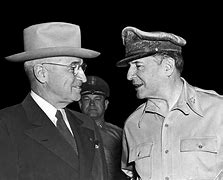
Truman’s character description is reinforced with McCullough’s history of Truman’s relationship with General McArthur. In the early days of the Korean war, McArthur took charge of American forces and made decisions that seemed to bode well for the end of the conflict. McArthur reversed the course of the war by insisting on a risky reinforcement of American forces. It was the right move and Truman admired McArthur’s grit in insisting on the reinforcement. However, McArthur overstepped his position when he insisted on bombing Chinese cities when China escalated the Korea war. McArthur publicly criticized Truman’s administrative opposition to escalation.

Truman relieved McArthur of his command in Korea and pursued a negotiated peace at the 38th parallel. This was another tough, pragmatic, and unpopular decision by Truman. In retrospect, one recognizes it was the right decision, but Truman was markedly criticized by the press and public for his decision.

In the early days of the Korean war, McArthur took charge of American forces and made decisions that seemed to bode well for the end of the conflict. McArthur reversed the course of the war by insisting on a risky reinforcement of American forces.

One can argue McCullough’s history places Truman in the pantheon of the greatest Presidents of the United States since Washington, Lincoln, and FDR. Truman ended WWII, agreed with and supported the Marshall plan that rebuilt Europe, created the Truman Doctrine to contain Soviet Expansion, desegregated the military, established the CIA, NSA, and NSC by signing the National Security Act of 1947, approved the Berlin airlift when the Soviets isolated West Berlin, and banned discrimination in the federal workforce. Truman managed some of the greatest minds of his 20th century administration to make America the preeminent leader of the western world.

Truman’s presidential accomplishments were not done alone but he managed highly educated and experienced people who got things done. He had the respect of people who reported to him, and he was tough, pragmatic, and willing to make hard decisions when circumstances required leadership in the face of public opposition.