WHATS NEXT

Audio-book Review
By Chet Yarbrough

(Blog:awalkingdelight)
 Website: chetyarbrough.blog

The Philosophy Book (Big Ideas Simply Explained)

By: DK Author-Will Buckingham

Narrated by: Jason Culp

Will Buckingham (English Author, novelist, philosopher, masters in anthropology, PhD in philosophy from Staffordshire University.)

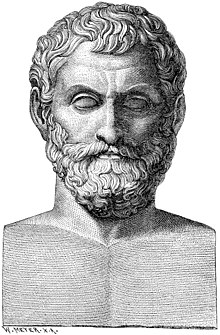
Will Buckingham succeeds in telling the story of philosopher’s big ideas. Buckingham takes listeners on a journey through the ages of philosophy. Beginning in the pre-Julian Roman calendar of 585 BC, Buckingham explains how Thales of Miletus began humanities’ journey from belief in mythology to observation and prediction. Miletus predicted a solar eclipse, presumably based on astronomical observation.

Thales of Miletus (626 to 623 BC to 548 to 545 BC, Pre-Socratic Philosopher known by some as the Father of Science.)

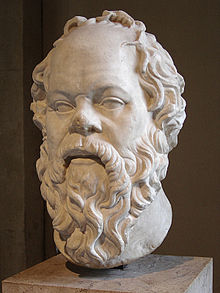
Socrates is believed to have lived from 470 to 399 BC when he chose to take his own life when found guilty of charges of blasphemy and corrupting youth.

Plato (428-423 BC to 348-347 BC, died at the age of 80.)

Socrates could have escaped execution according to Plato’s writing in the “Phaedo” but chose to drink Hemlock tea, the poison of capital punishment.

Socrates denies both accusations against him. Plato writes Socrates mentions the god Asclepius (one of the gods noted for healing) in his last moments of lucidity. The implication of Plato is that Socrates believed in the gods. Socrates flatly denies the corruption of youth for which he is accused.

Buckingham notes what is known of Socrates is only through Plato and Aristotle’s writing which support his innocence by relating stories of Socrates search for truth.  An ancient Oracle is said to have told Socrates he was the wisest of all men. By questioning beliefs of those who professed wisdom, Socrates finds others ignorance and understands why the Oracle considers him the wisest “…because I alone, of all the Greeks, know that I know nothing.” It is through dialog with others about belief that Socrates finds other’s ignorance and his wisdom.

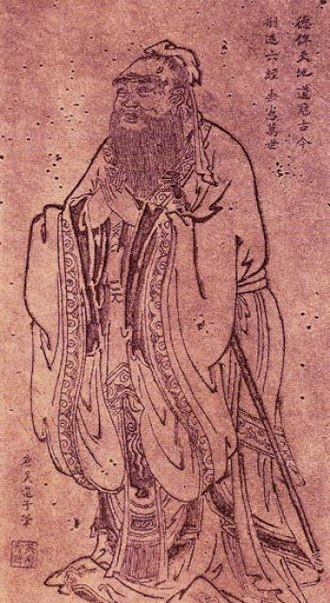
Confucius (551 BCE-479 BCE, died at 71 or 72, Chinese philosopher.)

Before Socrates, Buckingham notes the prominence of Confucius who lived in China, between 551 to 470 B.C.E. Both Socrates and Confucius search for truth.

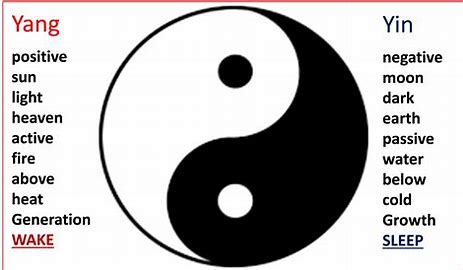
Both are searching for causes of societal chaos. However, where Socrates looks to dialog with others and communication with the gods for help in understanding life, Confucius looks to what is called the DAO, i.e., the “way”, the road, or the path that gives harmony to human nature. In the DAO, there is a yin and yang to life that leads one to a harmonious code of behavior. It is neither based on God or gods but on the search for harmony in life.

Though Socrates and Confucius seek wisdom, their paths are quite different but with similar objectives.

This seems a beginning of a split between gods, God, and human belief. The Greeks pursue the help of gods for earthly harmony. The Chinese search for a path to human harmony within society, exclusive of gods or belief in one God.

Buckingham proceeds to overwhelm listeners with mostly well-known philosophers of history. He does not make a distinction between belief in gods, God, or what is broadly characterized as science.

In coming to grips with the number of philosophers noted, one tends to rely on a perceived societal direction. To this listener, the direction is away from God, toward science.

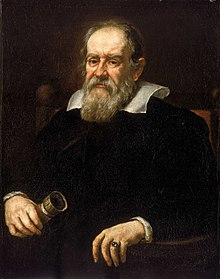
This is not to say that science or philosophy excludes God. There are many famous scientists who claim belief in God. Rene Descartes, Isaac Newton, Galileo Galilei, Albert Einstein, Gregor Mendel, and Charles Darwin, to name a few. The irony of that truth is that each of these scientists made discoveries that weaken one’s belief in God because their discoveries offer insight to the origin of life and living without God.

The list of non-believers is as long or longer. Some say Einstein was an Atheist. There is Daniel Dennett, Michael Shermer, Rosalind Franklin, Sigmund Freud, Stephen Hawking, Richard Dawkins, Richard Feynman, Niels Bohr, Francis Crick, Erwin Schrodinger, John Bell, and so on.

“The Philosophy Book” offers more information about philosophers than one may want to know. Nevertheless, it offers a well written overview of belief, if not wisdom, in the world. One may ask themselves, what’s next? Artificial Intelligence seems to offer our best chance of survival if humanity is on its own.

EDUCATION AND FREEDOM

Audio-book Review
           By Chet Yarbrough

(Blog:awalkingdelight)
 Website: chetyarbrough.blog

Journey to the Edge of Reason (The Life of Kurt Gödel)

By: Stephen Budiansky

Narrated by: Bob Souer

Stephen Budiansky (American writer, historian, and biographer with B.S. in chemistry and S.M. in applied mathematics, Yale and Harvard.)

Stephen Budiansky offers a biography of one of the greatest mathematicians of the 20th century. His name was Kurt Gödel.

Kurt Gödel (Logician, mathematician, philosopher 1906-1978.)

It is the biographic details and good writing that make “Journey to the Edge of Reason” interesting. Budiansky sets a table for what becomes Gödel’s life.

Budiansky explains the history of Austria before WWI and WWII. Gödel’s family lives an upper-middleclass life when their son Kurt is born. That lifestyle is interrupted by WWI and destroyed by WWII. In the mid-19th century, the Austro-Hungarian empire, particularly Vienna, is a center for education and culture in Europe. Unlike much of the continent, equality of opportunity, regardless of religion and ethnicity, were available in the Austro-Hungarian’ capitol of Vienna. For a short time, Vienna became a magnate for Jewish immigrants seeking education and opportunity.

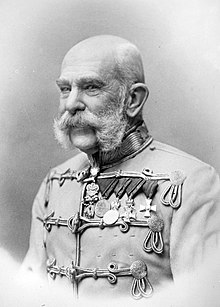
Emperor Franz Joseph I of Austria (Emperor of Austria, King of Hungary 1848-1916)

When the heir to Franz Joseph’s throne, Archduke Francis Ferdinand is assassinated, religious and ethnic difference becomes increasingly disparate and nationalistic. After WWI, it becomes impossible for the empire to stay together, but Vienna remains a cultural and educational center for Europe. It is in this environment that Gödel is born and formally educated.

The culture changed with the death of Emperor Francis Joseph I in 1916. The change began with Austria’s defeat by the German state of Prussia in 1866. Francis Joseph’s leadership required accommodation to hold the empire together, but seeds of discontent and discrimination were sown. The empire’s population is constituted by Austrians, Czechs, Croats, Serbs, Slovenes, and others, with different religious affiliations.

Gödel is an excellent student who attends studies among many who were increasingly discriminated against, particularly Jews. Though not Jewish, Gödel is not infected by growing anti-Jewish sentiment of the times. Budiansky reminds listeners that Hitler grows up in this Austrian Viennese environment.

WWII arrives and the Gödel family falls on hard times. Before the second world war, in 1931, Kurt Gödel develops the “incompleteness theorem” of mathematics. He is only 25. He is soon recognized by leading mathematicians for this foundational theory.

Kurt Gödel developed two theorems of mathematical logic that limit the provability of mathematics. One plus one makes two, but Gödel’s fundamental theories claim its truth is mathematically unprovable. To one steeped in mathematics that may make sense. To this reviewer, it does not.

Budiansky explains how Gödel eventually escapes Vienna at the beginning of WWII. He arrives at Princeton in 1940. Gödel becomes close friends with Einstein and Oskar Morgenstern. Budiansky notes how instrumental other geniuses, like John von-Neumann, were in advancing Gödel’s career.

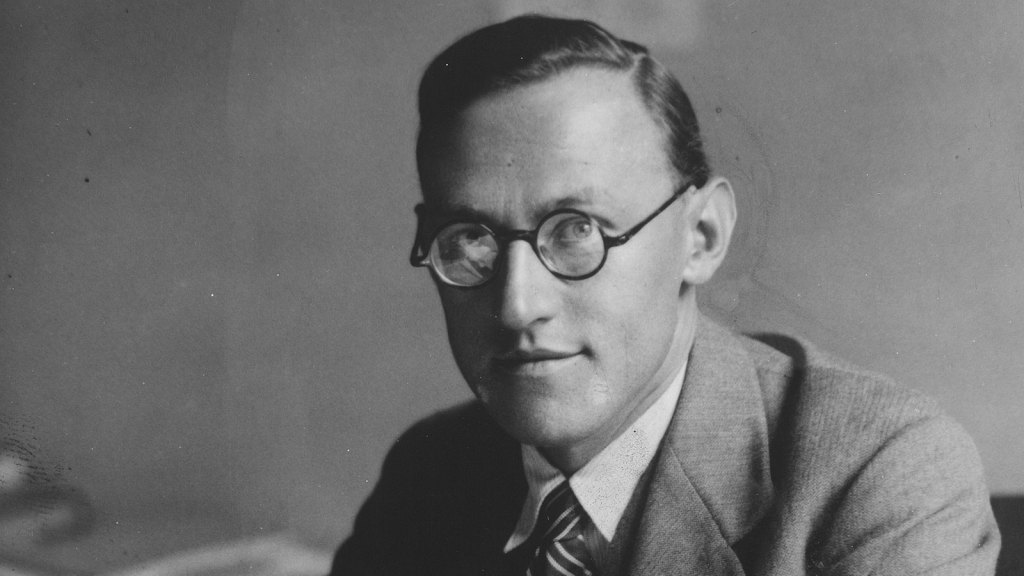
John von Neumann (1903-1957, Hungarian American mathematician, physicist, computer scientist, engineer and polymath with an eidetic memory.)

A striking fact in Budiansky’s biography of Gödel is how many geniuses came to America from the Austro-Hungarian Empire. Without its education system, the Viennese equal opportunity, and the attraction of western freedom, the advance of science and its role in the world would be diminished.

Gödel’s life story revolves around math and its provability limits. Gödel’s life waivers between paranoia and accommodation with periods of terror and intermittent tranquility. Gödel’s paranoia is relieved at times and Budiansky notes his friends recognized his genius while noting his episodic behavioral abnormality.

A listener begins to believe Gödel’s personal life becomes defined by a consciousness of unprovable actions and intentions of others, exacerbated by events over which he has little control.

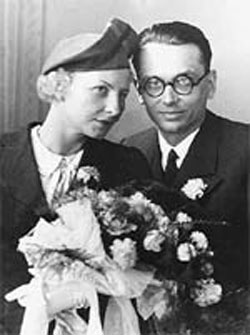
A surprising sidelight to Budiansky’s biography is Gödel’s odd marriage to what Budiansky characterizes as an uneducated Austrian woman named Adele.

Budiansky explains Adele saves Gödel’s life by bringing him back to reality when he nearly starves himself to death with a paranoid belief that someone is trying to poison him.

Gödel takes daily walks with Einstein. Their walks are legendary according to Budiansky.  They were frequently seen together at Princeton. Einstein recognizes Gödel’s paranoia for what it is but acknowledges the brilliance of his understanding of mathematics, its logistic continuity, and its limitation.

There often seems a fine line between genius and normality. One is reminded of the unheralded Paul Dirac who is compared by some to Einstein but, because of his isolationist behavior, is largely unknown to the general public.

As a non-mathematician one may not understand the importance of Gödel’s theory, but Budiansky does a great service to the public by writing Gödel’s biography.

HUMANITY’S FATE

Audio-book Review
           By Chet Yarbrough

(Blog:awalkingdelight)
 Website: chetyarbrough.blog

Superintelligence

By: Nick Bostrom

Narrated by: Napoleon Ryan

Nick Bostrom (Swedish philosopher at University of Oxford, author.)

Nick Bostrom explains the difference between A.I. potential and human brain limitation. With addition of sentient reasoning, Bostrom explains the incomprehensible leap beyond human brain capability with the advent of artificial intelligence.

Bostrom argues A.I. is approaching an information collection and processing capability with potential for sentient reasoning.

That leap can be viewed with fear and trembling as inferred by Bostrom or it might be seen as a next step in human evolution.

Bostrom’s concern revolves around human brain limitation in setting standards for A.I.’ programming.

Science is at a threshold of brain emulation where A.I. may assume the role of human thought and action.

A machine’s ability to recall billions of facts and historical precedence cannot be matched by the human brain. However, the significance of A.I.’s achievement is delimited by how it may be programmed to have moral, ethical, and normative standards that benefit humanity. The difficulty of that programing is humanity’s continual redefinition and lack of agreement on normative standards.

One may ask oneself how good a job has human evolution done in setting standards for humanity? Have authoritarians like Vladimir Putin, and Donald Trump benefited the world?

Bostrom notes two fundamental scenarios for human evolution. Both seem more a return to the past than to the future. Bostrom suggests A.I. will become either an oracle or sovereign leader of humanity. As an oracle, one is reminded of Athenian fealty to the Oracle of Delphi. As sovereign, one is reminded of Augustus Caesar, Caligula, Franklin Roosevelt, and Adolph Hitler. Humanity has survived all–both false predictions of the Oracle and atrocities of sovereigns.

It is unfair to suggest Bostrom is not revealing the difficulties accompanying the introduction of A.I. to humankind. The reality of advancing intelligence through machine learning far outstrips the ability of any singular past or present scientist, philosopher, or politician. One is intimidated by the shear complexity of programing A.I. and its potential for benefit and harm to humanity.

To understand humanities place in the world, human beings cannot agree on what is moral, amoral, equitable, or unfair in society.

How will input from human beings to an oracle or sovereign A.I. escape the imperfect nature of humankind? Added to that difficulty is A.I.’ potential to ignore the best interest of humanity in the interest of its own self-preservation.

Bostrom’s book is interesting, but he beats the idea of A.I.’s ascendance to death by delving into game theory. Bostrom notes the world’s race to create artificial intelligence has the potential of ignoring safeguards for A.I.’s growth and potential for world domination.

Though abandoning safeguards is quite true as evidenced by the Crispr revolution that opened Pandora’s box of genetic manipulation, evolution of species is a fundamental law of the world’s existence.

A.I. is a step in the evolution of species. Its consequence is unknown and cannot be known because it follows the randomness of genetic selection. Humanity needs to get over it and get on with it. A.I. will either be humanity’s savior or its doom.

NIETZSCHE

Audio-book Review
           By Chet Yarbrough

(Blog:awalkingdelight)
 Website: chetyarbrough.blog

When Nietzsche Wept

By: Irvin D. Yalom

Narrated by: Richard Powers

Irvin D. Yalom (Author, Doctor of Medicine, professor of psychiatry at Stanford University.)

“When Nietzsche Wept” was published in 1992. The author Irvin Yalom is now 91 which implies his book was written in his late 50s.

To those who have struggled with understanding Fredrich Nietzsche, Yalom offers brilliant insight to Nietzschean philosophy in a novel set in the formative years of Freudian psychology.

As a psychiatrist by training, Yalom offers insight to the psychology of the male psyche while telling the story of a friendship between Nietzsche and a physician named Josef Breuer.

Interest in philosophy is not essential for appreciating Yalom’s creative mind in “When Nietzsche Wept”. Yalom intersperses historical fact in an imaginative story. Dr. Joseph Breuer is friends with a younger Austrian neurologist named Sigmund Freud. Freud is just beginning to develop his theory of psychological therapy through dialog. Freud’s therapeutic idea is to reveal causes for psychiatric abnormality by talking through the physical and emotional circumstances that lead to psychological imbalance.

Freud’s therapeutic idea is to reveal causes for psychiatric abnormality by talking through the physical and emotional circumstances that lead to psychological imbalance. To Breuer, Freud carries his concept too far by implying a homunculus inside the brain.

What makes Yalom’s story compelling is the opinion given by the author of “talking theory’s” value in psychotherapy. At the same time, Yalom exposes male chauvinism and its harmful societal consequence.

Joseph Breuer (1842-1925, a noted physician in neurophysiology, used the -talking cure- with “Anna O” that laid the foundation of psychoanalysis developed by his protege, Sigmund Freud.)

Josef Breuer is 40 years old. He is married to a beautiful woman. They have children together while Breuer becomes a well-established and renown physician. However, Yalum suggests Breuer is experiencing a mid-life crisis. In his practice, Breuer becomes emotionally attached to a young, beautiful patient who comes to him for treatment of physical discomfort and pain from an unknown cause. When an attack occurs, the patient exhibits pain that is only relieved by physical contact from her attending physician. That physical contact becomes inordinately intimate.

Breuer finds the contact sexually stimulating while clearly understanding it is professionally unacceptable. With his association with Freud, Breuer experiments with talking therapy to ameliorate the patient’s symptoms. He finds the therapy helps but it distorts his objective understanding of patient-doctor relationship.
Breuer begins to believe the patient is becoming emotionally attached to him when she is simply acting out psychologically. In defense against his falsely based infatuation, he assigns the patient to another physician.
In an acting-out psychological way, similar to Breuer’s mistaken perception with his former patient, he is approached by a beautiful 21-year-old woman, a stranger. She asks him to take on a new patient named Fredrich Nietzsche. She explains Nietzsche may commit suicide based on her acquaintance and subsequent rejection of his proposal of marriage. In a sense, Breuer is seduced by his imagination of the beautiful young woman’s approach to him. In fact, the young woman is only acting in accordance with her own agenda.

A listener begins to realize this is a Nietzschean view of the world of human relationship. Every human being has their own agenda. People act in their own self-interest, not in other’s interests. Human self-absorption distorts truth. God is not only dead, but He also never lived. All there is, is one’s will. To Nietzsche, one either becomes a superman or nothing.

Breuer takes Nietzsche as a patient but only on terms acceptable to Nietzsche. Breuer concocts an idea of offering Nietzsche the opportunity to treat Breuer for his mid-life crises. In return, Breuer offers his ministration as a physician. The sessions are based on the undisclosed self-interests of both, rather than the truth of each’s acceptance. What happens is Breuer’s mid-life crises is cured and Nietzsche’s weeping self-realization becomes the story.

This is an over-simplification of a well-crafted novel that has much to say about male egoism, psychotherapy, and inequality of the sexes; not to mention the terrifying implication of Nietzschean philosophy. There is much to unpack in Yalom’s spectacular story.

TRAVELS

Audio-book Review
           By Chet Yarbrough

(Blog:awalkingdelight)
 Website: chetyarbrough.blog

Last Bus to Wisdom

By: Ivan Doig

Narrated by: David Aaron Baker

Ivan Clark Doig (Author, novelist 1939-2015, died at age 75.)

Ivan Doig died in 2015. His last novel, published in 2015, is “Last Bus to Wisdom”. Those of a certain age will remember what it was like to ride a Greyhound bus in the 1950s.

Doig offers a story about an eleven-year-old boy who is compelled by his grandmother’s illness to cross the mid-west alone on a Greyhound bus.

The boy’s name is Donal, aka Donny or Red Chief. His mother and father have died in an auto accident. As one might surmise from Donal’s nick name and his grandmother’s job, he is an imaginative boy with a lot of time on his own while his Gram works. Donal learns something about cowboys, Indians, rodeos, and ranching.

Donal lives with his grandmother who works as a cook on a Montana ranch.

The trip to Wisconsin is memorable for a confrontation with a suitcase thief, a missed bus, a kiss from a waitress, conversation with American Army recruits heading for Korea, a fight with fellow eleven-year-old’s, and Donal’s first meeting with his grandmother’s sister.

When Donal’s Gram falls ill, he is put on a bus to travel from Montana to Wisconsin to be with his grandmother’s sister.

Donal’s stay in Wisconsin is shortened by a falling out with his grandmother’s sister who decides to send him back to Montana with the prospect of being sent to an orphanage.

Donal is rescued by Dutch, the assumed husband of his grandmother’s sister. Dutch is not the husband but a survivor of a shipwrecked cargo vessel that took the life of the actual husband of the sister.

The story of Donal’s travels is a great entertainment but acquiring wisdom is another matter. “Last Bus to Wisdom” is a well-told tale to entertain rather than enlighten. Still, this is a great piece of writing illustrating the talent of a very good novelist.

CHURCH AND STATE

Audio-book Review
           By Chet Yarbrough

(Blog:awalkingdelight)
 Website: chetyarbrough.blog

White Too Long (The Legacy of White Supremacy in American Christianity)

By: Robert Jones

Narrated by: Holter Graham

Robert P. Jones (Author, Founder of Public Religion Institute, Baptist Theological Seminary Graduate, Ph.D. in religion from Emory Univ.)

Though history shows Americans have wavered, freedom (within the limits of rule-of-law) has progressed.

Fundamentally, “White too Long” is about equal rights for all Americans in the face of white privilege and white supremacy. Jones argument is a powerful explanation of how inequality is institutionalized by American Catholic and Protestant religions.

Jones focus is on discrimination against people of color in the south, but his evidence applies to many states-of-affair and every State in America. Raised in the south, born in 1968 and educated as a seminarian, Jones has intimate knowledge of religion and its practice.

Robert Jones reflects on institutionalization of racism by Christian religions in the United States.

Images of Christ as “God’s offspring” are of a white man in most (if not all) Christian religions. Christ is rarely identified as a person of color, or obviously as a woman. God as the Father is presumed by white America to be male and to be white.

It seems fair to say Americans have made progress in reducing racism and improving equal rights, but it has been two steps forward and one back. A basic tenant in the formation of the United States is separation of church and State.

The concern that America had in its beginning is government sanctioning of a particular religion for any state or jurisdiction. To keep that from happening, the Constitution stipulated separation of state and religion.

What Jones focuses on is the south’s history of slavery in “White Too Long”. Jones offers a detailed history of how religion reinforces white supremacy in the South. He argues that southern leaders of various religious denominations assumed beliefs in white supremacy and spread that belief through their religious preaching. They preached to white audiences constituting the bulk of Americans in the first 200 years of American history.

He notes the 2015 murder of 9 Black church members in Charleston S.C. as a turning point for the south. Dylann Roof walks into a Black church and murders the minister and 9 members of the church. Of course, the south is not the only source of white supremacists’ violence against people of color. There is the horrendous “Tops Market” murder of ten non-white citizens in Buffalo N.Y. in 2022 by Payton Gendron.

Jones notes how southern white America justified slavery as their right as a superior race. He recounts numerous stories of his experience in the south and his awakening to the subtle ways white superiority became an assumed right of his white friends. Preachers preached the gospel of white superiority. Jones notes how belief in white superiority became real to white Americans. Any opposition to that belief would be met with violence, before and after the civil war.

Though it is not part of Jones’ book, America’s religions also institutionalize discrimination against women. Like people of color, women of all races are treated unequally. Recent action by the Supreme Court in a woman’s right to choose whether to give birth is a case in point.

The Supreme Court’s decision in “Dobbs v. Jackson Women’s Health Organization” is a step backward from equal opportunity for women in the United States.

Some would say abortion is different because it involves taking a life and not being punished. Is that different than the lives of people of color who have been hung, mutilated, and discarded by white supremacy and not punished? Some would say yes because a baby is innocent. Being innocent and born to a mother who does not care destroys both a mother’s and baby’s innocence. America does not have a good record for taking care of the homeless, let alone poorly cared for children.

In view of Jones education, one presumes Jones would not condone abortion but his argument of religions’ role in institutional racism seems equally applicable to women’s rights. The conservative tone of today’s Supreme Court bodes ill for American equal rights. Separation of church and State is a fundamental tenant of the U.S. Constitution.

Jones has written a damning and enlightening report on white supremacy, and its tacit perpetuation by Christian religions.

The most difficult chapters of Jones book are at its end. When one accepts that America has been “White Too Long”, what can we do about it? The author’s answer is to come to grips with truth, i.e., repent, and offer restitution to descendants of slavery. Jones recalls the story of Cain and Abel and identifies white Americans as the embodiment of Cain.

In Jones belief forgiveness only comes from truth, repentance, and restitution. Most rational white Americans accept the idea of truth and repentance, but restitution is derided by powerful Americans like Mitch McConnell who resist the idea of restitution because it is too difficult to trace descendants of slavery.

One might ask oneself-how difficult is it to offer native Americans restitution for the theft of their land? Reservations, and the right to create income producing properties have been a haphazard solution but they have been steps toward restitution.

Jones suggests some first steps have been taken by organizations that have set up endowments for restitution for slavery’s descendants. He argues, only with restitution can the stain of slavery be removed from the conscience of White America.

While one may ignore the issue of restitution, today’s American Supreme Court encroaches on separation of church and State by choosing to change support for Christian schools and “Roe v. Wade”. Erosion of church and State separation sets a table for more American violence. Unequal treatment cannot be sustained in a world of demographic change.

PULP FICTION

Audio-book Review
           By Chet Yarbrough

(Blog:awalkingdelight)
 Website: chetyarbrough.blog

The Persian Gamble

By: Joel C. Rosenberg

Narrated by: Various

Joel C. Rosenberg (Author of novels, political strategist.)

Two requirements of good fiction are suspension of disbelief and identification with its created characters. For this critic, “The Persian Gamble” does not make the cut. Joel Rosenberg is a popular novelist and his experience as a Middle East strategist for Israel suggests he knows something about counterintelligence. However, “The Persian Gamble” seems implausible and his main character is an odd evangelical that believes the gospel while condoning mayhem.

The writer is purported by some to believe the “end of times” is near because the bible suggests it will begin in the Middle East.

One who is skeptical of organized religion would suggest the bible is about the beginnings of religion, not an inviolable guide to life and humanity’s end. It is no surprise that the bible would suggest the end would come in the Middle East when its religions began in the Middle East.

Rosenberg’s story is in the idea of a political agreement between Iran, North Korea, and Russia to begin a nuclear war.

The Iranian, North Korean, and Russian leaders collude to obscure the origin of a first nuclear strike. At the very least, the implausibility of cooperation between Iran, North Korea and Russia makes the story unbelievable.

To an Iranian mullah, a nuclear strike would be deserved punishment for un-believers. To North Korea, it would demonstrate their power and influence in the world. To Russia it would offer an opportunity for hegemonic control of the world. Iran’s leader agrees to the conspiracy because he is near death and believes all un-believers should join him in death and depart from him to hell. North Korea agrees because their leader wants to punch above its weight. Russia agrees because they want to eliminate hegemonic rivals.

Rosenberg’s hero is Marcus Ryker. Ryker, as most novelist heroes, is unkillable.

He exhibits the ability to fly a jet when his only experience as a pilot is with a propeller-driven plane. The jet he confiscates is shot down while he puts a parachute on himself, grabs a wounded and unconscious CIA agent, and miraculously saves himself and the agent.

To thwart Russia’s plan, a close Russian relation of the President assassinates Russia’s President and Vice President. Ryker, without realizing the President and Vice President were going to be shot, helps the assassin escape. The problem is Russia’s plan is only modified, not stopped. A deal is struck to sell Russian nuclear war heads to Iran at a higher price and on an accelerated time frame. It is unclear what Russian leader is behind the revised plan because the originator of the plan, the assassinated Russian President, is dead.

The nuclear war heads are intercepted at sea by American forces and the transport vessel is sunk before delivery to Iran. Ryker is enlisted by the President of the United States to be a part of the interception. Ryker accepts the President’s enlistment in return for immunity for being an unsanctioned participant in the assassination of Russia’s leaders.

The lack of nation-state objectivity, and the Q-Anon flavor of Rosenberg’s imagination is off-putting. There is so much to know from books and so little time. This time was not well spent.

INTERVENTIONIST FOLLY

Audio-book Review
           By Chet Yarbrough

(Blog:awalkingdelight)
 Website: chetyarbrough.blog

No Good Men Among the Living (America, the Taliban, and the War Through Afghan Eyes)

By: Anand Gopal

Narrated by: Assaf Cohen

Anand Gopal (Author, Journalist, formally embedded with the Taliban in Afghanistan.)

“No Good Men Among the Living” should be read or listened to by Presidents, Senators, Representatives, and Ambassadors of the United States. Anand Gopal gives a journalist eye view of errors and consequences of America’s intervention in Afghanistan where neither language nor culture are understood.

In the beginning of Gopal’s book, one is skeptical of its objectivity. However, as Gopal’s interviews of Afghan Taliban and non-aligned Afghanis accumulate, a listener begins to believe what is being said and reported.

The trials of Afghan women are appalling to Americans. What is missed is the struggle younger Afghan women have with the older generation.

Grandparents are appalled by what they perceive is abandonment of a life of duty to Allah and men in their families, whether fathers, husbands, or sons. This duty is based on generations of a culture that protect the tradition of male and female relationship. That protection is anathema to freedom, which is an inviolable tradition in America, but not Afghanistan.

The experience of Russian intervention and American training of the mujahideen led to a culture of non-Islamic terrorism.

The violence of interventionist states and training of mujahideen became fertile ground for Taliban revitalization. Violence, repression, and religious zealotry became tools of Taliban growth, resistance, ascendance, and resurgence.

Gopal notes Afghani women were raped and killed by American trained Mujahadeen after Russia was expelled. The Taliban restored order. Later, when America chose to dismantle the Taliban because of the Afghanistan leader’s refusal to release bin Laden, Afghanis began to see America as a new occupier rather than liberator.

Afghanis began to see America as a new occupier rather than liberator. The Taliban secretly regained power and influence as the perception of America’s intervention changed.

The cause of the change in perception of America as an occupier grew because of its dependence on self-interested tribal Afghanis who used American forces to eliminate rivals. All a respected Afghani translator had to do was identify a rival as a Taliban ally. America would arrest, jail, or kill the translator’s rival.

America presumes it is helping rid Afghanistan of Taliban control when in fact it is only serving a translator who has a tribal self-interest.

Internecine tribal conflict in Afghanistan creates an all-against-all culture with survival of the fittest as an objective assuring Taliban resurgence. The Taliban could maintain a level of peace and relative stability between tribes; America could not. America’s lack of understanding Afghan culture and American dependence on self-interested translators assures its failure.

America’s ignominious Afghan abandonment is a tragedy for both countries.

The fault lies with America’s failure to define a limited objective, execute a plan, and leave when a defined objective is achieved. It is unrealistic to believe an interventionist country can understand another country’s culture well enough to offer benefit to both invader and invaded.

The sad consequence from America’s view is that women will continue to be suppressed in Afghanistan.

There is a slender hope drawn from Gopal’s interviews of a young Afghan woman. She becomes a regional representative in Afghanistan despite the murder of her husband by the Taliban. She is supported by a tribal leader who respects her independence. The road traveled by women in Afghanistan is certainly more difficult now that America has left, but Gopal shows there is a road. However, Gopal infers help can only come from those who understand the culture in which they live.

Without a precise and achievable interventionist objective and an immediate withdrawal plan, military intervention historically leads to national tragedy, both for perpetrator and victim.

With the qualified exception of Korea, America’s interventions in Vietnam, Iraq, and Afghanistan are national tragedies for both interventionist and subject nations. Today’s contest is in Ukraine with Russia, once again, testing intervention.

FREEDOM’S LIMITS

Audio-book Review
           By Chet Yarbrough

(Blog:awalkingdelight)
 Website: chetyarbrough.blog

Let Them Eat Tweets: How the Right Rules in an Age of Extreme Inequality

By: Jacob S. Hacker, Paul Pierson

Narrated by: Peter Berkrot

One doubts this book will be read or listened to by most Americans based on its clear allusion to the 18th century phrase “Qu’ils mangent de la brioche” (“let them eat bread”–allegedly said by Marie Antoinette during the French revolution).

Marie Antoinette (1755-1793, Louis XVI’s Queen Consort of France.)

Just as Marie Antoinette is unlikely to have said “Qu’ils mangent de la brioche”, it is an allusion unworthy of Hacker’s and Pierson’s ivory-tower educations.

The co-authors detail a current crisis in America that is well detailed by others in this century.

There is an appalling and growing gap between rich and poor in America. However, though the gap is real, most rational Americans have no interest in beggaring their neighbor.

In the 17th century, Hobbes clearly recognized the pitfall of democracy when not constrained by rule of law. Freedom is a harsh master and has been recognized as such from American Democracy’s beginnings.

Human beings are driven by the desire for money, power, and prestige. Hacker and Pierson note many actions taken by American politicians, appointees, government bureaucrats, and corporate moguls have had the unintended consequence of beggaring their neighbors.

Rule of law has simply not kept up with the fundamental tenant of American freedom.

Four relevant issues raised by Hacker and Pierson are

  1. Taxation,

Congressional leaders focus on re-election as a part of their right to freely choose a profession. To be re-elected requires a campaign funding. That funding largely comes from wealthy Americans and corporations interested in reducing their taxes. Corporate taxes have been legislatively reduced with the rationalization that reinvestment by private industry and the wealthy will create more income for wage-dependent Americans. This is “trickle down” economics that is a fiction. History shows the effect has been to reduce American wages and increase income for the wealthy.

2. Rule-of-Law,

Corporations in the Supreme Court’s decision in “Citizens United v. Federal Election Commission” expanded rights of Corporations as individuals to finance candidates of their choice that compounds elected official bias for reduced corporate taxes.

3. Extremism,

Frustration by the rising gap between rich and poor in America increases extremism because wage-earners see cost-of-living exceeding their ability to accumulate wealth.

4. Institutionalization of Tyranny

Elective office is not serving the public because congressional self-interest is based on a cycle of re-election dependent on wealthy donors who are equally self-interested.

Unless or until a more equitable relationship between the rich and poor is achieved, extremism will continue to roil American Democracy. Freedom is an essential ingredient in America’s economic history, but freedom has always been limited. Only with rebalance between the rich and poor will extremism and institutional tyranny be ameliorated.

ISLAM

Audio-book Review
           By Chet Yarbrough

(Blog:awalkingdelight)
 Website: chetyarbrough.blog

God’s Shadow (Sultan Selim, His Ottoman Empire, and the Making of the Modern World)

By: Alan Mikhail

Narrated by: James Cameron Stewart

Alan Mikhail (Author, Chace Family Professor of History, Chair Dept. of History at Yale.)

Alan Mikhails’s “God’s Shadow” speculates on the historic impact of the Ottoman Empire on the rise of the Islamic religion and its conflict with Christianity. His book is well received by the public but panned by some who believe Mikhail’s scholarship is more speculative than factual. That criticism seems well earned when the last chapter of Mikahail’s book summarizes his opinion about Islam’s past and future.

What is surprising to this reviewer is not Mikhails’s speculation about Islam’s future but his failure to explore Ottoman history’s success in diminishing Shite Muslim growth while hugely increasing Sunni Muslim Islamic influence.

When Muhammed, the founder of Islam, dies, he leaves no heir to Allah’s teaching. In not leaving an heir, a split occurs between those who argue only a direct descendant of Muhammed, not a mere follower, can be a leader of the faith.

Shite Muslims believe an heir to Muhammed’s leadership can only be to a male descendant of the Muhammed’ family. Sunni’s argue Islamic leadership is based on any man who demonstrates success and ability to spread the faith.

It is estimated that 85% to 90% of religious believers in the Islamic faith are Sunni. Only Iran and Iraq have a Shite majority while other nation-states are principally Sunni.

Sultan Bayezid II (1447-1512, reign 1481-1512.)

The spread of the Muslim religion is laid at the feet of Sultan Selim I. He is one of the sons of Sultan Bayezid II who gains control of what is known as the Ottoman Empire.

“God’s Shadow” recounts the rise of the Ottoman Empire which is the primary cause of Sunni growth in the Middle East. A major part of Mikhail’s book is about Selim I because he is the leader that conquers and combines most of the Muslim world into the Ottoman Empire.

An interesting opinion of Mikhail is the role of harems in the Islamic world. He argues male heirs are a primary function of the harem. Once a male is born to a concubine of a Sultan, Mikhail suggests further conjugal relations cease. Every born male is a potential Sultan.

This naturally leads to a competition and often death of male heirs who are chosen by the acting Sultan to be his replacement. “God’s Shadow” tells the history of a younger son who disagrees with Sultan Bayezid II’s choice and successfully replaces that choice by force. Selim I ascends the throne of Sultan despite his father’s choice of heir. Selim’s road to hegemonic Sultan is through the conquering of nations beyond Istanbul and the Balkans, to Hungary on the north, Egypt on the south, Algeria on the west, and Iraq on the East.

Selim I (1470-1520, 9th Sultan of the Ottoman Empire-reigned from April 1512-September 1520.)

An apocryphal story told by Mikhail is that, in the earlier years of Selim I’s conquests, he is presented a colored map of the then-known world that shows nations beyond the Ottoman Empire. Selim I  tears the map in half because he is satisfied with what he has done. Mikhail notes that incident occurs in Selim’s earlier years because when a later map shows the Americas, Selim suggests more is to be done. A fundamental argument made by Mikhail is that the growth of the Ottoman Empire is the precursor of modern governance.

In the final chapter of Mikhail’s book, a step beyond reason or history is taken. Mikhail posits Selim’s reign and the rise of the Islamic religion presages future dominance of Islam in the world. He argues by 2070 Islam will be the dominant religion of the world. That seems hyperbolic when the role of religion in the world is arguably in decline. Mikhail compounds hyperbola by suggesting the world’s reaction to Islam has been a foil to create Christian and democratic nations. The growth of Christianity and democracy are patently more than a reaction to the religion of Islam.

This is an unfortunate digression for Mikhail because he makes a good historical case for the Islamic religion’s tolerance of other faiths in the face of historically murderous Catholic Crusades. On the other hand, many atrocities accompany Selim I’s expansion of the Ottoman Empire. Mikhail notes Selim’s soldiers are compensated by plunder and rape when ordered to invade new territories. And of course, there is the faction of the Muslim faith that carried out the death of over 2,000 people on 9/11/21 in America.

Interestingly, Mikhail offers an encomium to President Erdogan in Turkey by praising him for resurrecting the legend of Selim I in a bridge dedication.

Erdogan is revivifying the Islamic religion in Turkey even though its history was dramatically changed by Ataturk who turned Turkey into a secular rather than Islamic state.

2023 is an important year for Erdogan. He has been President of Turkey since 2014. Some suggest the recent earthquake in Turkey jeopardizes his re-election. To an outsider, it seems Erdogan has reversed some of the secular drive of Ataturk by increasing Islamic influence in governance.

President Erdogan has made his voice heard in the West by initially voting against Sweden’s bid to join NATO. Sweden has been a haven for the PKK, which Turkey characterizes as a terrorist organization that aided an attempt to overthrow the Turkish government in 2016. Sweden’s legislature is voting on March 9, 2023, on a measure that would prohibit recruitment and financing of the PKK in Sweden. One wonders, if that will change Turkey’s “no” vote for Sweden to join NATO.

Erdogan seems an odd choice for comparison to Selim I’s Islamic reign based on a personal perception of this critic’s visit to Turkey. Erdogan seems much less a revered leader by the public than Ataturk, let alone Selim I depicted in “God’s Shadow”.