VACUITY

Audio-book Review
 By Chet Yarbrough

Blog: awalkingdelight)
 Website: chetyarbrough.blog

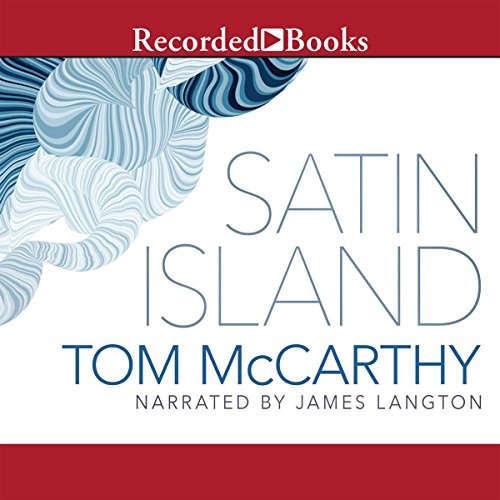
Satin Island

By: Tom McCarthy

Narrated by: James Langton

(Tom McCarthy, British Novelist, Nominated for the Booker Prize twice, One of which was for “Satin Island”.)

To this listener, “Satin Island” is an intellectual journey to nowhere. Obviously, others who determined McCarthy should be nominated for a Booker Prize for “Satin Island” disagree. Anthropology is the scientific study of human behavior, cultures, societies, and languages of the past.

Tom McCarthy seems to have sat at a desk and thought of an idea to write about, i.e., namely anthropology.

McCarthy’s main character is an anthropologist working for a fictional think tank that analyzes companies wishing to have some insight to an unknown future. His employer gives the anthropologist an assignment to write a paper that capsulizes the world’s future based on an understanding of the past and known present.

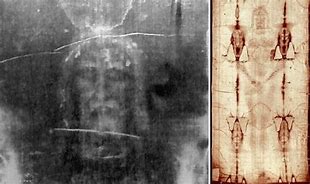
McCarthy’s story begins in Turin Italy with a brief explanation of the shroud of Turin which is alleged to have been wrapped around Jesus’s body after crucifixion.

The shroud could never have had the imprint of the remains of Jesus. The anthropologist notes it is proven fake because the shroud’s fabric is manufactured centuries after Christ’s crucifixion. The fake of the shroud is an inartful premonition to the course of the story.

The anthropologist’s assignment is a fool’s errand.

Whatever he writes in his report will be like the shroud of Turin. McCarthy tirelessly offers a series of vignettes to reinforce his message. A singular insight that one finds in McCarthy’s story is that anthropology is a science split into two disciplines. One is the acquisition of artifacts that tell an anthropologists’ interpretive story and two, anthropology is a search for written records and interviewed descendants that have first hand recollection of their ancestors’ societies. The first is clouded by interpretation. The second is clouded by understanding of language and descendants’ memories.

A recuring mystery in McCarthy’s story is of a parachutist that dies from a failed, presumably silk (like satin), parachute with nylon strings that were purposely cut.

The nylon strings holding the parachute are the threads of life’s history, like the fabric of the Shroud of Turin, and/or artifacts left for an anthropologist’s interpretation. McCarthy notes the cause of death may have been murder but it might have been suicide. Suspects are arrested. No one is convicted. The person who died is not suicidal. It becomes another mystery of the past.

The anthropologist realizes the report requested by his employer can be based on whatever he chooses to write. He begins to believe his report can be written and widely believed like the story of the shroud of Turin.

The story ends with the death of the owner who hired the anthropologist. The irony of the story is that the anthropologist is widely acclaimed for his final report meant to tell the future of life when he knows his story is like the shroud of Turin.

To this listener, there is too much intellectualism and not enough story. That may be why it did not win the Booker Prize. That is reason enough to me.

COWBOY TALES

Audio-book Review
By Chet Yarbrough

(Blog:awalkingdelight)
Website: chetyarbrough.blog

The Trail to Crazy Man

By: Louis L’Amour

Narrated by: Jim Gough, Christopher Lane

Louis L’Amour (LaMoore) (1908-1988, Author.)

Louis L’Amour has been gone for many years but “The Tale of Crazy Man” is a good introduction to an entertaining storyteller.  L’Amour tells two short stories. Christopher Lane’s narration and twists of the second story make it the better of the two, but L’Amour’s skill pleases reader/listeners in both.

Recalling L’Amour’s Sackett family saga (seventeen stories) makes a reader/listener appreciate cowboy tales where honest, upright heroes always win.  

L’Amour’s stories are of an idealized American west where good always overcomes evil.  Though his heroes are preternaturally perfect, L’Amour satisfies a human desire for wholesomeness.

The first story in “The Trail..” is about a wild west gang leader’s adopted son who is to take over his criminal empire.  L’Amour infers the putative father lives in the American west when only the strong survive by being the most ruthless in the era in which they live.  The adopted son is shielded from that early western belief by being formally educated while being taught to be a great tracker who is fast and accurate with a gun.  As the father grows older, he grooms his adopted son to takeover the gang and a ranch that covers a wide area of the country.

The adopted son chooses not to follow his mentor’s outlaw ways. L’Amour implies the west is evolving, with education making a difference. By the end of the story, the father appears reconciled to the change. The adopted son seems destined to make future use of the former outlaw’s acquired wealth for peace and an improved society.

The second tale is about two cowboys that have been drugged and indentured by a tyrannical sea captain docked in San Francisco.  One cowboy dies on the ship with a commitment from the other cowboy to take care of his wife and daughter who he left in Wyoming. Before being highjacked, the dying cowboy had gone to San Francisco to pay off a mortgager on the ranch on which his wife and daughter were living.

When the deceased cowboy’s friend and some fellow captives escape their indenture, two of the cowboys stay together to travel from the west coast to Wyoming to fulfill the dead father’s last wish.  What the friends find is a small town, in which the wife and daughter live, is controlled by two men.  One of the men is the mortgage lender that had been paid off. He pocketed the payment without telling the wife and daughter that the mortgage had been paid. Then, he arranged for the dead father’s kidnapping by the San Francisco Sea captain. 

These two town leaders are evil men but their evilness is different.  One is an uneducated thug who relies on violence to control the town.  The other is an educated thug who relies on stealth and cleverness to control the town.  The two thugs do not like each other but are partners in control of the town. 

The deceased father’s wife is dead.  The educated thug plans to marry the daughter who views the lying mortgage lender as a benefactor by not foreclosing on their ranch.  The uneducated thug plans to take the daughter by force. There are several plots in this second short story.    Both thugs are indirectly and directly dealt with by the cowboy who had made the commitment to the deceased father.

L’Amour writes with clarity and concreteness.  His stories are simple allegorical tales about good and evil.  They are wonderfully entertaining and leave one happy with the thought that good always overcomes evil.

WRITING

Audio-book Review
By Chet Yarbrough
(Blog:awalkingdelight)
Website: chetyarbrough.blog

Stein on Writing
By Sol Stein
Narrated by Christopher Lane

Sol Stein (Author, Publisher, and Editor-in-Chief for Stein and Day Publishers)

Sol Stein’s book offers a road map to readers and writers. In reviewing books, one begins to understand what makes one better than another. One also realizes how much easier it is to be critical than objective about those who write..

Readers/Listeners/Writers will find the crossroads of commercial and literary success in “Stein on Writing”. Not all literary classics are commercially successful and not all commercially successful books are literary classics.

Stein’s book is a writer’s road map. Stein’s map reveals where a story begins, which roads to follow, and where a story ends. He explains how to write action-ably.

Writers that follow Stein’s map see the highways and streets of writing a good story. An interpretation of what Stein explains would be: Do not write “he was upset”, write, “He hurled an ash tray through a living room window, sprinkling wet shards of glass across a brown patch of grass”.

The first line, “he was upset” is vague. It tells the reader what to think. The second line, “He hurled an ashtray…”, lets a reader come to their own conclusion. It makes the reader decide about a character’s mood. It offers a scene that stimulates a reader’s imagination.

The action of the line above uses what Stein calls “particularity” to focus a reader’s attention. The scene offers clues about a character’s life (an ashtray and a brown patch of grass). The value of using “particularity” sparks interest in knowing more about the ash tray thrower.

Sol notes that a good writer is emoting readers. A good writer wants the reader to feel a character’s emotion. To Stein, a good writer does not tell the reader what to think. Stein wants the writer to make the reader feel what the character feels. On Stein’s map, this is the beginning of good story telling.

Think about Charles Dickens and “David Copperfield” and how a reader becomes invested in David’s life; i.e. how David’s sad and happy feelings invest in the reader’s emotions.

Stein acknowledges some writing details may be lost in commercially successful books but no highways and few streets are lost by a great writer. Interestingly, Stein suggests the techniques of commercially successful and literary writers are the same.

  1. A cohesive theme ties a story together.
  2. The use of particularity provides a trail of clues to a story’s theme.
  3. The use of suspense draws a reader deeper into a story.

Stein notes differences between commercial and literary writing appear in accurate use of language, in universal emotive qualities of story, and in insight to human nature. However, Stein argues that a commercially successful book can miss many of these characteristics; while a classic misses few.

Stein explains the craft of writing is a store owner’s job; always there because he/she owns the business.

  • Write every day.
  • Rewrite every day.
  • Use the dictionary.
  • Use the thesaurus.
  • Look for the perfect word that precisely defines the meaning of the idea.
  • Strive for perfection by finding the right hook to begin a report, a book, or story; keep striving with each paragraph.

Stein offers more and says it better.  This is a book for the reference shelf; to be read; to be listened to; again and again.