GOLDEN GOOSE

Audio-book Review
By Chet Yarbrough

(Blog:awalkingdelight)
Website: chetyarbrough.blog

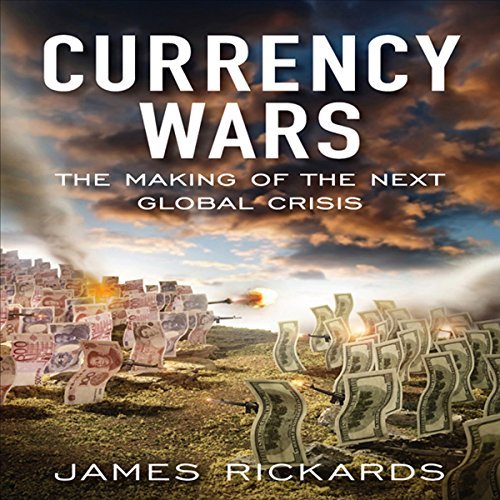
Currency Wars

By James Rickards

Narrated by Walter Dixon
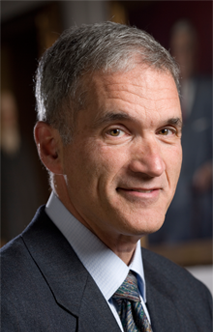
JAMES RICKARDS (AUTHOR, LAWYER, ECONOMIST)

JAMES RICKARDS (AUTHOR, LAWYER, ECONOMIST)

This is a disturbing book because it brings a wolf to the door.  The wolf may blow your house down whether it is made of brick or straw.

Herman Cain (Previous Presidential candidate, Tea Party Activist who believes in returning to a gold standard for the American dollar. Most recently, President Trump tried, unsuccessfully, to have Cain appointed to the Federal Reserve Board.)

President Trump’s harangue about the independence of the Federal Reserve is old news. Packing the Federal Reserve has been done before. The selection of Herman Cain reflects on an Executive branch that lives in the past.

James Rickards infers the sky is falling because we are in a war that cannot be won without returning the American dollar to a gold standard.  The argument is that returning to a gold standard will create a level playing field for currency that will stabilize the economy and break down barriers to free trade; i.e. not free trade exactly but regulated trade.  Somehow, currency backed up by gold will be more stable than the full faith and credit of a government—really?

TRUMP & TRADE

What is roiling the market today is a trade war; not currency manipulation.

Gold was over $1600 per ounce when Rickards was published.  It ranged between $1529 and $1800 per ounce since this was published.  Without a fixed standard, Rickards argues national economic security is at risk.  Rickards argues that America has fought two currency wars in its history and is now in the middle of its third war, using weapons that cannot defend America in a currency war. 

WORLD TRADE

America is part of a world market; not a singular self-sufficient economic island. 

Trade wars between nations is twentieth century thinking.  World interconnection through travel, media, and education demand constructive cooperation between nation-state economies.  It is economic improvement of all nations that makes each nation stronger.  As national economies improve, free trade flourishes.  It is a waste of human life to engage in restrictive trade policies or artificial standards of value like gold.

BEN BERNANKE (CHAIRMAN OF THE FEDERAL RESERVE 2006-2014)

BEN BERNANKE (CHAIRMAN OF THE FEDERAL RESERVE 2006-2014)

Rickards believes Bernanke, in 2012-13, misreads a primary cause of the depression.  Rickards believes Bernanke is steering the U.S.’ economy into a ditch.  He argues that “quantitative easing” is a road to hyper-inflation and economic calamity because it artificially stimulates the economy with newly printed money that has no intrinsic value.

Rickards goes on to suggest the Euro crises are examples of currency instability and the unpredictability of many battles being fought in the currency wars.  His assessment is that political interests of China and Germany are the only glue that keeps countries like Greece from economic collapse.

Rickards is an attorney and an economist.  That makes him capable of structuring an argument about the economy with more credibility than a bumbling blogger.  However, to this bumbler, Rickards’ arguments are specious.

First, other economists disagree with Rickard’s considered argument about the gold standard, Ben Bernanke for one.  Second, what evidence is there that one country’s decision to return to a gold standard will reduce economic conflict among nations?   Finally, history shows Rickards to be wrong in terms of America being steered into a ditch.  One can reasonably argue that Bernanke’s, Geithner’s, and Paulson’s actions kept America out of a ditch.

In contrast, it appears President Trump may be steering the American economy into an economic ditch.
CURRENCY WAR

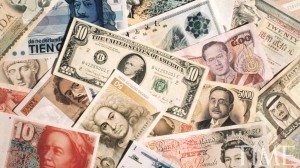
Countries are run by different government philosophies, different national interests, and rely on different economic resources—how will creating a gold standard for currency in one country or all countries reduce conflicting self-interests?  The currency war will not be changed with a return to the gold standard, i.e., currency wars will continue and evolve based on whatever standard is used for currency to determine value.

The gold standard is not a magic bean that can be exchanged for a milk cow.  There is no bean stock to golden egg land.
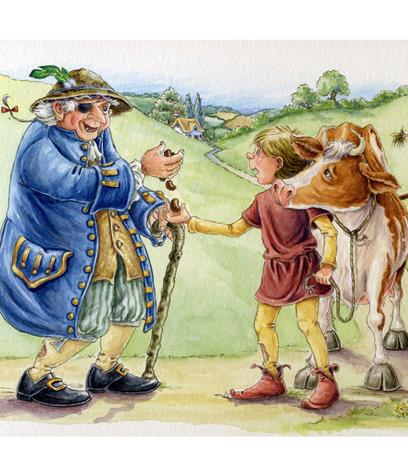
MAGIC BEAN FOR A COW

Geo-political thinking and self-interest do not change because of a gold pegged American dollar.  Currency conflicts will not disappear, i.e., they will re-set to commodity wars, or maybe bitcoin wars.  America is as capable as any post-industrial nation to compete on that basis.

Rickards observes the trillion-dollar American Treasury bill hoard held by China and sees the sword of Damocles raised to slice America’s neck.  Why would Jack want to kill the goose that lays the golden eggs?  America is “Mr. and Mrs. Consumer” on steroids.

DONALD TRUMP (REPUBLICAN NOMINEE FOR PRESIDENT OF THE U.S. 2016)
AMERICA’S BULLY

Currency wars are real, but America has fought them before with results that have made it the bully of the world.  Maybe America needs to learn how to be a little humbler rather than gamble on a currency play or trade war that has as much chance of causing as curing world economic collapse.

Consumption is threatening humanity.  Human resource should be deployed to improve living standards of all people, but economies that strictly focus on consumption are killing the golden goose.

Work on the environment is truly an improvement that “lifts all boats”.  Better waste management, clean water, clean air, and education are investments with infinite returns.  Wars of any kind between nations is twentieth century thinking.

SUDAN’S RELEVANCE

Audio-book Review
By Chet Yarbrough

(Blog:awalkingdelight)
Website: chetyarbrough.blog

What Is the What

By: Dave Eggers

Narrated by Dion Graham

As Ronald Reagan famously said in his successful campaign against Jimmy Carter, “There you go again”.

Dave Eggers writes another book about a tragic human event. However, Eggers avoids character controversy like that which followed “Zeitoun”, a story about the Katrina disaster.

Eggers classifies “What Is the What” as a novel, without any claim to source-vetted facts or the integrity of its primary character.

SUDAN IN THE WORLD

SUDAN IN THE WORLD 

“What Is the What” is about Sudan and its 20th century genocidal history. This is a story of the complex religious, ethnic, and moral conflict that exists in Sudan and in all nations peopled by extremes of wealth and poverty.

“What Is the What” is a tautology exemplified by a story of one who has something, knows it, and another that has nothing, and knows not why. 

Valentino Achak Deng, the hero of Eggar’s story, tells of his father. Achak’s father explains the story of “What is the What”.

God offers man a choice of cows or something called the What.  God asks, “Do you want the cows or the What? 

But, man asks, “What is the What”?  God says, “The What is for you to decide.” 

Achak’s father explains that with cows a man has something; he learns how to care for something; becomes a good caretaker of a life-sustaining something, but a man who has no cows has nothing, learns nothing about caring; and only becomes a taker of other’s something.

By mixing truth with fiction, Eggers cleverly reveals the story of Sudan’s “lost boys”, refugees from the murderous regime of President Al-Bashir in Sudan.  At every turn, Achak is faced with hard choices. 

Omar Al-Bashir is deposed in April 2019 after almost 30 years in power.

Omar Al-Bashir, a Muslim Sudanese military leader who becomes President, releases dogs of war by condoning the rape and pillage of indigenous Sudanese by Muslim extremists.  It is partly a religious war of Muslims against Christians but, more fundamentally, it is about greed.

Greed is engendered by oil reserves found in southern Sudan in 1978.  Bashir strikes a match that ignites a guerrilla war.  Eggers reveals the consequence of that war in the story of Achak, one of thousands of lost boys that fled Sudan when their parents were robbed, raped, and murdered.  Bashir’s intent was to rid Sudan of an ethnic minority that held lands in southern Sudan.

Eggers cleverly begins his story with Achak being robbed in Atlanta, Georgia.  But, this is America; not Sudan.

Robbers knock on Achak’s door with a request to use his telephone.  Achak is pistol whipped, tied, and trapped in his apartment while his and his roommate’s goods are stolen.

There is much to be taken from the apartment.  The robbers leave a young boy to guard Achak while they leave to get a larger vehicle to remove the stolen goods.

SUDAN'S LOST BOYS

Achak identifies with the young boy.  Achak recalls his life in Sudan and his escape to America; i.e.the  land of the free; the land of opportunity.  Achak sees the young boy as himself, victimized by life’s circumstances, hardened by poverty, and mired in the “What” (the takers of other’s something).

Eggers continues to juxtapose the consequence of poverty and powerlessness in Atlanta with Achak’s experience in Sudan. Achak’s roommate returns to the apartment to find Achak tied and gagged in an emptied apartment.  He releases Achak.

They call the police to report the robbery and assault.  An officer arrives to investigate.  The police officer listens, takes brief notes, offers no hope for the victims, and leaves; i.e., just another case of poor people being victimized by poor people.

The episode reminds one of the Sudanese government’s abandonment of the “lost boys”.  They are citizens governed by leaders who look to rule-of-law for the rich, and powerful; not the  poor and powerless.  They are leaders of the “what” (takers of other’s something); rather than leaders of all citizens.

Crowded emergency room waiting area.

Achak has been injured in the robbery.  He goes to a hospital emergency room for help.  Achak waits for nine hours to be seen by a radiologist.  He presumes it is because he has no insurance but it is really because he has no power. 

He has enough money to pay for treatment but without insurance, this emergency room puts Achak on a “when we can get around to it” list.  The doctor who can read the radiology film is not due for another three hours; presumably when his regular work day begins.  Achak waits for eleven hours and finally decides to leave.  It is 3:00 am and he has to be at work at 5:30 am.

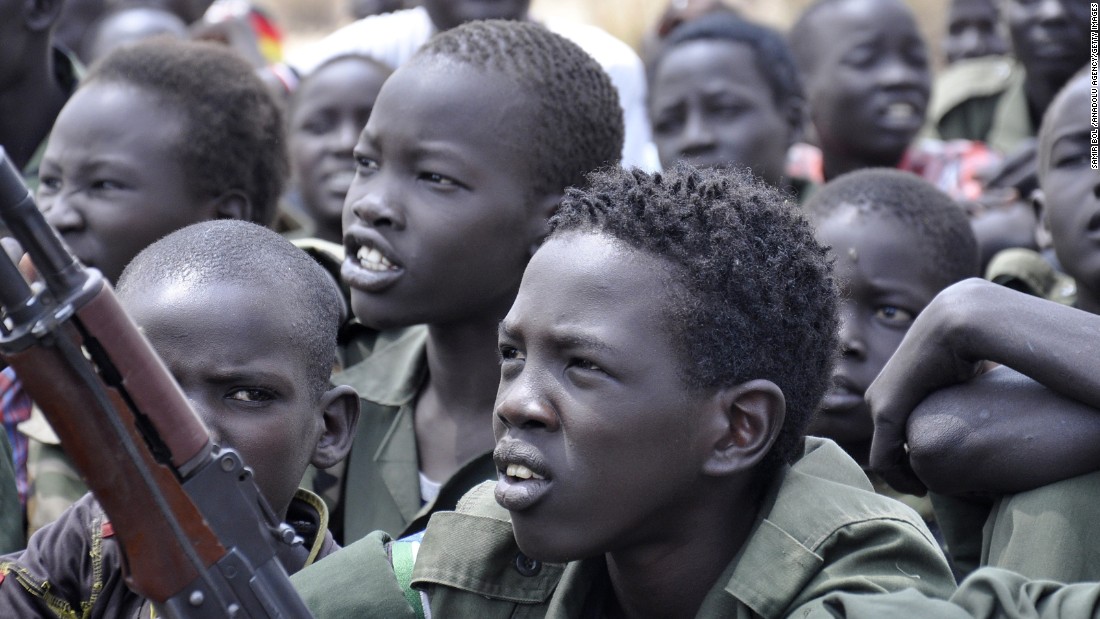
As Achak waits for the doctor he remembers his experience in Sudan.  When the Muslim extremists first attack his village, many boys of his village, and surrounding villages are orphaned.  These orphans have nowhere to go.  By plan or circumstance the lost boys are assembled by a leader who has the outward-appearing objective of protecting the children.  The reality of the “what” (takers of other’s something) raises its head when the children are recruited by this leader for the “red army” of South Sudan (aka SPLA or Sudan People’s Liberation Army).

SUDAN'S BOY ARMY

The reality of the “what” (takers of other’s something) raises its head when Sudanese children are recruited by this leader for the “red army” of South Sudan (aka SPLA or Sudan People’s Liberation Army).

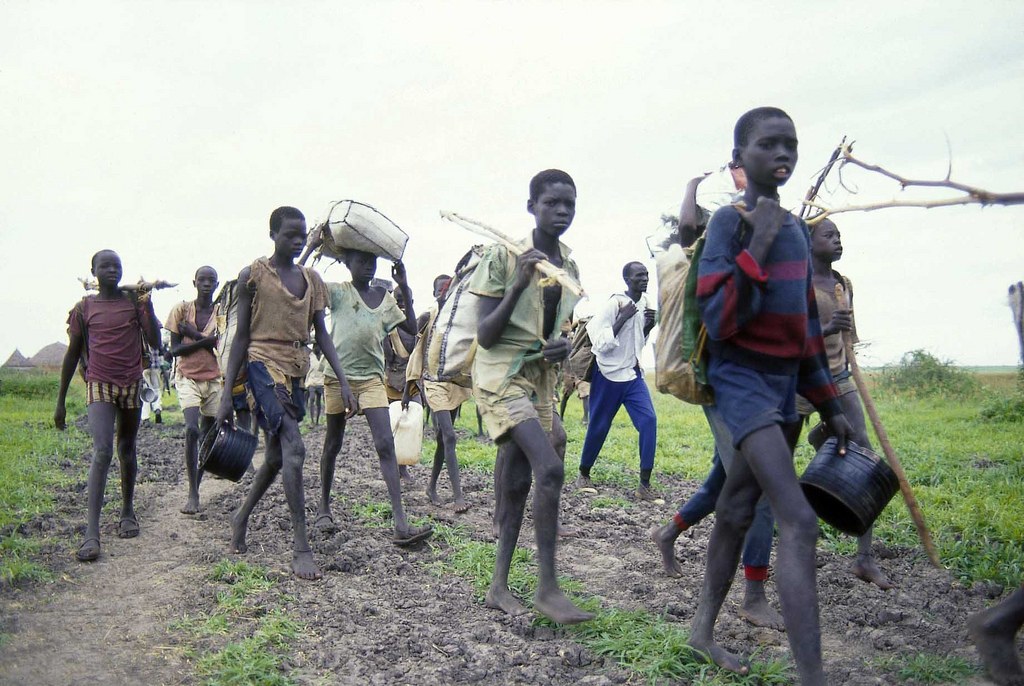
SUDAN'S 700 MILE WALK

These are boys of 8, 9, 10, 11 years of age.  This army-of-recruits begins a march from South Sudan to Ethiopia, a journey of over 700 miles, gathering more orphans as they travel across Sudan.  Along the way, they become food for lions, and crocodiles; they are reviled as outsiders by frightened villagers and, unbeknownst to Achak and many of the boys—they are meant to become seeds of a revolution to overthrow Al-Bashir’s repressive government.  These children are to be educated and trained in Ethiopia to fight for the independence of South Sudan.  They are led by leaders of the “what” (takers of other’s something).

The lost boys are victims of believers in the “what”.  Achak and other Sudanese’ refugees walk, run, and swim a river to arrive in Kenya, hundreds of miles south of Ethiopia.  Some Sudanese were shot by Ethiopians; some were eaten by crocodiles; some died from disease and starvation.

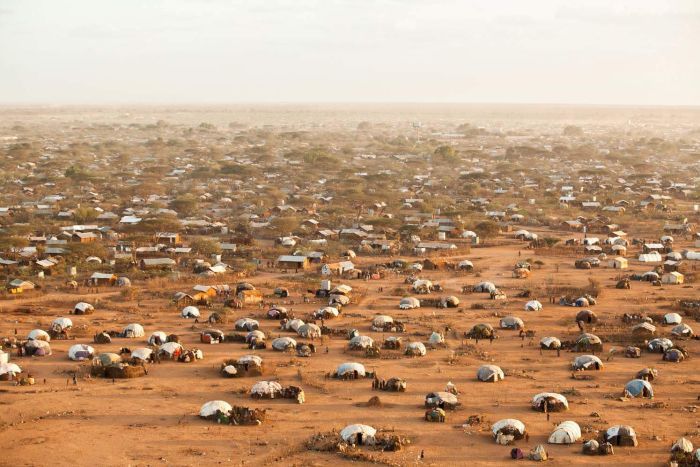
KENYA'S REFUGEE CAMP

Then, in 1991, Ethiopia’s government changes.  The lost boys, a part of an estimated 20,000 Sudanese’ refugees, are forcibly ejected by the new government.

The Sudanese’ refugees arrive in Kakuma, Kenya.  Achak says Kakuma is a Swahili word for “nowhere”.  In 1992, it becomes home to an estimated 138,000 refugees who fled from several different warring African nations.  The SPLA remains a part of the refugee camp but their recruiting activity is mitigated in this new environment.  The camp is somewhat better organized but meals are limited to one per day with disease and wild animals as ever-present dangers.  Education classes are supported by Kenya, Japan, and the United Nations to help refugees manage themselves and escape their past.

Achak survives these ordeals and reflects on his unhappiness in Atlanta, Georgia.  Achak clearly acknowledges how much better living in America is than living in Africa. However, Achak makes the wry suggestion that Sudanese settlement in America changed his countrymen from abusers to killers of their women.

He suggests Sudanese killing of their women is because of freedom.  He explains freedom exercised by women in America is missing in Sudan.  In Sudan, Sudanese women would not think of doing something contrary to wishes of their husbands.  Achak infers Sudanese women adapt to freedom while Sudanese men feel emasculated.  The emasculation leads to deadly force in Sudanese families; a deadly force that includes murder of wives or girlfriends and suicide by male companions.

AMERICAN DREAM

Eggers successfully and artistically reveals the tragedy of Sudan.  Cultural and religious conflict in the world and American freedom are called into question.  The cultural belief of parts of the Middle East, Africa, and America drive Achak from nation to nation.  Achak, despite misgivings, appears to love America.  But, American democracy is no utopia. Achak realizes no system of government is perfect.  His ambition is to educate himself and his home country.  Achak realizes education is the key to a life well lived.

What is the What?  Ironically, it is more than cows; it is education that combats cultural ignorance and celebrates freedom and equal opportunity for all.

Eggers story implies America needs to re-think its policy on immigration.  We are a nation of immigrants.  Achak’s story highlights what is wrong with America and other parts of the world.  But it also shows the “what” (“the ‘what’ that is for you to decide”) can be made better because it is more than cows.

ORGANIZED RELIGION

Audio-book Review
By Chet Yarbrough

(Blog:awalkingdelight)
Website: chetyarbrough.blog

The Pope and Mussolini: The Secret History of Pius XI and the Rise of Fascism in Europe

Written by: David I. Kertzer

Narration by:  Stefan Rudnicki

DAVID KERTZER (AUTHOR, ANTHROPOLIGIST, PAUL DUPEE UNIVERSITY PROFESSOR, HISTORIAN SPECIALIZING IN ITALIAN STUDIES)

DAVID KERTZER (AUTHOR, ANTHROPOLIGIST, PAUL DUPEE UNIVERSITY PROFESSOR, HISTORIAN SPECIALIZING IN ITALIAN STUDIES)

David Kertzer reminds society that organized religion is only human.  Religions are subject to the goodness and sins of human nature.  Whether one believes in a Supreme Being or not, actions of organized religion are freighted with human error.

Kertzer is only one of many who have exposed the perfidy of organized religion.  His target, in “The Pope and Mussolini, is the Roman Catholic Church.

Cardinal Ratti becomes Pope Pius XI during the ascension of European Fascism and Nazism in the 1920s and 30s.  Ratti is characterized as a pedantic, conservative, and sometimes bellicose Christian believer in the Roman Catholic Church.  As a religious pedant rather than trailblazer, Pope Pius XI focuses on returning Roman Catholicism to a former time of independence and influence.  No price appears too high; Pope Pius XI’s purchase price paves the way for state Fascism (total control of government and society) in Italy.

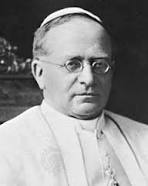
POPE PIUS XI (1857-1939)

POPE PIUS XI (1857-1939) Cardinal Ratti becomes Pope Pius XI.  Ratti is characterized as a pedantic, conservative, and sometimes bellicose Christian believer in the Roman Catholic Church.

Kertzer recounts early 19th century history of the Roman Catholic Church.  The secular government of Italy confiscates Church lands. That taking decimated Catholic wealth, restricted Popes to the Vatican grounds, and reduced Papal control of the Holy See.  More significantly, it reduced the church’s power to influence believers.  After 1860 and until the Lateran Treaty negotiated between Mussolini and Pope Pius XI, the Church is treated as a part of the state of Italy, subject to secular rule.

Pope Pius XI agrees to support the government of Benito Mussolini in 1929 in return for the creation of an independent Papal State in Rome.  Mussolini agrees to pay the church approximately $100 million for formally confiscated church land.  Pope Pius XI acquires for himself and future Popes the right of independent rule, religious interpretation, and Catholic dictation.  In return Mussolini gains the support of the Roman Catholic Church, the dissolution of Catholic political parties, and a title as II Duce, “The Leader” of Italy.   At the stroke of a pen, Mussolini becomes a hero of Italian Catholics (over 90% of the population) and the totalitarian leader of Italy.

BENITO MUSSOLINI (1883-1945, PRIME MINISTER OF ITALY 1922-1943, LEADER OF NATIONAL FASCIST PARTY)

BENITO MUSSOLINI (1883-1945, PRIME MINISTER OF ITALY 1922-1943, LEADER OF NATIONAL FASCIST PARTY)

Kertzer notes there are common goals for Mussolini and Pius XI in the Lateran treaty which separates church from state.  Both covet power.  Both dislike the idea of a Catholic party interfering with religious or state matters.  Both desire elimination of factional interference in government and religion; i.e. Mussolini’s Fascist control of government and the Pope’s control of Church doctrine.

Seeking sovereign independence of the Holy Sea. Pius XI becomes head of state of the smallest state in the world.  $100 million is paid to the church for confiscated land since 1860.

Pius XI is the first Pope to broadcast on radio in the early 1920s.  With the Lateran Treaty of 1929, the Papal State is created; after 58 years of refusal to become part of Italy.  Prisoners in the Vatican before 1929, the Lateran Treaty required elimination of the Catholic Italian Popular Party, a political organization.

DAVID KERTZER “THE RELATIONSHIP OF BENITO MUSSOLINI AND POPE PIUS XI (1922-1939):

An unintended consequence was to reinforce Fascism in Italy.  With the ascension of Pope Pius the XII, the Nazi government is solidified.  The trade-off for the Roman Catholic church  is an increase in international influence.   At the same time, pagan worship of fascism by Church youth groups diminishes the church’s moral stature. 

POPE PIUS XII (1876-1958, FORMERLY CARDINAL PACELLI)

POPE PIUS XII (1876-1958, FORMERLY CARDINAL PACELLI)
Pope Pius XI refuses to excommunicate Hitler, Mussolini gravitates to Nazism, and Pius XII ignores Nazi atrocity.

The Lateran treaty is a slippery slope for both Nazi Germany and the Roman Catholic Church.  Mussolini and Pius XI are blinded by hubris and false piety.

BENITO MUSSOLINI HANGING BY HIS HEALS NEXT TO HIS MISTRESS

Mussolini is shot by his countrymen, hung by his heals for destroying people’s freedom, and losing a war that compromised and betrayed his county.  Pius XI compromises his morals and paves the way for Pius XII, a closet Christian anti-Semite, who becomes a Hitler’ stooge by tacitly endorsing the immorality of belief in ethnic purity.

The closing years of Pius XI’s reign is marked by a closer association with democracies as the Western nations and the Vatican found both were threatened by totalitarian regimes and ideologies of Hitler, Mussolini, and Stalin.  However, with Pius XI’s death and ascension of Pope Pius XII, distinction between totalitarianism and democracy diminishes.

Pope Pius XII—Hitler’s Pope.  FORMER CARDINAL PACELLI Hitler and the roman catholic church: <iframe width=”854″ height=”510″ src=”https://www.youtube.com/embed/2x_MdS88qr8&#8243; frameborder=”0″ allowfullscreen>

***IRONIC SPEECH  POPE PIUS XII SPEAKING ENGLISH TO TROOPS WHO LIBERATED ROME:

Kertzer offers insight to what really happened in Italy in the 1920s, 30s, and early 40s but the story resonates with all organized religions.  Jewish isolation of Palestinians, ISIL’s attempt to resurrect the Caliphate, Muslim repression of Kurds, Taliban Muslim cruelty in Afghanistan, Chinese suppression of Uighurs, and Protestant proselytizing around the world are cut from the same flawed fabric; i.e. the flawed fabric of human interpretation of humanly manufactured texts and religions. 

RELIGIOUS BELIEF

In the name of God, organized religion’s killings continue.  If there is a God, he/she is not evil; i.e. only humans are evil.

WAR’S HARD PART

Audio-book Review
By Chet Yarbrough

(Blog:awalkingdelight)
Website: chetyarbrough.blog

Fives and Twenty-Fives Fives and Twenty-Fives

Written by: Michael Pitre

Narration by:  Kevin T. Collins, Nick Sullivan, Jay Snyder, Fajer Al-Kaisi

MICHAEL PITRE (AUTHOR, FORMER MARINE)

The simple part of any war is having friends and enemies; the hard part is in knowing the difference.  “Fives and Twenty Fives” shows the simplicity and complexity of all wars.  Any veteran of the American military knows that part of basic training is building a team of soldiers to form a comradeship as strong as civilian friendship.  However, the difference between civilian and military friendship is the underlying command and control requirements of military organizations.

The author of “Fives and Twenty Fives” is an ex-Marine.  His novel is about friendship; i.e. more fundamentally about friendship on both sides of a war.

IRAQ INVASION
The author of “Fives and Twenty Fives” is an ex-Marine.  His novel is about friendship; i.e. more fundamentally about friendship on both sides of a war.

IRAQ INTERPRETERS
Unlike the American Civil War, the war in Iraq requires language interpreters.  Most interpreters are in-country natives and have not gone through conventional military basic training.

The theater of war in Michael Pitre’s novel is Iraq.  Unlike the American Civil War, the war in Iraq requires language interpreters.  Most interpreters are in-country natives and have not gone through conventional military basic training.  Command and control is learned by most of these interpreters “on the fly”.  Friendship is earned by experience rather than training.  Pitre introduces Dodge, the Iraqi interpreter, for a Marine team led by Lieutenant Donovan.
Dodge introduces an underlying theme of “Fives and Twenty Fives” in a conversation with Lieutenant Donovan.  Dodge explains that he has no friends because when one chooses friends, the choice entails responsibility and accountability.  Dodge is a Sunni, the religious faction associated with Saddam Hussein.  He speaks fluent English and studies Huckleberry Finn, a book he carries with him everywhere, to better understand American culture.  There are several allusions to the story of Huckleberry Finn that reinforce the theme of friendship; i.e. its implied responsibility and accountability.

US INTERPRETER IN IRAQ DENIED AMERICAN GREEN CARD
During his nearly four years as a translator for U.S. forces in Iraq, Saman Kareem Ahmad was known for bravery and hard work.  However, like one of Pitre’s  main characters, “Dodge”, Ahmad is denied an American green card at the end of the war.

COMPASSION ON THE BATTLEFIED IN IRAQ
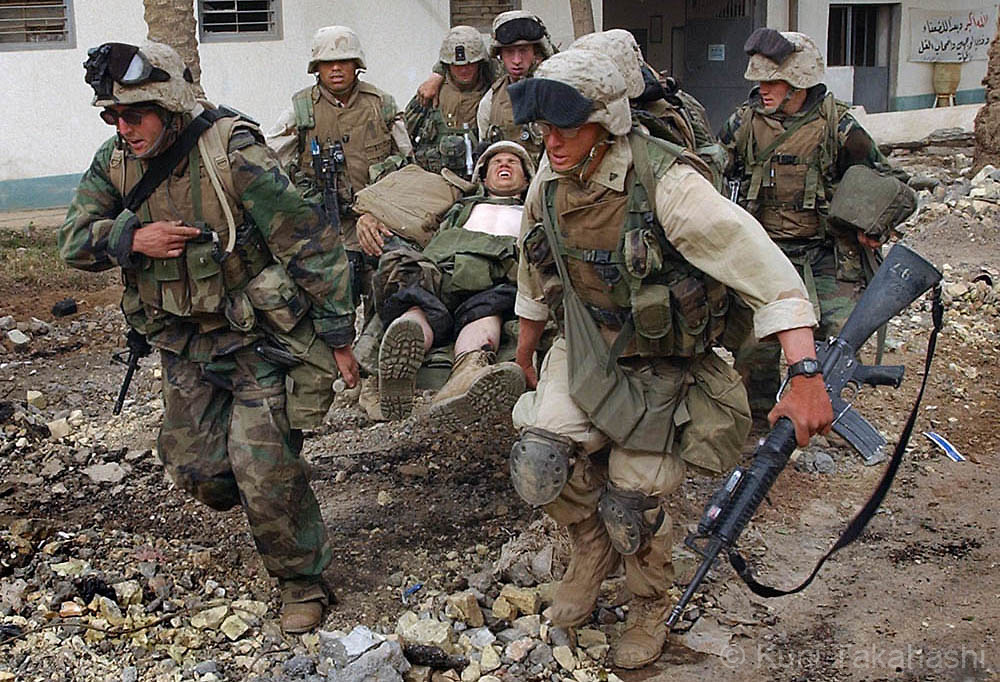
COMPASSION ON THE BATTLEFIELD IN IRAQ – It is not exactly clear but Dodge seems to have chosen, by circumstance of war, to support freedom by making friends with a platoon medic that is singularly focused on saving lives.

Dodge’s father led the Agricultural Ministry of Saddam Hussein.  His father became a leader of the resistance to America’s invasion of Iraq.  Dodge loves his father but chooses to stay at an Iraqi university rather than follow him into the resistance.  It is not exactly clear but Dodge seems to have chosen, by circumstance of war, to support freedom by making friends with a platoon medic that is singularly focused on saving lives.

drug use in war
When a platoon soldier is ambushed, Dodge’s medic-friend is restrained by Lieutenant Donovan because he believes the soldier is dead.  After the incident, the medic turns to drug addiction to escape the reality of his friend’s death.

When a platoon soldier is ambushed, Dodge’s medic-friend is restrained by Lieutenant Donovan because he believes the soldier is dead.  After the incident, the medic turns to drug addiction to escape the reality of his friend’s death.  The medic is brought up on charges when the Lieutenant reports him for suspected drug use.  He receives a general discharge which affects his future civilian life.  The Lieutenant chooses not to be the medic’s friend in that arrest incident but meets the medic after the war with a different perspective; maybe not as friends, but as fellow human beings intimately affected by war.

ZINE EL ABIDINE BEN ALI (2ND PRESIDENT OF TUNESIA SENTENCED FOR MONEY LAUNDERING AND DRUG TRAFFICING)
ZINE EL ABIDINE BEN ALI (2ND PRESIDENT OF TUNISIA SENTENCED FOR MONEY LAUNDERING AND DRUG TRAFFICKING) Later in Pitre’s story, a reader listener finds Dodge chooses to become a part of a resistance to the repressive regime of Ben Ali in Tunisia.

Later in the story, a reader listener finds Dodge chooses to become a part of a resistance to the repressive regime of Ben Ali in Tunisia.  Dodge becomes friends with the resistance movement that needs his English-speaking voice to tell the world of Ben Ali’s repression.  Dodge is not a Tunisian but recognizes the human drive to resist oppression, and the need to be part of something greater than oneself.  Dodge chooses to be a friend of the oppressed.

Michael Pitre compels a listener to look at mistakes made by America in Iraq.  It may have been morally right to remove Saddam Hussein.  However, the decision to deny participation by Hussein’s army officers and Hussein’ administrative personnel in government transition was an error of epic consequence.

Vetted Hussein army officers and administrative personnel, with monitored performance measures, might have avoided Iraq’s spiral into chaos.  One considers the value of interpreters like Dodge who are from families that worked in the corrupt Hussein administration.  Dodge appears to have an inner moral compass that could have helped America in its intent to provide a pacific transition from totalitarianism to peace in Iraq.

There are good and bad people in every government.  Undoubtedly, there were some Iraqi Army leaders and Hussein administrators that could have become friends rather than enemies of fellow Iraqis and American’ invaders.   If America’s leaders had been more discriminating and understanding, ISIL may have never risen.  The simple part of any war is having friends and enemies; the hard part is in knowing the difference.

Post script: Now America is leaving Afghanistan.  One hopes those Afghani’s that served NATO and America’s involvement in Afghanistan will not be treated as forgotten friends.  Since Vietnam,  one doubts history will either justify or vindicate American military intervention in other countries.

A BRADBURY CLASSIC

Audio-book Review
By Chet Yarbrough

(Blog:awalkingdelight)
Website: chetyarbrough.blog

The Illustrated Manthe illustrated man
By Ray Bradbury

Narrated by Paul Michael Garcia

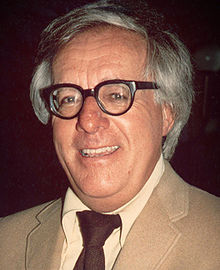
RAY BRADBURY (1920-2012)

Flights of imagination sparkle and spin in this updated 1950s  Ray Bradbury classic.  This compendium of Bradbury’ tales is titled “The Illustrated Man”.

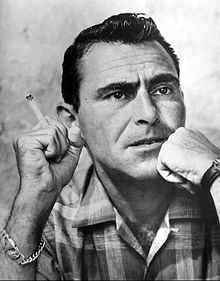
ROD SERLING (1924-1975, SCREENWRITER, TV PRODUCER, NARRATOR)

Bradbury spins stories; reminding one of late night re-runs of Rod Serling’s “Twilight Zone”.  Every episode sparkles with stars and planets, habitable by man but riddled with fear, death, and destruction.  Bradbury grasps human nature and turns it against itself by writing stories that illustrate man’s selfishness, insecurity, wantonness, and aggression.

Tattoos come alive on rippling skin to act out a series of plays about mankind’s future.  Everyone fears the illustrated man because his tattoos expose the worst in man.  Belief that nuclear cataclysm will end life on earth blooms like a mushroom cloud.  Traveling to other planets changes mankind’s environment but man’s nature remains the same.

THE ILLUSTRATED MAN (PLAYED BY ROD STEIGER)
THE ILLUSTRATED MAN (PLAYED BY ROD STEIGER IN A 1969 MOVIE) Tattoos come alive on rippling skin to act out a series of plays about mankind’s future.

AYN RAND (1905-1982)
AYN RAND (1905-1982, AUTHOR WHO FIRMLY BELIEVED IN THE VIRTUE OF SELF-INTEREST) Unregulated self-interest is a dangled reward stolen by one to keep it from the many; in the end the reward is destroyed by the selfishness of each against the other.)

These are not happy stories but they are great flights of imagination.  Bradbury tells a story of human exile and deprivation that exacerbates selfishness when personal reward is dangled in front of exiled and deprived human beings.  The dangled reward is stolen by one to keep it from the many; in the end the reward is destroyed by the selfishness of each against the other.

Insecurity is a devouring beast in the story of a planet blessed by an appearance of a Visitor (presumably Jesus) just before a rocket ship lands on the planet that has been visited.  The captain disbelieves it has happened and is driven to track down this Visitor rather than settle in the insecure surroundings of a unblessed world.  The captain is left to wander the universe, never to arrive in time to actually see the Visitor.

INSECURITY
Insecurity is a devouring beast in the story of a planet blessed by an appearance of a Visitor (presumably Jesus) just before a rocket ship lands on the planet that has been visited.  The captain disbelieves it has happened and is driven to track down this Visitor rather than settle in the insecure surroundings of a unblessed world.

INFIDELITY
Wantonness is illustrated by Bradbury’s story of an unhappily married man. 

Wantonness is illustrated by the husband that is unhappily married.  He duplicates himself.  His duplicate takes his place beside his wife so he can buy a ticket to Rio to exercise his fantasy.  The duplicate is so perfect it becomes as human as the husband.  The duplicate places the wanton husband in a box to die, and buys a ticket to Rio for his wife to accompany it in its fantasy.

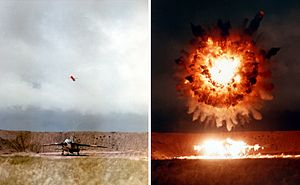
Human kind is aggressive.  Humans conquer and destroy civilizations.  One world of the future prepares for a second visit from mankind by becoming the image of a City.  This image devours the men of the second visit and assumes their bodies; i.e. the City image is transformed into the bodies of the humans from this second visit.  The City image plans to return to earth to destroy those who had destroyed them.

NUCLEAR DETONATION ABOVE TEST TARGET 1986
Human kind is aggressive.  When human’s conquer or destroy others, others rise to  destroy those who had destroyed them. An endless circle of life where agression eats itself.

Bradbury is a master story-teller.  Paul Michael Garcia’s narration is a tribute to Bradbury’s skill.

ANOTHER AMERICA

Audio-book Review
By Chet Yarbrough

(Blog:awalkingdelight)
Website: chetyarbrough.blog

The Harder They Come: A Novel

Written by: T. C. Boyle

Narration by:  Graham Hamilton

T. C. BOYLE (AMERICAN NOVELIST)

T. C. BOYLE (AMERICAN NOVELIST)

“The Harder They Come” is a novel about another America; not the America of idealized history but the America of three generations coping with loss in the twenty-first century. 

T. C. Boyle creates three characters who feel beaten down by American life.  Boyle reflects on their disappointments and perceptions of loss.  A young man in his twenties loses identity, a fortyish woman loses faith in government, and a seventy year old loses self-confidence.

Boyle’s imagined characters live in America today.

JOHN COLTER (1774-1813, MOUNTAIN MAN, MEMBER OF THE LEWIS AND CLARK EXPEDITION)

Adam, a 23-year-old changes his name to Colter, the name of a member of the 1804-1806 Lewis and Clark Expedition.  Colter explores Yellowstone National Park and the Teton Mountain Range in the 19th century.  John Colter is considered by some to be the first American mountain man.

Historically, a mountain man is a hermit-like explorer that exchanges fur for the necessities of life and lives off the land. Adam’s assumption of the Colter name is a trans-formative event for Adam.  He uses drugs and alcohol to escape the frustrations of his 21st century life. He uses the Colter identity to give him an anthropomorphic purpose in life.  Adam becomes a mountain man.

Sara is a fortyish divorcee who adopts the philosophy of the sovereign citizen movement.  She believes the 14th amendment of the constitution proffers absolute freedom to American citizens.


Sara, like Nevada’s Cliven Bundy, believes she is above the law and a federal level of government that interferes with her right to do as she wishes is an infringement on her independent sovereignty.

TIMOTHY McVEIGH (MEMBER OF THOMAS ROBB KLAN, PERPETRATOR OF THE OKLA. CITY BOMBING 1995)

Though Sara considers herself non-violent, she appreciates actions of domestic terrorists like Timothy McVeigh who murdered 168 men, women, and children in Oklahoma City
on April 19, 1995 .

VIETNAM WAR

Sten Stenson is a veteran of the Vietnam War.  He is now 70 years old.  As an ex-Marine and former high school principal, he is retired.  Sten is a big man; over six feet in height.

Sten dislikes getting old but has a brief turn at fame, as a hero, when he kills a robber in Latin America that is threatening fellow tourists.  In looking back at his life, he is reminded of American ridicule of Vietnam vets when he returned from war; he becomes unsure of his purpose in life and regrets having killed anyone either in Vietnam or the recent event in Latin America. 
Sten realizes every human being has a father and mother.  He questions the usefulness and value of his life.

Boyle brings these three characters together.  Adam is the son of Sten.  Sara becomes Adam’s lover.  The extreme behaviors of Adam and Sara are compatible on some level, but Adam’s violence and drug habit compel Adam to completely break from society.  Sten loves his son but they have become completely estranged and evidence mounts to show Adam has become a lost boy.

The denouement of the story reveals a great deal about another America; i.e. “another America” that is a consequence of a capitalist culture that breeds psychotic murderers, deluded fringe groups, and psychologically broken seniors.

WEAPONS OF WAR

Audio-book Review
By Chet Yarbrough

(Blog:awalkingdelight)
Website: chetyarbrough.blog

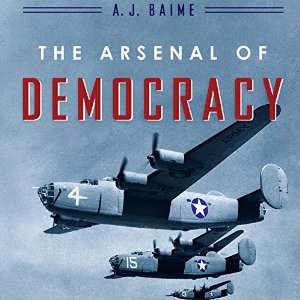
The Arsenal of Democracy: FDR, Detroit, and an Epic Quest to Arm an America at WarThe Arsenal of Democracy

Written by: A.J. Baime

Narration by:  Peter Berkrot

A. J. BAIME (AUTHOR, WRITER AT LARGE)

“The Arsenal of Democracy” takes a retrospective look at an epic quest by America to build an arsenal of weapons before entry to World War II.  Some surprising names are shown to have Nazi sympathies and anti-Semitic beliefs.  Those abhorrent sympathies and beliefs are cloaked by pacifist and capitalist credos.

There is the capitalist credo that unregulated self-interest is the most important determinant of success.  There is the  pacifist credo that someone else’s tragedy is an opportunity for economic gain.  Some pre-WWII movers and shakers are tainted by capitalist greed and prejudice. A. J. Baime shows there are two sides to the story of “The Arsenal of Democracy”.

CHARLES LINDBERGH’S 9/11/1941 SPEECH IN DES MOINES, IOWA;

HENRY FORD (1863- 1947, AMERICAN INDUSTRIALIST, FOUNDER OF FORD MOTOR CO.)

Henry Ford, the “god” of America’s industrial revolution, is awarded the “Grand Cross of the German Eagle” by Nazi officials in 1938.  He is 75 years old.  The Grand Cross is the highest honor that can be given to a foreigner by the Nazi government.  (The only other American recipient is Charles Lindbergh.)

Baime accusatorially notes that Ford is the only American named in Hitler’s “Mein Kampf”; i.e. the most well-known anti-Semitic book ever written.  Ford did not wish to enter WWII.  One may draw their own conclusion, but it stretches credulity to believe it is unrelated to Ford’s personal prejudice and presumed economic gain.

JOSEPH KENNEDY (1888-1969)

Ford is not the only self-made millionaire who believes America should not enter the war.  Joseph Kennedy is equally opposed.  Of course, before Pearl Harbor, the majority of Americans were against entering the war.  However, Ford and Kennedy share a capitalist entrepreneur’s amoral belief that everything is negotiable, including peace with Hitler.

This amoral belief is characteristic of an idealized business model reflected by writers like Ayn Rand; i.e. it is a belief that the strong survive. and the weak deserve their fate.  (This is an amoral belief evident in today’s American President, and a number of congressional representatives.)

Though Kennedy is not as clearly tainted by anti-Semitism as Henry Ford, both believe war is not a solution to Hitler’s aggression.  Business men like Kennedy and Ford believe political leaders, like prudent business leaders, will fail if they do not benefit their country’s citizens and employees by staying out of war and making a profit.  They, like most Americans, could not believe holocaust rumors could be true.  Baime suggests the stark evidence of Jewish slaughter after the war shakes Henry Ford’s conscience.  (One is inclined to doubt Baime’s conclusion considering Ford’s history of anti-Semitism.)

WW2 CONSPIRACY—FORD BUILDS TRUCKS FOR NAZIS, B-24S FOR USAAF,

FRANKLIN D. ROOSEVELT (1882-1945, 32ND PRES. OF U.S.,1933-1945)

Baime primarily focuses on how “The Arsenal of Democracy” came into being.  Baime recounts “The Arsenal of Democracy” speech given by FDR on December 29, 1940.  The year before Pearl Harbor, Henry Ford reluctantly agrees to join the automobile industry mavens in re-tooling car manufacturing for the defense of America.

WILLOW RUN ASSEMBLY PLANT,

Ford’s brilliant innovation in assembly line manufacturing is recognized as key to FDR’s vision of “The Arsenal of Democracy”.  Ironically, Ford despises FDR and explains that Ford Corporation’s contribution is based on defense of America and not intervention in a European’ war.  The leader of the Corporation, on paper, is Edsel Ford but Henry, until Edsel’s death in 1943, retains veto power over any corporate decisions.

THE ARSENAL OF DEMOCRACY SPEECH BY FDR:

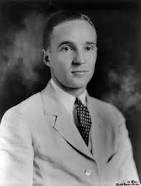
EDSEL BRYANT FORD (1893-1943, SON OF HENRY FORD, PRESIDENT OF FORD MOTOR CO.)

Edsel and Ford Corporation’s managers finally convince Henry to build Willow Run, the largest assembly plant of its time, to produce American bombers.  The goal is to produce a completed airplane bomber at a rate of one per hour.  Baime argues that the goal is achieved through Edsel’s leadership; complemented by innovations created by Ford Corporation’s experienced managers; e. g. men like Charles Sorenson, the lead engineer and designer of the company.

In a muddled side story, the role of Harry Bennett is explored by Baime.  The story is muddled because it is shrouded in mystery involving rumors of Bennett’s mob-informant role for the FBI; his contacts with foreign interests, and his strong-arm tactics against union sympathizers. Henry Ford expresses great confidence in Bennett’s ability.

BRIEF BIOGRAPHY OF HARRY BENNETT : <iframe width=”640″ height=”390″ src=”https://www.youtube.com/embed/Z0jyOfSg0P8&#8243; frameborder=”0″ allowfullscreen> Baime suggests Henry Ford treats Bennett like more of a son than Edsel.  When Edsel dies, Baime writes that Edsel’s wife accuses Henry of being the proximate cause of Edsel’s death because of Henry’s constant criticism (Edsel dies in 1943 with a diagnosis of stomach cancer).

FOOTAGE OF THE 1941 STRIKE WITH A GLIMPSE OF HARRY BENNETT: <iframe width=”640″ height=”390″ src=”https://www.youtube.com/embed/PLN1svpbPBA&#8221; frameborder=”0″ allowfullscreen>

This is an interesting story but one has to remember the context of the time to have a fair perspective of villains in sheep’s clothing.  Henry Ford is an anti-Semite but he joins a vast number of Americans that were equally anti-Semitic.

5 CORPORATIONS THAT HELPED CARRY OUT THE HOLOCAUST: <iframe width=”640″ height=”390″ src=”https://www.youtube.com/embed/RXh7HfEFhik&#8221; frameborder=”0″ allowfullscreen>German anti-Semitism did not suddenly spring from one demented leader.  Henry Ford came from the same primordial swamp that all human beings came from.

THE TWO FACES OF HENRY FORD:

Baime notes that Edsel Ford had contact with Hitler’s French puppet government leaders.  Edsel is accused of aiding Ford Corporations’ manufacturing capability in occupied France.  Intertwining relationships often distort truth but there is a conflict-of-interest odor surrounding Ford Corporation’s actions before and during the war.

The facts are that creation of “The Arsenal of Democracy” would have been a pipe dream without Henry Ford, Edsel Ford, Charles Sorenson, the industrial capability of the auto industry, and the American people.  Truth and history do not forgive anti-Semitism, manager’s exploitation of workers, human greed, illegal dealings with the underworld, or nasty treatment of a sons by fathers.  The truth is and always will be–human beings are good and bad.  Baime’s story of “The Arsenal of Democracy” joins a pile of books affirming the moral duality of humankind.


EISENHOWER

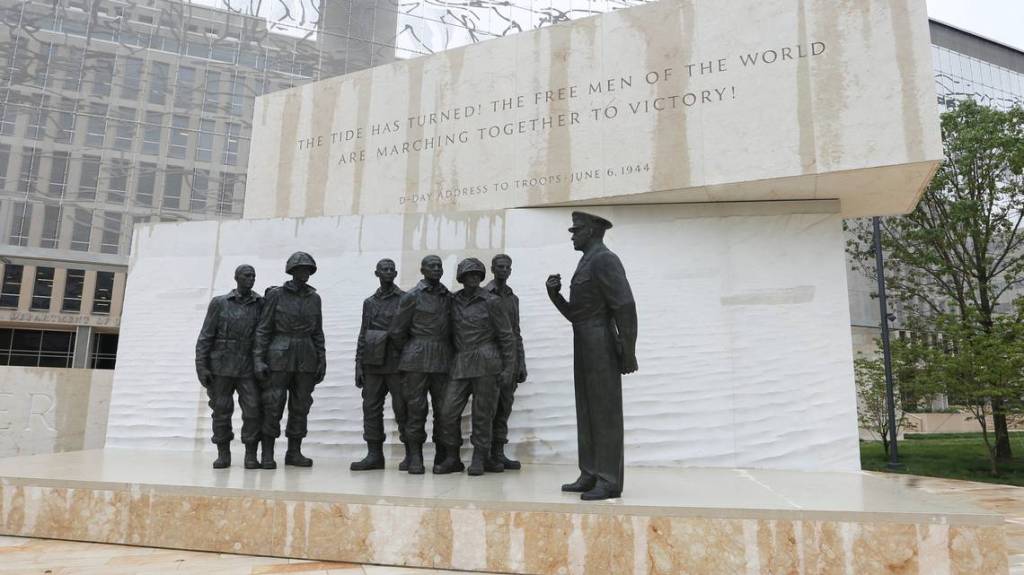
The “Wall Street Journal” calls the Eisenhower monument, “Monumentally Mediocre”. Jean Smith’s interesting biography suggests otherwise.

Audio-book Review
By Chet Yarbrough

(Blog:awalkingdelight)
Website: chetyarbrough.blog

Eisenhower in War and PeaceEISENHOWER IN WAR AND PEACE 

Written by: Jean Edward Smith

Narrated by: Paul Hecht

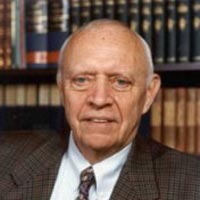
JEAN EDWARD SMITH (AUTHOR, JOHN MARSHALL PROFESSOR OF POLITICAL SCIENCE AT MARSHALL UNIVERSITY &amp; PROFESSOR EMERITUS AT THE UNIVERSITY OF TORONTO)
JEAN EDWARD SMITH (AUTHOR, JOHN MARSHALL PROFESSOR OF POLITICAL SCIENCE AT MARSHALL UNIVERSITY & PROFESSOR EMERITUS AT THE UNIVERSITY OF TORONTO)

Jean Edward Smith’s biography of Dwight Eisenhower defines the meaning of political leadership. Smith does not show Eisenhower to be a great intellect or military genius.  Smith suggests Eisenhower is similar to Ulysses Grant in having come from a modest family to rise to the office of President of the United States. 

Like Grant, Eisenhower is shown to be a consummate leader who politically manages and develops people who understand how to get things done.  Unlike Grant, Smith shows Eisenhower to be a better President than battlefield commander.

The newly revealed Eisenhower monument in Washington D.C. shows Eisenhower in command of others.  It correctly infers Eisenhower is a leader who trusts others to be the best they can be.  Eisenhower is not a doer but a manager of others who do.

Eisenhower leads Allied forces on D-Day by using the best battlefield generals of WWII.  Smith implies–without the Allied generals’ experience in battle, Eisenhower would likely have failed on D-Day.

Smith notes that Eisenhower had minimal combat experience.  The one time Eisenhower directly manages a battle is in Sicily.  If it had not been for superior manpower and material, Smith argues Eisenhower would have been defeated.  Smith goes on to suggest that British Field General Montgomery is unjustly scapegoated for Eisenhower’s Italian campaign mistakes.

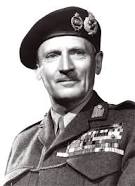
FIELD MARSHAL BERNARD MONTGOMERY (1887-1976, ENGLISH FIELD MARSHAL THAT MATCHED WITS WITH GERMAN FIELD MARSHAL ERWIN ROMMEL)

Smith also notes Montgomery’s role in D-Day is unfairly characterized.  Montgomery argues for concentrated forces at critical points in German defenses; while Eisenhower demands a broad frontal attack along the entire front.  Eisenhower’s tactics, in some generals’ opinions, prolong the end of the war by six months; i.e. increasing the casualty count and stalling Montgomery’s advance on Omaha Beach.

However, Smith’s biography of Eisenhower shows that military successes and failures make him a perfect political leader. 

Smith reveals an inner moral compass that defines Eisenhower’s beliefs and decisions.  Eisenhower uses that moral compass to become Supreme Commander of the Allied Expeditionary Forces in WWII; and later, President of the United States. 

Smith infers, despite tactical failures as a battlefield commander, Eisenhower’s innate ability to get things done through other people make him one of the great twentieth century American Presidents.

EISENHOWER AND SOMERSBY
Eisenhower is no saint.  His power as Allied forces’ general leads to the Somersby affair even as Eisenhower professes a deep need and affection for his wife, Mamie.

Smith offers a comprehensive picture of Eisenhower.  Eisenhower is no moral saint.  His power as Allied forces’ general leads to the Somersby affair even as Eisenhower professes a deep need and affection for his wife, Mamie.

Somersby appears to have been loved by Eisenhower, but she is unceremoniously dumped in a “Dear John” letter when Eisenhower is ordered back to the United States.  On the one hand, Smith is showing Eisenhower is human; on the other, Smith is showing the perfidy of men in power positions.

Smith explains Eisenhower’s path to the presidency.  A part of that trail is festooned with Eisenhower’s sense of duty, but it is also tainted by the power and glory of high office.  Eisenhower is solicited by both Democratic and Republican parties.  In the end, the Republican platform more closely adheres to Eisenhower’s belief in fiscal conservatism.

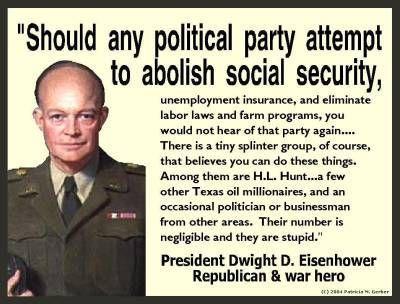
However, Smith shows Eisenhower to be a domestic social liberal.  Eisenhower is no ideologue.  The inner compass that directs Eisenhower’s life recognizes the cruelty of poverty, the shallowness of red-baiting exemplified by Joseph McCarthy, and the importance of patience when dealing with international and domestic affairs.

EISENHOWER'S VIEW OF SOCIAL SECURITY

Eisenhower resists the hawkish tendencies of his Republican colleagues.  He insists on withdrawal from the Korean conflict.  Eisenhower abjures any suggestion that nuclear bombs should be used to attack American enemies.  He forthrightly confronts Governor Faubus when the governor refuses to integrate schools in Little Rock, Arkansas.

MOHAMMAD MOSADDEGH (1882-1967)
MOHAMMAD MOSADDEGH Though Eisenhower initially rejects a British assassination plot against Mosadegh in Iran, he changes his mind when he begins to believe oil availability is more important than one human life. (1882-1967)

On the other hand, Eisenhower succumbs to the machinations of his defense department and several covert plans to overthrow foreign governments.  Though Eisenhower initially rejects a British assassination plot against Mossadegh in Iran, he changes his mind when he begins to believe oil availability is more important than one human life.  

Though Mossadegh dies from natural causes, America supports a military junta that overthrows Iran’s government.  Eisenhower’s support of the overthrow is based on British settlement of an Iranian oil agreement with Iran, and Iranian oil availability in the United States.

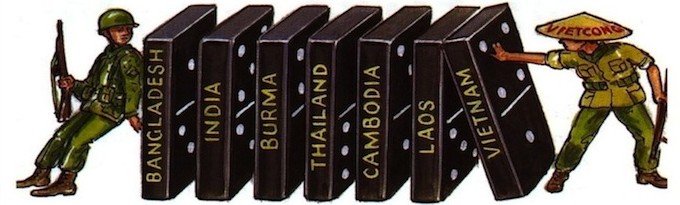
Eisenhower also mistakenly establishes the domino theory of communist infiltration.  Though he refuses to support the French in Indochina, he believes the fall of Vietnam will expand communism in Southeast Asia.  Eisenhower sets the table for Kennedy’s and Johnson’s mistakes in Vietnam.

Eisenhower is well-known for his opposition to the military/industrial complex growing in America.  He insists on balancing the budget by reducing military expenditure.  He reduces financing for American military forces while strengthening Air Force capability as a more modern military deterrent.  Eisenhower faces down numerous military commanders that insist on expanding conventional forces that can intercede in foreign conflicts without employing weapons of mass destruction (an argument that is being made by today’s military establishment).

COMMUNIST DOMINO THEORY
Eisenhower mistakenly establishes the domino theory of communist infiltration.
recruiter
Eisenhower faces down numerous military commanders that insist on expanding conventional forces that can intercede in foreign conflicts without employing weapons of mass destruction (an argument that is being made by today’s military establishment).

Smith shows that Eisenhower refuses to balance the budget by cutting domestic programs that serve the poor and aged.  Eisenhower presses unsuccessfully for increases in medical services for the American public (quite different from today’s Republican President).

Smith offers a balanced picture of Dwight Eisenhower.  America benefited from Eisenhower’s political acumen.  He may not rank with Washington and Lincoln, but he drew from an inner moral compass that makes human beings as good as they are capable of being.

In contrast to America’s current President, Eisenhower made one proud to be an American. (This review was written when Trump was President of the United States.)

WORLD CITIZEN

Audio-book Review
By Chet Yarbrough

(Blog:awalkingdelight)
Website: chetyarbrough.blog

The SympathizerTHE SYMPATHIZER

Written by: Viet Thanh Nguyen

Narration by:  Francois Chau

VIET THANH NGUYEN (AUTHOR)

“The Sympathizer” defines the idea of a world citizen.  It is the first novel of Viet Thanh Nguyen.  In the beginning, “The Sympathizer”, Nguyen’s fictional hero, seems like another version of a war Americans would like to forget.  Chugging through the story a listener nearly derails but the denouement spectacularly realigns one’s senses.

As widely acknowledged, America’s abandonment of Vietnam in 1973 left thousands of South Vietnamese soldiers in peril. (A scenario that may repeat itself in 2021 with America’s departure from Afghanistan, but that is another story).

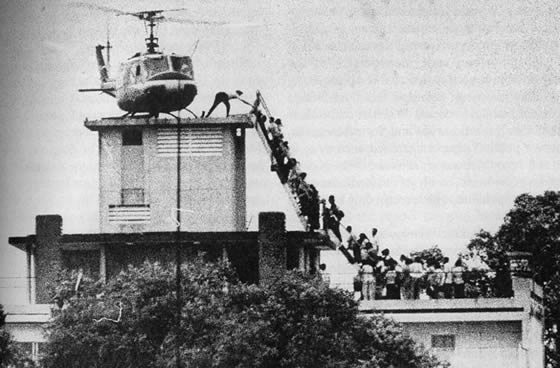
In 1975, the last American marine leaves the roof of the American Embassy in Saigon.  Nguyen’s novel begins with hard decisions made by South Vietnamese commanders to identify native supporters, and their families, who would or would not be saved by American military transport.  Nguyen’s main fictional character is chosen to be one of the lucky evacuees.  The irony of that selection is that he is a communist sympathizer, a spy.

LEAVING SAIGON
 In 1975, the last American marine leaves the roof of the American Embassy in Saigon.

Nguyen’s spy is a Vietnamese outcast.  He is one of the “children of the dust” noted in the musical “Miss Saigon”.  He is a bastard son of a white American priest who seduces his teenage mother.  As a sympathizer, he becomes an undercover agent working for a committed South Vietnamese general.  It appears this communist sympathizer has gained the trust of the General by being the go-between for the murder of North Vietnam collaborators.

WHO SHOULD STAY-WHO SHOULD LEAVE
When evacuation from Saigon is imminent, the General asks the sympathizer to choose who should join them on their flight to America.

When evacuation from Saigon is imminent, the General asks the sympathizer to choose who should join them on their flight to America.  The sympathizer has two close friends.  One friend is a communist; the other is not.  The three are “blood-oath” brothers, characterized as “The Three Musketeers”.  The two friends are chosen by the sympathizer to go on the journey to America.  The communist friend declines and stays in Vietnam to be the sympathizer’s handler; the other friend agrees to leave when his wife and son become collateral damage in the war.  His communist friend tells the sympathizer to never come back to Vietnam.  The significance of that statement becomes clear at the end of the story.

FREEDOM
Most of the novel is about the sympathizer’s experience in America.  He experiences a degree of freedom and independence never felt before. 

Most of the novel is about the sympathizer’s experience in America.  He experiences a degree of freedom and independence never felt before.  But he still reports to the General.  His close non-communist friend is an assassin for actions demanded by the General.  The sympathizer is the go-between when orders are given.

The obvious irony is that this communist sympathizer carries out orders to kill suspected communist sympathizers in America when he is the penultimate sympathizer.

The General is planning an insurgent action to be organized in Thailand to attack communists in Vietnam.  The sympathizer’s best friend is selected as one of the people to go to participate in the insurgency.  The sympathizer asks the General to let him go.  However, his primary reason for going is to protect his friend.  The General initially says no but recants when another suspected spy is targeted.

The General advises the go-between sympathizer that he does not feel he is qualified for the Thailand mission because he has never killed anyone himself.  If he can murder the newly suspected spy, the General will let him go on the Thailand mission.

SLEEP DEPRIVATION TORTURE
The sympathizer, upon returning to Vietnam, is protected by his friend by using sleep deprivation to make him understand something he knows but cannot remember; the other is left to be physically tortured by camp rules, but not killed because of the camp commander’s orders.

The sympathizer haphazardly murders a suspected spy and goes to Thailand.  The valued meaning of the story becomes clearer.

The sympathizer and his friend are caught by a communist cadre.  The cadre is led by the communist friend (the third musketeer) that told the sympathizer to never come back to Vietnam.

Both the sympathizer and the non-communist friend are imprisoned, under the command of their communist friend.  Under the guise of communist re-education, the communist friend protects his two blood-brothers.  The sympathizer is protected by his friend by using sleep deprivation to make him understand something he knows but cannot remember; the other is left to be physically tortured by camp rules, but not killed because of the camp commander’s orders.

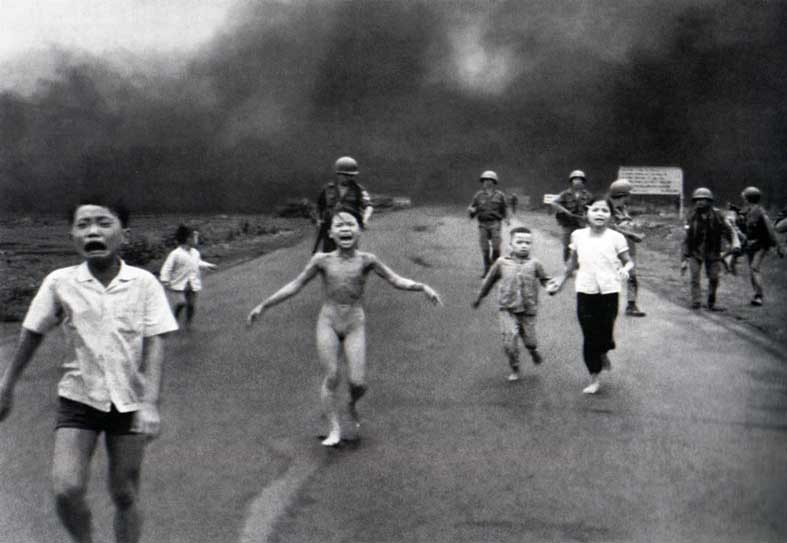
While many escaped death from America’s abandonment of the South Vietnamese, the communist friend who stayed is severely wounded from an American napalm attack.  His experience from the severe wounds and life under communist rule appears to have taught him an indelible lesson.

NAPALM USED IN THE VIETNAM WAR
While many escaped death from America’s abandonment of the South Vietnamese, the communist friend who stayed is severely wounded from an American napalm attack. 

The communist friend asks the sympathizer what is most important about being either a citizen of America or of Vietnam.  After many days of sleep deprivation, the sympathizer says it is freedom and independence.  Wrong says the friend.  After more sleepless days, the sympathizer says death.  Wrong again.  Finally, after more wakeful nights, the sympathizer answers the question correctly.

CITIZEN OF THE WORLD
All people are citizens of the world.

The answer is a seven letter word–nothing.  The answer cuts through political ideology.  All people are human beings; subject to the sins of being human.  All people are citizens of the world.

REDEPLOYMENT

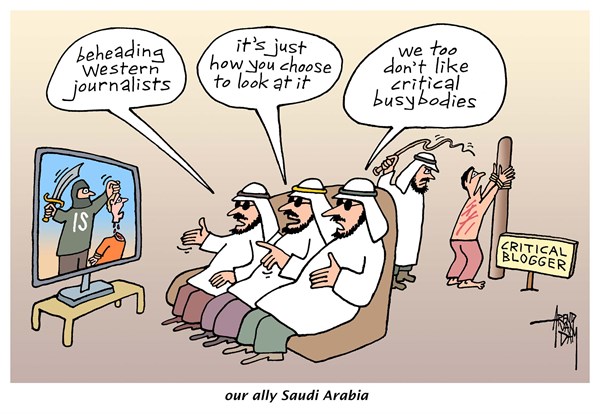
Commanders say we do not shoot children, but children are killed.  Long range artillery and drones mask the consequence of killing. 

Audio-book Review
By Chet Yarbrough

(Blog:awalkingdelight)
Website: chetyarbrough.blog

RedeploymentRedeployment

Written by: Phil Klay

Narration by:  Craig Klein

PHIL KLAY (AMERICAN WRITER, MARINE VETERAN WHO SERVED IN ANBAR IRAQ 1.2007-2.2008)

“Redeployment” is a work of fiction.  It is written by Phil Klay, a Marine officer who served in Iraq in 2007/2008.  (Klay is the winner of the 2014 National Book Award for fiction for stories written in this book.)  “Redeployment” is about military’ enlistment, deployment, redeployment, and combat.

recruiter
There is an unpaid price for a military recruit who goes into combat.  The price is unseen and unknown until after it is experienced.  Those who first join have no idea what is in store for them when placed in a circumstance of killing or being killed.

Joining the military, particularly when one is in their teens or early twenties, is often an escape.

Enlistment is often a way to escape (or transition) from parental control, poverty, or life’s rudderlessness.  For a few, military enlistment is an adventure, a career, an opportunity to get in shape, a chance to see the world.  For others, joining may be a family tradition, a romantic notion of defending one’s country, a desire to impress parents, guardians, or friends.

One of Klay’s characters joins because of financial help offered by the service to pay for an education; another character joins because of family tradition, another because it impresses his father.  Klay’s stories offer insight by explaining most reasons are too simple, or clearly misunderstood by new recruits.   

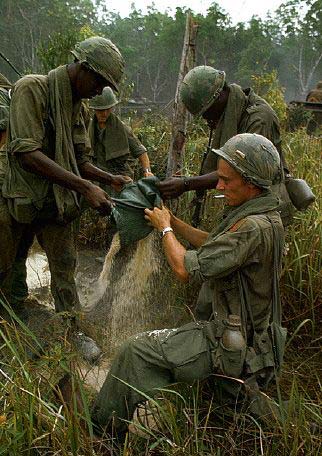
VIETNAM WAR
Klay’s stories show that training for combat is not being in combat.  Military training creates a sense of team entitlement, i.e., of being tougher, more unified, more capable and important than civilians.  Training is meant to break-down individualism.  Military training masks the humanity of anyone that is not part of the team. 

Orders are orders.  Hierarchy of command is inviolable.  If a commander orders flattening of a town, soldiers are expected to act without thinking and remember without conscience.  Soldiers are able to act by dehumanizing those outside of their team.  In Vietnam humans become gooks.  In Iraq humans become towel heads.  These are tricks of propaganda that allow short-term actions but often fail to leave soldiers’ consciences. 

Klay tells the story of a soldier who wants to know how many of an enemy are killed in a bombardment.  The soldier asks if there was an investigation.  The commander says no and sees no reason.  The soldier visits a behind-the-lines’ command post which cares for the dead.  He asks if a team will be sent to the site that has been bombarded.  The NCO asks if Americans were killed.  The soldier says no.  The NCO answers the question–“No, there is no investigation because we only concern ourselves with our own”.

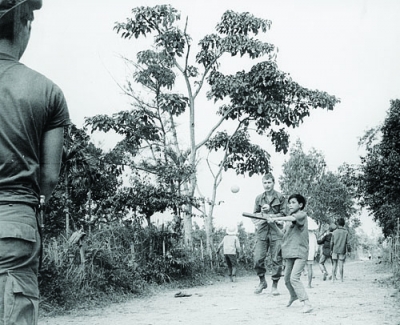
BASEBALL IN THE VIETNAM WAR
Klay tells the story of the American financier that donates baseball equipment for Marines to teach Iraqi children how to play baseball.  The request goes up and down military channels despite the ludicrous misapprehension of what is really happening in Iraq.  A Marine officer is ordered to comply with the request to mollify the uniformed or ignorant financier’s request.

Another story is written about a civilian contractor hired to build a waterpower station in an Iraqi community.  The Marine assigned to oversee the utility installation is told by a local Iraqi that the pumping station being built will create too much pressure and blow-up the plumbing in town.  The Marine explains the problem to the civilian contractor, but it does not stop the project.  It is an assignment that is being paid by the American government whether it works or not.  All the contractor is concerned about is completing the job and being paid.  Klay offers more stories, i.e., equally appalling–examples of wasted dollars and efforts to rebuild Iraq.

Klay writes of the misunderstandings that compound America’s mistakes in Iraq.  There is the story of the Egyptian American recruit that speaks Egyptian Arabic but does not know Iraqi Arabic and must learn the difference on his own because the military believes there is no difference.

The character Klay creates who oversees the water plant construction and an Iraqi baseball assignment is also responsible for producing Iraqi jobs.  This Marine’s civilian subcontractors are often ill-equipped to do what needs to be done.  One of the opportunities is farming but the civilian subcontractor assigned to help knows nothing about farming.

Another story is of an Iraqi who starts a women’s clinic to help women in Iraq who need medical assistance.  However, because her clinic is not creating enough jobs, there is little financial assistance to expand the service.  Klay implies Iraq is a “Bizarro World” where no one seems to communicate understandably, and most act without accomplishment.

BIZZARO WORLD OF WAR

Klay implies the experience of becoming a Marine saturates the being of some soldiers.  Their experience in combat and the comradeship of belonging compels re-enlistment and/or redeployment.  Being a civilian becomes too unstructured.  In some cases, Klay suggests civilian life is threatening to a soldier with experience of combat.  Some redeployed soldiers become command officers that live in a world of only “us and them” with all of “them” as expendable sub-human beings.

America’s pending departure from Iraq is a betrayal of “you broke it, you fix it”.  America tried and failed.  In that failure, the realization is–“the fix” can only be made by Iraqi leaders.  Iraq’s dilemma is America’s forgotten lesson of Vietnam.

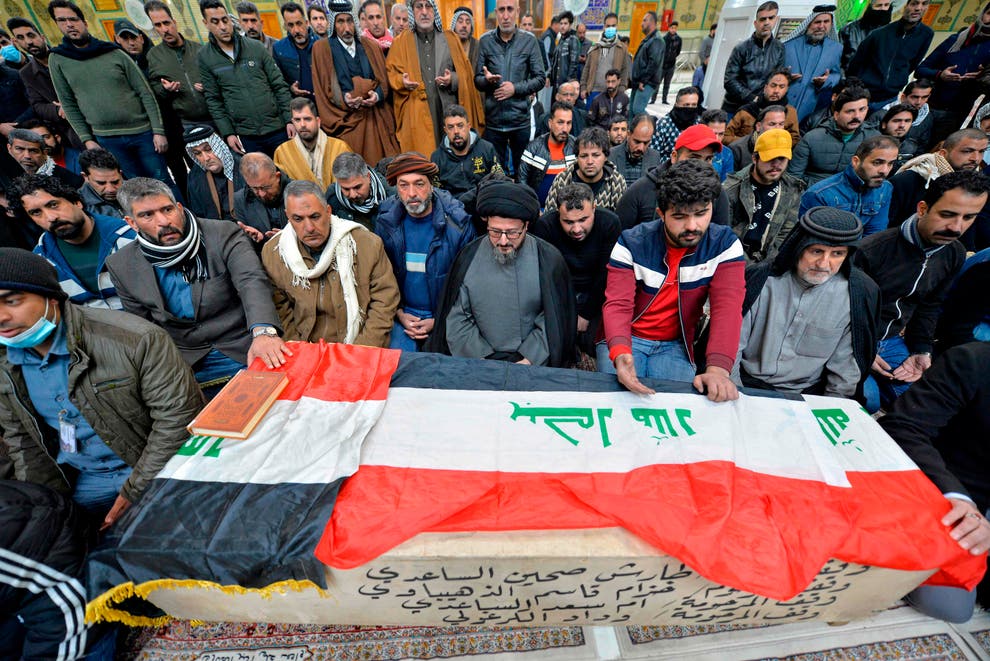
(Baghdad Bombing kills 32 and wounds over 100 on January 21, 2021.)Baghdad Bombin kills 32 and wounds over 100 1.12.21

In a final story, Klay writes of a Marine veteran horribly disfigured by an IED.  A Marine that joined and served in the same place and at the same time as the disfigured veteran is a close friend.  The uninjured friend stays in touch with his fellow ex-Marine.  They recall old times.  They are close friends, but the IED has so profoundly changed their relationship that the friendship has devolved into a friendship of un-equals.  Intimate civilian relationships, taken for granted by both before disfigurement, are now probabilistically experienced by only one of the friends.  Klay’s stories show that combat is a psychological, often physical life changing experience.

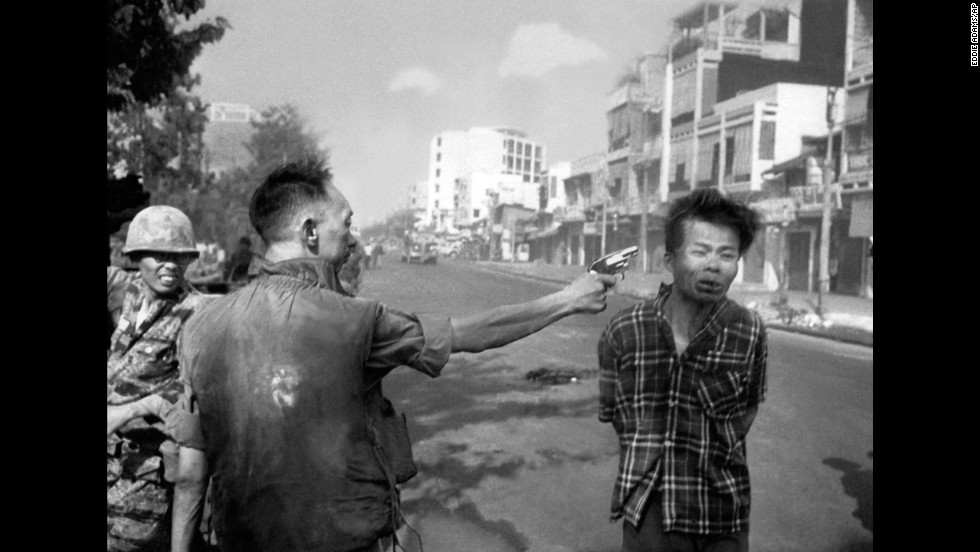
ICONIC IMAGE OF THE WAR IN VIETNAM

Klay is a veteran.  He seems to be saying it is important to understand what it means to become a soldier before signing up.  “Redeployment” is neither right or wrong, but it can be right and wrong.  The best civilians and soldiers can do is “try to do right”.