AI RISK

The essence of Rickard’s book is that the use of GPT is a threat to the financial world and to world peace. If the war on Iran continues, there is increased risk of wider conflict, further financial stress, reduced human judgement, and greater potential for world conflagration in a nuclear war.

Books of Interest
 Website: chetyarbrough.blog

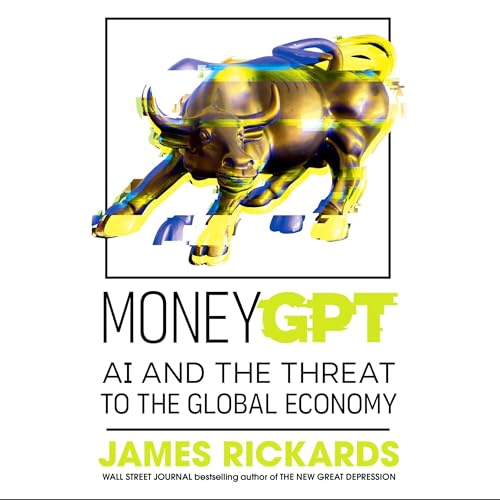
MONEY GPT (AI and the Threat to the Global Economy)

Author: James Rickards

Narration by: James Rickards
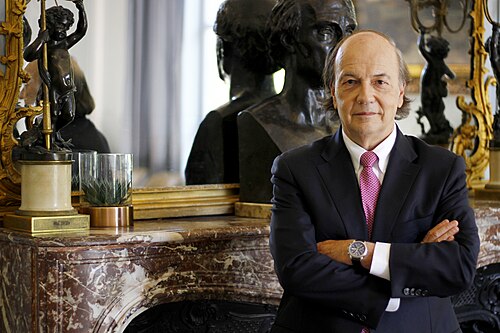
James G. Rickards (Author, American lawyer, investment banker, media commentator.)

Though Mr. Rickards has something valuable to tell his audience, his writing leaves room for improvement. The initials “GPT” stand for “Generative Pre-trained Transformer”. They are an abbreviation for massive datasets gathered by artificial intelligence to aid one’s understanding of complex predictions about finance and military conflict based on collected language used to explain the world.
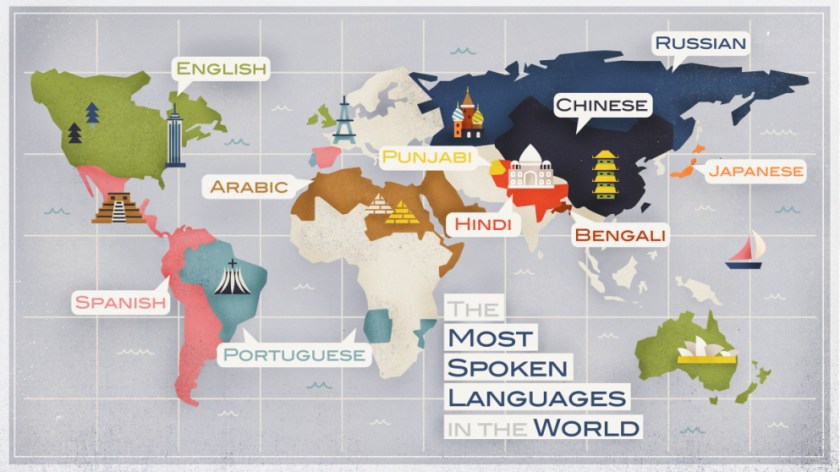
Languages of the world.

What Rickards intellectually recognizes is that collected language about the real world lacks human judgement which can accelerate human actions, weaponize misinformation, and increase conflict because AI lacks human reasoning. Without judgement, facts imparted by language collection may as quickly make wrong as right decisions. Optimum answers to complex problems require human judgement. Optimum answers may be aided by AI collated language, but human judgement is key to appropriate action. Rickards notes how stock market investors who rely on AI for decisions about what to do with their investments can as easily be misled when the market is in crisis because collected language is as likely to lead one further into crisis as toward a reasoned investment response.

Rickard explains a financial decision based on GPT carries the same threat in regard to war. One wonders whether President Trump’s escalation of the war on Iran is not based on GPT that compresses decisions and amplifies the volatility of America’s actions. Is the war escalating because of GPT and inadequate human judgement? America is faced with incomplete information on a purpose for bombing Iran and what goals are intended for ending the conflict. What GPT predicts is more U.S. strikes, further Iranian retaliation, and prolonged conflict that will continue to roil the economies and citizens of the world. Regional war, let alone a World War, is increasingly likely to cause a global shock to financial markets.

Uses of GTP aka GPT.
The essence of Rickard’s book is that the use of GPT is a threat to the financial world and to world peace. If the war on Iran continues, there is increased risk of wider conflict, further financial stress, reduced human judgement, and greater potential for world conflagration in a nuclear war.

LANGUAGE

Spinney makes some interesting points that may or may not be the principal origin and evolution of language difference. Her ideas seem plausible, just as Newton’s physics seemed entirely correct until Einstein proved otherwise.

Books of Interest
 Website: chetyarbrough.blog

Proto (How One Language Went Global)

Author: Laura Spinney

Narrated By:  Emma Spurgin-Hussey

Laura Spinney (British science journalist, novelist, and non-fiction writer.)

Laura Spinney has written a challenging book for non-linguistic learners. Her book, “Proto”, focuses on a single ancient language she calls Proto-Indo European (PIE) that is said to have spread across the world to form half of the world’s spoken languages. She is not suggesting a new origin theory but argues languages around the world are synthesized by language structure and use. She suggests genetics, human cooperative effort, and recurring mythological beliefs are the basis of adopted languages.

A contrast between the way Spinney’s theory of the spread of a language and others is that it is based on wide use of peoples’ words in daily activity rather than a dictation by leaders who exercise control over a gathered group of people.

Spinney’s historical view for language development is in a people’s events of the day, repeated word use, and changing mythological stories that cultivate and spread a language. The language grows, changes, and spreads based on wider adoption by those who are communicating daily experiences to others. As inventions like horseback riding and wheeled transport show their value to an individual, its descriptions spread new words to one person that grows to many in that culture who communicate its value to others.

As one reads/listens to Spinney’s story, the reasons for differences in language appear based on the timing of ancient cultures growth when one area of the world is populated longer than another.

Every populated area creates their own mythologies. Mythologies are different because they are created by local events, burial rituals, and the desire to explain the “not understood” to others. Additionally, people live in environmentally different areas of the world. A native American has no reason to precisely or creatively describe snow whereas an Eskimo who deals with snow on a daily basis uses more precise and creative words to describe snow’s characteristics and its effect on their lives.

Whether true or not, this is an interesting hypothesis on the growth of language.

PIE, of course, is only one family of languages but her idea of its spread seems applicable to other equally important languages. As in all stories of ancient cultures, there is misrepresentation or misunderstanding because of not being there as languages are formed. Spinney acknowledges the fragmentary evidence of her theory which makes her conclusions tentative, if not suspect. Human nature is to relate facts that make sense of one’s own beliefs and may not accurately recall or report actual experience because of research bias. Power of leaders is diminished or discounted by Spinney’s theory of the spread of language.

Spinney believes PIE originated among the Yamnaya people, north of the Black Sea in what is now eastern Ukraine and southern Russia.

From there it spread westward into Europe, southward into Antolia, eastward into Central and South Asia, and into the Tarim Basin in western China. She believes PIE expansion is primarily because of technological innovations like the wheel and domestication of horses. This is interesting because it suggests the spread of language did not come from conflicts among warring regions but the utility of new technological discoveries.

Will today’s technology bring nations together or reinforce the silos of our differences?

Spinney makes some interesting points that may or may not be the principal origin and evolution of language difference. Her ideas seem plausible, just as Newton’s physics seemed entirely correct until Einstein proved otherwise.