COLLECTIVIST BELIEF

Audio-book Review
By Chet Yarbrough

(Blog:awalkingdelight)
Website: chetyarbrough.blog

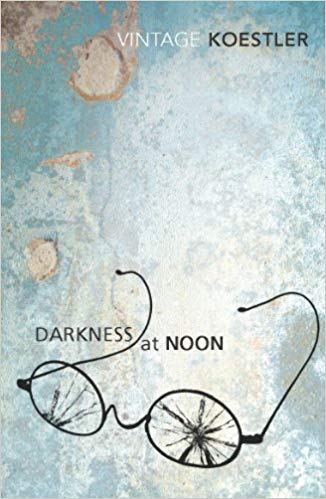
Darkness at Noon

By Arthur Koestler

Narrated by Frank Muller

Arthur Koestler (1904-1983, Author)

Though Stalin is never named in “Darkness at Noon”, Stalin is the “one” that encapsulates a vision of Communism that demands submission by the individual to the collective. 

When a young communist refuses to distribute Stalinist Party’ literature that ignores Nazi attacks on local Communist’ cells, he is expelled from the Party.

In real life, Koestler joined the Communist Party in Germany in 1931.  His resignation from the Party in 1938 is a likely motivation for writing “Darkness at Noon”.

Koestler’s hero is a young communist leader that disagrees with his Russian controller and is expelled from the Party in the 1930s.  The substance of the disagreement is the heart of the story.

The central character of “Darkness at Noon” is Nicholas Rubashov. Rubashov enforces Stalinist’ Communist belief in the collective, but he has doubts. Rubashov is the apparatchik who is ordered to expel a young German’ Communist because he looks at Russian Communism as a personal rather than collective savior.

Imprisonment of Putin’s political rivals, invasion of Crimea, and buildup of Russian troops on Ukraine’s border is reminiscent of Stalinist tactics before and after WWII.

Increasingly, Vladimir Putin exhibits the same drive for power as that characterized by Stalin, particularly in regard to his action in Chechnya and now Ukraine.

Koestler’s hero is characterized as one of the original participants in the 1917 revolution. As he ages, his blind acceptance of Stalin’s Communist belief in the collective waivers.  Rubashov is imprisoned and ordered to sign a confession.  The interrogators, Ivanov and Gletkin, are responsible for getting a signed confession from Rubashov. 

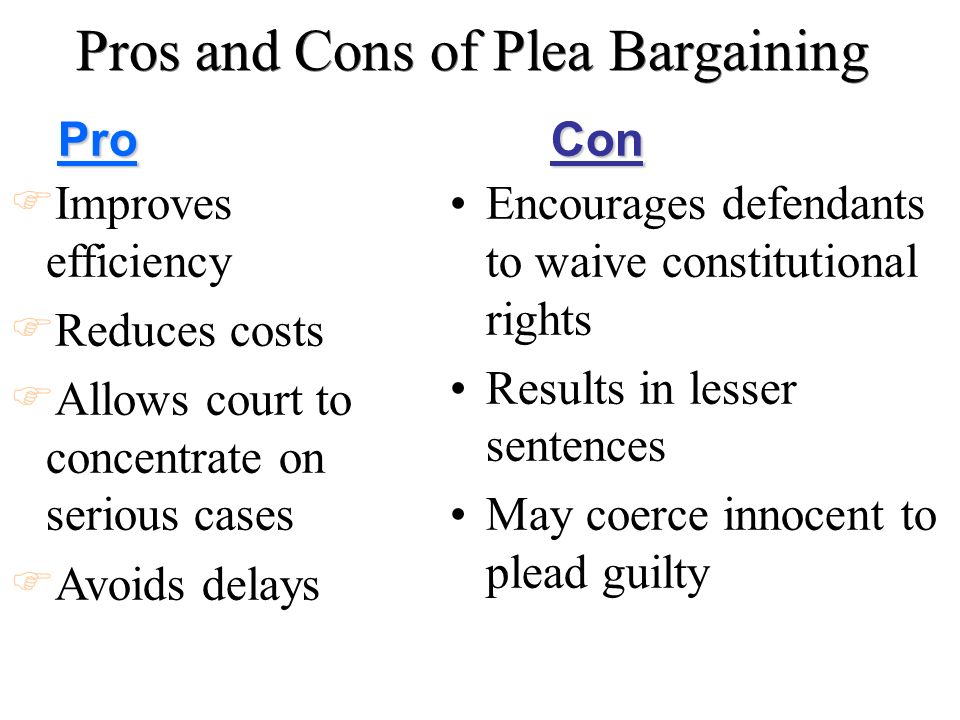
Ivanov, who is a former acquaintance and civil war comrade of Rubashov’s, offers an opportunity for Rubashov to redeem himself. Ivanov suggests that Rubashov confess to a lesser charge to justify incarceration for five years with a chance to return to political power.  Rubashov initially says “no” but Ivanov’s “plea bargain” approach works and Rubashov signs a confession.


However, Ivanov is later removed from power and Gletkin takes charge of Rubashov’s case.  Gletkin argues Ivanov’s approach is a mistake.  Gletkin insists on a complete confession of guilt; i.e. no redemption, only execution.

Much evidence is brought before Rubashov.  The evidence is weak but Rubashov becomes convinced through sleep deprivation, and a clever manipulation of Rubashov’s logic, that he must be executed. Rubashov’s personal feelings of guilt come from his denial of collective good. He reasons–the way he has been judged is the way he has lived his life; therefor his life should be forfeit for the cause; in the interest of the many over the few.

Gletkin might be characterized as a mindless Neanderthal because of his belief in torture, but one of many of his clever manipulations suggests he is diabolically clever.

Gletkin suggests Rubashov was given a watch when he was 7 or 8, which Rubshov acknowledges is probably correct.  Gletkin says he did not have a watch until he was a teenager and that he did not know there were 60 minutes in an hour until then.  No one in his social class looked at time in segments; waiting in line was not characterized by time but by results from waiting in line. 

“Darkness at Noon” implies the end result is what is important; not the means and time that one stands in line. This is a quintessential belief of the “true believer” in Stalinist communism.

HISTORY’S SKEPTIC

Audio-book Review
By Chet Yarbrough

(Blog:awalkingdelight)
Website: chetyarbrough.blog

The Great Courses: The Skeptic’s Guide to American History

By: Professor Mark A. Stoler

Narrated by Professor Stoler

Mark A. Stoler, Ph.D. Professor Emeritus of History at the University of Vermont

Contrary to popular opinion, Professor Stoler argues history does not repeat.  Stoler suggests history reflects current beliefs influenced by past remembrance. 

What is the truth of history?  Is there a truth?  Mark Stoler, like many historians, sets out to debunk modern perceptions of history.  To professor Stoler, context and interpretation are the arbiters of history’s truth.

The frustration one has with historian’s analysis of the past is with “fact choices” and interpretations. Historians write about the past through the prism of the present. The result confuses readers who seek knowledge and truth. 

The value of Mark Stoler’s lectures is realization that facts of history are immutable; interpretation is not. That may be what Conway meant but not what she said. There are no “alternative facts”.

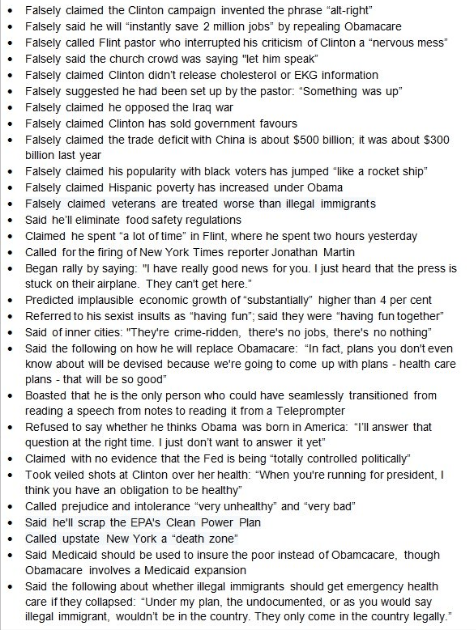
Some suggest Kellyanne Conway’s comment about “alternative facts” means there is no truth.

Councilor to President Trump

An example would be historians who argue about past Presidents by choosing facts of history that support their argument.  A past President of the United States is great, average, or awful depending on what facts are chosen and how those facts are interpreted.  History seems revised in every generation. 

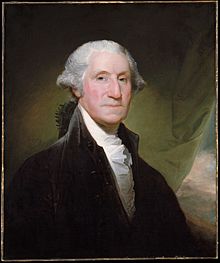
George Washington is the father of our country. Washington made many mistakes as leader of the military during the American Revolution.  However, Washington won the most important American battles of the revolution leading to British withdrawal.

Thomas Jefferson sold all his slaves (except for the offspring of Sally Hemmings, his black mistress) to pay debts before his death.  He believed blacks were inherently less intelligent than whites. Thomas Jefferson drafted the Declaration of Independence which stated “We hold these Truths to be self-evident, that all Men are created equal…” 

Abraham Lincoln proposes a plan to ship all American Negroes to another country to solve the issue of slavery.  Lincoln executes the emancipation proclamation that frees American slaves.

Franklin Roosevelt supported industry over labor during the depression.  He represented the upper-class of society. Roosevelt created jobs for American unemployed with a government financed program, the WPA. 

Stoler infers there is truth, but it lies in knowing history is a phenomenon that cannot be separated from the present.  The facts of the past do not change but unreported facts are dredged up by subsequent historians and history is revised.  We call this revisionist history; i.e. a euphemism for reinterpretation of selected facts of history.   

The election is nigh–Stoler infers there is truth that cannot be separated from the present. The facts of the past do not change but unreported facts are dredged up by subsequent historians and history is revised. Which way Trump?

That is why Stoler insists history does not repeat itself while Twain suggests history rhymes.  With human nature as it is, the past is always present but in similar; not identical ways.  History is not repeating itself. New history is being made based on new facts that fit modern societal norms.  Stoler implies context of the present has changed history of the past.   

Stoler supports his argument with numerous examples:

  1. The origin of religious tolerance is not a founding principle of America.  Early Americans were as religiously intolerant as the countries from which they came.  Stoler suggests religious tolerance evolved in American history through the mechanism of unintended consequence.
  2. Stoler argues American history is a story of imperialism, and that America has never been an isolationist country.
  3. Stoler explains George Washington, Abraham Lincoln, and Franklin Roosevelt remain as the three highest rated Presidents but with interpretations of history that have changed in different eras.  Many American Presidents have risen and fallen in the eyes of historians.  Wilson fell in part because of disclosed information about his racism.  Grant rose in part because of disclosed information about his opposition to Andrew Johnson (Abraham Lincoln’s Vice President) who condoned slavery.
  4. In Stoler’s opinion, one of the greatest unsung heroes of American history is George Marshall because of his service to country.
  5. To Stoler, America’s role in WWI and WWII is misleading in many American histories because of misinterpretation of America’s contribution to the war’s beginnings and endings.  Nationalism often gets in the way of objective truth when assessing any countries role in war.
  6. Stoler notes the United States has never had a laissez-faire government.  American government has always had an out sized influence over winners and losers in the economy.

Stoler’s lectures are a remembrance of things past, but just as with all historians, Stoler reports facts he chooses to recognize.  The value of his lectures is realization that facts of history are immutable; interpretation is not. 

Support of capitalism is not the problem in America. It is the failure of the #Federal government’s bureaucracy, the FBI, the President, and Congress to do their jobs

There are no alternative facts in history. Is that a truth or another fiction foisted on every new generation? Is Trump’s challenge to the 2020 election fact or delusion? History will show it to be both.

JOBS TODAY AND TOMORROW

Audio-book Review
By Chet Yarbrough

(Blog:awalkingdelight)
Website: chetyarbrough.blog

The Industries of the Future

By Alec Ross

Narrated by Alec Ross

Alec Ross (Author, American technology policy expert)

Alec Ross’s book about future industries is founded on world travel and observation.  Ross is an historian by education. His wide-ranging view of sociological change is from personal experience with technology and the information-age.

Ross observes social change around the world as a senior adviser to then Secretary of State, Hillary Clinton.  His dizzying travels explain how mobile phones connect the world and change economic, political, and social opportunity for both third world, and highly industrialized countries. 

Ross’s fundamental argument is that “…Industries of the Future” will be based on information technology.  The forefront of that technology rests on software (coding) and human evolution (genetics).

Despite nationalism and the horrendous consequence of Covid19 on the world, Trump-like government leaders who focus on nationalist independence and existing manufacturing jobs are job destroyers; not creators. 

New jobs will not come from expanded labor-intensive manufacturing but from the accumulation and use of data.  Ross suggests coding and genetics will determine jobs of the future. 

Ross infers creators of code are tomorrow’s laborers.  Today, learning how to code is a valuable skill that insures employment through and beyond the 21st century. 

Though there is hyperbole in Ross’s suggestion that today’s coders make a high wage of $100,000+ a year, they do make an entry level living wage with vertical mobility.  As the market matures, coder’s income will undoubtedly keep pace with expanding economies.

Ross shows how coding opens the door to automating the manufacturing world.  Human labor to make things will change to coding labor that ultimately leads to machines building machines.

Artificial Intelligence is common today and will be ubiquitous tomorrow.

The automobile industry is increasingly relying on machine assembly of automobiles.  The manufacturing process still requires human supervision, but physical labor will be increasingly code driven.

Numerous examples are noted by Ross.  Driving a car is simpler because of A. I.  Using GPS maps shorten travel time, gauge traffic congestion, and locate lost devices.   The obvious effect of information technology is reduction in physical labor with employee job change, reeducation camps, and new employment. This is a tough reality for today’s laborers; particularly those who work hard every day.  The rise of A. I. contradicts the industrial age’s moral belief that character is enhanced by hard labor. 

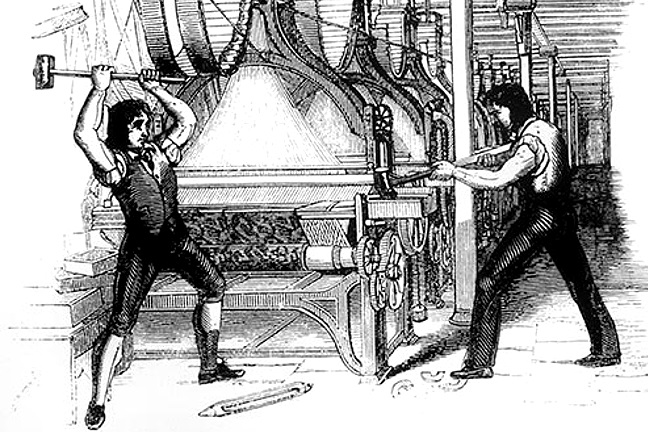
The laborer says, “I am not going to lose my job to a machine”.  From a production line laborer or steel worker of a certain age, it is a message once said by Luddites in the nineteenth century. In the industrial age Luddites began dismantling machinery that cost their jobs.

Job upheaval is frightening.  However, Ross suggests the information-age offers the greatest opportunity for the world since the industrial revolution. President Trump’s populist effort to turn back time creates false hope for many hard working Americans.  

Employees in dying professions should be helped by private industry and the government to retrain and embrace inevitable market changes. America needs a Rooseveltian and internationalist response to Covid 19 and the advance of technology.

What Ross shows is that industrialized nations that choose not react positively; to be proactive to the information age are destined to decline.  Ross shows how third world countries in Africa see opportunities that were never seen before because of technology. 

With a mobile phone, African men and women have become entrepreneurs because they can communicate with wider circles of influence and support. Their phones become banks for loans and payments; and more importantly, for investment in themselves.

Ross explains another opportunity presented by the information age in farming.  As has been known for centuries, farm productivity is improved by appropriate management and use of natural resources and man-made fertilizers.    That customization increases the world’s food supply in ways that could only be approximated in the industrial age.  Coded farm machines replace day laborer planting, cultivation, and harvesting,

With the advent of automated farm management systems, soil preparation, planting, and harvesting operations can be more precisely customized.

The second fundamental argument in Ross’s book regards genetics.  Understanding of genetic science and our ability to manipulate genetic markers is a wild-west opportunity. 

In theory, genetic modification can be a threat to the ecology of the earth, a monumental environmental catastrophe. 

To Ross, genetic modification is a boon for agricultural and human productivity that will lead the world out of environmental and human crises. 

Giant steps have been and are being made in genetic modification of agricultural products.    Ross notes reports of crop productivity increases due to disease resistance coming from genetically modified seeds.  Ross argues that GMO opponents are wrong in suggesting “natural” agricultural products are any safer than genetically modified food products.

Ross sites reports of GMO foods that show they are equally or more nutritionally beneficial to humankind than non-GMO foods.

Many would agree with Ross’s assessment of the success of GMO production.  However, modification of the human genome opens a much higher level of concern. 

There are moral and ethical questions raised by science and religion with experimentation on the human genome.  On the one hand, it raises the possibility of erasing the diseases of humankind.  On the other, there is the fictional account of the “Island of Dr. Moreau”.  Both concerns are expressed in the controversy surrounding the 2018 human gene editing in Hong Kong by Dr. He Jiankui, a Chinese researcher.

Dr. He Jiankui (Claims to have conducted the first human genome-editing of a human embryo)

Ross approaches “The Industries of the Future” from a more historical than scientific perspective.  His book sees great opportunity in information technology, but proof is largely unborn history.  The technological revolution is not like the industrial revolution because it goes beyond Newton’s laws and only touches Einstein’s.  Ross seems more likely right than wrong but only the future will tell, and only history will prove it.

CORPORATISM

Audio-book Review
By Chet Yarbrough

(Blog:awalkingdelight)
Website: chetyarbrough.blog

The Price of Civilization

By Jeffrey Sachs

Narrated by Richard McGonagle

Jeffrey Sachs (Author, American economist, Columbia University Professor)

Jeffrey Sachs skewers modern Presidents and lionizes John Kennedy.  Written before 2016, one wonders what Sachs might have written about President Trump.

One may agree with some of Jeffrey Sachs’ observations of what is wrong with America but his solutions are academic; not pragmatic. Sachs is an idealist. Corporatism is an out sized economic benefactor for the United States.

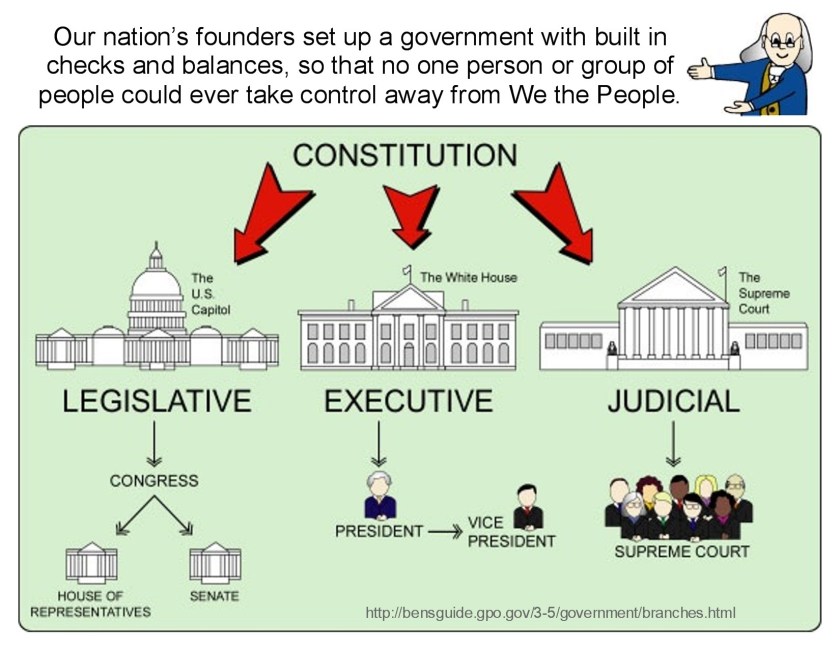
Government checks and balances are America’s only defense against corporatism.

“The Price of Civilization” is an unsatisfying audio book.  Not because it is irrelevant but because it’s saccharine idealism and disconnection from the real world.

Though much of Sach’s criticism of Obama, George Bush, Bill Clinton, and Ronald Reagan is deserved, his professorial economics is cloying because it ignores political reality and the truth of human nature.

The father of American economics, Adam Smith, is the first to have recognized the critical role of politics in economics.

Politics is a social science of give-and-take in both democratic and autocratic societies. The difference is–politics in democracy is practiced among the many; while in autocracy, politics is practiced among the few.

Just as Adam Smith’s “Wealth of Nations” includes politics in economics, Thomas Hobbes’ “Leviathan”, introduces human nature to government. Thomas Hobbes notes Human nature is both good and bad. As logic dictates, politics in economics is both good and bad.

Sachs is spot-on as an academic economist. Trump and many elected officials ignore political reality.  Public policy has always been a matter of “who’s ox is getting gored” whether Democrats, Republicans, or despots are in control of government.

Sachs cleaves to Platonic and Aristotelian platitudes like “all things in moderation”. To suggest that a philosophical awakening of the millennial generation (those born between 1977 and 1992) will cure American lassitude and political apathy is naive.


Sachs optimistically believes the millennial generation will eschew the luxuries of American dreamers (owning hot cars, nice homes, and beautiful clothes) to become voters for change.  Obama represents those voter’ beliefs but fails politically for the same reason Sachs’ book is a mess.

Changing public policy is not going to occur with an American generation that magically begins believing less is more. Re-election of a new President, whether Democrat or Republican, will not fundamentally change America’s system of choosing corporate winners and losers.

One can agree with Sachs’ observation on 2010’s “Citizens United v. Federal Election Commission” decision. The Supreme Court erred in identifying corporations as individuals with the rights of unlimited corporate donation to electors.

Defeat of gun control legislation shows how entrenched lobbyist organizations can steer the course of public policy, regardless of a democratic majority’s support of policy change.

Sachs is right in his assessment of the wrong-headedness of what he calls “corporatocracy”; i.e. the institutionalization of an election process that is founded on money rather than public representation. 

Human nature gets in the way of doing the right thing.  Humankind naturally seeks freedom.  (Las Vegas demonstration to reopen the economy during the pandemic.)

When freedom of choice is impinged upon, human beings are reluctant to change.   Of course, this is an over simplification but Sachs minimizes mankind’s innate desire for freedom. 

Las Vegas mayor Goodman wants to re-open the economy in the face of Covid19. She believes freedom and survival of the fittest is a matter of human nature; not government fiat.

She infers–if its your time to die, so be it.

Regulation of human activity impinges on free choice whenever one person thinks they know what is best for another.

Human nature is not going to change; i.e. it will always contain good and evil intention. Bernard Madoff comes from the same culture as Warren Buffet. 

Trump and the Republican party’s approved tax law and Covid19′ fiscal response illustrates contempt for the middle-class, and ignores the needs of the poor.

Many Americans are disgusted with the political process in 21st century America.  Even the super rich and rich are not satisfied with the status quo.  The rising gap between rich and poor embarrasses those who believe in equal opportunity for all.

How can America justify a social security tax for a movie actor’s (or sports star’s) income of millions per year when a middle income family makes $40,000 to $132,900 per year and has to contribute the same amount as a multi-millionaire.

A person with a middle class income will pay 6.2 percent of their income for social security. There is a maximum cap of $8,239.80/year/person. One who makes millions of dollars per year will not have to pay more than that $8,239.80/year; i.e. the same maximum amount a middle income person pays. No wonder social security is going broke.

When one is elected to congress every two years, fund raising becomes the elector’s primary focus of attention.  When corporations speak, electors listen.  Lobbyists and corporate money are more important than the aggregate input of voters.  No wonder American voters are apathetic.

Sachs notes Oliver Wendell Holmes dictum about taxes.  Holmes wrote that he loved to pay taxes because taxes are the cost of civilization.  The weakness of that generalization is in the definition of civilization.  If civilization is that stage of human social and cultural development and organization that is considered most advanced, why does the richest country in the world:

  • 1)have citizens living on the street,
  • 2)have citizens imprisoned-to only isolate and punish, and
  • 3)have children dying because of poor medical care.

When an investor turns a portfolio over to a brokerage company, that investor has to “trust but verify” the actions of the brokerage company in regard to overall portfolio performance.  If the broker under performs the market, the investor knows it is time to change brokers. 

When a government under performs when public tax dollars are invested, voters cannot, without revolution, change governments. 

Sachs accurately notes there is no difference between Democrats and Republicans in the United States.  Both parties talk the talk but fail to walk the walk. Elected officials are too beholding to lobbyists and corporate America.

Americans are reluctant to pay higher taxes because they see no discernible improvement in their lives.  Why invest in a government (pay more taxes) that fails to produce improved results?

Sachs ideas for correcting America’s ills—

  1. Reduce the deficit by cutting military spending and increasing taxes.
  2. Reduce wealth disparity by investing in and retraining an obsolescent work force.
  3. Invest in and improve education with emphasis on primary and secondary graduation.
  4. Create jobs through infrastructure investment.  He argues that dependence on carbon-based energy is to be reduced by conservation with increased investment in alternative energy sources and more scientific research and development. 
  5. He argues that medical insurance should be provided to all Americans with a plan crafted by the medical community.

All of these goals are exemplary but to get there requires a massive (and unlikely) re-invention of human nature.   One could argue that many of these policies were promoted by the Obama administration, but little changed.

It is counterintuitive for a free society to choose moderate consumption.  Add mistrust of the American government and the likelihood of turning more money over to a government that does not work seems stupid to any rationale human being.

Hitler wrote in Mein Kampf, “Industry, technology, and commerce can thrive only as long as an idealistic national community offers the necessary preconditions.  And these do not lie in material egoism, but in a spirit of sacrifice and joyful renunciation.”  Sach’s idealism is a threat to an American economy that ignores the poor. It hides behind idealized Hitlerian propaganda.

Hitlerian characters are a threat to America when corporatism is the basis of public policy.

Of course, this analysis of Sach’s book is also a form of idealism.

The Korean War

Audio-book Review
By Chet Yarbrough

(Blog:awalkingdelight)
Website: chetyarbrough.com

The Korean War

By Max Hastings

Narrated by Frederick Davidson

Max Hastings (Author, British Journalist)

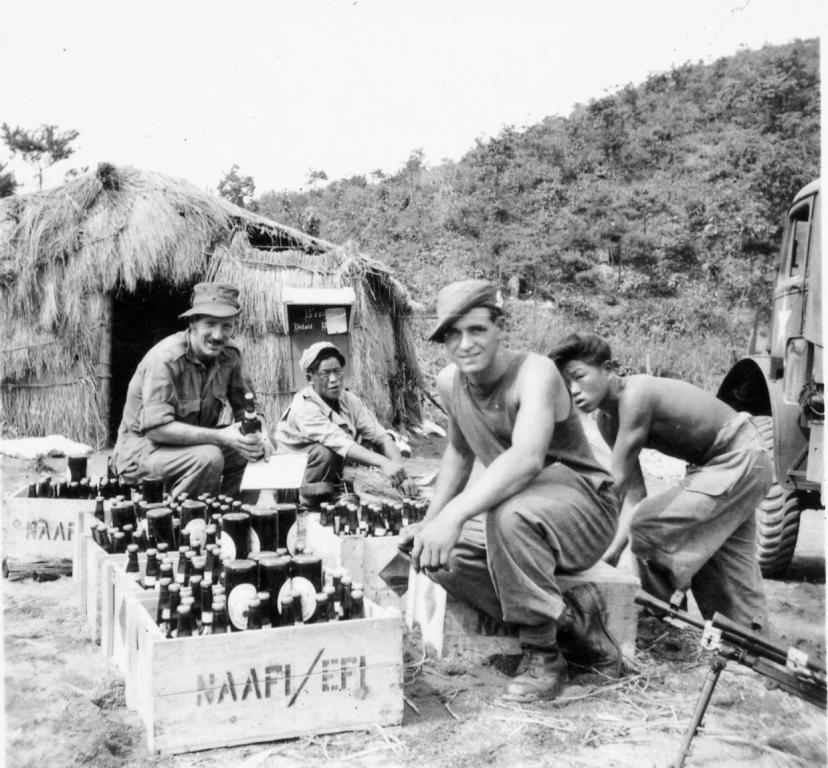
Max Hastings’ book reports the tragedy of the Korean War (1950-1953) fought by United Nations forces against North Korea and China. The end of the Korean War is a return to its beginning with no winners and mostly losers at the 38th parallel.

Hastings begins by suggesting that South Korea ultimately benefited from the war but one wonders if the cost of human blood and treasure is worth today’s North and South Korean reality.

Karl Marx said that “History repeats itself, first as tragedy, second as farce”.

Syngman Rhee (Last Head of State of the Provisional Government of the Republic of Korea)

Hastings characterizes Syngman Rhee, the Republic of Korea’s leader (1948-1960), as corrupt, though less corrupt and venal than his North Korean counterpart, Kim il sung (1945-1994).

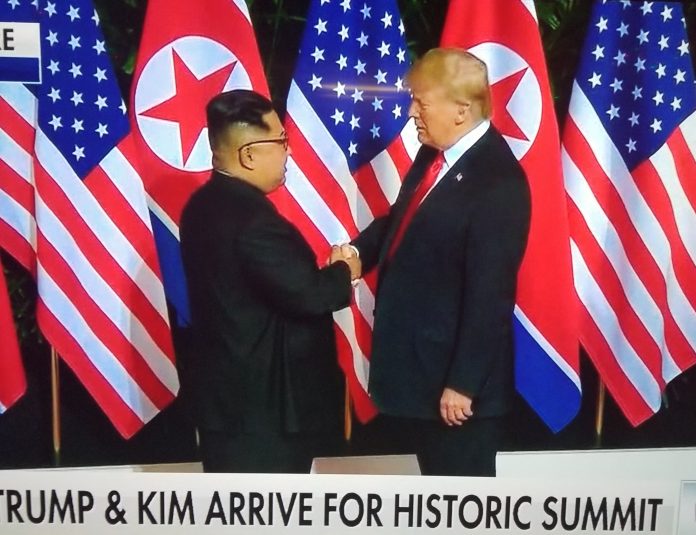
What is of concern to some Americans is President Trump’s relationship with North Korea’s new leader, the son of Kim il sung. Is the stage set for history to repeat itself?

Koje-do POW Camp

Hastings reports overcrowding, abuse, and neglect of North Korean, and Chinese P.O.W.s on Koje-do Island during the Korean war. 

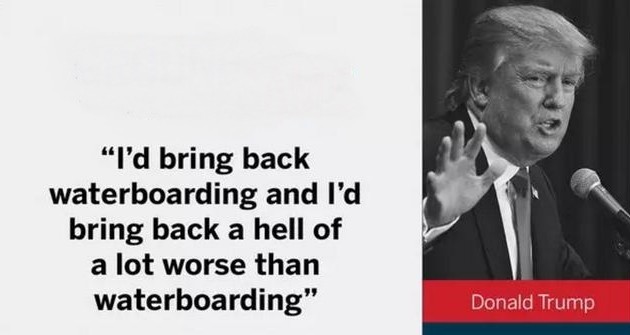
Hastings notes the use of the least competent military personnel as guards while the more competent soldiers were fighting the war.  Hastings tells of prisoners at Koje-do being hung by their testicles and drowned by water hoses secured to their mouths.  How different is that to a naked prisoner at Abu Ghraib or reported water boarding of enemy combatants?

Abu Ghraib prison treatment.

How similar is Koje-do Island’s P.O.W. camp in the Republic of Korea to Iraq’s Abu Ghraib prison?

America repeats many of Korea’s mistakes in Vietnam and Iraq.  The question is–are military interventions new history or the second coming of a repeat tragedy?

How similar is America’s support of Vietnam’s Ngo Dinh Diem (1955-1963), and Iraq’s Saddam Hussein (1979-2003)? 

Summary execution of a Vietcong in Saigon (Gen. Nguyen Ngoc Loan shoots Nguyen Van Lem)

Vietnam’s Ngo Dinh Diem history is one of corruption as totalitarian and politically repressive as Rhee’s Republic of Korea’ government.   The wars in Korea and Vietnam are over.  Are Korea and Vietnam safer or better today than before outside military intervention?  Vietnam re-unified after the war; Korea did not.

America supported Hussein because he opposed Iran.  America’s relationship to Rhee is similar in that Vietnam historically opposed communist China.

Hussein gassed Kurds in northern Iraq and terrorized his country’s Shiite majority. Rhee declared martial law in the Republic of Korea and murdered an estimated 14 to 30,000 Koreans.

The question one may ask themselves, with Hussein dead, is Iraq safer or better today than before intervention?

Are South and North Korea safer or better as a result of the Korean war? From an economic standpoint South Korea is better and safer. That is not true in North Korea.

Francis Fukuyama, in a book titled “Political Order and Political Decay”, argues that violation of sovereign borders violates one of three pillars of a modern state. America’s invasion of Iraq destroyed the government’s ability to exercise power. The United Nations invasion of Korea results in a two state solution. That solution seems good for only some Korean citizens.

Whenever one thinks they know what is good for another there is a cognitive dissonance between what one wants and what one gets.

Hussein was a horrid ruler by American standards, but he was the head of a sovereign state. North Korea’s Kim Jong Un demonstrates the same qualities of leadership as Hussein.

Where will Trump lead America on the question of Kim’s reign? To paraphrase Samuel Clemens–history may not repeat itself, but it does rhyme.

When did human beings become “Gooks”, “Charlies”, and “Towel Heads”?  War brings out the worst in human beings by demonizing and animalizing the enemy making killing more socially acceptable.

Hastings shines a bright light on the ugliness and heroism of war.  Hastings immortalizes the Irish 1st Battalion RUR (Royal Ulster Rifles’) battles in Imjin and Kapyong in 1951 with a heart rending and inspiring story of determination and bravery.  However, his stories of fighting in subzero weather, being captured by the enemy, suffering from dysentery, seeing friends mutilated and killed, and fighting to the death for meaningless plots of ground are stomach turning episodes of despair.

After the 65th Chinese Army had exhausted itself attempting to smash through the defensive positions on the River Imjin held by the British 29 Brigade, the Brigade withdrew to a new line south of the River Han where, on 26 and 27 April, it rested and refitted for future operations. The Brigade had sustained over one thousand casualties at Imjin.

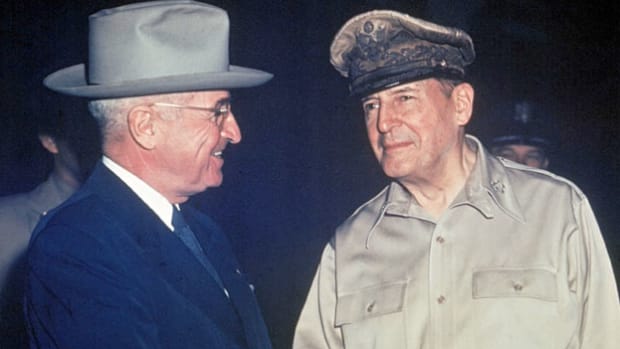
The glaring hubris of General MacArthur and his replacement with General Ridgeway by President Truman reinforces belief in the importance of good leadership.

A recurring theme in Hastings’ Korean history is the importance of ground forces’ confidence and spirit in the success of individual battles.  (This is a theme portrayed in Leo Tolstoy’s “War and Peace” which is equally well narrated by Frederick Davidson.)

Was the Korean War worth it?  Hastings fails to give a definitive answer but he provides an interesting historical background for one to consider its value.

CAPITALIST SELF-INTEREST

Audio-book Review
By Chet Yarbrough

(Blog:awalkingdelight)
Website: chetyarbrough.blog

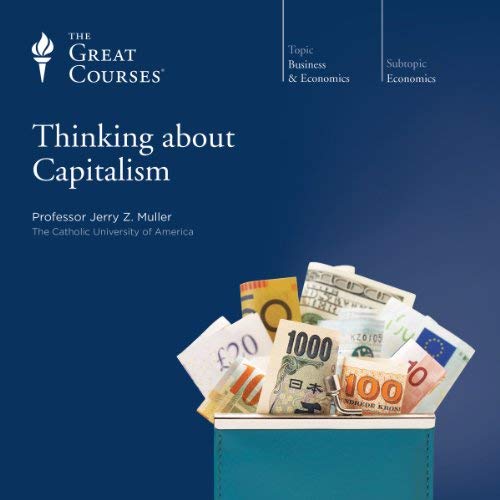
The Great Courses: Thinking about Capitalism

Lectures by Jerry Z. Muller

 Narrated by Jerry Z. Muller

Jerry Z. Muller (Author, professor of history at the Catholic University of America)

Professor Muller offers an interesting and insightful defense of capitalism.  Jerry Muller’s “Thinking about Capitalism” is an historical account of economic theory. 

Muller explores three economic systems:
1) market, 2) command, and 3) mixed. In his journey through the history of economic systems, market (aka capitalism) shines brightest.

Muller notes that capitalism is pummeled by many anecdotes of history.  Muller does not deny the excesses of market economies, but Muller suggests capitalism’s benefits far exceed its detriments.

There is nothing new in Joe Manchin’s self-interest in coal investment or representation of a state dependent on the coal industry. The question is whether he is representing his personal interest in wealth and re-election or the common good of the nation.

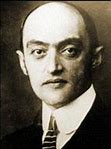
Adam Smith (1723-1790, Scottish economist)

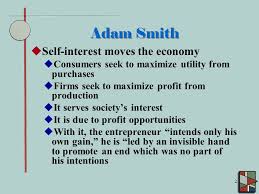
Muller argues capitalism’s storied failures distort its multifaceted values.  In the “Wealth of Nations”, a seminal work on capitalism, Adam Smith clearly explains the value of a capitalist (market) economic system based on self-interest.  Muller notes Smith’s term “self-interest” is often misinterpreted by the public as greed. 

Smith’s definition of self-interest is founded on virtue, i.e., behavior based on high moral values. However,
Self-interest comes in many forms. 

One person’s self-interest may be altruistic in helping others to feel better about themselves.  Another person’s self-interest may be to increase personal wealth to improve their family’s standard of living.  And, self-interest may be associated with greed. The fundamental point is that everyone’s self-interest is a motivation that is ungoverned by an outside force.  Self-interest is a part of human nature.

In a broader sense, there is some truth in the economic cliché of “a rising tide lifts all boats”.  It reflects Adam Smith’s belief in the “invisible hand” that guides one’s life in a market driven economy.  Every individual strives for their own self-interest which offers charity to some, employment to others, and individuated incentive to all. 

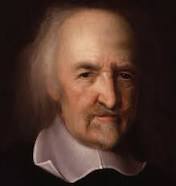
Thomas Hobbes (1588-1679)

Thomas Hobbes notes that human nature is both good and bad.  He tempers Smith’s argument for capitalism by suggesting government is necessary to mitigate self-interest that is harmful to the public.

Smith and Thomas Hobbes (author of “The Leviathan) believe self-interest is a universal human characteristic. Smith addresses self-interest as an enlightened Socratic understanding of virtue.  Hobbes is less doctrinaire and implies Socratic virtue is not common in the general population.

Smith argues that capitalism takes the essence of human nature’s natural self-interest to advance civilization.  This advance is not a smooth upward curve but an improving trend.  Bad things do happen in a capitalist society. Hobbes might agree with Smith but only in the context of “rule of law” that mitigates non-virtuous self-interest.

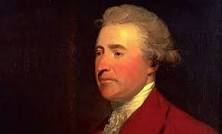
Edmund Burke (1729-1797, Irish statesman)

Muller does not ignore critics of Adam Smith’s “Wealth of Nations”.  Edmund Burke is a noted critic who argues that too many social conventions are sacrificed by disparate self-interests.  He argues that the French revolution is a potential consequence of an economy driven by self-interest. 

The social structure of France is decimated in the 1789 revolution.  History shows “the terror” of the French revolution murdered innocents.  On the other hand, it reformed an economy that left many behind.  Prior to 1789, only the rich owned land, never went hungry, and inherited wealth. In the 18th century, France’s poor are mired in poverty, often hungry, with little chance for advancement.

Justus Möser (1720-1794, German social theorist)

Muller also cites criticism from Justus Möser , a contemporary of Burke, who believed the rise of capitalism (mercantilism) destroys craftsmanship in local economies.  With trade from other parts of the country and world, Möser argues insular communities are harmed by prices of similar products replacing local artisan’s goods.

Möser argues mercantilism destroys the fabric of local communities; foments insecurity and social unrest.  Muller, in part, agrees with Möser’s argument. However, Muller notes Möser’s argument is right and wrong. 

With less money being spent for one thing, more money is available to buy or invest in other things.  What Möser ignores is mercantilism’s benefit to consumers and the local economy. Consumers who buy a product for less money have more money to spend or invest in the local economy.  

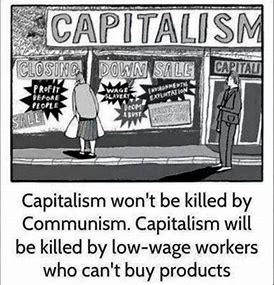
An amendment to criticism of Möser is that the consumers must have enough money to buy product being produced, whether in America or somewhere else.

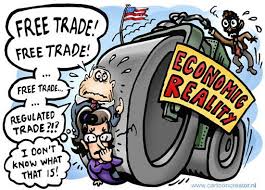
Much of Möser’s argument is the same concern raised by those who support today’s trade war.  Trump ignorantly pursues a trade war that weakens Adam Smith’s view of capitalist competition. America needs to adapt to a world economy that is increasingly intertwined.

Möser is right in suggesting free trade creates insecurity in local markets.  It also demands adjustments in labor that harm local artisans, but Muller argues there is a net gain in public good and general welfare with free trade.

Max Weber (1864-1920, German sociologist, philosopher, and political economist)

Muller goes on to explain how a confluence of religion and capitalism benefits society with Max Weber’s melding of Protestant Ethic with the Spirit of Capitalism.  Weber makes the idea of living aesthetically and putting aside savings as a prudent way of living life in an uncertain environment.  Creating wealth became a religious calling to some.

Joseph Schumpeter (1883-1950, Austrian political economist)

Muller reviews Joseph Schumpeter’s contribution to the theory of capitalism.  As a 20th century Harvard Business School professor, Schumpeter lectures on the value of “the invisible hand”.  Schumpeter advances the idea of “creative destruction” as a characteristic of capitalism.

Schumpeter outlines the value of entrepreneurs who pursue new ideas, new products, and innovation that replaces dying industries.  He trumpets the growth of capitalism as an engine that perpetuates societal benefit. Some argue that today’s American governance discourages new ideas by dwelling on manufacturing at the expense of technological innovation and change.

Muller examines the other two economic systems, i.e., 2) command, and 3) mixed systems.  Muller implies they fail to meet the historical successes of market capitalism.  A command economic system is autocratic with primary economic decisions made by one ruling agency—like Mao’s communist party, Hitler’s Third Reich, and Stalin’s Great Turn. 

Short term economic benefit of a command system economy hugely disrupts society.  Economic improvement is evident in the short term, but momentum is lost as the gap between haves and have-nots grows. 

In a command economy, the cult of personality takes over and image becomes more important than substance; i.e. who you know becomes more important than productivity.

Muller implies mixed economic systems are a work in progress.  They are represented by leaders like President Xi in China, and President Putin in Russia. 

Xi and Putin retain the concept of communist control of the economy but combine command economics with “Smithian” capitalist ideals. However, Putin takes a wrong turn by waging war on an independent country with its own mixed economy ambition.

China’s mixed economic policy began with Deng Xiaoping, but Xi expands its reach.

Both China and Russia have shown economic improvement in the late 20th and early 21st century.   Xi’s “Road and Belt” plan is part of a command economy, but it relies on the capitalist market principle of influencing trade between nation-states.  China’s long-term success remains to be seen.  Whether it will be a more effective form of economic improvement than Adam Smith’s market-based formula is left to history.

Russia, like Xi, uses capitalist influence to grow its economy.  Russia, in contrast to China, uses its natural resources (oil distribution), rather than a “Road and Belt” policy to expand its influence. Unfortunately, Putin chooses to waste Russia’s oil wealth on war.

Fundamentally, Muller infers no modern economic system is better than capitalism.  One draws that inference by Muller’s cogent explanation of the value of capitalist self-interest.  Because Adam Smith’s concept of self-interest is an inborn characteristic of human nature, it will prevail over any known economic system that requires command control. 

America has been a successful capitalist country in great part because of checks and balances that mitigate command control qualities of mixed economies.  Hobbes assessment of human nature demands some level of command control, even in a capitalist economy. 

One might argue that America’s avoidance of near economic collapse in 2008 is evidence of the importance of a mixed economic theory.  (Interestingly, a December 18, 2018 “…Economist” article, published under the Schumpeter byline, notes that China’s communist party’s mixed economic system during Trump’s trade war fared better than America’s government regulated free enterprise economy.)

American history shows lower taxes encourage higher production and job creation. What is missed by tax reduction is that it exacerbates income inequality. Tax reduction incentivizes corporate leaders to devalue worker wages to increase profitability. Human self-interest leads to higher income for corporate owners and executives. The consequence magnifies the wealth gap between have and have-nots.

FBI FALLIBILITY

Audio-book Review
By Chet Yarbrough

(Blog:awalkingdelight)
Website: chetyarbrough.blog

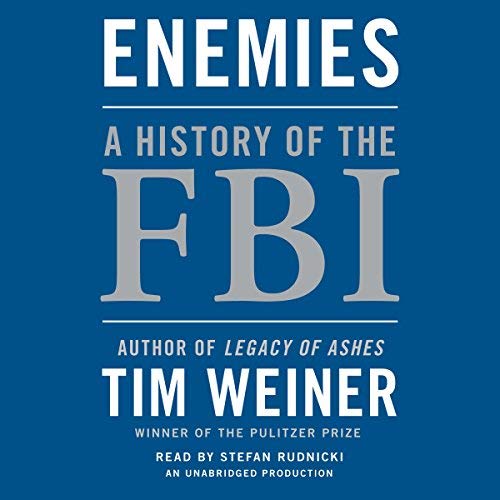
Enemies: A History of the FBI

By Tim Weiner

 Narrated by Stefan Rudnicki

Tim Weiner (American Author)

One does not come away from Tim Weiner’s book knowing where the line is drawn between value and scorn for government intrusion in the lives of Americans. This seems particularly relevant today when veracity, political bias, and honesty of the FBI is being seriously questioned

J. Edgar Hoover (1895-1972. 1st Director of the FBI from 1924 to 1972).

“Enemies…” is about the rise of the F.B.I. and J. Edgar Hoover’s role in the growth of American domestic intelligence. 

Weiner reports on questionable FBI tactics employed by Hoover.  Hoover sets the table for violation of human rights with a power that defies the intent of the American Constitution. 

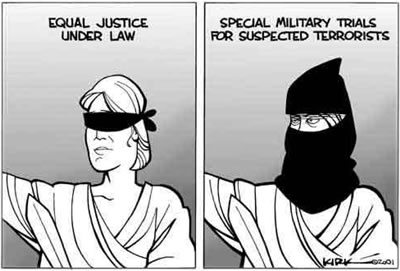
Even though overt American legislation denies the right of the government to arbitrarily investigate private citizens, Hoover throws “habeas corpus”
into the trash.

(Habeas corpus is a writ requiring a person under arrest to be brought before a judge or into court, especially to secure the person’s release unless lawful grounds are shown for his/her detention.)

Weiner shows Hoover to lie about wire-tapping and gathering information on private citizens without warrant or judicial review.  This is the head of the FBI orchestrating the violation of American law. Hoover creates files that give the F.B.I. secret information about the personal sex lives of elected and government appointed bureaucrats and uses that information to influence elected officials and the American public.

Wiener suggests Hoover’s perception is that communism infiltrates all anarchist’ and most American government-opposition’ movements. Hoover crosses the line between free society and tyranny. He gathers information on individual citizens, union movements, civil rights, and accused domestic terrorists with an unshakable belief in his own perception of reality.

The historical facts of Weiner’s presentation gives context to the American communist beliefs of the 40s, 50’s, and 60’s. Hoover feeds the hysteria of his time.

A reader/listener is intellectually and emotionally torn by recounted beliefs held by some American and British citizens of Marxian communism. Some were willing to foment a social revolution by any means necessary.

Others were simply expressing a personal opinion among friends of the same opinion; not to foment revolution, but to explain what they believe denies equal protection, and/or equal rights in America. 

Wiener shows that some actions by the FBI warranted investigation. He notes Klaus Fuchs  who gave the Soviet Union secrets of the atomic and hydrogen bombs in the 50s, and the British agent, Kim Philby, who betrays American and British agents of the F.B.I., C.I.A. and British MI-5.  (Agents were murdered because of Philby’s betrayal.) 

The unfortunate consequence of Hoover’s domination of the F.B.I. is that it evolves into a vehicle of suppression, subject to the whims of one human being’s prejudices. This is particularly apparent in the rise and fall of McCarthyism.

America is a government of checks and balances and when any American agency abandons those criteria of governance, it compromises public freedom. 

Every human being is flawed; every human being is subject to the good and bad qualities of human nature.  When the F.B.I. or any government agency is dominated by one person, it fails the test of good government. That seems a justifiable critique of Hoover’s career in the FBI.

The American Constitution’s checks and balances are being used to address the FBI’s role in America.

One comes away from Weiner’s book to believe it is unfair to conflate the era of Hoover with the current administration of the FBI.

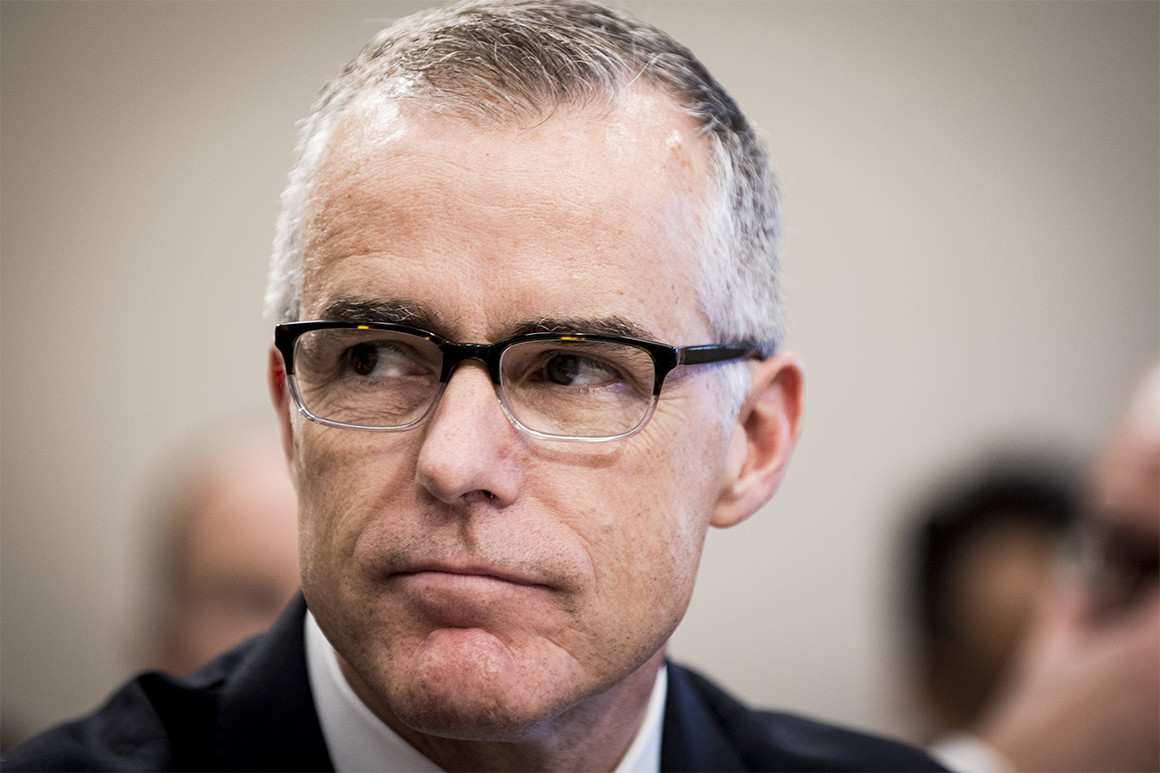
Serious questions are raised about the veracity, political bias and honesty of today’s FBI. There is the Clinton email investigation, the Trump collusion investigation, the firing of James Comey, and the Andrew McCabe and Peter Strzok dismissals.

“Enemies: A History of the FBI” is a relevant subject for the 21st century because of technology’s potential for exponentially invading personal privacy.  Checks and balances through rule of law are a free society’s only protection against human nature’s fallibility.

Michael Horowitz (American Attorney, DOJ Inspector General who is tasked with reporting FBI political bias.)

Though Horowitz’s investigative report is not to everyone’s satisfaction, there is little evidence of FBI’ political bias. There is ample evidence of human nature’s fallibility, but it only reminds us of ourselves. Individual FBI careers have been tarnished but there is no institutional political bias.

FAUSTIAN BARGAIN

Audio-book Review
By Chet Yarbrough

(Blog:awalkingdelight)
Website: chetyarbrough.blog

Turing’s Cathedral: The Origins of the Digital Universe

By George Dyson

 Narrated by Arthur Morey

George Dyson (American author, historian of technology.)

The beginning of one of many Faustian bargains between government and science is revealed in George Dyson’s book, “Turing’s Cathedral”.  Dyson reveals the genius of Alan Turing and other contributors to the computer age.

Alan Turing (Mathematician, computer scientist, logician, cryptanalyst, philosopher, and theoretical biologist.)

John von Neumann (1903-1957) A Hungarian-American mathematician, physicist, computer scientist, and polymath, joins the American military/industrial complex before it became known as the “complex”.

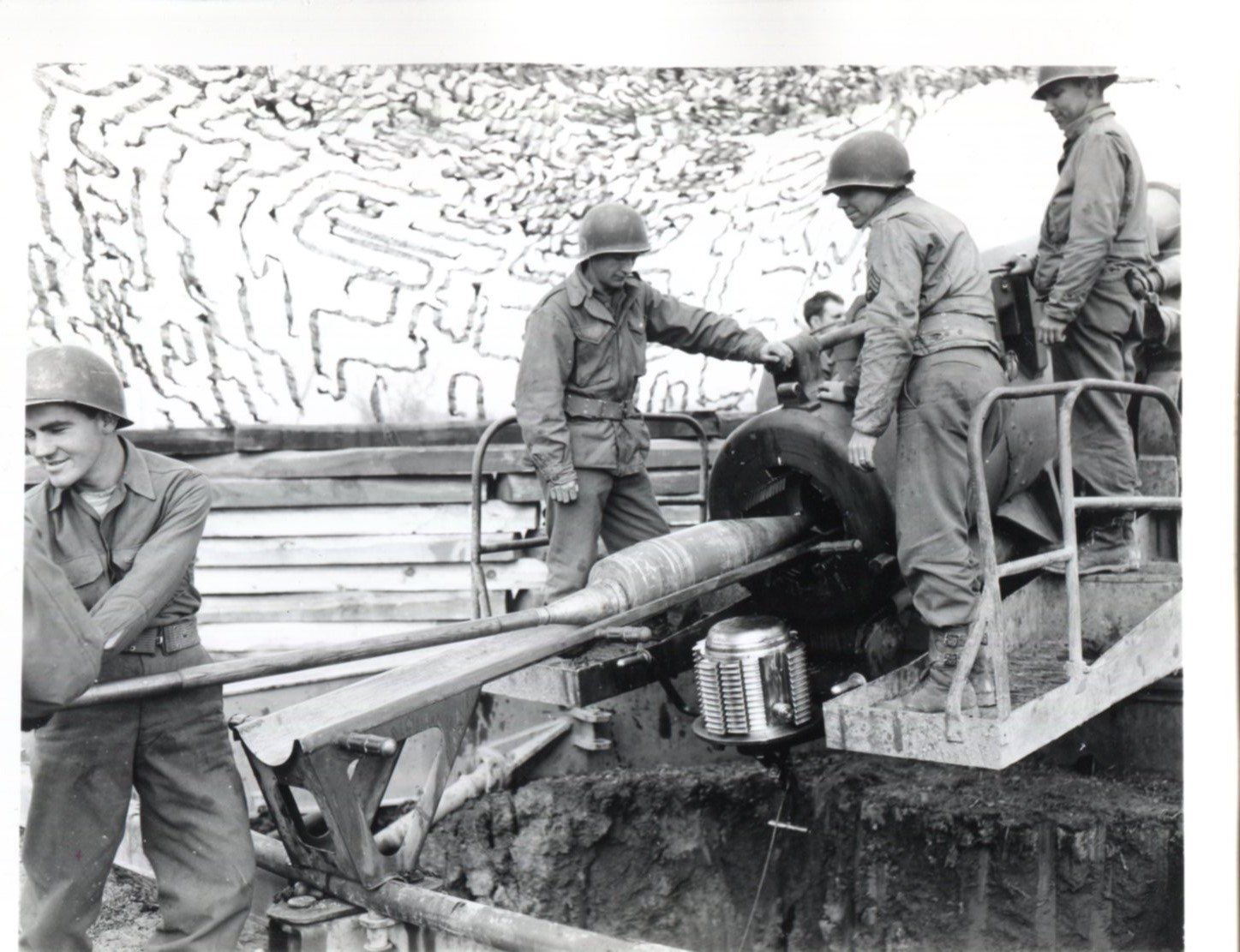
Calculations for ordinance trajectory and explosive impact became increasingly important during WWII.


George Dyson’s book recounts the confluence of military might and computer invention. The military wants more accurate estimates of ordinance trajectory and damage to improve murder rate. Manual calculation was too slow and prone to error.

With government backing, von Neumann is midwife to the birth of the computer generation.  Presuming von Neumann knew of Alan Turing’s 1936 paper on mathematical logic, he wrote a paper about a universal computing machine. Hired by the government to improve the accuracy of military ordinance, von Neumann works with Oswald Veblen at the Moore School of Engineering in Philadelphia. Von Neumann, and Veblen expand a math and engineering department that changes the world.

To the right is the Moore School of Engineering in Philadelphia–The fruit of the new department’s labor is a vacuum-tube, wire bound, contraption called ENIAC.

Before Eniac, human calculations could not efficiently or effectively determine the course of a flying howitzer shell, or the measured impact of a flying-fortress’ bomb.  What the military needed was a better calculating tool than the single human brain.

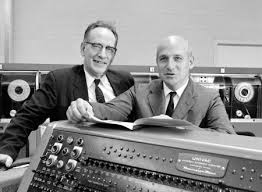
John Mauchly (left) J. Presper Eckert (right)–Mauchly and Eckert were the inventors of the first universal computing machine at the Moore School of Engineering. 

(There is a controversy over who created the architecture for this machine because von Neumann came to the Moore School of Engineering after Mauchly and Eckert had already begun work on ENIAC.)

Though this is an historical account of the invention and consequence of computer manufacture, listening to “Turing’s Cathedral” seduces one into seeing war and the military as a primary source of technological advance. Science is shown to advance from growth of the military/industrial complex and the destruction of war.

Rocket science grows from Hitler’s pummeling of London during WWII. Nuclear science grows from Truman’s bombing of Hiroshima and Nagasaki. Space exploration grows from a moon shot heavily subsidized by the Kennedy administration. In the foreseeable future, government’ satellite and cyber research grows from late twentieth century advances in software development.

What strikes one’s imagination is how critical government expenditure, particularly the military, is to R and D (research and development) in science. 

Interestingly, the requested budget for R and D in 2019 is reduced to $131 billion.

(President Trump is intent on building a wall between Mexico and the U.S.; i.e. not unlike Hadrian’s wall, a first century method of defense. Not what one would call a technological advance.)

One wonders if the computer would ever have been invented without the advance of a horrendously destructive war.  At the very least, war accelerated the invention of the computer generation.

The innate brilliance of Philadelphia’s Moore School mathematicians creates more efficient and effective methods of mass murder. One might argue that the Moore School opened a Pandora’s box. Turing’s, von Neumann’s, Mauchly’s, and Eckert’s theories and inventions open a door to artificial intelligence; i.e. an intelligence beyond human understanding that may improve or destroy humanity. 

The first hydrogen bomb explodes in 1952. According to Dyson, one person is killed while monitoring the explosion. He is the first victim of the hydrogen bomb that is 50 times more destructive than the bombs that fell on Hiroshima or Nagasaki.

One wonders, without government, without the military, and sadly, without war, would humankind have reached into the universe in the 1960s?

This is an important book, somewhat difficult to track because of its non-linear presentation, but a valuable insight to a giant step in the history of science.  

A monumental gap in George Dyson’s presentation of “Touring’s Cathedral” is the effect of the internet and its ability to disseminate information throughout the world with a click.

Instant communication changes the dynamics of society. The computer age and internet offer a platform to rally the best and worst of society.

One cannot help but be troubled by the source of mankind’s twentieth century leaps in scientific discovery. So many scientific advances seem closely tied to perfection and invention of potential weapons of mass destruction. Dyson inadvertently makes a case for war and the military’s efficacy as an engine of science.

“Turing’s Cathedral” opens a door to artificial intelligence, a two edged sword that can defend or destroy humanity. With the internet, the sword is sharpened.

Secret Service

Audio-book Review
By Chet Yarbrough
(Blog:awalkingdelight)
Website: chetyarbrough.blog

Operation Mincemeat
By Ben Macintyre
    Narrated by John Lee

Ben Macintyre (British historian, author, and columist for The Times newspaper)

“Operation Mincemeat” is an historical account of “The Man Who Never Was”. It is about the early days of the British Secret Service. It covers a specific operation to mislead the German Axis powers on the planned invasion of Italy in WWII.

Though this history is enlightening, Macintyre’s account makes the early British Secret Service look like an upper-class boy’s club. The master minds of early British Secret Service espionage, MI5, are pictured as aspiring novelists from privileged, wealthy English families playing a game of war.

The mission is to drop a dead body in the Mediterranean off the Spanish coast. The body is to carry false documents to mislead the Axis powers.

Ian Fleming (1908-1964, English author, former naval intelligence officer, creator of the James Bond series.

The idea came from a novel written in the 1930s. One of Mi5’s agents, Ian Fleming (author of the James Bond series) recalls the novel and suggests the idea to the “boys club” in 1939.

The details for execution of the plan are fascinating. The difficulty of acquiring a dead body, the creation of forged documents, the personal approval of Winston Churchill, and the bureaucratic arguments over minutiae before the plan could be executed beggar belief.

With all that preparation, it is surprising to hear of fundamental mistakes made on planted documents. The picture on the military ID to identify the dead body did not have the right hair line. One of the personal letters placed on the body incorrectly refers to a field commander as though he had knowledge of plans that he could not have had.


In spite of these mistakes, the plan works perfectly and saves hundreds, probably thousands of Allied personnel by convincing Germany to build their defensive forces in Greece rather than Italy where the Allied invasion actually occurs.

Ewen Montagu (1901-1985)
There are stories of patriotism and hard work by the British Secret Service but they are diminished by characterization of the early agents.  An office dalliance between the prime mover of the Mincemeat operation, agent Montagu, and an office secretary seems tawdry. The book concludes with Montagu’s battle over government declassification of the operation and his fight for publishing rights to the story of the deception.

The author’s characterization of the early days of the British Secret Service is not heroic in the sense one gets from deciphering the enigma code by the Turing team. There are pictures of real heroes in this history but they are soldiers in a real war.

Much of MI5’s depiction in “Operation Mincemeat” is of upper-class rich boys playing war in blacked out offices near Piccadilly; while soldiers and civilians are losing their lives in England and the mainland.

INTERNATIONAL RELATIONS

Audio-book Review
By Chet Yarbrough

(Blog:awalkingdelight)
Website: chetyarbrough.blog

All the Shah’s Men:

An American Coup and the Roots of Middle East Terror
By Stephen Kinzer

Narrated by Michael Prichard

Stephen Kinzer (American Author, journalist and academic, former NYT’ correspondent)

Stephen Kinzer is among a long line of journalists that look at America’s past and reveal some of its lies. Kinzer is a journalist that covered Middle Eastern affairs for the New York Times.  He examines a piece of Iran’s history to reveal America’s clandestine involvement in the overthrow of Mohammed Mossadegh, a 1950’s Prime Minister of Iran.

“All The Shah’s Men” is a thrilling recount of America’s complicity in Iran’s overthrow of Mohammed Mossadegh in 1953.  Kinzer builds a credible story of British greed that seduces American government into removing Mossadegh from office. 

(One is reminded of “The Three Kings” movie that shows an American captive being forced to drink oil; a graphic illustration of why some in the Middle East accuse the West of greed.)

Kinzer recounts British colonization, and industrial domination of Iranian oil assets.  The Shah of Iran enters into long term agreements with a British-controlled oil partnership of Iran’s oil industry.  The contract is long term and exclusively managed by the British with all accounting for Iranian payments determined by British managers. Mohammed Mossadegh fights for Iran’s right to its natural resources.

British Petroleum was the controlling and managing partner of an Anglo/Persian oil conglomerate called APOC. The British treasury purchased 51% of the conglomerate in 1914.

Mossadegh, formally educated in France with credentials as a lawyer and Finance Minister, exposes unfair practices of the British-controlled oil company. The British government supports the oil company’s refusal to renegotiate their contract with the Iranian government. Iran refuses to kowtow to the British government.   In response, Mossadegh nationalizes the oil conglomerate’s assets.

Winston Churchill appeals to President Truman for American assistance in overthrowing Mossadegh’s administration; Truman refuses.  Churchill recognizes Truman is soon to be replaced by Eisenhower and decides to wait until Eisenhower is in office.

The Churchill administration suggests Mossadegh is creating instability in Iran. Churchill argues that Iran will turn to communism if America does not aid Great Britain in the removal of Iran’s Prime Minister.

The irony of Churchill’s instability argument is that much of the instability is caused by Britain’s strict embargo of all assistance to Iran while Iran’s primary source of income, the oil industry, is shut down by Britain’s refusal to negotiate a new oil contract.

Kermit Roosevelt Jr. (1916-2000, CIA officer, a grandson of U.S. President Theodore Roosevelt.)


Eisenhower initially rejects Churchill’s overture but the CIA becomes involved through the clandestine placement of Kermit Roosevelt as a CIA operative in Iran. His job is to foment a rebellion. Direct involvement of Eisenhower is not revealed by Kinzer’s research but Roosevelt and CIA participation in the removal and replacement of Mossadegh is clearly documented by Kinzer.

Kinzer’s story is fascinating. However, as credible as his story is, to suggest a direct link between Mossadegh’s overthrow and the bombing of the New York towers is hyperbolic. 

Great Britain, the United States, the Shah of Iran, and private industry are villains in this story, but greed is a universal human failing that permeates all human endeavors. A direct line between one event and international relations is a trick by historians and journalists to simplify history. One nation’s exercise of power and influence over another is resisted by all sovereign nations. It is the accumulation of sovereign encroachments that cause long term enmity between nations.

U.S. Embassy Hostages Taken in Iran in 1979.

Qasem Soleimani

No singular event explains one nation’s antipathy toward another but each opens wounds from the past.