WHATS NEXT

Audio-book Review
By Chet Yarbrough

(Blog:awalkingdelight)
 Website: chetyarbrough.blog

The Philosophy Book (Big Ideas Simply Explained)

By: DK Author-Will Buckingham

Narrated by: Jason Culp

Will Buckingham (English Author, novelist, philosopher, masters in anthropology, PhD in philosophy from Staffordshire University.)

Will Buckingham succeeds in telling the story of philosopher’s big ideas. Buckingham takes listeners on a journey through the ages of philosophy. Beginning in the pre-Julian Roman calendar of 585 BC, Buckingham explains how Thales of Miletus began humanities’ journey from belief in mythology to observation and prediction. Miletus predicted a solar eclipse, presumably based on astronomical observation.

Thales of Miletus (626 to 623 BC to 548 to 545 BC, Pre-Socratic Philosopher known by some as the Father of Science.)

Socrates is believed to have lived from 470 to 399 BC when he chose to take his own life when found guilty of charges of blasphemy and corrupting youth.

Plato (428-423 BC to 348-347 BC, died at the age of 80.)

Socrates could have escaped execution according to Plato’s writing in the “Phaedo” but chose to drink Hemlock tea, the poison of capital punishment.

Socrates denies both accusations against him. Plato writes Socrates mentions the god Asclepius (one of the gods noted for healing) in his last moments of lucidity. The implication of Plato is that Socrates believed in the gods. Socrates flatly denies the corruption of youth for which he is accused.

Buckingham notes what is known of Socrates is only through Plato and Aristotle’s writing which support his innocence by relating stories of Socrates search for truth.  An ancient Oracle is said to have told Socrates he was the wisest of all men. By questioning beliefs of those who professed wisdom, Socrates finds others ignorance and understands why the Oracle considers him the wisest “…because I alone, of all the Greeks, know that I know nothing.” It is through dialog with others about belief that Socrates finds other’s ignorance and his wisdom.

Confucius (551 BCE-479 BCE, died at 71 or 72, Chinese philosopher.)

Before Socrates, Buckingham notes the prominence of Confucius who lived in China, between 551 to 470 B.C.E. Both Socrates and Confucius search for truth.

Both are searching for causes of societal chaos. However, where Socrates looks to dialog with others and communication with the gods for help in understanding life, Confucius looks to what is called the DAO, i.e., the “way”, the road, or the path that gives harmony to human nature. In the DAO, there is a yin and yang to life that leads one to a harmonious code of behavior. It is neither based on God or gods but on the search for harmony in life.

Though Socrates and Confucius seek wisdom, their paths are quite different but with similar objectives.

This seems a beginning of a split between gods, God, and human belief. The Greeks pursue the help of gods for earthly harmony. The Chinese search for a path to human harmony within society, exclusive of gods or belief in one God.

Buckingham proceeds to overwhelm listeners with mostly well-known philosophers of history. He does not make a distinction between belief in gods, God, or what is broadly characterized as science.

In coming to grips with the number of philosophers noted, one tends to rely on a perceived societal direction. To this listener, the direction is away from God, toward science.

This is not to say that science or philosophy excludes God. There are many famous scientists who claim belief in God. Rene Descartes, Isaac Newton, Galileo Galilei, Albert Einstein, Gregor Mendel, and Charles Darwin, to name a few. The irony of that truth is that each of these scientists made discoveries that weaken one’s belief in God because their discoveries offer insight to the origin of life and living without God.

The list of non-believers is as long or longer. Some say Einstein was an Atheist. There is Daniel Dennett, Michael Shermer, Rosalind Franklin, Sigmund Freud, Stephen Hawking, Richard Dawkins, Richard Feynman, Niels Bohr, Francis Crick, Erwin Schrodinger, John Bell, and so on.

“The Philosophy Book” offers more information about philosophers than one may want to know. Nevertheless, it offers a well written overview of belief, if not wisdom, in the world. One may ask themselves, what’s next? Artificial Intelligence seems to offer our best chance of survival if humanity is on its own.

CHURCH AND STATE

Audio-book Review
           By Chet Yarbrough

(Blog:awalkingdelight)
 Website: chetyarbrough.blog

White Too Long (The Legacy of White Supremacy in American Christianity)

By: Robert Jones

Narrated by: Holter Graham

Robert P. Jones (Author, Founder of Public Religion Institute, Baptist Theological Seminary Graduate, Ph.D. in religion from Emory Univ.)

Though history shows Americans have wavered, freedom (within the limits of rule-of-law) has progressed.

Fundamentally, “White too Long” is about equal rights for all Americans in the face of white privilege and white supremacy. Jones argument is a powerful explanation of how inequality is institutionalized by American Catholic and Protestant religions.

Jones focus is on discrimination against people of color in the south, but his evidence applies to many states-of-affair and every State in America. Raised in the south, born in 1968 and educated as a seminarian, Jones has intimate knowledge of religion and its practice.

Robert Jones reflects on institutionalization of racism by Christian religions in the United States.

Images of Christ as “God’s offspring” are of a white man in most (if not all) Christian religions. Christ is rarely identified as a person of color, or obviously as a woman. God as the Father is presumed by white America to be male and to be white.

It seems fair to say Americans have made progress in reducing racism and improving equal rights, but it has been two steps forward and one back. A basic tenant in the formation of the United States is separation of church and State.

The concern that America had in its beginning is government sanctioning of a particular religion for any state or jurisdiction. To keep that from happening, the Constitution stipulated separation of state and religion.

What Jones focuses on is the south’s history of slavery in “White Too Long”. Jones offers a detailed history of how religion reinforces white supremacy in the South. He argues that southern leaders of various religious denominations assumed beliefs in white supremacy and spread that belief through their religious preaching. They preached to white audiences constituting the bulk of Americans in the first 200 years of American history.

He notes the 2015 murder of 9 Black church members in Charleston S.C. as a turning point for the south. Dylann Roof walks into a Black church and murders the minister and 9 members of the church. Of course, the south is not the only source of white supremacists’ violence against people of color. There is the horrendous “Tops Market” murder of ten non-white citizens in Buffalo N.Y. in 2022 by Payton Gendron.

Jones notes how southern white America justified slavery as their right as a superior race. He recounts numerous stories of his experience in the south and his awakening to the subtle ways white superiority became an assumed right of his white friends. Preachers preached the gospel of white superiority. Jones notes how belief in white superiority became real to white Americans. Any opposition to that belief would be met with violence, before and after the civil war.

Though it is not part of Jones’ book, America’s religions also institutionalize discrimination against women. Like people of color, women of all races are treated unequally. Recent action by the Supreme Court in a woman’s right to choose whether to give birth is a case in point.

The Supreme Court’s decision in “Dobbs v. Jackson Women’s Health Organization” is a step backward from equal opportunity for women in the United States.

Some would say abortion is different because it involves taking a life and not being punished. Is that different than the lives of people of color who have been hung, mutilated, and discarded by white supremacy and not punished? Some would say yes because a baby is innocent. Being innocent and born to a mother who does not care destroys both a mother’s and baby’s innocence. America does not have a good record for taking care of the homeless, let alone poorly cared for children.

In view of Jones education, one presumes Jones would not condone abortion but his argument of religions’ role in institutional racism seems equally applicable to women’s rights. The conservative tone of today’s Supreme Court bodes ill for American equal rights. Separation of church and State is a fundamental tenant of the U.S. Constitution.

Jones has written a damning and enlightening report on white supremacy, and its tacit perpetuation by Christian religions.

The most difficult chapters of Jones book are at its end. When one accepts that America has been “White Too Long”, what can we do about it? The author’s answer is to come to grips with truth, i.e., repent, and offer restitution to descendants of slavery. Jones recalls the story of Cain and Abel and identifies white Americans as the embodiment of Cain.

In Jones belief forgiveness only comes from truth, repentance, and restitution. Most rational white Americans accept the idea of truth and repentance, but restitution is derided by powerful Americans like Mitch McConnell who resist the idea of restitution because it is too difficult to trace descendants of slavery.

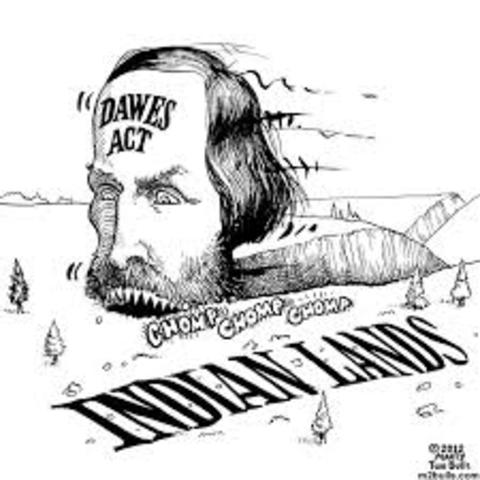
One might ask oneself-how difficult is it to offer native Americans restitution for the theft of their land? Reservations, and the right to create income producing properties have been a haphazard solution but they have been steps toward restitution.

Jones suggests some first steps have been taken by organizations that have set up endowments for restitution for slavery’s descendants. He argues, only with restitution can the stain of slavery be removed from the conscience of White America.

While one may ignore the issue of restitution, today’s American Supreme Court encroaches on separation of church and State by choosing to change support for Christian schools and “Roe v. Wade”. Erosion of church and State separation sets a table for more American violence. Unequal treatment cannot be sustained in a world of demographic change.

INTERVENTIONIST FOLLY

Audio-book Review
           By Chet Yarbrough

(Blog:awalkingdelight)
 Website: chetyarbrough.blog

No Good Men Among the Living (America, the Taliban, and the War Through Afghan Eyes)

By: Anand Gopal

Narrated by: Assaf Cohen

Anand Gopal (Author, Journalist, formally embedded with the Taliban in Afghanistan.)

“No Good Men Among the Living” should be read or listened to by Presidents, Senators, Representatives, and Ambassadors of the United States. Anand Gopal gives a journalist eye view of errors and consequences of America’s intervention in Afghanistan where neither language nor culture are understood.

In the beginning of Gopal’s book, one is skeptical of its objectivity. However, as Gopal’s interviews of Afghan Taliban and non-aligned Afghanis accumulate, a listener begins to believe what is being said and reported.

The trials of Afghan women are appalling to Americans. What is missed is the struggle younger Afghan women have with the older generation.

Grandparents are appalled by what they perceive is abandonment of a life of duty to Allah and men in their families, whether fathers, husbands, or sons. This duty is based on generations of a culture that protect the tradition of male and female relationship. That protection is anathema to freedom, which is an inviolable tradition in America, but not Afghanistan.

The experience of Russian intervention and American training of the mujahideen led to a culture of non-Islamic terrorism.

The violence of interventionist states and training of mujahideen became fertile ground for Taliban revitalization. Violence, repression, and religious zealotry became tools of Taliban growth, resistance, ascendance, and resurgence.

Gopal notes Afghani women were raped and killed by American trained Mujahadeen after Russia was expelled. The Taliban restored order. Later, when America chose to dismantle the Taliban because of the Afghanistan leader’s refusal to release bin Laden, Afghanis began to see America as a new occupier rather than liberator.

Afghanis began to see America as a new occupier rather than liberator. The Taliban secretly regained power and influence as the perception of America’s intervention changed.

The cause of the change in perception of America as an occupier grew because of its dependence on self-interested tribal Afghanis who used American forces to eliminate rivals. All a respected Afghani translator had to do was identify a rival as a Taliban ally. America would arrest, jail, or kill the translator’s rival.

America presumes it is helping rid Afghanistan of Taliban control when in fact it is only serving a translator who has a tribal self-interest.

Internecine tribal conflict in Afghanistan creates an all-against-all culture with survival of the fittest as an objective assuring Taliban resurgence. The Taliban could maintain a level of peace and relative stability between tribes; America could not. America’s lack of understanding Afghan culture and American dependence on self-interested translators assures its failure.

America’s ignominious Afghan abandonment is a tragedy for both countries.

The fault lies with America’s failure to define a limited objective, execute a plan, and leave when a defined objective is achieved. It is unrealistic to believe an interventionist country can understand another country’s culture well enough to offer benefit to both invader and invaded.

The sad consequence from America’s view is that women will continue to be suppressed in Afghanistan.

There is a slender hope drawn from Gopal’s interviews of a young Afghan woman. She becomes a regional representative in Afghanistan despite the murder of her husband by the Taliban. She is supported by a tribal leader who respects her independence. The road traveled by women in Afghanistan is certainly more difficult now that America has left, but Gopal shows there is a road. However, Gopal infers help can only come from those who understand the culture in which they live.

Without a precise and achievable interventionist objective and an immediate withdrawal plan, military intervention historically leads to national tragedy, both for perpetrator and victim.

With the qualified exception of Korea, America’s interventions in Vietnam, Iraq, and Afghanistan are national tragedies for both interventionist and subject nations. Today’s contest is in Ukraine with Russia, once again, testing intervention.

FREEDOM’S LIMITS

Audio-book Review
           By Chet Yarbrough

(Blog:awalkingdelight)
 Website: chetyarbrough.blog

Let Them Eat Tweets: How the Right Rules in an Age of Extreme Inequality

By: Jacob S. Hacker, Paul Pierson

Narrated by: Peter Berkrot

One doubts this book will be read or listened to by most Americans based on its clear allusion to the 18th century phrase “Qu’ils mangent de la brioche” (“let them eat bread”–allegedly said by Marie Antoinette during the French revolution).

Marie Antoinette (1755-1793, Louis XVI’s Queen Consort of France.)

Just as Marie Antoinette is unlikely to have said “Qu’ils mangent de la brioche”, it is an allusion unworthy of Hacker’s and Pierson’s ivory-tower educations.

The co-authors detail a current crisis in America that is well detailed by others in this century.

There is an appalling and growing gap between rich and poor in America. However, though the gap is real, most rational Americans have no interest in beggaring their neighbor.

In the 17th century, Hobbes clearly recognized the pitfall of democracy when not constrained by rule of law. Freedom is a harsh master and has been recognized as such from American Democracy’s beginnings.

Human beings are driven by the desire for money, power, and prestige. Hacker and Pierson note many actions taken by American politicians, appointees, government bureaucrats, and corporate moguls have had the unintended consequence of beggaring their neighbors.

Rule of law has simply not kept up with the fundamental tenant of American freedom.

Four relevant issues raised by Hacker and Pierson are

  1. Taxation,

Congressional leaders focus on re-election as a part of their right to freely choose a profession. To be re-elected requires a campaign funding. That funding largely comes from wealthy Americans and corporations interested in reducing their taxes. Corporate taxes have been legislatively reduced with the rationalization that reinvestment by private industry and the wealthy will create more income for wage-dependent Americans. This is “trickle down” economics that is a fiction. History shows the effect has been to reduce American wages and increase income for the wealthy.

2. Rule-of-Law,

Corporations in the Supreme Court’s decision in “Citizens United v. Federal Election Commission” expanded rights of Corporations as individuals to finance candidates of their choice that compounds elected official bias for reduced corporate taxes.

3. Extremism,

Frustration by the rising gap between rich and poor in America increases extremism because wage-earners see cost-of-living exceeding their ability to accumulate wealth.

4. Institutionalization of Tyranny

Elective office is not serving the public because congressional self-interest is based on a cycle of re-election dependent on wealthy donors who are equally self-interested.

Unless or until a more equitable relationship between the rich and poor is achieved, extremism will continue to roil American Democracy. Freedom is an essential ingredient in America’s economic history, but freedom has always been limited. Only with rebalance between the rich and poor will extremism and institutional tyranny be ameliorated.

ISLAM

Audio-book Review
           By Chet Yarbrough

(Blog:awalkingdelight)
 Website: chetyarbrough.blog

God’s Shadow (Sultan Selim, His Ottoman Empire, and the Making of the Modern World)

By: Alan Mikhail

Narrated by: James Cameron Stewart

Alan Mikhail (Author, Chace Family Professor of History, Chair Dept. of History at Yale.)

Alan Mikhails’s “God’s Shadow” speculates on the historic impact of the Ottoman Empire on the rise of the Islamic religion and its conflict with Christianity. His book is well received by the public but panned by some who believe Mikhail’s scholarship is more speculative than factual. That criticism seems well earned when the last chapter of Mikahail’s book summarizes his opinion about Islam’s past and future.

What is surprising to this reviewer is not Mikhails’s speculation about Islam’s future but his failure to explore Ottoman history’s success in diminishing Shite Muslim growth while hugely increasing Sunni Muslim Islamic influence.

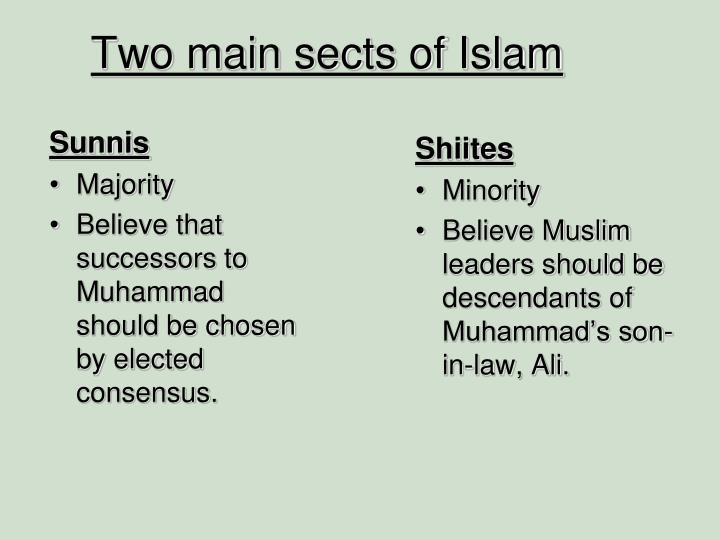
When Muhammed, the founder of Islam, dies, he leaves no heir to Allah’s teaching. In not leaving an heir, a split occurs between those who argue only a direct descendant of Muhammed, not a mere follower, can be a leader of the faith.

Shite Muslims believe an heir to Muhammed’s leadership can only be to a male descendant of the Muhammed’ family. Sunni’s argue Islamic leadership is based on any man who demonstrates success and ability to spread the faith.

It is estimated that 85% to 90% of religious believers in the Islamic faith are Sunni. Only Iran and Iraq have a Shite majority while other nation-states are principally Sunni.

Sultan Bayezid II (1447-1512, reign 1481-1512.)

The spread of the Muslim religion is laid at the feet of Sultan Selim I. He is one of the sons of Sultan Bayezid II who gains control of what is known as the Ottoman Empire.

“God’s Shadow” recounts the rise of the Ottoman Empire which is the primary cause of Sunni growth in the Middle East. A major part of Mikhail’s book is about Selim I because he is the leader that conquers and combines most of the Muslim world into the Ottoman Empire.

An interesting opinion of Mikhail is the role of harems in the Islamic world. He argues male heirs are a primary function of the harem. Once a male is born to a concubine of a Sultan, Mikhail suggests further conjugal relations cease. Every born male is a potential Sultan.

This naturally leads to a competition and often death of male heirs who are chosen by the acting Sultan to be his replacement. “God’s Shadow” tells the history of a younger son who disagrees with Sultan Bayezid II’s choice and successfully replaces that choice by force. Selim I ascends the throne of Sultan despite his father’s choice of heir. Selim’s road to hegemonic Sultan is through the conquering of nations beyond Istanbul and the Balkans, to Hungary on the north, Egypt on the south, Algeria on the west, and Iraq on the East.

Selim I (1470-1520, 9th Sultan of the Ottoman Empire-reigned from April 1512-September 1520.)

An apocryphal story told by Mikhail is that, in the earlier years of Selim I’s conquests, he is presented a colored map of the then-known world that shows nations beyond the Ottoman Empire. Selim I  tears the map in half because he is satisfied with what he has done. Mikhail notes that incident occurs in Selim’s earlier years because when a later map shows the Americas, Selim suggests more is to be done. A fundamental argument made by Mikhail is that the growth of the Ottoman Empire is the precursor of modern governance.

In the final chapter of Mikhail’s book, a step beyond reason or history is taken. Mikhail posits Selim’s reign and the rise of the Islamic religion presages future dominance of Islam in the world. He argues by 2070 Islam will be the dominant religion of the world. That seems hyperbolic when the role of religion in the world is arguably in decline. Mikhail compounds hyperbola by suggesting the world’s reaction to Islam has been a foil to create Christian and democratic nations. The growth of Christianity and democracy are patently more than a reaction to the religion of Islam.

This is an unfortunate digression for Mikhail because he makes a good historical case for the Islamic religion’s tolerance of other faiths in the face of historically murderous Catholic Crusades. On the other hand, many atrocities accompany Selim I’s expansion of the Ottoman Empire. Mikhail notes Selim’s soldiers are compensated by plunder and rape when ordered to invade new territories. And of course, there is the faction of the Muslim faith that carried out the death of over 2,000 people on 9/11/21 in America.

Interestingly, Mikhail offers an encomium to President Erdogan in Turkey by praising him for resurrecting the legend of Selim I in a bridge dedication.

Erdogan is revivifying the Islamic religion in Turkey even though its history was dramatically changed by Ataturk who turned Turkey into a secular rather than Islamic state.

2023 is an important year for Erdogan. He has been President of Turkey since 2014. Some suggest the recent earthquake in Turkey jeopardizes his re-election. To an outsider, it seems Erdogan has reversed some of the secular drive of Ataturk by increasing Islamic influence in governance.

President Erdogan has made his voice heard in the West by initially voting against Sweden’s bid to join NATO. Sweden has been a haven for the PKK, which Turkey characterizes as a terrorist organization that aided an attempt to overthrow the Turkish government in 2016. Sweden’s legislature is voting on March 9, 2023, on a measure that would prohibit recruitment and financing of the PKK in Sweden. One wonders, if that will change Turkey’s “no” vote for Sweden to join NATO.

Erdogan seems an odd choice for comparison to Selim I’s Islamic reign based on a personal perception of this critic’s visit to Turkey. Erdogan seems much less a revered leader by the public than Ataturk, let alone Selim I depicted in “God’s Shadow”.

ARAB DISUNITY

Audio-book Review
           By Chet Yarbrough

(Blog:awalkingdelight)
 Website: chetyarbrough.blog

Arabs (A 3,000-Year History of Peoples, Tribes, and Empires)

By: Tim Mackintosh-Smith

Narrated by: Ralph Lister

Tim Mackintosh-Smith (Author, British historian living in Yemen.)

Tim Mackintosh-Smith attempts to unravel a complicated political, and ethnic history of a society broadly identified as Arab. One begins Mackintosh-Smith’s book with a hope to understand the complex socio-economic ambition of the Middle East. In the end, the author shows there is an unresolvable contradiction that historically guarantees Arab disunity.  

To be Arab, Mackintosh-Smith explains it is necessary to understand the intricacies of Arab language because language is what maintains and sustains Arab’ culture. He notes language holds Arabic culture together, but its use reveals an unresolvable contradiction, a desire for unity without human leadership.

The faults of human nature, the drive for money, power, and prestige generate Arab distrust of leaders. Of course, that distrust is evident in every ethnic culture, but Mackintosh-Smith suggests that distrust demands supernatural intervention for any chance of Arab unity.

Supernatural intervention came in the form of Muhammad as the messenger of Allah in the seventh century.

Muhammad ibn Abdullah (570 AD-632 AD, Arab religious, social, and political leader, founder of the Islamic religion.)

Jesus, in contrast to Muhammed, separates religion from politics. The devil allegedly offered earth’s rulership to Jesus, but Jesus refused. In Mark 10:42-45, Jesus speaks to his followers, “You know that those who are regarded as rulers of the Gentiles lord it over them, and their high officials exercise authority over them. Not so with you. Instead, whoever wants to become great among you must be your servant, and whoever wants to be first must be slave of all. For even the Son of Man did not come to be served, but to serve, and to give his life as a ransom for many.”

One might believe that is true for believers of other faiths, but the difference is that Muhammad ibn Abdullah chose to take Allah’s words as a political as well as religious mandate.

Muhammad did not refuse a political life and chose leadership to create a better world by using the word of Allah, as later revealed in the Koran. Arab experience and distrust of human leadership demands belief in a divinity. As an Arab, Muhammad recognizes the importance of the supernatural in being a leader and chose to take political leadership as an obligation to spread the word and practice of Allah on earth.

The course of Arab history is shown by Mackintosh-Smith to reinforce the importance of divinity in Arab unity. Most great leaders in Arab history led by the sword and the word of Allah, as revealed by interpretation of the Koran. The principle of “great” is not meant to be good or bad but only powerful enough to unite a community of Arabs. These leaders came from disparate backgrounds and nations. The first seven “great” leaders (with exception of Timur and Babur) of the Arabs came from different areas of the Middle East.

1 – Tariq Bin Ziyad (670? – 720) Persia 2 – Harun al-Rashid (763?-809) Iran 3 – Mahmud of Ghazni (971 – 1030) Afghanistan 4 – Saladin (1137/38 – 1193) Egypt 5 – Timur (1336 – 1405) Uzbekistan 6 – Mehmed II (1432 – 1481) Corner of Bulgaria, Turkey & Greece 7– Babur (1483 – 1530) Uzbekistan

Mackintosh-Smith’s history reveals how many Arab countries boundaries were determined after WWII with France and England intent on creating spheres of influence. These boundaries became solidified with the discovery of oil reserves.

The 19 Arab Countries are: Algeria, Bahrain, Egypt, Iraq, Jordan, Kuwait, Lebanon, Libya, Mauritania, Morocco, Oman, Palestine, Qatar, Saudi Arabia, Sudan, Syria, Tunisia, United Arab Emirates, and Yemen.

These 19 Arab countries, some of which are thousands of years old, and others like Bahrain, Qatar, Yemen, Tunisia, and the United Arab Emirates did not become independent nations until the middle to late 1900s.

Mackintosh-Smith notes the Arabic language, despite its many 21st century dialects, remains the glue that holds the concept of Arab together. However, dialects and geographic boundaries reinforced by oil reserves recreate the tribalist instincts of the past.

With the brief rise and fall of Gamal Abdel Nasser in Egypt, Mackintosh-Smith suggests there have been no Arab leaders to rally nationalist feeling in the 20th or 21st centuries that could blunt Arab tribalism.

Gamal Abdel Nasser. (1918-1970, overthrows the Egyptian monarchy in 1952, President from 1954 until his death.)

The internecine conflicts between great powers like Shite Iran and predominantly Sunni Arab countries, like Iraq, Saudi Arabia, is missing from Mackintosh-Smith’s book.

Muqtada al Sadr withdrawal from politics even though he is a Shite is an ill omen.

Muqtada al Sadr makes it clear that religion is a motive force in Arab culture, but the history of the Muslim split becomes opaquer. On the other hand, the author’s detailed explanation of Arab tribalism and its resurgence is a valuable contribution to one’s understanding of Middle Eastern history.

There is a minor note of optimism in the future of Arab culture in Tunisia. But, overall, after wading through this long narration, it seems the Middle East is destined to remain a fragmented tribalist culture for centuries to come.

A STEP TOO FAR

Audio-book Review
           By Chet Yarbrough

(Blog:awalkingdelight)
 Website: chetyarbrough.blog

   We the Corporations (How American Businesses Won Their Civil Rights)

By Adam Winkler

         Narrated by: William Hughes

Adam Winkler (Author, Connell Professor of Law at UCLA.)

If only minorities could have kept pace with corporations’ pursuit of and success for civil rights, American society may have become more equal.

Liz Truss (Newly elected Prime Minister of the UK.)

It is announced this morning (9/5/22) that the new Prime Minister of the UK is to be Liz Truss. A primary issue in Ms. Truss’s campaign is to reduce taxes. America’s experience of reducing taxes seems a replay of the Reagan/Thatcher years. Many consider these two leaders as just what was needed at the time to advance their respective countries’ economies. As a result of their tax reduction policies, the gap between the rich and poor widened with corporations and their leaders being the primary beneficiaries. Hopefully Ms. Truss’s tax reductions do not benefit only corporations.

Experience of reducing taxes in the UK may be a replay of the Reagan/Thatcher years in America.

Corporations need to consider their responsibility for passing on those tax benefits to workers. If Ms. Truss’s tax reductions only increase the gap between rich and poor, democratic government is doomed.

It may be a surprise to many that corporate pursuit of civil rights dates to the early beginnings of American history. The first battle for corporate civil rights began with Alexander Hamilton’s drive to create the first American bank. His major political opponent is Thomas Jefferson. 

Jefferson opposes a national bank because he believes it diminishes State’s rights by ceding too much control to the national government. Winkler notes the irony of Jefferson’s objection in that Jefferson relies on national bank loans to subsidize his profligate lifestyle.

Winkler notes some level of civil rights for corporations is needed to protect the public from exploitation. If a corporation is not recognized as a singular public body, individual Americans could not sue for redress. Harm from unfair or harmful practices of corporations could not be tried in a court of law. However, Winkler explains an underlying concern is the gain of personhood for corporations. By being recognized as a person, corporations gain political influence beyond any individual person’s rights.

To many Americans, a 21st century Supreme Court decision on corporate civil rights is a step too far.

With the decision in Citizens United v. Federal Election Commission, the Supreme Court allows unlimited corporate donations to Americans running for political office.

Money is power, particularly in a capitalist economy. Elected officials become beholding to corporations rather than private citizens when running for office.

A prime example is the pharmaceutical and gun lobbies that have dominated both Democratic and Republican parties.

The rights of these corporate enterprises distort the benefits and dangers of both drugs and guns in American society. Over prescribed drugs and opiates advertised to the public by the pharmaceutical industry are more widely spread than ever before. If elected officials were not so beholding to gun lobbies, national background checks and red flag laws would not be so difficult for Congress to pass.

The opiate epidemic and the 5.25.22 Uvalde murder of 19 children and 2 adults is evidence of the harm done by granting too many civil rights to corporations.

Winkler’s book about corporate pursuit of personhood is burdened by legal explanations for non-lawyer listeners. However, his history gives one a deep appreciation of how civil rights can bring both good and harm to American society.

SOCIAL DYSFUNTION

Audio-book Review
By Chet Yarbrough

(Blog:awalkingdelight)
 Website: chetyarbrough.blog

   Separate (The Story of Plessy V. Ferguson, and America’s Journey from Slavery to Segregation)

By Steve Luxenberg

         Narrated by: Donald Corren

Steve Luxenberg (Author, associate editor The Washington Post.)

“Separate” is a disheartening history of American social dysfunction. It is largely a biographic picture of two Americans, John Harlan and Albion Tourgée. Both play a pivotal role in the transition of American slavery to American segregation. Both are against the iniquity of segregation but fail as civil war veterans and public servants to eradicate America’s belief in a “separate but equal” doctrine.

Their social positions are quite different in that Harlan is from a relatively wealthy slave holding Kentucky family while Tourgée is from a small Ohio farming family.  Both become Republicans that serve in the union army during the civil war. Harlan’s family is politically connected in Kentucky while Tourgée has no interest in politics until he goes to college. Both men become lawyers, but Tourgée is a much less successful lawyer while becoming a noted writer. In contrast John Harlan gains reputation as an astute lawyer who evolves into a well-known dissenter on the Supreme Court of the United States.

Harlan serves as an officer in the Union army and recruits a Kentucky militia that fights for the union.  Interestingly, though Harlan becomes a Republican, he is opposed to Lincoln’s Emancipation Proclamation. Tourgée initially enters the Union army as a volunteer in New York.

Tourgée is seriously wounded in the First Battle of Bull Run in an accident. After recovery, he reenlists as an officer in the 105th Ohio Volunteer infantry and is wounded again, captured, and imprisoned in Richmond, Virginia. He is freed in a prisoner exchange and rejoins the Union army, fights in two more battles, and resigns his commission in 1863.

Tourgée gains a reputation as a staunch defender of equal rights for what then were classified as colored Americans.

To this listener, the contrast between Harlan and Tourgée are the most interesting part of Luxenberg’s history. Harlan changes his view of slavery and segregation during his life. Tourgée never changes.

Harlan grows to recognize the inherent inequality of segregation. In Harlan’s changed beliefs, he becomes well regarded by famous black orators like Frederick Douglas.

Tourgée becomes a noted and self-proclaimed “carpet bagger” from the north. He is vilified throughout the south for his beliefs and writing about equality of all races. Tourgée settles in North Carolina with his wife, and they take in a young black girl who is raised and educated at the expense of the Tourgée’s.

An interesting note by the author that gives a listener an inkling of Tourgée’s failure as a lawyer is the defense used for a soldier who is accused of stealing money from the government. Tourgée loses the case. However, the soldier is later exonerated by testimony and affirmations from fellow soldiers. This is early in Tourgée’s career as a lawyer, but it presages his loss of the important Plessy vs. Ferguson decision that reaffirms “separate but equal” precedent. Tourgée’s legal augments get lost in a forest of trees with too many ideas that do not hold the attention of his judges.

The decision by the Supreme Court in Plessy v. Ferguson is 7 to 1 which affirms the principle of separate as equal. The lone dissenter is John Marshall Harlan.

Harlan’s dissent presages today’s consequence of the mistaken belief that separate can be equal. The nature of humankind makes separate but equal impossible.

The only enforced legal truth of separate is not equal is the decision of Brown v. Board of Education, but there are many who continue to disagree.

It has been social pressure, not legal standing, that has changed the lie of “separate but equal” in America. Plessy v. Ferguson has never been overturned except for education. Of course, the problem now is that education is not being adequately provided for reasons too numerous to detail. That problem is not the subject of Luxenberg’s history.

AMERICAN CAPITALISM

Audio-book Review
           By Chet Yarbrough

(Blog:awalkingdelight)
 Website: chetyarbrough.blog

Can Democracy Survive Global Capitalism?

By Robert Kuttner

     Narrated by: Mike Chamberlain

Robert Kuttner (Author, journalist, professor of social policy at Brandeis University)

Robert Kuttner personalizes the history of capitalism as an historian and journalist, not an economist. This book is a tedious fact-filled tour of capitalist experimentation. Kuttner illustrates how government economic policy is like a roulette game. Government leaders spin the wheel. The ball drops on a numbered slot that is either black or red. A player chooses Kuttner’s fundamental point and the answer to the question “Can Democracy Survive Global Capitalism?” seems a matter of luck.

Choice for survival of global capitalism seems dependent on reducing the gap between billionaire/millionaire capitalists and the wage-earning public. However, what Kuttner’s rambling history shows is that there is no definitive answer. There are some clues but the balance between democratic freedom and equality of opportunity teeter on the metallic edge of a black and red slot of a roulette wheel. He asks the question whether America is going to become more like China or China more like America?

Kuttner offers some examples of economic policy in Scandinavian countries, Africa, the Baltics, Great Britain, France, Germany, Greece, China, and the European Union. Kuttner implies, if there is a common denominator for survival of global capitalism, it is government policy that benefits wage earners.

A rising tide (economic prosperity) must benefit more than a simple minority or small majority of citizens within a country.

Kuttner’s history shows achievements in democratic capitalism have been hit and miss with luck as much a factor of success as policy. Adam Smith, Karl Marx, and John Maynard Keynes theories offer hints about what can be done to grow and sustain capitalist economic stability. What gets in the way of their theories is interpretation, policy, action, and results.

Kuttner offers many good and bad examples democratic capitalism’ interpretation. Denmark denies Ryan Air’s employment model in their country because it is unfair to employees of the Airline. Public benefit services like mail in the United States assure delivery of the mail in a timely manner, regardless of profitability.

Unions are formed in various countries to give wage earners a seat at the table in determining fair compensation and benefits in privately held companies.

On the other hand, privatizing prison management only reduces cost to the public by reducing pay and training of prison guards. The prisons are not better managed, but costs are less because quality of service and overhead is reduced while prisoners are poorly managed. Immigrant labor is farmed out by private companies to reduce corporate costs but at the expense of laborers that work for less than a livable wage. Private companies higher “independent contractors” like Uber drivers for which the company does not pay medical premiums or employment taxes. Corporate raiders buy faltering high cash-flow companies with borrowed money. These corporate raiders reduce wages of employees, drives formally marginally profitable companies into bankruptcy, and walk away with millions paid by loans used to buy the company in the first place.

Kuttner caps these negative global capital maneuvers by revealing how American corporate owners and leaders move manufacturing to foreign competitors because of cheaper labor. That movement benefits corporations at the expense of American manufacturing.

Kuttner explains corporate outsourcing unfairly diminishes American workers and decimates American manufacturing. He notes Germany chose to improve the quality of their manufactured products to remain viable manufacturing global competitors even though their workers are paid more than comparable American workers.

This is a frustrating book to use as evidence for the survival of global capitalism because there are many examples of government policies meant to do good that fail.

This history reinforces the analogy of the roulette wheel. Either red or black may be the best result one can expect but the consequence seems as much luck as foresight.

Hope lies in reducing the gap between haves and have-nots by insuring equality of opportunity through public education and job opportunities. This is not to suggest homelessness and poverty will disappear in democratic capitalist societies, but it becomes a manageable societal responsibility.

Having lived in different areas of the United States shows homelessness and poverty are presently out of control.

Today, in the United States, homelessness and poverty are not being well managed because public education and job opportunities are not being adequately addressed. As one of the richest countries in the world, American democratic capitalism can do better than just survive.

Education and employment are key to turning these crises into something that can be managed.

One cannot dismiss Kuttner’s observations as liberal ranting. Wage earner respect and treatment, whether in manufacturing, technology, or service industries, are the key to survival of world capitalist democracies. America can choose to become more like China and support authoritarian miscreants like Donald Trump or elect leaders that experiment with political ideas that have made America great.

TERROISM

Audio-book Review
           By Chet Yarbrough

(Blog:awalkingdelight)
 Website: chetyarbrough.blog

Anatomy of Terror (From the death of bin Laden to the Rise of the Islamic State.)

By Ali Soufan

           Narrated by: Aaron Abano

Ali Soufan (Author, former American FBI agent, Lebanese heritage from a Sunni Muslim family.)

This is Soufan’s characterization of the western world’s effort to quell the beast of middle eastern terrorism.

Ali Soufan paints a dark picture of America’s middle east relationship in “Anatomy of Terror. He envisions a hydra, the mythical monster that grows two heads when one is cut off.

The terrorist event that sets the tone for Abano’s history is, of course, America’s 9/11/01 disaster.

Osama bin Laden’s plan for the destruction of the Twin Towers in New York is hatched by Khalid Sheikh Mohammed (aka KSM).

Abano offers a brief history of KSM’s addition to al Qaida. In KSM’s early introduction to bin Laden, the dramatic idea of using an airplane hijacking to create a terrorist event is skeptically dismissed. As KSM’s reputation in al Qaida grows, the idea gains support of bin Laden. The impact of a singular terrorist event changes the world.

Abano tirelessly assembles so many facts about this Hydra’s growth that one becomes numbed by terrorist events and names. Only a CIA or FBI agent is likely to be interested in Abano’s research. However, a listener who perseveres realizes Abano is not just a problem bringer but one who has an idea of how terrorism can be defeated.

The complexity of the middle east’s terrorist origins, persistence, and ubiquity seem as incurable as world poverty and hunger.

Abano’s solution, as is true for any complex problem, begins with understanding. As difficult as it is, one must try to understand another’s reasons for carrying out a terrorist act. With understanding, one can constructively rather than destructively respond to a terrorist act. Murder for murder simply leads to further senseless murder.

Only with understanding can the causes for terrorism be either exposed as hypocrisy or dealt with as a reason, though not justification, for a murderous act.

The causes of terrorism must be exposed. Stories need to be told and re-told in ways that explain causes. These stories must come from nation-state leaders who have influence in their countries and reputations in other countries. Abano suggests these nation-state messengers can cultivate community leaders to spread the word, whether of God or mammon, to address the true and false reasons for terrorist acts.

Exposure of true and false causes offer hope for a solution that eliminates or, at least, ameliorates conflicting terrorist ideas, beliefs, and acts.

Abano argues money should be invested in schools and teachers who educate children in their own countries.

Through education in reading, writing, and arithmetic, children will grow to understand reason, truth, and falsity.

The expense of incarceration should be supplemented by rehabilitation with the objective of re-introducing the captured to society.  

To Abano, captured terrorists should not be demeaned, tortured, or executed.

A listener may feel Abano is being altruistic. In truth, he is altruistic but the path presently being followed is not working.

As the saying goes—an eye for an eye will make the whole world blind.

By putting oneself in the terrorist’s shoes, Abano implies one is taking a first step in attacking the fundamental causes of terrorism. Without understanding there is no solution.