One leaves this novel hoping Russia leaves Ukraine in peace, Palestine and Israel with an acceptable agreement for both countries, and a war that does not widen.
Blog: awalkingdelight
Books of Interest Website: chetyarbrough.blog
“The Winter Soldier” A Novel
By:Daniel Mason
Narrated by: Laurence Dobiesz
Daniel Mason (Author, physician, winner of 2021 Guggenheim Fellowship, the Joyce Carol Oates Prize.)
Daniel Mason’s “The Winter Soldier” is a reminder of WWI and the heartbreak of war. It is a love story created out of the horror of injuries, desperation of commanders for recruits, and the collateral damage of civilians. All of this is a reminder of what is happening today in Israel/Palestine, Ukraine, and Russia. Told from the losing side of war, it makes one think of WWI’s history and the aftermath of today’s military actions.
The well-known triggering incident that led to WWI was the assassination of Archduke Franz Ferdinand of Austria-Hungary.
There are many other fundamental reasons for the war ranging from mutual defense alliances to imperialism to national security and disputed borders but as in all wars there are no winners, only losers. The losers are disabled combatants, children, and the survivors who cannot forget what they have been through. For the dead, life is simply over.
Mason’s story is about an Austro-Hungarian’ medical student from an aristocratic family who is thrown into the maelstrom of war. By circumstance, he is recruited into a field hospital in Poland because he is the only academically trained medical person. He is still a student, but his sketchy understanding of medicine and the human body give him some guidance on how to amputate limbs and treat life threatening diseases. The field hospital is in a former church that is managed by a nun who worked with former doctors and had some practical knowledge of medical treatment. Lucius, the hero, a 22-year-old is introduced to Margareta, a nun who is one year older. She has much more firsthand experience with war’s casualties. Her judgment sustains much of what Lucius does that tempers his novitiate understanding of medical practice.
It is a “…Winter Soldier” who survives the war that offers a surprising ending to Mason’s imaginative and well-written novel.
The precursor to the story’s surprising ending is that Lucius falls in love with Margareta, but they are separated by the invasion of Russian soldiers. They find each other after Lucius marriage and pending divorce to another woman. Lucius travels back to where Margareta lived and finds she has moved to another town. He travels to the new town and finds Margareta at a local hospital. This is not the end of the story. A surprise remains.
Mason’s story is an entertaining novel of particular interest today because of the truth of Mark Twain’s observation: “History never repeat itself, but it does often rhyme”. One leaves this novel hoping Russia leaves Ukraine in peace, Palestine and Israel with an acceptable agreement for both countries, and a war that does not widen.
Every human being has a life story. A few human beings like those in Verghese’s book show that respect for every life carries the hope of civilization.
Blog: awalkingdelight
Books of Interest Website: chetyarbrough.blog
“The Covenant of Water”
By:Abraham Verghese
Narrated by: Abraham Verghese
Abraham Verghese (Author, American physician, Professor of the Theory and Practice of Medicine @ Stanford University Medical School.)
As an immigrant, Abraham Verghese began working in America as a hospital orderly. His hospital experience led him to pursue a medical degree. His experience as a world traveler and physician gives weight to his writing about medical diagnosis, brutal loss of life, societal norms, the importance of belief, and human vulnerability. Verghese tells a story from the beginning of the twentieth century through two world wars. Its story is of two physicians (one from Sweden another from Scotland), and a resolute lower caste family in India.
Water surrounds the world like an agreement that ties all people together, for better or worse.
The author of “The Covenant of Water” emigrated to America when Haile Selassie was replaced by a Marxist military government in Ethiopia. One wonders if cultural conflict of interest may be more pernicious when land masses are separated by bodies of water. “The Covenant of Water” implies otherwise. Like any lasting covenant between parties, respective self-interests must be addressed and respected. When they are not, all parties suffer. At one point, Verghese suggests “The Covenant of Water” washes away life’s troubles. The tragedies he recounts suggest the real truth is that life’s troubles never wash away. Troubles remain within us in memory and only truly disappear in death.
India’s Saint Thomas Christians date back to the 3rd century. An estimated 4,000,000 St. Thomas Christians live in 21st century India.
Verghese’s story holds together through the generations of an Indian Christian family from the early 1900s through two world wars and the beginning of the 70s. Part of the story’s interest is in Great Britain’s colonization of India and its historical perspective. At the forefront of the story, there is the inevitable cultural conflict in any countries’ colonialization of another. Verghese shows no clear line can be drawn between exploitation and improvement of a colonized society whether its native American in North America, Aboriginal in Australia or of a lower caste family of a minority religion in India. Verghese interweaves an insightful story that magnifies reasons why cultural difference is only overcome on a person-to-person basis. India will always be India to its native citizens. Today, a similar truth is being played out in Gaza and Israel. Palestine will always be Palestinian just as Israel will always be Israeli.
Verghese’s story begins with an India wedding betrothal of a 12-year-old girl to a 40 something widow who has lost his wife to illness.
The betrothal is made at the recommendation of the husband’s relative who as a matchmaker researches the background of the betrothed’s family. The chosen bride is naturally afraid to leave her family and the groom is unsure of what he wishes to do. The matchmaker assures the groom the betrothal is a good one for him, and the marriage is consummated. The young girl travels from her home to her new husband’s property many miles away. Her greatest unhappiness is in leaving her mother but she is greeted by her new household by a helpful older woman. The young girl is comforted by her Christian beliefs and receives an omen of welcome by a massive bull elephant that had been saved by her new husband.
The incongruity of ages in this marriage is disconcerting to many listener/readers. Verghese non-judgmentally explains the culture of India in the early 1900s.
(World travelers will recognize remnants of that betrothal culture exist in India today.) The husband has a two-year-old son from his former marriage. He is a landowner as a result of personal ambition and hard work. He is not rich but is well respected by the people that know him. The husband treats his new bride with respect, and she begins to care for the household and her new stepson. They first have intimate relations when she turns 17. Their first child is a daughter who has a developmental problem that limits her intellectual growth. After two miscarriages, she has a boy who is a binding connection for the story. She grows to love her husband who dies when his child wife reaches her thirties. She becomes the matriarch of the clan.
This sets the tenor of Verghese’s story. It is a long, long, some might say too long story that repeatedly reminds one of how important it is to respect other people’s cultural beliefs while all life is filled with hardship and change.
Listener/readers will get a glimpse of India’s, as well as Great Britain’s, and Sweden’s cultures with the introduction of a Scottish and Swedish surgeon. What the main characters hold in common is that they have underlying respect for the life of others in any culture, whether rich, poor, educated, or unschooled. The two doctors, the child bride and her son are heroes and victims of their times.
Each of the main characters in Verghese’s book have unique life stories but a common thread of belief is respect for the life of all, cultural acceptance and understanding, and life-long pursuit of education.
The Swedish doctor travels the world to settle in a remote part of India to recreate a refuge for victims of leprosy. The Scottish doctor, after a life-threatening injury, becomes a patient of the Swedish doctor to be figuratively reborn by his experience after the Swede’s death. As true of the India family, the Scottish doctor’s life is dramatically changed by tragedy. The Swede dies at the refuge after having rehabilitated the Scottish physician’s burned hands. The Scott has been introduced to supporters of the Swede’s practice at the Leper colony and he evolves into a business owner/manager that makes him wealthy.
The son of the India child-bride saves a young child from drowning in a flood that whisks him and a nearly dead victim to the Swedish doctor’s clinic where the physically unable Scottish surgeon directs the boy in how to incise the babies throat to save the baby from asphyxiation. The young boy saved the babies life and overcame a hearing deficiency to become a social leader of his village in India during and after WWII.
The young boy, now a man, falls in love with a woman of his age that he had met when he saved the nearly drowned baby. They marry and have a child of their own. The child dies in a tragic accident. The loss of the child is felt to be the fault of each parent which tears their relationship apart. It never mends as the tragedy of their relationship continues to unfold. Their marriage falls apart. At this point the Scottish doctor re-enters the story with an unexpected revelation about the wife who leaves and returns because of the loss of their child. What is meant by “…loss of their child” is an added chapter to this tragedy that extends the story beyond one’s imagination.
Verghese shows himself to be an excellent writer but to some listener/readers the denouement of his story is a step too far for one’s imagination.
Every human being has a life story. A few human beings in Verghese’s book show that respect for every life carries the hope of civilization. Without respect between those who are different, Verghese shows why human dysfunction and tragedy will remain a condition of human society.
Do humans upset nature or are they another victim of nature’s balance?
Blog: awalkingdelight
Books of Interest Website: chetyarbrough.blog
“Drive Your Plow Over the Bones of the Dead”
By:Olga Tokarczuk, Antonia Lloyd-Jones
Narrated by: Beata Pozniak
“Drive Your Plow Over the Bones of the Dead” is well narrated, but its appeal seems lost in translation. The book is written with financial support from the Czech Republic. It makes a fundamental point about the animal world, but its story is diminished by its main character’s representation.
WINTER IN THE CZECH REPUBLIC
The heroine of the story believes in astrology. Those who are non-believers are distracted by the heroine’s constant reference to what many, if not most, consider a pseudo-science. Janina is an older woman who lives in a small settlement in the Czech Republic. She is a schoolteacher who has responsibility for the caring of second homes in a wilderness settlement when not in use by their owners. There are only a handful of residents that stay in the settlement during harsh winters.
The story begins with the death of a year-round resident. It appears the death is an accident from choking on a deer bone, but several mysterious deaths occur in that winter that make the local police realize a murderer is in the area.
The schoolteacher argues the deaths are a result of a rebellion against hunters by deer and wolves that have been indiscriminately hunted and killed for sport. She supports her argument with evidence of deer and wolf tracks near the death scenes. She reinforces her unwavering belief with astrological observations of the planets, human’ dates of birth, and the solar system’s orbital interference with each other.
The schoolteacher argues to all who would listen that indiscriminate human predation is causing an animal rebellion in their remote location.
She has mysteriously lost two pet dogs in this winter of death. The truth of her theory of rebellion becomes less believable and more mundane with the discovery of more human deaths and her characterization of her pets as lost daughters. Her dogs may have just run away or been eaten by wolves. With more human deaths, the police are convinced there is a human murderer in their midst. The story becomes a murder mystery, not a conspiracy foretold by the heavens.
What actually happened to her dogs is the clue that solves the case.
One surmises the underlying meaning of the story is that human beings are indiscriminate murderers of nature.
How many buffalo, elephants, lions, wildebeests, rhinos, tigers, boar, elk, and deer have been hunted and killed by humans for their ivory or trophies with carcasses left to rot?
In one sense, all predation is simply a way of keeping nature in balance. In another, human predation upsets the balance of nature by volitional choice. To the author, it is the second sense that tells listeners–humans do not preserve but arbitrarily upset the balance of nature.
The murder mystery is solved in the end, but the question lingers. Do humans upset nature or are they just another victim of nature’s balance? Time, not religion, science, or fiction, will tell.
The implication of “Queenie” is that who we become is highly influenced by how we are raised and treated as children.
Blog: awalkingdelight
Books of Interest Website: chetyarbrough.blog
“Queenie”
By: Candice Carly-Williams
Candice Carly Williams (British Author, writer for “The Guardian” and “The Sunday Times”.)
Candice Carly Williams story will trouble every parent of conscience about their behavior when raising children. Williams adds an extra dimension to her story because it is about a woman of color.
Queenie, the heroine of Williams’ story, is a college educated writer for a British newspaper. She is the first person in her family’s history to have graduated from college. Queenie is in the midst of a breakup with her white boyfriend. She is pregnant but loses her pregnancy soon after her boyfriend decides they should take a break from their relationship. Her boyfriend keeps the flat they are renting by saying she cannot afford the rent so she should be the one to move out, either to her family or to a boarding house that she can afford. Queenie chooses to rent a room in a boarding house with other women. This is the beginning of Queenie’s journey down a Rabbit Hole of a psychic/neurotic breakdown that nearly destroys her life.
Queenie appears to use the break-up as license to exploit unattachment. She goes through a series of male acquaintances who capitalize on her vulnerabilities. Her sexual liaisons are for pleasure and pain, not affection or what might be considered love. Her ethnic beauty is shown as a curse and attraction to the worst nature of men. The men she chooses have little to no interest in who she is or why she allows them to treat her as a sex object. To Queenie, it is a matter of personal attention, pleasure, and pain that motivate her choice of mates. Queenie finds there are consequences for her behavior that range from hurting her women friends to diminishing belief in herself as an independent and competent human being.
Being Black in a white community magnifies Williams’ diminished self-esteem by illustrating how disrespected a person of color and a woman is in society.
However, Queenie’s sexual adventures and exploitation are applicable to many women in a misogynistic world. Being a woman in this world is hard but “Queenie” shows being a woman of color is even harder. The history of Queenie’s childhood is explained after events of her adult life are told. Childhood history is the base upon which the story of Queenie’s life has value to a reader/listener.
After being suspended from her job for an unjust stalking accusation, Queenie is compelled to move in with her grandparents. Williams offers a backstory of Queenie’s childhood. Her mother is in an abusive relationship with a second husband. She has no contact with her natural father who abandoned Queenie’s mother. Her mother re-marries. She is turned out of the house by her abusive stepfather when she is eleven years old. To a person of such a young age (despite help from grandparents) her stepfather’s rejection is unconscionable. It makes Queenie untrusting of everyone she meets but particularly men who have their own motives.
The “Queenie” story makes one think of what it is like to be raised in a broken family and how it impacts a child’s adult life. In Queenie’s case, she feels she can trust no one. Her many hook-ups are just a way of connecting with others to feel something other than being alone.
There are many lessons in Williams’ story. Men and women have a lot in common. Most, if not all human beings have some level of wanton desire.
Self- control is a power one can choose to use or ignore. Respect of every person is an ideal one strives to achieve but rarely accomplishes. When we lose self-control or when we fail to respect others, we diminish ourselves and society. Queenie grows to learn how to cultivate self-control with the help of therapy and the support of her friends, her grandmother, grandfather, and mother.
There is something interesting about Oyeyemi’s story, but its fundamental value is in its creativity, not its revelations about race and gender or America’s failure to equitably deal with social dysfunction.
Audio-book Review By Chet Yarbrough
Blog: awalkingdelight Website: chetyarbrough.blog
Boy, Snow, Bird
By:Helen Oyeyemi
Narrated by: Susan Bennett, Carra Patterson
Nigerian author raised in London since the age of four.
Helen Oyeyemi tells the complicated life of a 20-year-old woman who chooses to run away from home. In the 20th century, running away from home was a child of 13 to 17, not 20. Today, being 20 and running away from home implies a 21st century economic reality. Every run-away has their own reason for leaving home. It can be a social, economic, emotional, or a combination of reasons. Oyeyemi’s main character, Boy, seems a combination. However, societal dysfunction seems at the heart of her story.
Boy is a young white woman who is unhappy with her father who abuses her emotionally with a trace of physical abuse. Boy in preparation for her flight secrets enough money to take a bus ride from New York City to the Boston area. Something is odd about Oyeyemi’s main character. Why would a parent name their daughter “Boy”?
Boy explains her father demands participation in his rat catching business that supports their family. Her father explains Boy’s mother is dead and that this is their life now. The story drags a bit in its first chapters because Boy seems a typical run-away looking for whatever work she can find to pay her rent and eat.
Boy meets her future husband whom she commits to but not for love but an undefined need that may be as simple as security or companionship.
Boy’s future husband is an educated historian who chooses to leave a professorship to become an artisan who makes odd jewelry. He has a young daughter from a former marriage and has disappointed his family by abandoning his professorship. His daughter’s name is Snow. Snow is characterized as a blond grade school age beauty with excellent social skills that endears her to others.
With this character introduction, the story takes a dramatic turn. Boy becomes pregnant. Her child is black rather than white.
Her new husband, who appears white, is of mixed parentage. He has an obviously black sister who is estranged from their mother though he stays in touch with her. Boy names her newborn “Bird”. Boy decides to send Snow to live with her husband’s sister while she raises Bird. The separation of Snow from her father and Boy estranges her from her stepmother. However, she manages to become a private detective in her new home with her father’s sister.
Oyeyemi further complicates her unusual story with a reveal about Boy’s life with her father. Her father is a transgender woman who cared for Snow’s mother after she had been raped by a black man. She became pregnant with Boy.
An author in Oyeyemi’s epilogue becomes interested in Boy’s life. The author begins researching Boy’s life. She finds Boy’s mother’s death had left her to the care of a transgender “father”. The dynamics of these many relationships reveal the complications of gender and race in American society. There is something interesting about Oyeyemi’s story, but its fundamental value is in its creativity, not its revelations about race and gender or America’s failure to equitably deal with social dysfunction.
The flaws of society are only magnified by the surreptitious use of private information. McCarten shows human self-interest is unlikely to change in a surveillance driven society. As long as human self-interest revolves around money, power, and prestige, private information should be protected.
Audio-book Review By Chet Yarbrough
Blog: awalkingdelight Website: chetyarbrough.blog
Going Zero: A Novel
By:Anthony McCarten
Narrated by:Marin Ireland
Anthony McCarten (Author, New Zealand writer and filmmaker.)
Anthony McCarten creates a fictional story that fits today’s truth about a brave new world revealed by Aldous Huxley in 1932 and reinforced by George Orwell in 1949. https://chetyarbrough.blog/2019/09/08/2-2-makes-5/ The striking revelation and threat in “Going Zero” is that our human desire for recognition drives society to accept the intrusion of government and big business into our lives. The popularity of the former company Twitter, today’s Reddit, internet users, and ubiquitous mobile phone’ users show how addictive recognition has become to the young and old. That need for recognition conflicts with the right to privacy. McCarten shows how important and harmful right to privacy’s loss can become.
McCarten offers a clever story that reveals the danger of unrestricted access to citizen’ information. A highly profitable private tech company offers $3,000,000 to any one of ten pre-selected contestants that can be undetected by a software company’s private surveillance program. A private tech company gains the cooperation of the federal government to use their data base and surveillance technology to help find these ten contestants within a 30-day period. The tech company’s software can mine government’ data and use government’ surveillance equipment to track private citizens. The program is called “Going Zero”. The purported reason for cooperation of the government is to protect citizens from society’s bad actors. The tech company’s interest is in getting a muti-billion-dollar contract for their proprietary software.
Added to McCarten’s fine story is the mystery of a disappeared but unacknowledged agent of the C.I.A. The one person that successfully beats the “Going Zero” contest is the agent’s wife. She only enters the contest to expose the government’s information about her husband.
Both government and business believe they use personal information to serve the public. Government and big business subtlety influence society to believe private information is public information. Government argues knowledge of private information protects society. Big business argues collection and use of private information offers material, social, and/or psychological rewards to the public.
Capitalism is not the problem in America. It is the failure of the S.E.C., the FBI, C.I.A., the President, and congressional legislators to do their job.
A contrary argument is that government and big business would be able to program society by using private information to reward citizens like Palov’s dogs. The questions one may ask oneself: Can bad actors really be identified before they rob, steal, rape, and murder? What are the ramifications of a business that uses private information to tap into subliminal desires of the public? “Going Zero” offers an example of how private information collected by government and big business are a threat to society.
Anthony McCarten’s story shows how important it is to protect personal privacy.
The flaws of society are only magnified by the surreptitious use of private information. McCarten shows human self-interest is unlikely to change in a surveillance driven society. As long as human self-interest revolves around money, power, and prestige, private information should be protected. If there is a counter argument, I would like to hear it.
Niall Williams (Irish author and playwriter born in Dublin.)
There is poetry in Niall Williams’ story of a young boy’s life in Ireland in the 1950s. William’s hero is a young boy, nearing manhood, who grows close to a 60 something adult. At an earlier time of the 60-year-old’s life, he jilts a woman on their wedding day. The 60-year-old’ wishes for forgiveness from the jilted woman who marries a pharmacist who dies some years after their marriage.
Whether idyllic or real, “This is Happiness” reminds listeners of the difference between life as it is, life as remembered, and life as it ends.
The young hero thinks the older friend wants to rekindle the relationship but finds his older friend is principally looking for forgiveness. Compounding the hero’s confusion is the older woman’s reluctance to either acknowledge the event or countenance any forgiveness for her jilting fiancé.
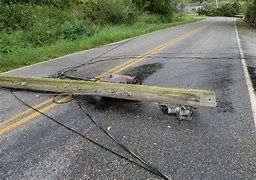
The hero works on the electrification of Ireland. He works with the jilting groom to negotiate with Ireland’s landowners on the physical placement of electrical poles to be installed across the country. Ireland’s leadership negotiates with Finland to buy 1,000,000 trees.
The jilting groom is working for the company that is to install the poles, but his primary motive is to meet with the woman he left at the altar. They meet but no mention is made of their past acquaintance and his disreputable behavior. When the young boy hears the story from his older friend, he grows to believe he has some obligation to reconcile the two. His friend had married and divorced while the jilted bride marries a pharmacist whom she marries after her fiancé stands her up. The young boy believes neither his friend nor the jilted bride will be happy without forgiveness.
An accident occurs when a pole falls on the young boy and he is taken to a doctor who has three daughters near the young boy’s age.
As he comes to his senses in the medical treatment room, he sees one of the older daughters whom he thinks he loves. The boy’s infatuation grows with the first daughter he meets but later he is surprisingly asked by a younger sister to go to the movies. The younger sister introduces the hero to kissing at the local theater. He begins to think of this younger daughter as something more than a friend. A third daughter is introduced, and the boy concludes he is in love with all three of the doctor’s daughters.
A young boy’s confusion about life’s happiness is his first inkling of love for one and then all three of the physician’s young daughters. Obviously, this is not love but youthful infatuation.
Williams cleverly ties his story together with Ireland’s electrification and power line connections that have to be installed throughout the country. The story of electrification is complicated. There are religious differences, private property, and social concerns of its citizens.
The complication of tying the nation together with a power system is like the complications of building and maintaining human relationships.
The hero works on the electrification of Ireland, works through his dalliance with one of the doctor’s daughters, sadly loses his mother to illness, and chooses a life in the church. He cares for the woman left at the altar with respect for her failing life from old age and an undisclosed illness. The young man learns how one should care for one nearing death. One sees in the dying a sense of acceptance but a wish of the dying to control what remains in their power to control. The care giver needs to respect the dying’s limited power and help only where help is asked or needed.
At last, the jilted bride and errant groom begin to talk about what happened on the date of their unconsummated wedding.
The explanation by the groom may be a lie or an Irishman’s tale, but the jilted bride tells him there is no need for forgiveness. She implies there is nothing that can be done to change the past. In the end, she forgives the errant groom, enjoys his company and the stories he has to tell. She dies with knowledge of the love and care of the people she knows.
Niall William’s story is about growing to manhood, dying, and old age. In William’s mythical Irish town of Faha, everyone knows everyone.
The mythical town of Faha, Ireland is a community where knowing is accompanied by responsibility for care of the living, dying, and dead. There are no secrets. Happiness is within the person who chooses to be happy, regardless of life’ events and circumstances.
Francis Spufford (Author, received the 2017 Desmond Elliot Prize and Costa Book Award for “Golden Hill”, the author’s first novel.)
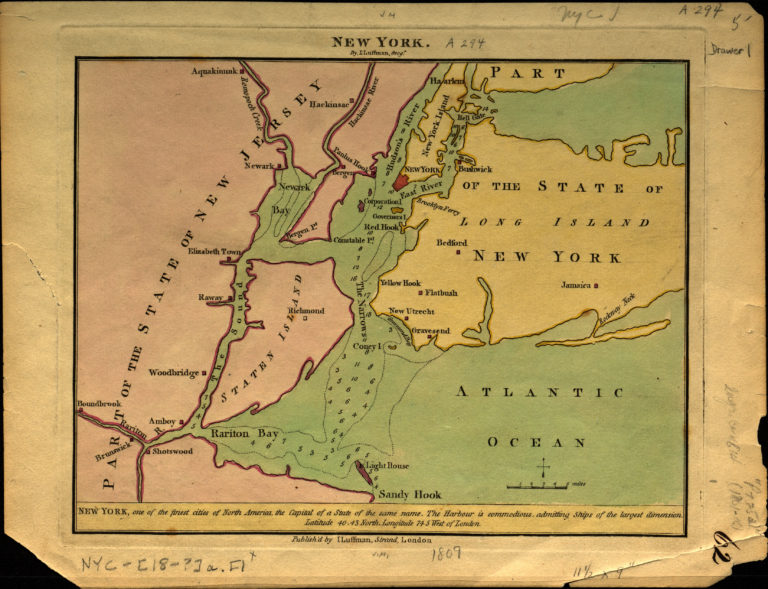
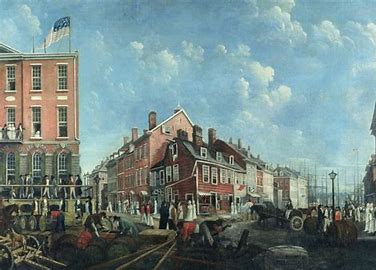
Francis Spufford captures a listener’s interest in “Golden Hill” with the idea of an Englishman sailing from London to New York City in 1746. New York City has a population of maybe 20,000, while London is a city of 630,000 to 740,000. What would a young Englishman with a 1,000-pound Bill-of-Exchange want in traveling from London to New York city? In today’s dollars 1,000 pounds would be over $127,000. The hero’s reason for leaving London for New York is not given until the end of Spufford’s story.
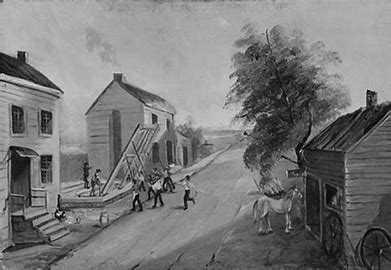
This is New York city in the 18th century. One could walk around the city in a day with its circumference less than a square mile.
This is a fascinating beginning to a story that gets bogged down by too many incidents that are mystifying until the last chapters of the book. The incidents are relevant to what it must have been like in 1746 but some listeners will become impatient for answers that could have been explained earlier.
New York City in 1746 is a mecca for protestants from many parts of the world. Spufford implies many New Yorkers are Dutch, a prominent ethnic group in wealthy New York.
Spufford’s hero is found to have a deep understanding of the theatre and its impact on an audience if an actor’s parts are well played. He attends a bad play that has an actress who, in spite of her poor lines, shows talent he recognizes. His appreciation of her acting leads to an unforeseen tragedy. This becomes a clue to the traveler’s perception of others and how unintended consequences impact one’s life. He seems to walk through life as though the City of New York is his stage. He plays his part, but his acting chops end with a mixed review.
Spufford’s hero appears to be accepted by the influential citizens of the city. At least, until it appears the Bill-of-Exhange is not going to be honored. The hero is thrown into debtors’ prison.
Debtors’ prison is an interesting place to write about. Spufford reflects on its barbarity in a confrontation with a fellow prisoner. The Bill of Exchange is eventually honored, and the hero is released. The next chapters address the repatriation of the hero to the Poo Bahs of the town and a woman of interest becomes more enamored with the traveler. The profile of the woman is somewhat unbelievable because of her implied business influence in a time when women have even less power than today.
The hero attends a party set up by leading members of the city that is, in part, to apologize for his mistreatment and to carry out whatever his mission is in the city. An interesting historical point of the apology is that America is primarily a barter system of exchange. Even though the traveler’s security is in English pound sterling, any negotiation for exchange is in goods, not cash. This is fine for the traveler’s purpose, but it reflects a point in American history that is often forgotten. There is no full faith and credit of a bank with gold or some other form of value to back-up American currency.
An interesting point Spufford reminds listeners of is the American’ anti-Catholic sentiment of the time.
One realizes how important Protestantism is in the foundation of America. The hero is almost killed by a mob that believes the traveler is a papist. Some historians have noted Protestantism is one of the deepest biases of early American citizens.
The reason for the hero’s appearance in New York is explained at last. To avoid discouragement of listeners, the purpose of the hero’s journey is not disclosed. “Golden Hill” is an interesting commentary on the tenor of an historic time, and it reveals some founding principles that trouble America to this day. The criticism of Spufford’s story is that it is too clever by half with a denouement too long in its revelation.
Anton Chekhov in 1989 (Author, 1860-1904, physician and philanthropist.)
Most societies in the 1800s have variations of the same story. However, one recognizes there are societal remainders that carry through to modern times. Anton Chekhov’s short stories tell much of what is evident in today’s Russia just as stories of the wild west is in today’s America. In both Russian and American history (as well as most of the world), women are considered the inferiors of men. Children were generally seen as a burden until they could take responsibility for work that had to be done. Rarely did women work outside the home except as servants to families with means to pay for their work. In the 1800s, both Russia and America had a gap between the rich and poor.
Chekov’s first story is of a young woman who is characterized as beautiful, vivacious, and promiscuous.
She chooses or is seduced by a man who is not her husband. She is caught in an embrace with this man by her husband who berates her for her flirtations. The cuckolding suiter offers 100,000 rubles to allow the husband’s wife to divorce him and leave her husband to marry the alleged seducer. The husband agrees but at a price of 150,000 rubles. This is an example of two transgressions. One, a human being treated as property and two, a woman having a right to choose how she wishes to live her life. Just as in most of the world today, this Russian story shows women being treated as unequal to men.
Uneducated Americans and Russians in the 1800s took advantage of the environments in which they lived. One of Chekov’s stories addresses a peasant who removes a nut from a railroad track because he needed a weight for his fishing line. He is taken to court for removing the nut because there were incidents of derailment from peasants who took several nuts from railroad track bolts for not only a single fishing line but for nets used for the same purpose. American killing of bison for sport is a similar ignorance that reduced a major resource for food and protective clothing of native Americans.
Serfdom in Russian history is long and sustained as a social and economic reality.
What Chekov’s short stories tell listeners is that though there are similarities, there are differences. Serfdom never takes hold in America, but its consequence extends into the mid 19th century despite Czar Alexander’s decree to eliminate it and Catherine the Great’s effort to end it. Even with the Alexander’s decree, serfdom remains a law until 1861 with its true abolition only begun during Catherine’s reign. Of course, America’s tragic faults are black slavery and Indian displacement with consequences that extend into today’s century.
Because serfdom did not take hold in America, the growth of capitalism created economic opportunities not available in mid-19th century Russia.
American capitalism is a two-edged sword that undermines the ideals of equality by denying equal opportunity for all. An underclass exists in both Russia and America, but Russia’s underclass suffers from slower economic growth as well as discrimination.
Though economic growth is turbocharged by capitalism it creates an underclass based on easily identifiable racial, ethnic, and sexual differences.
Social position in Russia came through military experience and promotion, or in association with unique opportunities offered to peasants by wealthy landowners. Capitalism had little place in Chekov’s mid-19th century history of Russia. What mattered to Russian citizens is social hierarchy. This seems evident even in today’s Russian kleptocracy.
In almost every Chekov story, heavy drinking is a common part of Russian men’s, if not women’s, lives.
Reasons for the Russian tradition of drinking may be related to the economic, or socio/political environment but its tradition is evident in today’s Russia. Not that alcoholism is not a problem in America, but in Russia alcohol seems an ever-present libation in all political and social recollections of modern events.
Wealth grows as a societal leveling influence in America while Chekov shows wealth only reinforces societal separation in Russia.
He tells a story of a woman actress that makes more money than her husband. The husband sees that reversal as a challenge to his ability rather than a benefit to his family. The husband acts like a petulant child when his wife is awakened late in the night by his drunken arrival in which he rants about money needed to start a business that has little prospect of success.
As with all short stories of an era, there is much to be learned about a nation’s cultural roots. Most of Chekov’s stories in this first folio are well written and informative. One will find them entertaining and interesting, maybe even enlightening.
Ha Jin is the pen name of Jin Xuefei (born in 1956, a Chinese-American poet and novelist. Graduated from Brandeis University with an MA and PhD.)
Ha Jin’s book, “Waiting”, reminds one of our misogynistic world.
“Waiting” may be a true story or a mix of truth and fiction. The last chapter infers it is a part of Ha Jin’s life during Mao’s reign in the late 1960s as leader of China.
Ha Jin is the pen name of Jin Xuefei, a Chinese American poet and novelist. Jin’s father was a military officer in China. At 13, Jin joined the “People’s Liberation Army” during the Cultural Revolution in China. He left the army at nineteen to earn a bachelor’s degree in English at Heilongjiang University and a master’s degree in Anglo-American literature at another Chinese university. He went on to Brandies University to extend his education.
As is noted in the last chapter of “Waiting”, Ha Jin receives a scholarship to Brandeis University which is interestingly the author’s destination in America. He chooses to emigrate after Tiananmen Square’s Massacre in 1989. Of course, this is long after Mao’s cultural revolution between 1966 and the early 70s, i.e., the time of Ha Jin’s story in “Waiting” and the time of the author’s experience in the “People’s Liberation Army”.
The “People’s Liberation Army” was created as a teaching body for Mao Zedong Thought.
“Waiting” is about a 23-year-old nurse in the Peoples Liberation Army that falls in love with a doctor named Ha Jin, who is already married with a daughter who lives with her mother. The mother and daughter live in a village away from Ha Jin while he serves in Mao’s Cultural Revolution. Ha Jin may be viewed by a reader/listener as either a strong moral character or a weak “go along to get along” Maoist survivor.
Ha Jin either chooses or is compelled by the influence of the 23-year-old nurse to seek a divorce from his wife. Ha Jin takes 20 years of numerous appeals (the “Wait”) for the Chinese judicial system to finally approve the divorce.
During those 20 years, he and the nurse have no sexual relationship. In that time, the nurse is raped by a soldier who had befriended Ha Jin. The rape is unreported for the same reason many rapes are not reported today. The nurse does not believe the authorities will believe her story. The nurse tells Ha Jin of the rape. Ha Jin tries to convince her to tell the authorities. She refuses and Ha Jin reconciles himself to an understanding of her position and blames himself for what happened. As has been reported by other women who have been raped, the nurse feels guilt for the rape even though she said no and fought the rapist.
Ha Jin continues to pursue a divorce from his wife. His wife, despite Ha Jin’s numerous appeals for divorce, stands by her husband and cares for their daughter throughout the 20 years of their pending divorce. She finally agrees and Ha Jin is free to marry the nurse.
Ha Jin agrees to pay his ex-wife a monthly fee as a part of his obligation to her for their years of marriage. Ha Jin grows to love his daughter and wishes to help her succeed in life.
The nurse, at the time of marriage, is now in her early forties. She becomes pregnant and twin boys are born. The delivery is premature, but the boys are born healthy. Their fate is undisclosed. The relationship between the father and the nurse deteriorates for reasons that seem related to the hardship of the birth and a growing animosity of the nurse toward her husband.
The nurse suggests Ha Jin visit his ex-wife and daughter to see how they are doing. Ha Jin visits appears to realize he has made many mistakes in his life, not the least of which is the pursuit of a divorce and his failing marriage to the nurse.
The story ends with Ha Jin leaving China and becoming a professor at Brandies University in the United States. The listener is left to ponder which of these personalities, the husband, or the nurse and ex-wife are the strongest mental and physical humans in this battle of the sexes. At the very least, what is clear in “Waiting” is that misogyny is a multicultural reality.

















































 REVIEWS AND VIEWS OF LIFE