MOST INTERESTING ESSAYS 12/4/25: THEORY & TRUTH, MEMORY & INTELLIGENCE, PSYCHIATRY, WRITING, EGYPT IN 2019, LIVE OR DIE, GARDEN OF EDEN, SOCIAL DYSFUNCTION, DEATH ROW, RIGHT & WRONG, FRANTZ FANON, TRUTHINESS, CONSPIRACY, LIBERALITY, LIFE IS LIQUID, BECOMING god-LIKE, TIPPING POINT, VANISHING WORLD
Alec Ross (Author, American technology policy expert)
Alec Ross’s book about future industries is founded on
world travel and observation. Ross is an
historian by education. His wide-ranging view of sociological change is from personal
experience with technology and the information-age.
Ross observes social change around the world as a senior adviser to then Secretary of State, Hillary Clinton. His dizzying travels explain how mobile phones connect the world and change economic, political, and social opportunity for both third world, and highly industrialized countries.
Ross’s fundamental argument is that “…Industries of the Future” will be based on information technology. The forefront of that technology rests on software (coding) and human evolution (genetics).
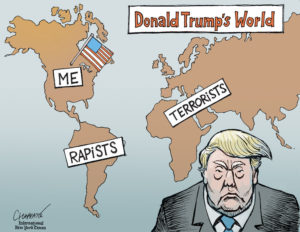
Despite nationalism and the horrendous consequence of Covid19 on the world, Trump-like government leaders who focus on nationalist independence and existing manufacturing jobs are job destroyers; not creators.
New jobs will not come from expanded labor-intensive manufacturing but from the accumulation and use of data. Ross suggests coding and genetics will determine jobs of the future.
Ross infers creators of code are tomorrow’s laborers. Today, learning how to code is a valuable skill that insures employment through and beyond the 21st century.
Though there is hyperbole in Ross’s suggestion that today’s coders make a high wage of $100,000+ a year, they do make an entry level living wage with vertical mobility. As the market matures, coder’s income will undoubtedly keep pace with expanding economies.
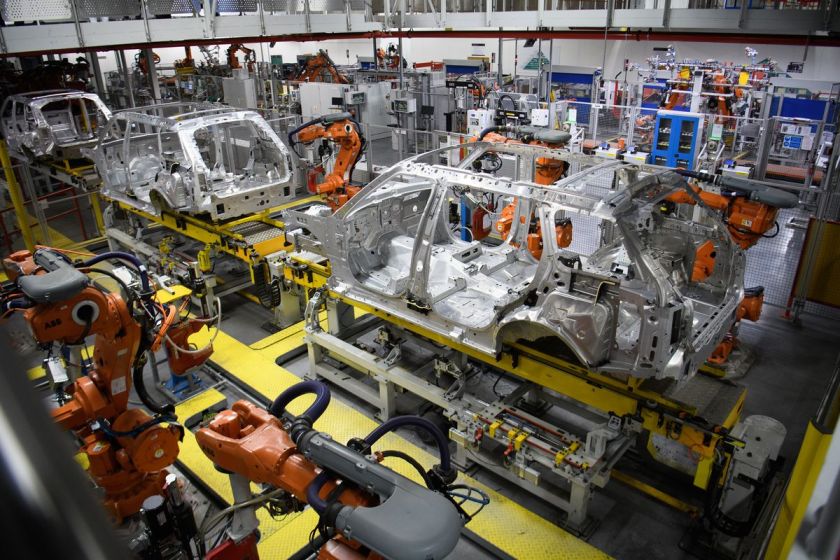
Ross shows how coding opens the door to automating the manufacturing world. Human labor to make things will change to coding labor that ultimately leads to machines building machines.
Artificial Intelligence is common today and will be ubiquitous tomorrow.
The automobile industry is increasingly relying on machine assembly of automobiles. The manufacturing process still requires human supervision, but physical labor will be increasingly code driven.
Numerous examples are noted by Ross. Driving a car is simpler because of A. I. Using GPS maps shorten travel time, gauge traffic congestion, and locate lost devices. The obvious effect of information technology is reduction in physical labor with employee job change, reeducation camps, and new employment. This is a tough reality for today’s laborers; particularly those who work hard every day. The rise of A. I. contradicts the industrial age’s moral belief that character is enhanced by hard labor.
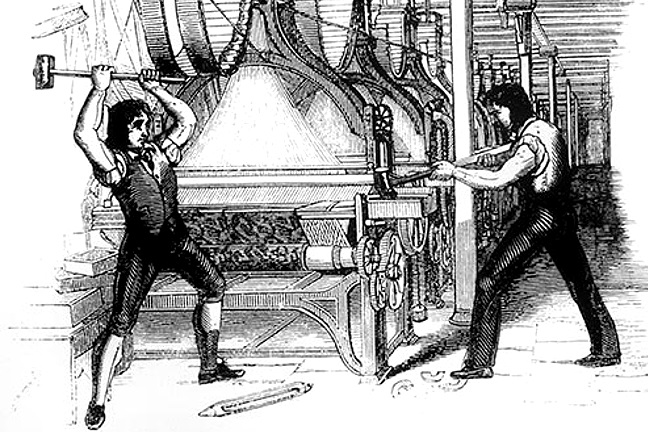
The laborer says, “I am not going to lose my job to a machine”. From a production line laborer or steel worker of a certain age, it is a message once said by Luddites in the nineteenth century. In the industrial age Luddites began dismantling machinery that cost their jobs.
Job upheaval is frightening. However, Ross suggests the information-age offers the greatest opportunity for the world since the industrial revolution. President Trump’s populist effort to turn back time creates false hope for many hard working Americans.
Employees in dying professions should be helped by private industry and the government to retrain and embrace inevitable market changes. America needs a Rooseveltian and internationalist response to Covid 19 and the advance of technology.
What Ross shows is that industrialized nations that choose not react positively; to be proactive to the information age are destined to decline. Ross shows how third world countries in Africa see opportunities that were never seen before because of technology.
With a mobile phone, African men and women have become entrepreneurs because they can communicate with wider circles of influence and support. Their phones become banks for loans and payments; and more importantly, for investment in themselves.
Ross explains another opportunity presented by the information age in farming. As has been known for centuries, farm productivity is improved by appropriate management and use of natural resources and man-made fertilizers. That customization increases the world’s food supply in ways that could only be approximated in the industrial age. Coded farm machines replace day laborer planting, cultivation, and harvesting,
With the advent of automated farm management systems, soil preparation, planting, and harvesting operations can be more precisely customized.
The second fundamental argument in Ross’s book regards genetics. Understanding of genetic science and our ability to manipulate genetic markers is a wild-west opportunity.
In theory, genetic modification can be a threat to the ecology of the earth, a monumental environmental catastrophe.
To Ross, genetic modification is a boon for agricultural and human productivity that will lead the world out of environmental and human crises.
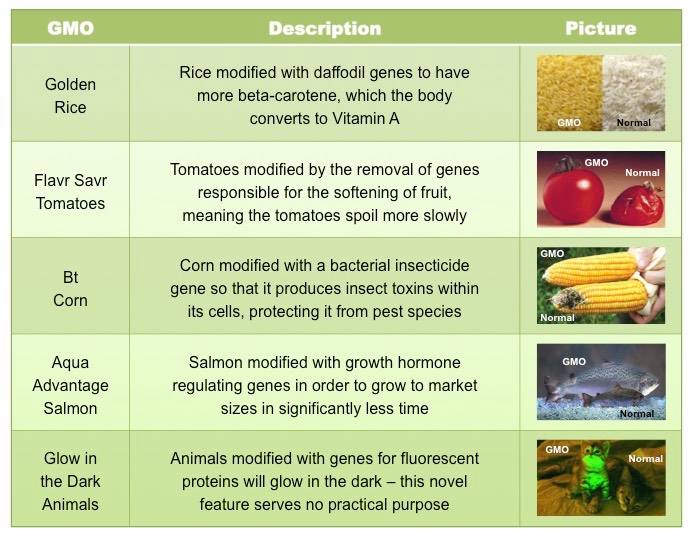
Giant steps have been and are being made in genetic modification of agricultural products. Ross notes reports of crop productivity increases due to disease resistance coming from genetically modified seeds. Ross argues that GMO opponents are wrong in suggesting “natural” agricultural products are any safer than genetically modified food products.
Ross sites reports of GMO foods that show they are equally or more nutritionally beneficial to humankind than non-GMO foods.
Many would agree with Ross’s assessment of the success of GMO production. However, modification of the human genome opens a much higher level of concern.
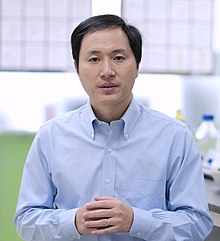
There are moral and ethical questions raised by science and religion with experimentation on the human genome. On the one hand, it raises the possibility of erasing the diseases of humankind. On the other, there is the fictional account of the “Island of Dr. Moreau”. Both concerns are expressed in the controversy surrounding the 2018 human gene editing in Hong Kong by Dr. He Jiankui, a Chinese researcher.
Dr. He Jiankui (Claims to have conducted the first human genome-editing of a human embryo)
Ross approaches “The Industries of the Future” from a
more historical than scientific perspective.
His book sees great opportunity in information technology, but proof is
largely unborn history. The
technological revolution is not like the industrial revolution because it goes
beyond Newton’s laws and only touches Einstein’s. Ross seems more likely right than wrong but only
the future will tell, and only history will prove it.
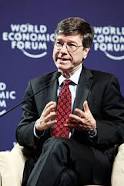
Jeffrey Sachs (Author, American economist, Columbia University Professor)
Jeffrey Sachs skewers modern Presidents and lionizes John Kennedy. Written before 2016, one wonders what Sachs might have written about President Trump.
One may agree with some of Jeffrey Sachs’ observations of what is wrong with America but his solutions are academic; not pragmatic. Sachs is an idealist. Corporatism is an out sized economic benefactor for the United States.
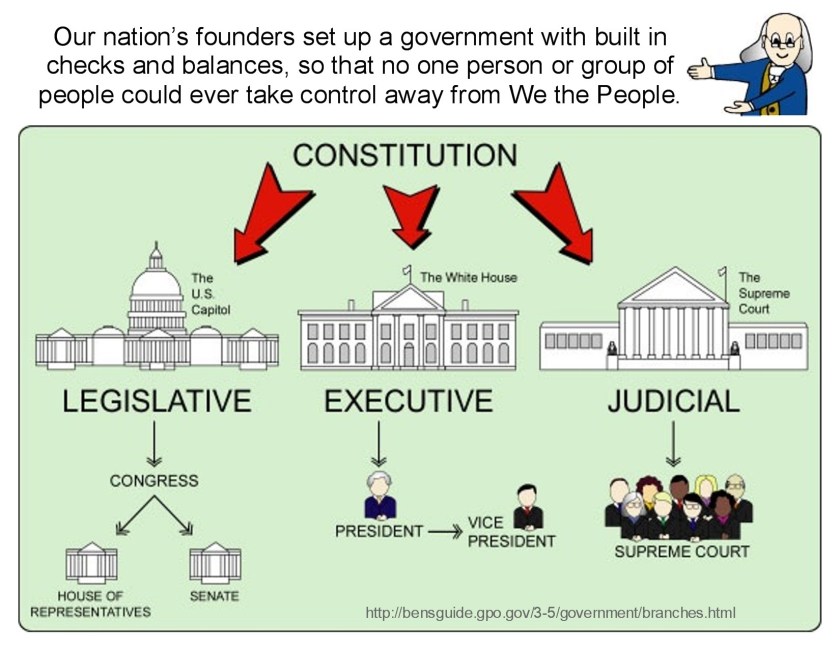
Government checks and balances are America’s only defense against corporatism.
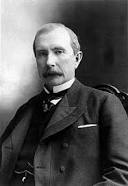
“The Price of Civilization” is an unsatisfying audio book. Not because it is irrelevant but because it’s saccharine idealism and disconnection from the real world.
Though much of Sach’s criticism of Obama, George Bush, Bill Clinton, and Ronald Reagan is deserved, his professorial economics is cloying because it ignores political reality and the truth of human nature.
The father of American economics, Adam Smith, is the first to have recognized the critical role of politics in economics.
Politics is a social science of give-and-take in both democratic and autocratic societies. The difference is–politics in democracy is practiced among the many; while in autocracy, politics is practiced among the few.
Just as Adam Smith’s “Wealth of Nations” includes politics in economics, Thomas Hobbes’ “Leviathan”, introduces human nature to government. Thomas Hobbes notes Human nature is both good and bad. As logic dictates, politics in economics is both good and bad.
Sachs is spot-on as an academic economist. Trump and many elected officials ignore political reality. Public policy has always been a matter of “who’s ox is getting gored” whether Democrats, Republicans, or despots are in control of government.
Sachs cleaves to Platonic and Aristotelian platitudes like “all things in moderation”. To suggest that a philosophical awakening of the millennial generation (those born between 1977 and 1992) will cure American lassitude and political apathy is naive.
Sachs optimistically believes the millennial generation will eschew the luxuries of American dreamers (owning hot cars, nice homes, and beautiful clothes) to become voters for change. Obama represents those voter’ beliefs but fails politically for the same reason Sachs’ book is a mess.
Changing public policy is not going to occur with an American generation that magically begins believing less is more. Re-election of a new President, whether Democrat or Republican, will not fundamentally change America’s system of choosing corporate winners and losers.
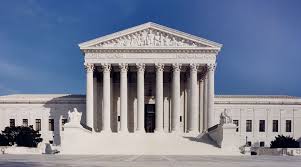
One can agree with Sachs’ observation on 2010’s “Citizens United v. Federal Election Commission” decision. The Supreme Court erred in identifying corporations as individuals with the rights of unlimited corporate donation to electors.
Defeat of gun control legislation shows how entrenched lobbyist organizations can steer the course of public policy, regardless of a democratic majority’s support of policy change.
Sachs is right in his assessment of the wrong-headedness of what he calls “corporatocracy”; i.e. the institutionalization of an election process that is founded on money rather than public representation.
Human nature gets in the way of doing the right thing. Humankind naturally seeks freedom. (Las Vegas demonstration to reopen the economy during the pandemic.)
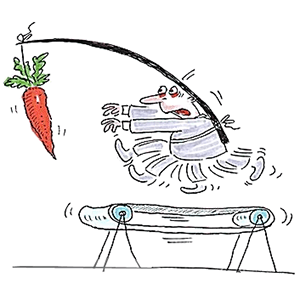
When freedom of choice is impinged upon, human beings are reluctant to change. Of course, this is an over simplification but Sachs minimizes mankind’s innate desire for freedom.
Las Vegas mayor Goodman wants to re-open the economy in the face of Covid19. She believes freedom and survival of the fittest is a matter of human nature; not government fiat.
She infers–if its your time to die, so be it.
Regulation of human activity impinges on free choice whenever one person thinks they know what is best for another.
Human nature is not going to change; i.e. it will always contain good and evil intention. Bernard Madoff comes from the same culture as Warren Buffet.
Trump and the Republican party’s approved tax law and Covid19′ fiscal response illustrates contempt for the middle-class, and ignores the needs of the poor.
Many Americans are disgusted with the political process in 21st century America. Even the super rich and rich are not satisfied with the status quo. The rising gap between rich and poor embarrasses those who believe in equal opportunity for all.
How can America justify a social security tax for a movie actor’s (or sports star’s) income of millions per year when a middle income family makes $40,000 to $132,900 per year and has to contribute the same amount as a multi-millionaire.
A person with a middle class income will pay 6.2 percent of their income for social security. There is a maximum cap of $8,239.80/year/person. One who makes millions of dollars per year will not have to pay more than that $8,239.80/year; i.e. the same maximum amount a middle income person pays. No wonder social security is going broke.
When one is elected to congress every two years, fund raising becomes the elector’s primary focus of attention. When corporations speak, electors listen. Lobbyists and corporate money are more important than the aggregate input of voters. No wonder American voters are apathetic.
Sachs notes Oliver Wendell Holmes dictum about taxes. Holmes wrote that he loved to pay taxes because taxes are the cost of civilization. The weakness of that generalization is in the definition of civilization. If civilization is that stage of human social and cultural development and organization that is considered most advanced, why does the richest country in the world:
1)have citizens living on the street,
2)have citizens imprisoned-to only isolate and punish, and
3)have children dying because of poor medical care.
When an investor turns a portfolio over to a brokerage company, that investor has to “trust but verify” the actions of the brokerage company in regard to overall portfolio performance. If the broker under performs the market, the investor knows it is time to change brokers.
When a government under performs when public tax dollars are invested, voters cannot, without revolution, change governments.
Sachs accurately notes there is no difference between Democrats and Republicans in the United States. Both parties talk the talk but fail to walk the walk. Elected officials are too beholding to lobbyists and corporate America.
Americans are reluctant to pay higher taxes because they see
no discernible improvement in their lives.
Why invest in a government (pay more taxes) that fails to produce
improved results?
Sachs ideas for correcting America’s ills—
Reduce the deficit by cutting military spending and
increasing taxes.
Reduce wealth disparity by investing in and retraining
an obsolescent work force.
Invest in and improve education with emphasis on
primary and secondary graduation.
Create jobs through infrastructure investment. He argues that dependence on carbon-based
energy is to be reduced by conservation with increased investment in alternative
energy sources and more scientific research and development.
He argues that medical insurance should be provided to
all Americans with a plan crafted by the medical community.
All of these goals are exemplary but to get there requires a massive (and unlikely) re-invention of human nature. One could argue that many of these policies were promoted by the Obama administration, but little changed.
It is counterintuitive for a free society to choose moderate
consumption. Add mistrust of the
American government and the likelihood of turning more money over to a government
that does not work seems stupid to any rationale human being.
Hitler wrote in Mein Kampf, “Industry, technology, and commerce can thrive only as long as an idealistic national community offers the necessary preconditions. And these do not lie in material egoism, but in a spirit of sacrifice and joyful renunciation.” Sach’s idealism is a threat to an American economy that ignores the poor. It hides behind idealized Hitlerian propaganda.
Hitlerian characters are a threat to America when corporatism is the basis of public policy.
Of course, this analysis of Sach’s book is also a form of idealism.
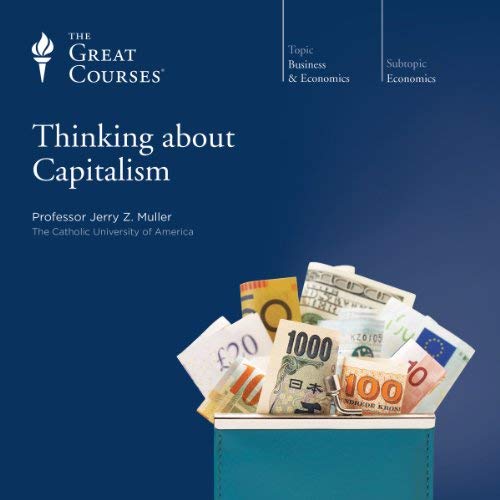
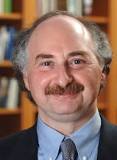
Jerry Z. Muller (Author, professor of history at the Catholic University of America)
Professor
Muller offers an interesting and insightful defense of capitalism. Jerry Muller’s “Thinking about Capitalism” is
an historical account of economic theory.
Muller explores three economic systems: 1) market, 2) command, and 3) mixed. In his journey through the history of economic systems, market (aka capitalism) shines brightest.
Muller notes that capitalism is pummeled by many anecdotes of history. Muller does not deny the excesses of market economies, but Muller suggests capitalism’s benefits far exceed its detriments.
There is nothing new in Joe Manchin’s self-interest in coal investment or representation of a state dependent on the coal industry. The question is whether he is representing his personal interest in wealth and re-election or the common good of the nation.
Adam Smith (1723-1790, Scottish economist)
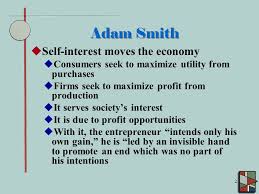
Muller argues capitalism’s storied failures distort its multifaceted values. In the “Wealth of Nations”, a seminal work on capitalism, Adam Smith clearly explains the value of a capitalist (market) economic system based on self-interest. Muller notes Smith’s term “self-interest” is often misinterpreted by the public as greed.
Smith’s definition of self-interest is founded on virtue, i.e., behavior based on high moral values. However, Self-interest comes in many forms.
One person’s self-interest may be altruistic in helping others to feel better about themselves. Another person’s self-interest may be to increase personal wealth to improve their family’s standard of living. And, self-interest may be associated with greed. The fundamental point is that everyone’s self-interest is a motivation that is ungoverned by an outside force. Self-interest is a part of human nature.
In a broader sense, there is some truth in the economic cliché of “a rising tide lifts all boats”. It reflects Adam Smith’s belief in the “invisible hand” that guides one’s life in a market driven economy. Every individual strives for their own self-interest which offers charity to some, employment to others, and individuated incentive to all.
Thomas Hobbes (1588-1679)
Thomas Hobbes notes that human nature is both good and bad. He tempers Smith’s argument for capitalism by suggesting government is necessary to mitigate self-interest that is harmful to the public.
Smith and Thomas Hobbes (author of “The Leviathan) believe self-interest is a universal human characteristic. Smith addresses self-interest as an enlightened Socratic understanding of virtue. Hobbes is less doctrinaire and implies Socratic virtue is not common in the general population.
Smith argues that capitalism takes the essence of human nature’s natural self-interest to advance civilization. This advance is not a smooth upward curve but an improving trend. Bad things do happen in a capitalist society. Hobbes might agree with Smith but only in the context of “rule of law” that mitigates non-virtuous self-interest.
Edmund Burke (1729-1797, Irish statesman)
Muller does not ignore critics of Adam Smith’s “Wealth of Nations”. Edmund Burke is a noted critic who argues that too many social conventions are sacrificed by disparate self-interests. He argues that the French revolution is a potential consequence of an economy driven by self-interest.
The social structure of France is decimated in the 1789 revolution. History shows “the terror” of the French revolution murdered innocents. On the other hand, it reformed an economy that left many behind. Prior to 1789, only the rich owned land, never went hungry, and inherited wealth. In the 18th century, France’s poor are mired in poverty, often hungry, with little chance for advancement.
Justus Möser (1720-1794, German social theorist)
Muller also cites criticism from Justus Möser , a contemporary of Burke, who believed the rise of capitalism (mercantilism) destroys craftsmanship in local economies. With trade from other parts of the country and world, Möser argues insular communities are harmed by prices of similar products replacing local artisan’s goods.
Möser argues mercantilism destroys the fabric of local communities; foments insecurity and social unrest. Muller, in part, agrees with Möser’s argument. However, Muller notes Möser’s argument is right and wrong.
With less money being spent for one thing, more money is available to buy or invest in other things. What Möser ignores is mercantilism’s benefit to consumers and the local economy. Consumers who buy a product for less money have more money to spend or invest in the local economy.
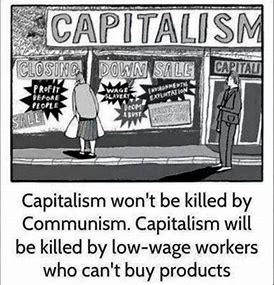
An amendment to criticism of Möser is that the consumers must have enough money to buy product being produced, whether in America or somewhere else.
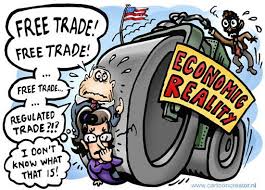
Much of Möser’s argument is the same concern raised by those who support today’s trade war. Trump ignorantly pursues a trade war that weakens Adam Smith’s view of capitalist competition. America needs to adapt to a world economy that is increasingly intertwined.
Möser is right in suggesting free trade creates insecurity in local markets. It also demands adjustments in labor that harm local artisans, but Muller argues there is a net gain in public good and general welfare with free trade.
Max Weber (1864-1920, German sociologist, philosopher, and political economist)
Muller goes on to explain how a confluence of religion and capitalism benefits society with Max Weber’s melding of Protestant Ethic with the Spirit of Capitalism. Weber makes the idea of living aesthetically and putting aside savings as a prudent way of living life in an uncertain environment. Creating wealth became a religious calling to some.
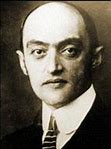
Joseph Schumpeter (1883-1950, Austrian political economist)
Muller reviews Joseph Schumpeter’s contribution to the theory of capitalism. As a 20th century Harvard Business School professor, Schumpeter lectures on the value of “the invisible hand”. Schumpeter advances the idea of “creative destruction” as a characteristic of capitalism.
Schumpeter outlines the value of entrepreneurs who pursue new ideas, new products, and innovation that replaces dying industries. He trumpets the growth of capitalism as an engine that perpetuates societal benefit. Some argue that today’s American governance discourages new ideas by dwelling on manufacturing at the expense of technological innovation and change.
Muller examines the other two economic systems, i.e., 2) command, and 3) mixed systems. Muller implies they fail to meet the historical successes of market capitalism. A command economic system is autocratic with primary economic decisions made by one ruling agency—like Mao’s communist party, Hitler’s Third Reich, and Stalin’s Great Turn.
Short term economic benefit of a command system economy hugely disrupts society. Economic improvement is evident in the short term, but momentum is lost as the gap between haves and have-nots grows.
In a command economy, the cult of personality takes over and image becomes more important than substance; i.e. who you know becomes more important than productivity.
Muller implies mixed economic systems are a work in progress. They are represented by leaders like President Xi in China, and President Putin in Russia.
Xi and Putin retain the concept of communist control of the economy but combine command economics with “Smithian” capitalist ideals. However, Putin takes a wrong turn by waging war on an independent country with its own mixed economy ambition.
China’s mixed economic policy began with Deng Xiaoping, but Xi expands its reach.
Both China and Russia have shown economic improvement in the late 20th and early 21st century. Xi’s “Road and Belt” plan is part of a command economy, but it relies on the capitalist market principle of influencing trade between nation-states. China’s long-term success remains to be seen. Whether it will be a more effective form of economic improvement than Adam Smith’s market-based formula is left to history.
Russia, like Xi, uses capitalist influence to grow its economy. Russia, in contrast to China, uses its natural resources (oil distribution), rather than a “Road and Belt” policy to expand its influence. Unfortunately, Putin chooses to waste Russia’s oil wealth on war.
Fundamentally, Muller infers no modern economic system is better than capitalism. One draws that inference by Muller’s cogent explanation of the value of capitalist self-interest. Because Adam Smith’s concept of self-interest is an inborn characteristic of human nature, it will prevail over any known economic system that requires command control.
America has been a successful capitalist country in great part because of checks and balances that mitigate command control qualities of mixed economies. Hobbes assessment of human nature demands some level of command control, even in a capitalist economy.
One might argue that America’s avoidance of near economic collapse in 2008 is evidence of the importance of a mixed economic theory. (Interestingly, a December 18, 2018 “…Economist” article, published under the Schumpeter byline, notes that China’s communist party’s mixed economic system during Trump’s trade war fared better than America’s government regulated free enterprise economy.)
American history shows lower taxes encourage higher production and job creation. What is missed by tax reduction is that it exacerbates income inequality. Tax reduction incentivizes corporate leaders to devalue worker wages to increase profitability. Human self-interest leads to higher income for corporate owners and executives. The consequence magnifies the wealth gap between have and have-nots.
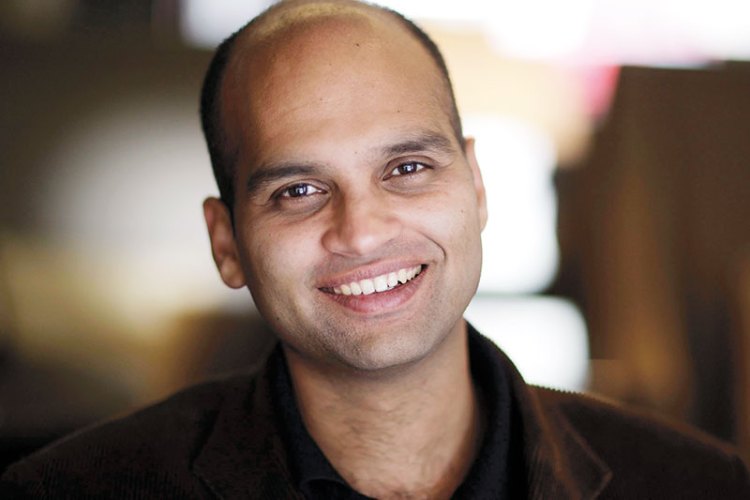
ARAVIND ADIGA, INDO-AUSTRAILIAN AUTHOR, Winner of the Booker Prize in 2008 for “White Tiger”.
“White Tiger” pictures the chasm between haves and have-nots. It reminds one of “Native Son”. Like “Native Son”, “White Tiger” speaks about the ugly consequence of discrimination and poverty.
A big difference between “White Tiger” and “Native Son” is in the tragi-comic rendition of “White Tiger” on Netflix. One wonders if “White Tiger” is meant to be satire or a reflection on a flaw of capitalist self-interest. Maybe both.
A visiting dignitary from China is given a note by a former Indian servant who describes his entrepreneurial success in India. The servant tells the story of his rise from the second lowest caste in India to successful entrepreneur. He is from a lower caste of the poor, but now he is rich.
The caste system remains strong in India. Having traveled there in 2018, our tourist guide notes his family is from the warrior class.
In speaking of his daughter, he explains that though he has limited control over whom she marries, his biggest concern is that she marry within her class. Caste ancestry still binds and defines much of India’s culture.
In “White Tiger”, Balram is the main character. Balram is an uneducated but clever observer of society. He is acutely aware of his position in life.
Balram is destined to be a breaker of social convention.
In India (and around the world) changing sociopolitical ideals, collapsing religious belief, deteriorating family ties, and human nature’s “good and evil” amplify the chasm between rich and poor.
An irony of Balram’s story is that it is between two countries that have different political philosophies; i.e. one, democratic; the other communist. Their socioeconomic maladies are similar. Both countries have dense populations, high industrial growth, and consequential environmental degradation. The common thread is China‘s and India’s drive toward capitalism.
Balram considers himself a social entrepreneur who becomes a successful capitalist by breaking social convention. His broken convention is murder.
As the Indian servant’s story progresses, Richard Wright’s “Native Son” and Adiga’s “White Tiger” metaphorically meet. Both carry out wanton murders of sociologically ignorant human beings.
Bigger Thomas (the main character in “Native Son”) and Balram are one side of a capitalist’s coin, minted by poor education, poverty, and discrimination. Their capitalist reality corrupts thought and action.
“White Tiger”, like “Native Son”, is a world warning about the consequence of the growing chasm between rich and poor; i.e. as long as societies believe that “a rising tide lifts all boats”, discontent and hostile action of the poor is the main thing that will rise.
Lack of prudent regulation of capitalism leads to the worst in human nature. Even though “prudent” is in the eyes of the beholder, ignoring the poor is a monumental failure of any society, whether capitalist or communist. Equality of education and opportunity are capitalism’s saving grace but grace is not natural to man; i.e. prudent regulation of human nature is required.
“White Tiger” is a credible warning of the danger of
unbridled capitalism.
Martin Jacques has written an interesting book about China’s rise as a world economic power. His overview of the geo-political and Realpolitik relationships of the east and west are interesting; particularly in light of the Trump administration.
“When China Rules the World” has interesting details that inform but do not convince one that China will rule the world. The provocative title drives the bus but it does not reach its destination.
World control is a myth that causes wars and destroys the best and brightest, as well as the mean and maniacal.
What is happening in China is remarkable. China’s transition from Maoist communism to capitalist communism is a caterpillar turning into a butterfly; i.e. China has grown wings but it still lives in a world constrained by its environment.
Though President Xi is re-instituting some Maoist mistakes, China’s world wide investment in infrastructure is based on capitalist beliefs. Xi has an internationalist focus, just like that which made America great; at least, until Trump’s Presidency.
Chairman Mao’s cultural revolution and belief in enlarging collectivist ideology nearly destroys China’s path to prosperity
Xi is attempting to open new markets by financing infrastructure improvements in African, Middle Eastern, and Asian countries. He is creating customers for Chinese product.
Undoubtedly, Xi is also trying to seduce other nations into belief in Xi’s form of Communism. This is not unlike America’s intent to democratize the world.
Jacques argues that a 90% Han Chinese cultural domination of 1/5th of the world’s population will change the nature of the 21st century. In a limited sense, that is undoubtedly true. However, regardless of the type of government rule, human nature is the same.
Money, power, and prestige, are the primary motivations of humankind. Whether one is Han Chinese, Tibetan, Uighur, Indian, Hispanic, Black, or any singular ethnic group, all humans seek control of money, power, and prestige. These innate drives are the speedometer, brakes, and steering wheels of nation-state’ leaders and followers.
There are dominant factions in every culture that are not necessarily the majority of a culture’s population. Jacques’ early comments suggest China’s 5000 year history reflects a cultural conformity greater than any other country in history while later he acknowledges that the predominant Han population is highly diverse in its beliefs.
Cultural conformity is not the relevant issue; i.e., dominant cultures, whether a majority or minority of an indigenous population, are the game changers of a nation’s history.
Jacques argues that China’s cultural history of familial respect and veneration will have profound affects on the future of world economies. Jacques has a valid point. However, the history of modernization suggests that the fabric of extended filial obligation will be ripped apart in China just as it has in every industrializing nation.
China, just as all modernizing nation-states, will see deterioration of familial bonds.
Human nature is immutable. As an agrarian culture moves to the city and parents are compelled to work for wages, family structure and filial commitment deteriorates.
Of course, capitalism is not the same in China as it is in the western hemisphere. As Jacques reports, major capitalist businesses are state owned in China. They compete in the world market but government support mitigates much of the free enterprise ideal of capitalist economies. However, no nation-state operates as a free enterprise capitalist country; i.e. government has always played a role in capitalist nations. Government subsidy of industrialization is a matter of degree.
It may be that China will change the way industrialized countries compete but global economic domination is no longer possible in a tech savvy world that recognizes knowledge is power and natural resources are limited.
All the world knows how each culture in the world lives. With that knowledge, countries will gravitate to systems of government that serve its dominant culture best. Best is defined as what is most important to the dominant culture in the context of either money, power, or prestige.
Long term, China is facing a tougher road to modernize because of population, environmental degradation, and dwindling natural resources, but their short term prospects look better than most other nations.
New estimates from the U.S. Census Bureau put China in the lead with 1.34 billion residents, followed by India with 1.19 billion. The United States is a distant third with 311.1 million people.Jul 6, 2011
As Jacques points out, China’s savings rate is over 20%, with a GDP growth rate 3 times that of America. The cost of dwindling natural resources is more affordable to China than most other modernizing countries. However, all economies are closely tied to each other and a major failure in America or Europe will have great consequence for the world economy which will significantly affect China’s short term advantage.
With a failure of a western countries economy, China’s drive toward modernization will be in danger. That danger is demonstrated today by America’s creation of a trade war with China.
Some argue this burgeoning trade war is hurting the Chinese economy more than the American economy. That may be true in the short term, but the efficacy of trade wars are questionable in the long term; particularly in our internet connected world.
Jacques’ book is worth its purchase price and a consumer’s time because he exposes some of the cultural biases of China that are not widely known. His suggestion that discrimination is as prevalent in China as it is in the United States is reprehensible, and disgustingly familiar. Globalization is real. Human nature is immutable. All mankind travels on the same space ship; i.e. our blue ball. At the very least, China is proving that our environment is fragile and natural resources are finite.
2008 was just yesterday but today’s attack on government regulation is destined to create America’s next crises.
Audio-book Review
By
Chet Yarbrough
(Blog:awalkingdelight)
Website: chetyarbrough.blog
The Big Short & No One Would Listen
By Michael Lewis By Harry Markopolos
Narrated by Jesse Boggs Narrated by Scott Brick & Others
There are lessons to be learned from Lewis’s and Markopolos’s books that are forgotten in the pending impeachment trial of President Trump.
Both Adam Smith (the father of economics) and Thomas Hobbes (author of “The Leviathan”) argued self-interest is a universal human characteristic.
Self-interest led Trump to enlist the Justice Department to overthrow the election of President Biden. If that is not insurrection, one wonders what justifies any impeachment action.
Smith argued that capitalism takes the essence of human nature’s self-interest to advance civilization. He noted-the advance of capitalism is not a smooth upward curve but an improving trend. Smith was not saying that bad things do not happen in a capitalist society but they bend toward the good of society.
Hobbes would take issue with both of Smith’s assertions. Self-interest would not advance civilization unless it was regulated. Hobbes insisted on government control through “rule of law” to mitigate non-virtuous self-interest.
Hobbes feared unbridled self-interest in any form of government. Hobbes viewed human nature as brutish and unfair unless ruled by a Socratic philosopher king or, in a democracy, by tightly regulated and enforced “rule of law”.
The forensic reports of Michael Lewis and Harry Markopolos show what happens when efforts to regulate human nature are abandoned. One concludes from their books that Thomas Hobbes’ “Leviathan” wrecks havoc on society when “rule of law” is either not present, or unenforced.
Inept management by Fannie Mae, and Freddie Mac offered mortgage insurance for grossly over-leveraged mortgages. Companies like AIG removed investor risk by insuring banks against bad investments.
All of these foolish actions coalesced to bankrupt companies and families around the world. Individual lies, bungles, and missteps in the real estate industry created the worst recession since the 1929 stock market crash.
While this real estate debacle was developing, Bernie Madoff built a 50 to 70 billion dollar empire by making fools of the U.S. Government, European royalty, world wide charities, and working families. Madoff lied, cheated and stole billions of dollars from wealthy investors, charities, and mom and pop businesses with offers of bogus investment returns based on buying from Peter to pay Paul. He paid dividends to earlier investors by taking money from newer investors.
As long as people believed in Madoff, or deluded themselves, his wheel of fortune continued to roll. As the real estate market collapsed, old investor money was recalled and new money became unavailable. Madoff’s failure was inevitable.
Michael Lewis identifies seers that recognized “Quants” were packaging doomed mortgages into re-salable financial instruments called derivatives. These astute observers of the market, knew mortgage backed securities were at risk.
How could these things happen in a 21st century, democratically elected and governed society? Hobbes would say “how could these things not happen”?
Madoff’s investment lies were exposed by Harry Markopolos in a “red flag” report to the Security Exchange Commission in the year 2000; way before the 2008 economic catastrophe.
The title of the book “No One Would Listen” tells the story. This book is an indictment of democratic government in free society. Markopolos’s story exposes an inept and failed SEC, an agency created by government to protect investors–when, in fact, it protected corporate interests.
The irony is that Madoff did not get caught by the SEC. He confessed in 2009 because his Ponzi scheme fell apart. along with the collapse of the real estate industry.
Lying is part of being a human being. That is a fundamental reason for government to have “rule of law”. It protects people from the abhorrent self-interest of the few from the many.
President Trump is impeached by the House of Representatives. It is the moral responsibility of the Senate to have a trial.
Hiding behind a loose interpretation of the rules of the Constitution is a disservice to the people. Guilt or innocence should be proven by the facts; not the parties of interest.
Regulation is not a perfect solution for control of bad actors in a free society. However, no regulation is worse.
Audio-book Review
By Chet Yarbrough
(Blog:awalkingdelight)
Website: chetyarbrough.blog
Capitalism Without Capital
Written by: Jonathan Haskel, Stian Westlake
Narrated by: Derek Perkins
JONATHAN HASKEL (AUTHOR, BUSINESS SCHOOL PROFESSOR IMPERIAL COLLEGE LONDON)
STIAN WESTLAKE (AUTHOR, ENGLISH BUSINESS CONSULTANT)
In addressing 21st century technology, Haskel and Westlake argue that the tradition of hard asset value is diminished. In today’s technological economy, the authors suggest investment in intangibles is as important as investment in buildings and machinery.
Haskel and Westlake acknowledge intangibles have always been an important part of economic growth. They note worker training programs, specialized employee’ experience, and patented designs have always had value; but auditors rarely (if at all) quantified those intangibles as anything other than expense. Little of a company’s investment in training, employee experience, and patents is assigned as an asset by analysts who use pre-twenty-first century accounting rules.
Most intangibles have historically been classified as uncapitalized expenses. In part, because quantification of intangibles is difficult to measure. Before the tech-revolution, investments in training, patents, and experience were looked at as costs of doing business. They were most often expensed (with some exception for patents).
When companies are sold, value of goods (machinery, buildings, inventory), and historical price/earnings ratios are the principal determinants of value. Haskel and Westlake note that patents are unreliable values because competitors reverse engineer product that, with newly created changes, are arguably new “unpatented” products; e.g. cell phones, computer chips, software programs, etc.
Haskel and Westlake note that patents are unreliable values because competitors reverse engineer product that, with newly created changes, are arguably new “unpatented” products; e.g. cell phones, computer chips, software programs, etc.
With growth of companies like Amazon, Microsoft, Apple, Google, Uber, Facebook, et al–standard accounting practice needs more than hard assets to determine value. Though it is difficult to patent intangibles, Haskel and Westlake suggest new accounting methods are, and should be, created for today’s and tomorrow’s industries. The idea of new accounting methods leads to “Capitalism Without Capital”.
With growth of companies like Amazon, Microsoft, Apple, Google, Uber, Facebook, et al–standard accounting practice needs more than hard assets to determine value.
Haskel and Westlake suggest information replaces capital as the fuel for economic growth.
Haskel and Westlake suggest information replaces capital as the fuel for economic growth. They extend their argument by advising investors, lenders, and governments to increase their capital commitment to intangibles. This seems ironic in view of a remaining need for traditional capital investment to energize 21st century economic growth. However, the authors are arguing capital is a smaller part of overall economic growth; albeit a critically important part. What they are suggesting is that investment should be recognized as an asset; not just an expense. Investors and lenders should look beyond bricks and mortar as a measure of security for capital investment. Some would argue that companies like Tesla should be able to carry a higher debt load because its value is greater than the sum of its hard assets.
Further, Haskel and Westlake emphasize Governments continued subsidization and investment in research and development in those areas where near term return is problematic. The example the authors give is DARPA in its early invention as a precursor of the internet, but there are many more examples; e.g. nuclear power, computer hardware, weather prediction, space exploration, etc.
Historically, intangible value has always been with us but recognized as an expense. Haskel and Westlake suggest intangibles need to be partially and judiciously accounted for as assets. When recognized as assets, intangible values open the door to wider private and public finance.
Kotkin’s first volume about Stalin’s rise to power offers lessons to modern American and Chinese governments. China seems on one path; America another.
STEPHEN KOTKIN (AMERICAN AUTHOR, HISTORIAN, ACADEMIC)
Stephen Kotkin offers a remarkable and comprehensive view of Russia’s 1917 Revolution in “Stalin, Volume I”. Kotkin succinctly describes how power in the hands of one may advance a nation’s wealth, but at a cost that exceeds its benefit.
Kotkin’s first volume about Stalin’s rise to power offers lessons to modern American and Chinese governments. China seems on one path; America another.
The formation of “checks and balances” sustains America’s economic growth, even in the face of leadership change. In contrast, a “rule of one” has moved China’s economic wealth to new heights, but “rule of one” threatens its future success; particularly if it follows Stalin’s, and now Putin’s mistaken path.
In historical context, Kotkin profiles the three most important characters of the Russian revolution; e.g. Vladimir Lenin, Joseph Stalin, and Leon Trotsky. Kotkin documents the personalities and circumstances of the pre-U.S.S.R.’ economy; i.e. an economy based on the disparity between wealth and poverty, federalization and centralization, political idealism and pragmatism.
MAO ZEDONG (1893-1976, FOUNDING FATHER OF PEOPLE’S REPUBLIC OF CHINA.)
Three leaders in the Chinese revolution were Mao Zedong , Zhou Enlai, and Deng Xiaoping. Zhou Enlai is the moderate of the three in trying to preserve traditional Chinese customs. Mao is by some measures an idealist who attempts to expand the theory of communism. His idealism creates a bureaucracy that nearly derails China’s economy. “The Gang of Four” radicalized Mao’s idealism into a more Stalinist view of communism. “The Gang of Four”s radicalization of Chinese communism is eventually reversed with the leadership of Deng Xiaoping, but not until after the Tiananmen Square massacre.
DENG XIAOPING (CHINA’S CHAIRMAN OF THE CENTRAL ADVISORY COMMISSION 1982-1987)
After Tiananmen Square, Deng recognizes the power of public dissent. Rather than increasing suppression, Deng opens the Chinese economy to a degree of self-determination. Deng does not abandon communist ideology. However, he recognizes the importance of economic growth and how less doctrinal communist policy would unleash the power of people as demonstrated at Tienanmen Square.
Deng dies in 1987 and the government of China is reshuffled. Deng’s eventual successor, President Xi, emphasizes the idealism of communism that threatens return to a Stalinist-like terror in China; i.e. a terror enhanced by technological invasion of privacy, and “big brother” control.
XI JINPING (GENERAL SECRETARY OF THE COMMUNIST PARTY OF CHINA AND PRESIDENT OF THE PEOPLE’S REPUBLIC OF CHINA)
President Xi returns to Mao’s authoritarian belief in enforced collectivism with the idea of expanding China’s new-found wealth through government subsidization of industry. Xi renews emphasis on rule by the Communist party, headed by himself.
The growing disparity between rich and poor in both China and America is widely seen in the internet, and with increased international travel. China’s rapid rise in economic wealth is unevenly spread, just as it is in the United States. The difference is in how that economic disparity is addressed.
In America, private dissent is an inherent part of its history which lauds individualism, self-determination, and freedom (within the boundary of “rule of law”). But, these characteristics denigrate American citizens who are unable or unwilling to reap the rewards of individualism, self-determination, and freedom. These are the Americans sleeping on America’s streets and living in their cars.
America’s system of governance allows a rift between the rich and poor because it is based on a system of “checks and balances”. America’s system demands debate, and more broadly considered human consequence, before government action is taken.
LIVING ON THE STREET IN AMERICA
In China, the homeless are compelled to work at jobs created by the government. China’s system of governance is driven from the top, with limited debate, and more singularly determined public consequence. Government action is autocratically determined.
BEIJING-In China, dissent is discouraged and freedom is highly restricted, but homelessness is addressed with housing for the poor at subsidized prices.
In ancient China, singular autocratic rule offered a mixed blessing. Some of the world’s wealthiest and most cultured governments were created in China. These ancient dynasties successfully expanded their economies to make China a world leader in science and industry. At the same time, with few checks and balances, the history of China’s “rule of one” resulted in periodic social and economic collapse.
In some ways, China’s ancient civilization’s rise and fall is reminiscent of the rise and fall of the U.S.S.R. after 1917. Kotkin describes the turmoil surrounding Russia in 1917. The beginning of WWI and Germany’s invasion exaggerate the paradox of power in Russia. Modern European, Asian, North American, Middle Eastern, and African countries are experiencing some of the same economic, and political disruption.
On the one hand, the peasant is a proud Russian; on the other hand, he is a slave of the landed gentry; indentured to preserve the wealth of others at the cost of his/her life.
In 1917, the Czar and wealthy aristocracy depend on a population of the poor to defend the government. Russian peasants are faced with defending a government system that recognizes them as serfs, agricultural laborers indentured to wealthy landowners. (A similar system existed in China prior to 1949.)
In 1949, Mao recognizes the same inequity and judiciously separates landlords from their vast estates and re-distributes it to tenant farmers who worked for them. Ownership restructuring improved agricultural production until Mao tried to make small collectives into large collectives with Communist party oversight. Formation of a Chinese Communist Party bureaucracy distorted actual production and de-motivated farmers that did the real work of farming. The result of production over-estimation caused a nation-wide famine.
KARL MARX (BORN TRIER, GERMANY 1818-DIED LONDON, ENGLAND 1883)
Kotkin notes Russian social and economic inequity is a breeding ground for a Leninist/Marxist revolution. Marx’s dialectic view of the wealth of nations suggests that governments will change based on the growing recognition of the value of labor; i.e. beginning with agrarian feudalism, growing through industrialized capitalism, and socialism; reaching to a state of equilibrium in communism (a needs-based and communal sharing of wealth). Marx suggests all nations will go through this dialectic process.
Lenin bastardizes Marx’s dialectic idealization. Lenin believes the process can be accelerated through revolution and centralized control of the means of production. This idea is adopted by Mao Zedong in China in 1949 with early success. However, Mao expands the collectivist policy with “The Great Leap Forward” in 1958. Mao’s broader collectivist policy collapses the Chinese economy in 1962. Thousands of Chinese die from starvation as communist overseers exaggerate food production quotas.
Collectivist expansion is an oversimplification of Kotkin’s explanation of Vladimir Lenin’s form of communism but it shows the risk of “rule of one” governance. Even Lenin is conflicted about how Russia will grow into a communist society.
Lenin recognizes the social and economic distance that Russian peasants must travel to gain an appreciation of a new form of government.
Much of the Russian population, like the Chinese in 1949, were illiterate and living at a subsistence level; bounded by a non-mechanized agrarian economy. Lenin vacillates between growth through education and growth through autocratic command. Kotkin suggests that Lenin gravitates toward centralized command because of the need to consolidate power within the revolution.
What Lenin needed in 1917 were followers that could get things done. Before being felled by brain disease and stroke, Lenin relies on the abilities of men like Joseph Stalin. Mao relies on his revolutionary Red Guard. Kotkin argues that Stalin became close to Lenin as a result of his organizational skill and his penchant for getting things done without regard to societal norms. For Mao, close associates like Deng Xiaoping, were his enforcers. Stalin becomes the most powerful enforcer in Lenin’s revolution. Deng eventually becomes the leader of Communist China.
Though Stalin wields great enforcement powers, Kotkin infers Trotsky is the intellectual successor to Lenin. Stalin and Trotsky are shown to be at odds on the fundamental direction of the Bolshevik party, the successor party of Russian communism. However, the exigency of getting things done, as opposed to understanding the goals of creating a Leninist/Marxist government, were paramount goals for consolidating power after the revolution. Kotkin explains how Stalin became a defender of Leninist doctrine while Trotsky became an antagonist and eventual apostate because of Stalin’s manipulation of events.
MAO AND STALIN IN 1949
China waits and observes Stalin’s method for rapid industrialization of Russia. Kotkin explains that Stalin gains an intimate understanding of Lenin’s doctrines while Trotsky chooses to compete with Lenin’s philosophical positions. The threat of factionalism accompanies Trotsky’s doctrinal departures.
The irony of the differences between Stalin and Trotsky are crystallized by Kotkin. Stalin’s intelligence is underestimated by both Lenin and Trotsky. Stalin carefully catalogs and memorizes Lenin’s communist beliefs. In contrast, Trotsky chooses his own communist doctrinal path based, in part, on Lenin’s writing. Here, another similarity is drawn with the near religious following of Mao’s Red Book with aphorisms about governing oneself and China.
Kotkin suggests Lenin views Trotsky as a more likely successor than Stalin as leader of the country. Lenin appreciates Stalin’s organizational ability but views Stalin’s temperament as too volatile for long-term government control. In 1922, Lenin is said to have dictated a “testament” saying that Stalin should be removed from his position as General Secretary. Lenin’s “testament” critiqued the ruling triumvirate of the party (Stalin, Zinoviev, and Kamenev) and others like Bukharin, Trotsky and Pyatakov but the pointed suggestion of removal for Stalin is subverted.
After Lenin dies, the triumvirate chooses to ignore Lenin’s “testament” for Stalin’s removal. After all, Stalin is a doer; i.e. he gets things done. Just as Stalin suppresses opposition to his interpretation of Lenin, China suppresses opposition to the Communist Party’s doctrines. Doctrinal differences are successfully suppressed in China until the the failure of “The Great Leap Forward” in the 1950’s. The consequence of “The Great Leap Forward”s failure is the cultural revolution in the 1960’s.
In America’s history the economy slugs along with setbacks and successes. Though 1929 sees the collapse of the American economy, it recovers with government intervention, the advent of WWII, and the push and pull of a decision-making process designed by the framers of the Constitution. That push and pull is from leadership that is influenced by the checks and balances of three branches of government. That same process saves the American economy in 2008. The power and economy of America has grown to become the strongest in the world.
Kotkin’s research suggests young Stalin is something different from what is portrayed in earlier histories. Stalin grows close to Lenin because he is the acting arm of Lenin’s centralized command. Lenin relies on Stalin to get things done. He is Lenin’s executor. At the same time, Lenin turns to Trotsky as an economic adviser to ensure a more comprehensive understanding of what needs to be done to stabilize the revolution. Trotsky believes in the importance of centralized control of the economy.
Both Lenin and Stalin believed in communism but the first acts on a vision of the future; the second acts on the “now”.
China’s Deng and Xi seem to reverse Lenin’s and Stalin’s reasoning. Rather than Deng being like Lenin, he acts on China in the “now”.
Xi seems more like Lenin and looks at China’s future based on the ideals of communism. However, from an American perspective, all autocrats common failing is belief in “rule of one”. The rising dictatorship of Putin is doomed to fail but there is no guarantee that his replacement will either be soon or less repressive.
Glasnost and perestroika fail to overcome that belief.
Kotkin puts an end to any speculation about Lenin being poisoned by Stalin. Kotkin argues that Lenin died of natural causes, strokes from a brain disease. What Kotkin reveals is the internecine war that is waged between Stalin and Trotsky while Lenin is dying. The strokes steadily debilitate Lenin and suspicious written pronouncements are made that may or may not have originated with Lenin. Lenin’s secretary is his wife. Some evidence suggests a missive from Lenin saying Stalin should not be his successor, noting Trotsky as a better choice. Kotkin suggests such a missive is unlikely. Lenin seems to have had his doubts about both men.
Succession in modern China seems less filled with intrigue than communist Russia but the opaqueness of China’s politics makes the rise of Xi a mystery to most political pundits. What seems clear is that China’s rise and fall has always been in the hands of the “…one”.
PRESIDENT XI’S ONE BELT, ONE ROAD PLAN FOR CHINA’S FUTURE
History will be the arbiter for President Xi’s success or failure with a road and belt plan for China’s economic future. The same may be said for President Trump’s focus on the virtue of selfishness for America’s economic future. The fundamental difference between America and China is Xi has no “checks and balances”; American Presidents have the Supreme Court, Congress, and a 4-year-election-cycle to assuage arbitrary government action.
AYN RAND (1905-1982, AUTHOR WHO FIRMLY BELIEVED IN THE VIRTUE OF SELF-INTEREST AND UNREGULATED CAPITALISM.)
In Russia, Trotsky is characterized as an intellectual while Stalin is a pragmatist. In China, Deng is characterized as a pragmatist while Xi seems a doctrinal theorist.
In history, Trotsky is highly opinionated and arrogant. Stalin is street smart and highly Machiavellian. Trotsky thinks right and wrong while Stalin thinks in terms of what works. In China, Deng is Stalin and Xi is Trotsky. In America, Trump is Stalin and his opposition is Trotsky-like do-nothings.
Trump lost the election in 2020 because–from an American perspective, all autocrats common failing is belief in “rule of one”.
Stalin is reputed to be temperamental while Trotsky is aloof. Though Trotsky insists on centralized control, Stalin argues for federalization. Stalin paradoxically argues for federalization because he knows Russian satellite countries want independence, but he will act in the short-term for centralization to get things done. And of course, Stalin clearly adopts centralized economic planning for the U.S.S.R.; i.e., another of Kotkin’s paradoxes of power.
Ironically, though Putin is now showing himself to be as ruthless as Stalin, he is unable to exercise the same level of dictatorial control. Unrest is not quelled in the face of the Russian people’s assessment of Putin’s justification for the Ukrainian war.
There is much more in Kotkin’s powerful first volume about Stalin and the Russian revolution. Germany’s role in the revolution is a case in point. The writing is crisp and informative. The narration is excellent. After listening to “…Volume I”, one looks forward to Kokin’s next which is published this year.
The past is present in Kotkin’s excellent biography of Joseph Stalin.
This is a disturbing book because it brings a wolf to the door. The wolf may blow your house down whether it is made of brick or straw.
Herman Cain (Previous Presidential candidate, Tea Party Activist who believes in returning to a gold standard for the American dollar. Most recently, President Trump tried, unsuccessfully, to have Cain appointed to the Federal Reserve Board.)
President Trump’s harangue about the independence of the Federal Reserve is old news. Packing the Federal Reserve has been done before. The selection of Herman Cain reflects on an Executive branch that lives in the past.
James Rickards infers the sky is falling because we are in a war that cannot be won without returning the American dollar to a gold standard. The argument is that returning to a gold standard will create a level playing field for currency that will stabilize the economy and break down barriers to free trade; i.e. not free trade exactly but regulated trade. Somehow, currency backed up by gold will be more stable than the full faith and credit of a government—really?
What is roiling the market today is a trade war; not currency manipulation.
Gold was over $1600 per ounce when Rickards was published. It ranged between $1529 and $1800 per ounce since this was published. Without a fixed standard, Rickards argues national economic security is at risk. Rickards argues that America has fought two currency wars in its history and is now in the middle of its third war, using weapons that cannot defend America in a currency war.
America is part of a world market; not a singular self-sufficient economic island.
Trade wars between nations is twentieth century thinking. World interconnection through travel, media, and education demand constructive cooperation between nation-state economies. It is economic improvement of all nations that makes each nation stronger. As national economies improve, free trade flourishes. It is a waste of human life to engage in restrictive trade policies or artificial standards of value like gold.
BEN BERNANKE (CHAIRMAN OF THE FEDERAL RESERVE 2006-2014)
Rickards believes Bernanke, in 2012-13, misreads a primary cause of the depression. Rickards believes Bernanke is steering the U.S.’ economy into a ditch. He argues that “quantitative easing” is a road to hyper-inflation and economic calamity because it artificially stimulates the economy with newly printed money that has no intrinsic value.
Rickards goes on to suggest the Euro crises are examples of currency instability and the unpredictability of many battles being fought in the currency wars. His assessment is that political interests of China and Germany are the only glue that keeps countries like Greece from economic collapse.
Rickards is an attorney and an economist. That makes him capable of structuring an argument about the economy with more credibility than a bumbling blogger. However, to this bumbler, Rickards’ arguments are specious.
First, other economists disagree with Rickard’s considered argument about the gold standard, Ben Bernanke for one. Second, what evidence is there that one country’s decision to return to a gold standard will reduce economic conflict among nations? Finally, history shows Rickards to be wrong in terms of America being steered into a ditch. One can reasonably argue that Bernanke’s, Geithner’s, and Paulson’s actions kept America out of a ditch.
In contrast, it appears President Trump may be steering the American economy into an economic ditch.
Countries are run by different government philosophies, different national interests, and rely on different economic resources—how will creating a gold standard for currency in one country or all countries reduce conflicting self-interests? The currency war will not be changed with a return to the gold standard, i.e., currency wars will continue and evolve based on whatever standard is used for currency to determine value.
The gold standard is not a magic bean that can be exchanged for a milk cow. There is no bean stock to golden egg land.
Geo-political thinking and self-interest do not change because of a gold pegged American dollar. Currency conflicts will not disappear, i.e., they will re-set to commodity wars, or maybe bitcoin wars. America is as capable as any post-industrial nation to compete on that basis.
Rickards observes the trillion-dollar American Treasury bill hoard held by China and sees the sword of Damocles raised to slice America’s neck. Why would Jack want to kill the goose that lays the golden eggs? America is “Mr. and Mrs. Consumer” on steroids.
AMERICA’S BULLY
Currency wars are real, but America has fought them before with results that have made it the bully of the world. Maybe America needs to learn how to be a little humbler rather than gamble on a currency play or trade war that has as much chance of causing as curing world economic collapse.
Consumption is threatening humanity. Human resource should be deployed to improve living standards of all people, but economies that strictly focus on consumption are killing the golden goose.
Work on the environment is truly an improvement that “lifts all boats”. Better waste management, clean water, clean air, and education are investments with infinite returns. Wars of any kind between nations is twentieth century thinking.
Three thousand years of history are compressed into a twenty-one day tour of China. Aside from dramatic images of China’s economic growth, one of the most interesting political observations made by our tour guide is the 70% rule of leadership.
In a self-limited group of 15 American tourists, Overseas Adventure Travel produces a personalized tour of Zhonggou; a.k.a. the “Middle Kingdom”–so named because China grew from a number of small provinces into a singular nation; i.e. a nation the size of the continental United States. Like all maps drawn by a nationalist country, China became the center of the world (a self-identified “Middle Kingdom”).
Our professional guide introduced himself as “Jason” (on the left). “Jason” is born and raised in China. He is educated and trained as a natural-medicine pharmacist like his mother. However, he chooses to abandon that career to see the world. He applies for a position with O.A.T., and after extensive interviews, training, and testing he becomes an independent, licensed tour guide.
Being a guide is no easy task. When guiding 15 people, and seeing sites only read about in literature and the news, things get complicated.
In many ways, tourists are like ostriches. Ostriches are known to bury their heads in the sand when scared. As tourists, we often do the same, not out of fear, but in astonishment.
China’s great wall, giant cities, panda parks, public monuments, landscaped byways, and city parks overwhelm the senses. O.A.T. guides are charged with gathering, and managing 15 tourists while directing and telling a cultural history of the country in which they live.
This is a panda reserve in Chengdu, China. As with many indigenous species around the world, the panda is endangered and restricted to sanctuaries where they can reproduce without fear of poachers who covet their fur.
The immense surroundings of an awakening political, and economic giant arrives in a rush of cityscapes, bullet trains, and water ways.
China is a country of 1.3 billion in a land the size of America with 327 million. Population density difference is immense. (In China there are 134 people per square kilometer vs. 30 in the U.S.) Instead of big cities of 8,000,000 citizens in the U.S., China’s big cities have 20,000,000.
While explaining China’s complicated history, “Jason” juggles arrangements for traveling cross-country. He assigns rooms at hotels, arranges meals, schedules meetings, and offers lectures prepared by local historians and residents. At the same time, “Jason” prepares 15 people to board trains, boats, and planes for the next city.
PARTY BOAT
ROOM ACCOMMODATION FOR OVERNIGHT TRIP
BEIJING AIRPORT
BULLET TRAIN
A constant refrain from our guide is “don’t forget your passport”. Sometimes, a passport is forgotten at the hotel; other times personal luggage exceeds air-travel weight limits. “Jason” smiles, calms fears, and explains how problems can be overcome. He says he has a “cousin”. He doesn’t, but somehow problems are solved and the group moves on.
China is a closely watched country. The government requires surrender of your passport at hotels, and often insists on presentation of passports at particular sites like Tienanmen Square.
Two areas we visited (Tibet and Hong Kong) are called autonomous (actually they are, at best, semi-independent) provinces in China. These “autonomous” regions have a different set of rules but the influence of main-land China is obvious in conversations with local residents.
Since our trip to China, Tibet and Hong Kong’s semi-independent status is being challenged by Xi’s desire for conformity. To Xi, the future of China is dependent on control by the communist party. Any ethnic, economic, or political independence from the party is suppressed.
A famous Tibetan monastery (Depung Monastery), originally designed to house Dali Llamas in life and death–is converted to a government building during the cultural revolution. It falls into disrepair but is renovated by President Xi as a museum. The current Dali Llama (forbidden to return to China) is unlikely to be entombed, like former Dali Llamas, in this monastery.
Tibet requires a passport, a special visa, and security checks. All interior China flights have security stations to x-ray baggage and inspect passports when you board. Wi-fi is generally available at hotels but an unsettling feeling comes with use of wi-fi because of a feeling everything you do is monitored.
Some hotels have only Chinese stations and those that have CNN or BBC seem to limit coverage of any news that is critical of China
Additionally, it seems certain information is not available on the internet. These anomalies do not change one’s interest in China but “Big Brother” seems ever present.
Of course, the same is true in America but “Big Brother” is more likely a private company like Facebook, Apple, or Google.
Government surveillance is restricted by “rule of law” in America. America retains “checks and balances” that mitigate autocratic decisions by singular leaders.
“Jason” notes–in his experience, people all over the world are the same. People love; people hate; people believe and disbelieve, but cares and feelings of individuals are the same.
However, there seems a distinct philosophical difference in views of freedom. Freedom seems more feared in China than America. National coverage of Tibetan, Uighur, and Hong Kong independence suggests great concern over ideological differences between ethnic groups, provinces, and the government; particularly differences that encourage public demonstration against government policy.
As “Jason” unfolds Chinese history, one thinks about how important powerful, and singular leaders have been in governing China. Three cultural constants in Chinese history seem to be:
great care for familial relationship,
pursuit of higher education, and
autocratic rule.
MAO ZEDONG (1893-1976, FOUNDING FATHER OF PEOPLE’S REPUBLIC OF CHINA)
DENG XIAOPING (CHINA’S CHAIRMAN OF THE CENTRAL ADVISORY COMMISSION 1982-1987)
Through generations, China relies on strong leaders who are able to unite disparate interests of provinces, religions, and ethnic groups.
From the great dynasties of ancient history to the eras of Mao, Deng, and now Xi, our guide suggests many Chinese believe “…great leaders must achieve 70% of what is right for the Chinese people” to advance the country. Those leaders that do not achieve that level of public good, are failures.
In other words, Mao and Deng may have made mistakes, but they were at least 70% right. President Xi seems in the process of proving himself. Ancient China’s lead in the world of science and economic growth suggest some truth in a 70% rule–after all, no one is always right.
CHIANG KAI-SHEK (CHAIRMAN OF THE NATIONAL GOVERNMENT OF CHINA 1943-1948) Leader of China during WWII was labeled as corrupt by communist forces in China.
China, like all surviving nations in history, have fallen and risen. In the 1940’s and into the 50’s, Mao overcame, what is considered by some, a corrupt government with a revolution that advanced the economic and political strength of China. Mao eliminated feudal farming that enriched the few at the expense of the many.
In the 1950’s China rapidly improved farming production of the country. On assuming power, Mao’s goal is to eliminate landed gentry who fail to make their farms produce what they were capable of producing. Redistribution of land became a primary goal of the communist revolution.
Mao’s means were to split the land among the peasants and allow them to own their own land. Individual small land owners formed collectives to improve farming productivity. In the 50’s that plan worked magnificently. China advanced rapidly in the early years of Mao’s reign.
However, with the initial success of small farm-collectives, Mao made the mistake of increasing the size of the collective with communist overseers. Mao’s intent is to advance productivity more quickly. The overseers undermine productivity with an economic program titled the “Great Leap Forward”.
Communist bureaucrats begin saying production is steadily increasing when it is not. Individual farmers no longer control productivity.
Farmers lose their passion to improve productivity as they become smaller cogs in a bigger machine. The bigger machine is layered with bureaucrats that want to look good on paper, but as overseers they overstate the productivity of the collective.
The communist party overestimates its ability. The “Great Leap Forward” replaces farmer’s with Communist bureaucrats. In the late stages of Mao’s “Great Leap Forward”, millions of Chinese die because of bureaucratic lies about farm production. Presumably, this falls into the 30% failure of Mao’s leadership.
Nearing the end of Mao’s life, he may have recognized his error but a cabal, called the Gang of Four (which included his wife), seized control of the government and continued the failed policy of communist control of agriculture. Mao, or this Gang of Four, started the cultural revolution (1966-1976); causing the death of millions. With the question of Mao’s intent, and the usurpation of power by the Gang of Four, the mistakes of the cultural revolution seem less attributed to Mao than the “Gang of Four”.
After removal of the “Gang of Four”, Deng Xiaoping, a pragmatic leader during Mao’s reign, opened the door to a form of capitalism. The door is nearly shut with the Tienanmen Square slaughter. At Deng’s order, a massive protest in Tienanmen Square, is to be ended by “any means necessary”. An unknown number of Chinese men, women, and children are murdered by the military.
Some suggest that Tienanmen Square is a turning point in the history of China. Deng did not apologize for the Tienanmen decision, but he overcame his mistake by arguing that “It doesn’t matter whether a cat is black or white, as long as it catches mice. …. “ Deng seems to have listened to some of what the Tienanmen protesters were saying. Undoubtedly, many protesters were attempting to make communism better; not to destroy what works for the masses. but to focus on what enriches their lives.
The principle of the collective in China remains. Land is largely owned by the State. However, a version of a free market is created which allows private sale of vertical construction (particularly space within buildings) in China’s cities. (This is somewhat misleading because the sales price in a private transaction requires approval by the government, but the government does allow profit to the individual on the sale.)
Small farms are still owned by some Chinese, but the trend is for continued collectivization. Additionally, the growth of cities changes the desirability of farming. Older Chinese may stay on the farm but their children migrate to the city. When aged farmers die, the land is retained by the family but often as tenant farms; unless the government makes an offer they cannot refuse. The tenant farms still operate as a part of a collective. Produce is determined by individual farmers but brokers sell farm product to retail stores for purchase by the public.
A construction boom began with Deng’s pragmatic solution that seemingly combines communist oversight with capitalist ambition. Chinese entrepreneurs work hard, become wealthy, and live a better life. Small farms are steadily re-acquired in China through a process of payment to farmers in the following way:
families are offered (collectively owned) small-parcel farms equal in size to their parent’s land. They become absentee landlords that receive rent in the form of farming profits,
various incentives are offered by the government to families for their move; sometimes, a pension or medical insurance policy, and
the government offers a condominium or house in a different location.
In using this method of acquisition, the government is able to build new condominiums, shopping centers, and infrastructure projects–like the “Three Gorges Dam” that controls flooding. Infrastructure work is ubiquitous in China.
Roads, bridges, and rails are being built to influence and connect Chinese provinces. The most recent monumental evidence of this practice is a high-speed train connection over a bridge between the mainland and the “autonomous” province of Hong Kong.
The process of government acquisition of privately owned farmland is complicated. A team of Chinese bureaucrats measures the house in which a farmer lives, the size of the land the family owns, the product they produce, and the livestock they have. The government determines the price that will be paid. The land owner must accept the decision. In return the farmer may be offered an equally sized piece of land in a collective that is farmed by others; personal incentives like a pension or medical insurance, and a condominium or home in which to live.
BARGE NEAR THREE GORGES DAM
SHIP’S WAITING TO ENTER LOCK AT THREE GORGES DAM
LOCK AT THREE GORGES DAM
State acquisition of land allows massive infrastructure projects to be built. These projects offer jobs to Chinese farmers and their children who are migrating to the city. In some cases, the small farm is retained while the farmer’s children go to the city for a job. With payment from a city job, some call on their farmer parents to help them with a down payment on a condominium in the city. The price of condominiums rises. They rent the condo they have, and make a down payment on a second condo. With each transaction, they become wealthier; i.e. at least, wealthier on paper.
Construction activity is endemic in every city visited. A striking observation is that many of the condominiums seem unoccupied. The question becomes whether construction is too far ahead of real economic growth.
However, retail businesses appear to be booming in China’s cities. Shopping centers are full of residents, and travelers. Restaurants of every kind compete with each other in high-rise shopping malls. Our local guide in Hong Kong notes that the original street markets are disappearing because of conventional retail construction.
Another striking difference between big American and Chinese cities is that you see few homeless citizens in China. In China, government subsidizes housing for the poor. It is not luxurious. It is small and crowded. The dilemma of government is in drawing the line between central planning and public service. It appears to keep the poor from being homeless.
There seems an underlying fear of the effect of the tariff war (started by President Trump) on the local economy. An example of the consequence of the tariff war is a new 90% tax on purchase of a new Tesla in Hong Kong. There was no tax when Tesla first entered the market. Before the tax, Musk’s cars were widely purchased in Hong Kong. One doubts that continues with a 90% tariff.
Another great surprise is that air pollution in Beijing, when we were there, seems no worse than it is in America. However, we were there during the African conference which may explain why the air seemed relatively clear. China successfully cleared the air by limiting polluters during the Beijing Olympics.
Environmental degradation is a concern in China. Over 60% of their energy comes from coal. The largest Hydroelectric dam in the world, the Three Gorges Dam, only produces 2% of China’s energy needs. Three Gorges is considered a dam for flood control more than energy. Interestingly, the Yangtze river shows a lot more debris and garbage below the dam than above it. Generally, water ways seem polluted with debris like plastic and other human debris. In an effort to abate pollution around Hong Kong, sampan life is discouraged. Much fewer sampan are licensed in modern Hong Kong.
Tap water is considered undrinkable throughout China; which means nearly all water for daily consumption is bottled. Hong Kong is vitally dependent on the mainland for water. There are 21 treatment works in Hong Kong but treatment changes the taste of the water so much that Hong Kong residents drink bottled water.
As noted in a previous blog, President Xi, the current leader of China, is determined to reassert the dominance of the Communist Party in China. Strong centralized rule has been a hallmark of rapid economic and political advance in China’s history.
PRESIDENT XI’S CENTRALIZED RULE CONTINUES TO BE CHALLENGED BY HONG KONG DEMONSTRATORS–NEW YORK TIME’S ARTICLE 6.14.19.
Time will tell if President Xi is a 70% or 30% leader. Xi’s decision to initiate a China’s “Road and Belt” program for the world may be a harbinger of great success or abject failure. The worry may be whether Xi is like an early Mao, and pragmatic Deng, or a singular version of “The Gang of Four”.