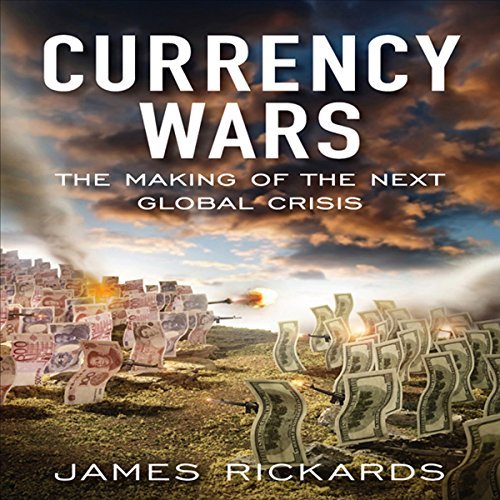
This is a disturbing book because it brings a wolf to the door. The wolf may blow your house down whether it is made of brick or straw.
Herman Cain (Previous Presidential candidate, Tea Party Activist who believes in returning to a gold standard for the American dollar. Most recently, President Trump tried, unsuccessfully, to have Cain appointed to the Federal Reserve Board.)
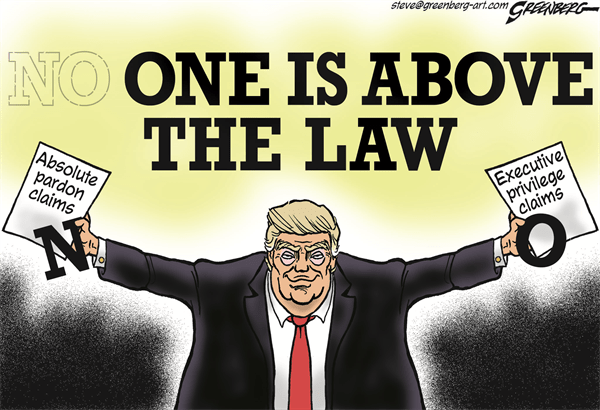
President Trump’s harangue about the independence of the Federal Reserve is old news. Packing the Federal Reserve has been done before. The selection of Herman Cain reflects on an Executive branch that lives in the past.
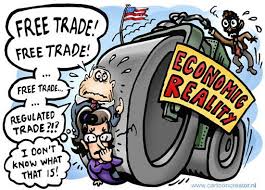
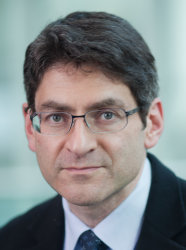
James Rickards infers the sky is falling because we are in a war that cannot be won without returning the American dollar to a gold standard. The argument is that returning to a gold standard will create a level playing field for currency that will stabilize the economy and break down barriers to free trade; i.e. not free trade exactly but regulated trade. Somehow, currency backed up by gold will be more stable than the full faith and credit of a government—really?
What is roiling the market today is a trade war; not currency manipulation.
Gold was over $1600 per ounce when Rickards was published. It ranged between $1529 and $1800 per ounce since this was published. Without a fixed standard, Rickards argues national economic security is at risk. Rickards argues that America has fought two currency wars in its history and is now in the middle of its third war, using weapons that cannot defend America in a currency war.
America is part of a world market; not a singular self-sufficient economic island.
Trade wars between nations is twentieth century thinking. World interconnection through travel, media, and education demand constructive cooperation between nation-state economies. It is economic improvement of all nations that makes each nation stronger. As national economies improve, free trade flourishes. It is a waste of human life to engage in restrictive trade policies or artificial standards of value like gold.
BEN BERNANKE (CHAIRMAN OF THE FEDERAL RESERVE 2006-2014)
Rickards believes Bernanke, in 2012-13, misreads a primary cause of the depression. Rickards believes Bernanke is steering the U.S.’ economy into a ditch. He argues that “quantitative easing” is a road to hyper-inflation and economic calamity because it artificially stimulates the economy with newly printed money that has no intrinsic value.
Rickards goes on to suggest the Euro crises are examples of currency instability and the unpredictability of many battles being fought in the currency wars. His assessment is that political interests of China and Germany are the only glue that keeps countries like Greece from economic collapse.
Rickards is an attorney and an economist. That makes him capable of structuring an argument about the economy with more credibility than a bumbling blogger. However, to this bumbler, Rickards’ arguments are specious.
First, other economists disagree with Rickard’s considered argument about the gold standard, Ben Bernanke for one. Second, what evidence is there that one country’s decision to return to a gold standard will reduce economic conflict among nations? Finally, history shows Rickards to be wrong in terms of America being steered into a ditch. One can reasonably argue that Bernanke’s, Geithner’s, and Paulson’s actions kept America out of a ditch.
In contrast, it appears President Trump may be steering the American economy into an economic ditch.
Countries are run by different government philosophies, different national interests, and rely on different economic resources—how will creating a gold standard for currency in one country or all countries reduce conflicting self-interests? The currency war will not be changed with a return to the gold standard, i.e., currency wars will continue and evolve based on whatever standard is used for currency to determine value.
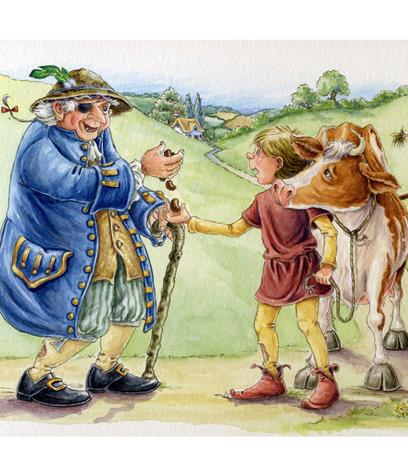
The gold standard is not a magic bean that can be exchanged for a milk cow. There is no bean stock to golden egg land.
Geo-political thinking and self-interest do not change because of a gold pegged American dollar. Currency conflicts will not disappear, i.e., they will re-set to commodity wars, or maybe bitcoin wars. America is as capable as any post-industrial nation to compete on that basis.
Rickards observes the trillion-dollar American Treasury bill hoard held by China and sees the sword of Damocles raised to slice America’s neck. Why would Jack want to kill the goose that lays the golden eggs? America is “Mr. and Mrs. Consumer” on steroids.
AMERICA’S BULLY
Currency wars are real, but America has fought them before with results that have made it the bully of the world. Maybe America needs to learn how to be a little humbler rather than gamble on a currency play or trade war that has as much chance of causing as curing world economic collapse.
Consumption is threatening humanity. Human resource should be deployed to improve living standards of all people, but economies that strictly focus on consumption are killing the golden goose.
Work on the environment is truly an improvement that “lifts all boats”. Better waste management, clean water, clean air, and education are investments with infinite returns. Wars of any kind between nations is twentieth century thinking.
Three thousand years of history are compressed into a twenty-one day tour of China. Aside from dramatic images of China’s economic growth, one of the most interesting political observations made by our tour guide is the 70% rule of leadership.
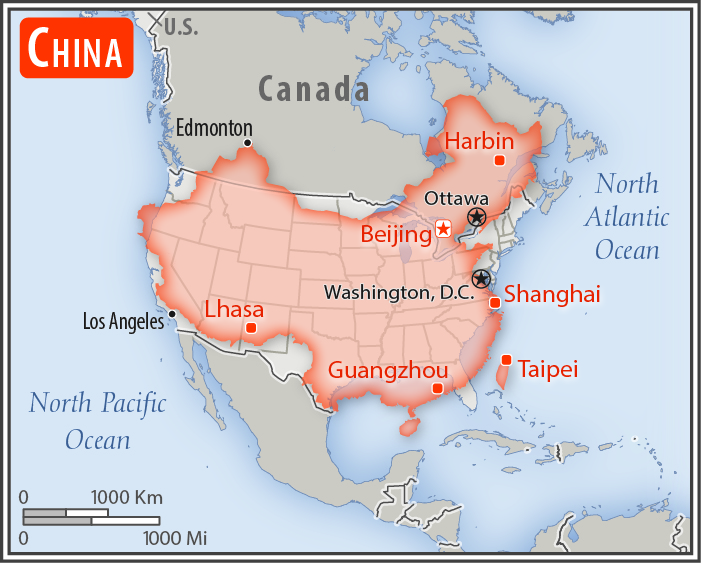
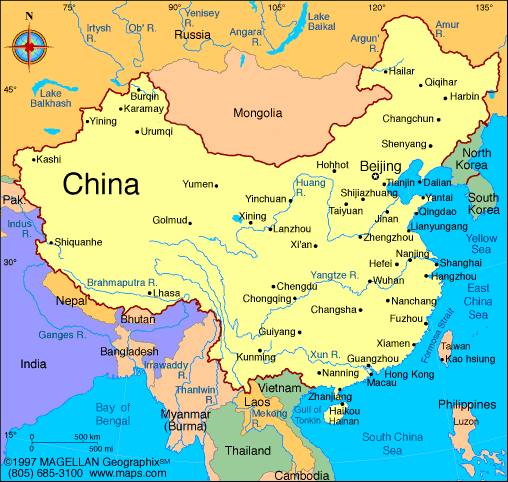
In a self-limited group of 15 American tourists, Overseas Adventure Travel produces a personalized tour of Zhonggou; a.k.a. the “Middle Kingdom”–so named because China grew from a number of small provinces into a singular nation; i.e. a nation the size of the continental United States. Like all maps drawn by a nationalist country, China became the center of the world (a self-identified “Middle Kingdom”).
Our professional guide introduced himself as “Jason” (on the left). “Jason” is born and raised in China. He is educated and trained as a natural-medicine pharmacist like his mother. However, he chooses to abandon that career to see the world. He applies for a position with O.A.T., and after extensive interviews, training, and testing he becomes an independent, licensed tour guide.
Being a guide is no easy task. When guiding 15 people, and seeing sites only read about in literature and the news, things get complicated.
In many ways, tourists are like ostriches. Ostriches are known to bury their heads in the sand when scared. As tourists, we often do the same, not out of fear, but in astonishment.
China’s great wall, giant cities, panda parks, public monuments, landscaped byways, and city parks overwhelm the senses. O.A.T. guides are charged with gathering, and managing 15 tourists while directing and telling a cultural history of the country in which they live.
This is a panda reserve in Chengdu, China. As with many indigenous species around the world, the panda is endangered and restricted to sanctuaries where they can reproduce without fear of poachers who covet their fur.
The immense surroundings of an awakening political, and economic giant arrives in a rush of cityscapes, bullet trains, and water ways.
China is a country of 1.3 billion in a land the size of America with 327 million. Population density difference is immense. (In China there are 134 people per square kilometer vs. 30 in the U.S.) Instead of big cities of 8,000,000 citizens in the U.S., China’s big cities have 20,000,000.
While explaining China’s complicated history, “Jason” juggles arrangements for traveling cross-country. He assigns rooms at hotels, arranges meals, schedules meetings, and offers lectures prepared by local historians and residents. At the same time, “Jason” prepares 15 people to board trains, boats, and planes for the next city.
PARTY BOAT
ROOM ACCOMMODATION FOR OVERNIGHT TRIP
BEIJING AIRPORT
BULLET TRAIN
A constant refrain from our guide is “don’t forget your passport”. Sometimes, a passport is forgotten at the hotel; other times personal luggage exceeds air-travel weight limits. “Jason” smiles, calms fears, and explains how problems can be overcome. He says he has a “cousin”. He doesn’t, but somehow problems are solved and the group moves on.


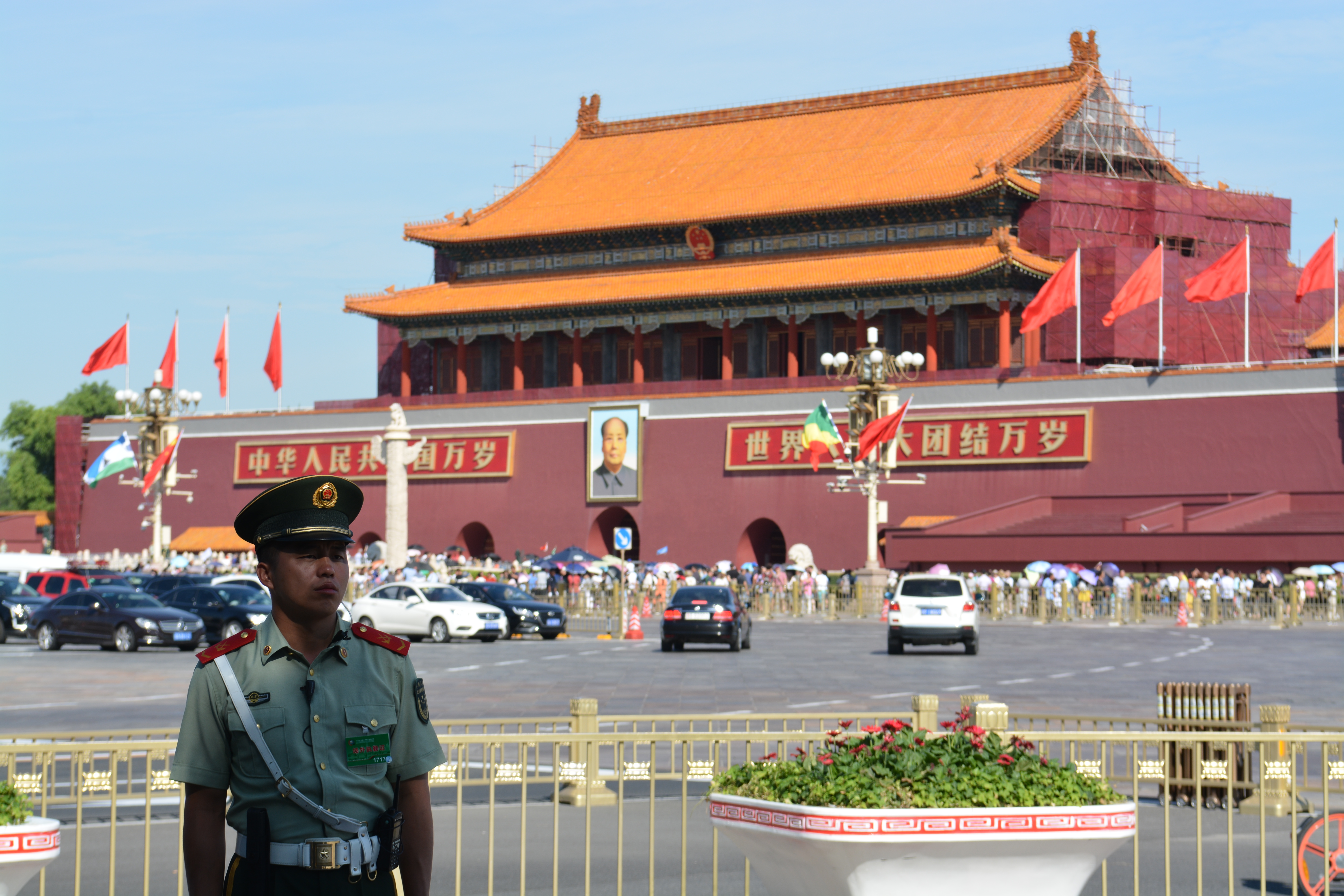
China is a closely watched country. The government requires surrender of your passport at hotels, and often insists on presentation of passports at particular sites like Tienanmen Square.
Two areas we visited (Tibet and Hong Kong) are called autonomous (actually they are, at best, semi-independent) provinces in China. These “autonomous” regions have a different set of rules but the influence of main-land China is obvious in conversations with local residents.
Since our trip to China, Tibet and Hong Kong’s semi-independent status is being challenged by Xi’s desire for conformity. To Xi, the future of China is dependent on control by the communist party. Any ethnic, economic, or political independence from the party is suppressed.
A famous Tibetan monastery (Depung Monastery), originally designed to house Dali Llamas in life and death–is converted to a government building during the cultural revolution. It falls into disrepair but is renovated by President Xi as a museum. The current Dali Llama (forbidden to return to China) is unlikely to be entombed, like former Dali Llamas, in this monastery.
Tibet requires a passport, a special visa, and security checks. All interior China flights have security stations to x-ray baggage and inspect passports when you board. Wi-fi is generally available at hotels but an unsettling feeling comes with use of wi-fi because of a feeling everything you do is monitored.
Some hotels have only Chinese stations and those that have CNN or BBC seem to limit coverage of any news that is critical of China
Additionally, it seems certain information is not available on the internet. These anomalies do not change one’s interest in China but “Big Brother” seems ever present.
Of course, the same is true in America but “Big Brother” is more likely a private company like Facebook, Apple, or Google.
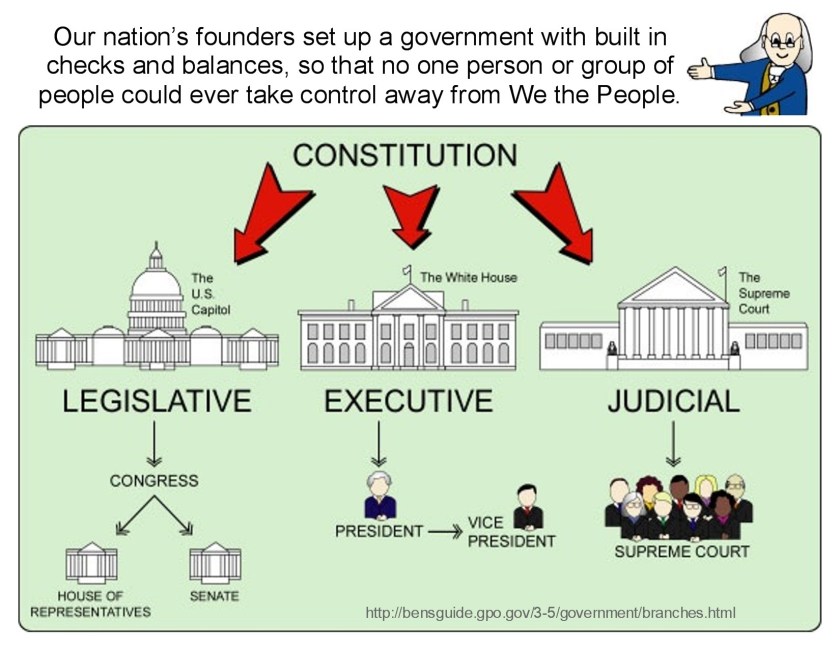
Government surveillance is restricted by “rule of law” in America. America retains “checks and balances” that mitigate autocratic decisions by singular leaders.
“Jason” notes–in his experience, people all over the world are the same. People love; people hate; people believe and disbelieve, but cares and feelings of individuals are the same.
However, there seems a distinct philosophical difference in views of freedom. Freedom seems more feared in China than America. National coverage of Tibetan, Uighur, and Hong Kong independence suggests great concern over ideological differences between ethnic groups, provinces, and the government; particularly differences that encourage public demonstration against government policy.
As “Jason” unfolds Chinese history, one thinks about how important powerful, and singular leaders have been in governing China. Three cultural constants in Chinese history seem to be:
great care for familial relationship,
pursuit of higher education, and
autocratic rule.
MAO ZEDONG (1893-1976, FOUNDING FATHER OF PEOPLE’S REPUBLIC OF CHINA)
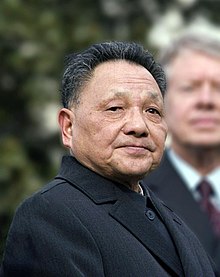
DENG XIAOPING (CHINA’S CHAIRMAN OF THE CENTRAL ADVISORY COMMISSION 1982-1987)
Through generations, China relies on strong leaders who are able to unite disparate interests of provinces, religions, and ethnic groups.
From the great dynasties of ancient history to the eras of Mao, Deng, and now Xi, our guide suggests many Chinese believe “…great leaders must achieve 70% of what is right for the Chinese people” to advance the country. Those leaders that do not achieve that level of public good, are failures.
In other words, Mao and Deng may have made mistakes, but they were at least 70% right. President Xi seems in the process of proving himself. Ancient China’s lead in the world of science and economic growth suggest some truth in a 70% rule–after all, no one is always right.
CHIANG KAI-SHEK (CHAIRMAN OF THE NATIONAL GOVERNMENT OF CHINA 1943-1948) Leader of China during WWII was labeled as corrupt by communist forces in China.
China, like all surviving nations in history, have fallen and risen. In the 1940’s and into the 50’s, Mao overcame, what is considered by some, a corrupt government with a revolution that advanced the economic and political strength of China. Mao eliminated feudal farming that enriched the few at the expense of the many.
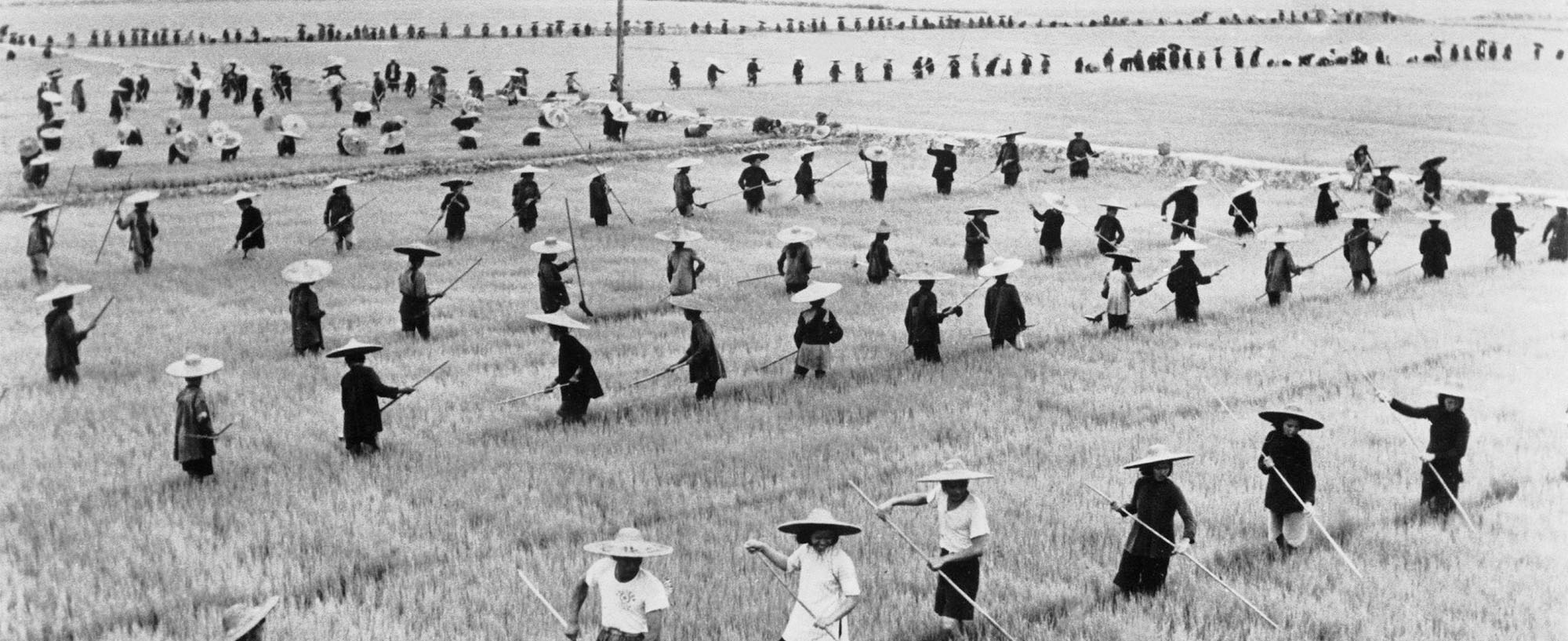
In the 1950’s China rapidly improved farming production of the country. On assuming power, Mao’s goal is to eliminate landed gentry who fail to make their farms produce what they were capable of producing. Redistribution of land became a primary goal of the communist revolution.
Mao’s means were to split the land among the peasants and allow them to own their own land. Individual small land owners formed collectives to improve farming productivity. In the 50’s that plan worked magnificently. China advanced rapidly in the early years of Mao’s reign.
However, with the initial success of small farm-collectives, Mao made the mistake of increasing the size of the collective with communist overseers. Mao’s intent is to advance productivity more quickly. The overseers undermine productivity with an economic program titled the “Great Leap Forward”.
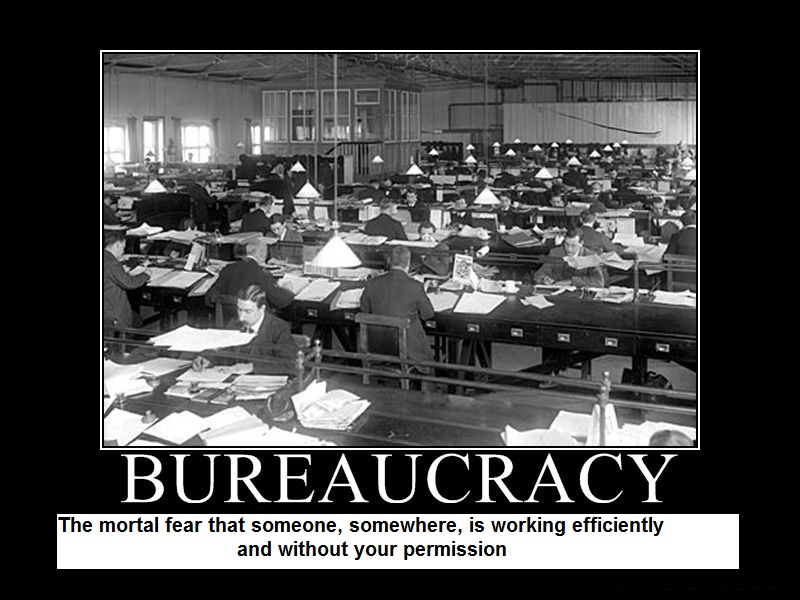
Communist bureaucrats begin saying production is steadily increasing when it is not. Individual farmers no longer control productivity.
Farmers lose their passion to improve productivity as they become smaller cogs in a bigger machine. The bigger machine is layered with bureaucrats that want to look good on paper, but as overseers they overstate the productivity of the collective.
The communist party overestimates its ability. The “Great Leap Forward” replaces farmer’s with Communist bureaucrats. In the late stages of Mao’s “Great Leap Forward”, millions of Chinese die because of bureaucratic lies about farm production. Presumably, this falls into the 30% failure of Mao’s leadership.
Nearing the end of Mao’s life, he may have recognized his error but a cabal, called the Gang of Four (which included his wife), seized control of the government and continued the failed policy of communist control of agriculture. Mao, or this Gang of Four, started the cultural revolution (1966-1976); causing the death of millions. With the question of Mao’s intent, and the usurpation of power by the Gang of Four, the mistakes of the cultural revolution seem less attributed to Mao than the “Gang of Four”.
After removal of the “Gang of Four”, Deng Xiaoping, a pragmatic leader during Mao’s reign, opened the door to a form of capitalism. The door is nearly shut with the Tienanmen Square slaughter. At Deng’s order, a massive protest in Tienanmen Square, is to be ended by “any means necessary”. An unknown number of Chinese men, women, and children are murdered by the military.
Some suggest that Tienanmen Square is a turning point in the history of China. Deng did not apologize for the Tienanmen decision, but he overcame his mistake by arguing that “It doesn’t matter whether a cat is black or white, as long as it catches mice. …. “ Deng seems to have listened to some of what the Tienanmen protesters were saying. Undoubtedly, many protesters were attempting to make communism better; not to destroy what works for the masses. but to focus on what enriches their lives.
The principle of the collective in China remains. Land is largely owned by the State. However, a version of a free market is created which allows private sale of vertical construction (particularly space within buildings) in China’s cities. (This is somewhat misleading because the sales price in a private transaction requires approval by the government, but the government does allow profit to the individual on the sale.)
Small farms are still owned by some Chinese, but the trend is for continued collectivization. Additionally, the growth of cities changes the desirability of farming. Older Chinese may stay on the farm but their children migrate to the city. When aged farmers die, the land is retained by the family but often as tenant farms; unless the government makes an offer they cannot refuse. The tenant farms still operate as a part of a collective. Produce is determined by individual farmers but brokers sell farm product to retail stores for purchase by the public.
A construction boom began with Deng’s pragmatic solution that seemingly combines communist oversight with capitalist ambition. Chinese entrepreneurs work hard, become wealthy, and live a better life. Small farms are steadily re-acquired in China through a process of payment to farmers in the following way:
families are offered (collectively owned) small-parcel farms equal in size to their parent’s land. They become absentee landlords that receive rent in the form of farming profits,
various incentives are offered by the government to families for their move; sometimes, a pension or medical insurance policy, and
the government offers a condominium or house in a different location.
In using this method of acquisition, the government is able to build new condominiums, shopping centers, and infrastructure projects–like the “Three Gorges Dam” that controls flooding. Infrastructure work is ubiquitous in China.
Roads, bridges, and rails are being built to influence and connect Chinese provinces. The most recent monumental evidence of this practice is a high-speed train connection over a bridge between the mainland and the “autonomous” province of Hong Kong.
The process of government acquisition of privately owned farmland is complicated. A team of Chinese bureaucrats measures the house in which a farmer lives, the size of the land the family owns, the product they produce, and the livestock they have. The government determines the price that will be paid. The land owner must accept the decision. In return the farmer may be offered an equally sized piece of land in a collective that is farmed by others; personal incentives like a pension or medical insurance, and a condominium or home in which to live.
BARGE NEAR THREE GORGES DAM
SHIP’S WAITING TO ENTER LOCK AT THREE GORGES DAM
LOCK AT THREE GORGES DAM
State acquisition of land allows massive infrastructure projects to be built. These projects offer jobs to Chinese farmers and their children who are migrating to the city. In some cases, the small farm is retained while the farmer’s children go to the city for a job. With payment from a city job, some call on their farmer parents to help them with a down payment on a condominium in the city. The price of condominiums rises. They rent the condo they have, and make a down payment on a second condo. With each transaction, they become wealthier; i.e. at least, wealthier on paper.
Construction activity is endemic in every city visited. A striking observation is that many of the condominiums seem unoccupied. The question becomes whether construction is too far ahead of real economic growth.
However, retail businesses appear to be booming in China’s cities. Shopping centers are full of residents, and travelers. Restaurants of every kind compete with each other in high-rise shopping malls. Our local guide in Hong Kong notes that the original street markets are disappearing because of conventional retail construction.
Another striking difference between big American and Chinese cities is that you see few homeless citizens in China. In China, government subsidizes housing for the poor. It is not luxurious. It is small and crowded. The dilemma of government is in drawing the line between central planning and public service. It appears to keep the poor from being homeless.
There seems an underlying fear of the effect of the tariff war (started by President Trump) on the local economy. An example of the consequence of the tariff war is a new 90% tax on purchase of a new Tesla in Hong Kong. There was no tax when Tesla first entered the market. Before the tax, Musk’s cars were widely purchased in Hong Kong. One doubts that continues with a 90% tariff.
Another great surprise is that air pollution in Beijing, when we were there, seems no worse than it is in America. However, we were there during the African conference which may explain why the air seemed relatively clear. China successfully cleared the air by limiting polluters during the Beijing Olympics.
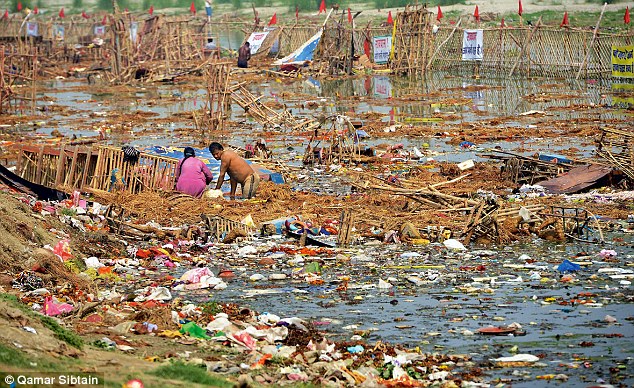
Environmental degradation is a concern in China. Over 60% of their energy comes from coal. The largest Hydroelectric dam in the world, the Three Gorges Dam, only produces 2% of China’s energy needs. Three Gorges is considered a dam for flood control more than energy. Interestingly, the Yangtze river shows a lot more debris and garbage below the dam than above it. Generally, water ways seem polluted with debris like plastic and other human debris. In an effort to abate pollution around Hong Kong, sampan life is discouraged. Much fewer sampan are licensed in modern Hong Kong.
Tap water is considered undrinkable throughout China; which means nearly all water for daily consumption is bottled. Hong Kong is vitally dependent on the mainland for water. There are 21 treatment works in Hong Kong but treatment changes the taste of the water so much that Hong Kong residents drink bottled water.
As noted in a previous blog, President Xi, the current leader of China, is determined to reassert the dominance of the Communist Party in China. Strong centralized rule has been a hallmark of rapid economic and political advance in China’s history.
PRESIDENT XI’S CENTRALIZED RULE CONTINUES TO BE CHALLENGED BY HONG KONG DEMONSTRATORS–NEW YORK TIME’S ARTICLE 6.14.19.
Time will tell if President Xi is a 70% or 30% leader. Xi’s decision to initiate a China’s “Road and Belt” program for the world may be a harbinger of great success or abject failure. The worry may be whether Xi is like an early Mao, and pragmatic Deng, or a singular version of “The Gang of Four”.
Having just returned from China (more about the trip in a future blog), it seems apropos to revisit Jonathan Sperber’s biography of Karl Marx. In many respects, China’s resurgence as a major economic power suggests Marx may have outlined an economic system with some strengths, but communism and China’s form of communism have catastrophic weaknesses.
Johnathan Sperber has gathered an impressive amount of data in his history of Karl Marx’s life. Sadly, his presentation is not equal to his collection. Unlike biographies done by Robert Caro (who wrote “The Power Broker” about Robert Moses, the land planner of New York, and former President, Lyndon Johnson) or William Manchester (a Winston Churchill Biographer), Sperber fails to bring his subject to life.
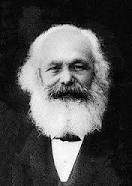
KARL MARX (BORN TRIER, GERMANY 1818-DIED LONDON, ENGLAND 1883)
Marx is considered by some to be one of the three most influential economists that ever lived (Adam Smith and John Maynard Keynes being the other two.) That high praise is not forcefully presented in Sperber’s biography. Sperber offers facts but leaves coherence to the reader.
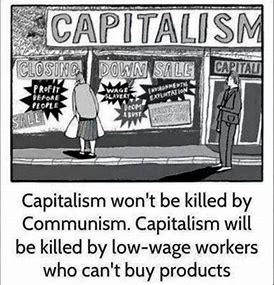
Marx means something to the 21st century. Some might argue America is reaching a point in the history of capitalism that is foretold by Marx’s theory of socialist economics. As Sperber notes, Marx believed capitalism was a step in the economic evolution of the world, leading to a governmental revolution. Marx believed capitalism would reach a nadir of conflict between haves and have-nots because of social inequity inherent in capitalist economies.
As Sperber notes, Marx lived through and wrote about social conflict created by feudalism and capitalism in the mid-nineteenth century. Marx is raised in Prussia, ruled by a Czar in a feudal economic system. He witnesses growing discontent of feudalistic working-class Russia.
Marx created a theory of economic evolution showing feudalism, capitalism, socialism, and communism as progressive improvements in the lives of all people.
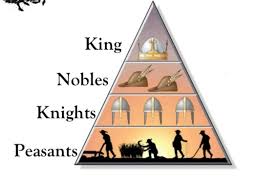
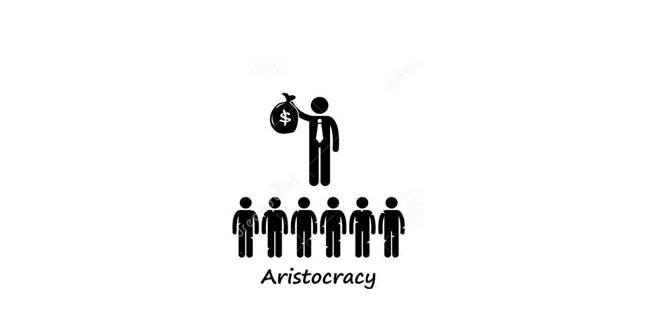
Feudalism grew out of the rule of Kings and Czars with a small aristocracy receiving privileges of wealth and property with the bulk of human civilization indentured to the privileged class.
As the indentured, under-privileged population grew, discontent led to revolution.
In 1776, America broke with English aristocracy to form a “checks and balances” democracy; in 1789, the French population broke with absolute monarchy to form a populist democracy; in 1848, German states rebelled against the aristocratic Prussian confederation of thirty-nine states ruled by an aristocracy and chose various forms of government to establish their own nationalist identities.
DENG XIAOPING (CHINA’S CHAIRMAN OF THE CENTRAL ADVISORY COMMISSION 1982-1987,) In 1980 Deng Xioping, though maybe not in a revolutionary sense, changed the direction of communism in China.
Each Chinese change in governance led to more liberal, slightly more democratic, and capitalist economies.
Hong Kong is presently in the throes of resistance to China’s encroachment on their semi-autonomous existence. Hong Kongers’ discontent could be seen in traveling to Hong Kong months before today’s demonstrations.
As nations prospered during the industrial revolution, more mercantile economies formed. Aristocracy became broadly defined by wealth rather than inheritance. Parliaments and congresses were created to represent wider population interests.
However, Sperber explains Marx believed that the greatest part of nation-state citizens remained in poor economic condition; even when based on mercantilism. Marx, looked at the economic condition of the world, and noted that transition from feudalism to mercantilism only marginally improved living conditions for the majority of state citizens and, in fact, actually worsened the condition of the young and impoverished who worked long hours for little pay. To Marx, capitalism just exacerbates the mercantile economic condition of the poor.
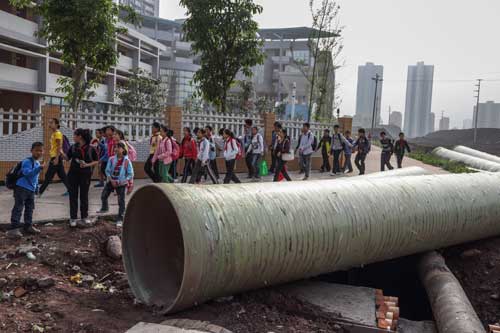
CHINA IS MOVING 250 MILLION PEOPLE INTO CITIES ACCORDING TO THE NEW YORK TIMES (Housing is un-affordable for a large percentage of new city dwellers. The government of China subsidizes housing for many Chinese that come from rural areas.)
In 2018, it seems China may be reaching a capitalist tipping point where low wages do not cover the cost of living. Though many Chinese have moved from rural areas, wages remain low in comparison to the cost of living. Housing and health coverage is un-affordable for a large percentage of new city dwellers. The government of China subsidizes housing for many Chinese that come from rural areas to mitigate the plight of the poor.
ADAM SMITH (1723-1790, AUTHOR OF -THE WEALTH OF NATIONS) Marx developed the labor theory of value to suggest that classical economic theory suggested by Adam Smith leaves too many people in the gutter.
Marx felt Smith did not properly quantify the value of labor. Marx argued that capital was created to benefit owners at an unfair expense to labor.
Marx believed capitalist aristocracy continued to victimize the working class, trading one form of indenture for another. Marx suggested democracy was an evolution for economies that widened the benefited population but still left most workers underpaid, undernourished, and disadvantaged.
Sperber clearly points out that Marx did not believe that communal ownership of property redressed the inequities of state’ economies; i.e. Marx argued that inequity is caused by capital creation that only benefited ownership and undervalued labor that created capital.
China’s current experience seems to show Marx may have been right to believe communal ownership has little to do with state’ economics because communal ownership remains a dominant factor in China’s extraordinary economic resurgence. Property is not owned by individuals in China. Land is either owned by a collective or by the State.
Though land cannot be owned by Chinese citizens, distribution of capital has been widely increased through rising prices of high-rise condominiums. Many high-rise condominiums are owned by individual Chinese. Some citizens inherited or bought condominiums at such low prices–appreciation made them rich.
The fly in the ointment of their newfound wealth is the price of sale must be agreed upon by the government which creates an artificial bubble that may burst into hyper-inflation, with the potential for a nation-wide economic collapse.
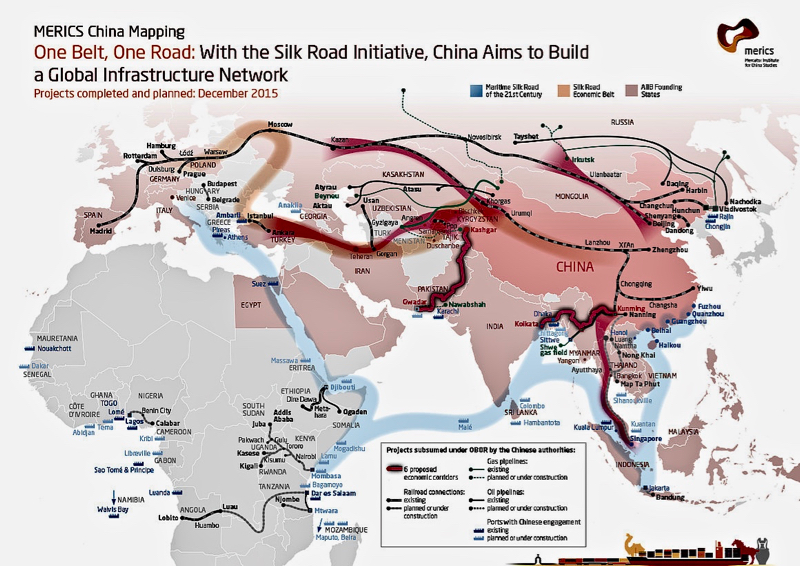
China moves to address a potential economic collapse in an inventive and creative way. What China is doing--is trying to widen their market for goods with an economic growth plan called "Belt and Road". China invests billions of dollars in other countries infrastructure. China is betting that these improvements will create consumers for Chinese manufactured products. A side benefit is that these infrastructure improvements offer employment to Chinese citizens and businesses. (As can be read in news magazines like the Economist and papers like the Wall Street Journal and New York Times, some nations resent China's investments in their countries for various nationalist and economic reasons.)
China is also investing in the world's natural resources to expand their manufacturing capability. The question is whether these long-term investments will pay off in time to stabilize China's construction market. The construction market is where individual Chinese citizens carry their wealth. Condominium prices will reach a limit. In 2018, a 300 square foot condominium sells for over $500,000 in China's larger mainland cities. That is nearing $2,000 per square foot (and Chinese buyers do not own the land). In the United States, most housing is less than $200 per square foot; including the land. Continued wealth distribution in China depends on the success of the "Belt and Road" program.
Marx supported worker unionization’s effort to equalize benefit through a more equitable distribution of capital. He was deeply involved in the “International Workingmen’s Association” (aka First International). Herein lays the evolution of capitalism to socialism and Marx’s belief (and maybe Xi’s belief) in the fairness of economic communism. Modern China seems to be addressing the idea of a more equitable distribution of capital on paper, but the paper is based on what appears to be an unsustainable real estate market.
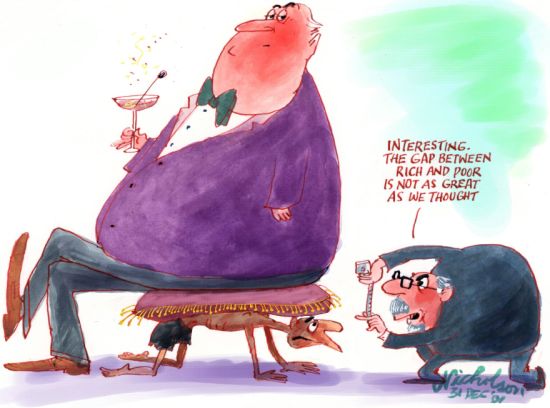
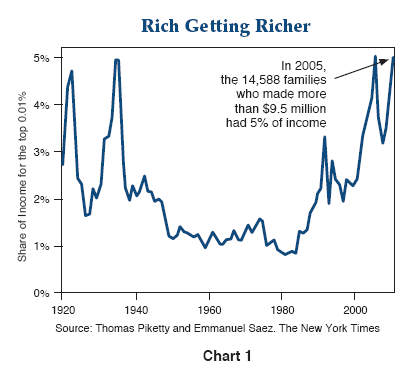
Piketty argues that the income gap widens once again, after World War II. He estimates 60% of 2010’s wealth is held by less than 1% of the population; with a lean toward the historical 90% threshold. Moneyed interests have become the new aristocracy, as repressive and privileged as the Kings and Czars of the mid-19th century.
One can disagree with Marxian theory but the widening gap between haves and have-nots (the 1% and 99%,) is a real-world concern in the 21st century.
Marx’s solution for economic inequity is flawed but the condition he describes in the evolution of economies seems prescient. To most Americans, Marx’s communism is not the answer.
When CEOs of companies are making over 200 times average laborers’ income, there is a glaring problem in the current condition of capitalist economies. Instead of income differences, it is housing value in China. China is on a razor’s edge that may as easily cut their throat as shave their face.
This is a disappointing book because it garners too little interest in the power and influence of Marx’s economic theories. However, it offers insight to what Marx may have had right (the importance of distribution of wealth) and what he had wrong (communal productivity). China is using a different vehicle than America for distribution of wealth but the principle of wealth-distribution addresses what ails all forms of government.
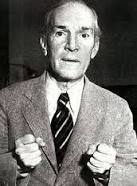
UPTON SINCLAIR, JR. (1878-1968, WINNER OF THE PULITZER PRIZE FOR FICTION)
It seems appropriate to revisit Sinclair’s book in light of the current administration in Washington D.C.
In the era of Trump, it is not meat packing but the coal industry that needs help. Trump’s pandering to the American coal miner offers air without oxygen to an industry that is dying.
Private industry and the American government need to step in and offer a way out for coal industry’ laborers. The Trump administration undervalues American labor by presuming laborers can only be cogs in a machine rather than complete human beings.
Instead of insisting on continuing an industry destined to fail, private industry and government should be offering living-wage transition, and education for new jobs; i.e. jobs that look to a future rather than a past.
Sinclair exposes the dark side of poverty and immigration in the United States. It reminds one of Charles Dickens’ stories of child labor in London but does not offer much warmth or balance. Sinclair’s story offers no respite from utter degradation. There is no respite for the reader to believe there is any redemption for being poor in Chicago in the early 1900s.
“The Jungle” is a grim tale written by Upton Sinclair about the meat-packing industry in early 20th century America.
Lessons of “The Jungle” are reminders of the limits of unregulated capitalism, industry’ greed, and government neglect. Sinclair attacks the meat-packing industry of the 1900’s.
Descriptions are given of spoiled meat ground into sausages; loaded with chemicals for appearance and smell, with too much production to be adequately inspected by too few inspectors. Employees lose limbs and lives in accidents; with corporate lawyers preparing to swindle the uneducated with unfair financial settlements. Wages are too low to offer enough money for shelter and food; let alone any savings, to break the cycle of poverty. Promotion is limited to those who are willing to compromise their morality by feeding a corrupt system that thrives on human exploitation.
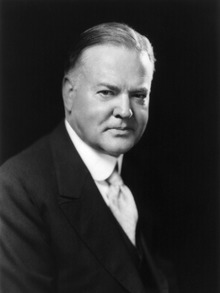
Herbert Hoover is the 31st President of the U. S. when the meat packing industry is at its worst. Like Herbert Hoover, Trump seems to think the strong survive and the poor deserve their fate.
To some, this is the same as today’s stories of the coal industry.
Don Blankenship (Former CEO of the 6th largest coal company in the U.S., Massey Energy)
Convicted on a misdemeanor charge of conspiring to willfully violate mine safety and health standards in 2015. Sentenced to 1 year in prison and fined $250,000.
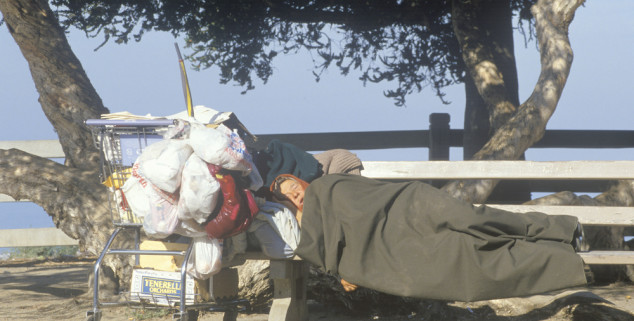
Images of poverty and what it leads to are still seen in American cities; i.e. people living on the street, begging for a dollar to eat; some drinking the dollar away at a local tavern because it blunts the pain of being poor and offers a haven from a cold winter day. Young people, some children, turning tricks to survive; selling their body because low paying jobs of high volume/low price conglomerates do not pay enough for rent and food.
Hearing of the meat industry–its lax government oversight, greedy corporate owners, and corrupt politicians deeply offends American ideals. Grinding poverty changes a family of ambitious immigrants into cogs in a meat butchering machine that breaks spirits and turns good people into bums and latent criminals.
In Dickens novels, there are some remnants of human joy; even in impoverished London. In Sinclair, the only glimmer of light is small-scale concern for fellow human beings. The early days of the union movement offer some hope. However, even Sinclair’s positive sentiments are corrupted by politics. Sinclair idealizes socialism and touches on early communism.
America still offers the best known vehicle for freedom in a regulated democracy.
Since 1789, America’s relationship to immigrants has been a work in progress.
The United States has a growing need for younger workers; not to the extent of countries like Japan, but after 2020 it is increasingly important.
America needs more youth to re-balance its economic growth.
The influx of immigrants generated much of America’s success in the industrial age. Immigrants offer the same opportunity for America in the tech age.
To some immigrants, the avenue out of poverty is crime and immorality, but that has always been true in America’s history. That is why American democracy is founded on rule-of-law. Human nature does not change.
The life cycle for an honest immigrant is grim; arriving poor; staying poor, and dying. American Presidents who only focus on the business of business fail to understand or care about the trials of the poor, the newly arrived immigrant, or the social condition of impoverished communities.
Every country in the world benefits and suffers from the nature of man and the effects of urbanization; none offer Eden. America remains a land of opportunity, but to close our doors to those who want to improve their lives with freedom and honest work is an unconscionable mistake. Demographics are destiny. America’s and many post-industrial economy’s populations need help.
Modern America is not quite so dark but inequality of opportunity still plagues capitalism with wealth, greed, and political corruption hiding the dire condition of the poor.
As long as the poor remain hidden; the rich and middle class will avert their eyes, mutter “get a job”, and think the poor get what they deserve.
America is Constitutionally responsible for the welfare of its citizens.
Those who think the business of government is only business are incorrect. Business is a tool to use in forming a more perfect union; governing with justice, supporting domestic tranquility, providing for a common defense, and promoting the general welfare.
SINCLAIR LEWIS (1885-1951 AMERICAN NOVELIST-FIRST TO RECEIVE THE NOBEL PRIZE IN LITERATURE)
Sinclair Lewis’s “Babbitt” is categorized as a satire, a parody of life in the early roaring twenties, but its story seems no exaggeration of a life in the 20th or 21st century. Published in 1922, it is considered a classic. It is said to have influenced Lewis’s award of the Nobel Prize for literature in 1930. (Lewis is the first American to receive the Nobel Prize in Literature.) Lewis is highly praised for describing American culture. “Babbitt” is the eighth of thirteen novels Lewis published by 1930. Lewis creates a body of work that intimately exposes strengths and weaknesses of American democracy and capitalism.
Reader/listeners are introduced to George F. Babbitt, a man in his forties. Babbitt is a realtor. He is successful financially; bored, and relatively happy in his married-with-children’ life. His best friend, Paul, is equally bored, less financially successful, but deeply unhappy in his marriage. Paul is harried by a wife that men categorize as shrewish. Babbitt’s best friend chooses to cheat on his wife. When Babbitt finds Paul in a clandestine meeting at a Chicago restaurant, he waits for him at a hotel to try to understand what is happening.
DOMESTIC ABUSE VICTIM (Lewis writes a satiric vignette where women are rarely viewed as equal to men, and expected to forgive men for violent treatment.)
In a male-bonding moment Babbitt forgives Paul and agrees that his friend’s wife is a shrew. Babbitt offers to mislead the betrayed wife by lying about her husband’s out-of-town business trip. Later, the spurned wife argues with Paul. Paul responds by shooting her in the shoulder. Babbitt sticks by his friend; even when he is convicted and sentenced to prison for three years.
After a year of his friend’s incarceration, Babbitt tries to get the spurned wife to forgive her husband and petition the parole board to release Paul early. She neither forgives nor forgets. She chastises Babbitt for his deluded belief that her husband deserves any leniency. This seems a satirical vignette where women are rarely viewed as equal to men, and expected to forgive men for violent treatment.
Babbitt, Lewis’ anti-hero, deludes himself with the idea that another sexual relationship in his life is his right, and that it will not hurt anyone.
In his mid-forties Babbitt is becoming more restless. He rationalizes infidelity and discounts the value of his wife and family. He chooses to cheat on his wife because he feels his wife does not understand him. Babbitt deludes himself with the idea that another sexual relationship in his life is his right, and that it will not hurt anyone. One may presume this is another satirical vignette. On the other hand, how many men and women rationalize their way to extra marital affairs today?
Lewis, through his characters, infers there is a struggle for fair, if not equal treatment, in women. In “Babbitt”, Lewis never gives women a role as superiors or equals that have intellectual interests in government, society, or culture. Rather, Babbitt suggests women often feign interest in a man’s thoughts for the desire of companionship, attention, and affection.
Babbitt implies women rarely seek intellectual stimulation or sexual gratification. Men are shown to classify women as shrewish because they are pushing husbands to be more expressive and attentive. There are many ways of interpreting Lewis’s intent but this is not an exaggerated satire, it is a truth of many men’s view of women.
An underlying theme in “Babbitt” is the inequality of American capitalism. Women and most minorities are less equal because they are either not in the work force, or in the work force at a lower wage.
An underlying theme in “Babbitt” is the inequality of American capitalism. Women and most minorities are less equal because they are either not in the work force, or in the work force at a lower wage. The union movement is struggling for recognition in the 1920s because of low wages being paid by business owners. Lewis suggests Babbitt begins to modify his opinion about the labor movement as he becomes entangled in the lives of less successful Americans like Paul and his spurned lover.
Wealthy capitalist see the answer to the union movement is electing a business President that cracks down on unions. Capitalists who have money and power classify the union movement as anarchic, communist, or socialist. (This sounds familiar today.) Babbitt suspects there is something wrong when he sees some union supporters are from the educated class. What makes Lewis’s observations fascinating is that they are written when America is in the midst of the roaring twenties; before the 1929 Wall Street’ crash. In the early 1920s, capitalism seems to be a tide raising all boats when in fact it is a torpedo being readied for launch.
Wealthy capitalist see the answer to the union movement is electing a business President that cracks down on unions.
Babbitt experiences peer pressure that causes him to recant any perceived support of union sympathizers and eventually returns to the fold of do-nothing conservatism. He recants his libertine ways and returns to hearth and home. But Lewis offers a twist by having Babbitt’s son shock the family by rebelling against standards of upper middle class life. He decides to marry without the blessings of his family or his church. George F. Babbitt is the only family member who whole heartedly supports his son’s unconventional act.
Babbitt writes in the midst of a burgeoning American industrial revolution. It seems what happened in the 1920s is similar to what is happening today. The industrial revolution is now the technology revolution; women are still undervalued, many Americans want a business President elected, and unions are being busted. Today’s young men and women are still breaking social conventions. The stage seems set. One hopes 2018 is not America’s roaring twenties; pending another economic crash.
Broken families, broken hearts, but most of all, broken trust are described in Jill Leovy’s book, “Ghettoside”.
Leovy’s “true story”, somewhat surprisingly, deals mostly with the relationship between Black communities and local law enforcement in an area known as South Central Los Angeles. The surprise in the story is that the 2000 census shows 87.2% of the population of South Central Los Angeles is Latino–only 10.1% is Black; the remainder white, Asian, or other.
SOUTH CENTRAL LOS ANGELES (51 SQUARE MILES, 25 NEIGHBORHOODS)
The 2000 census shows of 49,728 people live on 2.55 square miles of land, made up of nine communities. One presumes Leovy chooses the relationship between Blacks and the police because it fits the particular facts of her story.
Food distribution as a result of Covid19 and unemployment.
It seems fair to suggest broken families, hearts, and trust are equally true for Latin South Central Los Angeles families because poverty and gang violence are common denominators of its residents.
Though Leovy’s story is not about poverty, “Ghettoside” (a coined word for ethnic groups killing themselves) is partly related to poorly regulated capitalism; just as genocide is partly related to totalitarianism. The poor in American cities have few legal means of escape.
“Ghettoside” appears most obviously in modern cities because of population concentration. The poor have few available living-wage jobs. The poor congregate in run down inner-city neighborhoods because that is all they can afford.
Decent education is a cost without immediate benefit; i.e. robbery, extortion, prostitution, and other illegal activities provide gainful employment, put food on the table, and pay the rent. On-job-training is provided by street gang activities.
Violence provides “street-cred” and gang affiliation provides power. Money, power, and prestige, the hallmarks of capitalism, are as coveted by the poor as the middle class and rich.
GANGS IN SOUTH CENTRAL LOS ANGELES (A son rejects the gang culture but, like all teenagers, craves his own identity. He ignores gang-culture rules of living in South Central. Standing on a corner, with a hat that is the wrong color, he is shot in the head by another teenager that presumes gang affiliation.)
This story about South Central is primarily told from the perspective of the police department. Leovy tells the “true story” of a black South Central Los Angeles’ cop who works and lives in a South Central L.A.’ community. He is an exception to the rule of most South Central policemen because he lives in the neighborhood he polices. He is an excellent homicide detective, who works hard to solve crimes in a city he loves. He raises a family that exemplifies the American dream. He comes from a lower middle class family, marries a Costa Rican wife while in the marines, and returns to South Central to become a cop. They raise three children; two younger children went to college while the oldest struggled in school. With extra effort, the oldest finishes high school. He is not interested in college but is a conscientious, hardworking young man; much like his father. The oldest son rejects the gang culture but, like all teenagers, craves his own identity. He ignores gang-culture rules of living in South Central. Standing on a corner, with a hat that is the wrong color, he is shot in the head by another teenager that presumes gang affiliation.
LAPD IN SOUTH CENTRAL LOS ANGELES (Leovy explores police department reaction to inner-city homicide to reveal how good cops are overwhelmed by a culture that victimizes itself.)
Leovy explores police department reaction to inner-city homicide to reveal how good cops are overwhelmed by a culture that victimizes itself. As the story unfolds, the police officers’ oldest son dies. The investigation is turned over to a different department that initially fails to solve the crime; not because of lack of effort but because of a bureaucratic way of conducting the investigation. The officer in charge is a meticulous detective but the record of his investigation shows he repeatedly knocks on doors of possible witnesses without actually making contact. The effort is duly noted in the “murder book” but no new evidence is found. A new officer is assigned to the case that is equally organized but pursues witnesses until he finds them. A record of attempted contacts is not acceptable to this detective.
Leovy provides detail of the new officer’s interrogation of a suspect that rivals the skill of the investigator of Raskolnikov in Dostoyevsky’s classic fictional story of “Crime and Punishment”.
The interrogation description is a pleasure to listen to and a high commendation by Leovy for the investigating detective. The case is solved but one is left with the feeling that justice is not done. A young man, a teenager, is dead. The killer is also a teenager. When asked why he murdered the police officer’s son, he said he shot him with his eyes closed; he only did it because the officer’s son looked like he belonged to a rival gang, and, after all, he is Black, so who cares?
Leovy systematically reveals how difficult it is for a good police officer to keep up with the murder rate in South Central L.A. Everything from budget cuts, to bureaucratic “cover your ass” investigation, to a culture that feeds on itself, makes a good policeman’s job un-doable.
Leovy explains how Black families believe they do not matter to the police because murders do not get solved.
Police officers are faced with mistrust that makes solving murders less important than bureaucratic record keeping that shows they are working
“Ghettoside” is a picture of hell; i.e. a picture of broken families, broken hearts, and broken trust.
When trust between citizens and police is broken, witnesses will not cooperate because they fear reprisal from the accused.
Ineffective police bureaucracy is compounded by officers that are not part of the community for which they are responsible. The irony of that observation is made obvious in Leovy’s story of a good officer who lives in the community and has a son murdered for being part of the community.
Being a cop in South Central L.A. looks like the hell described in Sartre’s play, “No Exit”. It is a play where three dead characters are locked in a room with no exit. In Leovy’s story, there are the police, the citizens, and the perpetrators. Sartre is saying “hell is other people” because each is perpetually viewed by the other as the worst part of themselves.
Audio-book Review By Chet Yarbrough (Blog:awalkingdelight) Website: chetyarbrough.blog
A Primate’s Memoir: A Neuroscientist’s Unconventional Life Among the Baboons
Written by: Robert M. Sapolsky
Narration by: Mike Chamberlain
ROBERT SAPOLSKY (AMERICAN NEURO-ENDOCRINOLGIST, PROFESSOR OF BIOLOGY, NEUROSCIENCE, AND NEUROSURGERY AT STANFORD UNIVERSITY)
Robert Sapolsky’s “A Primates Memoir” is a masochist’s guide to Africa. (Our 2017 trip to Africa was luxurious in comparison.) Sapolsky’s trip is what you would expect from a biological anthropologist who sojourns to Africa in the early 80s. Sapolsky lives in a tent while studying baboons.
Our stay in Africa is luxurious in comparison to Sapolsky’s in the 1980s.
At the age of 12, Sapolsky appears to know what he wants from life. In his middle-school years, he begins studying Swahili, the primary language of Southeast Africa.
Sapolsky’s career is aimed at understanding Southeast Africa. Sapolsky’s 1984 PhD. thesis is titled “The Neuro-endocrinology of Stress and Aging”. Presumably, his trip to Africa became the basis for his academic thesis. Sapolsky’s experience in Africa is recounted in “A Primate’s Memoir”.
Animal preserve in Southeast Africa
While studying Baboons, Sapolsky is exposed to the worst of African society. His memoir of those years touches on the aftermath of Africa’s colonization, Africa’s ubiquitous diseases, its governments’ instability, and its abundant and frequently poached wildlife.
SOUTHEAST AFRICA
Robert Mugabe (Former President of Zimbabwe)
JACOB ZUMA (FORMER PRESIDENT OF SOUTH AFRICA)
Though some of what Sapolsky writes has changed, today’s news shows characters like Robert Mugabe, and Jacob Zuma, who are accused of victimizing the poor to enrich themselves.
Some African, and other nation-state leaders around the world, are corrupt. Many Southeastern African bureaucrats, foreign business moguls, indigenous apartheid promoters, and wildlife exploiters still walk, drive, and bump down streets and dirt trails of this spectacular continent.
Self-interest often conflicts with general economic growth and stability. Today’s Southeast Africa is great for tourism (one of the three biggest industries) but the poor remain poor, the rich richer, and the middle class nearly non-existent.
Today’s Southeast Africa is great for tourism (one of the three biggest industries) but the poor remain poor, the rich richer, and the middle class nearly non-existent.
Sapolsky returns to Africa after marrying. He squires his science and marriage partner to revisit a baboon troop he was studying in the 1980s. At the same time, he touches on the cultural norms of a society that seems little changed from his early years in Africa.
Sapolsky recounts the melding of a tragi-comic story of an African who is mauled by a Hyena. In telling the story, he reveals the stoic acceptance of life as it is. However, each time the story of the mauling is told by different people, it changes. The change comes from a blend of truth and fiction that conforms to the tellers’ view of themselves. The essence of the story is that an African man sleeping in a tent is mauled by a Hyena looking for food.
Re-telling of an African story changes with each narration–The change comes from a blend of truth and fiction that conforms to the tellers’ view of themselves..
When the story is told by Masai warriors hired by a company to protect its employees, the victim is saved when the Hyena is speared by the Masai warrior’s courage. When the story is told by the victim, it is a company cook who bashes the Hyena that runs away. When the story is told by a newspaper reporter, the Masai warriors were drunk and not doing their job; the cook bashed the Hyena, and the victim survived. When the story is told by the cook, the victim’s yell brings the cook to the tent; the cook grabs a rock, bashes the Hyena, and the Hyena flees. Finally, when the story is told by the company employer, the victim is not an employee, the Mesai warriors did spear the Hyena, and the employer had no responsibility for the victim.
A cultural interpretation is inferred by these many versions of the same story. Some humans indulge in alcohol to escape reality. Most humans wish to protect an idealized version of their existence. News coverage is sometimes a mix of truth and fiction to make stories more interesting than accurate.
Life is happenstance with each human dealing with its consequence as an end or beginning that either defines, or extends their understanding of life. Truth is in the eye of the beholder. Some people are willing to risk their lives for others. Private companies focus on maximizing profit and minimizing responsibility. Life is not an either/or proposition despite Kierkegaard’s philosophy. Humans are good and bad; no one is totally one or the other–not even America’s morally corrupt and ethically challenged leader.
Sapolsky shows that baboon families, like all families, are born, mature, and die within a framework of psychological and physical challenges imbued by culture. All lives face challenge but culture can ameliorate or magnify the intensity and consequence of the challenge.
The overlay of Sapolsky’s memoir is the research and reported evolution of a baboon family in Southeast Africa. He shows that baboon families, like all families, are born, mature, and die within a framework of psychological and physical challenges imbued by culture. All lives face challenge but culture can ameliorate or magnify the intensity and consequence of the challenge.
Sapolsky gives the example of Kenyan “crazy” people who are hospitalized, treated, and fed to deal with their life circumstance. In America, it seems “crazy” people are left to the street. The inference is that Kenyan “crazy” people live a less stressful life than American “crazy” people. This is a positive view of Kenyan culture but there are ample negative views in Sapolsky’s memoir. Rampant poverty, malnutrition, and abysmal medical treatment are Sapolsky’s recollected examples.
Sapolsky’s memoir shows he clearly lives an unconventional life, but it seems a life of purpose. What more is there?
Hayek wrote “The Road to Serfdom” during WWII. His observation was that Nazi Germany and its rise to power had a direct relationship with the growth of socialism, a belief that central planning and control are keys to national prosperity.
Hayek suggests that America and Great Britain suffer a similar strain of belief. He argues that central planning and control leads to totalitarianism. “The Road to Serfdom” is a prescient vision of the dangers of socialism.
The dilemma of government is in drawing the line between central planning and public service. It is particularly complicated by what the intent of Article 1, Section 8 of the Constitution meant when it said a part of the purpose of government is to “promote the general welfare”
It seems common that authors of popular, sometimes classic, books are often interpreted by people who have not read them. Authors like Harriet Beecher Stowe, Richard Wright, Ayn Rand, Vladimir Nabokov, and Friedrich Hayek are frequently commented on but content often becomes a surprise to actual readers.
Friedrich Hayek’s book is frequently lauded by American conservatives and vilified by American liberals.
In truth, Hayek is a seer for both ignorant American’ conservatives and liberals; i.e. Hayek is neither a spokesman for modern American conservatism or liberalism but a strong proponent of classic liberalism.
To be clear, today’s conservatism and liberalism are not defined in the same way Hayek defines them in his 1944 publication. Liberalism in 1944 meant belief in freedom of choice and endorsement of laissez-faire economic principles. 1944 conservatism meant a rejection of the principles of equality with an aristocratic, “rank has privileges”, ideology.
Contrary to Hayek’s conservatism, modern conservatives and liberals endorse subsidization of private enterprise. Subsidization comes from tariffs, tax incentives, and other preferential treatment for private business and industry.
Principles of equality and laissez-fair economic principles are less doctrinaire in the 21st century because American political parties blur the difference. Modern liberals are closely associated with government regulation and intervention but not necessarily laissez-faire principles.
Modern conservatives are opposed to government in most forms of regulation and intervention, but only in principle; not in practice. Modern conservatives, as well as liberals, endorse subsidization of private enterprise. Subsidization comes from tariffs, tax incentives, and other preferential treatment for private business and industry.
Contrary to a wide perception that John Maynard Keynes (a liberal economist in today’s parlance) denigrated “The Road to Serfdom”; Keynes, in fact, praised it. John Maynard Keynes believed in government intervention when a state’s economy is in crisis.
According to Thomas Hazlett in the July 1992 issue of “Reason Magazine”, Keynes wrote “In my opinion it (Road to Serfdom) is a grand book…Morally and philosophically I find myself in agreement with virtually the whole of it; and not only in agreement with it, but in deeply moved agreement”.
Though Keynes praised “The Road to Serfdom”, he did not think Hayek’s economic’ liberalism practical; i.e. Keynes infers that Hayek could not practically draw a line between a safety net for the poor, uninsured-sick, and unemployed (which Hayek endorsed) while denying government intervention in a competitive, laissez-faire economy.
When businesses have an unfair advantage that denies competition, Hayek suggests government regulation is required.
Where modern conservatives get “The Road to Serfdom” wrong is where Hayek writes that government has an important role in a nation’s economy that goes beyond a simplistic notion of laissez-faire.
Where modern liberals misunderstand “The Road to Serfdom” is where Hayek explains that freedom of choice is essential within the bounds of safe pursuit of economic success. When human safety issues from uncontrolled industrial pollution threatens the safety of society (which most modern scientific opinion calls global warming) Hayek writes government intervention is necessary.
After listening to “The Road to Serfdom”, one cannot help but believe that Hayek would be as appalled by “private” industry’s greed in the 21st century.
Hayek wrote that big business is not bad in itself but big business that fails to compete on a level playing field because of government subsidy, through tax concession and special treatment, should be regulated by government to ensure fair play.
In the face of overwhelming evidence to the contrary, Trump denies the reality of global warming.
One is compelled to agree with Hayek when he observes that government programs interfere with free choice when government officials create social programs they think are good for someone else. Hayek is not saying that government should not care for the poor, work-disabled, or technologically unemployed. He writes: “Where, as in the case of sickness and accident, neither the desire to avoid such calamities nor the efforts to overcome their consequences are as a rule weakened by the provision of assistance – where, in short, we deal with genuinely insurable risks – the case for the state’s helping to organize a comprehensive system of social insurance is very strong.”
Hayek goes on to suggest that technological change that causes unemployment warrants government assistance. The danger Hayek tries to make clear is that government interferes with free choice when social programs try to create false equalities.
BREAD LINES IN NEW YORK 1933–Hayek is not saying that government should not care for the poor, work-disabled, or technologically unemployed.
Hayek writes: “Where, as in the case of sickness and accident, neither the desire to avoid such calamities nor the efforts to overcome their consequences are as a rule weakened by the provision of assistance – where, in short, we deal with genuinely insurable risks – the case for the state’s helping to organize a comprehensive system of social insurance is very strong.”
Hayek is acknowledging a role for government. The role is to regulate private enterprise in those areas where freedom of choice or equal opportunity is infringed upon.
If insurance is not available to all in a land of prosperity, then government has a role in creating a program that will offer insurance to all.
Hayek’s only caveat is that the insurance be offered as an affordable, free enterprise, and individual choice, not as an entitlement.
Hayek opposes government programs that interfere with free competition among similar businesses.
The weakness of Hayek’s argument is in idealization of humanity; i.e. human nature is that leaders in government and the private sector will drive for advantage. In the case of one country, that advantage may theoretically be mitigated by impartial government regulation but, in a world of sovereign nations, power is inherently limited.
If China wants to subsidize steel exports, American options are limited to creating import tariffs that further distort market competition. This is the mistaken route that President Trump has taken. Further, Hayek’s idealization presumes that politicians cannot be bribed, human beings are not prejudiced, populations have an equal opportunity to succeed, and humanity is inhumanly perfect when left in a state of grace.
Hayek correctly points out the importance of money as a measure of success in a free society. However, in today’s America, “Moneyocracy” has become an American form of government. “Moneyocracy” is the aristocracy of the 21st century that elects public officials, denies equality of opportunity—for education, economic mobility, and employment.
The gap between the rich and poor is widening by degrees that may bankrupt America because of an enlarging safety net for the old, the sick, the unemployed, and the unemployable.
The field of competition for free enterprise is becoming more unequal. Hayek observes that government intervention slips into socialism when free enterprise is artificially manipulated. The fear is that America will begin looking for their Hitler to manage a sick economy.
Conservatives that rant against government regulation based on Hayek’s “Road to Serfdom” are as incorrect as liberals that argue Hayek wrote against social government programs for the poor, disabled, and unemployed.
What follows Thomas Piketty’s erudite introduction to Capital in the Twenty-First Century is a detailed history of capital formation and income inequality that nearly puts one in a coma.
In truth, Piketty’s peregrination is essential for credibility but only for the sake of economists that wish to challenge Piketty’s conclusions. To a non-economist, less traveling between economic histories would have offered more clarity and less boredom. I suspect, even this brief synopsis will make many eyes glaze over. That is unfortunate, because Piketty’s book is important.
Thomas Piketty’s hypothesis in Capital in the Twenty-First Century is that the wealth and income gap between economic classes is widening in modern, post-industrial nations.
He reaches back in history to note that at one time ninety percent of the wealth of nations was held by less than 1% of the population. This high water mark lessened with industrialization and the growth of a middle class. A major break in wealth and income disequilibrium came with the Great Depression, and World War I and II’s conflagrations. However, Piketty argues that the income gap widens once again, after World War II. He estimates 60% of 2010’s wealth is held by less than 1% of the population; with a lean toward the historical 90% threshold.
This slideshow requires JavaScript.
Piketty’s book could not have been written until the modern age. Analysis of economic data requires mathematical modeling on a scale only achievable with computers. He offers an interesting introduction to Capital in the Twenty-First Century. However, Piketty’s dense and lengthy forward requires listener’ concentration; and for some of us, a re-winding and re-hearing.
BREAD LINES IN NEW YORK 1933, The working middle and lower classes use income to live; not to invest. If they had jobs, they continue to receive income equal to or better than what they had before. The consequence of Depression and World Wars reduces income disparity between the super-rich and the middle class because capital investment income is lost by the wealthy; not the middle class and poor.
The dramatic collapse of the stock market, war’s destruction, and world debt obligations hit high income earners harder than the middle class. Piketty explains–the superrich lose wealth accumulation from capital investment when the Depression and two World Wars disrupt the economy. The working middle and lower classes use income to live; not to invest. If they had jobs, they continue to receive income equal to or better than what they had before. The consequence of Depression and World Wars reduces income disparity between the super-rich and the middle class because capital investment income is lost by the wealthy; not the middle class and poor.
Recovery from world economic Depression and two World Wars requires many years of positive economic growth. After 1983, Piketty argues that capital investment income began to widely outstrip labor income. Thus begins a return of the widening gap between the super-rich and everyone else.
As the economy recovers from Depression and War, capital investment’ income increases and wealth, once again, begets wealth. Until the 1980s, increases in income from capital investment fluctuated but productivity and higher wages helped workers incomes keep pace with the wealthy. It was still possible for the upper middle class to cross class barriers and become capital investors as well as workers. Pre-1980 economic growth mitigated a widening gap between social/economic’ classes.
LABOR VS. CAPITAL INVESTMENT: The wealthy have income from both labor and capital (passive investment); while the middle class and poor have income solely from labor. Income for the middle class and poor does not increase fast enough to allow capital investment; compounding the income gap between the rich and everyone else.
Piketty argues that political influences and economic power begin to coalesce after the 1980s; creating steadily disproportionate increases in income for capital versus labor. Tax shelters and inherited wealth, based on coalescing politics and economics, disproportionately raises income for the wealthy versus the middle class and everyone else. The rich get richer, a middle class becomes smaller, and low-income populations become bigger. Piketty explains that income from labor does not rise as fast as income from capital investment.
Piketty reports that the wealthy make more money from capital investment than they do from their labor.
At the same time, the middle class and poor have little or no capital investment income. Investment income widens the gap between economic classes because labor wages do not provide enough discretionary income for capital investment. The wealthy have enough discretionary income to increase capital investment while the middle class has less discretionary income because of the cost of living.
Piketty reaches into history to remind listeners of Ricardo, Marx, Kuznets and other famous economists. He notes that an economic theory offered after WWII suggests that “a rising tide lifts all boats”. (The Kennedy administration made the “…rising tide…” quote famous.)
In the 1940s, Kuznets argues that the income gap between rich and poor would eventually reach a level of stasis. His basis for that argument is statistical evidence showing a reduced gap between the rich and the general population after the Second World War. However, Piketty argues that stasis for an income gap is dependent on economic growth. Piketty explains that the economic shocks of Depression and World Wars are an anomaly that distorts Kuznets’ theory of eventual economic stasis.
Economic growth has not historically kept up with capital investment growth. Piketty argues that parity is not necessary but economic growth has been under 1% while capital investment growth averages over 5%.
This gap inures to the benefit of the wealthy; not to the middle class or poor. Over time, the gap guarantees increasing income to the wealthy and dwindling income to the middle class; a middle class slipping into poverty. A concentrated wealth bias and an increasing gap between the rich and everyone else is reinforced by inheritance.
Piketty infers that labor-income’ increases have not been big enough for middle class’ capital investment since the 1980s. Piketty argues that the depression and two world wars were the primary reasons for relative stasis of the income gap between 1939 and early 1980s. From 1980s onward, the income gap only widens.
Piketty explains–because the rate of economic growth in post industrial nations has not been big enough; and because income tax structure disproportionately benefits capital investment, the gap between the wealthy and the middle class is widening.
Piketty re-states the cause as increasing capital income for the wealthy and decreasing labor income for the middle class and poor. In the U.S., the income gap is magnified by the rise of CEO’ super salaries that exceed 400:1 in relation to average worker’s pay; this is also true in Europe with a 25:1 ratio.
The climax of Piketty’s argument is that without economic growth nearer the rate of capital investment, national’ economies will return to historic highs where 90% of the world’s wealth is held by less than 1% of the population.
In the fourth and final section of Piketty’s book, he offers a theoretical cure for today’s trend toward income inequality.
PIKETTY’S SOLUTION:
One, create a progressive tax on capital investment income.
Two, provide public financing for education and health services that levels the playing field for all economic classes.
Three, protect pension rights of the working class.
Four, increase the retirement age based on changes in life expectancy.
Five, revise the income tax code to make it genuinely progressive.
Six, regulate capitalism by legislating democratic and financial transparency.
Seven, reduce immigration restrictions to allow needed workers to fill open job opportunities.
Eight, reduce public debt through capital taxation, austerity, and managed inflation.
Piketty’s fundamental point is that the gap between the rich and everyone else must be understood in the context of real economic growth. As long as capital income disproportionately exceeds growth of labor income, the income gap between classes will continue to increase. That income gap militates against real economic growth because it reinforces expansion of either a welfare state or chaos.
Human nature is an unruly beast, it desires freedom but neither desires dependence on a welfare state nor seeks social isolation from chaos. Piketty does not have incontestable answers but he has credibly framed the problem of income inequality.
By: Jeff Goldberg, Dean Latimer, William Burroughs (Introduction
Narrated by Stephen McLaughlin
JEFF GOLDBERG (AMERICAN JOURNALIST, STAFF WRITER FOR THE ATLANTIC, & POLITICAL PUNDIT)
Published in 1981, “Flowers in the Blood” argues for decriminalization of opiates. The idea remains controversial in 2018, and 2022. Written by Jeff Goldberg and Dean Latimer, a listener feels misdirected by historical information.
DEAN LATIMER (WRITER FOR THE EVO, AKA EAST VILLAGE OTHER-WENT ON TO EDIT HIGH TIMES)
The feeling of misdirection is reinforced by a languid, seemingly opiated, performance of the narrator, Stephen McLaughlin. It is not that one is seduced by Goldberg and Latimer’s writing, but a listener feels cornered in a room of opium eaters. Goldberg and Latimer reveal how opium is extracted from a flower to offer a tranquil escape from life’s stresses, with a tantalizing peek at world clarity. Opiate extraction seems simple; the consequence of use, not.
Goldberg and Latimer reveal how opium is extracted from a flower to offer a tranquil escape from life’s stresses, with a tantalizing peek at world clarity. Opiate extraction seems simple; the consequence of use, not.
Goldberg and Latimer argue that opiates enhance natural neurotransmitters, like endorphins, to reduce stress and depression caused by living life. This argument reminds one of a “Brave New World” where every stress in life is characterized as negative.
Goldberg and Latimer note that refinement of opium into morphine and heroin increases its addictive power. They extol the pleasure of opiates while cataloging its history of addiction. Goldberg and Latimer reflect on opium’s effect in altering cerebral states of being. Their argument seems counter intuitive.
They note its use by artists ranging from Charles Dickens to Elizabeth Barrett Browning. They infer opiates enhance artist’s abilities. They realistically identify opiates’ medical benefit, while exposing its potential for addiction. Goldberg and Latimer suggest opiates enhance artistic sensibility, and temper sociopathic homicidal acts. They begin an argument for legalizing opiates.
Goldberg and Latimer extol the pleasure of opiates while cataloging its history of addiction. Their argument is counter intuitive. They begin a defense for legalizing opiates.
Goldberg and Latimer argue that there are three options. One, continue jailing narcotic purveyors and users. Two, legalize opiates and let the free market determine use. Three, decriminalize opiates and offer treatment to those who become addicted.
Their argument is for number three; they suggest number one (the American standard) is ineffective, and number two would be a disaster in the making. Goldberg and Latimer argue that America should legalize and regulate opiates and treat those who become addicted.
America regulates alcohol and tobacco, both proven addictions. Alcohol and tobacco are regulated by the market, with education on their harmful effects and government taxation to increase prices that affects consumption. Goldberg and Latimer argue that America should legalize and regulate opiates and treat those who become addicted.
America regulates alcohol and tobacco, both proven addictions. Alcohol and tobacco are regulated by the market, with education on their harmful effects and government taxation to increase prices that affects consumption. These regulations have had some success, but people still have the right to drink and smoke to excess.
The option of opiate legalization is troubling because it infers substituting inner-direction of human beings for other-direction by government. It increases the potential of a “Brave New World” where human choice is no longer individual but collective.
Goldberg and Latimer point out that punishing the addicted with prison is a mistake. Those who succumb to addiction need help; not punishment.
Goldberg and Latimer point out that punishing the addicted with prison is a mistake. Those who succumb to addiction need help; not punishment. One can readily accept that argument but opiate regulation by the government is a step too far. This may be a distinction without a difference but Alcohol and cigarettes are still a private sector choice with government intervention (principally tax increases and education) based on political input.
The loss of Seymour Hoffman in February 2014 was a tragic loss. Hoffman dies at the age of 46, John Belushi at 33, Kurt Cobain at 27, Billie Holiday at 44, River Phoenix at 23; all from opiate overdoses. If opiates were legalized, would these artists have been saved—who knows?
The loss of Seymour Hoffman in February 2014 comes to mind. Hoffman dies at the age of 46, John Belushi at 33, Kurt Cobain at 27, Billie Holiday at 44, River Phoenix at 23; all from opiate overdoses. If opiates were legalized, would these artists have been saved—who knows? They chose addiction to escape the insecurity and stress of life. Their choice is their choice. Insecurity and stress are facts in every human’s life. America’s failure is related to treatment, not government control of human choice.
With treatment programs, the government will make the objective of addicting users a waste of manufacturer’s and seller’s time. It may not eliminate illegal drug activity but it will make it less financially viable.
America needs to continue their fight against illegal opiate manufacturers and sellers. Threat of punishment is not the key but reduction in profitability will drive illegal manufactures out of the market. With treatment programs, the government will make the objective of addicting users a waste of manufacturer’s and seller’s time. It may not eliminate illegal drug activity but it will make it less financially viable. Addiction treatment programs and substance abuse’ education are legitimate roles for state governments. Opiates should be subject to the same laws that presently govern drug research and development.
Unfortunately, “Flowers in the Blood” fails to nuance legalization of opiates. It leans more toward influencing uneducated poor, educated middle class, and idle rich to experiment with addictive drugs. Goldman and Latimer are on the right track with regulation and treatment of addiction, but their book encourages drug experimentation in a culture that needs no encouragement. Stress is a part of life and being drugged into obliviousness diminishes humanity.