TODAY’S LUDDITES

Audio-book Review
By Chet Yarbrough

(Blog:awalkingdelight)
Website: chetyarbrough.blog

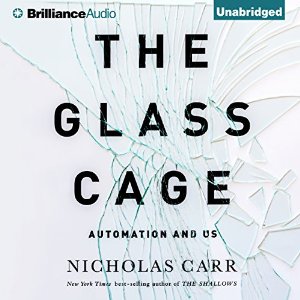
The Glass Cage-Automation and Us

By: Nicholas Carr

Narrated by: Jeff Cummings

NICHOLAS G. CARR (AMERICAN WRITER-FORMER EDITOR OF HARVARD BUISNESS REVIEW)

NICHOLAS G. CARR (AMERICAN WRITER-FORMER EDITOR OF HARVARD BUSINESS REVIEW)

The Glass Cage, written by Harvard alumnus Nicholas Carr, ironically places him in the shoes of an uneducated English textile artisan of the 19th century, known as a Luddite.

Luddites protested against the industrial revolution because machines were replacing jobs formerly done by laborers.  Just as the Luddites fomented arguments against mechanization, Carr argues automation creates unemployment and diminishes craftsmanship.

WORKMEN TAKE OUT THEIR ANGER ON MACHINES DURING THE INDUSTRIAL REVOLUTION. (Just as the Luddites fomented arguments against mechanization, Carr argues automation creates unemployment and diminishes craftsmanship.)

Workmen take out their anger on the machines

Carr carries the Luddite argument a step further by inferring a mind’s full potential may only be achieved through a conjunction of mental and physical labor.  Carr posits the loss of physical ability to make and do things diminishes civilization by making humans too dependent on automation.

There is no question that employment was lost in the industrial revolution; just as it is in the automation age, but jobs have been and will continue to be created as the world adjusts to this new stage of productivity.

INDUSTRIAL REVOLUTION

Unquestionably, the advent of automation is traumatic but elimination of repetitive industrial labor by automation is as much a benefit to civilization as the industrial revolution was to low wage workers spinning textile.

The Covid19 pandemic of 2020 will accelerate world’ transition to automation. Though this book is written earlier than the pandemic’s economic consequence, corporations are reevaluating the necessity for office buildings to conduct their business. More and more employees will work from home.

Employment adjustment is traumatic.  The trauma of this age is that work with one’s hands is being replaced by work with one’s brain.  The education of the world needs to catch up with socio-economic change; just as labor did in the 20th century.  To suggest humans do not learn when they cannot fly a plane, build a house, or construct an automobile with their own hands is a specious argument. 

Houses and cars have not been built by one person since humans lived in caves and iron horses replaced carriage horses.  Houses and cars were built by teams of people who worked with their hands but only on specific tasks.  Those teams of people were managed by knowledge workers.

ASSEMBLY LINE WORK

Service and education for society are the keys to the transition from industrialization to automation.

QUANTS

Automation of tasks reduces the mind numbing, low pay work of laborers.  Automation turns manual labor into the development and education of people who design hardware and software to execute tasks that result in more safely flown planes, new houses, new cars, new refrigerators, so on and so on.

Carr suggests that airplane pilots should be given more control over automated planes they fly despite the facts he quotes that clearly show plane crashes kill fewer people today than ever in history.  They are bigger, faster, and more complicated to fly.  The argument that pilots need to learn how to fly a jumbo jet when automation fails is like telling a farmer to pull out his scythe to harvest the wheat because the thresher quit working.

Carr’s argument is that pilots have forgotten how to fly because automation replaced their skill set.  To state the obvious, planes are not what they were 100 or even 10 years ago.

WRIGHT UNPOWERED AIRCRAFT

One might argue that Boeing’s 737 Max mistakes are evidence that Carr is correct in suggesting planes have become too complicated, but it ignores the reality of mistakes have always being made by humans. Humans are preternaturally motivated by self-interest.

Boeing’s leaders made mistakes in not fully analyzing and disclosing risks of 737 changes, and in not adequately training airline pilots on the safety features of the plane.

Carr raises a morality argument for not saving life when an automated machine makes a decision rather than a human being.  One can suggest an example of how an automated machine is more likely to make the right decision than a human.

For example, presume a driver-less car is programmed to save its occupant when an injured bicyclist is laying in the street around a blind curve. A fast moving automated car with a family inside, with mountain cliffs on both sides of the road, will drive over the bicyclist without conscience.  The bicyclist is dead but the car passengers are alive.   If the car is driven by a person, both the cyclist and the family are likely dead. 

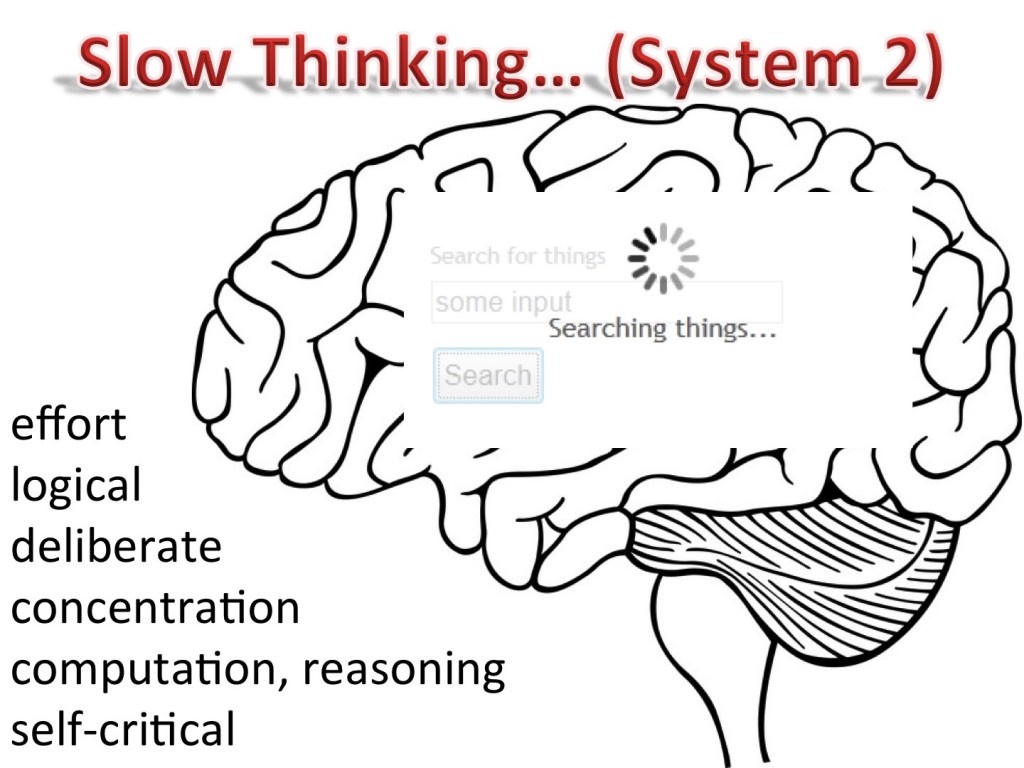
THINKING SLOW
Carr’s argument is that humans need to make their own intuitive decisions.  As pointed out by Daniel Kahneman in “Thinking Fast and Slow”, the primary “think fast” mode in humans is intuition, which is often wrong.

Without doubt, many automation errors (e.g., the 737 Max) have been and will be made in the future, but to suggest automation is not good for society is as false as the Luddites arguments about industrialization.

This period of the world’s adjustment is horrendously disruptive.  It is personal to every parent or person that cannot feed, clothe, and house their family or themselves because they have no job.

Decrying the advance of automation is not the answer.  Making the right political decisions about how to help people make job transitions is what will advance civilization.

OTHER gods

Audio-book Review
By Chet Yarbrough

(Blog:awalkingdelight)
Website: chetyarbrough.blog

The Attention Merchantsthe attention merchants

By Tim Wu

Narrated by Marc Cashman

TIM WU (AUTHOR, PROFESSOR OF LAW AT COLUMBIA )

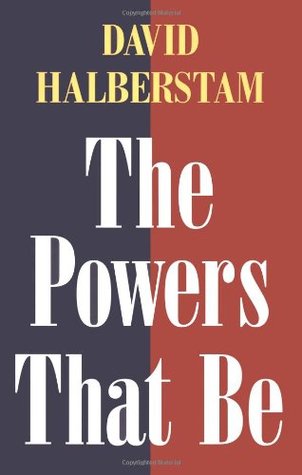
Not since “The Powers That Be” (published in 1979) has there been a better history of the media industry.  Tim Wu is heir to David Halberstam.  First there were newspapers, then radio, then television, and now the world-wide web.  Wu offers a modern vision of media’s impact on society in “The Attention Merchants”.

Gone are many of the famed “…Attention Merchants” like Bill Bernbach, Neil French, and David Ogilvy.   They were the early influencers; i.e. the copy writers, and agents that created consumer advertising for Sulzberger, Chandler, Hutchins, Paley, and Luce.  They worked for founders of some of the most influential newspaper, radio, television and magazine outlets of the 19th and 20th centuries. They were the “gods” of a newly formed consumer society. Consumers read, watched, and listened to pitches for everything from votes to vitamins to the latest model Cadillac.  Wu shows pitches remain the same, but methods have changed.

DAVID HALBERSTAM'S SEMINAL WORK ON THE MEDIA INDUSTRY (PUBLISHED 1979)
DAVID HALBERSTAM’S SEMINAL WORK ON THE MEDIA INDUSTRY (PUBLISHED 1979)  Gone are many of the famed “…Attention Merchants” like Bill Bernbach, Neil French, and David Ogilvy.  They were the “gods” of a newly formed consumer society. Consumers read, watched, and listened to pitches for everything from votes to vitamins to the latest model Cadillac.

Today’s social, political, and economic consumers are recorded, manipulated, spindled, and controlled by “other gods”.  Modern “…Attention Merchants” are internet entrepreneurs like Amazon’s Jeff Bezos, Google’s Larry Page & Sergey Brin, Microsoft’s Bill Gates & today’s CEO Satya Nadella, Apple’s (now deceased) CEO, Steve Jobs & today’s CEO Tim Cook, Facebook’s Mark Zuckerberg, and Netflix’s Reed Hastings. Television, newspapers, radio, and magazines still capture our attention but not like past “…Attention Merchants”.  Old media are still with us, but computer screens and mobile phones have joined the mix.  Wu shows how the public’s decisions have become less volitional, more manipulated, and addictive as www. sites came into being and technology matured.

INTERNET LOGO
Old media is still with us, but computer screens and mobile phones have joined the mix.  Wu shows how the public’s decisions have become less volitional, more manipulated, and addictive when www. came into being and technology matured.

MARLBORO MAN
Neither smoking or “free” access to information is without harm or cost.  The Marlborough man is dead, and “free” internet information is not free.

Wu recounts how advertising became a critical part of early media’s power, influence, and profit.  Just as advertisers promoted false benefits of smoking in the 20th, internet advertisers promote false benefits of free access to information and entertainment in the 21st century.  Neither smoking or “free” access to information is without harm or cost.  The Marlborough man is dead, and “free” internet information is not free.  “Fake news” has always been in the “…Attention Merchant’s” tool box but Wu shows that a new dimension is created with the rise of “free” information technology.

The internet not only informs the public, i.e., it distracts society, distorts facts, and reveals intimate details of personal lives. Internet users become products, rather than just consumers. Information gathered on consumers is provided to government and sold to private enterprise.

More ominous than media distortion by capitalist manipulators is government-controlled media that distorts truth to justify the Ukraine war.
ukraine bombing

Personal information is used by governments, and private sector businesses to achieve their own purposes.  Power and control become centered on organizations rather than individuals.  Data mining is a new industry. Decisions are less determined by personal being and private belief.  Today, decisions are shaped by a society “under the influence” of government, and private sector’s “…Attention Merchants”.

data mining
Personal information is used by governments, and private sector businesses to achieve their own purposes.  Power and control become centered on organizations rather than individuals.  Data mining is a new industry.

facebook
In this Facebook age, there are few secrets about what one likes and what one is willing to pay for product.

Wu notes how today’s “…Attention Merchants” are different.  Advertisers have always tried to influence individuals.  Advertisers have always told lies or distorted truth to get buyers to buy and believe.  Wu explains the difference.  Now personal information is acquired with confused consent by users of the internet. In this Facebook age, there are few secrets about what one likes and what one is willing to pay for product.

Customers are no longer just consumers.  Wu notes customers have become products.  Customers are sold to the highest bidder without customer awareness or compensation.  Today’s “…Attention Merchants” argue that sales pitches are customized to what the customer wants.  Businesses rationalize access as the customer’s compensation.  Government rationalizes access as a way of staying in touch and understanding the public.  Wu implies both arguments are willful misrepresentations.

consumer's mind
Consumers have less control over their decisions because “…Attention Merchants” use intimate personal information to seduce conscious and unconscious motivation.

There is a cost to voters and consumers because personal information is being sold without pay for product that enriches “…Attention Merchants”, private enterprise, and government.  The product delivered is the personal information that reveals who we are, what we think, what we desire, and what we are willing to pay.  Consumers have less control over their decisions because “…Attention Merchants” use intimate personal information to seduce conscious and unconscious motivation.

The sinister aspect of Wu’s explanation is that “…Attention Merchants” now have tools that exaggerate the impact of “fake news”.  By knowing intimate beliefs of consumers, “…Attention Merchants” are able to create algorithms that funnel “fake news” that feeds what consumer’s may either accurately or inaccurately believe.  Prejudices and discrimination are reinforced.  The worst characteristics of political populism are reinforced.  “The Attention Merchants” expand control of individual thought so that the course of democratic elections, government policies, or business successes can be unduly influenced by false or misleading information.

wikipedia
The positive aspect of the internet is shown by sites created without advertising input; e.g. Wikipedia and some blogosphere creations abjure advertising as a source of compensation.

Wu notes there are glimmers of hope with a growing recognition of the impact of the internet. The internet broadens human understanding of the world. The positive aspect of the internet is shown by sites created without advertising input; e.g. Wikipedia and some blogosphere creations abjure advertising as a source of compensation.

Exposure of blind spots in acquisition of personal data are currently being exposed in congressional hearings with Facebook CEO, Mark Zuckerberg.  At the same time, Russian interference in American elections is being more seriously investigated.

As Marie Currie is to have said— “Nothing in life is to be feared.  It is only to be understood.  Now is the time to understand more, so that we may fear less.”  Of course, one might remember, she died from the radiation she received from her discoveries.  (Ironically, Marie Currie’s death was found not to be from radiation exposure.  In autopsy, her body radiation levels were within normal range.)

COST OF CHANGE

Audio-book Review
By Chet Yarbrough

(Blog:awalkingdelight)
Website: chetyarbrough.blog

Factory Girls

By Leslie T. Chang

Narrated by Susan Ericksen

LESLIE CHANG (AUTHOR)

Leslie Chang is perfectly suited for this journey into the heart of China’s economic transformation. 

Ms. Chang works for the “Wall Street Journal”.  She has family generational experience of imperial and communist China from the 1920s to the present; she speaks Mandarin Chinese, and grew up in the United States.  Chang brings intimate perspective to the dynamics of economic and social change in 21st century China.

CHINESE FACTORY WORKERS

“Factory Girls” gives the world a glimpse of the tremendous cultural change occurring in today’s China.

Sixteen year old girls are leaving rural China to seek their future in the City.  With little formal education, they are fuel for the engines of China’s rapid industrial growth.  Chang follows several of these amazing young women back and forth from their rural beginnings to their immersion in the difficult life of factory work.

CHINA'S FARMING INDUSTRY

At home on one acre farms there is nothing for young women to do but eat, sleep, and be treated as a burden and betrothal obligation.

CHINESE WORKER IN THE CEMENT INDUSTRY

Anomie, culture, tremendous ambition, boredom, and opportunity lure these young women into an unknown world of commerce.  Chang notes there is little Chinese law to protect children from the abuses of industrialization.

The city beckons because it offers more than the limited opportunity of baring male children. China’s cultural history emphasizes male value and female inferiority to fuel the ambition of young women anxious to prove themselves.

The drive for money, power, and prestige are as clearly evident in women as in men.  Those drives have been unleashed by China’s industrial transformation. 

The consequence to factory girls is good and bad; i.e. a consequence of living any life.  But, for the factory girls, Chang seems to infer the cost of change is less than the cost of staying on the farm.

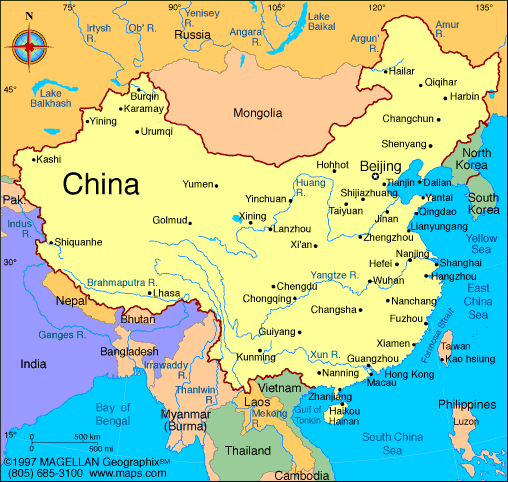
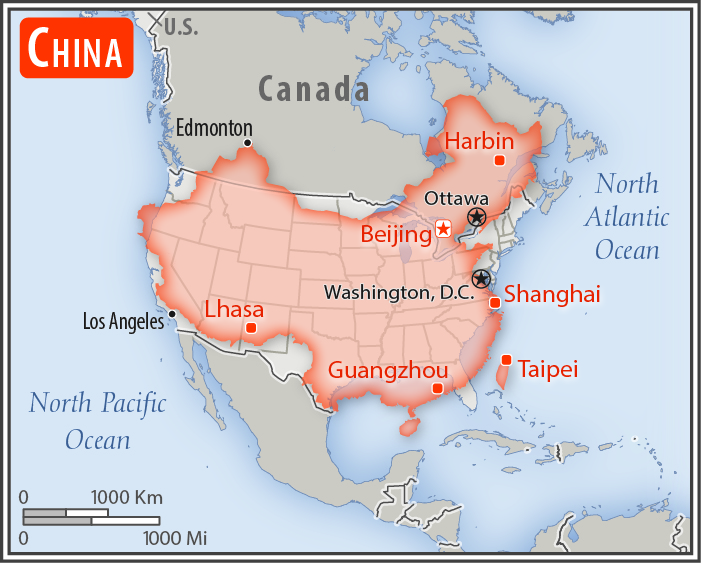
SIZE OF CHINA IN COMPARISON TO AMERICA

China is not America.  Though about the size of America, China has a population of 1.31 billion; America 325 million.

Chang’s book is frightening to American parents who have the luxury of endorsing extended childhood through college for those who have a high school education.

Imagine a sixteen year old daughter taking a train to a city where she knows no one; has no financial support, and is expected to make her own living.

It is hard to imagine an American daughter that has no opportunity except as a barer of male children.  What is a young Chinese girl to do if her life options are limited? What is any human to do if their options are unfairly limited?  The poor in America know, but that is another book.

“Factory Girls” is an impressive report of the massive cultural change occurring in China.  It is an astounding affirmation of the “will to power” explained by Friedrich Nietzsche. It is the drive of the superman (or woman) to perfect and transcend the self through the possession and exercise of creative power.

One cannot help but admire the factory girls of China; i.e. as difficult as the reality of their lives seems to be.

A BRADBURY CLASSIC

Audio-book Review
By Chet Yarbrough

(Blog:awalkingdelight)
Website: chetyarbrough.blog

The Illustrated Manthe illustrated man
By Ray Bradbury

Narrated by Paul Michael Garcia

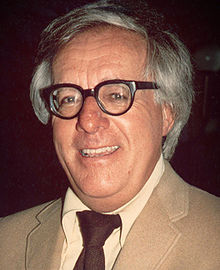
RAY BRADBURY (1920-2012)

Flights of imagination sparkle and spin in this updated 1950s  Ray Bradbury classic.  This compendium of Bradbury’ tales is titled “The Illustrated Man”.

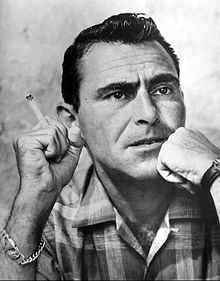
ROD SERLING (1924-1975, SCREENWRITER, TV PRODUCER, NARRATOR)

Bradbury spins stories; reminding one of late night re-runs of Rod Serling’s “Twilight Zone”.  Every episode sparkles with stars and planets, habitable by man but riddled with fear, death, and destruction.  Bradbury grasps human nature and turns it against itself by writing stories that illustrate man’s selfishness, insecurity, wantonness, and aggression.


Tattoos come alive on rippling skin to act out a series of plays about mankind’s future.  Everyone fears the illustrated man because his tattoos expose the worst in man.  Belief that nuclear cataclysm will end life on earth blooms like a mushroom cloud.  Traveling to other planets changes mankind’s environment but man’s nature remains the same.

THE ILLUSTRATED MAN (PLAYED BY ROD STEIGER)
THE ILLUSTRATED MAN (PLAYED BY ROD STEIGER IN A 1969 MOVIE) Tattoos come alive on rippling skin to act out a series of plays about mankind’s future.

AYN RAND (1905-1982)
AYN RAND (1905-1982, AUTHOR WHO FIRMLY BELIEVED IN THE VIRTUE OF SELF-INTEREST) Unregulated self-interest is a dangled reward stolen by one to keep it from the many; in the end the reward is destroyed by the selfishness of each against the other.)

These are not happy stories but they are great flights of imagination.  Bradbury tells a story of human exile and deprivation that exacerbates selfishness when personal reward is dangled in front of exiled and deprived human beings.  The dangled reward is stolen by one to keep it from the many; in the end the reward is destroyed by the selfishness of each against the other.

Insecurity is a devouring beast in the story of a planet blessed by an appearance of a Visitor (presumably Jesus) just before a rocket ship lands on the planet that has been visited.  The captain disbelieves it has happened and is driven to track down this Visitor rather than settle in the insecure surroundings of a unblessed world.  The captain is left to wander the universe, never to arrive in time to actually see the Visitor.

INSECURITY
Insecurity is a devouring beast in the story of a planet blessed by an appearance of a Visitor (presumably Jesus) just before a rocket ship lands on the planet that has been visited.  The captain disbelieves it has happened and is driven to track down this Visitor rather than settle in the insecure surroundings of a unblessed world.

INFIDELITY
Wantonness is illustrated by Bradbury’s story of an unhappily married man. 

Wantonness is illustrated by the husband that is unhappily married.  He duplicates himself.  His duplicate takes his place beside his wife so he can buy a ticket to Rio to exercise his fantasy.  The duplicate is so perfect it becomes as human as the husband.  The duplicate places the wanton husband in a box to die, and buys a ticket to Rio for his wife to accompany it in its fantasy.

Human kind is aggressive.  Humans conquer and destroy civilizations.  One world of the future prepares for a second visit from mankind by becoming the image of a City.  This image devours the men of the second visit and assumes their bodies; i.e. the City image is transformed into the bodies of the humans from this second visit.  The City image plans to return to earth to destroy those who had destroyed them.

NUCLEAR DETONATION ABOVE TEST TARGET 1986
Human kind is aggressive.  When human’s conquer or destroy others, others rise to  destroy those who had destroyed them. An endless circle of life where agression eats itself.

Bradbury is a master story-teller.  Paul Michael Garcia’s narration is a tribute to Bradbury’s skill.

MADOFF’S PERPETRATORS

Audio-book Review
By Chet Yarbrough

(Blog:awalkingdelight)
Website: chetyarbrough.blog

Ponzi Supernova—Madoff Speaks

Recorded by: Audible Original

Produced by:  Steve Fishman

STEVE FISHMAN

STEVE FISHMAN (NEW YORK MAGAZINE REPORTER)

In “Ponzi Supernova”, Audible offers recorded interviews with Bernie Madoff and other perpetrators of the largest Ponzi scheme in history.  Steve Fishman conducts several telephone interviews with Madoff while he serves a life sentence for fraud.  Steve Fishman gets the telephone interviews after wheedling his way into Madoff’s confidence through a fellow prisoner.  To round out Fishman’s story, he captures telephone conversations with several other crooks, investigators, and victims of Madoff’s crime.

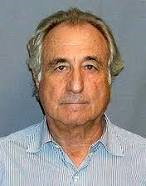
BERNARD MADOFF (AGE 74) SERVING 150 YEAR PRISON SENTENCE

BERNARD MADOFF (AGE 74) SERVING 150 YEAR PRISON SENTENCE (Madoff died in prison on 4/14/21 at the age of 82).

Fishman shows how a sixty billion-dollar Ponzi scheme is created and how it escapes detection for over twenty years.  Supplemented by audio books like “The Big Short”, and “No One Would Listen”, Fisher amplifies Madoff’s unconscionable crime with recordings of victims who lost their life savings.   Fisher explores the perfidy of banks and investment companies that mindfully ignored Madoff’s impossible investment returns; all the while, being financially benefited from Madoff’s lies.

MONEY, POWER, PRESTIGE

“Ponzi Supernova” reveals how Madoff created an empire of greed.  Madoff comes off as an average intellect with a big ego, meager technological skill, and zero empathy.  He hid behind the shadow of prestige.

Madoff refuses to take responsibility for his crimes and exhibits no remorse for the grief and death of others effected by his crimes.  As a person, Madoff reminds one of a sociopath

Madoff manages to appeal to the greed of human beings and blames others for their greed.  He manufactures investment data that hides the truth of his investment skill and his organizations’ portfolio.  He takes investor’s money and uses new investor’s money to pay earlier investor’s returns.  Few real trades support Madoff’s extraordinary portfolio performance.

“Ponzi Supernova” implies most of the investment firms; investment firms that knew of Madoff’s firm should have and could have exposed his lies.  However, they were paid a fee for their service.  Rather than investigate Madoff’s investment methodology, most investment firms gathered fees and left investors to fend for themselves.

INVESTMENT COMPANY LOGOS

Fisher notes how one analyst is sidelined by his investment company because he asked too many questions.  The questions would have exposed Madoff’s scheme.  Fisher also interviews an independent analyst that tells a client not to invest in Madoff’s company because she saw too many red flags.  For instance, Madoff would not provide examples of his past investments to show how he made such remarkably steady returns; even in a falling market.  Madoff’s standard refrain was “trust me”.

Like stories in “The Big Short” and “No One Would Listen”, Fisher’s recordings show institutional incompetence by government regulators, and greed from the private sector.

no one would listen

The SEC interviews Madoff on numerous occasions.  Often the SEC representative is young and inexperienced.  When reports are requested, Madoff’s back-office team manufactures whatever information is requested.  The reports have no basis in truth.  The reports are manufactured to satisfy whatever question is asked.  If the SEC had called to confirm whether the trades had really been made, they would have exposed Madoff for fraud.  Rather than check specific trade transactions, the SEC settled for a simple report that said Madoff had a trade account.

Nearly eleven billion dollars of the sixty billion-dollar Ponzi scheme is recovered.  However, the recovery is largely limited to American investors by what are called “claw backs”.  The “claw back” is from investors who had taken their money out before Madoff’s collapse in 2008.  Other countries had no “claw back” provisions which meant many non-Americans lost everything.

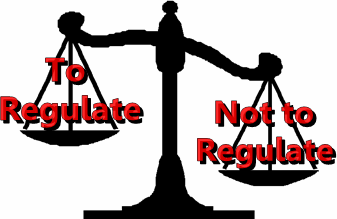
GOVERNMENT REGULATION

Madoff and a few of his employees went to jail, but many escaped with fines and admonishment.  “Ponzi Supernova” clearly implies both the government and private sector were guilty for losses by many small investors.  These investors relied on government regulation and private sector financial advice.

If there is a lesson in this story, it is that every person should closely monitor their own investments.  Most, if not all, human beings are seduced by money, power, and/or prestige.  It is every investor’s responsibility to know how their investment adviser is benefited by your investments in their recommendations.  Better to make your own investment mistakes, rather than rely on others who have a financial interest in your trading decisions.

WEAPONS OF WAR

Audio-book Review
By Chet Yarbrough

(Blog:awalkingdelight)
Website: chetyarbrough.blog

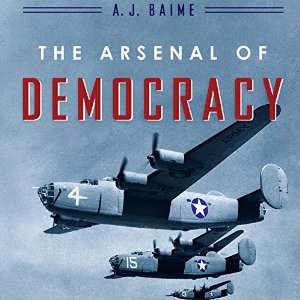
The Arsenal of Democracy: FDR, Detroit, and an Epic Quest to Arm an America at WarThe Arsenal of Democracy

Written by: A.J. Baime

Narration by:  Peter Berkrot

A. J. BAIME (AUTHOR, WRITER AT LARGE)

“The Arsenal of Democracy” takes a retrospective look at an epic quest by America to build an arsenal of weapons before entry to World War II.  Some surprising names are shown to have Nazi sympathies and anti-Semitic beliefs.  Those abhorrent sympathies and beliefs are cloaked by pacifist and capitalist credos.

There is the capitalist credo that unregulated self-interest is the most important determinant of success.  There is the  pacifist credo that someone else’s tragedy is an opportunity for economic gain.  Some pre-WWII movers and shakers are tainted by capitalist greed and prejudice. A. J. Baime shows there are two sides to the story of “The Arsenal of Democracy”.

CHARLES LINDBERGH’S 9/11/1941 SPEECH IN DES MOINES, IOWA;

HENRY FORD (1863- 1947, AMERICAN INDUSTRIALIST, FOUNDER OF FORD MOTOR CO.)

Henry Ford, the “god” of America’s industrial revolution, is awarded the “Grand Cross of the German Eagle” by Nazi officials in 1938.  He is 75 years old.  The Grand Cross is the highest honor that can be given to a foreigner by the Nazi government.  (The only other American recipient is Charles Lindbergh.)

Baime accusatorially notes that Ford is the only American named in Hitler’s “Mein Kampf”; i.e. the most well-known anti-Semitic book ever written.  Ford did not wish to enter WWII.  One may draw their own conclusion, but it stretches credulity to believe it is unrelated to Ford’s personal prejudice and presumed economic gain.

JOSEPH KENNEDY (1888-1969)

Ford is not the only self-made millionaire who believes America should not enter the war.  Joseph Kennedy is equally opposed.  Of course, before Pearl Harbor, the majority of Americans were against entering the war.  However, Ford and Kennedy share a capitalist entrepreneur’s amoral belief that everything is negotiable, including peace with Hitler.

This amoral belief is characteristic of an idealized business model reflected by writers like Ayn Rand; i.e. it is a belief that the strong survive. and the weak deserve their fate.  (This is an amoral belief evident in today’s American President, and a number of congressional representatives.)

Though Kennedy is not as clearly tainted by anti-Semitism as Henry Ford, both believe war is not a solution to Hitler’s aggression.  Business men like Kennedy and Ford believe political leaders, like prudent business leaders, will fail if they do not benefit their country’s citizens and employees by staying out of war and making a profit.  They, like most Americans, could not believe holocaust rumors could be true.  Baime suggests the stark evidence of Jewish slaughter after the war shakes Henry Ford’s conscience.  (One is inclined to doubt Baime’s conclusion considering Ford’s history of anti-Semitism.)

WW2 CONSPIRACY—FORD BUILDS TRUCKS FOR NAZIS, B-24S FOR USAAF,

FRANKLIN D. ROOSEVELT (1882-1945, 32ND PRES. OF U.S.,1933-1945)

Baime primarily focuses on how “The Arsenal of Democracy” came into being.  Baime recounts “The Arsenal of Democracy” speech given by FDR on December 29, 1940.  The year before Pearl Harbor, Henry Ford reluctantly agrees to join the automobile industry mavens in re-tooling car manufacturing for the defense of America.

WILLOW RUN ASSEMBLY PLANT,

Ford’s brilliant innovation in assembly line manufacturing is recognized as key to FDR’s vision of “The Arsenal of Democracy”.  Ironically, Ford despises FDR and explains that Ford Corporation’s contribution is based on defense of America and not intervention in a European’ war.  The leader of the Corporation, on paper, is Edsel Ford but Henry, until Edsel’s death in 1943, retains veto power over any corporate decisions.

THE ARSENAL OF DEMOCRACY SPEECH BY FDR:

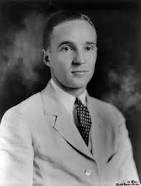
EDSEL BRYANT FORD (1893-1943, SON OF HENRY FORD, PRESIDENT OF FORD MOTOR CO.)

Edsel and Ford Corporation’s managers finally convince Henry to build Willow Run, the largest assembly plant of its time, to produce American bombers.  The goal is to produce a completed airplane bomber at a rate of one per hour.  Baime argues that the goal is achieved through Edsel’s leadership; complemented by innovations created by Ford Corporation’s experienced managers; e. g. men like Charles Sorenson, the lead engineer and designer of the company.

In a muddled side story, the role of Harry Bennett is explored by Baime.  The story is muddled because it is shrouded in mystery involving rumors of Bennett’s mob-informant role for the FBI; his contacts with foreign interests, and his strong-arm tactics against union sympathizers. Henry Ford expresses great confidence in Bennett’s ability.

BRIEF BIOGRAPHY OF HARRY BENNETT : <iframe width=”640″ height=”390″ src=”https://www.youtube.com/embed/Z0jyOfSg0P8&#8243; frameborder=”0″ allowfullscreen> Baime suggests Henry Ford treats Bennett like more of a son than Edsel.  When Edsel dies, Baime writes that Edsel’s wife accuses Henry of being the proximate cause of Edsel’s death because of Henry’s constant criticism (Edsel dies in 1943 with a diagnosis of stomach cancer).

FOOTAGE OF THE 1941 STRIKE WITH A GLIMPSE OF HARRY BENNETT: <iframe width=”640″ height=”390″ src=”https://www.youtube.com/embed/PLN1svpbPBA&#8221; frameborder=”0″ allowfullscreen>

This is an interesting story but one has to remember the context of the time to have a fair perspective of villains in sheep’s clothing.  Henry Ford is an anti-Semite but he joins a vast number of Americans that were equally anti-Semitic.

5 CORPORATIONS THAT HELPED CARRY OUT THE HOLOCAUST: <iframe width=”640″ height=”390″ src=”https://www.youtube.com/embed/RXh7HfEFhik&#8221; frameborder=”0″ allowfullscreen>German anti-Semitism did not suddenly spring from one demented leader.  Henry Ford came from the same primordial swamp that all human beings came from.

THE TWO FACES OF HENRY FORD:

Baime notes that Edsel Ford had contact with Hitler’s French puppet government leaders.  Edsel is accused of aiding Ford Corporations’ manufacturing capability in occupied France.  Intertwining relationships often distort truth but there is a conflict-of-interest odor surrounding Ford Corporation’s actions before and during the war.

The facts are that creation of “The Arsenal of Democracy” would have been a pipe dream without Henry Ford, Edsel Ford, Charles Sorenson, the industrial capability of the auto industry, and the American people.  Truth and history do not forgive anti-Semitism, manager’s exploitation of workers, human greed, illegal dealings with the underworld, or nasty treatment of a sons by fathers.  The truth is and always will be–human beings are good and bad.  Baime’s story of “The Arsenal of Democracy” joins a pile of books affirming the moral duality of humankind.


AMERICA’S MOMENTUM

Audio-book Review
By Chet Yarbrough

(Blog:awalkingdelight)
Website: chetyarbrough.blog

America’s Bitter Pill: Money, Politics, Backroom deals, and the Fight to Fix Our Broken Healthcare SystemAMERICA'S BITTER PILL

Written by: Steven Brill

Narrated by: Dan Woren

STEVEN BRILL (AMERICAN LAWYER, JOURNALIST, AUTHOR)

“America’s Bitter Pill” is a policy wonk’s dream and an American citizen’s nightmare.  It reveals the role of money and politics in American government.  Steven Brill overwhelms readers, which are not policy wonks, with disgusting political backroom deals and entrenched private and non-profit interests.  The disgust comes from the distortion of the most important legislation passed by the American’ Federal Government since the New Deal.  Government leaders, private industry, and non-profit corporations worry more about being re-elected or having their pockets lined than providing basic health coverage to the American’ public.

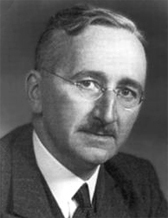
FRIEDRICH AUGUST von HAYEK (1899-1992)
Even the “god” of conservative economics, Friedrich von Hayek, believed government had a responsibility to provide “…a comprehensive system of social insurance in providing for those common hazards of life against which few can make adequate provision.” 

Brill indicts a political process that seems freighted with more venal self-interest than good will.  How can one argue that the private sector through an “invisible hand” is adequately providing health care to a general public in the richest country in the world?  Too many Americans have no health coverage because they cannot afford it.  All one has to do is ask how many Americans do not go to the doctor because they cannot afford the visit and do not have insurance against catastrophic illness.  Even the “god” of conservative economics, Friedrich von Hayek, believed government had a responsibility to provide “…a comprehensive system of social insurance in providing for those common hazards of life against which few can make adequate provision.”

What Brill shows is that the value of high profits to private and non-profit insurance and medical facilities is more important than offering reasonably priced health care to the general public.  What every special interest lobbied for in the Affordable Care Act depended on improving or maintaining profit.  “America’s Bitter Pill”, the Affordable Care Act, is laced with greed.  The Affordable Care Act has extended insurance to more people in the United States than ever before, but it continues to rankle knowledgeable Americans because it is based on the false belief that it will cure an incurable disease, human greed.

ADAM SMITH (1723-1790, AUTHOR OF -THE WEALTH OF NATIONS)
ADAM SMITH (1723-1790, AUTHOR OF -THE WEALTH OF NATIONS-Many politicians hid behind the mythic part of an “invisible hand” to rationalize their cave-in to special interests.)

Many politicians hid behind the mythic part of an “invisible hand” to rationalize their cave-in to special interests.  Hiding is shown to be non-partisan by Brill because it includes both Democrats and Republicans.  The mythic part of the “invisible hand” is the belief that self-interest is always in the best interest of the public.

President Obama chose the only path he could see to have any chance of passing an Affordable Care Act.  The only voting majority in America’s bicameral Congress that had any chance of success is shown by Brill to be dependent on acceptance by insurance companies, hospitals, the pharmaceutical industry, and ancillary medical service equipment manufacturers.

An optimist chooses to believe America’s flawed legislative system will, in the long run, serve its public better than any other known form of government.  The optimist believes the Affordable Care Act will be improved over time and will mitigate increased health care costs.  The pessimist believes the Affordable Care Act is a boondoggle. The pessimist believes American government is accelerating its move toward tyranny.  A realist suggests the Affordable Care Act is Democracy in action.

THE ARC OF JUSTICEEven in these troubled times, the messiness of American Democracy bends toward a resolution of intractable social ills.

The momentum for health reform, ecological balance, and equal rights is unstoppable.  No singularly elected American politician will change the direction of that momentum.

RUSSIAN REALPOLITIK

Audio-book Review
By Chet Yarbrough

(Blog:awalkingdelight)
Website: chetyarbrough.blog

Red NoticeRed Notice

Written by: Bill Browder

Narration by:  Adam Grupper

WILLIAM FELIX BROWDER (AKA BILL BROWDER-CEP AND CO-FOUNDER OF HERMITAGE CAPTIAL MANAGEMENT, NOTED CRITIC OF PUTIN)

If only a few of Bill Browder’s facts and accusations are true, the realpolitik of Vladimir Putin shocks the senses.  “Red Notice” reflects on the diplomacy of Russian power.

In his book, “Red Notice”, Browder tells a story that implies Putin is a thug.   Browder infers that Putin will lie, steal, and murder with the brutality of Joseph Stalin, the cunning of Machiavelli, and the tenacity of Genghis Kahn.  Browder believes Putin uses his position as President to acquire wealth as second only to his desire for power.

Acquiring wealth is something Browder knows quite a lot about.  William Browder is an investment fund manager/partner who ventures into Russia at the beginning of glasnost.  Russian businesses and industries became private rather than state-owned enterprises at the end of the 20th century.

Beginning in 1996, Browder and his investors assemble a capital investment fund worth billions of dollars in 2005.  Browder began the fund with other people’s money.   The fund becomes known as Hermitage Capital Management.  As a result of his analysis, Browder’s investment group buys Russian assets at steeply undervalued prices.  He earns over two hundred million dollars per year for himself in 2006 and 2007.

BROWDER’S STORY OF HERMITAGE CAPITAL: 

In 2005, Browder is deported by the Russian government.  In 2006, Browder is black listed by the Russian government as a “threat to national security”.  In March of 2013, the bank that serves as trustee and manager of Hermitage Capital Management announces it will cease funding operations in Russia.  Browder gleefully points out in “Red Notice” that all of Hermitage Capital Management assets had been surreptitiously withdrawn in 2007.  Browder is presently being sued in absentia by the Russian Government for tax evasion.  Therein lays a tale of suspicious deaths, human greed, and conspiracy.

Browder assembles a great deal of evidence that suggests two people are murdered; that murder’ accomplices are paid a great deal of money, and that President Putin either sets the example for thuggish behavior or is complicit in a scheme that defrauds the Russian people.

DUTCH JOURNALISM’S INVESTIGATION OF THE RISE OF PUTIN:

SERGEI MAGNITSKY (1972-2009, RUSSIAN ACCOUNTANT AND AUDITOR VITIMIZED IN RUSSIA--WORKED FOR BILL BROWDER)
SERGEI MAGNITSKY (1972-2009, RUSSIAN ACCOUNTANT AND AUDITOR VITIMIZED IN RUSSIA–WORKED FOR BILL BROWDER)

The two alleged murders are Sergie Magnitsky and Alexander Perepilichnyy.  Magnitsky dies in the custody of the Russian government.  He is identified as an attorney in Browder’s book but research suggests he is not licensed as an attorney in Russia.  Magnitsky discovers a scheme by Russian government employees to recover taxes paid by Browder’s companies in Russia.  The scheme is based on charges that the companies that paid the taxes were illegally pilfered by Browder’s investment company.  The companies were transferred, without Browder’s knowledge or authorization, to shell company Russian owners.  These owners are found to be two officers in the Russian secret police.  The new owners suggest the companies they own have been pilfered and that they should be reimbursed for taxes that were paid to the government because of Browder’s fraudulent transfer of worthless assets.

Magnitsky and two Russian lawyers present evidence to the Russian government about the fraud being perpetrated by the two Russian officers.   The two Russian lawyers decide to flee their country when they believe they are going to be arrested.  Magnitsky believes facts speak for themselves; that he is safe, and the government will recognize and arrest the real criminals.  Magnitsky is arrested, beaten, and dies in prison.  The two officers, Artem Kuznetxov, and Pavel Karpov remain free.

MAJOR KARPOV EXPOSE:

ALEXANDER PEREPILICHNY (OLIGARCH THAT MAY HAVE BEEN MURDERED AT AGE 44 FOR EXPOSING RUSSIAN TAX FRAUD CASE ASSOCIATED WITH BROWDER INVESTIGATION)

Alexander Perepilichny was a Russian business man who defected from Russia in 2009.  Perepilichny dies at the front door of his residence in the UK.  Magnitsky was a forensic accountant in Russia.  Living in England in 2012, he contacts Browder to say he has evidence of how the Moscow tax office rebated taxes to the two government officials.  Browder contacts the chief constable of Surrey in England to tell them of Perepilichny’s evidence.  Browder accuses Russian officers of fraud, costing the Russian state $230 million dollars.

Three videos of the alleged fraudsters are created as evidence of the Russian officers’ fraud.  The evidence relies on their life style versus the income they receive from the Russian government.  In Browder’s book, this evidence is overlaid with the prosecution of Russian oligarchs by Putin with the inference that those oligarchs that do not offer money to Putin are at risk of being jailed.

SYNOPSIS OF THE MAGNITSKY CASE:

“Red Notice” is a powerful statement about one man’s view of Vladimir Putin.  As noted at the beginning of this review, “if only a few of Bill Browder’s facts and accusations are true…” Putin’s reputation, if not his power and wealth, are diminished.  At the same time, Browder’s ludicrously large capitalist windfall at the expense of the Russian economy, and two Russian’ deaths, does little for his reputation.

NARCONOMICS

Audio-book Review
By Chet Yarbrough

(Blog:awalkingdelight)
Website: chetyarbrough.blog

Narconomics: How to Run a Drug Cartel

Written by: Tom Wainwright

Narration by:  Brian Hutchison

TOM WAINWRIGHT (BRITISH AUTHOR, EDITOR OF THE ECONOMIST)

TOM WAINWRIGHT (BRITISH AUTHOR, EDITOR OF THE ECONOMIST)

“Narconomics” is about the business of illegal drugs. 

Tom Wainwright notes drug cartels are modern businesses. They benefit rich owners while liberally rewarding middle class managers with money, power, and prestige.  The difference is–middle managers brutally terrorize employees, kill their customers, and murder innocent bystanders. 

Drug Cartel murders Mormon Family living in Mexico in 2019.

Picture from the New York Post, Nov. 6, 2019.

These business conglomerates systematically brutalize the public. The manufacture and sale of illegal drugs is a growth industry, diversifying its practices and products while becoming global enterprises.  An irony of Wainwright’s story is the ugliness and economic success of drug cartel businesses are abetted by bribe-taking government leaders. 

President Enrique Peña Nieto (Former President of Mexico– accused of bribery from the Oil Industry and Sinaloa Drug Cartel.)

The substance of Wainwright’s book is that cartels are run with many of the fundamental principles (aside from overt terror and murder) that make international companies richly successful.

DRUG CARTELS (ONE OF SEVERAL MONOPOLIES IN THE WORLD)

Though policies like the war on drugs and alcohol prohibition were meant to save people from themselves, Wainwright suggests they failed. 

ADDICTS SHOULD BE TREATED; NOT JAILED

When desire for money, power, or prestige is unmet, humans compensate with drug use; or other escapist behaviors.

METHODOLOGY OF DRUG REHABILITATION

Wainwright argues that understanding drug cartel business practices will show how their industry profits can be disrupted. 

Wainwright suggests changing the focus from a war on drug producers and sellers to a policy for treating, educating, and rehabilitating users.

Wainwright shows how drug cartels capitalize on fundamental human drives and weaknesses.  He goes on to suggest how drug cartels can be destroyed.

Rather than spending billions to militarize national police forces, Wainwright suggests those dollars be spent to treat, rehabilitate, and educate accused and/or incarcerated users. 

An encouraging article in the WSJ (12/15/21) notes that Mexico and U.S. drug interdiction agencies are working on a framework to combat drug cartels “… likely to focus more on drug addiction”. In destroying the drug cartel’s consumer base, they lose profit.  Without profit there is no money, no power, and no prestige.  There is only a failed business model.

Wainwright goes on to suggest that drug use be decriminalized and regulated by the government.  This is no panacea but history shows that the war on drugs is a failure.  The heart of success for drug cartels is its adoption of business practices that generate profit.  The reality of the fundamentals of well-run business organizations is that they do not disappear.  Remove the source of profit and businesses either fail or are compelled to change.

LONG REACH OF DRUG CARTELS

Wainwright explains that the business of illegal drugs is a global enterprise.

 A global level of government cooperation is needed for effective elimination of drug cartels.  No single nation can eradicate cartels because of globalization.  One nation’s success in the drug war only compels cartels to move to neighboring countries.  The solution lies in treating, rehabilitating, and educating drug users.  Only with decriminalization, user medical treatment, and public education will the source of profit for drug cartels be cut off.

DOLLAR SIGN

Wainwright offers a compelling argument for attacking drug cartels by removing the source of their profits.  The source of profits is the consuming public; not the illegal drug manufacturers and distributors.

The fact that drug cartels are run like businesses reveals an infrastructure that allows diversification.  Once profits are reduced for drug manufacture and distribution, cartels will change to survive.

Wainwright notes that drug cartels have already diversified; i.e. they are human traffickers, and extortion consortiums.  Government agencies and the general public are equally repulsed by human trafficking, murder, and extortion.  Governments and the general public are more likely to cooperate in eradicating that type of criminal activity; less so with drug addiction.

DRUG ADDICT

The glimmer of hope is that cartel diversification does not pander to the desire for escape from reality offered by drugs.

There is no simple or cheap alternative to “the war on drugs” but there is a history that shows in its current form, war does not work. The drug war is no joke, neither is it a solution.

Illegal drug manufacturers and distributors are just the cost of doing business; not the source of profit. Cure the public of its need for drugs, decriminalize drug use, or at least treat the addicted, and drug cartels have no motive to be in the business. 

A MODERN MACHIAVELLI

Audio-book Review
By Chet Yarbrough

(Blog:awalkingdelight)
Website: chetyarbrough.com

Human Action (A Treatise on Economics)

Written by: Ludwig von Mises

Narrated by: Jeff Riggenbach

LUDWIG von MISES (1881-1973, THEORETICAL ECONOMIST OF THE AUSTRIAN SCHOOLD, INFLUENCED HAYEK AND FRIEDMAN)

America is on the threshold of the largest tax change since Ronald Reagan’s presidency.  If past is prologue, trickle down economics will not work, the deficit will rise, and the poorest will  be victimized.  The genesis of the delusion of trickle down economics comes from interpretations of a modern Machiavelli.

Ludwig von Mises is a twentieth century Machiavelli.  This near 48-hour audio book details a theory of economics that will offend modern liberals, expose weakness of libertarians, and vilify the new American President’s nationalist policies.  The venality of treating government as a business is a mistake of monumental proportion.

Approaching von Mises as a devil incarnate is unfair.  His beliefs are pilloried by today’s liberals as loudly as aristocrats and rulers vilified Machiavelli in the 16th century.  Like Machiavelli, von Mises looks at the world as it is; not as it ought to be.  His observations cut at modern liberal, as well as anarchic, views of highly regarded liberals like Ralph Nader, Martin Luther King, Norm Chomsky, and alleged conservatives-like President Trump.

In von Mises book, Roosevelt’s New Deal is vilified.  Additionally, von Mises vociferously disagrees with the liberal John Maynard Keynes’s

JOHN MAYNARD KEYNES (1883-1946)

economic interventionist creed. Ironically, Donald Trump may be the most interventionist President since FDR with a scatter brained economic plan that von Mises would equally vilify.

Von Mises observations have historical credibility.  What they do not have is social conscience.  In fact, he suggests social conscience is a fiction perpetrated by populists to distort the value of capitalist economies.  Like Machiavelli, von Mises observes the nature of human beings, and recognizes their inherent irrationality and moral weakness.  Von Mises illustrates numerous examples of human irrationality; beginning with market consumption, and ending with entrepreneurial ambition.  Donald Trump exemplifies von Mises argument that humans are irrational, greedy, power-hungry, and vain.  For President Trump to believe taxing imports by 20% makes Mexico pay for a useless five-billion-dollar wall is absurd.  The American consumer will pay for that wall in increased cost of Mexican produce and manufactured goods.TRUMP AND FREE TRADE

Von Mises criticizes famous economists like David Ricardo for introducing politics into economics.  Von Mises argues that the drive for money, power, and prestige are inherent in an entrepreneurial capitalist system.  Von Mises argues that government officials who profess social conscience distort free enterprise by picking winners and losers.  When politicians pass legislation that aids one entrepreneur over another, it distorts the driving force of capitalist economies.  He equally vilifies government leaders who impose tariffs on international trade.  Von Mises explains that the fallacy of government leaders who pass favoring legislation is that the real mover of the economy is the consumer; not the producer.

FRENCH REVOLUTION
Von Mises believes labor has a choice.  They can work for low wages or remain idle.  The fallacy of that argument is the inherent unfairness of not having enough income to live creates revolutionary discontent.

The logical extension of von Mises’ theory is that any government planning or action that affects an entrepreneur’s willingness to take a risk to produce product, or service a customer’s perceived needs, is bad for society.  To von Mises, efforts to organize labor is an interference with capitalist entrepreneurs because labor is not taking a risk. Von Mises argues that labor costs will find its own level by being an automated tool of the entrepreneur; subject to hunger and deprivation if they choose not to participate.  Von Mises point is that the entrepreneur will pay what he/she must to have labor available, but no more than what the end-product consumer is willing to pay.  Von Mises believes labor has a choice.  They can work for low wages or remain idle.  The fallacy of that argument is the inherent unfairness of not having enough income to live creates revolutionary discontent.

UNION MOVEMENTUnions offer a vehicle for leveling the power between businesses and labor.  To not allow unionization is tantamount to favoring businesses that are no longer competitive but are today recognized as an economic equivalent of individuals.  Not to give unions a place “at the table” is morally, ethically, and economically unfair; particularly in industries that are no longer entrepreneurial.

Another von Mises’ observational theory is that government policy should have no role in subsidizing new inventions, new drugs, the ecology of the world, or the elimination of slavery because such policies interfere with pure capitalism. This reinforces absurdist arguments of libertarians.

NATIONAL INSTITUTE OF HEALTH
NATIONAL INSTITUTE OF HEALTH (RESEARCH INSTITUTE FINANCED BY THE GOVERNMENT.)

American creativity has historically been benefited by government subsidization of technological advances.  (President Putin noted in a 60 Minutes’ interview that creativity is his most admired quality in the American economy.) The speed of improvements in health, education, and welfare historically increased with government subsidization of drug research, public education, and the energy industry.

THE CIVIL WARThe fallacy of von Mises’ theory lies in the framework of theorists.  It ignores human existence by hiding behind the unquantifiable nature of society.  One may argue that America’s Civil War had nothing to do with the elimination of slavery.  (Von Mises suggests that slavery was abolished because it became too expensive; not because it was morally and ethically reprehensible.)  One may argue that Roosevelt’s New Deal was a failure.  One may argue that the Marshall Plan after WWII rewarded failed nations.  One may argue that George Bush’s and Barrack Obama’s decisions to bail out the American economy interfered with pure capitalism. History suggests von Mises is wrong.  Government intervention can be good as well as bad.  (Bush unilaterally agreed to lend $17.4 billion of taxpayers’ money to General Motors and Chrysler, of which $13.4 billion was to be extended immediately.)

Von Mises lived into the 1970 s.  How could he ignore the moral and ethical iniquity of slavery, the value of the Marshall Plan, government subsidization of the American banking system, financial incentives for the energy industry, and the billions spent to advance technological inventions?  Those are good examples of government intervention.  On the other hand, building a wall between Mexico and the U.S. and levying a 20% import tax is a bad government intervention.TRUMP'S WALL 2

American capitalism works because of the checks and balances written in the Constitution.  Von Mises theory is based on valid observations but social conscience, whether statistically measurable or not, must be a part of decisions that affect the lives of millions.  Mistakes will be made, and have been made, but economic statistics cannot be substituted for pragmatism.