Graduate Oregon State University and Northern Illinois University,
Former City Manager, Corporate Vice President, General Contractor, Non-Profit Project Manager, occasional free lance writer and photographer for the Las Vegas Review Journal.
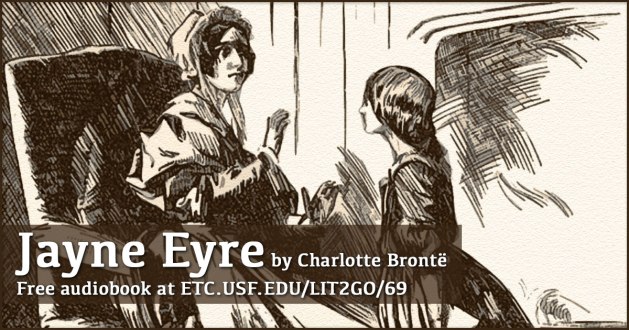
Jane Eyre By Charlotte Bronte Narrated by Lucy Scott
CHARLOTTE BRONTE (1816-1855)
“Jane Eyre” replays the tautology of “life is not fair; i.e., it just is”.
Charlotte Bronte’s story comes alive with the voice of Lucy Scott. Lucy Scott becomes Jane Eyre in this audio book presentation.
Bronte’s story emphasizes the importance of having an inner moral compass to guide one to choose between right and wrong
The author, Charlotte Bronte, captures life’s joy and hardship. The story emphasizes the importance of having an inner moral compass to guide one to choose between right and wrong. By making right choices, fulfillment comes from working through good and bad things in life.
Jane is an orphaned girl raised by an uncaring Aunt that feels burdened by her filial obligation. The orphaned girl directly confronts her Aunt’s resentment. To escape further confrontation and embarrassment, the Aunt boards Jane Eyre in an indigent’s school.
Jane is an orphaned girl raised by an uncaring Aunt that feels burdened by her filial obligation.JANE EYRE becomes a teacher at the school she is sent to by her uncaring Aunt. Later, she is hired by a wealthy landowner to tutor a young girl alleged to be the landowner’s illegitimate daughter.
Jane Eyre is formally educated. She becomes a teacher at the school. Later, she is hired by a wealthy landowner to tutor a young girl that is alleged to be the landowner’s illegitimate daughter. The wealthy landowner is revealed as a man with too many secrets. Jane Eyre, driven by her inner compass, flees to endure new hardship and temptation.
At the end, Jane Eyre returns to marry the wealthy landowner. She finds him blind, chastened, and older, but still in love with the Jane Eyre he had hired as his daughter’s tutor.
One might surmise a future hardship that remains to be revealed; i.e. when Eyre’s husband is ravaged by the inevitable infirmities of old age, Jane will be in the bloom and health of life. Considering the tenor of the story, Jane will deal with her husband’s infirmities and grow into her new role as caregiver with the strength of her convictions.
An ever-present refrain in “Jane Eyre” is that all life decisions and actions have consequences. The many themes that run through Charlotte Bronte’s book are what make it a classic. Every listener will identify with some part of Charlotte Bronte’s story.
Audiobook’s version of “Jane Eyre” is a tribute to Charlotte Bronte’s story telling skill.
Audio-book Review By Chet Yarbrough (Blog:awalkingdelight) Website: chetyarbrough.blog
The Other Brain By R. Douglas Fields Narrated by Victor Bevine
As we grow older, our physical and mental abilities deteriorate. Knowing that decline is the nature of life, the older one becomes, the more grasping one is for new ideas that mitigate life’s inevitable degradation.
R. DOUGLAS FIELDS (AUTHOR Ph.D. IN NEUROSCIENCE)
“The Other Brain”, written by Dr. Douglas Fields (a department head at the National Institute of Health and adjunct Professor of Neuroscience at the University of Maryland) is an expert in the field of cognitive science, i.e., the exploration of how minds work.
DR. THOMAS HARVEY (the pathologist that stole Einstein’s brain and kept it for some twenty years before telling anyone he had it.)
Fields begins with a story of when he is a ten-year old boy requesting a brain to dissect to see how it works. He moves on to tell the story of the pathologist that stole Einstein’s brain and kept it for some twenty years before telling anyone he had it. Einstein’s brain is eventually analyzed to see if there was a physical difference in Einstein’s brain that allowed him to see what others could not.
With this opening, Fields begins an exploration of the brain and how it functions. What he reveals is that Einstein’s brain was different but not because it was any bigger nor had more neurons but that it had more glia cells than the average brain. Until glia cell discoveries were made, the consensus of scientists was that neurological function was singularly based on an electrical impulse, i.e., an impulse transmitted to the brain through neurons via axons and dendrites to command thought and action.
With careful examination of glia cells, scientists found that there is what Fields calls a “second brain”. Glia cells are different from neurons. They do not use the axons and dendrites that transmit electrical pulses to compel performance. Glia cells use a chemical interaction within and between glia that create stimulus and response. The significance of the discovery of glia cells as a chemical alternative to electrical impulse suggests motor and mental function may be improved by other means.
This discovery OF GLIA cells potentially offers alternative ways of treating spinal cord injuries and mental in-capacities caused by diseases that interfere with the neuronal circuits of the brain.
This discovery means that the study of a “second brain” may offer alternative ways of treating spinal cord injuries and mental in-capacities caused by diseases that interfere with the neuronal circuits of the brain. Further, it may offer treatment alternatives for patients suffering from dementia or Alzheimer’s, a growing and feared neurological dysfunction.
Fields explores several glia related cells and their positive and negative functions in the neurological system. It is not a panacea for cure of neurologically impaired patients or aging brains because experiments show glia cells are both curative and destructive in their effect on the neurological system. However, a second brain does open a new field of opportunity for cure. Maybe young brains can be re-booted and old brains rehabilitated.
Dementia gives no comfort to one who is older and have a fear of Alzheimer’s and its consequence for others. Others, who are left to care for the stricken.
Audio-book Review By Chet Yarbrough
(Blog:awalkingdelight)
Website: chetyarbrough.blog
The Master Switch By Tim Wu Narrated by Marc Vietor
Tim Wu writes about the capitalist drive to acquire a master switch that controls how the public receives information. President Biden has chosen Wu to serve on the White House National Economic Council. It will be interesting to see what influence Wu will have on American technology companies.
TIM WU (AUTHOR, PROFESSOR OF LAW AT COLUMBIA
The first section of “The Master Switch” sets a table for understanding 21st century communication technology. Wu doggedly recounts a history of the communication industry. It will turn some listeners off but stick with it, Wu does have something to say.
“The Master Switch” is written before Huawei technology company became a perceived security and privacy threat. Instead of corporate domination of the internet, Huawei might be a nation-state security and privacy threat. Huawei’s break-through 5g internet system is coveted by many countries in the world.
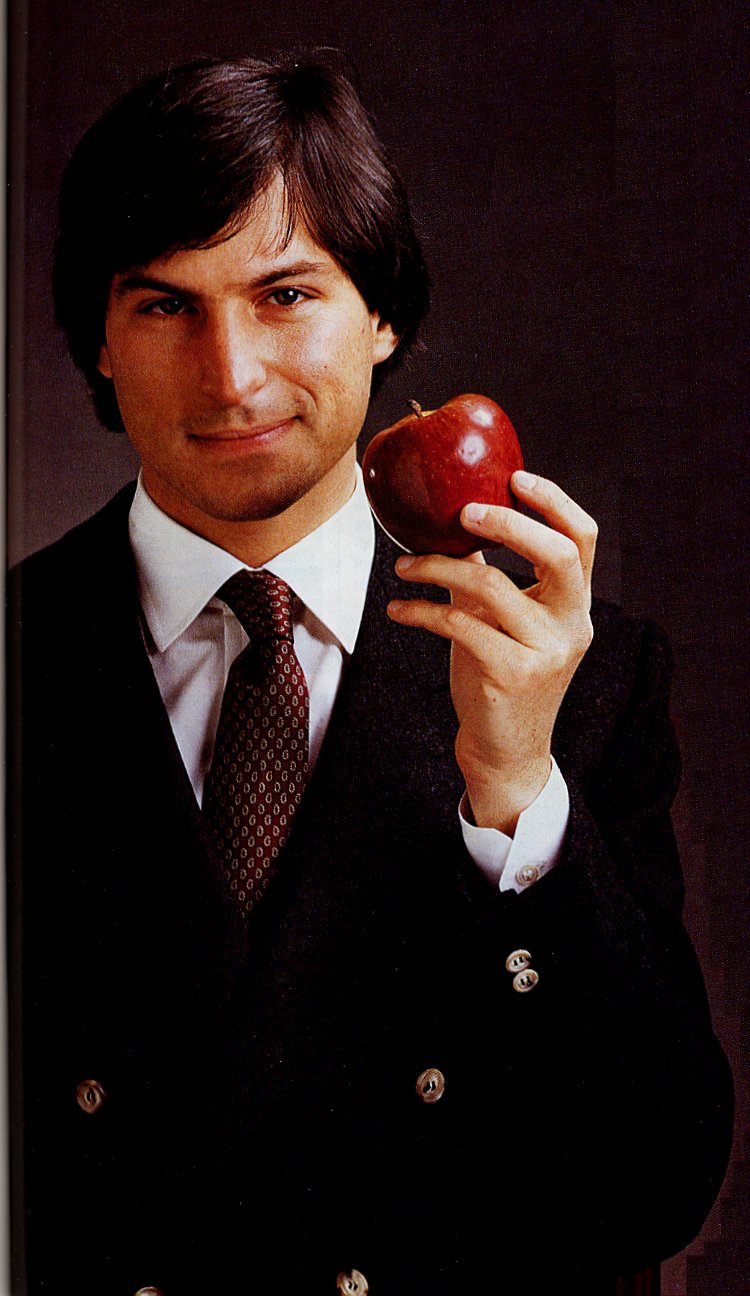
Some of what Wu reveals is counter intuitive. Steve Jobs’ genius is not as a technical wizard but as a deal maker.
None of these revelations denigrate the spectacular achievements of Jobs and Wozniak or the success of any of the companies mentioned. Jobs is a marketing genius that envisions what the market doesn’t know they want and demands perfection in a product that will serve that market.
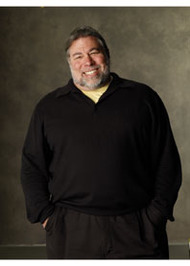
STEVE WOZNIAK (Wozniak, is characterized as the real wizard of “Menlo Park” –a few doors down from a similar laboratory occupied by Bill Gates.)
In their early days, one suspects neither genius cared about the power and influence of the internet and the potential of a “Master Switch” controlled by a government, or corporation. A prospect that is both troubling and (probably) inevitable.
Wu is arguing that communication businesses have expanded and contracted like rubber bands; i.e. pulled and snapped by inventors, governments, and business moguls.
From what Wu reports, history favors the likelihood of a “Master Switch” controlled by one of these rubber band pullers.
Wu’s stories of the communication industry suggest that a closed system is more likely to prevail in the shake-out of the internet; i.e. one “switcher” that will control the medium. The Trump administration endorses that philosophy by suggesting the private sector is a better arbiter of control than the government. Wu shows that a closed system tends to perpetuate itself and retard innovation because of a monopolist’s fear of competition.
In today’s political climate, the potential of a closed system looms large. Wu recounts the history of telephony, radio, movie, and television communication businesses that started as open systems but evolved into closed systems due to the acquisitive and greedy nature of mankind.
Wu argues that vertical integration (a closed system) of the communication industry can be discouraged with a check and balance system.
He suggests inventors, manufacturers and government regulators should remain independent (integrated horizontally rather than vertically) to check and balance human nature’s drive for one entity’s control of a “Master Switch”. This seems unlikely in light of an autocratic government like China. China’s outsize involvement and influence on the financing and regulation of a company like Huawei is an unlikely check and balance on sovereign security or privacy.
Wu lauds Google for preaching and practicing open system management of the internet but the history of communication companies reminds the listener that founders and their philosophies mutate. Private industry history of corporate greed in a capitalist society makes one suspect.
A check and balance system for communication or any industry is unlikely to grow based on past experience and human nature.
Free societies over-regulate and then under-regulate. America has always practiced rubber band management. Separation of powers is a temporary construct; not a permanent condition. When conflict begins, human nature takes charge. Mankind is acquisitive, greedy, and human.
Wu is a naive free enterprise philosophizer. History, Ayn Rand, and human nature tell us that the internet will become a closed system.
The public doesn’t understand technology and could care less. “Show me the product and what it can do”. “Show me the money” are humankind’s arbiters of who gets the “Master Switch”.
Ignorance of communication technology is everywhere. Consumers are more interested in what they can get than what they can change.
The general public would rather let someone else make product decisions and vote with their pocketbook when they are dissatisfied. That seems an even greater threat with a company like Huawei that is integrated with an autocratic government.
Wu opens one’s mind but fails to come up with a plan that will change the internet’s future.
Narrated by Jesse Boggs Narrated by Scott Brick & Others
Michael Lewis details the collapse of the real estate industry and Harry Markopolos dissects Bernie Madoff’s multi-billion dollar Ponzi scheme. Both authors reveal mankind’s inherent incompetence and greed. This is the 21st century but we still live in Thomas Hobbes’ 17th century world.
MICHAEL LEWIS (AUTHOR, JOURNALIST)
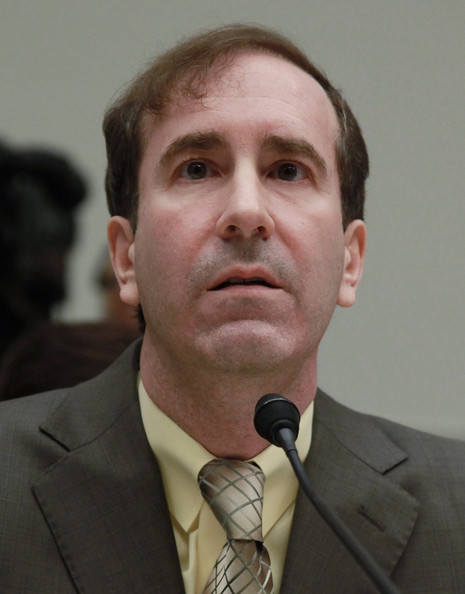
HARRY MARKOPOLOS (FINANCIAL FRAUD INVESTIGATOR, AUTHOR)
“The Big Short” and “No One Would Listen” reveal the nuts and bolts of how smart and stupid a free society can be. There is plenty of blame for every person involved; both perpetrator and victim. Human nature is an equal opportunity victimizer. Freedom of opportunity beckons good and bad behavior in man.
Money lenders like Countrywide and Washington Mutual fed bogus “no doc” mortgages to investment house mathematicians (known as “Quants”) that worked for companies like Goldman Sachs and Merrill Lynch to create derivative (real estate backed) securities. Inept management by Fannie Mae, and Freddie Mac offered mortgage insurance for grossly overleveraged mortgages. Companies like AIG removed investor risk by insuring banks against bad investments. All of these foolish actions coalesced to bankrupt companies and families around the world. Individual lies, bungles, and missteps in the real estate industry created the worst recession since the 1929 stock market crash.
QUANTS–Money lenders like Countrywide and Washington Mutual fed bogus “no doc” mortgages to investment house mathematicians (known as “Quants”) that worked for companies like Goldman Sachs and Merrill Lynch to create derivative (real estate backed) securities.
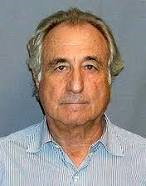
BERNARD MADOFF (AGE 74) SERVING 150 YEAR PRISON SENTENCE
While this real estate debacle was developing, Bernie Madoff built a 50 to 70 billion dollar empire by making fools of the U.S. Government, European royalty, world wide charities, and working families. Madoff lied, cheated and stole billions of dollars from wealthy investors, charities, and mom and pop businesses with offers of bogus investment returns based on buying from Peter to pay Paul. He paid dividends to earlier investors by taking money from newer investors. As long as people believed in Madoff, or deluded themselves, his wheel of fortune continued to roll. As the real estate market collapsed, old investor money was recalled and new money became unavailable. Madoff’s failure was inevitable.
How could these things happen in a 21st century, democratically elected and governed society? Hobbes would say “how could these things not happen”?
Michael Lewis identifies seers that recognized “Quants” were packaging doomed mortgages into re-saleable financial instruments called derivatives. Victims care little about who the seer heroes were but they were ringing warning bells long before the real estate collapse occurred. Seers by chance and foresight created “The Big Short”; betting on the coming real estate collapse. Seers became rich as the “too clever”, uninformed, or greedy victims became poor.
GOVERNMENT REGULATION-“No One Would Listen” is an indictment of democratic government in free society. His story exposes an inept and failed SEC, an agency created by government to protect investors.
Madoff’s investment lies were exposed in Markopolos’ written “red flag” report to the Security Exchange Commission in the year 2000. The title of the book “No One Would Listen” tells the story. “No One Would Listen” is an indictment of democratic government in free society. His story exposes an inept and failed SEC, an agency created by government to protect investors. The irony is that Madoff did not get caught, he confessed in 2009 because his Ponzi scheme fell apart. along with the collapse of the real estate industry.
Regulation is not a perfect solution for control of bad actors in a free society. However, no regulation is worse. The forensic reports of Michael Lewis and Harry Markopolos show what happens when efforts to regulate human nature are abandoned. Thomas Hobbes’ “Leviathan” lives to wreck havoc on society.
The narrators of these two books, Jesse Boggs and Scott Brick, are easy to listen to and the author’s forensic stories are valuable to hear.
The review of these books is combined because they are disturbing classics about the nature of man and society. They are alike in regard to their genius, but their stories are difficult to write in one review; let alone two.
“Native Son” was published in the 1940s and “Lolita” in the 1950s but either could have been written earlier or later because their stories are not of the past but of today and tomorrow.
RICHARD WRIGHT (AMERICAN/FRENCH WRITER,1908-1960 WROTE-NATIVE SON)
Story lines have many origins but Wright and Nabokov have tapped into some of the darkest parts of human nature with themes of mayhem, murder, misogyny, and misanthropy. They created characters that reflect human nature; inherent in mankind and affected (or infected) by society.
The main character in Native Son is Bigger Thomas, an impoverished, unemployed, African-American, 20-year-old living in a 1930’s Chicago ghetto. He lives with his mother, sister, and brother in a rat infested one room tenement, owned by a wealthy family that is about to offer him a job.
Bigger Thomas considers himself rich if he has 50 cents in his pocket. However, he does not want to work for a living because he sees it as a dead-end street, controlled by rich white people who will never let him follow any road beyond a limit set by white America. Bigger Thomas’s understanding is shaped by 20 years of living in substandard housing, ghettoized isolation from white society, and an education that did not go beyond the 8th Grade.
Thomas is given an opportunity to work for the owner of the tenement in which he lives. The offer is $35 per week ($10 more than average) to be a chauffeur for the family. Bigger takes the job but on the same night of the day he is hired, he murders his new employer’s daughter. It shocks the listener because the listener’s anticipation is that Bigger Thomas is on his way to breaking the cycle of poverty and becoming a part of the American Dream. But no, he chooses to kill his employer’s daughter.
The shock of the murder is so overwhelming that there is an inclination to stop listening. The shock becomes a Richter scale earthquake when Bigger rapes, bludgeons, and throws his black girl friend down an elevator shaft (while still alive) because she can finger him for the crime. Bigger Thomas is a rapist and a double murderer. What redemption can there be? What is Wright’s point?
WATTS RIOTS 8.11 TO 8.16 IN 1965. MARQUETTE FRYE, AN AFRICAN-AMERICAN MOTORIST ON PAROLE FOR ROBBERY IS PULLED OVER FOR RECKLESS DRIVING. THE RIOTS RESULT IN 34 DEATHS AND 40 MILLION DOLLARS IN ESTIMATED DAMAGES.) The credibility of Wright’s observation is visited in America’s future (25 years later) by the Watts’ riots of 1965, and the 2020 George Floyd Murder by Derek Chauvin.
The answer is difficult and not entirely comprehensible to a privileged majority. But Wright’s story explains that a person who lives a minorities’ life creates an environment that breeds anger, frustration, and violent action; i.e. violent action that can be directed at an ignorant majority, or anyone who threatens one’s inner-directed life.
Bigger Thomas is convicted and sentenced to death. Thomas is defended by a technically persuasive lawyer but prosecuted by a rebel rousing, emotionally righteous, prosecuting attorney who inflames public fear and anger. The prosecutor ignites public condemnation, and effectively dictates a judge’s decision.
Native Son is mostly written and spoken in one and two-syllable words (the only exception is Bigger Thomas’ intellectualized legal defense). Thomas’s defender pricks a listener’s conscious. One begins to feel some sympathy for this terrible criminal.
Peter Francis James’ bass voice brings Richard Wright’s characters to life, but this is not a story to listen to for pleasure. It is a story that improves understanding of discrimination, isolation, and poverty (social ills still evident in the world) and their unintended consequences.
Lolita
By Vladimir Nabokov
VLADMIR NABOKOV (RUSSIAN AUTHOR, 1899-1977, WROTE LOLITA)
An equally reprehensible story is told in Nabokov’s book, Lolita. Lolita burns in your mind like Native Son, with a kindred repulsiveness. Lolita sears your conscience because it speaks like an apology for pedophilia.
Jeremy Irons’ spoken interpretation of Lolita is breath-taking. His voice captures the licentious nature of the main character, Humbert Humbert. He reads Nabokov’s lines with a beautiful alliteration that reveals the poetry in Nabokov’s prose.
The subject is inherently repulsive. The rationalizations of a confessed pedophile who admits his guilt, is difficult, if not impossible, to understand. As with Bigger Thomas’ murder of two women, Humbert Humbert’s seduction of a 12-year-old girl makes the listener want to quit listening. Iron’s skillful narration seductively draws the listener into an intimate appreciation of Nabokov’s prose. But, it’s a life of a truly despicable and tragic human being.
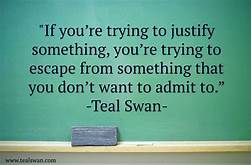
There is no justification for pedophilia though Humbert Humbert makes his plea. Humbert’s observation that pedophilia has been present since time began is not a plausible justification for its continuation. The argument that some psychological trauma in one’s youth takes control of one’s libido is “psycho-babble”. The argument that some 12 year olds are what Humbert Humbert classifies as “nymphet’s” is in the mind of a sick person.
Humbert’s unbalanced mind projects an ignorance of the difference between a child and an adult. The argument that Humbert Humbert truly loved Lolita, even after she is 31 years old, and married to a person of her own age, is preposterous. Based on the character’s own explanation of his child fixation, Humbert’s characterization of love is despicable.
So, what is the point of the book? The best face is that Nabokov reveals the depth of a pedophile’s sickness, some of its causes and consequences, and the utter futility of psychological examination; the worst face is that Nabokov justifies pedophilia based on human nature. For my own conscience, and for respect to a literary genius, I pick the first rather than the second reason for Nabokov’s decision to write this book.
The story is enlightening as well as repulsive. It tells the story of the length that a pedophile will go to satisfy an abhorrent sexual desire. It suggests that a psychiatric examination of an intelligent psychopath is a waste of time. It gives a face to pedophilia and evidence of how it permeates human culture, from advertising, to magazines, to movies. And, it shows, with a character like “Q” (a movie producer), how salacious and jaded a human being can become.
Both of these books are brilliantly written. Native Son is a masterpiece of simple and direct prose that is a literary lesson for aspiring writers. Richard Wright is an efficient user of words to tell a story with brutal clarity.
Both are horrific stories of human nature. Listening to them is enlightening but only our future will demonstrate whether enlightenment leads to improvement in human nature or a repeat of the bestiality we have shown so many times during, before and after the 20th century.
Audio-book Review By Chet Yarbrough
(Blog:awalkingdelight)
Website: chetyarbrough.blog
A Prayer for Owen Meany
By John Irving Narrated by Joe Barrett
JOHN IRVING (AUTHOR, SCREEN WRITER-IN HIS 70TH SEASON OF LIFE)
Like quick sand, every chapter of John Irving’s “A Prayer for Owen Meany” creates a mystery that pulls the listener deeper into its story.
Why is Owen Meany’s voice so high-pitched and single noted? Who is the “lady in red”? Who is Owen Meany’s illegitimate friend’s father? Why do the main characters keep practicing “the shot”?
Why do the main characters keep practicing “the shot”?
What is Owen Meany’s recurring dream? Right foot, left foot, body, and brain; soon you are consumed by Irving’s mysteries.
Joe Barrett’s spoken presentation is terrific because it enhances the written meaning of the story. James Atlas precedes the narration with an interview of John Irving, the author. The Atlas’ interview sets the table for what you are about to hear.
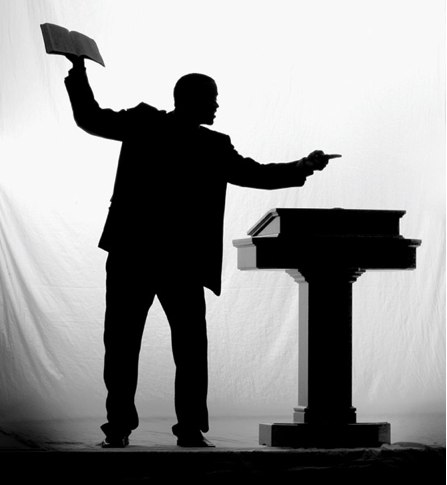
It is an age like today with ministers preaching and not believing, parents teaching right and doing wrong, and children maturing physically and wasting mentally. Owen Meany is an exception, as this story tells the listener.
Irving writes a story about growing up in Anywhere, America where the pious are weak, the rich are intimidating and the children are indulged. It is an age like today with ministers preaching and not believing, parents teaching right and doing wrong, and children maturing physically and wasting mentally. Owen Meany is an exception, as this story tells the listener.
Owen Meany is modeled like the little man in The Tin Drum, a book about a dwarf like German citizen observing the beginning, progress, and ending of the WWII German tragedy. Owen Meany is a stunted American citizen living at the beginning of an evolving Vietnam American tragedy.
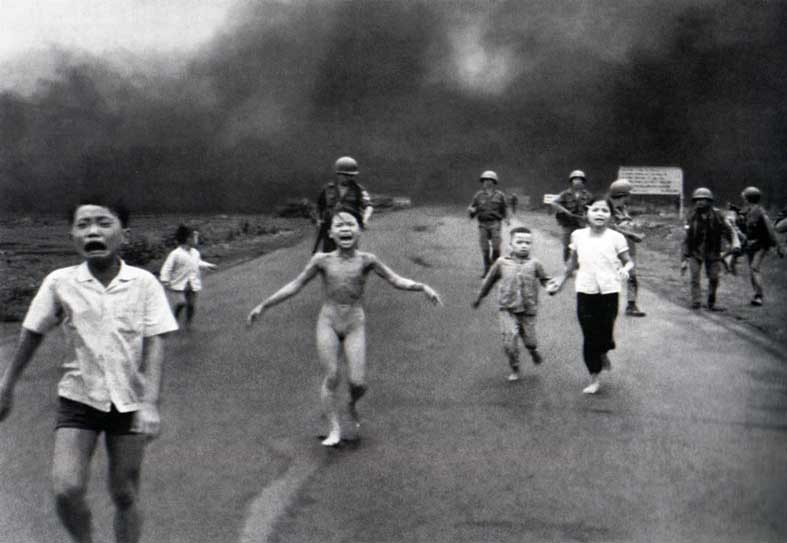
The subject of Vietnam is generally understood as an American disaster. It earned its American anti war rebellion.
The subject of Vietnam is generally understood as an American disaster. It earned its American anti-war rebellion. Irving’s story crystallizes the anxiety and frustration of that time. He offers an answer to what we can do when we become anxious and frustrated about things that seem beyond our control. It is not an easy path but redemption for atrocity begins with people of faith who see reality, have an inner moral compass, and act with a relentless commitment to stop senseless acts of war.
The only quibble about Irving’s story is linear time distortion that weaves the story in and out of the past; the movement back and forth is like re-starting a motor that is running smoothly but stalls because of a faulty timing chain.
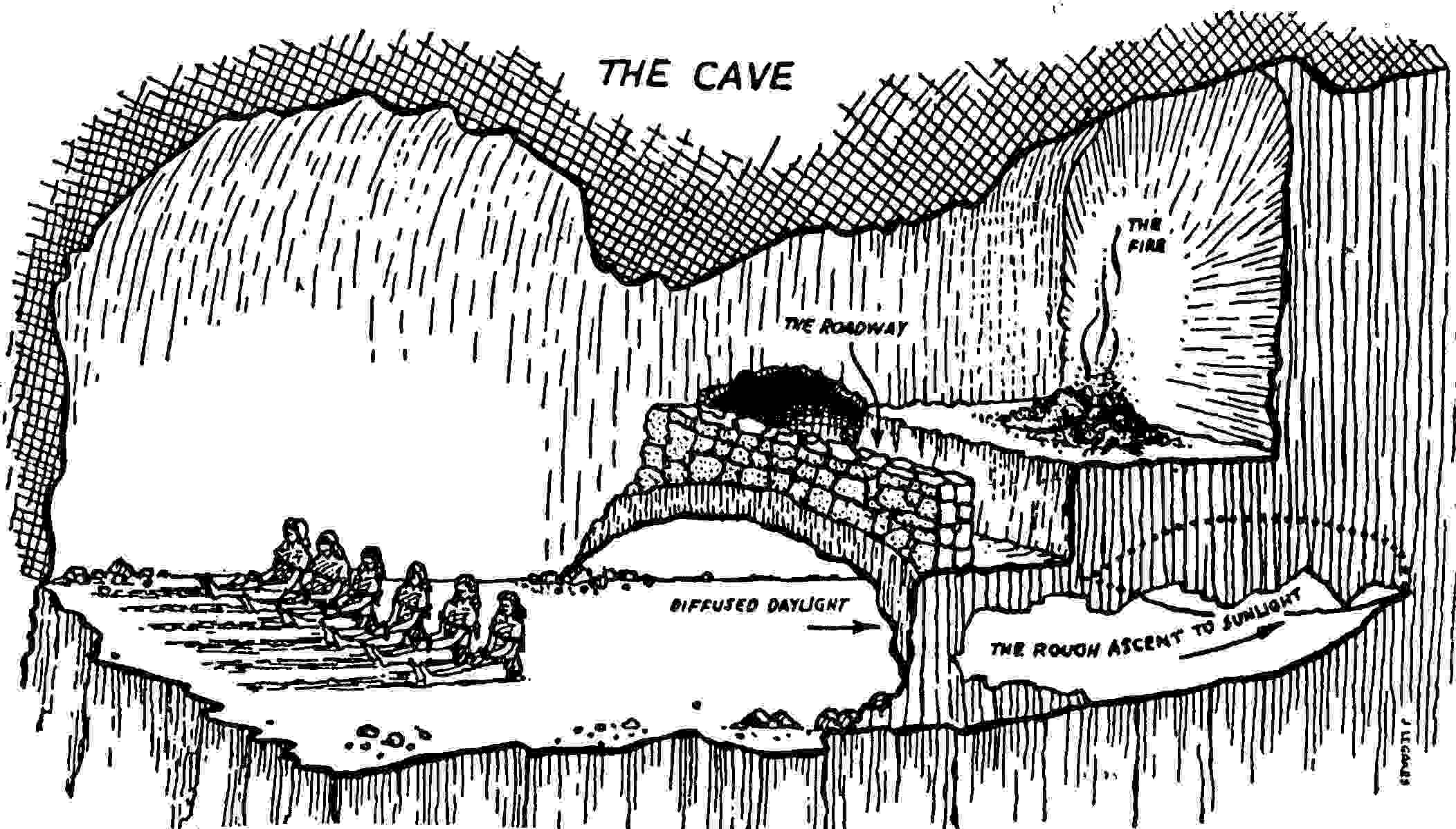
There is more than an anti-war message in the book. It is a tale that tells how most humans live like cave dwelling shadows with little self understanding and no purposeful direction.
There is more than an anti-war message in the book. It is a tale that tells how most humans live like cave dwelling shadows with little self understanding and no purposeful direction. Owen Meany does not live like a shadow of himself. He acts decisively. Owen Meany makes concrete choices; choices that he believes reveal God’s purpose and His pre-ordained plan. It is a matter of Faith to Owen Meany.
MICHAEL ERIC DYSON (AUTHOR, BAPTIST MINISTER, PROFESSOR OF SOCIOLOGY AT GEORGETOWN UNIVERSITY)
Michael Eric Dyson is a graduate of Princeton who teaches at Georgetown University. “Tears We Cannot Stop” is an indictment of white America. The indictment accuses white Americans of serious crimes stemming from today’s bigotry, neglect, permanent injury, and murder of black Americans.
Jacob Blake’s Paralysis
George Floyd’s Death
Examples of police violence against black Americans, a history of ethnic isolation, forced conformity and denied equal opportunity strongly support Dyson’s accusation.
Each accusation and the evidence gathered by Dyson confront the conscience of every white American. What he writes rings of truth. The more Dyson explains, the greater is white America’s guilt. It is a message missed by white Americans because they do not live the life of black Americans. White privilege is taken for granted in America because money, power, and prestige are held by mostly white American males.
RODNEY KING (APPEARANCE 3 DAYS AFTER BEATING 3.6.92–KING DIES IN JUNE 2012 @ 47 YEARS OF AGE)
The institutionalization of racism makes black Americans afraid. Out of that fear comes distrust, anger, apathy, and isolation. Black mothers and fathers fear for their children whenever they leave home. Regardless of education, fame, or fortune, Dyson notes an honest and law-abiding black American is subject to a different set of social rules. From birth, black Americans are told by their parents not to disagree with police for fear of being beaten, arrested or shot.
Truth does not matter in a black person’s response to accusation. Most black Americans live with fear; most white Americans do not. When stopped by the police, a black American thinks–what can I do; where can I go; what can I say; who can I trust other than myself and my race? When unjustly accused, black Americans have limited recourse. Those limits are tinged with frustration, and/or anger. No wonder some feel disrespected and alone in America.
RUDY GUILIANY (FORMER MAYOR OF NEW YORK CITY) Dyson attacks pundits who suggest black Americans are their own worst enemy. The white pundit’s argument is they kill each other. The argument ignores two monumental facts. One, the toll that poverty and unemployment play in poor communities; and the truth that whites murder whites nearly as often as blacks kill blacks.
Dyson attacks pundits who suggest black Americans are their own worst enemy. Some white pundit’s argue blacks kill each other more than whites kill blacks. The argument ignores two monumental facts. One, the toll that poverty and unemployment play in poor communities; and two, the truth that whites murder whites nearly as often as blacks kill blacks.
The real difference between black and white victimization is whites have more opportunity in America. White, mostly male, Americans write the history of America and create the rules for “democratic” governance.
Dyson encourages white Americans to become more involved with black Americans. The social disconnect between races promotes ignorance of common goals and aspirations. Who does not want to live in peace, provide for themselves and their families, raise their children to be better off than themselves? Part of the difficulty is that there is little trust between black and white Americans as is noted in the following social experiment.
Leaders in America, consciously or subconsciously, treat non-white Americans as “others”. When humans treat someone as an “other”, they become less human. Minorities and other nation’s populations become “gooks”, “spics”, “towel heads”, “niggers”; i.e. something identified as less than human. This human categorization institutionalizes discrimination. It leads to this American dilemma and to world wars.
Leaders of America, who are mostly white males, ignore the plight of black Americans. One wonders how many white Americans thank their God for not being born black. That is Dyson’s reason for concluding black Americans shed “Tears We Cannot Stop”.
“The Harder They Come” is a novel about another America; not the America of idealized history but the America of three generations coping with loss in the twenty-first century.
T. C. Boyle creates three characters who feel beaten down by American life. Boyle reflects on their disappointments and perceptions of loss. A young man in his twenties loses identity, a fortyish woman loses faith in government, and a seventy year old loses self-confidence.
Boyle’s imagined characters live in America today.
Adam, a 23-year-old changes his name to Colter, the name of a member of the 1804-1806 Lewis and Clark Expedition. Colter explores Yellowstone National Park and the Teton Mountain Range in the 19th century. John Colter is considered by some to be the first American mountain man.
Historically, a mountain man is a hermit-like explorer that exchanges fur for the necessities of life and lives off the land. Adam’s assumption of the Colter name is a trans-formative event for Adam. He uses drugs and alcohol to escape the frustrations of his 21st century life. He uses the Colter identity to give him an anthropomorphic purpose in life. Adam becomes a mountain man.
Sara is a fortyish divorcee who adopts the philosophy of the sovereign citizen movement. She believes the 14th amendment of the constitution proffers absolute freedom to American citizens.
Sara, like Nevada’s Cliven Bundy, believes she is above the law and a federal level of government that interferes with her right to do as she wishes is an infringement on her independent sovereignty.
Though Sara considers herself non-violent, she appreciates actions of domestic terrorists like Timothy McVeigh who murdered 168 men, women, and children in Oklahoma City on April 19, 1995 .
Sten Stenson is a veteran of the Vietnam War. He is now 70 years old. As an ex-Marine and former high school principal, he is retired. Sten is a big man; over six feet in height.
Sten dislikes getting old but has a brief turn at fame, as a hero, when he kills a robber in Latin America that is threatening fellow tourists. In looking back at his life, he is reminded of American ridicule of Vietnam vets when he returned from war; he becomes unsure of his purpose in life and regrets having killed anyone either in Vietnam or the recent event in Latin America. Sten realizes every human being has a father and mother. He questions the usefulness and value of his life.
Boyle brings these three characters together. Adam is the son of Sten. Sara becomes Adam’s lover. The extreme behaviors of Adam and Sara are compatible on some level, but Adam’s violence and drug habit compel Adam to completely break from society. Sten loves his son but they have become completely estranged and evidence mounts to show Adam has become a lost boy.
The denouement of the story reveals a great deal about another America; i.e. “another America” that is a consequence of a capitalist culture that breeds psychotic murderers, deluded fringe groups, and psychologically broken seniors.
Your Deceptive Mind: A Scientific Guide to Critical Thinking Skills
Recorded by: Professor Steven Novella
Produced by: The Great Courses
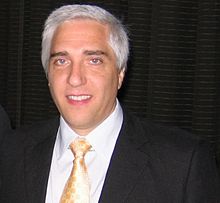
STEVEN NOVELLA (AMERICAN CLINICAL NEUROLOGIST, ASST. PROFESSOR AT YALE UNIVERSITY SCHOOL OF MEDICINE)
“Your Deceptive Mind” offers lessons for two paradigm shifts occurring in America today. One is gun control; the other is sex discrimination. Professor Steven Novella’s lessons apply to other important issues, but none seem to have the same political momentum for change.
Novella begins by inferring we all deceive ourselves. Novella explains it is caused by the nature of human consciousness. Novella argues that human brains are designed to make coherent sense of remembered experience; not to necessarily recount accurate details of events. We often add facts and change details to improve coherence of our memories.
Memory does not work like a film clip. It is not caste on celluloid that can be replayed as a memory. Memory is re-invented by reconstruction of facts to fit a story that makes sense to the person who remembers.
AR-15 (Type of semi-automatic rifle used in Florida High School shooting.)
As of April 15, 2021 there have been 148 people murdered and 485 injured in mass shootings. The most recent is at the Indianapolis FedEx facility that killed eight people. One is reminded of William Butler Yeats:
Turning and turning in the widening gyre The falcon cannot hear the falconer; Things fall apart; the centre cannot hold; Mere anarchy is loosed upon the world, The blood-dimmed tide is loosed, and everywhere The ceremony of innocence is drowned; The best lack all conviction, while the worst Are full of passionate intensity.
The 17-people murdered in a Florida high school in 2018 raises the issue of gun control in America one more time. Americans see this incident from three views. One, from the perspective of people who heard it on the news; two from the perspective of people who responded to the event; and three from the perspective of victims. Based on Novella’s assessment of critical thinking, all three views distort reality.
The 17-people murdered in a Florida high school 2018 raised the issue of gun control in America one more time.
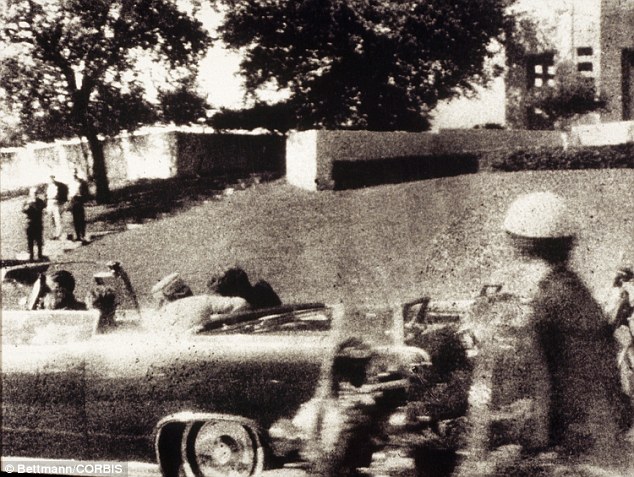
JOHN F. KENNEDY ASSASSINATION – Memory does not work like a film clip. It is not caste on celluloid that can be replayed as a memory. Memory is re-invented by reconstruction of facts to fit a story that makes sense to the person who remembers.
Novella tells a story of a woman accompanying the John F. Kennedy trip to Dallas, Texas. Soon after Kennedy’s death, she explains that she did not see anything that happened. As the years pass, she recalls seeing smoke from a grassy knoll near the shooting. Novella explains that each time she tells the story more details are revealed. No evidence is ever found to suggest a shot is fired from anywhere but the Dallas, Texas book-depository. What she is doing is creating facts to improve the coherence of a memory.
Facts of Florida’s murders and other gun-related incidents are remembered differently. All who heard of, responded to, or are victimized by guns tell different stories. There is no singular consensus on what caused it to happen, who is responsible, or what can be done. Facts seem not to matter. In Florida, seventeen human beings are dead. One person killed them. One automatic weapon is used by a troubled high school student who used a gun designed ONLY to kill people.
Victims of the school shooting ask why America cannot protect their children. A flood of responses is given but each person at the school is influenced by a subjective recollection of events. In many cases, facts are ignored because they do not fit the narrative of the person telling his/her story. It has little to do with facts; i.e. except as those facts fit the re-created memory of a horrific event. Like the woman seeing smoke coming from a grassy knoll, some facts just fit a reconstructed story; not the truth.
Critical thinking skills mean addressing facts, using those facts to create a constructive analysis, a plan of action, and implementation. Seventeen people are dead in Florida from one shooter. They are dead at the hand of a troubled teen. The weapon used is only designed to kill people. Everything else is irrelevant. Those are the facts. That is the truth. What is needed now is constructive analysis, a plan of action, and implementation.
The same can be said of sex discrimination. An example is the King’s law that particularly applies to women who speak insolently. They are to have their mouths scoured with salt; i.e. a law applying only to women slaves. Of course, the law begs the question of why women are slaves.
Novella’s argument that every memory is a subjective recollection may mean testimony of women who are abused and/or discriminated against are misreading the facts of their recollection. However, many facts are independent of recollection.
There is overwhelming evidence; i.e. fact-based films, recordings, physical examination records, and statistical studies that show women are abused and discriminated against all over the world. Those are the facts. That is the truth. What is needed is constructive analysis, a plan of action, and implementation.
Gun control and women’s rights: Has America reached the tipping point for acting on critical thinking? Have we finally reached the threshold for a paradigm shift in gun control and women’s rights? Doubtful.
Chinua Achebe explains what happens when civilizations collide in “Things Fall Apart”. Achebe lived a life that reinforces hope. He was born in Nigeria but educated in English at the University of Ibadan, the oldest university in Nigeria (founded in 1948). Achebe wrote “Things Fall Apart” in the 1950s (published in 1958). It sold more than 12 million copies and was translated into more than 50 languages. Sadly, Achebe died on March 21, 2013.
Two thirds of “Things Fall Apart” explains life in an African village that is untouched by a white man’s world or any civilization outside of its clan and their related communities.
Without knowing Achebe’s background, a first reading of “Things Fall Apart” begins in confusion but as the story progresses its meaning becomes clear. The listener is being offered an understanding of a 1950s African village’s culture.
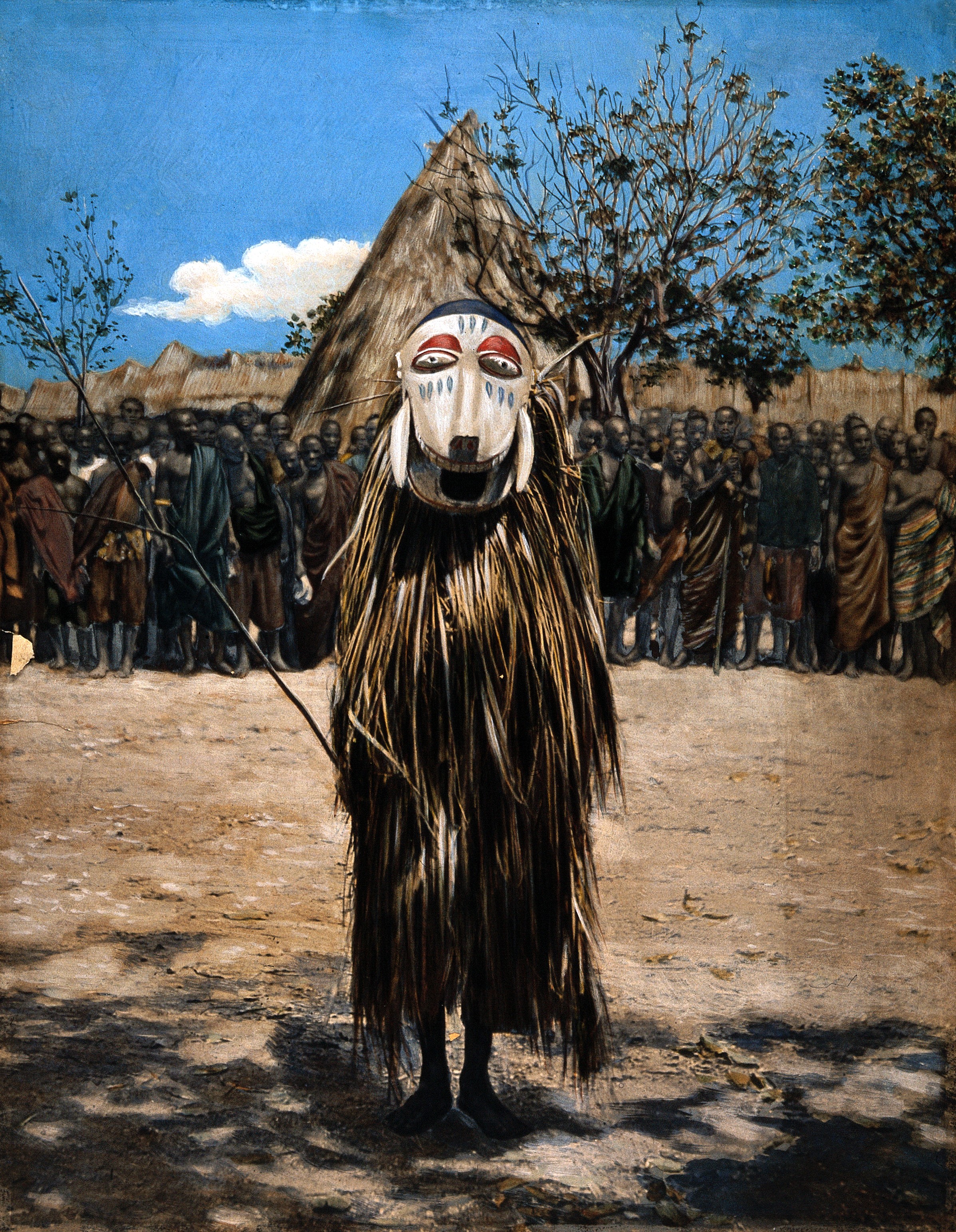
AFRICAN SHAMAN: This clan’s insular existence creates an independent patriarchal culture that believes in many gods, supernatural forces, and rigid rules for life. Being a man means following rules of the culture. Any transgression is considered womanly, a cultural euphemism for cowardice.
Women are respected but only within the context of their duty as the source of tribal growth. Women have restricted roles in this society as maternal caregivers. In all respects women become property of men. They may be beaten and treated with near impunity. Boys are raised to be tough, outwardly unemotional, and obedient. They are expected to revere and emulate their fathers. Wrestling prowess is a measure of male respect in the tribe. Farming productivity and honor of tribal tradition are measures of value to the tribe.
War among the villages is rare because negotiated peace and village interdependence make war too wasteful. Violation of communal laws can be mortal offenses. A story is told of a father murdering his adopted son because he is told it is necessary to please the Clan’s gods. Though this murder troubled the adoptive father, he accepts the Clan’s admonition and rationalizes his grief by knowing he has other sons.
OLDEST HUMAN SACRIFICE DISCOVERED IN CENTRAL AFRICA (A negotiated peace between clans may mean the sacrifice of children to nearby tribes for transgressions of communal laws but overt war between tribes of the same clan is rare.
The most serious consequence to a violator of Clan’ law is banishment from the community. Banishment can be either permanent or for a number of years, depending upon the gravity of the violation. Murder out of anger means permanent banishment. Murder by accident means 7 years banishment.
Achebe explains women having twins are ordered to kill them at birth because twins are unnatural and a curse of the gods. One woman has twins three times; all are murdered.
1950S JEEP (Achebe explains the fear that causes natives of one tribe to murder a white missionary and tie his iron horse to a tree.)
As Achebe explains these local customs, he describes how an intruding civilization is introduced to his village. The intruders are Christian missionaries. The first intruder is a white man riding an iron horse. This is the first white man who native villagers have ever seen. The engendered fear causes natives of one of the tribes to murder the white man and tie his iron horse to a tree. The murder is revenged by returning outsiders that destroy the population of the village. Neighboring villages hear of the massacre. They choose to respond to the next intruder more circumspectly.
New intruders come with plans to build a church on tribal property. They ask for permission and tribal leaders meet to discuss the request. The decision of the tribal leaders is to offer land in the worst part of the village; i.e. land that is used to bury evil shamans, tribal criminals, and diseased bodies. The tribal leaders believe the Christians will die from their location in this forbidden human and mystical dumping ground.
The irony of the tribal leader’s decision is that it strengthens the Christian movement. The Christians do not die and the church begins to attract tribal followers that begin to believe Christian’ beliefs are stronger than Shaman’ beliefs. The woman who had been told to kill her twins joins the church.
One culture is replaced by another culture; first with small steps, and then with generational leaps. The good and bad of one culture is replaced by the good and bad of another. One guardedly hopes cultural change moves humanity toward a better life; not just cosmetic change.
Over many generations, some tribal members have become outcasts from the tribe. Their outcast position draws them to the Christian movement because they wish to become part of a community again. Some women turn to Christianity because it offers a refuge from the violence of their husbands. Some sons turn to Christianity because it offers escape from the iron rule of their fathers and the tribes’ cultural laws.
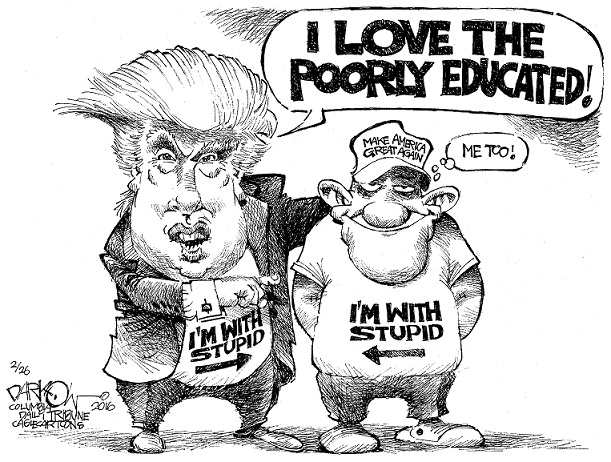
Donald Trump is a rule breaker, a main stream outsider.
From the perspective of any individuated culture “Things Fall Apart” when change comes from the outside. Has Trump changed America into two tribes–one Republican and another Democrat?
















































 REVIEWS AND VIEWS OF LIFE