Graduate Oregon State University and Northern Illinois University,
Former City Manager, Corporate Vice President, General Contractor, Non-Profit Project Manager, occasional free lance writer and photographer for the Las Vegas Review Journal.
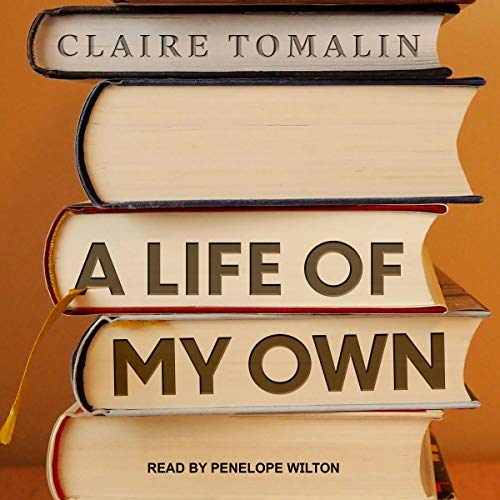
“A Life of My Own” introduces Claire Tomalin to those who do not know her. Born in London, and educated in English grammar schools, Tomalin graduates from the University of Cambridge to become a writer.
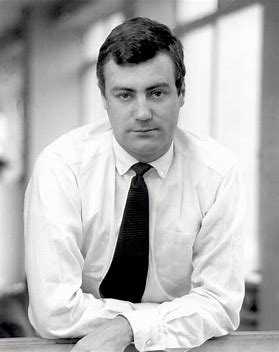
Tomalin meets and marries a fellow Cambridge student named Nicholas Tomalin who becomes a successful journalist. He is killed on assignment while reporting on the Arab Israeli war.
As a listener/reader one appreciates Tomlin’s writing. As a respected biographer, Tomalin illustrates the importance of honesty in writing about one’s life story.
Tomalin writes with candor and detail that make one believe what she writes. Tomalin has written several biographies of famous people like Mary Wollstonecraft, Charles Dickens, Thomas Hardy, Jane Austin, and Samuel Pepys. References she makes to her research for earlier biographies assures listeners of her diligence in revealing her own life. How well we know ourselves is always a question, but the facts Tomalin reveals suggest she, like Bronte’s “Jane Eyre”, is a woman of substance.
As with all who have lived a long life, Tomalin experiences good and bad fortune.
She is raised by a father and mother who love her but divorce. As a child growing up, Tomalin mostly lives with her mother who cares for her. However, as a single mother, the two undoubtedly struggle to make a living. Her father remains a part of Claire Tomalin’s life but seems only later to provide some level of trust and security in their relationship.
There seems a great deal of love but a sense of frailty and insecurity in Claire Tomlin’s life with her mother. Her mother is a musician and unpublished composer who works at odd jobs to support their life together. Most divorced wives recognize how difficult it is to lose one/half (usually more) of a family’s income when divorced.
Claire Tomalin’s life enters a new phase when she marries Nicholas Tomalin. Because of Nicholas’s job, he is away from home on assignments. Claire pursues her own career. They separate. They come back together. Nicholas is tragically killed while on a 1973 news assignment to report on the Arab Israeli war.
At some point in Claire Tomalin’s marriage, the man she married becomes physically abusive. Tomalin explains her husband is a bon vivant who attracts other women’s attention.
Claire Tomalin is left with five children, three daughters and two sons. She publishes her first book in 1974 (“The Life and Death of Mary Wollstonecraft). She becomes the literary editor for the “New Statesman” and “The Sunday Times”. Her mother dies. Her father dies. One of her sons is born prematurely and requires special aid. A daughter commits suicide. She manages through it all and marries the novelist and playwright Michael Frayn in 1993.
She continues to write into her late 80s. Along the way, she meets some of the greatest writers and authors of modern times. As with anyone who lives into their 90s, it seems Claire Tomlin has had an eventful and good life, but it required grit and determination. Something one cannot help but admire is that Tomalin is a woman of substance.
East West Street (On the Origins of “Genocide” and “Crimes Against Humanity”)
By: Philippe Sands
Narrated by: David Rintoul, Philippe Sands
Philippe Sands (British Author, attorney, specialist in international law.)
“East West Street” is narrated by two people, the first narrator defines the origin and legal definition of “Genocide” and “Crimes Against Humanity”. The second narrator recounts real-life’ details that relate to those definitions.
The defendants at the Nuremberg Nazi trials. Pictured in the front row are: Hermann Goering, Rudolf Hess, Joachim Von Ribbentrop, Wilhelm Keitel and Ernst Kaltenbrunner. In the back row are: Karl Doenitz, Erich Raeder, Baldur von Schirach, and Fritz Sauckel.
The first public use of “genocide” is introduced in the Nuremberg Trials of former Nazi administrators. Raphael Lemkin (1900-1959) wrote a book, “Axis Rule in Occupied Europe”, that introduces the term “genocide” in 1944. He becomes a needling gadfly in the Nuremberg trials. The word “genocide” is initially rejected but becomes a part of the trial as it proceeds.
Sands suggests Lemkin’s role is diminished by his uncooperative behavior when first selected to serve on the Nuremberg’ adjudication team. Lemkin is relegated to a lesser role as a consulting attorney, in part because of his insistence on the use of “genocide” in the Nuremberg trials.
Raphael Lemkin (1900-1959, Polish lawyer, coined the word-genocide.)
Regardless of Lemkin’s alleged attitude, one is compelled to agree–the perpetrators of the holocaust committed both “genocide” and “crimes against humanity”. Individual men, women, and children were murdered. At the same time, specifically identified groups of people were murdered by the Nazis. The largest group is Jewish, but many groups were not affiliated with religion. Poland lost an estimated 3 million Polish Jews, but Poland also lost an estimate 1.8 million Poles with no Jewish heritage. An estimated 3,000,000 Ukrainians were enslaved and/or murdered, some undoubtedly were Jews, many were not.
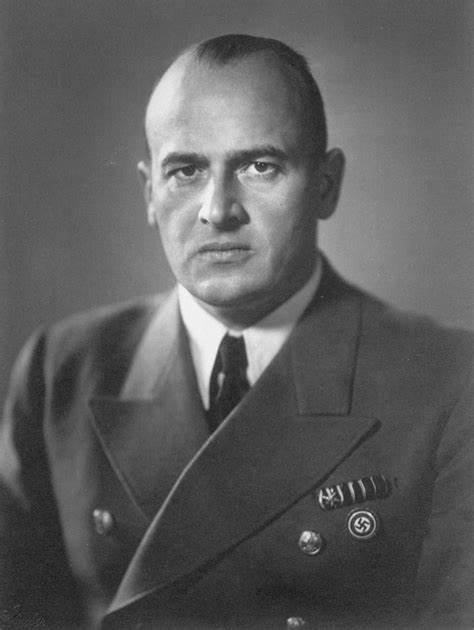
Hans Frank (German governor of Poland 1939-1945).
On several occasions, the son of Hans Frank (the German governor of Poland during WWII) is interviewed. Frank’s son believes his father knew nothing of the atrocities of Poland’s concentration camps when first interviewed. In subsequent interviews, Frank’s son realizes his father enforces orders of the Third Reich to exterminate the Jews of Poland. His son begins to realize his father is not who he thought him to be. The former governor of Poland is convicted and executed after his Nuremberg trial.
In the end, defendants in Nuremberg are accused of “crimes against humanity”. “Genocide” is a group accusation while “crimes against humanity” is a person-specific indictment. What makes “East West Street” more than a definition of words and indictment is the detailed research that illustrates war’s personal consequence to innocent men, women, and children who suffer from war.
The author notes “Genocide” has become international law used for the first time in 1998 to convict Jean-Paul Akayesu for Rwandan murders. Sands suggests the concept of genocide remains controversial in the sense that it magnifies potential for conflict between groups.
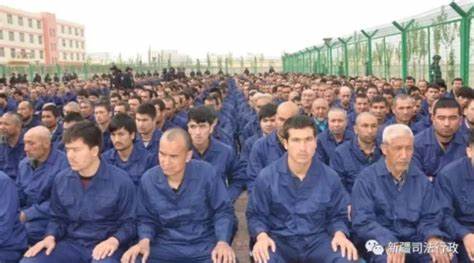
There is no question that Jews were the largest singular group to be systematically tortured and murdered by the Nazis, but Lemkin’s definition of “genocide” is a label applicable to other groups of humanity. We have ample examples in the 21st century. There are the examples of indigenous Indians and Black slaves in America, and Uighurs and Tibetans in China.
The truth that Sands reveals is that every rape, torture, enslavement, and murder is individual, personal, and tragic. Sands meticulous research shows how brutal and singular “crimes against humanity” are to the individual. He finds his family is torn apart by Hitler’s Jewish obsession. The wounds engendered by Hitler’s leadership are shown unhealable to generations of Jews.
Hitler’s abhorrent beliefs festers in the 21st century.
Sands captures the true threat of authoritarianism in “East West Street”. One person can enslave, torture, or kill another person. More ominously, one person can influence a government to become an enslaver, torturer, and killer of millions. The first is a crime against humanity; the second portends genocide. Of course, today we see Putin’s attempt to eradicate the Ukranian nation and its people. One must ask oneself, is this not the genocide of which Lemkin wrote?
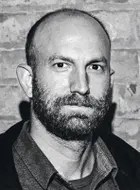
Luke Mogulson (Author, reporter for various national and international publications.)
Luke Mogelson’s “The Storm is Here” carries the risk of being an echo chamber for those who believe Trump is the worst thing to have happened to the Republican Party and politics of the United States.
One must ask oneself, who is this author? The following is a brief review of Mogelson’s life, noted on the internet.
Luke Mogelson is an American reporter who is known for shooting the riot footage of the US Capitol video.
He was born in 1982 in St Louis, Missouri, United States of America. Fogelson is of American nationality having a white ethnic background.
Currently, Luke Mogelson’s age is 38 at the time of this writing.
Luke Mogelson does not have an official Wikipedia and bio made in his name.
As such, there is not much information about his family and educational qualifications.
Luke is a daring and brave reporter and has covered reports for the New Yorker on the Syrian War and West Africa’s Ebola epidemic.
He has lived in places such as Paris and Mexico. On the other hand; Luke Mogelson has not officially revealed to us his wife‘s name and her current whereabouts.
Luke is also a famed contributing writer at The New York Times Magazine and won the prestigious National Magazine Award in 2014. His work has appeared and allegedly been well-appreciated in The New Yorker, The Hudson Review, The Paris Review, The Kenyon Review, and many more.
He has written books titled; These Heroic, Happy Dead: Stories which was released worldwide in 2016.
At the least, Mogelson is a respected, brave, and well-travelled reporter, published in several national and international publications. If “The Storm is Here” is viewed as only an echo chamber for Trump haters, one should measure Mogelson’s credibility as a reporter and respected writer, published by notable national and international papers and magazines.
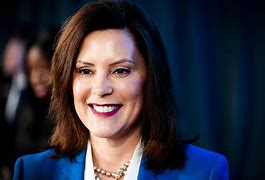
Governor of Michigan, Gretchen Whitmer.
Mogelson begins his book with freedom loving Americans who resent Michigan Governor Whitmer’s autocratic response to the Covid 19 pandemic. She orders businesses to be closed and mandates masks to protect Michiganders from spread of the virus. The consequence devastates local businesses that needed income to survive during the pandemic.
Karl Manke (Michigan barber.)
Mogelson focuses on an elderly barber’s business and his refusal to close his doors during the pandemic. His business becomes a rallying cry for freedom fighters who believe freedom is more important than what became over 1,000,000 American deaths from Covid19.
Mogelson recounts the tumultuous years of the Trump presidency. Every listener will have a visceral response to Mogelson’s reporting. In the end, all one can conclude is that “They are Us”. America, like all countries of the world, has a flawed form of government.
The flaw is universal because citizens of every country and government are flawed by the insecurities and prejudices of being human.
Trump is a proven liar, a showman with the ability to martial support of some of the smartest and honest Republicans in America.
They know who they are and still hope to be vindicated by history. Mogelson reveals how misled the Republican party has been by a showman. Trump has no understanding or concern about how destructive his actions have been to the potential of democratic equality and freedom. America has taken two steps back from the one step forward. The last step forward is in the Obama years of governance. This is not to suggest Obama is an exemplar of the best America can be but that he advanced democratic equality and freedom by one step forward.
Mogelson leaves judgement of activists who support Trump’s lies and incitement to the facts of history.
We must be judges of ourselves by clearing understanding “they are us”. Many of these activists who support Trump believe in white supremacy, and the inferiority of others based on skin color or place of birth. It is not a matter of forgiveness but recognition of the threat of authoritarianism in democracy. Trump is not the first President (Democrat or Republican) of the United States to martial the hate of Americans for others. He will not be the last.
Mogelson’s facts are here for all to hear, believe, or disbelieve. The real message is “they are us” and democracy is, and always will be, a work in progress.
Having Finnish grandparents made traveling to Norway and Finland more interesting. Because of little information about Hannah and Matt Savela, there is little prospect of finding anything about their lives in Finland or their arrival in the U.S. However, a tour of Finland, dinner with a Finish family, and a well-informed Nordic guide made one appreciate what it might have been like to be born and raised in a Nordic nation.
My grandfather arrived in Minnesota in the early 1900s. My grandmother may have already been in Minnesota. They moved to Oregon. My grandfather worked for the railroad and was gifted a watch at retirement. They raised four daughters and two sons. All their children married. All the daughters had children of their own. Some stayed married, others did not. Both male children served in the armed forces. All four girls worked outside their families, in addition to raising their children. One of the boys retired from the military, the other retired from some unknown employment.
Landing in Norway, after a long flight from Seattle, we were greeted by an Overseas Adventure Travel driver to take us to our hotel. At the hotel, we met our Swedish guide who gave us the next day’s itinerary and sent us off for a sleep. Our guide is a philosophy major with a doctorate in ethics. Her education is a great reward that helps uninformed travelers better understand the unique Nordic democratic culture.
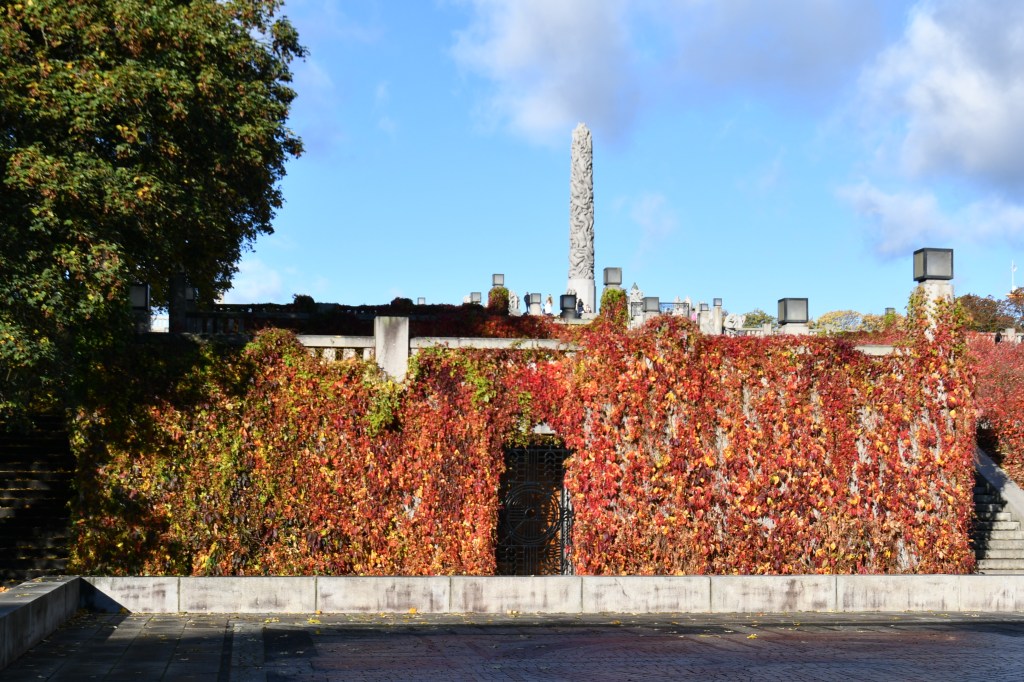
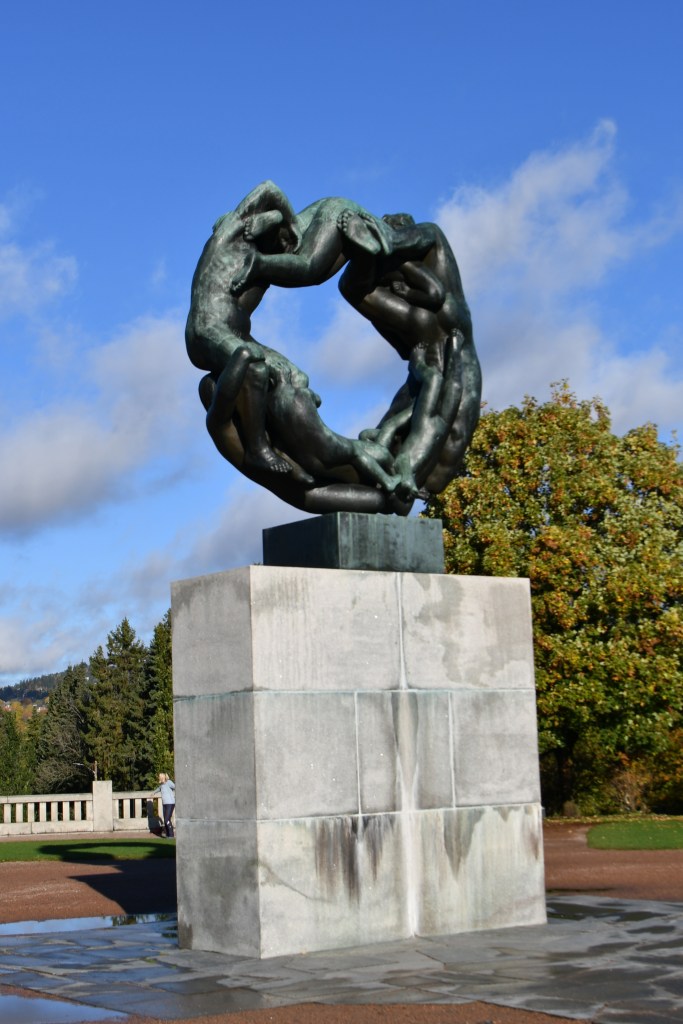
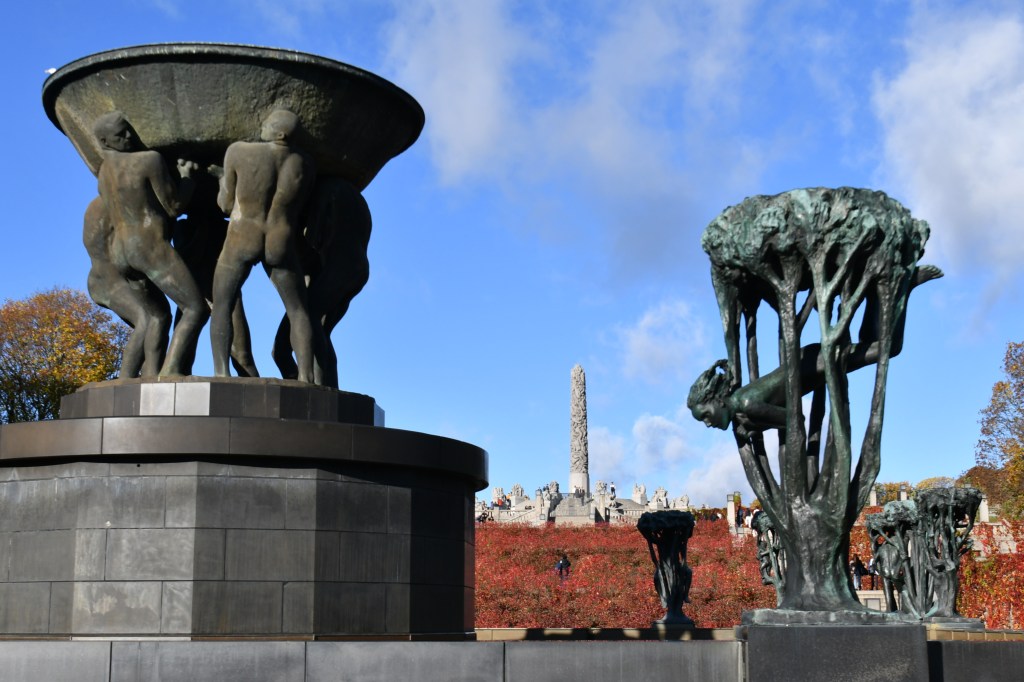
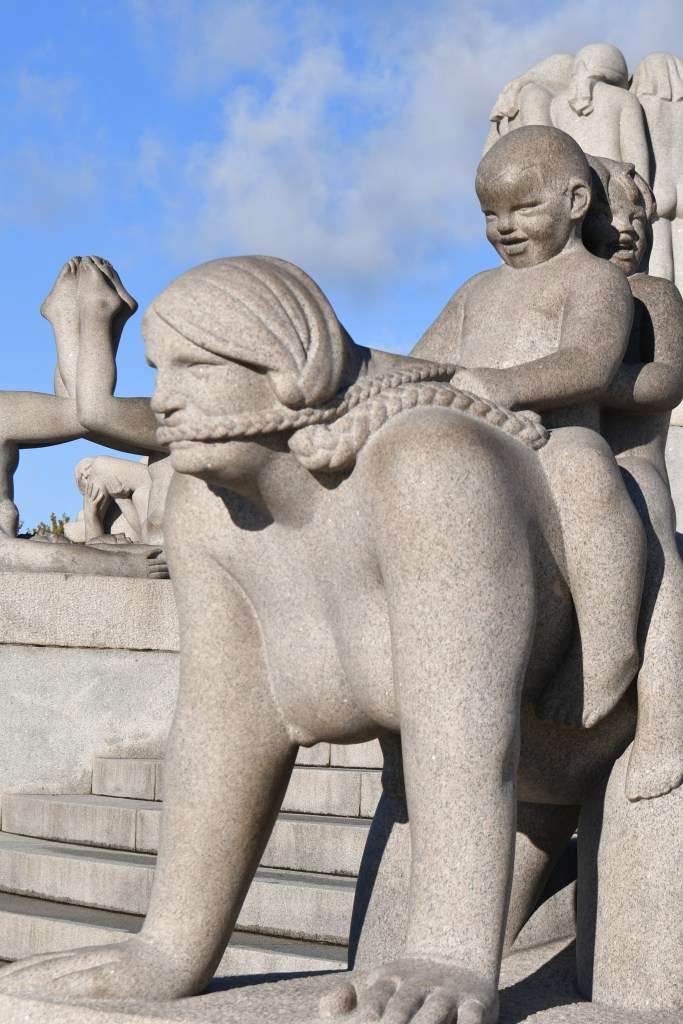
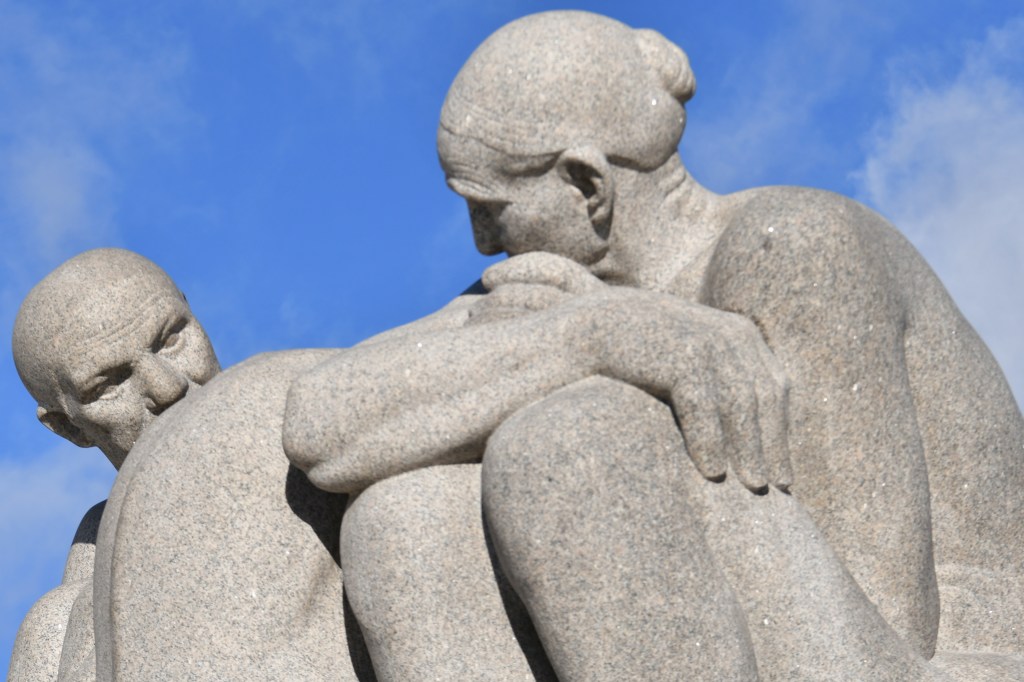
The capital of Norway, Oslo, is our first stop. We tour The Vigeland Park with hundreds of sculptures that represent the circle of life. It is considered the world’s largest sculpture park made by a single artist, Gustav Vigeland. Depending on how you enter the park, gates open to a sculpture of intertwined humans in a circle, or from the other entry, a giant obelisk festooned with naked bodies of men, women, and children. The sculptures reflect life from birth to death. The park is beautifully landscaped showing autumn colors if you arrive in October.
The most well-known sculpture is the oft-photographed angry baby boy on the Vigeland Park bridge. The scowling baby is made famous around the world by post card illustrations.
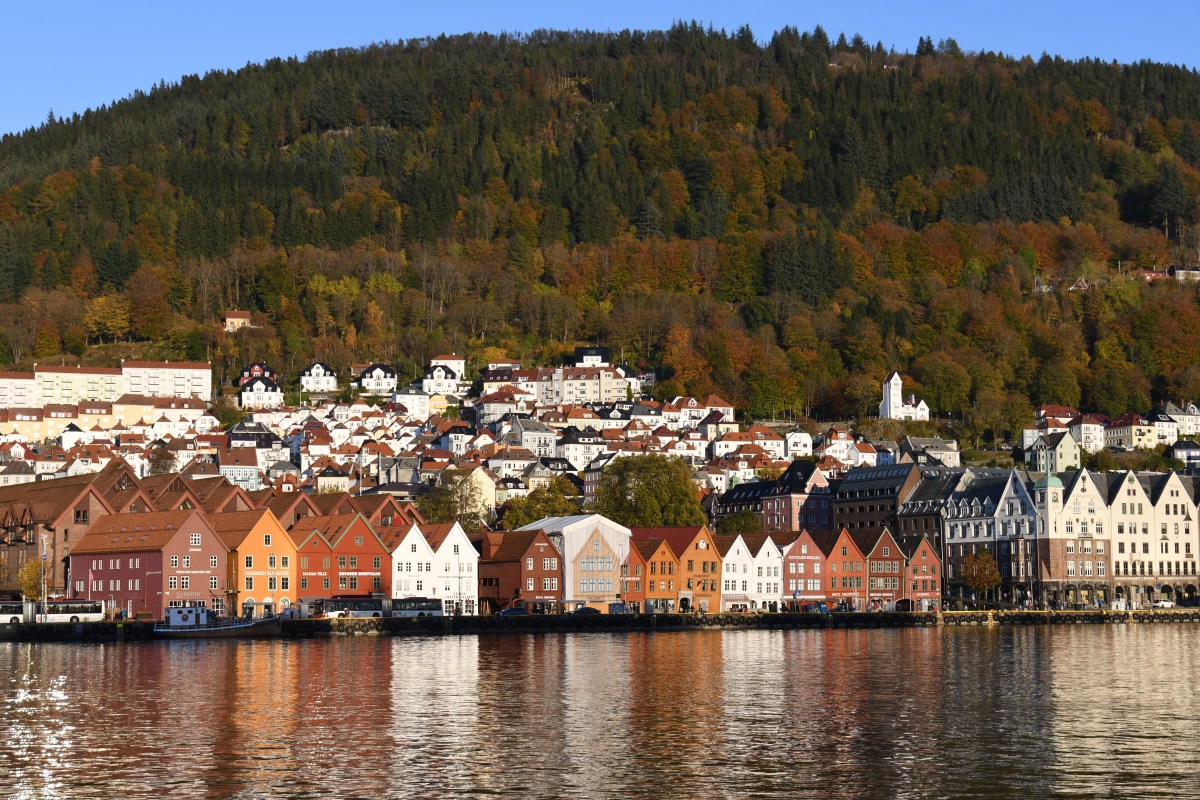
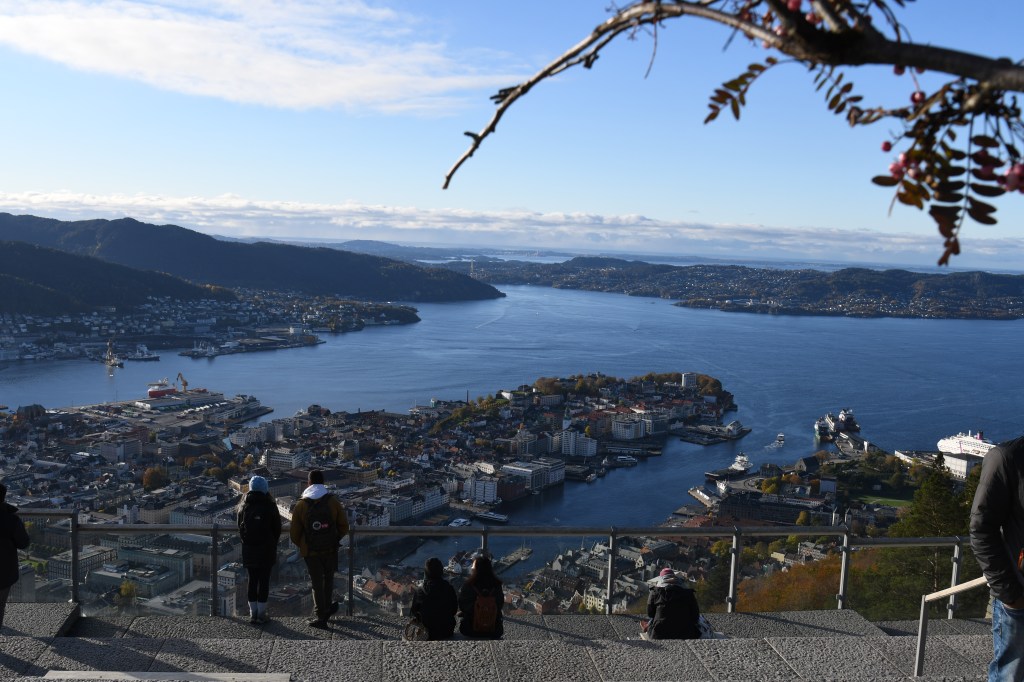
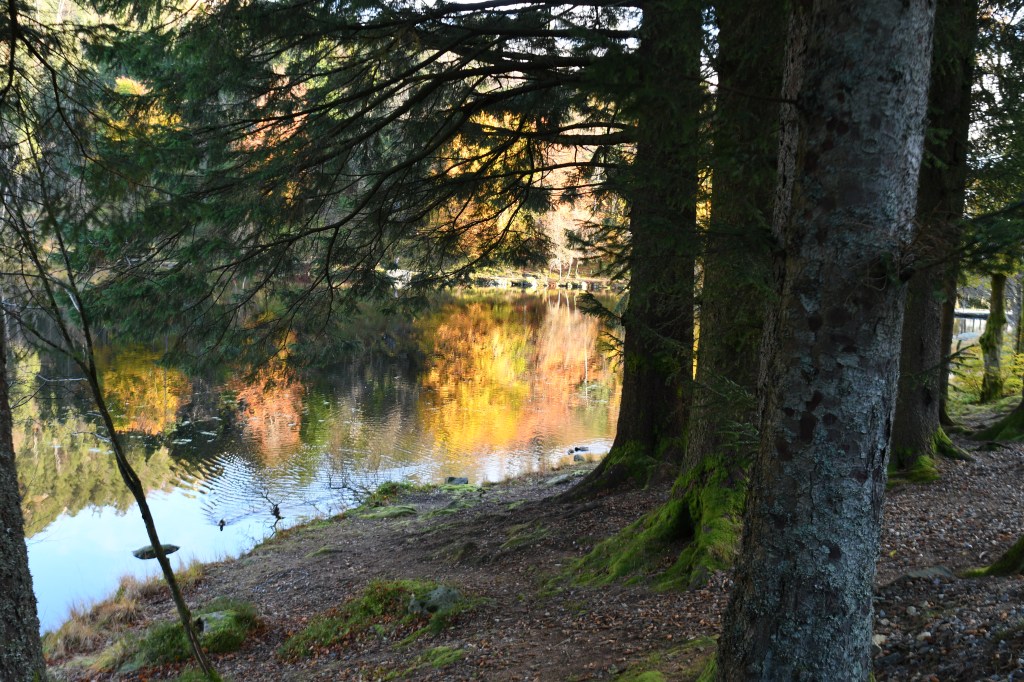
Leaving Oslo, we visit the second largest city in Norway. Bergen has a population of approximately 285,900. It is on the west coast, occupying most of the district of Midthordland. Its history reaches back to the 11th century. One of many beautiful sites is at the top of Mount Floyen. Visitors are carried by funicular to a view of the harbor. In autumn the view is great but a short hike further up the hill at the funicular’s end reveals a beautiful lake, surrounded by fall colors.
Before leaving the Bergen area, we visit Oygarden’s salmon farm to view another source of income from the North Sea. After a brief introduction by a local guide, we are motorboated to an inlet across from an asphalt batching plant to view a salmon fish farm. Two things come to mind. One, why would the government authorize a dirty industry next to a fish farm, and two, why is it necessary to farm fish when one lives on the North Sea? Of course, the answer is the same for both questions. It provides employment and income to a country that serves its citizens more equitably than the rest of the world.
Wild salmon are nearly extinct. Without farming, salmon would disappear from dining room tables. The asphalt issue is little less explainable except in the sense of all countries being hooked on the carbon industry.
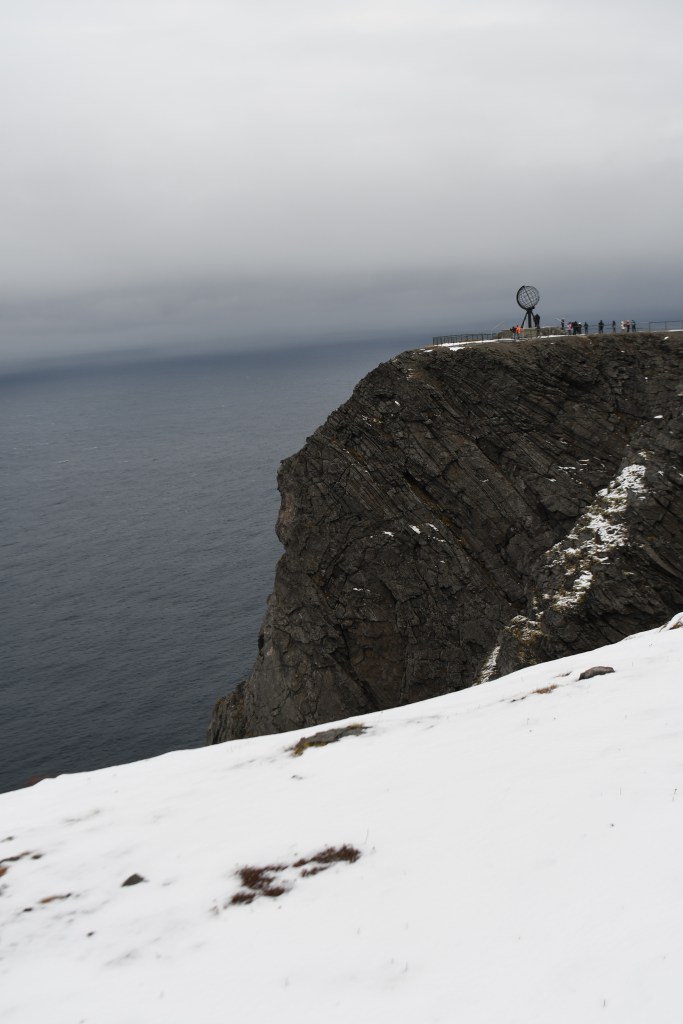
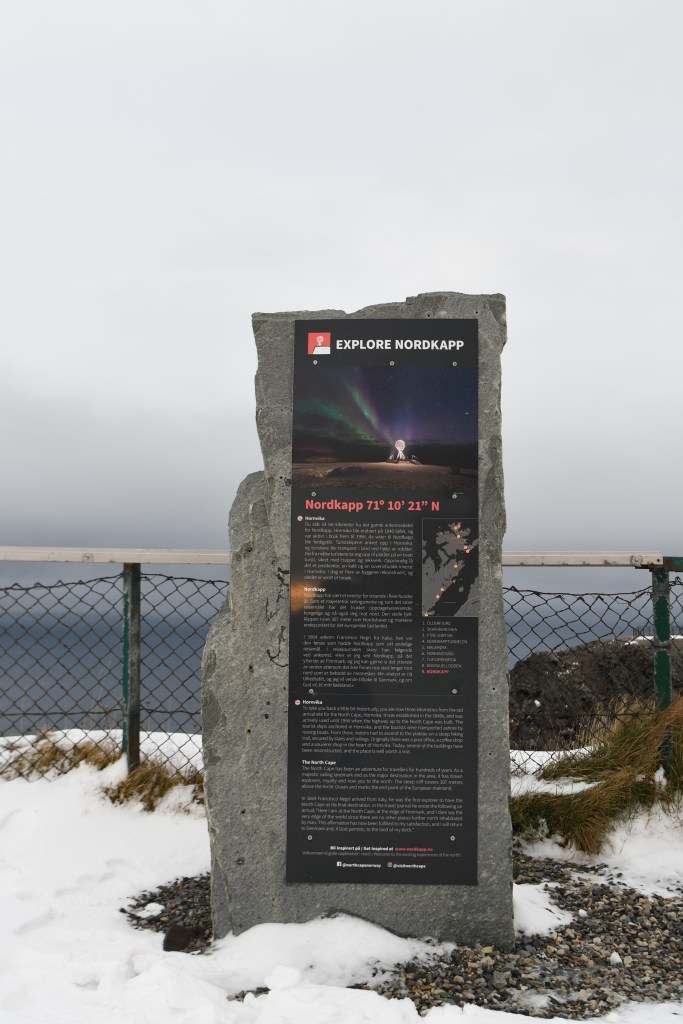
In Norway, we reach the farthest north one can reach by automobile. At this northern most point, a museum, a restaurant, and outdoor monuments memorialize one’s arrival. And, of course, there are the elusive and varied northern lights.
Discovery of oil in 1967 changed Norway and influenced its socialist objectives as a democratic nation. Traveling through the countryside one sees the impact of oil wealth with well-groomed towns with few residents but the newest mechanical conveniences for agriculture and public utility services.
Contrary to most Americans understanding of Scandinavia, our guide explains Finland is not a Scandinavian country. Finland is a Nordic country which includes Scandinavia, Iceland, the Faroe Islands, Aland, and Greenland. Finland was once a part of Sweden but gained independence in 1917. Ironically, that independence occurs during the Eastern Bloc revolution that is won by the Bolsheviks (the Reds) who were competing with the Whites for hegemonic control of Russia. The Whites lost to the Reds in Russia but gained control in Finland. The irony is in the relative quiescence of the Reds and Whites historic conflicts and the Whites ability to maintain a level of independence from what became the U.S.S.R.
Our first stop in Finland is Kirkenes. The long porous border between Russia and Finland demands a great deal of compromise for Finland to remain independent. As we learned from one of WWII’s Finnish survivors, Russians are people with the same ambitions of all peoples of the world. Residents of Kirkenes refuse to be bogged down by political differences between Russians, Finns, or the Germans which they allied themselves with during WWII. Every relationship is measured by personal behavior, not government politics. Conflict arises from the politics of competing governments. The Finns did not want to live in a communist, particularly Stalinist, country. The Finns relished their independence and pursued it in ways a long border with Russia would allow.
During WWII Finland sides with the Germans, largely with the objective of insuring their independence from Russia. The Finns did not accept Hitler’s antisemitism or his horrendous “final solution”. What Finnish soldiers fought for is independence, not German hegemony or racial purity.
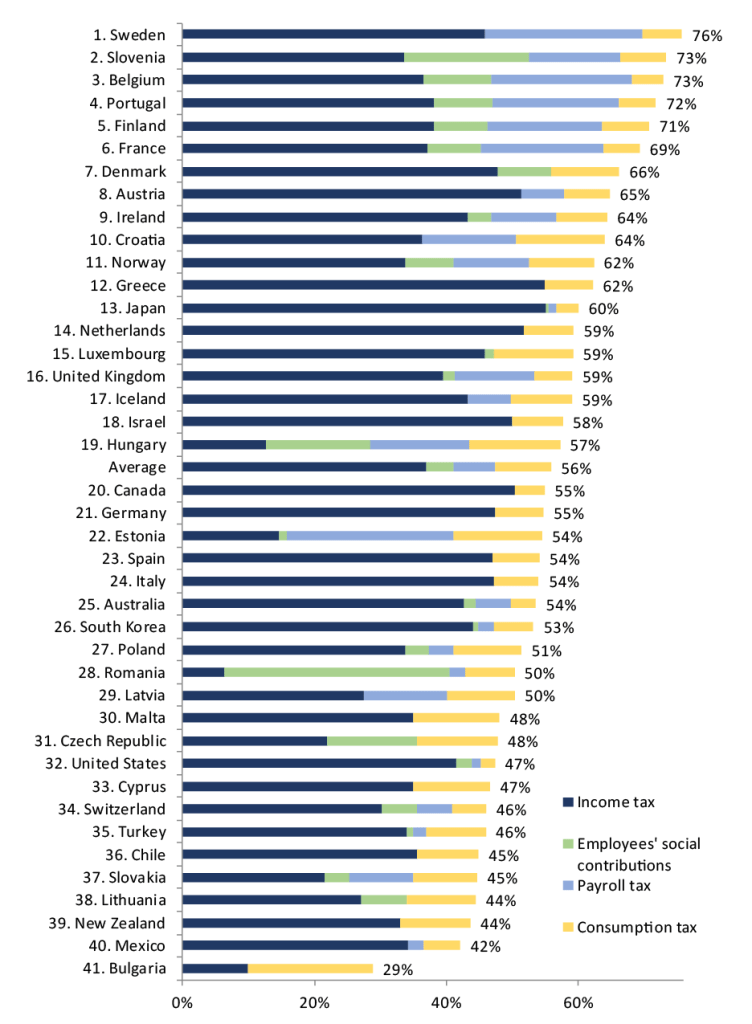
Tax rates of up to sixty percent are levied with money collected by a democratically elected governments in Scandanavia and Finland.
Today, a traveler notes the striking difference between Nordic countries’ and Russia’s vision and action to secure “common good” for their citizens. Scandinavia and Finland are heavily taxed, socialist countries. Collected taxes provide provably excellent educational and social/medical services at lower to no direct cost to all Nordic citizens. In contrast Russia (the former U.S.S.R.) is controlled by an appointed government body (the communist party) that focuses on building its national reputation in the world by demanding work from its citizens. Any benefit inuring to citizens is secondary to Russian leadership’s industrial or hegemonic plans.
The standard of living in Norway and Finland rivals the best educated and wealthy countries of the world. That cannot be said for the majority of Russian citizens. The principals of low-cost education and health services is a wonderful dream to many Americans, but Nordic success is a function of factors quite different from those in America.
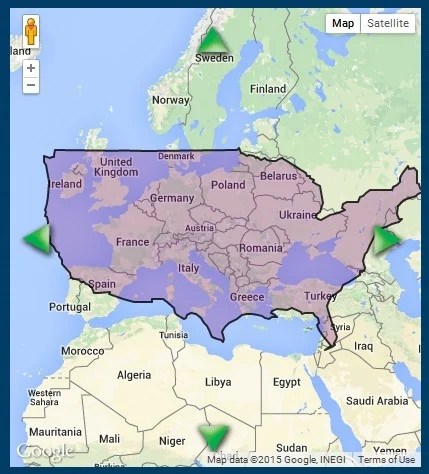
Approximately 21 million people live in Scandinavia with Finland adding another 5.5 million. America’s population is 332.4 million. Though all are democratic, consensus building is more difficult in more populated democratic countries than smaller countries. The bureaucracy needed to provide educational and medical services are naturally larger and more expensive with bigger populations. Though both areas of the world are classified as secular, America has a strong religious base that influences public policy.
Our guide suggests religion is more of a tradition than “belief in God” in Nordic countries. Though the majority of Nordic residents identify themselves as Lutheran, they generally do not believe in God.
In Norway, oil revenues have become a major source of wealth for the country. Every year, an estimated 20% of the national budget comes from an oil industry’ self-perpetuating investment fund. It is used to support programs like social security, unemployment, education, and health benefits for all Norwegians. An ethics board reviews and regulates use (beyond the aforementioned) of the oil industries’ contribution to the national budget. That board outlines the ethical standards that must be met to use funds from the oil industries’ 20% contribution. Finland does not have Norway’s oil wealth but is politically organized to provide a similar safety net for its citizens.
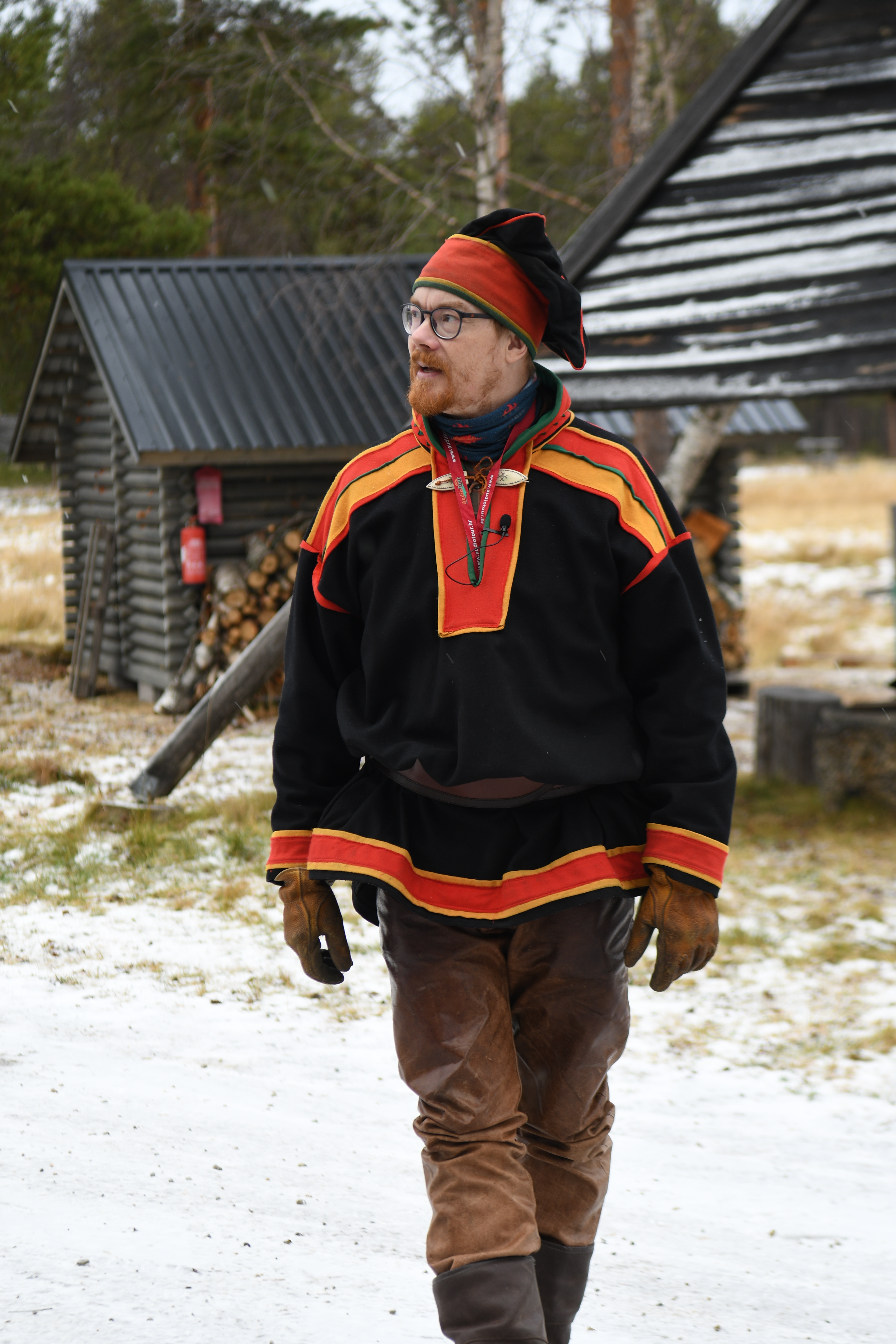
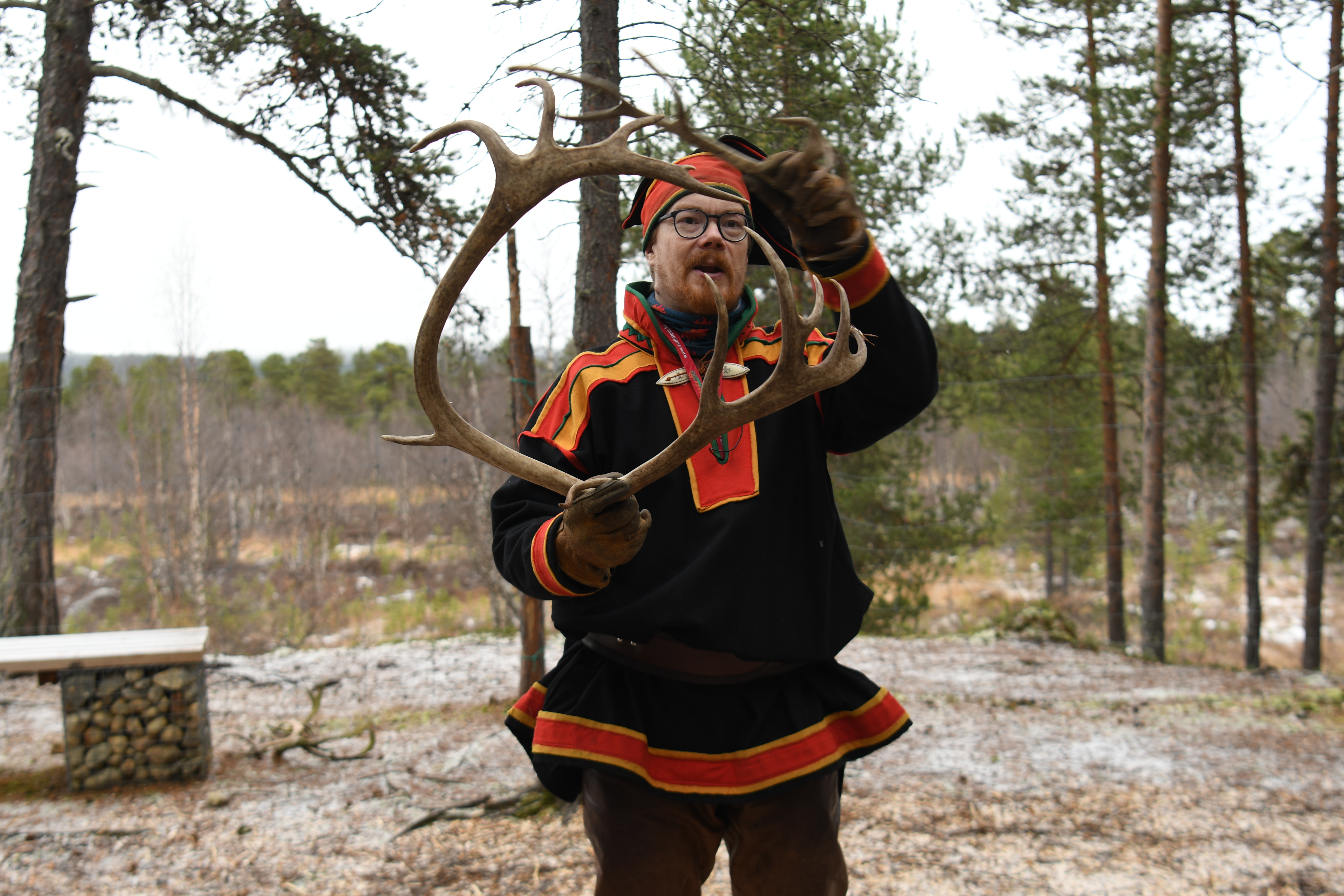
Aside from oil wealth, there is a societal difference between Norway and Finland. Finland’s border with Russia entails a more intimate connection with Finnish culture. Trade between Russia and Finland is more important because of proximity and the need for food and household goods. Norway has enough wealth and separation to keep Russia at arm’s length. Another difference is that Finland has an indigenous population called the Suomi that is highly regarded and supported by the education system. The Suomi culture reverences reindeer in the same way an American cattle rancher reveres cattle. However, reindeer are exclusively owned and regulated by Suomi descendants.
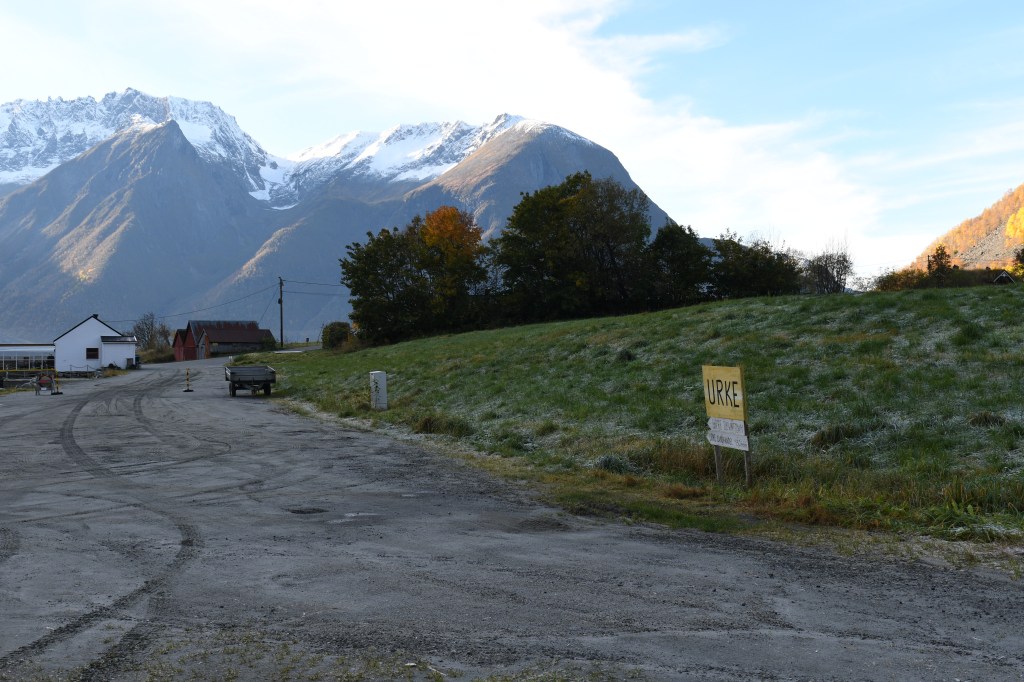
The natural environment in Scandinavia and Finland is harsh. Water surrounds the peninsula and outlying Nordic countries. The frigid winter seasons isolate small communities throughout Norway and Finland which compel population concentration in a few cities. It is common to see small communities of a few hundred (or less) citizens living on a Fjord many miles from a major city. Self-reliance and independence are consequences of that isolation.
Despite that isolation and independence, one finds both Norwegians and Finns are personable when meeting outsiders. One senses the same assessment of outsiders that is referred to by the Finnish WWII survivor that explains her relationship with Russians. Outsiders are measured by their personal interaction with Nordic citizens, not by their nationality.
The most striking difference between American Democracy and what we experienced in Norway and Finland is in their success in melding democratic values with social welfare. America could benefit from understanding how Norway and Finland have managed to reach consensus on social policies that provide a more comprehensive safety net for its citizens. Many Americans may wonder how these two countries manage to achieve such benefit without compromising the human desire for freedom. One suspects it has something to do with how consensus is achieved through political discourse but there seems an underlying social understanding of “common good” in Nordic countries that is missing from American society.
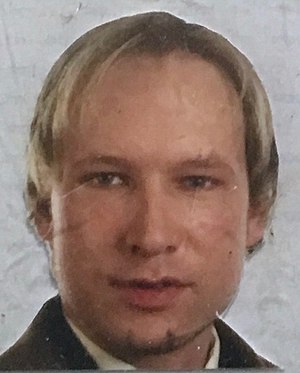
Like America, Norway and Finland are not perfect societies. They have experienced some of the same right-wing violence that has occurred in America. One wonders how democratic cultures can as easily breed Norwegian murderers like Anders Behring Breivik or American murderers like Timothy McVeigh when so many great leaders have led their countries out of societal darkness.
Anders Behring Breivik (Norway murderer of 8 adults in Oslo and 69 summer camp youths on July 22, 2011.)Timothy McVeigh murders 168 men, women and children in an Oklahoma City bombing on April 19, 1995.)
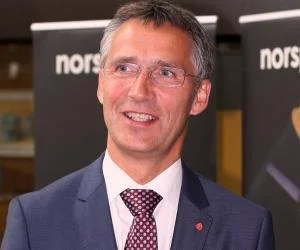
These same democratic cultures create leaders like Jens Stoltenberg and Erna Solberg in Norway, and Abraham Lincoln and Franklin Roosevelt in America.
Jens Stoltenberg, former prime minister of Norway, now serving as the 13th secretary general of Nato since appointment in 2014.
Erna Solberg, 2nd female and former prime minister of Norway, current leader of the opposition as Leader of the Conservative Party.
Abraham Lincoln, President of the U.S. during the Civil War, author of the Emancipation Proclamation to end American slavery.
Franklin Roosevelt, President of the U.S. during the Great Depression and WWII.
Political leaders are not perfect nor, for that matter, always right. They are human beings who choose to lead their countries to the best of their ability. The difference is the culture and structure of the government in which these leaders lead. Even in the most autocratic countries, leaders must have followers. It is in a process of consensus, whether in autocracy or democracy, that public policy becomes real.
After our trip to Norway and Finland, one cannot help but believe there is much for America to learn. On the other hand, neither Nordic nor American cultures have found the perfect balance between freedom and common good that ensures an equal opportunity for citizens to be sad or happy.
Michael Booth (British Author, food and travel writer.)
Later this month, we will travel to Scandinavia and Finland. As a suggestion by our guide, “The Almost Nearly Perfect People” is a fascinating introduction to Denmark, Norway, Finland, Sweden, and Iceland. To be fair to indigenous people of the Nordic countries, one might keep in mind the author is British while living for ten or more years in Denmark with his Danish wife and family. The author notes they moved from Denmark for a short time, but his wife convinces him to return.
Booth is a travel and food writer. He explains that an extra motive for writing this book is because a wide part of the world knows little about Scandinavia and much of what they think they know is wrong. I am more in the first than second category but have an interest in the subject because of my Finnish grandparents.
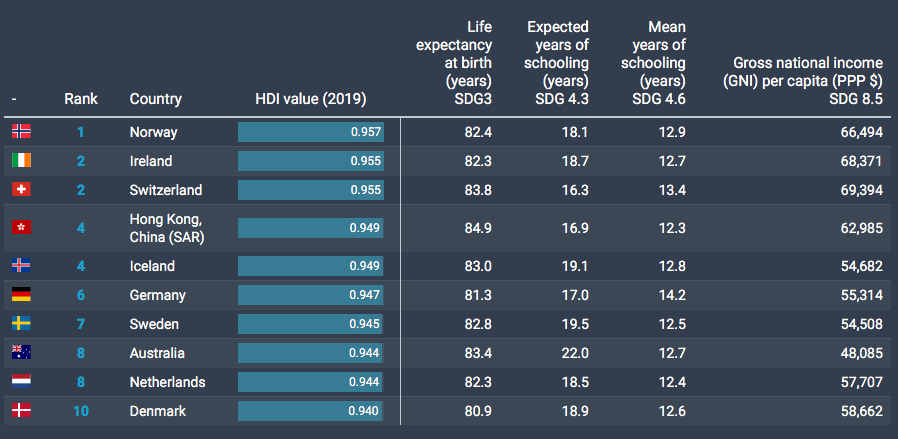
On a per capita basis, Norway is among the ten richest nations in the world. America is around 11th. Sweden and Denmark are not far behind.
In contrast Finland is a laggard at 21st position but Booth claims Finland is his favorite among the five countries.
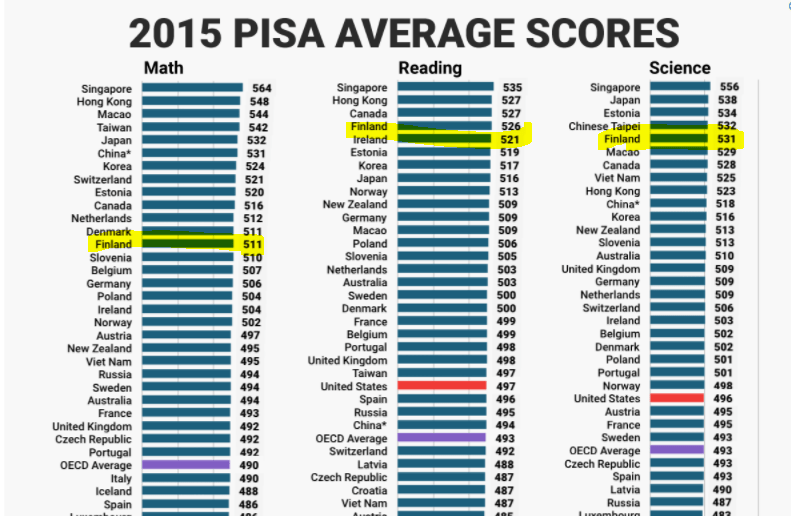
For public education systems, Finland is historically ranked among the best in the world while Norway, Sweden, and Denmark are among the top ten. To give perspective, America is around 27th place.
The Danish-Swedish company Arla Foods is the 7th largest dairy company in the world. The industrial transportation and shipping company Maersk is a Danish company. IKEA, Volvo, Assa Abloy (key card locking systems for hotels), Electrolux, Ericsson, and H&M are Swedish conglomerates. Denmark and Sweden are industry power houses in the world.
Booth notes Norway became rich with the discovery of oil. Denmark’s and Sweden’s wealth lies in different strengths and weaknesses revolving around their respective international businesses.
What makes Booth’s book interesting, and entertaining is his view and contrast of Nordic societies. Booth suggests both Danes and Swedes are somewhat cliquish and standoffish but act differently among themselves. Both prefer working with their own countrymen and women. Danes revel in individualism whereas Swedes are more clannish. Neither particularly welcome outsiders but Swedes like working together with fellow Swedes as teams with common purpose. In contrast, Danes work within a hierarchical structure that relies on positional direction. Finns are characterized as less ambitious with a live and “let be” view of life. A Finn works to live rather than lives to work. Booth suggests Norwegians appear standoffish to many but its more from a wish to be self-reliant and reserved. The idea is to preserve personal space among themselves and to have respect for others who may or may not be Norwegian.
Iceland is not a part of the trip we are taking, and Booth only skims Icelandic culture but suggests Danish influence is the predominant characteristic of their population. (Iceland was founded by Danes.) Booth’s primary story of Iceland is in their errant decision to rely on banking system managers that nearly collapse the economy in the 2008 economic crises. Belief in hierarchal structure and positional direction nearly bankrupted Iceland because of unwise risks taken by bank managers.
A listener’s general impression from Booth’s book is that the Nordic countries are uniquely different but generally socialist with the highest tax rates in the world.
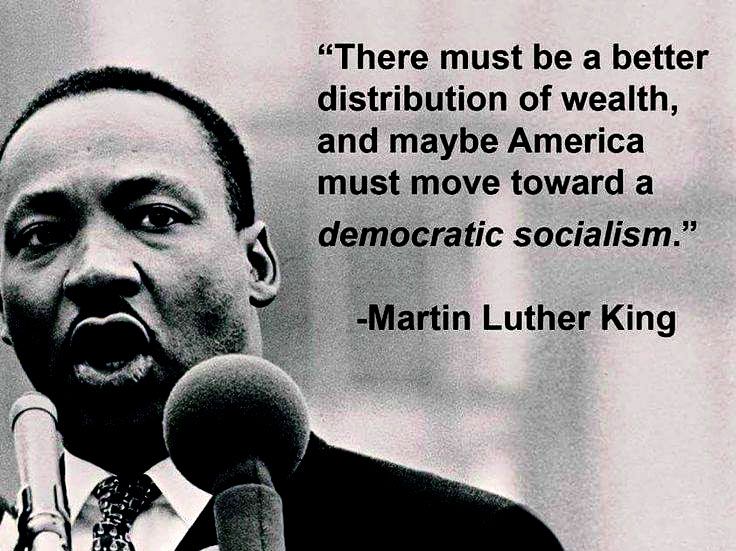
Those tax rates provide the best education and health systems in the world. However, their socialism does not impede their innovative entrepreneurial and capitalist interests. In Booth’s opinion, the Nordic countries represent the future of the world by melding capitalism with socialism.
Booth infers the success of Nordic countries begins with their education system. Teaching is an honored profession that is difficult for potential employees to join.
Teaching positions and teachers are highly educated and respected by the general population. Contrary to what one would presume, classes for students are medium size (20 to 23 students), teacher salaries are middle class, class days are limited to 4 hours, and every family has access to any school in their area. Tutoring is widely practiced for students needing help. There are no private schools.
As is true in all countries of the world, immigration is being horribly mishandled. Fair immigration policy in Norway and the world remains a work in progress.
Booth notes Nordic countries have not achieved perfection. With the threat of authoritarianism that diminishes the value of human life, histories of these countries show mistakes were made in WWII and are still being made in the 21st century. On the other hand, Booth shows native Nordic residents endorse and practice equal rights for men and women, a laudable example for the rest of the world.
Stephen Jay Greenblatt (Writer, Harvard University Professor.).
Shakespeare’s plays expose the perfidy of tyrants that reminds one of Vladmir Putin’s actions in 2022. Greenblatt notes Shakespeare explains tyrants rise when governments show weakness at their center. One can conclude the economic collapse of the U.S.S.R. is the proximate cause of Putin’s ascension.
Stephen Greenblatt offers a clever summary of tyrants in Shakespeare’s plays. Greenblatt’s book is published in 2018.
Shakespeare’s tyrants are destined to fail in a variety of ways. One must remember that Shakespeare’s plays are not history but have elements of history in their story. Dramatic affect and a livable wage are what motivate Shakespeare to write for the theatre.
Prescient insight to the nature of human beings is what makes Shakespeare a seer whose prose and plays survive centuries of analysis and earned adulation.
King Richard III is a martinet who barks orders for little reason other than to exercise power. He acts with the arrogance of a narcissist. He murders brothers, nephews, and subordinates who get in his way or refuse to obey his orders. He expects loyalty first, with any opposition viewed as disloyalty.
King Richard cares nothing for rules or human life. His followers are sycophants at best and enablers at least. King Richard III murders brothers and confidents to secure the throne.
He marries for lust and control, murders King Henry VI, marries the assassinated King’s widow, and dies in an ignominious battle. Having killed everyone near him, he grows paranoid of those around him. That paranoia cripples his effectiveness as a sovereign. He may have lost his crown in battle, but his murder of followers and managerial incompetence destine him for failure.
Russian Kleptocrats
Greenblatt recounts the many tyrants exposed in Shakespeare’s plays but none, other than Richard III, seem comparable to Putin. Putin gathered support of kleptocratic sycophants that are beginning to recognize their wealth and success is threatened by Putin’s foolish attempt to re-annex Ukraine.
Like Shakespeare’s Richard III, Putin is alienating followers and murdering or imprisoning competitors who challenge his leadership.
Greenblatt summarizes events of Shakespeare’s plays to show how tyrants are editors of their own defeat. One hopes there is enough Russian resistance to forestall a nuclear war caused by a tyrant who cares nothing for human life, other than his own.
“The Association of Small Bombs” ticks slowly but makes a loud noise as its message becomes clear. Karan Mahajan explains something about India that is only marginally understood by most Americans. It is no surprise that terrorism comes from racial, religious, and ethnic difference, magnified by inequality. What is a surprise is India’s terrorist acts are local events, poorly prosecuted and soon forgotten by those not directly involved.
Mahajan’s story is about perpetrators of terrorism, who they are, where they come from, why, and how they become terrorists. The President of India is Hindu. An estimated 80 percent of India is Hindu with 13% Islamic, 2.3% Christian and other religions at less than 2% each.
(Mahatma) Mohandas Karamchand Gandhi (1869-1948, Lawyer, Leader of India’s independence from British Rule.)
As most know, during the time of Mahatma Gandhi, there was a concerted effort to secularize India and keep two predominate religions in India, Hindu, and Islam. Gandhi fails and Pakistan becomes a separate Islamic state in 1947.
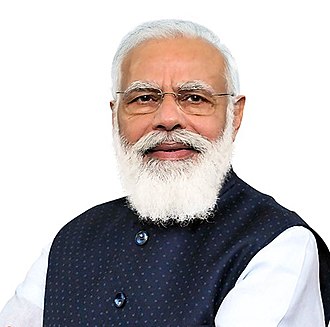
Modi, the current President of India, is said to believe–India’s Muslims must prove their Indianness to be citizens of the country.
Modi effectively dismantles Gandhi’s effort to secularize India. Like the stain of slavery in America, Modi pollutes India’s secularization at the expense of a restive Muslim population.
Mahajan’s story begins with a terrorist bomb explosion. The bomb is set by a Muslim terrorist that kills two Muslim boys and wounds a third.
The irony is that Muslims are killing Muslims to undermine a government that already discriminates against Muslims. “The Association of Small Bombs” is meant to destabilize the government regardless of who is being killed.
“The Association of Small Bombs” explains how one Muslim youth becomes a terrorist and how another, who is a victim of a bombing, is falsely accused and convicted for terrorism.
Mahajan explains how injustice is compounded by an inept prosecution system, biased against Muslims who are often victims of the bombings. India’ residents, whether Muslim or Hindu, are victimized in two ways. One, actual perpetrators are rarely caught, and two, victims are rarely compensated for their loss.
India-protest in Kolkata, India against Indian citizenship for Muslims.
Mahajan illustrates how inequality is an equal opportunity victimizer in India. The wider point of Mahajan’s story is that denial of equal opportunity for all races, religions, and ethnicities in any nation-state is a crime against humanity.
David Diop (Novelist, born in Paris to a French mother and Senegalese father, Graduate of the Sorbonne in Paris, winner of the International Booker Prize.)
“At Night All Blood Is Black” is a powerful anti-war story. Though it is about WWI, it is a reminder of the long- and short-term consequence of the horror of killing. In the beginning, the sonorous voice of the narrator, Dion Graham, seems wrong for the story. One may be tempted to put it aside. By the end of the story, a listener understands why Graham’s telling is perfect for the piece.
“At Night All Blood Is Black” is particularly relevant to today’s war in Ukraine.
Though the setting of “At Night All Blood Is Black” is in Senegal, a former colony of France, it has universal application. In one sense it is a condemnation of colonization but in a more universal sense it is about war’s survivors. Its immediate relevance is in the Russia/Ukraine war and the atrocities revealed in the news.
Of course, western media shows the murder and mutilation of Ukrainians because Vladimir Putin is the unquestioned instigator of the war. However, one can be sure there are atrocities on both sides, as Americans know from the Mai Lai massacre in Vietnam.
Diop’s story is about one man’s role in the war. He is a Senegalese recruit that speaks no French. He enlists and is ordered by a French commander to kill Germans. This recruit develops a blood lust that revels in hand-to-hand combat. He loses his best friend early in his combat experience.
Ukrainian Atrocity
His childhood friend is eviscerated by a machete or a shot from a gun. He is alive but his guts are strewn on the ground. As he tries to return his guts to his abdomen, he begs the recruit to kill him because he knows he cannot survive. The recruit cannot do it. His friend finally dies, and the recruit blames himself for not having the courage to end his friend’s misery. This event triggers bloodlust in the recruit.
The Violence of Hand-to-Hand Combat in Ukraine
The recruit is already notorious for cutting off the hand of a German he has killed and bringing it back to the camp. After his friend’s death, he begins to collect more hands from Germans he kills. His commanding officer becomes aware of the recruit’s behavior. The men in the troop become fearful of the recruit. The recruit is ordered to leave the field of battle and to turn over the six hands of German soldiers that he has collected.
The recruit says he has lost the hands when in fact he has preserved them in a salt mixture and hidden them in his personal gear. The recruit reasons that the commander will court martial him if he finds the hands. That may or may not be true, but the preserved hands have some undisclosed psychological meaning to the recruit.
War’s emotional abuse.
The recruit is sent to a psychiatric hospital. He is treated for stress and his aberrant behavior by a French psychiatrist. The recruit cannot speak French, but the psychiatrist asks him to draw pictures for him to gain some insight to the recruit’s state of mind. The drawings seem to help the recruit recover. He secretly buries the six hands he has been carrying around with him. However, it is implied that the buried hand expedition is seen and noted by the psychiatrist. In the process of his hospitalization, a backstory is given of the recruit’s life before the war.
War changes people in different ways. Those in direct, particularly hand-to-hand combat, may never return to social normality. The recruit is characterized as a handsome, muscular young man who attracts beautiful women. One of the women is the daughter of his psychiatrist. The meaning of the story lies in the fate of the daughter.
The brutality of war never leaves its participants. It likely never leaves war’s survivors, but Diop’s story suggests participants in brutality carry an even bigger burden. One wonders what consequence there will be for soldiers and survivors of the Russia/Ukrainian war.
Annie Murphy Paul (Author, graduate of Yale and Columbia University with a Journalism major).
Annie Murphy Paul is a science writer who has lectured at TED TALK about learning, memory, and cognition. She has written articles for “Scientific American”, and several national newspapers. The interesting insight of “The Extended Mind” is that learning, teaching, and memory are significantly enhanced by physical activity.
From birth to maturity, Paul notes physical activity is a critical component of human thought, and action but memory is a critical dimension for both.
This seems tautological at first glance. After all, learning by doing is a self-evident truth. However, Paul explains learning by doing is only the tip of a much larger truth. She argues physical activity informs and extends the mind to ignore, remember, repeat, or forget everything we know or do. Without physical activity, minds atrophy, memories fade, and bodies die.
Paul explains learning is enhanced by physical activity.
Scientific experiments show that learning and memory are improved by association with physical movement. Reading about an experiment may enlighten the uninformed; however, being the experimenter enhances memory of the experiment’s proof. Sitting and thinking about doing is more forgettable than doing what one is thinking about.
Paul notes that association with physical movement is like a mnemonic that aids memory.
She suggests a defined hand gesture has more value than mnemonic association for memory. One might think of a “P” to remember Paul as the author of this book. On the other hand, one might physically form the letter “P” with three fingers and the memory of the author becomes more memorable.
Paul cites several examples of how teachers have improved their teaching skills by encouraging physical activity with interactive class assignments and subjects.
Paul suggests strict order in a classroom (e.g., sitting at one’s desk and reading an assignment or teacher dictation of lessons) limits memory of subjects covered in the school room. She suggests learning is enhanced by social interaction.
After brief experience as a high school teacher, some of what Paul explains makes sense. The difficulty is implementing her ideas when trying to balance the variety of student strengths and weaknesses with their social and economic difference.
Learning may be improved by social interaction, but human nature often gets in the way. For example, social interaction may be viewed as a threat to an introverted student. The introvert is unlikely to participate in a social grouping. The same can be said of those with a different religion, heritage, ethnicity, or gender.
On the other hand, there is wisdom in requiring social interaction even when involving students who are introverted or challenged by their familial upbringing. People grow and educate others from uncomfortable emotional and physical circumstances.
Paul extends her argument to business office environments and how collaborative office orientations improve company creativity and performance.
She tempers that argument based on group preferences where some may be more comfortable in an environment that is more structured than unstructured. This is not contradicting the argument of physical activity as essential for enhanced productivity in the office. She goes so far as to suggest treadmills at workstations for some offices.
Several years ago, this critics preference for audiobooks came from boredom associated with activity that required little directed attention.
Personal experience confirms Paul’s argument. Though detailed memory is far from ideal, exercise while listening to an audiobook has been rewarding.
The Art of Peace (Teachings of the Founder of Aikido)
By: John Stevens-translator for Morihei Ueshiba
Narrated by: Brian Nishii
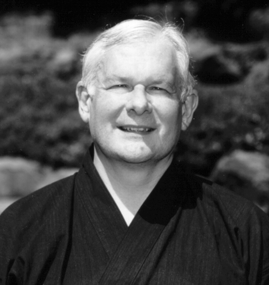
John Stevens (Translator, Buddhist priest and teacher of Buddhist studies and Aikido. Stevens was born in 1947.)
“The Art of Peace” is a brief audio book that recounts the life, and for the skeptical, the myth of Morihei Ueshiba. Ueshiba is the founder of the martial arts technique of Aikido. Though Ueshiba’s life ranges from one of violence to peace, his life leads him to a spiritual and practical acceptance of what is Aikido, “a Japanese form of self-defense and martial art that uses locks, holds, throws and an opponents’ own movements to defeat aggression”.
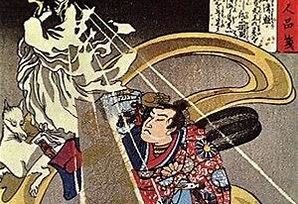
Moritaka Ueshiba, aka Ueshiba Morihei, aka Tanabe Wakayama (Japanese martial artist and founder of the martial art of Akido.)
Ueshiba was born into a relatively wealthy Japanese family. His father was a farmer and minor politician in a city now known as Tanabe, a city located in Wakayama Prefecture. He was an only son with three siblings. Ueshiba describes himself as a weak, somewhat sickly, child who is encouraged by his father to strengthen his body by learning sumo wrestling, swimming and the discipline of repetition.
Shinto (A religion that originated in 300 BCE Japan, considered a nature religion.)
Ueshiba is largely taught by a Shinto priest, his elementary schoolteacher.
The Shinto priest introduces Ueshiba to religion. Ueshiba quits his formal education after Middle School. After life in Tanabe, “The Art of Peace” tells of Ueshiba’s life as a warrior in the war with Russia in the early 1900s. He is initially drafted but fails his induction because of his small stature. To increase his height to meet the minimum requirements, Ueshiba allegedly suspends himself from the branches of trees with weights on his legs. He is said to have added the half inch needed to qualify for the military. His success as a warrior is implied by his promotion to sergeant by the end of the war.
Ueshiba continues to train in the martial arts with teachers of judo and other martial arts that give him superior skill as a fighter.
Ueshiba develops great skill with mind and sword. “The Art of Peace” recounts an extraordinary feat to dodge bullets. He is simultaneously fired upon by several shooters to illustrate his ability to evade aggression. He manages to anticipate the first shot and move behind the fusillade before any bullets can find their mark. He does this twice, according to Steven’s translation of the book.
The essential message of “The Art of Peace” is that meeting aggression with aggression is a fool’s errand. Ueshiba argues understanding the futility of aggression teaches one to listen, learn, and act in ways that use other’s aggression against themselves.
There is wisdom in Ueshiba’s argument, but it seems to have taken a long life, diligent study, practice, and experience of war, to adopt the principles of Aikido.
“The Art of Peace” seems more a life of an idea than one’s ability to achieve, let alone implement.










































































 REVIEWS AND VIEWS OF LIFE