HUMANE WAR

Audio-book Review
 By Chet Yarbrough

Blog: awalkingdelight)
 Website: chetyarbrough.blog

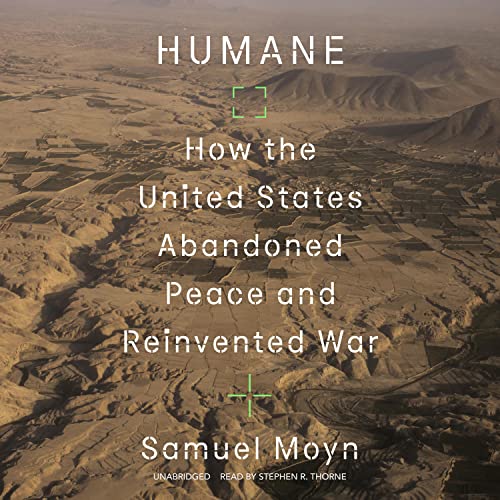
Humane (How the United States Abandoned Peace and Reinvented War)

By: Samuel Moyn

Narrated by: Stephen R. Thorne
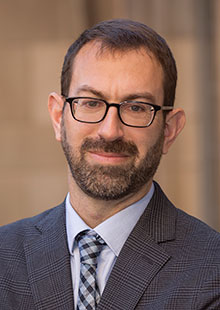
Samuel Moyn (Author, Chancellor Kent Professor of Law and History at Yale University.)

Sameul Moyn’s “Humane” shows America is one of many passengers on a train bound for Armageddon. The idea of a humane war is oxymoronic. War cannot, by definition be humane. There is no denying America’s war against Indians, Filipinos, Japanese, and Germans, with a history of mass violence against Blacks and other American minorities, is inhumane. The reasons for war’s violence range from defense of country to racism, to self-interest, to greed, i.e., the ingredients of human nature. From the crusades of Catholics against Muslims to persecution of Jews through the ages, to today’s Palistinian/Israli mayhem, inhumanity seems an integral part of the human condition.

Though Samuel Moyn makes war’s atrocity clear, it is odd to suggest America has reinvented the definition of war. The definition of war has never changed.

War is a conflict between power elites and the powerless. Though Moyn suggests President Obama revises nation-state war to be more humane, the tools of surreptitious killing by drone is just another weapon of war. It can as easily kill or injure the innocent as a WWI propeller driven dirigible dropping a bomb on an alleged enemy combatant. There will always be collateral damage. War boils down to a government leaders’ political strength whether he/she is President of Russia, America, China, or some other military power. Mistakes will always be made. Misjudgment and misperception are part of being human. Innocents will always die in war.

In accusation, Moyn’s history is an excellent reminder of war’s brutality. It is valuable to be reminded of war’s atrocity and stupidity, particularly in the face of Putin’s Ukraine invasion and attempt to recreate the U.S.S.R.

The galling part of Moyn’s reference to President Obama is to imply America is a lesser villain than other nation-states leaders by reinventing war, subject to rule-of-law. As the election of Trump proves, rational intelligent leadership is never guaranteed in democracy. The idea of targeted strikes in the hands of a Trump rather than an Obama is hard evidence of the ridiculous belief in humaneness of war.

War was designed by human nature to become more lethal with the science of many nations.

There is no reinvention of a humane war by any nation-state, let alone America. The only change in war is in scale, i.e., weapons of mass destruction have geometrically increased the number of human beings that can be murdered, wounded, or victimized by war’s execution. Science has added to potential world destruction with bigger nuclear bombs and viral research that could end life on earth, with many nations’ culpability. The point is America is just another player among nations that carry the risk of corruption of power, not to be an inventor of humane wars but to become hegemons of what they believe is their world. War is never humane.

Moyn recalls the history of George W. Bush’s decision to start a war on terror in response to the destruction of the World Trade Center.

Few Americans, if any, can forget or forgive those who perpetrated that heinous act. To prepare a response, the Bush Administration promoted the USA PATRIOT ACT. To some, that ACT violated American civil rights.

Considering Moyn’s history of the creation and legal defense of the USA PATRIOT ACT, rule-of-law is merely a matter of picking the right attorney to get the result a President wants.

That is what the Department of Justice leader John Ashcroft did in choosing John Yoo. Moyn explains Yoo’s family came from Korea, with their son having become a Harvard graduate and lawyer working for the government. Moyn implies Yoo’s success in America and his family’s knowledge of North Korean repression influenced John Yoo’s legal opinion of the PATRIOT ACT. Legal opinion is a fungible skill based on the biases of its writers.

Government leaders may represent a nation or a faction of people, but unless one believes in “the arc of the moral universe” as originated by Theodore Parker in the 19th century (made modern by Martin Luther King in the 20th century), the world will continue to have wars; all of which become inhumane.

QUANTUM

Audio-book Review
 By Chet Yarbrough

Blog: awalkingdelight)
 Website: chetyarbrough.blog

Helgoland (Making Sense of the Quantum Revolution)

By: Carlo Rovelli, Erica Segre-translator, Simon Carnell

Narrated by: David Rintoul

Carlo Rovelli’s book title, “Helgoland”, refers to a small island in the North Sea, off the coast of Germany. Werner Heisenberg, a pioneer in quantum mechanics theory, visits the island to think about the mystery of matter and energy and how it works at a subatomic level.

Werner Heisenberg (German theoretical physicist, pioneer of the theory of quantum mechanics. Born 1901, died 1976 at the age of 74.)

Rovelli explains this 20-year-old wunderkind had been given an assignment by Niel’s Bohr to determine how a quantum works in a subatomic environment. (A quantum is the minimum amount of a physical property’s interaction with the substance of the world.) The author suggests Heisenberg chooses Helgoland to think about his complicated assignment because he suffers from allergies which would not be aggravated by the austere island’s environment.

Rovelli argues that Heisenberg believes the known postulates of physics, rather than a new theory, held the key to the quantum world.

Using the tools of known physics, Heisenberg observed and recorded the actions of quantum particles. What he found was their actions could be measured mathematically with the addition of a matrix of numbers to finite calculations of known physics phenomena. The matrix introduced the principle of probability rather than certainty to quantum action at a sub-atomic level. This revelation overturned the certainty principles of cause and effect presumed by the Einstein’ physics community.

At a subatomic level, Heisenberg’s observation and number matrix postulate probability rather than certainty as a fundamental law guiding the principle of existence.

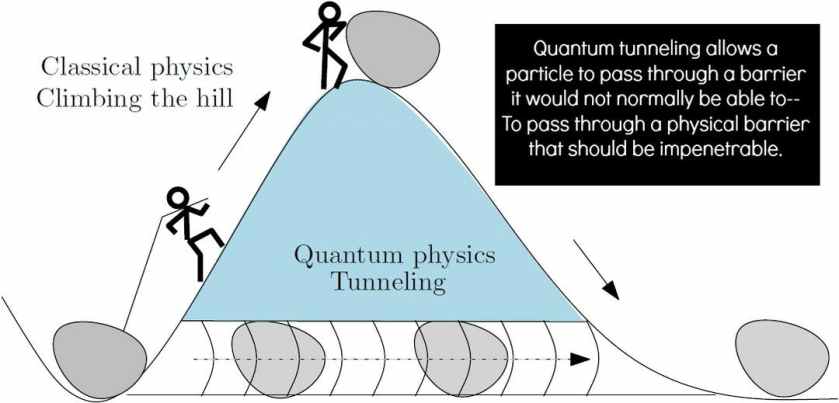
Rovelli goes on to explain this fundamental change in the understanding of physics is elemental but not substantively different for life as we know it. The author argues life remains relational at all scales of existence, just as it did before quantum mechanics became physics guiding principle. However, quantum physics remains mysterious and has led to new ideas like the many worlds’ hypothesis, the Copenhagen interpretation, and the Broglie-Bohm theory.

What Rovelli concludes in “Helgoland” is that what humans see, hear, feel, and think are based on relational understanding of the world.

Rovelli argues the world is a material place, but its substantive reality is based on life’s perceiver. This is a comforting and terrifying argument. It explains why humans can be so right about what is perceptually true and advantageous but also wrong and disastrous because of misleading perceptions.

BEHAVIORAL HOPE

Audio-book Review
 By Chet Yarbrough

Blog: awalkingdelight)
 Website: chetyarbrough.blog

Of Fear and Strangers (A History of Xenophobia)

By: George Makari

Narrated by: Paul Heitsch

George Jack Makari (American author, psychiatrist and historian, professor at Weill Cornell Medical College.)

George Makari notes his family emigrated from Lebanon to the United States when he was a young boy. This is an interesting note because of the diverse cosmopolitan history of Lebanon that reaches back more than 5,000 years. Lebanon is a country of many cultural, religious, and ethnic groups including Arabs & Syriac, Armenians, Kurds, Turks, and others.

Makari’s education and family background are well-suited for his explanation and history of the psychology of race and ethnicity. For Beirut to have become a cultural center for a period of time must have required high tolerance for difference among its residents.

Beirut got the name “Paris of the Middle East” following WWII when it became a vibrant cultural and intellectual center, largely influenced by the French.

Makari notes WWII’s end and implies society’s relief ameliorated conflict between Lebanon’s disparate cultures. However, that relief falls away in the 1970’s Lebanese civil war.

Beirut, Lebanon’s capitol, is a city some 40 miles from Makari’s hometown. It became a graveyard and failed state after the Lebanese civil war.

As Franklin Delano Roosevelt said in his 1933 inauguration, “The only thing we have to fear is fear itself.” Roosevelt is, of course, referring to fear felt by Americans during the Great Depression.

In “Of Fear and Strangers”, Makari suggests fear is at the heart of race and ethnic discrimination. Undoubtedly, the end of WWII reduced fear in the people of Lebanon. Reduction in fear might be the motivation for Beirut’s acceptance of cultural diversity, peace, and prosperity between 1945 and the 70s.

As a psychiatrist and historian, Makari offers a theory of how and why people become xenophobic.

He suggests it begins early in life. Makari argues the rise of Hitler and the horrid reality of the Holocaust lay at the feet of an authoritarian culture that suppressed freedom, demanded conformity, and used vilification of the “other” to reinforce a false belief in superiority.

Makari explains discrimination is largely based on fear of those who are different from us, i.e., us being anyone of a different race or ethnicity.

Makari’s history is about xenophobia, i.e., the fear or hatred of people who are different. The definition of xenophobia is first noted in 1880 with the combination of two ancient Greek words, i.e., “Xenos” meaning stranger and “Phobos” meaning fight or fear.

Makari argues the key to ameliorate fear of strangers or the “other” lies in the way parents raise their children.

Realigning fear of the stranger will not change the past and seems unlikely to change the future. However, Makari argues the key to ameliorate fear of strangers or the “other” lies in the way parents raise their children. He argues parenting that is less authoritarian and more open and nurturing will fundamentally change society to be more empathetic. Makari persuasively argues the rise of Hitler is partially related to German culture and the relationship between parents and their offspring. He suggests only with childhood experience of freedom will equal rights and equal opportunities be realized by society.

Makari suggests that family dynamic before WWII created German psychological projections for distrust of “others” and displacement that exhibits itself as anger and sometimes rage.

Makari suggests German family’ dynamics are culturally stricter and more demanding than those of many countries. He implies relationship change between parents and children would create a more empathetic generation in Germany.

Makari’s theory goes beyond individual psychological projection (an ego defense mechanism against unconscious impulses) by explaining how group psychology works to heighten rage against the “other”. Displacement (a redirection of a negative emotion) takes the form of rage against the “other”. Makari argues distrust of the “other” and rage is magnified by group hysteria. That hysteria is exhibited by Hitler’s followers. German rage led to the genocidal murder of Jews. Makari suggests one who is empathetic no longer fears the stranger and welcomes others as fellow humans–living lives, both different and the same as themselves. There is no motivation for displacement rage among those who are empathetic.

(Before this book was published, America experienced group rage in the January 6, 2021 attack on the capitol.)

The last chapters of Makari’s history of xenophobia explain how psychiatric and philosophical theories of mostly men (like Kraepelin, Freud, Adorno, Marx, Locke, Sartre, Camus, Foucault, and Simone de Beauvoir) provide a basis for his beliefs about histories’ recurrence of xenophobia.

Humanity will never become egalitarian without a common purpose.

What is ironic about Makari’s theory of the history of xenophobia is that it offers hope for the future. The experience of Lebanon after WWII suggests global warming, like WWII, may give common purpose to many, if not all, peoples of the world. (An exception would be those nations that insist on adherence to myths of hegemonic power and religious zealotry.)

According to Kamari’s theory, it begins with parenting. If he is right, change will begin with how future generations are raised. Might does not make right. Less authoritarianism will allow the world to more constructively address global warming’s world-wide risk.

Of course, this book was written before Russia invaded Ukraine. Kamari notes the rise of Trump, and his supporters implies group rage and xenophobia remain a clear and present danger in America.

In listening/reading Kamari’s book, one chooses to either be a pessimist or optimist about our world’s future.

The hope is that an interregnum (a gap in government and social order) is created to allow Makari’s theory of improving parental care of children is implemented. If Makari is right about how parents should raise their children, a more empathetic society may emerge to proffer a more egalitarian society. On the other hand, humanity may continue down the road of self-destruction, fueled by unregulated self-interest and diminishing human empathy.

HUMANITY’S TRIAL

Audio-book Review
 By Chet Yarbrough

Blog: awalkingdelight)
 Website: chetyarbrough.blog

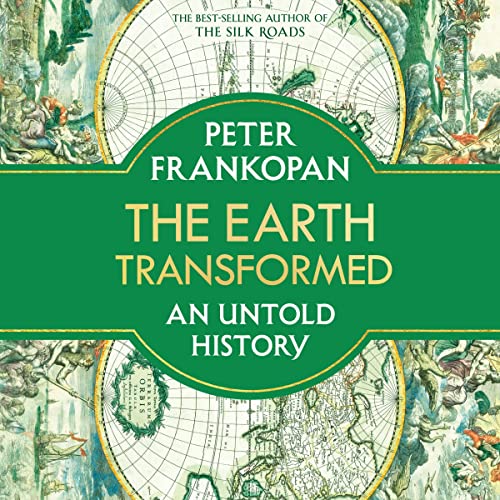
The Earth Transformed: An Untold History

By: Peter Frankopan

Narrated by: Peter Frankopan

Peter Frankopan, (Author, Professor of Global History at Oxford University, Director of the Oxford Centre for Byzantine Research.)

Peter Frankopan journeys from pre-history to the present to offer perspective on the earth’s global warming crisis. He reviews what is either speculated or known of disastrous world events. Frankopan recalls histories of major volcanic eruptions, earthquakes, tsunamis, droughts, famines, pandemics, and epidemics that have changed the course of history.

In the beginning, one thinks Frankopan is setting up a rationalization to argue global warming is just another world changing crisis that will be managed by humanity.

However, Frankopan is explaining the history of world crises and how humanity dealt with its eternal recurrence. In broad outline, he suggests world crises are dealt with in two ways, i.e., one, with religion or mysticism, and/or two, with adaptation. In every historical crisis, leadership is the presumed key to survival.

Frankopan explains the common denominator for crises that change the world is death.

Just as America and the world recovers from Covid-19, millions have died. We who remain carry on.

Whether a catastrophic event is geological, climatological, or pathogenic, life is a victim. Before history is written, Frankopan offers explanations of what happened to life based on fossilized remains. Causes for death are either geological (like earthquakes), climatological (like volcanic dust that blocks the sun), pathogenic (like the plague or a virus), or manmade (like the nuclear bomb). When written history begins, Frankopan’s evidence of world crises is more precisely explained. (From an objective perspective of any historian’s story, any history of the past is trapped in His/Her’s interpretation of other’s reported facts.)

Frankopan argues life on earth has come and gone through centuries of crises.

The evolution of human beings shows they have managed to ameliorate past crises by meeting them head-on. Humans have overcome crises by adapting to change, whether manmade or environmental. If the past is prologue to life’s survival, global warming’s threat will be met and ameliorated by human response. Just as all crises in world history have ended lives, the same is true of global warming. That does not necessarily mean all human life ends. Frankopan’s history infers life will be changed by global warming but leaves unanswered whether human life will end.

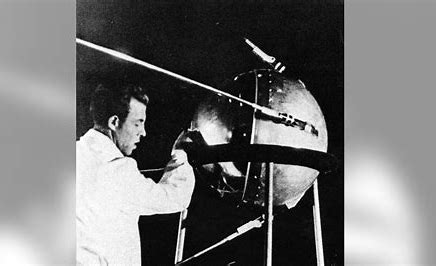
Jumping ahead in Frankopan’s scholarly review of history, the age of Sputnik emphasized the growing importance of science in the ecology of the world.

The Russian Launch of Sputnik in 1957.

Ironically, Russia’s giant step ahead of America in the space race awakened the world to the importance of science. Frankopan notes the hubris of humanity taking center stage with Khrushchev’s comments about humankind’s need and ability to control nature. To Frankopan, control of nature is a turning point in the hubris of humankind. He notes the U.S.S.R. experiments with weather control as a way to improve agricultural productivity. Frankopan suggests the real objective is to realize the potential of weather control as a weapon of war and goes on to explain how America capitalizes on that idea in the Vietnam war.

The irony and hubris of humanity in believing it can control the weather is evident in the despoiling of earth by human ignorance and action.

The profligate use of carbon-based energy for industrial growth far outstrips any science driven effort by humanity to control the weather. World ecology has proven too complex for constructive control by human beings. It is as though the world is being turned back to religion and myth to explain the phenomenon of world existence.

The last two chapters address overwhelming evidence for causes and consequences of late 20th and early 21st century world’ environmental damage.

From deforestation in the Amazon, to automobile increase in China, to waterway dams and aquifer depletion, a listener/reader’s fear and depression are kindled.

Harvard educated politicians like Ted Cruz and poorly educated Presidents like Donald Trump insist global warming is a hoax. As political power representatives of the wealthiest country in the world, one cannot but be appalled by climate change deniers.

The world’s future is based on an unknown solution to global warming.

Some suggest A.I. is key to solving global warming. Frankopan’s history suggests it is human beings that gave humanity the ability to overcome past crises. A.I. is one of humanities tools. It seems fair to suggest today’s crises will be another difficult chapter in the history of humanity. Judging by Frankopan’s history of human adaptation, global warming may not be humanities last chapter. However, Frankopan warns listerner/readers against the hubristic belief that nature can be controlled by humankind.

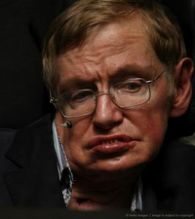
Stephen Hawking suggested humanity will not survive another 1,000 years on Earth and that human survival depends on colonization elsewhere in the Solar System. Frankopan seems to infer, humanity does not have that much time.

Frankopan wryly observes global warming is a crisis, but that human life is more likely to end from some other cataclysmic natural event like that which killed the dinosaurs (a meteor strike), a massive underwater volcanic eruption, or nuclear war before global warming kills us all.

One hopes histories past lessons inform a future that includes a place for the youth of this, the next, and future generations. World change brought on by crises have been overcome in the past through human adaptation. It seems reasonable to presume, despite the ignorance of some national leaders, that humanity will survive today’s global warming crisis.

FEELING & KNOWING

Audio-book Review
 By Chet Yarbrough

Blog: awalkingdelight)
 Website: chetyarbrough.blog

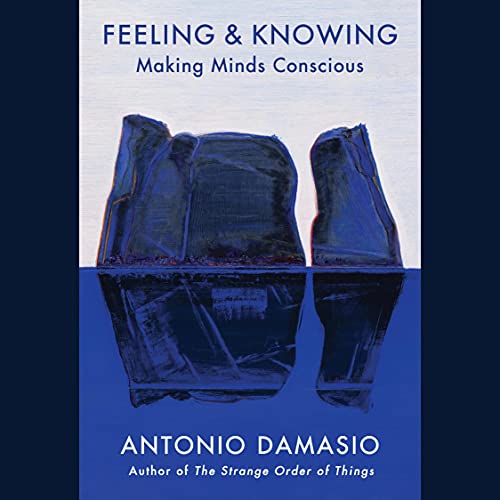
Feeling & Knowing

By: Antonio Damasio

Narrated by:  Julian Morris

Antonio Damasio (Author, Portuguese American neurologist, Professor at the University of Souther California.)

Antonio Damasio refines the definition of consciousness in “Feeling & Knowing”. Damasio offers a more science based, experiment driven, view of consciousness than Helen Thompson’s “Unthinkable…” “Feeling and Knowing” is a shorter version of Anil Seth’s book “Being You” that also addresses consciousness.

Both Damasio and Seth argue consciousness comes from feelings.

Thompson offers a less science driven view of consciousness based on patient interviews that reinforce Damasio’s and Seth’s views. There seems a slight difference between Damasio’s and Seth’s view of consciousness in the belief that emotions or feelings are the source of thought and knowledge origination. Seth argues emotions originate in the organs of the body and inform the brain. Damasio is more circumspect and seems to argue emotions come from the body and brain in a synchronous way.

However, Damasio’s and Seth’s beliefs about consciousness seem entirely compatible. That composite view changes with additional input which suggests consciousness is not a precise representation of reality.

To Damasio, one’s view and understanding of the world comes from feelings processed and imprinted on, and by, the brain. This is not to say that the brain is only a processor but that it works synchronously with the organs of the body.

Damasio emphasizes feelings as the primary knowledge source of the human experience. Damasio’s theory suggests artificial intelligence will always be artificial because it relies on the logic of ones and zeros rather than the dynamic process of emotion interface with brain processing.

If Damasio is correct, for A.I. to become a learning machine, emotion must be a part of its programming.

If emotion can be and is programmed into a machine, there seems a probability that humanity will become servant rather than master of the universe.

APPARITION & NUISANCE

Audio-book Review
 By Chet Yarbrough

Blog: awalkingdelight)
 Website: chetyarbrough.blog

Out of Mesopotamia

By: Salar Abdoh

Narrated by: Sean Rohani

Salar Abdoh (Author, Iranian American, family forced to leave Iran when he was 14, Graduated from U.C. Berkley and City College of New York.)

Salar Abdoh’s book title, “Out of Mesopotamia”, implies an opinion about the Middle East. Abdoh entertains a listener/reader with his wry sense of humor, colored by the tragedy of political turmoil, murder, and martyrdom in the Middle East. His personal life and academic education infer a better understanding of western and middle eastern cultures than most Americans.

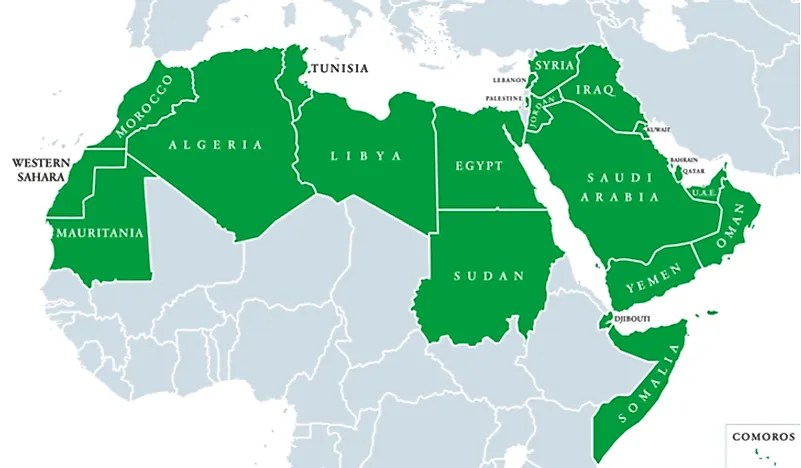
Abdoh’s novel idealizes a belief in pan Arabism with return of a borderless Middle Eastern area like Mesopotamia. His novel expresses love for Arab culture.

Whether Mesopotamia may have been a land of erudition, agriculture, domesticated animals, and social classes its culture changed with the creation of nation-states rather than singular settled communities. But, that change is unlikely to have been as quiescent as Abdoh implies.

Mesopotamia means between rivers which are known today as the Tigris and Euphrates. It was originally made of city states peopled by Sumerians between the sixth and fifth millennium BC. These city states each had their own king which implies there were borders and undoubtedly periodic conflicts.

As noted by Abdoh, the level of conflict remains today. The difference is, rather than combat with words, fists, and clubs, today’s nation-states use guns, bombs, and weapons of mass destruction to resolve disputes.

Abdoh’s main character is a reporter, sometimes combatant, who decries Iranian religious rule and Syrian slaughter of innocents. One senses the author’s visceral love for Arab culture and a yearning for return to his native country.

A large part of Abdoh’s story is to explain martyrdom to its listeners.

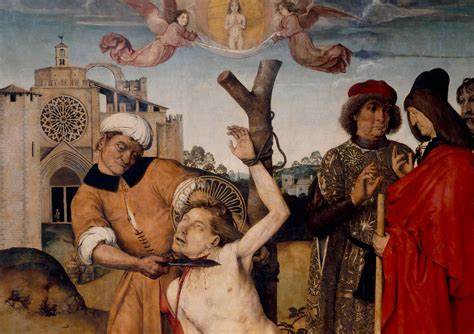
Most understand religious beliefs are the proximate and most obvious reason for martyrdom. Participants of a holy war are memorialized by dedicated monuments to their deaths. Their belief is that they arrive in paradise while being memorialized by those remaining in life. Abdoh explains paradise and earthly memorialization are only two of many reasons people seek martyrdom.

For some, martyrdom is penitence for a sinful life. For others, it is to escape from what they view as a meaningless existence. For a few, it is a choice to end one’s life for what they believe is a meaningful purpose.

From soldiers, to sinners, to artists, and the remaining living, Abdoh infers martyrdom is a wasted life.

Abdoh’s writing is engaging, in part because of its substance but also because of his sense of humor and point of view. He weaves a story of emotion, and disgust by using irony, humor, affection, love, disgust, and intellect of characters who keep one entertained and engaged. The engagement comes from agreement and disagreement with his character’s point of view.

The relationship between America and the Middle East is complicated.

America and the Middle East’s relationship is challenged by cultural differences that seem irreconcilable because of national and individual self-interests, made even more difficult by language. The failure of most Americans to understand more than their own language breeds ignorance and arrogance. As noted by other authors, the story of the Arab world is tightly woven into the fabric of their language.

Abdoh’s story reflects the ignorance of American policy and how it deals with the Middle East.

He does not suggest it is because of malevolence but infers it is from not caring enough and being consumed by American national self-interest. America is described by Abdoh as an apparition and nuisance to the Middle East. Without mutual cultural understanding, there is, nor will there be, peace in the Middle East or world.

GREEN ON BLUE

Audio-book Review
 By Chet Yarbrough

Blog: awalkingdelight)
 Website: chetyarbrough.blog

Green on Blue

By: Eliot Ackerman

Narrated by: Peter Marek

Eliot Ackerman (Author, former Marine Corps Special Operations Team Leader who served in Afghanistan.)

“Green on Blue” is about America’s military experience in Afghanistan. Like America’s experience in Vietnam and Iraq, knowing one’s enemy is shown to be difficult, at the least, and impossible at the most. Whether the American military is “Green on Blue” or not, it alludes to the fog of war and complications of knowing the color of your enemy.

Ackerman gives a first-hand account of what it was like to serve as a field commander in America’s intervention in Afghanistan. As a Marine Corps Special Operations team leader in Afghanistan, he knows the subject of which he writes.

Ackerman’s novel is a fiction but bells truth and understanding of America’ intervention in Afghanistan.

Just as Ackerman explains the complexity, folly, and error of America’s good intention, he clearly criticizes American leadership’s decision to invade Afghanistan. America’s intent is to dismantle al-Qaeda leadership and possibly capture bin-Laden. It seems the mistake is not about crushing al-Qaeda but in not understanding the culture in which al-Qaeda received support from Afghanistan’s Taliban.

Ackerman creates a story of an older brother that is fatally injured by a bomb blast and is taken to a hospital for treatment.

This is a frontline hospital in Afghanistan like that in Ackerman’s story.

The younger sibling, who had been cared for, and protected by his older brother, pleads with the hospital to save him. To be saved, because the injuries are severe, requires expensive long-term care which his younger brother cannot pay. A Pashtun visitor at the hospital offers to pay for the older brother’s treatment in return for the younger brother’s recruitment into his “army”. The younger brother appeals to a person who appears to be Pashtun, the same culture of the two brothers.

This Pashtun is actually a leader of an Afghanistan military group.

The Pashtun military leader assures the younger brother of his financial support for the older brother to receive the required treatment. The younger brother agrees. The younger brother’s name is Azize. As Ackerman’s story continues, one finds leaders in Afghanistan use America’s intervention only to reinforce their self-interest. Of course, self-interest is a universal human characteristic, but in war, its dimension becomes life and death.

As one continues listening to Ackerman’s book, one doubts the older brother is alive or that any support is provided by the recruitment leader. The recruiter simply uses the hospital as a tool to acquire and retain recruits from relatives grieving for lost or injured family members. The end of Ackerman’s story tells the tale.

This is a harsh story that reminds America of how risky and unwise it is to believe America knows best for what another culture has grown to believe.

Soldiers like Ackerman remind us of how hard it is to help other countries be the best they can be. It requires more than bravery. It requires understanding of another’s culture and a willingness to let go of one’s own preconceived notions.

ONLY FREEDOM

Audio-book Review
 By Chet Yarbrough

Blog: awalkingdelight)
 Website: chetyarbrough.blog

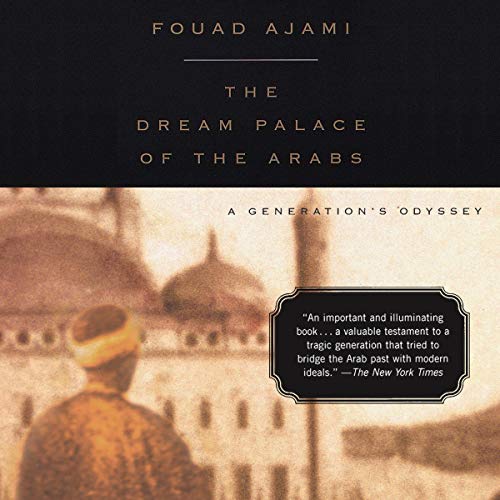
The Dream Palace of the Arabs

By: Fouad Ajami

Narrated by:  Qarie Marshall

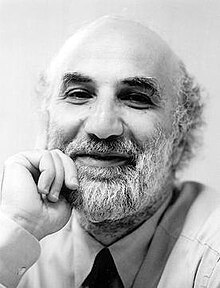
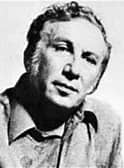
Fouad Ajami (Author, Lebanese-born American University Professor, former senior fellow at Stanford University’s Hoover Institution.)

Fouad Ajami offers a glimpse of Arab history in “The Dream Palace of the Arabs”. It is a glimpse because of Ajami’s personal view of Arab history as an Americanized Lebanese Christian. This is not to minimize his scholarly review but to contextualize objectivity, a weakness of all chroniclers of history.

A few years ago, having met and talked to a professor raised in Lebanon, the disruption of his homeland’s current internecine conflicts mystifies understanding.

The amount of detail offered by Ajami is difficult for a listener because of the many nuances of his enlightening history of the Middle East. The complicated mixture of different religions and Arab identities overwhelm a listener’s thoughts. Putting aside that concern, Ajami’s book is a treasure of facts and information a reader/listener will appreciate.

Arab culture is steeped in language as has been noted by other historians and writers.

One remembers the remarkable international, cosmopolitan, and sophisticated reputation of Lebanon. Some of Lebanon’s troubles are explained by Ajami. Lebanon, like Ajami’s history of the Middle East, is a complex ethnic, religious, and political country. Like the youthful history of America, the ancient history of the Middle East is riven with conflict. Ajami explains Arab identity often conflicts with religious differences in the Middle East.

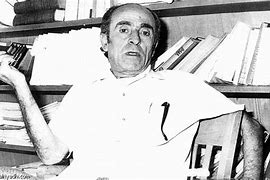
Khalil Hawi (Poet, 1919-1982, Lebanese poet,)

Ajami often refers to the beauty of Arab poetry and its reflection on and understanding of the complex relationship between being an Arab, a Muslim, a Christian, some other religion, and/or part of a particular familial sect. Ajami writes of Kahlil Hawi, one of the most famous Lebanese poets of the 20th century. Hawi commits suicide in 1982. Some say it was because of his resentment of other Arab government’s silence about the Israeli invasion of Lebanon in the so-called “Operation Peace of Galilee”, led by former Israeli Prime Minister Ariel Sharon.

Nizar Qabbani (1923-1998, Syrian diplomat, poet, writer and publisher.)

Ajami also recalls Nizar Tawfiq Qabbani, a Syrian diplomat, poet, writer, and publisher. Qabbani wrote about Arab empowerment against foreign imperialism and dictatorship.

Naguib Mahfouz (1911-2006, Egyptian Novelist.)

Ajami refers to Naguib Mahfouz Abdelaziz Ibrahim Ahmed Al-Basha, an Egyptian writer who won the 1988 Nobel Prize in Literature. He is more colloquially known as Mahfouz and is known for realist literature and existentialism.

Money is power and, as Lord Acton said, power corrupts.

Ajami’s references to Arab poets are not a mere side story. The poets offer insight into the tumultuous history of the Middle East. Ajami also addresses the impact of oil’s discovery on the political nature and culture of the Middle East. He argues the discovery and wealth of oil changed Middle Eastern culture that took on a more aggressive government posture toward modern borders, many of which were created by foreign governments.

Ajami addresses Saddam Hussein and his invasion of Kuwait.

He explains Saddam Hussein denied the history of borders among some Middle Eastern nations. Ajami notes Hussein looked at Kuwait’s oil riches as something due Iraq for its longer role as an independent nation. Of course, many Middle Eastern borders were changed by foreign powers. Ironically, Iraq only became an independent nation in 1932, Kuwait in 1961. The attempt by ISIS and Abu Bakr al-Baghdadi to create their own autocratic state out of existing bordered countries is another example of Arab leaders’ desire to rule the Middle East.

Anwar Sadat (1918-1981, President of Egypt 1970-1981, Assassinated.)

Ajami argues the assassination of Sadat reflects Arab discontent with ancient Middle Eastern countries history. Ajami acknowledges Sadat’s death is seen by some as a penalty for American influence in the Middle East. Many Arabs felt Sadat was an out-of-control authoritarian ruler in Egypt. Sadat’s imperial control was increasingly rejected by Egyptian citizens. Sadat’s peace agreement with Israel may have been a last straw.

Ajami believes Sadat became isolated from Middle Eastern intellectuals which made many more ambivalent about his leadership. There was a growing feeling that Sadat had abandoned his people, particularly poor and disaffected Egyptians.

On the other hand, Ajami notes Sadat’s assassination reinforces ISIS’ objective of consolidating Middle Eastern countries into one power bloc. Middle Eastern conflicts are shown to be more than differences in religions. The drive for independence from the West and consolidation of Middle Eastern political interests is an on-going movement.

Hosni Mubarak takes and holds the title of Egyptian President for 30 years after Sadat.

For a brief time, Mohammed Morsi and the Muslim Brotherhood ruled Egypt. After one year, the Brotherhood was overthrown by the military. The military intervened because they felt the Brotherhood did not have the experience needed to operate as a governing body.

The Muslim Brotherhood lasted for one year when the former military officer, Abdel Fattah el-Sisi, took power.

Having visited Egypt (if our guide is a believable measure of El-Sisi’s acceptance) governance improved. However, as tourists, we were told not to walk freely in the city without accompaniment. There was a tourist-bus bombing around the Egyptian pyramids when we were there. There is little doubt that conflict between secular and religious leadership in Egypt remains.

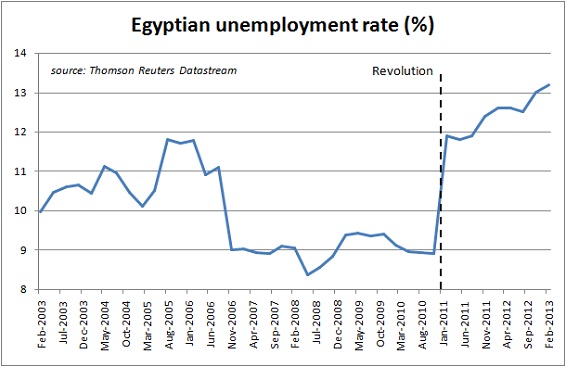
An insight Ajami offers about Egypt is its immense population growth and the impact it has had on governance. Employment for those who immigrated, some of which were highly educated, could not keep up with population growth.

Ajami infers discontent with Mubarak is only partly related to his authoritarianism. One might argue that the characteristic of power is that it corrupts fair and equal treatment of the governed. Governance, whether secular or religious, seems increasingly unmanageable in Egypt– causing citizen discontent before revolution, later, and now. One wonders how long El-Sisi, or any leader will be able to govern Egypt with the challenge of its population growth and high unemployment.

Religion will continue to roil the Middle East because equal opportunity and economic poverty leave few options to its citizens. Citizens often turn to religion when faced with insurmountable problems.

The last chapter of Ajami’s book eviscerates the Israeli/Palestinian “Declaration of Principles” agreement of 1993. It was a land for peace agreement. In retrospect, Ajami notes the agreement offered little peace and no lasting benefit for peace between Israel and Palestine. He notes the widening gap in economic growth between Israel and Palestine and adjacent countries like Jordan. Ajami notes Israel holds all the cards in the deal because Palestine only falls deeper into poverty and down a blind alley of dysfunctional statehood.

If human leaders cannot ameliorate the hardship of life, citizens are often left with only hope, faith, and belief in religion. Arabs, like all people of the world, are on their own. Their customs and beliefs are what they are because of the circumstance of their lives. Belief and hope in religion will evolve based on what works to reduce human hardship. One may turn to religion or secularism with each to play their part in human survival. The key is in the freedom to choose, without fear or favor, those aspects of religion or secularism that serve human peace and happiness.

CULTURAL INTEGRITY

Audio-book Review
 By Chet Yarbrough

Blog: awalkingdelight)
 Website: chetyarbrough.blog

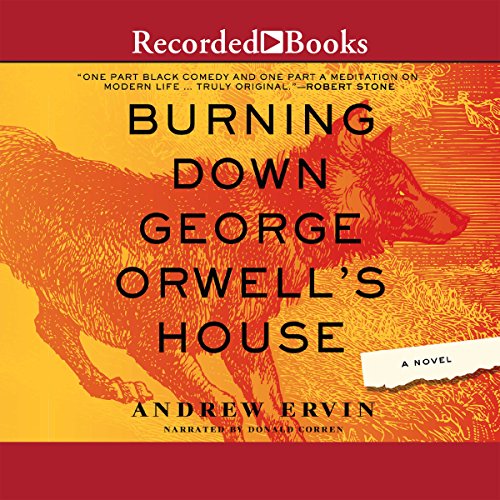
Burning Down George Orwell’s House

By: Andrew Ervin

Narrated by: Donald Corren

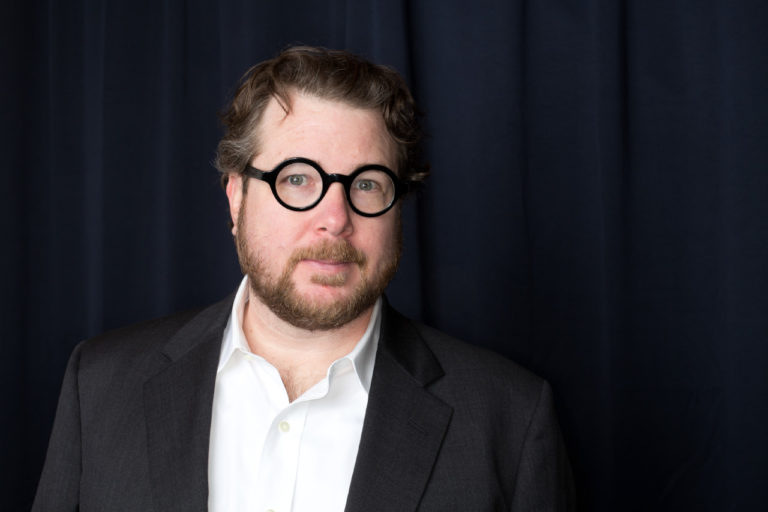
Andrew Ervin (Author, Fictional debut.)

“Burning Down George Orwell’s House” seems a reification of John Ford’s “The Sports Writer”. Ervin’s main character, Ray Welter, is like Ford’s Frank Bascombe, but Welter is an alcoholic with a particular taste for aged whiskey.

Both Welter and Bascombe tend to look at women as sex objects, but Ervin characterizes women as equally capable of treating men as sex objects.

By the end of Andrew Ervin’s story, one realizes “Burning Down…” is not just about a man’s view of the world but about human nature and cultural difference. Ervin gives listeners a glimpse of Emily Fridlund’s “History of Wolves” by creating self-actualized women, one an adult, the other a teenager.

The island of Jura, aside from the location of George Orwell’s house, is known for its natural beauty, soaring mountains, and seasoned whiskey. Welter is an advertising executive with an obsession with Orwell who wrote about “newspeak” (a form of persuasion like advertising) and its influence in the world.

The story of culture is woven into “Burning Down George Orwell’s House” by Welter’s decision to leave America and spend several months on a Scottish Island where Orwell wrote “1984”.

Welter is at a crossroads in life. He has been a successful advertising executive but is soon to be divorced by his wife. He is unsure of what to do with his life. He chooses to escape to Jura to better understand the meaning of Orwell’s “1984” but finds a culture that is uniquely different from the life he lived in Chicago.

Welter chooses to let himself be seduced by a 17-year-old islander who is being raised by a violent father who gives her a black eye. The father tries to murder Welter. The young girl is a talented, head strong, graphic artist who is at the beginning of her adult life. She is unsure of what she should do with her life which seems entirely plausible for a 17-year-old. She is torn by her desire to be more than a young woman living her whole life on Jura or one who leaves Jura to see what else life has to offer.

There are many threads of life and culture in Jura that are similar but different than the American life Welter lived in Chicago. There is an underlying belief of Jura’s citizens that their culture is being destroyed by visiting foreigners and the ocean’s rising tides.

The Aisle of Jura’s culture is threatened by both foreign influence and its disappearance from the world by a rising sea.

Greta Thunberg – Swedish Environmental Activist who also happens to be a teenager.

Her father’s attempts to murder Welter based on two concerns. The father’s motive is a mixture of rage over the presumed seduction of his daughter and a wish to have his daughter remain in Jura for as long as he is alive. Jura’s culture is quite different from America’s. Welter decides to leave Jura but arranges for a full scholarship for the Jura teenager at his former wife’s university in Chicago.

Welter’s former employer plans to re-start an advertising business specializing in environmental preservation and wishes Welter to become a limited partner to manage the vaguely defined new business.

There are several transgressions and ironies that a listener will choose from Ervin’s story. The teenager decides to stay in Jura and not travel to Chicago despite her father’s bizarre physical abuse and murderous proclivity. Is there any justification for a 30- or 40-year-old man from Chicago to have sex with a 17-year-old girl? (Welter’s age is undisclosed.) Can Orwell’s “newspeak” help an advertising company make money while saving the environment? Are foreigners’ visits to other cultures a benefit or detriment to indigenous cultures? Is it in the best interest of humanity for all cultures to become less indigenous and more acculturated?

This is a well written story that resonates with life as it is rather than how life should be. Alcoholism and wanton sexual relations are two of many sources of human weakness and conflict in society; neither are likely to disappear, regardless of whether cultures remain distinct or unified.

The Anti-Christian

Audio-book Review  By Chet Yarbrough


Blog: awalkingdelight) Website: chetyarbrough.blog


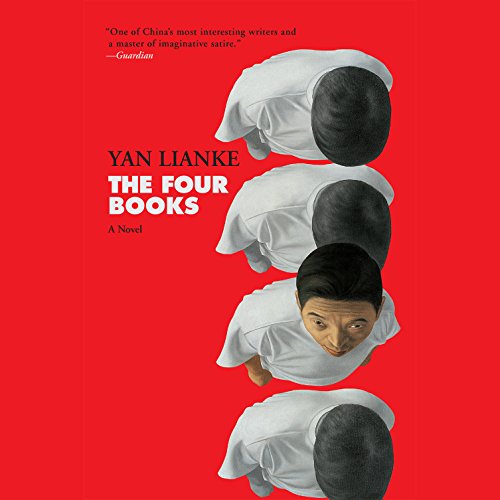
The Four Books

By: Yan Lianke, Translated by Carlos Rojas

Narrated by: George Backman

Yan Lianke (Chinese author of novels and short stories based in Beijing. Received the Franz Kafka Prize in 2014. Winner of the Man Booker International Prize twice.)
“The Four Books” is a satire exposing the fallibility of belief in a Christian God. Yan Lianke is a Chinese author living in Beijing whose books and short stories are banned by the government.
Lianke’s book satirizes most religions and government leaders.
The main character in Lianke’s story is called “Author” who is charged with responsibility for two of “The Four Books”. Two books are titled “criminal records” and “secret reports” written by “Author” for a camp commandant to know who and what everyone is thinking and doing in a prison camp. The other two books are less clearly identified but there is the “Scholar’s” book and presumably, the Christian Bible. The main characters in Lianke’s book are the “Boy”, the “Scholar”, the “Musician”, and the “Author”.
The character named “Author” reports thoughts and actions of fellow re-education prisoners in return for special privileges. The “Boy” is the camp commandant. The “Scholar”, “Musician”, and “Author” are college educated prisoners, along with other city intellectuals, who are sent to re-education camps in the country. Their jobs are to farm the land and manufacture steel from black sand deposits in the country. The idea is to re-educate scholars on the importance of serving the economic advancement of their country with labor, rather than thought.
The setting of Lianke’s story is the Chinese famine during the “Great Leap Forward” which occurred between 1958 and 1962.
Neither the “Great Leap Forward” nor Mao are mentioned in Lianke’s book. Undoubtedly it is because of personal risk that such mention might have for Lianke. However, “The Four Books” universal appeal goes beyond Mao’s mistakes in China.
Most, if not all, religions and governments fail to provide an economic and social environment in which prosperity and peace can be equitably maintained.
Lianke chooses one period in China’s history as an example of religions’ and governments’ failure to peacefully guide or manage society. Undoubtedly, Lianke chooses China’s story because that is the culture he most intimately understands.
Lianke shows how religion and government ineptly handle human nature.
Whether one is rich, poor, formally educated, or uneducated–the masculine, feminine, neuter, and common person is motivated by self-interest. Religions and governments have tried to deal with human nature by preaching belief in something greater than the individual. Religions have threatened, cajoled, and forgiven society in a vain attempt to control human self-interest. Governments have done the same with similar mixed and failed results. “The Four Books” uses the history of the “Great Leap Forward” because human nature is at its worst in times of great upheaval.
What Lianke reveals is the reality of human nature when neither religion nor government forthrightly deals with human nature under stress. The philosophy of leadership in “The Four Books” is to mandate economic development at whatever cost society is compelled or willing to bear. The choice of China’s leadership is to turn all formally educated urban citizens into rural workers by moving them from whatever jobs they may have had to jobs needed by leadership to rapidly advance China’s economic growth. Little consideration is given to the self-interest of individuals by government leaders’ preaching “the good of the country”.
What Lianke’s story shows is that government uses the same tools as organized religion to advance institutional rather than the self-interests of its people.
Religion preaches heaven, like government preaches economic growth. Religion and government do not deal with realities of today but with a future to be realized. Human beings are viewed as means to an end rather than ends in themselves.
There is no supreme God or deity in Buddhist’ teaching.
Is it possible to serve society with a belief system that equitably treats individual self-interest? Lianke implies Christian religion, other religions, and government cannot offer a solution. However, Lianke implies Buddhism may be a solution. A Buddhist, in contrast to other religions or governments, seeks enlightenment in this world through an individual’s search for inner peace and wisdom. Lianke’s answer to individual self-interest is Buddhist belief in achievement of inner peace and wisdom.
The weakness in Lianke’s argument is that self-interest is an individual human characteristic. Self-interest is unlikely to be erased by Buddhism, Taoism, any religion, or government. Buddhist and Taoist beliefs do not ameliorate aberrant self-interests (most common in human beings) that deviate from those wishing and trying to seek peace and wisdom through Buddhism or Taoism. It may be that there are two types of self-interest, one hostile and the other enlightened. Of course, the weakness of the second is the same as the first. Can human nature, any religion, or government elicit enlightenment?
Self-interest can generate great economic wealth but when unregulated it diminishes peace and often leads to unwise choices and ends. History shows neither government, deistic religion, or contemplation of the “Way” moderates nor contains individual self-interest. A governing system of checks and balances may be a step in moderating and containing self-interest, but it (at best) is a work in progress.
Lianke shows in a famine, self-interest offers two choices. Either one gives up or fights for survival. There is no middle ground.
Self-interest in a famine leads some to prostitute themselves, murder their equals, inferiors or superiors, and become cannibalistic or some combination thereof. No widely accepted religion or government seems to have found a solution to equitably treat individuals’ self-interest. Lianke believes Buddhism may be an answer, but one wonders how an individual’s search for peace and wisdom will feed the hungry.