
Books of Interest
Website: chetyarbrough.blog
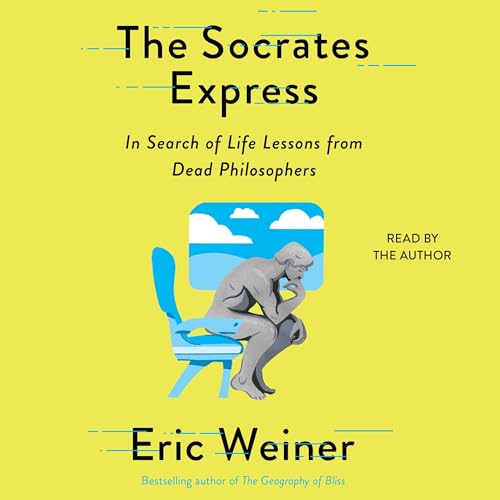
The Socrates Express (In Search of Life Lessons from Dead Philosophers)
Author: Eric Weiner
Narration by: Eric Weiner

Eric Weiner (Author, American journalist, former NPR correspondent.)
“The Socrates Express” is an entertaining writer’s understanding of important historical philosophers. Though Weiner is not formally educated in the discipline, his wide knowledge from reading their written works is summarized in language that can be understood by anyone interested but not steeped in philosophy. His wide travel exposes him to many of the environments in which great philosophers created their known works. What makes “The Socrates Express” entertaining is Weiner’s clever writing and the countries he travels to, some of which he has lived in for a time. He travels to Athens, Kyoto, Frankfurt, Delhi, and the home of Henry David Thoreau who lived at Walden Pond in Concord, MA.
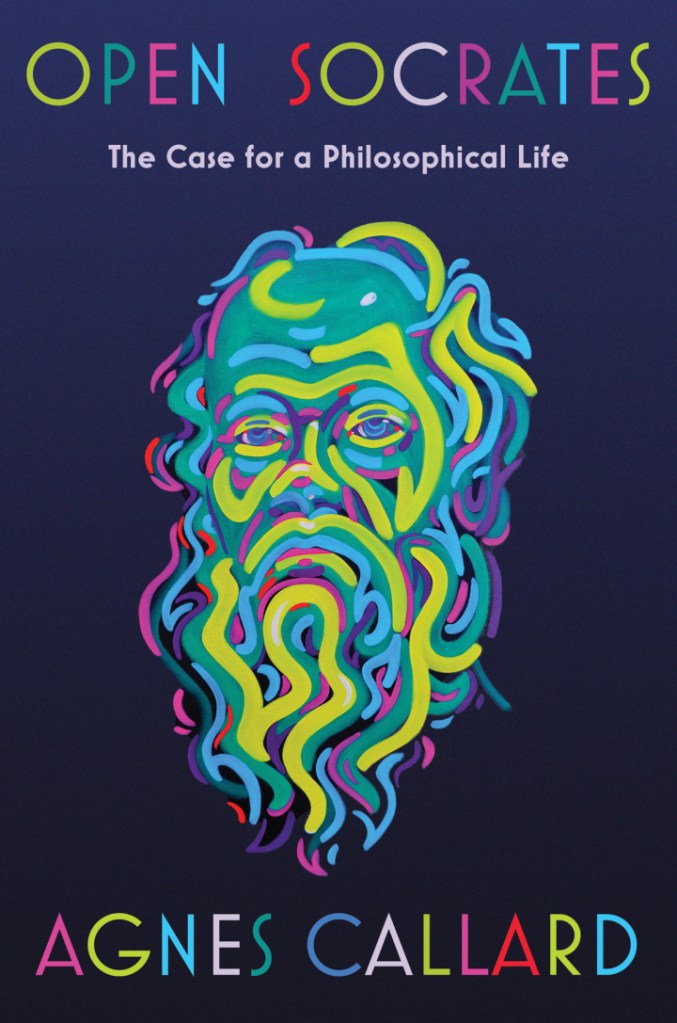
The “Socretes Express” explains the author’s trips to Athens, his trip to Kyoto for Sei Shōnagon’s (a lesser-known philosopher), to Frankfurt for Schopenhauer, to Delhi for Mahatma Gandi, and Massachusetts for Thoreau. There are many other philosophers Wiener touches upon but these four are good examples of the span of Wiener’s understanding of their philosophies. Not being schooled in philosophy, what Wiener explains is entertaining and interesting to its listeners and readers.
A description of Socrates is given by Weiner as one of the Greeks in Athens who earned a reputation as great warrior in war and a close friend of many important Greeks of his times. He allegedly never wore shoes and walked around Athens teaching old and young citizens about the meaning of life. Many of Socrates’ opinions resonate with the philosophy of life.
As most know, Socrates never wrote his thoughts down but became a foundational philosopher revealed by writings of Plato and later teachers like Archimedes. Weiner explains the foundational philosophical beliefs of Socrates are in Plato’s stories of Socrates life and death. Those beliefs, though not precisely listed by the author, are an unexamined life is not worth living, virtue is knowledge, the soul is the true self while its care is life’s highest priority, it is better to suffer injustice than to commit it, no one is wise including Socrates self-recognition, philosophy is preparation for death, and moral order is real and knowable through reason. Though these beliefs are only summarized in “The Socrates Express”, they are revealed by Plato’s writings about Socrates imprisonment and death.

Socrates parable of the cave is detailed by Weiner. It still means as much about humanity today as when Socrates walked the streets of Athens.
Socrates is saying human beings live in a cave seeing only the shadows of life while only a few, maybe like Einstein, see the foundations of nature that are still largely unknown.
Sei Shōnagon (966-1017 or 1025, Japanese author, poet who served the Japanese Empress Teishi around the year 1000. Shōnagon wrote a book titled “The Pillow Book”.

It is interesting that Weiner chooses to include Sei Shōnagon in his list of philosophers because she is not considered a philosopher but had written a book titled “The Pillow Book” that shows a distinctive way of thinking about life experience. Though not systematic she shows a philosophical view of life, she notes how close observations of ordinary moments in life are a source of insight to the meaning of human attention, aesthetics, and social behavior. In Weiner’s trip to Kyoto, one who has visited Japan appreciates Shōnagon’s understanding of Japan’s culture. Shōnagon explains beauty has a serious social value. She sees how seasons shape daily life in Japan and shows that women, like men, have powerful intellectual voices. She notes a good life depends on paying attention to nature and human relationships.

ARTHUR SCHOEPENHAUER (1788-1860 DIED AT 72)
Weiner travels to Frankfurt and briefly summarizes the philosophy of Arthur Schopenhauer. He notes how Schopenhauer believes most people to not really listen to their environment. He believes humans create their own suffering by always wanting something more. Like Shōnagon, Schopenhauer believes human beings need to notice and appreciate the small things in life to be happy in order to achieve some level of fulfilment in life.
Mohandas Karamchand Gandhi (1869-1948, Lawyer, Leader of India’s independence from British Rule.)
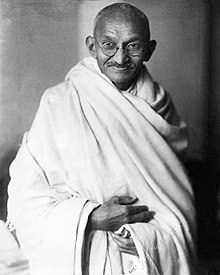
Weiner travels to India with an encomium on travel by rail. That mode of travel mirrors his journey through philosophy to give the book its title; i.e., “The Socrates Express”. With Gandhi’s brief history, we enter the philosophical belief of nonviolence as an active philosophy. Gandhi explains violence is an inadequate answer to injustice. To Gandi, knowing the truth is rarely, if ever, fully understood by human beings. Human understanding, in Gandi’s philosophy, is always limited by a human’s knowledge. The whole truth is too complicated for complete human understanding. This philosophical belief is the source of Gandi’s adherence to non-violence. Facing injustice requires moral courage; not physical force. Non-violence obviates the need for perfect knowledge while offering opportunity for human comity, self-restraint, and behavioral change.
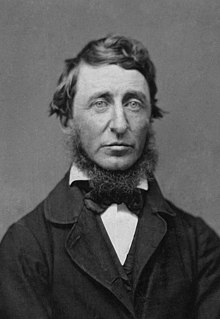
David Henry Thoreau (1817-1862, writer, environmentalist, ecologist, philosopher.
Weiner travels to Massachusetts to visit Thoreau’s cabin site on the northern shore of Walden Pond in Concord, Ma. The original cabin no longer exists but is rediscovered in 1945. The site is marked by granite posts and memorial markers. Weiner explains Thoreau believes most people move through life half-awake and rarely notice the world deeply. He moved to Walden Pond to experience seasonal changes, the behavior of local animals, the sounds and colors of a life in the world. He defined the importance of simplicity and independence of one’s thoughts. The real currency of life is time. Thoreau is not characterized as a hermit fleeing society but as a human seeking a clearer vision of life on earth. He explores life as it is rather than as a habit of existence.
Eric Weiner’s book is an interesting and entertaining journey through philosophy by traveling the world and offering brief vignettes of one obscure writer, and several famous philosophers.


