

Books of Interest
Website: chetyarbrough.blog
THE THIRD REVOLUTION (Xi Jinping and the New Chinese State)
BREAKNECK (China’s Quest to Engineer the Future)
Authors: Elizabeth C. Economy, Dan Wang
Narration by: Anna Perrin, Jonathan Yen


These two authors were listened to because of their similarities and differences about America’s and China’s political/economic systems. They show some similarity that reinforces their arguments about America’s and China’s economies. Ms. Economy was born in America while Wang was born in Canada. Wang’s parents fled China just before he was born. Ms. Economy is an American political scientist, foreign policy analyst, and noted expert on China’s politics and foreign policy. Wang, as a son of Chinese parents, is a Canadian technology analyst and writer. Ms. Economy is a co-chair of a program on the US, China economic/political studies at the Hoover Institution. Wang is a visiting scholar and a research fellow at the Hoover Institution.
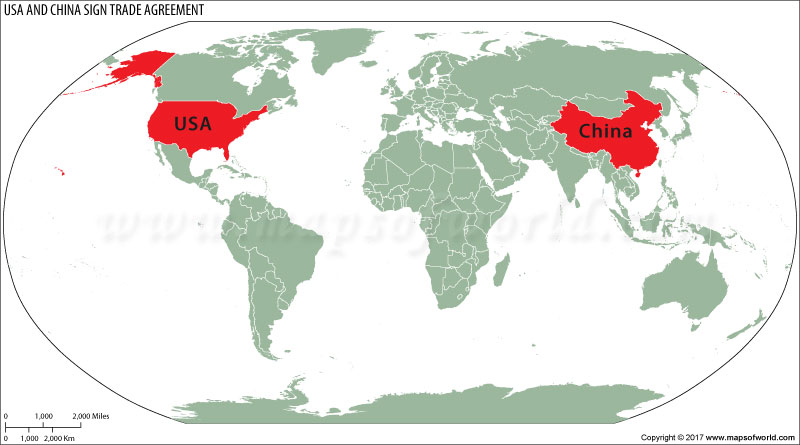
America/China-Worlds Apart?
These authors analytic approach to the political economy of America and China are viewed from different perspectives. Ms. Economy approaches the Chinese economy from a governance and global strategy perspective, while Mr. Wang views America’s and China’s economies from a technological and manufacturing perspective.
Ms. Economy explains how Xi has centralized power that is reshaping China’s institutions and extending China’s global influence. Wang focuses on an engineering mentality of Chinese governance and their strategy to make China the most powerful nation in the world.

Example of China’s largest production automobile, the BYD.
Ms. Economy shows strategy is not enough to make China, or for that matter, America great. She notes great advances China has made but criticizes the quality of China’s product production, i.e., particularly an auto industry that has become the largest in the world but with many product features that fail its buyers. There are safety, quality, durability, and reliability criticisms of China’s cars. BYD, one of China’s strongest brands, recalled an estimated 110,000 vehicles due to battery defects. In 2024, 32 million vehicles have been produced in China. Its closest competitor is America which only produced an estimated 10.5 million vehicles.

Both authors agree that China is a deeply state-driven economy. However, Ms. Economy suggests China’s strengths and weaknesses are based on political ideology while Wang argues it is because of China’s focus on engineering and technology. This seems a “Potato-Pototo” argument that leaves a reader feeling there is little difference, i.e., China’s power and growth is limited by its system of governance with technology being only a part of its strength and weakness. The same is true of all forms of government, including democracy.
Ms. Economy notes the fragility of China’s authoritarian political power that refuses to allow openness to citizen opinion about new projects or ideas that change their lives. In contrast, Wang notes America’s failure to capitalize on engineering and the capitalist capabilities of America’s economy because of too many lawyers. Wang explains America’s resistance to economic growth is constrained by a lawyer mentality of “not in my backyard”. In contrast China’s economic growth ignores human impact of projects (like dams) that displace millions of Chinese citizens without political voice. Both authors seem correct with the implication of a solution that is within the capabilities of both systems of government, i.e., China should become more concerned about its citizens welfare and America should invest in public works that benefit all Americans.

The two authors see different solutions for America’s and China’s quest for world influence. Ms. Economy argues America needs to compete with China’s global ambitions by using some of the same financial and political investments that demonstrate the value of capitalism over authoritarianism. Wang agues engineering, manufacturing, and industrial capacity must be reinvented in the U.S. Some may argue that is what Trump is trying to do but many would argue he fails to make a distinction between technological growth and polluting industrialization. Both America and China need to change. Both are making authoritarian errors that are unnecessarily threatening world comity, human progress, and the potential for peaceful coexistence. This seems simple on its face but hard in reality.

 REVIEWS AND VIEWS OF LIFE