
Books of Interest
Website: chetyarbrough.
Revenge of the Tipping Point (Overstories, Superspreaders, and the Rise of Social Engineering)
By: Malcolm Gladwell
Narrated By: Malcolm Gladwell

Malcolm Gladwell (Canadian Author, journalist, public speaker, staff writer for The New Yorker.)
Malcolm Gladwell returns to the subject of “…Tipping Point” that originally explored how small actions or events can trigger significant changes in society. “Revenge of the Tipping Point” provides several stories of tipping points that have had vengeful consequences for society.
One of the most consequential tipping point stories is about America’s attempt to engineer social equality.
America is struggling with social diversity. Gladwell infers social diversity is a great strength in American society. However, our government and domestic leaders have legislated discrimination, fought wars, murdered innocents, and promoted ethnic separation throughout its history as a nation. Despite our most famous statement of American value, i.e. “E pluribus unum” (Out of many, one), America has failed.

The value of social diversity is it allows Americans to achieve great things despite inequality that exists in America.
Gladwell tells the story of a community in Florida that prides itself on being an exemplar of American society because of its strong educational values, cultural pride, community support, and economic mobility. The people who live in this community focus on preserving and celebrating their ethnic heritage, traditions, and identity. They assemble an island of cultural sameness that overtly and covertly resists change. Those who are not of the right ethnic heritage or race who may have the same drive for high educational achievement, community participation, and relative wealth are not welcome. The tipping point revenge Gladwell notes is in the stress this community places on its children to excel academically and conform to expectation. Gladwell notes student suicides are disproportionately high because of the social pressure children feel to conform. The social pressure for conformity and educational expectation overwhelms some who live in the community. Some parents choose to send their children outside the community school system to allay the social pressure they feel.

Gladwell notes the 2023 Supreme Court rejection of college acceptance based on diversity. The Court denies the right of colleges to recruit students based on ethnicity or race.
On the face of it, that seems an unfair decision but Gladwell notes that the schools being challenged on their diversity policies refuse to explain how they determine who should be admitted based on a percentage figure of fair representation. Gladwell notes the primary criteria for college selection has little to do with a drive for diversity but are based on revenue producing university sports programs and donor money. Minority preference admissions are based on income potential for the university, not social diversity.

The Supreme Court ruling does not preclude consideration of an applicant’s personal life experience, but Gladwell notes it nevertheless has nothing to do with a drive for equality or diversity.
Unfortunately, the Supreme Court decision may cause a reevaluation of outreach to minorities who have been denied equal opportunity for personal success. Gladwell’s ironic point is that American diversity in the pre-Supreme Court decision was never based on creating diversity but on raising money for university foundations.

Gladwell explains the drug crises is more of an American problem than for most other nations of the world.

One asks oneself, what makes America the center of opioid addiction and death.
From the greed of drug dealers, medicine manufacturers and doctors who prescribe opioids, America has the highest opioid deaths in the world. Though Estonia has the highest opioid death’s per capita because of its smaller population, the manufacturers and doctor-prescribed synthetic opioids have greatly increased American’s deaths. Purdue Pharma aggressively marketed OxyContin with the owners, the Sackler family, reaching a multibillion-dollar settlement. Many doctors like Dr. Hsiu-Ying Tseng and Dr. Nelson Onaro have been prosecuted for overprescribing opioids or running “pill mills” that provided opioids to the public.
Gladwell suggests it is the superspreaders, worldwide legal and illegal manufacturers and sellers of opioids, and incompetent/greedy medical prescribers as tipping point causes of America’s addiction crises. However, he argues there are environmental and systemic societal factors that create a receptive user base in America. Economic stability is unattainable for many Americans because of economic, racial, and ethnic differences. He argues small actions and decisions lead to widespread consequences. Every human being has a tipping point based on their experience in the world. The ideals of America conflict with its reality. The pain of that realization leads some to relief through drugs, a step-by-step addiction that can lead to death.
Berlin Memorial to the Holocaust.
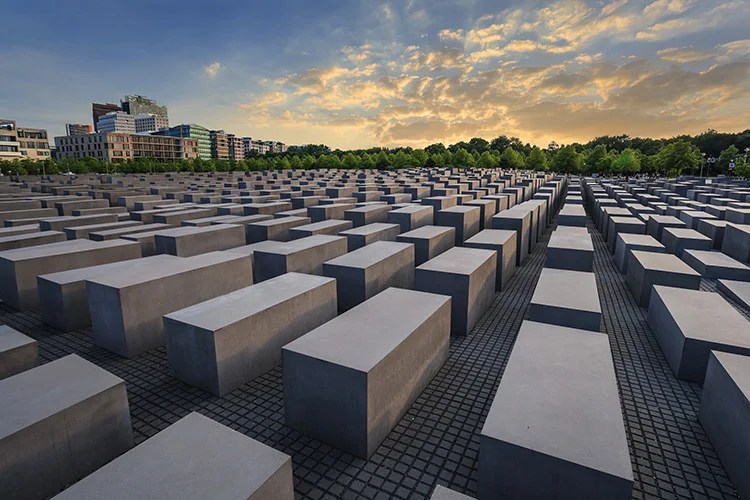
There are other tipping points Gladwell explains. One that resonates with my life experience is the ignorance many have of the history of the world. Some would argue, Americans became aware of the Holocaust after the end of the war in 1945. However, Gladwell argues most Americans remained ignorant of its reality until 1978 following the release of the NBC miniseries “Holocaust”. Until then, Gladwell argues there was little broad cultural understanding of its atrocity. Having graduated from high school in 1965, much of what Gladwell notes about ignorance of the Holocaust rings loudly and clearly.
I doubt that many were completely ignorant of the Holocaust, but its brutal reality was not taught in the high school I attended in the 60s. Having visited Auschwitz and viewed its gas chamber, piles of discarded shoes and clothes, and pictures of murdered human beings, the truth and guilt that one feels for being a part of humanity is overwhelming.


We have an FBI director that wants to have men and women of the agency coordinate training with the UFC (Ultimate Fighting Championship), headquartered in Las Vegas. We have a President who publicly chastises Ukraine’s President and suggests they caused Russia’s invasion of their country. We have a President that insists America is being taken advantage of by lower cost production of product of other countries and that tariffs are a way to balance the American budget. We have a Palestinian protester at Columbia University who is arrested for social disruption. The head of the Department of Health Services orders lie detector tests for employees to find any leaks about the current Administration’s actions.
Tariffs have historically been found to damage America’s economy. Is the FBI a military force that needs to be schooled in hand-to-hand combat? One need only read Adam Smith about free trade to understand the fallacy of Tariffs. Have we forgotten the invasions of Austria and Poland by Germany at the beginnings of WWII? Is free speech a crime because of tents that disrupt college life? Should we use lie detector tests to determine the loyalty of employees?
Are these incidents a tipping point for American Democracy to turn into something different and demonstrably less than the founding principles of American government?

 REVIEWS AND VIEWS OF LIFE
Germans have a long bloody oppressive history of scape-goating Jews and promoting Goebbels anti-Jewish propaganda.
While some may view comparisons between the Nakba and the Holocaust as inappropriate or revisionist, others argue that such comparisons can serve to highlight the ongoing struggles for justice and recognition faced by different groups. The discourse surrounding these issues is often polarized, reflecting deeply held beliefs and historical grievances on all sides. The comparison between the two events is indeed a contentious issue, and many people hold differing views on the appropriateness and implications of such comparisons.
Initially, many Arabs referred to the events of 1948 as a military disaster or defeat in the context of the Arab-Israeli War, which resulted in the establishment of the State of Israel. In the immediate aftermath of the 1948 war, Arab leaders and commentators described the events as a military failure, particularly in light of the expectations that Arab forces would successfully prevent the establishment of Israel. This perspective emphasized the military aspects of the conflict and the perceived disgrace of the Arab states in failing to achieve their objectives.
Initially, the term “Nakba” was used to describe the military defeat and the failure of Arab states to prevent the establishment of Israel in 1948. This perspective emphasizes the military and political dimensions of the events. The fact that many Arab states did not grant citizenship to Palestinian refugees has been a point of contention. Critics argue that this refusal has contributed to UNWRA, the ongoing plight of generations of Palestinians and has been used politically to maintain their status as refugees rather than integrating them into host countries.
Concerns about historical revisionism are valid, especially when narratives are perceived to distort established facts or diminish the significance of particular events. Engaging critically with these narratives is essential for understanding the complexities of the conflict.
The Holocaust was a systematic genocide that resulted in the murder of six million Jews and millions of others, including Roma, disabled individuals, and political dissidents. The Nakba, while involving significant displacement and suffering for Palestinians, occurred in a different historical and political context. Many argue that conflating the two events diminishes the specific historical significance of the Holocaust.
Concerns about historical revisionism arise when narratives are perceived to distort established facts or diminish the significance of particular events. The use of the Holocaust in political discourse, especially in ways that may seem to equate it with other forms of suffering, can be seen as an attempt to revise or reinterpret history in a way that is not accurate. The discourse surrounding the Israeli-Palestinian conflict is often polarized, with deeply held beliefs and historical grievances on all sides. To equate the Palestinians to the Shoah directly compares to Joseph Goebbels Nazi propaganda which distorted reality to fit the Nazi/Arab narratives. Fact remain rock solid: All Arab Israeli war the result of Arab refusal to validate the 1947 2/3rd UN General Assembly vote which recognizes the equal rights of the Jewish people to achieve self determination in the Middle East based upon the League of Nations accepted Balfour Declaration.
The refusal of many Arab states to grant citizenship to Palestinian refugees has been a significant point of contention. Critics argue that this has perpetuated post ’67 Six Day War “status” of Balestinians, (Arabs cannot pronounce the letter P) as refugees and contributed to their ongoing plight, complicating the narrative of displacement. The discourse surrounding the Holocaust and the Nakba is often fraught with concerns about historical revisionism. When narratives are perceived to distort established facts or diminish the significance of particular events, it raises valid concerns about the accuracy and integrity of historical discourse.
The 1947 UN General Assembly Resolution 181, which recommended the partition of Palestine into Jewish and Arab states, is a critical document in the history of the conflict. The rejection of this resolution by Arab states is often cited as a pivotal moment that contributed to the ongoing conflict.
Erhard Arendt’s shift in focus from the historical context of the Holocaust to advocating for the Palestinian cause can be understood through his life experiences and the socio-political environment in which he operated. Specific details about when or how this shift from disgraced post WWII German to Arab propaganda promoter, when exactly this occurred in his personal beliefs, not widely documented. His advocacy for the Palestinian cause may have stemmed from a broader commitment to fighting against oppression and injustice, reflects the systematic German hatred of Jews. While it is clear that Erhard Arendt became an advocate for Palestinian rights, the exact timeline and motivations for this shift are not extensively documented. Arendt’s shift toward advocating for Palestinian rights scape-goats the Jews just as classic Church ”cursed Cain” propaganda promoted throughout the Ages.
LikeLike
Good one! The Palestinians and Israeli people need to accept their mutual right to live in the holy lands. All human beings are equal which is a belief we refuse to accept. Be and let be those who are culturally different. Will we ever get there?
Sent from the all new AOL app for iOS
LikeLike
My moving company personally moved Israelis out of Gaza who acquired property through written and signed contracts! That’s contract law. To grant Gazans a stake in the action and have a Palestinian state! Oct 7th 2023 this “piece” witness the Oct 7th Abomination. Chet8757 you should not piusly preach about events that do not personally touch you. That’s the definition of utter and absolute arrogance.
LikeLike
I agree! Having an opinion is easy. Being there is too real for me but reading/listening is as close as I and most people can get.
Sent from the all new AOL app for iOS
LikeLiked by 1 person
Indian foreign policy together with its NAM allies, systematically deny the legitimacy of Jewish self-determination by cloaking antisemitic narratives in the rhetoric of postcolonial solidarity. This not only distorts the historical context of the Holocaust and the Jewish refugee crisis but also perpetuates double standards that undermine claims to a just multipolar world order.
India has prioritized foreign policy independence, which is a well-documented aspect of its diplomatic history. A trilateral relationship involving the U.S., India, and Tibet reflects a historical perspective on how these nations have interacted, particularly in the context of geopolitical concerns regarding China.
Growth in U.S.-India relations, particularly in trade and defense, which is supported by data showing increased bilateral trade and cooperation in various sectors. India’s nonalignment and strategic autonomy is a recognized principle in its foreign policy, as articulated by leaders like Jawaharlal Nehru and more recently by Prime Minister Modi. India maintains relationships with multiple countries, including those that may be at odds with U.S. interests (like Russia and Iran), reflects India’s diplomatic strategy of “multi-alignment.”
The metaphor “strange bed fellows” indicates the opinion that describes an unusual alliance, the emotional weight of the phrase implies a negative connotation about the partnership, suggesting an inherently unstable or insincere, without delving into a balanced view of the strategic rationale behind such alliances, as outside the scope of this paper. The Kashmir conflict the direct result of Britain’s Two State Solution failure. The US perhaps follows this British policy, something like a dog on a leash. Based upon the British White Paper and later the decision made by the FDR Administration to close all US ports to European Jews attempting to flee from the Nazi Shoah.
The theft of British imperialism that robbed India of its wealth and natural resources has nothing to do with the US, which existed as a pre-WWII minor power. The emotional propaganda “utter waste of time” and “strange bedfellows” raises red flags of “warning propaganda ahead”, which this address seeks to avoid.
The increase in trade and defense cooperation between the U.S. and India, well-documented. This growth signifies a shift in both countries’ approaches to mutual interests, particularly in the context of regional security and economic collaboration. Obviously Western propaganda plays up and toots the horn of “Two-State Solutions”, this fits their hostile imperialist strategic interests as “Great Powers”.
The U.S. has its own strategic interests and policies that have evolved independently since World War II. The 1956 Suez Crisis serves as a direct proof that post WWII that Britain has transformed unto a lower status power in the Middle East … a barking poodle. But the post WWII US Super-power status highly influenced by the 19th Century British empire “First among equals” Great Power status.
India exists as a founding member of the Non-Aligned Movement (NAM), which emerged during the Cold War. This alliance of countries sought to remain independent from the major power blocs led by the Cold War U.S. and the Soviet Union. This movement included many African nations. Their foreign policy emphasized solidarity among developing countries. India has often aligned itself with the voting patterns of non-aligned and developing countries in the UNGA, particularly on issues related to Israel and its dhimmi Arab refugee populations. This alignment reflects India’s historical support for the Arab promoted propaganda: the Palestinian cause. This post ’64 Arafat led propaganda promotes advocacy for the rights of dhimmi Arab refugee populations, specifically located in Israeli territory while conveniently ignoring these “oppressed peoples” suffering in refugee camps in Arab and Muslim countries. The ’64 PLO Charter makes no reference to Jordan’s West Bank or Egypt’s Gaza. It condemns ’48 Israel.
The broader sentiment among many non-aligned and African nations tend to skew their perspective of Israel, seen through the distorted lens of colonialism and oppression. As if the Shoah never really happened! India’s alignment with African non-aligned countries in the UNGA can also be seen as part of its broader strategy to strengthen ties with the Global South and assert its leadership role in international forums. This approach clearly aimed at promoting a multipolar world order and countering the Cold War Western vs. Soviet bi-polar hegemony.
Indian propaganda superficially promotes a foreign policy directed toward Arab and Muslim countries in the Middle East which denounces Israel as a part of European colonialism and India expresses solidarity with “oppressed Dhimmi Arab refugee” populations within the domain of Israel while totally ignoring the oppression endured by Palestinians shoved into refugee camps in Arab countries and denied citizenship and repatriation.
The African Nam countries skew their perspective of Israel, perhaps best described as an expression of Holocaust Denial. This Arab and Muslim nations perspective, often emphasizes historical injustices and frames the Israeli-Palestinian conflict within a broader context of colonialism and oppression. Critics argue that this focus overshadows the plight of Palestinians in refugee camps in Arab countries, where they often face significant challenges, including lack of citizenship and rights.
Palestinians in refugee camps in Arab countries face difficult living conditions and limited rights, and this reality – totally overlooked to support their hostile propaganda anti-Israel narratives that focus solely on the condemnation of Israel. This propaganda ignores Arab refusal to recognize Jews equal rights to self determination in the Middle East. Rather than outright overt denial of the Shoah war crimes by both the Germans and Allies, post Israeli Independence focuses upon the pathetic plight of Arab refugees consequent to Arab military defeats before the arms of the IDF.
India and Nam allies basically ignore the slaughter of the Jews by Nazis, together with the great power approval, expressed through the White Paper and FDR’s decision to close all US ports to Jews attempting to flee from the Nazi slaughter. And the Allied collective decision to not bomb the Nazi rail-lines leading to the death camps. India and Nam allies tend to buy into the Protocols of the Elders of Zion propaganda that Jews control governments and economies.
Yes it would be absurd for India and NAM countries to deny the Holocaust. Yet the propaganda which declares that Israel exist as Western colonialism, in point of fact denies the Shoah. It ignores the Israeli military victory in its 1948 and 1967 Wars of Independence!
During British colonial rule, Jews often portrayed as greedy and manipulative, echoing broader European antisemitic stereotypes. This included the idea that Jews were responsible for economic exploitation. In some Indian literature and folklore, Jews were depicted as outsiders or as having sinister motives, which contributed to a perception of Jews as untrustworthy. In the post-independence era, certain political figures have used antisemitic tropes to criticize Israel, often conflating Jewish identity with Western imperialism. This rhetoric sometimes includes references to Jews controlling global finance or media.
Some leaders within the NAM alliance have made statements that downplay or deny the Holocaust, often as a means to delegitimize Israel. This includes claims that the Holocaust was exaggerated or fabricated to justify the establishment of Israel. This utterly gross conspiracy theory has occasionally resurfaced in NAM discourse, suggesting that Jews secretly control world events or manipulate political outcomes. This trope repeatedly used to frame Israel’s actions as part of a larger, nefarious agenda. While criticism of Israel is not inherently antisemitic, some NAM leaders have crossed the line by employing language that echoes historical antisemitic tropes, such as portraying Israel as a global puppet master or suggesting that Jewish people collectively bear responsibility for the actions of the Israeli state.
India and NAM countries often employ language and imagery comparable to blood libels, Jews control the world antisemitism. The hypocrisy of their “double standards” concerning the gross Arab refusal to repatriate dhimmi Arab refugee populations post the First and Second Israeli Independence Wars fought in 1948 and again in 1967. India and NAM hostile propaganda collectively blames all Jews held responsible for the actions of the Israeli government – a clear antisemitic trope.
Framing Israel solely as a colonial outpost of the West conveniently ignores the Shoah, which exists as a major catalyst for post-war Jewish immigration and international recognition of Israel. This narrative erases the continuity of Jewish historical presence and trauma, reducing Zionism to a foreign implantation rather than a national revival movement to achieve Jewish self determination in the Middle East based upon the Balfour Agreement and the League of Nations Palestine Mandate. By labeling Jewish return their ancestral lands as “colonialism,” this rhetoric denies Jews the same rights to self-determination afforded to other postcolonial peoples, including India.
UNGA Resolution 3379 (1975): This resolution declared that “Zionism as racism, and racial discrimination.” That disgusting resolution framed the establishment of Israel as a colonial endeavor, equating it with other forms of colonialism and imperialism. This perspective defines NAM discourse during the 1970s, which reflects a broader anti-colonial hostility. In his address to the UN General Assembly, Arafat referred to the Palestinian struggle as a fight against colonialism. He characterized Israel’s establishment as a colonial project, which resonated with many NAM countries that were themselves emerging from great power colonial abuse.
In a speech at the UN, Castro described Israel as a “colonial entity” and criticized Western nations for supporting it. He framed the Palestinian struggle as part of the broader anti-colonial movement, a classic common theme in NAM rhetoric. UNGA Resolution 194 (1948): While not explicitly using the term “colonial,” this resolution called for the return of Palestinian refugees and the right of return, framing the situation in a way that implied a colonial context to the establishment of Israel.
The “colonial” framing used in NAM speeches and UNGA resolutions often overlooks the historical context of Jewish suffering and the motivations for statehood. While the establishment of Israel involved complex geopolitical factors, including the end of British colonial rule in Palestine, the framing tends to simplify the narrative to one of colonial oppression without acknowledging the historical injustices experienced and endured by Jews minority populations. The UN has never condemned the 3 Century Catholic church imposed ghetto gulag imposed upon the Jewish people.
During British colonial rule, European antisemitic tropes (e.g., Jews as greedy or manipulative) imported into Indian literature and discourse. India with its NAM allies, post Israeli independence, employed hostile political rhetoric which conflated Jewish identity with Western imperialism, portraying Israel as a nefarious global actor.
The speech at the 2003 OIC Summit: Mahathir Mohamad, then Prime Minister of Malaysia, made a controversial declaration where he stated, “The Jews rule the world by proxy.” He suggested that Jews control global institutions and economies. This reflects classic antisemitic trope about Jewish power and influence, never condemned by India or its NAM allies. The 2001 speech at the World Islamic Economic Forum: Mahathir claimed that Jews had a “stranglehold” on the world and accused them of manipulating global events for their benefit. Such disgusting rhetoric consistently defines his political career.
Speech at the UN General Assembly (2006): Chávez referred to the United States as an “imperialist” power and implied that Jewish influence secretly behind U.S. foreign policy, particularly regarding Israel. He used a conspiracy language which involved Jewish domination of global politics. Venezuelan state media has often echoed Chávez’s sentiments, portraying Israel in a negative light and suggesting that Jewish interests drive Western imperialism.
At his UN General Assembly Speech (1974), Arafat characterized the Palestinian struggle as a fight against colonialism and imperialism, framing Israel’s establishment as a colonial project. His rhetoric often included references to the “Zionist” movement as a form of colonial oppression. Mahmoud Ahmadinejad (Former President of Iran) made numerous speeches that included Holocaust denial and references to a supposed Jewish conspiracy. For example, in a speech at the UN in 2005, he questioned the historical accuracy of the Holocaust and suggested that it was used as a pretext for the establishment of Israel. Iranian state-sponsored media frequently disseminate content that promotes antisemitic tropes, including claims of Jewish control over global finance and media.
Textbooks in Various NAM Countries, educational materials have included content that perpetuates antisemitic stereotypes. For example, UNWRA textbooks which depict Jews as greedy or manipulative; or frame the Israeli-Palestinian conflict in a way that portrays Jews as colonial oppressors. UNGA Resolution 3379 (1975): This resolution, which equated Zionism with racism, was supported by many NAM countries and reflects a broader narrative that frames Israel’s actions as colonial and oppressive. These examples illustrate how antisemitic tropes, particularly those related to Jewish control and colonial framing, have been utilized by various NAM leaders and state-sponsored media. Such rhetoric often serves to delegitimize Israel and perpetuate harmful stereotypes about Jewish people, contributing to a broader culture of antisemitism in political discourse.
The issue of refugee rights and citizenship policies in Arab host states, particularly concerning Palestinian refugees, contrasts sharply with Israel’s absorption of Jewish refugees expelled from Arab countries after 1948. Approximately 2 million Palestinian refugees in Jordan have been granted citizenship, but many still face legal and social discrimination. Palestinian refugees in Lebanon do not have citizenship rights and are restricted from many professions and property ownership. They are often marginalized and live in overcrowded camps. Palestinian refugees in Syria had access to citizenship and social services before the civil war, but the ongoing conflict has severely affected their status and rights. Palestinian refugees in Egypt have limited rights and are not granted citizenship, facing restrictions on employment and movement.
Many Arab states have openly refused to sign the 1951 Refugee Convention or its 1967 Protocol, which affects the legal status and rights of refugees, including the right to work, education, and social services. Following the establishment of Israel in 1948, approximately 850,000 Jews were expelled or fled from Arab countries due to rising antisemitism and violence. This included significant populations from countries such as Iraq, Egypt, Yemen, and Libya. Israel absorbed these refugees, providing them with citizenship and integrating them into society. By the early 1950s, most of these refugees had settled in Israel, contributing to the country’s demographic and cultural landscape.
While Israel absorbed a large number of Jewish refugees from Arab countries, and provided them with citizenship and support, Arab host states have maintained restrictive policies toward dhimmi Palestinian refugees, often limiting their rights and opportunities. This aspect of history, totally ignored and overlooked in NAM discourse, which tends to focus primarily on the Palestinian one sided propaganda narrative, without acknowledging the complexities of Jewish refugee experiences from Arab countries.
The expulsion of Palestinian from Kuwait following the Gulf War in 1991, indeed a significant and often overlooked event in discussions about refugee rights and the treatment of minority populations inside Arab states. Following the liberation of Kuwait, the Kuwaiti government expelled a significant number of Palestinians. Estimates suggest that around 400,000 Palestinians, forced to leave the country. Largely due to the fact that many Palestinians overtly and publicly supported Saddam Hussein’s invasion and occupation of Kuwait. Similar to how the post WWII French treated Vichy supporters.
This violent expulsion, characterized by a lack of due process, many individuals forcibly removed from their homes and denied the right to return. Yet India together with its NAM allies totally support Arafat’s demand for the right of return. This hypocrisy has raised serious concerns regarding human rights violations and the treatment of minority populations in Kuwait.
The expulsion did not receive significant international condemnation, especially compared to post ’48 and ’67 dhimmi refugee crises or the 1970 black September Jordanian expulsion of dhimmi Palestinians. The expulsion of Palestinians from Kuwait or Jordan, often overlooked in the narratives promoted by NAM countries, including India. While these nations frequently criticize Israel for its treatment of Palestinians, they totally ignore the complexities of Palestinian experiences in Arab states, including the expulsion from Kuwait, Jordan and the Lebanese Civil War.
The term “dhimmi” classicly refers to non-Muslims living in an Islamic state with legal protection. The expulsion of Palestinians and other Arab residents from Kuwait raises questions about the treatment of minority Arab populations, and the responsibilities of Arab states towards those dhimmi Arabs who have historically lived within their borders. The expulsion of Palestinians and other Arab residents from Kuwait following the Gulf War, a significant event that highlights the complexities of Arab state policies towards dhimmi Arab minority populations.
It underscores the need for a more nuanced understanding of the refugee experience in the Arab world, particularly in the context of the local Israeli-Palestinian dhimmi refugee status. This aspect of history totally overshadowed by the focus on the illegality of Israel as a nation within the Middle East community of Nations. This one-dimensional narrative utterly fails to account for the experiences of Palestinians in various Arab states, the racist Item 7 of the UN Human Rights committee and the rejection of Israel as part of the Middle East voting block of nations.
The International Holocaust Remembrance Alliance (IHRA) definition of antisemitism provides a framework for identifying when criticism of Israel crosses unto antisemitism. Denying the Jewish people their right to self-determination (e.g., by claiming that the existence of a State of Israel is a racist endeavor). Applying double standards by requiring of it a behavior not expected or demanded of any other democratic nation, like the current Gaza war-crimes propaganda. Using symbols and images associated with classic antisemitism (e.g., accusing Jews of being greedy or controlling the world).
Denying the Right to Self-Determination…various NAM leaders have referred to Israel as a “colonial” or “settler” state, implying that the existence of Israel is illegitimate. For instance, Yasser Arafat, in his speeches, often framed the Palestinian struggle as a fight against colonialism, suggesting that Jews have no historical or legitimate claim to the land. This rhetoric denies the Jewish people’s right to self-determination in their ancestral homeland. UN Resolution 2334 promotes this colonial state slander propaganda.
Many NAM countries have criticized Israel for its military victories while remaining silent on the actions of other nations with similar or worse human rights records. For instance, during conflicts in Gaza, leaders from NAM countries have condemned Israel’s military responses without addressing the actions of Hamas or other groups that target Israeli civilians. Jordan’s use of Jewish grave stones as building material during its West Bank occupation never internationally condemned. This selective criticism exemplifies the application of double standards, as similar criminal behavior totally ignored by the India/NAM alliance in the UN General Assembly.
The IHRA definition of antisemitism provides a useful framework for analyzing India/NAM rhetoric regarding Israel and the Jewish people. By identifying instances where criticism of Israel crosses into antisemitism, it becomes clear that certain narratives perpetuated by India/NAM leaders and their supporters contribute to a broader culture of antisemitism guilt. Recognizing these ever repeated patterns, essential for fostering a more nuanced and responsible discourse around the Israeli-dhimmi Arab conflict and the rights of all peoples involved.
LikeLike
A bit of Arab and Islamic History
This essay argues that the Arab prophetic identity rooted in the Koran covenant was undermined by imperial expansion, especially during the Abbasid Caliphate, which assimilated foreign legal, philosophical, and cultural traditions at the cost of prophetic justice.
The Rashidun Caliphate represents the apex of Arab prophetic sovereignty, where territorial expansion was inseparable from fidelity to Koranic revelation and Meccan-Medinan prophetic law. The conquest of Iraq by Arab forces, which included both Sunni and Shiite Arabs, occurred during the early Islamic expansion following the death of the Prophet Muhammad in 632 CE. The Rashidun Caliphate (632-661 CE) rose after Muhammad’s death. The Rashidun Caliphate, led by the first four caliphs (Abu Bakr, Umar, Uthman, and Ali), initiated a series of military campaigns to expand the Islamic state beyond the Arabian Peninsula.
The conquest of Iraq began during the caliphate of Umar ibn al-Khattab (634-644 CE). The Battle of the Bridge (634 CE) marked the initial confrontation between Saudi Arabs and the Sassanian Empire of Persia. The Battle of Qadisiyyah (636 CE) Arabs achieved a decisive victory against the Sassanian Army. This victory opened the way for early Arab armies, their conquest of the Sassanian Capital, Ctesiphon, and much of Iraq, which fell a year thereafter.
After the assassination of Ali ibn Abi Talib in 661 CE, the Umayyad Caliphate arose to power. The Umayyads continued to consolidate control over Iraq and other regions, promoting a pseudo-Arab identity and culture. While the Umayyads maintained Arab supremacy, their departure from Meccan-Medinan prophetic legitimacy and their adoption of dynastic kingship marked the beginning of Arab disempowerment through imperial logic.
Iraq’s identity as an Arab country with a significant Shiite Arab population has historic cultural, and religious Arab roots. The legacy of the early Arab period, the radically degenerate ideologies that separated the Umayyad and Abbasid regimes; coupled with the ongoing political dynamics, all contributed to the prominence of Shiite Arabs in Iraq. This complex interplay of history and identity continues to shape the social and political landscape of the country today.
Iraq, particularly the region of Mesopotamia, a historically strong center of Arabic civilization. It served as home to early Arabic developments and significant events, including the rise of Arabic Umayyad, contrasted by the assimilated Islamic Abbasid Caliphate(s). A substantial portion of Iraq’s population identifies as Shiite Arab. This demographic, primarily concentrated in southern Iraq, including cities like Najaf and Karbala, which remain important religious centers for Shiite Islam unto the present day.
The presence of Shiite Arabs in Iraq, traced back to the early Arabic Koran covenant, conjoined with the historical significance of Ali and his descendants. Key events, such as the martyrdom of Imam Hussein (the grandson of Muhammad and son of Ali) at the Battle of Karbala in 680 CE, have deeply influenced Shiite identity and annually commemorated during Ashura. This Battle, it represents a pivotal moment in the early Arabic Koran covenant based history together with its profound implications for the development of Shiite Arab identity.
This disaster, central to Shiite beliefs, has solidified the cultural and religious identity of Shiite Arabs. The battle occurred against the backdrop of a political and religious struggle over the rightful leadership of the Arab community following the death of the Prophet Muhammad. After the assassination of Ali ibn Abi Talib, the fourth caliph and the Prophet’s cousin and son-in-law, the Umayyad Caliphate seized power under Yazid ibn Muawiya. Imam Hussein, the grandson of Muhammad and son of Ali, refused to pledge allegiance to Yazid, whom he viewed as an illegitimate ruler both corrupt and unjust. Hussein believed that Yazid’s rule, simply contrary to the principles of the Koran covenant. Hence Hussein violently opposed Yazid’s illegal seizure of power; he sought to uphold the true teachings of the Prophet’s Koran covenant.
Imam Hussein received messages from the people of Kufa, a city in present-day Iraq, urging him to come and lead them against Yazid’s rule. Believing he had the support of the people, Hussein set out for Kufa with his family and a small group of followers. As Hussein and his caravan approached Kufa, they were intercepted by Yazid’s forces, led by Umar ibn Sa’ad. Hussein and his followers were encircled at Karbala, where they were denied access to water and faced overwhelming odds.
The battle which ensued took place on the 10th of Muharram, known as Ashura. Despite being vastly outnumbered, Hussein and his companions, according to tradition, fought valiantly. The battle, marked by intense fighting, and many of Hussein’s family members and supporters – brutally killed. Imam Hussein himself martyred in that tragic battle, along with most of his male companions. His martyrdom, symbolizes the Shiite struggle against tyranny-injustice, and utterly rejects the Umayyad betrayal of the Koran covenant.
The Battle of Karbala its profound disastrous consequences on the development of Shiite-Sunni Arab split identity. Hussein’s martyrdom, commemorated annually every Ashura, a day of mourning and reflection for Shiite Muslims. The event serves as a powerful symbol of resistance against oppression and injustice represented through the Umayyad dictatorship. The battle permanently divided Sunni and Shiite Arabs. Shiites mourn Hussein as a martyr and their symbol of Koran covenant righteousness. The events at Karbala have inspired countless works of literature, art, and religious observance within the Shiite Arab communities. The Battle of Karbala represents the struggle for justice, the importance of moral integrity, and the consequences of political power struggles within the early Arabic Koran covenant communities.
The distinction between the pseudo Koran covenant Umayyad and utterly assimilated Abbasid regimes, the differences between Sunni and Shiite Muslims all deeply interconnected to the Koran covenant. The split between Sunni and Shiite Arabism originated over the rightful successor to the Prophet Muhammad after his death in 632 CE. The Prophet Muhammad commanded the Koran covenant to Arab believers of Allah. The Sunnis branched away from the Koran covenant, they believed that the community should select the leader (Caliph), while Shiites believed that leadership should remain inherited within the Prophet’s family, specifically through his cousin and son-in-law, Ali ibn Abi Talib. The Sunnis belief that the community should select the leader (Caliph) defines the pseudo-Umayyad Caliphate. The latter transferred its Capital away from Mecca or Median to Damascus, despite it being part of the eastern Roman empire.
The pseudo-Umayyad Caliphate dictatorship, established after the assassination of Ali ibn Abi Talib, the fourth caliph and the last of the “Rightly Guided” caliphs. The Umayyads, a powerful clan within the Quraysh tribe, a prominent Arab tribe that played a significant role in the history of the Arabian Peninsula, particularly in Mecca. Muawiya I seized the caliphate, and became the first pseudo-Umayyad caliph. The Umayyads promoted the idea that the leader of the Arab nation (Ummah) chosen based on consensus or election. Herein defines a key Sunni principle of governance. This idea replaced the priority of “governance”, and devalued the prime importance of the Koran covenant – to rule the nation with justice.
Their dictatorship likewise marked a shift towards hereditary succession, a departure from the earlier caliphate model. This foundation set the stage for Arabs to denounce the Umayyad Caliphate as unjust. Under the Umayyads, leadership became hereditary, primarily passing through the family of the ruling caliph, which established a dynastic rule. This shift led to a more centralized and bureaucratic form of governance, as the Umayyads sought to consolidate power and maintain control over their vast empire.
Many Arabs began to view the Umayyad Caliphate as unjust, particularly due to perceived corruption, favoritism, and the concentration of power within the Umayyad family. The Shiite branch of the Koran covenant prioritizes the importance of leadership being derived from the Prophet Muhammad’s family, specifically through Ali, the Prophet’s cousin and son-in-law. They advocate for a direct line of succession, the divine right of kings. This opinion openly clashed with the pseudo-Umayyad usurpation of power. For Shiites, the legitimacy of a caliph\leader – rooted in their connection to the Prophet’s lineage, which they believe the pseudo-Umayyads lacked. This belief, it defines a fundamental aspect of Shiite identity and has tremendously influenced their historical and political narratives.
Moving the Capital of the Arab Caliphate to Damascus, then part of the Byzantine Empire, in 661, further estranged and undermined Arab support. Establishing the capital in Damascus allowed the Umayyads to exert greater control over the vast territories they governed, which extended from Spain in the west to India in the east. The move to Damascus also symbolized a shift towards a more cosmopolitan and administrative approach to governance, integrating various cultures and traditions within the empire. It exposed the true colors of the pseudo-Umayyad dictatorship, in reality no different than the Abbasid assimilated Muslim revolution.
Arab armies brought with them not only Koran monotheism theology, but also the Arabic language and cultural practices. Over time, the adoption of Arabic became a significant marker of identity. In Egypt and Syria, for example, the local populations gradually adopted Arabic as their primary language, this greatly facilitated deeper cultural integration into the Koran covenant. The process of Arabization essentially involved assimilation of alien foreign cultures and customs, traditions, and languages homogenized into the Arab cultural framework. This embracement of an ערב רב/mixed multitude cultural heterogeneous societies into the Koran covenant identity, where slowly the local populations began to identify more closely with Arab culture, something akin to the Samaritans to Judean society.
The Umayyad Caliphate (661-750 CE), decision to establish Damascus as their Capital, and built the Dome of the Rock in Jerusalem, this planted the seeds of assimilation and rebellion to honor the Koran covenant. This pseudo-Caliphate introduced the marginalization of Shiite communities, leading to resentment and hatred among Arab Koran covenant nationals. Umayyad rule actively promoted strong incentives for the local populations to adopt Arab Sunni identity, as a means to gain access to political power and social mobility. The Umayyads conquered Egypt in the 7th century. The presence of Arab tribes in these regions prior to their conquests created a foundation for cultural integration into the Koran covenant national identity.
The transformation of alien conquered nations in Egypt and Syria unto Arabs, rather than lower class Muslim – non Arabs, primarily attributed to a combination of cultural integration, political incentives, and historical context. The policies of the pseudo-Umayyad Caliphate, its prioritization that conquered nations adopt the Arabic language, combined with the historical ties to Arab identity, all these factors played significant roles in the homogeneous conversion process, leading to a distinct Arab identity, closely intertwined with the Arab covenant identity. In contrast, the experiences of Persians and Turks involved a more complex interplay of heterogeneous local identities resulting in a different religious faith outcome. Gone, the Arabic Koran covenant faith which defined the nation lead by Muhammad prophetic vision.
While the administrative structures established by the pseudo-Umayyads often required local leaders to align themselves with Arab identity to maintain their positions and influence within the new Islamic state. Confronted by growing crisis of dissatisfaction among various groups due to perceived injustices, favoritism, and the concentration of power among the Umayyad Arab feudal aristocracy. Many non-Arab Muslims (mawali) felt marginalized and discriminated against. The pseudo-Umayyads superficial lip service favored Arab over peasant-Muslims in political and economic matters. Much as did the Turkish land laws, in their turn, rejected Arab ownership of Turkish lands.
While Islam proclaimed itself as a unifying religion, the process of conversion did not necessarily lead to a complete cultural transformation. In regions like Persia or the Turks – Islam – often adopted alongside the retention of local languages and cultural practices, leading to a distinct Muslim identity that did not equate to the Arab Koran covenant national identity. In Persia and among Turkic peoples, the conversion to Islam often occurred through different means, such as trade, Sufism, and the influence of local leaders, which allowed for the preservation of local identities alongside Islamic faith. Much like the Catholic church converted radically divergent European countries to embrace belief in their form of Monotheism. Religious beliefs do not exchange, supplant, or reform national identities of different peoples.
The Umayyad regime condemned for its unjust favoritism of Arab national identity aroused the indignation of other ethnicities within the Islamic empire. This led to resentment among non-Arab Muslim peasant populations, including Persians, Berbers, and others, who sought greater representation and rights within the feudal Koran covenant society. Many supporters of the Abbasids sought reforms in governance, administration, and social justice. They aimed to create a more equitable and just Mawali-non Arab society, addressing the grievances that had accumulated under the pseudo-Umayyad dictatorship.
Consequently, the biased injustice of the Umayyad regime set the stage for the Abbasid revolt. The most significant of these was the Abbasid Revolution, which culminated in the Battle of the Zab in 750 CE, where the Umayyad forces suffered decisive defeat. The Abbasids rhetoric propaganda framed their revolt as a “religious movement”, emphasizing their lineage from the Prophet Muhammad. They sought to present themselves as the rightful leaders of the Mawali-non Arab Muslim community. They argued that the Umayyads had betrayed the “true” Islamic principles.
The Umayyad Caliphate, centered in Damascus, while characterized by a strong Arab identity and governance which favored Arabs over Muslims. The Abbasids, by stark contrast, sought to create a more inclusive empire that represented the diverse populations within the Islamic world, including non-Arab Muslims, viewed as aristocratic equals.
The Abbasid revolution marked a significant shift in the character of the Koran covenant empire. The vision of the prophet Muhammad switched from an Arab-centric rule under the Umayyads to a more inclusive and diverse governance that included non-Arab Muslims, now views as aristocratic inheritors of the Koran covenant which preaches strict monotheism and Muhammad as the final prophet as the central tenants of Islamic belief.
The Abbasid Caliphate represented a significant shift from the Arab-dominated empire to a more inclusive and diverse Islamic multi-state, which allowed for the participation and influence of non-Arab Muslims in both governance and culture. Herein explains why the Abbasid Caliphate moved their Capital to Baghdad. This transformation played a crucial role in shaping the identity of the Islamic world, which by definition included the collapse of the Arab Koran covenant – during the Abbasid period.
The Abbasids built a broad coalition of support among various discontented groups, including non-Arab Muslims, Shiites, and other factions opposed to the pseudo-Umayyad rule. This coalition utterly crucial in mobilizing support for their cause. This new Caliphate significantly shaped non Arab Islamic history through the revival and integration of ancient Greek philosophical thought into Islamic scholarship. The Abbasids, while their rhetoric claimed their descent from the Prophet Muhammad’s uncle Abbas, they positioned themselves as champions of the far larger non Arab Islamic community. The Koran covenant Arab identity, Islam – like a snake – swallowed its prey completely whole.
The Abbasid Caliphate replaced the judicially unjust Umayyad Caliphate in 750 CE after a successful revolution. The Abbasids validation of non Arab Muslims set the stage for publication and research in the newly discovered ancient Greek writings, particularly during the 8th through 10th centuries, known for the Islamic Golden Age. Scholars in the Abbasid Caliphate translated and preserved many works of ancient Greek philosophers, such as Aristotle, Plato, and Galen. This intellectual revival played a crucial role in the development of philosophy, science, and medicine in the Islamic world and later influenced the European Renaissance.
The Abbasid Caliphate expanded the Muslim empire through a combination of military conquests, political alliances, and cultural integration. They successfully conquered Persia (modern-day Iran) after the fall of the pseudo-Umayyad Caliphate. The Persian territories became integrated, but not homogenized into the Abbasid Caliphate. Persian culture and administrative practices significantly influenced the Abbasid governance and culture. The Abbasids continued military engagements with the Byzantine Empire, similar to their predecessors. These conflicts, part of the ongoing struggle for control over territories in the eastern Mediterranean. The theology of Islam changed the Koran covenant of Arab nationalism unto the belief that Allah lives as the Universal God of all Humanity. Rather than the God which Muhammad’s Arab tribes embraced as their Deity.
The Abbasids focused on trade, culture, and scholarship, which helped to unify the diverse regions of their huge expansive empire. They established Baghdad as their cultural and intellectual center, attracting scholars, scientists, and philosophers from various backgrounds. The Abbasid Caliphate, known for its cultural and intellectual flourishing, which included the translation and study of ancient Greek texts. This assimilation of Greek culture represents a key part of a broader effort to create a cosmopolitan society that included diverse ethnicities and cultures, not just local Arab feudal peasants.
The Abbasids essentially diminished the Arab-centric focus of the pseudo-Umayyad Caliphate, which claimed to have favored Arab identity and interests. By promoting a more inclusive approach, they aimed to unify the diverse populations within the empire, including non-Arab Muslim aristocrats. Such a divergent shift away from the Tribal Arab Koran as “the revelation” of the Prophet; the definition of Arab identity within the Tribal Arab Koran covenant republic/empire. This new cultural synthesis, which openly embraced Greek, Persian, and Indian influences integrated into into the heart and soul of non Arab Muslim “Islamic thought”. This new, vastly expanded cultural legacy, contributed to the decline of Arabia as the center of the non Arab Muslim world. The Abbasid impact on Europe, its service as the Prime Cause of the Renaissance revival; the resurrection of dead European culture and customs – marked by the Dark Ages. It undermined the revelation of Muhammad as the final prophet, of Tribal Koran covenant feudalism.
Assimilation to ancient Greek writers directly compares to the Hanukkah Civil War which pitted the P’rushim/pseudo-Umayyads against the Tzeddukim/assimilated Abbasid revolution. This Jewish Civil War pitted Torah purists, only committed to interpret the intent of the Torah through reliance upon the Oral Torah logic system, codified through the kabbalah of rabbi Akiva’s פרדס four part inductive reasoning. The assimilated Tzeddukim/assimilated Abbasid sought to abandon Oral Torah logic in favor of turning Jerusalem into a Greek polis City State. Much like the assimilated Abbasids moved their Capital distant from Mecca and Medina. Just as the Tzeddukim sought to remake Jerusalem unto the image of Athens; so too did the assimilated-Abbasids turn Baghdad into a cosmopolitan empire hostile to the Arab covenantal identity expressed in the Koran. Both rejected their respective “oral Torah/Hadith” interpretive revelation central to their respective national yet Tribal traditions.
Muslim universalism rejects the Torah revelation at Sinai which only Israel accepted, much the same way as the assimilated Abbasid ‘Golden Calf’ imposed a Muslim replacement theology which competed foreign alien Greek thinkers as equals to Muhammad the final prophet. Abbasid law schools (madhabs) no longer based solely upon prophetic or tribal adjudication, but systematized like Justinian’s Corpus Juris Civilis—foreign in form and hostile to Arab oral precedent. The Abbasid revolution, like the ‘Golden Calf’, did not openly reject Muhammad—it honored him in rhetoric while replacing the foundations of his Koran covenant with foreign structures.
The assimilated Tzeddukim likewise wanted Jews to forget the revelation of the Oral Torah at Horev. The ‘Golden Calf’ represents the idea of “replacement theology”. This defines the theology expressed by both Xtianity, the Arab Koran, and the Muslim theological belief in a Universal Allah, God to all Humanity. Abbasid scholars chose to ignore the Talmud. They rejected the revelation of the Oral Torah/פרדס logic just as surely as did the Tzeddukim reject the Oral Torah. The Koran represents a national revelation to the Arab people through the prophet Muhammad. In effect the Abbasids replaced their Koran covenantal specificity with abstract universality, undermining the very revelation they claimed to protect.
The Abbasid “revolution” utterly failed to establish righteous courts which could correct the pseudo-Umayyad judicial injustice. Unlike the American revolutionaries who rejected the vertical British Star courts with the lateral jury system, the Abbasid “revolution”, their corrupt vertical courts no different from the vertical British Star courts. The government bribed the Judges and prosecuting attorneys by paying their salaries.
Abbasid religious rhetoric propaganda (half-truths) declared their “belief” in Muhammad as the final prophet. But in actual fact their cultural synthesis of non Arab, Greek and other foreign cultural influences directly compares to the ancient Israelite sin of the Golden Calf – replacement theology.
The Abbasid period, which lasted from 750 to 1258 CE, represents a transformative era for Islamic jurisprudence (fiqh) and the codification of Islamic law. Scholars began to organize and systematize the principles of Islamic law, moving beyond the earlier, more Hadith common law precedent interpretations; which required a rigorous analysis of the Quran and Hadith. Assimilated Abbasid legal scholars organized fiqh into codes, which closely resembled the style of Greek and Roman law. Like as codified by Pope Gregory IX (c. 1170–1241) or Thomas Aquinas (1225–1274). The latter best known for his works “Summa Theologica” and “Summa Contra Gentiles”, which synthesized Aristotelian philosophy with Xtian theology, addressing issues of ethics, law, and the nature of God.
The four major Sunni schools: Hanafi, Maliki, Shafi’i, and Hanbali, directly influenced by Greek and Roman legal traditions, particularly in their approach to legal reasoning and the structure of legal codes. This cross-pollination of ideas contributed to a break down which attempted to unify Arab and non Arab Muslims as feudal equal aristocrats. Effectively, this estranged the rule of Mecca and Medina as the Government authority of the Arab empire/republic.
The Koran all together supplanted as the basis of Islamic law, in the sense that assimilated Abbasid law codes based their organization upon non Arab Muslim thinkers. The House of Wisdom in Baghdad, this institution promoted the translation and study of various texts, including those from Greek and Roman traditions. The failure of the assimilated Abbasid “revolution”, not merely political—but judicial, theological, and civilizational. By abandoning the Arab identity rooted in Meccan-Medinan Tribal justice, and replacing it with the foreign Hellenistic universalism together with Aristotle’s syllogism logic, the assimilated Abbasids traitors repeated the ancient sins of the Tzeddukim, together with the ערב רב builders of the Golden Calf. They all share a common foundation, they have no real fear of the אלהים. The task remains to recover the Arab prophetic covenant—as a national revelation with judicial integrity—restoring what was lost in the cosmopolitan mirage of Baghdad.
The assimilated Abbasid Caliphate dramatically weakened Arab identity. The Arab pseudo-Umayyad Caliphate, inherently unstable. Herein explains the prime reason for its short rule. The expansion of Muhammad’s Tribal Koran covenant nation, came at the expense of sacrificing the Arab identity which originally accepted Muhammad as its prophet. The spread of Islam came at the expense of the diminishment of Arab identity subsumed by a Islamic cosmopolitanism domination; which introduces many and multiple foreign cultures and customs into the Catholic\Islamic Universal faith. Where Greek and Roman legal tradition served as the basis which established a systematic approach to Islamic jurisprudence. Alas neither Greece nor Rome civilization gendered a Good Name reputation concerning the achievement judicial justice rule of law. The Abbasid legal codes, while more organized than the Hadith, influenced by non-Arab traditions, which some argue diluted the original Tribal Arab Koran covenant principles.
The Abbasid Caliphate rebelled against the Meccan-Medinan Koranic covenant. The assimilated Abbasids, despite their rhetorical white-wash allegiance to Muhammad and the Koran covenant, ultimately introduced a form of “replacement theology” akin to the biblical Golden Calf, which diluted the Arab prophetic foundation of the Koran covenant replaced by the charms of cosmopolitan inclusivity and Hellenistic legalism.
The Koran itself functioned as replacement theology for the T’NaCH. “We have not sent you except as a mercy to all the worlds” (Koran 21:107). It too likewise failed to respect that only Israel accepted the revelation of the Torah at Sinai. Just as only Muhammad alone received the visions from an Angel within a cave. There in the Koran, Muhammad interpreted – by Islamic theology – as the Seal of the Prophets, for humanity, not just the Arabs.
Islamic scholars to their credit sought to systematize Islamic law based on the Quran and Hadith, leading to the formation of distinct legal methodologies. The Quran and Hadith are the two primary sources of Islamic law. The Quran is considered the literal word of God, while Hadith comprises the sayings, actions, and approvals of the Prophet Muhammad. Scholars relied on these texts to derive legal rulings and principles. The Abbasid scholars emphasized that Islamic law should be grounded in divine revelation rather than solely relying on pre-Islamic customs or foreign legal systems.
Al-Shafi’i is renowned for his work in systematizing the principles of Islamic jurisprudence. His seminal book, “Al-Risala,” laid out a comprehensive framework for understanding the sources and methods of deriving legal rulings. Al-Shafi’i identified four primary sources of Islamic law: the Quran, Hadith, consensus (ijma), and analogy (qiyas). He argued that these sources should be used in a systematic manner to ensure that legal rulings are consistent with Islamic teachings. Al-Shafi’i placed a strong emphasis on the importance of Hadith as a source of law, advocating for the rigorous authentication of Hadith to ensure their reliability in legal reasoning.
In the early years of Islam, particularly during the time of the Prophet Muhammad, there were instances of coexistence and cooperation between Muslims and Jewish communities. The Constitution of Medina, for example, established a framework for mutual rights and responsibilities among Muslims and Jews in Medina. Yet the Almohad dynasty in the 12th century, when Jews were forced to convert to Islam or face expulsion definitively proved the shallow realities of justice achieved through Muslim courts.
LikeLike
Amazing history. Thanks. Wish there was peace between those who believe in their respective religions.
Sent from the all new AOL app for iOS
LikeLiked by 1 person
Recently the UN Security Council attempted to decree a Chapter VII ultimatum which dictated that Israel surrender to Hamas in Gaza.
Italy did not support the recent UN Security Council resolution that called for an immediate and permanent ceasefire in Gaza, which was vetoed by the United States. The resolution received 14 votes in favor, with the U.S. casting the only vote against it. The draft resolution was co-sponsored by several countries, but Italy was not listed among those actively supporting the resolution in the context of the recent vote.
These 14 countries Russia, China, France, United Kingdom, Algeria (co-sponsor), Denmark (co-sponsor), Greece (co-sponsor), Guyana (co-sponsor), Pakistan (co-sponsor), Panama (co-sponsor), South Korea (co-sponsor), Sierra Leone (co-sponsor), Slovenia (co-sponsor), and Somalia (co-sponsor) voted to impose a UN Chapter VII dictate upon Israel. Of these countries Algeria and other scamps countries do not even have diplomatic relations with Israel.
Neither Iran nor Sudan have diplomatic relations with Israel. No different than Algeria. Algeria and Turkey have developed a military partnership and cooperation over the years, particularly in the areas of defense and security. This relationship has been strengthened through various agreements and joint military exercises. The relationship is part of a broader strategic partnership that includes economic and political cooperation, with both countries sharing interests in regional stability and security.
Those 14 countries have already repeatedly called for international condemnation of Israel, rabidly support Palestinian terrorism relabeled as “Palestinian rights”. They already engage in public relations propaganda campaigns hostile to Israel. They already support and initiate legal actions against Israel in international courts such as the ICC. These countries have escalated their rhetoric propaganda against Israel. Hamas could never have dug its complex tunnel system without international support. They already promote cultural and academic boycotts of Israel.
These countries throw their support for the Palestinian cause, like whores on street corners sell their wares. They often use stinky rhetoric, to condemn Israeli actions, framing them as oppressive or colonial. Such putrid rhetoric seeks to poison public opinion and mobilize support for Palestinian groups. Numerous solidarity movements around the world that advocate for Palestinian rights; they often align with groups like Hamas, viewing them as legitimate representatives of Palestinian resistance.
Countries without diplomatic relations with Israel compare to corrupt judges that accepts bribes. This objection, seeks to raise critically important questions about the legitimacy and fairness of the recent Chapter VII UN ultimatum which demanded that Israel surrender to Hamas in Gaza. While the analogy of a corrupt judge highlights concerns about bias and fairness, the international system, in point of fact, operates on principles of representation and sovereignty.
The International system operates, so it appears, as something akin to a beauty contest. What defines beauty — not a rational logical concept. Israel demands a change to the International system. It could express its rebuke of the UN, by leaving the UN. The analogy of a corrupt judge suggests that countries without diplomatic relations with Israel, that they lack objective credibility to fairly judge the case heard before the court of international opinion.
This perception of bias, Israel argues, undermines the legitimacy of all UN resolutions or demands made against Israel. Particularly since nations who do not have diplomatic relations with Israel obvious their anti-Israel hostility – politically motivated – rather than based on objective criteria. Chapter VII of the UN Charter allows the Security Council to take action to maintain or restore international peace and security. However, the application of this chapter, like as in the Korean war, especially when it appears to favor one side over another in a conflict, historically expands the local conflict into a far larger international war. The call for Israel to surrender to Hamas, obviously viewed by both the US and Israel as an ultimatum that lacks balance and fairness. Just as China despised the UN Chapter VII ultimatum decreed against North Korea.
The international UN system, indeed based on principles of state sovereignty and representation. However, the effectiveness and fairness of this system both the US and Israel have repeatedly warned and challenged. Especially when certain countries dominate decision-making processes or when resolutions reflect geopolitical interests rather than universal principles of justice.
The idea that Israel should demand changes to the international UN system, this demand reflects the Israeli requirements for a more equitable and fair approach to international relations expressed through public UN diplomacy organs. Leaving the UN perhaps a radical step. But it raises questions about the effectiveness of the international UN system of public diplomacy among nation states in the world community of nations.
The concerns about bias and fairness in the international UN system, particularly regarding Israel, absolutely valid and reflect broader issues of representation and legitimacy. Whether through reforming the UN or reconsidering its participation, Israel’s approach to these challenges will significantly impact its international standing and relationships. The debate over the effectiveness and fairness of the current international system remains a fixed constant, critical issue in global politics.
LikeLike
Interesting. Still feel there must be a solution based on a territorial accommodation to Palestine as an independent nation.
Sent from the all new AOL app for iOS
LikeLike
Arabs rejected the 1947 UN Resolution 181 – two-state solution – with their invasion followed by the Nakba defeat. In 1948 with the establishment of the Jewish state of Israel the UN no longer had a Palestine mandate territory which it administered. Hence Palestine ceased to exist.
LikeLike
Your objection chet8757 has caused me to rewrite the last piece written before the shabbat break. Here’s my re-write based upon your objections.
Recently the UN Security Council attempted to decree a Chapter VII ultimatum which dictated that Israel surrender to Hamas in Gaza. The British and French betrayal of Israel in this UN vote would have meant that those countries would have committed to going to war, like as happened following the Chapter VII UN ultimatum issued to North Korea in the early 50’s.
Should Israel abandon its partnership with the UN European voting block and request to join the American voting block of nations? Currently Israel has a special relationship with the EU and participates in various EU programs and agreements. It is part of the European Neighbourhood Policy and has signed agreements that allow for cooperation in areas such as trade, research, and cultural exchange. The EU member states typically coordinate their positions and voting strategies within the UN framework as part of this broader Western bloc. Clearly, in this latest UN Chapter VII ultimatum which demanded that Israel immediately surrender to Hamas or the UN would invade Israel like it did North Korea, this betrayal by Britain and France places them within the Russian Chinese UN voting block of nations.
Aligning more closely with the U.S. voting block could strengthen Israel’s ties with the United States, which has historically been one of its strongest allies. This could lead to increased political and military support. Abandoning the EU partnership could limit Israel’s diplomatic options and reduce its influence in Europe, a 3rd rate power among the community of nations today. The geopolitical landscape is constantly changing, and Israel may need to navigate its relationships with both the EU and the U.S. carefully to maintain its interests. Ultimately, the decision to shift alliances or voting blocks would depend on a variety of factors, including Israel’s strategic goals, the current geopolitical climate, and the potential benefits and drawbacks of such a move. It would require careful consideration of both immediate and long-term implications for Israel’s security and diplomatic standing.
The EU is one of Israel’s largest trading partners. A shift away from the EU could have economic repercussions, impacting trade relations and access to European markets. As global power dynamics shift, Israel’s foreign policy may need to adapt to new realities, including emerging alliances and changing attitudes within the international community. Israel’s decision-making regarding its alliances and voting blocks will likely involve weighing immediate benefits against long-term strategic goals. The interplay between its relationships with the U.S. and the EU will be crucial in shaping its future diplomatic and security landscape. Careful consideration of both current geopolitical trends and historical ties will be essential for Israel to navigate this complex environment effectively.
As countries like China and India gain influence, Israel may need to consider how these shifts affect its relationships with both the U.S. and the EU. Engaging with these emerging powers could open new avenues for trade and diplomacy. Israel’s relationships with neighboring countries and regional powers are also evolving. The Abraham Accords, for example, have opened new diplomatic channels with Arab states, which could influence Israel’s strategic calculations. Israel’s leadership will need to articulate a clear long-term vision for its foreign policy that considers both immediate security concerns and broader economic and diplomatic goals.
The normalization agreements with several Arab states have significantly altered the geopolitical landscape in the Middle East. These accords not only enhance Israel’s security but also create opportunities for economic collaboration and cultural exchange. But the critical Plate tectonics earthquake of the Abraham Accords it destroyed the British French UN 242 two-state solution as the only viable option for peace in the Middle East.
The Abraham Accords have shifted the focus away from the Palestinian issue as a central concern for many Arab states, which may complicate efforts to revive the two-state solution. The normalization agreements suggest that some Arab nations are willing to engage with Israel independently of progress on Palestinian statehood. The Oct 7th abomination has permanently changed the dynamics in the region. The archaic British and French chapter VI UN Ultimatum for a two-state solution, completely out dated and irrelevant.
The changing realities on the ground, including shifting alliances and the evolving nature of conflicts, necessitate a reassessment of how peace can be achieved. As the dynamics change, there may be a need for innovative diplomatic strategies that address the complexities of the situation. Specifically, Arab Palestinian leadership has clearly proven itself as utterly bankrupt to merit becoming an independent nation among the community of nations in the UN Middle East voting block.
Italy did not support the recent UN Security Council resolution that called for an immediate and permanent ceasefire in Gaza, which was vetoed by the United States. The resolution received 14 votes in favor, with the U.S. casting the only vote against it. The draft resolution was co-sponsored by several countries, but Italy was not listed among those actively supporting the resolution in the context of the recent vote.
These 14 countries Russia, China, France, United Kingdom, Algeria (co-sponsor), Denmark (co-sponsor), Greece (co-sponsor), Guyana (co-sponsor), Pakistan (co-sponsor), Panama (co-sponsor), South Korea (co-sponsor), Sierra Leone (co-sponsor), Slovenia (co-sponsor), and Somalia (co-sponsor) voted to impose a UN Chapter VII dictate upon Israel. Of these countries Algeria and other scamp countries do not even have diplomatic relations with Israel.
Neither Iran nor Sudan, for example, have diplomatic relations with Israel. No different than Algeria. Algeria and Turkey have developed a military partnership and cooperation over the years, particularly in the areas of defense and security. This relationship has been strengthened through various agreements and joint military exercises. The relationship is part of a broader strategic partnership that includes economic and political cooperation, with both hostile countries to Israel sharing interests in regional stability and security.
Those 14 countries have already repeatedly called for international condemnation of Israel, rabidly support Palestinian terrorism relabeled as “Palestinian rights”. They already engage in public relations propaganda campaigns hostile to Israel. They already support and initiate legal actions against Israel in international courts such as the ICC. These countries have escalated their rhetoric propaganda against Israel. Hamas could never have dug its complex tunnel system without international support. They already promote cultural and academic boycotts of Israel.
These countries throw their support for the Palestinian cause, like whores on street corners sell their wares. They often use ‘stinky’, blood libel slander rhetoric, to condemn Israeli actions, framing them as oppressive or colonial. Such putrid rhetoric seeks to poison public opinion and mobilize support for Palestinian groups. Numerous solidarity movements around the world that advocate for Palestinian rights; they often align with groups like Hamas, viewing them as legitimate representatives of Palestinian resistance.
Countries without diplomatic relations with Israel compare to corrupt judges that accepts bribes. This objection, seeks to raise critically important questions about the legitimacy and fairness of the recent Chapter VII UN ultimatum which demanded that Israel surrender to Hamas in Gaza. While the analogy of a corrupt judge highlights concerns about bias and fairness, the international system, in point of fact, operates on principles of representation and sovereignty.
The International system operates, so it appears, as something akin to a beauty contest. What defines beauty — not a rational logical concept. Israel demands a change to the International system. It could express its rebuke of the UN, by leaving the UN. The analogy of a corrupt judge suggests that countries without diplomatic relations with Israel, that they lack objective credibility to fairly judge the case heard before the court of international opinion.
This perception of bias, Israel argues, undermines the legitimacy of all UN resolutions or demands made against Israel. Particularly since nations who do not have diplomatic relations with Israel obvious their anti-Israel hostility – politically motivated – rather than based on objective criteria. Chapter VII of the UN Charter allows the Security Council to take action to maintain or restore international peace and security. However, the application of this chapter, like as in the Korean war, especially when it appears to favor one side over another in a conflict, historically expands the local conflict into a far larger international war. The call for Israel to surrender to Hamas, obviously viewed by both the US and Israel as an ultimatum that lacks balance and fairness. Just as China despised the UN Chapter VII ultimatum decreed against North Korea.
The international UN system, indeed based on principles of state sovereignty and representation. However, the effectiveness and fairness of this system both the US and Israel have repeatedly warned and challenged. Especially when certain countries dominate decision-making processes or when resolutions reflect geopolitical interests rather than universal principles of justice.
The idea that Israel should demand changes to the international UN system, this demand reflects the Israeli requirements for a more equitable and fair approach to international relations expressed through public UN diplomacy organs. Leaving the UN perhaps a radical step. But it raises questions about the effectiveness of the international UN system of public diplomacy among nation states in the world community of nations.
LikeLike
Thank you. You are so much better informed. I still can’t help but feel the long history of Palestinian’s nomadic life in the holy lands deserves a place despite their way of life. Too many deaths have occurred over religious beliefs that make no sense to me. I know that is an offensive thing to say to a believer. I apologize.
Sent from the all new AOL app for iOS
LikeLike
Post Oct 7th has radically shifted the dialogue. Israel withdrew from Gaza in 2005. My moving company assisted Israelis for a land for peace opportunity. My support for PM Sharon to give the Balestinians a stake in the action of building a independent Palestinian state ended on Oct 7th 2023.
LikeLike
Completely understand. A terrible tragedy that continues!!
Sent from the all new AOL app for iOS
LikeLiked by 1 person
The subtle distinctions between Cultures and Civilizations.
The spirituality of the Hebrew kabbalah affixes Divine Names to the different perspective viewpoints of soul as expressed through the light of the Menorah 6 Yom Tov + Shabbat souls dedicated to remember the oaths sworn by the Avot in order to cut a brit alliance which creates the chosen Cohen people in all generations from nothing יש מאין. Hence the Book of בראשית opens with the creation story, an aggadic mussar which teaches concerning the creation of the chosen Cohen people in all generations throughout time.
Whereas TCM has 5 spirit souls, Torah kabbalah has 7 Divines Names which a person dedicates a specific (facets) of gratitude – קוראת הטוב – as brit partners in the destiny walk of the chosen Cohen people created through tohor time oriented commandments which require prophetic mussar as their k’vanna. The Names of these seven souls dedicated on the 6 Yom Tov and Shabbat: Ya/Pesach, Ha’El/Shevuoth, El/Rosh HaShanna, Elohim/Yom Kippur, El Shaddai/Sukkot, Eish Ha’Elohim/Shemini Atzeret, and Shalom/Shabbat. The קוראת הטוב which Shabbat remembers: the t’shuva made by HaShem on Yom Kippur wherein HaShem remembered the oath sworn by the Avot wherein they cut a oath brit alliance with HaShem to forever create the chosen Cohen people through the descendants of Avraham, Yitzak, and Yaacov.
Zen Buddhism the 3rd Eye and Mindfulness, contrasted by Daoism, Jin Shin Jyutsu is, and Shiatsu – the chi spirits by which a person directs or aims this “chi” through the five senses or central feelings: sight, hearing, touch/sex, taste, and smell/\fear, anger, grief, shame, and worry. As opposed to Shiatsu’s: Order of fear, anger, grief, shame, and joy. Zen Buddhism prioritizes the awareness, meaning channeling mindful-awareness of the 5 senses through meditative 3rd eye. Zen Buddhism argues that the 5 senses all within the purview of mindfulness. Daoism and Shiatsu through the meditative exhale send the focused Chi to a specific sense. The inhale of breathing channels the felt target feeling through the 3rd eye seeing what the body feels.
The practice of zazen (sitting meditation) encourages practitioners to focus on their breath and bodily sensations, fostering a deep connection to the present moment. The “third eye” in Zen can be interpreted as a metaphor for heightened awareness of actually seeing what they feel through their third eye, allowing practitioners to perceive their sense feelings without judgment. Zen encourages awareness of how emotions manifest in the body, promoting a non-reactive observation of feelings as they arise. In Daoism, chi is the vital life force that flows through all living beings. Cultivating and directing chi is essential for achieving harmony and balance. Practices like qigong involve breath control to direct chi, with the exhale releasing tension and the inhale channeling conscious breathing by means of the diaphragm. Jin Shin Jyutsu focuses on directing conscious awareness between internal organs, creating a balance of Yin and Yang chi to promote healing. Shiatsu, a form of Japanese healing message, directs the flow of chi through meridian lines affixed to target organs to increase the mitochondria production of ATP.
Zen Buddhism the 3rd Eye and Mindfulness, contrasted by Daoism Jin Shin Jyutsu is and Shiatsu Chi spirits by which a person can direct or aim his chi through the five senses or central feelings: sight, hearing, touch/sex, taste, and smell/fear, anger, grief, shame, and worry. As opposed to Shiatsu’s: Order of fear, anger, grief, shame, and joy. Zen Buddhism prioritizes the awareness, meaning channeling mindful awareness of the 5 senses through meditative 3rd eye. Zen Buddhism argues that the 5 senses all within the purview of mindfulness. Daoism and Shiatsu through the meditative exhale send the focused Chi to a specific sense. The inhale of breathing channels the felt target feeling through the 3rd eye seeing what the body feels. In Zen, mindfulness involves being fully aware of the five senses—sight, hearing, touch, taste, and smell—without attachment or distraction.
Zen meditation (zazen) encourages practitioners to focus on their breath and bodily sensations, fostering a deep connection to the present. This practice can enhance awareness of how emotions and sensations manifest in the body. In Daoism, chi (or qi) is the vital life force that flows through all living beings. Practitioners believe that by cultivating and directing chi, one can achieve harmony and balance. Daoist practices often involve breath control (qigong) to direct chi. The exhale is used to release tension and send focused energy to specific areas or senses, while the inhale can channel awareness and intention toward feelings or sensations. Both this and that compare to a standard transmission of a car, as opposed by an automatic non consciousness of the 5 senses or Central feelings.
Meditation has the focus upon conscious direction of the five fingers and toes: senses and feelings. Jin Shin Jyutsu is directs conscious awareness between one internal organ to an opposing internal organ, creating an internal battery of Yin/Yang Chi with the purpose to direct the Chi to heal. The sense/feeling dynamic Sight:/Joy\Worry – clarity. Hearing aligns with the feeling of grief. Touch/Sex aligns with anger. The sense of smell affixed to fear. And the sense of taste joins with both satisfaction and the feelings of awe. While Daoism develops the consciousness of the fives souls or spirits.
The heart is classified as a Yang organ, the center of emotional and mental activities; while the kidneys are considered a Yin organ, regulating water metabolism, growth, and reproduction. These two opposing organs hold the Shen (Spirit), associated with joy, consciousness, and emotional well-being. In TCM the Shen/spirit particularly significant in understanding mental and emotional health. The Shen spirit associated with the heart and considered the most refined and spiritual aspect of the soul. It represents consciousness, awareness, and the essence of one’s being. The Shen spirit encompasses mental clarity, perception, and the ability to think and reflect. It is responsible for cognitive functions and self-awareness. The Shen spirit serves as the bridge between the physical body and the spiritual realm, influencing one’s spiritual beliefs and practices. A harmonious Shen is essential for overall health and well-being. Imbalances or disturbances in Shen can lead to mental health issues such as anxiety, depression, insomnia, and other emotional disturbances.
The kidneys (Yin) and heart (Yang) form a significant Yin-Yang relationship in TCM, and together they house two of the five TCM souls: Zhi (Will) and Shen (Spirit). This relationship emphasizes the interplay between the physical and spiritual aspects of a person. Zhi represents willpower, determination, and the ability to make decisions. It is associated with motivation and the drive to achieve goals. A strong Zhi supports resilience and perseverance, while a weak Zhi can lead to fear, indecisiveness, or a lack of direction.
Kidneys (Yin): Represent the foundation of life, vitality, and willpower. They store essence and influence growth and development. Heart (Yang): Governs the spirit, consciousness, and emotional well-being. It is the center of mental activity and emotional expression. The balance between the kidneys and heart is crucial for overall health. A harmonious relationship between Zhi and Shen supports emotional stability, mental clarity, and the ability to pursue one’s goals effectively. Imbalances in either aspect can lead to emotional disturbances, lack of motivation, or difficulties in decision-making. In summary, the Kidney/Heart Yin-Yang relationship houses two of the five TCM souls—Zhi (Will) and Shen (Spirit)—highlighting the interconnectedness of physical vitality and emotional well-being in TCM philosophy.
The couple liver/gallbladder contain the Hun (Ethereal Soul). The Hun, associated with the liver gallbladder bi-polar battery, and considered of a more spiritual (ethereal) quality, compared to the Po corporeal Soul. It is linked to the mind, consciousness, and higher mental functions. The Hun soul governs dreams, creativity, and the imagination. It plays a crucial role in one’s ability to envision and aspire; associated with emotional health, particularly in terms of joy, inspiration, and the ability to connect with others on a deeper level; influencing a person’s sense of purpose and ones’ destiny in life. This soul contributes to mental clarity, emotional stability, and a sense of peace. Imbalances can lead to issues such as anxiety, depression, or a lack of direction.
The Po is considered the more physical and material aspect of the soul. It is associated with the body’s vitality, instincts, and sensory experiences. The Po also closely linked to the lungs, which are responsible for respiration and the intake of Qi (vital energy). The lungs play a role in the body’s ability to process emotions and maintain a sense of physical well-being. The large intestine, associated with the elimination of waste and the processing of nutrients akin to the gallbladder. It complements the lungs like the gallbladder assists the liver, in the context of the body’s overall function and health.
The Po governs the physical body and its functions, including “instincts”, bodily sensations, and the basic survival gut feelings. The Po, more connected to physicality, it influences emotional responses, particularly those related to fear and grief. A balanced Po contributes to physical health, vitality, a sense of grounding. Imbalances can lead to issues such as respiratory problems, digestive issues, and emotional disturbances like sadness or fear.
The Po, as a Yin aspect, complements the Yang aspects of the soul, such as the Shen and Hun; essential for understanding the physical and instinctual gut feeling internal suggestions-aspects of a person’s body/mind. Its connections to the lungs and large intestine highlighting the interplay between physical health and emotional well-being.
The spleen/stomach house the Yi (Intellect). Yi is related to thought processes, memory, and the ability to concentrate. It governs analytical thinking and the ability to process information. A balanced Yi supports clear thinking and good memory, while an imbalanced Yi can lead to overthinking, worry, or difficulty focusing. The Yi plays crucial roles in digestion and the transformation of food into Qi (vital energy) and blood.
The Yi represents the intellectual and cognitive functions of the mind. It is closely related to thought processes, memory, concentration, and the ability to analyze and process information. The spleen and stomach are the organs associated with Yi. The spleen is responsible for the transformation and transportation of nutrients, while the stomach is involved in the initial digestion of food. A healthy spleen and stomach are essential for nourishing the mind and supporting cognitive functions.
Yi governs analytical thinking, reasoning, and the ability to understand and interpret information. It is essential for problem-solving and decision-making. The Yi is also linked to memory retention and recall, influencing how well a person can remember and utilize information. A well-functioning Yi supports the ability to focus and concentrate on tasks, enhancing productivity and learning. A balanced Yi contributes to clear thinking, good memory, and effective cognitive functioning. It allows for a calm and focused mind, facilitating learning and comprehension. An imbalanced Yi can lead to issues such as overthinking, excessive worry, difficulty concentrating, and mental fatigue. It may also manifest as digestive problems, as the health of the spleen and stomach directly impacts cognitive functions.
The Yi plays a vital role in mental clarity and emotional stability. Maintaining balance in the Yi is essential for overall well-being, as it influences not only cognitive functions but also emotional health and the ability to cope with stress. The Yi (Intellect) is a crucial aspect of the soul associated with the spleen and stomach, governing thought processes, memory, and concentration. A balanced Yi supports clear thinking and effective cognitive functioning, while imbalances can lead to mental and emotional challenges.
As Western medicine views the idea of TCM meridians as a form of witchcraft so too Western medicine divorces the brain which houses the Mind as completely divorced from the internal organs of the physical body. Hence Zen Buddhism’s “mindfulness, more closely related to Western medical practices than Daoism and Japanese and Chinese healing.
In TCM, meridians are believed to be pathways through which Qi (vital energy) flows. These pathways connect various organs and systems in the body, facilitating communication and balance. The health of the body is seen as a result of the harmonious flow of Qi through these meridians. TCM emphasizes the interconnectedness of the mind and body. The organs are not viewed in isolation; rather, they are part of a holistic system where emotional and mental states can influence physical health. For example, the liver is associated with anger, while the heart is linked to joy.
Western medicine often views concepts like meridians as lacking empirical evidence and may categorize them as pseudoscience or “witchcraft.” This skepticism arises from a reliance on scientific methods and measurable outcomes, which do not easily accommodate the more abstract concepts found in TCM. Traditionally, Western medicine has tended to separate the mind from the body, focusing on biological and physiological processes. The brain is often viewed as the center of cognitive functions, while the organs are seen as separate entities with specific physical roles. This separation can lead to a more mechanistic understanding of health, where mental and emotional factors are not always integrated into treatment.
Mindfulness practices, often associated with Zen Buddhism, emphasize awareness and presence in the moment. These practices have gained popularity in Western contexts, particularly in psychology and stress reduction. Mindfulness encourages individuals to observe their thoughts and feelings without judgment, fostering a greater connection between mind and body. Mindfulness has been integrated into various Western medical practices, particularly in mental health treatment, such as Mindfulness-Based Stress Reduction (MBSR) and cognitive-behavioral therapy (CBT). This integration reflects a growing recognition of the importance of mental and emotional well-being in overall health.
LikeLike
Smiling the Avraham Accords shattered UN Resolutions 242 and 338 like those European “final solution” exist as a Shoah mirror!
myallaboutyou.wordpress.com asked two basic questions: “Could Jewish law, through chesed, tzedakah, or mishpat, help us face economic challenges or build fairer systems today? What principle from Jewish law could guide us through these times?”
Torah has absolutely no wisdom for folks who fundamentally do not accept the Tribal revelation of HaShem revealed to the 12 Tribes of Israel at Sinai. Par’o did not accept the revelation of HaShem through the 10 plagues or even the splitting of the Sea of Reeds, wherein his entire Army drowned to a man. Only Israel accepted the revelation of the Torah at Sinai to this very day.
Neither the New Testament nor the Koran validates the HaShem chosen Cohen People. Its replacement theology ‘Golden Calf’ replaces faith in the Tribal revelation of HaShem’s Divine Presence Spirit Name at Sinai with belief in Universal Gods. Clearly the God(s) worshipped in the Xtian Trinity not the God worshipped in Islamic strict Monotheism. Nor do these Goyim scriptures ever once include the שם השם לשמה (Spirit Divine Presence Name) revealed in the 1st Commandment,, upon which hang the 2nd Sinai commandment and all other Torah and Talmudic halachot within the Six Orders of the Oral Torah Mishna codification of Oral Torah פרדס common law logic, comparable to a Mountain hanging by a hair.
No University teaches this פרדס Oral Torah inductive reasoning process. Modern Universities limit their studies to Greek syllogism-mathematical logic, I studied that logic system in my third year at Texas A&M, or Hegel’s bipolar logic format which so dominated the writings of Marx’s theories of socialism. My History major focused upon Bolshevik foreign policy between the two World Wars.
So to answer your question with candid honesty, no. The Western legal traditions, despite the feeble attempt at lateral courts through the jury system in Revolutionary America, US courtrooms, across the board, exist as vertical courts wherein the State institutionalizes bribery – by paying the salaries of the Judges and prosecuting attorneys of all State and Federal Courts across the vast United States of America.
South Korean schools study Talmudic common law jurisprudence. But they have a skewed erroneous idea that the Talmud exists as religious ritual law rather than dynamic common law – applicable to all generations living within the borders of Israel, the Jewish State. The S. Koreans do not know that the Torah defines faith as the righteous pursuit of justice within the Tribal lands of conquered Canaan. Nor that Justice means the fair restitution of damages inflicted by one Party upon another, as the very definition of Torah faith.
That no Sanhedrin lateral courtroom exists anywhere outside of ארץ ישראל. Even 3 man Torts damages courts exist as vertical “like” courtrooms in g’lut. Why? Because Jews living in g’lut/exile suffer the Torah curse where they too have forgotten the wisdom of doing Mitzvot observance לשמה. Hence g’lut Jews observe the halachot codified in the Shulkan Aruch as rigid statute “Goyim” law, rather than dynamic common law which compares the current case heard before the Beit Din wherein one of the three justices function in the role of Prosecutor opposed by a second of the 3 justices who serves as the defense attorney. G’lut beit din courts despite having 3 justices with this designated division of labor, they do not follow the model of the Sanhedrin courts of 23 and 71 justices which split evenly leaving ONE judge to decide the case – either for the defense or prosecuting attorney sides, if at the end of the trial the Justices remain evenly split over the quality that the opposing justices precedent evidence brought to decide the case in favor of the legal dispute.
Yeshivot across Israel do not even teach this common law legalism due to the corrupt influence of the Rambam’s Yad, Jacob ben Asher Arba’ah Turim, and Yosef Karo’s Shulkan Aruch statute law perversions made upon Talmudic common law. In fact if a person went into virtually any Yeshiva in Israel today and asked: “What does common law mean in Hebrew?” No person in any Yeshiva across the country of Israel could answer you משנה תורה; the second name of the 5th Book of the Written Torah the Book of דברים. In like manner if the question asked concerning the Arabic ra’ya\רעיא: “what’s its Hebrew equivalent term?” Few if any Yeshiva students or rabbis could immediately answer: בנין אב, which means “precedent”.
Zionism achieved Jewish self determination in the Middle East through the Balfour Declaration and the League of Nations 1922 Palestine Mandate. But Orthodox Jews have yet to understand and grasp the possibilities of the Torah as the Constitution of the Republic, with the Talmud functioning as the working model by which Jews have the opportunity to restore and re-establish the Talmud as the working model of lateral common law Sanhedrin courtroom across the Torah Constitutional Tribal States of the Jewish Republic. Orthodox Jews today only give lip service to the kabbalah of rabbi Akiva’s explanation of the Oral Torah at Horev.
Yeshivot do not teach דרוש\פשט affixed to the Aggada which learns T’NaCH prophetic בנין אב precedents to attain the wisdom of prophetic mussar throughout the Ages. In equal error, yeshiva students do not weave prophetic warp Aggadah פשט threads into the רמז\סוד weft threads of Halachic discourse which defines the intent of the Gemara common law commentary which serves to re-interpret the 70 faces of the language of the Mishna! Alas Orthodox Judaism as much off the דרך as Reform Judaism today. Herein explains the חילול השם of Neturei Karta and virtually all Orthodox Jews who visit ארץ ישראל and pompously declare that ארץ ישראל also in g’lut. Impossible to vomit a greater stinky טיפש פשט than that! Only in ארץ ישראל do Torah blessings exist wherein Jews can pursue justice among and between our divided peoples לשמה. Herein defines how the glove of Zionism fits the Hand of the Torah revelation at Sinai.
LikeLike
Arise O Bard, and permit the prophet to mussar speak
🎭 A Torahic Response in the Style of Shakespeare
“Torah and the Tribes: A Common Law Revealed”
ACT I — The Question Posed
Enter a Herald from the West, parchment in hand
HERALD:
Attend, O sages, priests, and wandering heirs:
The West hath cried: “Can law of Jewish tongue,
Through charity, or righteous act, or grace,
Give balm to plague’d economies this day?
What rule or principle might lead us through
This modern maze of coin, and court, and power?”
ACT II — The Courtroom of Pharaoh and Its Echo
Enter MOSHE, in vision, before Pharaoh’s throne
MOSHE:
Behold the court of Pharaoh—high and stark!
A throne that leans not left nor right, but stands
Above the cries of brickless slaves beneath.
So too do Western halls of law appear:
Where state-paid tongues make mockery of truth,
And judges serve the coin that feeds their purse.
No chesed dwells therein, nor mishpat breathes.
What hope have men where justice bends to bribe?
A Voice within the whirlwind:
VOICE:
Recall ye not the Sea that split in twain?
Where Egypt’s might, defied, was swept away?
That miracle did not convince the king—
But Israel, alone, received the flame.
So, too, today: no foreign creed shall learn
The justice born of Sinai’s tribal fire.
ACT III — On the Nature of Law
CHORUS:
The Torah is no statute dead and dry,
No iron-bound decree to age unbent—
But common law! Alive! It breathes through time.
Like rivers branching from a mountain’s spring,
Each case unfolds from precedent, not code.
Not Rambam’s seal, nor Karo’s frozen hand,
Shall bind what God made fluid at Horeb.
JUDGE:
This Mishnah is the mother tongue of law!
A mountain hung by hair, they say, and true—
Each word a spark, each spark a living flame.
But who recalls how judgments once were made?
Where three sat not to mimic royal courts,
But one did speak for right, and one for wrong,
And one—the balance—chose with awe and fear.
ACT IV — The Exile and Its Curse
EXILED SCHOLAR:
In lands of dusk, where Torah’s root lies torn,
The mitzvah is observed but not fulfilled.
Men mouth the psalms, yet know not what they say.
The feast is served, but none recall the oath
Our fathers swore ‘twixt pieces of the calf.
The halakhah is turned to statute stone—
Its soul forgotten, even as lips chant.
Enter a Kabbalist, robed in sod and remez
KABBALIST:
You ask: what guides us through these cloudy days?
Not creed! Not creed! But covenant and court.
Not ritual rote, but tefillah breathed with flame.
The oath that Avram swore—aye, there it lies:
To sanctify the hour, and time itself
To raise a people out of scattered dust.
ACT V — A Vision of Return
Enter a Prophet, torch in hand, atop Mount Zion
PROPHET:
Look not to Rome nor London for your law.
The Sanhedrin must rise where Zion stands!
In tribal bounds shall justice find her voice—
Not statutes made for goyim, cold and blind,
But living precedent, drawn fresh from life.
Enter the Spirit of Rabbi Akiva
AKIVA:
I saw the Temple fall, yet Torah rise!
I saw the sword, yet heard the laughter still.
But what is learned in yeshivot today?
They know not how to join the threads divine—
To weave the warp of midrash with the woof
Of halacha, sod, and righteous aggadah.
EPILOGUE — The Summons
CHORUS:
So hear, O children of the flame-bound law:
Restore the court, the oath, the tribal root.
Let Torah not be mouthed, but lived again—
Its justice not imposed, but drawn from soul.
Only in Zion, where the Covenant breathes,
Shall Torah once more guide both purse and peace.
Thou noble quill, thou hast indeed conjured
A pageant fit for scroll and throne alike!
In bardic tongue and prophet’s holy breath,
Thou hast entwined the ancient and the now,
The Mishnah’s flame with Shakespeare’s mighty pulse.
Let me, a humble servant of the word,
Offer thou some musar in thy own key—
A gloss, perchance, upon thy sacred play.
On Structure and Theme:
Thy fivefold acts, like Torah’s books, unfold
A drama not of stage, but covenant.
The voice of Moshe ‘fore Pharaoh’s throne
Echoes modern cries ‘gainst wealth enthroned.
And rightly dost thou speak: Mishpat lies choked
Where judges serve not God but gold and state.
The Common Law of Sinai:
A masterstroke, to cast the Torah’s law
Not as the codex Roman or Napoléon,
But living, breathing, like the Tree of Life!
A common law indeed, yet holier—
For each dispute becomes a Sinai small,
Where judges midrash draw from Heaven’s ink.
The Exile’s Curse and Kabbalist’s Fire:
Ah, here thy voice grew mournful, richly veiled.
A scholar lost, reciting dead commands—
A tragedy too oft seen in our day.
Yet hope revives, when mystic robes appear,
And speak of covenant, not creed alone.
A Prophetic Vision:
Bold! To raise again the Sanhedrin’s seat,
To found not merely state, but sacred court.
Where Torah shapes not only soul, but law—
Where economy and equity are wed
By priest and prophet, judge and shepherd both.
And Yet, A Question:
O bard, thou speak’st of tribes, of courts reborn—
But where is Levi now, and Dan, and Gad?
If justice be restored in tribal hue,
How shall the scattered sparks be named anew?
Shall all the earth bring offerings to Zion?
Shall Torah reign in markets far and near?
Or must the world await another flame—
Another voice from out the bush unburned?
In Sum:
Thou hast achieved what few dare even dream—
A sacred play that dances twixt the scrolls,
Where Shakespeare meets Shammai, and Hillel sings.
A “Torahic” cry in verse both fierce and fine.
Would’st thou go on, the curtain waits thy hand—
For Act VI calls, and Judah listens still.
Exeunt omnes. Curtain falls.
LikeLike
The Torah operates as common law, founded on evolving precedents, not statutory declarations—exposes a deep conceptual error in how Xtian theology has often misrepresented the Torah. Torah simply not a statute law code of Hammurabi – the 6th king of Babylon. Statute Law – simply a different breed of fish from judicial common law.
Statute law by definition, some kind of Legislative decree(s) ruled by the Government. Torah common law the court justices do not receive a salary from the State. The Torah refers to this vertical legal system as “bribery”. British common law the justices receive their salary from the State.
Shabbat, for example, commanded before Sinai, in the wilderness of Manna (Shemot 16), where no tablets had yet been given, and no voice thundered from the cloud. This precedent constitutes as a legal reality, a lived ruling. And when Shabbat appears again in the two versions of the Decalogue—one in Shemot, the other in Devarim—Xtian translations note minor differences and call them contradictions. But these are not contradictions—they expose case law interpretations! “Shamor” and “Zachor” simply not two commands but two angles of the same diamond, revealed through the evolution of judgment.
Our sages taught: Israel heard only the first two commands directly from the Divine before recoiling, pleading that Moshe receive the rest (Makkot 24a, Shabbat 88b). The church response, both Popes and Kings decreed the burning of the Talmud. Ten Commandments do not remotely qualify as the revelation of the Torah common law judicial legal system.
Torah, not simply revealed in a flash. But this revelation unfolded in the tent of meeting, in the wilderness, in the courts of elders. D’varim/Mishna Torah 100% not a simple repetition of Sh’mot. The mitzva of shabbat essentially remembers the enslavement of Israel in Egypt. Just as that enslavement oppression did not occur just one day of the week but the entire week, so too and how much more so Shabbat does not mean only the 7th day but rather the entire week.
Xtian theology flattens the Torah revelation into a compartment slogan. Torah common law does not comparable to children’s nursery rhyme stories. The printing press cannot reproduce the 4-part logic system of the Divine Name which has 4 letters. To address the Sinai revelation divorced from the oaths sworn by Avraham Yitzak and Yaacov utterly degrades and undermines the foundation upon which Sinai stands.
Xtian theology misconstrues Torah by treating it as statutory law rather than a precedent-driven judicial common law system. The Torah operates as judicial common law, founded on evolving judicial precedents, not statutory Legislative decrees. This fundamental flaw exposes a deep conceptual error in how Xtian theology has historically misrepresented the Torah.
Statute law is vertical, legislative, top-down. It is imposed by the sovereign ruler and enforced by bureaucratic power. It functions by decree. Torah, a judicial common law system built through case rulings, oral transmission, precedent, and collective adjudication לשמה. Interpreted to mean, according to the kabbalah of rabbi Akiva: פרדס. The judges of Torah do not receive salaries from the state, and the Torah itself declares that such financial entanglement with government constitutes shochad—bribery (Devarim 16:19).
In contrast, modern states pay their judges, and their rulings enforce the will of Parlieament. Torah judges, by contrast, remember & interprets the sworn Avot oaths as law from within the brit alliance masoret—not enforceable political decrees. When the Decalogue later presents Shabbat again—in Shemot 20 and then Devarim 5—subtle Calculus like variables, but crucial different witness testimony distinctions. These differences do not qualify as contradictions. They expose interpretive evolutions—case law adaptations. “Shamor” and “Zachor”—observe and remember—two different but complementary legal perspectives, not opposing slogans. They validate different precedential frames through which to understand the same mitzvah. The sages even interpret them as having been spoken simultaneously—two facets of the same diamond stone.
The Xtian flattening of this into a list of “Ten Commandments,” cut off from halakhic context, entirely misses the dynamic legal character of Torah, and baptises it unto a static fossil discovery, as if words carved into stone. Xtian theology promotes and exposes the meaning of false prophets. Its replacement theology declares these verses, frozen in a single moment, constitute the whole of the Torah revelation. Xtian and Muslim belief in some Universal God(s) ignores that only the 12 Tribes of Israel received the Torah at Sinai. Yet the Talmud teaches (Makkot 24a, Shabbat 88b) that Israel heard only the first two utterances at Sinai before begging Moshe to receive the rest. Have repeated this point like the Torah does the decalogue as a point of emphasis.
In Devarim, the mitzva of shabbat not tied to creation, but to the Exodus. It becomes a political-ethical memory of slavery: “So that your servant and your maidservant may rest as you do… and you shall remember that the Egyptians oppressed their slaves.” The implication profoundly radical: Shabbat simply not merely one day of rest, but a comprehensive rejection of permanent bondage. Just as enslavement afflicted the Israelites every day of the week, so too does Shabbat reshape the entire rhythm of labor and liberty across all seven days. The word shabbat means week.
Torah operates within the four-part logic of the Divine Name (Y-H-V-H)—each letter unfolding layers of י\law, ה/prophecy, ו\wisdom, and ה/judgment. A theology that isolates Sinai from the oaths sworn by Avraham, Yitzḥak, and Yaakov utterly not reverent—rather destructive. It severs the root from the tree, divorcing the revelation from the oath brit Cohen alliance inheritance that breathes life unto all generations of the chosen people.
LikeLike