LIVING LIFE

Human nature is universal, but it is also particular. In that particularity, “Ikigai” may or may not work for you or me. That is not to say the philosophy of “Ikigai” cannot lead one to a better life but only you can decide.

Books of Interest
 Website: chetyarbrough.blog

Ikigai (Japan’s Secrets to a Long and Happy Life)

Author: Hector Garcia, Fransec Miralles

Narrated By:  Oscar López Avila

In planning a trip to Japan in September 2025, “Ikigai” is a recommended book by our Japanese guide. Surprisingly, the authors are born in Spain.

“Ikigai” is a Japanese philosophy about life and its value.

As understood by Garcia and Miralles, “Ikigai” is a guide to a meaningful and fulfilling life. As a philosophy, “Ikigai” is not about life’s destination. “Ikigai” is a compass to give one direction for a meaningful and fulfilling life. The principles of “Ikigai” revolve around a healthy diet, high quality health care, community ties that limit one’s isolation, physical routines, mindfulness, and stress reduction. Those who practice the philosophy of “Ikigai” in Garcia’s and Miralles’s opinion will live happier, healthier, and more fulfilling lives.

Life’s value.

Garcia and Miralles suggest the demographics of Japan are proof of the value of “Ikigai”. The highest number of citizens over 100 years of age live in Japan. The average life span of men and women in Japan is 85; for Americans, the average is 79.61. The authors suggest longer lives of Japanese is because of their practice of following the principles of “Ikigai”. Of course, the length of one’s life is not the point, but the quality of one’s life is everything.

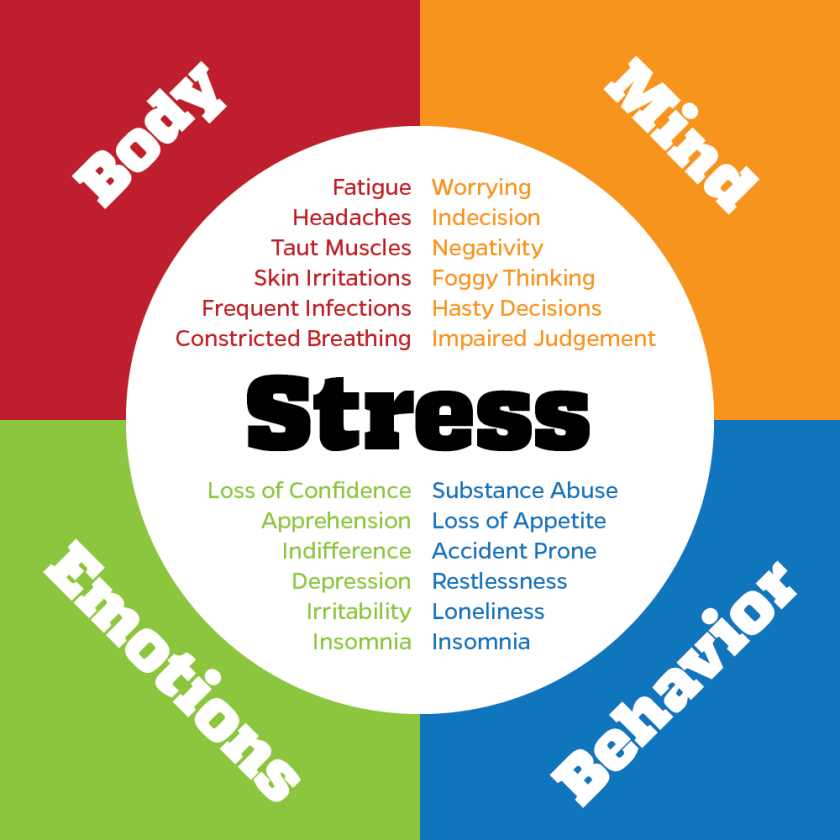
Diet, healthcare, sociability, and daily routines reduce stress. These are guidelines for an “Ikigai” way of life.

There are no surprises in these guidelines. Diet is to consume fruits, vegetables, fish, limited red meat, with few sweets containing processed sugars like white, brown, powdered, or high-fructose corn syrups. Healthcare should be provided through universal coverage. Sociability is encouraged to avoid isolation. Daily walking, stretching, moving around, and being mindful of one’s activity should be a part of a person’s lifestyle. Find what reduces your stress and practice those activities. These are familiar guidelines but not often practiced because of the stresses of the culture in which people live. Many try to escape the stress of their cultures with bad eating habits, poor physical routines, and social isolation. Some fail to follow these guidelines because they are too poor to care.

Human frailties like hearing loss, vision loss, or physical deterioration.

There are a number of difficulties with the guidelines noted by Garcia and Miralles. Finding a way of life that fulfills the ideals of “Ikigai” discounts the nature of human beings. It is impossible to ignore the personal instincts, drives, physical maladies, and cognitive abilities of different human beings. One size does not fit all because of these differences. Human nature may be universal, but it is not the same because human history, physical limitation, culture, and individual experiences are different. If the cultures in which you live do not offer universal health care, one is on their own. A capitalist culture operates in a different way than a socialist culture. Poverty, levels of education, and government influence exist in every culture and by nature distort what use can be made of “Ikigai” guidelines.

Human nature is universal, but it is also particular. In that particularity, “Ikigai” may or may not work for you or me. That is not to say the philosophy of “Ikigai” cannot lead one to a better life but only you can decide.

GENERIC DRUGS

Katherine Eban believes generic drugs are important for global health because of affordability and accessibility. One wonders if anyone who reads or listens to “Bottle of Lies” will take generic drugs if they can afford the original FDA approved product.

Books of Interest
 Website: chetyarbrough.blog

Bottle of Lies (The Inside Story of the Generic Drug Boom)

Author: Katherine Eban

Narrated By: Katherine Eban

Katherine Eban (Author, American Rhodes scholar with a MPhil from University of Oxford.)

“Bottle of Lies” is a history of duplicity and dishonesty in the generic drug industry. It is a damning dissection of the lure of money at the expense of human life. On the one hand, affordability, healthcare savings, global health, and the value of regulation are made clear in “Bottle of Lies”. On the other, Katherine Eban shows how the lure of capitalism and greed creates an incentive to evade regulation and kill innocent people seeking drug treatment for their illnesses.

Katherine Eban reveals the history of an India drug company named Ranbaxy that was founded by two brothers, Ranbir Singh and Gurbax Singh.

In 1937, these two entrepreneurs recognized the economic opportunity of creating a drug manufacturing operation with lower labor costs in India to capture the market in drugs nearing their patent expiration dates. They were focused more on organizational cost cutting and the money that could be made than the efficacy of the drugs they could produce. The company was sold in 1952 to their cousin Bhai Mohan Singh. This cousin transformed Ranbaxy to a pharmaceutical giant, but his experience was in construction and finance, not pharmaceuticals. However, his son Parvinder Singh joined the company in 1967 and was a graduate from Washington State University and the University of Michigan with a master’s degree and PhD in pharmacy.

Parvinder Singh (1944-1999, became the leader of Ranbaxy in 1967.)

Eban argues Parvinder Singh looked at his father’s business as a scientist with a pharmaceutical understanding and a desire to produce lower cost drugs for the world for more than a source of wealth. Parvinder appeared to value quality, transparency, drug efficacy, and long-term credibility for Ranbaxy. Parvinder recruited talent who believed in lowering costs and maintaining the efficacy of drugs the company manufactured. However, Parvinder dies in 1999 and the executives who took over the company focused on maximizing profit rather than the efficacy of the drugs being produced. Parvinder’s leadership is succeeded by Brian Tempest who expands the company by navigating the regulatory restrictions on generic drug manufacture. Tempest tries to balance profitability with global health efficacy of generic drugs. Parvinder’s son, Malvinder Singh eventually becomes the CEO of the company. He returned control to the Singh family. The corporate culture changed to what its original founders created, i.e., a drug producer driven by profit. Malvinder was not a scientist.

Malvinder Singh (Born in 1973, Grandson of Bhai Mohan Singh and son of Dr. Parvinder Singh.)

Under Malvinder, Eban shows the company turns from science to economic strategy to increase revenues of Ranbaxy. Internal checks on the efficacy and testing of their drugs is eroded. Criticism from regulators and whistleblowers are either ignored or sidelined by company management. Peter Baker Tucker’s role in exposing Ranbaxy is detailed in Eban’s history. With the help of Dinesh Thakur, an employee of Ranbaxy, Tucker bravely exposed the company’s fraud. (Thakur received $48 million compensation as a whistleblower award.) Tucker is an FDA investigator who reviewed Ranbaxy’s internal documents that revealed their fabricated data about their drug manufacturing process.

Peter Baker Tucker (aka Peter Baker, former FDA investigator.)

Ranbaxy is sold to a Japanese company called Daiichi Sankyo in 2008. Eban explains that Malvinder concealed critical information about FDA investigations and data fraud in the company’s sale. Malvinder and his brother, Shivinder Singh, are arrested in 2019 and remain in custody in 2021, facing multiple fraud accusations.

Sun Pharma acquires the remnants of the Ranbaxy-Sankyo’ sale.

Though Eban does not focus on what happens after the sale to the Japanese company, it is sold at a loss to Sun Pharmaceutical Industries and Singh family’s ownership is sued by Sankyo for hiding regulatory issues of the company. Daiichi received a $500 million settlement but effectively lost money on their investment. Eban, in “Bottle of Lies” offers a nuanced indictment of generic drug manufacturer and sale.

Eban believes generic drugs are important for global health because of affordability and accessibility.

Quality and drug efficacy must be insured through international regulation. Eban endorses unannounced inspections, routine testing of the drugs, and strict legal enforcement against poor manufacturing systems. Without transparency and oversight of all drug manufacturing, human lives are put at risk.

This is quite an expose, but it ends with criticism of inspections of China’s drug manufacturing capabilities.

The inspections of foreign companies that manufacture generic drugs, like those she refers to in her book, are conducted by similar inspectors who do not know the culture or language of the countries in which generic drugs are being produced. The FDA was paying their inspector in India $40,000 per year at the time of Ranbaxy’s investigation. It is by instinct, not interrogation, that malfeasance is detected. Too much is missed when one cannot talk to and clearly understand employees of manufacturing companies.

It seems America has two choices: one is to increase the salaries of FDA inspectors and require that they know the language of the countries in which they are working and two, set up a system of random reverse engineering of generic drugs allowed in the United States. This not to suggest all other FDA regulations would not be enforced when a generic drug is proposed but that site reviews would be more professionally conducted. One wonders if anyone who reads or listens to “Bottle of Lies” will take generic drugs if they can afford the original FDA approved product.

INTELLIGENCE

Viskontas believes technology is a boon, not bane, of human intelligence. Information recall is food for brains that advances civilization. She argues information recall, with the use of the internet of things, broadens recall to complement human intelligence and improve creativity.

Books of Interest
 Website: chetyarbrough.blog

Brain Myths Exploded (Lessons from Neuroscience)

Lecturer: Indre Viskontas

By:  The Great Courses

Indre Viskontas (Ph.D. in cognitive neuroscience from UCLA, performed at Cafe Royal Opera in San Francisco, studies neural basis of memory and creativity, Lecturer at USF.)

There is a great deal to unpack in Indre Viskontas lectures about the brain and intelligence. This review is an extension of a previous look at her “…Great Courses” lectures on “Brain Myths…”.

Viskontas argues sociability plays an important role in the development of intelligence. As a less social person one wonders what potential may be lost by introversion. Every human being is a mixture of extroversion and introversion. History suggests Benjamin Franklin, Margaret Thatcher, and John F. Kennedy were outgoing extroverts. In contrast, Abrahma Lincoln, Albert Einstein, and Rosa Parks were characterized as less outgoing and more introverted. All were insightful, intelligent leaders that had great impact on the history of the world. Sociability seems of little consequence for one’s intelligence or predictable role in history.

Viskontas explains how important sleep is for mental health.

The effect of sleep deprivation is a form of torture.

During sleep, Viskontas notes the brain is quite active, characterized by different brain wave patterns. Based on periods of sleep, our dreams are like house cleaners clearing the debris accumulated from days past. Some remember their dreams, others do not. That we all dream can be seen with REM, rapid eye movements, that can be seen as eyelid movements when one is sleeping. Viskontas suggests these dreams have hidden meanings that reflect emotions that the brain is actively processing while we sleep. Memories are reconstructed, often distorted, and can cause one to awaken because of their bizarre content. Our brains reconstruct stories in sleep, just as they do when we are awake in that they complete stories of our life whether the facts are true or false. The REM stories are a clearing house for adherent behaviors that may be good or bad.

Viscontas notes low activity in the temporoparietal junction (TPJ) and medial prefrontal cortex (MPFC) causes one to not remember their dreams.

Viskontas explains some do not remember their dreams because of lower activity in a part of the brain that is normally active when dreams are being recalled. She suggests those who wish to remember their dreams can keep a journal of what they do remember when they wake up. This journal can help one understand a little more about why they are dreaming and what their dream may mean by consulting a psychologist or psychiatrist.

A concern that Viskontas raises is that those who do not get enough sleep impair their memory and learning capabilities.

With a lack of sleep the prefrontal cortex functions poorly with poor judgment and impulsive behavior. Further, Viskontas notes the immune system is weakened by not getting enough sleep–with increased risk of anxiety, depression, and mood instability. When deprived of sleep, people become less social and are more driven by emotions than intellect. Viskontas recommends 7-9 hours sleep per night for optimal brain function. A continuous sleep cycle is important for deep sleep and REM that have distinct roles in information processing and a mind’s creativity for healthy living. Though Viskontas does not say anything about napping during the day, some research shows 20-to-30-minute naps can improve memory, alertness, and mood.

Viskontas explains intelligence is not a fixed characteristic but can be shaped by neuroplasticity, environment, genetic inheritance and social interaction.

Humans can rewire their brain through learning and experience. Intelligence rests within every person’s grasp but its improvement is based on genetic inheritance, experience, and effort. Science, with reproducible experiment, has proven intelligence exists throughout the Animal Kingdom.

“Quants” created collateralized mortgages in 2008.

Viskontas believes, on balance, technology is a boon, not bane, of human intelligence.

Information recall is food for brains that advances civilization. She argues information recall, with the use of the internet of things, broadens recall to complement human intelligence and improve creativity. Of course, that food can be poisoned just as the Quants who created collateralized mortgages that nearly collapsed the world economy.

INTELLIGENCE

After two or three chapters of Huston’s book, reader/listeners will likely complete it. The difficulty, as with all good advice, is following it.

Books of Interest
 Website: chetyarbrough.blog

SHARP (Simple Ways to Improve Your Life with Brain Science)

By: Therese Huston PhD

Narrated By:  Theresa Bakken

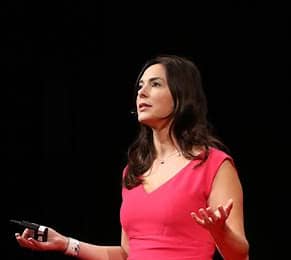
Therese Huston (Author, earned an MS and PhD in Cognitive Psychology from Carnegie Mellon University.)

Therese Huston is a well-known public speaker who has written a book that has appeal for those who wish to know what they can do to improve their memory and cognitive abilities. This is not a book some will be interested in either listening to or reading. Many presume they have a proscribed intelligence and memory largely determined by genetic inheritance. Huston infers there is some science-based truth in that opinion but that one’s memory, cognitive ability, and psychological health can be treated, if not improved, at any age.

Huston’s prescription for improved memory and cognitive ability requires effort.

Undoubtedly, we inherit much of our innate cognitive ability but whatever one’s genetic inheritance and age may be Huston argues cognition and memory can be improved. Huston discusses areas of the brain that are the base from which cognition and memory originate, are stored, and then called upon.

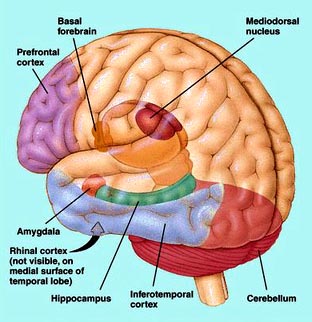
Huston notes the hippocampus, amygdala, prefrontal cortex, neocortex, cerebellum, and basal ganglia are key brain areas involved in cognition and memory.

The hippocampus is the primary location of memories, but the other five areas interact with one’s personal experiences in ways ranging from emotion, individual understanding, decision-making, reasoning, skill development, and formed habits. As we age, the way we process, store, and retrieve information deteriorates. We lose some memories, process information more slowly, and find it more difficult to process new information in the context of past experience.

What Huston explains is that exercise, visual, and tactical experience can improve memory and cognition at every age.

Staying active, experiencing the world in ways that stimulate the production of dopamine, and exercising effort to learn and do new things improves cognitive ability and memory. Dopamine is a neurotransmitter in the human body that regulates mood, focus and behavior. It is released by the body when it is stimulated by exercise, engaging experience, and learning new things. Huston offers advice on how one at any age can improve their mental health and care for themselves and others when they are troubled by various common and extraordinary events in life. Life’s events stimulate the release of dopamine which can illicit rage and bad behavior but also provide focus and beneficial behavior.

Huston suggests 14 generally simple ways of helping oneself and others cope with the stresses of life.

Many of her solutions are commonly understood, others less so. Not surprisingly, she notes exercise, proper nutrition, quality sleep, and deep breathing are important for maintenance and improvement of brain function and memory. Some more difficult and less understood aids to brain health and memory are 1) importance of social engagement, 2) learning new things from personal and other’s recorded experience, and 3) practicing ways of reducing the stresses of life in yourself and others you care about.

One who reads or listens to “Sharp” will recognize the value of Huston’s advice for improving memory and cognitive ability.

After two or three chapters, reader/listeners will likely complete her book. The difficulty, as with all good advice, is following it.