LIFE’S LOTTERY

Eugenics and the fickle political nature of human beings outweighs the benefits of Harden’s idea of choosing what is best for society.

Books of Interest
 Website: chetyarbrough.blog

“The Genetic Lottery” Why DNA Matters for Social Equality

By: Kathryn Paige Harden

Narrated By: Katherine Fenton

Kathryn Paige Harden (Author, American psychologist and behavioral geneticist, Professor of Psychology at the University of Texas at Austin.)

“The Genetic Lottery” is an important book that may be easily misinterpreted. Hopefully, this review fairly summarizes its meaning. Fundamentally, Kathryn Paige Harden concludes all human beings are subject to a genetic lottery and the culture in which they mature. It is not suggesting all human beings are equal but that all can develop to their potential as long as he/she has an equal opportunity to become what their genetic inheritance, education, and life’s luck allow.

Harden explains racial identity is a false flag signifying little about human capability.

Every human being is born within a culture and from a mother and father who have contributed genetic DNA they inherited from previous generations. DNA carries genetic instructions for development, growth, and reproduction of living organisms. Those instructions are a blueprint for an organism’s growth. However, the genetic information passed on to future generations varies with each birth and is subject to a lottery of DNA instructions.

The lottery of genetics extends a multitude of characteristics ranging from intelligence to height to the color of one’s skin.

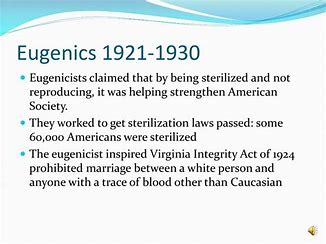
One may become an Einstein, or a slow-witted dolt. One may be born healthy or destined to die from an incurable disease. The growing understanding of genetics suggests the potential for human intervention to prevent disease, but also the possibility of creating a master race of human beings. That second possibility is a Hitlerian idea that lurks in the background of science and political power. It revolves around the theory of eugenics.

Harden suggests an ameliorating power of eugenics is its potential for offering equal opportunity for all to be the best version of themselves within whatever culture they live.
Putting aside the potential of human genetic theory’s risk, Harden explains every human is born within a culture that reflects the genetic inheritance of the continent on which they are born. The combination of the human genetic lottery and the culture in which humans live create ethnic identity and difference. Differences are the strengths and weaknesses of society. Strengths are in the diversity of culture that adds interest and dimension to life. The weakness of society is its tendency to look at someone who is different as a threat or obstacle to a native’s ambition or cultural identity.

Harden suggests every human being’s genetic code should be identified to aid human development by creating an environmental support system that capitalizes on genetic strengths and minimizes weaknesses.

This idealistic view of genetics is fraught with a risk to human freedom of thought and action. Science is generations away from understanding genetics and its relationship to the weaknesses and strengths of human thought and action. Understanding what gave Einstein a genetic inheritance that could see and understand E=MC squared is not known and may never be known. The luck of genetic inheritance and the lottery of life experiences are unlikely to ever be predictable. One interesting note in the forensic examination of Einsteins brain (recorded in another book) is that he had a higher-than-normal gilia cell ratio, non-normal folding patterns in his parietal lobe, and a missing furrow in the parietal lobe that may have allowed better connectivity between brain regions.
The threat of eugenic determinism and the fickle political nature of human beings outweighs the benefits of Harden’s idea of choosing what is best for society.

EUGENICS

On the one hand, genetic science may cure the incurable. On the other, genetic science may destroy civilization.

Books of Interest
 Website: chetyarbrough.blog

Why Fish Don’t Exist” A Story of Loss, Love, and the Hidden Order of Life

By: Lulu Miller

Narrated By: Lulu Miller

Louisa Elizabeth Miller (Author, Peabody Award-winning science reporter for NPR.)

Lulu Miller’s “Why Fish Don’t Exist” reveals the flaw in believing intelligence or position are measures of admirability. David Star Jordan is a founding president of Stanford University. He served from 1891 to 1913 after being the Indiana University president from 1884 to 1891. Jordan gained his academic qualification as a recognized ichthyologist (a zoologist who specializes in studying fish species).

David Starr Jordan (1851-1931, Scientist, founding president of Stanford University.)

Miller begins her memoir in admiration of Jordan but ends in vilification. Jane Stanford appointed Jordan as the first President of Stanford. Their collaboration laid the foundation for what became a research powerhouse for engineering, business, humanities, and sciences. Ms. Stanford’s relationship with Jordan is reported as less than harmonious because in the University’s beginnings there were financial difficulties and differences of opinion about faculty.

Jane Elizabeth Lathrop Stanford (1828-1905, American philanthropist and co-founder of Stanford University.)

Jane Stanford rejects an economics professor’s contract renewal because of his politics and his criticism of immigration. (Ms. Stanford’s and her husband’s wealth came from the railroad industry which was hugely benefited by immigration.) It is alleged that she pressured Jordan to refuse the professor’s contract renewal. Five faculty members resigned after the professor’s termination. Ms. Stanford had a reputation for requiring total devotion to her beliefs which, at times, conflicted with Jordan’s management of the University. More significantly, Ms. Stanford’s drive alienates and makes enemies of many people associated with the University.

Ms. Stanford dies in Hawaii in her 70s. The cause of death is attributed by authorities to be poisoning from strychnine.

What makes her death an ongoing mystery is that Jordan hires a medical investigator who argues Ms. Stanford died from natural causes, a heart attack, brought on by overeating. In much of America, Jordan’s hired investigators’ cause of death is accepted. That is, until a book is written by Richard White in the 21st century, that reaffirms the authority’s earlier opinion. Miller does not suggest Jordan had anything to do with Stanford’s murder, but Miller’s inference is that he initiated a cover-up.

In one sense, Miller is Jordan’s character assassin. In another, Miller reveals the dark side of science.

Jordan is shown to believe in eugenics that advocates selective breeding of the human race. Eugenics is a science meant to selectively breed human beings. Miller explains Jordan believes in forced sterilization (which surprisingly exists in the United States until 1981). Eugenics is the same belief held by Adolf Hitler when he tried to exterminate Jews and create an exclusive Nordic or Aryan race. Hitler established laws for forced sterilization, euthanasia, and selective human breeding.

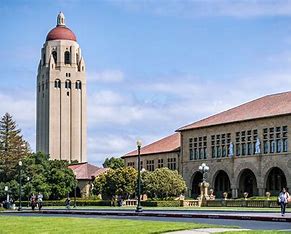
STANFORD UNIVERSITY

Miller’s memoir of David Starr Jordan shows how science is a mixed blessing. Jordan’s remarkable work in zoology and his role as the first President of Stanford is tainted by his expressed belief in eugenics. The threat of eugenics is greater today than in the past. On the one hand, genetic science may cure the incurable. On the other, genetic science may destroy civilization.

DARWIN’S THEORY

To Carl Woese, Darwin’s theory of evolution was, at the least, horribly misleading.

Books of Interest
 Website: chetyarbrough.blog

The Tangled Tree” A Radical New History of Life

By: David Quammen

Narrated By: Jacques Roy

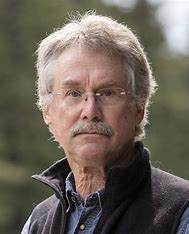
David Quammen (Author, Yale University graduate, Rhodes scholar, fiction and non-fiction nature and science writer and historian.)

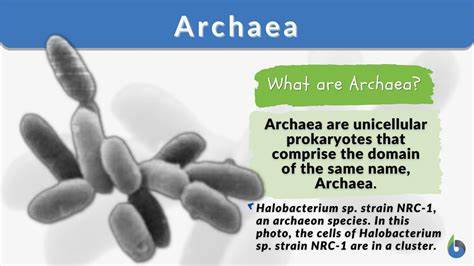
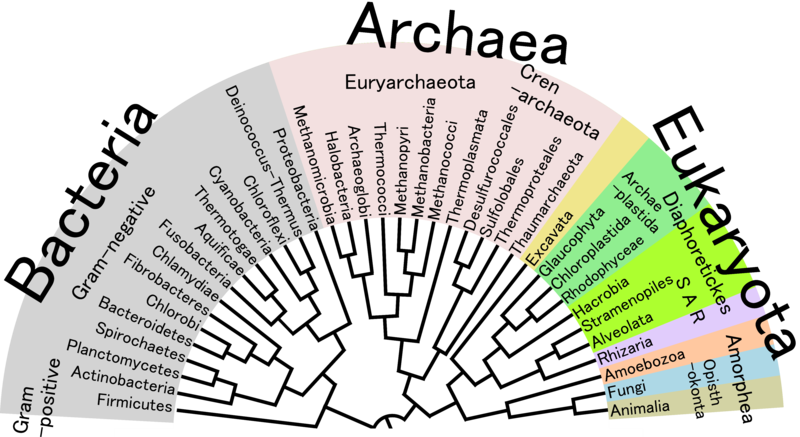
Quammen’s history of the discovery of a new form of life is interesting and enlightening. Archaea cells are not discovered until 1977 at the University of Illinois. Archaea are neither animal nor vegetable but resemble bacteria, a single-celled prokaryote. Archaea are prokaryotic (without a nucleus), like bacteria. There seem to be two differences between Archaea and bacteria. Archaea often thrive in extreme environments by using ether-linked lipids while bacteria only use ester-linked lipids. The difference has to do with how these prokaryotes bond to lipid molecules.

Archaea are believed to have set a boundary for evolutionary diversity in earth’s early extreme environment.

Archaea are believed to have played a role in the transition and adaptations that allowed life to change and flourish. The suggestion is that archaea were instrumental in creating a “The Tangled Tree” of life. Archaea, like bacteria, are everywhere in the soils and water of earth. Through chemical processes, they moderate global carbon and nutrients that exist in the world’s ecosystem. Some suggest life would have evolved without archaea but their role in earth’s early existence seems especially relevant because of early earth’s extreme environments.

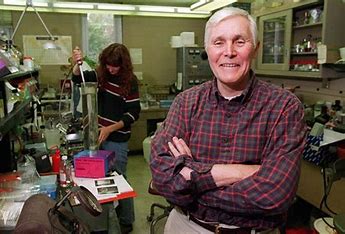
Carl Woese (1928-2012, American microbiologist and biophysicist.)

Quammen introduces Carl Woese, the evolutionary biologist who revealed archaea as a third form of life. Woese challenges Charles Darwin’s theory of evolution because this third domain of life, alongside bacteria and eukaryotes, fundamentally changed representation of life as a branching tree. Archaea are similar to bacteria in that they are procaryotic (singular cells with no nucleus). However, archaea have cell wall differences. Archaea cannot perform photosynthesis, they reproduce by fission, and interact with DNA and RNA differently. What is discovered about archaea is that like bacteria, they can transfer genetic information horizontally, i.e. directly affecting the evolutionary characteristics of species.

The idea of descendent inheritance is not overturned but hugely expanded with archaea becoming a part of the process of evolution.

Archaea, like a bacterium can infect living things but as a genetic cell, archaea can initiate inheritance. To stretch one’s imagination, archaea might be transmitted between a human and a pet like a bacterium but with the potential of inheritable characteristics. Like learned behavior, the inference is there is a possible exchange of archaea cells between humans and pets that may change behavior of one or the other. The inference is that a pet dog may exhibit the behavior of its owner, not only because of learned behavior, but because of archaea transfer.

The idea of horizontal gene transfer (HGT) by archaea tangles the tree of life in ways that make natural selection a lottery as well as a parental inheritance.

Quammen touches on discovery of CRISPR (clustered regularly interspaced short palindromic repeats) which is a powerful technology that allows precise gene editing of an organism. As science discovers the genetic origin of disease and animal kingdom vulnerability, gene editing has the potential of saving or destroying life.

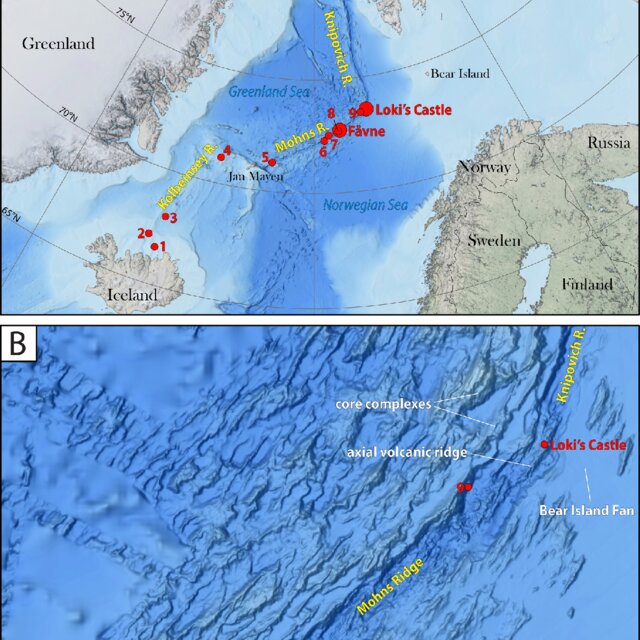
Quammen turns back to the age-old question about the beginning of life on earth. What came first and how did eukaryotes evolve into sentient beings? A suggestion made by some and recalled by the author is Loki’s Castle, a hydrothermal vent in the mid-Atlantic Ocean. Here, a thermophile, which is an archaeon, may have been life’s trigger that began evolution.

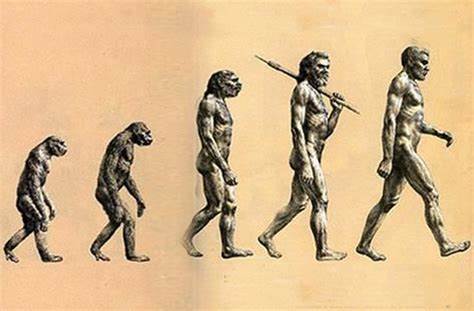
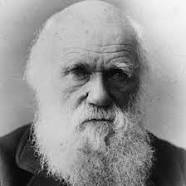
To Carl Woese, Darwin’s theory of evolution was, at the least, horribly misleading. Today, Darwin’s “Origin of Species” remains a seminal work of evolutionary science. Darwin’s work was based on observations during the voyage of the Beagle in the 1830s. Admittedly, natural selection from a common ancestor was not the whole story but it opened the door for further investigation and scientific proof.

CHARLES DARWIN (1809-1882) FOUNDER OF THE THEORY OF THE ORIGIN OF SPECIES.

Woese and other biologists owe much to Darwin’s early observation and theory of evolution. Science begins with theory and evolves with proof, demonstrated by repeatable experimental results. Darwin gave the world the theory. Biologists have been working on the proof ever since.

BIODIVERSITY

Human population growth is slowing, and awareness of biodiversity is improving but is the trajectory of global warming outpacing human action?

Books of Interest
 Website: chetyarbrough.blog

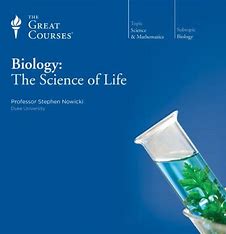
Biology: The Science of Life

Author: Great Book Series

Narrated By: Professor Stephen Nowicki

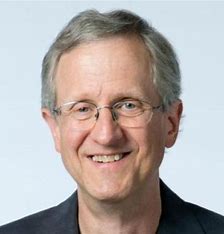
Stephen Nowicki, Ph.D. (Bass Fellow and Professor of Biology @ Duke University, Associate Chair of the Dept. of Biology and Neuroscience.)

This is a dauting series of lectures with a theory of the beginning of life. It addresses living things in general but more specifically what is known about human life. Not surprisingly, it is immensely complicated.

There may have been an Adam and Eve in history, but Science infers any garden of Eden had to have been long after the beginning of life on earth.

Nowicki explains how Stanley Miller conducted an experiment in 1952 that simulated conditions of the early days of earth’s formation. Methane, ammonia, hydrogen, and water were present in those early days. These ingredients were used in a controlled environment, with the help of energy (primordial lightening), to combine into amino acid compounds that are essential to life. These basic chemicals were present in the early days of earth. These amino acid compounds are the building blocks of life.

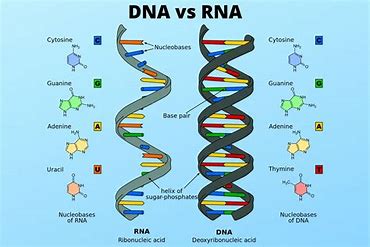
With amino acids, it became possible for DNA and RNA formation. DNA and RNA are shown to synthesize proteins leading to cellular process and organic development.

From these early beginnings, a natural selection process is initialized, i.e. evolution began which led to complex organisms like viruses, bacteria, animals, and eventually humans. Nowicki goes on to explain the complex biology of science. This is a point at which understanding by a lay reader/listener becomes difficult and only partially comprehensible. He begins with a detailed discussion of genetics, the study of genes, their discovery and function.

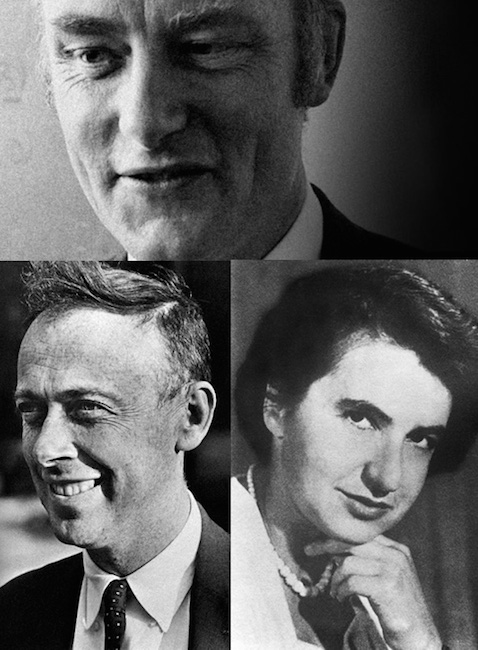
With the help of Rosalind Franklin (lower right), Watson (lower left) and Crick came up with the double helix model made of deoxyribose sugar that alternates with phosphate group strands.

The most famous pioneers of genetics are James Watson and Francis Crick. The genetic model they created reveals the backbone (organizational structure) of genes. With addition of nucleotides (adenine, thymine, guanine, and cytosine) to the gene backbone, genetic instructions are encoded by single strands of RNA into double strands of DNA. RNA’s single strands direct ribosomes that prevent mutation and maintain genetic integrity.

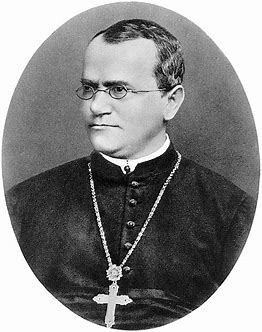
Nowicki jumps back in history to explain Darwin’s theory and proof of evolution. In addition, he recounts Gregory Mendel’s discovery of genetic inheritance. (Though Darwin and Mendel were contemporaries, it is not believed they ever met.) Mendel found, in breeding pea plants, that pea plants inherited certain traits of their parent plants with first generation plants having one color flower while second generation had 1/3rd to 2/3rd color differences that experimentally suggest inheritability of appearance. Mendel had no knowledge of genetics but was aware of Darwin’s writing. Ironically, Mendel discovered that inheritance had distinct genetic units of dominant and recessive characteristics explained how second-generation pea plants had mixed colors. This inheritable element of a gene became known as an “allele”, a word coined by British geneticist William Bateson in the early 1900s.

A listener/reader is only 1/4 of the way through Nowicki’s lectures at this point. Many of the remaining lectures delve into the details of gene function that will be interesting to biology students but only confuse and tire a dilettante.

To this reviewer, the two most enlightening features of Nowicki’s lectures are his views on the origin of human life and the ecological loss of biodiversity that threatens human existence. Nowicki challenges religious belief in the origin of life with a convincing argument for nature’s creation of human existence. His last lecture addresses global warming, reduced biodiversity, and the consequences of a loss of earth’s laboratory of medicinal cures for human ailments.

Nowicki leaves listener/readers with belief in humanity’s and earth’s environmental correction but with reservation. Human population growth is slowing, and awareness of biodiversity is improving but is the trajectory of global warming outpacing human action?

UNENDING PURSUIT

Science is an unending pursuit of knowledge that is refined and advanced by new techniques of examination.

Books of Interest
 Website: chetyarbrough.blog

“Gene Machine

Author: Venki Ramakrishnan

Narrated By: Matthew Waterson

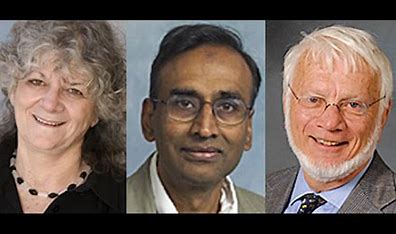
Venki Ramakrishnan (Author, British-American structural biologist, shared 2009 Nobel Prize in Chemistry with Thomas A Steitz and Ada Yonath.)

“Gene Machine” tells reader/listeners of the discovery of the structure of ribosomes. Ribosomes are elemental cellular organisms (organelles) made up of proteins within living cells. They are genetic factories that process protein within the body. Without ribosomes, life as we know it, would not exist. Ribosomes repair cellular damage, maintain cell structure, and direct chemical processes within the body.

In the 20th century, after years of research, Ada Yonath, Venki Ramakrishnan, and Thomas Steitz discover clues to the structure of Ribosomes. Ramakrishnan story is about the complex process of scientific discovery. He reveals how scientists are motivated by the same desires of all humanity; namely money, power, and/or prestige. This is “the way” of the world, whether its religion, science, or society.

To the lay reader/listener, Ramakrishnan’s story is most interesting because it illustrates science research is more than a quest for knowledge. Curiosity and thrill of discovery are important, but it is the reward of being first and the accompanying money, power, and prestige that are scientists’ greatest reward.

Ramakrishnan somewhat ambivalently acknowledges Ada Yonath is the first scientist to recognize the critical role of ribosomes in genetic engineering. Ms. Yonath pioneers the use of crystallization in studying the elusive ribosome existence. However, Yonath fails to reveal a clear picture of the ribosome because of repeating the same chemical means of freezing the image of the elusive organelle. Ramakrishnan and his team of graduate students manage to come up with a chemistry formula that clears the image enough to make the structure of ribosomes more accurate.

Thomas Steitz helped perfect x-ray crystallography to more clearly map the structure of ribosomes.

Steitz’ work justified his inclusion in the Nobel award. The significance of Ramakrishnan’s story to a non-scientist is his unabashed and self-effacing humility when explaining his role in discovering the structure and purpose of ribosomes.

One wonders if Ramakrishnan harbors an opinion that Yonath’s pioneering of ribosome research is overblown.

Ramakrishnan criticizes Ada Yonath for being too verbose when participating in public conferences by recalling a conference that limited presenters to 15 minutes. Ramakrishnan explains Yonath went on for over 30 minutes despite the audiences expressed discontent. In the end, he acknowledges Yonath’s role in being among the first to suggest ribosome research was important. She was the first to use crystallography to identify its structure. Ramakrishnan notes those two facts justify her Nobel’ selection.

Ramakrishnan suggests winning a Nobel opens doors to opportunities that are unjustified in ways that have little to do with the specific work or a particular discovery.

Ramakrishnan explains much of the public think a winner of a Nobel could talk about any scientific subject with expertise. He notes the Nobel Prize is a great honor but is proffered to scientists that have achieved a finite discovery in a specific discipline, not a general understanding of all science. He goes on to explain how his country of birth (India), the country of England, and one suspects America, wish to claim him as representative of their countries–when, in fact, he is an individual who achieved success by dint of hard work, the help of others, and personal discipline. Ramakrishnan’s story explains how he pursued understanding of crystallography because it could help him achieve a goal. His point seems that the hard work of many scientists, not nationality or Nobel recognition, are keys to successful science research.

Ramakrishnan story is about science as an unending pursuit of knowledge that is refined and advanced by new techniques of examination.

In today’s science research, chemistry of crystallography is made less valuable with the invention of the atom-level microscope that offers direct, firsthand observations of the structure of human organelles like the ribosome. Ramakrishnan suggests science is an eternal search for knowledge.

ENTROPY, TIME, & LIFE

As one gets older, the principle of entropy takes on a personal meaning. Getting older may make one wiser but not smarter.

Books of Interest
 Website: chetyarbrough.blog

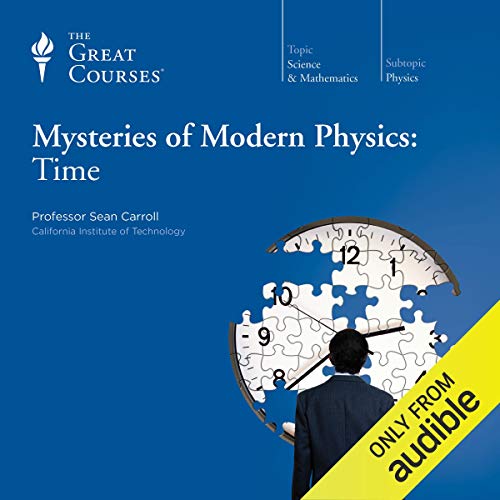
The Great Courses: “Mysteries of Modern Physics: Time” 

By: Sean Carroll

Lectures by: Sean Carroll

Sean Michael Carroll (American theoretical physicist and philosopher specializing in quantum mechanics, cosmology, and philosophy of science.)

Sean Carroll presents scientists’ views of time, entropy, and life. There are instances of his lectures that are too obscure for this reviewer, but for physicists the lectures are undoubtedly clearer and more concise than for this seeker of understanding.

Carroll explains there are four physical dimensions in the world. There is length, width, depth, and a fourth dimension called time. The first three are easy to understand because they are physical characteristics while time is not. Time cannot be seen, touched, or tasted.

Time is a fourth dimension measured by calendars and clocks that divide the past and present into days, hours, minutes, and seconds. Carroll notes knowledge of length, width, and depth are of the past and present while time points to an unknown future as well as the present and past. Einstein refined the definition of time by renaming it space time which combines physical dimensions with observers’ perception of events, i.e., where and when observations occur and where the observer is located. The significance of Einstein’s space time is that the location and traveling speed of the observer affects the perceived time of events. Carroll’s attention is about time as an arrow that only points forward. Carroll explains how events of the present and past can be defined while the future is unknown. An extended meaning of the arrow of time is that it seems unlikely (though not impossible according to Carroll and the current state of physics) that we can physically return to a past.

There is a significant distinction between entropy and loss of energy. Energy is always conserved but it may not be useable for work. Entropy is about increased disorder and randomness of energy states. Carroll defines entropy as a characteristic of matter in the world which is in a state of molecular disorder, randomness, and uncertainty. This definition is reinforced by the discovery of quantum mechanics which experimentally illustrates probabilities rather than certainty at atom-level interactions. (Einstein never accepted quantum mechanics as a truth of life but only a step of discovery in physics. Einstein believed there would be a discovery that incorporates quantum mechanics in an ultimately predictive physics world.) Carroll notes a theory that explains gravity along with the proof of quantum mechanics holds a key to whether Einstein is wrong when he suggested God does not play with dice.

An interesting note by Carroll is that transition from low to high entropy has an interesting effect in an experiment with two separate enclosures that are connected. One has gas molecules in it while the other does not. There is a hole between the enclosures through which molecules can enter. Over time the two boxes will have the same amount of gas through a process of equilibration. This reinforces the idea of conservation of energy while demonstrating energy transformation.

Transformation of energy is exhibited in animal life by its eventual death, but Caroll explains it equally applies to all matter in the universe. The idea of entropy is reinforced by the arrow of time that only points in one direction.

At an atomic level, all matter transforms over time.

Entropy does not mean loss of energy. Energy is always conserved but it may not have a useful work purpose. The second law of thermodynamics, postulated by Rudolf Clausius in the 1850s, explains that heat always flows from hotter to colder through the process of entropy. For example, a low-level heat energy may not serve a work purpose, but it still conserves energy balance. Raising the heat on a cube of ice transforms its molecules from a frozen state to water to steam which conserves energy that can generate working steam molecules to power an engine.

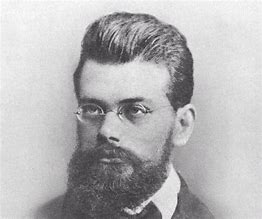
Much of Caroll’s lectures are an examination of Ludwig Boltzmann’s theory of statistical mechanics and kinetic theory. Much of Boltzmann’s contribution revolves around the concept of entropy and a detailed understanding of the behavior of particles in gases, liquids, and solids. He performed experiments that proved the conservation of energy and the equilibration of atoms and molecules as an observable phenomenon.

Boltzmann speculated that in the beginning of the universe, the chaotic activity of its beginning transformed into a lower state of entropy to create what we see in the world.

Ludwig Edward Boltzmann (1844-1906, Austrian physicist and philosopher.)

Boltzmann’s idea came before the theory of the Big Bang. The idea of the Big Bang actually presumes less entropy rather than more before the creation of the universe. Boltzmann’s idea is that the universe began in chaos (high entropy) to form what became known as a Boltzmann brain (low entropy), a thought experiment where a highly advanced brain formed in a void, from which the universe evolved. The Boltzmann brain is like the singularity of the Big Bang where cosmic dust condensed into a low entropy state and then exploded into our universe.

The origin of the universe may, in one sense, come from either a Boltzmann brain or a Big Bang. Both suggest the universe began in a low entropy state.

However, the Big Bang seems more reliably built on evidence by the measurement of an expanding universe with proven remnants (cosmic radiation) from a massive explosive event. Either theory implies the potential for a multiverse that began from a low entropy theory of our universe’s origin.

At this point in Carroll’s lectures, one’s head begins to hurt. He addresses the many ramifications of the origin of life. As one gets older, the principle of entropy takes on a personal meaning. Getting older may make one wiser but not smarter.

ENERGY MATTERS

The boon for composite material is their utility for work and play. Their bane is disposal and their effect on the environment.

Books of Interest
 Website: chetyarbrough.blog

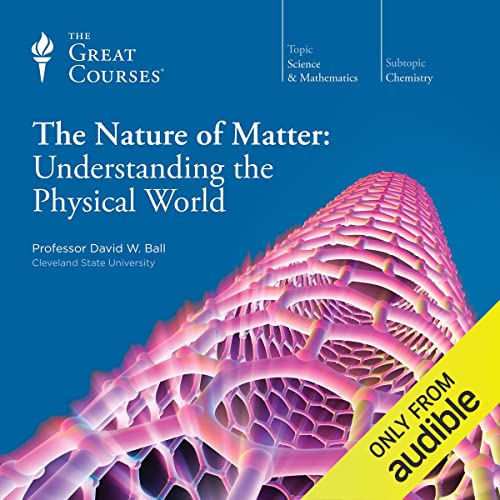
“The Nature of Matter: Understanding the Physical World” (The Great Book Lectures)

By: David Ball

Narrated by: Professor David W. Ball

Professor David W. Ball (Professor of Chemistry and Chair of Chemistry Dept. at Cleveland State University, received Masters and Doctoral Degrees from Rice University,

Professor Bell offers a definition and description of matter in the universe. He carries on much of what is explained by Pollock in “Particle Physics”. Bell explains how physics particles form matter with the addition of energy, Bell reifies and expands Pollock’s history of physics. Though there is significant overlap in their presentations, Bell offers a more detailed understanding of matter with its component particles and the role of energy in what humans hear, feel, smell, and see.

Two facts about matter expanded by Bell are about energy’ component’s and structure’s interactions among and within atoms. Though Pollock alluded to the structure of matter and fully explains energy’s importance at the atomic level, Bell expands explanation of electrons and the way they provide energy within and between atoms.

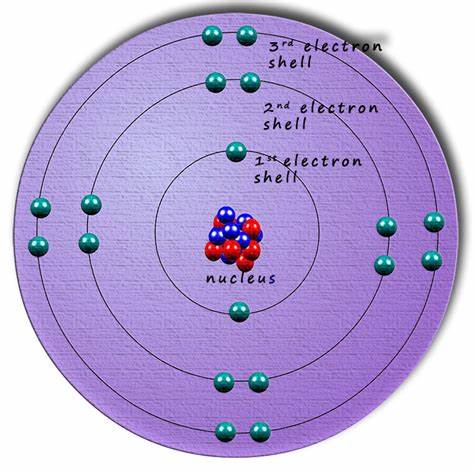
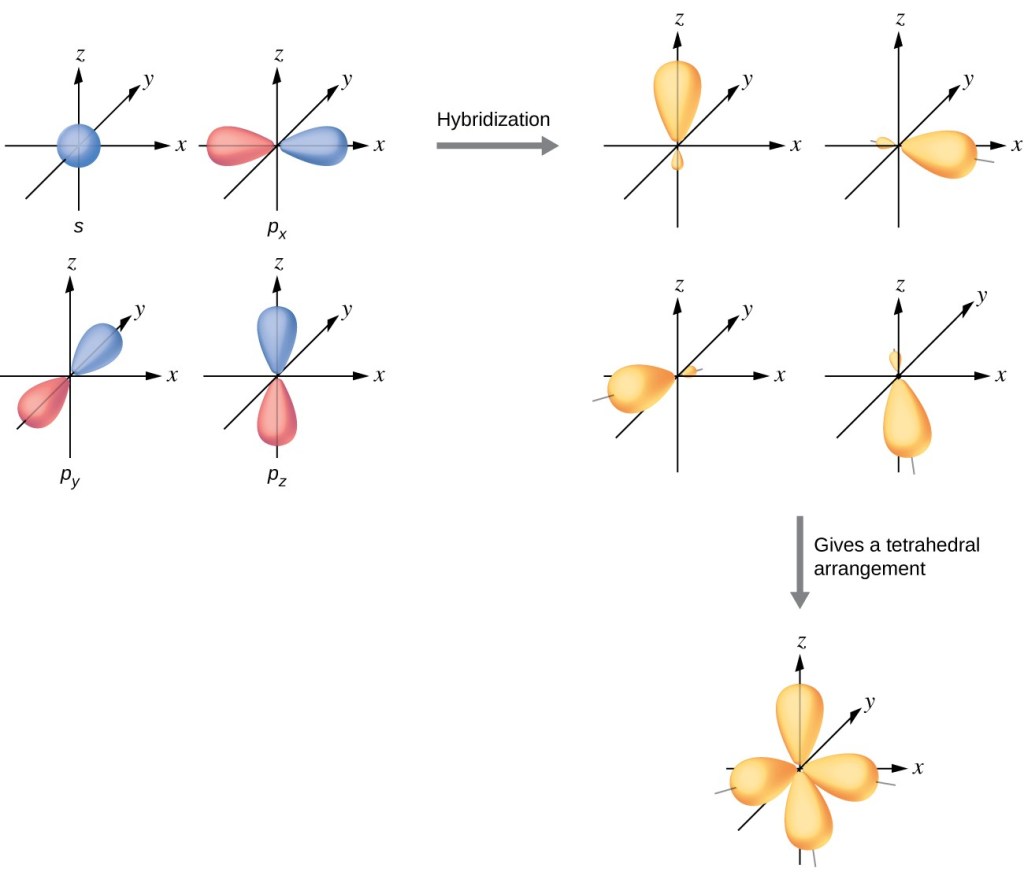
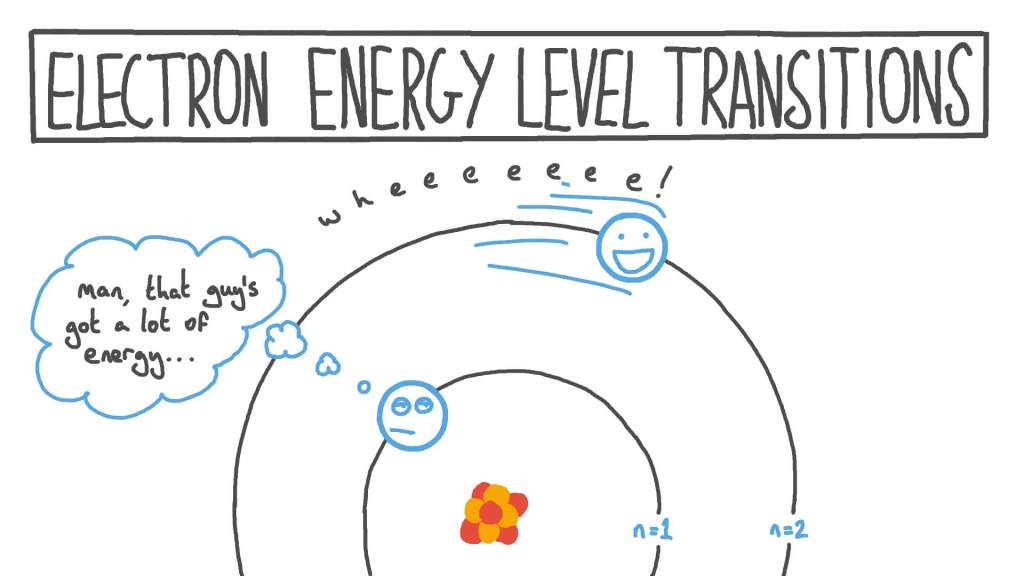
The structure of revolving electrons generate energy in different orbits around the nucleus of an atom. Initially, those orbits were thought to be like planets revolving around the sun but were found to be located within shells around the nucleus in three different orbits. These shells come in three categories. One is spherically symmetric (called the S orbital), the second is dumbbell-like with two lobes along specific axis’s (called P orbitals), and the third (which are also called P orbitals) follow a preferred direction that is not spherical. These shells are important because their reactivity and bonding play a critical role in the formation of matter.

Ball explains electron arrangement around the nucleus of an atom determine chemical properties and behavior of molecular interactions. Electrons are the wave feature of Quantum Mechanics that confound an ordered world of cause and effect postulated by Albert Einstein. What is made a little clearer by Ball is that color is an integral part of energy at the atomic level. Electron energy has discrete and precise energy levels that are arranged around the nucleus of an atom.

Without light particles (protons), energy would not exist. Ball notes electron energy is fundamentally affected by light.

Light or photons are the source of discrete energy levels called quanta that do different things–1) generate absorption, 2) cause transition between shell levels, 3) generate fluorescence, and/or 4) penetrate an atom’s dense nucleus to change mass to energy.

Ball explains why carbon is the most important element in the periodic table. Carbon’s importance is signified by its absence or presence in matter. Matter is either organic or inorganic with carbon being the measure of its classification. The astounding realization is that as a percentage of the earth’s elements, carbon is only 0.032% of our environment. (In contrast, the 3 largest fundamental elements on earth are oxygen at 46.6%, silicon is 27.7%, and Aluminum is 8.1%.) It is a reminder that earth’s living things (organic matter) are dependent on carbon, a miniscule percentage of our environment.

Without carbon, there would be no life (as we know it) on earth.

Ball’s chapter on water is an enlightening exploration of its reputation as a universal solvent with various uses and characteristics when boiled or frozen. Water’s dissolving and heat-storing capability are thoughtfully explained. Pollution is touched upon with explanations about what is being done and needs to be improved to preserve the world’s environment.

Ball explores prosthesis and material questions and solutions for the creation of body parts.

From dental fillings to tooth implants, to artificial hips, knees, hearts, arteries and breast implants, Ball explains how biochemistry and materials are critical to their manufacture and utility. He suggests the future will include brain implant enhancements and increases in human longevity.

In “Resistance is Futile”, Ball explains the value of superconductivity.

The current reality of world’ electrification is that 30% of its beneficial power is lost in transmission. Material qualities of our wired world inhibit electrical power conductivity. That 30% loss can be reduced by hugely lowering the temperature of transmission material, with the idea to invent a superconductive material that does not require super-cooled temperatures. Success in finding that material remains a work in progress. No one has found a superconductivity material that does not require super-cooled temperatures. However, Ball notes discovery would be an immense energy saver for the world.

In contrast to “Resistance is Futile” Ball notes “Resistance is Useful”.

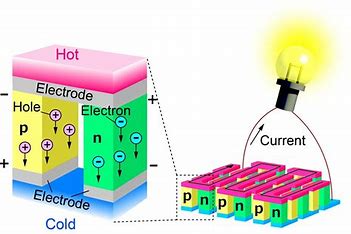
Ball explains how resistance creates heat in a semi-conductor that can be translated in a wired circuit to trigger a directed instrumental behavior or action. With the design of circuit boards with semi-conductors (specifically transistors), one could initiate or complete a series of tasks. From automating machines to creating powerful laptop computers, semi-conductor manufacture grew into an immense industry. As the complexity of tasks increased, the size of semi-conductors decreased. Gordon Moore proposed Moore’s law that suggested transistor’ size (a form of semi-conductor) in integrated circuits would become smaller and double every two years. Moore’s Law is not precisely true, but miniaturization, performance, and integration remain semi-conductor manufacturing’ goals.

The last lectures address composites and their component assembly in everything from concrete to fiberglass to tires.

These composites are formed from different materials based on their elemental properties that provide valuable materials to society. They are formed by atomic level interactions between elemental properties. Composite materials are noted as a boon and bane of society. The boon is their utility for new products for work and play. Their bane is disposal and their effect on the environment.

PHYSICS STANDARD MODEL

Was Einstein right when he said, “God does not play dice with the universe.”

Books of Interest
 Website: chetyarbrough.blog

“Particle Physics for Non-Physicists: A Tour of the Microcosmos” (The Great Book Lectures)

By: Steven Pollock

Narrated by: Professor Steven Pollock

Steven J. Pollock (American professor of physics, 2013 U.S. Professor of the Year.)

Professor Pollock attempts to explain particle physics to non-physicists in this lecture series. The explanation details the contributions of many brilliant physicists and scientists that are generally well-known to most who wish to have a better understanding of physics beyond its mathematic proofs. Parenthetically, Pollock’s history shows few contributions to physics by women, a sad reflection on world society that ignores half the world’s intelligence.

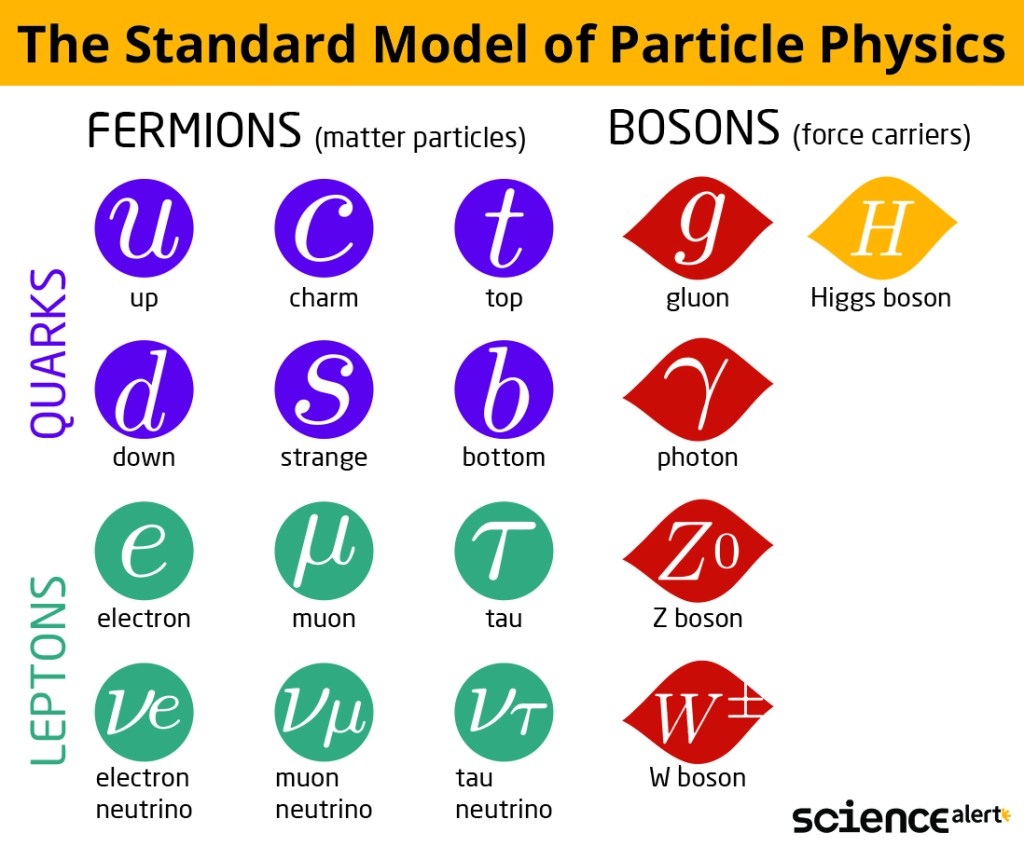
Particle physics is about the most elemental ingredients of the universe. Pollock notes the known elemental particles are either bosons or fermions which have been identified through various methods of breaking down the structure of the atom. Examples of bosons are photons, gluons, and bosons. Examples of fermions are electrons, quarks, and neutrinos.

Pollock explains fermions are the elemental particles that make up the matter of what we see. Bosons are the forces of the subatomic world that manipulate fermions. Pollock believes the standard model of physics has largely been determined and that there are unlikely to be any fundamental changes to that model. That conclusion reminds one of Lord Kelvin in 1900 who suggested “There is nothing new to be discovered in physics now.” In contrast, Albert Einstein noted “The more I learn, the more I realize how much I don’t know.” One wonders if Pollock is leaning toward a Kelvin perception of the standard model of physics by discounting Einstein’s observation about knowledge.

Higgs boson gives mass to what humans see in the world by combining the forces and matter of the sub-atomic world.

Pollock explains the evolution of research in identifying new elemental particles. Pollock notes the Higgs-Boson, the latest particle identified with the Large Hadron Collider in Geneva in 2021, suggests the same tool will lead to further particle discoveries. He explains how the LHC is the latest method for revealing unknown elemental particles by bombarding atoms with proton beams and heavy ions to discover the elemental ingredients of nature. The LHC’s ability to generate a high enough velocity to break the atom into its constituent parts remains a work in progress. Interestingly, Pollock expresses some reservations about the experimental proof of Higgs-Bosun because of the LHC’s unreliable replication of the Higgs-Bosun results. The LHC is shut down for an upgrade that will presumably prove or disprove the Higgs-Bosun discovery.

Will LHC and linear accelerator experiments find more fundamental particles for the standard model of physics? Was Einstein right when he said, “God does not play dice with the universe.” Pollock implies not.

Pollock, like many physicists, believes quantum mechanics are the way the world works at an atomic level and infers the distinction is like the difference between Newtonian and Einsteinian physics. Newton’s world of physics is about earth and its existence while Einstein’s view is of the universe. Both were right within their fields of analysis, but each assumed life exists in a deterministic universe.

It seems Pollock chooses to accept the atomic level of the world operates probabilistically while the macro world operates deterministically because both show experimental proof of difference. Einstein believed the difference would be resolved by further knowledge, i.e., knowledge that explains how there can be a difference between particle physics and Newton/Einstein’ physics that reasons both are ultimately deterministic.

WHAT IS REAL

The significance of Becker’s book is in his explanation of Bell’s theory that disagrees with Einstein’s theory of locality.

Blog: awalkingdelight

Books of Interest
 Website: chetyarbrough.blog

“What is Real” The Unfinished Quest for the Meaning of Quantum Physics

By: Adam Becker

Narrated by: Greg Tremblay

Adam Becker (Author, American astrophysicist, philosopher with BA’s from Cornell, and a PhD in the philosophy of physics from University of Michigan.)

Adam Becker explains a mystery that surrounds the concept of quantum mechanics. The theory of quantum mechanics continues to confound Einstein’s disagreements about quantum physics. No one, including Albert Einstein’s and Niels Bohr’s discussions, has fully agreed on the fundamentals of quantum mechanics. There are theories about quantum mechanics but proof about “What is Real” remains a mystery.
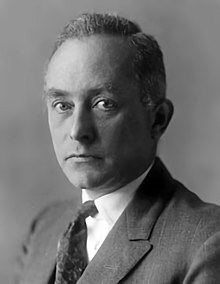
Becker explains in broad terms the Copenhagen interpretation of quantum mechanics. The Copenhagen interpretation came from the work of Niels Bohr, Werner Heisenberg, and Max Born. Study of the sub-atomic world is based on the Copenhagen mathematical theory created in 1925-1927. The theory argues quantum mechanics is inherently probabilistic, not deterministic. (The term probabilistic is only reference to a collapse or disappearance of an expected proton when sent through a split screen. It is not suggesting that quantum physics results are not reliable tools. Quantum physics has been found to be a reliable, accurate, and dependable tool for the desired effects when applied in the tech world.)

Interestingly, Becker suggests Werner Heisenberg tried to cover up his support and belief in Nazism. Becker suggests Heisenberg’s ineptitude as a manager of the research and experimentation process is the cause of Germany’s failure, not any sympathy for holocaust victims.

Einstein argues the only reason quantum mechanics appears probabilistic is because of an undiscovered fundamental law about the sub-atomic world. Einstein believes all physics theory must obey the law of locality which postulates physics laws must be based directly on related and surrounding causes.

Becker notes John Stewart Bell experimentally proves Einstein is wrong and that quantum effects violate the principle of locality.

Bell’s proof is mathematical and based on experiment. His calculations and experiment show two light particles can have spin characteristics that correlate with each other at a distance, non-locally. This quantum entanglement is dubbed “spooky action at a distance” by Einstein. Einstein, Boris Podolsky and Nathan Rosen argue entanglement (“spooky action at a distance”) is not proof of non-locality. Einstein believes there is an undiscovered cause for the appearance of non-locality’s entanglement. The argument against locality is called the EPR paradox after its theorists’ last names. Bell proves through experiment that “spooky action at a distance” is real and that the Copenhagen interpretation of quantum mechanics is wrong.

John Stewart Bell (1928-1990)

Bell’s theorem verifies that “spooky action at a distance” is no paradox by proving that quantum mechanics reflect a non-local phenomenon.

Hugh Everett, a physicist who studied under John Wheeler, published a paper with the idea that non-locality is evidence of another reality, another world with the same people experiencing a different course of life. The collapse or disappearance of a quantum particle is evidence of another reality, another world. For example, an incident of a near drowning would be survival in another reality that simultaneously exists in a different world.

Hugh Everett (1930-1982, died at age 51)

Hugh Everett proposed a many worlds theory of quantum mechanics based on Bell’s theorem of non-locality.

Everett was a student of physics professor John Wheeler who had worked with Niels Bohr.

John Wheeler (1911-2008)

Wheeler became an early supporter of Everett’s many worlds theory.

Wheeler popularized the terms “black hole”, quantum foam”, “neutron moderator”, and “it from bit”. He participated in the Manhattan Project during WWII and worked at the Hanford Site where he helped Dupont build a nuclear reactor in Richland, Washington. Wheeler became skeptical of the many worlds’ hypothesis in later years because of what he called its “metaphysical baggage”.

The significance of Becker’s book is in his explanation of Bell’s theory that disagrees with Einstein’s theory of locality. Einstein presumes missing variables will explain “spooky action at a distance”. Becker notes most physicists still believe in the Copenhagen theory of quantum mechanics despite Bell’s theory and proof that quantum mechanics allow for non-local affects. All the answers for “What is Real” proposed by Becker seem to contradict themselves or lack common sense. However, they still may be true or valid. They are just unproven or unobservable by repeated experiment.