Whether an idealist or humanist, the historical truth is that rising authoritarians believe power is all that matters. Today, the world seems at the threshold of authoritarianism.
Books of Interest Website: chetyarbrough.blog
Bronshtein in the Bronx
By: Robert Littell
Narrated By: Adam Grupper
Robert Littell (American author, former journalist in France.)
Robert Littell researches and imagines the 10 days of Leon Trotsky’s visit to New York City in 1917, just before the Russian revolution. His story offers humanizing and demeaning aspects of Trotsky’s personal and political life as a revolutionary.
Lev Davidovich Bronstein aka Leon Trotsky (1879-1940, Russian revolutionary, politician, political theorist, revolutionary military leader.)
Littell explains Trotsky travels with his two young sons and a female companion (the mother of their two boys) to New York. His first wife is exiled in Siberia for helping him spread leaflets about terrible factory conditions in Czarist Russia. Trotsky escaped to England while leaving his first wife and their two young girls in Siberia. (Trotsky divorces his first wife and marries the woman that Littel calls his airplane companion, either before or after the trip to New York. This is not made clear in Littell’s story.)
Littell explains Trotsky is a kind of celebrity in New York because of his association with socialist beliefs and his involvement in the failed 1905 Russian Revolution.
Trotsky is in his early twenties when he arrives in New York. Littell characterizes Trotsky as a libertine by introducing a female reporter in New York who becomes his lover. Littell reinforces that libertinism at the end of his story by suggesting Trotsky and Frida Kahlo had an affair while his second wife and he were exiled in Mexico.
Aside from Trotsky’s picadilloes, Littell shows how committed Trotsky was to his belief in Marxism and the plight of the working poor.
Trotsky gave several speeches that appealed to New York laborers and their families. An interesting sidelight is appended to Littell’s story when a Jewish industrialist meets with Trotsky after the 1917 revolution in Russia. Naturally, Trotsky is anxious to return to support Lenin and the Bolsheviks in the revolution. However, Trotsky is broke and doesn’t have the money to return to Russia. The industrialist offers an envelope with the money needed for the trip. Neither the industrialist nor Trotsky are believers in the Jewish faith but believe in the power of socialism and its benefit to society.
The political point being made by Littell is that the ideal of communism supersedes religious beliefs.
Trotsky is Jewish but not a believer in God. He is a political idealist. Littell notes Trotsky becomes a military leader in the communist movement. Littell infers Trotsky’s idealism gets in the way of humanism when he orders one in ten prisoners be shot for their opposition to the communist revolution. This is undoubtedly an apocryphal story but a way of explaining how a committed idealist can become a murderous tyrant.
Littell ends his story with a brief and somewhat inaccurate history of the Trotsky’ children. The two girls with his first wife died before they were 30. Zinada had mental health issues and died by suicide in 1933. Nina died at age 26 without any detailed information about her cause of death.
Rather than two boys noted in Littell’s story of the trip to New York, one was a girl named Zinaida. Zinaida, like her half-sister, died by suicide at age 32. Lev, born in 1906, is believed to have been poisoned by Stalinist agents in 1938. As some know, Trotsky was murdered by Stalin’s agents in Mexico City. In contrast to his children, Trotsky, the political idealist, is murdered as an exile at the age of 60. All-in-all, a tragic family history.
Whether an idealist or humanist, the historical truth is that rising authoritarians believe power is all that matters. Today, the world seems at the threshold of authoritarianism.
Freedom, once it is experienced, is an unconquerable force. Conquest of Ukraine, the Baltics, or Taiwan would be a pyric victory at a cost far in excess of a conquerors’ perceived value.
Books of Interest Website: chetyarbrough.blog
The Return of Great Powers (Russia, China, and the Next World War)
By: Jim Sciutto
Narrated By: Jim Sciutto
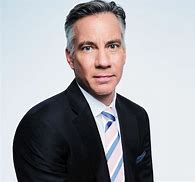
Jim Sciutto (Former American news anchor for ABC, national security correspondent for CNN, Yale graduate majoring in Chinese history.)
Jim Sciutto has been seen by many on television. One suspects few know he served as the Chief of Staff and Senior Advisor to the U.S. Ambassador to China between 2011 and 2013. His book, “The Return of Great Powers” is interesting but not particularly revelatory. It was written before today’s news of the blows to Iran’s role in the Middle East with the removal of Syria’s brutal leader and Israel’s increased attacks on Hezbollah and Hamas. Tragically, there is always death of innocents in war. The question is whether war is ever worth its cost.
Sciutto certainly has a better grasp of China than most Americans based on his education and experience but his general analysis of the “…Great Powers” and their return is more topical than insightful.
The rise of Putin and Xi have certainly changed the world. Newspapers and television are full of stories about these leaders’ dance around the war in Ukraine. Xi offers moral and financial support to Putin, along with some important weapon components needed by the military, but China limits military equipment and direct munitions provisions for the war. China may benefit from Russia’s Ukraine invasion because of Xi’s expressed interest in acquiring Taiwan but China’s advances have not moved much from where they were before the invasion.
What seems clear today, particularly in Sciutto’s book, is that Putin has made too many mistakes in his invasion of Ukraine.
Putin’s apparent disregard for Russian soldiers’ deaths undoubtedly threatens his influence with many Russian citizens. Some of America’s media suggest Putin is becoming more conscious of his political and personal vulnerability. It is reported by Gleb Karakulov. a Russian engineer and defector who fled to Kazakhstan, that Putin has become paranoid and increasingly isolated.
Sciutto suggests Estonia is on a Putin invasion list once Ukraine has been conquered.
Having recently returned from the Baltics, occupation of Estonia would be a pyric victory for the same reasons as the Ukraine invasion. The hate for Russians one hears from Baltics’ residents (Lithuanian, Estonian, and Latavian) who were under the rule of Russia from 1940s to 1991 is palpable. The jail cells, torture, and murder of Baltic citizens by Russia is detailed by tour guides from each country. The prosperity of the Baltic countries since 1991 is a tribute to freedom that will not be given up easily by its people. At best, Russia may be able to occupy the Baltics, but citizen resistance would far outweigh any value occupation might offer.
Sciutto goes on to imply Taiwan will lose its independence to China.
The picture of death and destruction he outlines with China’s overwhelming military might mitigates against China’s success. Once freedom is experienced, it is like genies in a bottle–difficult to be re-imprisoned. Whether NATO or America will come to Taiwan’s aid is unknown, but like Russia’s invasion of Ukraine and Putin’s interest in the Baltics, the price to be paid is higher than the reward they can expect.
Freedom, once it is experienced, is an unconquerable force. Conquest of Ukraine, the Baltics, or Taiwan would be a pyric victory at a cost far in excess of a conquerors’ perceived value.
Our tour of the Baltic countries reveals evidence of Stalin’s brutality and the fear it created in the Baltic countries between 1945 and 1990-91. The same fate may be in store for Ukraine if Putin’s invasion succeeds.
Travel
Written by Chet Yarbrough
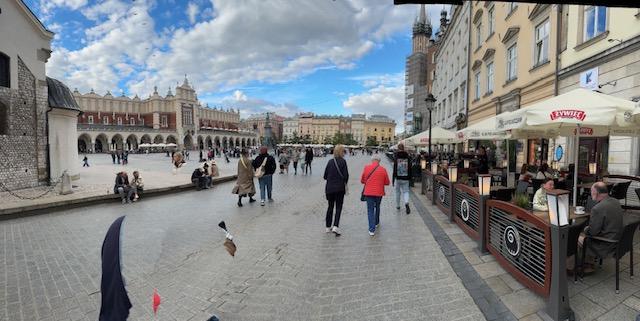
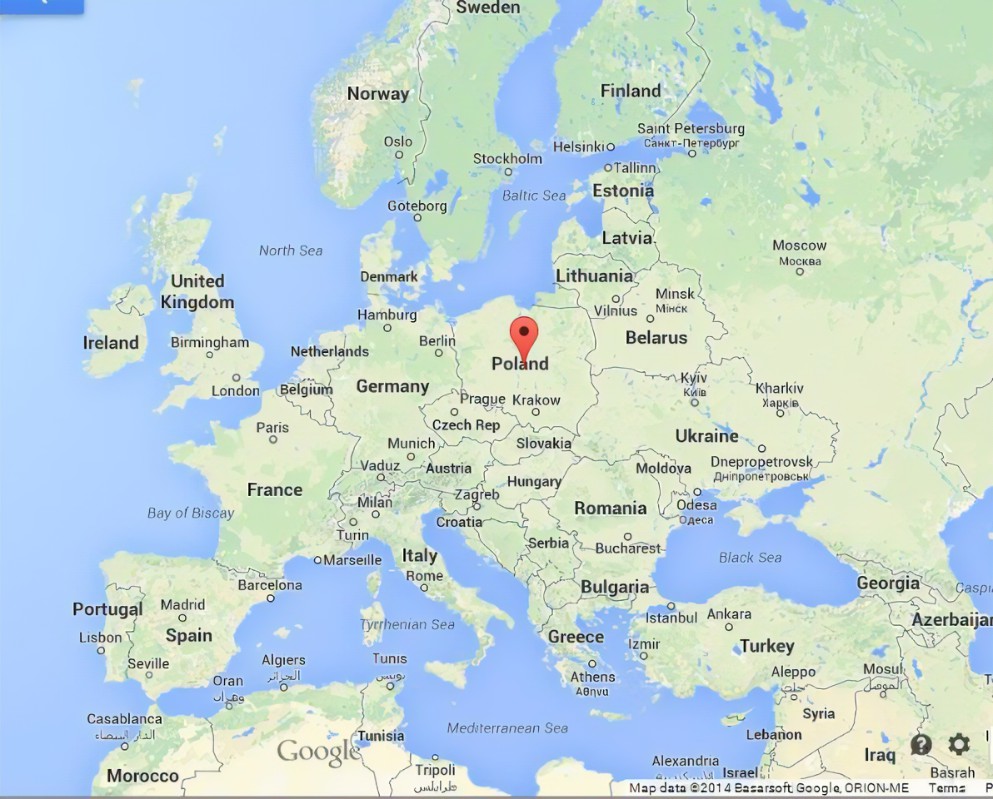
It’s been a while since our last trip out of America because of Covid. Poland, the Baltics, and Finland were my first choice because of their troubled history with Russia. The depth and breadth of these five countries’ history is a reminder of what is at stake with the invasion of Ukraine.
In traveling to Poland, the Baltics, and Finland, one’s understanding of political suppression becomes crystal clear. In contrast to the Baltics and Finland, Poland is the most often invaded of the five countries. The Mongol empire invades Poland in the 13th century, the Swedish Monarchy in the 17th, Russia, Prussia, and Austria partition Poland in the 18th, and in two world wars Russia and Germany vie for Poland’s land in the 20th. It is little wonder that Poland chooses to be a haven for Ukrainians when Russia invades Ukraine in the 21st century. Poland understands the hardship of invasion and suppression by a foreign power.
Poland’s sovereignty has been challenged by many invasions, beginning with the Mongol empire in the 13th century.
Genghis Khan (1162-1227.)
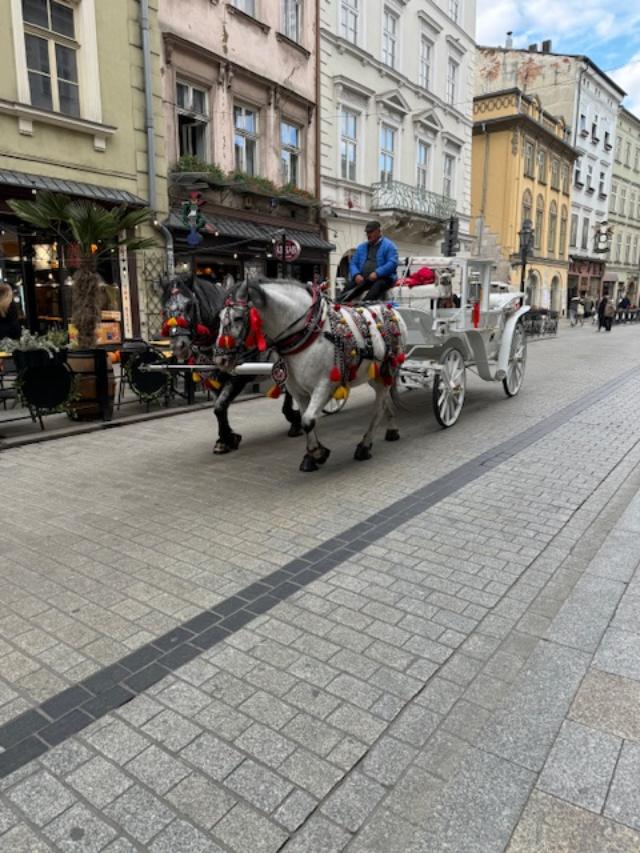
Traveling across Poland makes one understand why it has been invaded so many times. Poland’s lush countryside is a reminder of Ukraine’s agricultural reputation as the breadbasket of Europe.
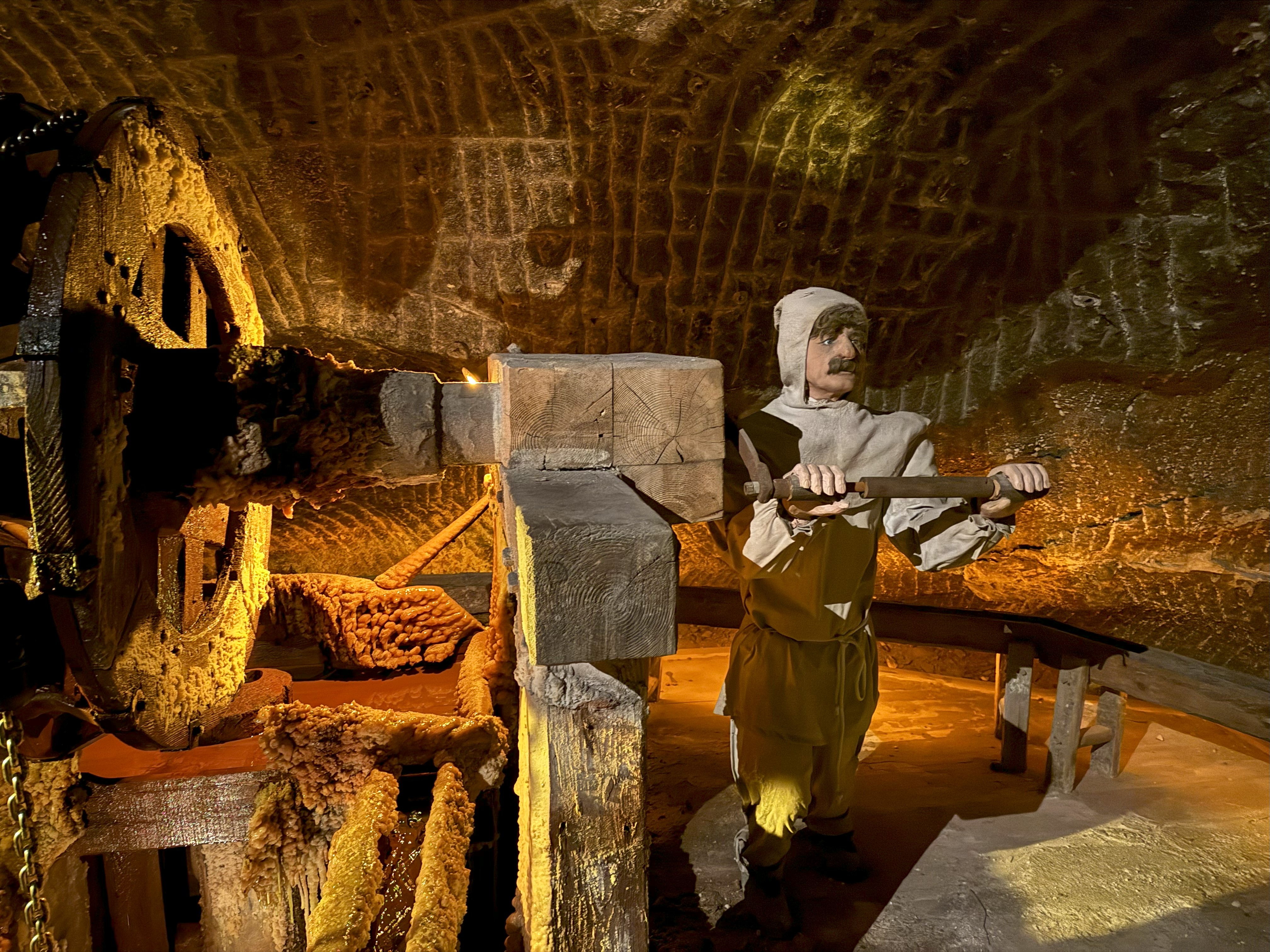
To invaders, the wealth of Ukraine is like the wealth of Poland. Poland’s elaborate salt mine at Wieliczka was established in the 13th century. It played a crucial role in Poland’s economy when salt was referred to as “white gold”. Adding to Poland’s agricultural value is its industrial growth and its obvious economic prosperity; not to mention its strategic location as pathway to East and West European countries.
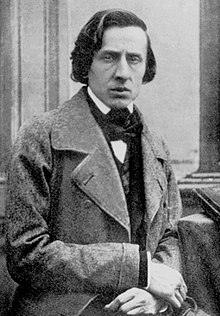
Beyond its wealth, Poland’s culture birthed the great composer, Frederic Chopin and renowned Pope, John Paul II.
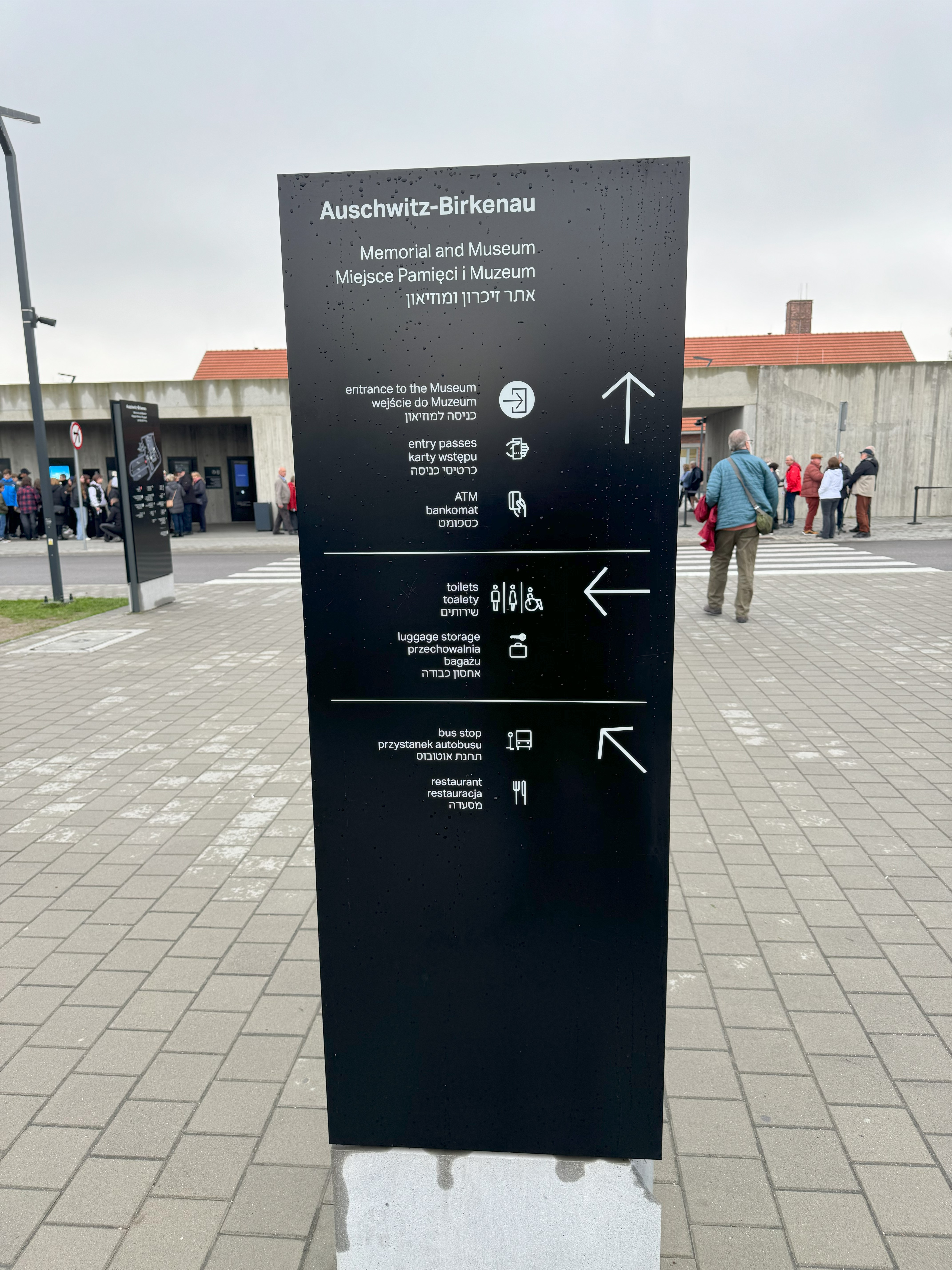
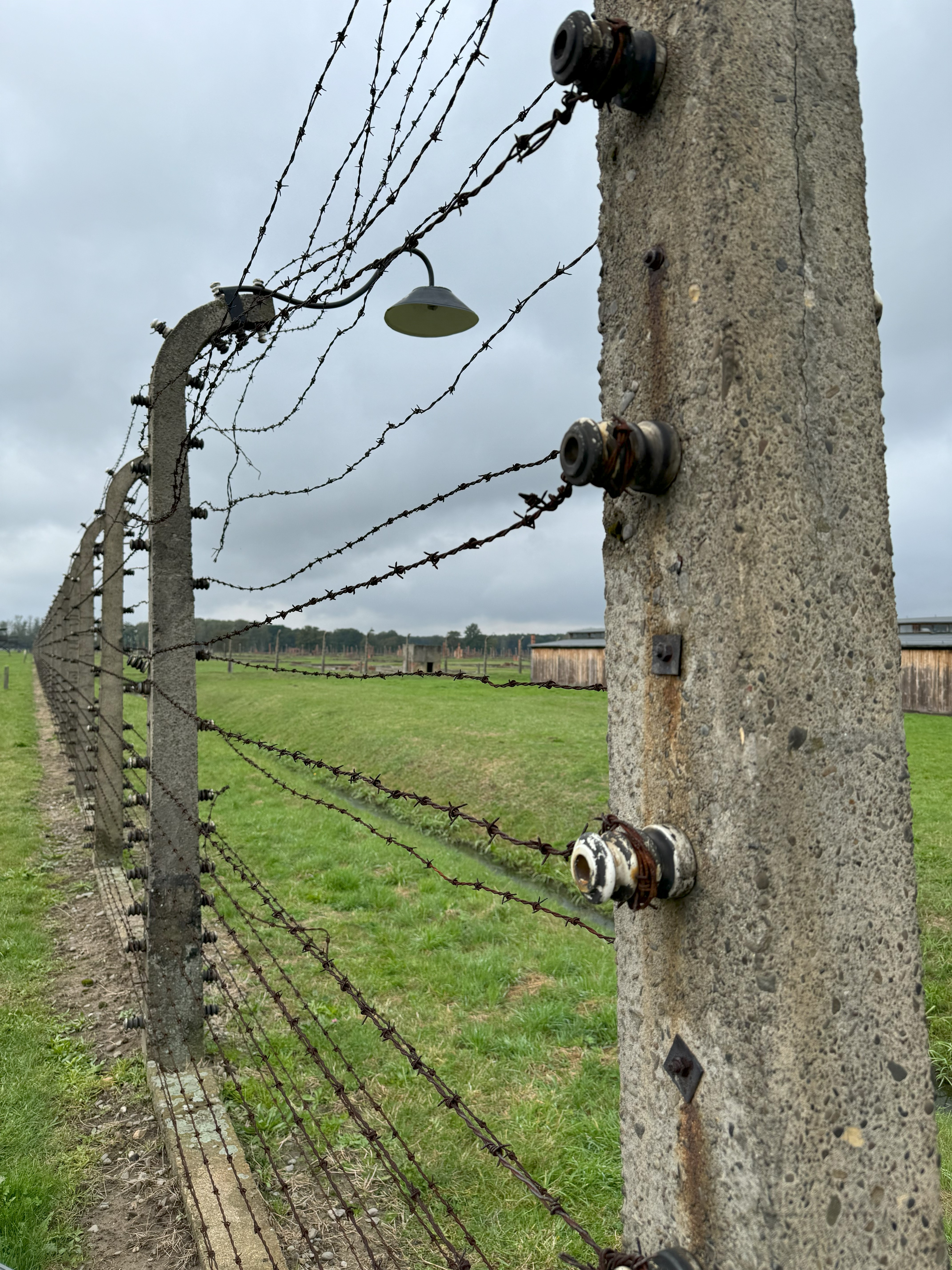
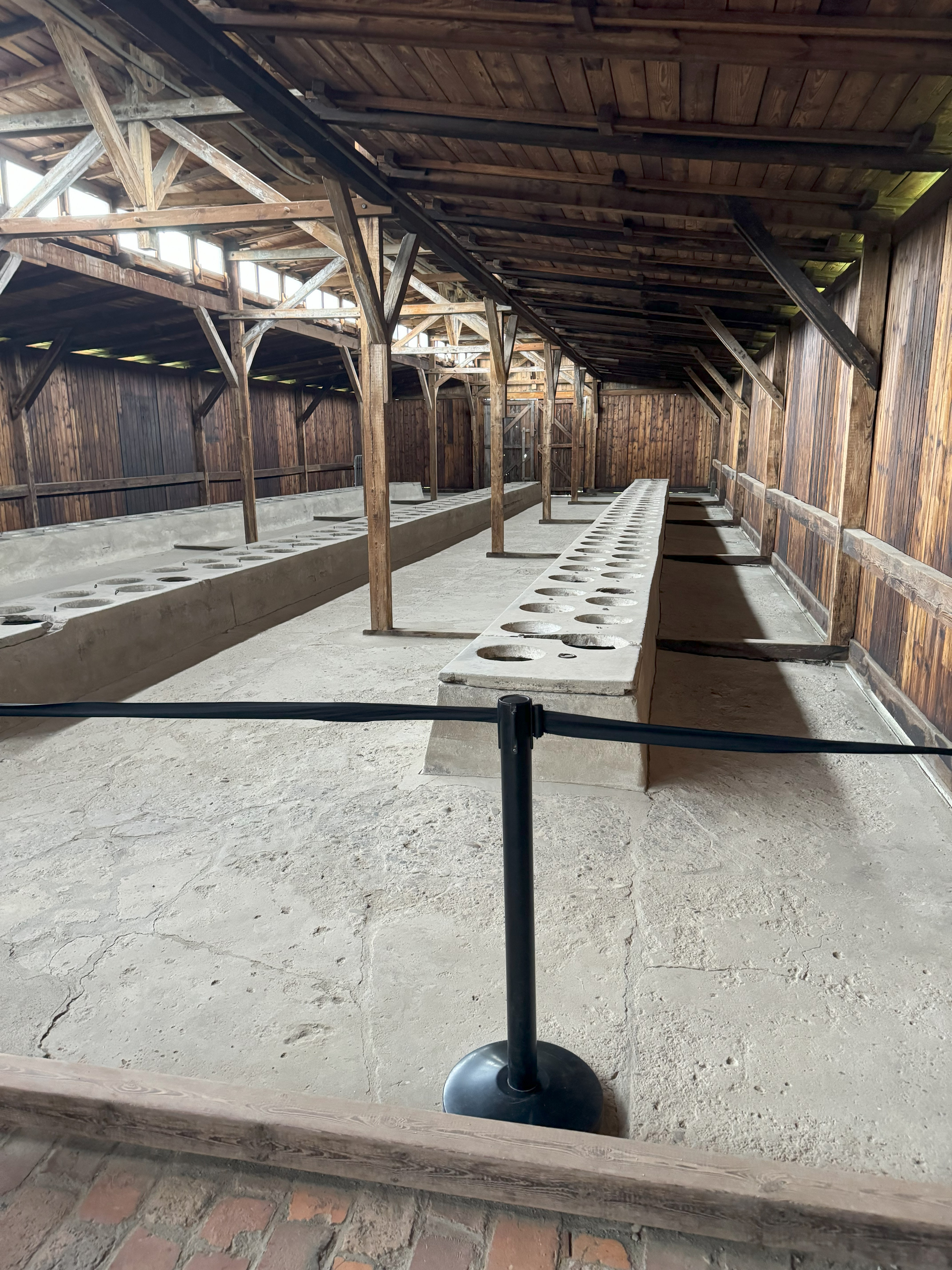
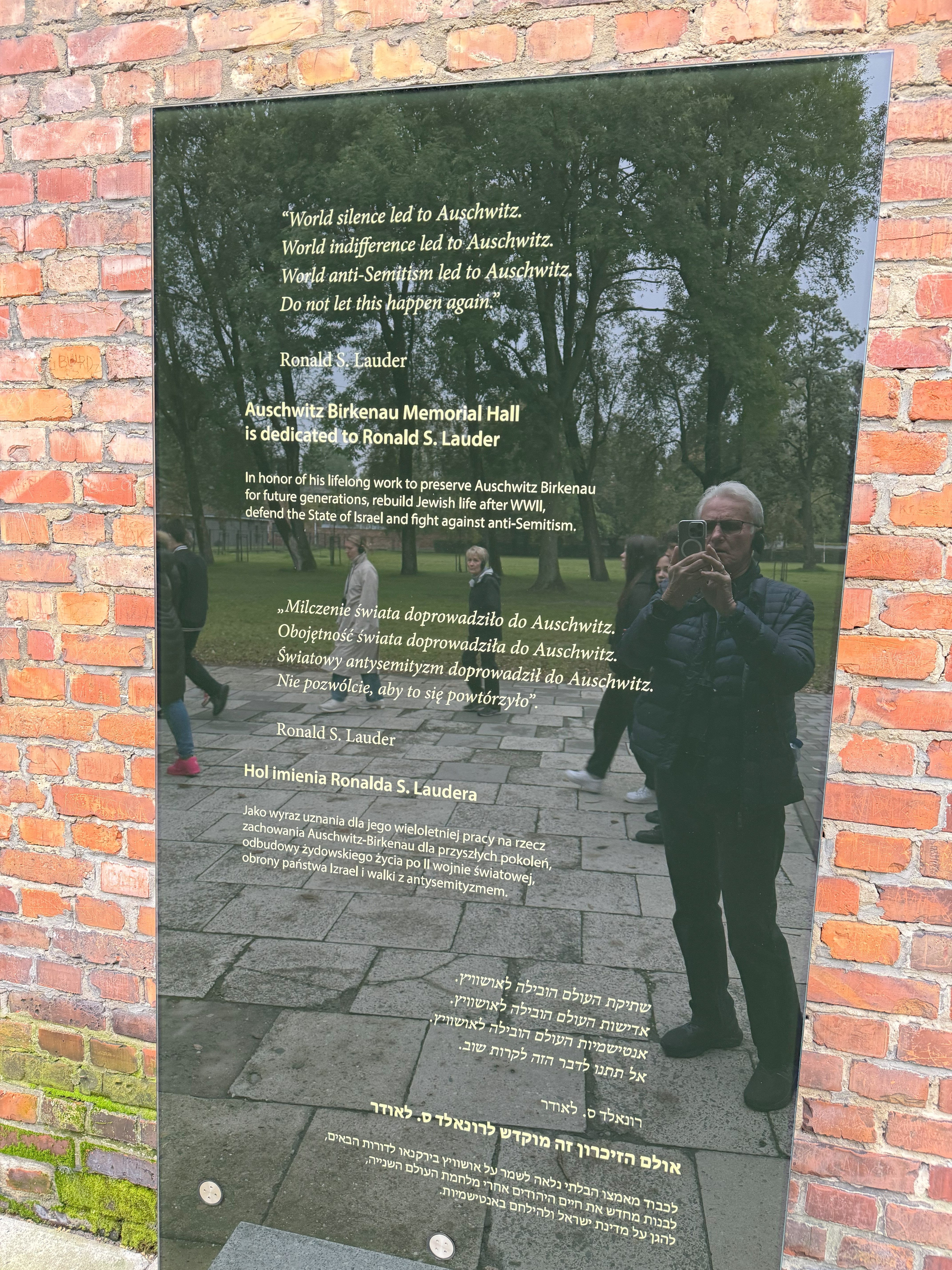
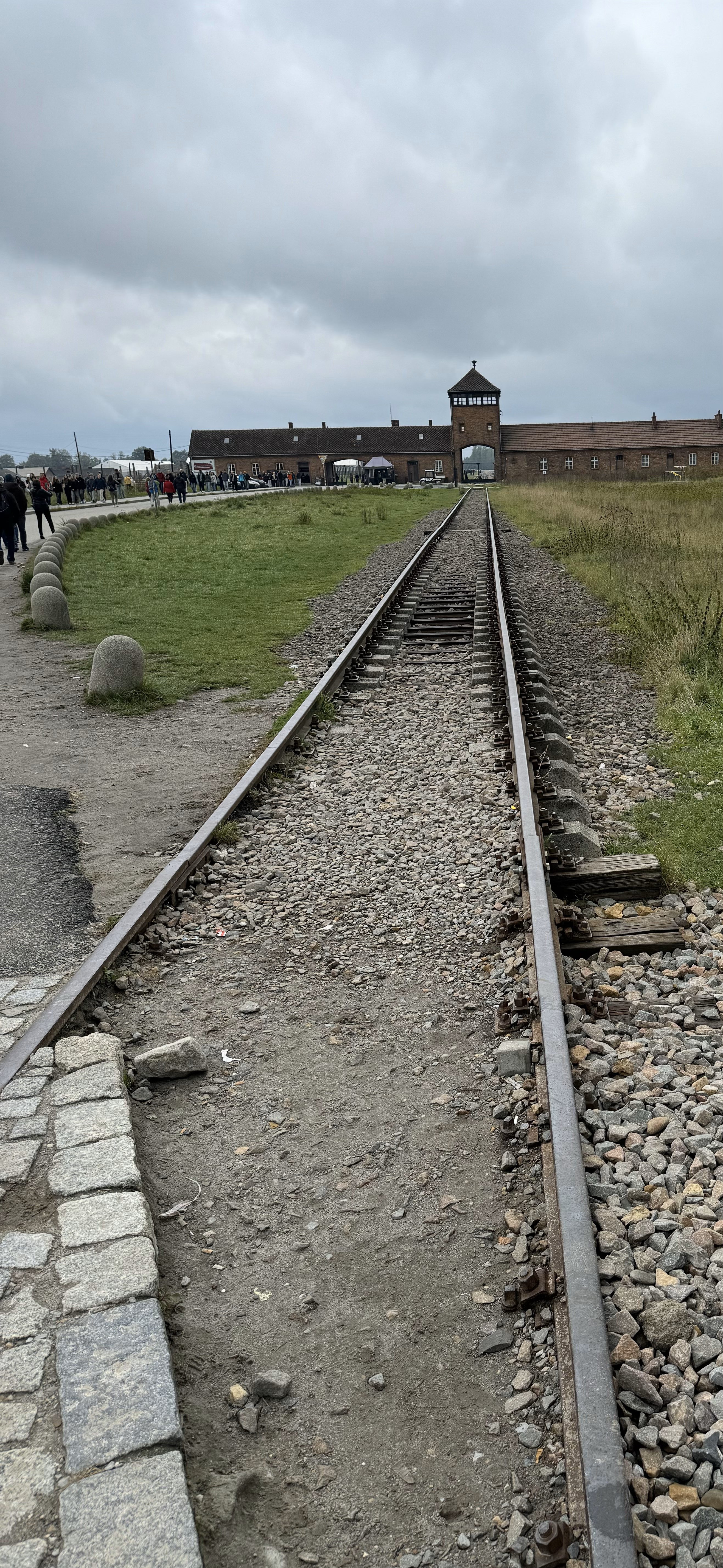
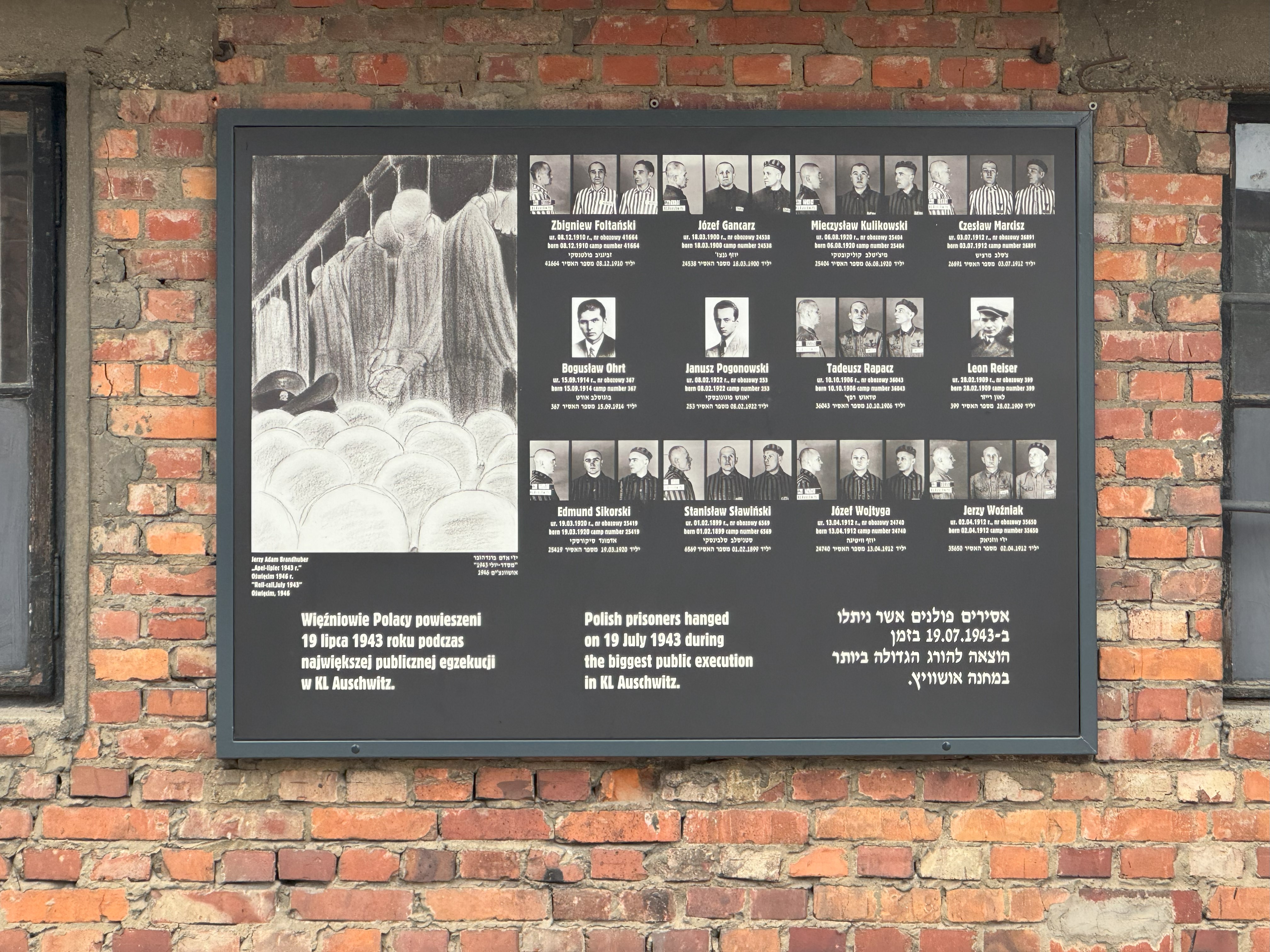
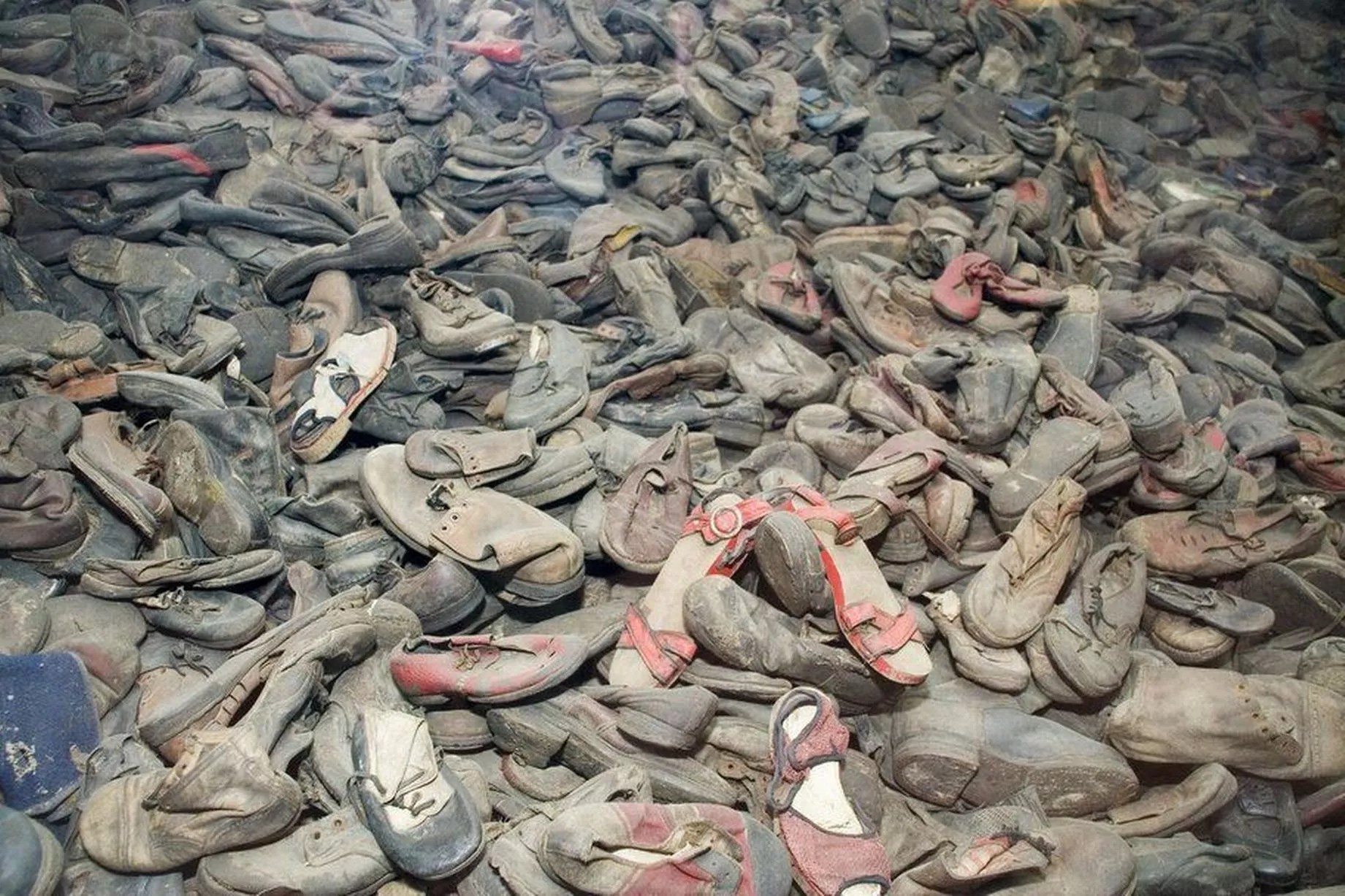
The atrocity of the Holocaust is made real and unforgettable to visitors of the Auschwitz’ death camp in Poland. One shutters with a view of work camps, gas chambers, shoes and clothes of over a million people gassed by the Germans at Auschwitz. Upon liberation of Auschwitz, the German commander is hung from the U-shaped posts erected at the camp. How could this mass murder have happened? Tragically, mass murder is happening today.
Man’s inhumanity to man is evidenced in Ukraine, Myanmar, Yemen, Ethiopia, Israel, and Gaza. No country in the world that wages war, either defensively or offensively, is without innocent blood on their hands.
After this brief exposure to Poland, we fly to Lithuania. Here we find the atrocity of Stalin’s Russia as the tyrant of the Baltics after WWII. One’s ignorance of the history of Russia’s tyrannical rule is concretely revealed by a woman who is a survivor of Stalin’s takeover of the Baltics in 1945. A version of her story is told in “Between Shades of Gray” which was recommended by our guide on this trip.
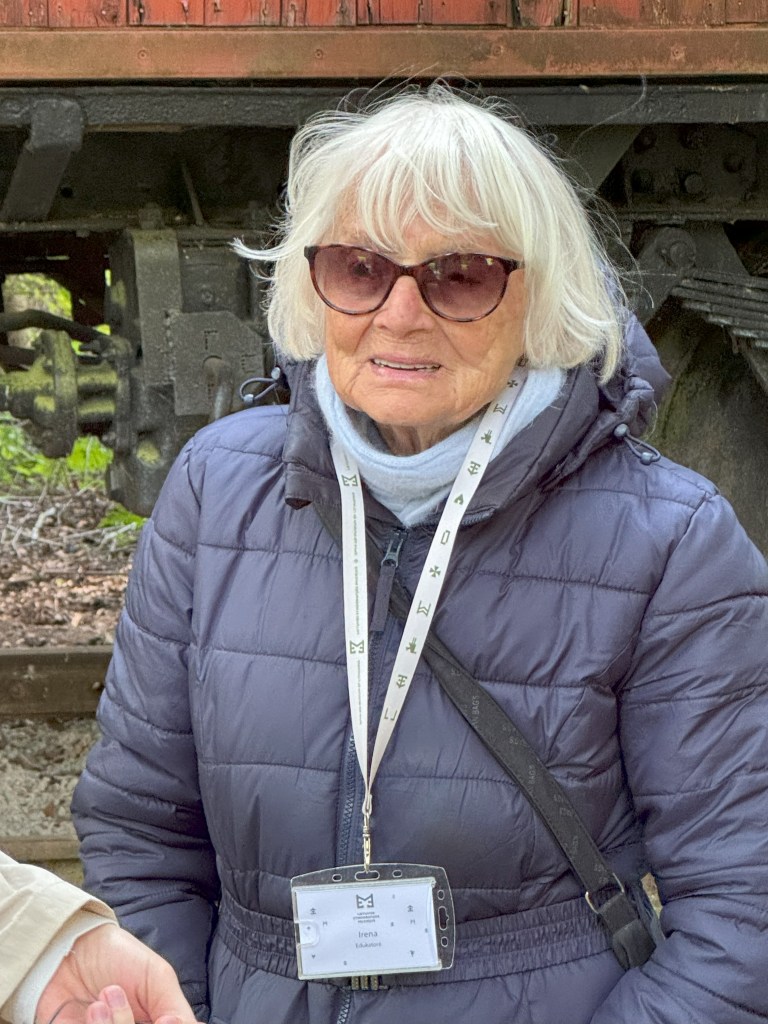
The subject of “Between Shades of Gray” is a young girl and her brother’s survival during Stalin’s invasion of the Baltics. Much of what is written in Ruta Sepetys’ book is a reflection of what this spry octogenarian survivor explains happened to her and her family in 1945. Her name is Lina Vilkas.
Ms. Vilkas explains this is a replica of the rail car used to transport Lithuanians to work camps in Siberia.
One hole in the floor of a similar box car is a toilet for its overcrowded Lithuanian’ prisoners.
The Baltics were ruled by Russia until the early 1990s. Lithuanian independence is declared in 1990: Estonia and Latvia independence in 1991. After touring Lithuania, the cruelty of imprisonment, torture, and murder of Baltic residents is revealed in a tour of jail torture cells, and work farms. The tour evidence is reinforced by vituperative comments by home-hosted’ survivors of Russia’s 45-year dictatorial rule. The fear of reprisal and murder kept most Lithuanians in line. The hate and distrust of Russians seems palpable in the Baltics. Even Gorbachev is viewed by our guide as a mere functionary, not liberator of the Baltics. Forgetting may come with time, but forgiveness seems unlikely.
These pictures are of one of the Russian prisons in which Lithuanian citizens were held. The lower left shows a rubber floored room in which prisoners who were losing their mind were detained. The chamber to its right is a killing chamber where prisoners received a bullet to the back of the head. The bucket above these two pictures is a toilet for a cell, only emptied after smells must have permeated the hallways. Constant surveillance, torture, and demonstrated murders kept Baltic prisoners in line and the general public in fear.
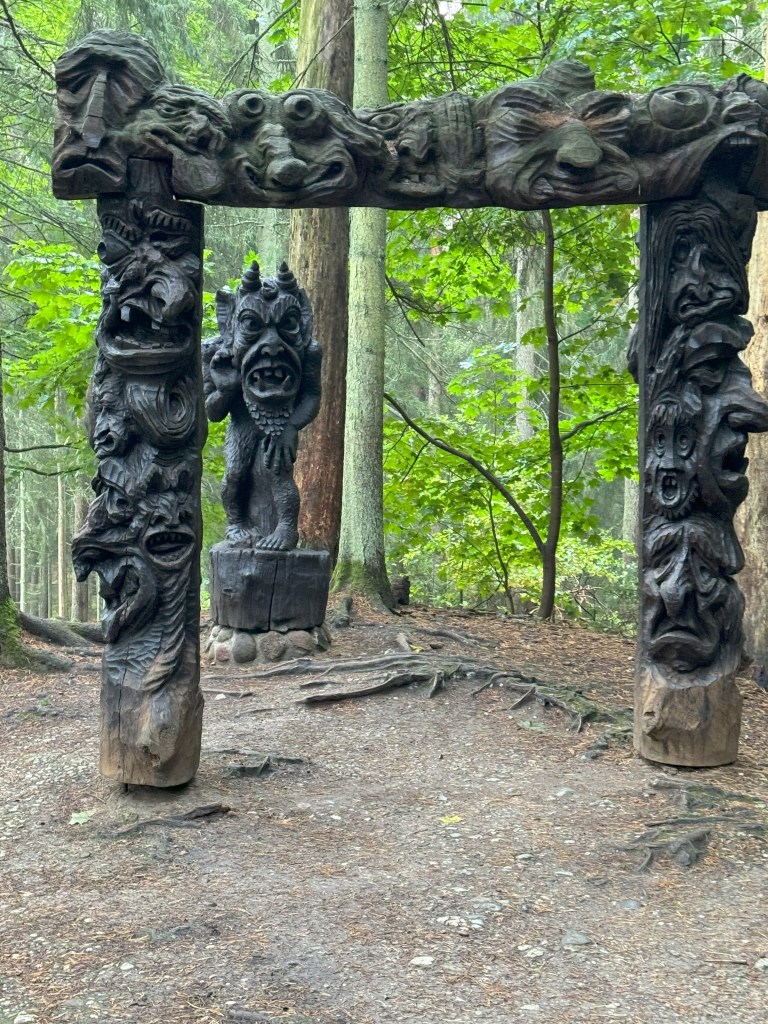
To lighten our tour’s mood, these distressful reminders of Russian torture and murder, a brief trip is taken to a folklore and witches’ park in Neringa, Lithuania.
The most remarkable thing about travelling through the Baltics while listening to guides and economy lecturers is how industrially successful the Baltics have been since their liberation in the 1990s. Taxes are represented as more burdensome than in America, but residents appear benefitted from that tax burden when one sees how prosperous the Baltics appear to short-term visitors. Few homeless people are seen in the city. The cobble stone streets are constantly being repaired; new development is seen everywhere; luxury goods are seen in stores throughout the city.
The fear felt when Russia ruled the Baltics seems gone. Fear seems replaced by optimism for the Baltic’s future as members of the European Union. However, Russia’s invasion of Ukraine represents an ever-present concern to the Baltics new way of life. One wonders if that threat might lead to a military response from the Baltics like that of North Korea’s alleged troop deployment in Russia’s war in Ukraine. That seems doubtful but no one away from armed and deadly conflict can know.
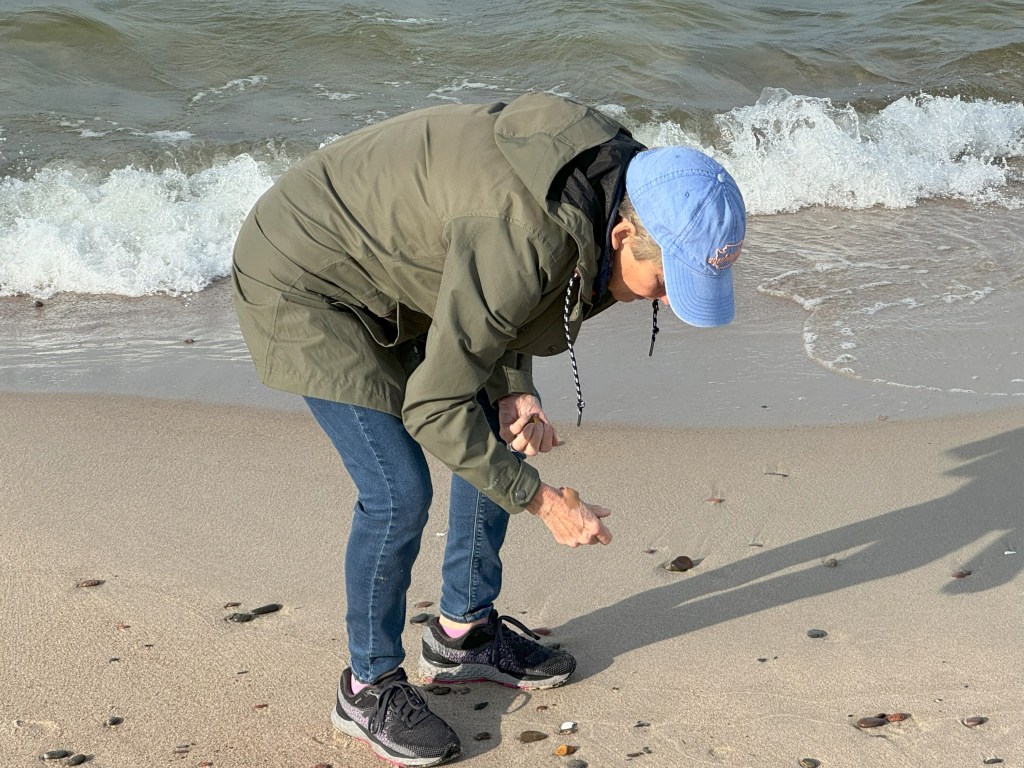
Taking a bus to Neringa, Lithuanian, our guide takes us to a beach on the Baltic Sea. Here, we search for amber, a fossilized tree resin that ranges in color from yellow, to brown, green, blue, or black. Amber is a jeweler and hobbyist collectors dream, found primarily around the Baltic Sea. Few tourists leave the Baltics without a piece of amber to remind them of the trip.
Baltic Sea amber search.
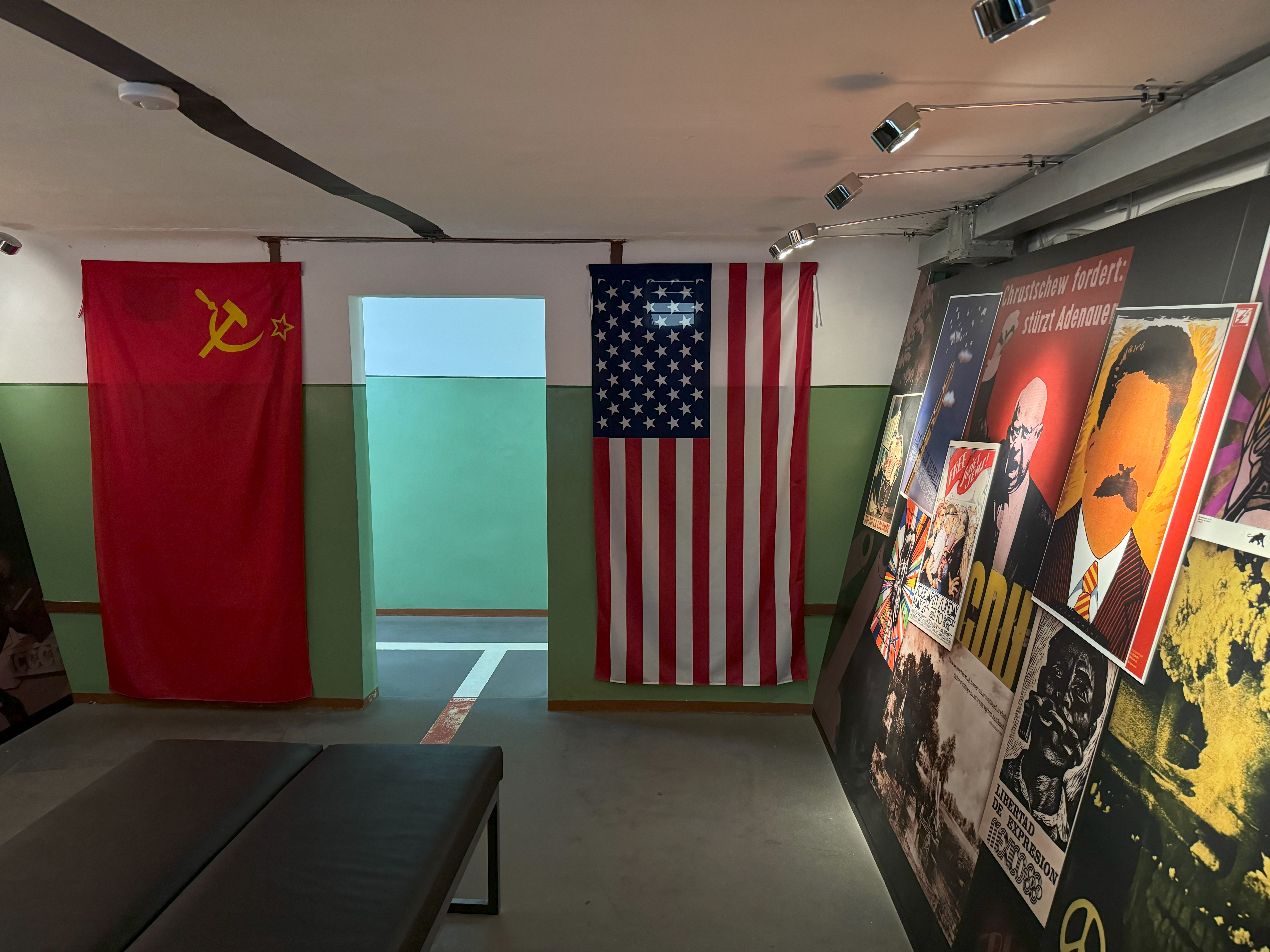
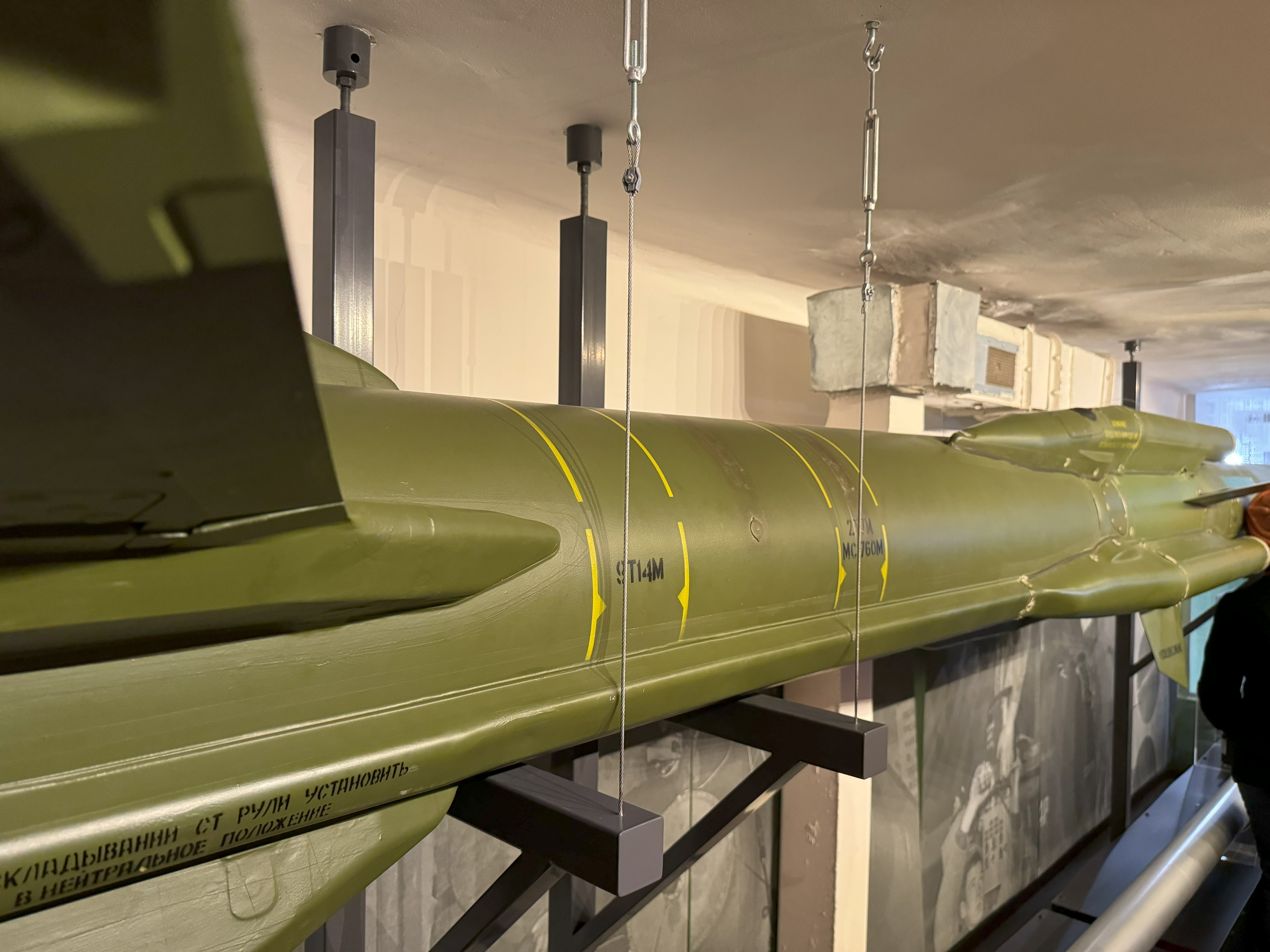
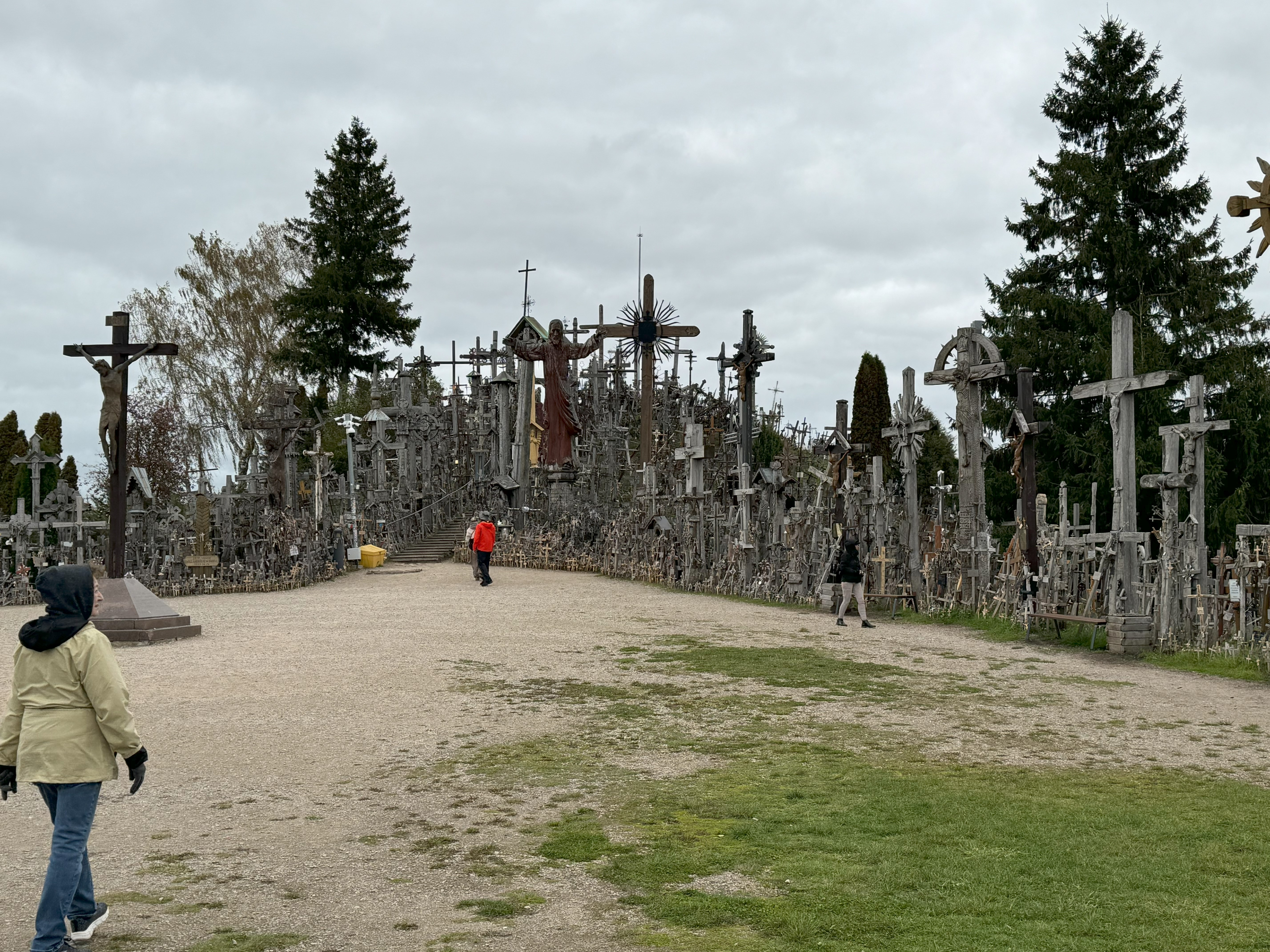
Next, we head to Rukundziai, Lithuania to visit an abandoned and preserved missile base. Later we visit the countryside: a tourist attraction called the “Hill of Crosses”, a cultural heritage site that honors friends and family that have died. Thousands of crosses have been placed to commemorate those who have passed. The jumble of crosses is immense.
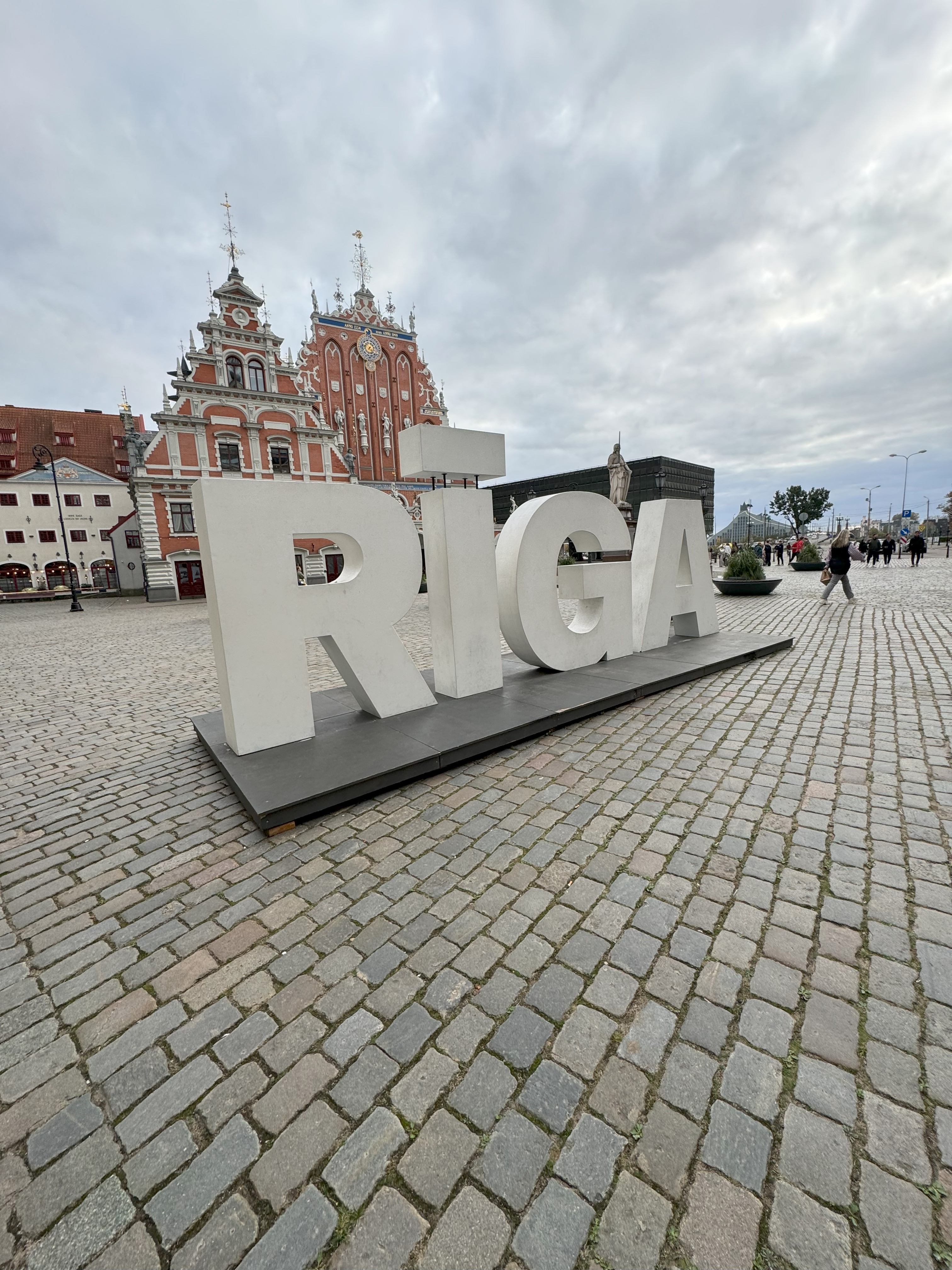
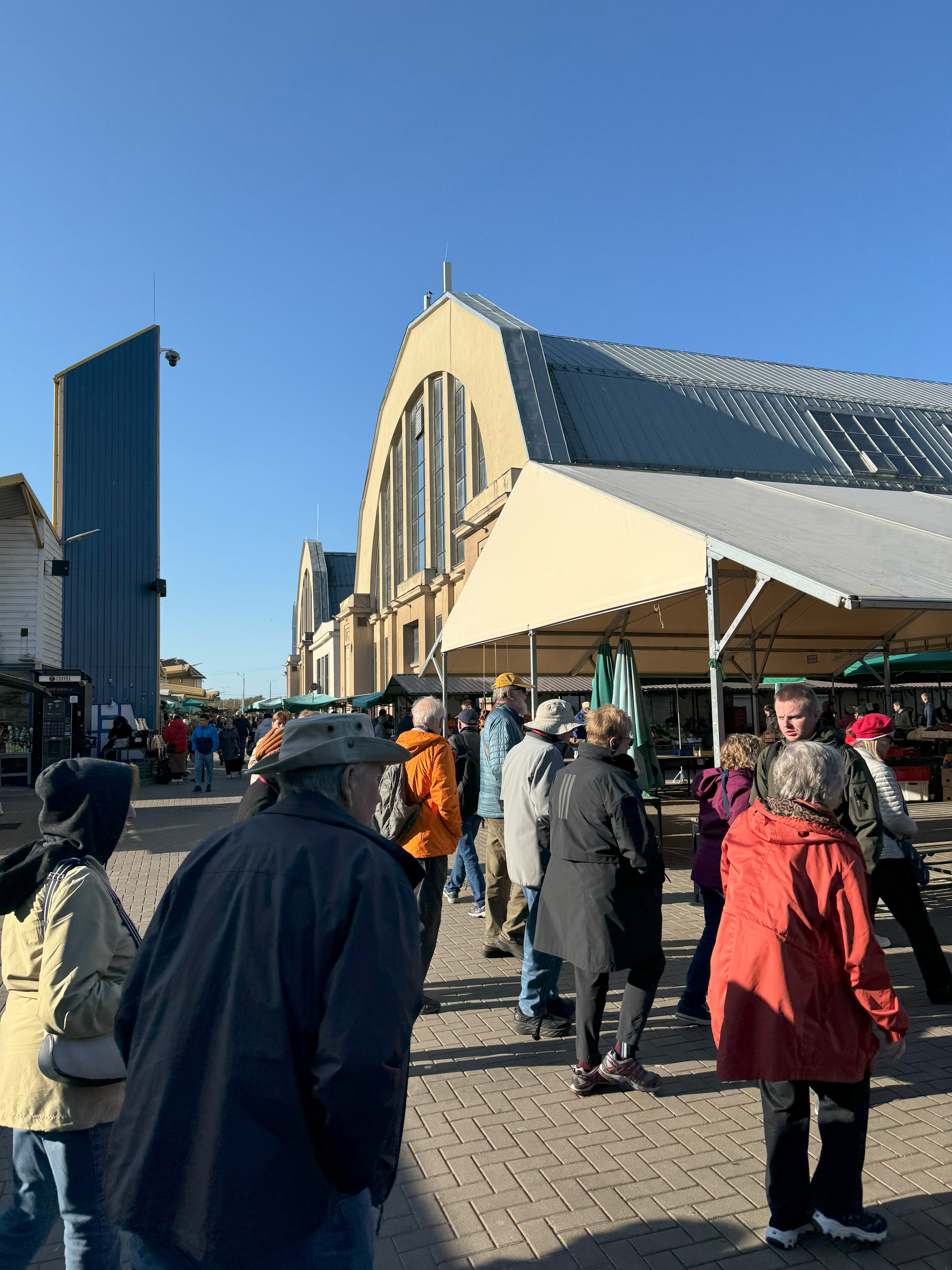
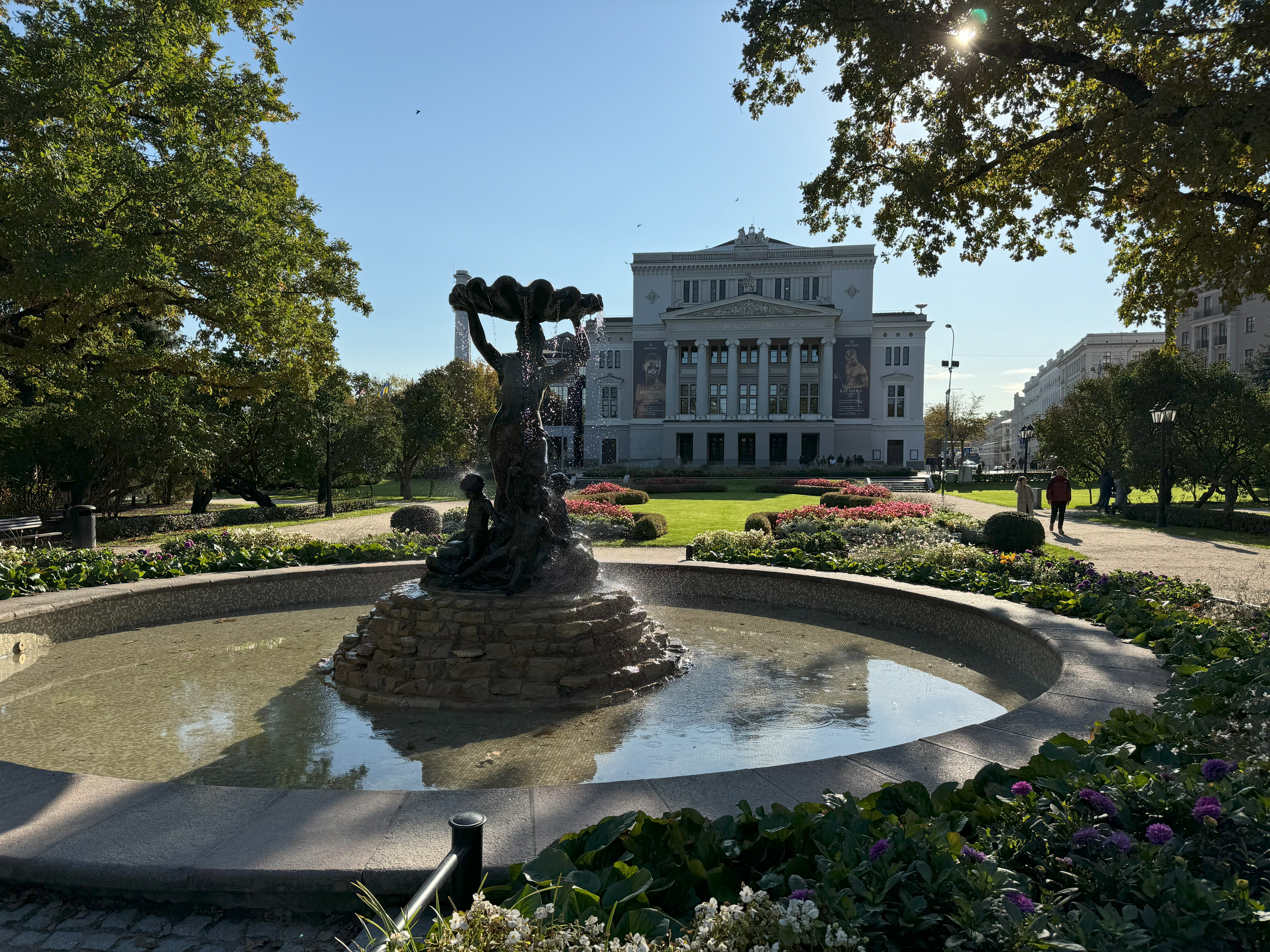
We are on our way to Riga, the capital of Latvia. Here, we visit a massive public market held in five former blimp hangars, reassembled in the heart of Latvia. Every spice and consumer product one can think of seems on display. Flowers are everywhere. Like Lithuania, Riga is a modern city with a well-known University. We spend part of the day in the city but head to the country for a visit to a goat farm. Like Poland and Lithuania, Latvia impresses travelers with its industry, farming, and economic growth.
Our final stop in the Baltics is Tallinn, Estonia which will be our port of debarkation to Finland. We visit Peter the Great’s summer home, a massive property which has become a national Russian and West European’ art museum. The Palace was not completed before the King died but its grounds are a sight to behold. Though Peter the Great was a 17th century Russian Czar, he was an enlightened monarch who had interests in science, technology and natural science. From the perspective of Estonian citizens, he brought interest in improving general education for the young.
We depart Estonia by ferry. Our ship is crowded with tourist buses, transport vehicles and citizens from all over the world. The two-hour crossing is a pleasure, accompanied with food, refreshments, and spectacular Baltic Sea views.
What one recognizes on this trip is the great concern the three Baltic countries have of Russia’s invasion of Ukraine.
We take a ten-story ferry across the Baltics to visit Finland.
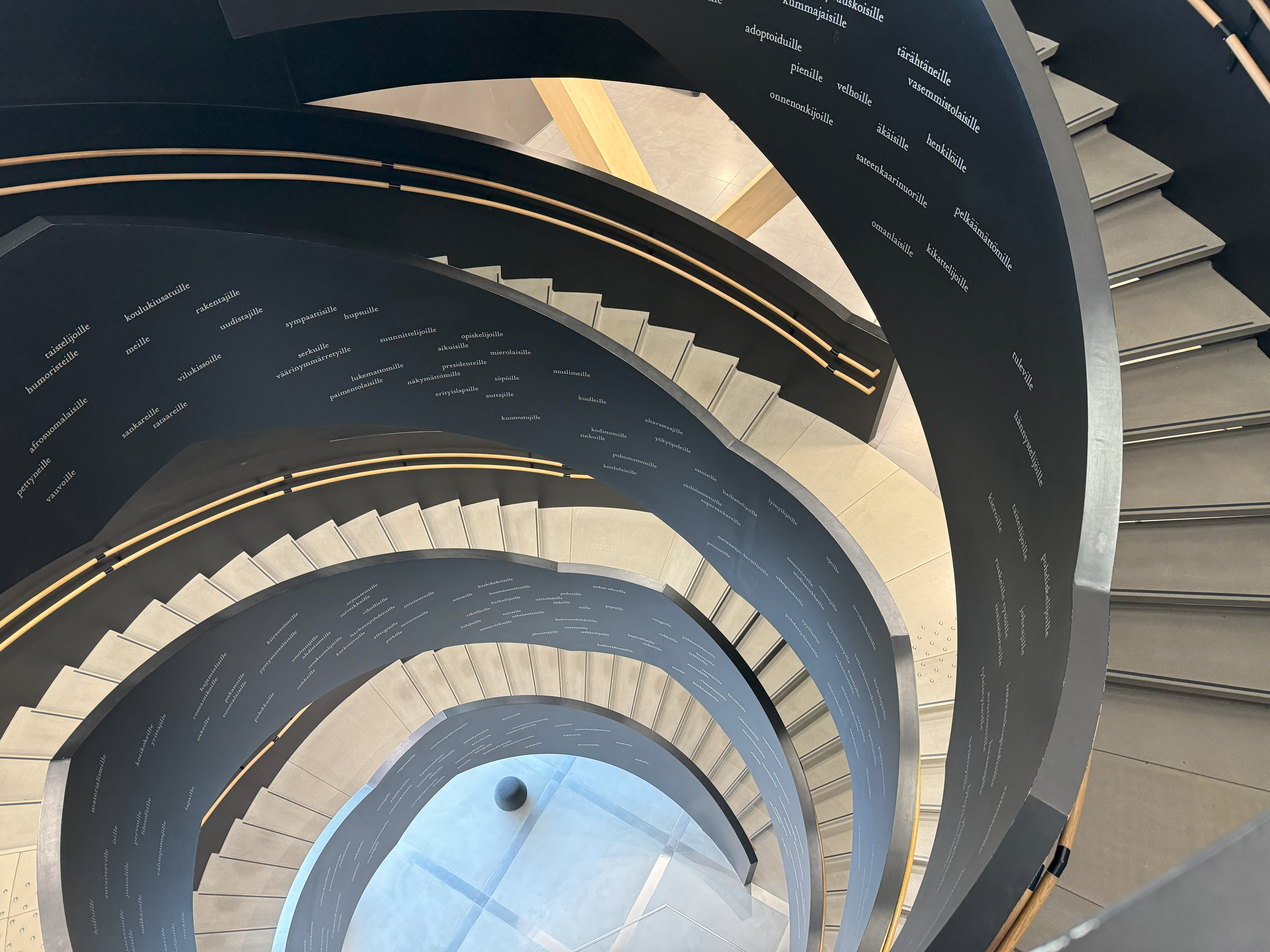
Helsinki is a modern 21st century city, Finland’s capitol. We visit a state-of-the-art library that serves the public with everything from sound studios to AI model makers to classes to private reading/discussion rooms. Finland’s reputation as the happiest country in the world starts with a state-of-the art education system. On a field trip, our 16-person group visits a state subsidized farm in the country. It is a large farm with a short growing season that is supplemented by horse and farm animal stabling during the winter. It is surprisingly managed by a young couple, one of which is a descendant of the original owners. Management seems somewhat lay-back by American farming standards. It appears the farm could not exist without Finland’s government subsidy. The young couple seem underqualified farmers–more like hosts to a culture that would not survive without government help.
As is well known, Finland has a long border with Russia. In defense of their country, the Finns allied themselves with the Nazis during WWII. They are reported to have protected Finnish Jews from the Nazis, but fear of Russian encroachment was judged to require a devil’s bargain during WWII. In a previous trip to Finland, a guide explains a tenuous relationship with Russians that allows easy travel between countries because of their long border with Russia. The Finns are respectful but undoubtedly with watchful eyes. Finland refuses to be intimidated by Russia. By the same token, Russia appears disinclined to interfere with Finnish governance.
Many citizens feel they could be the next target of aggression by Russian oligarchs being led by today’s reincarnation of a Stalin in Vladimer Putin clothes.
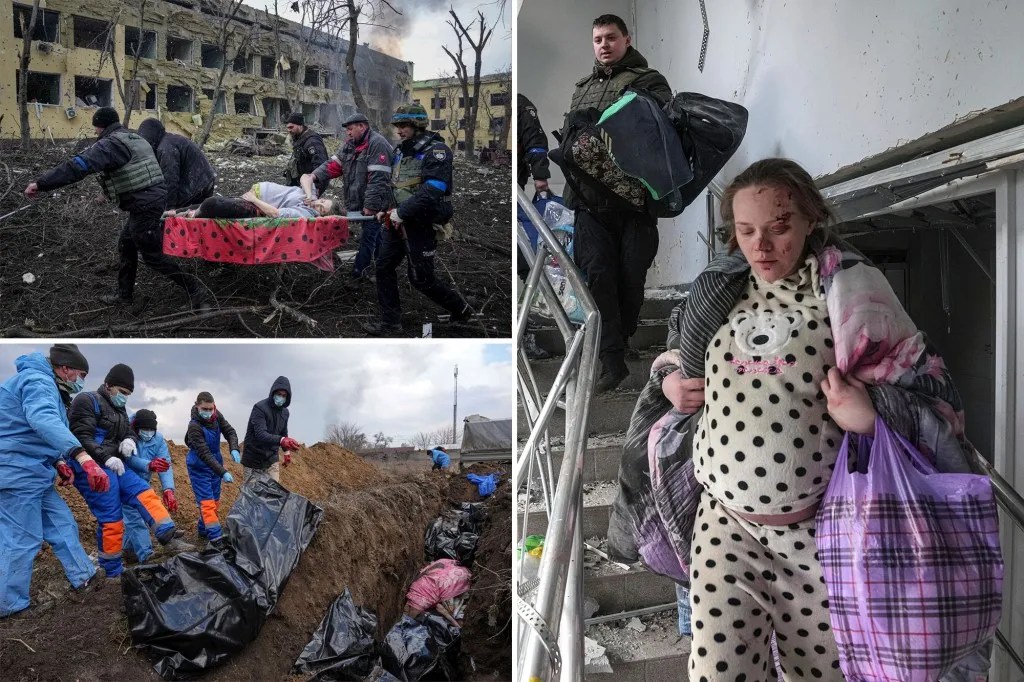
The story of Holodomor and today’s Ukraine invasion show the depth of Russian government venality. Our tour of the Baltic countries reveals evidence of Stalin’s brutality and the fear it created in the Baltic countries between 1945 and 1990-91. The same fate may be in store for Ukraine if Putin’s invasion succeeds.
How close is the world to its next world war? The character of today’s leaders seems as threatening as Stalin and as unpredictable as Churchill.
Books of Interest Website: chetyarbrough.blog
The Stalin Affair (The Impossible Alliance That Won the War)
By: Giles Milton
Narrated By: Giles Milton
Giles Milton (Author, British writer and historian.)
Giles Milton offers a fascinating and well written account of the dynamics of the relationship between Churchill and Stalin with a brief analysis of Franklin Roosevelt that shows a difference of opinion about Stalin. There are some surprises in Milton’s history of the beginning and ending of WWII and the role of Joseph Stalin.
As is well known, Stalin and Hitler made a pact at the beginning of the war that made them allies with a plan to divide Europe between their two countries.
The pact falls apart when Hitler chooses to invade Russia on June 22, 1941. Germany made rapid progress and was nearing Moscow when winter struck, and Germany’s wheels of war were stuck in the mud. Stalin was psychologically paralyzed by Germany’s decision to turn against Russia. He hid in his dacha, his second home in the Russian countryside. A delegation of Russians went to the Stalin’s dacha and pleaded with him to direct the defense of Russia against Germany’s onslaught. Stalin is surprised that the delegation wanted him to return to the leadership of Russia in Milton’s telling of the story. One presumes that reluctance is because of Stalin’s mistake in believing Hitler could be a reliable ally in their mutual desire to expand their territories.
Milton’s history has a particular interest to me because of a planned personal visit to the Baltics next month.
In reading a book about the Baltics during WWII, there seems some confusion among the Baltic countries because their sovereignty is being usurped by Russia while the instigator of WWII is Germany. The guide on the trip suggests we read “between shades of gray”, a book written by Rusa Sepetys, a Lithuanian born American writer. Sepetys story is of Lithuania intellectuals being arrested by Stalin’s troops and carted off to Siberia. Brief mention of the Germans is mentioned but implies the Germans were not the enemy but an opposing force of the Russian attack on the Baltics. Having visited Finland last year, it is interesting to find the Finns allied themselves to Germany during WWII because of their fear of Russia’s aggression. Now, having read Sepetys novel of Russian aggression in early 1941, one begins to understand the complexity of which side of the war the Baltics chose to be on.
Ruta Sepetys (Lithuanian born American writer.)
It tells the story of Russia’s invasion of the Baltics soon after Hitler’s decision to attack Russia.
WWII in the Baltics is not Milton’s history, but Sepetys offers a footnote on its consequence in the Baltics.
Milton makes one feel they are in the room when decisions are made about the progress and ending of WWII. It is a fascinating story. Stalin is a villain in sheep’s clothing. His lust for power is unquenchable. Winston Chruchill is shown to be more aware of Stalin’s intent than Franklin Roosevelt. At Yalta, where the peace plan is agreed to and signed, Milton explains Roosevelt is feeble. The Yalta conference took place in February 1945. Roosevelt dies in April, two months later. Stalin’s ambition is the expansion of the U.S.S.R. and anything that gets in the way of that ambition is an obstacle to be overcome or removed.
Milton’s access to historical documents, reveals the many important roles of government leaders during WWII and after.
Of course, the most obviously impactful leaders are Churchill and Stalin, but the author notes the roles of lesser-known participants like Averell Harriman, Kathy Harriman, and Vyacheslav Molotov. There is also the role of Lavrentiy Beria, Stalin’s head of the NKVD (the Soviet secret police).
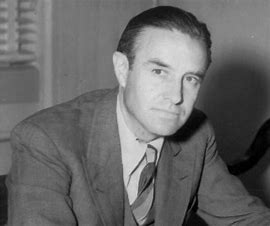
W. Averell Harriman (1891-1986, American politician, businessman, and diplomat.)
Averell Harriman, as the son of a wealthy railroad baron, becomes the founder of Brown Brothers Harriman & Co., an investment company. He became one of the richest men in America.
Harriman is asked by Roosevelt to become the America’s diplomatic contact with Great Britain to manage the Lend-Lease Program before America enters the war. As a personal envoy, he strengthens the alliance between Britain and America. Later he becomes Ambassador to the Soviet Union after Hitler’s betrayal of Stalin. Milton touches on the married Harriman’s attraction to women and his extramarital affairs. However, Harriman was revered by Churchill, and later Stalin, for the aid he coordinated for both countries during the war.
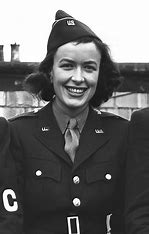
Kathleen Harriman (1917-2011, died at age 93.)
A lesser-known role is of Harriman’s daughter, Kathy Harriman. In the first years of contact between her father and Stalin, Ms. Harriman smooths America’s relationship with the Russian administration.
Ms. Harriman leaned to speak Russian and aided her father in his diplomatic contact with Soviet officials. She became a correspondent for the International News Service and Newsweek during her time in Russia. In 1944, Ms. Harriman exposes the mass murder of 22,000 Polish officers by the NKVD, at the order of Stalin. She plays a role in the Yalta Conference in assisting the American delegation with logistics and management.
Milton makes a listener feel like they are in the room at a dinner table with Stalin and Churchill when they exchange harsh words about the creation of a western front to aid the Russian army in the fight with German soldiers.
Stalin demeans the British army for their early failures in the war when they were outnumbered and outgunned by the Germans. Churchill is deeply offended by the disparagement and is on the verge of canceling a dinner with Stalin before leaving Russia. His anger is quelled by Harriman. Churchill changes his tone with the Russian leader and mends their relationship over cigars and alcohol. However, there is little doubt about their continued acrimony and Churchill’s unshaken belief in Stalin’s intent to expand his empire.
Milton offers the same “in the room” understanding of what happens at the Yalta Conference.
Germany is divided into four occupation zones which ended up being East and West Germany. The groundwork for the United Nations is formed with the aid of promoting international cooperation and prevention of future conflicts. A zone of influence is created between Eastern European Countries which were added to the U.S.S.R., to expand a buffer zone between Russia and the Western Powers. This iron curtain results in the cold war. The table is set at Yalta for the Nuremberg Trials of Nazi and Japanese leaders and for future reparations to rebuild Europe.
“The Stalin Affair” is an excellent reminder of WWII that makes one think about what is happening today with Russia in Ukraine and Israel in Gaza. How close is the world to its next world war? The character of today’s leaders seems as threatening as Stalin and as unpredictable as Churchill.
Without checks and balances, autocratic beliefs inevitably lead to conflict and mutually assured destruction, Donald Trump notwithstanding.
Books of Interest Website: chetyarbrough.blog
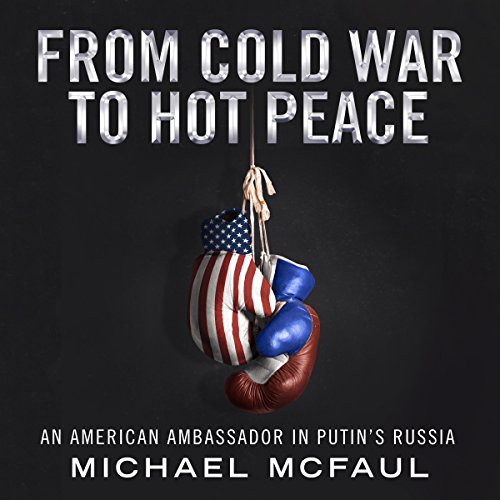
From Cold War to Hot Peace (An American Ambassador in Putin’s Russia)
By: Michael McFaul
Narrated By: L. J. Ganser
Michael McFaul (Author, American academic and diplomat, ambassador to Russia 2012-2014, former Professor of International Studies at Stanford.)
Not since George Kennan’s brief time as Ambassador to Russia in 1952 has an American ambassador been denied access to Russia. Michael McFaul became the second in 2016. McFaul joins the pre- and post-Obama election to become Obama’s ambassador to Russia from 2012 to 2o14. McFaul writes this book to explain his experience in the Obama administration, his understanding of Russia, and his tenure as Ambassador to Russia.
Interestingly, Condoleezza Rice recommends McFaul should join Obama because she was sure he, rather than McCain, would become the next President of the United States.
McFaul follows Rice’s recommendation and joins Obama’s campaign. Mcfaul’s grasp of Russian foreign affairs is insightful and relevant based on his personal experience. McFaul lived in Russia for a period of time when Gorbachev and Yeltsin attempted to liberalize Russia’s autocratic government. McFaul’s time living in Russia, his understanding of Russian language, and his study of Russian history at Stanford make his opinion in “From Cold War to Hot Peace” important.
Gorbachev’ biography shows he experienced the autocratic rule of Stalin’s U.S.S.R. as a young boy and found the courage to open the door to citizen’ freedom.
Mikhail Gorbachev was 22 when Stalin died. His ideal was to maintain the U.S.S.R. but with a system of government that rejected totalitarianism while freeing its citizens to improve their way of life. However, the shock of newfound freedom appeared an economic change too difficult and unfairly remunerative for the U.S.S.R. to survive as one hegemon.
A fundamental ingredient of independence is freedom.
When countries controlled by the U.S.S.R. were offered freedom, they looked to forms of democracy rather than autocracy. Gorbachev’s inability to accelerate economic growth to improve the lives of his country’s citizens doomed his goal to create a freer society within the U.S.S.R. Compounding his failure, Boris Yeltsin usurps Gorbachev’s power by arguing he has a better way of accelerating Russia’s economy to keep the U.S.S.R. together.
Boris Yeltsin talked the talk of democratic government but because of his inability to coopt the underlying authoritarian habits of former KGB operatives, he lost control of the government.
Yeltsin’s rise undermined the influence of Gorbachev, encouraged the departure of U.S.S.R.’ member countries, and gave an opening to Vladimir Putin, a former KGB officer. The KGB changed to the FSB in 1991 (along with Russia’s Foreign Intelligence Service) to become the right and left hand of Putin’s power and influence in the new Russia.
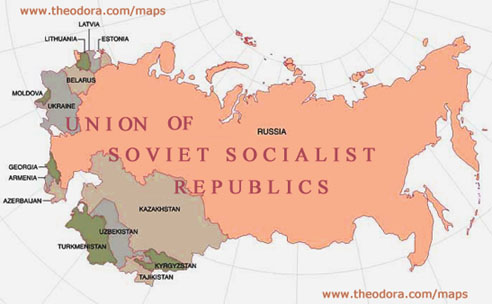
Fifteen countries leave the U.S.S.R. in 1991.
Estonia: August 20, 1991
Latvia: August 21, 1991
Lithuania: March 11, 1990
Armenia: September 21, 1991
Azerbaijan: October 18, 1991
Belarus: August 25, 1991
Georgia: April 9, 1991
Kazakhstan: December 16, 1991
Kyrgyzstan: August 31, 1991
Moldova: August 27, 1991
Russia: December 12, 1991
Tajikistan: September 9, 1991
Turkmenistan: October 27, 1991
Ukraine: August 24, 1991
Uzbekistan: September 1, 1991
Gorbachev effectively ended the cold war, but McFaul argues the cold war turned into a “…Hot Peace”. Gorbachev was the last leader of the Union of Soviet Socialist Republics. His effort to democratize Russia fails even though he fully champions Valdimir Putin to become president of Russia in 2000.
Putin took control of Russia as Prime Minister under Yeltsin in 1999. He later effectively became President of Russia for life.
McFall explains Obama became President of the United States in 2o09. Obama revised America’s relationship with Russia with what became known as the U.S./Russia “Reset” policy.
Obama’s “Reset” policy had some early positive effects. The relationship between America and Russia arguably improved despite their significant political differences. When they disagreed, they agreed to disagree. There were halting steps toward nuclear bomb limitation and greater cooperation on America’s actions in Afghanistan when the Taliban had shown support for Osama bin Laden after 9/11.
Putin rose to the presidency in 2011 and has remained effectively in control of Russia since 1999. Though not argued by McFaul, Putin’s intimate understanding of Russia’s secret service has given him the power to exercise dictatorial control over Russia. The history of U.S.S.R. since the 1917 revolution has been maintained by a secret service used to jail, torture, and murder any opposition to leadership of Russia. Today, that autocratic leader is Putin. There seems little reason to believe kleptocratic control of a massive secret service apparatus will be overcome without revolution. Every Russian knows of the threat the secret service has to any opposition to Putin who controls and has an intimate relationship and understanding of the organizational capabilities of the former KGB.
Gorbachev’s legacy is hope for a better form of government in Russia. Change is possible just as Gorbachev’s history as the secretary of the Communist Party from 1985 to 1991 proved.
One is inclined to believe change will come to Russia from a disaffected communist party leader who rises in the party and taps discontented Russians looking for change. If all one’s life is lived and raised in Russia, a Russian born change-agent like Gorbachev may, once again, be born
As one completes McFaul’s book, the threat of masculine blindness in world leaders is made clear. Leadership entails a power that corrupts leaders who think they know what is best for their citizens. Autocracies concentrate that power in singular human beings. Without checks and balances, autocratic beliefs inevitably lead to conflict and mutually assured destruction, Donald Trump notwithstanding.
Alcohol consumption in Russia and a penchant for autocratic government are long-standing societal truths.
Books of Interest Website: chetyarbrough.blog
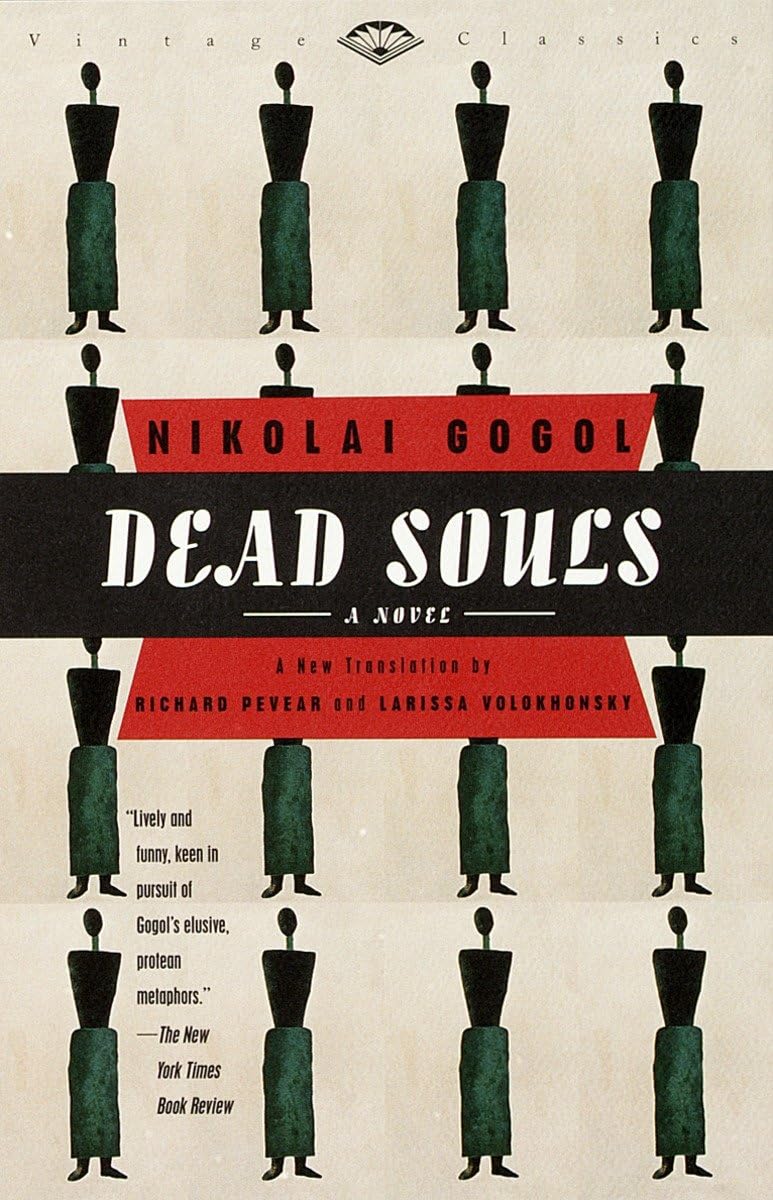
“Dead Souls”
By: Nikolai Gogol
Translated By: Richad Pevear and Larissa Volokhonsky
Nikolai Gogol (1809-1852, Ukranian novelist born in the Russian Empire, short story writer, and playwright.)
“Dead Souls” is not an enjoyable listening experience. Partly, because it is not a completed book. However, it is an insightful examination of a Russian culture in decline. It is an incomplete novel with its main character, Pavel Ivanovich Chichikov, who uses his looks, intelligence, and guile to appear prosperous in a society of rich and poor.
Agriculture is the economic foundation of society in mid-19th century Russia. The industrial revolution is at its beginning.
As a clerk in the government, Chichikov is familiar with government policy of charging a tax for deceased peasants that are owned but have died on Russian’ landowners’ farms. Social position is associated with land and peasant worker’ ownership, i.e., the more land and peasants one owned, the higher a Russian aristocrat is esteemed. Chichikov has no land but has earned and saved enough money through his work with the government to come up with a scheme to improve his status in society. His idea is to travel the country, buy dead souls, and purchase a farm to show society he is an aristocrat of substance. By buying peasant souls and land he creates an image of wealth and aristocracy. His plan is to buy land with the money he has saved over years of work as a clerk. He assumes his position in society will be secured by land ownership and owned peasant’ souls.
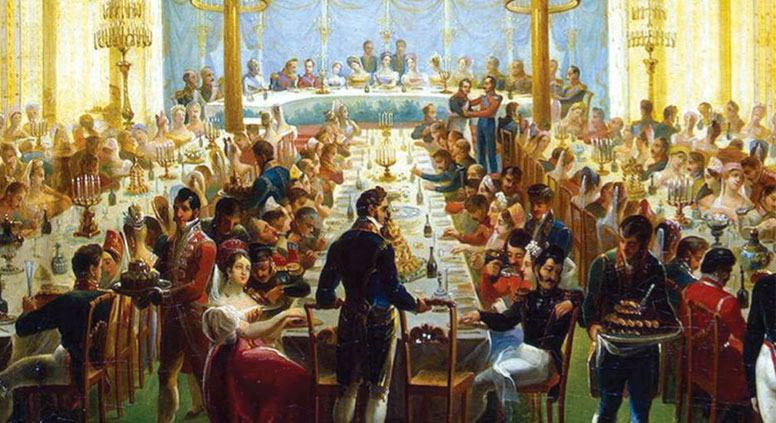
Chichikov’s false image is assumed to be true in a high society soiree.
Chichikov clownishly approaches the daughter of a regional governor because of her beauty. His attention is noticed by some of the wags at the social event. Similar to today’s social media, word spread about Chichikov’s bizarre purchase of dead souls. Rumors about Chichikov proliferate like Alex Jones spread of lies in the 2022 Uvalde school children murders.
Various stories about Chichikov’s history spread from people who were at the governor’s soiree.
Many reasons were given for Chichikov’s purchase of “Dead Souls”. One who was at the dance alleges the purchases were to show Chichikov’s intent to kidnap the daughter of the governor. Chichikov hears of these ludicrous accusations and flees the small town in which the ball had been held. In fleeing, Gogol’s story provides more examples of Chichikov’s nature and reasoning with the objective of showing the dysfunction of Russian society and its aristocratic governance.
Chichikov meets with a successful Russian farmer who capitalizes on what is known of agricultural science of that time and uses that knowledge as an aristocratic owner of many peasants who worked his land.
Chichikov persuades this prosperous farmer to lend him 10,000 rubles to finance the purchase of a failing nearby farm. However, Chichikov’s deceptions catch up with him. He is arrested and judged by a Prince of Russia who plans to make an example of him. The story obscurely ends with the prince inferring a way out of the mess Chichikov’s lies engendered. The story is never finished. Reader/listeners never learn the fate of Chichikov. The high praise of the book rests with its exposure of the societal faults of mid-ninetieth century Russia.
Every national society has strengths and weaknesses. America is as vulnerable to lies and misrepresentation as Gogol shows of Russia. The best one gets from “Dead Souls” is a vague understanding of Russian society. Alcohol consumption in Russia and a penchant for autocratic government are long-standing societal truths.



































 REVIEWS AND VIEWS OF LIFE